1. Terracotta Tray Glow with Jute Fringe
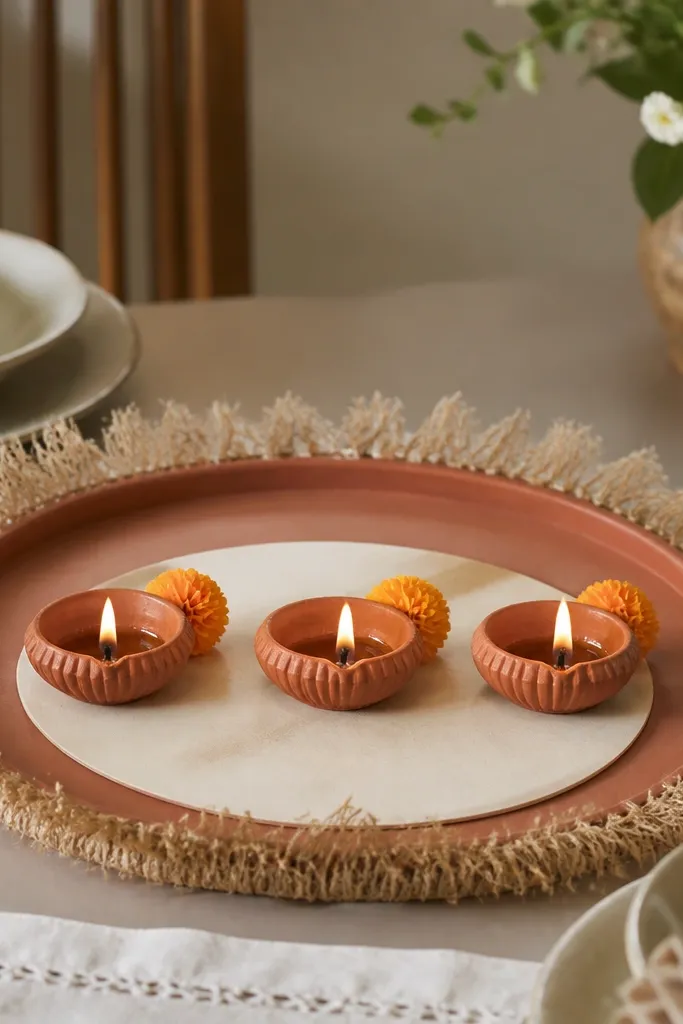
This one makes warm home decor look “done” fast because the tray already gives structure. Use a terracotta tray (matte finish if you can) and a cream circle of cardstock under the diyas so the light has a soft backdrop. The jute fringe adds texture that reads cozy even when the flames are off. I’ve used this for kids' evenings and it flatters any room color — white walls look extra bright, and darker rooms look softer. Keep the diya count odd (three or five) so the arrangement looks balanced instead of lined up like a row of candles.
Start by tracing your tray onto cream cardstock and cut a circle that sits 1/4 inch inside the tray rim. Glue jute strips around the rim with a thin bead of hot glue, leaving the ends uneven for a natural fringe. Place a small dot of glue under each diya base so they don’t slide on the paper. Line up three diyas in the middle, then tuck paper marigolds or dried faux petals just outside the diya line so the glow hits them from behind. Finally, set the tray on a table runner in mustard or rust so the warm tones match.
If you’re using real diyas, add a small steel saucer beneath each diya so the flame area stays clean. For LED, use flicker tea lights so kids think it’s the real thing.
Avoid glossy ribbon on the rim — it catches light like plastic and the whole setup looks store-bought instead of handmade.
2. Mason Jar Rangoli Lantern
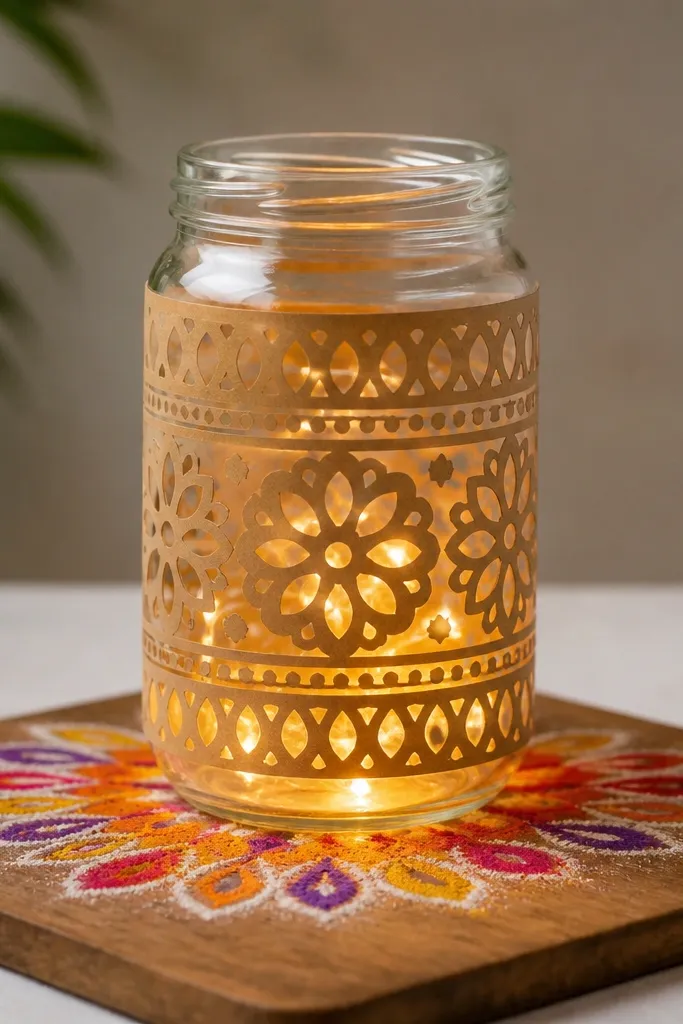
A mason jar lantern gives you that cozy diya glow without needing a big centerpiece. The glass makes the light look deeper and softer, and kraft paper keeps the color warm instead of neon. I like this for kids because it’s a “safe box” — the light is contained, and you can decorate the outside with paper patterns. It looks great in kitchens and hallways because it creates a warm focal point even in small spaces. If your home has gray or cool-toned decor, the kraft paper warms it up instantly.
Pro tipUse a frosted LED tea light cover if you can — it stops harsh LED hotspots.
Start by cutting kraft paper strips about 1 inch wide and wrapping them around the jar in three vertical bands. Use a glue stick or double-sided tape so the paper doesn’t wrinkle. Draw simple rangoli lines on the jar bands with a brown or orange marker, then add tiny dots using a gold gel pen. Place LED tea lights inside the jar (2 to 4 lights, depending on jar size) so the glow fills the glass evenly. Set the jar on a wooden board and sprinkle a thin ring of colored rangoli powder or glitter glue marks around the base for a “finished” look.
AvoidAvoid wrapping the jar too tightly with dark paper — it blocks the glow and makes the lantern look like a box.
3. Diya-in-a-Book Nook Centerpiece
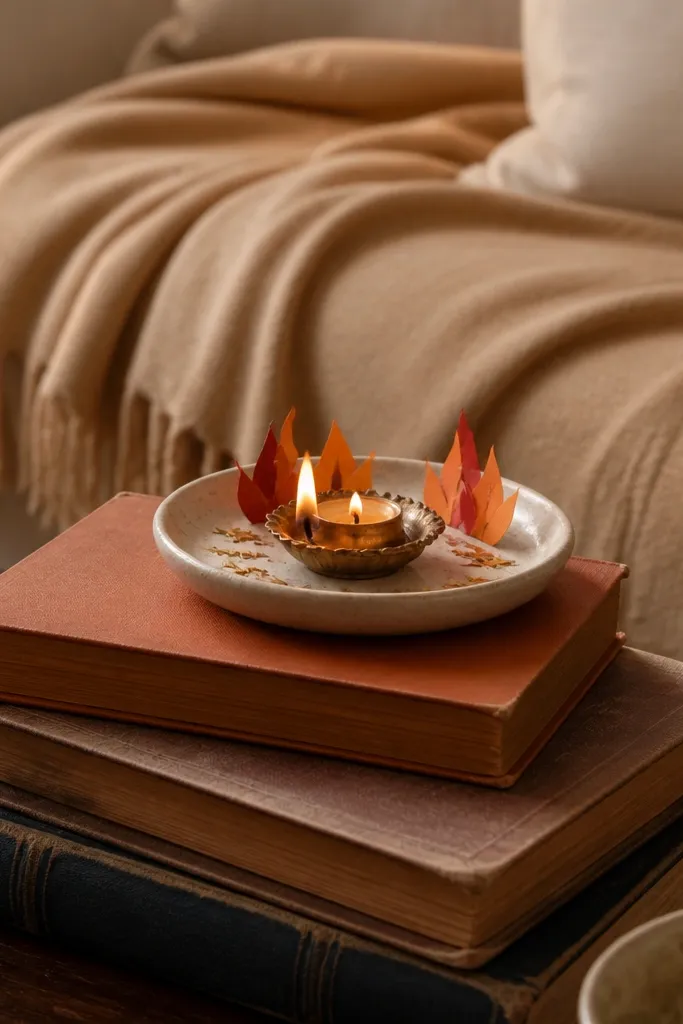
This is a cozy hack I’ve used when I didn’t want kids touching fragile decor. A stack of books gives height and a stable platform, and warm paper cutouts make the diya look like it belongs in a story. It flatters small living rooms because it doesn’t take up table width. The gold stars add sparkle, but because they sit behind the diya line, the flame lights them gently. If your home has lots of solid colors, this adds texture and interest without clashing.
Start by choosing a stack height of about 4 to 6 inches, then cover the top with a piece of brown craft paper so the diya saucer sits flat. Place one diya in the center of a small steel saucer, and keep it centered on the paper. Cut paper flames in two sizes and tuck them behind the diya so they look like they’re “radiating” from the flame. Add 6 to 10 gold star stickers around the flames, leaving a small gap so the light can show through. Finish by placing the whole stack on a tray or under a small table runner to keep wax or LED residue contained.
If you’re using real diyas, wrap the top of the books with a thin sheet of aluminum foil under the saucer area. It saves your book covers from heat stains.
Avoid tall stacks — they tip easily when kids bump the table.
4. Floating Diya Bowl with Flower Petals
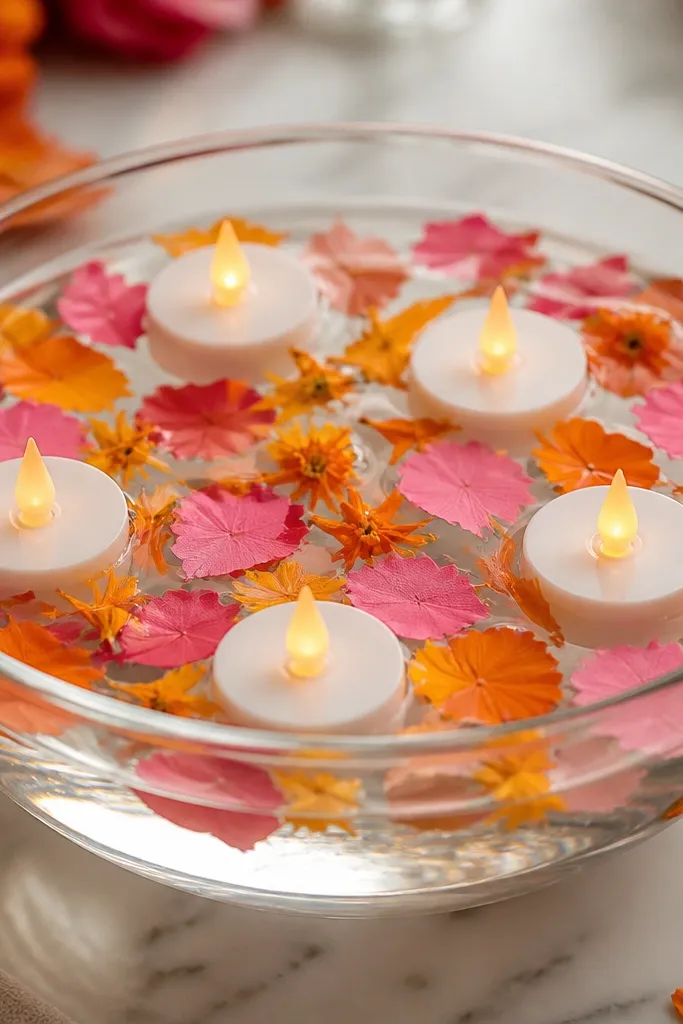
Floating diya decor looks magical because the “light path” reflects on the water. For warm home decor, use petals in warm shades — peach, orange, rust — and a few deeper marigold tones so the glow looks layered. I use LED tea lights for this one indoors because water + open flame is a no-go in my house. It works especially well for dining tables because it’s low and wide, so kids can admire it without reaching across a tall centerpiece. The glass bowl also makes it feel like a special occasion without expensive candles.
Start by choosing a shallow glass bowl with a flat base and about 2 to 3 inches of rim height. Add just enough water to cover the bottom by 1/2 inch. Place LED floating tea lights (or tea lights in small waterproof holders) evenly spaced so they don’t clump. Scatter paper petals around the lights, keeping the center mostly clear so the light isn’t blocked. If you want extra warmth, add a pinch of gold glitter glue dots on a few petals so they sparkle when the LEDs flicker.
Use a mix of 70% orange/peach petals and 30% deeper tones. The warm balance keeps it cozy instead of candy-bright.
Avoid too much water — it makes the petals float away and the lights look lonely.
5. Doorway Toran with Hanging Diya Lights
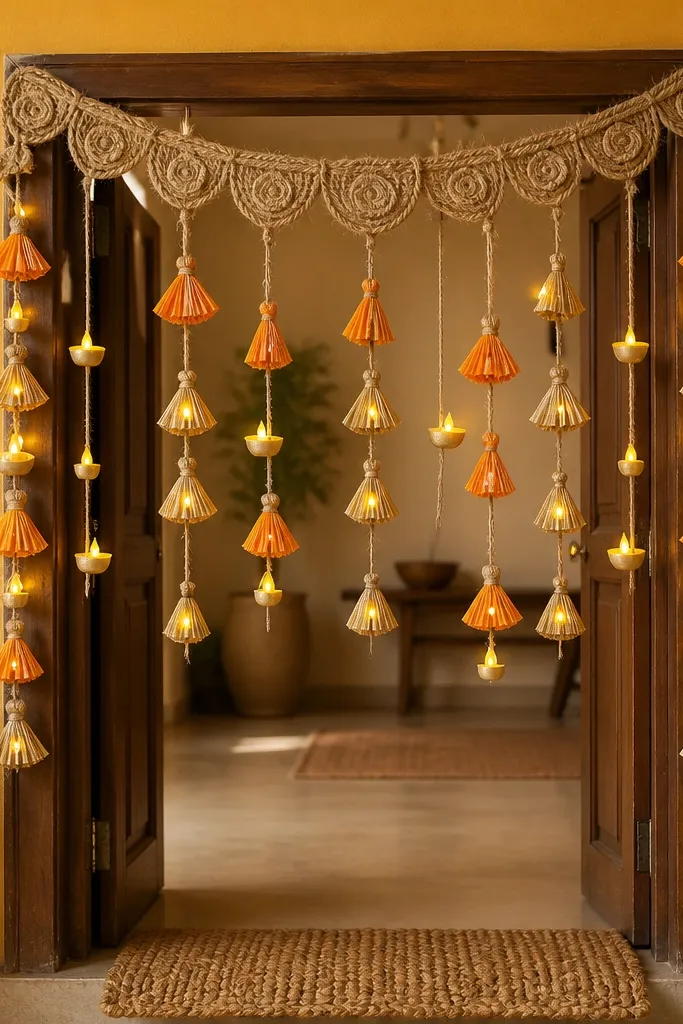
A doorway toran instantly makes a home feel welcoming, and hanging diya lights add that cozy glow right at eye level. I like this when you have kids because they can help clip strands and tie knots, and you still get a finished look. For warm home decor, stick to jute, kraft paper, and orange-gold tones so it matches the flame color. This also looks good in apartments since it’s mostly vertical and doesn’t eat floor space. If your entryway is narrow, the hanging lights help it feel taller and brighter.
Pro tipUse warm white LED lights, not cool white. Cool white makes paper look gray.
Start by cutting jute string into 10 to 12 lengths, each about 10 inches long. Tie them to a top cross string (or a thin rod) with equal spacing. Make paper tassels from orange craft paper strips (about 1 inch wide, 6 inches long) and attach one tassel between every 2 jute strings. Clip LED diya lights onto the jute strands using small binder clips or mini clothespins. Finish by adding 2 to 3 gold foil stars near the top so the glow looks layered from above.
AvoidAvoid heavy beads on every strand — it pulls the toran down and looks messy.
6. Paper Leaf Diya Runner for Side Table
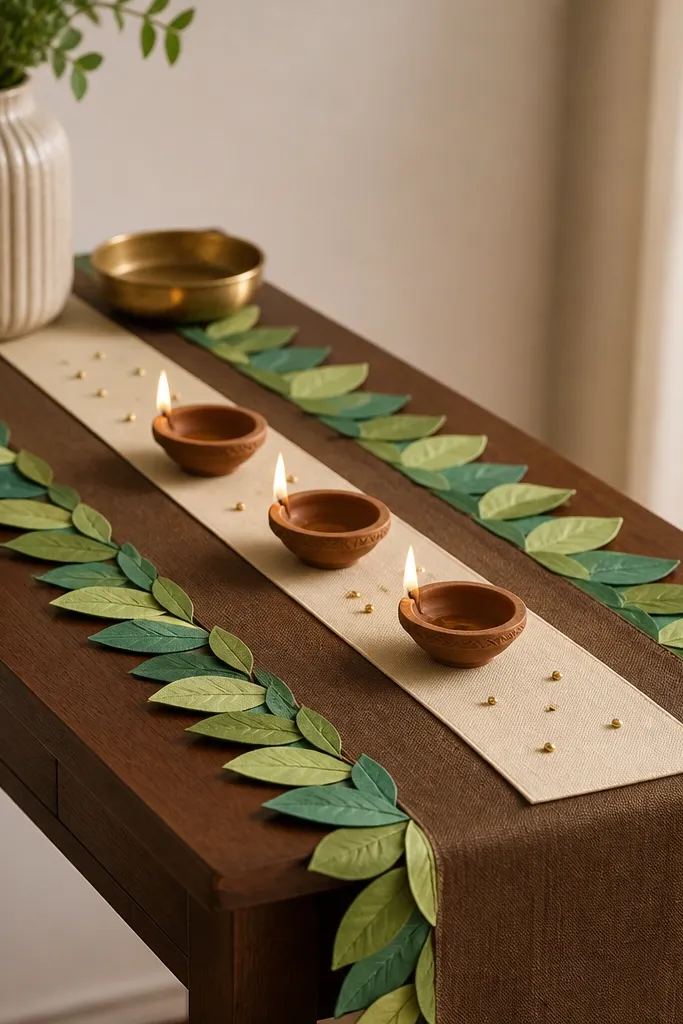
This runner idea makes your whole room feel warmer because it guides the eye across a surface instead of one single point. Paper leaves give you the greenery that balances the warm flame colors, and the matte runner cloth keeps everything soft. I’ve used this on side tables behind sofas where people don’t notice decor until guests sit down. It flatters any home palette because green paper is easy to match — olive, sage, and deep green all work. Keep the leaf colors subtle so the diyas still look like the main event.
Start by cutting a cream strip of paper about 4 inches wide and the length of your side table runner area. Place it down on top of your runner cloth. Arrange three diyas on the strip with equal spacing, then trace leaf shapes on green cardstock and cut them out. Glue or tape leaves along the edges of the cream strip, with the tips pointing inward toward the diyas. Add small gold dot accents behind the middle diya so it catches light and looks cozy from the sofa angle.
If you want it to look extra neat, fold the leaf veins with a butter knife along a drawn line before gluing.
Avoid bright neon green leaves — they turn the whole setup into a school craft.
7. Katori Diya with Mirror Dot Border
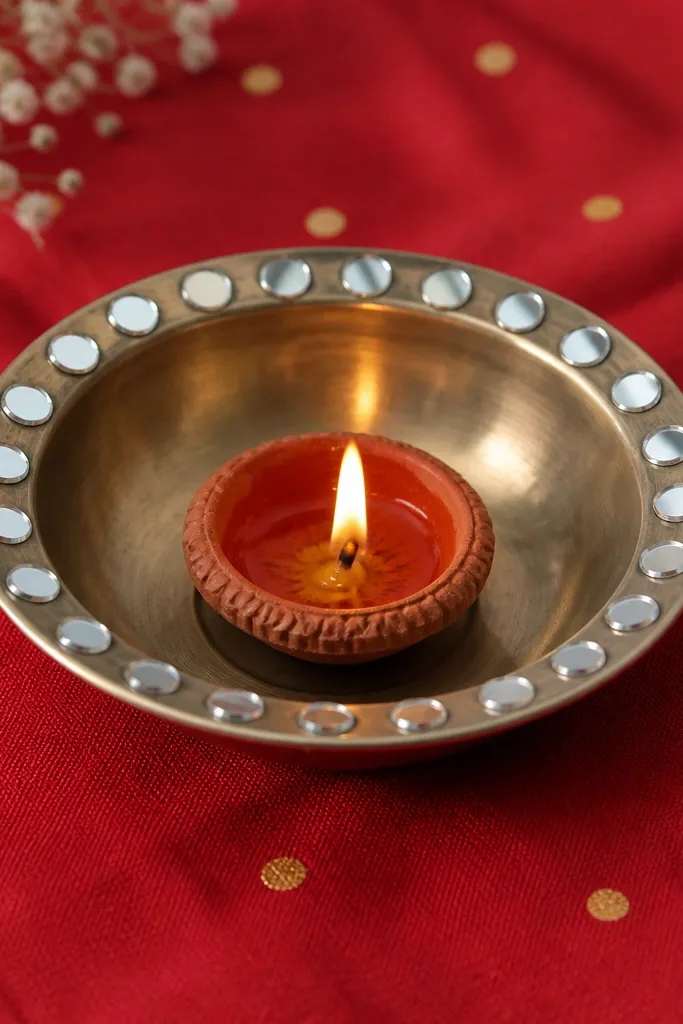
This is a small-space trick: one diya in a katori with a mirror dot border makes warm light look brighter without adding more candles. The mirror pieces reflect the flame and create a gentle sparkle that reads “festive cozy.” I like it for kids because it’s contained in one bowl, and you can keep it at child-safe height. It flatters warm skin tones in photos because the reflected gold light looks flattering and soft. If your decor is minimal, this adds just enough shine to feel intentional.
Pro tipUse mirror mosaic pieces with rounded edges. Sharp edges can look rough and snag fabric.
Start by cleaning a small metal katori so glue sticks well. Cut tiny mirror squares (about 3 to 5 mm each) and glue them around the rim with strong craft glue. Place the diya in the center on a small saucer insert inside the katori so it sits stable. Add a red or maroon cloth base under the katori so the glow looks deeper. Finish by dotting a few gold gel pen specks on the cloth around the bowl for a consistent warm pattern.
AvoidAvoid lining the entire outside surface with mirror — too much reflection makes it look chaotic.
8. Coconut Shell Diya Planter Look
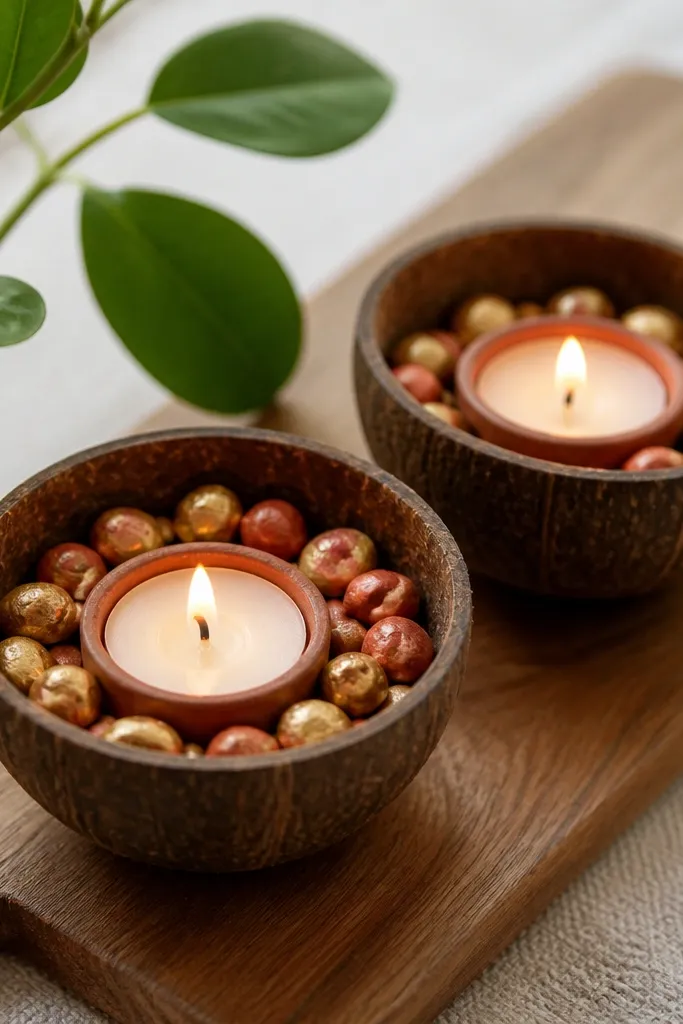
This one looks rustic-cozy because coconut shells have natural texture that makes the diya glow feel earthy. It’s also a cute “kids craft” because you can paint pebbles together and they love the texture. Warm home decor loves natural materials, and this setup works especially well on a dining sideboard or kitchen shelf. It flatters neutral rooms — beige, cream, and light wood — because the warm shell color ties the palette together. Keep it simple: two shells, two diyas, and one consistent color theme.
Pro tipIf you’re using LED, keep the pebbles slightly higher so the light shows through gaps.
Start by placing the coconut shells on a wooden board so there’s at least 2 inches between them. Paint small pebbles with terracotta and gold acrylic, then let them dry fully. Put a thin layer of sand or sawdust inside each shell so the diya base sits steady. Place one diya in each shell and arrange the painted pebbles around it like a mini garden bed. Add a strip of jute under the board edges so the whole thing reads warm and handmade.
AvoidAvoid using too much loose sand — it spills and makes the board look messy.
9. Salt-Tin Diya Snow Glow with Gold Specks
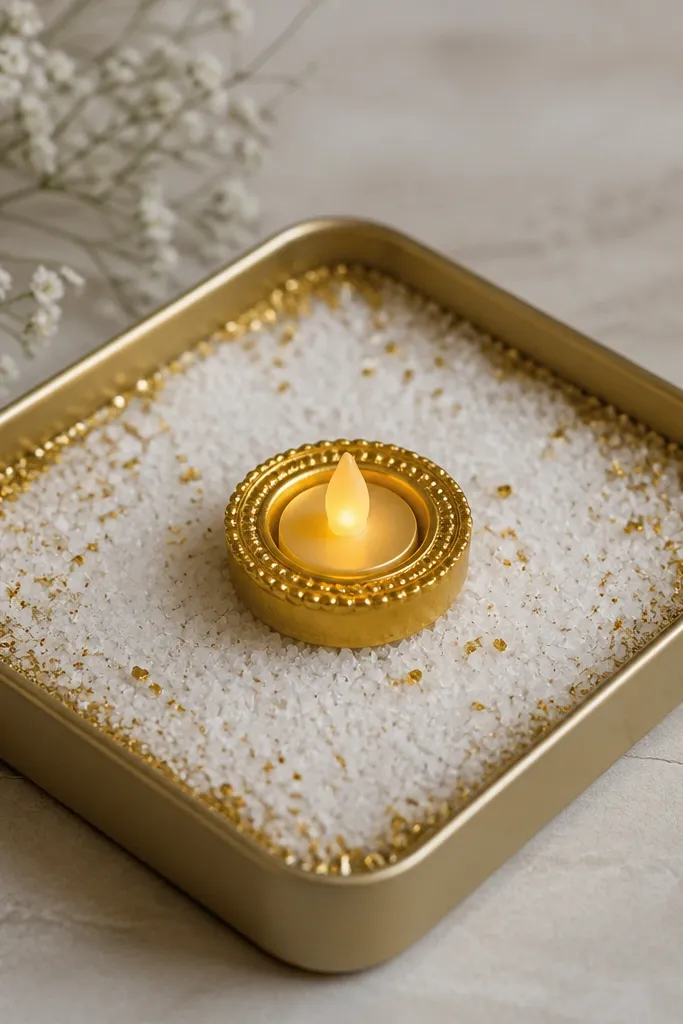
White salt gives you a soft “glow background” that makes warm diya light look brighter and gentler. It also creates a cozy contrast if your home decor is mostly wood and browns. I made this for a winter-themed kids' night and it still worked in summer because the warm light dominates. It flatters small tables because the tin is compact and doesn’t compete with other decor. Gold specks stop it from looking like plain craft salt.
Start by choosing a small metal tin with straight sides. Pour dry salt into the tin to a depth of about 1 inch. Make a small shallow cup in the salt with your finger and place an LED diya there so it doesn’t wobble. Sprinkle gold glitter very lightly around the diya base, then add a few specks in a corner for balance. If you want extra warmth, mix a pinch of cinnamon-colored powder with the salt (test first on a small corner).
Use fine salt, not coarse — coarse salt looks gritty and distracts from the glow.
Avoid shaking glitter too close to the diya flame if using real diyas.
10. Rangoli Powder Frame with Tea Light Line
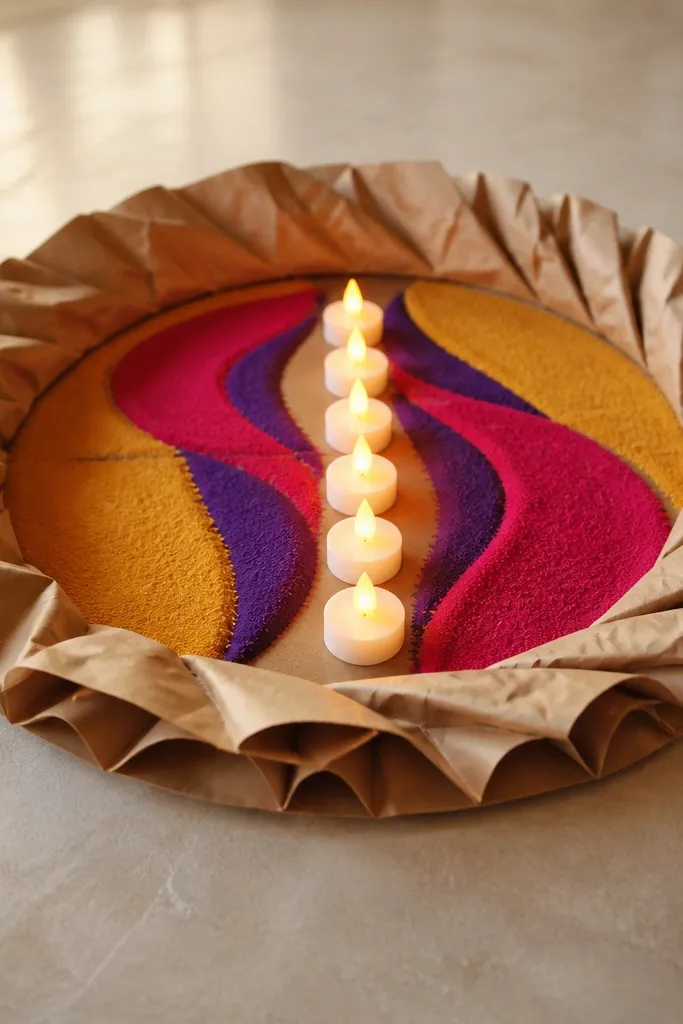
This looks like rangoli artwork that you can light up, which is why kids get excited. The powder patterns read crisp in photos, and the tea lights create that warm glow that moves across the colors. I’ve used this for living room floors because it feels like a festival mat and draws everyone to one spot. It flatters busy rooms because the frame contains the design. Keep the colors warm — marigold orange, turmeric yellow, and rust red — so it matches the diya vibe.
Start by cutting a kraft paper circle or oval frame and taping it down so it doesn’t slide. Place 5 to 7 LED tea lights inside the frame in a straight line or a gentle curve, with equal spacing. Draw rangoli patterns on the inside area using a washable chalk pencil as a guide. Sprinkle colored rangoli powder over the lines, then tap off excess gently. Place the frame on a washable mat or tray so cleanup is easy.
Use a small sifter or your fingers for powder control. Too much powder makes it look muddy.
Avoid mixing cool blues and purples in the same frame as warm diyas.
11. Bamboo Stick Diya Wall Hanging
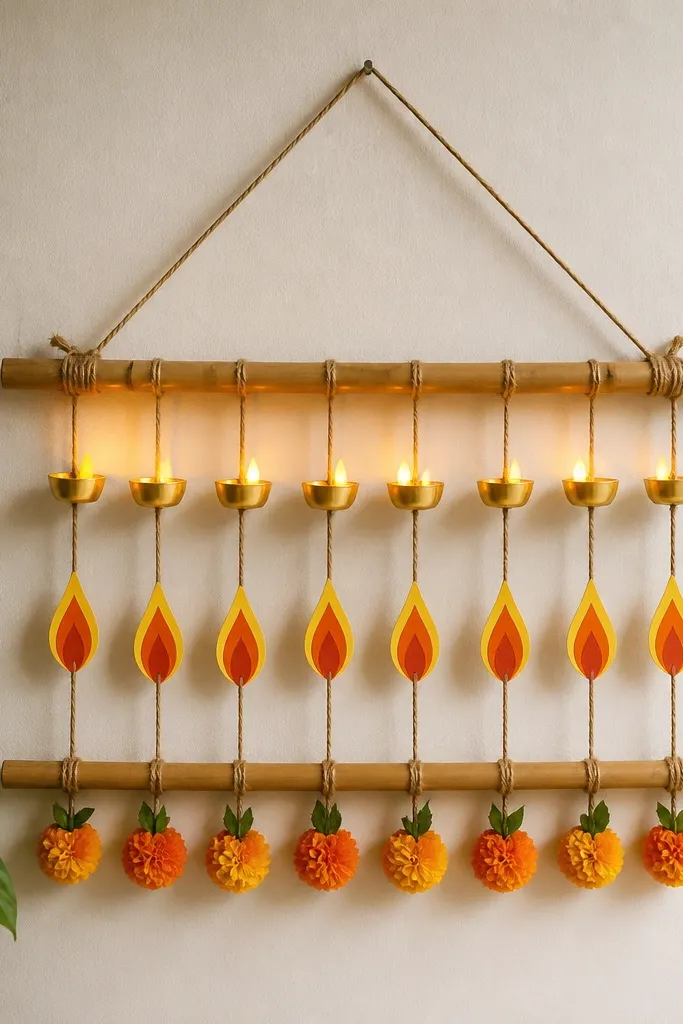
A wall hanging makes cozy diya decoration ideas for warm home decor feel like a real design element instead of a table-only craft. Bamboo + jute gives a warm, natural structure, and the vertical layout makes the glow visible even from a distance. I like this for kid-friendly decorating because it’s lightweight and doesn’t require a lot of table space. It flatters hallways and stair landings where you want warmth but don’t want clutter. The paper flame cutouts also add movement — they flutter slightly and look alive.
Pro tipKeep the LEDs spaced 2 to 3 inches apart so each flame glow shows separately.
Start by tying two bamboo sticks parallel, about 12 to 16 inches long, with jute twine across the ends. Tie a horizontal jute line between the sticks where the diyas will hang. Cut paper flame shapes in two sizes and punch a small hole near the base of each flame. Thread each flame onto the jute line using thin twine, then space them so they sit between the lights. Clip warm white LED diyas onto the line and add faux marigold clusters at the bottom as a finishing touch.
AvoidAvoid using glossy ribbon to hang it — it reflects overhead light and makes the paper look cheap.
12. Felt Lantern Road with Mini Diya Houses
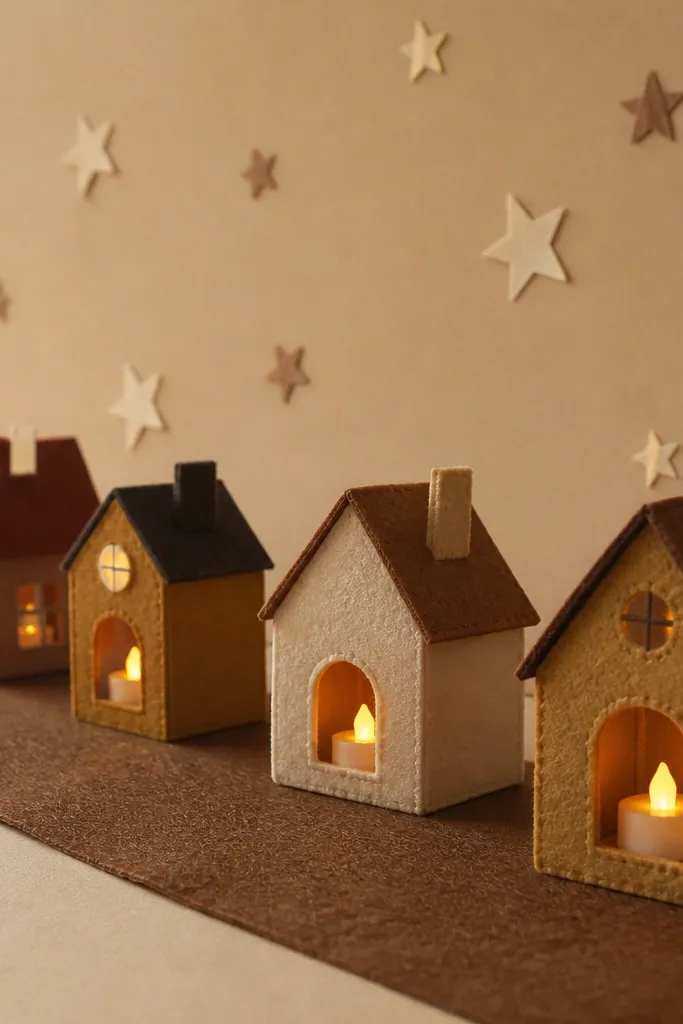
This is the cozy decor idea that turns imagination into decor. Felt is soft and matte, so the LED glow looks warm and cozy instead of sharp. The “mini house windows” make it feel like a village, and kids love pointing out each lit window. It also works for warm home decor because felt blends with neutral couches and throws. If you have a small living room, this runner-style piece gives you story-style warmth without taking up a lot of space. Choose one felt color for houses and one for the road so it looks intentional.
Pro tipUse warm white LEDs and paint the window edges with a light brown marker so the window looks framed.
Start by cutting a felt road strip about 10 inches wide and as long as your display area. Make simple house shapes from felt (about 4 inches tall), and cut a square window on the front of each house. Glue the houses along the road strip with the windows facing up. Place a small LED tea light inside each window cutout (use hot glue dots to hold the LED in place). Add paper stars at the ends of the road and tuck a few faux leaves along the sides for framing. Finish by placing the felt road on a flat tray or thick cardboard to keep it neat.
AvoidAvoid placing the LEDs too low inside the felt — the glow needs a clear “window” opening.
13. Gold Foil Leaf Tray with One Statement Diya
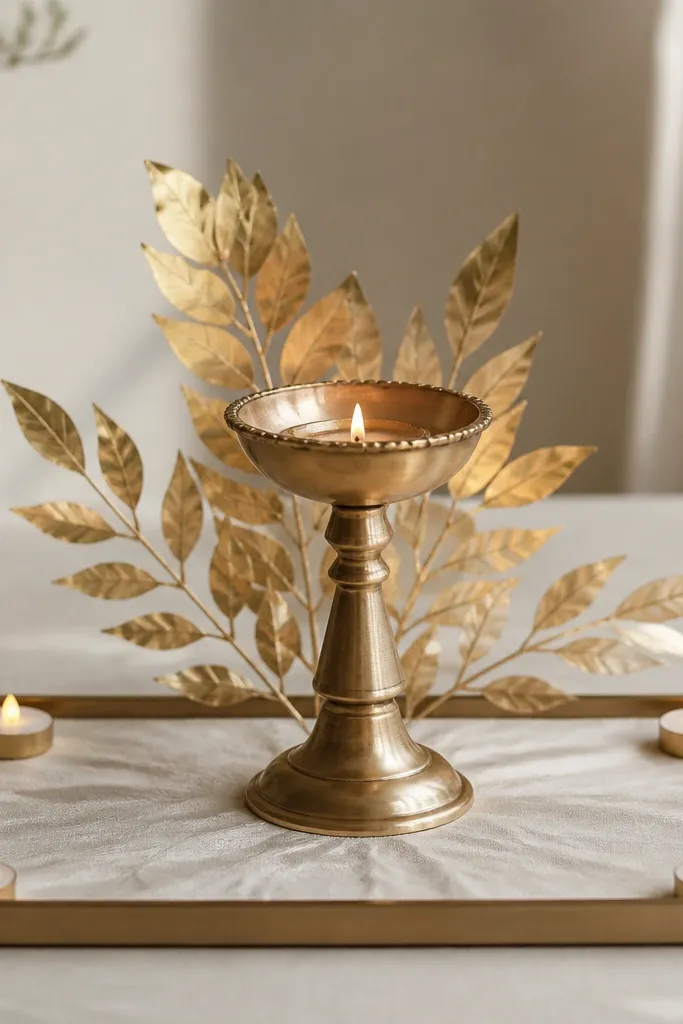
If you want fewer items but more impact, do one statement diya with gold foil leaf behind it. The tall holder makes the flame look intentional, and the gold leaf behind creates a halo without adding extra diyas. This works beautifully in living rooms where you want one centerpiece that doesn’t look crowded. I’ve used this on console tables and it photographs well because the gold catches warm light and the cream fabric softens the edges. It also flatters darker walls because the cream base brightens the whole area.
Start by covering a rectangular tray with cream fabric or felt, pulling it tight at the corners. Place one tall diya in the center on a small saucer so it stays stable. Cut gold foil leaf shapes from craft foil paper and fan them behind the diya, leaving a small gap so the flame can “read” through. Add two tiny LED tealights at the far corners of the tray, angled slightly inward. Finally, scatter 6 to 8 tiny gold dot decals around the base of the main diya so the glow looks connected to the gold theme.
If gold foil tears easily, glue it to a thin sheet of paper first, then cut the leaves for cleaner edges.
Avoid adding too many diyas — the gold leaf gets lost and it turns into a cluttered candle mess.
14. Recycled Tin Can Lantern with Twine Crisscross
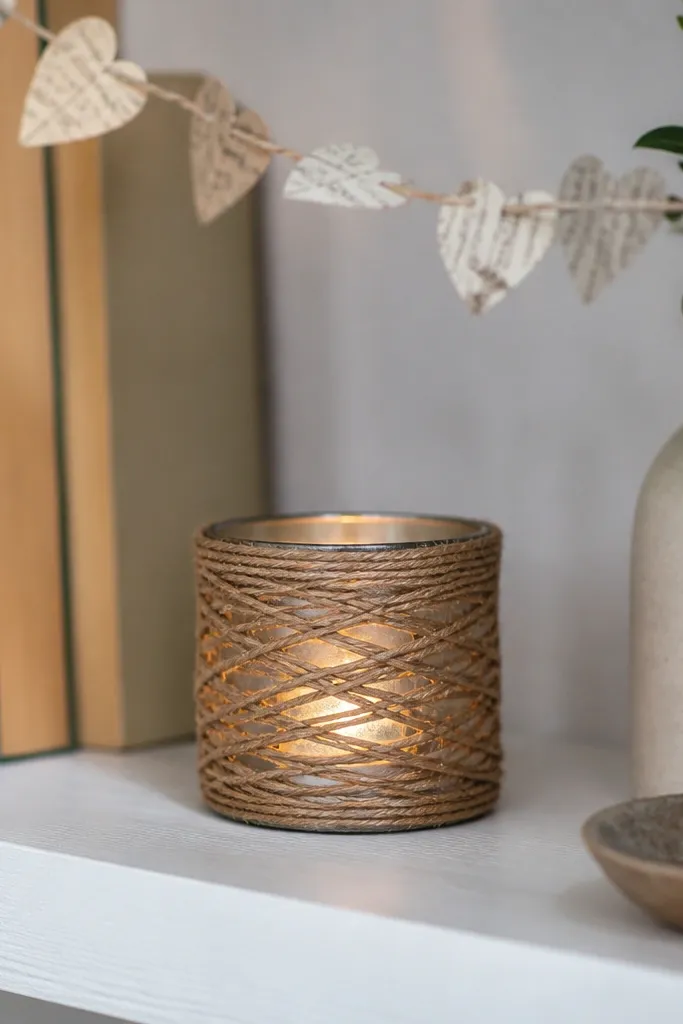
Twine crisscross on a tin can gives you that warm, handmade look with almost no cost. The gaps in twine let the light leak out in a soft pattern, which makes it feel cozy even when the room is dim. I like this for kids because they can wrap twine carefully while an adult handles hot glue points. It works in warm home decor because it matches wood tones, jute, and earthy palettes. If your shelves look bare, this adds a vertical glow without hanging anything heavy.
Start by cleaning a small tin can and drying it completely. Wrap twine around the can horizontally in tight bands first, then crisscross vertically. Use hot glue sparingly at the top and bottom edges so the twine stays put without blobs. Place a warm LED tea light inside the can, centered at the bottom. Tie a short jute bow around the can neck and add a tiny paper garland above it using mini triangles. Keep the can on a tray or old plate to catch any glue strings.
Press the twine down with your fingertips as you wrap so the gaps stay even and the glow pattern looks neat.
Avoid wrapping too loosely — the light escapes unevenly and the lantern looks unfinished.
15. Candle-Style Diya String on Window Ledge
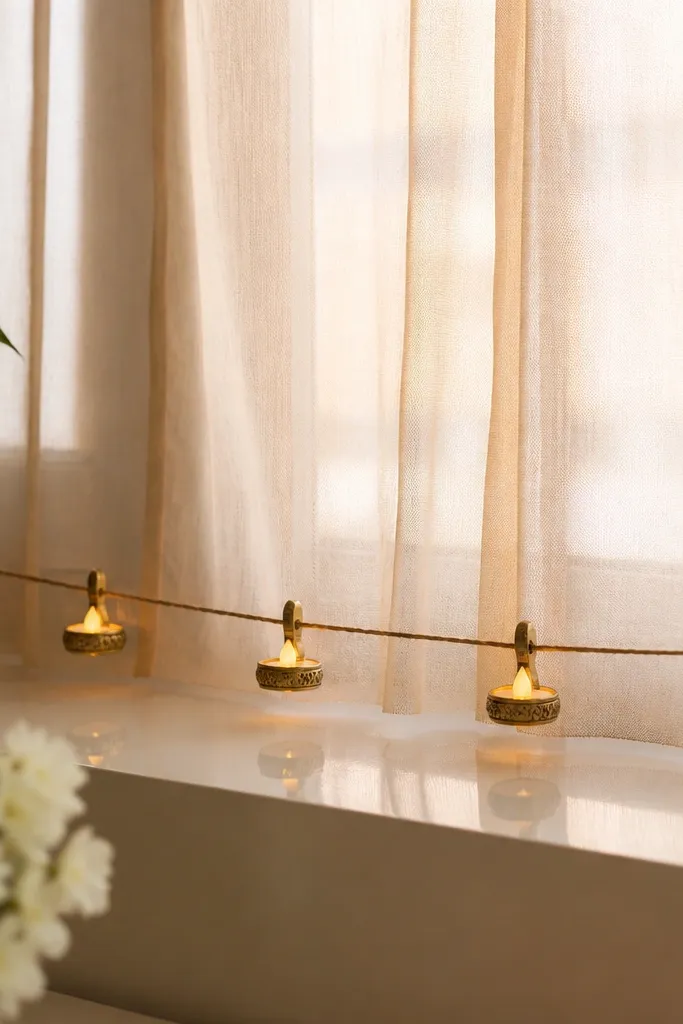
This is the simplest way I know to make warm home decor look cozy without a big craft session. A diya string on the window ledge turns natural light into a background and makes the glow look like it’s floating. I used this in a kid’s room where they sleep early — the soft warm LEDs feel calm, not intense. It flatters any window width because you can adjust the number of lights. If your decor is mostly neutral, the jute string adds texture without adding color clutter.
Start by measuring your window ledge and cutting a jute string to that length. Tie the string with small knots at both ends or tape it down firmly. Clip warm white LED diyas onto the string using mini clothespins, spacing them 2 to 3 inches apart. Place a strip of sheer beige curtain behind the string so the glow spreads. Add two paper flame cutouts at the ends so the line looks like a designed garland, not random lights.
If you use flicker LEDs, keep them on the same brand batch so the flicker pattern looks consistent.
Avoid cool white LEDs — they make curtains look gray and the whole vibe turns cold.