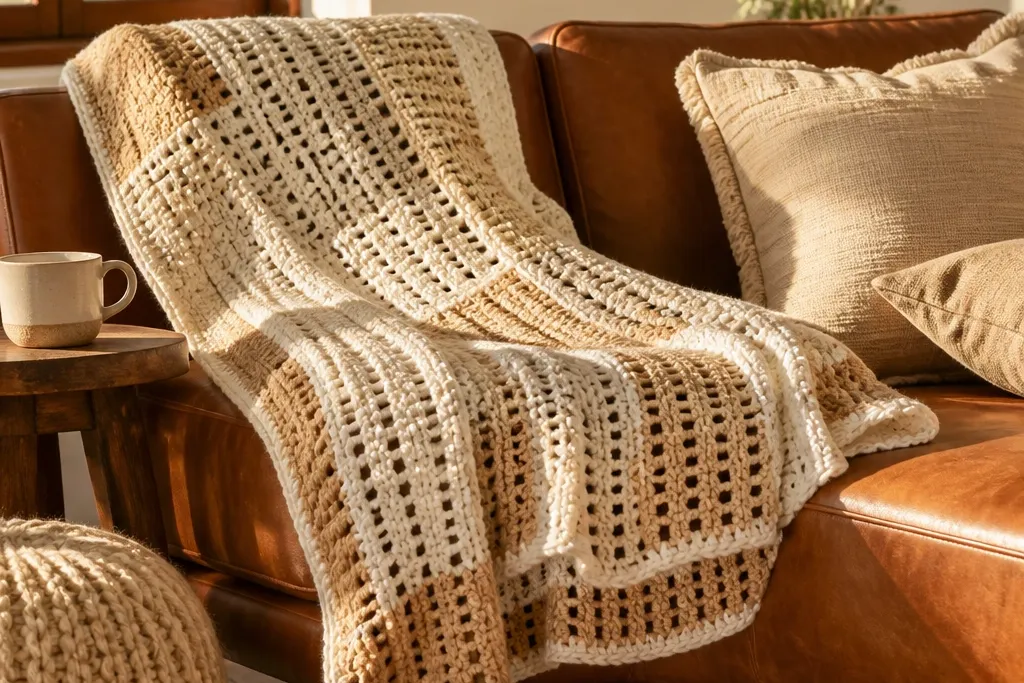
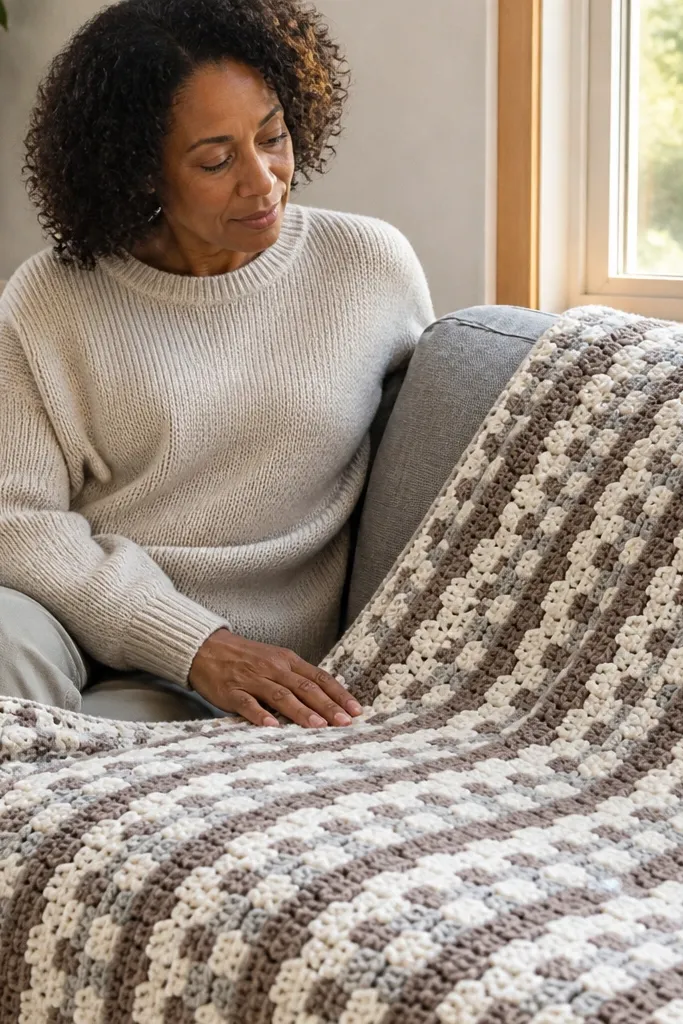
1. Cloud Puff Throw in Oatmeal and Cream
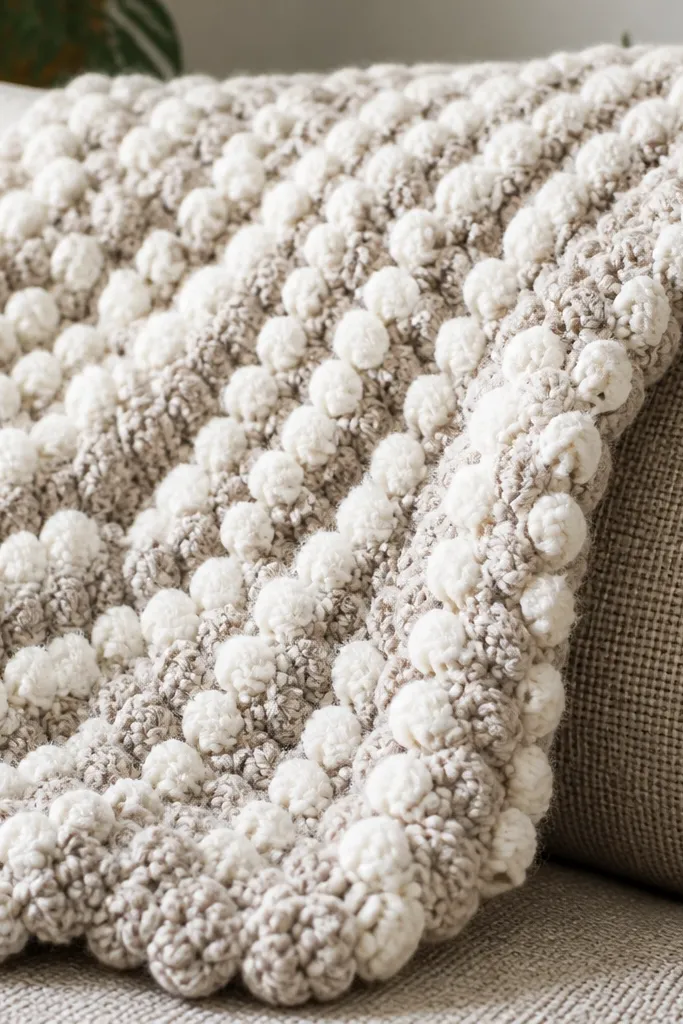
This one looks like a soft blanket you’d want to bury your hands in. The puff stitch creates rounded bumps that cast shadows, so even a neutral color looks rich. Use a warm oatmeal base with cream puffs to get that “layered” look without needing complicated colorwork. It’s also forgiving — puffs hide minor row inconsistencies. Make it a throw size for a couch or reading chair, and it will still feel substantial because the stitch adds bulk.
Start with a foundation chain long enough for your throw width, then crochet a base row of double crochet to set the height. Work the puff pattern in a repeat: puff into the next stitch, chain 1, then continue, keeping the puffs evenly spaced. After you hit your desired length, add a simple border row of single crochet all around, then finish with slip stitches in the border corners to square it up. Weave in ends tightly and block lightly so the bumps sit proud instead of sagging.
Count puff stitches across every row and place stitch markers at the start of each repeat so the pattern stays even.
Don’t make puffs too tight — if they’re compressed, the bumps lose their rounded look.
2. Waffle Ridge Blanket with Honeycomb Texture
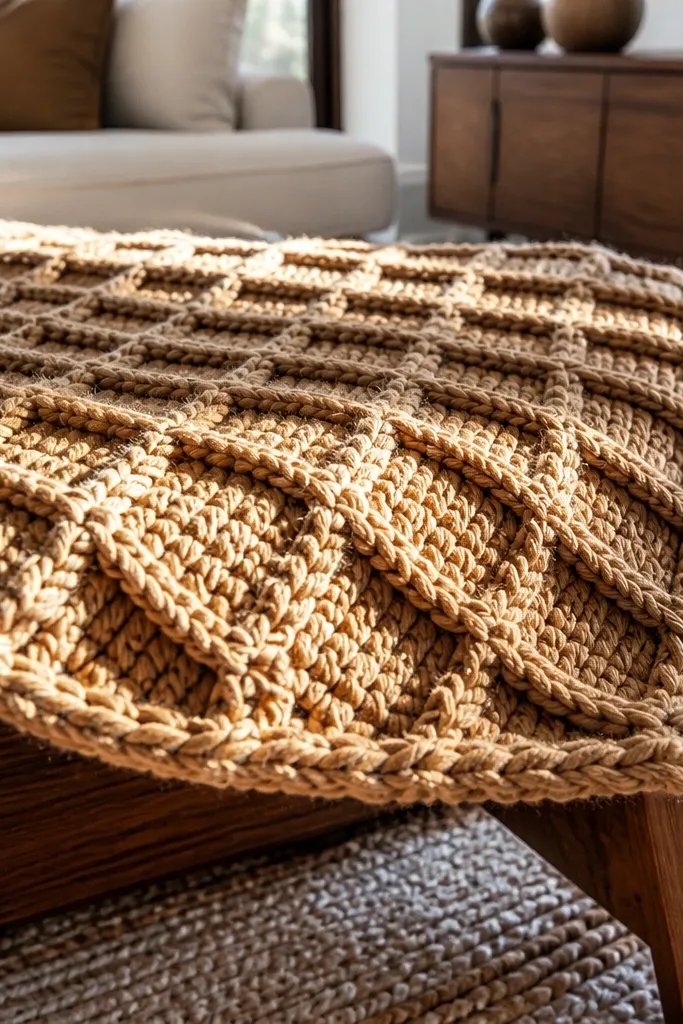
Waffle stitch reads cozy because it has a grid of raised ridges that looks thick and warm. It also stays visually structured, which helps the blanket look good even when it’s draped loosely. A single-color yarn works best here because the texture does the talking. Choose a warm tan or caramel for a “cozy home” vibe that doesn’t look flat. This is a great option if you want something that looks advanced but repeats in a manageable rhythm.
Crochet a foundation chain and work the base row in a stitch that matches your waffle pattern’s required height, usually double crochet. Then alternate the waffle rows: front-post/back-post or front/back combinations that create the raised squares. Keep track of where the pattern flips so the waffle columns align at the end of each row. Finish with a border of single crochet plus a final slip-stitch row for a clean frame that prevents edge curl.
Pro tipUse stitch markers to mark the center of the blanket; waffle patterns show misalignment fast if you’re off by even one stitch.
AvoidDon’t skip blocking; waffle fabric relaxes and looks much better once it’s pinned flat.
3. Sunset Granny Stripe with Thick Color Bands
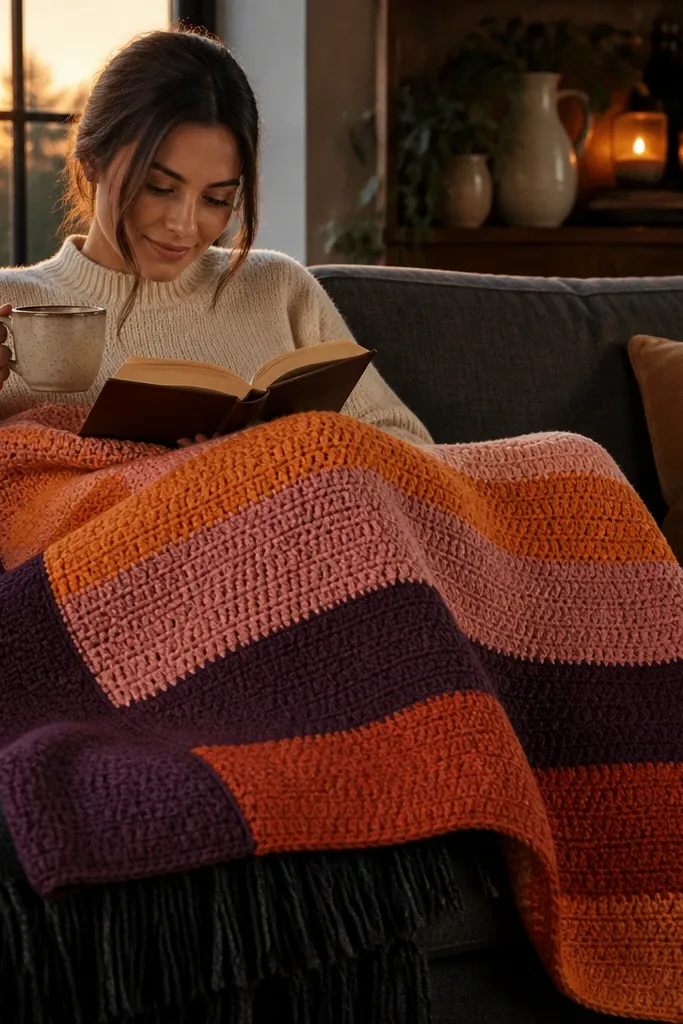
Granny stripes look cozy because they create bold color blocks that look intentional on a sofa. The key is thick stripes and consistent spacing, so the blanket looks like decor, not a patchwork accident. Use a sunset palette — burnt orange, peach, dusty rose, and a deep plum — to get warmth without neon. This pattern is easy to scale, and the stripe rhythm makes it satisfying to keep going. It also gives you a clear visual goal: each stripe should look the same width and height.
Make a starting strip of granny rows using classic double crochet granny construction, with chain spaces that create the open “granny” look. Build each stripe in a single color, then join the next color at the end of the row so the transition is clean. Keep the stripe width consistent by counting your granny clusters and chain spaces every row. Finish with a border that repeats granny motifs or a simple single crochet frame, then weave ends and block to even out the stripes.
Pro tipUse the same hook size for every color change; yarn dye lots can shift, and consistent tension keeps stripes aligned.
AvoidDon’t change stripe height mid-project — that’s the fastest way to make the blanket look homemade instead of cozy and planned.
4. Berry Bobble Blanket with Deep Navy Background
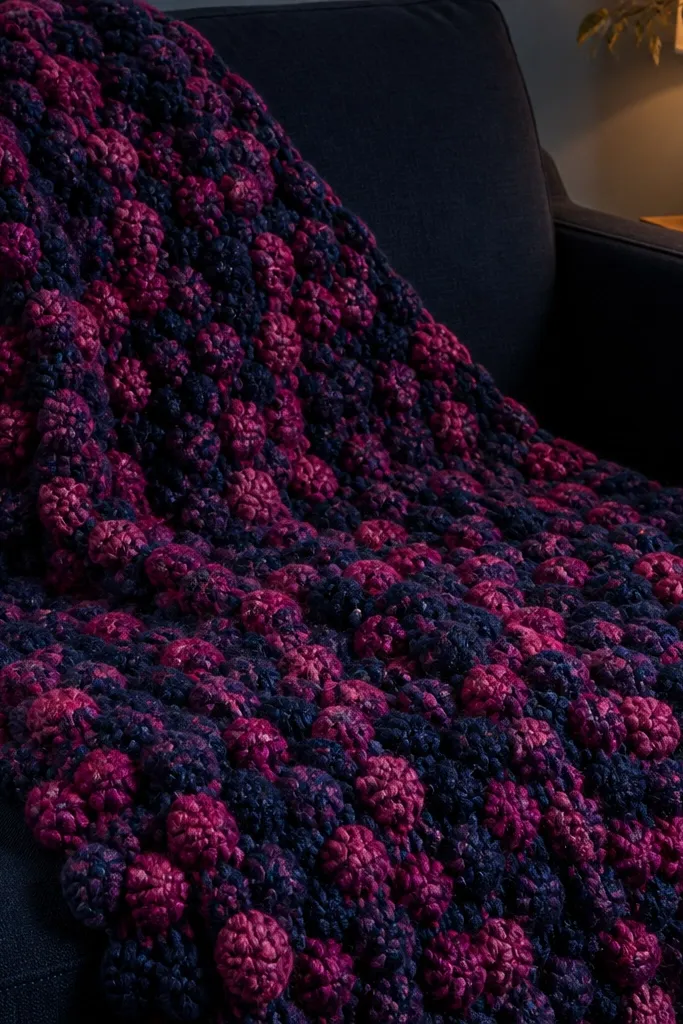
Bobbles make a blanket look playful and plush, especially when the base color is deep and calm. A deep navy background makes the bobbles pop like little berries across the surface. The visual payoff is strong in photos because bobbles create tiny highlights and shadows. Choose two or three berry shades for bobble placement — keep the base navy consistent so it looks cohesive. This is a good choice if you want cozy texture without doing full-on colorwork.
Start with a foundation and build your base fabric in double crochet for a smooth backdrop. Then work bobbles into specific stitches on a repeat schedule: bobble into the next stitch, then continue with your base stitch pattern. Use a stitch marker to track where the bobble row begins so you don’t drift. When you reach your length, add an edging row of single crochet in each stitch and chain space, then square corners with extra stitches.
Use a slightly smaller hook for bobble rows if your bobbles look too floppy; it keeps them rounded.
Don’t scatter bobbles randomly — a planned repeat is what makes it look designed, not accidental.
5. Textured Crosshatch Throw with Olive and Cream
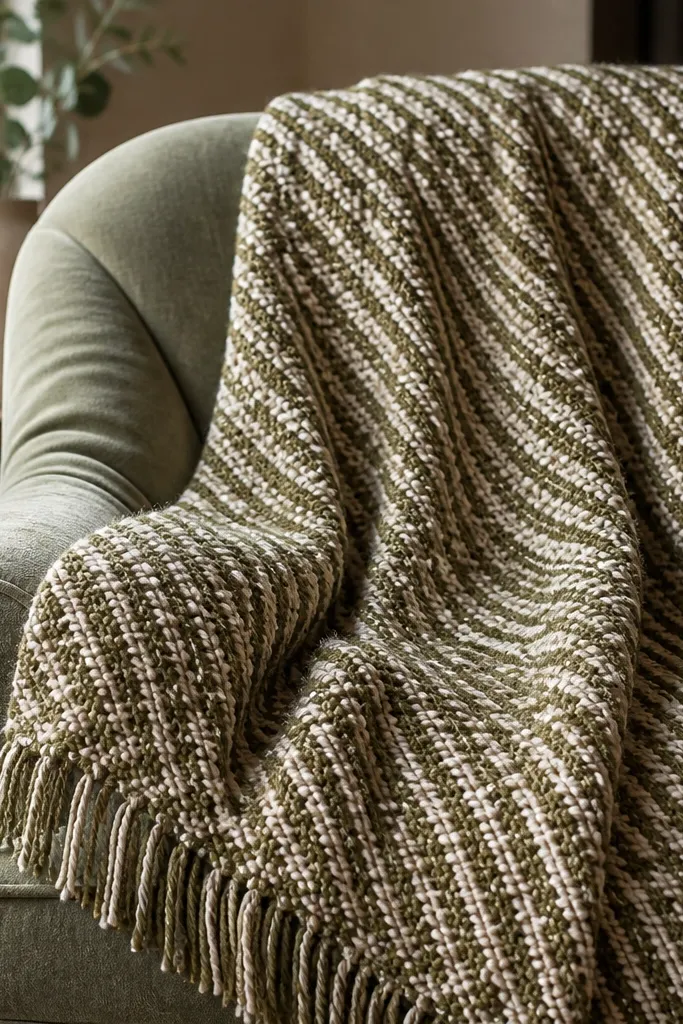
Crosshatch texture gives you that warm, woven look without actually weaving. It’s photogenic because the diagonal pattern creates movement and depth, especially in two-tone yarn where the lines separate. Olive and cream is a great combo for cozy interiors because it feels natural and grounded. This blanket also looks neat when folded — the structure holds shape better than a purely lacy design. If you like clean, modern cozy, crosshatch is the move.
Pick a two-color plan: one color for the base rows and the other color for the diagonal crosshatch rows. Start with a base that uses double crochet rows, then alternate into the crosshatch rows by working post stitches or deliberate diagonal stitch groups that cross over the grid. Maintain consistent stitch counts so the diagonals meet cleanly across the row ends. Finish with a border in the base color using single crochet around, then a final slip-stitch row to lock it in.
Carry yarn only if you’re confident in tension; for a cleaner look, cut and rejoin at row ends even if it adds ends.
Don’t let diagonal rows pull — if edges look tighter than the center, loosen your tension on the crosshatch rows.
6. Cozy Cable-Style Blanket Using Front Post Columns
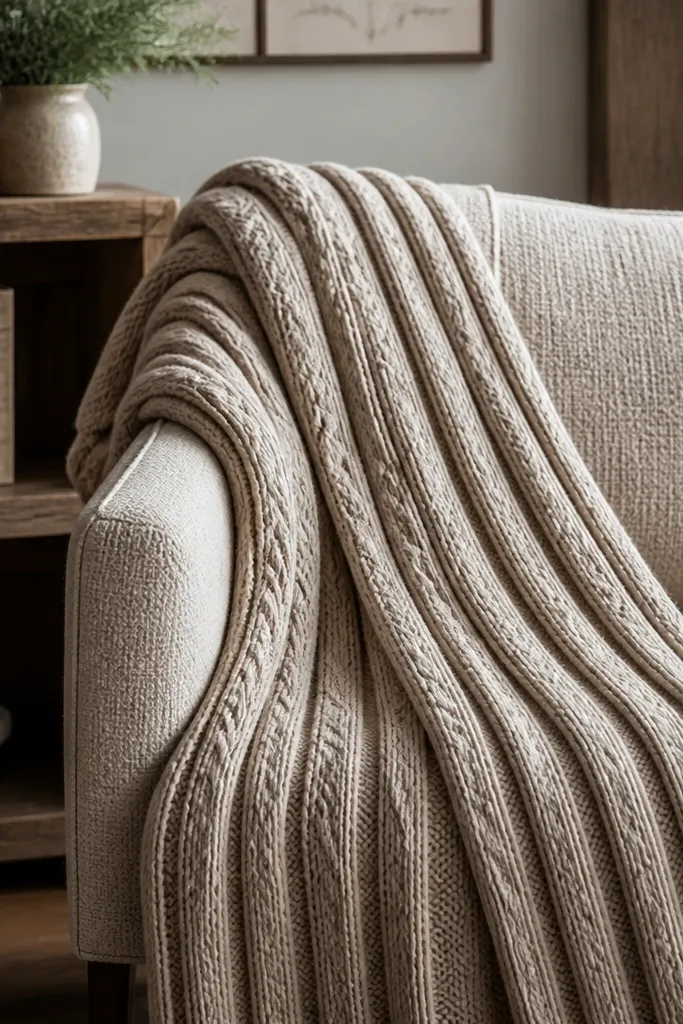
You get a cable look without complicated knitting-style cabling. Front post columns create rope-like ridges that look cozy and high-end. This one shines in neutral colors because the raised columns show definition even in soft lighting. It’s a strong project for intermediate crocheters because you’re repeating post-stitch swaps. The result is a blanket that looks like it belongs in a magazine — thick, structured, and warm.
Start with a foundation and base row in double crochet, then set up a repeat of front post and back post stitches across the width. For the cable effect, you’ll cross columns by swapping the order of front post groups at specific intervals — keep a written repeat chart for row numbers. Work until you reach your desired length, then frame with single crochet around the edges. Corner work matters: add extra stitches at corners so the border stays flat instead of pulling.
Pro tipMark the cable crossing rows with a removable marker so you don’t lose your place mid-row.
AvoidDon’t stretch the fabric while you crochet the crosses; cables distort if your tension changes.
7. Chunky Seed Stitch Blanket in Chocolate Brown
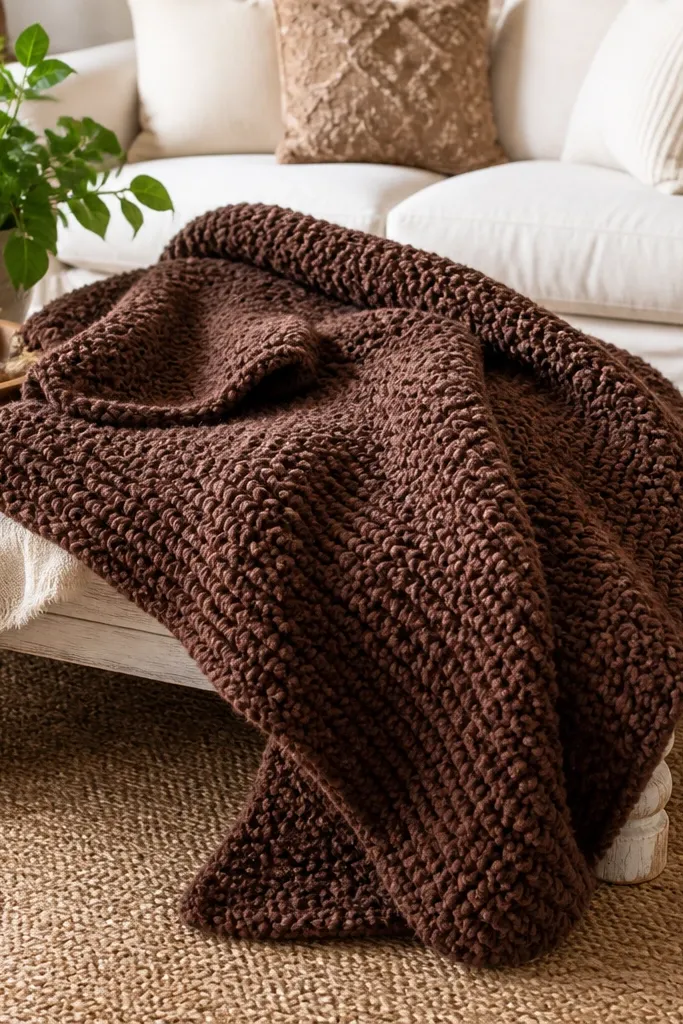
Seed stitch looks cozy because it’s dense and bumpy, like a knit blanket. In chocolate brown, it reads warm and grounded, and the texture stays visible even from across the room. This is a great choice if you want something that feels thick without fancy shaping. It also hides small mistakes, which helps if you’re learning. The fabric is sturdy — good for a couch throw that gets used daily.
Work a foundation chain and start with a base row in single crochet or half double crochet depending on the height you want. Then alternate seed stitch rows: single crochet into the chain space and into the single crochet from the previous row as your pattern specifies, creating the seed bumps. Keep your stitch count even so the bumps line up. Finish with a border of single crochet around and a final row of slip stitches for clean edges.
Pro tipUse bulky yarn and keep your rows consistent; seed stitch shows gaps when the fabric is too loose.
AvoidDon’t use a very drapey yarn; seed stitch needs structure to look plush, not limp.
8. Ripple Blanket in Soft Sage with White Fringe
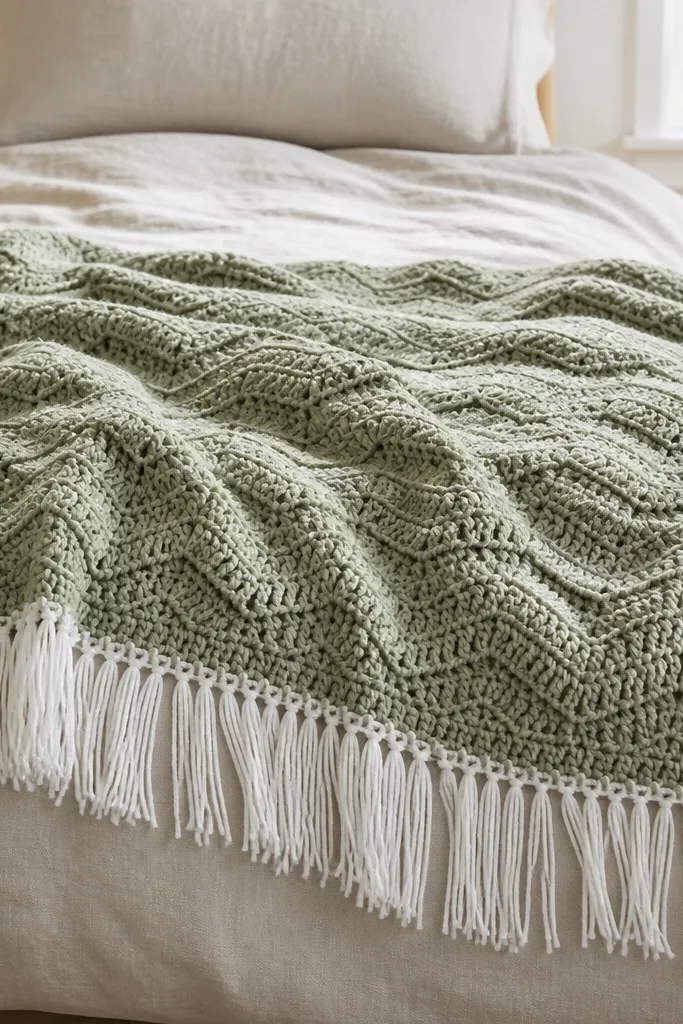
Ripple blankets look cozy because the waves create a rolling, blanket-like drape. Soft sage makes the pattern feel calm, and white fringe frames it like a store-bought throw. Choose a ripple pattern with medium waves so it doesn’t look too beachy. This is also one of the better options for photogenic edges because fringe catches light and makes the blanket look instantly cozy on a chair or bed edge.
Cast on using a ripple stitch foundation that follows the pattern’s multiple requirement, then crochet the ripple rows by repeating the increase and decrease groups across. Keep the wave rhythm consistent by counting the stitch groups at each peak and valley. When you reach the length, add fringe by cutting strands twice the finished fringe length, then fold and attach through edge loops. Trim fringe ends to even lengths and lightly block the body so waves sit smoothly.
Pro tipMeasure fringe length on a finished panel edge, then cut all strands from that measurement so they match perfectly.
AvoidDon’t block aggressively if your yarn is fuzzy; too much stretching can blur the ripple definition.
9. Modern Granny Square Blanket with Border Frames
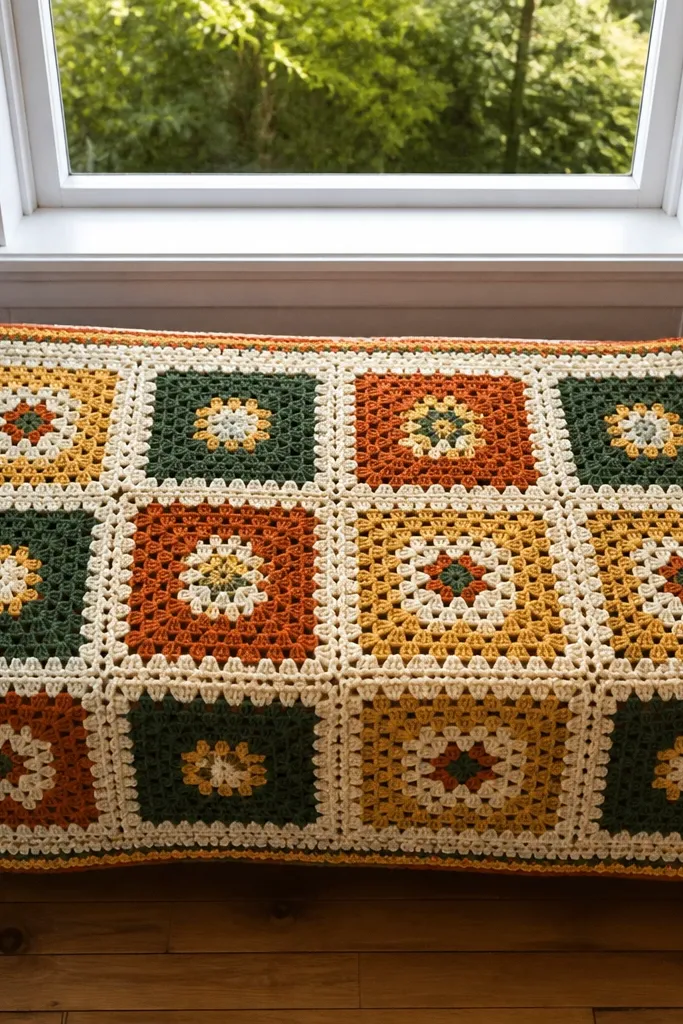
If you want cozy that looks designed, a granny square layout with clean frames is hard to beat. Each square gives you a mini focal point, and the border makes the whole blanket look polished instead of patchy. Use a limited palette — like cream, mustard, terracotta, and forest green — so it feels warm, not chaotic. This blanket also lets you control size by adding or subtracting squares. It’s ideal if you like variety but want a cohesive look.
Crochet multiple granny squares in your chosen color scheme, aiming for the same square size so rows line up. Join squares with a method that looks neat — whip stitch or slip-stitch join along edges — then create a border that forms frames around the entire blanket. For a crisp look, work a border in single crochet first, then add a second row with more height like half double crochet. Weave in ends as you go so you don’t end up with hundreds at the end.
Pro tipPress seams flat before border work; square joins look better when the edges sit flush.
AvoidDon’t join squares with a loose chain bridge; it makes the blanket look airy instead of cozy.
10. Moss Stitch Lap Blanket in Soft Gray-Lavender
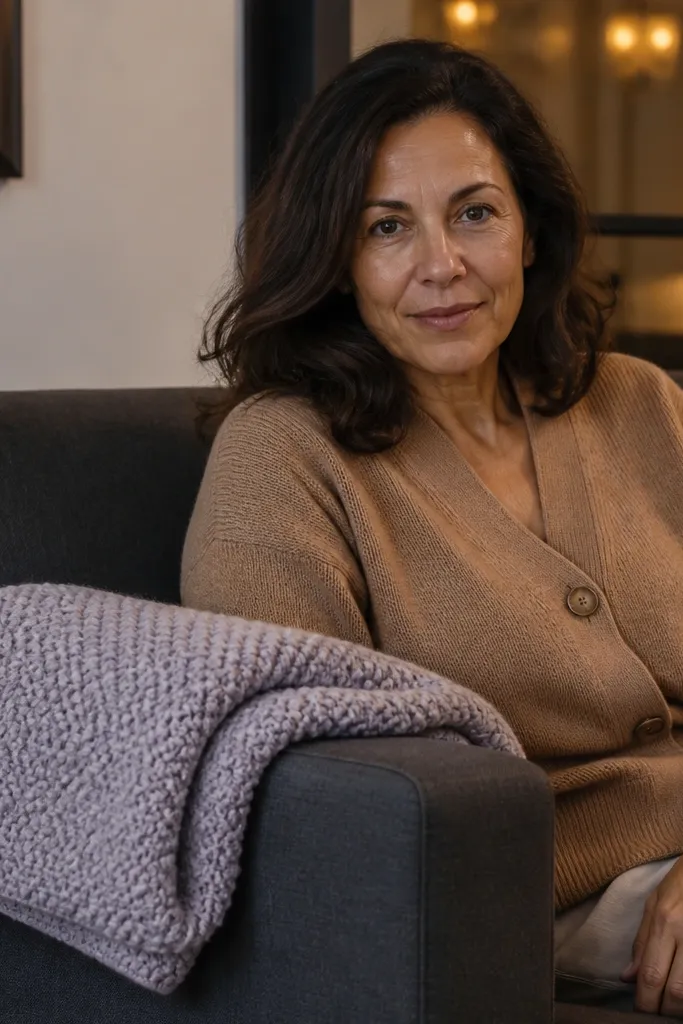
Moss stitch is cozy without being chunky. The texture is subtle but dense, and the fabric lies flat, which makes it look good folded on a sofa arm. Gray-lavender is a color that reads warm in daylight and still looks calming at night. This blanket is also fast to finish because moss stitch repeats cleanly and doesn’t require complex turning chains. If you want cozy aesthetics with a calmer vibe, moss stitch is the sweet spot.
Start with a foundation chain in an odd or even count based on your moss stitch pattern requirements. Work the first row in single crochet and chain stitches as your pattern directs to create the moss grid. Continue alternating rows, making sure each single crochet lands in the correct chain space and each chain lands above a previous single crochet. Finish with an edging row of single crochet around and a slip-stitch row to keep corners sharp.
Use a yarn with slight halo if you want extra coziness in photos; smooth yarn makes moss texture look flatter.
Don’t crochet moss stitch too tightly — it should look springy, not stiff.
11. Thermal-Look Blanket Using Granny Ridge Rows
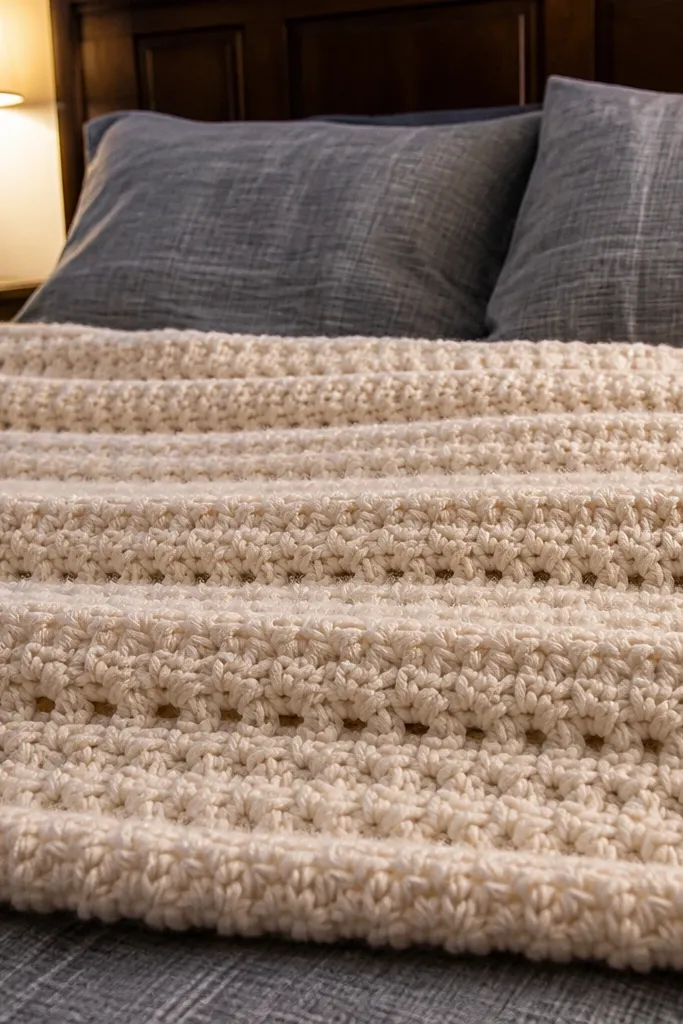
Granny ridge rows create a thermal look — thick, structured, and cozy even when you use a single color. The ridges catch light in horizontal bands, so the blanket looks layered. Cream yarn makes it feel like winter bedding, and it photographs beautifully because the texture shows in shadows. This is also a good choice when you want a blanket that doesn’t curl — the ridge structure helps it stay flat. It’s beginner-friendly because the rows repeat and you don’t need fancy shaping.
Work rows of double crochet clusters with chain spaces that create the ridge effect, building height consistently across the blanket. After each ridge row, start the next row by aligning into the correct chain spaces so the ridges stay straight. Keep your turning chain consistent to avoid bumps at row ends. Finish with a border of single crochet all around, then a final row that adds a slight frame without changing the blanket’s overall height too much.
If your ridge edges look uneven, adjust by adding or reducing border stitches on corners only, not in the main body.
Don’t let the turning chain count drift; that’s where thermal-looking blankets start to look wobbly.
12. Boho Fringe Blanket in Rust and Natural Jute-Color
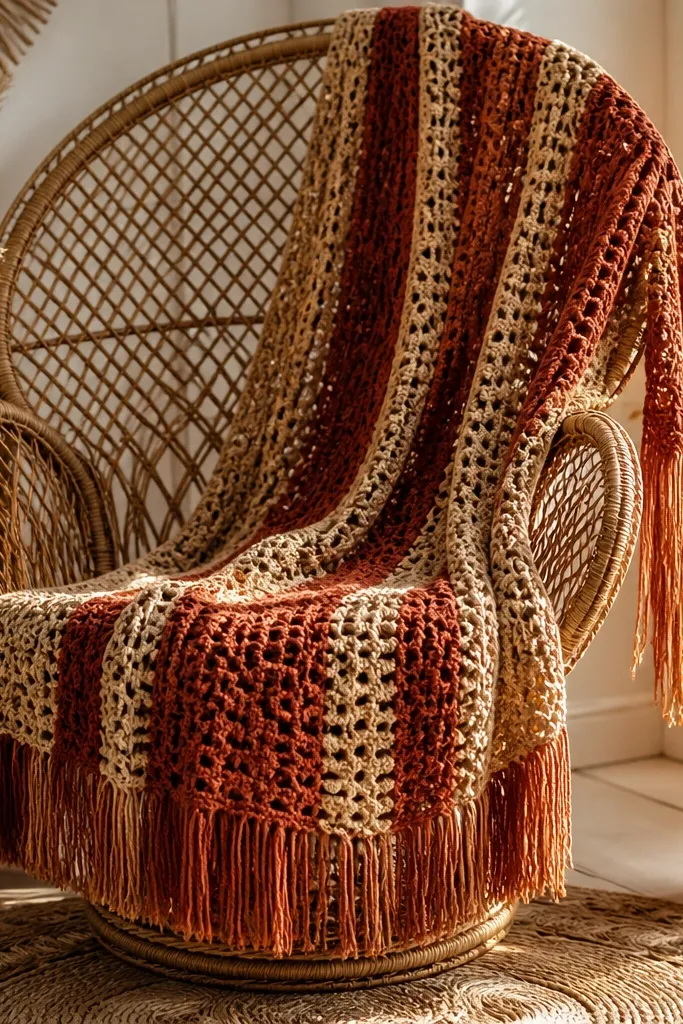
This one looks cozy because it has movement. The stitch choice gives a light, breathable fabric while the fringe makes it feel warm and styled. Rust paired with a natural jute-color yarn looks like fall decor but still works year-round. The airy stitch pattern also makes it faster than super dense blankets, so you get the “cozy blanket ideas” payoff without months of work. It’s best for throws where you want drape and a relaxed look.
Choose an airy stitch repeat like granny clusters with larger chain spaces or a lace-leaning shell pattern that still stays thick enough to feel cozy. Crochet in stripes or a simple repeating row pattern so the texture stays consistent across the blanket. When you finish, add fringe by attaching yarn through the edge stitches in evenly spaced groups. Trim fringe to a uniform length and block the body gently so the drape looks intentional.
Pro tipUse a yarn that isn’t too slippery; fringe tangles less and hangs better in photos.
AvoidDon’t go too lacy; if the fabric is see-through, it won’t feel cozy on the couch.
13. Bernat-Style Faux Knit Blanket with Simple Knit Look
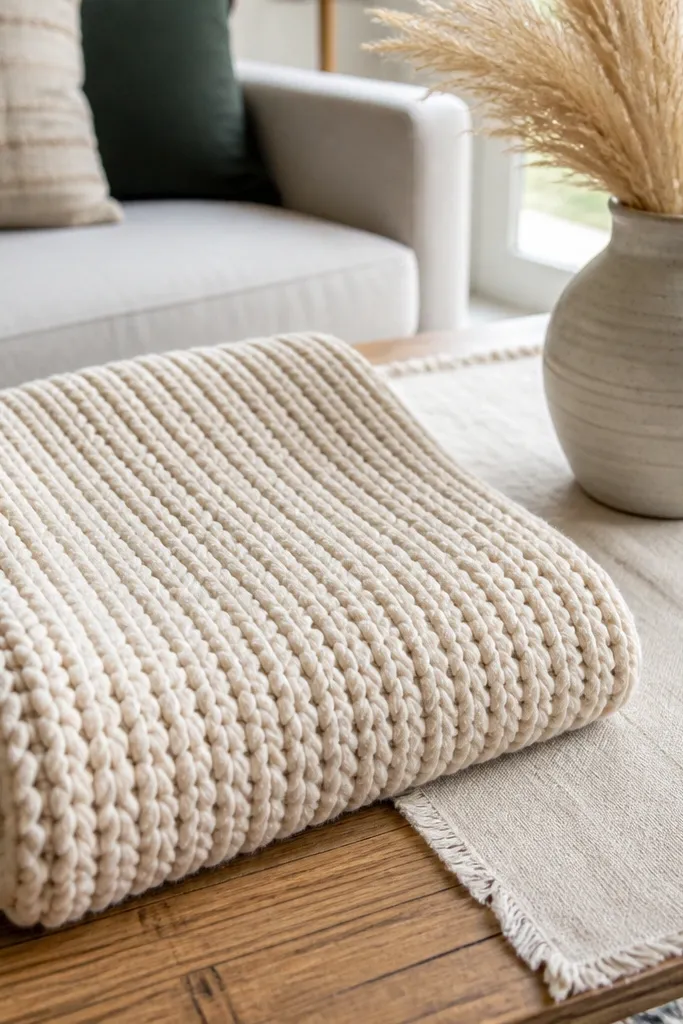
Faux knit looks cozy because it mimics the familiar knit blanket you already love. The ridges are created by alternating front/back post stitches or simple knit-look stitch patterns that keep the fabric dense but not bulky. Cream or light oatmeal makes it feel calm and clean, and the texture gives it depth without busy color. This is a strong choice if you want a blanket that fits modern rooms and still feels warm. It also looks good with minimal borders.
Work a foundation chain and then alternate stitch types per the knit-look pattern you choose, keeping the front and back post placements consistent. Make your rows long enough for a throw, and keep stitch tension steady so the ridges look even. When you reach the end, add a border of single crochet around, then finish corners with extra stitches to keep the edge square. Weave ends and block lightly so ridges stand up.
If your ridges look flat, switch to a slightly smaller hook; knit-look depends on tension to create a raised surface.
Don’t use a yarn that stretches a lot; the blanket will lose the knit texture over time.
14. Color-Blocked Half-Granny Blanket for Bold Contrast
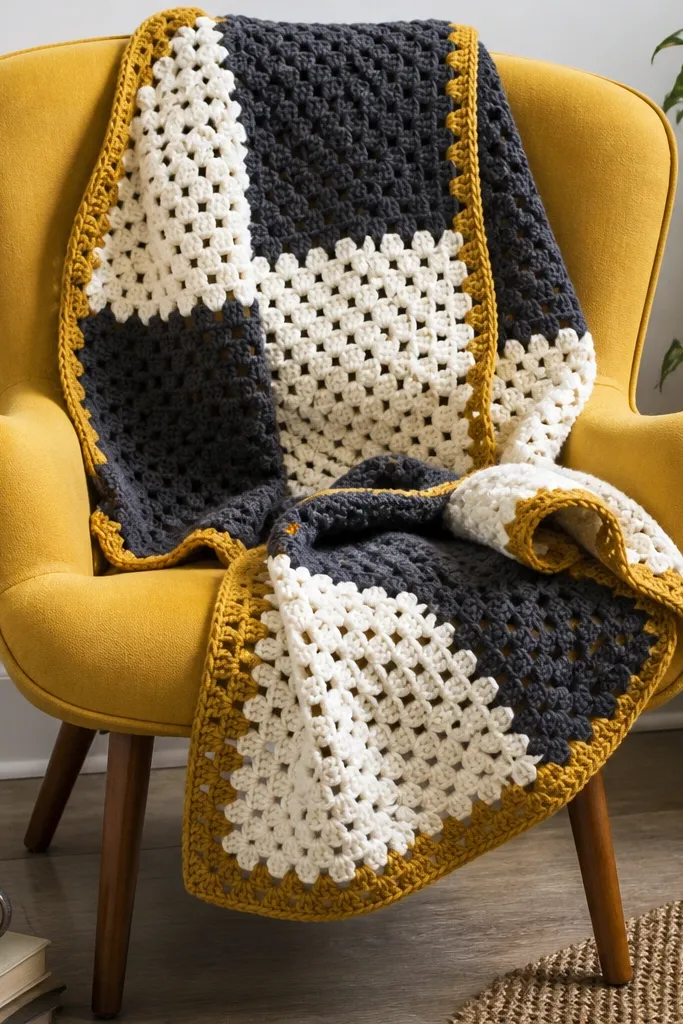
This blanket is cozy because it’s graphic. Half-granny panels give you thick texture in clean blocks, so the blanket looks styled even when it’s casually thrown over a chair. Contrast colors — like navy plus mustard, or charcoal plus cream — make the texture pop. It also feels more intentional than a random stripe because each panel has a defined shape. This is ideal if you want visual impact without complicated stitch charts.
Plan your panel sizes first: decide how many rows per panel so the blocks look balanced. Crochet a half-granny panel using granny clusters in a repeat, then switch colors at the exact row where the panel ends. Build the next panel adjacent by continuing the pattern across edges, then join with slip stitches or a single crochet join for a tidy seam. Add a border in a neutral color so the contrast colors don’t fight each other across the edges.
Pro tipKeep your yarn weight identical across colors; mismatched yarn thickness makes color blocks look uneven.
AvoidDon’t change hook size between colors; it warps the block boundaries.
15. Night Sky Star Stitch Blanket in Charcoal and Silver
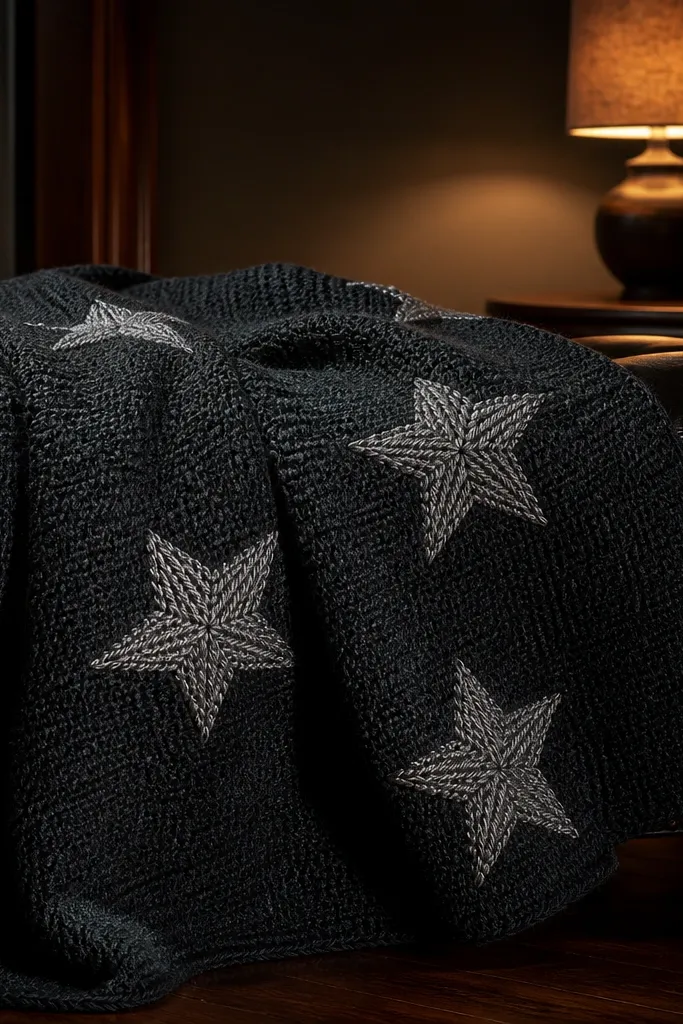
Star stitch gives you cozy drama. The raised star shapes look like little bursts across a dark background, and silver yarn adds sparkle without needing sequins. This blanket reads warm because the texture feels dimensional, not because it’s bright. It looks incredible on dark furniture and night lighting, and it’s a conversation piece even as a simple throw. If you want your cozy crochet blanket ideas to look like home decor, this is the one.
Start with a charcoal base using a solid stitch like double crochet to create a smooth background. Then work star stitches at regular intervals: each star is made from multiple stitches into a single point, then tied into the surrounding base stitches. Keep star placement consistent by counting rows and anchoring stars to the same stitch landmarks. Finish with a border of single crochet and a final slip-stitch row in charcoal to frame the stars cleanly.
Pro tipUse stitch markers for star anchor points; missing one shifts the whole pattern and makes the layout look messy.
AvoidDon’t use too much sparkle yarn — if the silver dominates, the stars lose their shape.
16. Pastel Rainbow Ripple Baby Throw with Soft Edges
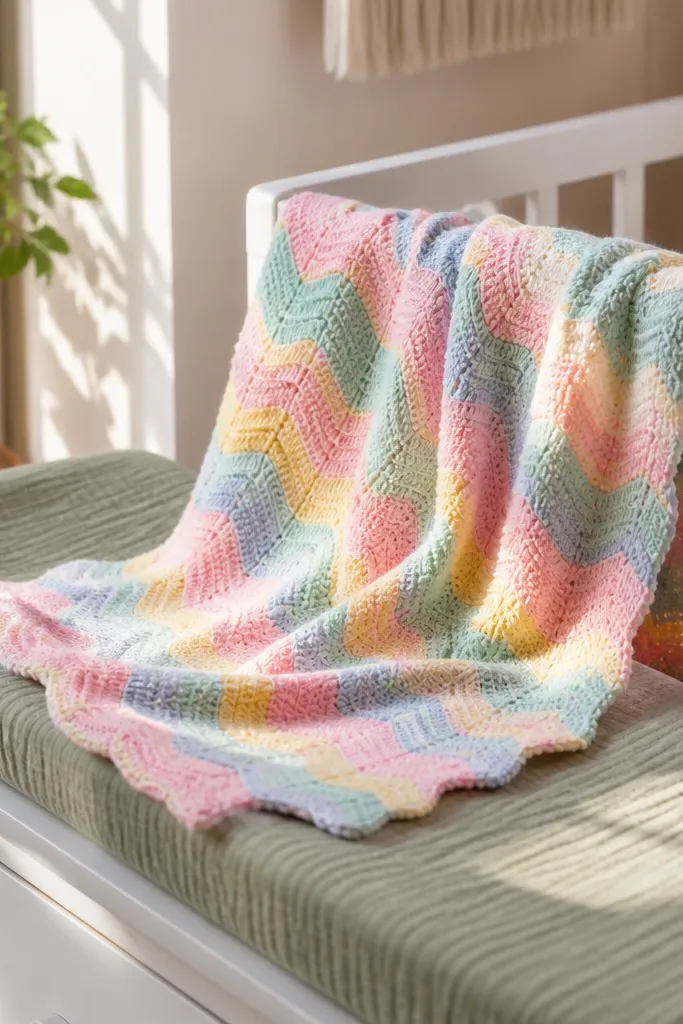
Ripple stitch makes blankets feel snuggly because the waves create a rolling drape, and pastel colors look calm and cozy in nurseries. This idea is photogenic because each wave catches light differently, even when the colors are subtle. For a baby throw, you want softness and safety — the stitch should be dense enough to avoid gaps. Pastel rainbow also looks sweet without needing complicated color changes. Go with a medium wave size so it stays cozy, not decorative.
Use a ripple pattern with a known multiple requirement and cast on accordingly for your throw width. Work row-by-row increases and decreases, changing colors at the end of each row or every few rows to keep transitions smooth. At the end, add a border that uses single crochet along the wave crests and valleys so the edge doesn’t curl. Lightly block for even waves, then weave ends securely and trim any loose fibers.
Pro tipIf the border ripples, add a border row that’s slightly denser than your main stitch — it stabilizes the edges.
AvoidDon’t skip checking width after every few color changes; ripple patterns can drift if your tension changes.
17. Chunky Fringe Moss Stitch Blanket in Cream with Warm Beige
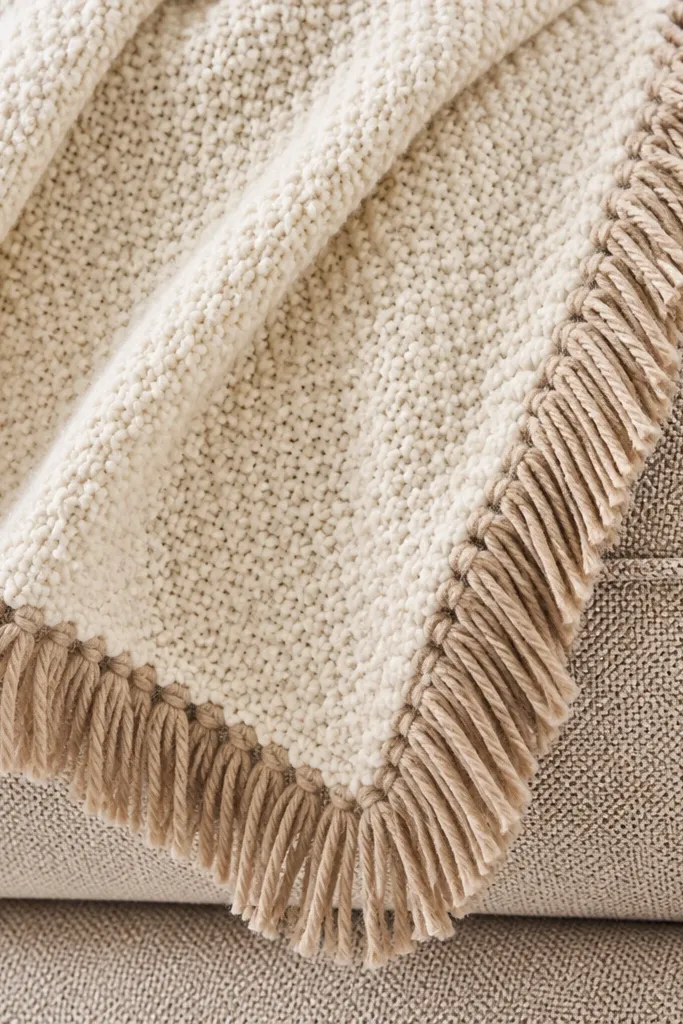
This is cozy that looks clean and soft. Moss stitch gives you that knit-like texture, while chunky fringe adds a styled finish that makes the blanket look warm even when it’s just draped. Cream base plus warm beige fringe reads classy, not childish. The dense fabric holds up well for everyday use, and the fringe gives you a “finished” look that photos love. It’s a great pick if you want cozy crochet blanket ideas that feel neutral and still special.
Start with a cream yarn and work moss stitch rows until you reach your throw length. Keep your stitch count consistent and mark the start of each row so the texture stays even. When the blanket is done, add fringe by attaching yarn strands through edge stitches in spaced groups, then trim to the same length. Finish with a light border of single crochet to keep the edges from widening, and block gently to set the texture.
Use a yarn that holds shape for fringe; stretchy yarn makes fringe look uneven after washing.
Don’t attach fringe too close to the first row of stitches; it can pull the edge and create a wavy hem.
18. Two-Tone Granny Hexagon Blanket with Warm Interior Colors
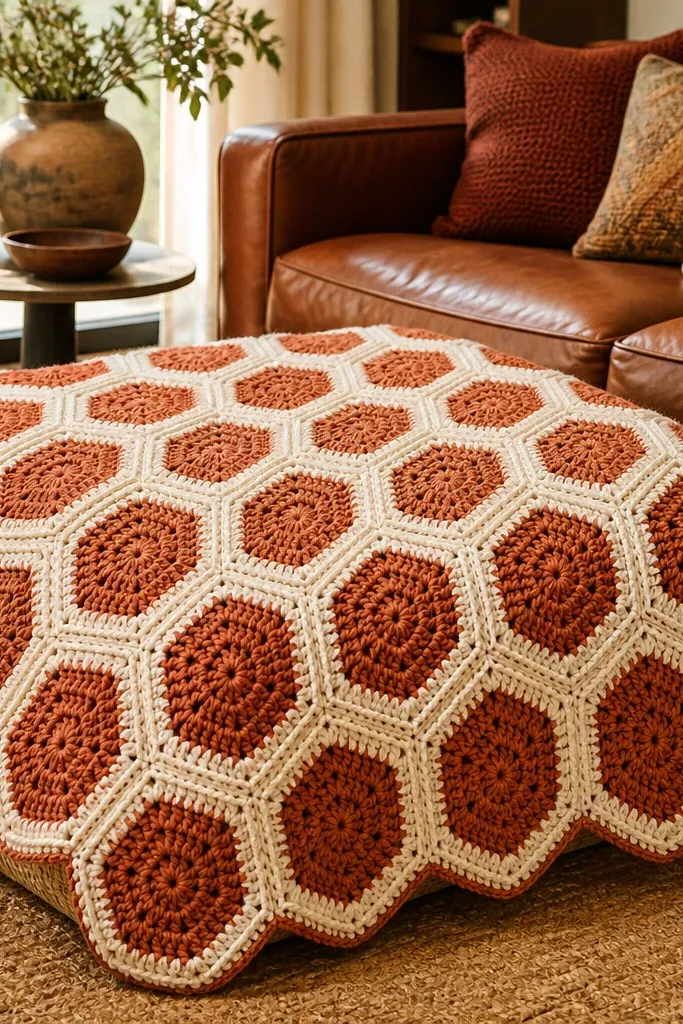
Hexagons look cozy because they create a honeycomb feel without needing full-on mosaic colorwork. Two-tone hexagons give you structure and visual rhythm, and the repeating shapes photograph well from any angle. Warm interior colors like terracotta and cream make it feel like autumn bedding, even if you keep the palette muted. This blanket also lets you play with layout: center a focal color and let the rest fade outward visually. It’s a more time-intensive project than stripes, but the look is worth it.
Crochet uniform granny hexagons in two colors, keeping the same number of rounds per hexagon so they stack neatly. Lay them out in a staggered pattern, then join with slip stitches or whip stitch along edges to keep joins flat. After joining, add a border row that follows the outer edges of the hexagons, then repeat with a second border row for a stable frame. Weave in ends as you join so the final finishing doesn’t eat your time.
Before you join, measure a small layout section and compare it to your intended throw size; hexagons drift if one round varies.
Don’t block each hexagon hard before layout; extreme stretching can create gaps at joins.
19. Textured Shell Blanket in Sage Green with Cream Border
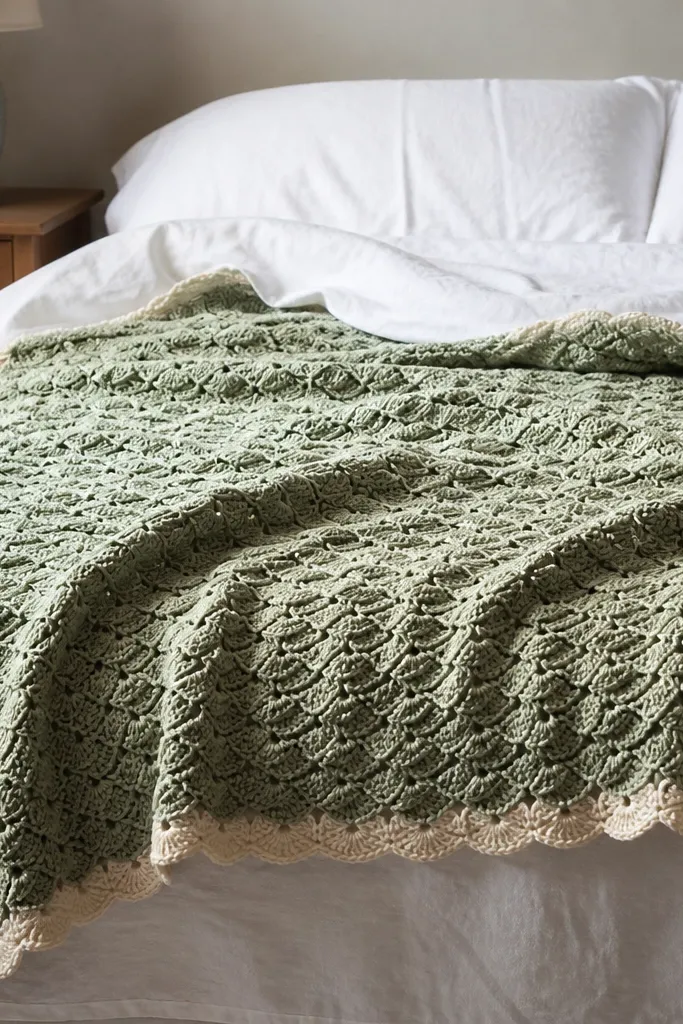
Shell stitches look cozy because they create a scalloped texture that feels like waves of warmth. Sage green is calming but still looks cozy because the shells cast shadows across the surface. A cream border frames the scallops and makes the whole blanket look crisp. This is a strong choice for intermediate crocheters who want something more decorative than seed or moss stitch but still cozy and thick. It also drapes nicely on beds because the shells create natural flow.
Work a base foundation and start row with a stitch that sets the height for your shell repeat, usually double crochet. Create shells by crocheting multiple stitches into the same stitch (like a cluster of double crochet) and separating them with chain spaces. Keep your shell spacing consistent by counting the chain gaps between shells. Finish by adding a cream border: single crochet around first, then a second row that defines the scalloped edge without making it wavy.
Pro tipIf your shells curl at the edges, increase border density by adding an extra single crochet row before the scalloped definition.
AvoidDon’t use a super thin yarn; shells look pretty but won’t feel cozy if the fabric is too airy.
20. Mod Blocks Blanket with Granny Panels and Solid Rows
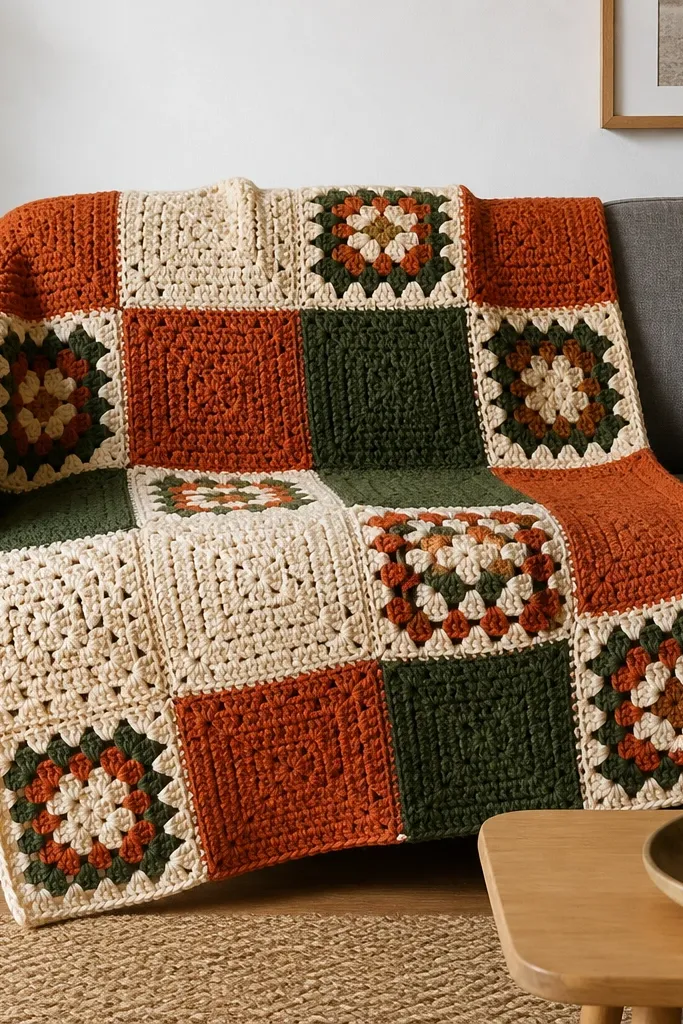
This blanket looks like modern decor, not a traditional grandma blanket. The trick is combining granny panel sections with solid rows so you get texture and clean negative space. It’s cozy because the granny sections add depth, and the solid rows keep it from looking busy. Choose a palette like cream, rust, and deep green so the blocks feel warm and grounded. It’s also a good plan if you get bored with a single stitch repeat — you’ll get visual breaks every few rows.
Decide your grid: for example, alternate a granny mini-panel of a set row count with a solid row section of equal width. Crochet the solid sections in double crochet rows, then switch to a granny-cluster panel for the textured block. Join the blocks by keeping stitch counts consistent at the transitions so edges line up. Add a border in one neutral color to unify the whole blanket and hide the visual differences between panel types.
Pro tipUse a consistent stitch height for both block types; mismatched heights make transitions look uneven.
AvoidDon’t let granny panels shrink by crocheting with a tighter tension — keep tension steady across all sections.
21. Polar Fleece-Look Blanket Using Thick Single Crochet Rows
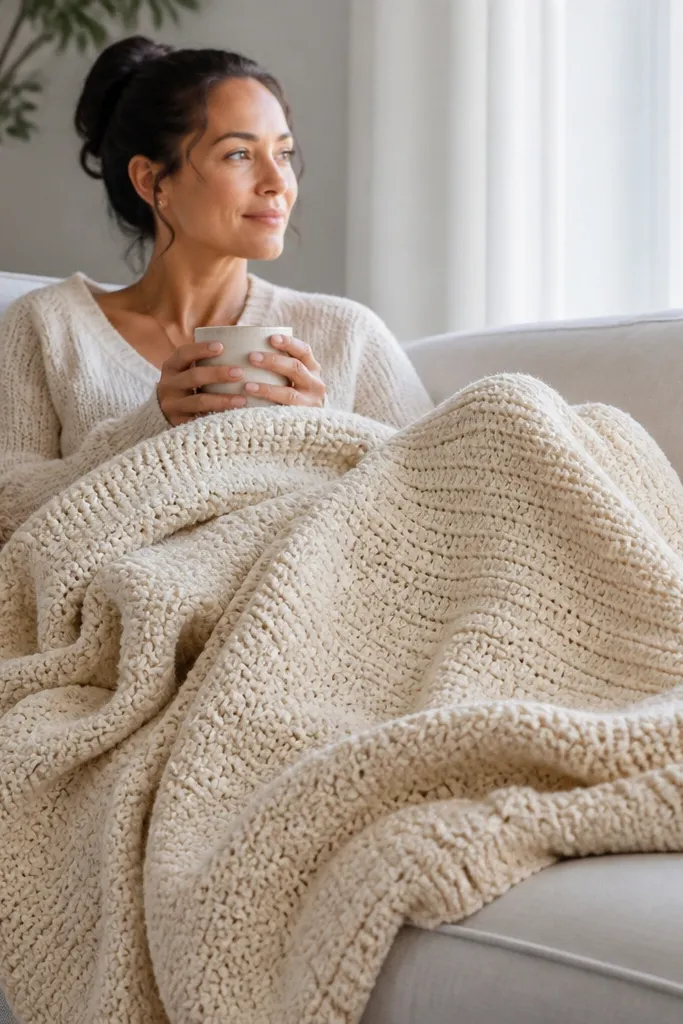
Dense single crochet with bulky yarn gives you that fleece-like cozy look. It’s not fancy, but it’s photogenic because the fabric surface is smooth and thick, and the rows create a subtle, satisfying grain. Cream reads warm and makes your living room look instantly cozier. This is a smart choice if you want a blanket that looks “store bought” and doesn’t require complex stitch patterns. It also holds up well for daily lounging.
Use bulky yarn and start with a foundation chain long enough for your throw width. Work a base row of single crochet, then continue with single crochet in the same stitch type for the body so the surface stays uniform. Keep your rows straight by checking the width every few rows. Finish with a border of single crochet around, then add a second border row in the same stitch to thicken the edge and prevent waviness.
Pro tipFor extra softness, choose a yarn with a brushed finish; it makes dense crochet look plush in photos.
AvoidDon’t crochet too loosely; dense single crochet only looks fleece-like if it’s snug.
22. Ribbed Striped Blanket with Post Stitches in Warm Neutrals
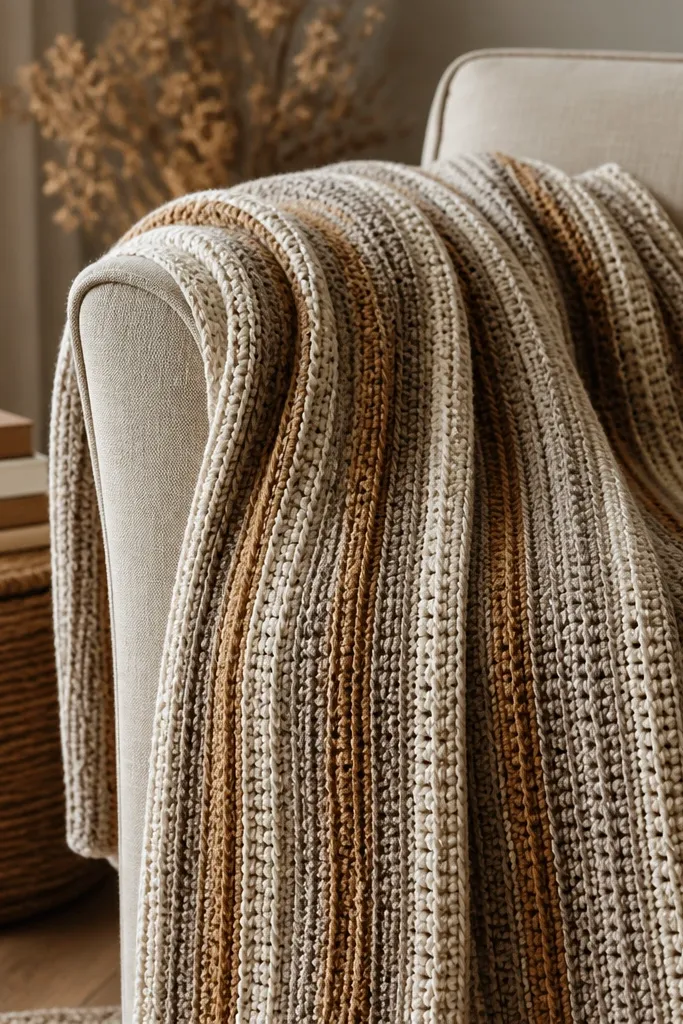
Ribbed stripes look cozy because they mimic knitwear. Post stitches create vertical texture that looks great in warm neutrals like oatmeal, camel, and soft taupe. The stripes give you visual interest without needing colorwork complexity, and the ribbing keeps the blanket from looking flat. It also drapes in a structured way, so it holds shape when you toss it over a chair. This is a good pick if you want a blanket that feels modern but still warm.
Start with a rib stitch repeat using front post and back post stitches in alternating columns. Work in stripes by changing yarn every few rows, but keep the rib pattern consistent across color changes. Count your rib columns carefully so stripes don’t shift. Finish with a border that uses single crochet and extra stitches at corners to keep edges straight. Block lightly so ribs stand out instead of flattening.
Pro tipWhen you change colors, leave a short tail inside the fabric and weave it in after the stripe ends; it keeps the surface clean.
AvoidDon’t switch stitch height when you change colors — that’s where ribbing starts to look uneven.
23. Luxe Lace-Edge Blanket with Dense Center
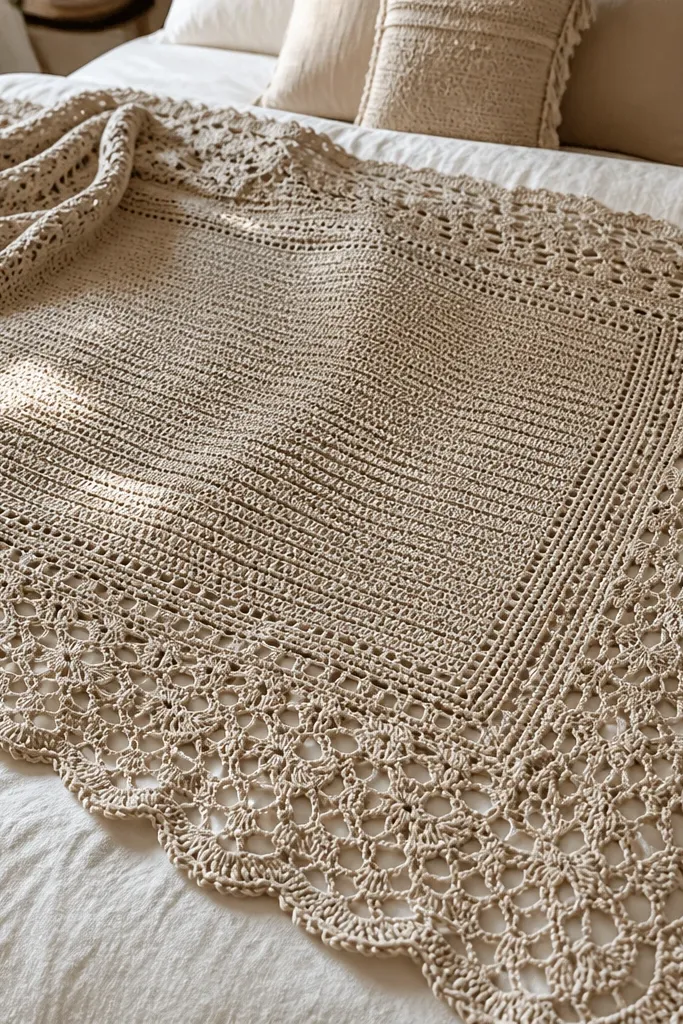
This blanket is cozy because it has a dense center, then a lace border that makes it look fancy without turning the whole project airy. The dense center keeps it warm for couch time, while the lace edge gives you that photogenic, airy-light frame. Use a cream or light oatmeal yarn so the lace border shows contrast. It’s a strong option when you want “pretty” but still want the blanket to feel like a real blanket, not a doily. The border alone makes it look intentional.
Crochet the center in a dense stitch like seed stitch or moss stitch until it reaches your throw size. Then switch to a lace border pattern that attaches to the dense fabric edge — keep the lace repeat consistent around. Work the lace border in two passes if needed: one pass for scallops and another for a cleaner outer edge. Finish corners carefully by adding extra stitches so lace doesn’t pucker.
Pro tipUse a stitch marker every few repeats along the lace border; it’s easy to lose the pattern when you’re turning corners.
AvoidDon’t make the center too open; the whole point is warm center + decorative edge.
24. Canyon Ridge Blanket with Thick Diagonal Texture
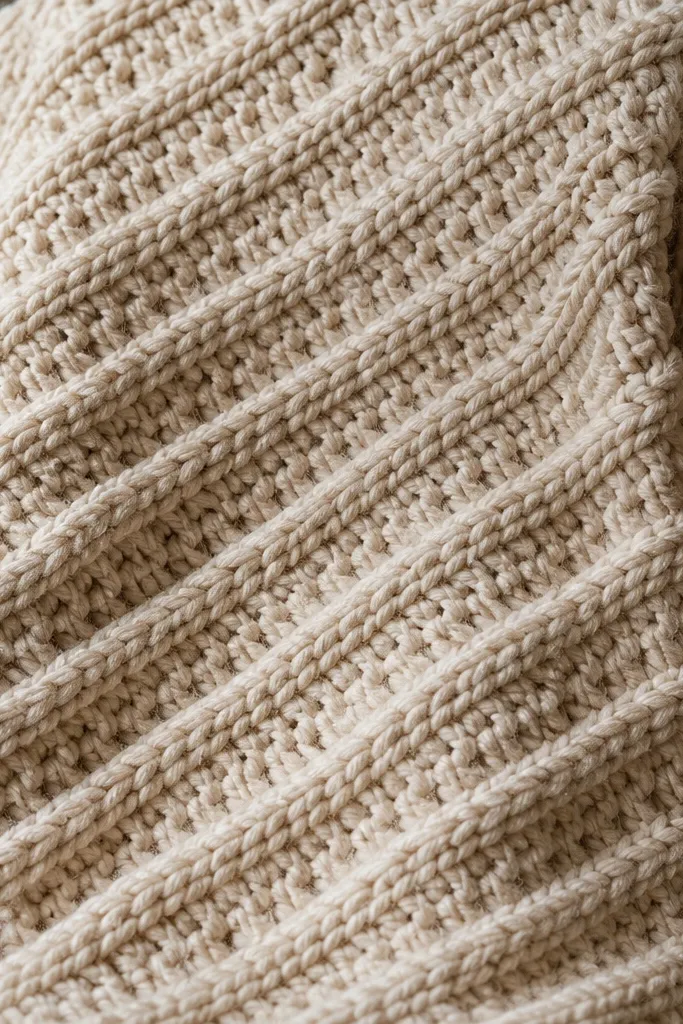
Diagonal ridge patterns look cozy because they create a strong sense of depth, like stacked layers. Canyon ridge styles are particularly photogenic because the texture forms diagonal “walls” that catch light. Use one color for maximum texture definition, or two colors if you want alternating diagonal stripes. This is a great throw for people who like texture but want fewer color changes. It also looks great folded because the diagonal lines stay structured.
Start with a diagonal ridge pattern that uses increases and decreases in a controlled repeat across the width. Work the ridge rows by building a set of textured stitches across a section, then returning to base stitches for the next diagonal. Keep track of your ridge start point each row so the diagonals don’t drift. When you finish the length, add a simple border in single crochet and block to set the diagonal shape.
Pro tipIf your diagonal ridges lean, check row height and turning chain — small height differences shift the whole diagonal.
AvoidDon’t ignore the width math; diagonal ridge blankets show uneven widths more than simple rectangles.
25. Chevron Cozy Blanket in Charcoal with Soft White Peaks
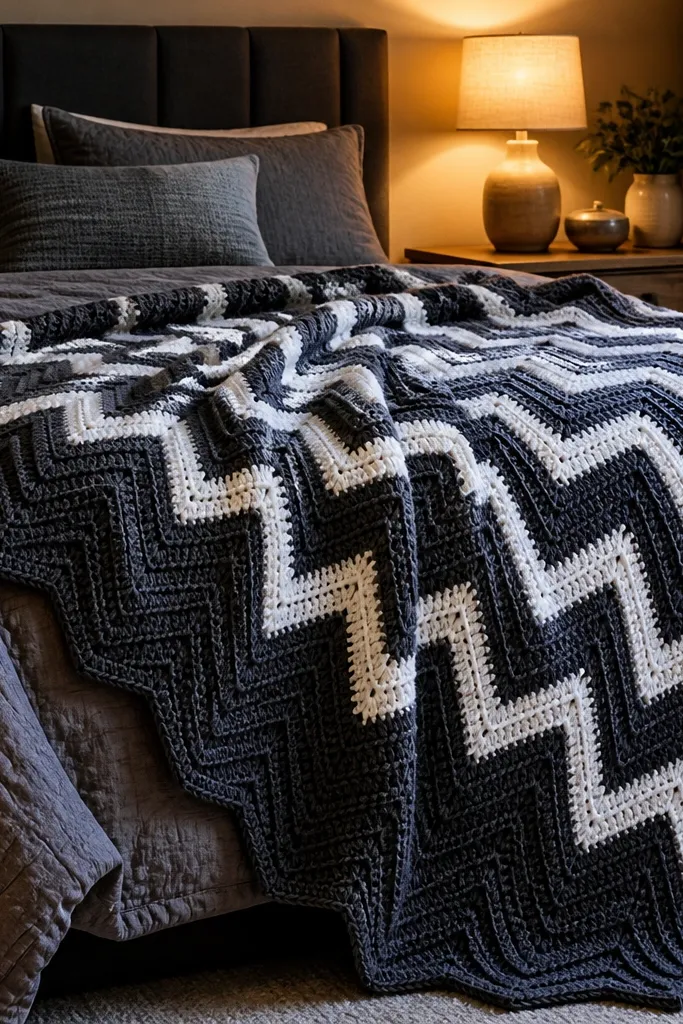
Chevron is cozy because it frames your space. The peaks create a visual rhythm that looks great on beds and couches, and the pointed shapes make the blanket look like it has weight. Charcoal plus soft white gives sharp contrast, so the stitches show clearly in photos. This is a dependable choice if you want a blanket that looks bold but still feels neutral and wearable in any room. It also works well with bulky yarn for a quick finish.
Use a chevron pattern that specifies the stitch multiple so your peaks and valleys align. Crochet the first section in charcoal, then switch to white for the peak rows or for alternating chevron bands, depending on the look you want. Keep tension consistent across color changes so the chevron angles stay crisp. Finish with a border of single crochet all around and add extra stitches at corners to prevent curling. Block to even out the points.
Lay it flat and measure the width at the widest row; adjust border stitch counts rather than changing the core chevron repeat.
Don’t let the peaks get too tall — if you over-stretch the increases, the chevron looks sharp instead of cozy.