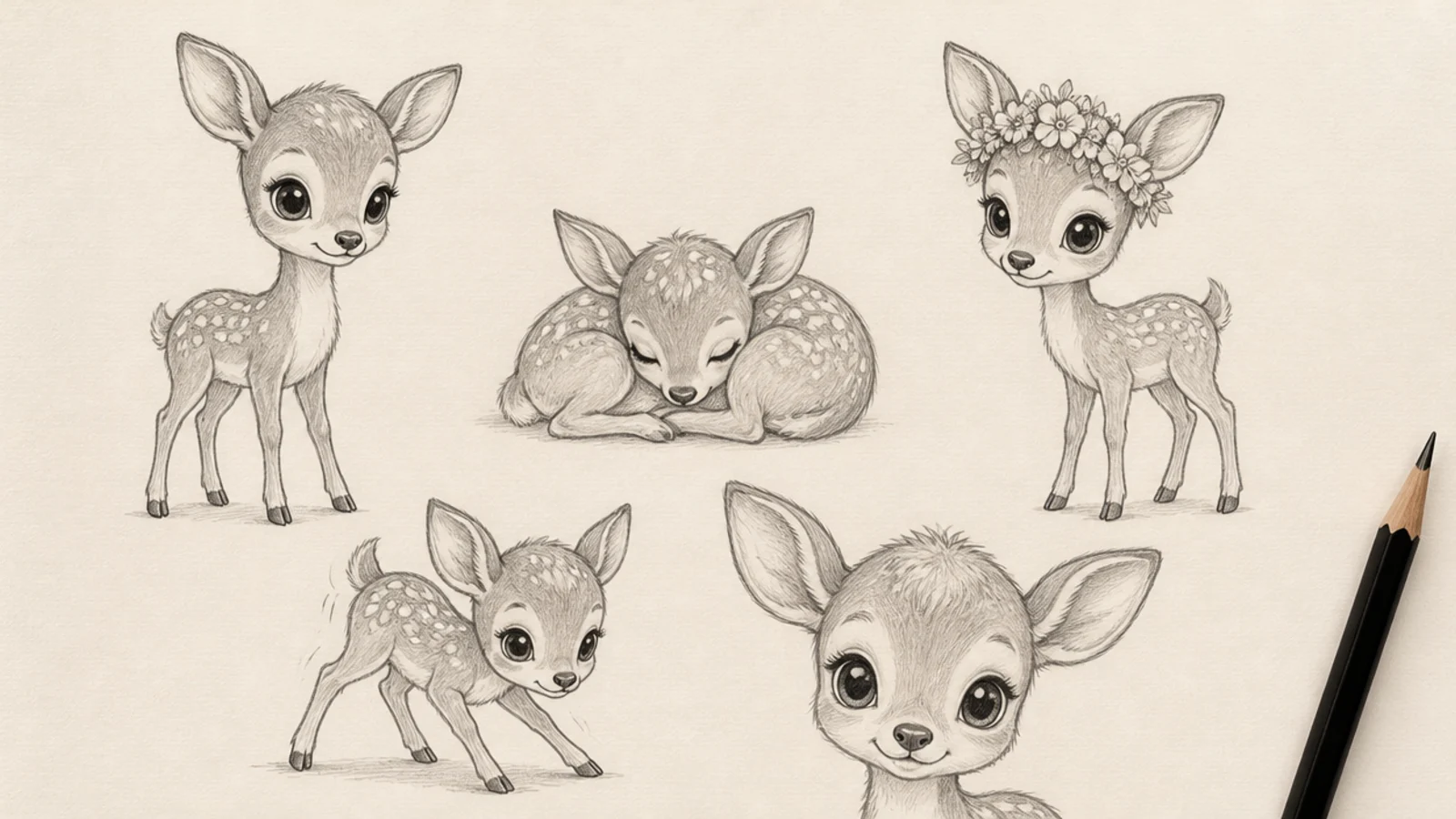
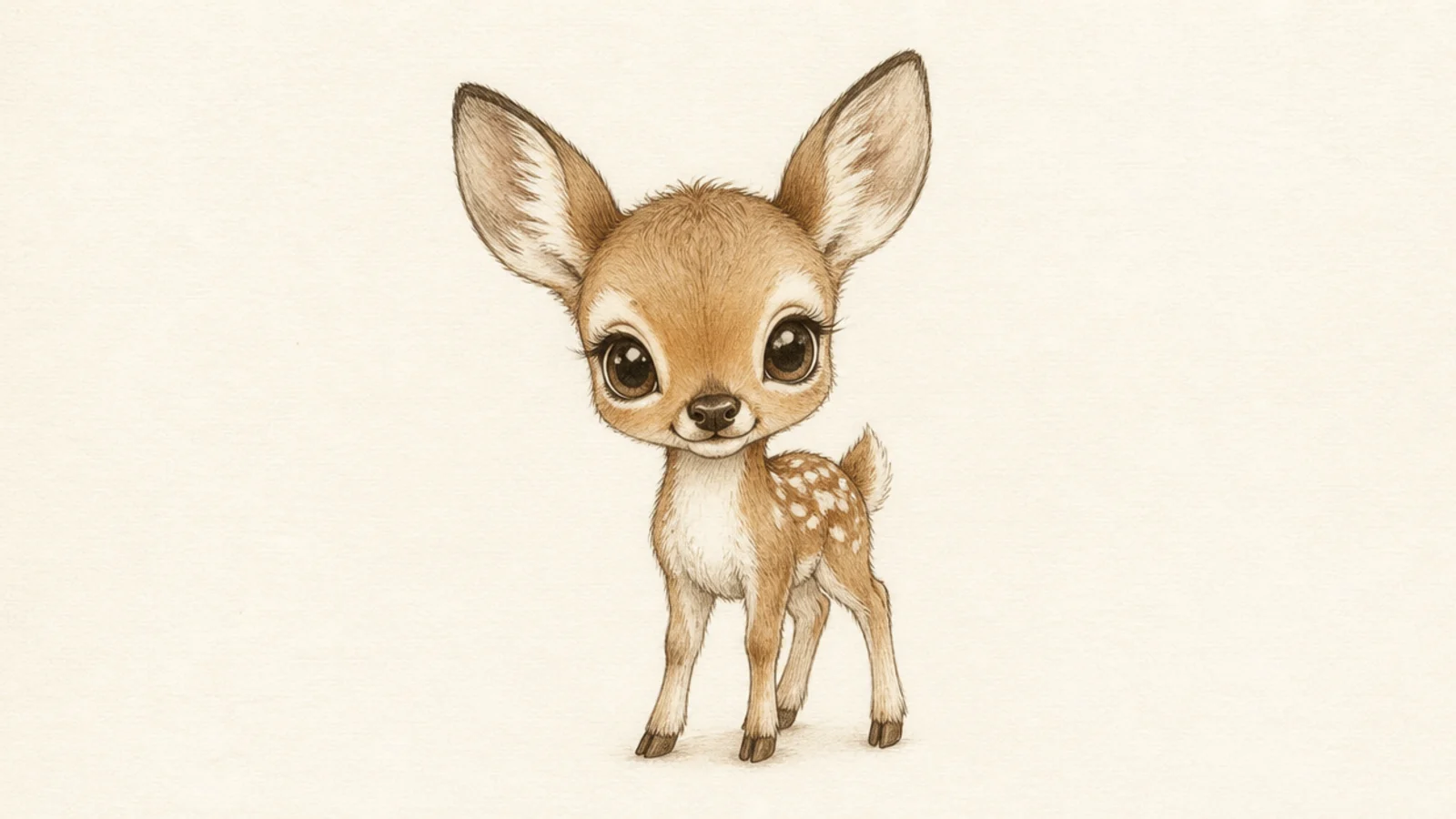
1 Classic Standing Fawn
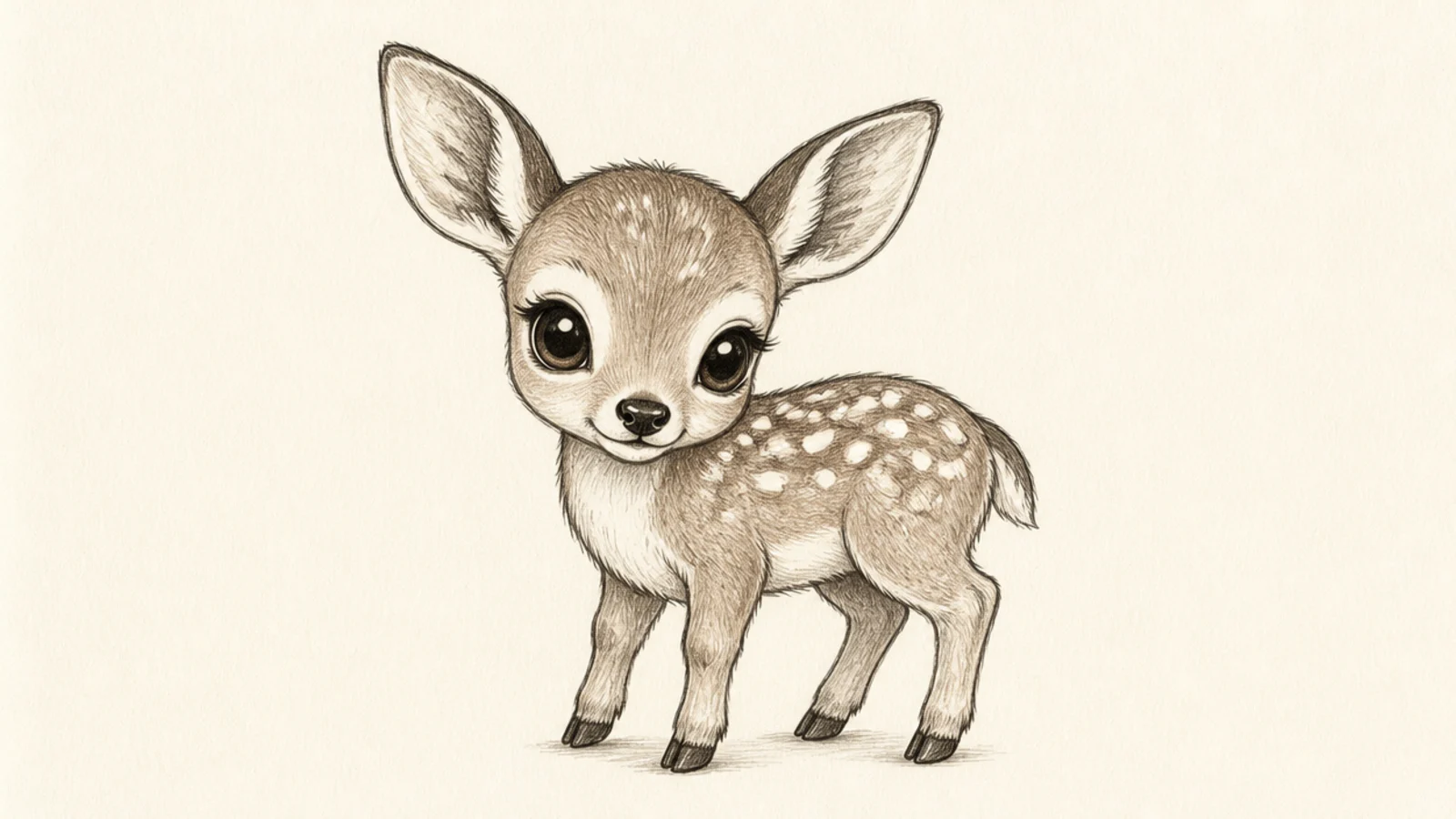
The classic standing fawn is the simplest baby deer and the base for the rest. Its short legs and big head set the cute proportions. It is the perfect first fawn to draw.
Step 1 draw a rounded body and a large head. Step 2 add four short slightly bent legs. Step 3 add tall ears, big eyes, and a few rows of spots on the back.
Keep the legs short and a little bent so the fawn looks young and unsteady.
Don’t draw long elegant legs; short wobbly ones make it read as a baby.
2 Curled Sleeping Fawn
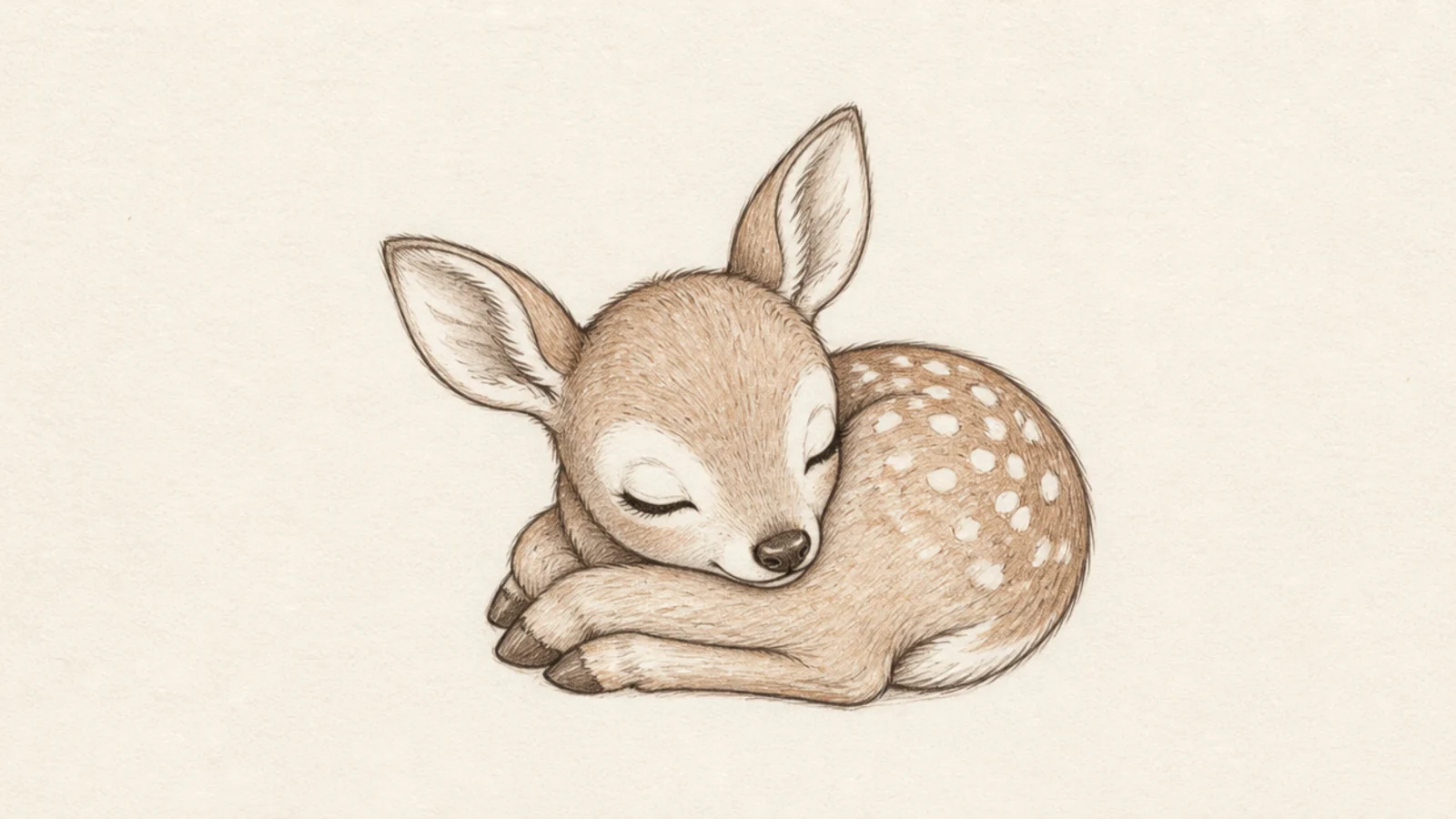
A curled sleeping fawn folds into one soft round shape with almost no legs showing. The tucked pose is the coziest baby deer of all. It is calm and beginner-friendly.
Step 1 draw a big oval curled into a comma shape. Step 2 rest the head back against the body with eyes closed. Step 3 tuck the legs under and dot spots along the visible back.
Draw the closed eyes as two small downward curves to show gentle sleep.
Don’t show all four legs; the tucked, curled shape is what makes it sleepy.
3 Fawn Beside Its Mother
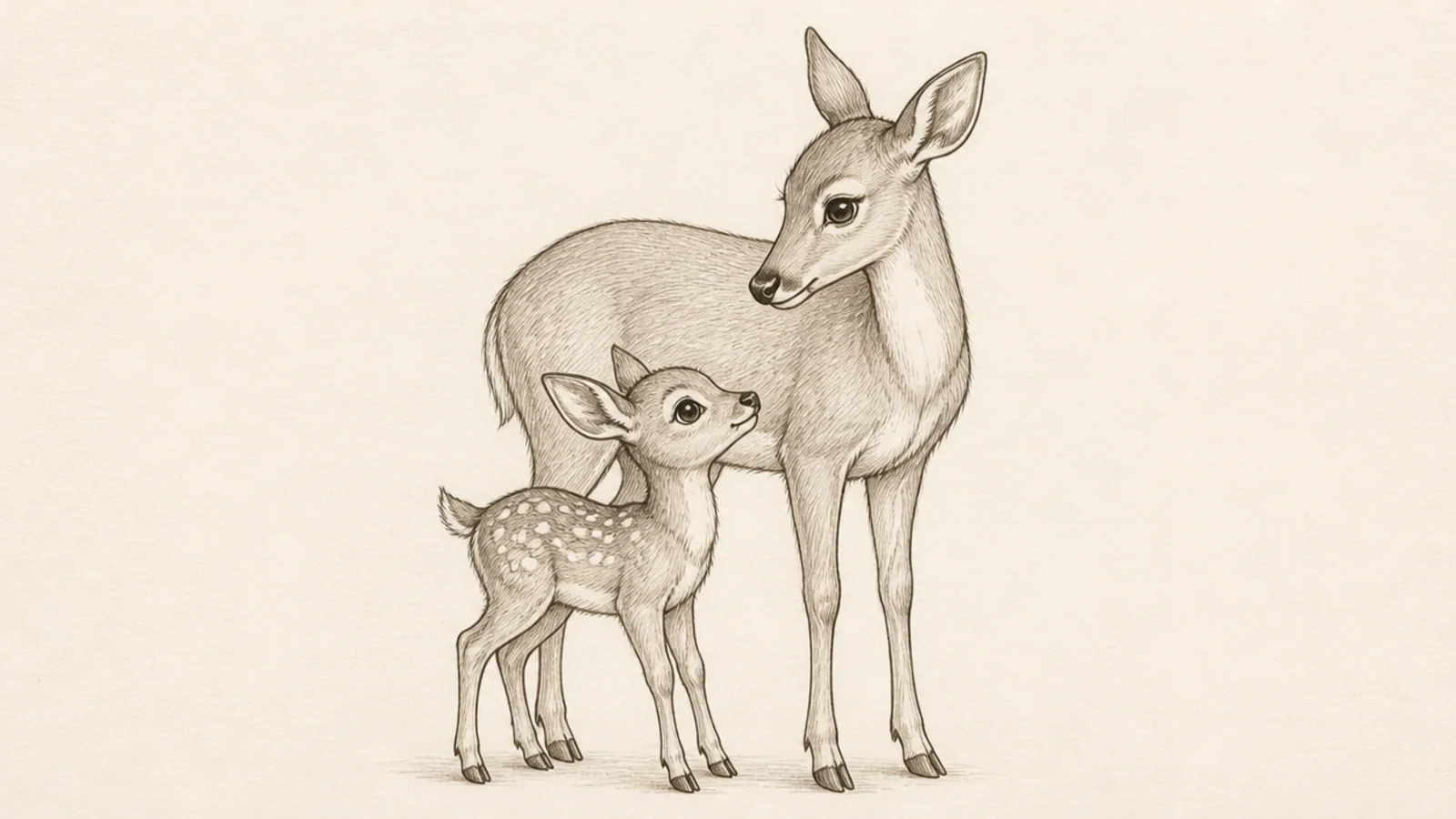
A fawn tucked beside a tall doe is a tender pairing that looks finished and warm. Drawing the same body at two scales is easy. The size gap tells the whole story.
Step 1 draw a full-size doe. Step 2 draw a much smaller fawn beside her legs. Step 3 turn their heads toward each other and add spots to the little one.
Make the fawn reach only to the doe’s belly so the size difference is clear.
Don’t draw them the same height; the scale gap is what reads as parent and baby.
4 Sitting Fawn
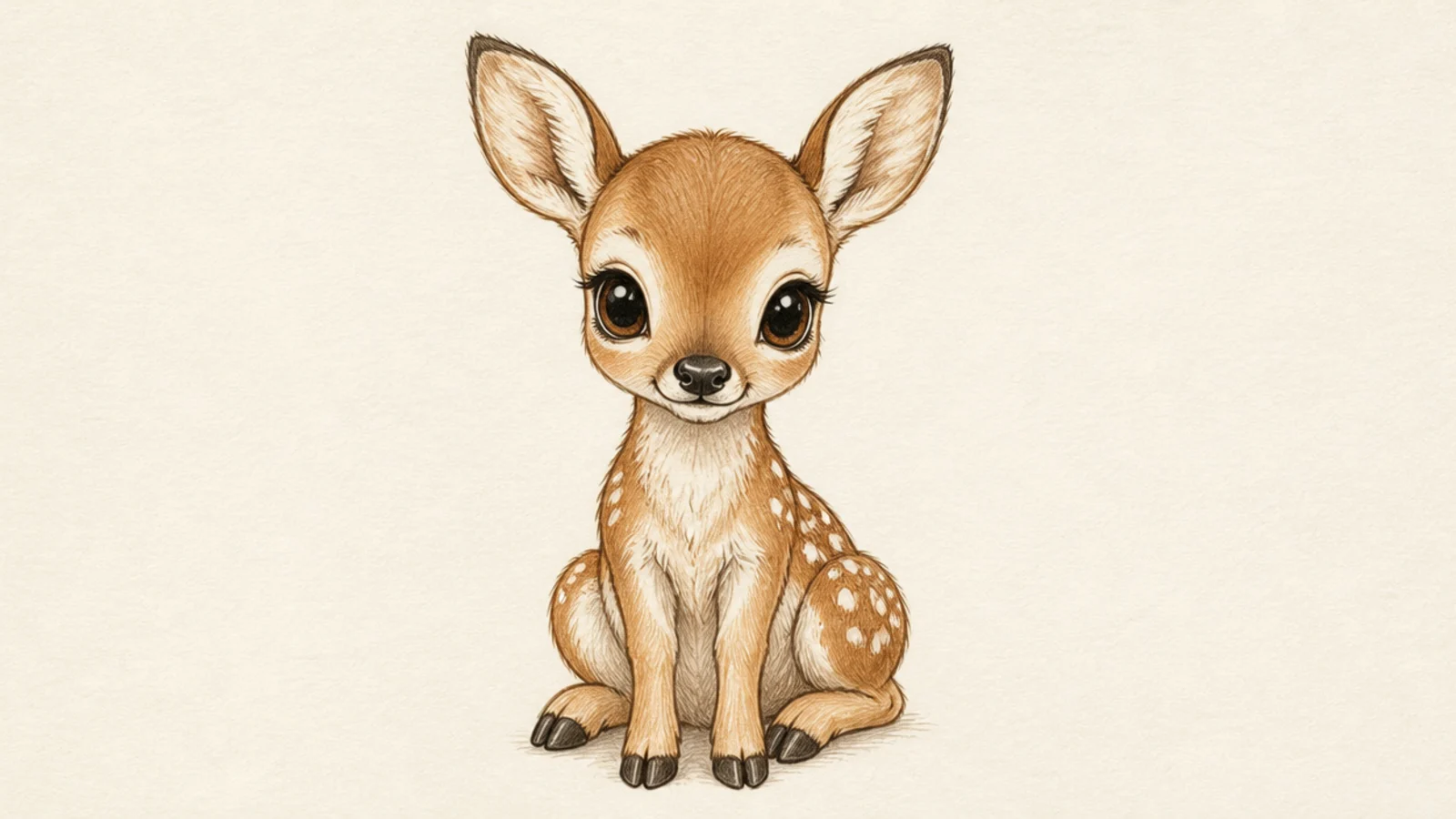
Step 1 draw a rounded body settled on the ground. Step 2 add two straight front legs and folded back legs. Step 3 add an upright neck, big head, and tall ears.
A sitting fawn keeps the front legs straight and folds the back ones, a restful pose that is easy to draw. The upright chest looks alert and sweet. It teaches a settled shape.
AvoidDon’t let the whole body slump; a raised chest keeps the fawn alert and cute.
Pro tipKeep the front legs straight and planted so the sit looks upright and stable.
5 Wobbly First-Steps Fawn
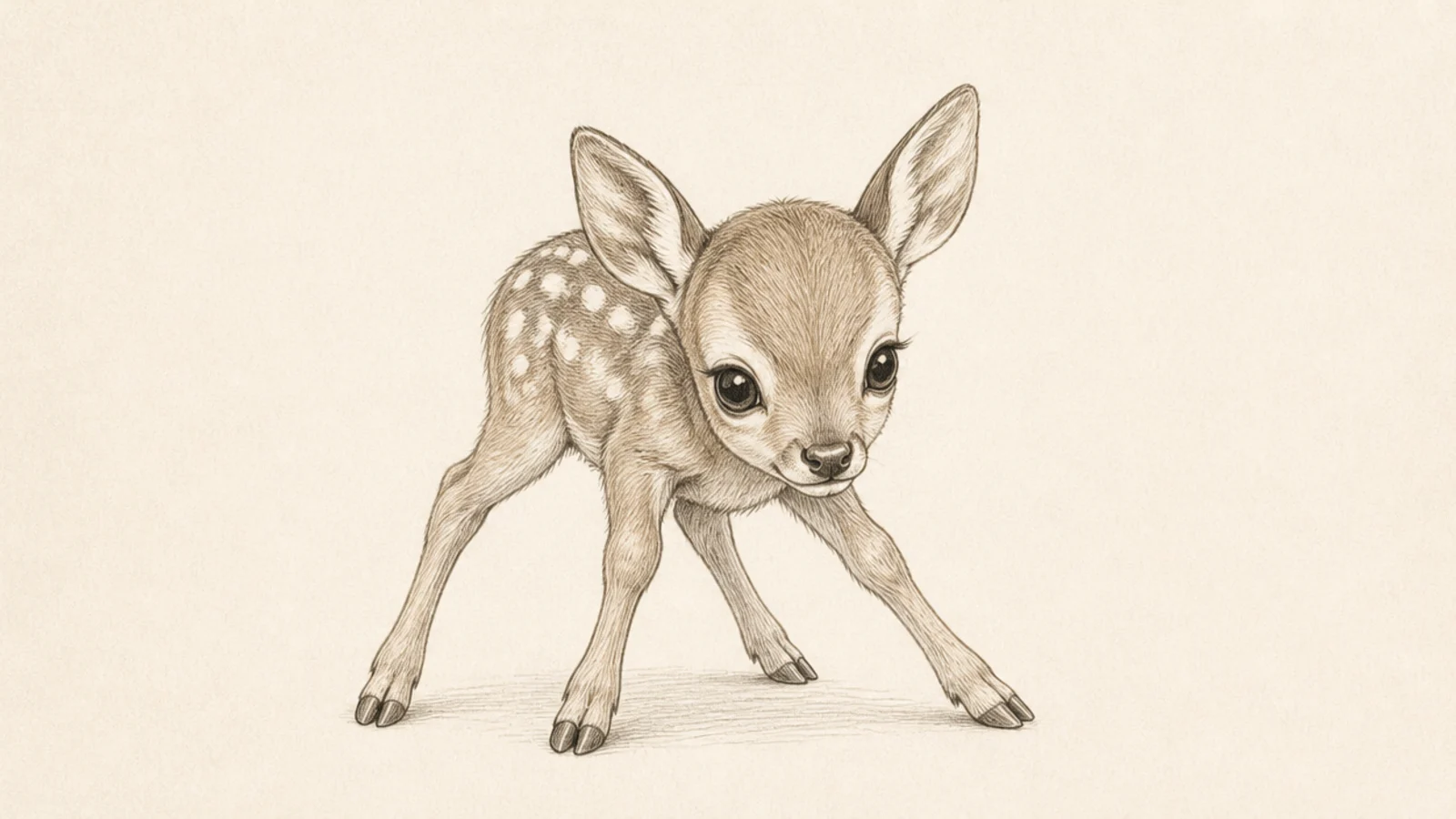
A newborn fawn on splayed, shaky legs is impossibly endearing. The knock-kneed legs capture the wobble of first steps. It tells a sweet just-born story.
Step 1 draw a small round body. Step 2 splay the four legs outward at awkward angles, knees bent inward. Step 3 add a slightly lowered head and big uncertain eyes.
Angle the legs outward and inward at the knees to show the wobble.
Don’t draw sturdy straight legs; the shaky splay is the whole charm here.
6 Fawn Peeking in Tall Grass
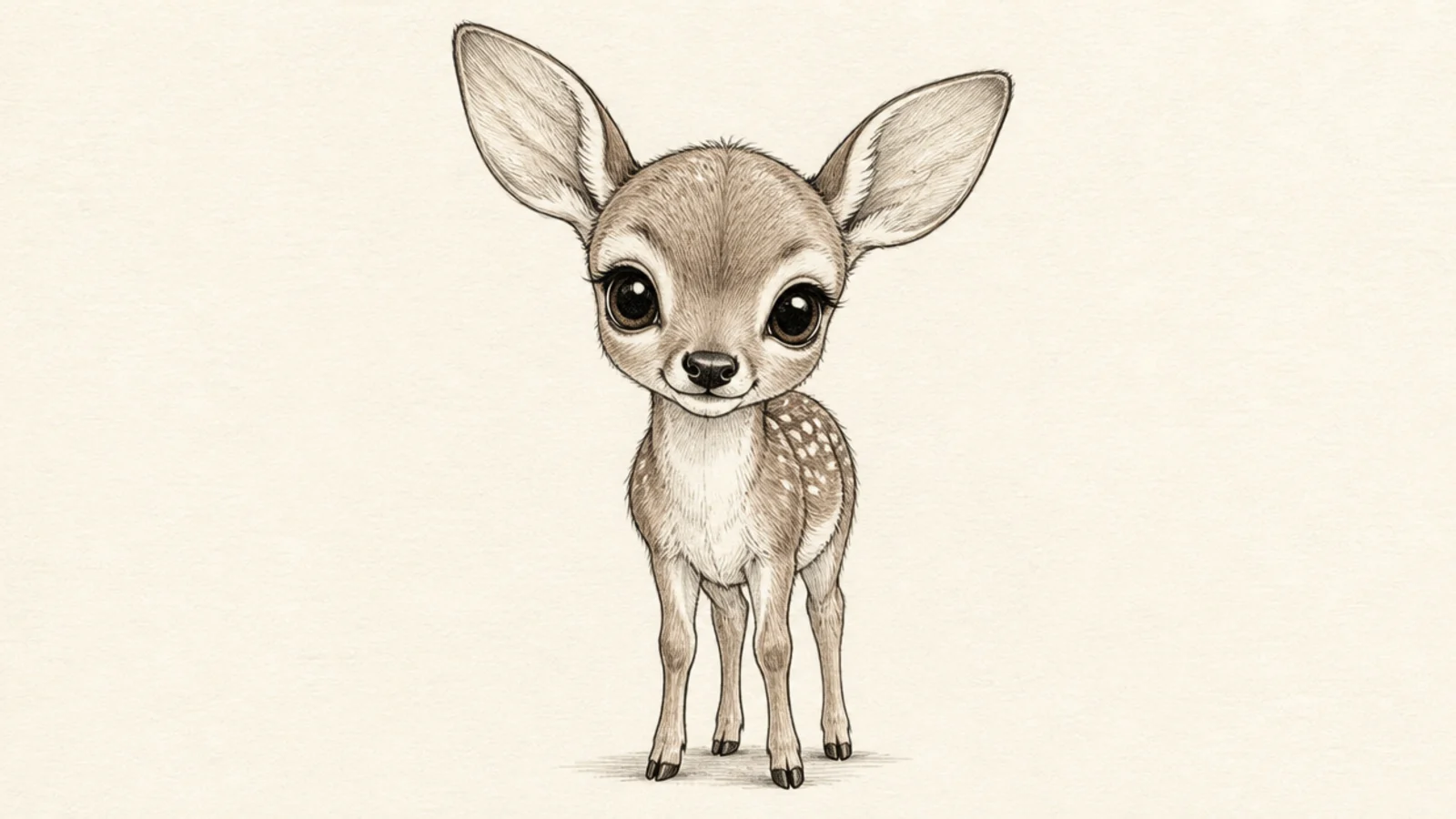
Step 1 draw a band of tall grass blades. Step 2 add a fawn head and neck rising above it. Step 3 add big curious eyes and ears perked over the grass tips.
A fawn hidden in tall grass shows only its head and big ears, which is both cute and easy. The hidden body means less to draw. The peeking pose feels shy and natural.
AvoidDon’t draw the full body; the grass hiding it is the whole idea.
Pro tipLet the grass cover the legs and belly so you skip the trickiest parts.
7 Spotted Fawn Portrait
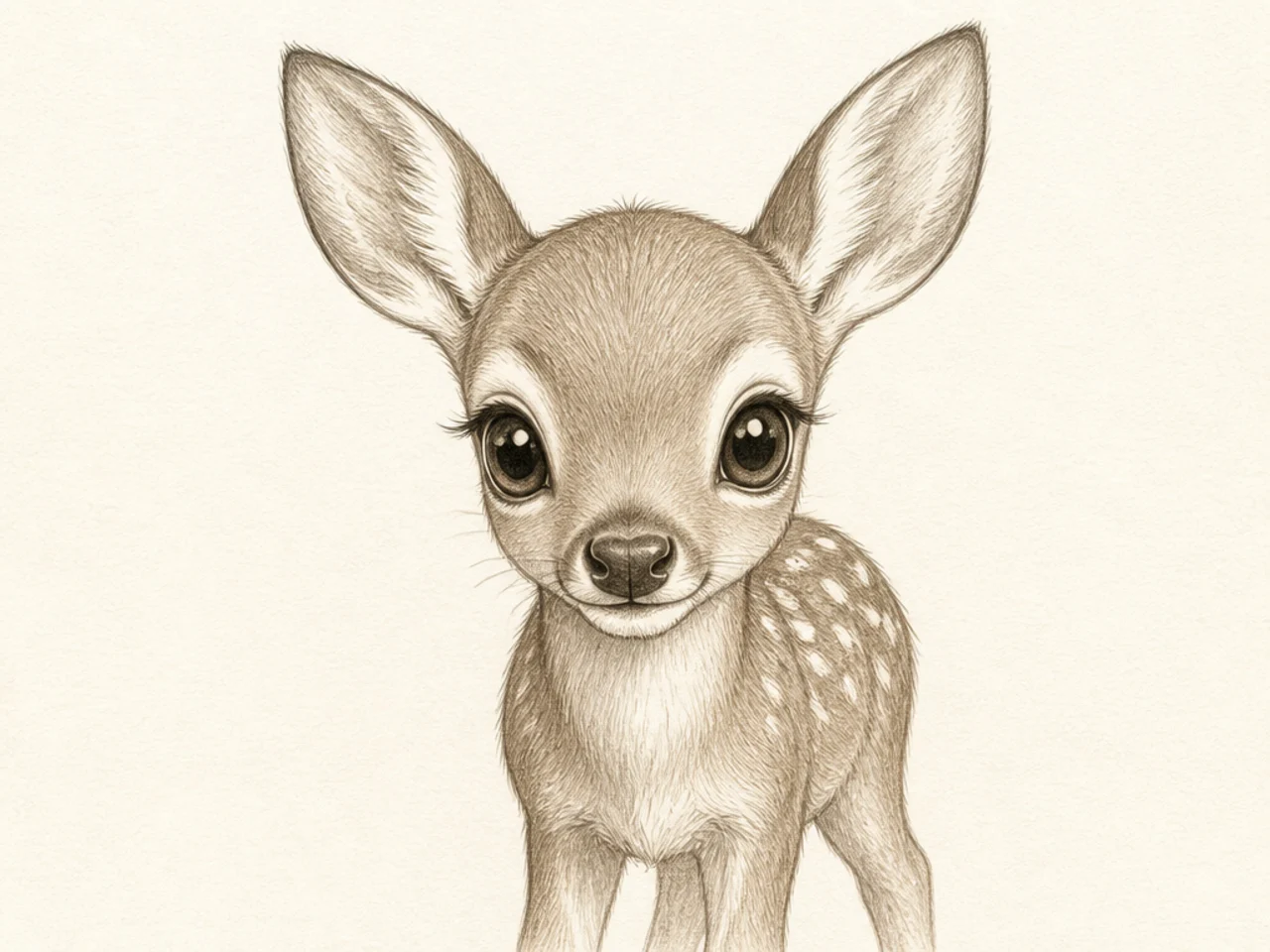
A close portrait zooms in on the fawn’s sweet face and spotted shoulders. Cropping in means less body and more cuteness. The big eyes carry the whole drawing.
Step 1 draw the head and upper neck large. Step 2 add big glossy eyes, a small nose, and tall ears. Step 3 scatter spots down the neck and shoulders.
Add a white highlight dot in each eye so the fawn looks bright and alive.
Don’t shrink the eyes; large glossy eyes are what make the portrait melt.
8 Fawn With a Butterfly on Its Nose
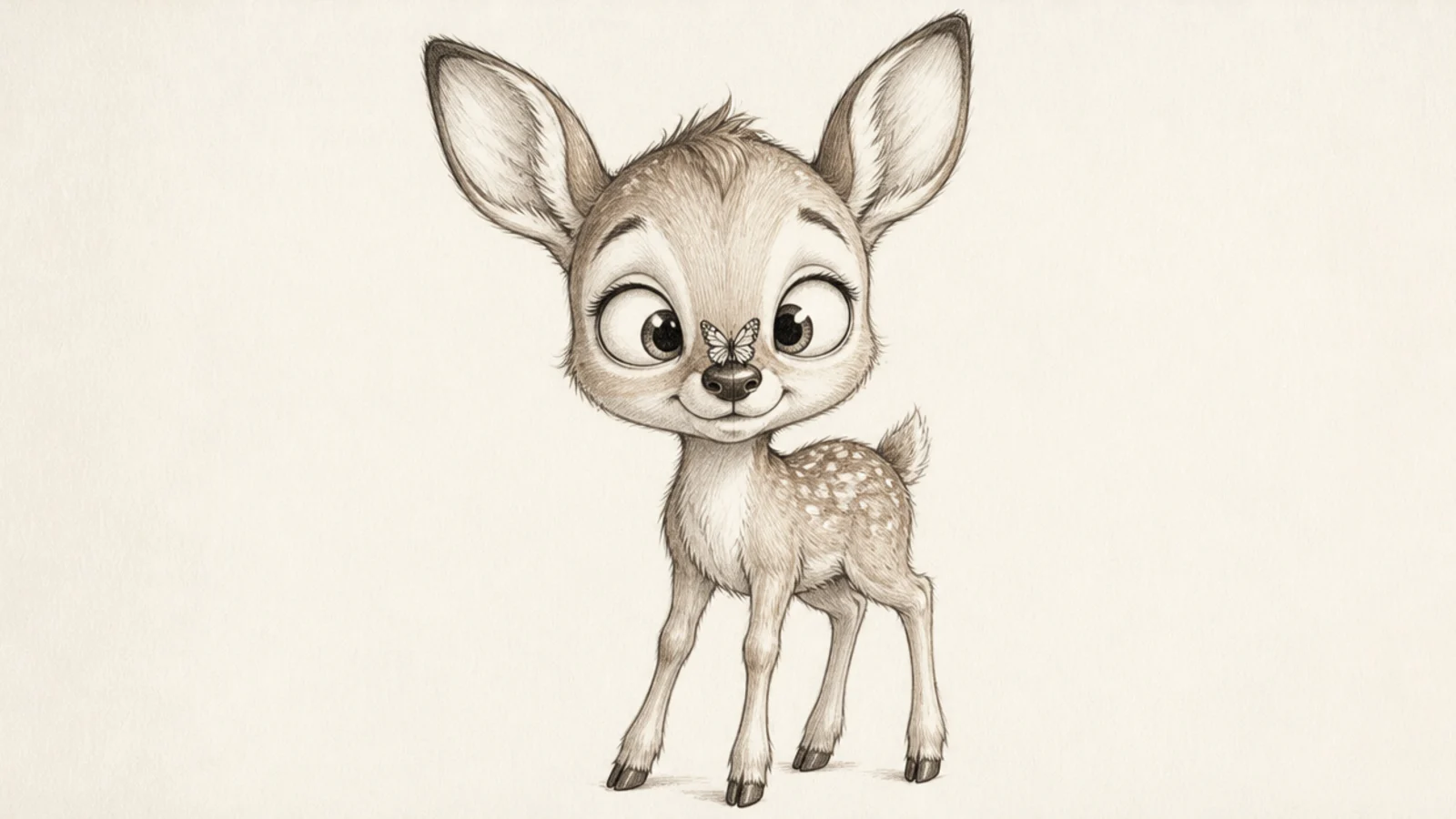
A butterfly landing on the fawn’s nose creates an instant sweet moment. The cross-eyed glance adds humor. It is a charming little story in one image.
Step 1 draw a fawn head looking forward. Step 2 add a small butterfly perched on the nose tip. Step 3 draw both eyes crossing gently downward toward it.
Cross the eyes slightly toward the nose so the fawn is clearly looking at the butterfly.
Don’t make the butterfly big; a tiny one keeps the fawn the focus.
9 Big-Eyed Fawn Face
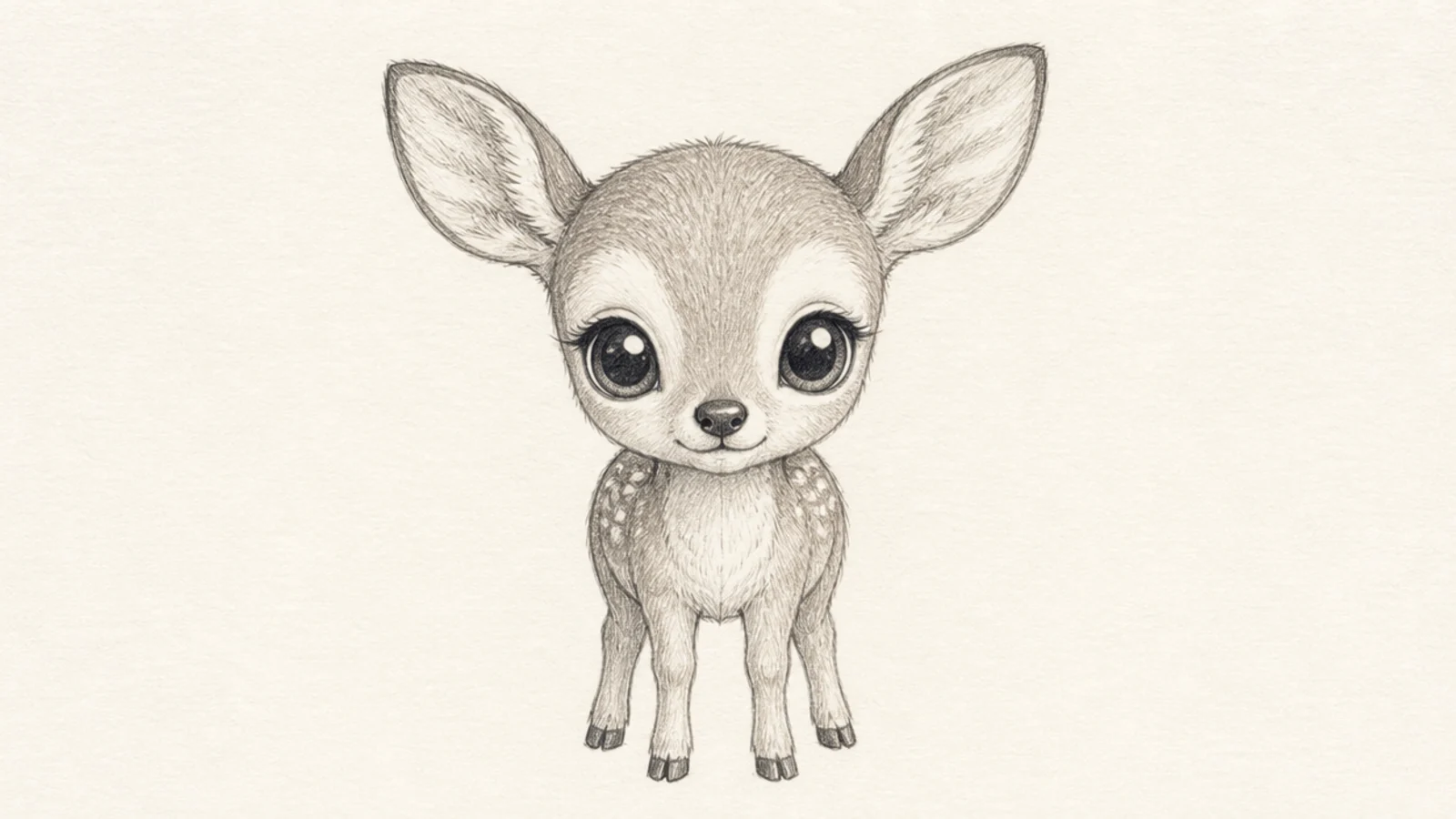
Step 1 draw a rounded heart-shaped face. Step 2 add two very large round eyes with highlights. Step 3 add a tiny nose, soft muzzle, and two big ears out to the sides.
A front-facing face with oversized eyes is peak fawn cuteness. The huge eyes and small muzzle do all the work. It is simple and endlessly adorable.
AvoidDon’t place the eyes high and close; low wide eyes read as young and sweet.
Pro tipSet the eyes low on the face and leave lots of forehead above them for a baby look.
10 Fawn Nuzzling Its Mother
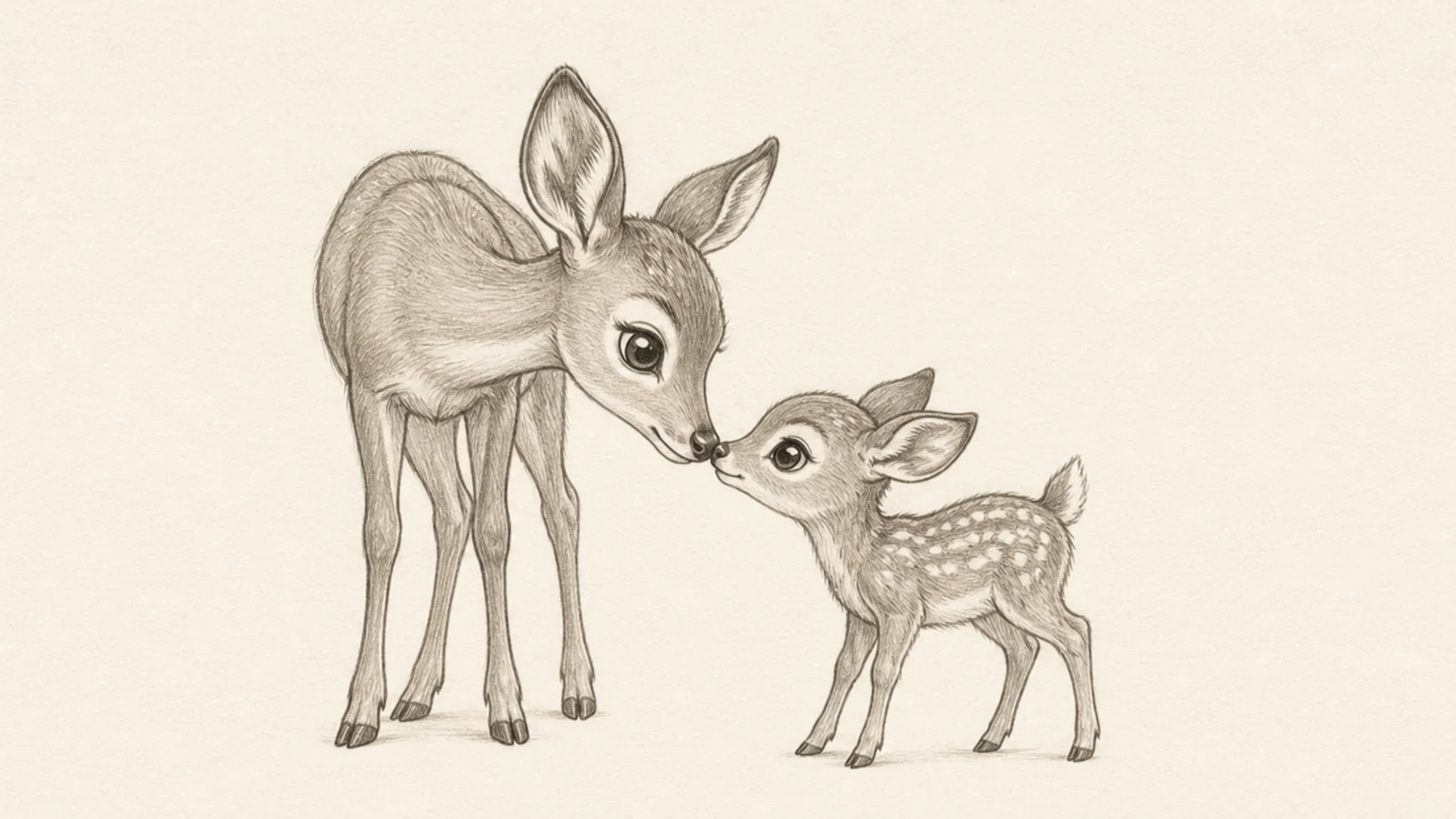
Step 1 draw the doe’s head lowered toward the fawn. Step 2 draw the fawn reaching its head up. Step 3 touch their noses together and soften both expressions.
A fawn stretching up to touch noses with its mother is a warm, loving moment. The reaching pose shows affection. It is a heartfelt family scene.
AvoidDon’t leave a gap between the noses; touching them makes the affection land.
Pro tipAngle both heads toward the meeting point so the nuzzle reads clearly.
11 Running Fawn
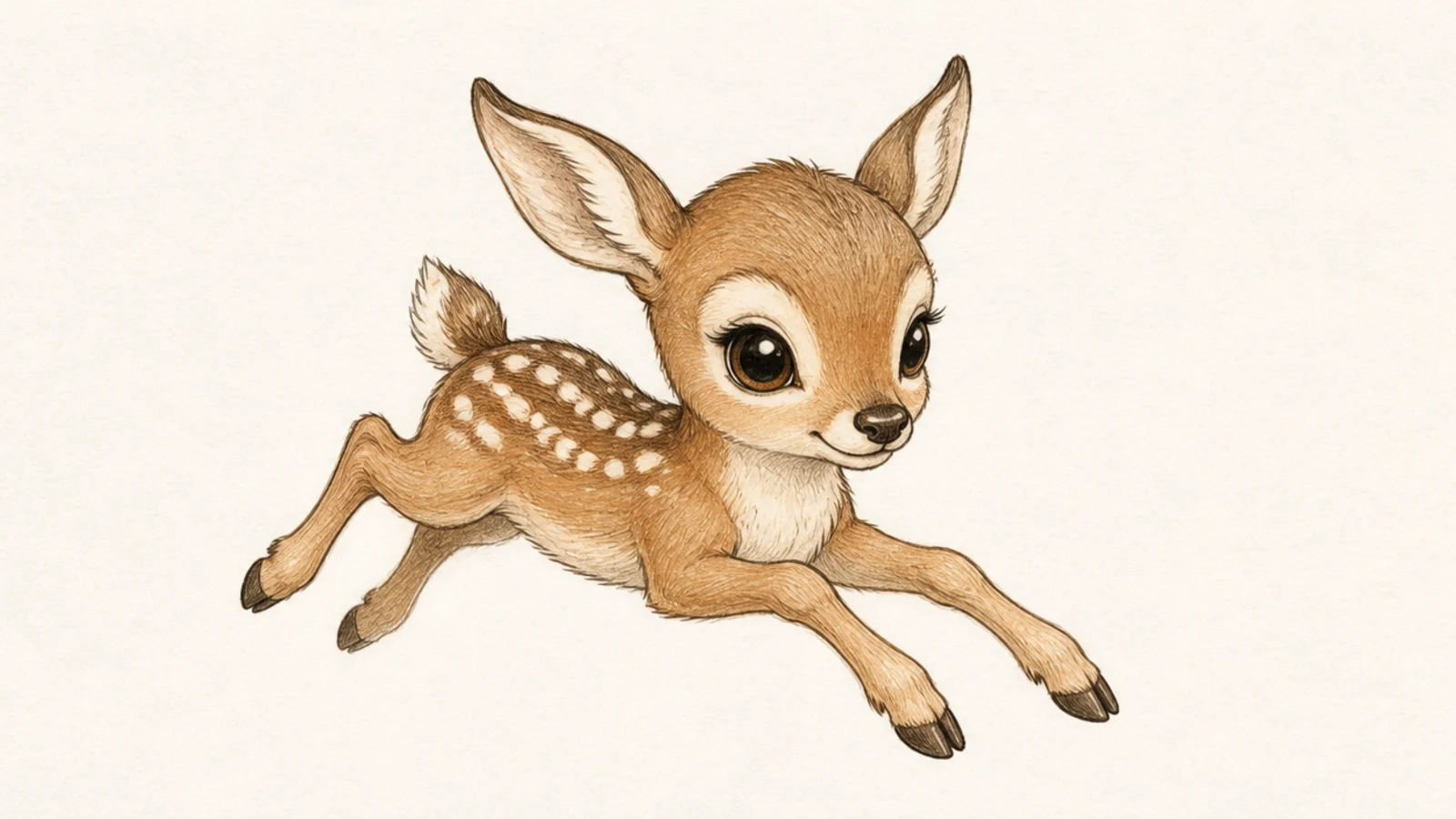
Step 1 tilt the round body forward. Step 2 reach the front legs ahead and kick the back legs behind. Step 3 lift the head, flatten the ears back, and add spots.
A running fawn stretches its short legs into a gallop, full of playful energy. The stretched pose shows movement. It teaches an action stance from baby shapes.
AvoidDon’t keep the legs tucked; extended legs are what make it look like running.
Pro tipStretch the legs fully front and back to sell the run despite their short length.
12 Fawn Lying in Flowers
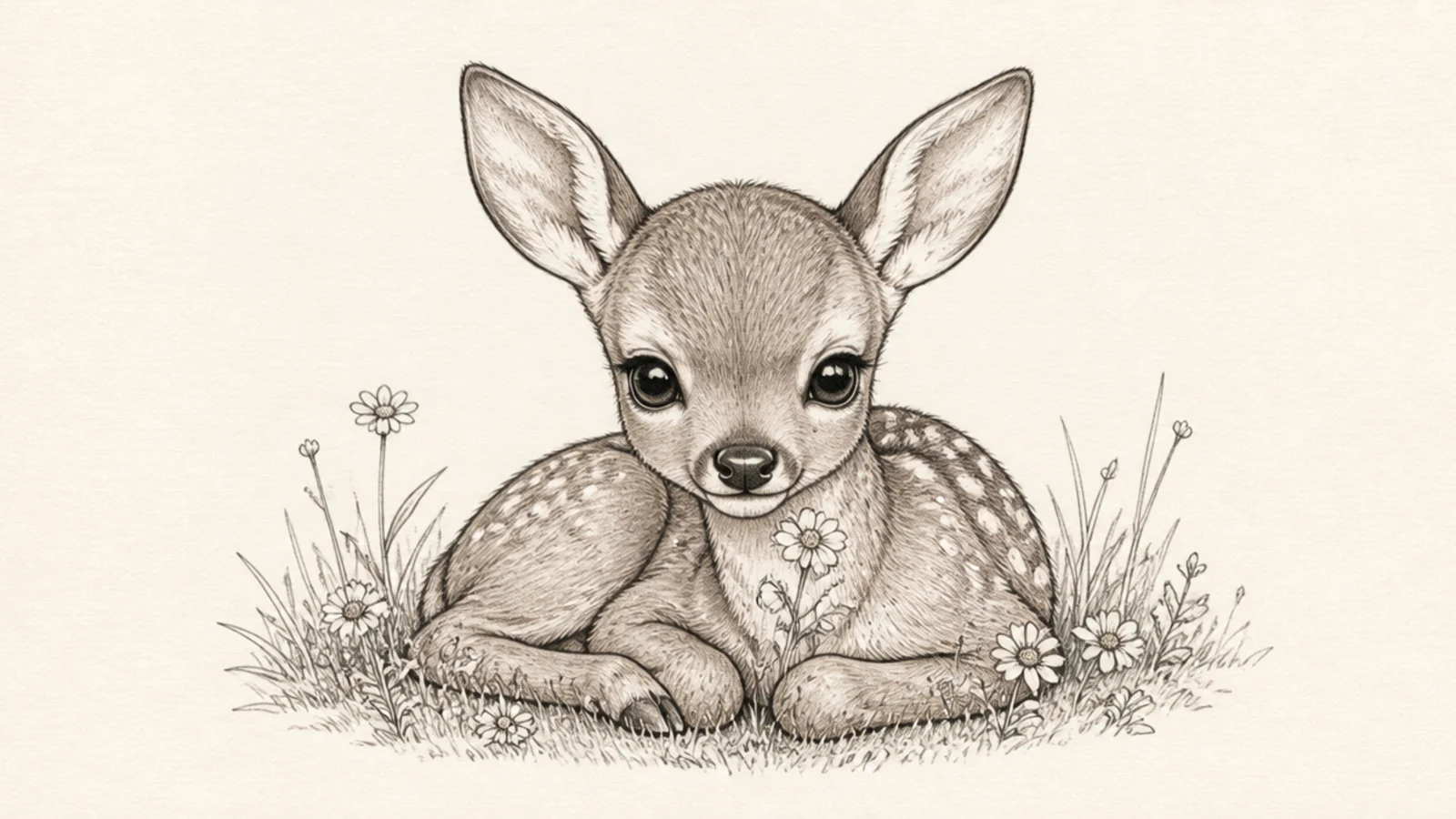
Step 1 draw a fawn lying with legs folded. Step 2 surround it with small simple flowers and grass. Step 3 tuck a few blooms near its chin and add spots on the back.
A fawn resting among wildflowers makes a soft, peaceful scene. The flowers frame the curled body prettily. It feels gentle and springlike.
AvoidDon’t crowd out the fawn; keep the flowers around it, not on top of it.
Pro tipLet a few flowers overlap the fawn’s body so it feels nestled in the patch.
13 Two Fawns Playing
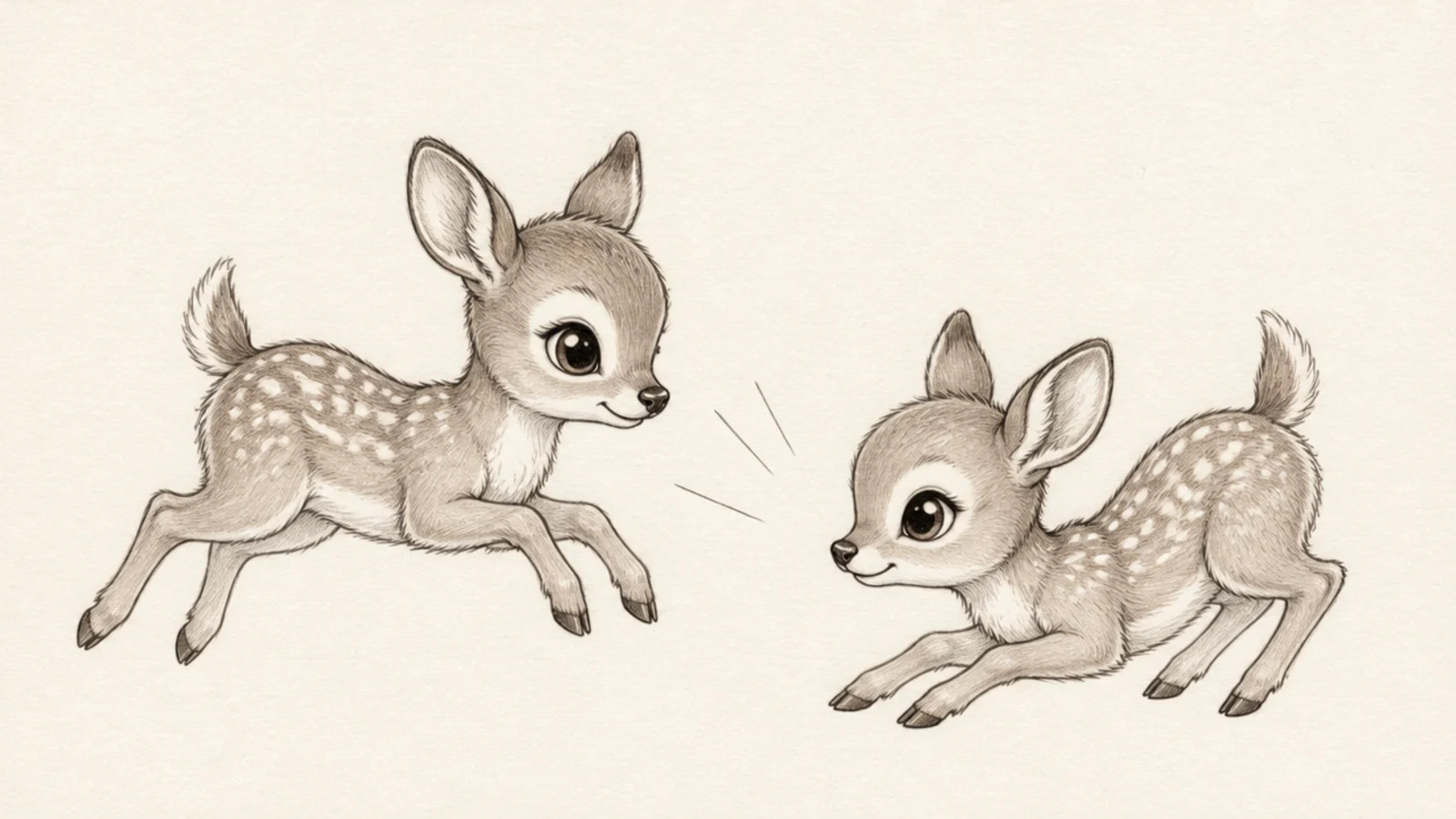
Two fawns bounding around each other doubles the cuteness and shows playful energy. Mirroring the pose is easy. It reads as siblings at play.
Step 1 draw two fawns facing each other. Step 2 put one mid-leap and one crouched low ready to spring. Step 3 add spots and little motion lines between them.
Give the two fawns different poses so the play feels lively, not static.
Don’t draw them identical and side by side; contrasting poses show play.
14 Fawn With a Flower Crown
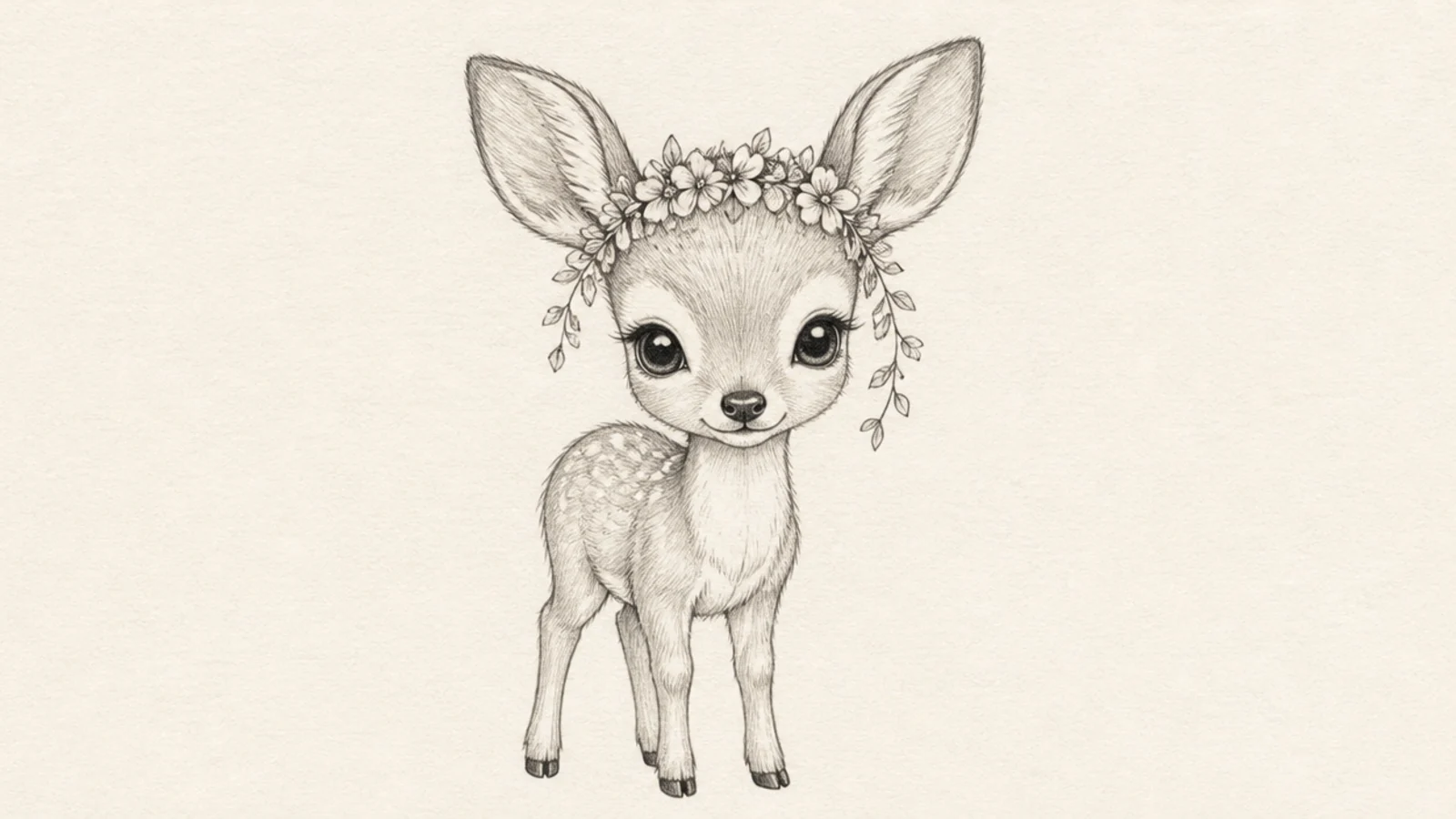
A little flower crown on the fawn’s head is pure whimsy. The blooms sit between the ears sweetly. It is a favorite for cards and nursery art.
Step 1 draw a fawn head and ears. Step 2 arc a ring of small flowers across the top of the head. Step 3 add tiny leaves and a couple of trailing blooms by the ears.
Rest the crown just in front of the ears so it sits naturally on the head.
Don’t make the crown huge; a delicate ring keeps the fawn the focus.
15 Chibi Fawn
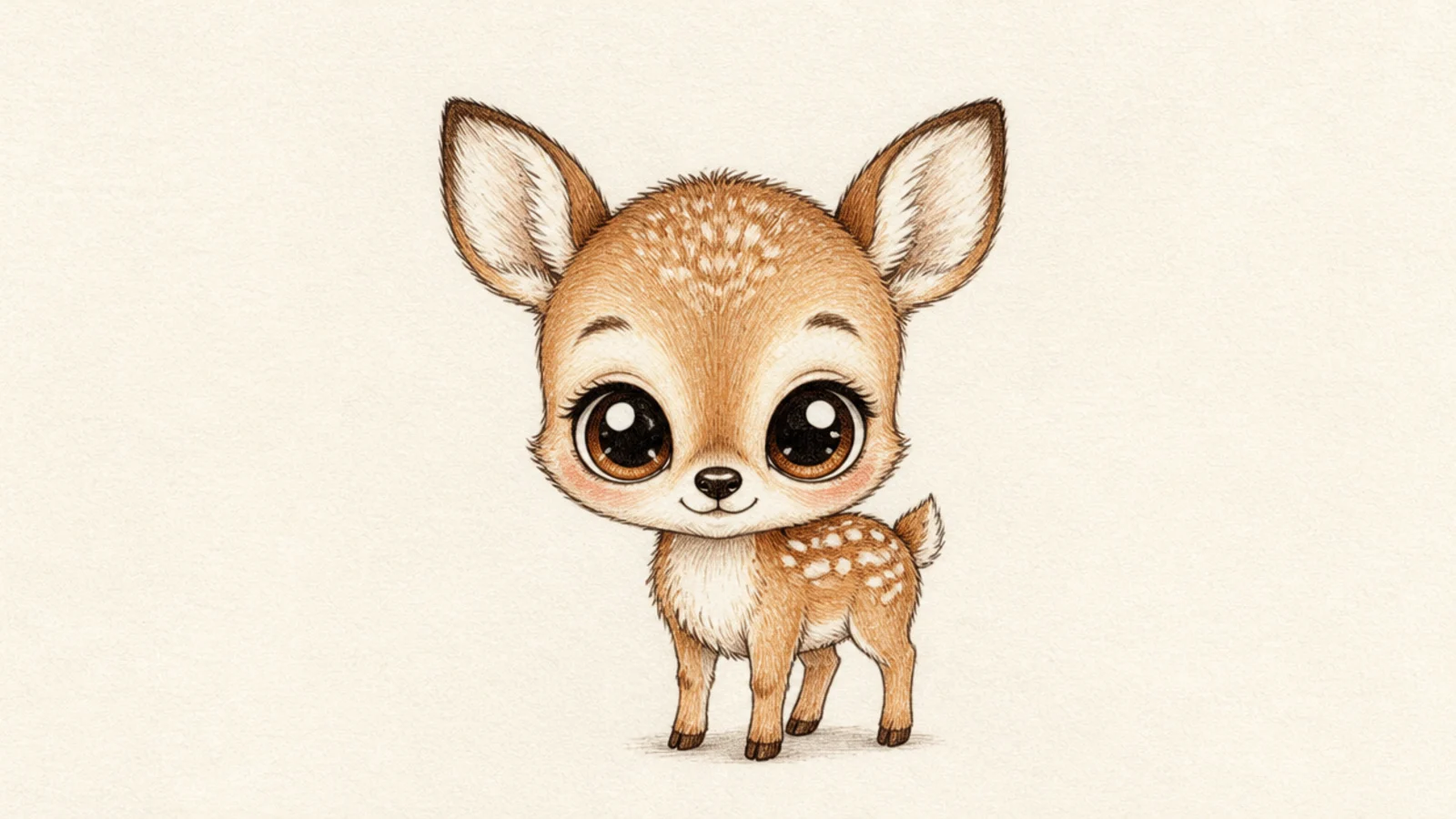
A chibi fawn takes the big-head baby look to the extreme with a huge head and sparkly eyes. The tiny body is almost an afterthought. It is maximum kawaii.
Step 1 draw a head nearly as big as the whole body. Step 2 add two enormous glossy eyes and a dot nose. Step 3 add a small stubby body, short legs, and tiny ears.
Make the head almost as big as the body and the eyes huge and shiny.
Don’t use realistic proportions; the giant head is the chibi charm.
16 Fawn Looking Up
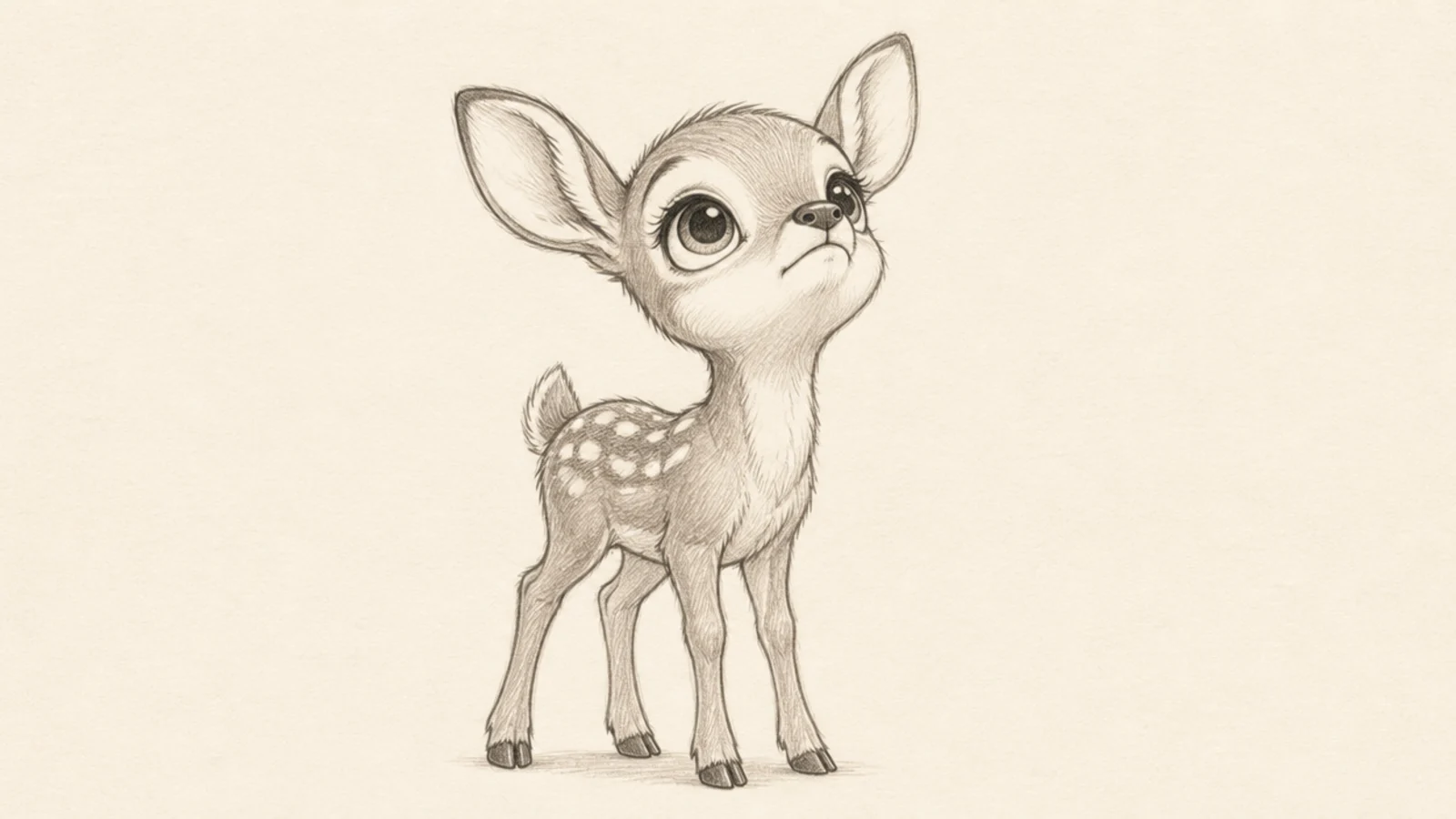
A fawn tilting its head upward looks curious and hopeful. The raised chin and big eyes add wonder. It captures a sweet, inquisitive moment.
Step 1 draw a sitting or standing fawn. Step 2 tilt the head up so the chin lifts and the eyes look skyward. Step 3 add perked ears and a soft open expression.
Raise the chin and point the eyes upward so the curious gaze reads.
Don’t keep the head level; the upward tilt is what makes it curious.
17 Fawn Behind a Log
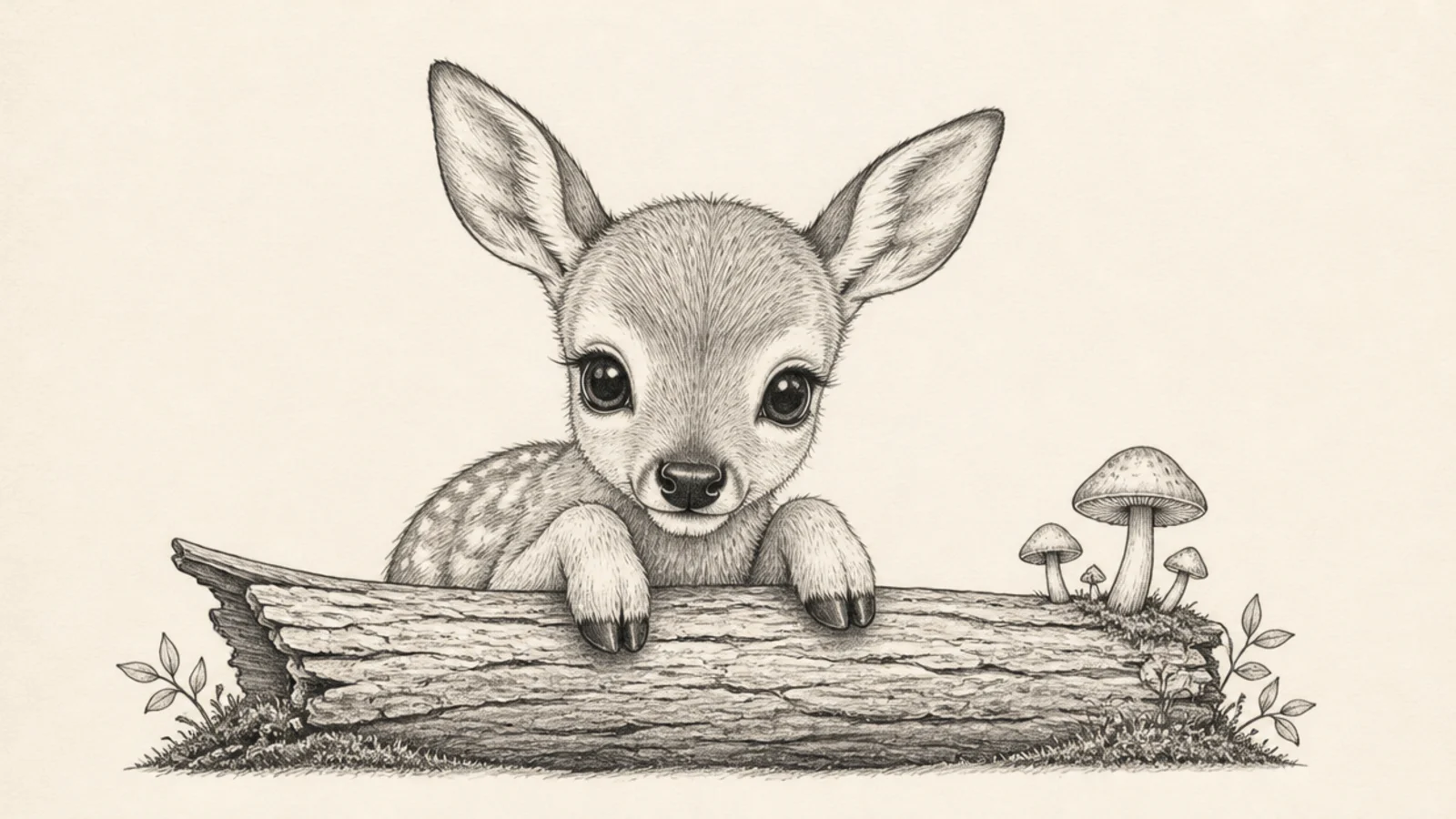
A fawn peering over a fallen log hides most of the body behind the wood. The half-hidden pose is playful. It is a cozy little woodland scene.
Step 1 draw a horizontal log with bark texture. Step 2 add a fawn head and front legs draped over the top. Step 3 add curious eyes and a couple of small mushrooms by the log.
Drape the front hooves over the log so the fawn looks like it is leaning on it.
Don’t draw the whole body; the log hiding the back half is the charm.
18 Fawn Drinking From a Stream
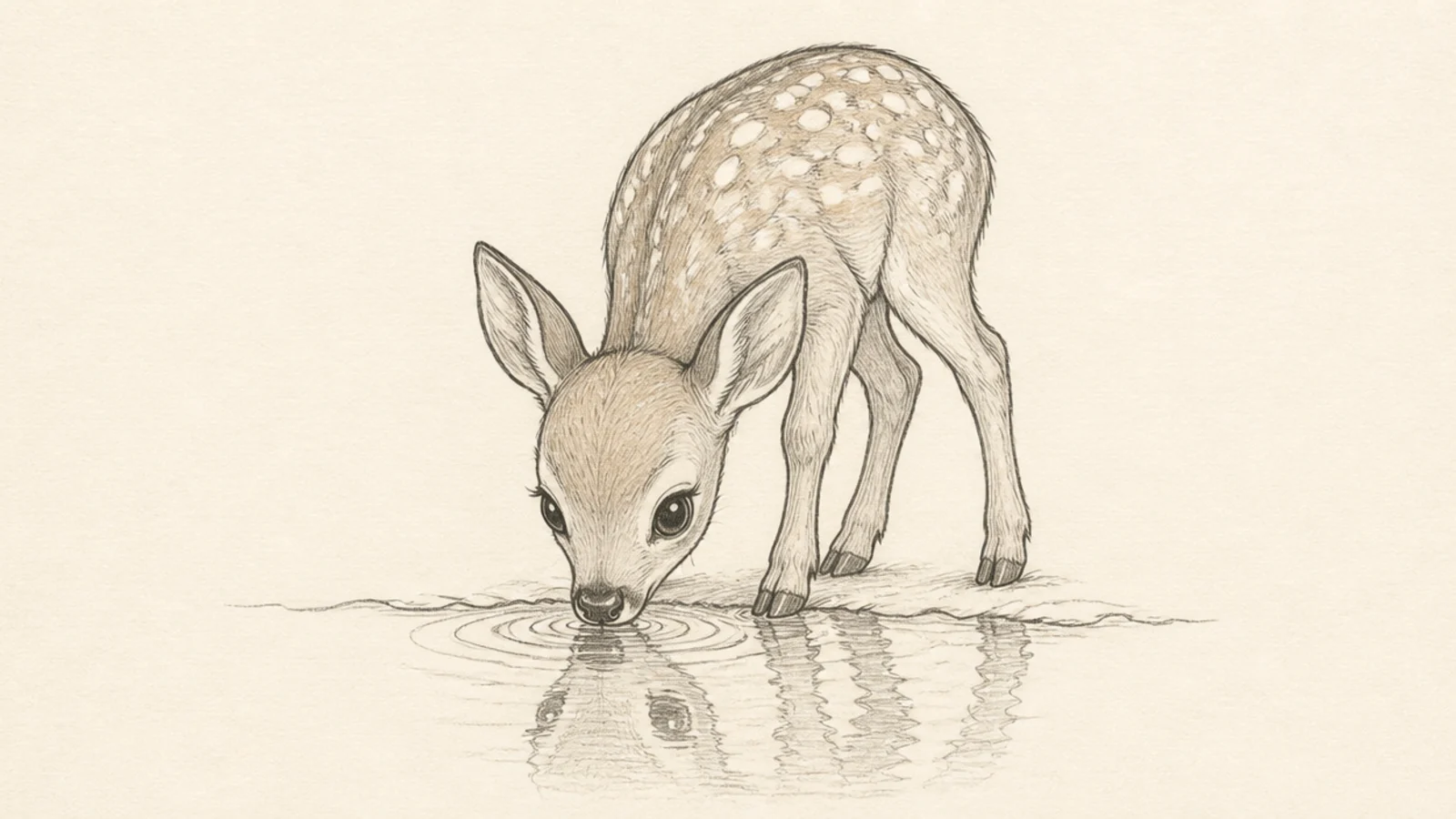
A fawn dipping its head to drink is a peaceful natural moment. The reflection adds a nice touch. It teaches the lowered-head pose in a scene.
Step 1 draw a fawn with its neck curved down to the ground. Step 2 add a wavy water line under its muzzle. Step 3 suggest a faint reflection and a few ripples.
Curve the neck in a smooth arc so the head reaches the water naturally.
Don’t leave the neck stiff; a soft downward curve reads as drinking.
19 Bambi-Style Cartoon Fawn
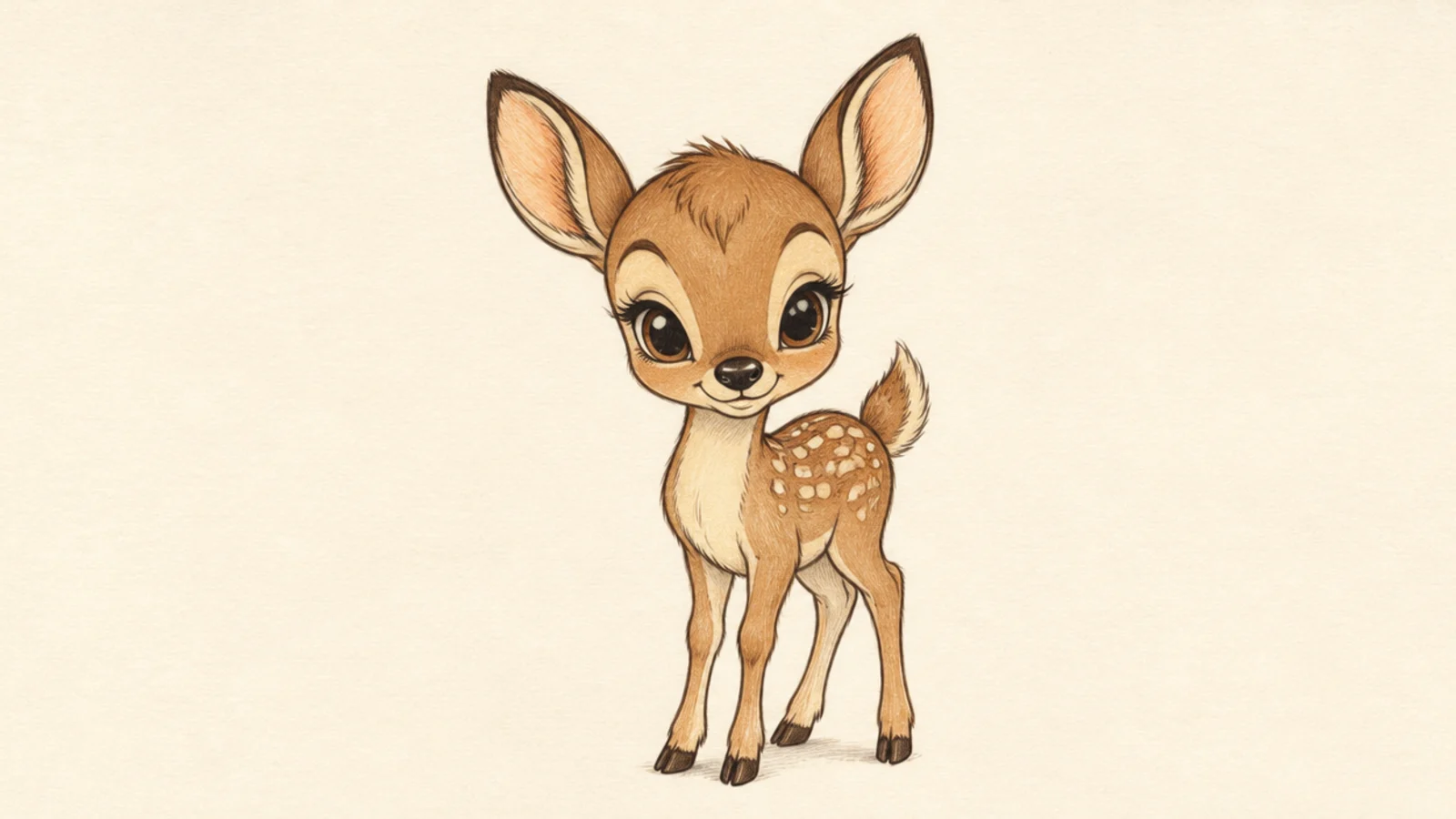
A soft cartoon fawn with huge lashy eyes channels the classic animated look. The rounded style is friendly and familiar. It is instantly lovable.
Step 1 draw a rounded body and big head. Step 2 add large eyes with long lashes and a small shiny nose. Step 3 add slim cartoon legs, tall ears, and a scatter of spots.
Add a few eyelashes and a glossy nose for the classic animated fawn feel.
Don’t over-detail the fur; soft simple shapes suit the cartoon style.
20 Fawn With Ears Perked
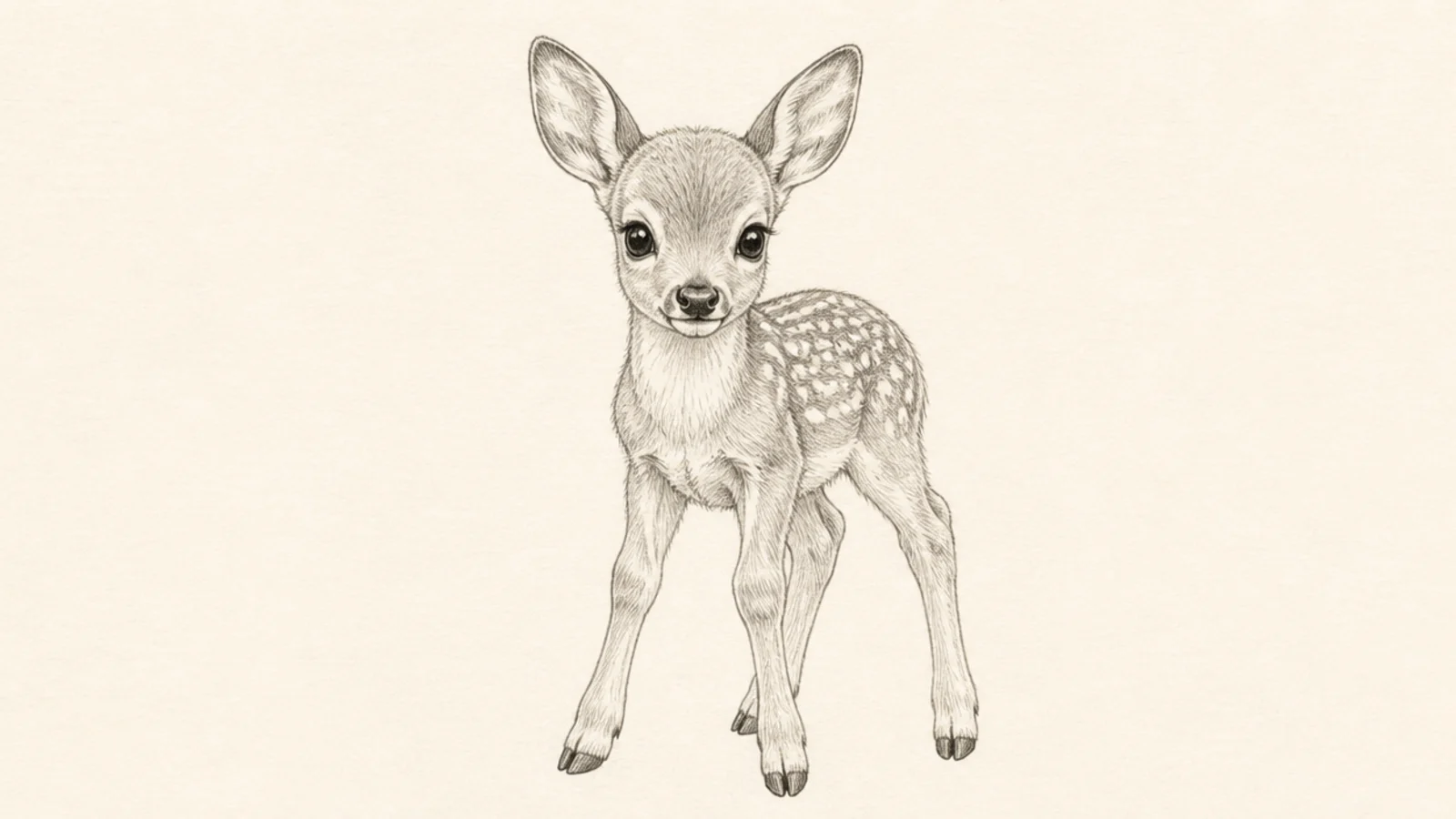
A fawn with ears perked sharply forward looks alert and attentive. The tall ears become the focus. It teaches how ears carry a deer’s expression.
Step 1 draw a standing fawn. Step 2 point both ears straight up and forward. Step 3 widen the eyes and lift the head slightly to match the alert mood.
Turn the ear openings forward so the fawn clearly looks like it is listening.
Don’t droop the ears; upright forward ears create the alert expression.
21 Fawn With a Bird Friend
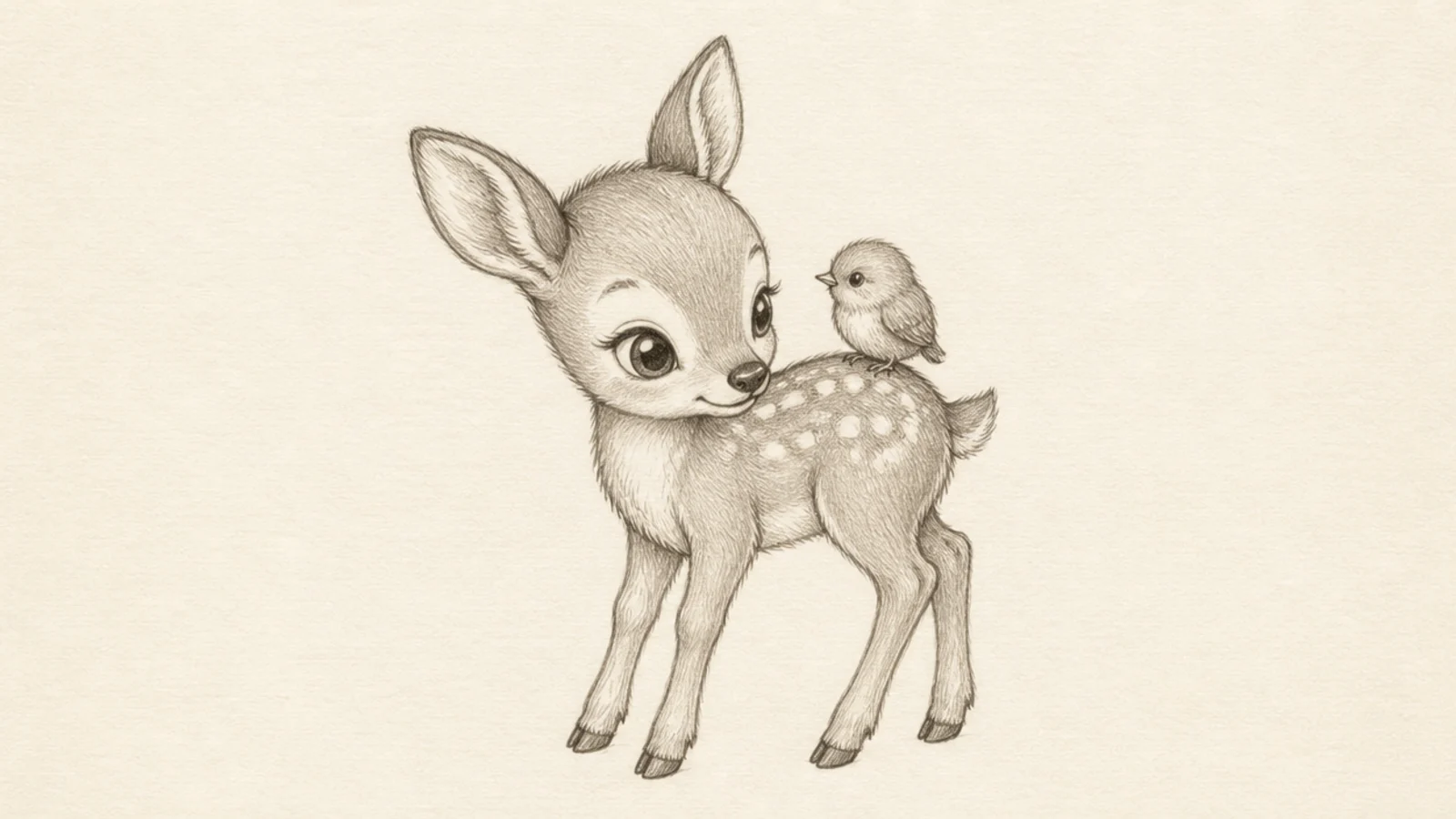
Step 1 draw a standing or lying fawn. Step 2 perch a small round bird on its back or head. Step 3 turn the fawn’s eye toward the bird and add spots.
A little bird perched on the fawn’s back is a sweet friendship moment. The pairing adds warmth and story. It is a gentle woodland scene.
AvoidDon’t make the bird too large; a tiny friend keeps the scale sweet.
Pro tipPerch the bird on the highest point of the back so it sits believably.
22 Sleepy Yawning Fawn
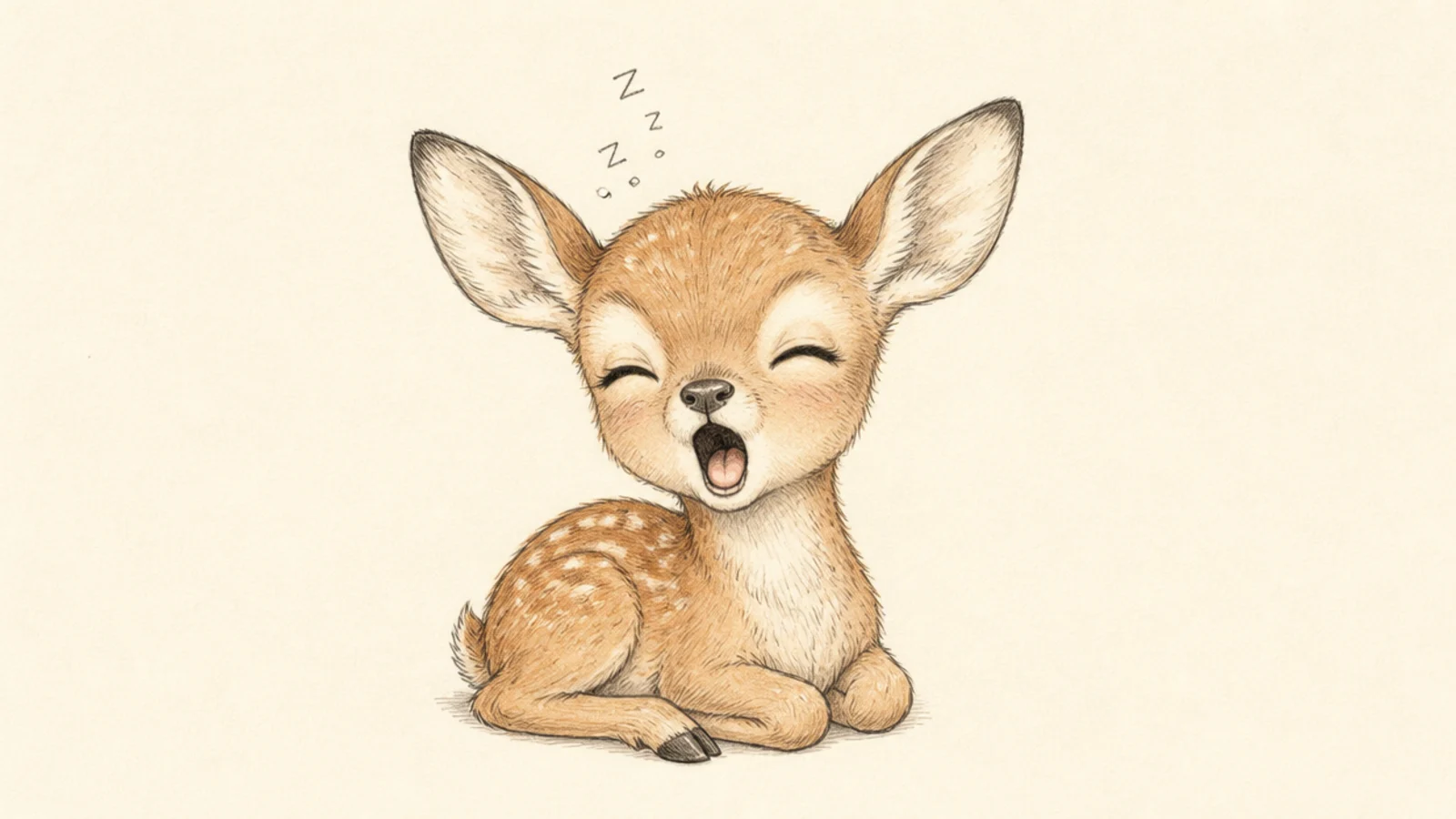
Step 1 draw a sitting fawn. Step 2 open the mouth into a small round yawn. Step 3 squeeze the eyes into happy closed curves and add little sleep marks.
A yawning fawn with a wide mouth and scrunched eyes is adorably sleepy. The open yawn adds personality. It captures a drowsy, relatable moment.
AvoidDon’t draw a scary wide mouth; a small round yawn stays cute.
Pro tipScrunch the eyes closed and round the mouth so the yawn reads warmly.
23 Cozy Blanket Fawn
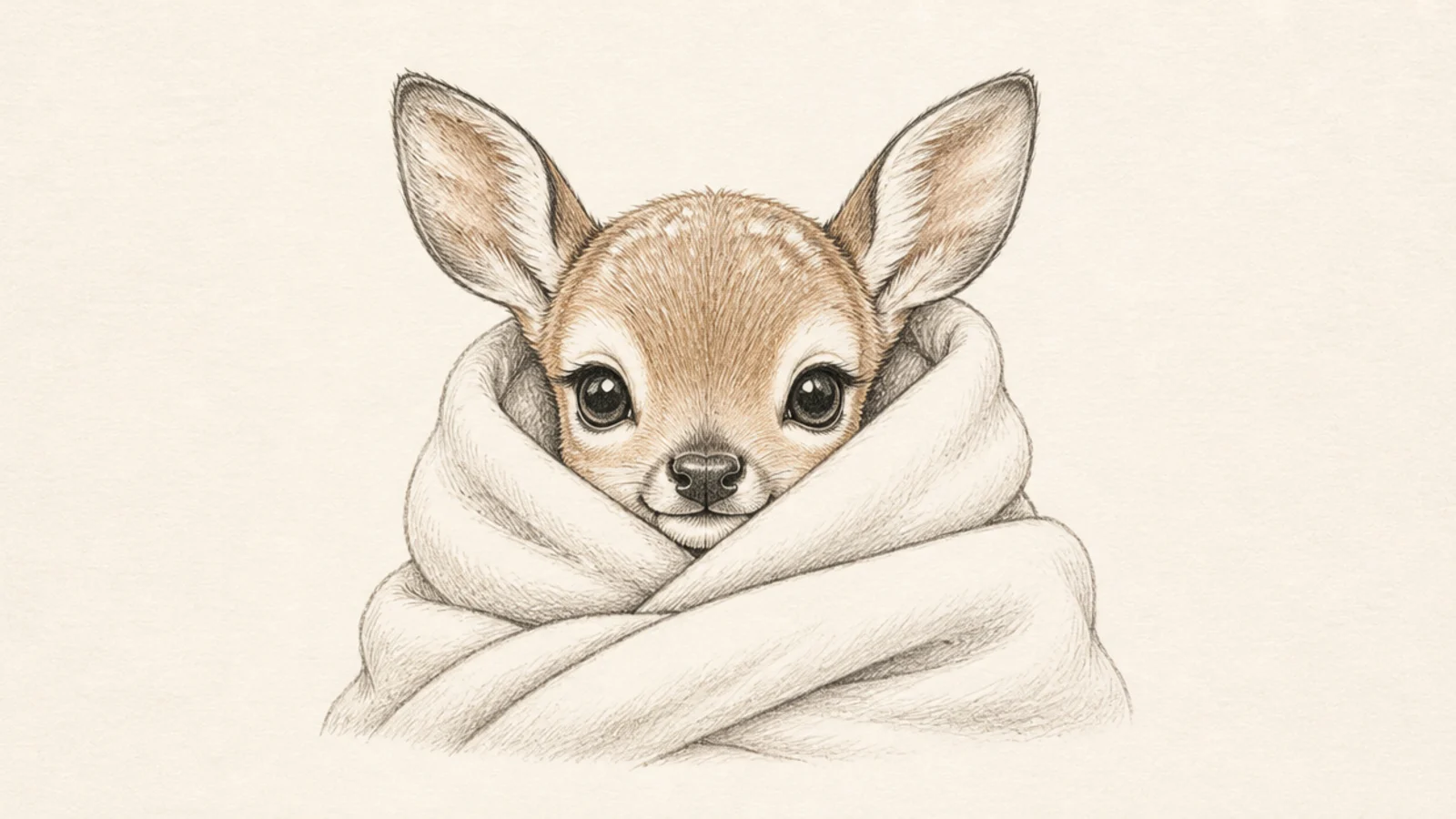
Step 1 draw a fawn head and ears. Step 2 wrap a soft blanket around the body below. Step 3 add gentle folds and a sleepy content expression.
A fawn tucked under a blanket is the coziest look on the list. Only the head and ears peek out. It feels warm and comforting.
AvoidDon’t draw stiff straight folds; soft curves make the blanket look snug.
Pro tipShade the blanket folds softly so it looks thick and warm around the fawn.
24 Joyful Jumping Fawn
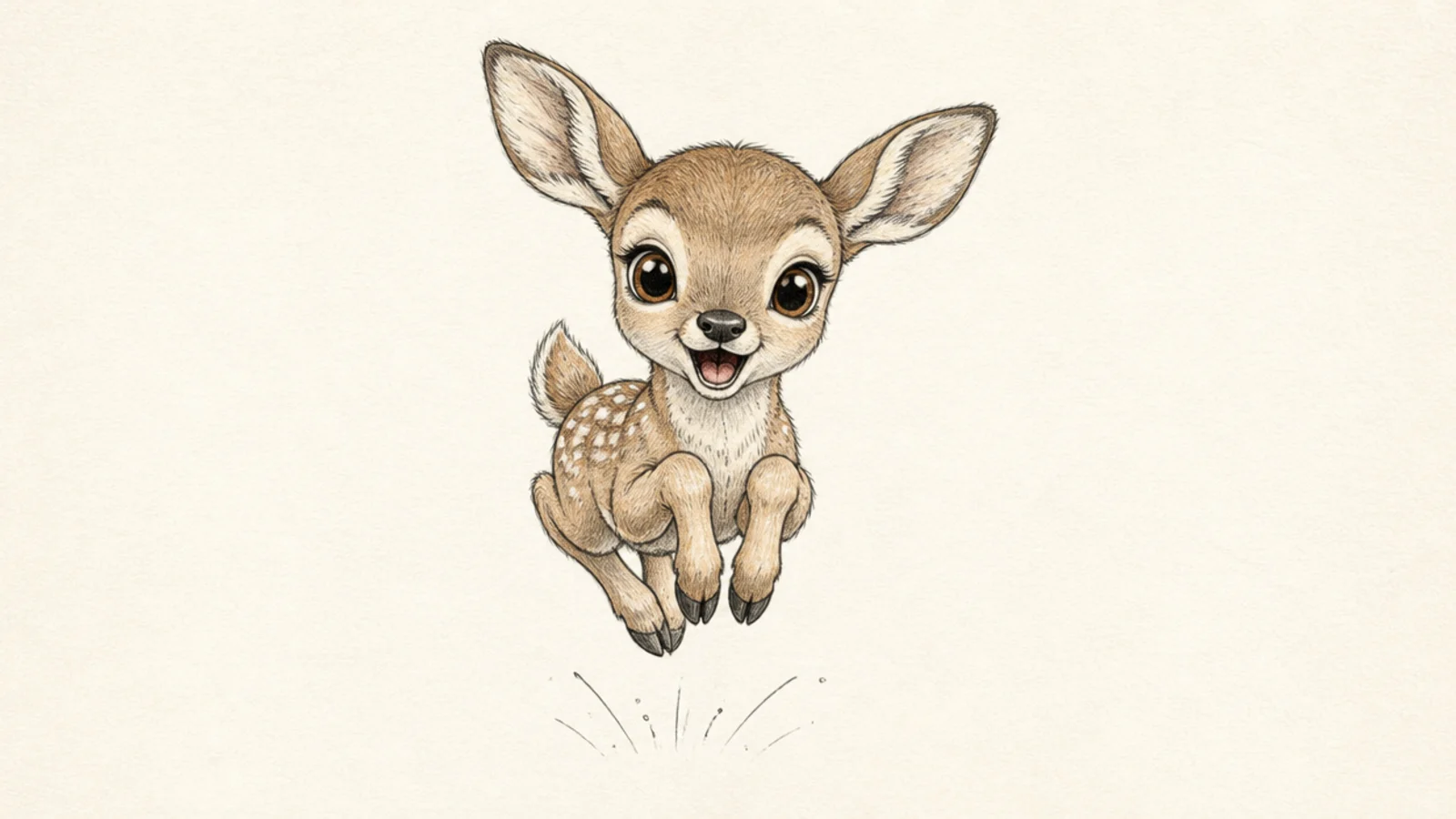
Step 1 draw a round body angled slightly upward. Step 2 tuck the legs up under the body mid-jump. Step 3 lift the head, add flying ears, and small motion lines below.
A fawn popping straight up in a happy jump bursts with joy. All four legs lift off the ground. It captures playful baby-deer energy.
AvoidDon’t plant any hooves; all four off the ground sells the joyful jump.
Pro tipTuck the legs up and add little dust or motion marks below to show lift-off.
25 Fawn Eating a Leaf
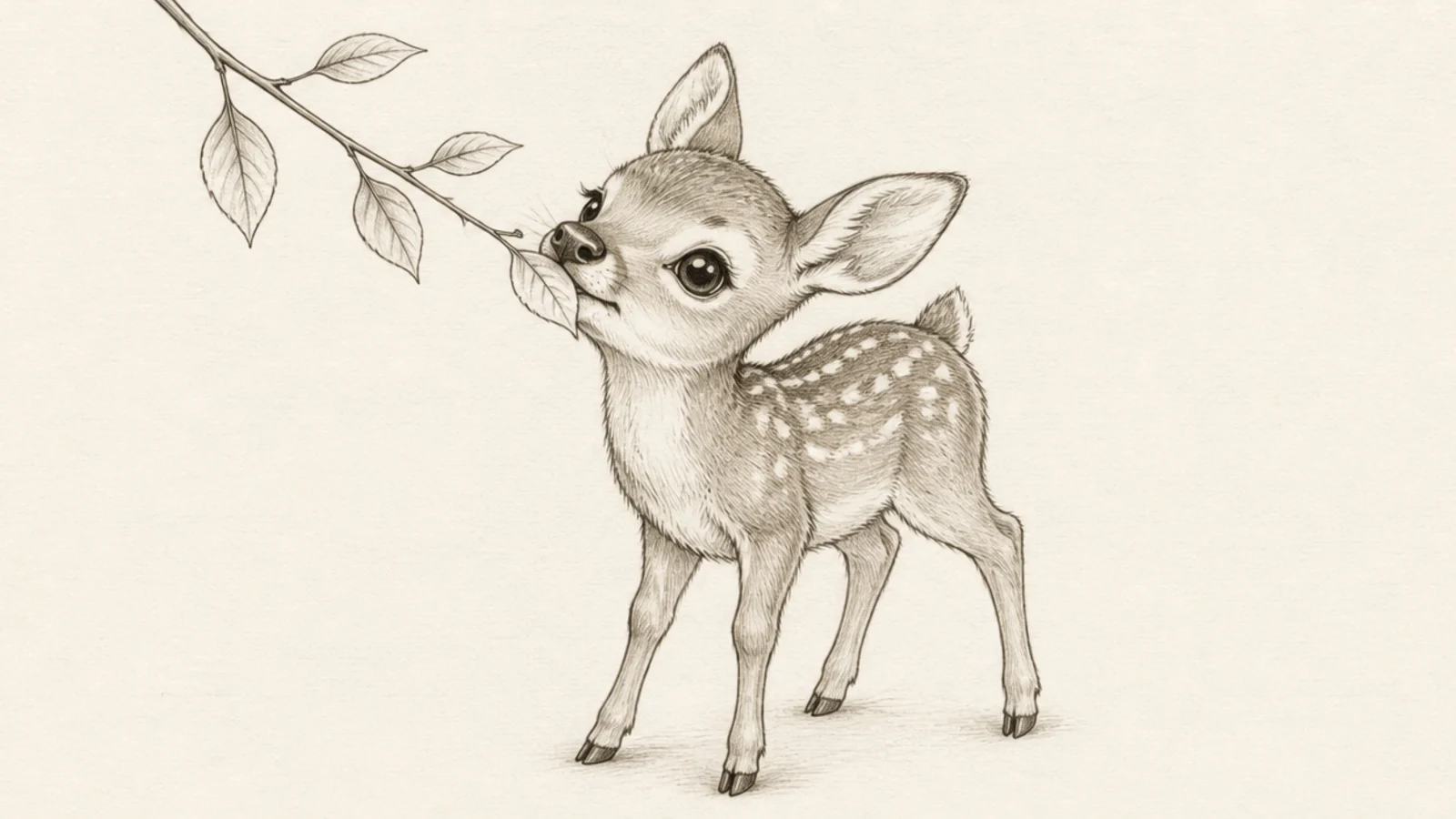
A fawn nibbling one leaf is a small, believable everyday moment. The single leaf adds a focal point. It shows the fawn interacting with its world.
Step 1 draw a fawn head reaching slightly forward. Step 2 add a leaf at the mouth with a stem trailing. Step 3 add a low branch or plant it is nibbling from.
Show just the leaf tip at the mouth so it reads as mid-nibble.
Don’t draw a full mouthful; a single delicate leaf looks sweeter.
26 Fawn in a Basket
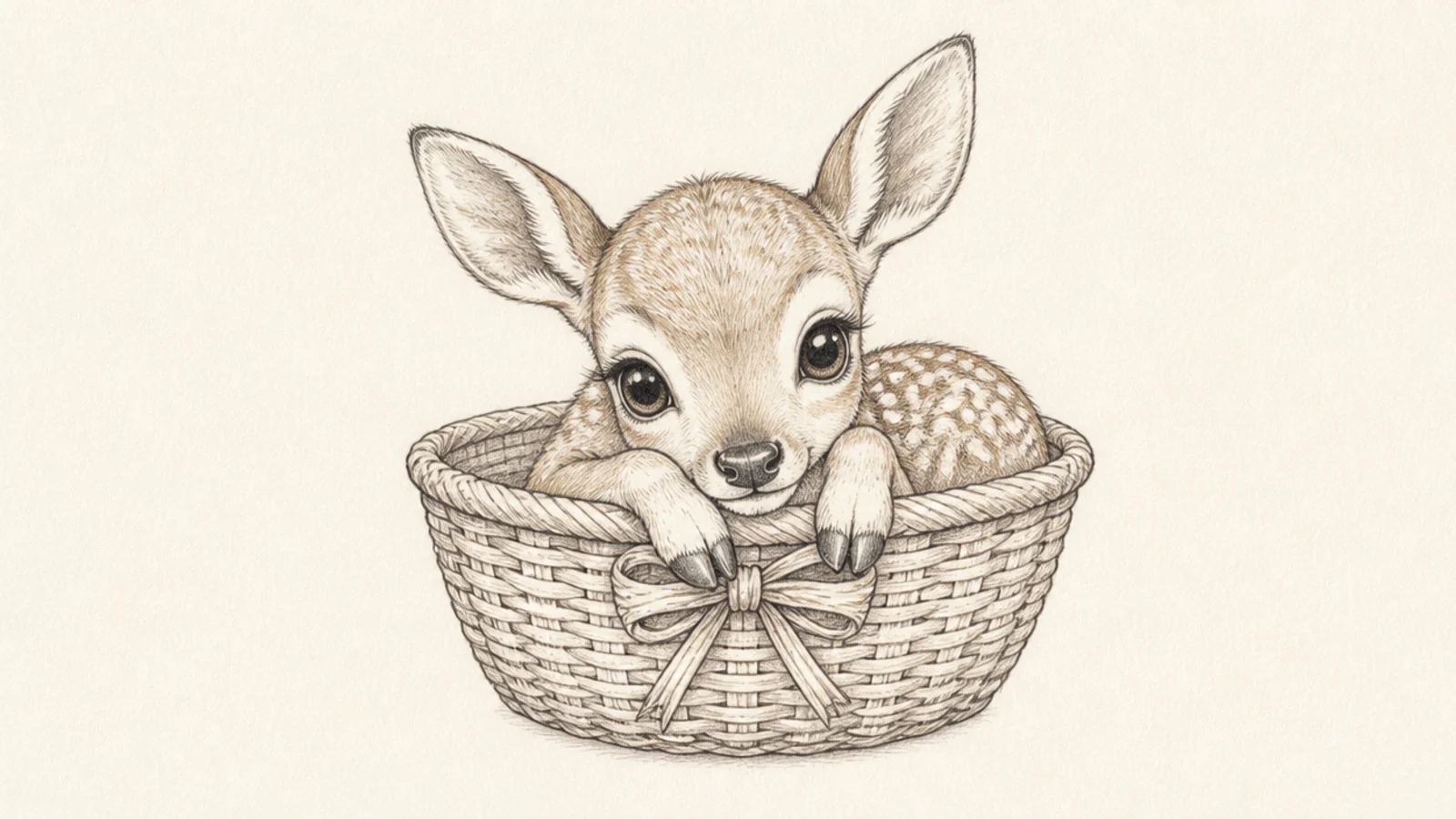
A tiny fawn curled inside a woven basket is storybook cute. The basket frames the small body neatly. It is perfect for cards and nursery art.
Step 1 draw a woven basket with a rim. Step 2 tuck a small fawn inside so head and ears rise above the edge. Step 3 add cross-hatch weave lines and a little bow.
Let just the head and front legs peek over the rim so the fawn looks nestled.
Don’t make the basket too big; a snug fit keeps the scene adorable.
27 Winter Snow Fawn
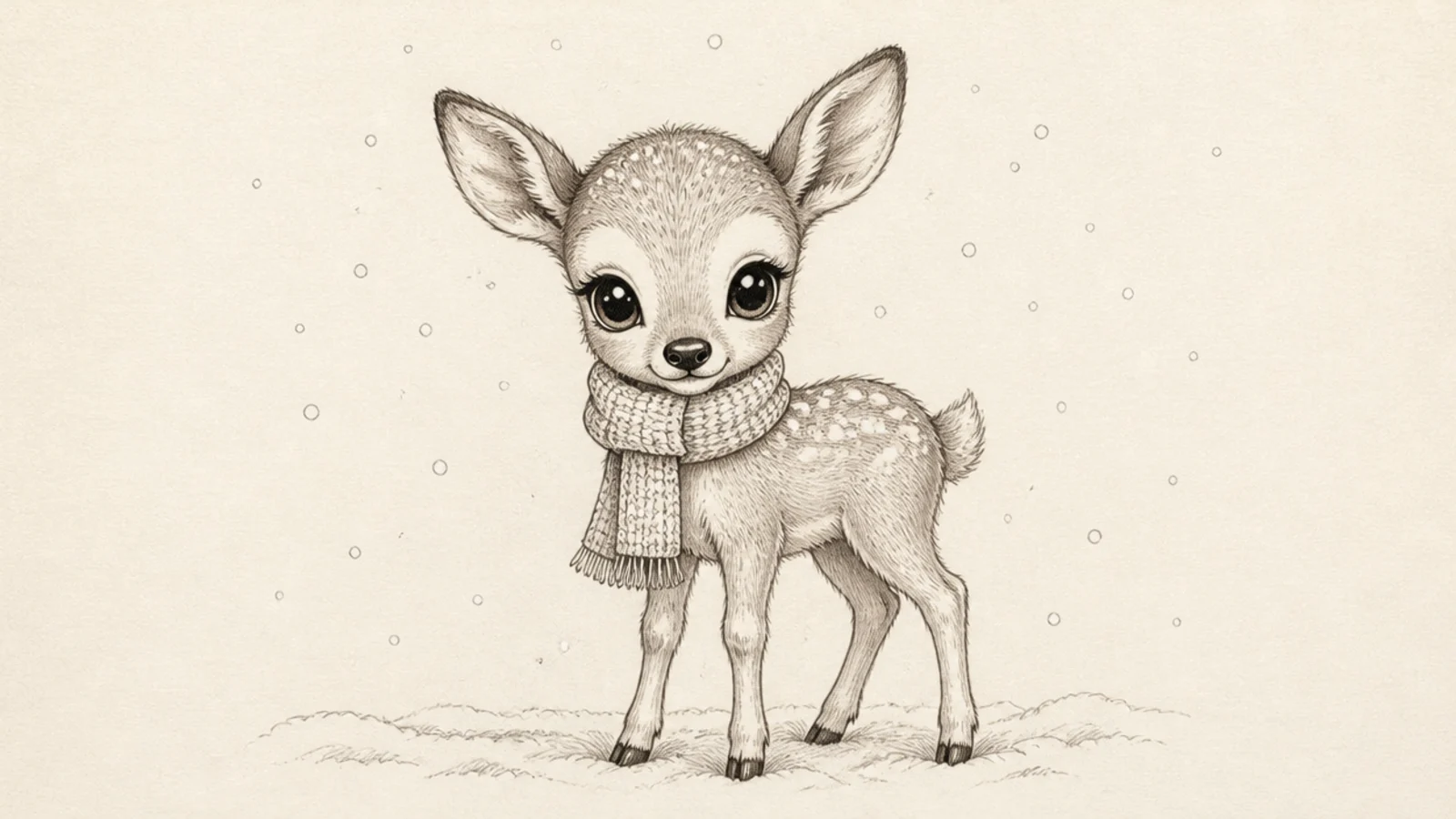
Step 1 draw a standing fawn. Step 2 wrap a small knitted scarf around its neck. Step 3 scatter simple snowflakes around it and add a little snow underfoot.
A fawn in falling snow with a tiny scarf is cozy and seasonal. The snowflakes and scarf add charm. It makes a lovely winter card.
AvoidDon’t overfill with snowflakes; a light scatter reads as gentle snowfall.
Pro tipKeep the scarf small and let its ends trail for a cozy touch.
28 Fawn Sniffing a Mushroom
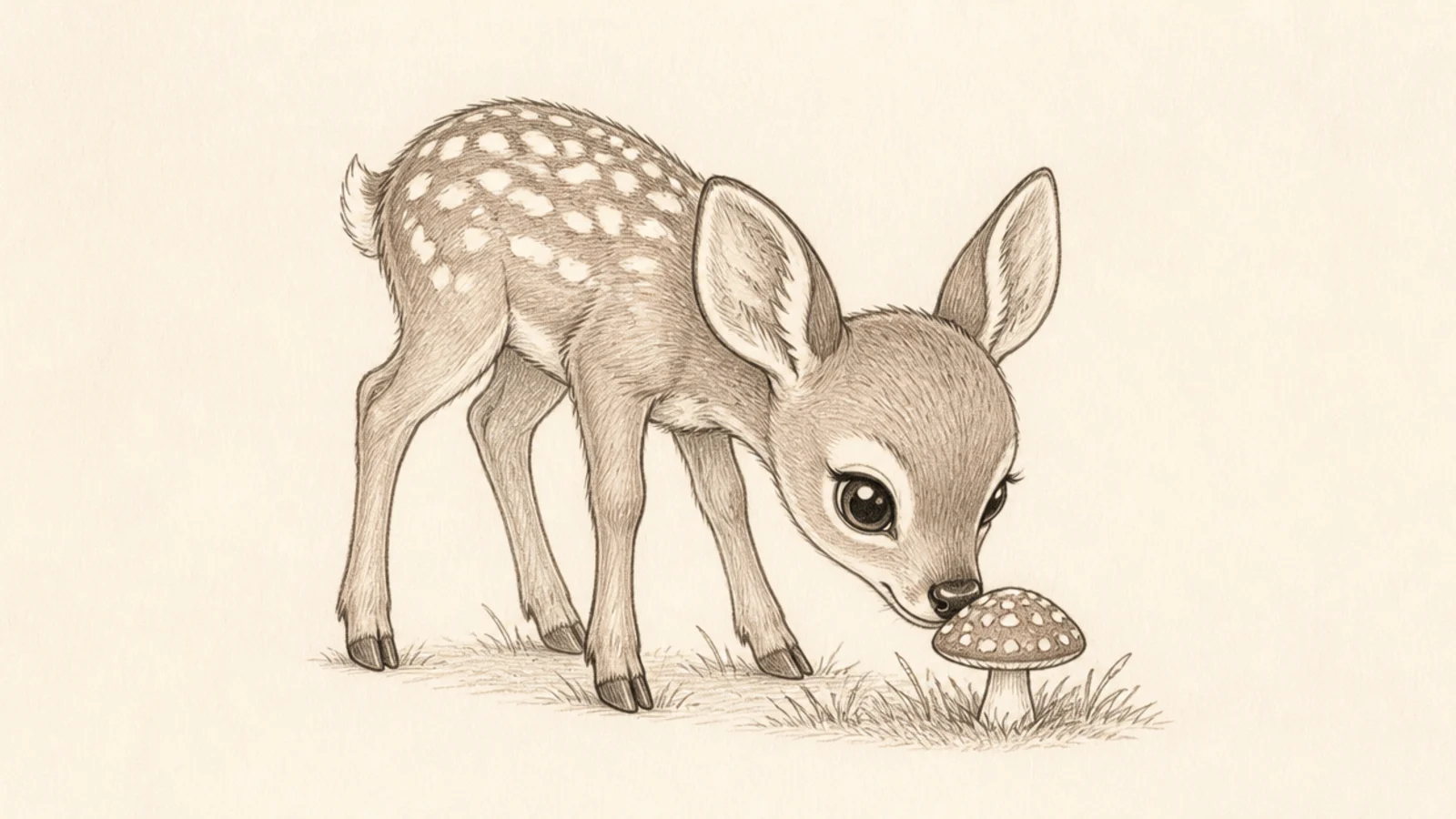
Step 1 draw a fawn with its head lowered forward. Step 2 add a small round-capped mushroom in front of its nose. Step 3 add a few dots on the cap and grass around the base.
A fawn sniffing a spotted mushroom is a curious woodland vignette. The mushroom gives the nose a target. It is a sweet, story-like moment.
AvoidDon’t make the mushroom too tall; a small toadstool keeps the scale cute.
Pro tipPoint the nose right at the mushroom cap so the sniffing action reads.
29 Fawn Portrait With a Ribbon
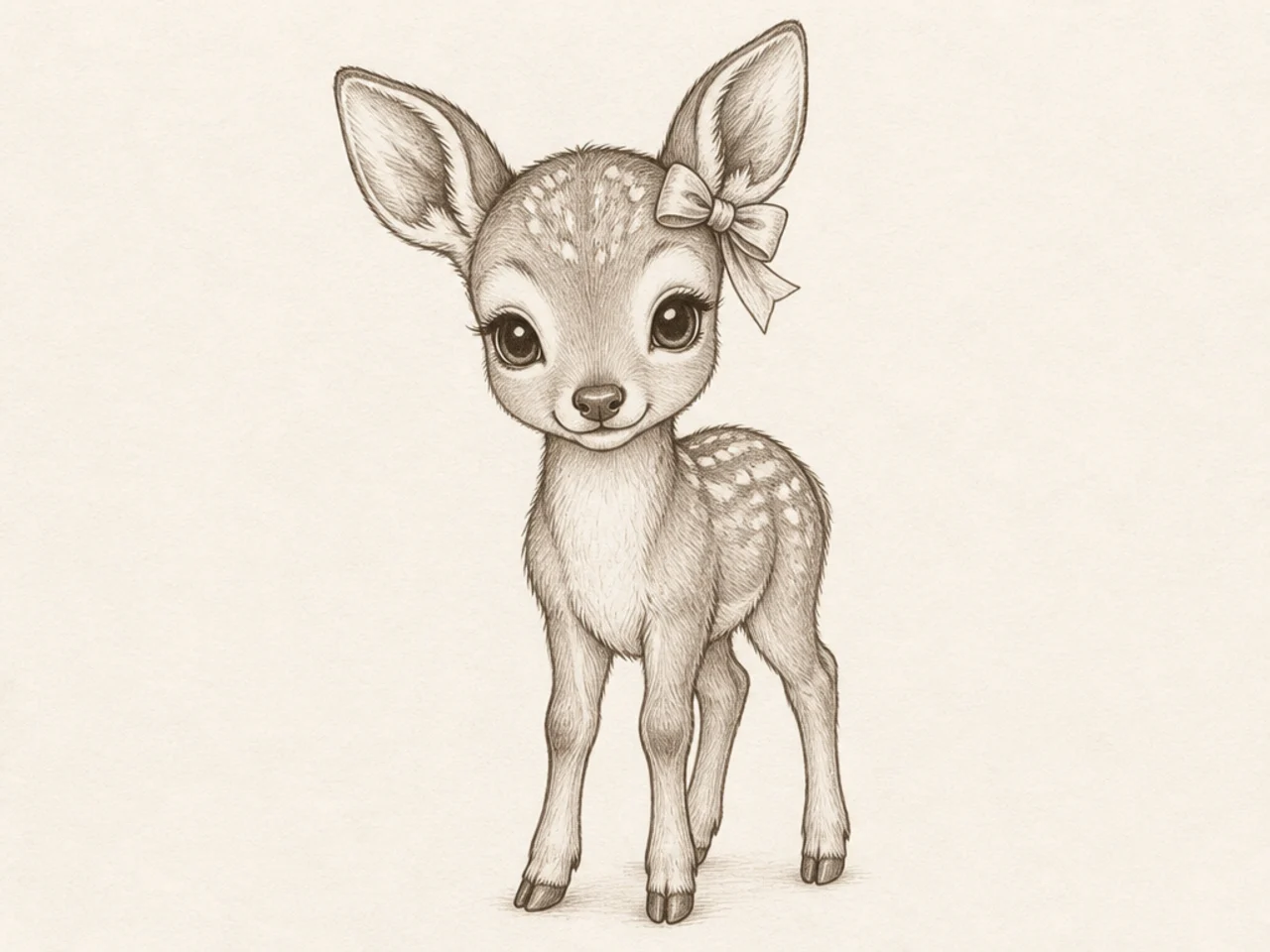
A fawn portrait finished with a little ribbon bow feels dressed up and special. The bow adds a decorative accent. It is a giftable, polished look.
Step 1 draw a fawn head and shoulders. Step 2 tie a small bow at the base of one ear. Step 3 add big eyes, soft spots, and a gentle smile.
Place the bow off to one side by an ear so it looks playfully tied on.
Don’t center the bow on the forehead; an off-center bow looks more natural.
30 Fawn Family Trio
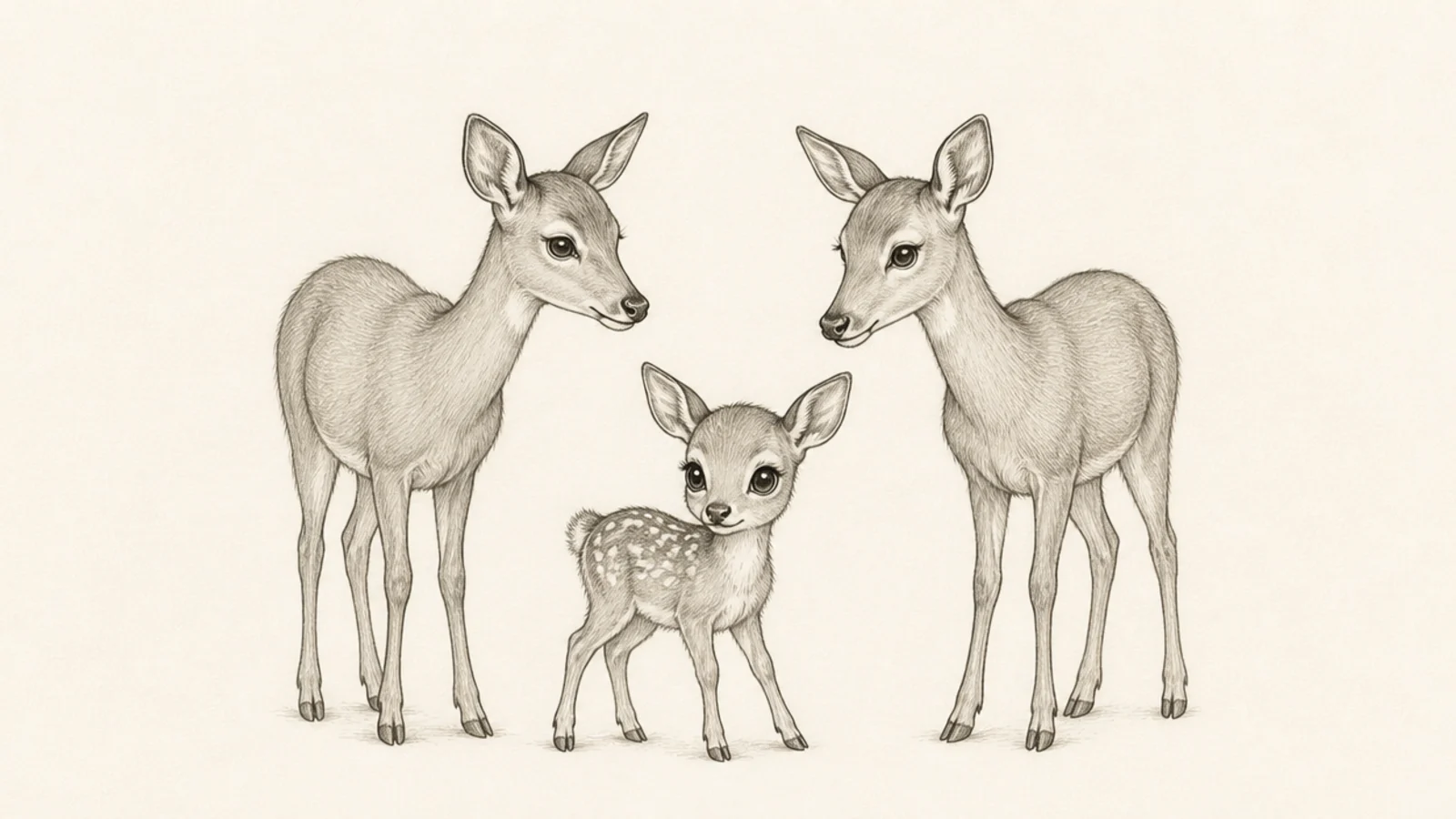
A little family of deer with a fawn between two adults closes the list warmly. Grouping three deer looks finished and loving. It is a heartwarming family portrait.
Step 1 draw two adult deer standing slightly apart. Step 2 place a small fawn between and slightly in front of them. Step 3 turn all three heads gently inward and spot the fawn.
Stagger the three at different depths so the family group has natural spacing.
Don’t line them up flat; slight overlap and depth make the family feel real.