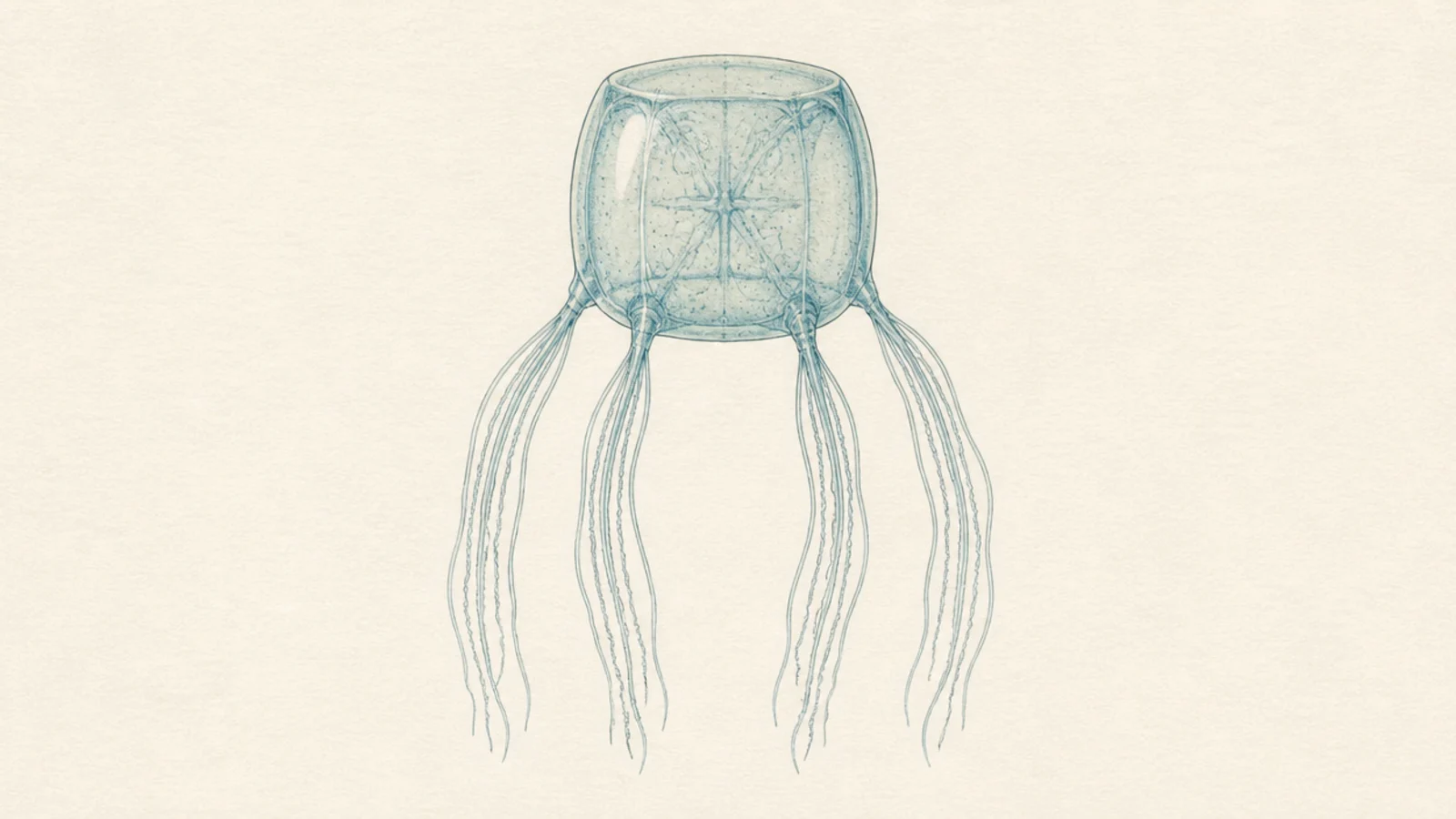
1 Classic Box Jellyfish
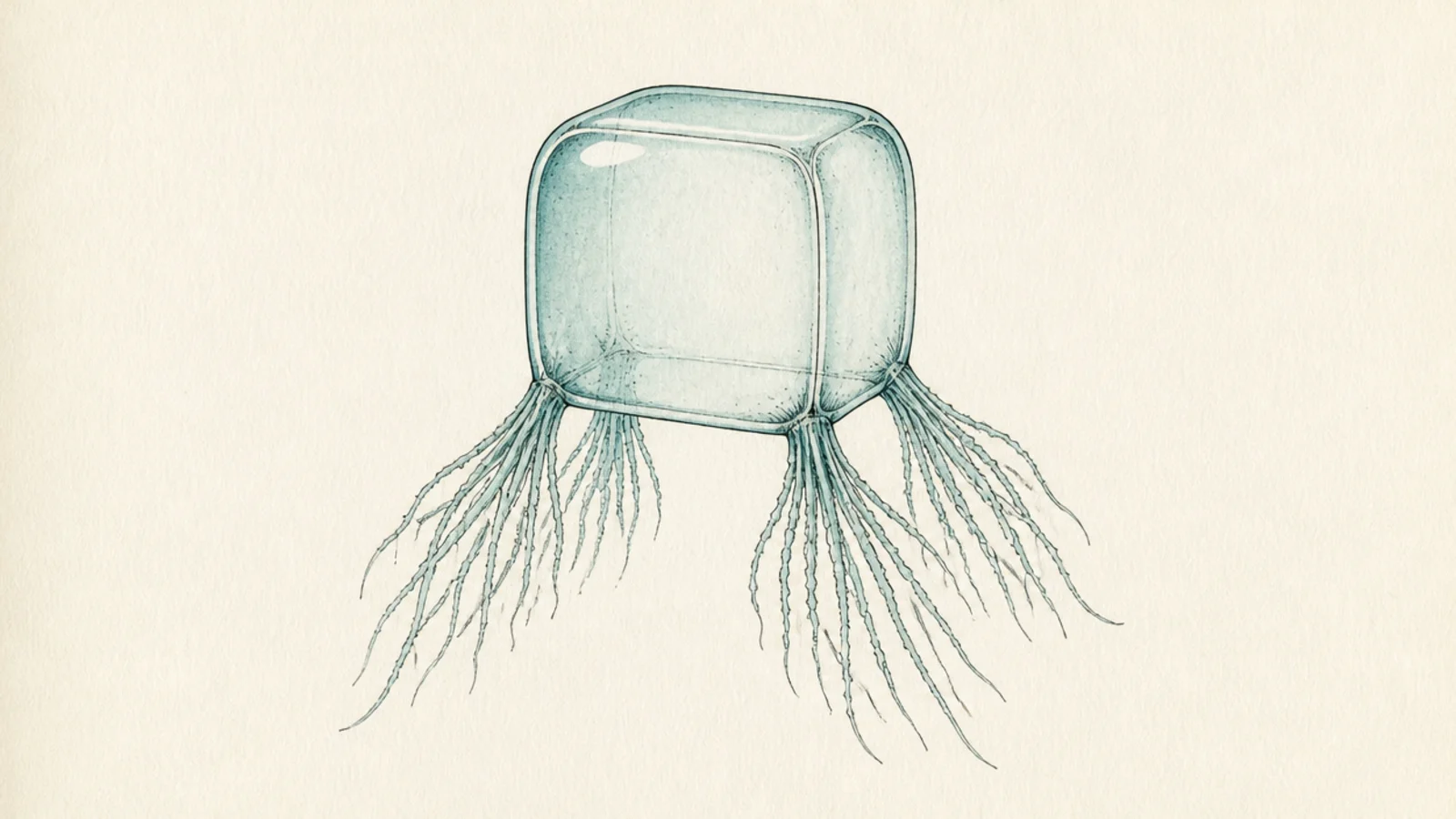
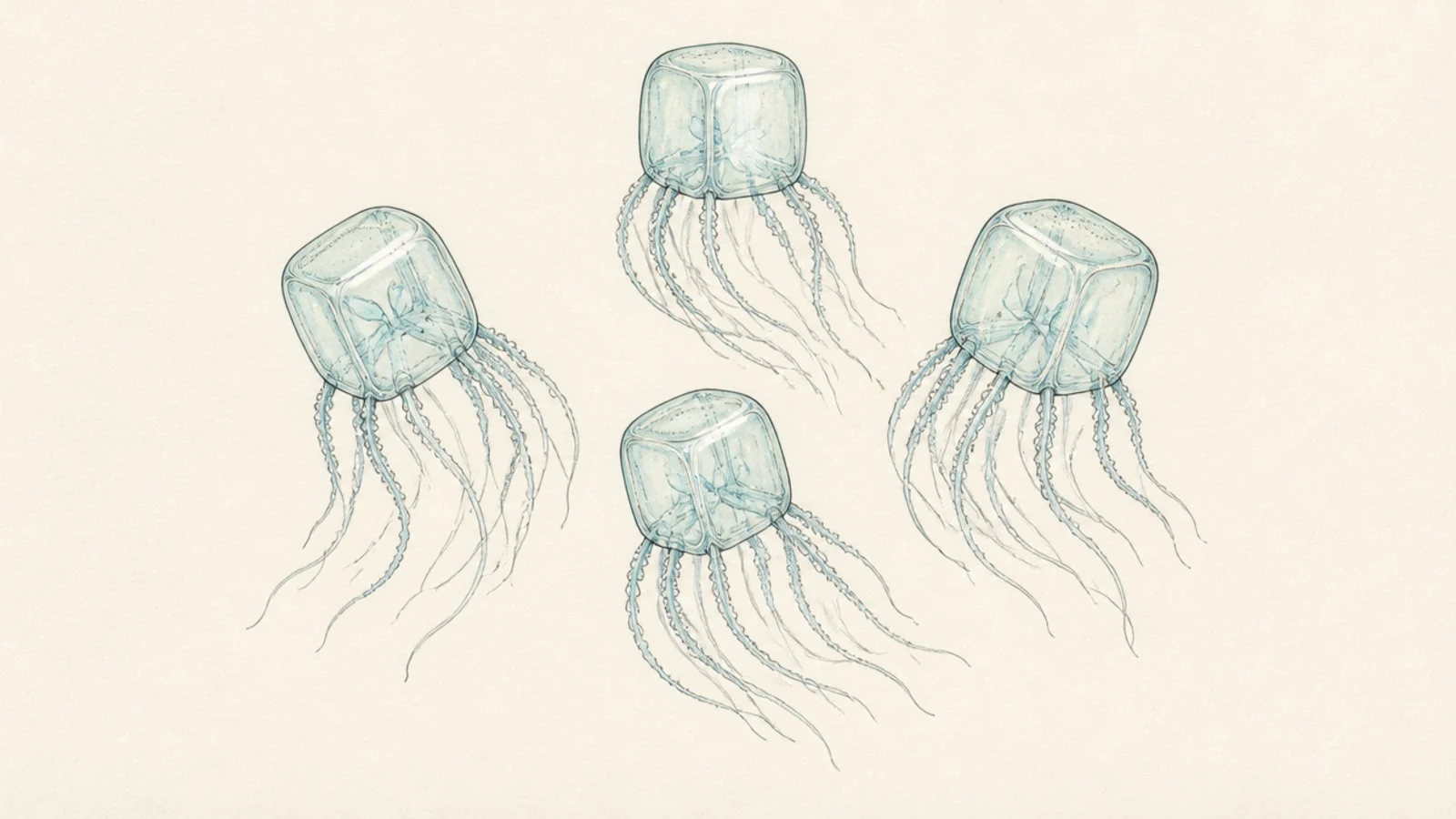
This is the definitive box jelly — a rounded cube bell with tentacle bundles at all four corners. It’s the base every other version builds on. Get this and you understand the species.
Pro tipSoften the cube’s corners slightly so it looks like a jellyfish, not a hard box.
Step 1 draw a rounded cube with a see-through front face. Step 2 add a faint line for the far edges showing through. Step 3 hang a bundle of fine tentacles from each bottom corner.
AvoidDon’t spread the tentacles around the whole rim; keep them in four corner bundles.
2 Transparent Glass Box Jelly
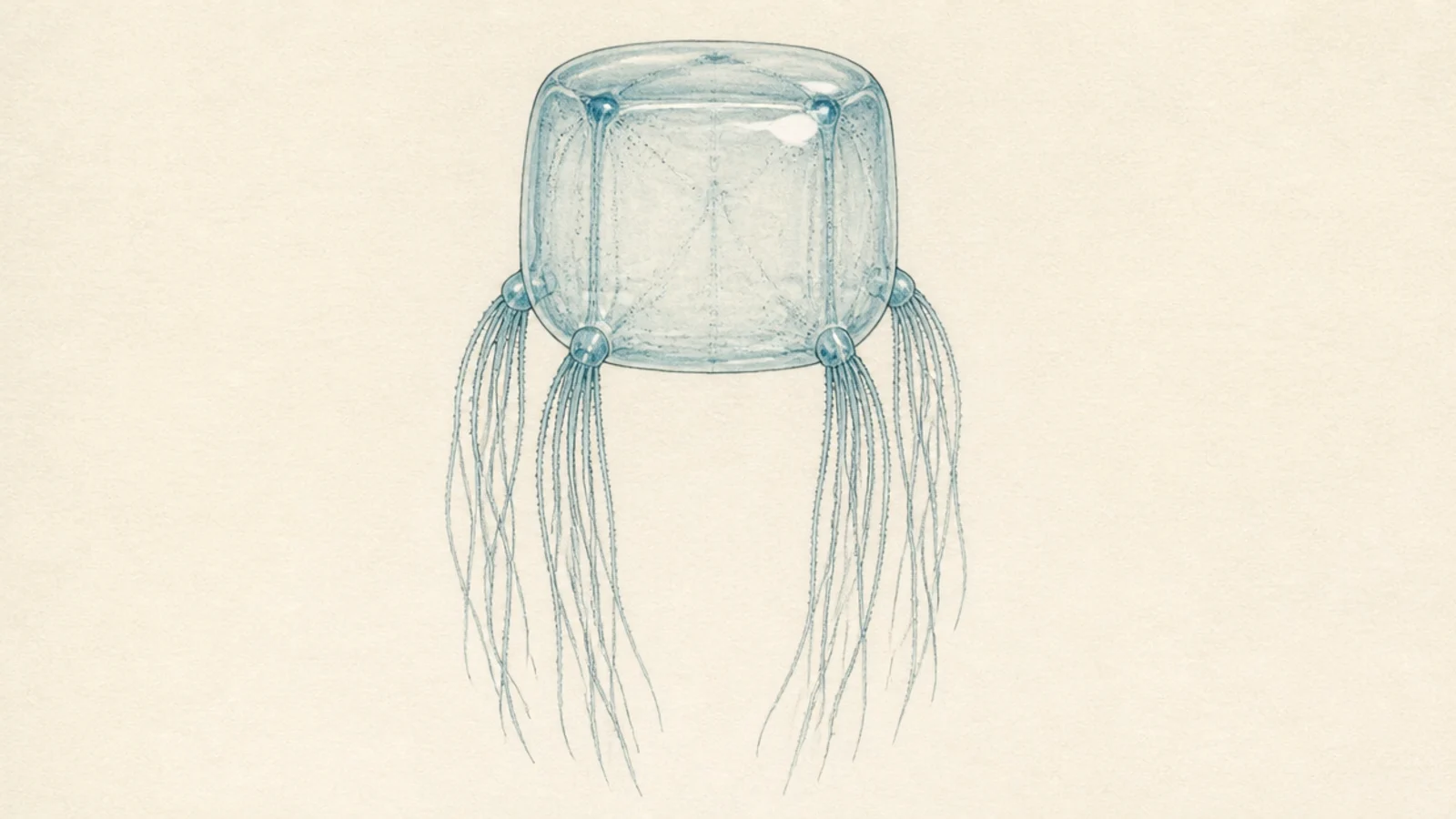
Emphasizing transparency makes the box jelly look like blown glass. Seeing the far edges through the front is the whole effect. It’s elegant and accurate.
Pro tipDraw the back edges faintly so they read as seen-through glass, not solid lines.
Step 1 draw the cube bell. Step 2 lightly draw the far corners and edges showing through the front. Step 3 keep it nearly colorless with just a highlight and faint blue.
AvoidDon’t fill the bell with color; transparency needs it mostly clear.
3 Blue-Glow Box Jelly
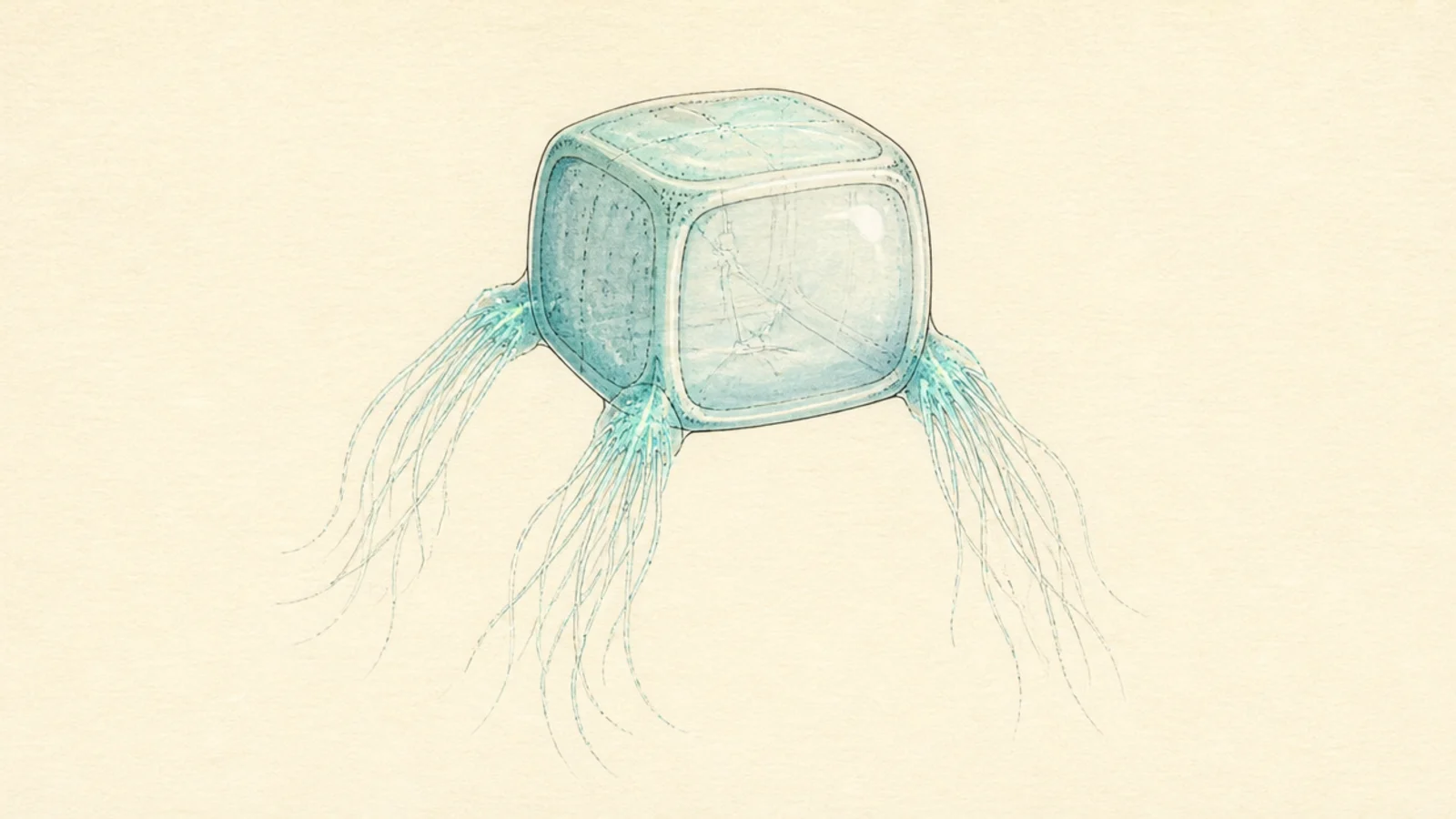
On dark water, a pale glowing box jelly looks striking and a little eerie. The cube shape glowing is unusual and cool. It suits the mysterious subject.
Step 1 on dark paper, draw the cube bell. Step 2 glow it pale blue with a soft halo. Step 3 add glowing tentacle bundles from the corners.
Keep the front face brightest so the cube looks lit from inside.
Don’t over-brighten; a soft glow reads better than a solid fill.
4 Minimalist Box Jelly Outline
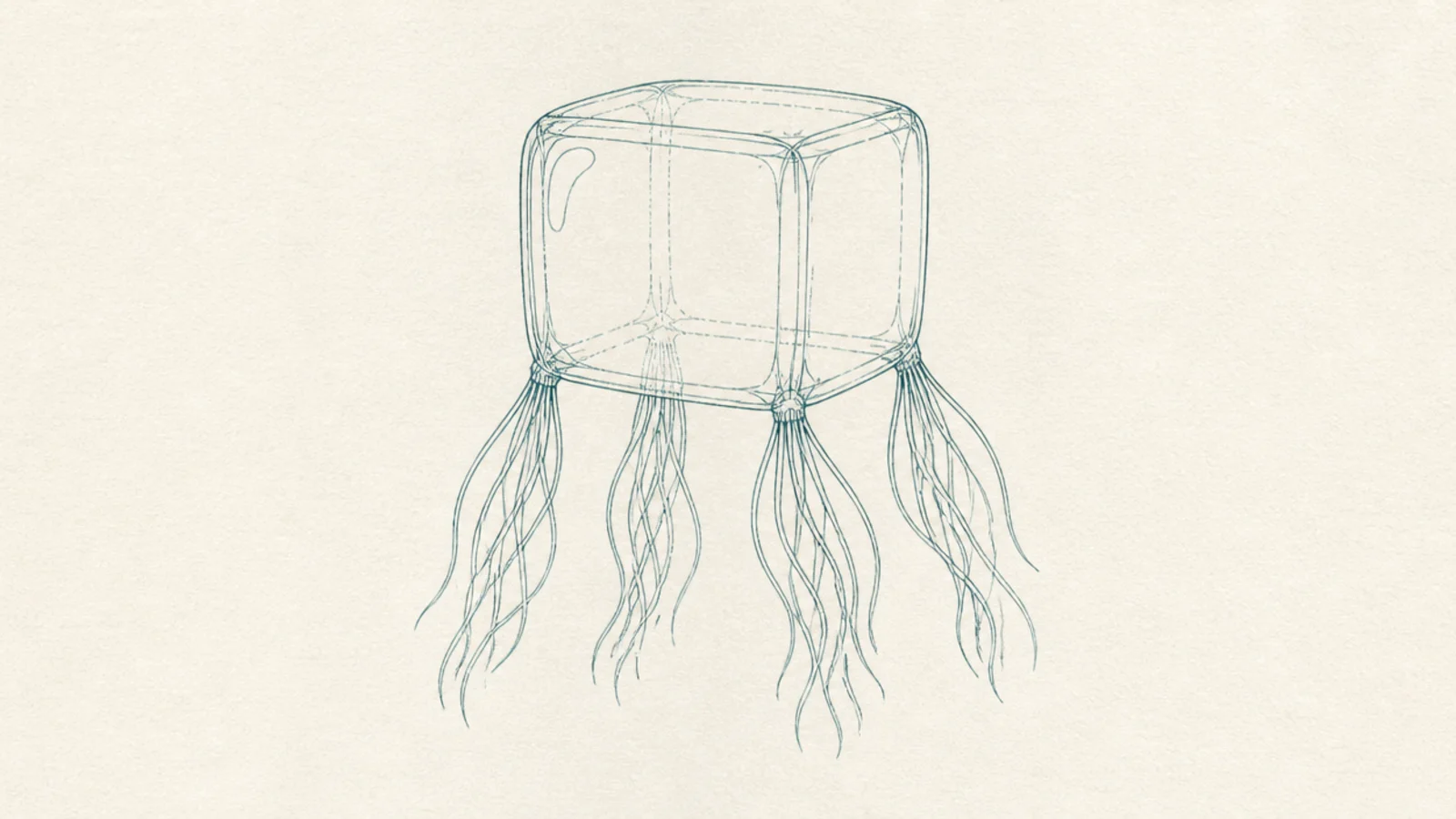
A clean outline lets the box jelly’s unusual shape speak for itself. No color, just crisp lines. It looks modern and tidy.
Pro tipKeep the cube edges crisp and straight so the box shape reads clearly.
Step 1 draw the cube bell in clean lines. Step 2 add the faint far edges. Step 3 add four simple corner tentacle bundles and leave it unshaded.
AvoidDon’t round the bell into a dome; the straight box edges are the point.
5 Realistic Box Jelly Study
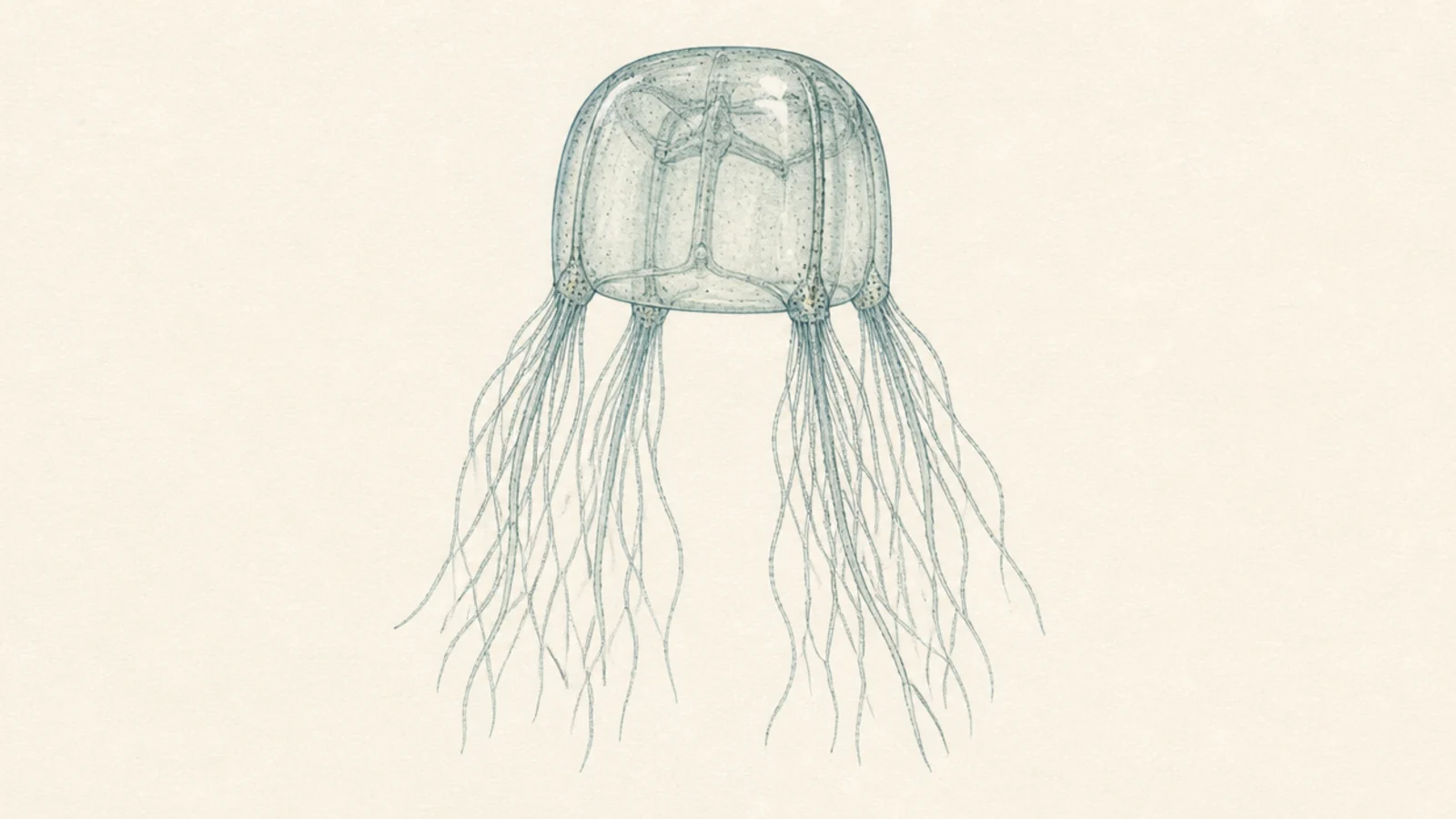
A realistic study captures the box jelly’s glassy cube and fine trailing tentacles accurately. The detail and transparency look impressive. It’s a rewarding subject.
Pro tipStudy a real photo so the pedalia and tentacle bundles are placed correctly.
Step 1 draw an accurate rounded cube bell. Step 2 render the transparent faces with soft value. Step 3 draw the long, fine corner tentacle bundles trailing.
AvoidDon’t clump the tentacles; real box jelly tentacles are long, fine, and flowing.
6 Cute Box Jelly
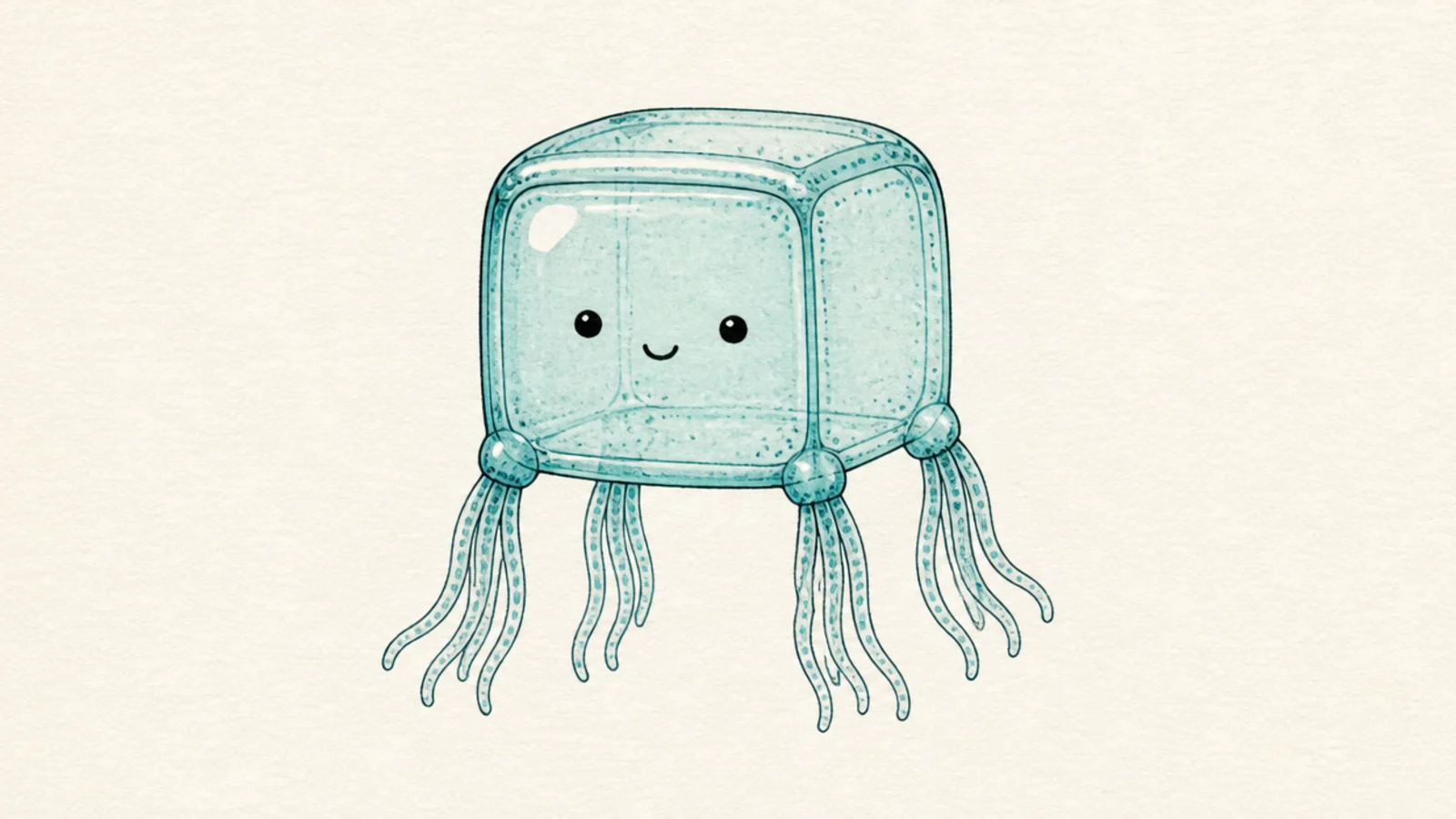
A kawaii box jelly turns the cube into an adorable character. The boxy shape is surprisingly cute with a little face. It’s a fun, friendly take on a scary animal.
Pro tipRound the cube’s edges more for a softer, cuter look.
Step 1 draw a rounded cube bell. Step 2 add two dot eyes and a tiny smile on the front face. Step 3 add short cute tentacle bundles at the corners.
AvoidDon’t add long scary tentacles; short cute bundles fit the kawaii style.
7 Box Jelly From Below
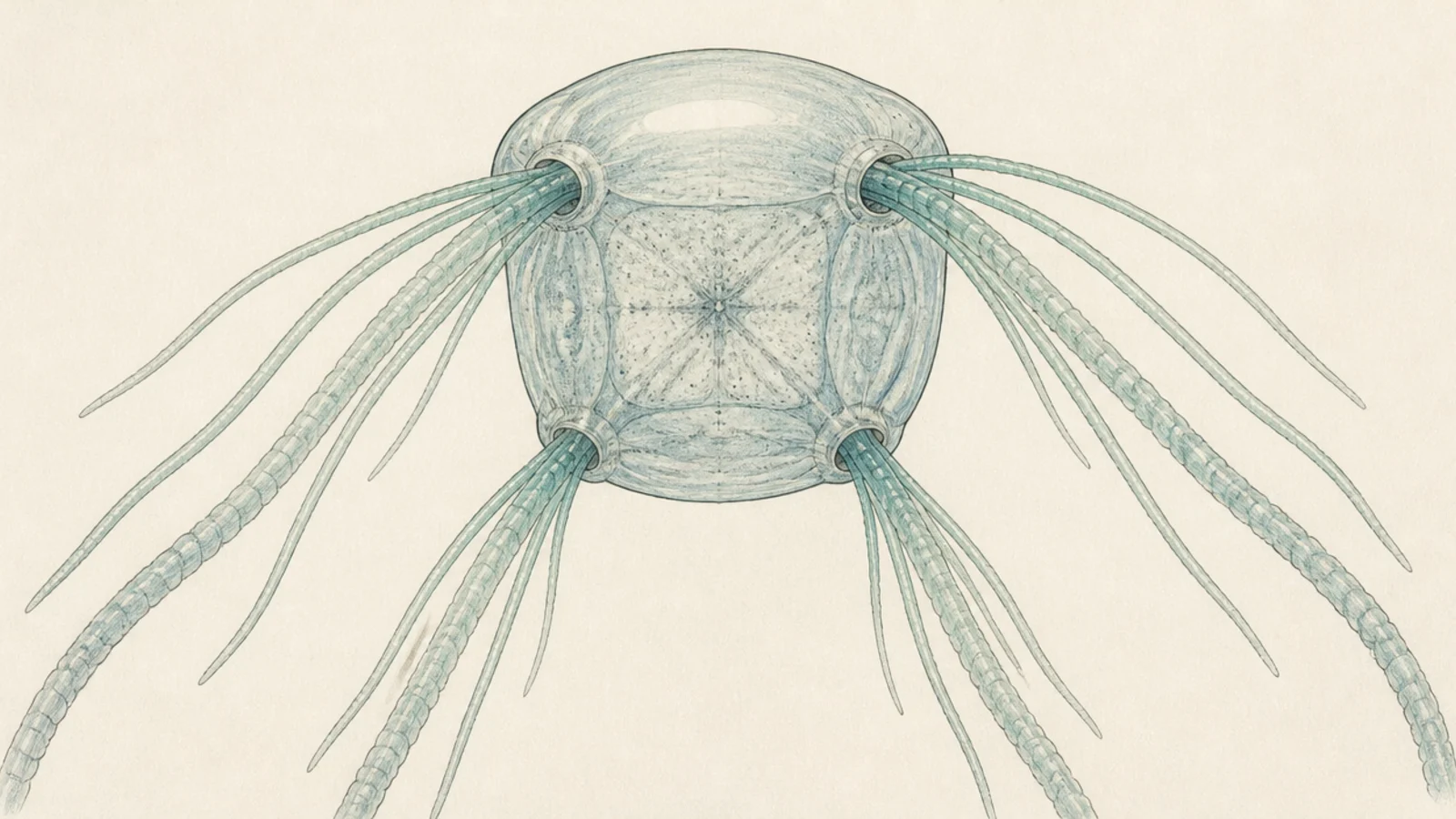
Viewing the box jelly from below shows the underside of the cube and the four tentacle bundles reaching down toward you. The dramatic angle is cool. It’s a fresh perspective.
Pro tipMake the near tentacles larger and the bell smaller to sell the upward angle.
Step 1 draw the cube from a low angle so you see its underside. Step 2 show the four corner openings. Step 3 draw the tentacle bundles coming toward the viewer.
AvoidDon’t draw it flat-on; the underside view is what makes this interesting.
8 Watercolor Box Jelly
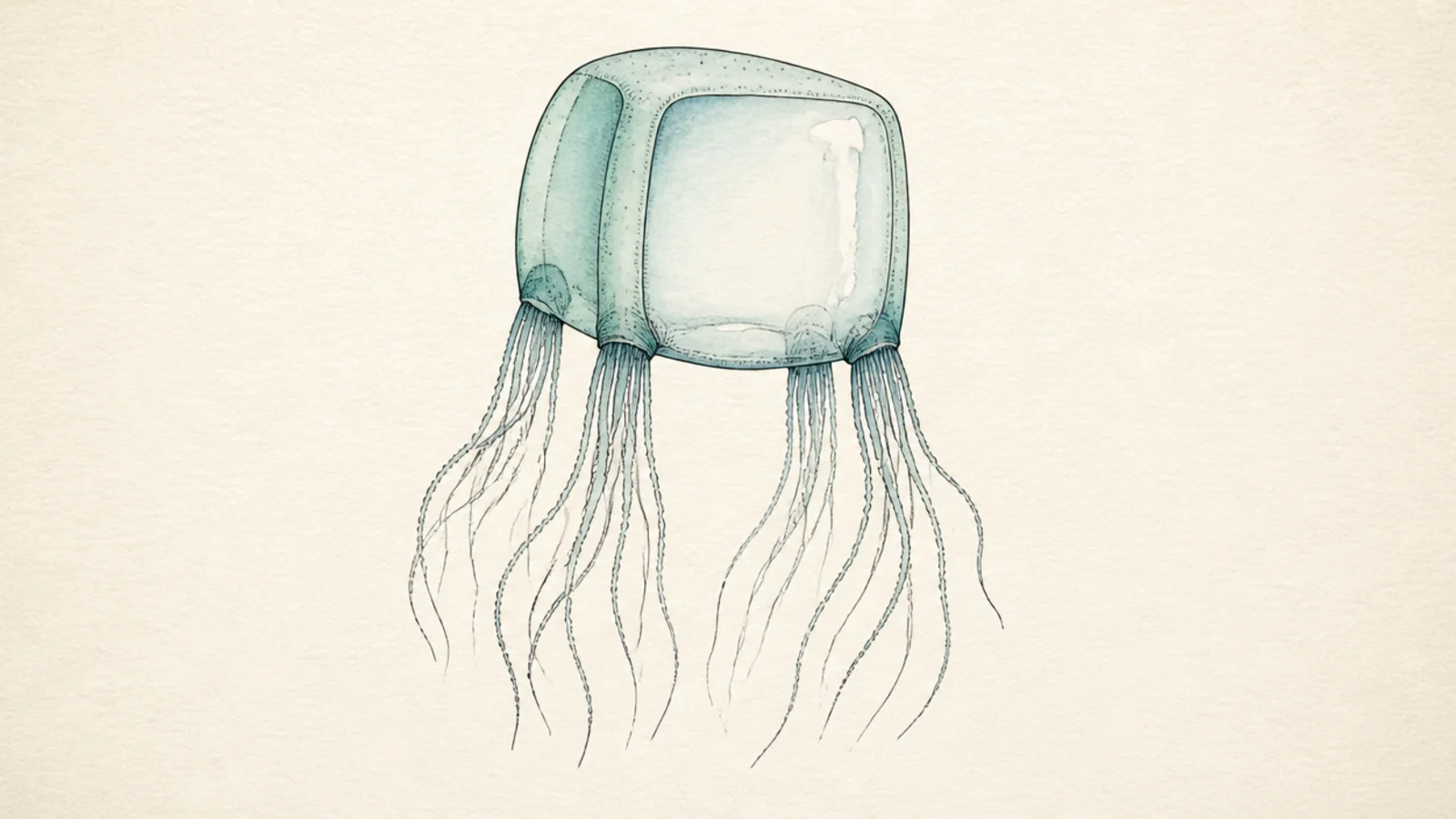
A soft watercolor box jelly captures its pale, translucent, glassy body. The gentle wash suits the see-through cube. It feels light and fresh.
Pro tipLeave the front face nearly unpainted so it reads as clear glass.
Step 1 wash a pale blue-green cube shape. Step 2 leave the front face lightest. Step 3 once dry, add fine ink edges and trailing corner tentacles.
AvoidDon’t paint it dark; the box jelly is pale and translucent.
9 Geometric Box Jelly
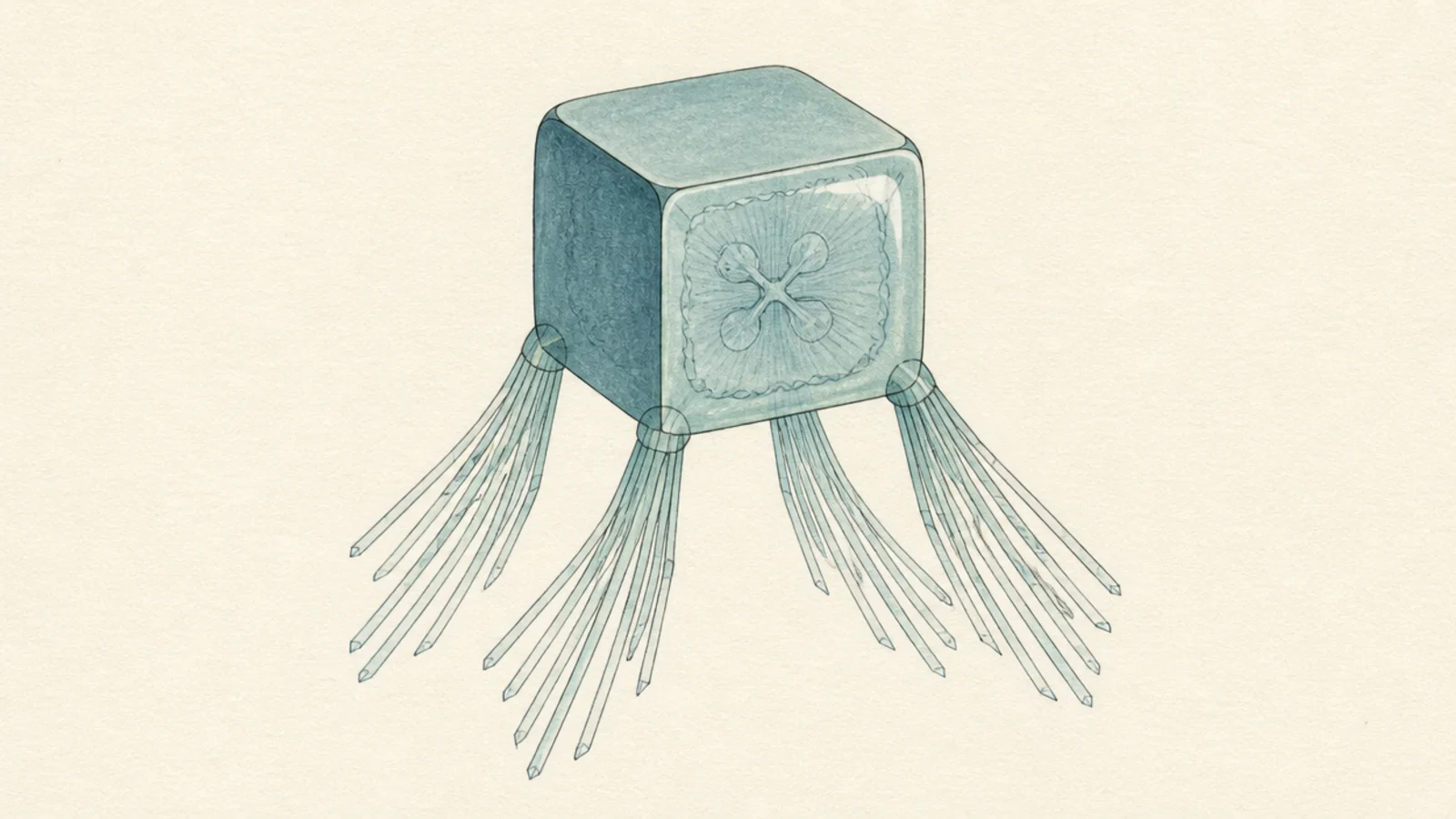
A geometric style leans into the box jelly’s natural angles for a crisp, modern look. The faceted cube feels designed. It’s graphic and satisfying.
Step 1 draw the cube with clean, precise faces. Step 2 shade each face a slightly different value. Step 3 add straight-ish geometric tentacle bundles.
Give each face of the cube a different value so it looks three-dimensional.
Don’t soften it too much; the geometric look wants clean angles.
10 Box Jelly Swarm
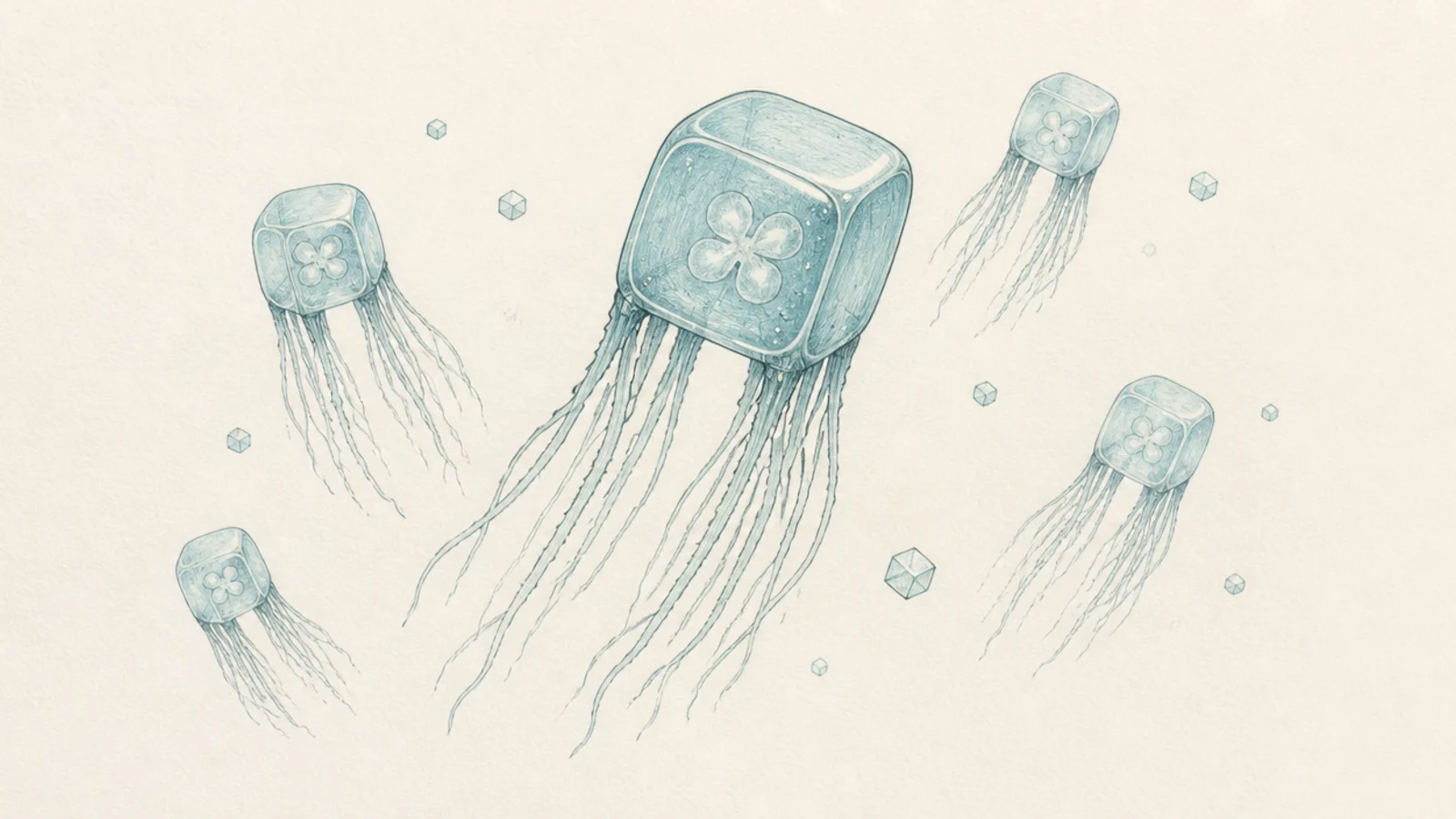
A group of box jellies drifting together fills the page with floating cubes. Varying their sizes adds depth. It’s an impressive ocean scene.
Step 1 draw one larger box jelly. Step 2 add several smaller ones at different sizes. Step 3 fade the far ones paler for depth.
Tilt the cubes at slightly different angles so the swarm feels natural.
Don’t line them up evenly; a scattered drift looks alive.
11 Neon Box Jelly
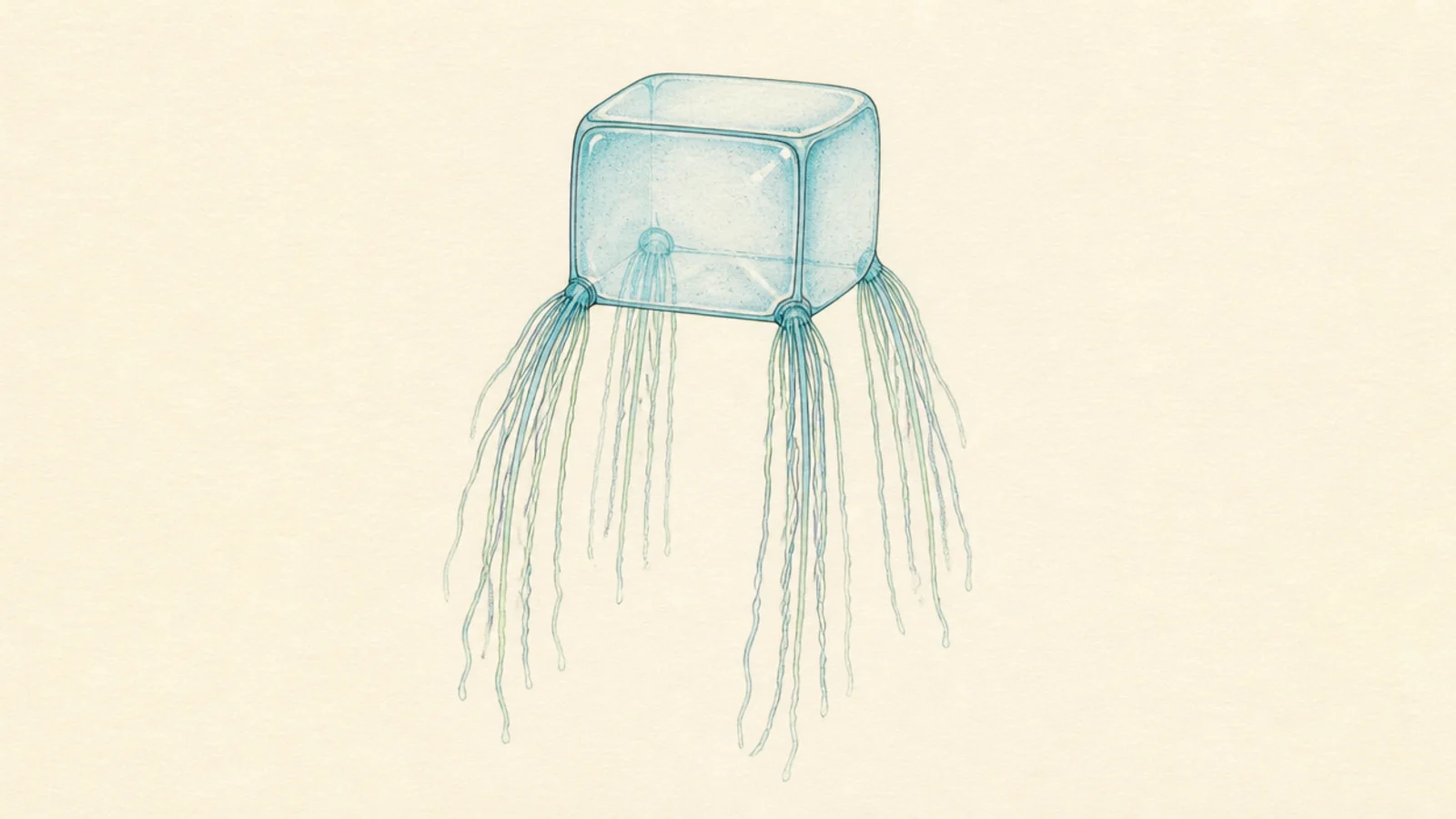
A neon-outlined box jelly on black paper looks electric and futuristic. The bright cube edges pop. It’s a bold, graphic style.
Step 1 on black paper, sketch in white. Step 2 outline the cube in one neon color. Step 3 add neon tentacle bundles and a faint glow echo.
Outline the cube edges cleanly in neon so the box shape glows sharply.
Don’t fill the shape; neon reads as glowing lines on black.
12 Long-Tentacle Box Jelly
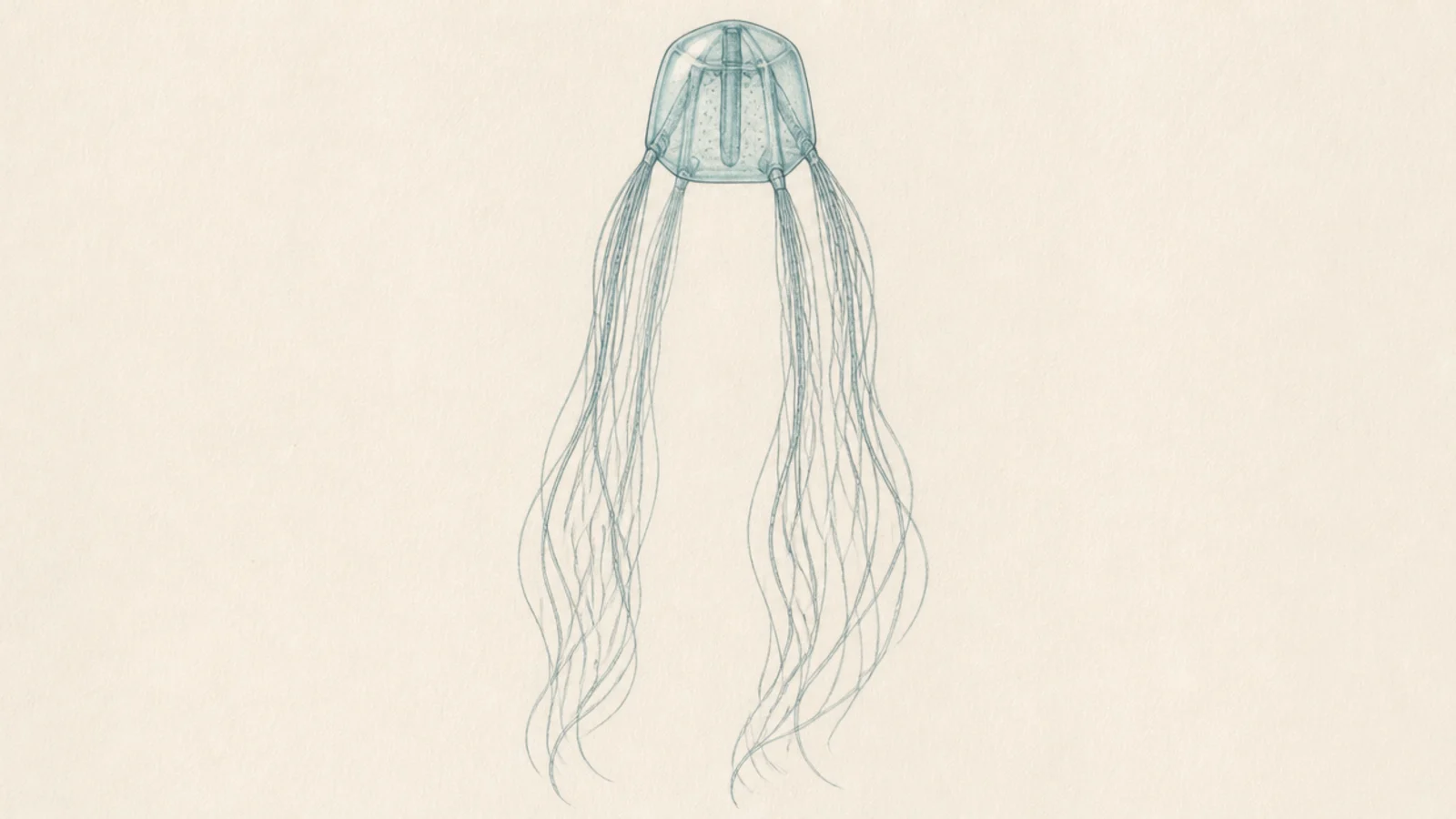
Exaggerating the long trailing tentacle bundles makes a dramatic, elegant box jelly. The sweeping tentacles fill the page. It shows the creature’s real proportions.
Pro tipLet the four bundles curve gracefully so the long tentacles feel like they’re flowing.
Step 1 draw a small cube bell near the top. Step 2 trail four long tentacle bundles far down the page. Step 3 let them curve and drift the same direction.
AvoidDon’t make the tentacles stiff; box jelly tentacles are long and flowing.
13 Box Jelly Side Profile
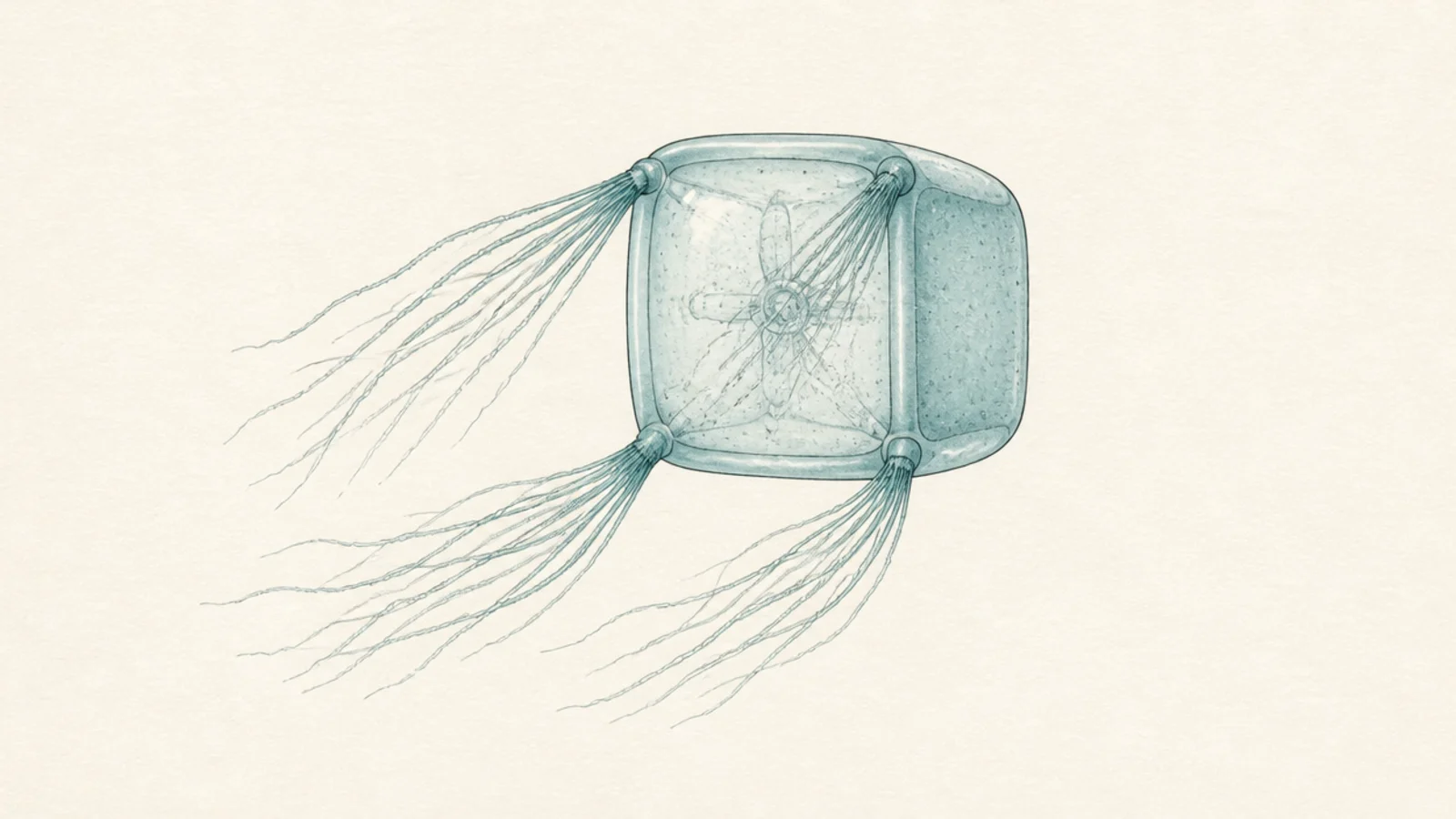
A side profile shows the cube edge-on, revealing its box depth clearly. The angled view is informative and cool. It reads as clearly boxy.
Pro tipShow two faces of the cube at slightly different values to reveal its 3D box form.
Step 1 draw the cube from the side so two faces show. Step 2 shade the side face darker than the front. Step 3 hang the near corner bundles fuller than the far ones.
AvoidDon’t draw it perfectly flat; a slight angle shows the box depth.
14 Pale Turquoise Box Jelly
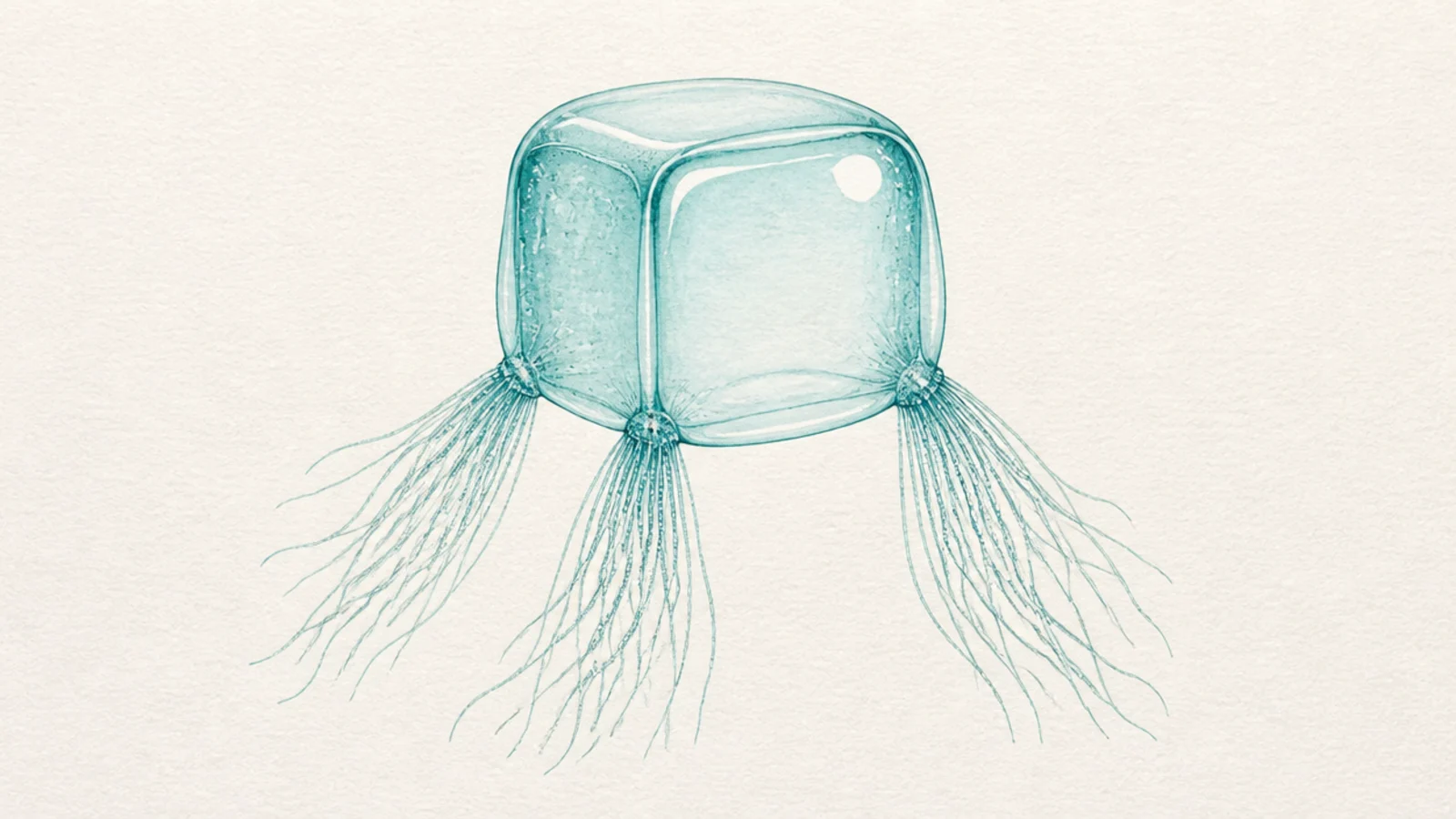
A pale turquoise box jelly feels tropical and clean. The soft blue-green matches its real color. It’s calm and pretty.
Step 1 draw the cube bell. Step 2 shade it soft turquoise, lightest on the front face. Step 3 add fine turquoise tentacle bundles and a highlight.
Keep the turquoise pale so the box jelly still looks translucent.
Don’t saturate the color; a pale wash suits the see-through body.
15 Bold Ocean-Fan Box Jelly
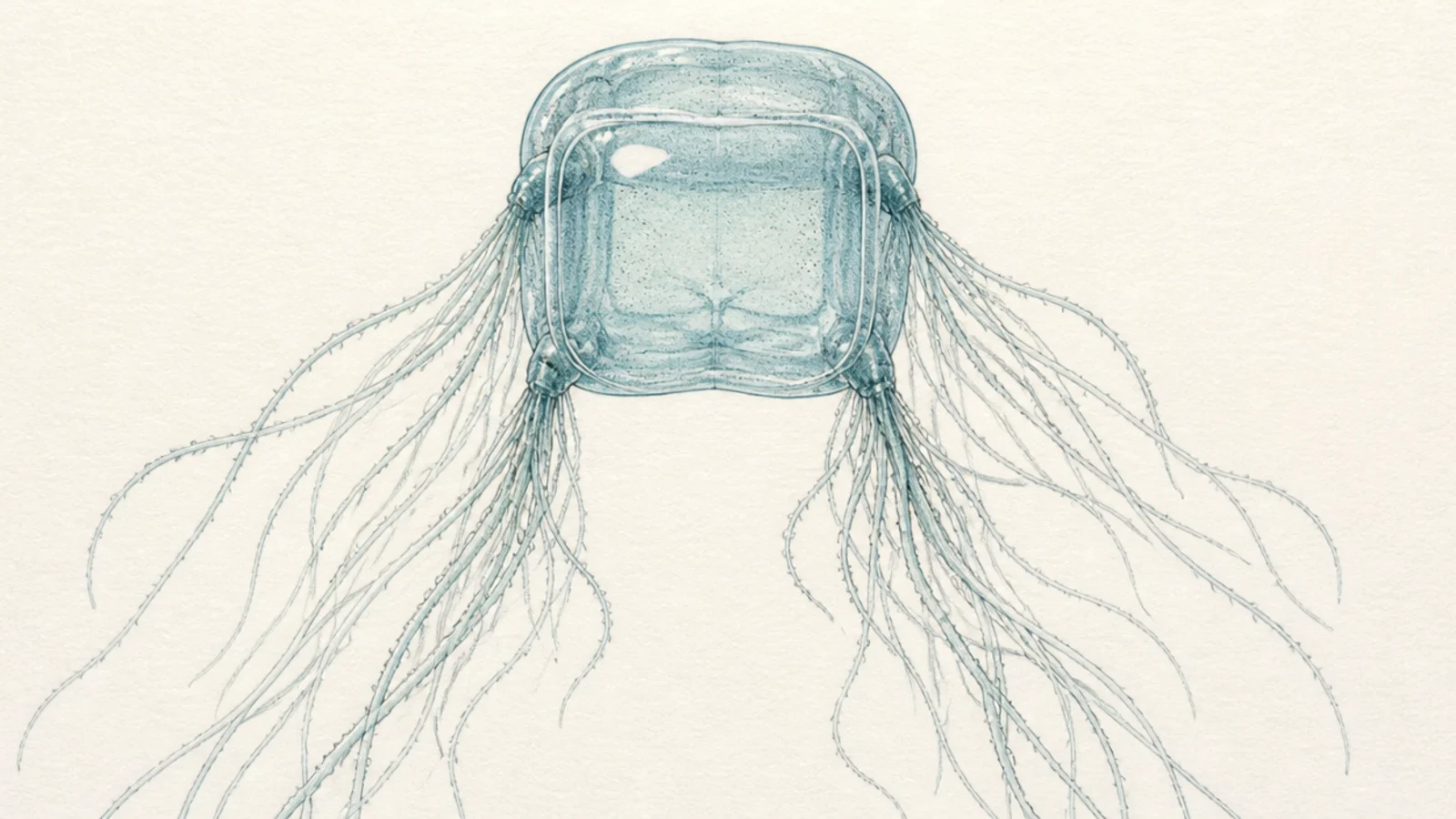
A bold, high-contrast box jelly celebrates it as one of the ocean’s coolest, most dangerous animals. The strong rendering feels like a marine poster. It’s the perfect finale for ocean fans.
Pro tipPush the contrast and keep the tentacles long and dramatic for a striking, poster-like piece.
Step 1 draw an accurate, confident cube bell. Step 2 render it with bold contrast and a glassy front. Step 3 add long dramatic tentacle bundles and deep water shading.
AvoidDon’t make it timid; a bold rendering suits this striking animal.