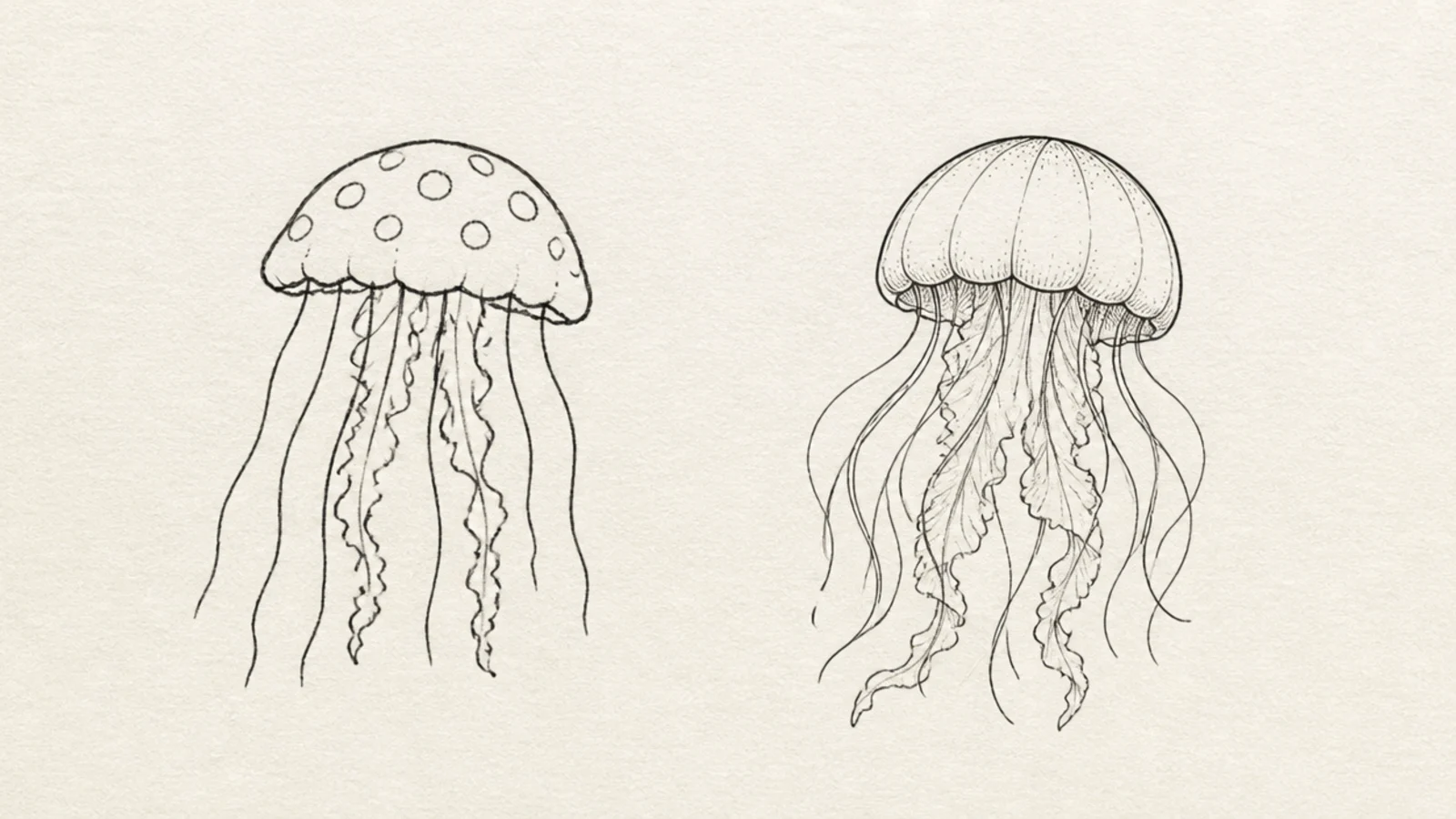
1 Mistake 1: A Flat, Even Bell
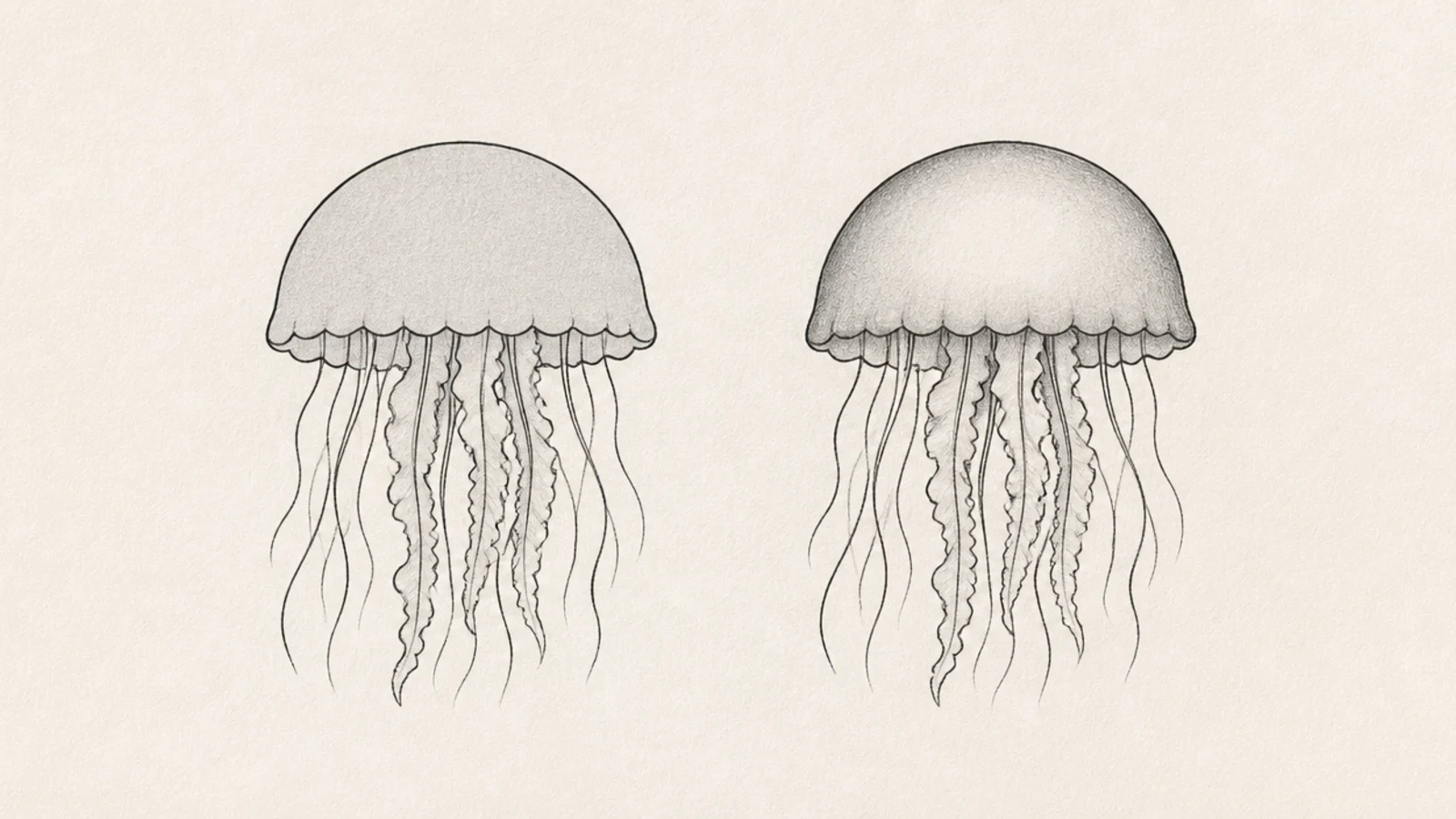
My first bell was colored one flat, even gray, so it looked like a sticker instead of a rounded dome. There was no sense of light or form. It just sat there, lifeless.
The fix was value. I shaded the bell darker at the edges and underside, kept the center light, and suddenly it looked round. Building it from dark to light was the whole difference.
Pro tipKeep the center of the bell lightest and let it get darker toward the edges for instant roundness.
AvoidDon’t fill the bell with one even tone; a jellyfish bell needs a light-to-dark range.
2 Mistake 2: Stiff, Even Tentacles
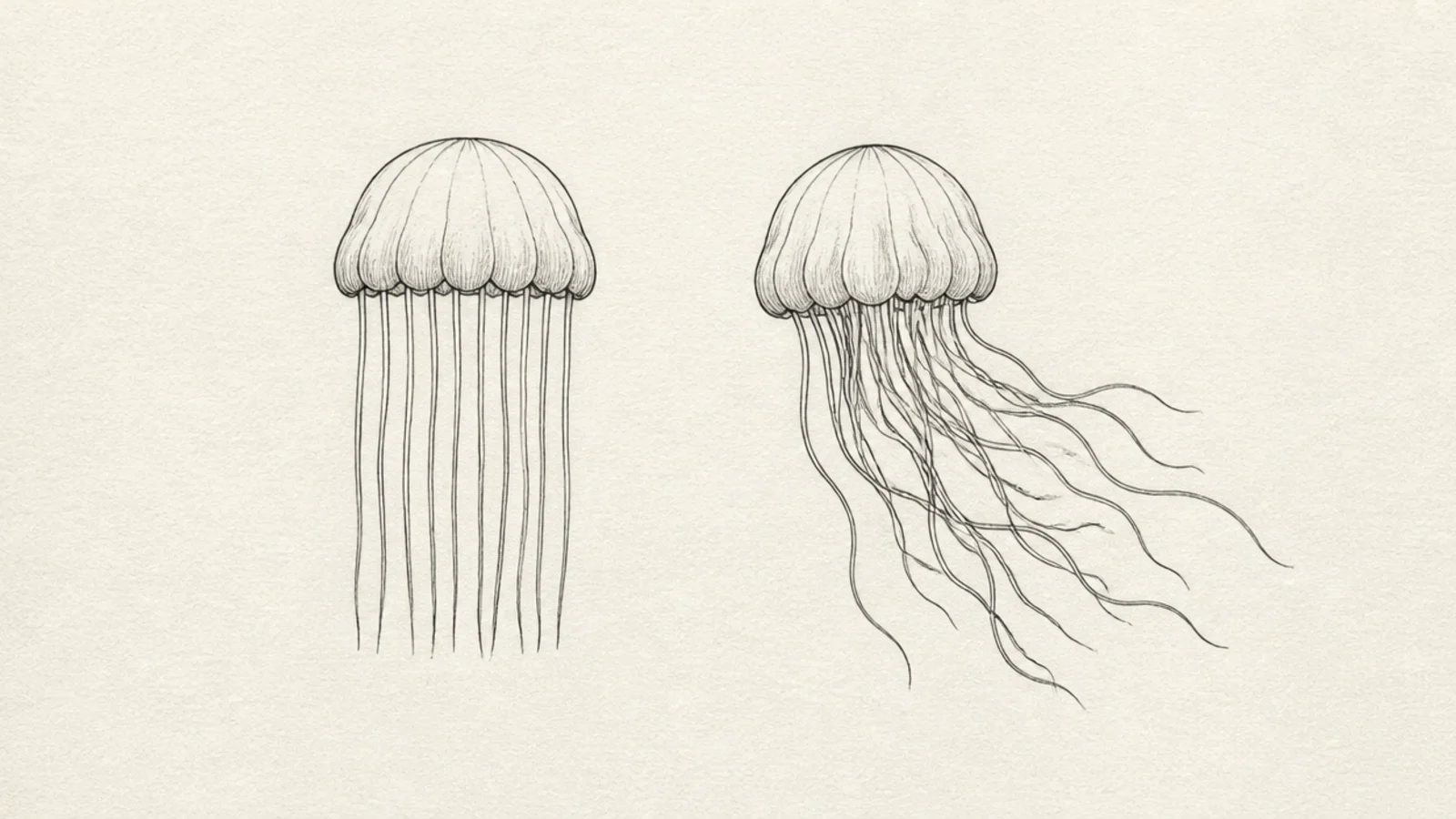
I drew all my tentacles the same length, evenly spaced, hanging straight down — and it looked like a comb, not a jellyfish. There was no movement at all. It felt rigid.
The fix was variety. I mixed a few thick arms with thin curly tentacles, made them different lengths, and let them all drift the same direction. Instantly it looked like it was floating.
Pro tipVary the tentacle lengths and curve them all one way so the jellyfish looks like it’s drifting.
AvoidDon’t space identical tentacles evenly; that stiffness is a dead giveaway of a beginner drawing.
3 Mistake 3: Muddy Over-Shading
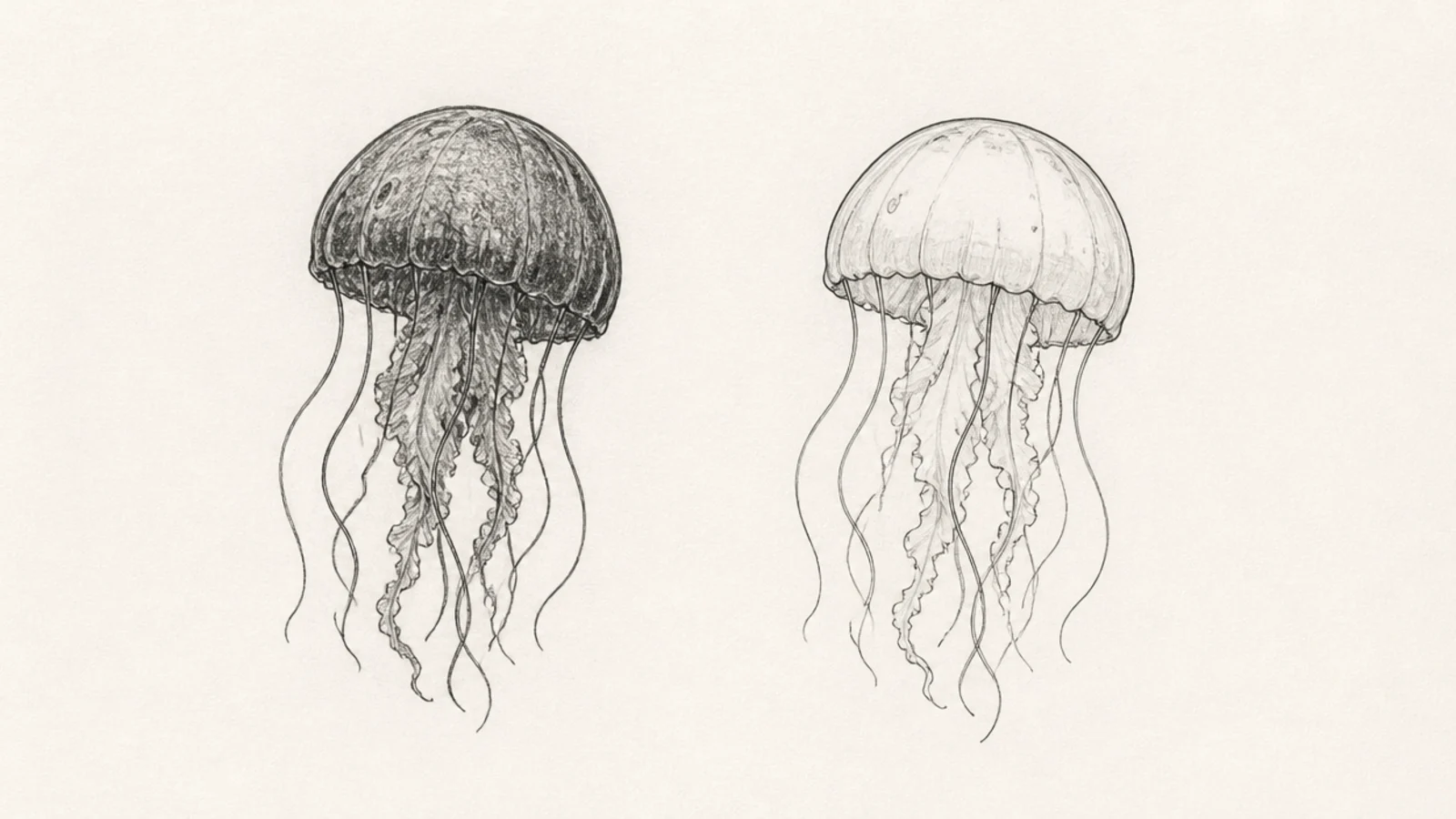
I thought more shading meant more realism, so I shaded the whole thing dark. It turned into a gray, muddy blob with no clean areas. All the delicacy was gone.
The fix was restraint. I kept shading to just the underside, one edge, and inside the arms — under about 15 percent of the drawing — and left the rest clean. It looked light and translucent again.
Shade only the underside, one side, and inside the arms; leave most of the jellyfish clean.
Don’t shade the whole jellyfish; over-shading is what makes it look muddy and heavy.
4 Mistake 4: Forgetting the Highlight
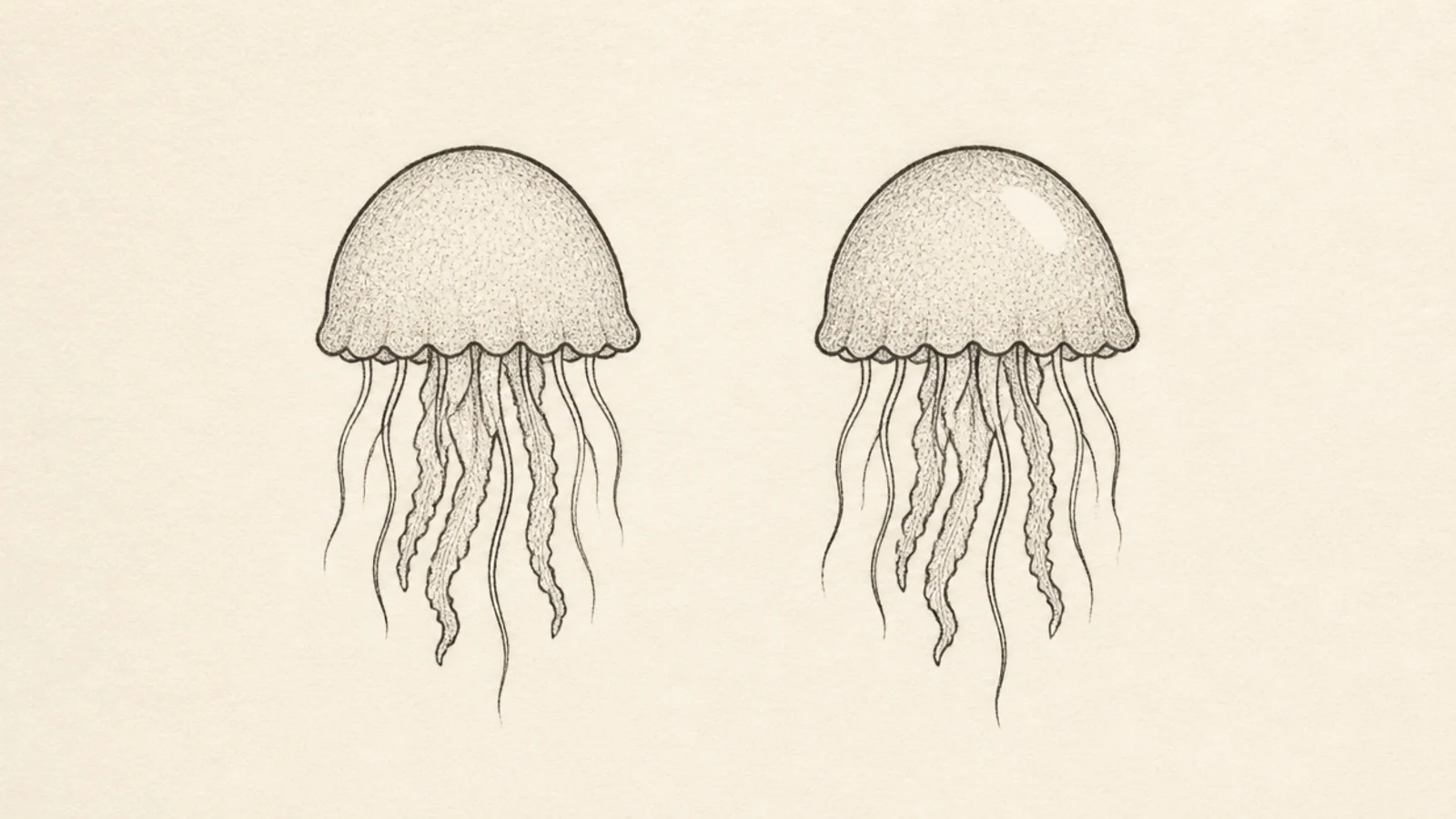
My early jellyfish had no highlight, so even when the shape was okay, it looked dull and solid. It never had that glassy, glowing quality I wanted. Something always felt missing.
The fix took one second — I left a small blank highlight near the top of the bell (or lifted one with an eraser). Suddenly it looked glassy and lit from within. It was the biggest change for the least effort.
Pro tipLeave one small blank highlight near the top of the bell; it instantly makes the jellyfish glow.
AvoidDon’t shade over every part; that missing highlight is why a jellyfish looks lifeless.
5 Mistake 5: Rushing the Bell Shape
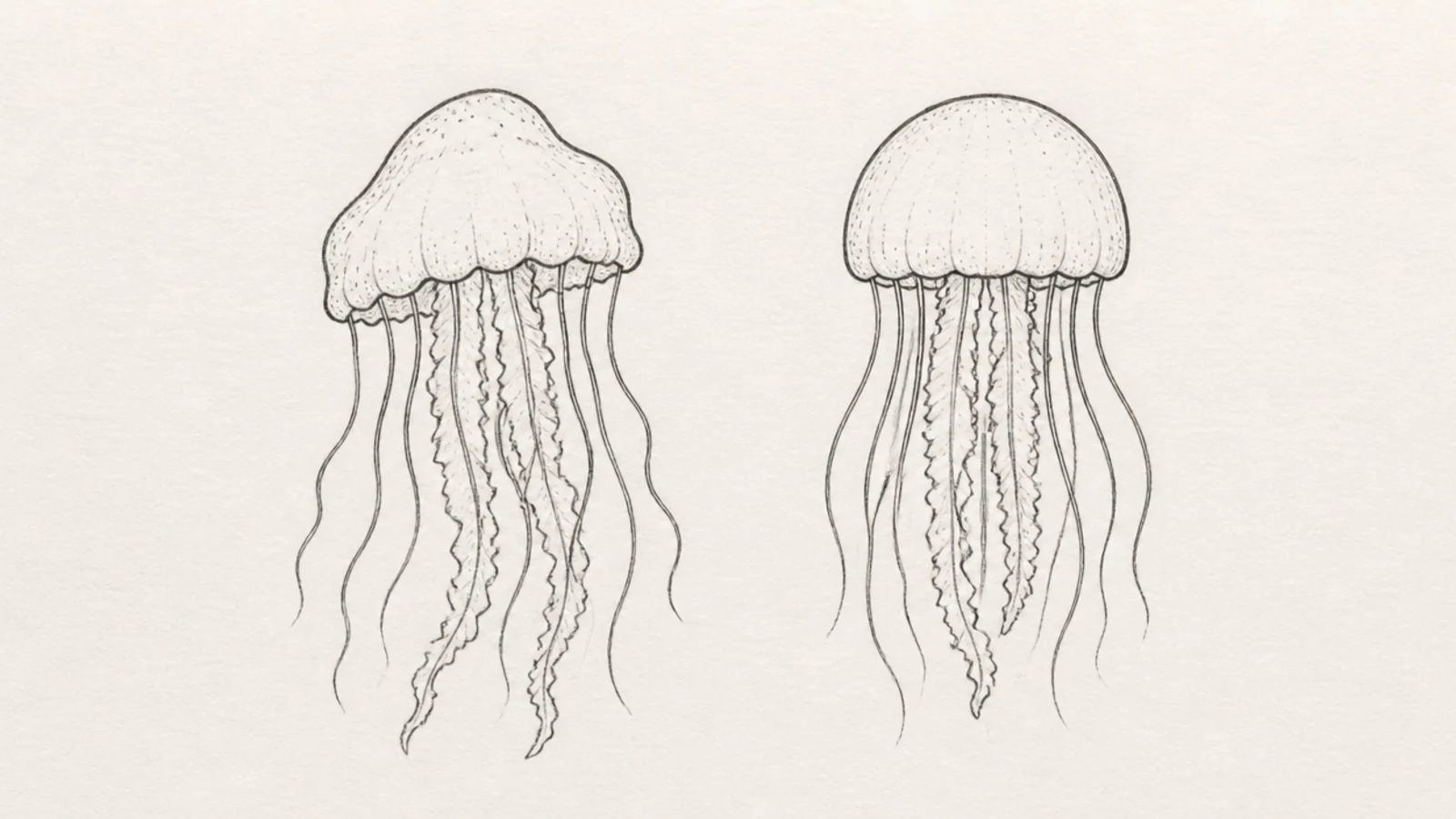
I rushed the bell and ended up with a lumpy, lopsided dome, then tried to fix everything else on top of a bad foundation. Nothing looked right because the base was off. It was frustrating.
The fix was slowing down. I drew the bell lightly, went around it a second time to even it out, and only moved on once it looked smooth. A clean bell made every next step easier.
Pro tipDraw the bell slowly and round it out with a second pass before adding anything else.
AvoidDon’t rush the bell; a lopsided base makes the whole jellyfish look wrong no matter what you add.
6 What Finally Worked: Starting Simple
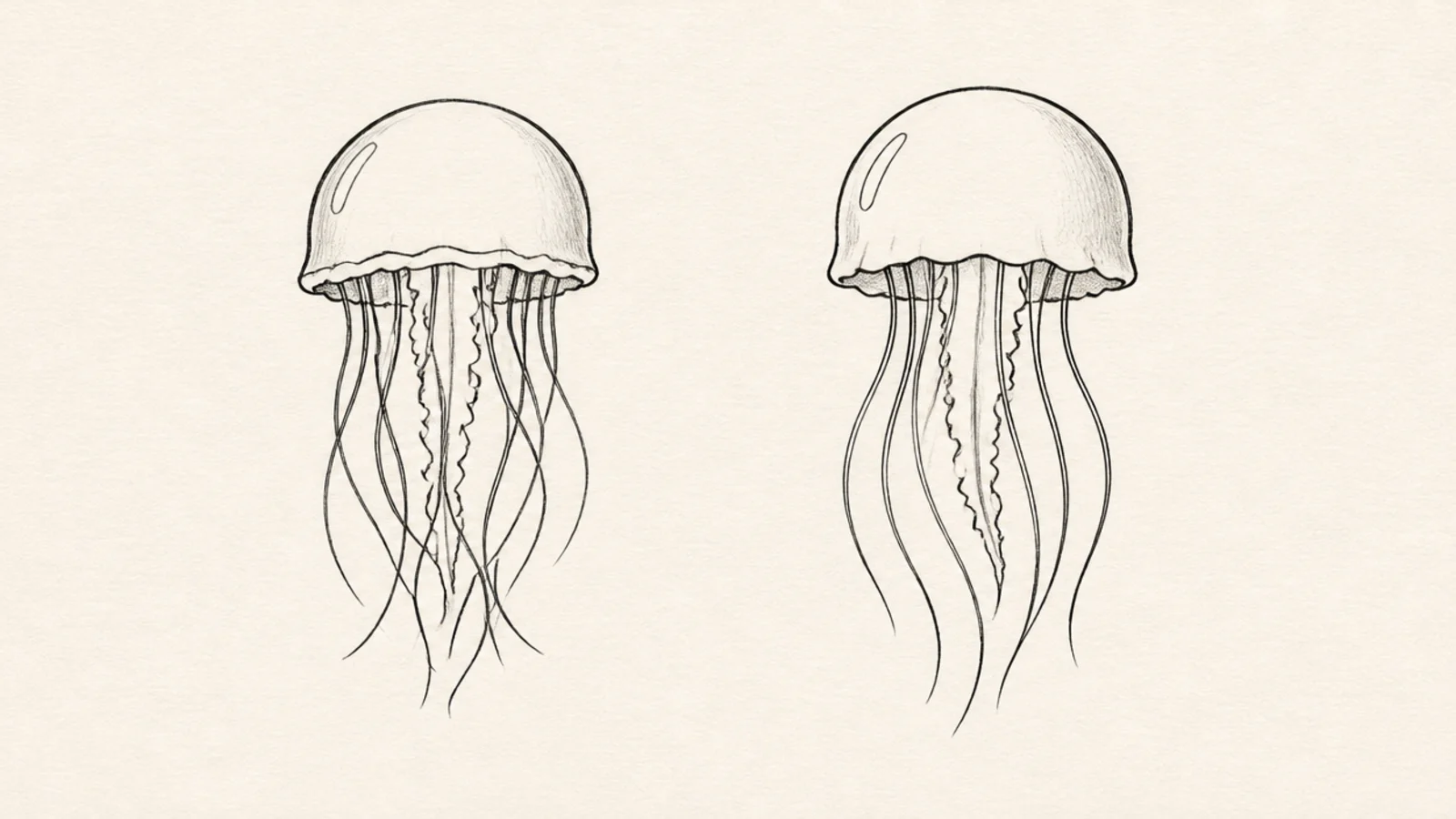
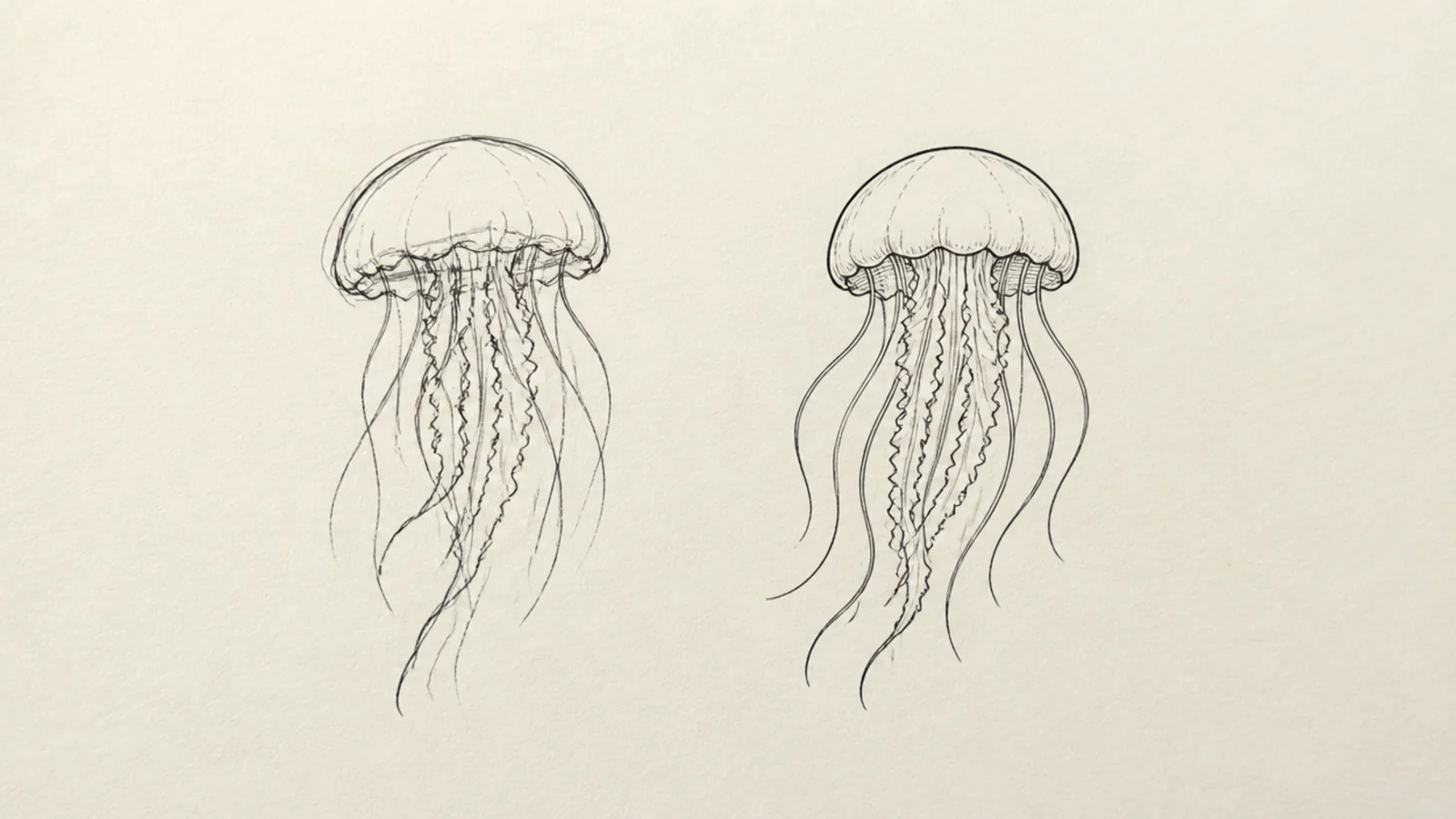
The drawing that finally looked good was also my simplest — one clean bell, a few flowing tentacles, light shading, one highlight. I’d been overcomplicating it the whole time. Simple was the answer.
I stopped adding extra detail and focused on getting the basics clean. A smooth bell, varied tentacles, a little shading, and a highlight was all it took. Less really was more.
Pro tipAim for a clean, simple jellyfish first; add detail only once the basics look right.
AvoidDon’t pile on detail to fix a shaky base; nail the simple version first.
7 What Finally Worked: Drawing the Bell Ten Times
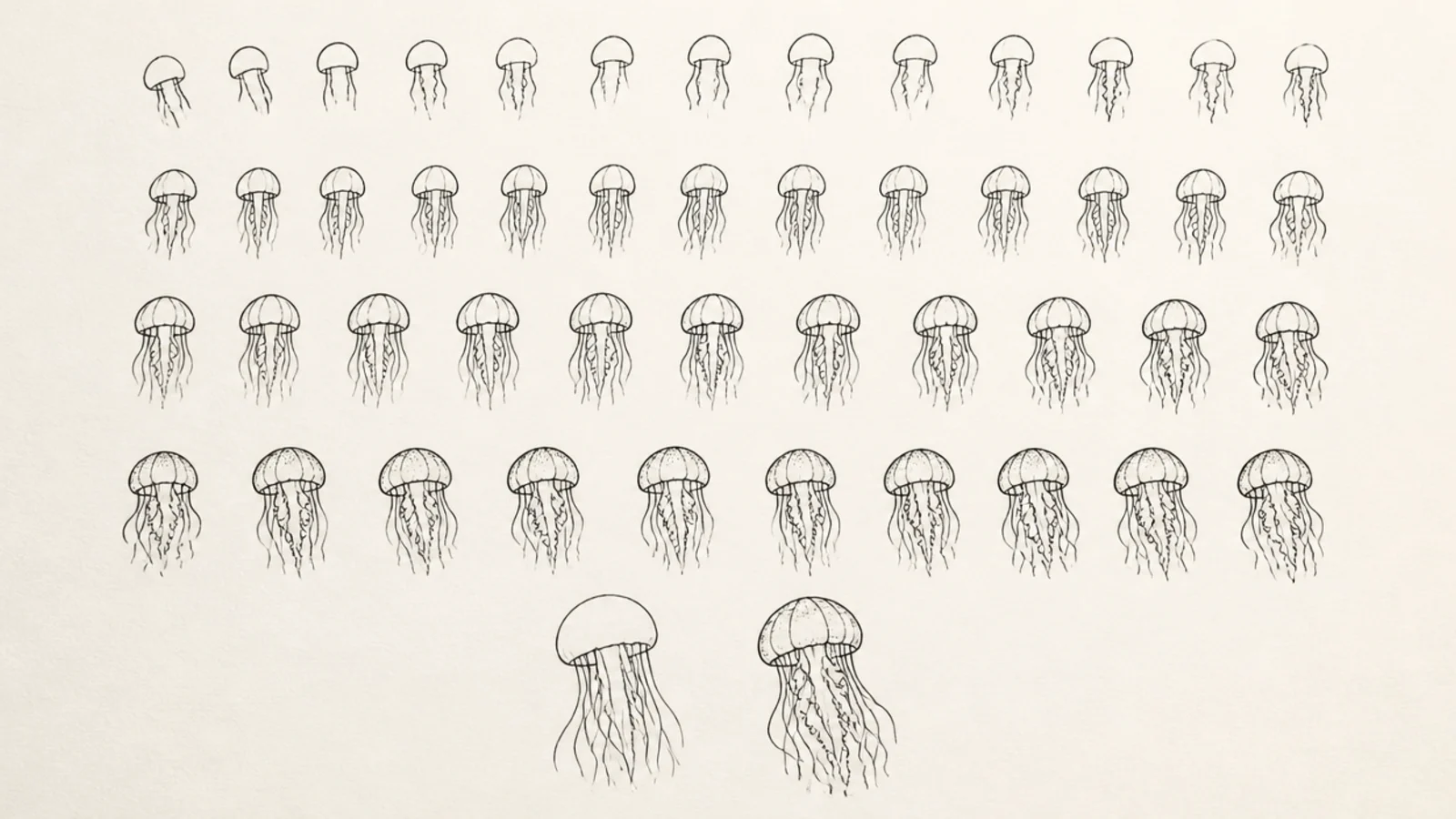
The single best thing I did was fill a page with nothing but bells and tentacles. After ten of them, the shape finally became automatic. Repetition beat every tip on its own.
I spent one page just drawing the bell and a few tentacles again and again, not trying to make art. By the bottom of the page my hand knew the shape, and every jellyfish after was easier.
Pro tipFill one page with just bells and tentacles; the repetition makes the shape automatic.
AvoidDon’t expect the first try to be great; a page of practice is what actually fixes it.