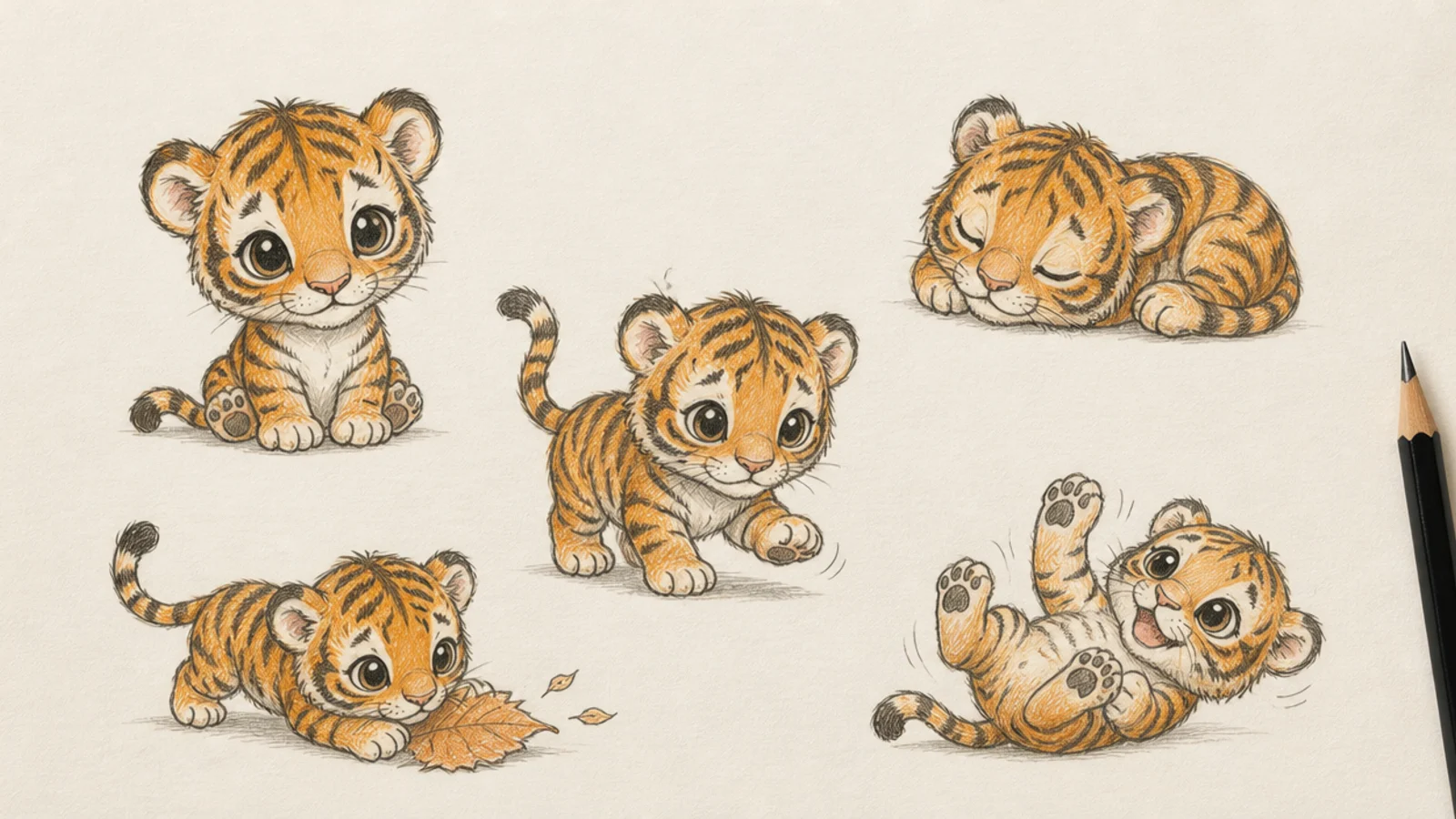
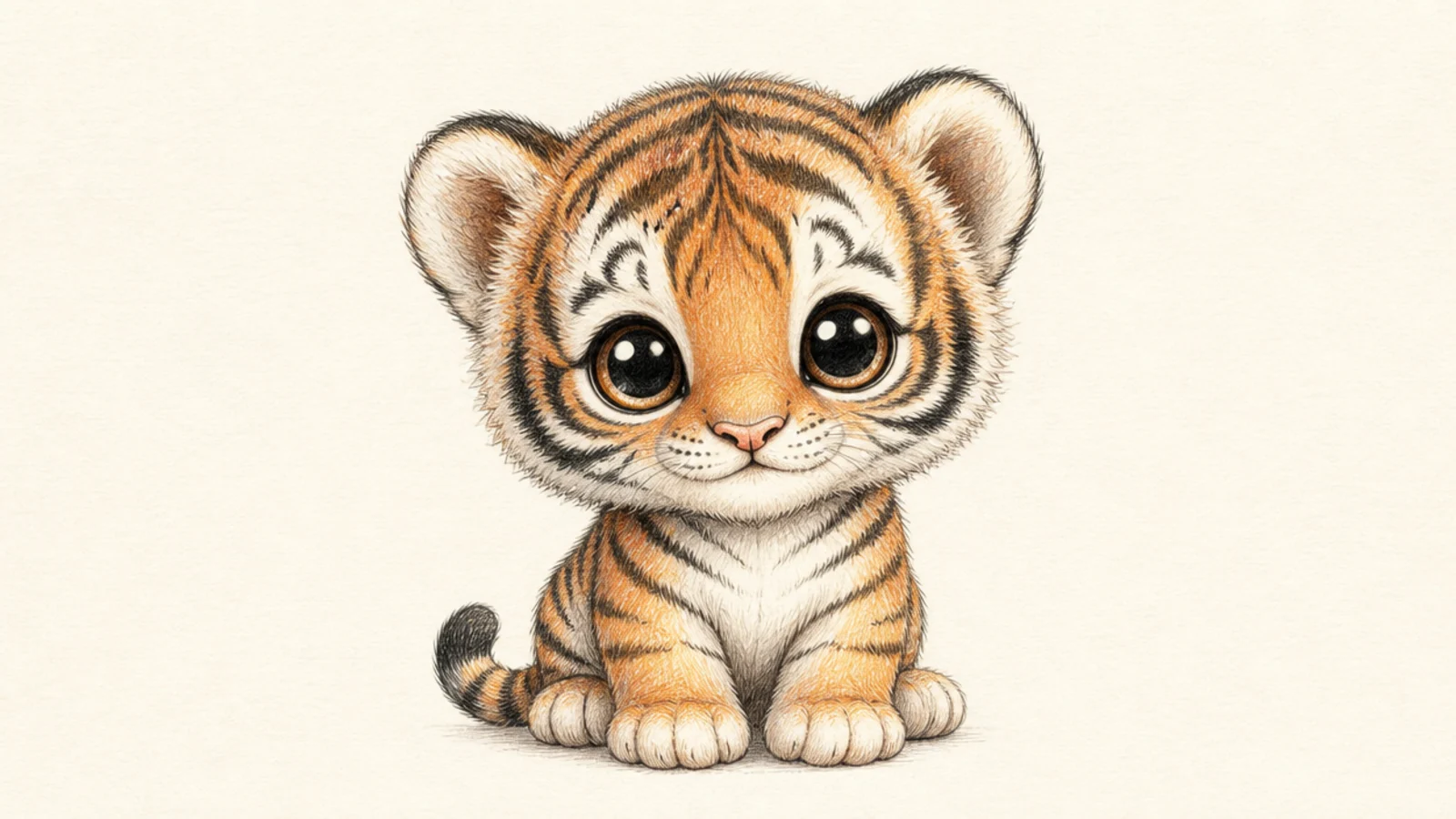
1 Sitting Baby Cub
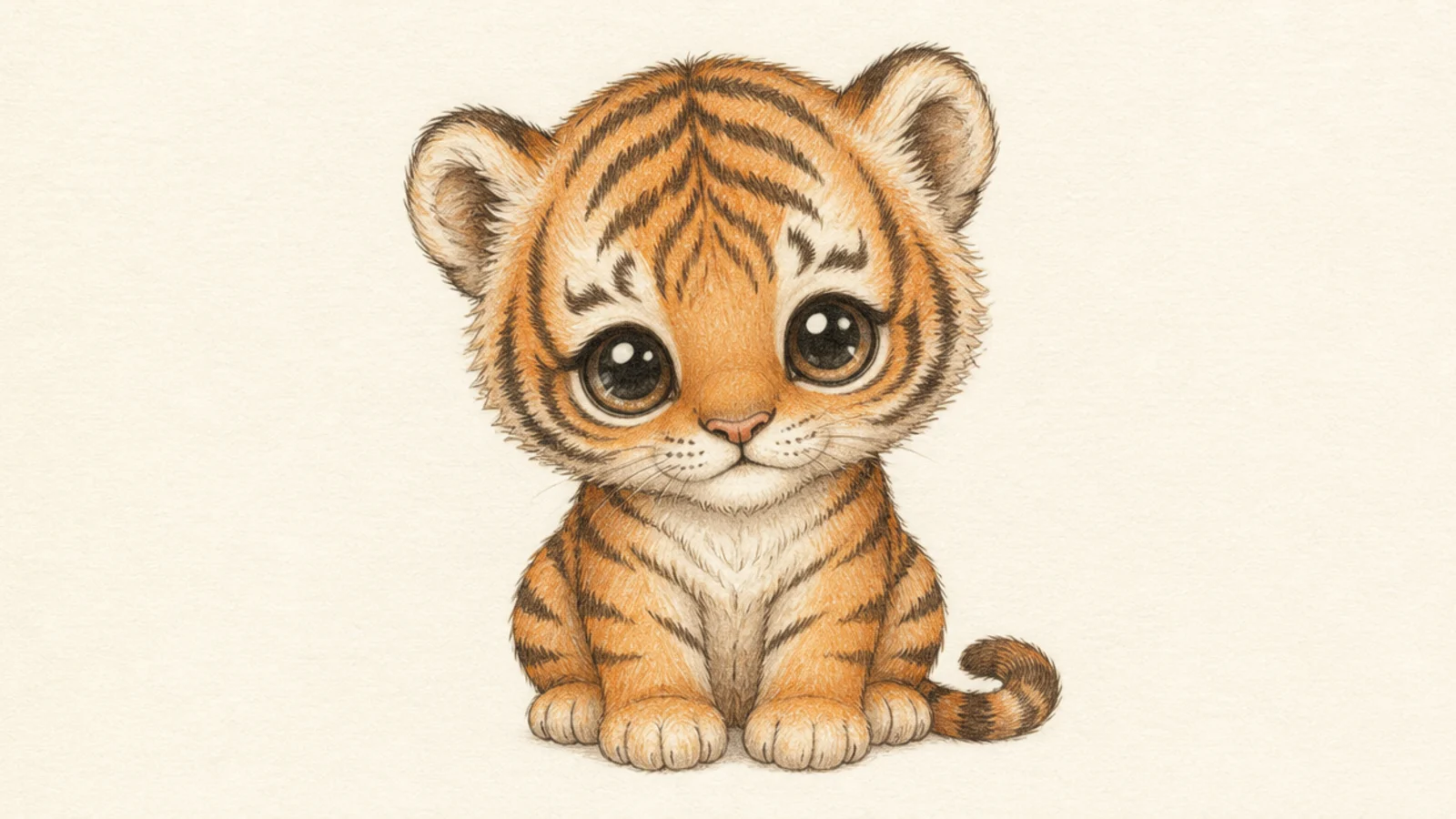
Step 1 draw a big round head. Step 2 add a small body with short front legs sitting. Step 3 add big low eyes, a tiny muzzle, and soft fuzzy stripes.
This is the foundation cub and the base for the whole list — a simple sitting baby tiger. It teaches the big-head, short-leg proportions every other pose builds on.
AvoidDon’t use adult proportions; the oversized head is the cuteness.
Pro tipMake the head nearly as big as the body for true cub proportions.
2 Sleeping Baby Cub
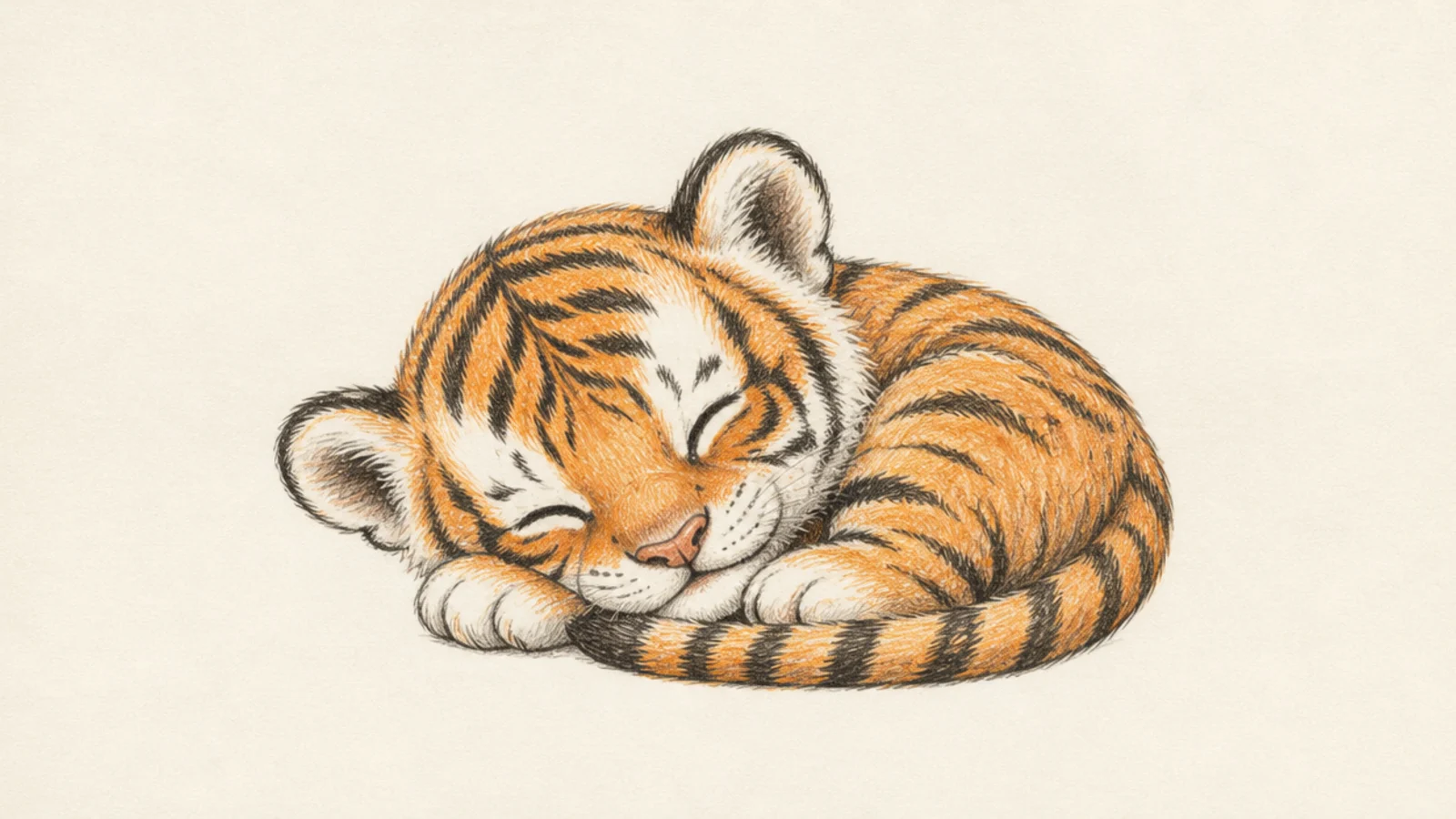
Step 1 draw a soft round curled shape. Step 2 tuck the big head onto the paws. Step 3 add closed curved eyes, a wrapped tail, and soft stripes.
A curled sleeping cub is impossibly cozy and about as easy as it gets. The tucked round shape and closed eyes make a peaceful, adorable baby.
AvoidDon’t add sharp edges; keep the sleeping cub soft and round.
Pro tipCurve the closed eyes gently downward for a peaceful sleep.
3 Wobbly First Steps
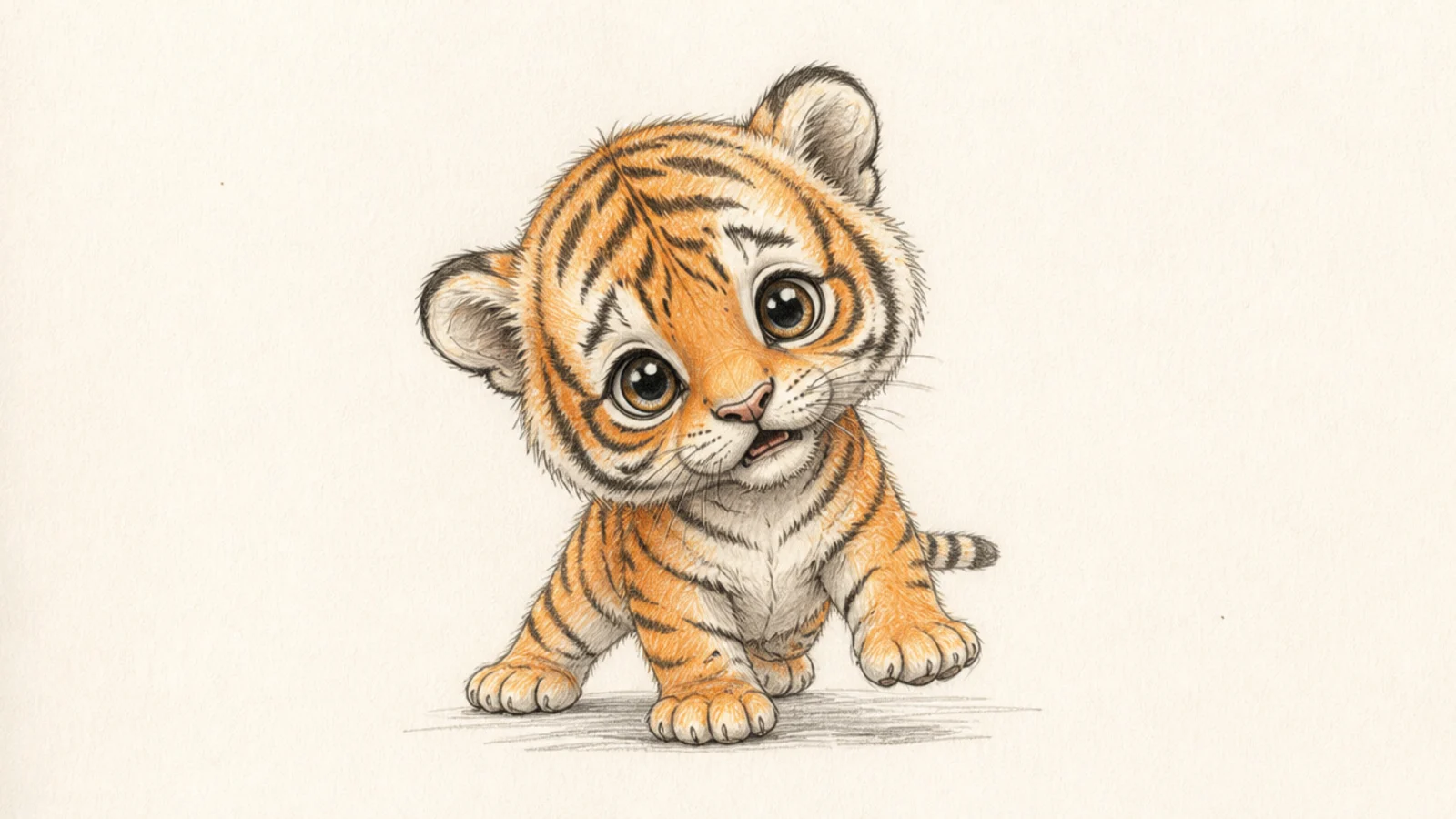
Step 1 draw the big head tipping slightly off-center. Step 2 splay the short legs unevenly for a wobble. Step 3 add wide surprised eyes and soft stripes.
A cub taking wobbly first steps is clumsy and endearing. The off-balance pose and splayed legs sell the idea of a baby still learning to walk.
AvoidDon’t make the pose steady; the off-balance wobble is the charm.
Pro tipTip the head and splay the legs unevenly for a real wobble.
4 Pouncing on a Leaf
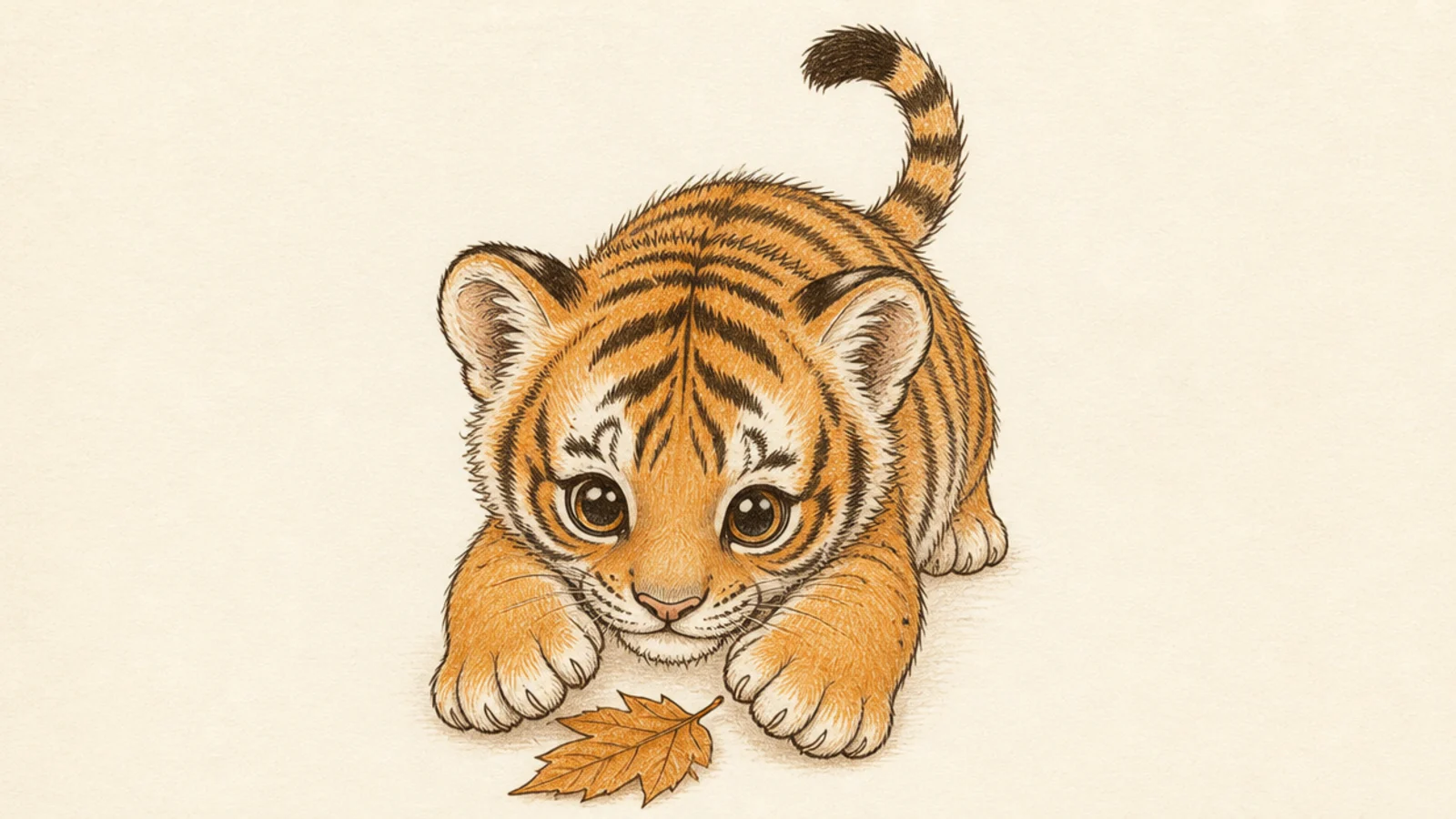
Step 1 draw the cub crouched with hips up. Step 2 reach both front paws down toward a leaf. Step 3 add big focused eyes and a raised wiggling tail.
A cub pouncing on a leaf is playful and full of energy. The tiny hunter pose is adorable because the target is so harmless.
AvoidDon’t make it fierce; a cub pounce is clumsy and cute.
Pro tipRaise the hips and lower the front paws for a playful pounce.
5 Tumbling Cub
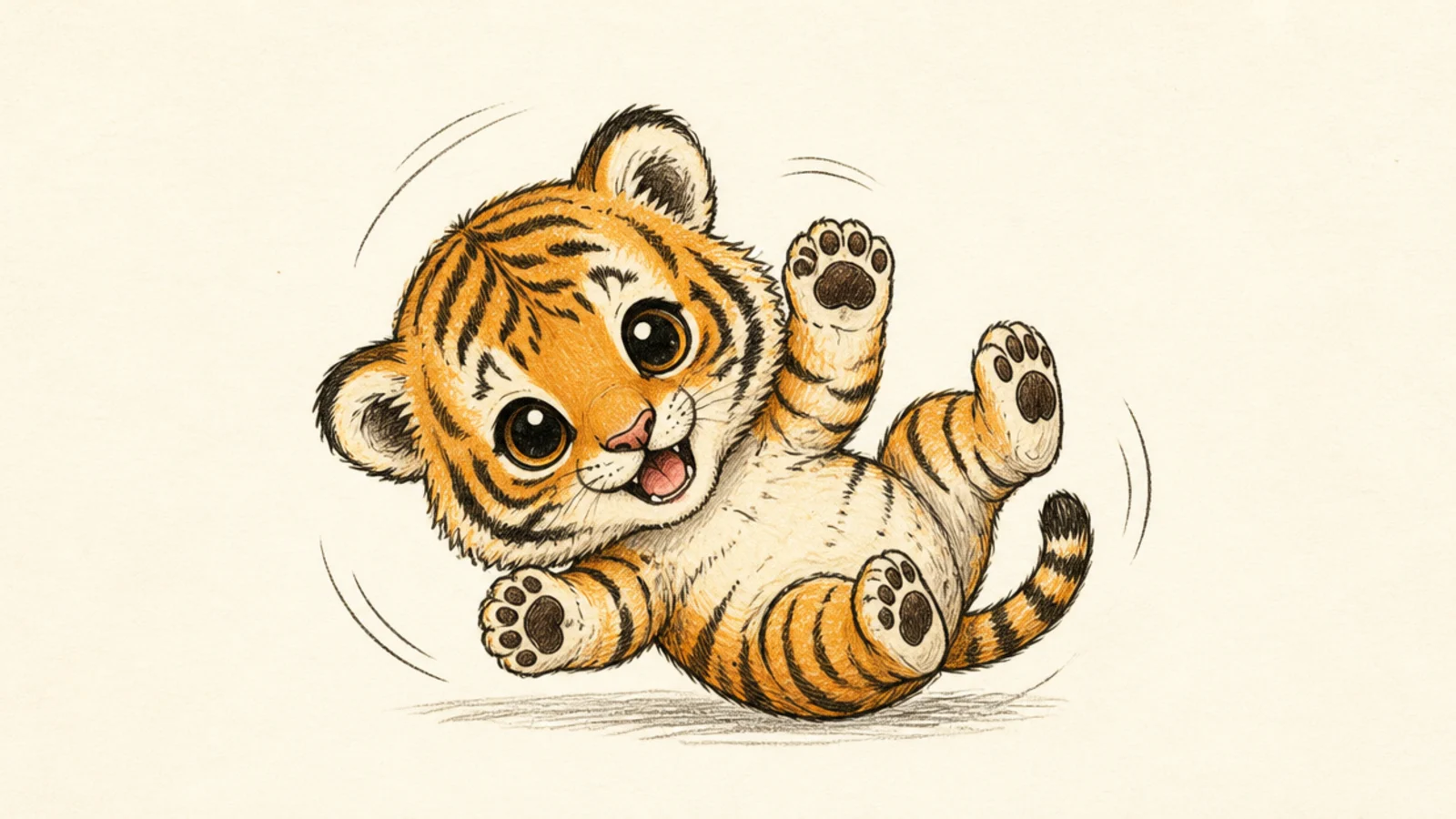
A tumbling cub caught mid-roll is joyful and silly. The bunched, rolling pose captures the clumsy tumble of a playing baby.
Step 1 draw a rounded body mid-roll. Step 2 splay all four stubby legs out at angles. Step 3 add an off-balance happy face and motion lines.
Splay all four legs at different angles for a real tumble.
Don’t keep the legs tidy; scattered legs sell the roll.
6 Cub With Its Mother
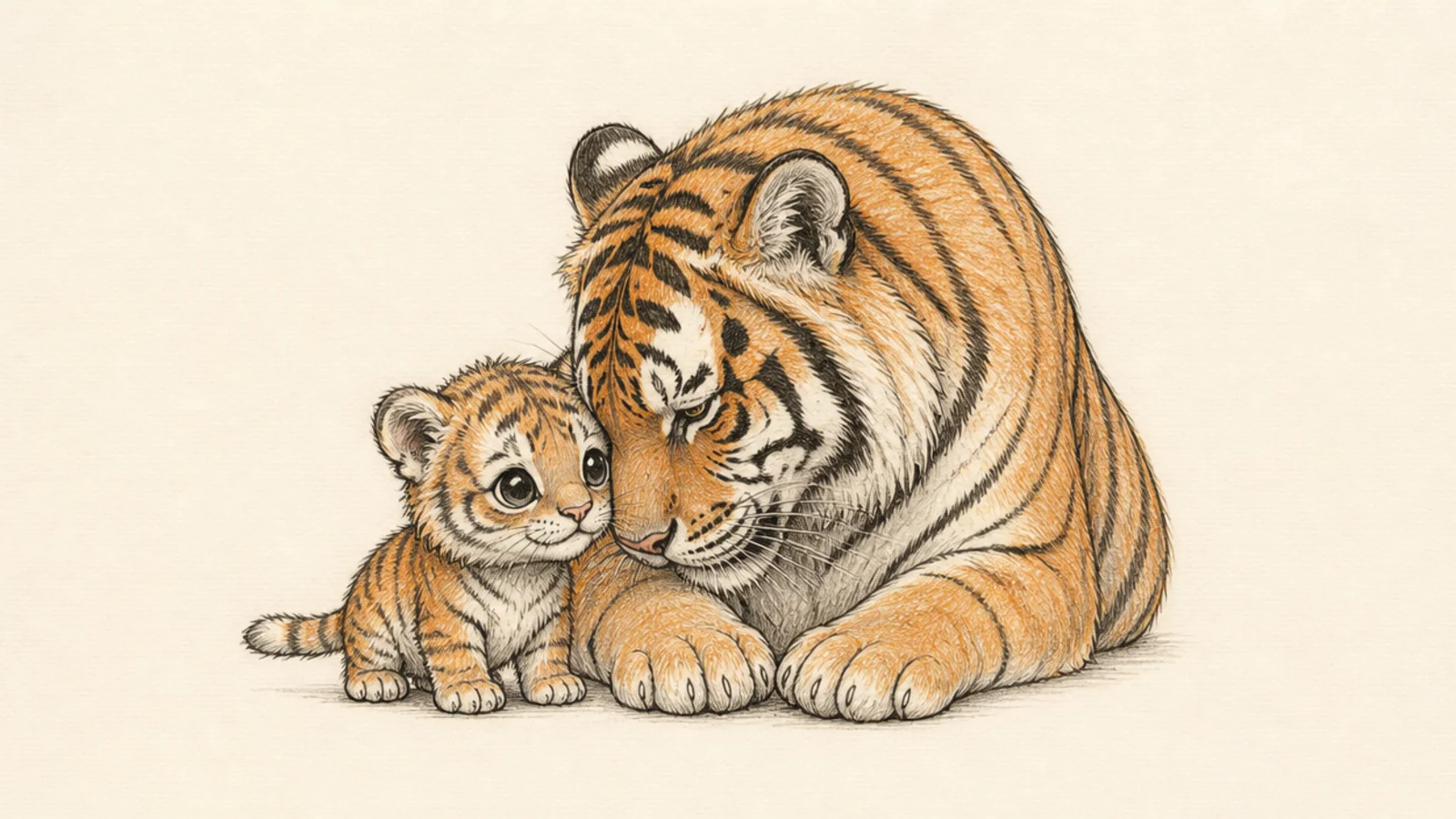
Step 1 draw a large lying adult tiger. Step 2 tuck a small cub against her side. Step 3 lower her head to touch the cub and add stripes to both.
A cub nuzzling against its big mother is tender and story-like. The size contrast between the two makes the baby look even smaller and sweeter.
AvoidDon’t draw them the same size; the contrast is the point.
Pro tipMake the size gap big so the cub looks tiny beside its mother.
7 Cub in a Basket
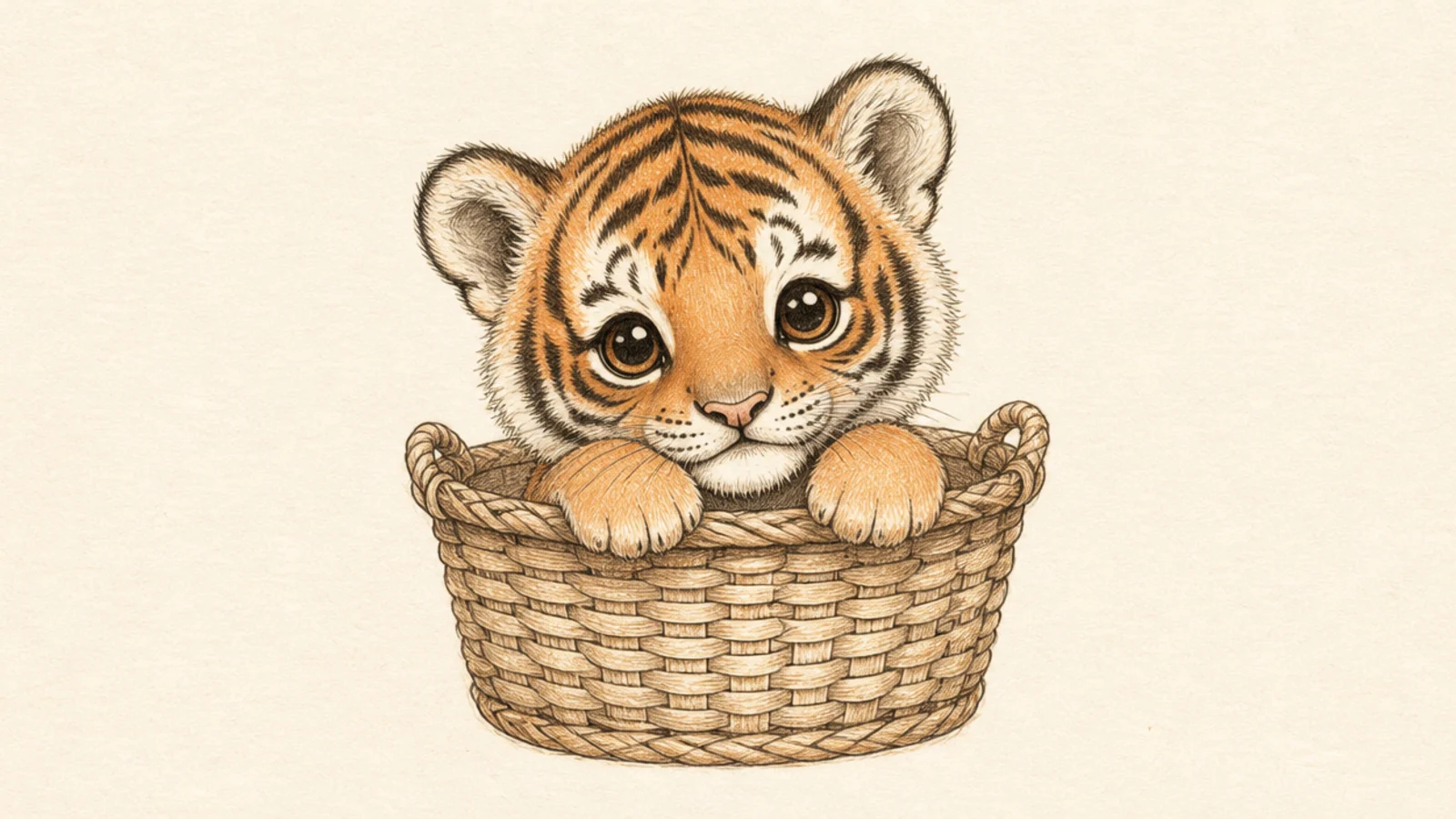
Step 1 draw a woven basket shape. Step 2 pop a big cub head and two paws over the edge. Step 3 add a curious face, small ears, and basket weave lines.
A cub peeking out of a basket is cozy and forgiving because the basket hides the body. Only the big head and two paws pop over the rim.
AvoidDon’t draw the body; the basket should hide it.
Pro tipRest the two paws on the rim so the cub looks tucked inside.
8 Cub Chasing Its Tail
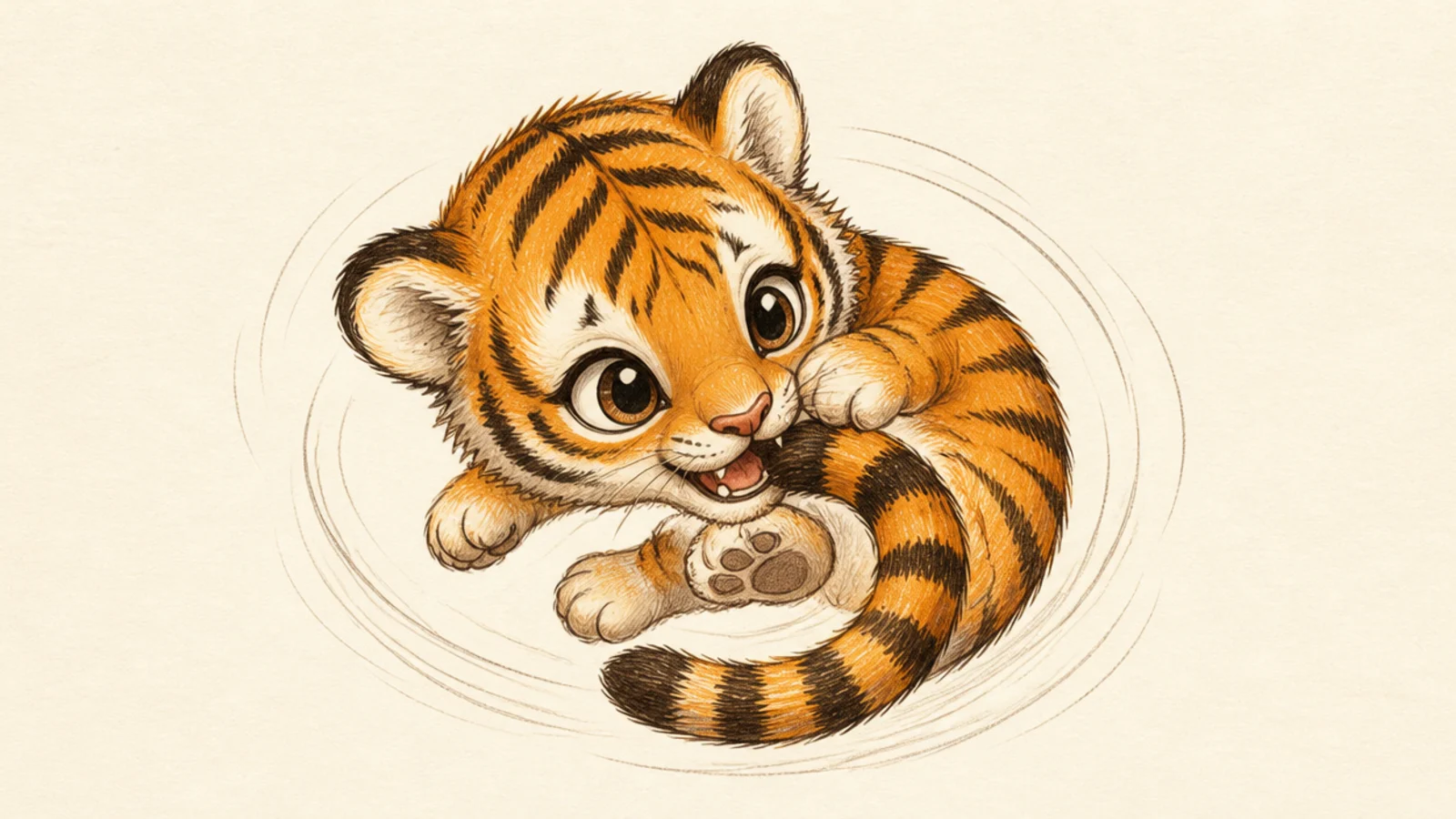
Step 1 draw the body curved into a near-circle. Step 2 turn the big head back toward the tail. Step 3 add wide playful eyes and motion lines around the spin.
A cub spinning after its own tail is a classic silly baby-animal pose. The curled, circular body captures the dizzy chase.
AvoidDon’t straighten the body; the circle shows the chase.
Pro tipCurve the body into a loop with the head reaching for the tail.
9 Yawning Sleepy Cub
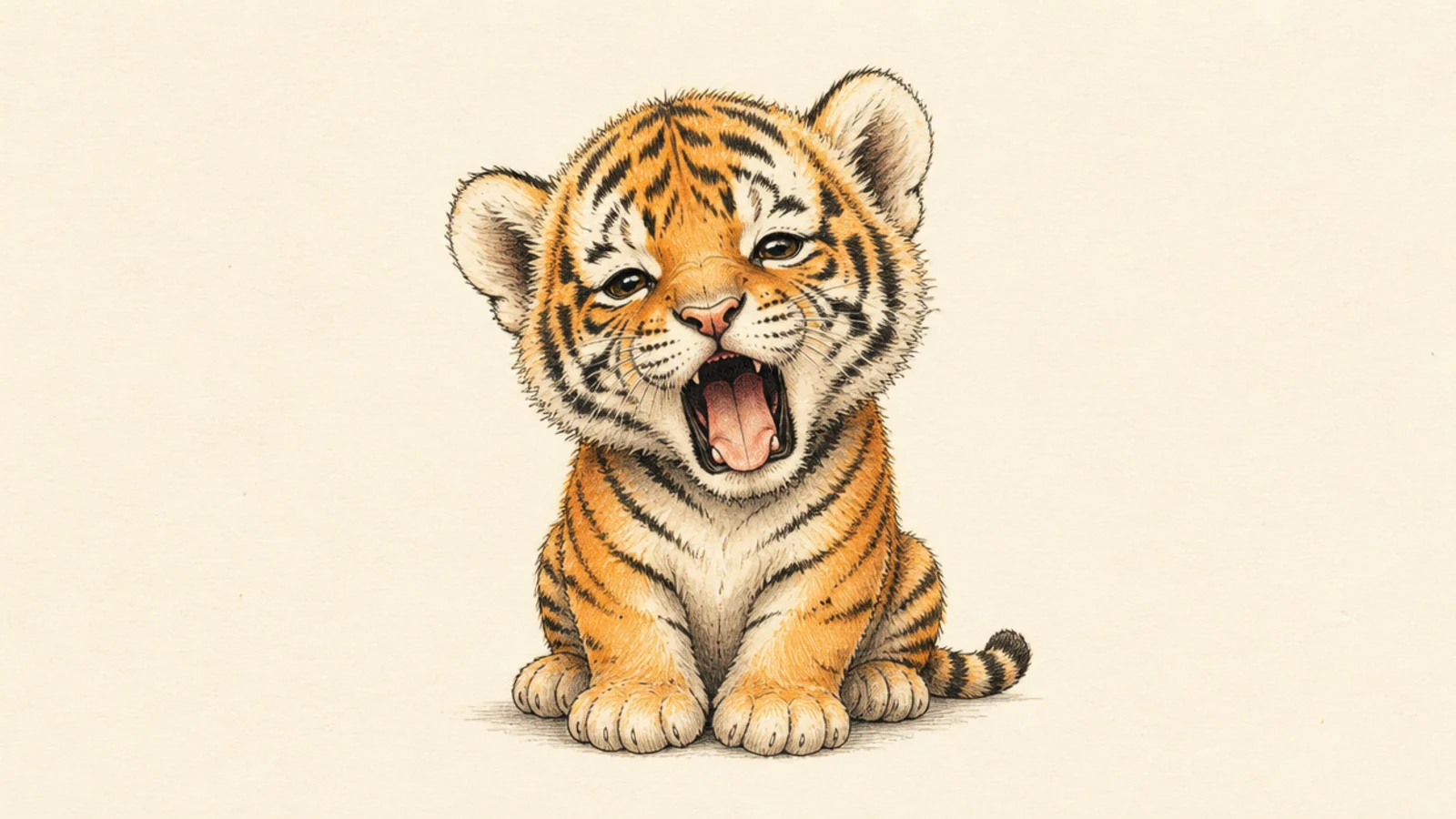
A cub mid-yawn with a wide little mouth is sleepy and sweet. The big yawn on a tiny face is disarmingly cute.
Step 1 draw a sitting cub. Step 2 open the mouth wide in a yawn with a tiny curled tongue. Step 3 half-close the eyes and add soft stripes.
Half-close the eyes so the yawn reads as sleepy, not fierce.
Don’t add fangs; a cub yawn is soft and toothless-looking.
10 Cub and a Butterfly
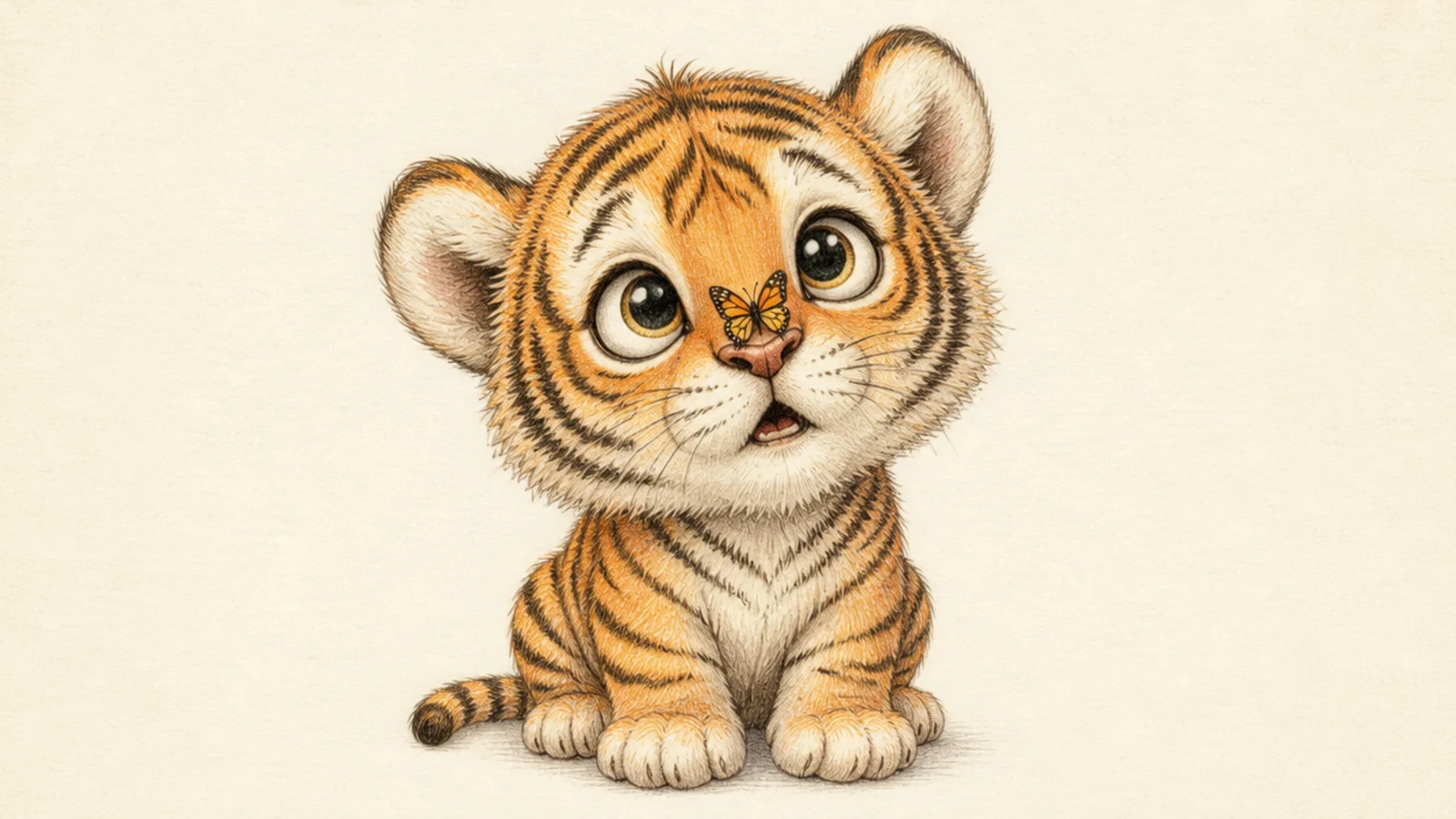
A cub going cross-eyed at a butterfly on its nose is gentle and charming. The tiny focus point and crossed eyes are adorable.
Step 1 draw a sitting cub looking up. Step 2 add a butterfly on or above the nose. Step 3 cross the eyes toward it and add a curious open mouth.
Cross the eyes gently toward the nose so the cub watches the butterfly.
Don’t over-pattern the butterfly; keep it simple and small.
11 Belly-Up Cub
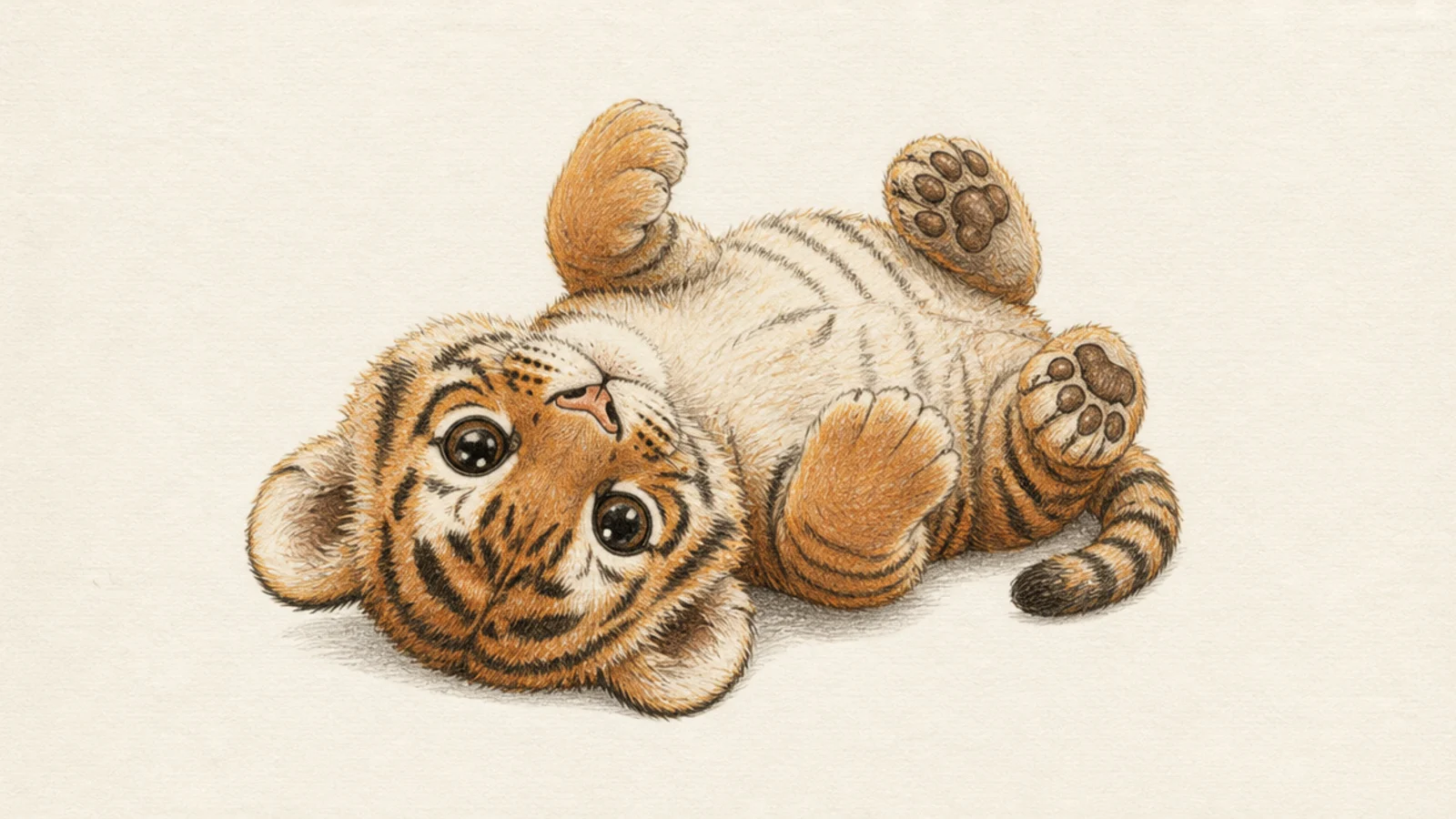
Step 1 draw a rounded belly-up body. Step 2 put four short paws up loose in the air. Step 3 add an upside-down happy face and belly stripes.
A cub flopped on its back with paws in the air is trusting and silly. The upside-down pose shows the soft belly and is pure baby-animal cuteness.
AvoidDon’t stiffen the legs; floppy paws sell the pose.
Pro tipLet all four paws flop up loose for a carefree belly-up.
12 Cub's First Roar
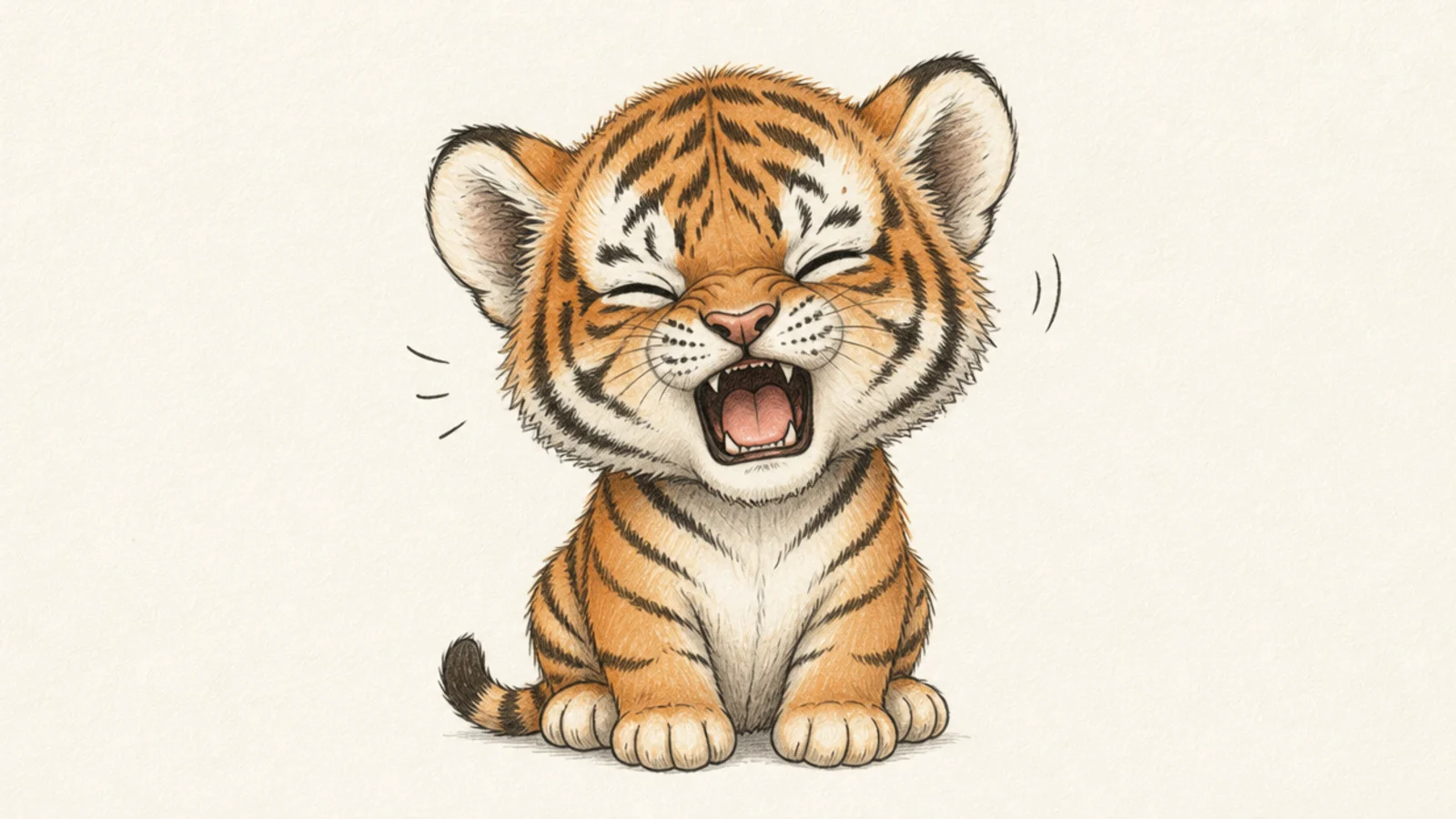
Step 1 draw a sitting cub. Step 2 open the mouth in a little roar with a tiny tongue. Step 3 squeeze the eyes shut with effort and add small motion lines.
A cub attempting a tiny roar is funny because the effort is so big and the sound so small. The wide mouth on a baby face is endearing.
AvoidDon’t make it fierce; the tiny effortful roar is the joke.
Pro tipSqueeze the eyes shut to show the cub trying its hardest.
13 Cub in a Mug
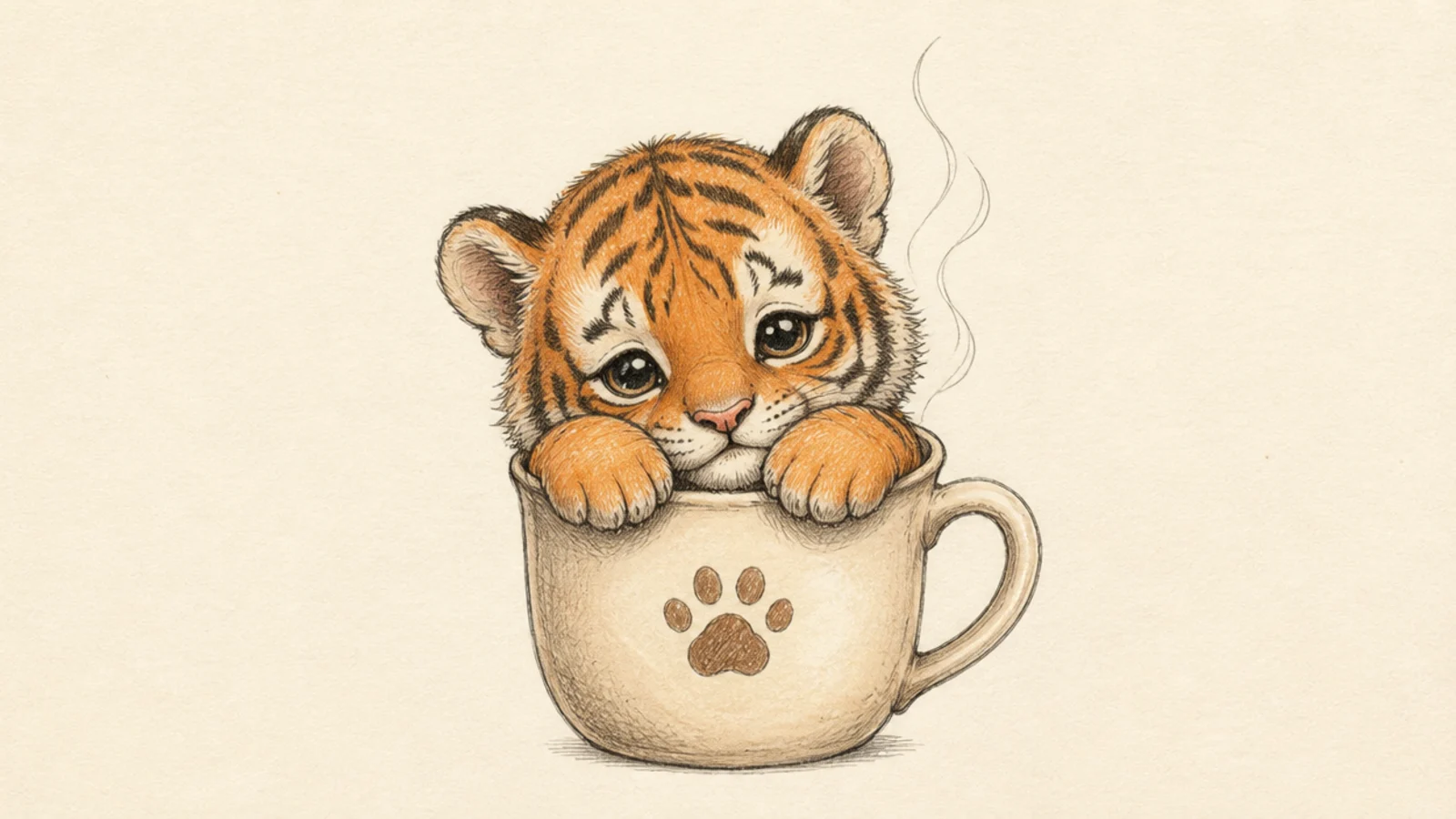
Step 1 draw a mug with a handle. Step 2 pop a big cub head and two paws over the rim. Step 3 add a sleepy face, small ears, and a bit of steam.
A cub peeking out of a mug is a cozy, popular doodle. The mug hides the body so you only draw the big head and two little paws.
AvoidDon’t draw the body; the mug should hide it.
Pro tipRest the paws on the rim so the cub looks settled in the mug.
14 Cub With a Ball
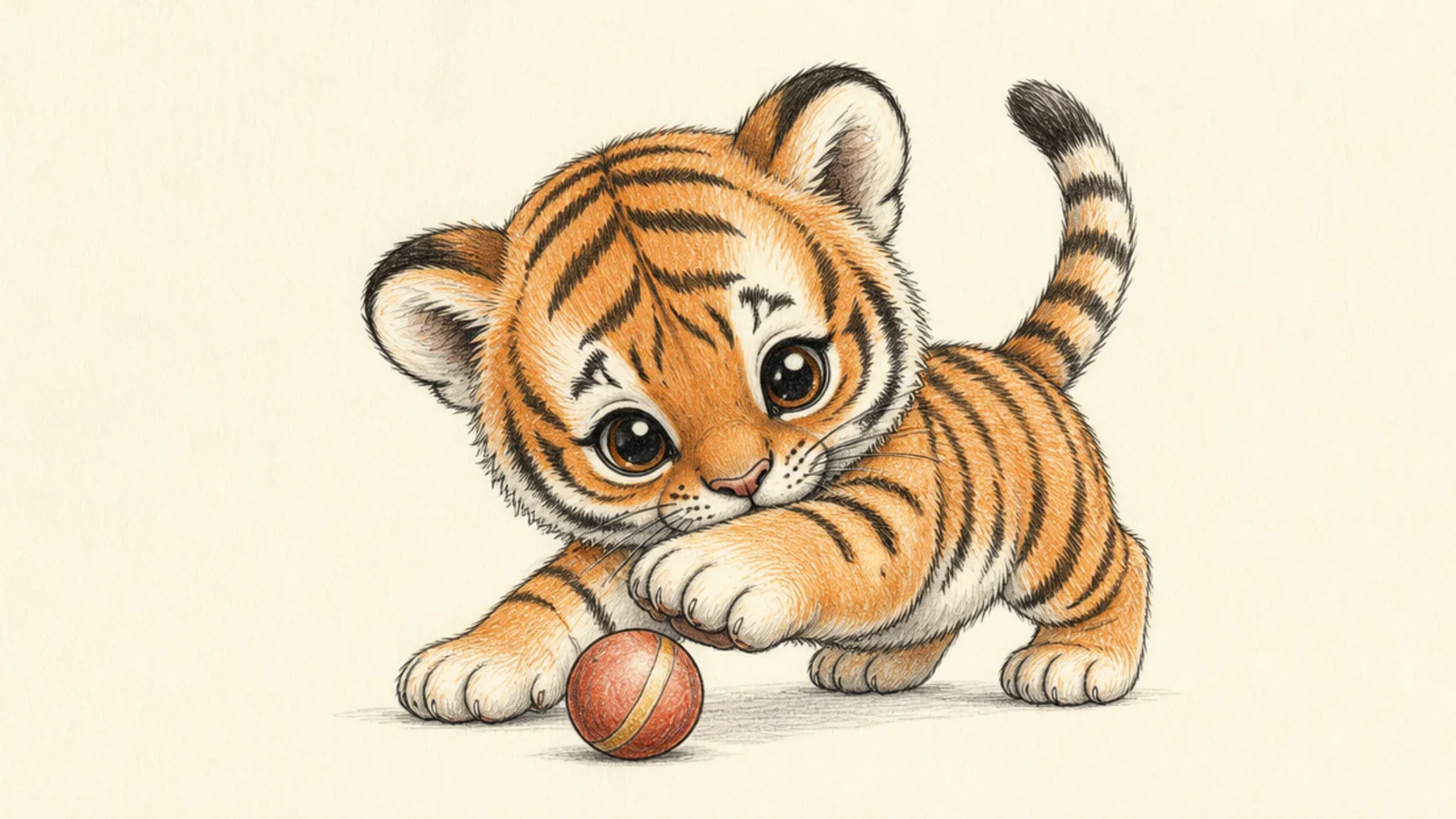
Step 1 draw a cub crouched or lying on its side. Step 2 reach one paw toward a round ball. Step 3 add focused eyes, a raised tail, and soft stripes.
A cub batting a ball borrows the classic kitten pose. The reaching paw and focused face make a playful, lively baby.
AvoidDon’t make the ball big; keep it small beside the cub.
Pro tipReach one paw out toward the ball for a playful batting pose.
15 Cub Hiding in Grass
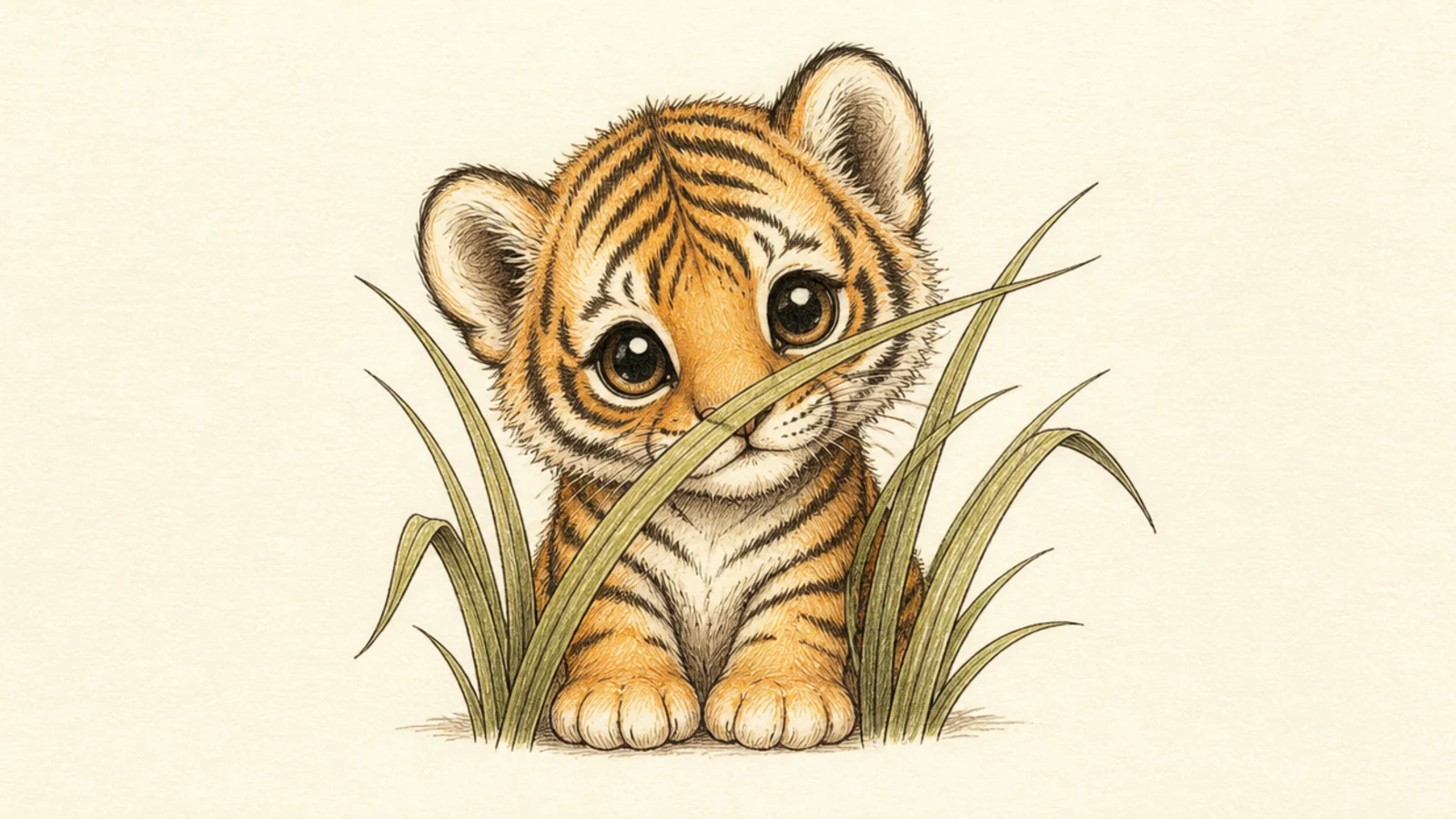
Step 1 draw a few tall grass blades. Step 2 tuck a cub face peeking through them. Step 3 add big eyes, small ears, and a blade crossing the face.
A cub peeking through grass is a sweet little hiding scene. The grass frames the big-eyed face and hides the body, keeping it easy.
AvoidDon’t draw too many blades; a few read as grass.
Pro tipLet one blade cross the face for a real hidden peek.
16 Cub With a Bib
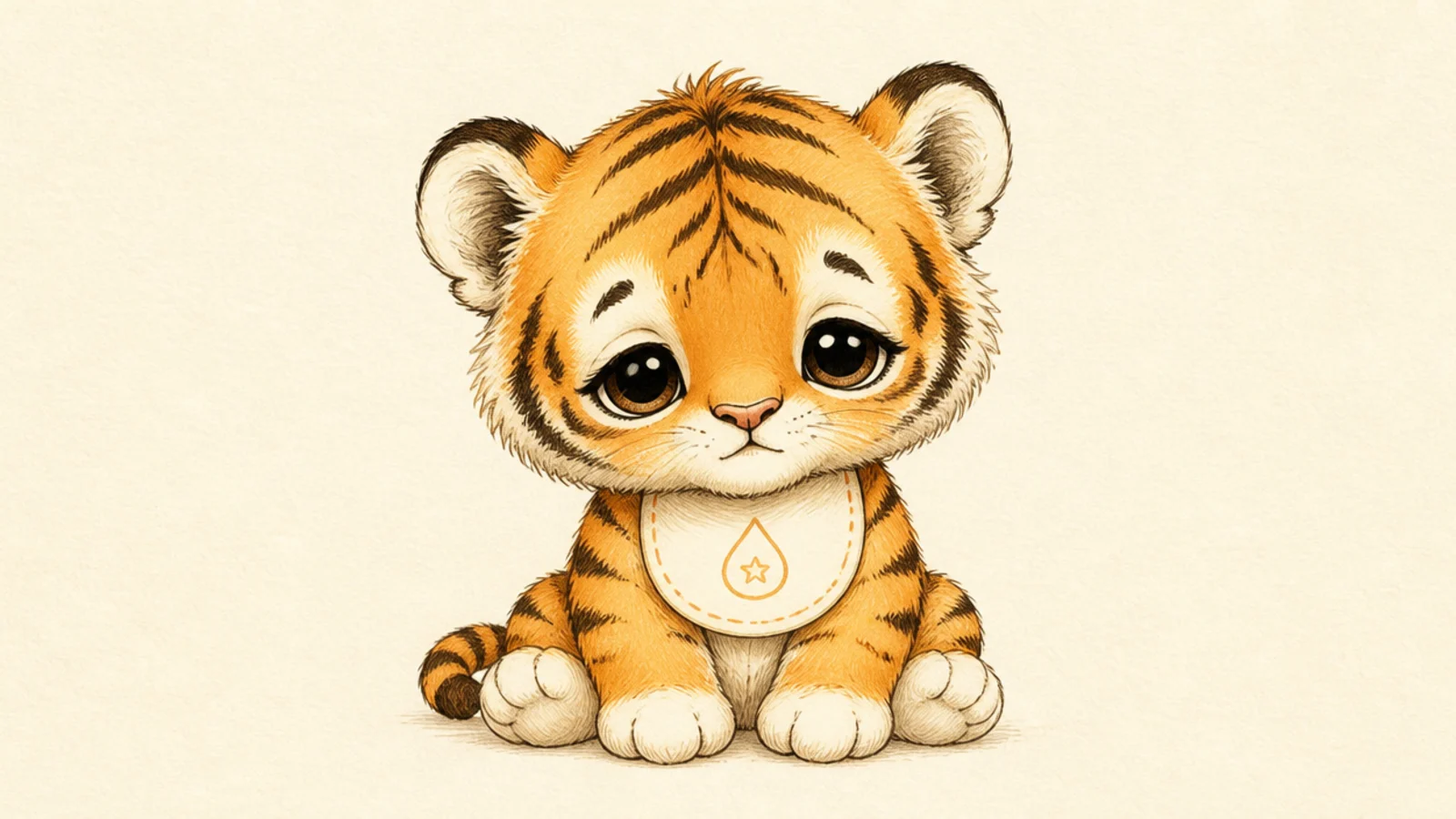
A cub in a little bib leans into the baby theme adorably. The small bib around the neck makes it feel like a nursery baby.
Step 1 draw a sitting cub. Step 2 add a rounded bib around the neck. Step 3 add a milk-drop or star on the bib and big sleepy eyes.
Draw the bib as a simple rounded shape with a little pattern.
Don’t cover the whole chest; a small bib reads sweeter.
17 Two Cubs Playing
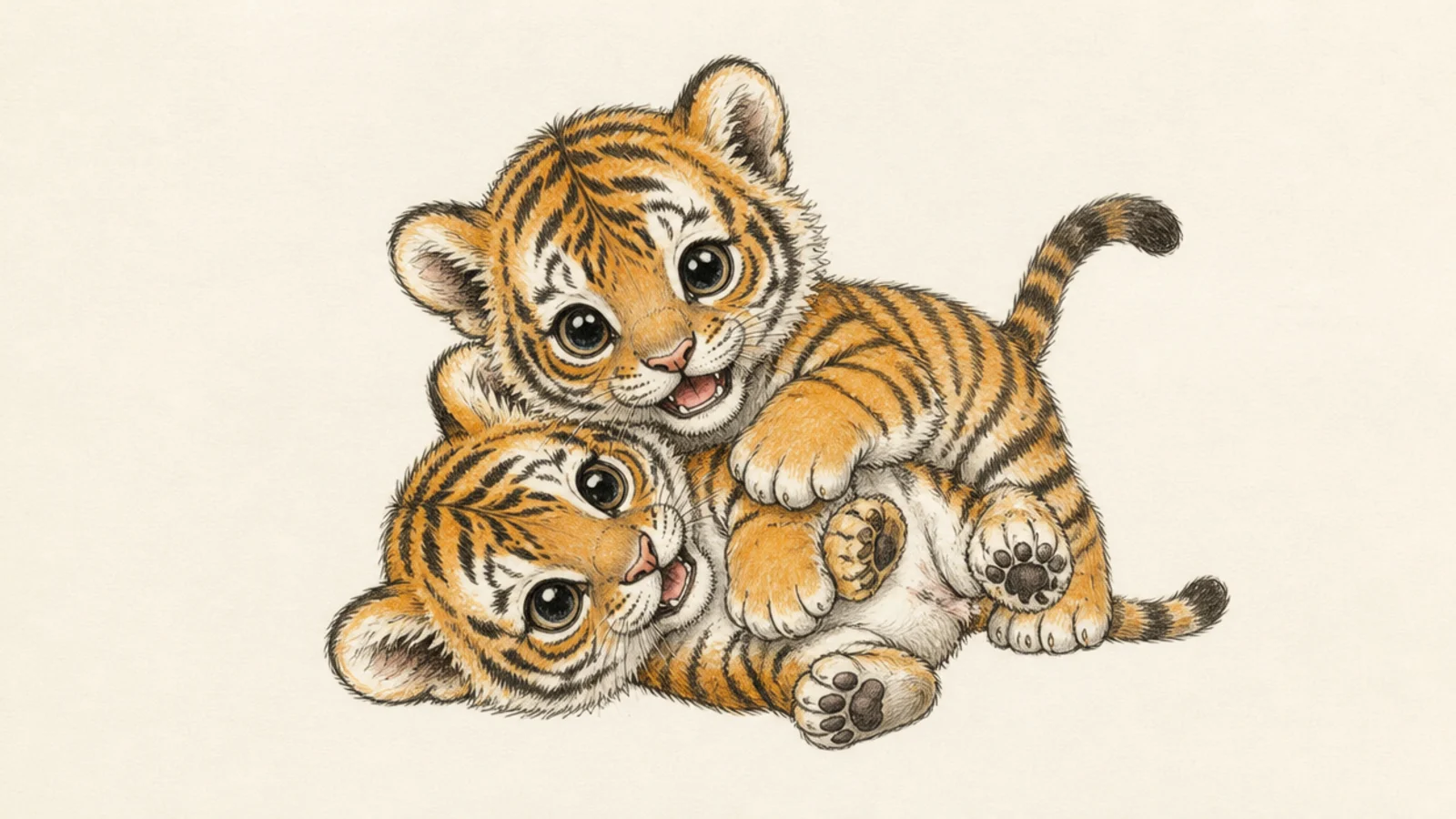
Two cubs tumbling together doubles the cuteness and tells a story. Drawing them overlapping teaches how to stage two playful babies.
Step 1 draw two cub bodies leaning into each other. Step 2 overlap one slightly in front. Step 3 give both big eyes, soft stripes, and playful open mouths.
Overlap the two cubs so they clearly play together.
Don’t space them apart; playing cubs tumble close.
18 Cub Sniffing a Flower
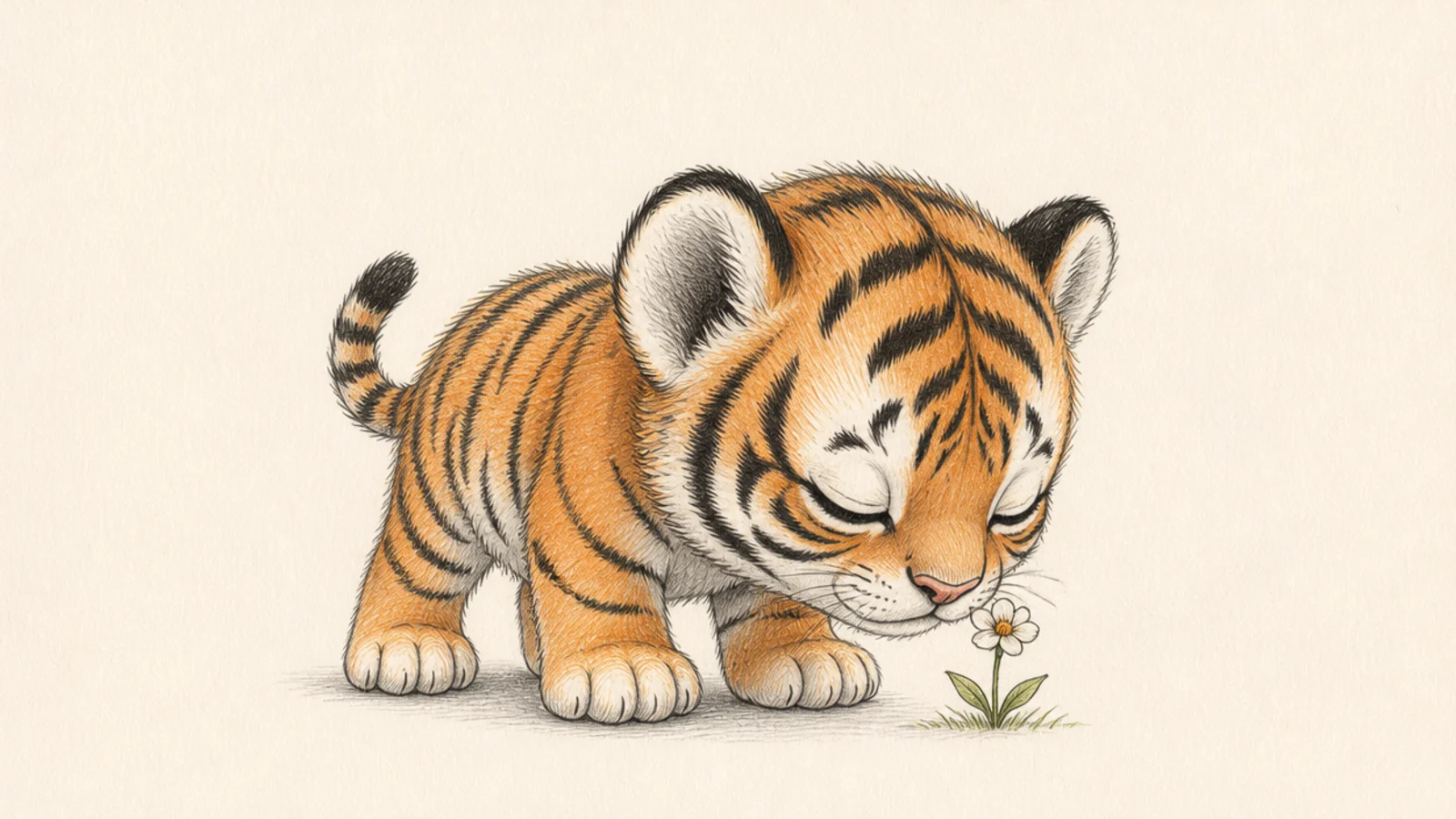
Step 1 draw a standing or sitting cub. Step 2 lower the big head to a small flower. Step 3 close the eyes softly and add soft stripes.
A cub bending to sniff a flower is gentle and springy. The lowered head and tiny flower make a soft, sweet scene.
AvoidDon’t make the flower big; a small bloom keeps the focus on the cub.
Pro tipLower the head gently to the flower and soften the eyes.
19 Cub Startled by a Bug
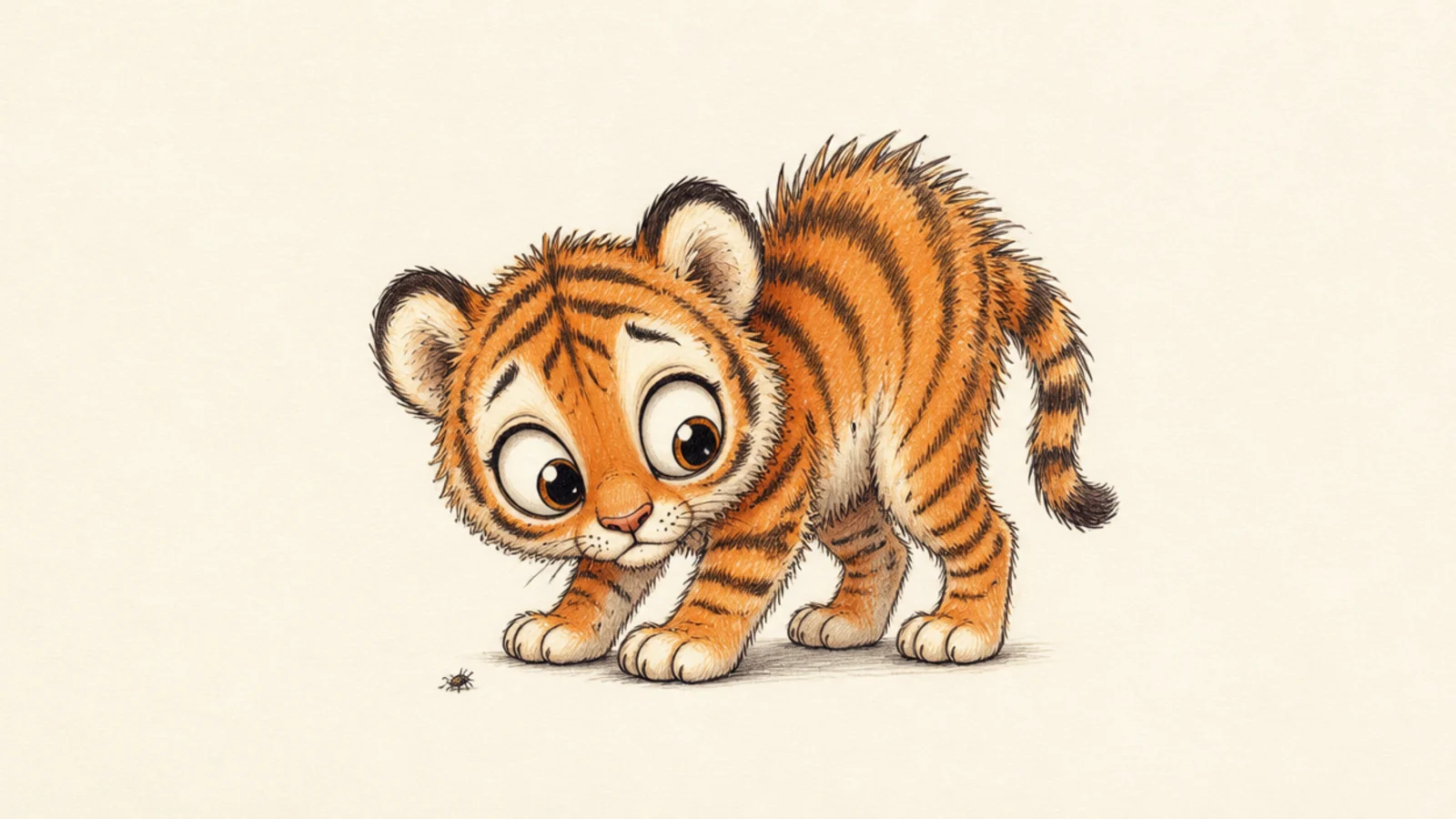
Step 1 draw a cub arching back on its haunches. Step 2 add a tiny bug in front. Step 3 give it huge startled eyes and puffed-up fur.
A cub startled and hopping back from a tiny bug is comic and cute. The wide eyes and arched back over something harmless are adorable.
AvoidDon’t make the bug big; the tiny threat is the joke.
Pro tipPuff up the fur and widen the eyes for a startled pose.
20 Cub Wrapped in a Blanket
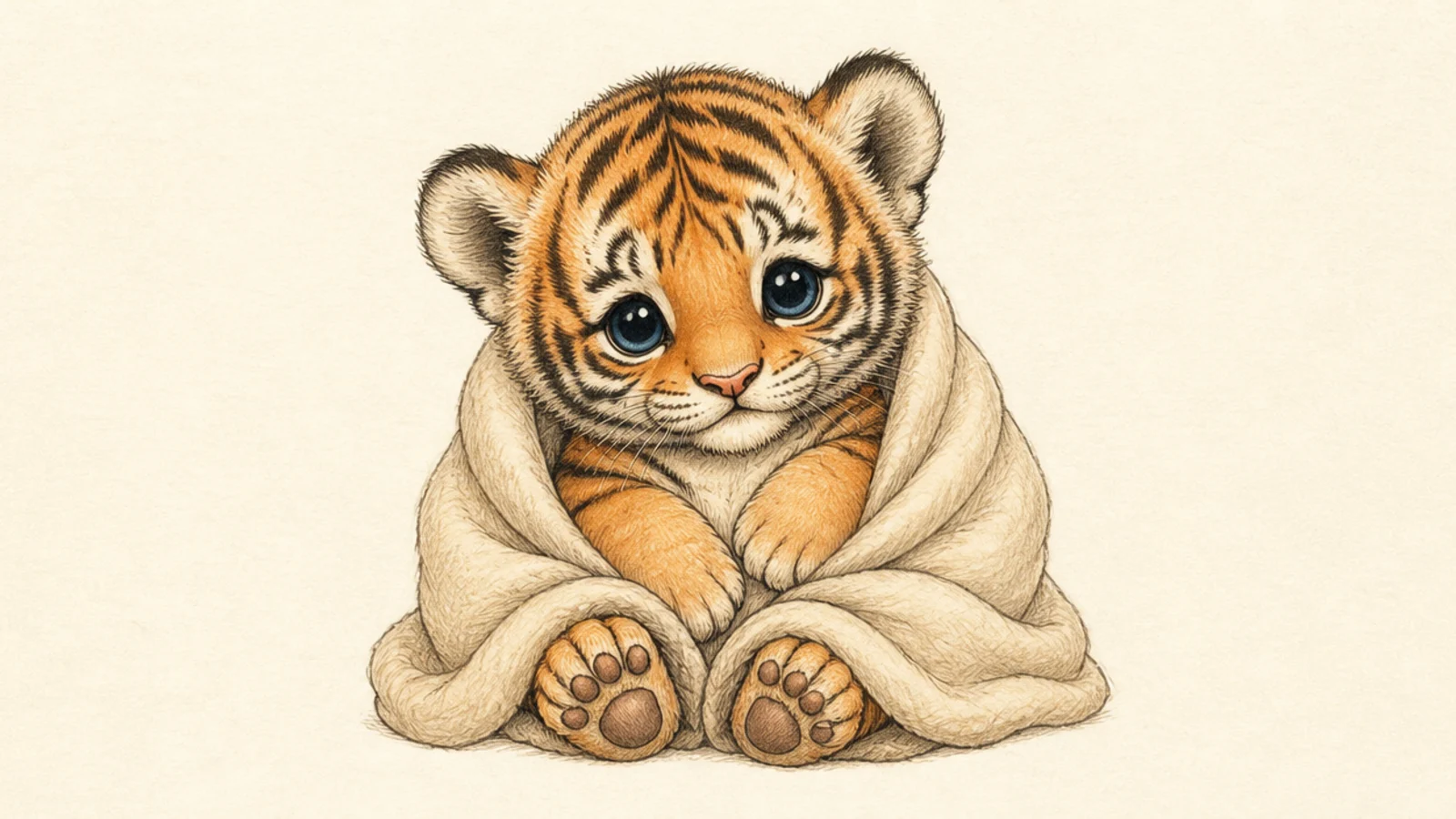
A cub bundled in a blanket is the coziest nap doodle. The blanket wraps the body so only the sleepy head pokes out.
Step 1 draw a rounded blanket bundle. Step 2 poke a big cub head out the top. Step 3 add sleepy closed eyes, small ears, and blanket folds.
Wrap the blanket snug so just the head and maybe a paw show.
Don’t draw the body; the blanket bundles it up.
21 Cub Clinging to a Branch
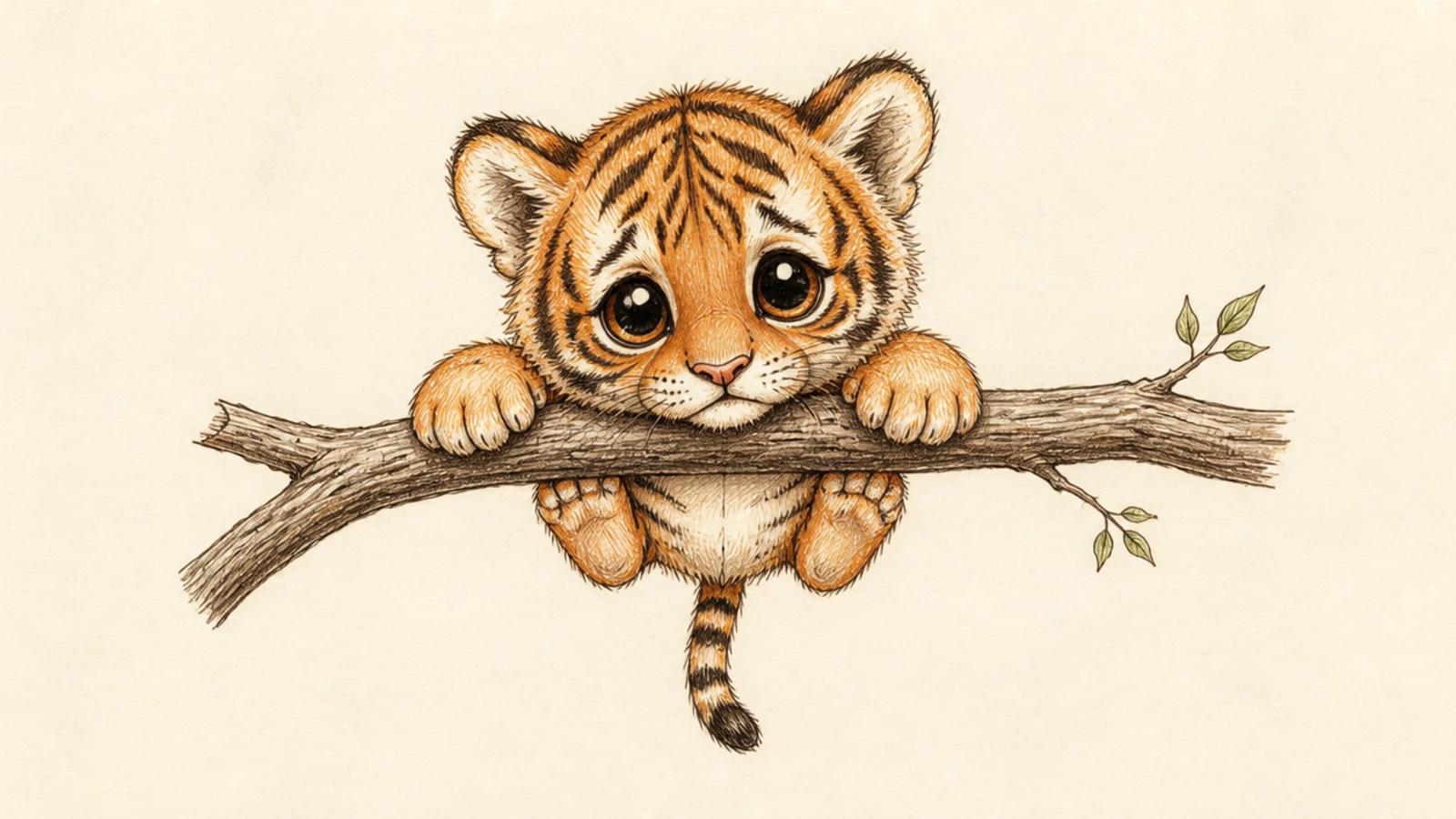
Step 1 draw a low branch. Step 2 drape a cub over it, all four paws gripping. Step 3 add a worried face and a dangling tail.
A cub clinging to a low branch is a nervous, funny little adventure. The gripping paws and worried face over a tiny height are endearing.
AvoidDon’t perch it confidently; the nervous grip is the charm.
Pro tipWrap all four paws around the branch for a nervous cling.
22 Cub Drinking Milk
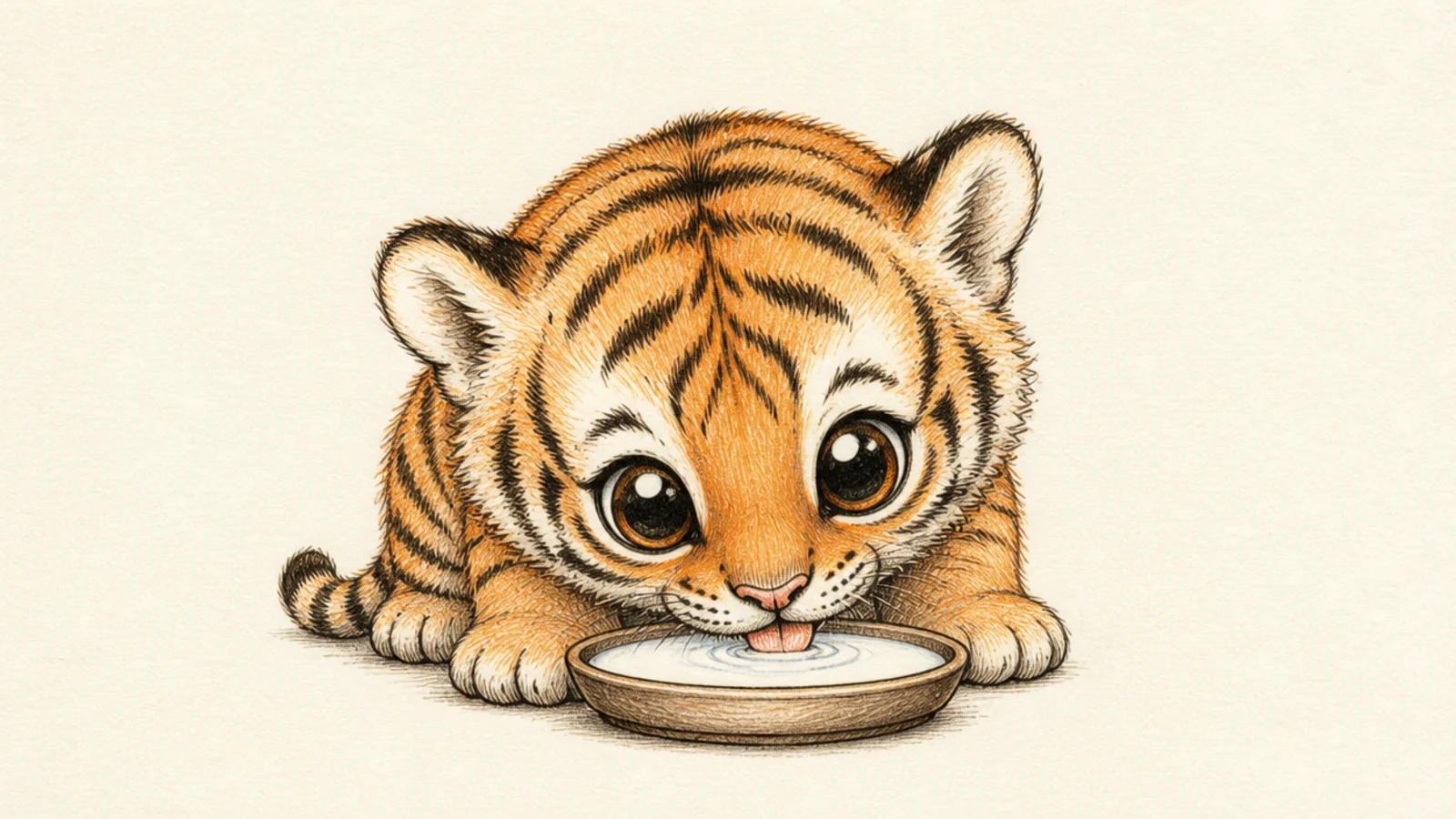
A cub lapping milk from a dish is a sweet everyday baby scene. The lowered head and tiny tongue make it homey and cute.
Step 1 draw a crouched cub over a small dish. Step 2 lower the head with a tiny tongue lapping. Step 3 add closed happy eyes and a few milk ripples.
Add a tiny tongue reaching to the dish for the lapping.
Don’t make the dish big; a small bowl keeps it babyish.
23 Cub With a Plush Toy
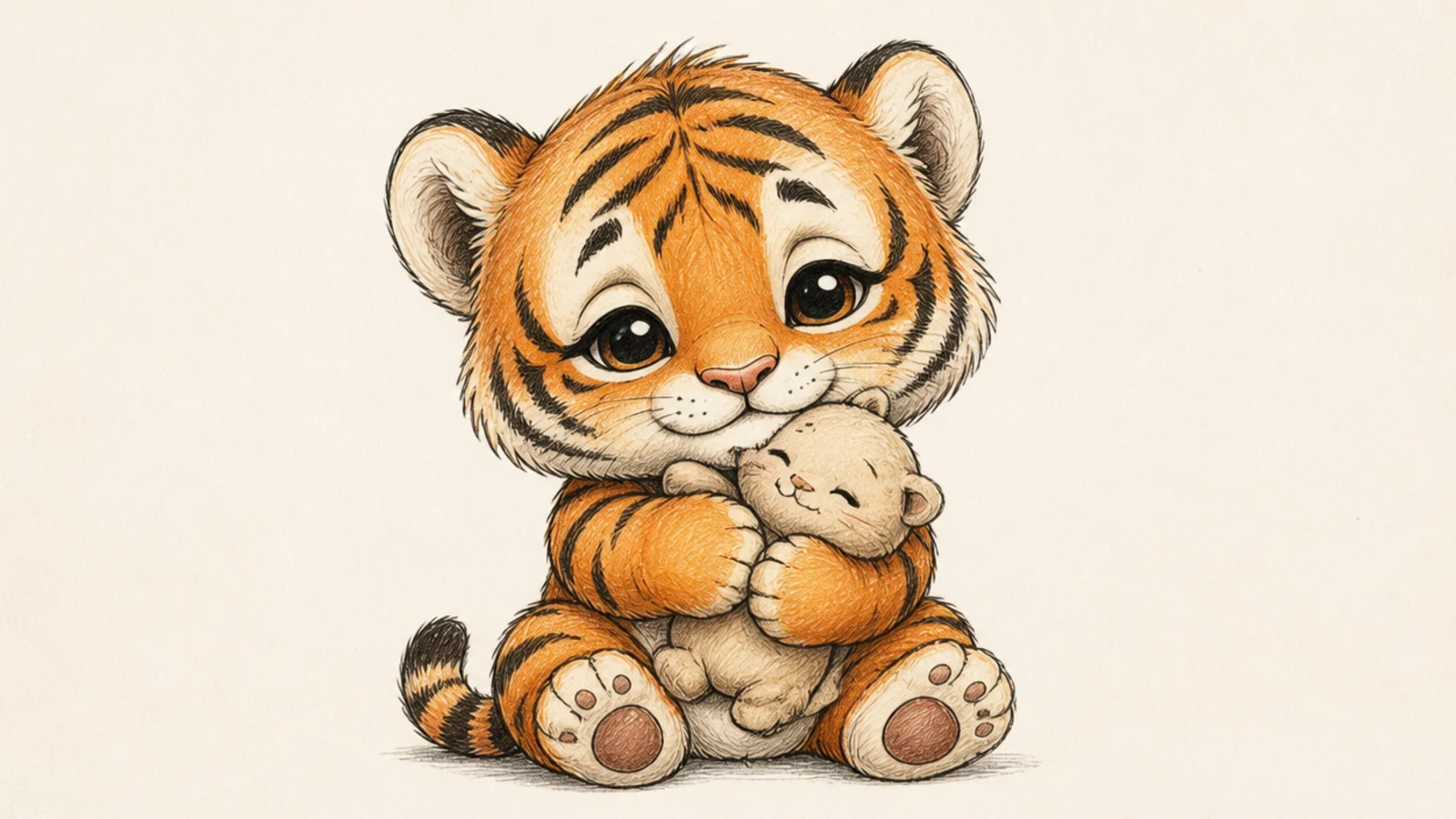
Step 1 draw a sitting or lying cub. Step 2 tuck a small plush toy in its paws. Step 3 add a content sleepy face and soft stripes.
A cub hugging a little plush toy is heart-melting. The toy makes the cub feel like a baby with a comfort object.
AvoidDon’t make the toy detailed; a simple plush shape is enough.
Pro tipHug the toy tight against the chest so it reads as a comfort object.
24 Cub Splashing in a Puddle
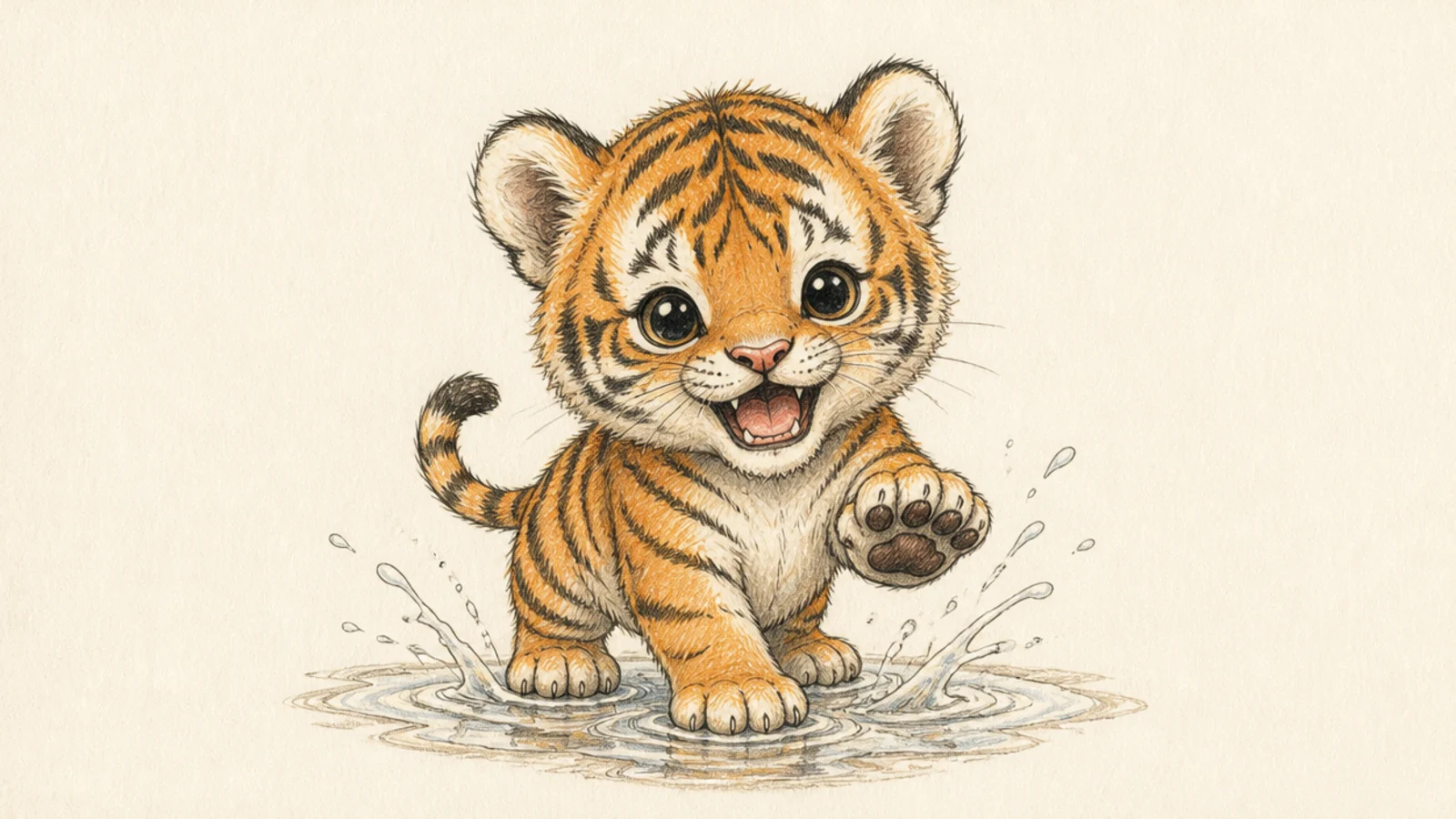
Step 1 draw a cub standing in a shallow puddle. Step 2 raise one paw mid-stomp. Step 3 add splash droplets and a delighted open mouth.
A cub stomping in a puddle is joyful and messy in the cutest way. The splashes and raised paw show a baby having fun with water.
AvoidDon’t draw deep water; a shallow puddle keeps it playful.
Pro tipFlick a few droplets up around the paw for a real splash.
25 Cub in a Box
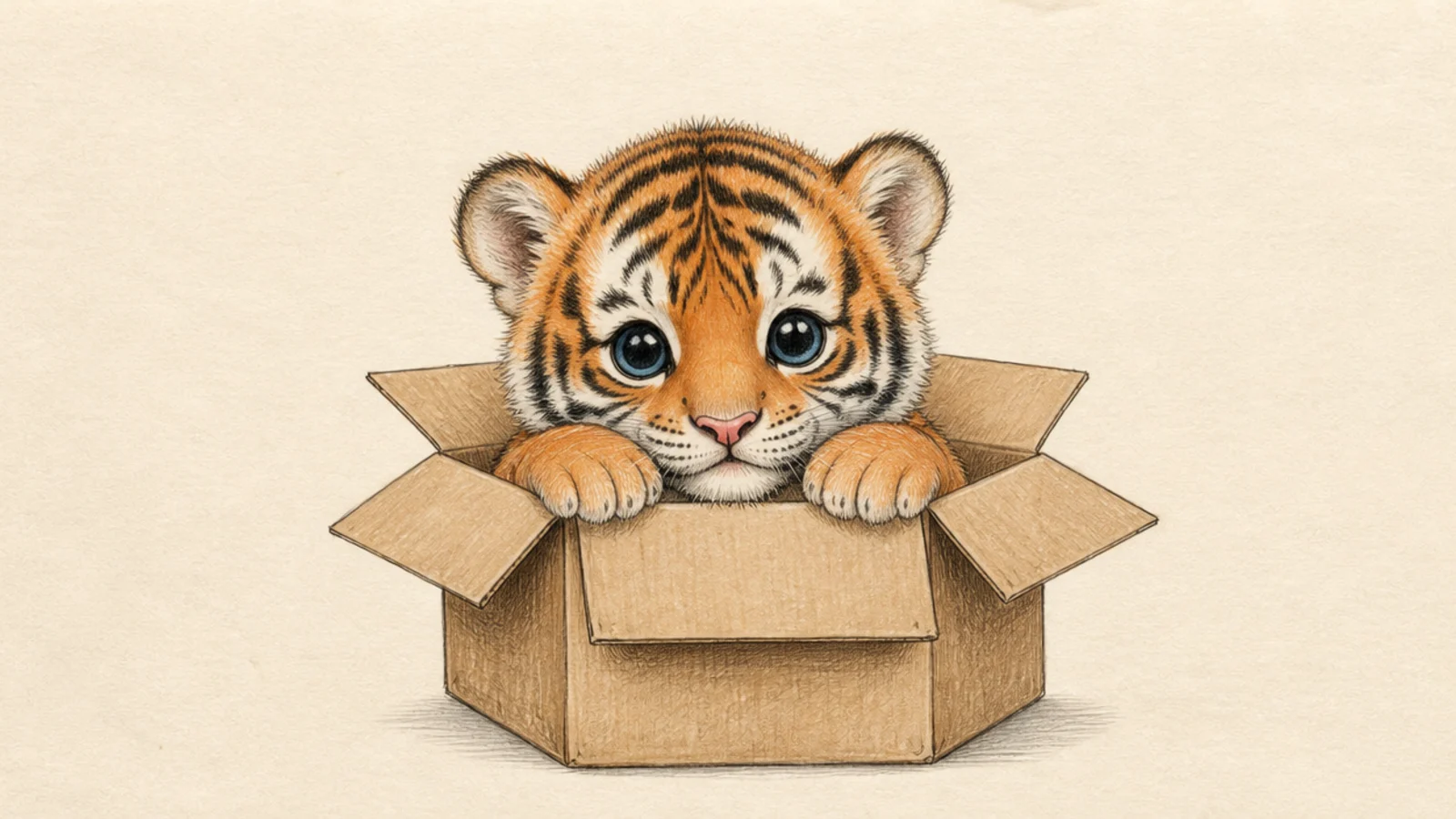
A cub peeking out of a box is a classic cat-in-a-box gag made adorable. The box hides the body and frames the curious head.
Step 1 draw a simple open box. Step 2 pop a big cub head and paws over one flap. Step 3 add a curious face and small ears.
Let the paws grip the box edge so the cub looks tucked inside.
Don’t draw the body; the box hides everything below the paws.
26 Stretching Cub
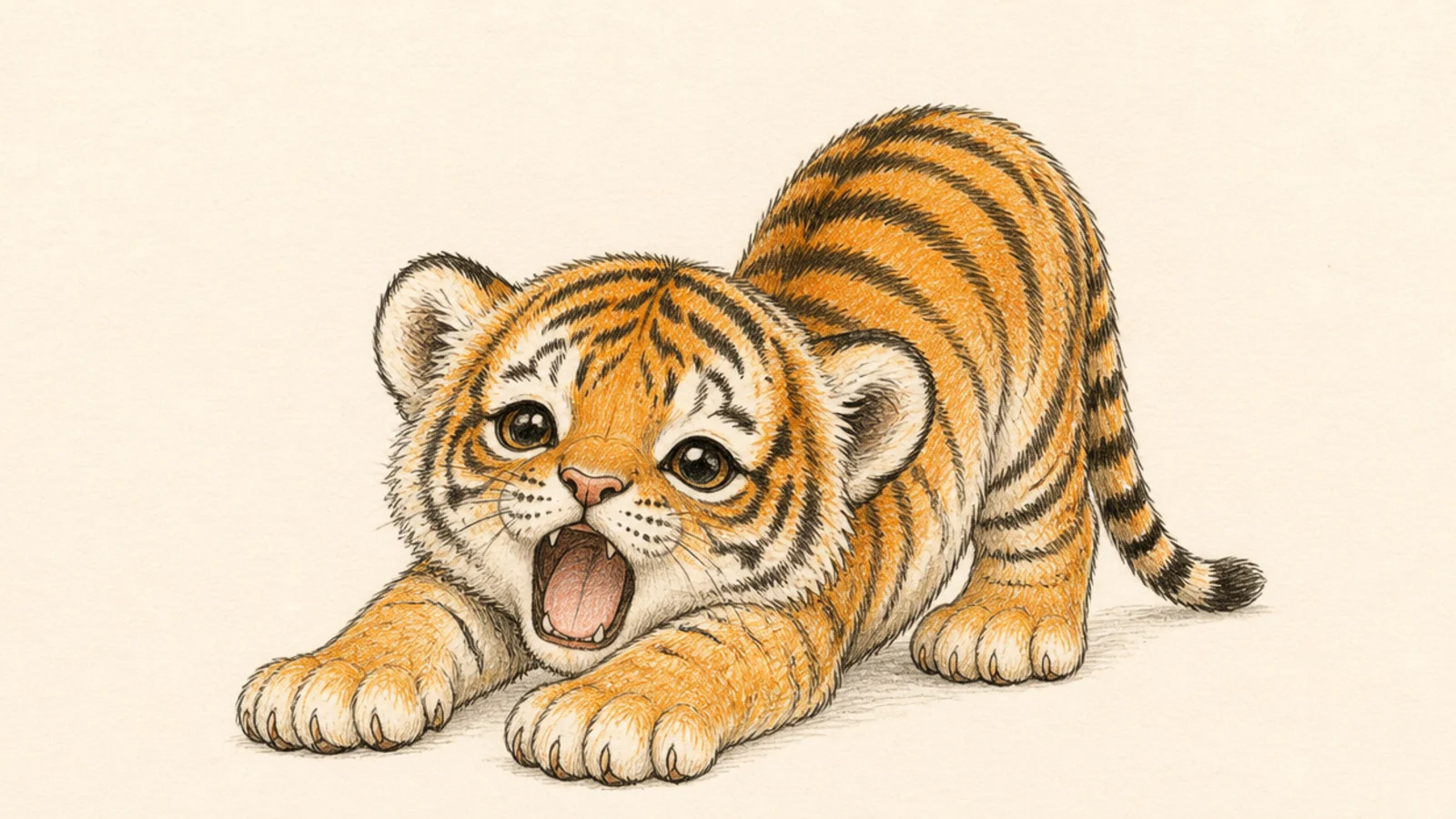
Step 1 draw the front paws reaching forward low. Step 2 raise the hips with an arched back. Step 3 add a yawning face and soft stripes.
A cub doing a big morning stretch with its rear up is sweet and relatable. The arched pose and reaching front paws show a sleepy baby waking up.
AvoidDon’t keep the back flat; the arch sells the stretch.
Pro tipRaise the rear and reach the front paws for a real stretch.
27 Little Prince Cub
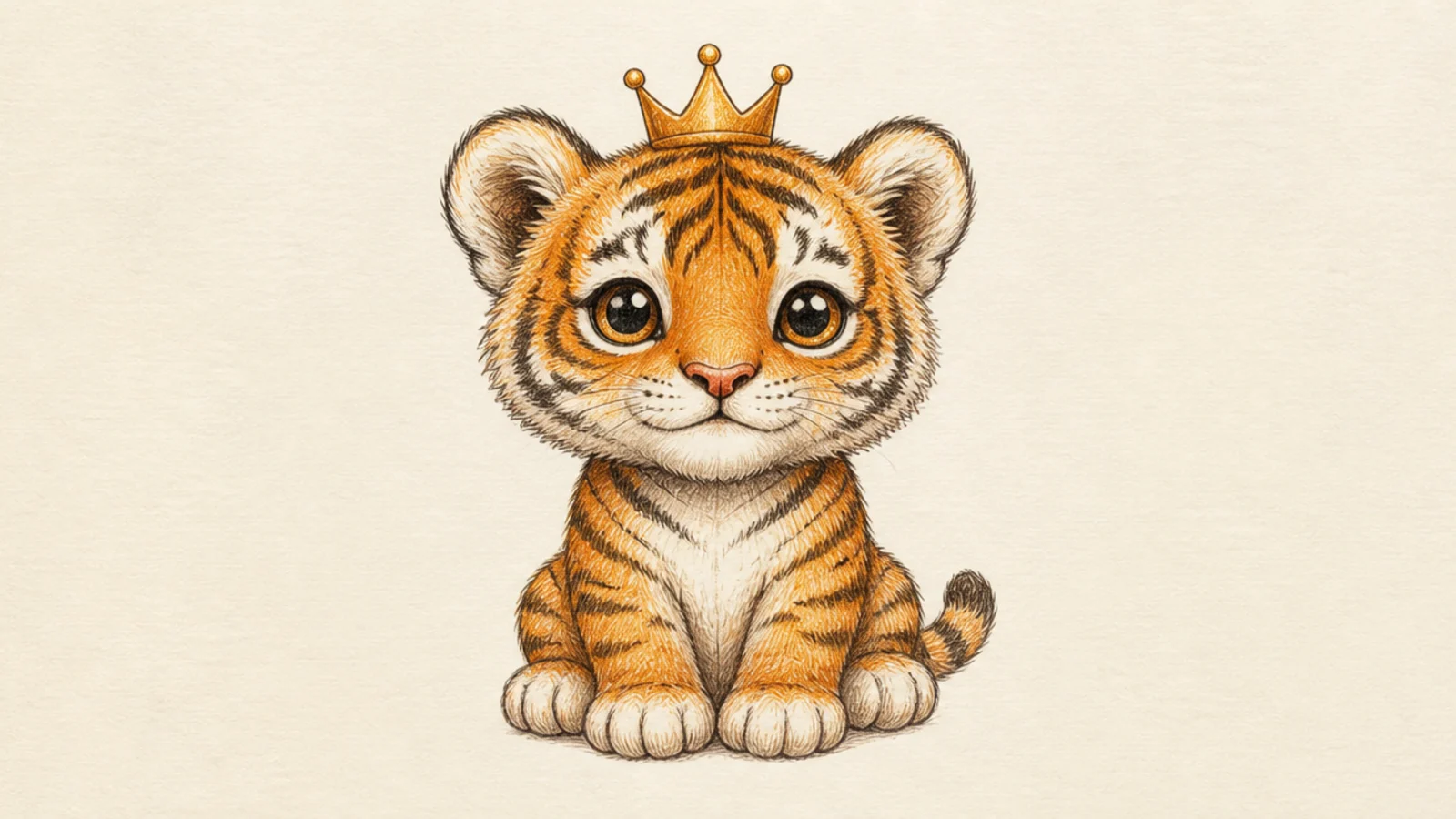
A cub in a tiny crown is a sweet little royal. The small crown adds character while everything stays soft and baby-round.
Step 1 draw a sitting cub. Step 2 add a small three-point crown between the ears. Step 3 add a proud little face and soft stripes.
Rest the crown just in front of the ears so it sits naturally.
Don’t over-detail the crown; three simple points are enough.
28 Cub Catching a Snowflake
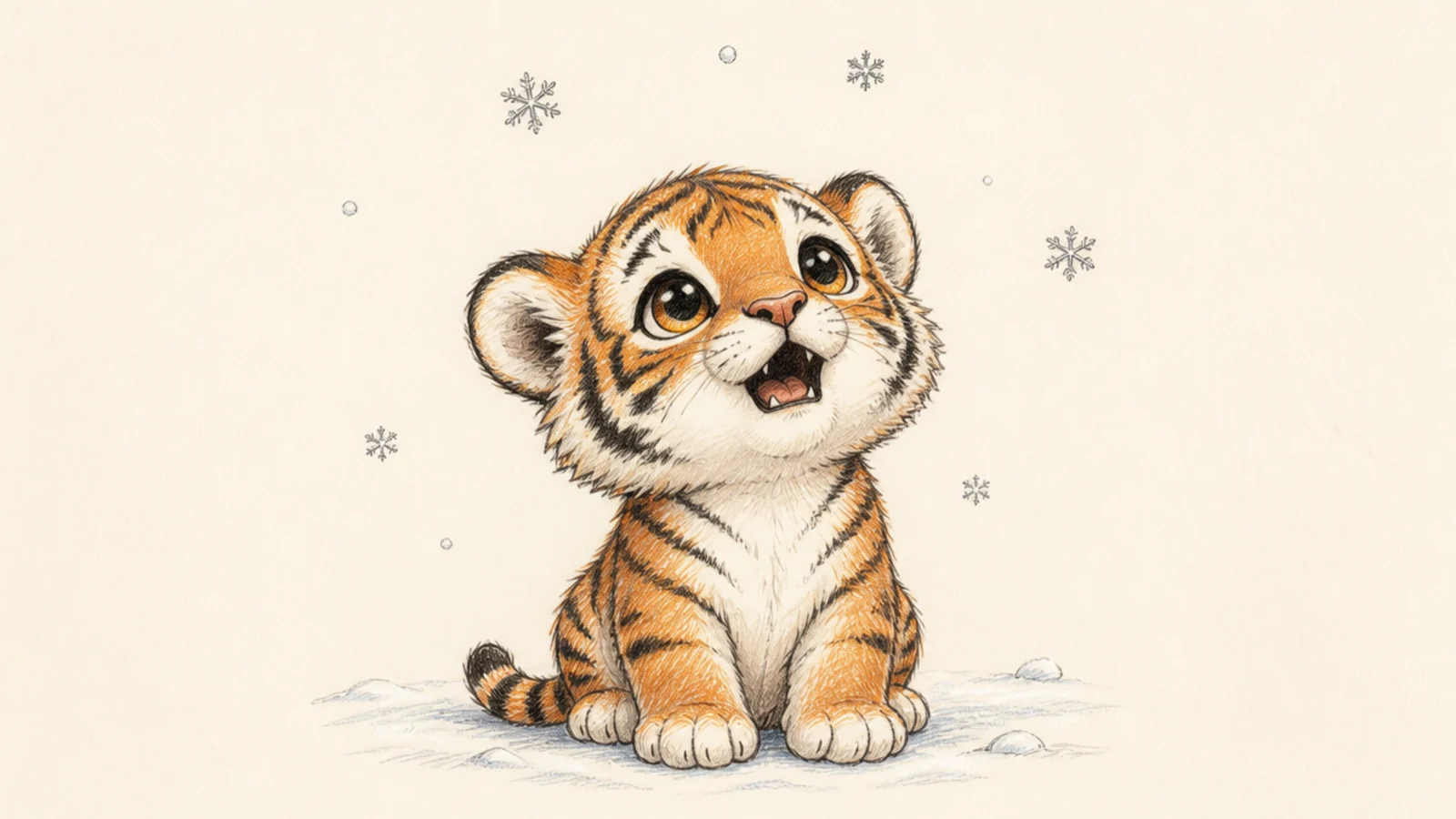
A cub gazing up at falling snow is wonder-filled and gentle. The upturned face and drifting flakes make a soft seasonal scene.
Step 1 draw a sitting cub looking up. Step 2 scatter a few snowflakes above. Step 3 open the mouth in wonder and add a little snow on the ground.
Tilt the head up and open the mouth for a look of wonder.
Don’t crowd the snow; a few drifting flakes are enough.
29 Sleepy Pile of Cubs
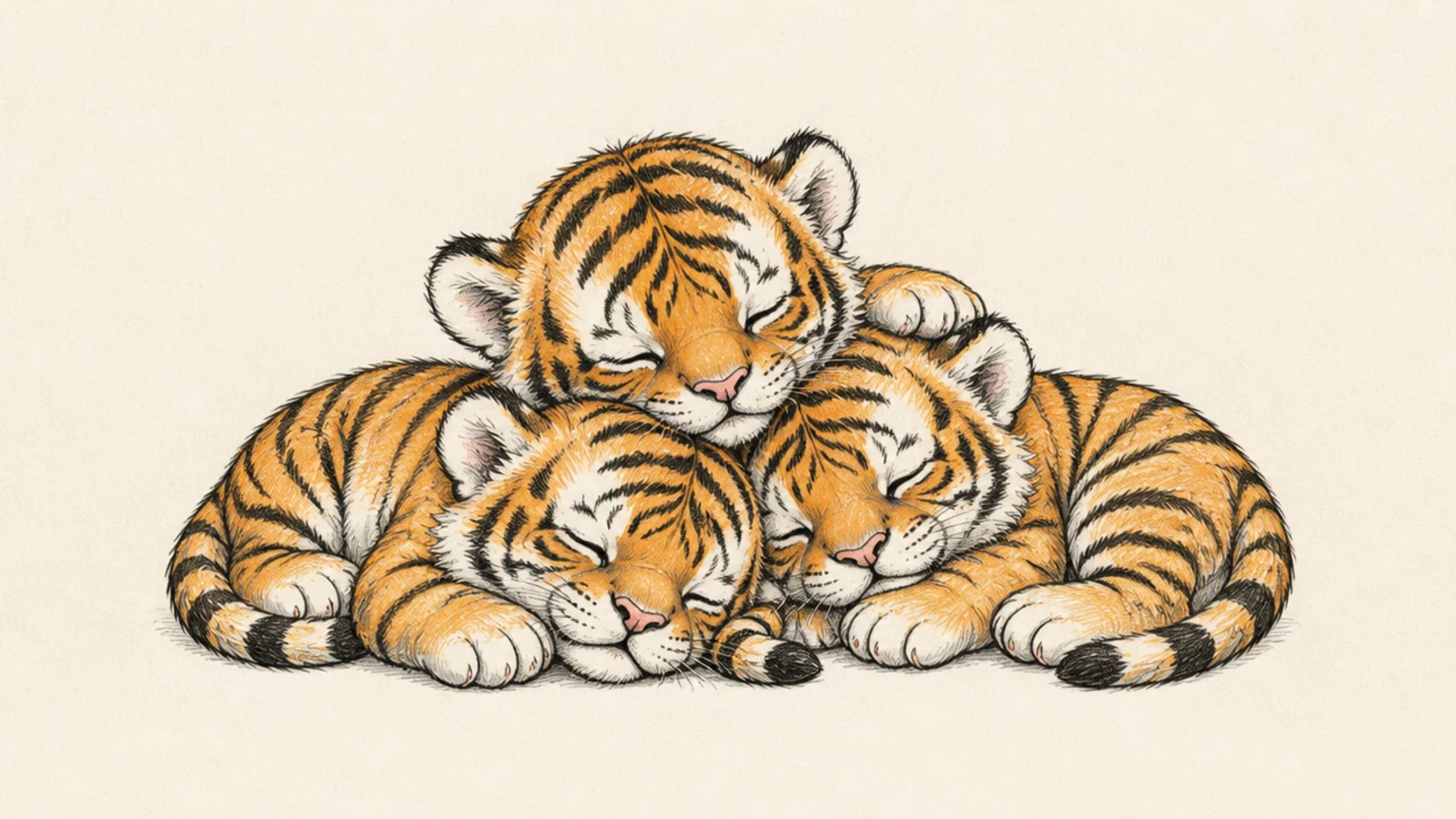
A pile of cubs napping together is the coziest group scene. Stacking a few sleepy cubs teaches soft overlapping and doubles the cuteness.
Step 1 draw two or three cubs curled and overlapping. Step 2 rest heads on each other softly. Step 3 add closed eyes, wrapped tails, and soft stripes.
Overlap the cubs and rest their heads together for a cozy pile.
Don’t separate them; a snug pile is the whole appeal.
30 Big-Eyed Cub Portrait
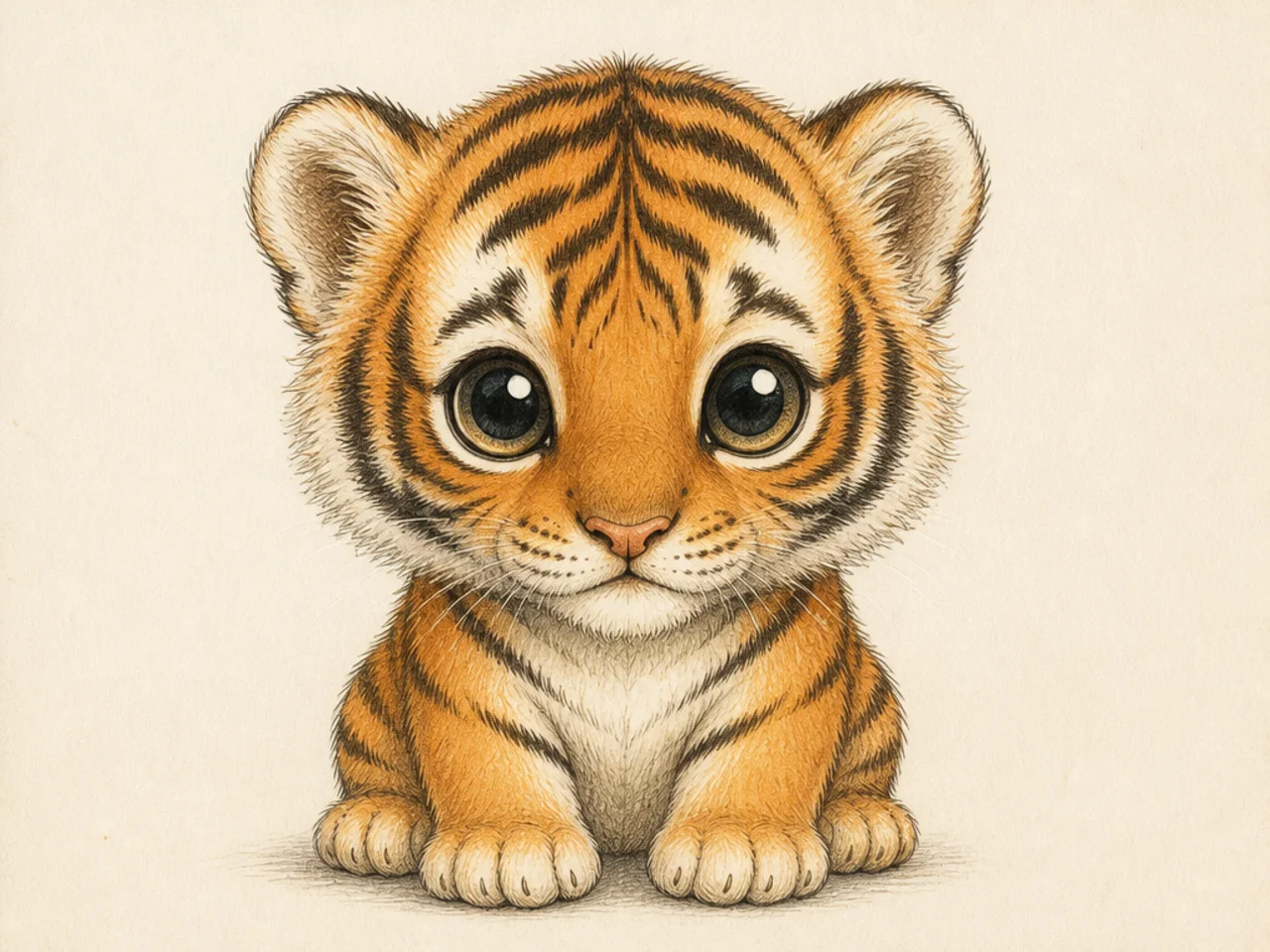
A close-up cub portrait with huge glossy eyes is the perfect melting closer. Cropping tight on the big-eyed face puts all the sweetness front and center.
Step 1 draw a rounded cub face filling the frame. Step 2 make the eyes large and glossy with bright highlights. Step 3 add a tiny nose, soft fuzzy stripes, and fluffy cheeks.
Make the eyes large with a big highlight so they look glossy and sweet.
Don’t shrink the eyes; big glossy eyes carry the portrait.