1 Bottom-Edge Half Bloom
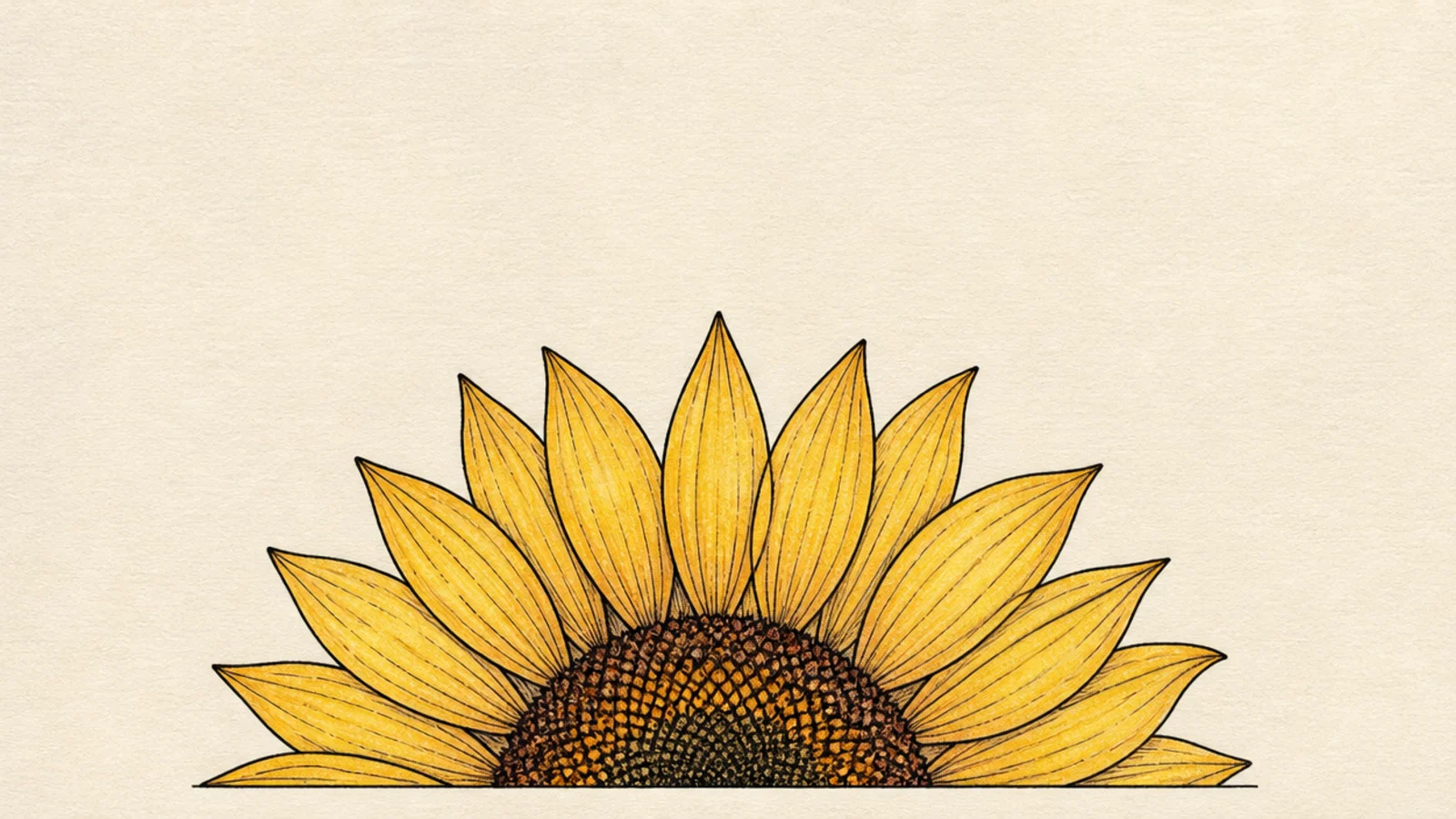
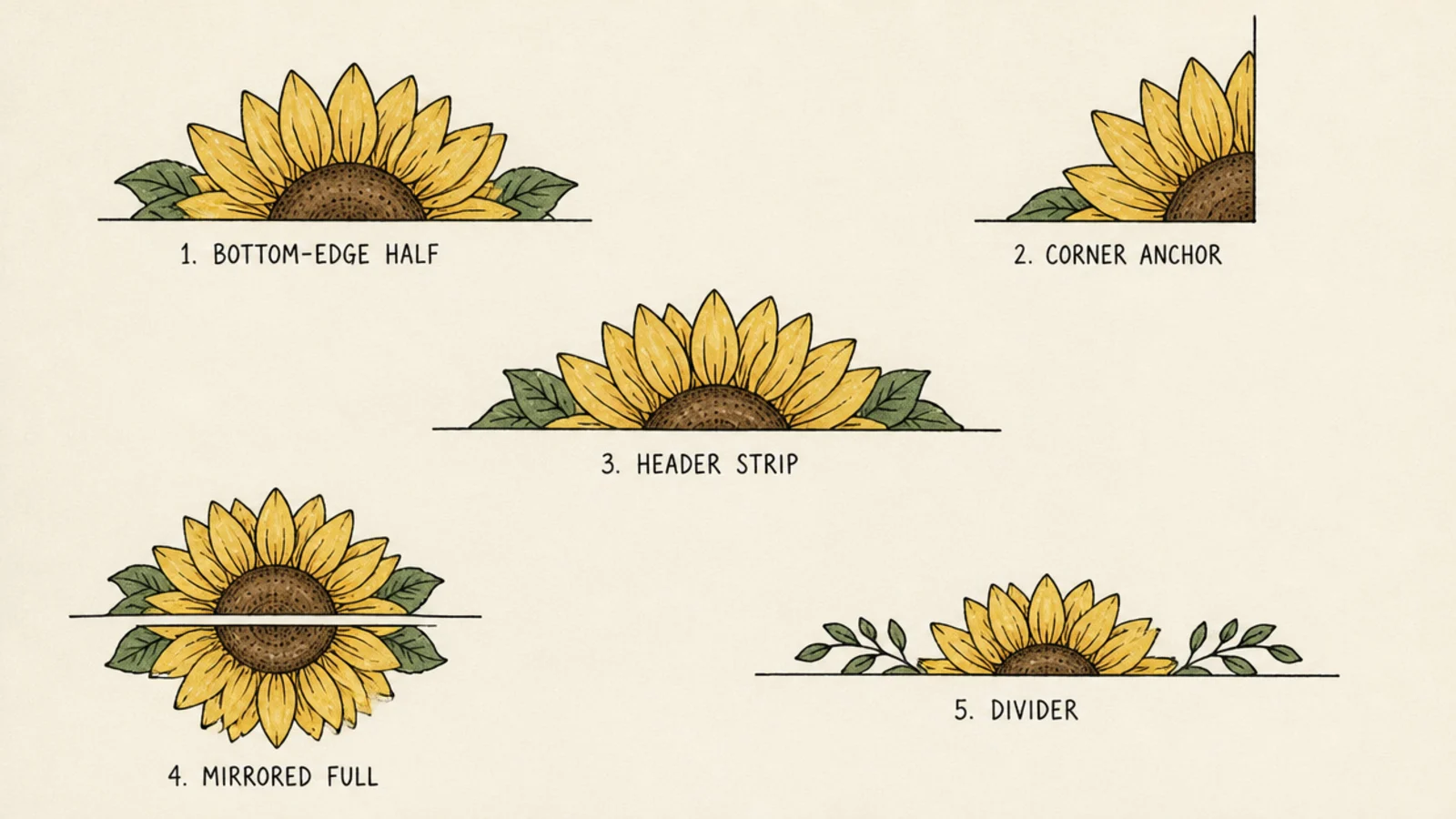
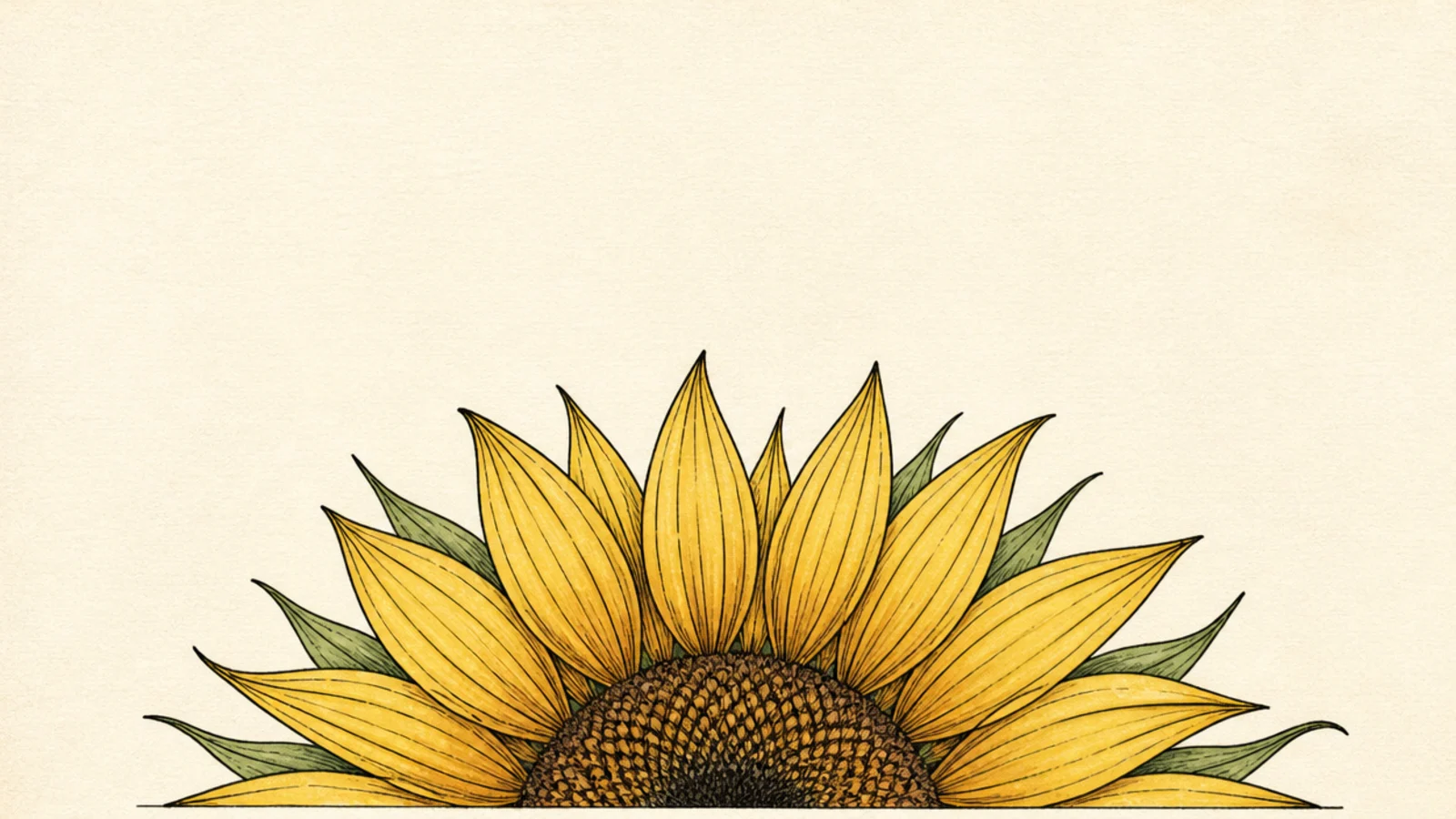
The foundational half — a bloom rising from a straight bottom line like a sunrise. Master this and every other layout is a rotation of it.
Step 1 draw a straight horizontal line. Step 2 draw a half-circle center on it. Step 3 fan petals up and out from the center like rays.
Place the middle petal straight up first, then match pairs on each side.
Don’t crowd the petals; even fan spacing is what makes it clean.
2 Top Corner Anchor

Step 1 mark the corner as the center point. Step 2 draw a quarter center against the two edges. Step 3 fan petals diagonally into the page.
A bloom tucked into a corner, growing diagonally inward. Corner anchors are the classic way to start a page frame.
AvoidDon’t float it away from the corner; it should hug both edges.
Pro tipAim the center petal at 45 degrees into the page for balance.
3 Header Strip of Halves
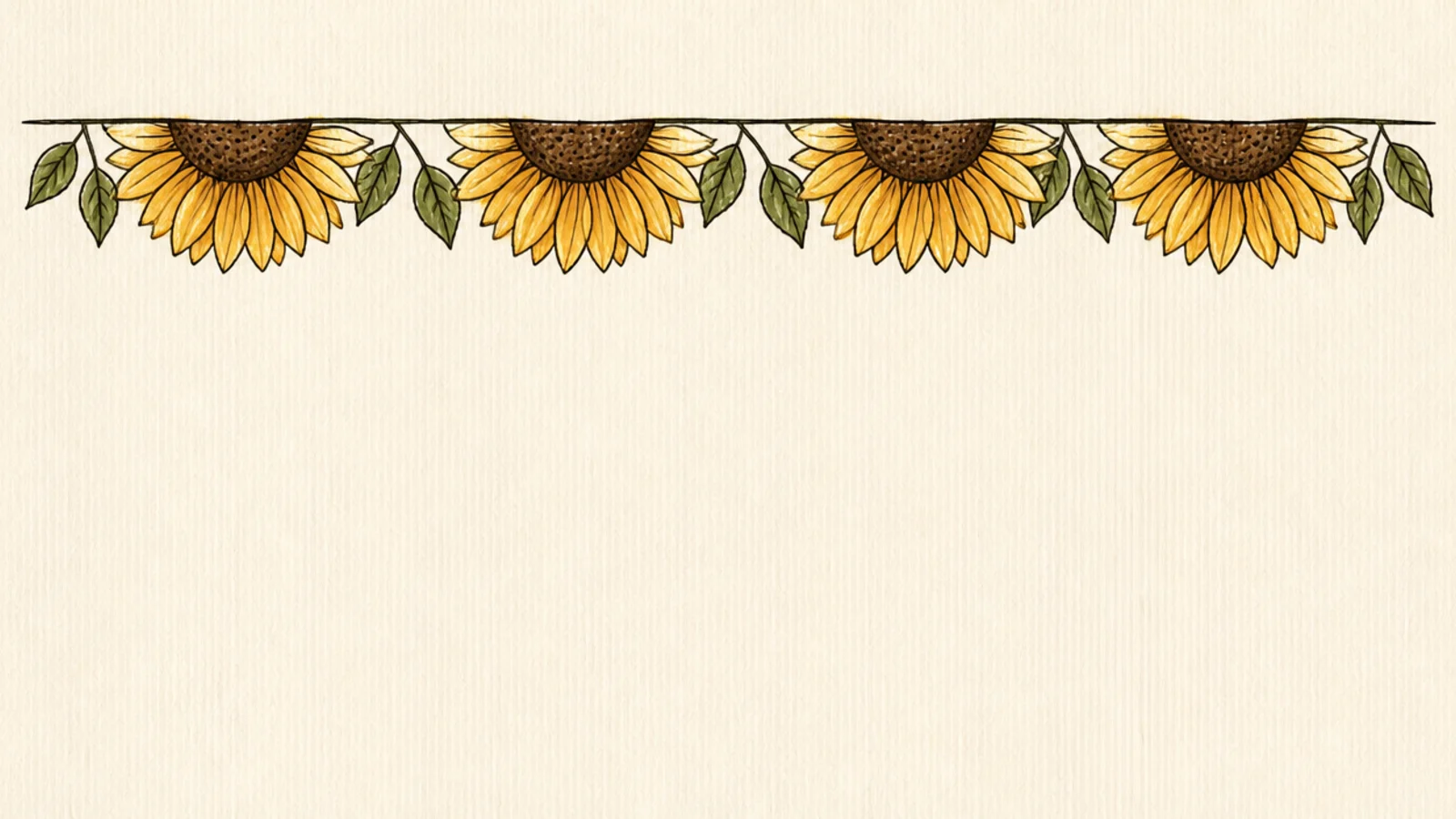
Several half blooms in a row along the top edge make a decorative header band. Repetition turns one half into a design element.
Step 1 draw a top line. Step 2 space three or four half-centers evenly along it. Step 3 fan petals down from each and link with small leaves.
Keep the half-blooms evenly spaced for a tidy header band.
Don’t vary their sizes; a uniform row reads as a designed header.
4 Mirrored Full From Halves
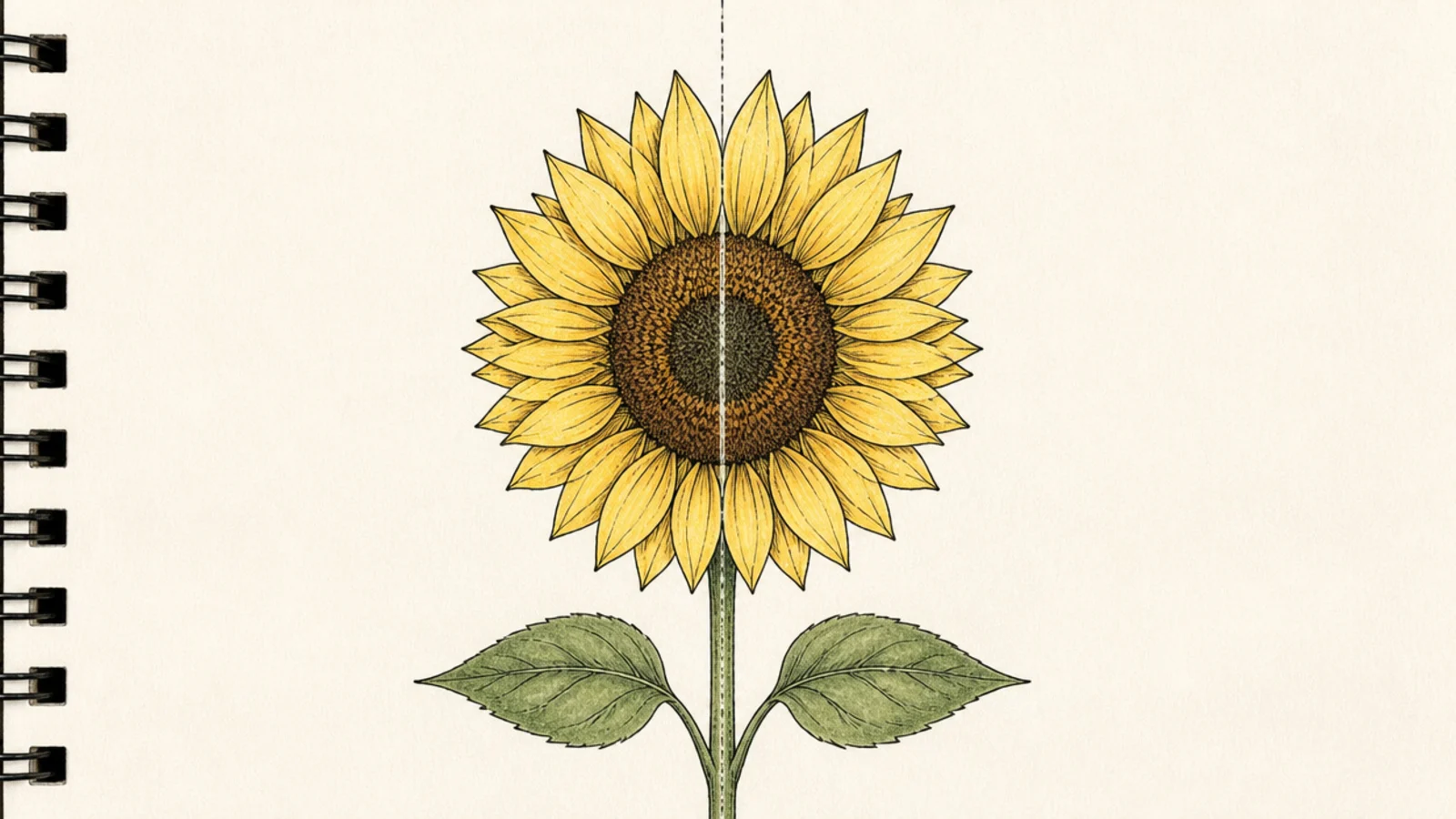
Step 1 draw the cut line and one half bloom. Step 2 mirror every petal on the other side of the line. Step 3 merge the two center halves into one circle.
Two halves mirrored across the cut line join into one perfectly symmetrical flower. This is the best symmetry exercise on the list.
AvoidDon’t eyeball it loosely; mirroring rewards careful matching.
Pro tipMatch each petal’s angle exactly across the line for true symmetry.
5 Side-Border Vertical Half

Step 1 draw a vertical line at the margin. Step 2 draw a half center on it. Step 3 fan petals horizontally into the page.
A half bloom growing inward from a vertical side line frames the left or right margin. Great for the edge of a journal spread.
AvoidDon’t let petals cross the text area; keep the fan near the edge.
Pro tipAdd a stem running along the vertical line for a full margin motif.
6 Half-Bloom Divider

Step 1 draw a horizontal divider line across the page. Step 2 center a small half bloom on it. Step 3 add a short leaf sprig on each side along the line.
A half bloom sitting on a horizontal rule makes a section divider between blocks of text. It breaks up a page with a floral pause.
AvoidDon’t make it large; a divider should feel like a gentle break.
Pro tipKeep the bloom small so it divides without dominating.
7 Peeking Half Behind Text
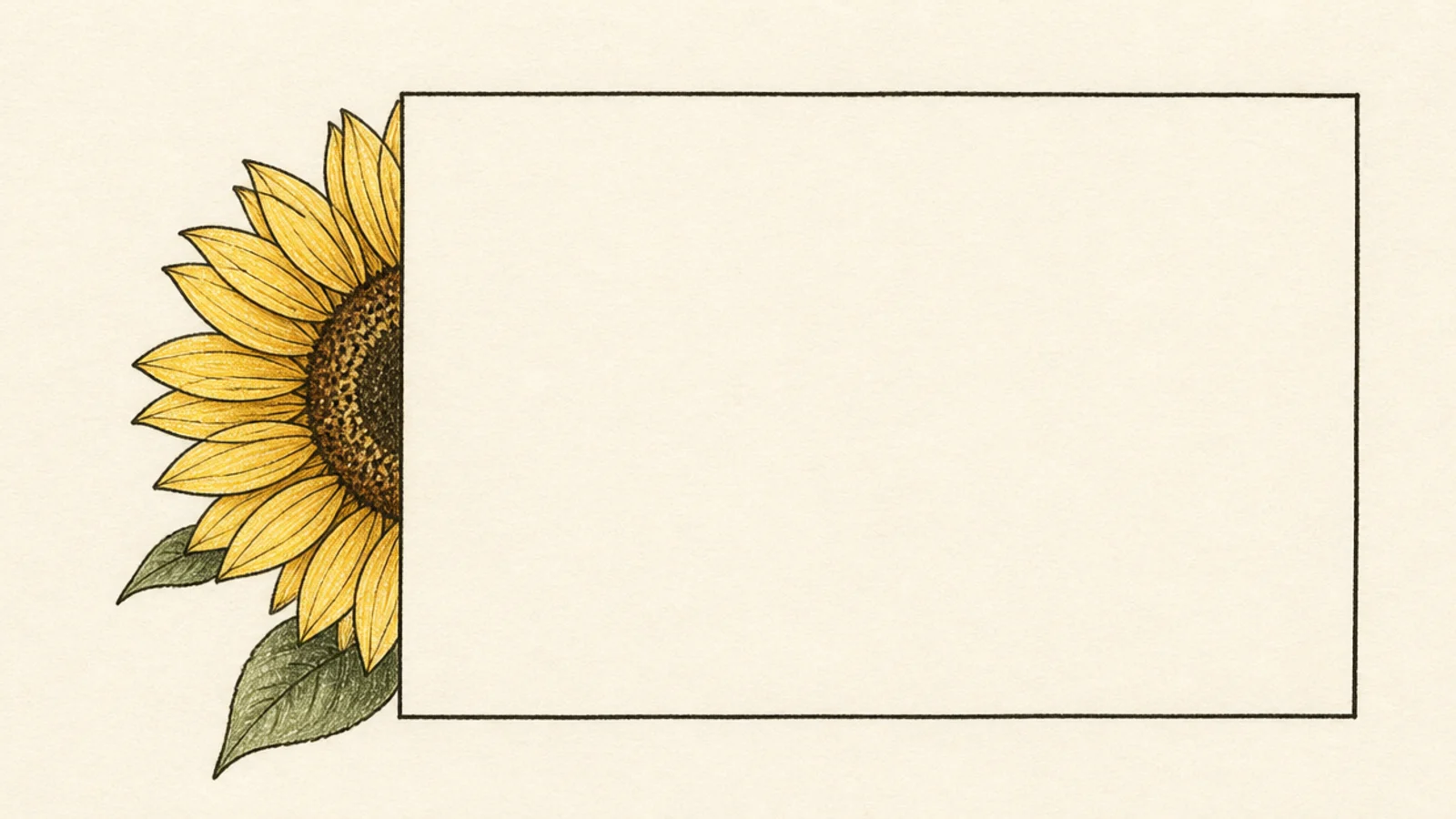
A bloom that appears to sit behind a title or box, with only half showing. The overlap adds depth to a header or card.
Step 1 draw a title box or line. Step 2 draw a half bloom emerging from behind its edge. Step 3 hide the cut edge behind the box so it looks tucked in.
Let the box edge do the cutting; align the flower’s flat side to it.
Don’t draw the hidden half; the box should hide it convincingly.
8 Quarter Fan Corner
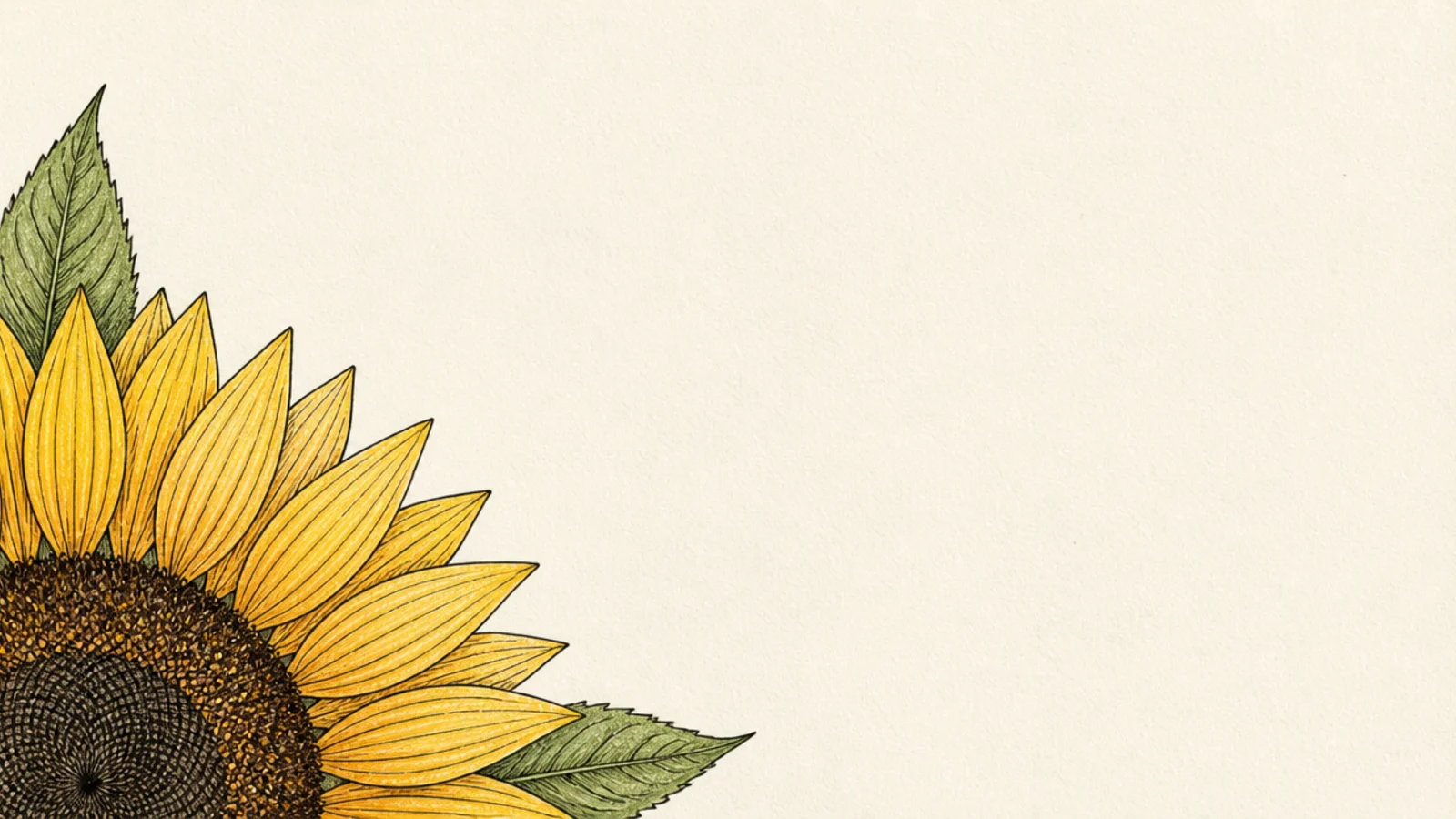
Step 1 set the corner as center. Step 2 fan a quarter-circle of petals into the page. Step 3 add two small leaves along the edges.
Just a quarter of a bloom filling a single corner with a tight fan of petals. The most compact corner accent there is.
AvoidDon’t spread past a quarter turn; that would make it a half, not a quarter.
Pro tipKeep the fan tight to the corner so it stays a neat accent.
9 Two-Corner Frame

Step 1 draw a quarter bloom in the top-left corner. Step 2 mirror it in the bottom-right corner. Step 3 add trailing leaves reaching toward the center from each.
Corner blooms in two diagonal corners frame the whole page between them. A classic balanced layout for cards and certificates.
AvoidDon’t fill all four corners; two diagonal ones frame more elegantly.
Pro tipMatch the two corners in size so the frame feels balanced.
10 Arch of Halves
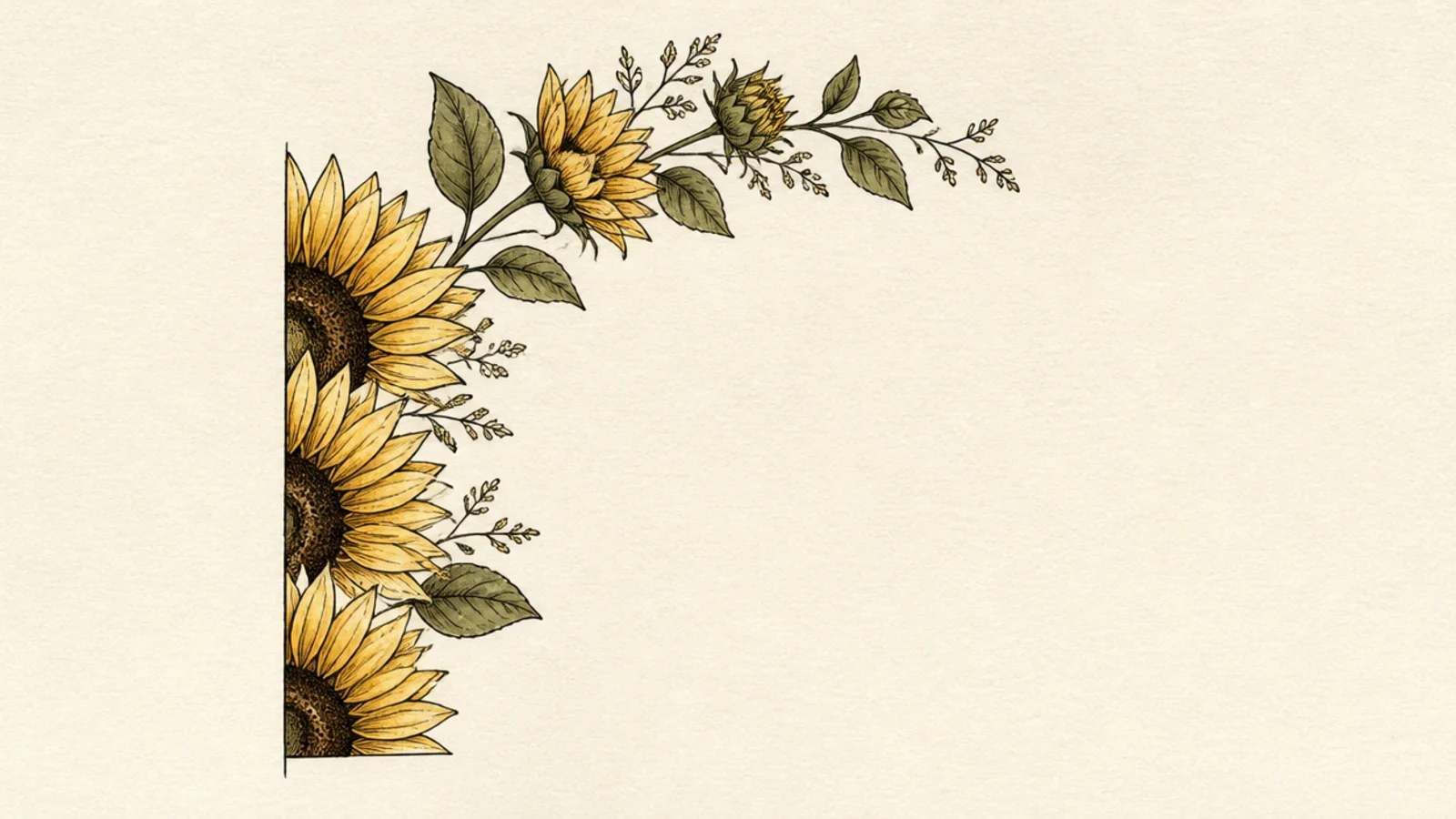
Step 1 sketch a light arch curve. Step 2 place small half blooms along it, each facing outward from the curve. Step 3 fill gaps with leaves and buds.
Half blooms following a curved arch make a crown or archway over a title. The curve adds a celebratory, banner-like feel.
AvoidDon’t keep them all upright; angle them to follow the arch.
Pro tipAngle each half bloom to face outward along the arch’s curve.
11 Half Sun With Rays
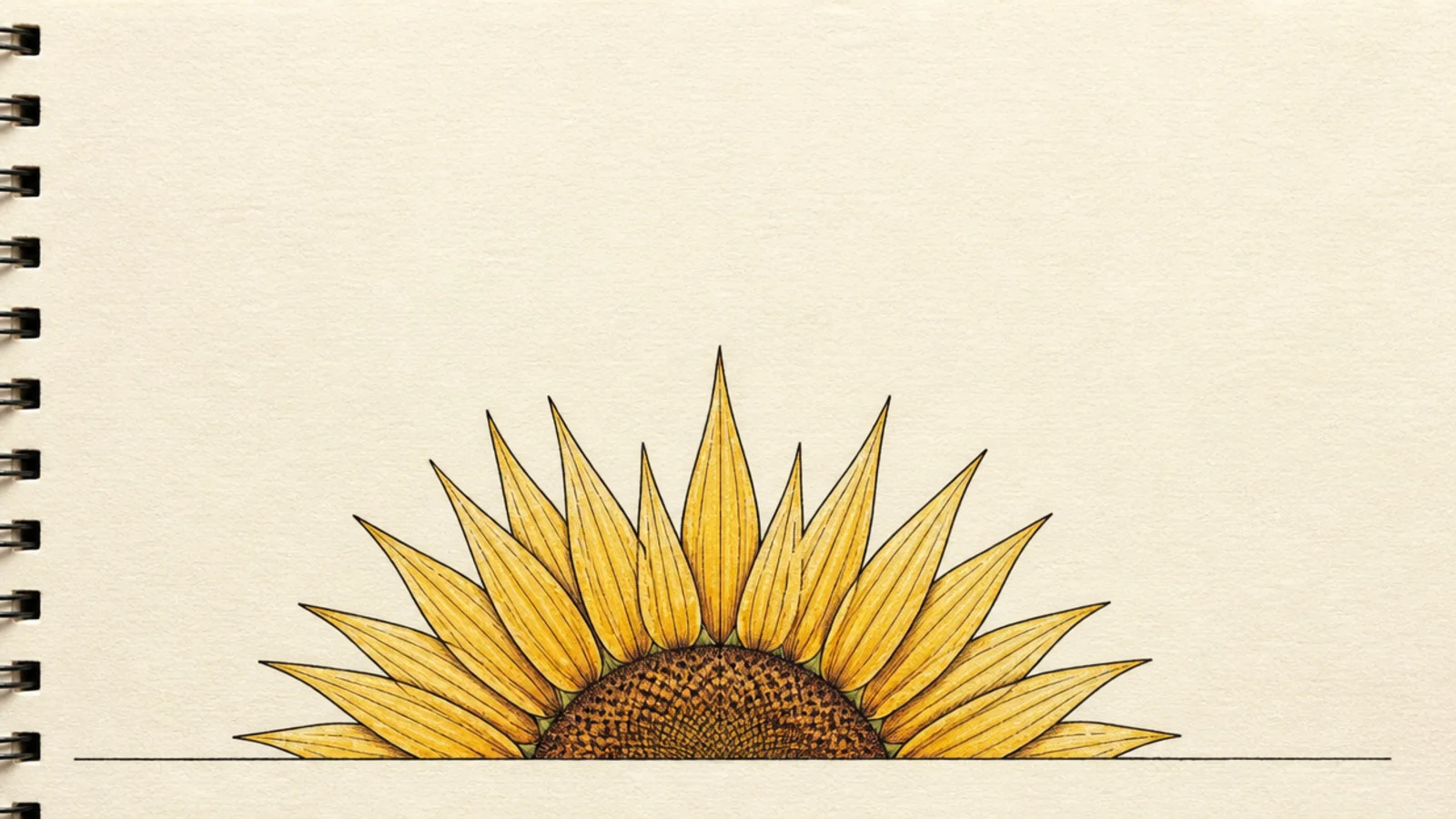
Step 1 draw a horizon line. Step 2 draw a half center on it. Step 3 alternate long pointed rays and shorter petals fanning up.
A half bloom drawn so its petals look like long sun rays rising over a horizon. A cheerful hybrid of flower and sunrise.
AvoidDon’t make all rays equal length; alternating them adds energy.
Pro tipAlternate long and short rays for a lively sunrise rhythm.
12 Half-Wreath Top

Small sunflowers curving in a half-circle over the top make a half wreath framing a header. It leaves the bottom open for content.
Step 1 sketch a half-circle arc at the top. Step 2 place small blooms and leaves along the arc. Step 3 leave the two ends tapering into single leaves.
Cluster the blooms toward the top and taper to leaves at the ends.
Don’t close the wreath into a full circle; the open bottom is the point.
13 Diagonal Half Spray
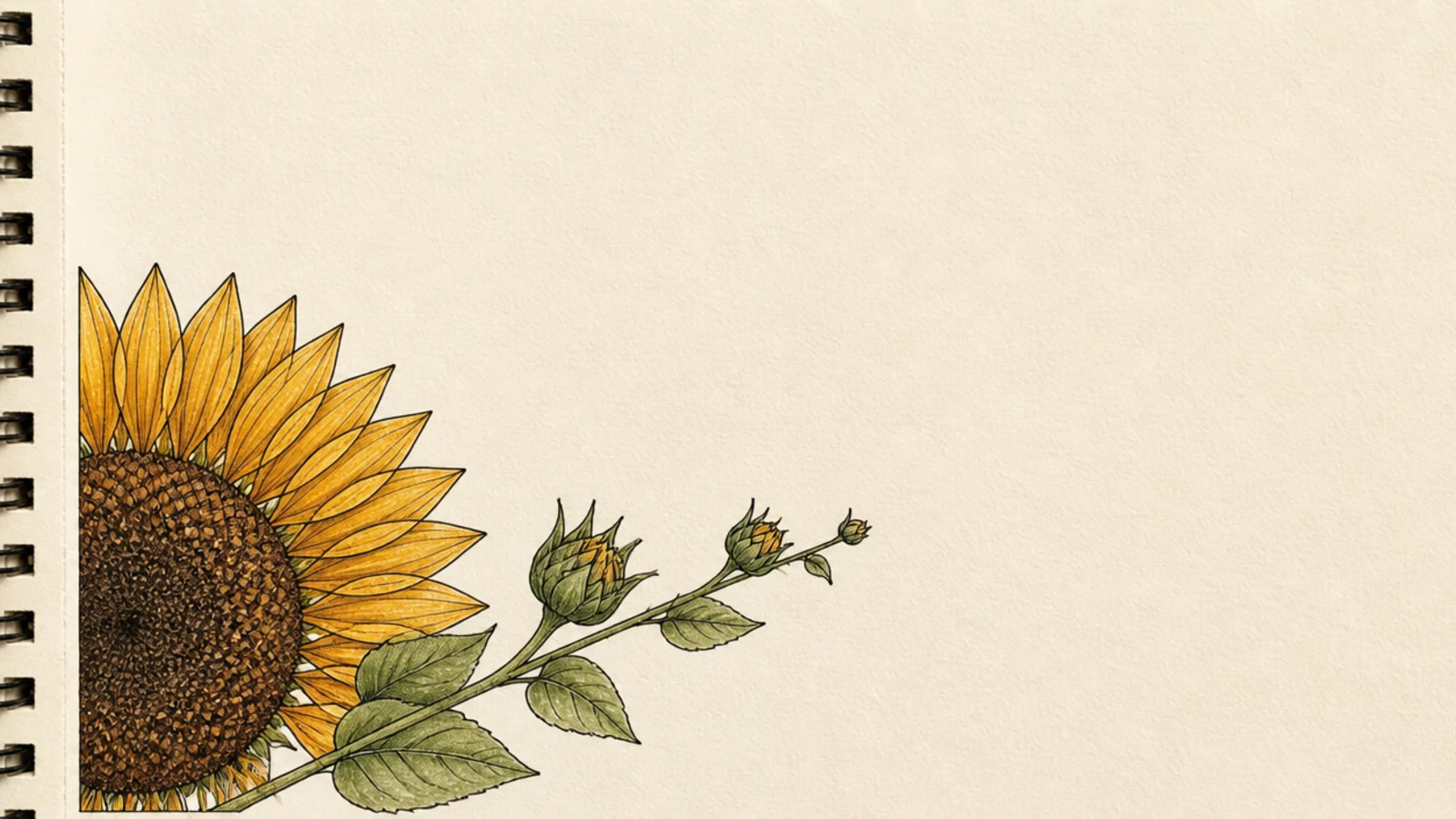
A half bloom with a spray of buds and leaves running diagonally across a corner. More dynamic than a static corner anchor.
Step 1 draw a diagonal line across a corner. Step 2 place a half bloom at one end. Step 3 trail buds and leaves along the diagonal toward the center.
Let the spray get smaller as it trails inward for a natural taper.
Don’t keep the buds all one size; taper them along the spray.
14 Half-Bloom Tab Marker
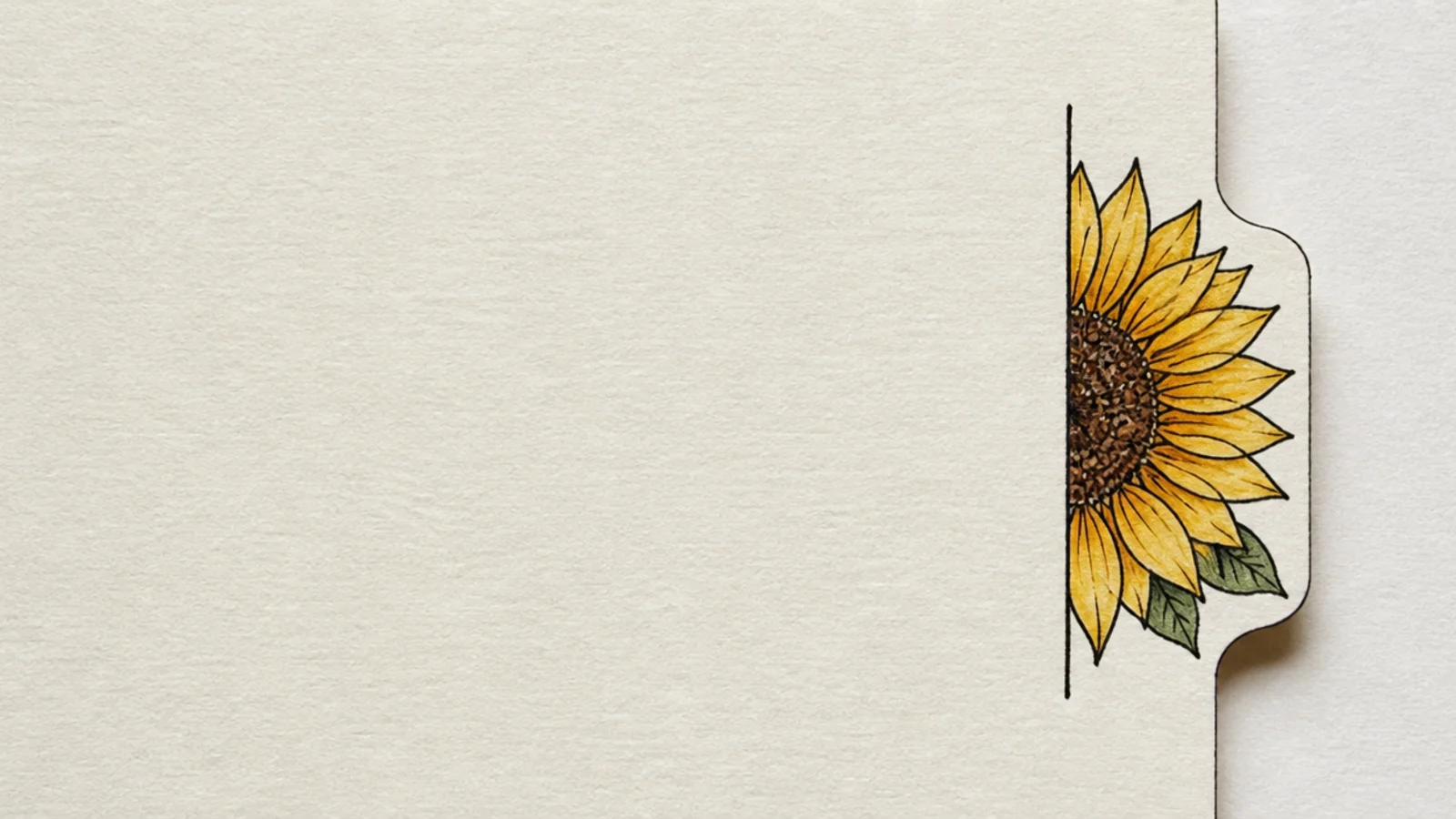
A tiny half bloom on the outer edge acts as a page tab or bookmark tab in a journal. Small, useful, and decorative at once.
Step 1 draw a small tab shape on the page edge. Step 2 fit a tiny half bloom onto it. Step 3 keep it compact and bold so it’s visible from the side.
Keep it small and high-contrast so it works as a findable tab.
Don’t over-detail it; a tab reads best when simple and bold.
15 Framed Header With Mirrored Halves
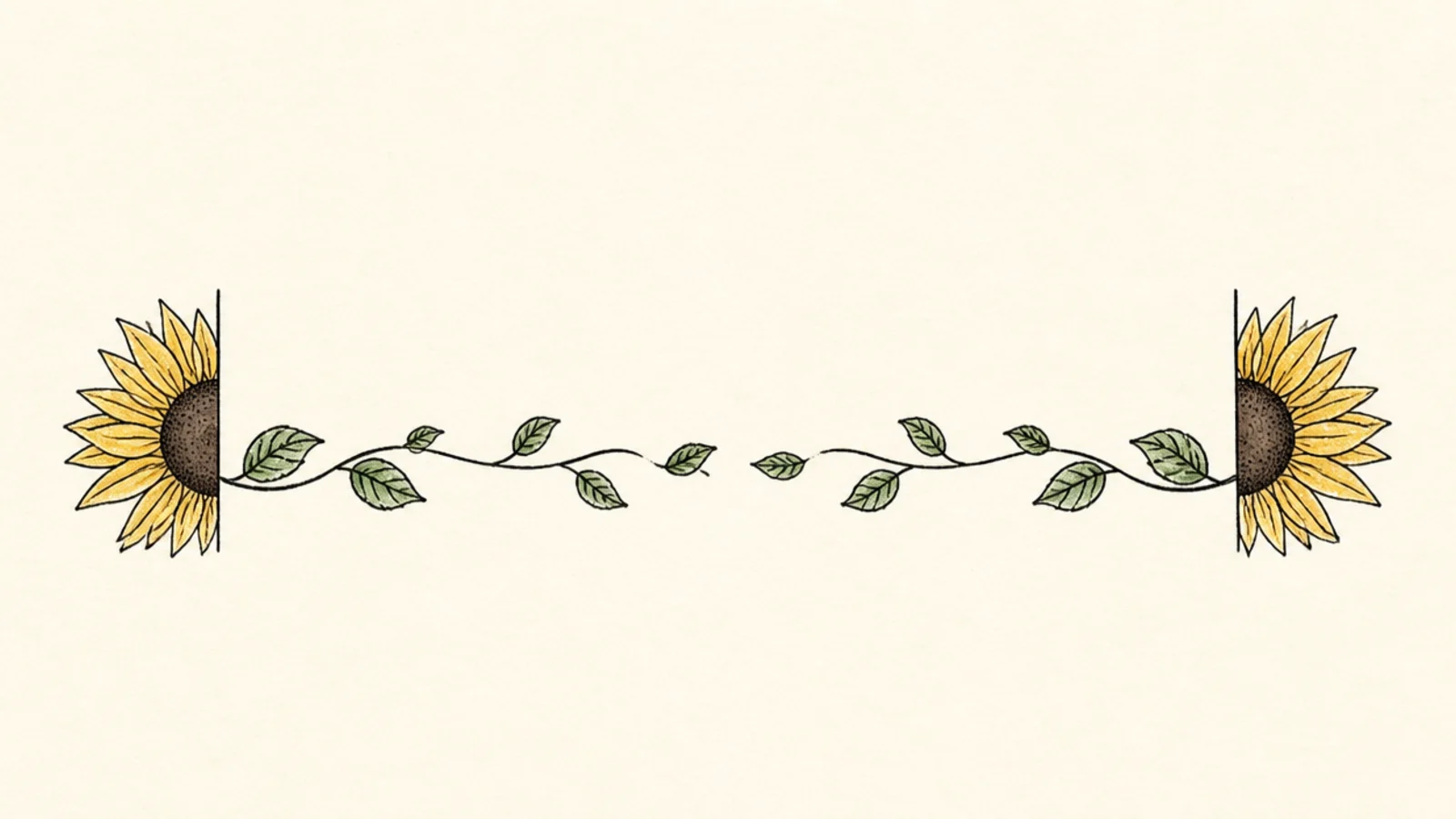
Step 1 draw a header line. Step 2 draw a half bloom facing inward at each end, mirrored. Step 3 connect them with a thin line or leaf trail under the title space.
The showcase layout — mirrored half blooms at both ends of a header line, framing a title between them. It combines mirroring, spacing, and layout.
AvoidDon’t crowd the center; leave clear space for the title text.
Pro tipMirror the two ends exactly so the header feels balanced.