1 Clean Sitting Rabbit
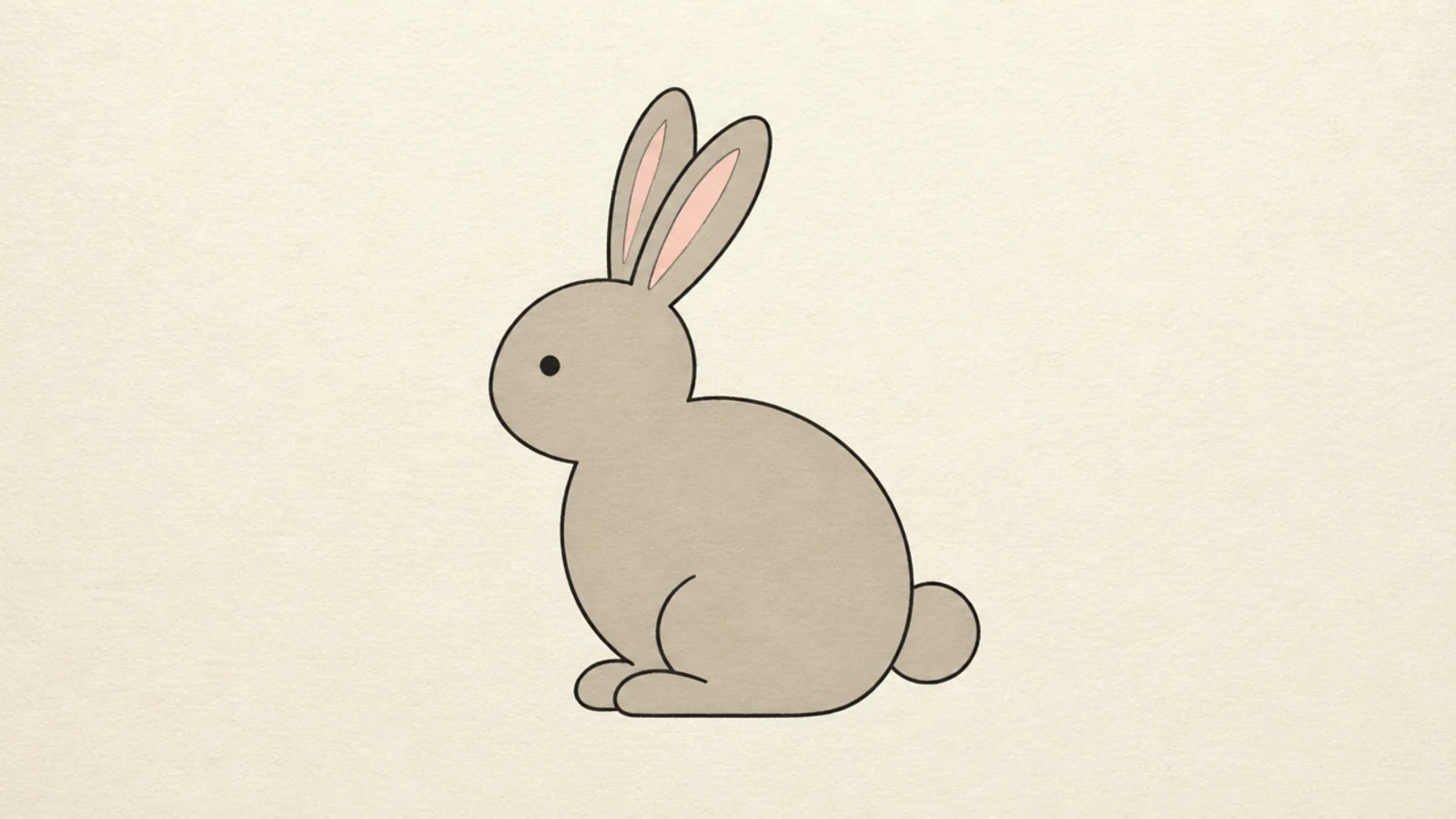
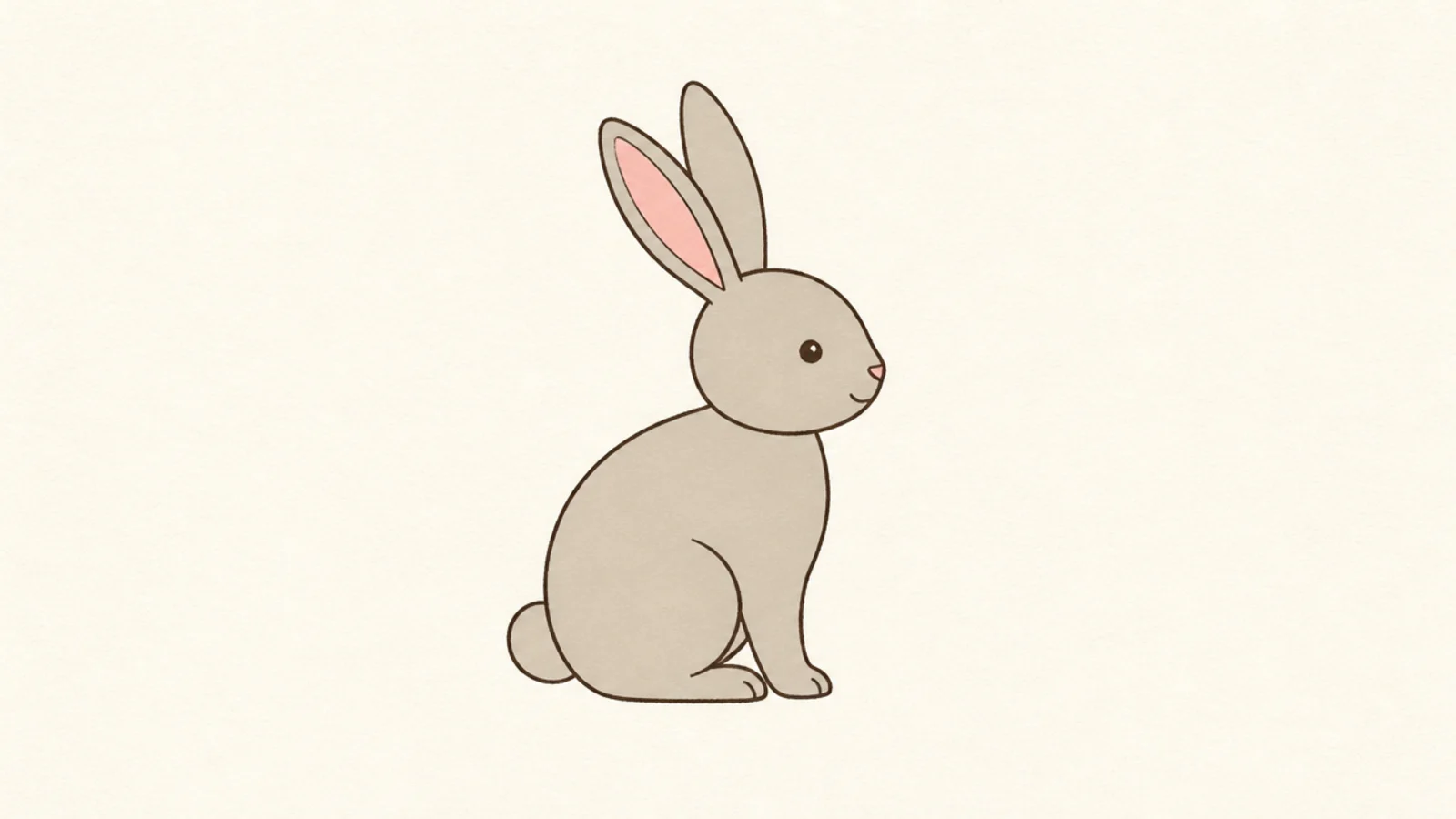
This is the simplest clean rabbit — one smooth silhouette of a sitting bunny. It looks tidy because the outline is continuous and uncluttered. It is the base for everything else here.
Step 1 draw a circle for the head. Step 2 flow a body oval out of it into one clean shape. Step 3 add two ears, a small tail, and the tucked feet with a single dot eye.
Keep the head-to-body join smooth so the whole rabbit reads as one shape.
Don’t add fur or shading; the clean silhouette is the simple look.
2 Simple Standing Rabbit
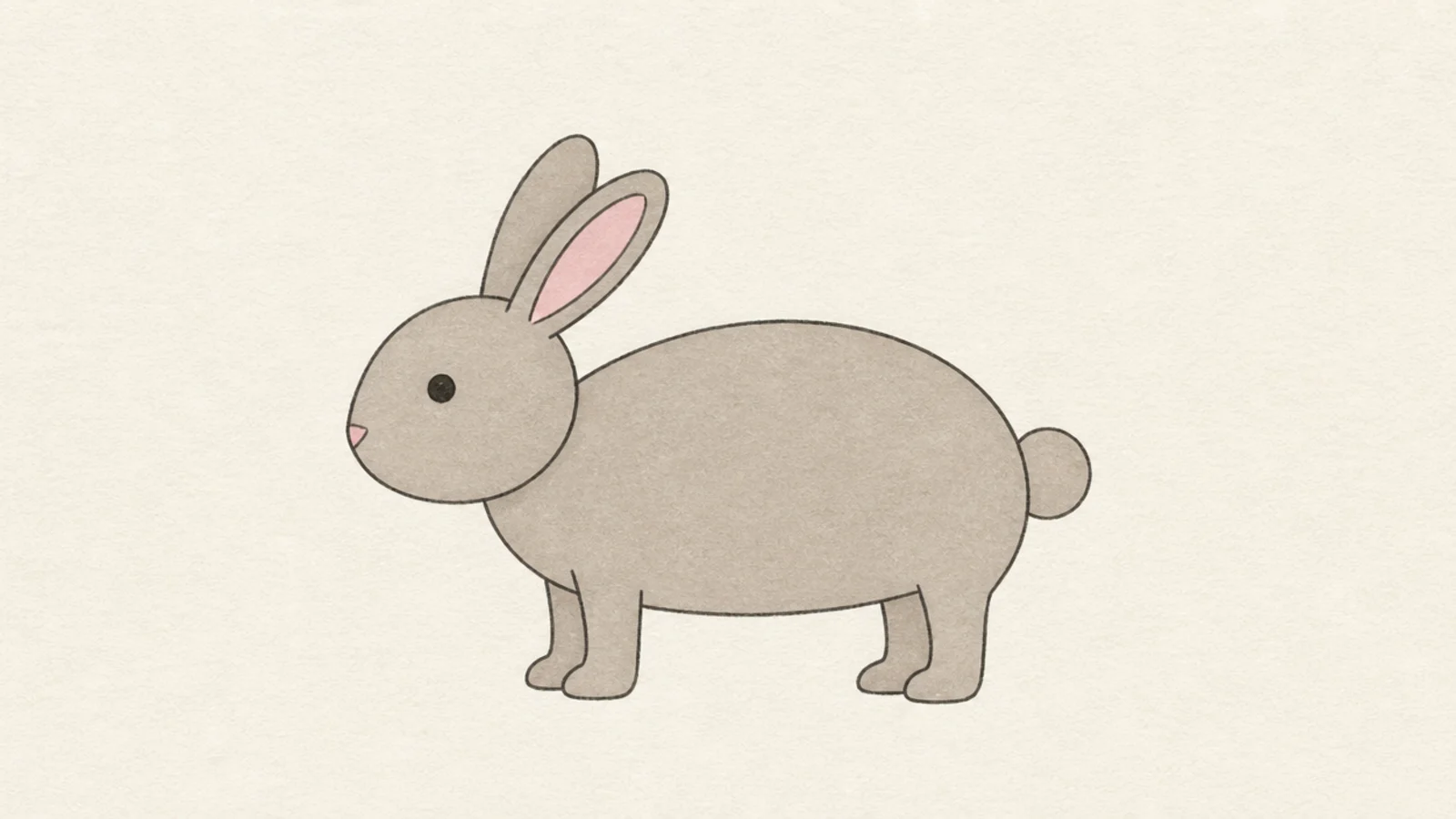
A rabbit standing on all fours in profile is a clean, natural full-body pose. The level back and four legs read clearly. It is a tidy everyday rabbit.
Step 1 draw an oval body held level. Step 2 add a round head at the front and two ears. Step 3 add four simple straight legs and a small round tail.
Pro tipKeep the back a smooth level line so the standing pose looks steady.
AvoidDon’t bend the legs much; simple straight legs keep it clean.
3 Simple Hopping Rabbit
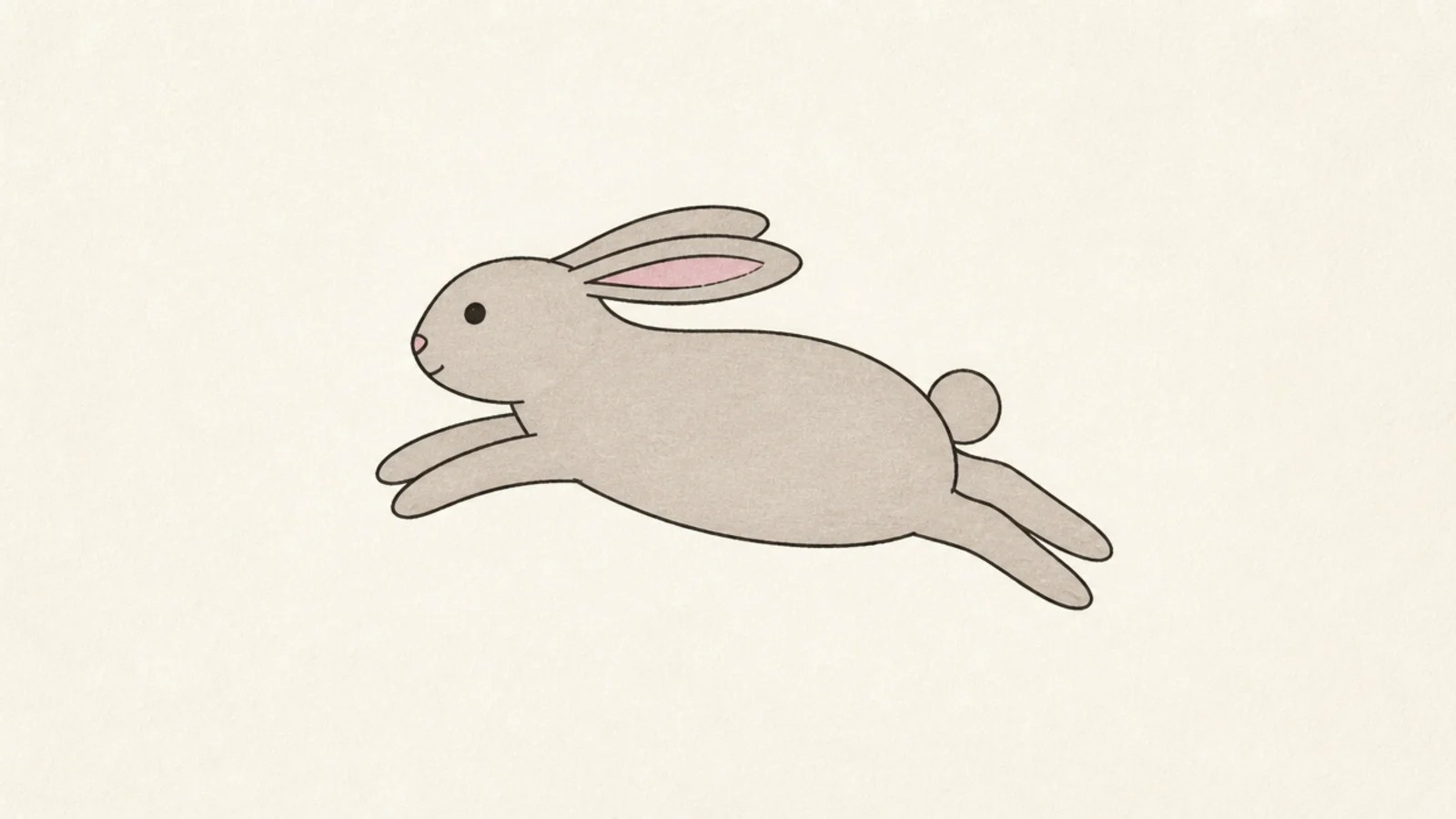
A hopping rabbit shows movement with just a stretched body. The elongated oval and swept ears say motion. It is a clean, lively pose.
Step 1 draw a stretched oval body tilted up. Step 2 add a head with ears swept back. Step 3 reach the front legs forward and the back legs behind in simple lines.
Stretch the body oval longer than usual to suggest the hop.
Don’t keep the body compact; the stretch is what shows motion.
4 Simple Grazing Rabbit
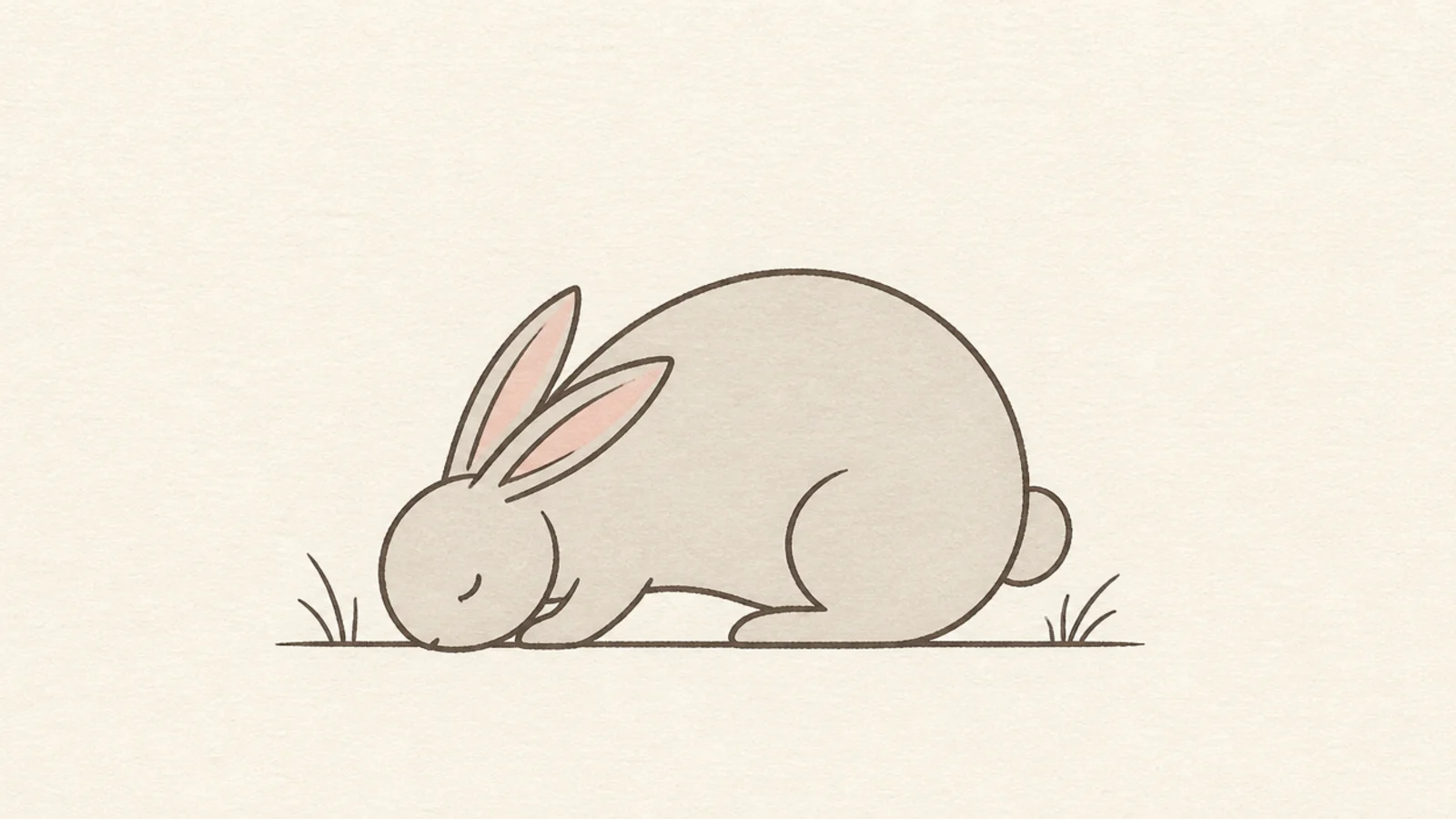
A grazing rabbit with a lowered head is a calm, natural pose. The rounded back and dropped head tell the story simply. It reads as a peaceful bunny.
Step 1 draw a rounded body arched into a hump. Step 2 lower the head to a ground line. Step 3 add swept-back ears and a couple of simple grass lines.
Pro tipRound the back into a smooth hump so the grazing pose reads clearly.
AvoidDon’t lift the head; the lowered head is what says grazing.
5 Profile Walking Rabbit
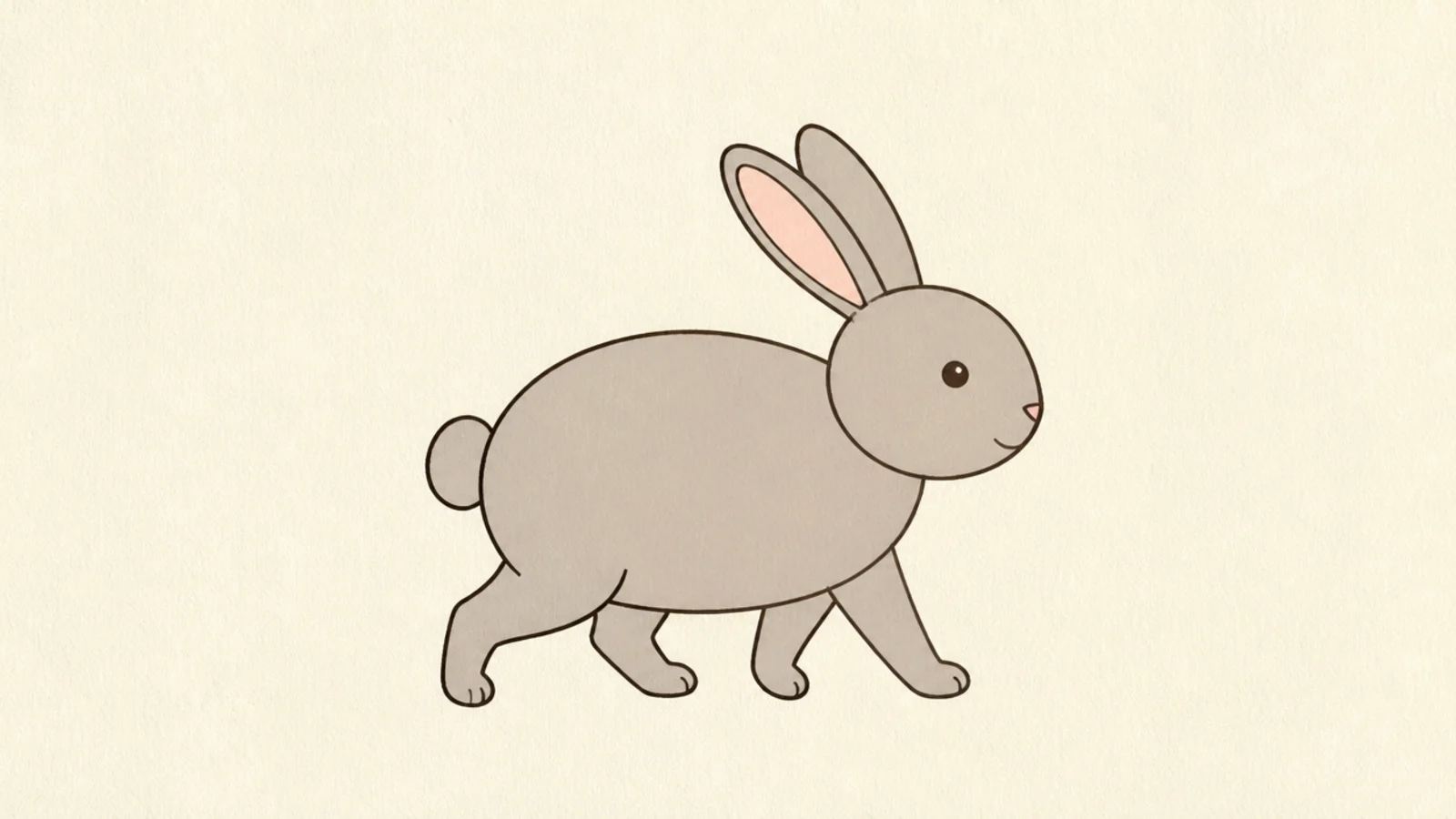
A walking rabbit in profile shows one clean side of the body. Only one eye and one ear pair show, which keeps it simple. It looks natural and neat.
Step 1 draw a level body oval from the side. Step 2 add a head with a small nose facing forward. Step 3 add two legs stepping and a round tail at the back.
Pro tipStagger the two visible legs slightly so it looks like a step, not a stand.
AvoidDon’t draw all four legs evenly; a slight stagger shows the walk.
6 Simple Crouching Rabbit
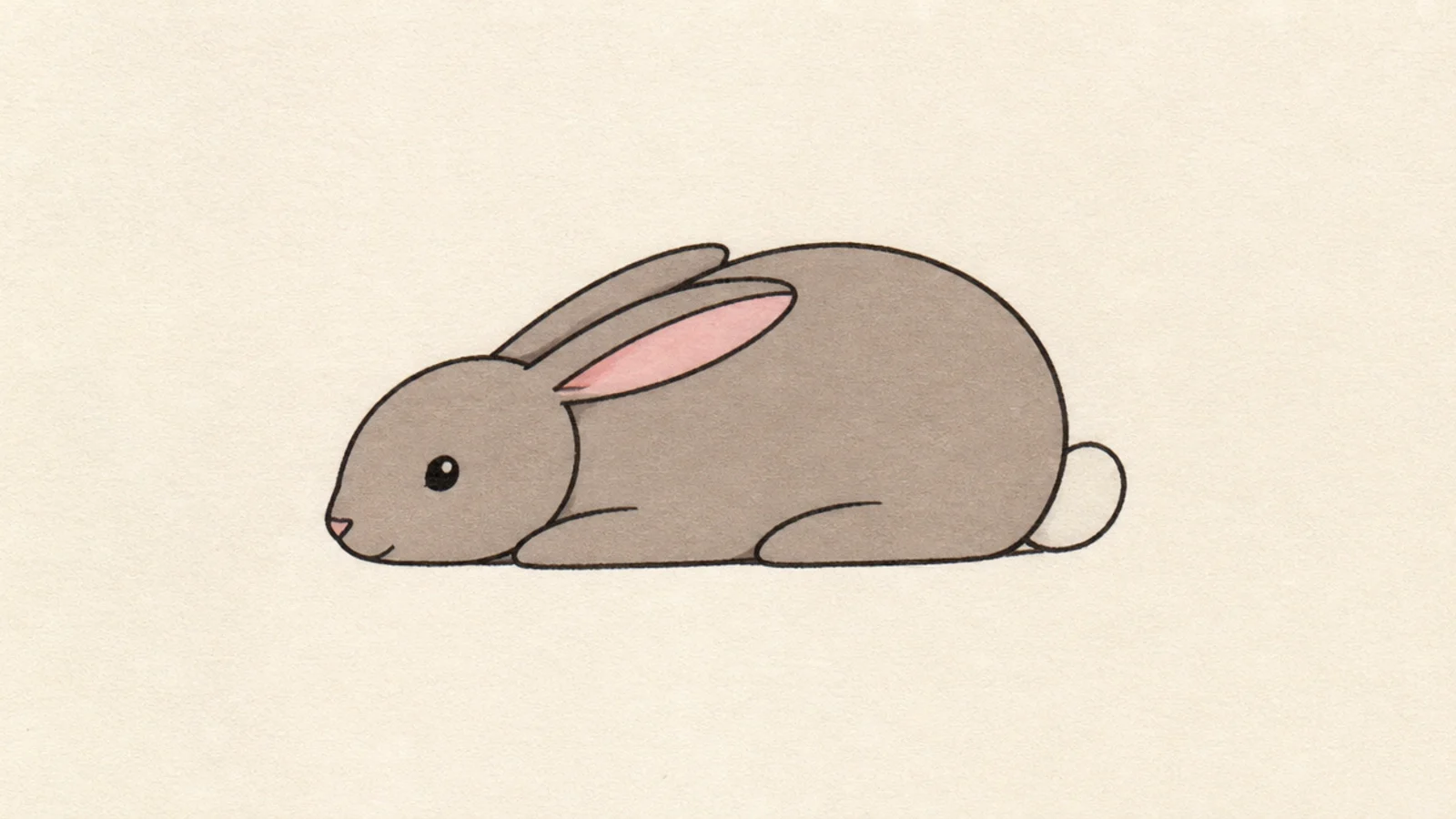
A rabbit crouched low is a compact, cozy full-body shape. The flattened body reads as resting or alert. It is a clean, rounded pose.
Step 1 draw a low flattened oval close to the ground. Step 2 add a small head tucked toward the body. Step 3 lay the ears back and hide most of the legs.
Pro tipFlatten the body low and wide so the crouch looks settled.
AvoidDon’t lift the body up; a low flat shape reads as crouching.
7 Simple Lop Rabbit
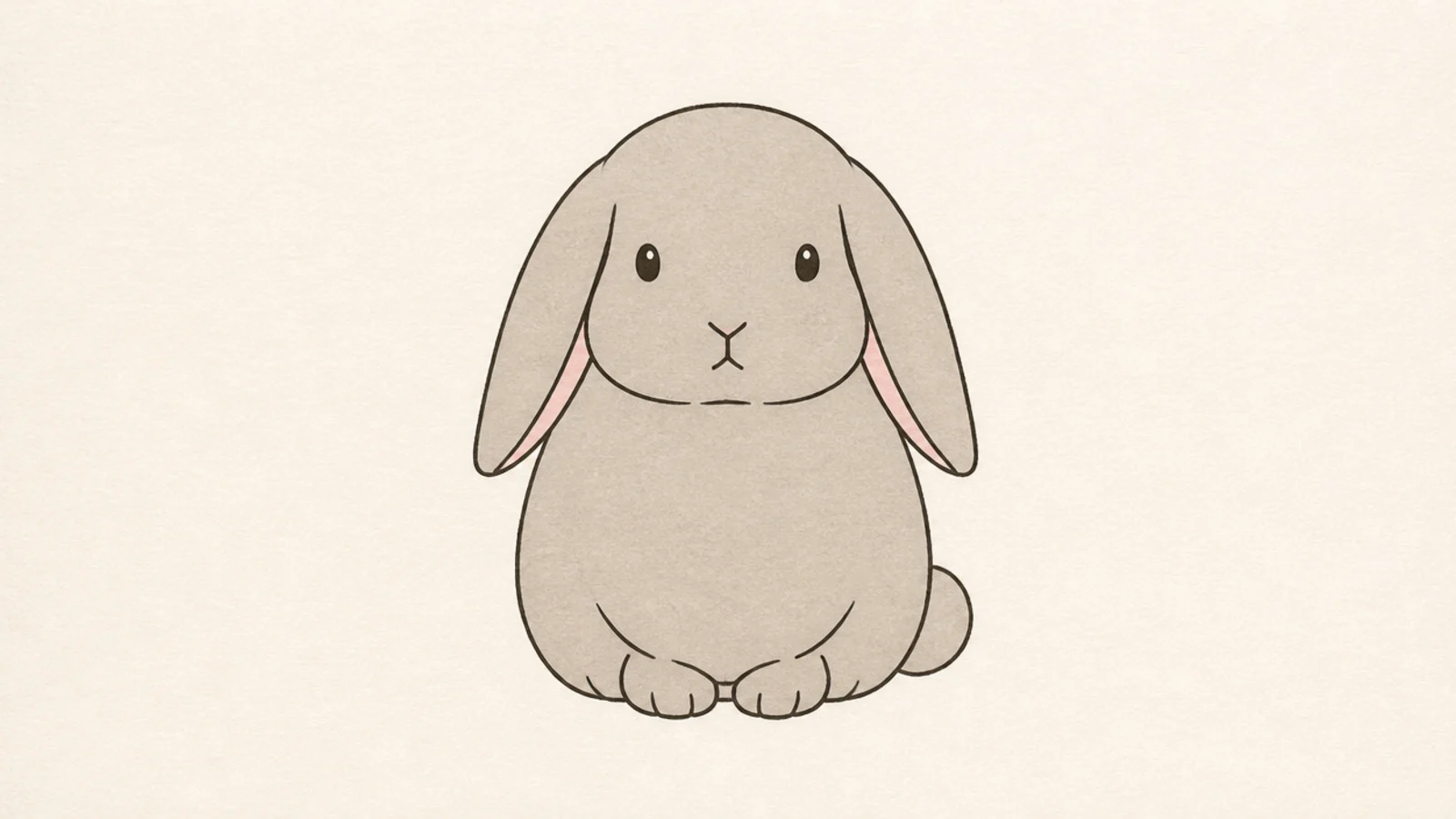
A full-body lop with drooping ears is soft and clean. The hanging ears beside a round body read as a gentle pet. It is a tidy, sweet rabbit.
Step 1 draw a round body and head as one shape. Step 2 add two wide ears hanging down the sides. Step 3 add a simple face and small tucked feet.
Let the drooping ears hang along the body for the soft lop look.
Don’t stand the ears up; the droop defines a lop rabbit.
8 Geometric Simple Rabbit
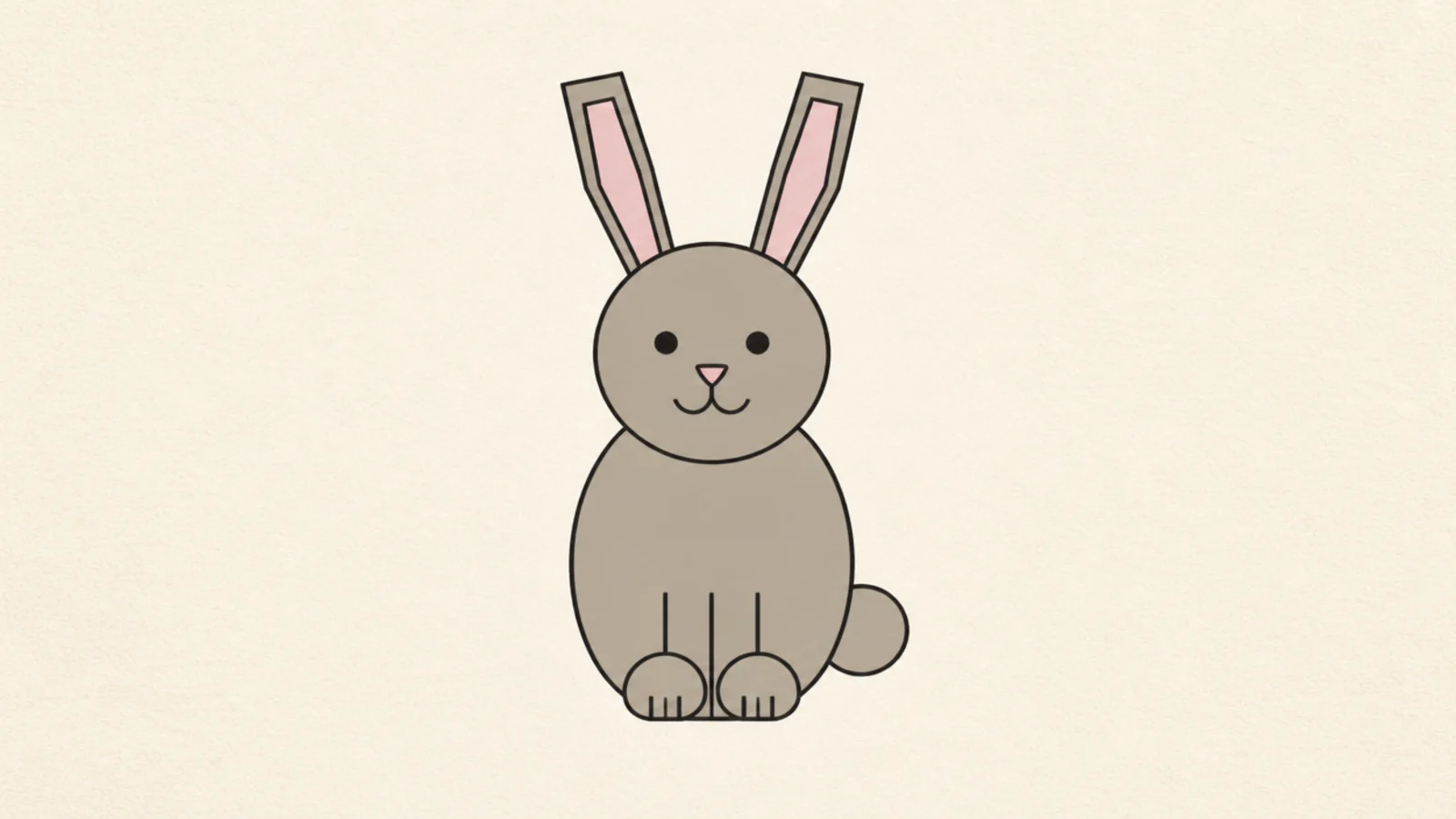
A rabbit built from clear geometric shapes is modern and tidy. Seeing the circle and oval as distinct shapes makes it foolproof. It has a clean, designed look.
Step 1 draw a clean circle head and an oval body. Step 2 add two straight-sided ears. Step 3 keep every shape simple and the joins crisp.
Pro tipLet the geometric shapes stay slightly visible for a clean designed feel.
AvoidDon’t round everything into mush; keep the shapes distinct and clean.
9 Two-Tone Simple Rabbit
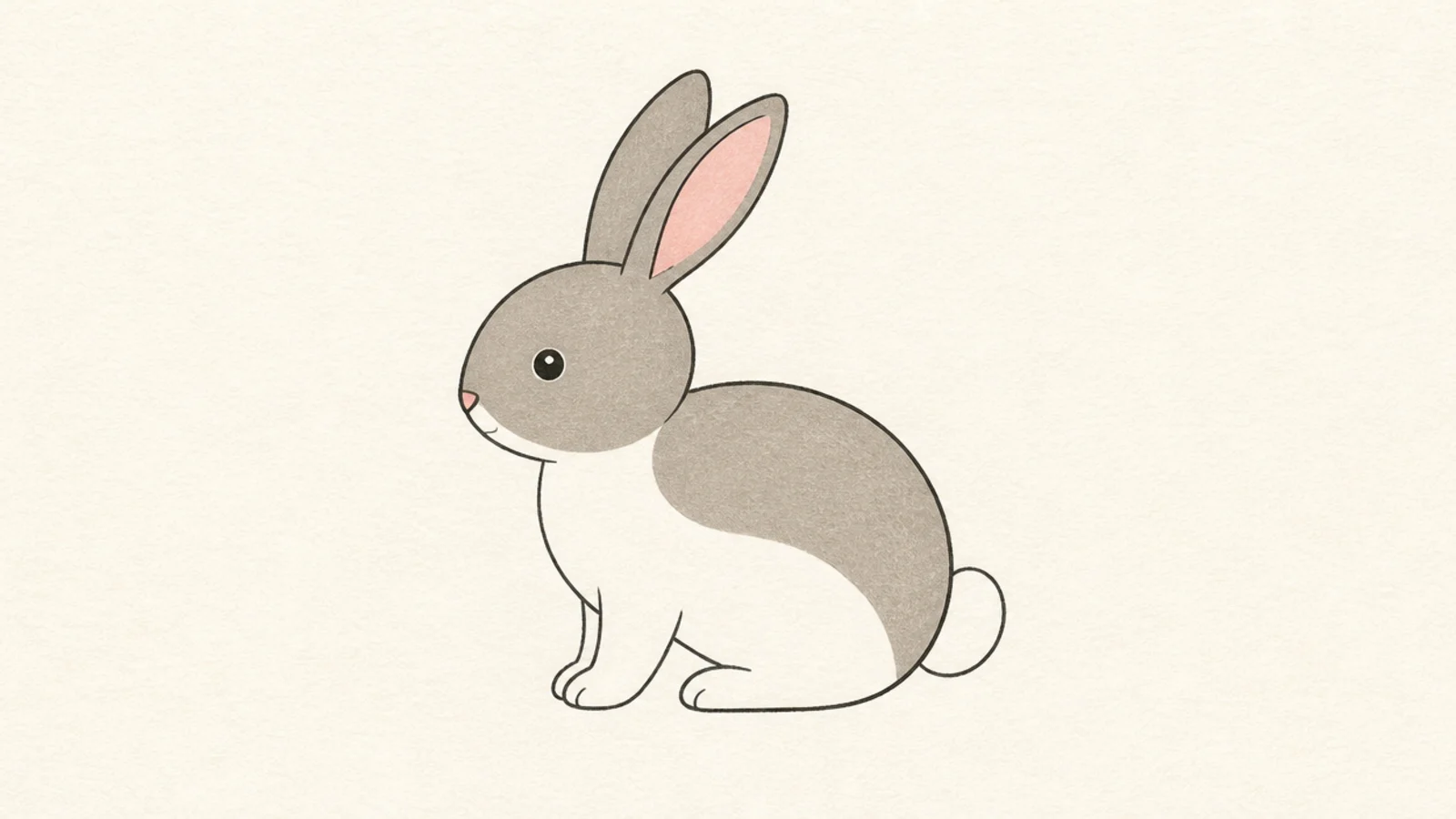
Two flat tones make a simple rabbit look finished with no shading. A grey back and white belly read as a real coat. It stays clean and easy.
Step 1 draw a simple rabbit outline. Step 2 fill the back and head one flat tone. Step 3 leave the belly, feet, and tail white with a clean dividing line.
Curve the color line along the belly for a natural two-tone coat.
Don’t blend the two tones; a crisp flat divide keeps it simple.
10 Rounded Simple Rabbit
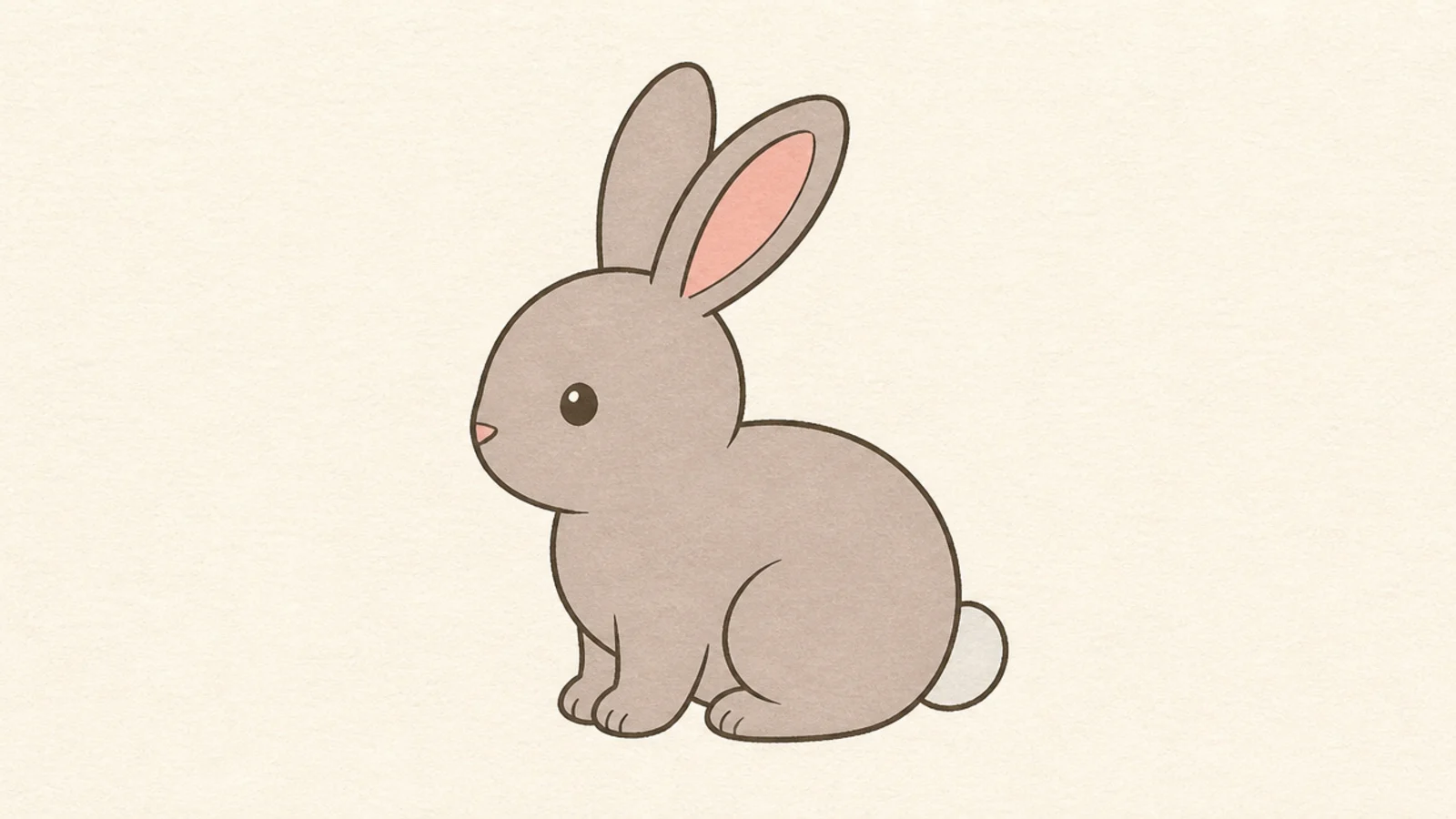
Rounding every shape gives a soft, friendly simple rabbit. The smooth curves feel gentle and clean. It is an easy, cozy version.
Step 1 draw a rounded head and a rounded body. Step 2 add soft rounded ears and feet. Step 3 keep every corner curved and the outline smooth.
Pro tipCurve every edge softly so the whole rabbit feels round and gentle.
AvoidDon’t add sharp points; soft curves are the whole feel here.
11 Simple Lounging Rabbit
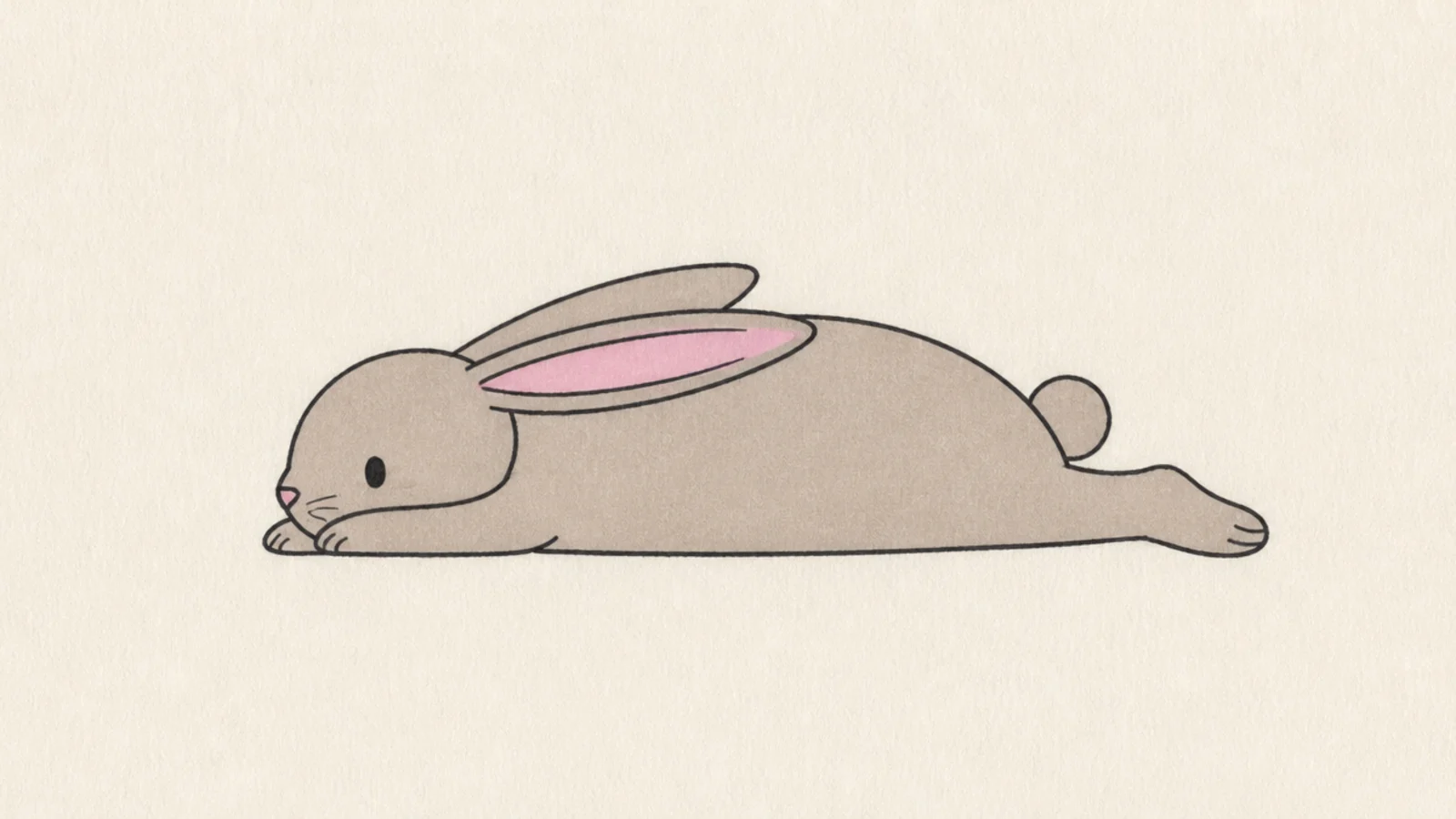
A rabbit lounging in a long stretch is a relaxed full-body shape. The elongated body is a clean change from compact poses. It reads as a lazy, content bunny.
Step 1 draw a long low body stretched horizontally. Step 2 add a head resting at one end. Step 3 lay the ears back and let the legs stretch simply.
Draw the body long and low to sell the relaxed lounge.
Don’t compact the body; the length is what makes it lounge.
12 Simple Alert Rabbit
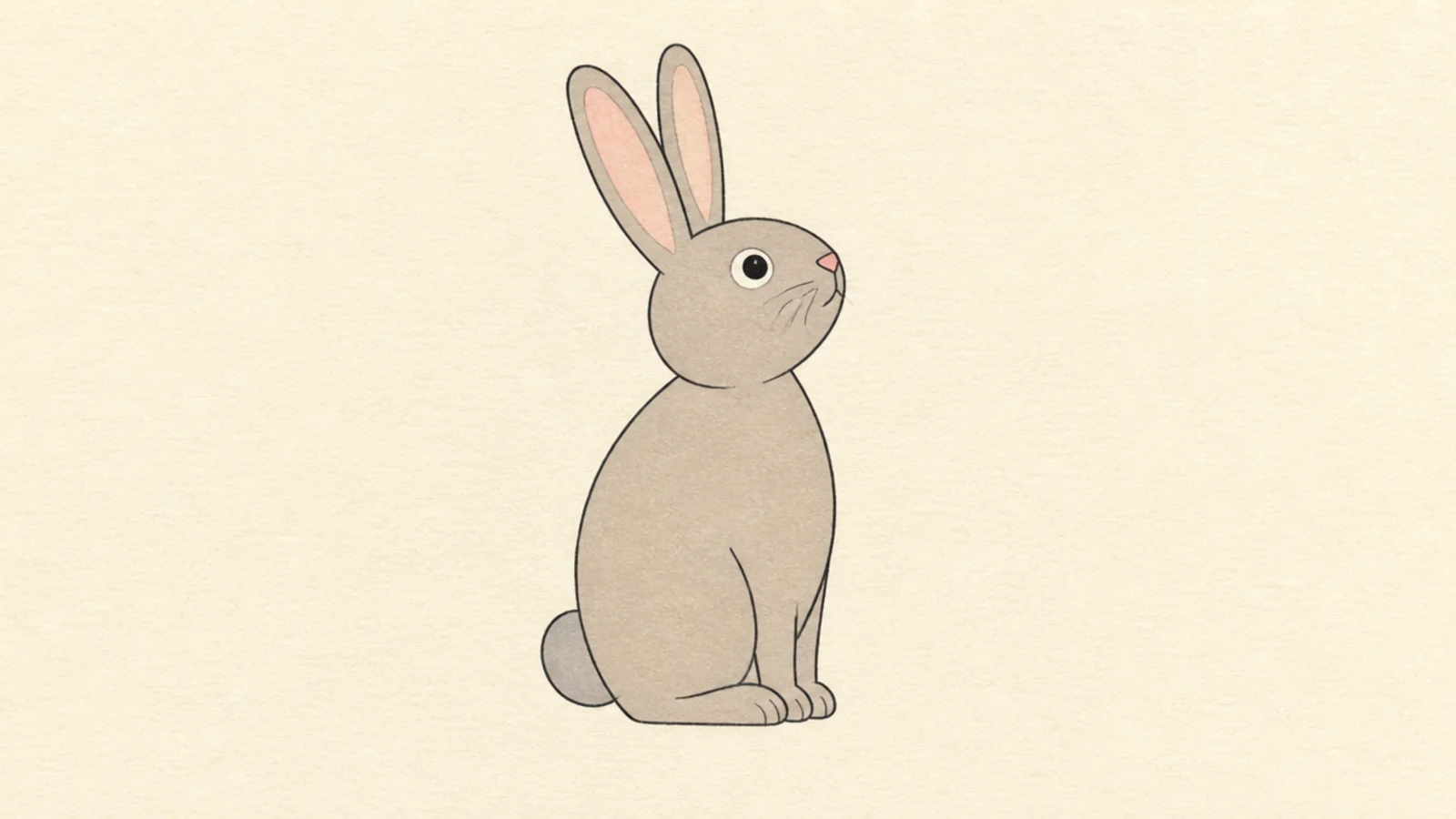
An alert rabbit sitting tall with ears up is a clean, upright pose. The vertical posture and straight ears read as watchful. It is a tidy, lively bunny.
Step 1 draw a tall vertical body oval. Step 2 add a lifted head with two straight ears. Step 3 add a single wide eye and tucked feet.
Pro tipPoint both ears straight up and lift the head to show alertness.
AvoidDon’t slump the body; an upright posture reads as alert.
13 Simple Tail-Focus Rabbit
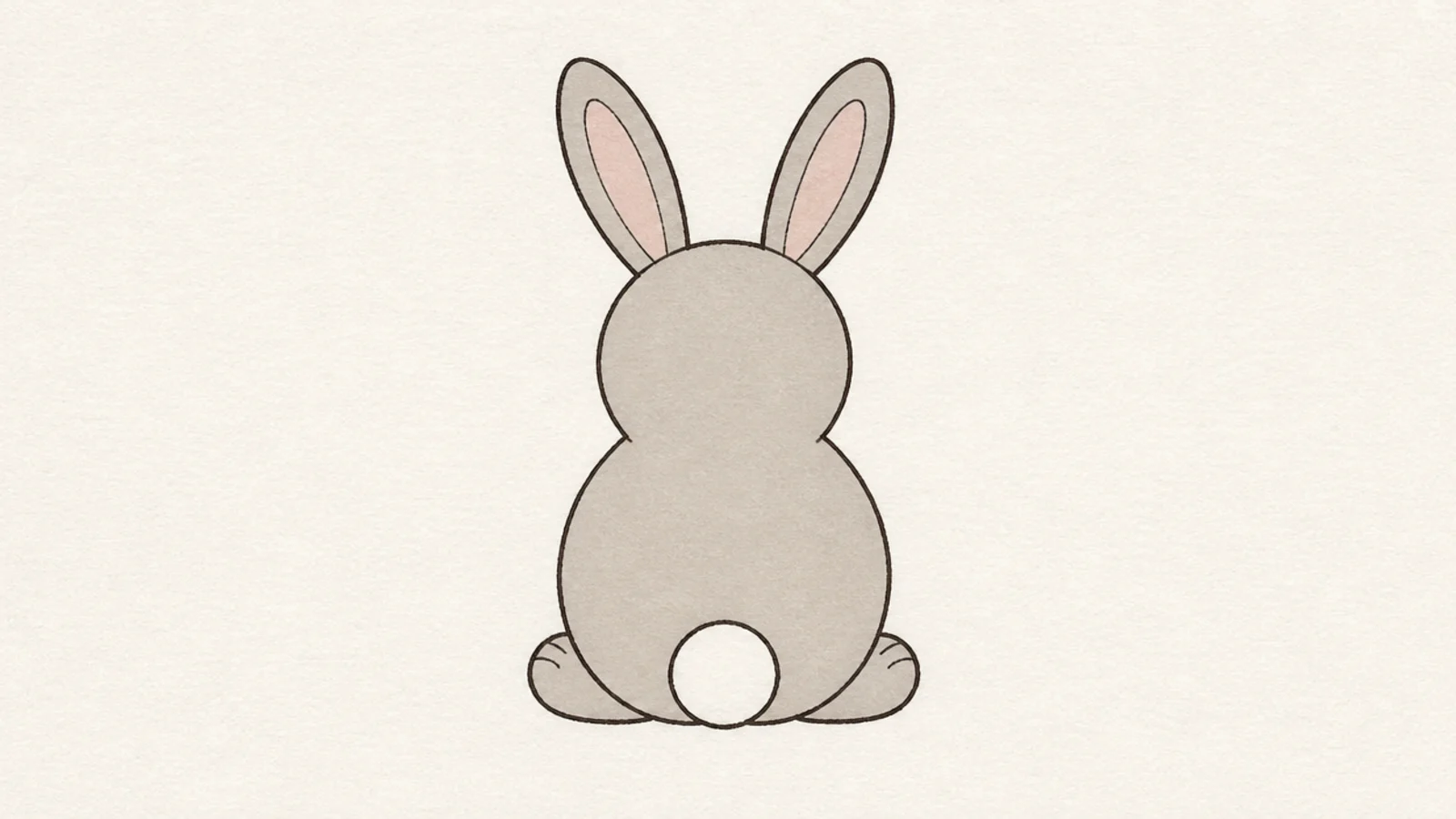
A back-view rabbit puts the clean round tail front and center. It is a fresh angle that stays very simple. The little tail is the whole charm.
Step 1 draw a rounded body from behind. Step 2 add two ears at the top and hind feet at the base. Step 3 add a simple round tail in the center.
Keep the tail a clean round shape so it reads instantly from behind.
Don’t add a face; a back view shows only ears, feet, and tail.
14 Simple Baby Rabbit
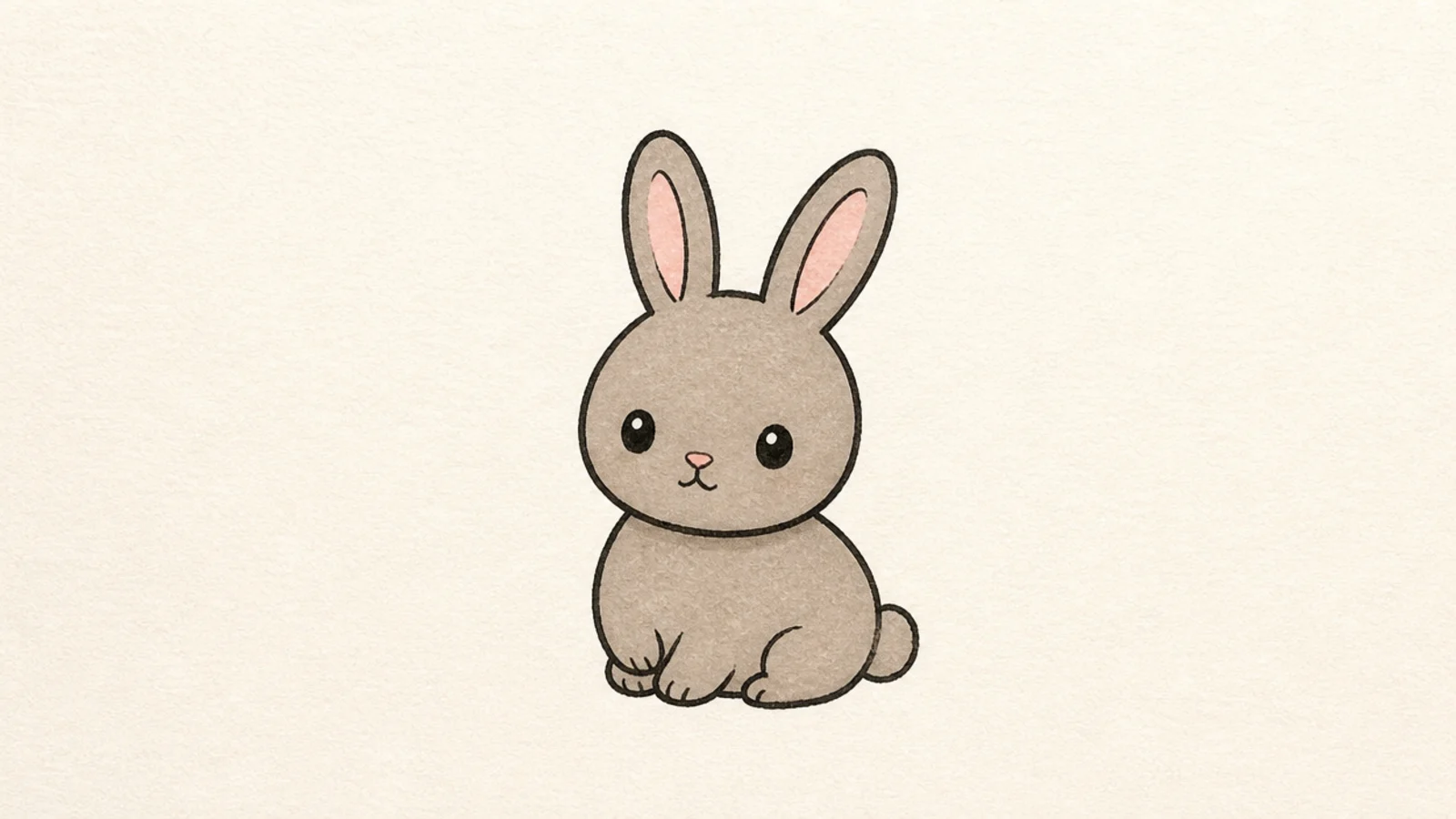
A baby rabbit is a small, round, short-eared version that reads as young. The compact shape and stubby ears are simple and sweet. It is a clean little bunny.
Step 1 draw a small round body and a proportionally big head. Step 2 add short rounded ears. Step 3 add a tiny face and small feet.
Pro tipKeep the ears short and the head a little big to read as a baby.
AvoidDon’t draw long ears; short ears make it look young.
15 Simple Front-View Rabbit
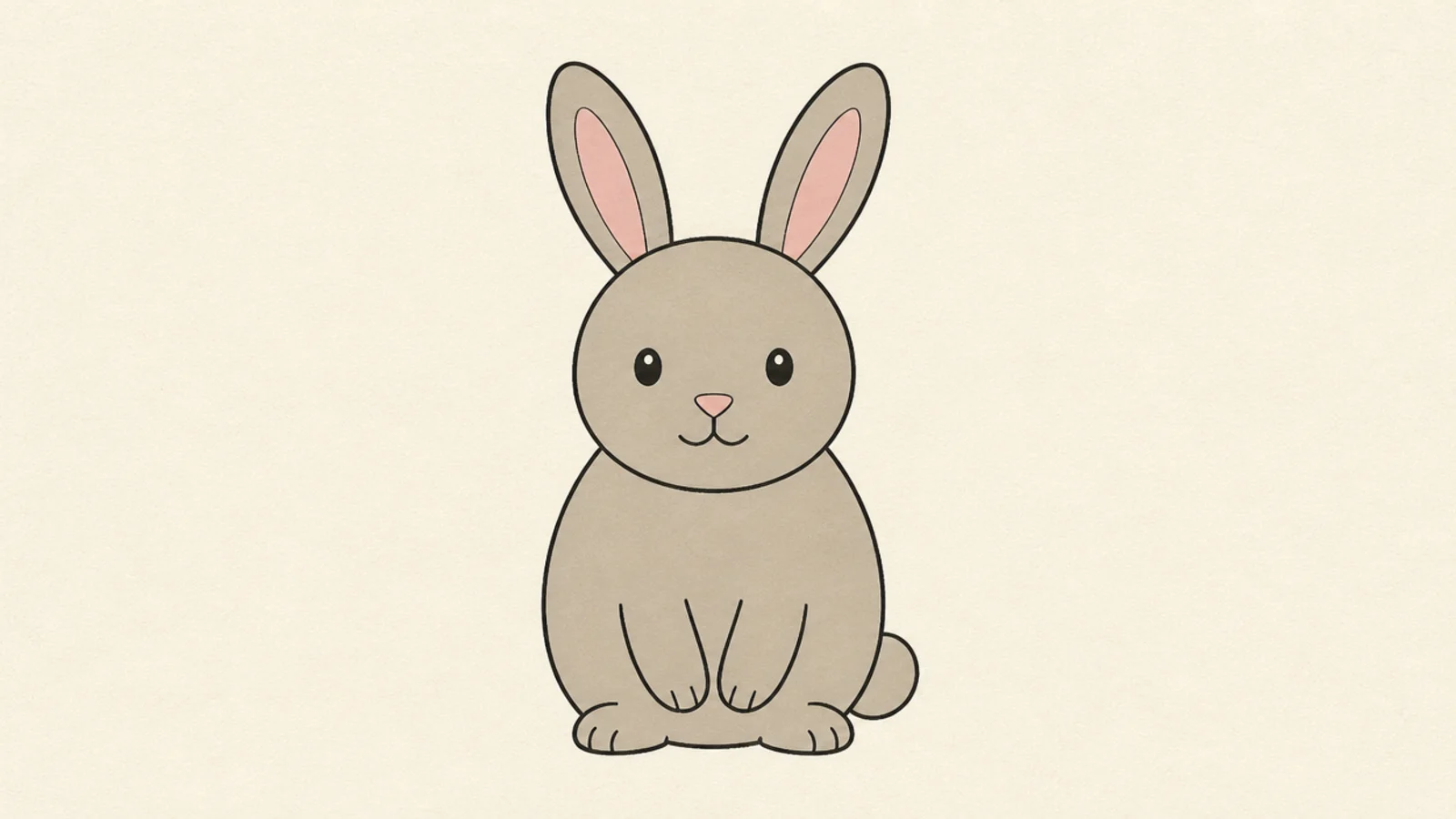
A front-facing rabbit is symmetrical and clean. Both ears and eyes show, balanced left and right. It is a tidy, friendly full-body view.
Step 1 draw a rounded body and head facing forward. Step 2 add two symmetrical ears. Step 3 add two eyes, a nose, and two front paws.
Keep the two ears and eyes even for a balanced front view.
Don’t lopside the ears; symmetry is what makes the front view clean.
16 Simple Three-Quarter Rabbit
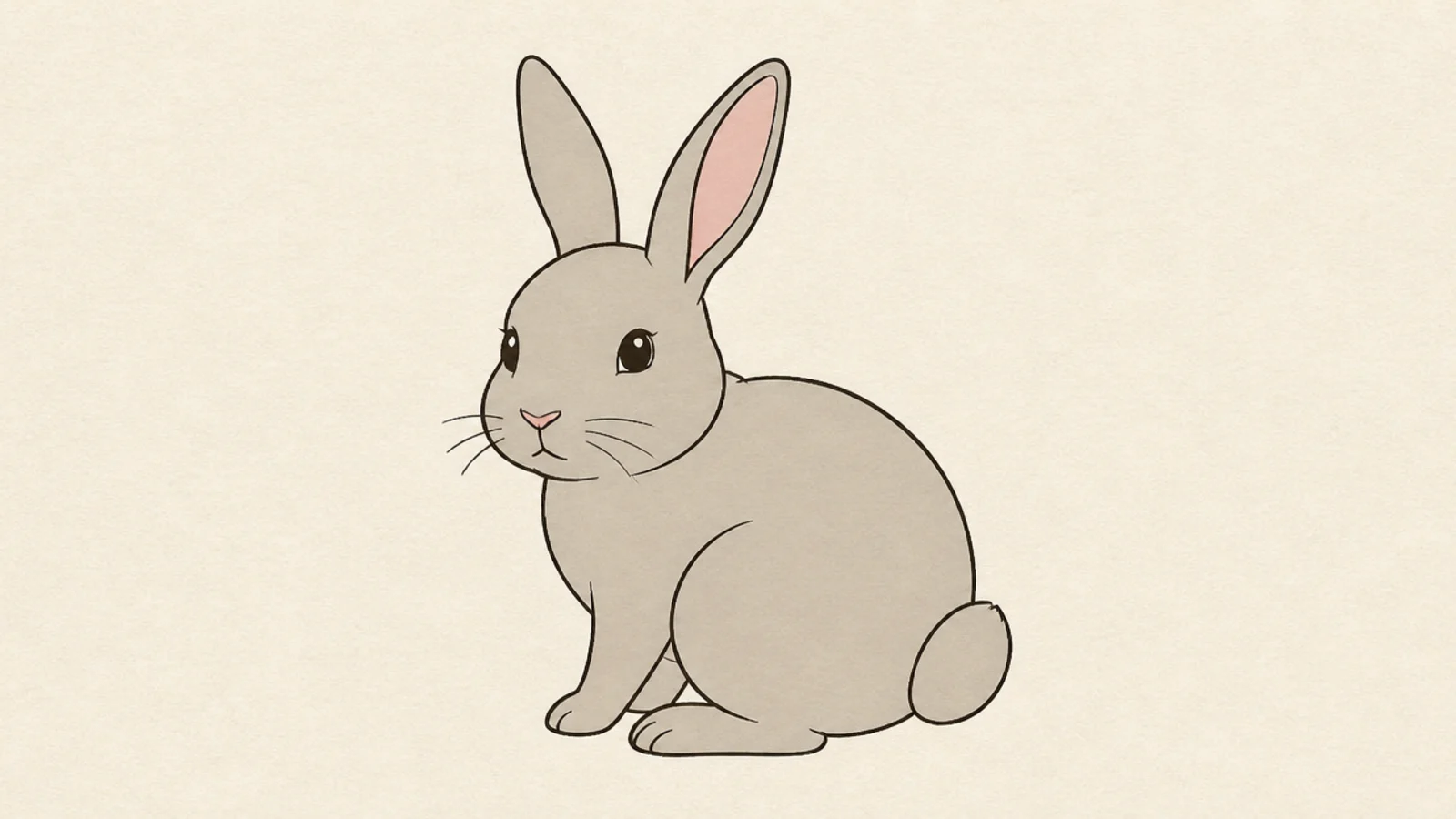
A three-quarter turn shows the face and one side of the body for a natural look. It adds dimension while staying simple. It reads as lifelike but clean.
Step 1 draw the body turned partly away. Step 2 turn the head toward you. Step 3 show the far ear slightly behind the near one.
Pro tipMake the far side of the body a little narrower for a sense of turn.
AvoidDon’t draw both sides equal; the turned angle needs a narrower far side.
17 Simple Running Rabbit
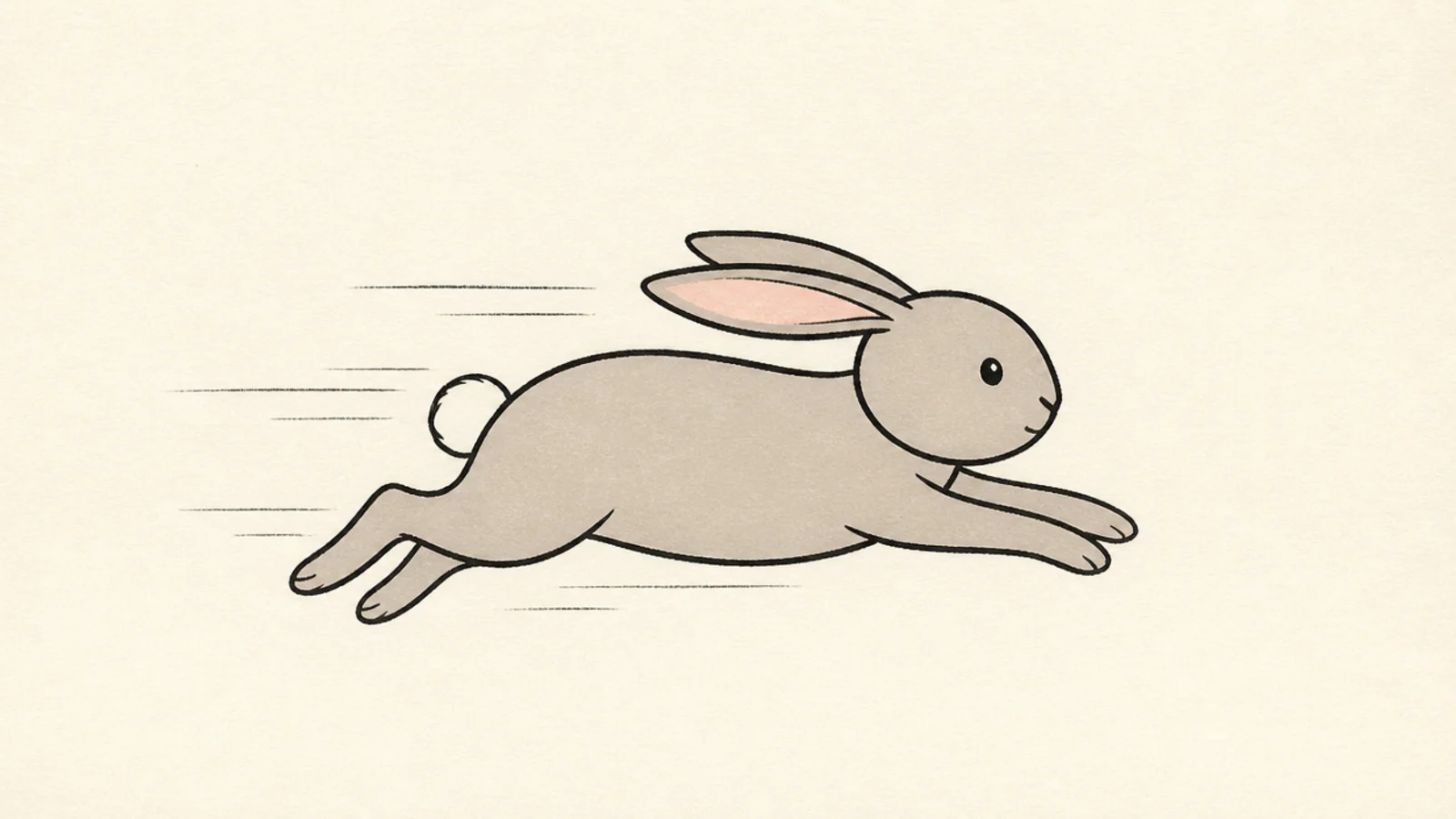
A running rabbit with legs stretched front and back shows clean speed. The extended pose is dynamic yet simple. It captures a quick dash.
Step 1 draw a stretched body leaning forward. Step 2 reach the front legs ahead and the back legs behind. Step 3 pin the ears back and add a couple of speed lines.
Stretch the front and back legs far apart to show the run.
Don’t bunch the legs; wide-apart legs read as running.
18 Simple Eating Rabbit
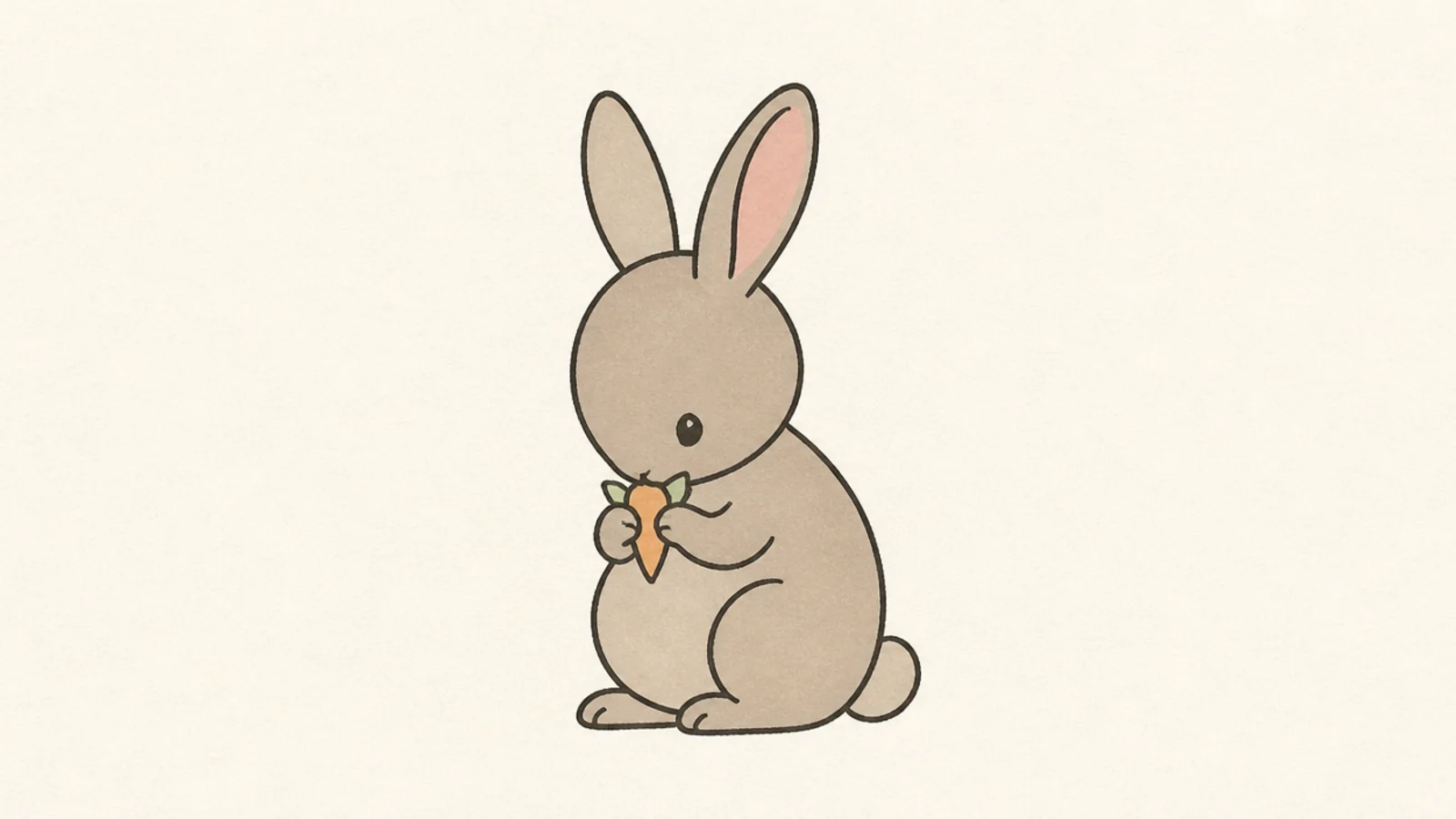
A rabbit holding food to its mouth is a clean action pose. The raised paws and small food give it a moment. It reads as a busy, happy bunny.
Step 1 draw a simple sitting rabbit. Step 2 raise two front paws to the mouth. Step 3 add a small carrot or leaf held between them.
Pro tipTilt the head down toward the food so the eating reads clearly.
AvoidDon’t hide the paws; showing them holding food sells the action.
19 Simple Cleaning Rabbit
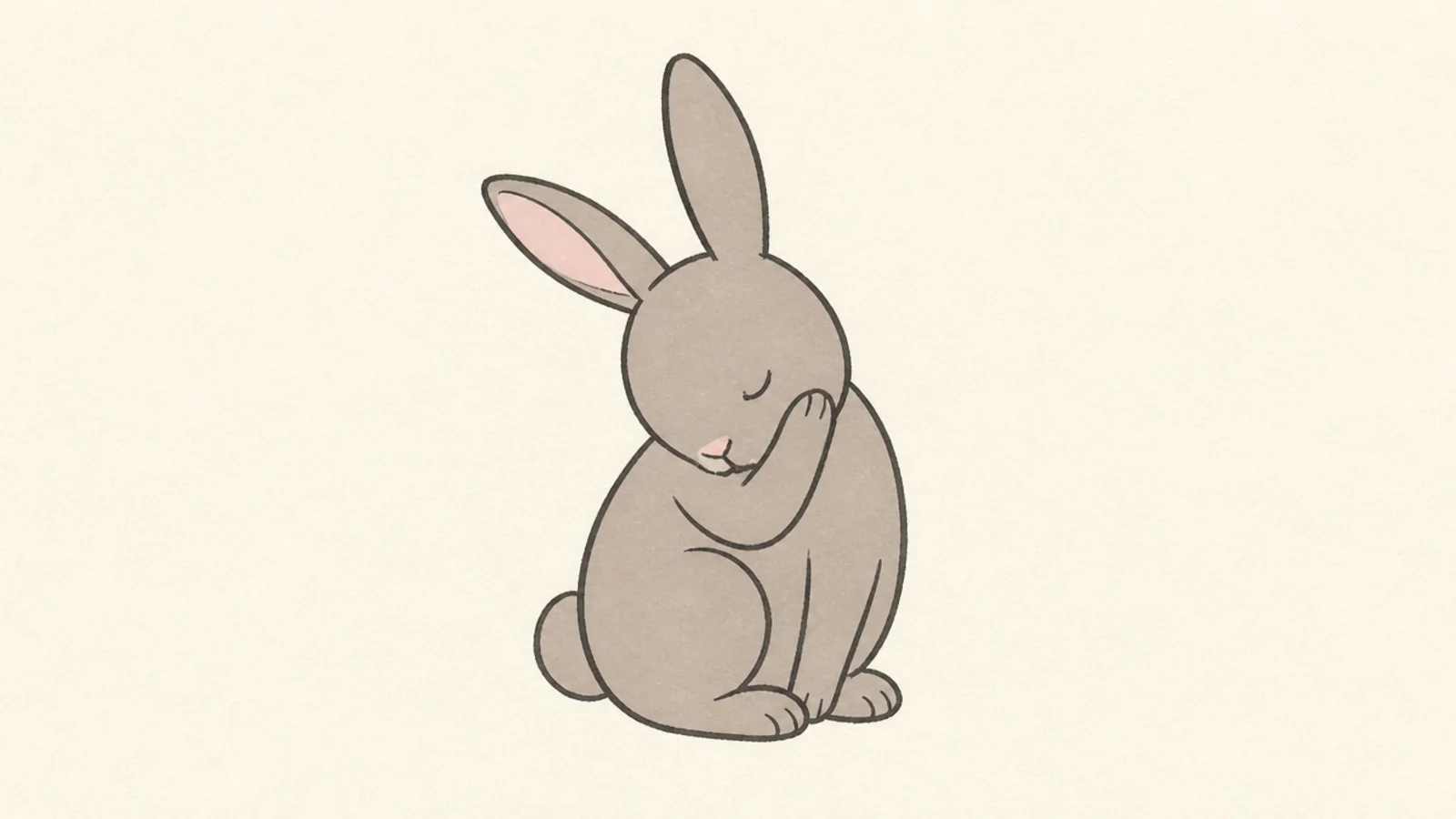
A rabbit grooming with a paw to its face is an endearing simple pose. The lifted paw adds a touch of story. It reads as a natural bunny habit.
Step 1 draw a simple sitting rabbit. Step 2 lift one paw to the side of the face. Step 3 tilt the head slightly and close the eye.
Pro tipBring the paw right up to the cheek for a clear grooming look.
AvoidDon’t hold the paw away from the face; contact sells the grooming.
20 Block-Shape Simple Rabbit
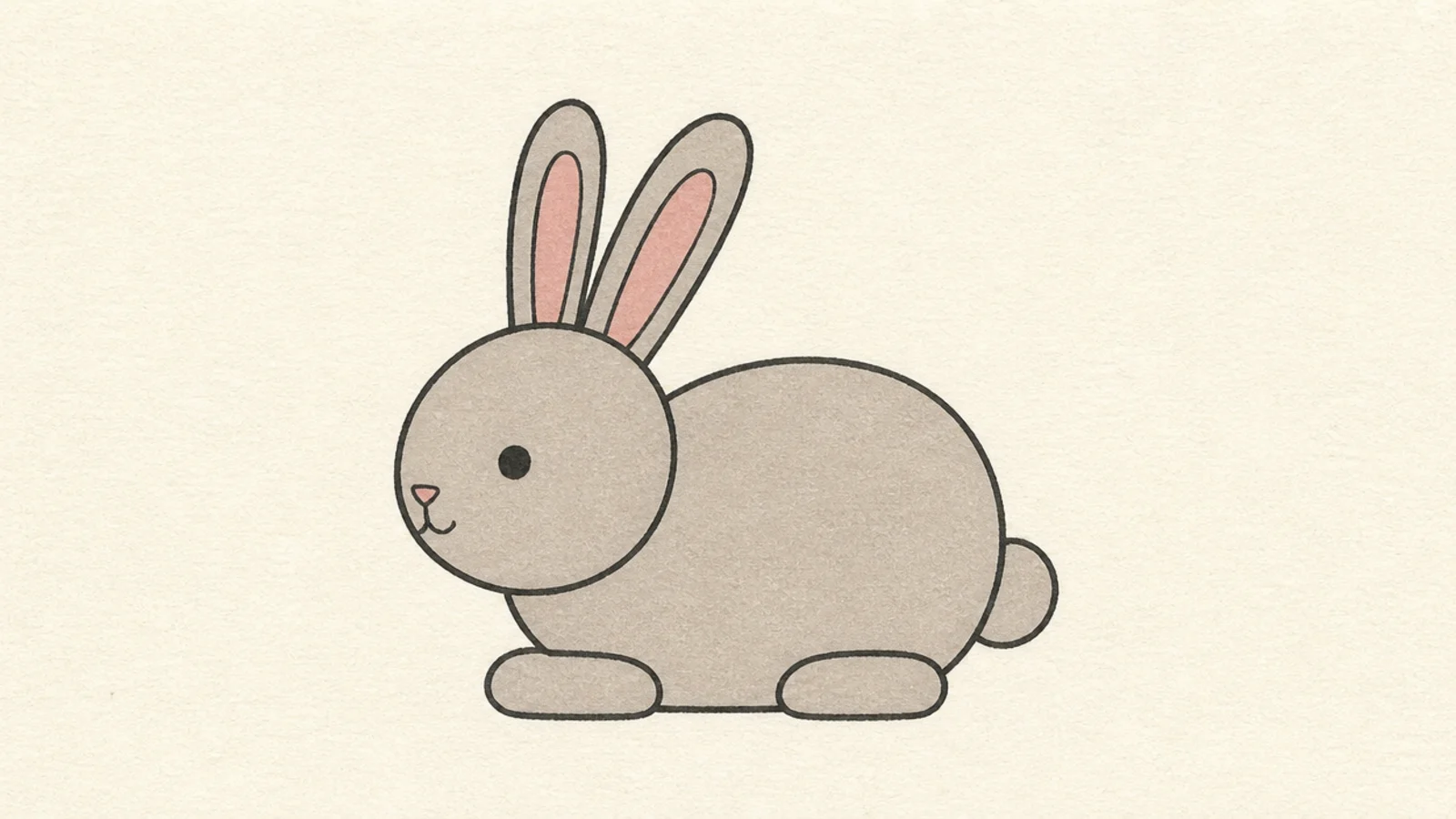
A rabbit built from soft rounded blocks is bold and graphic. The chunky shapes read clearly and stay simple. It has a clean, modern feel.
Step 1 draw a rounded rectangle body. Step 2 add a rounded square head and two block ears. Step 3 keep the corners soft and the shapes flat.
Pro tipRound the corners of the blocks so they stay soft but still chunky.
AvoidDon’t add curves everywhere; the block shapes are the graphic look.
21 Simple Rabbit Silhouette
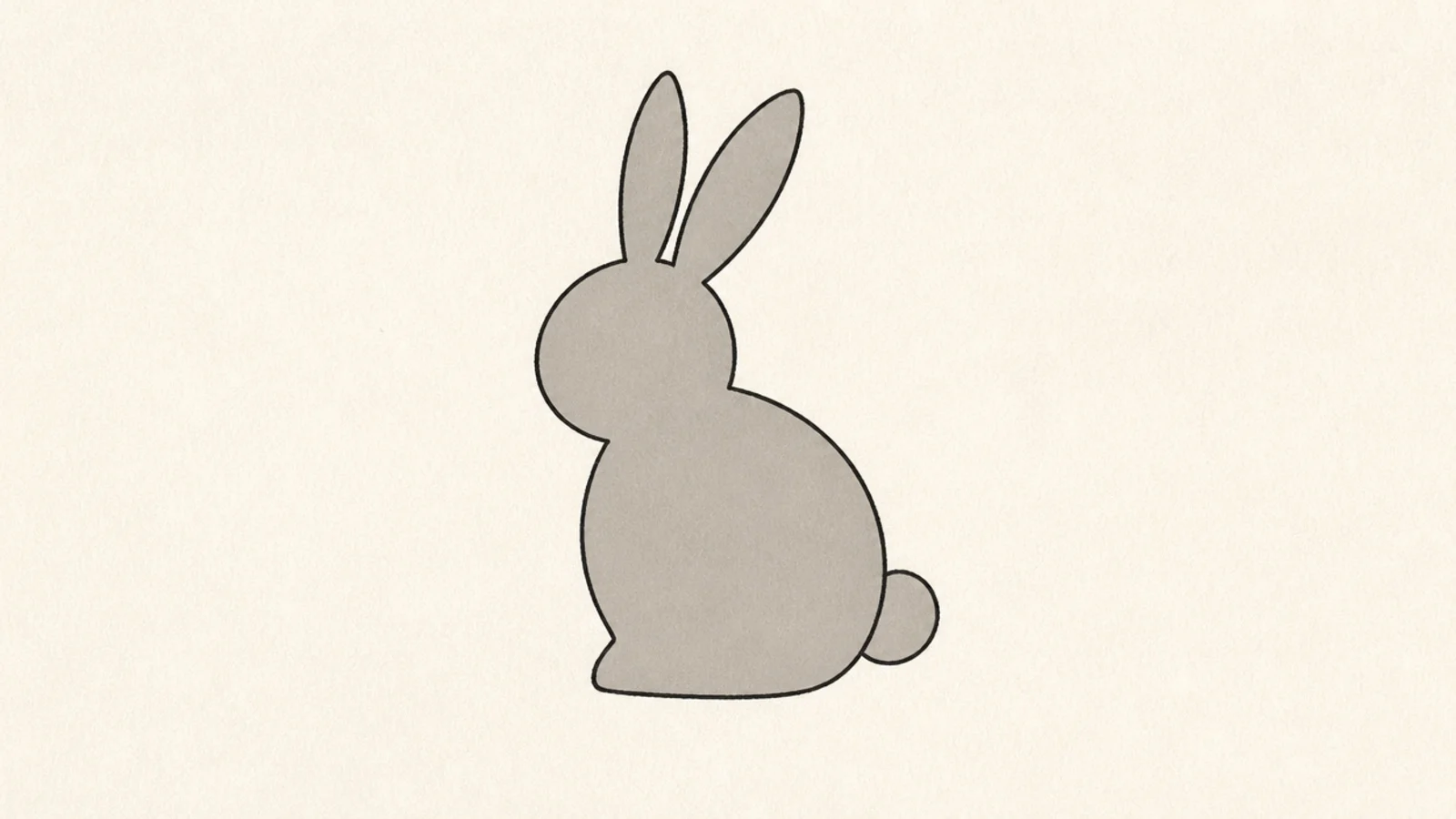
A solid filled rabbit is bold, clean, and forgiving. The strong shape reads clearly with no interior detail. It looks graphic and simple.
Step 1 draw a clean rabbit outline. Step 2 fill it solid with one color. Step 3 keep the ear and tail edges crisp.
Pro tipKeep the outline shape clean since the silhouette shows only the edge.
AvoidDon’t add interior lines; a silhouette is a flat solid shape.
22 Simple Outline Rabbit
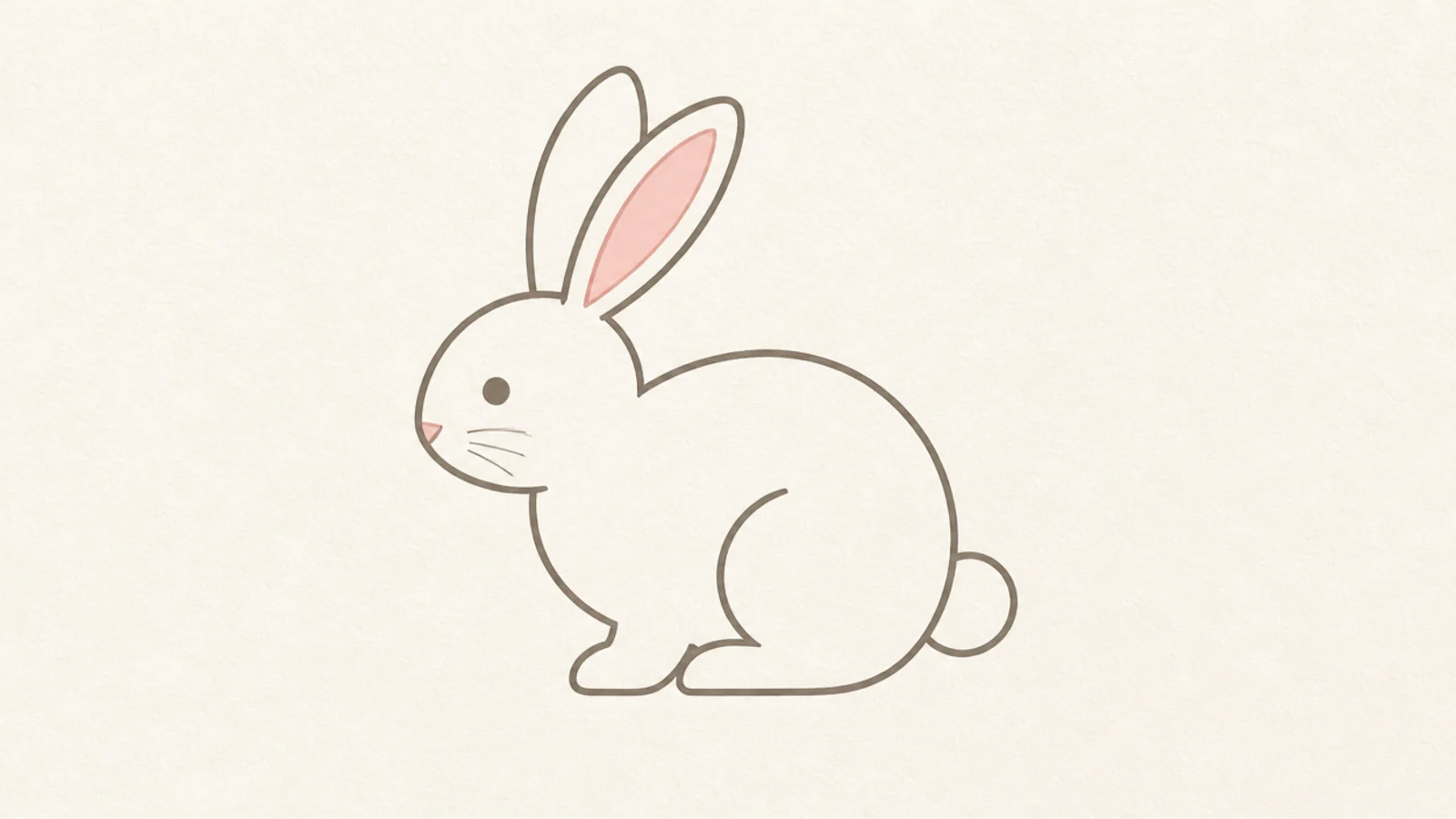
A crisp single outline with no fill looks clean and modern, like a coloring page. It puts all the focus on the shape. It is the tidiest simple rabbit.
Step 1 sketch the rabbit lightly. Step 2 trace it once with a steady even line. Step 3 erase the pencil and leave it unfilled.
Pro tipUse one even line weight so the outline looks crisp and intentional.
AvoidDon’t over-trace; one clean confident pass looks best.
23 Simple Rabbit Pair
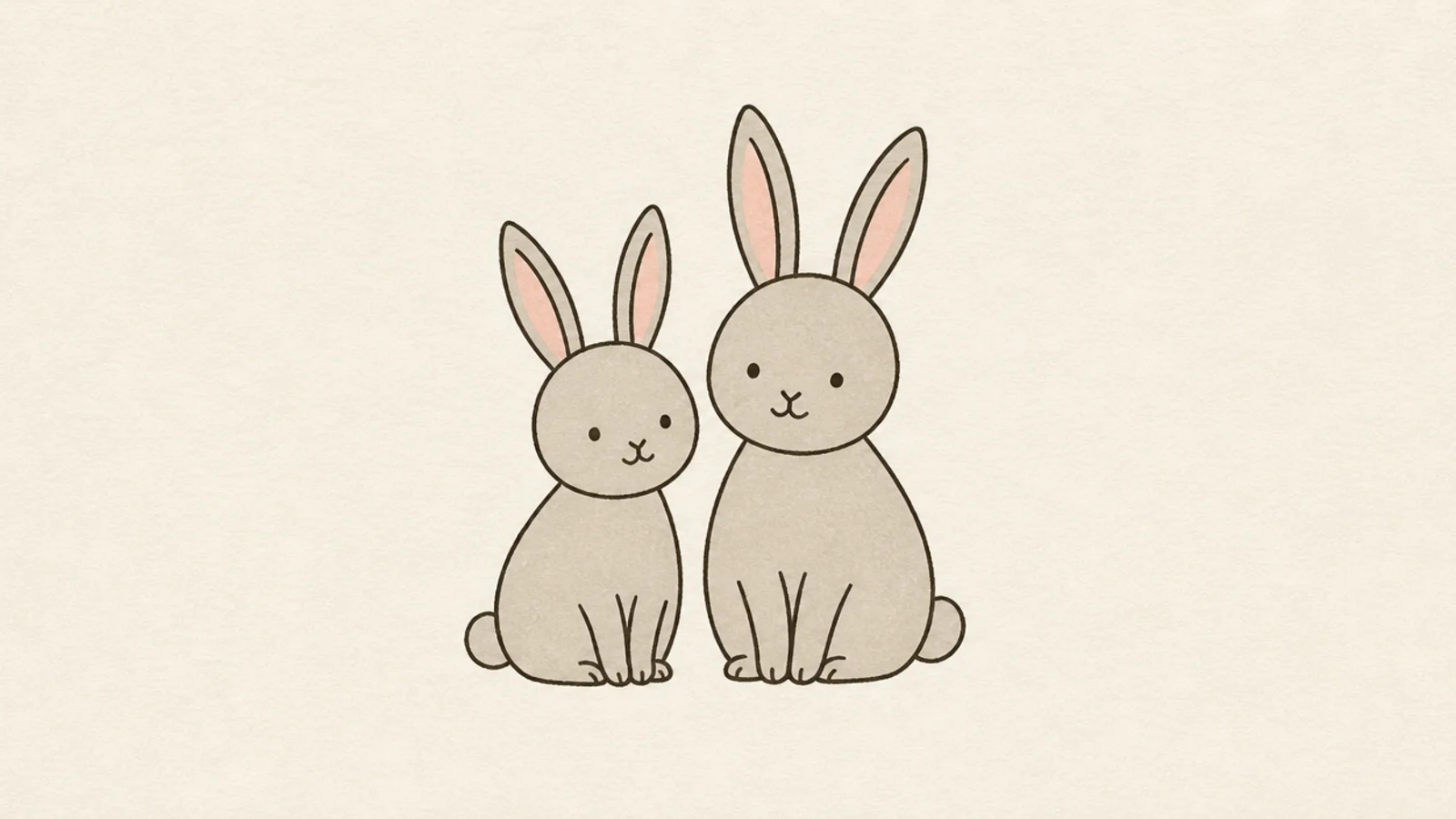
Two simple rabbits side by side make a tidy little pair. Grouping them looks more finished than one alone. It is an easy way to fill a page cleanly.
Step 1 draw one clean sitting rabbit. Step 2 draw a second beside it, slightly smaller. Step 3 lean them a little toward each other.
Vary the sizes a touch so the pair looks natural, not cloned.
Don’t draw them identical; a small size difference feels real.
24 Simple Fluffy Rabbit
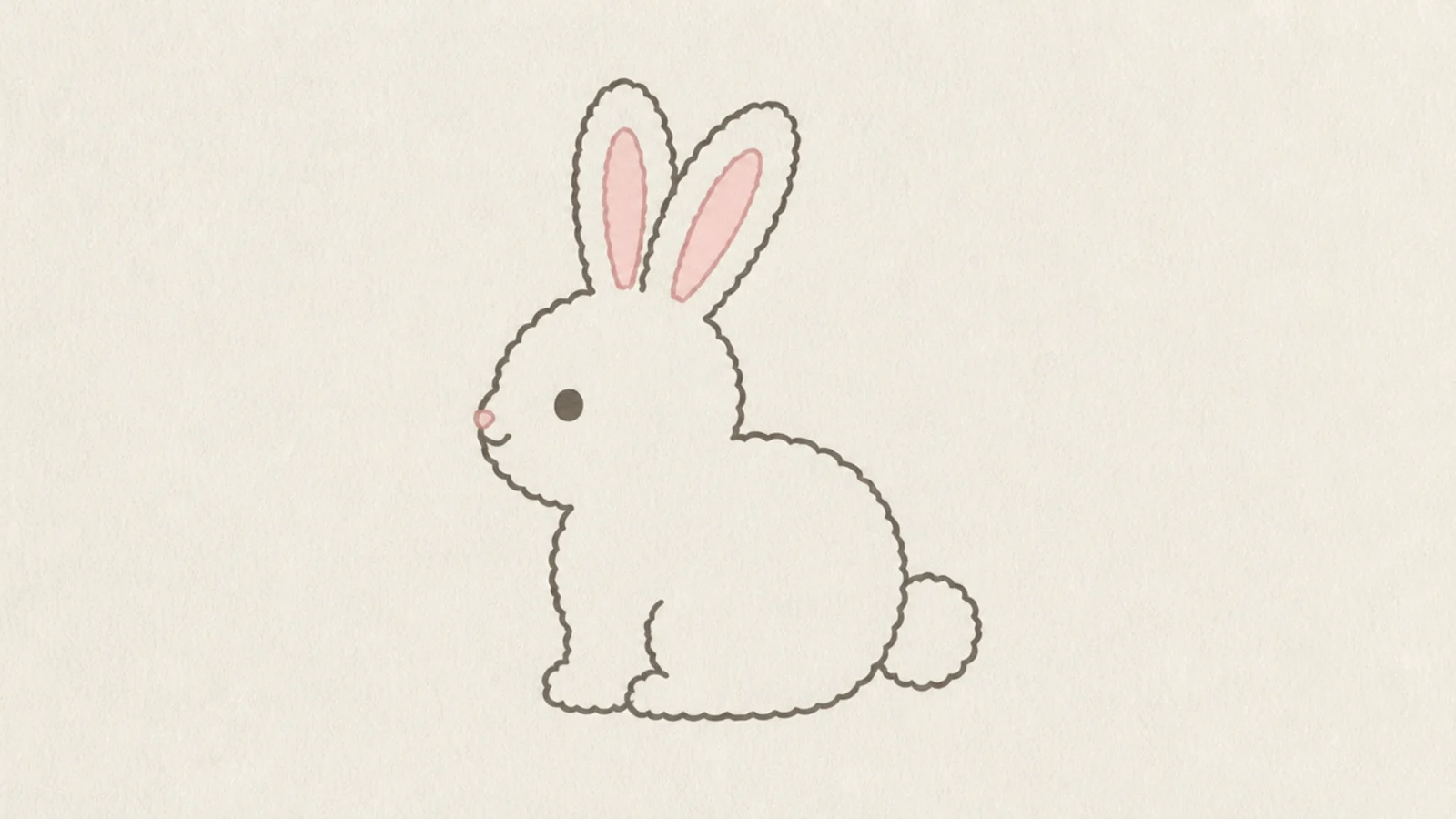
A simple rabbit with a bumpy outline reads as soft and fluffy. The scalloped edge suggests fur without any shading. It stays clean but feels cozy.
Step 1 draw the rabbit shape with a soft bumpy outline. Step 2 keep the inside plain. Step 3 add a small face and a fluffy round tail.
Pro tipUse gentle scallop bumps around the edge to suggest fluff simply.
AvoidDon’t add interior fur strokes; the bumpy edge does the work.
25 Simple Rabbit Scene
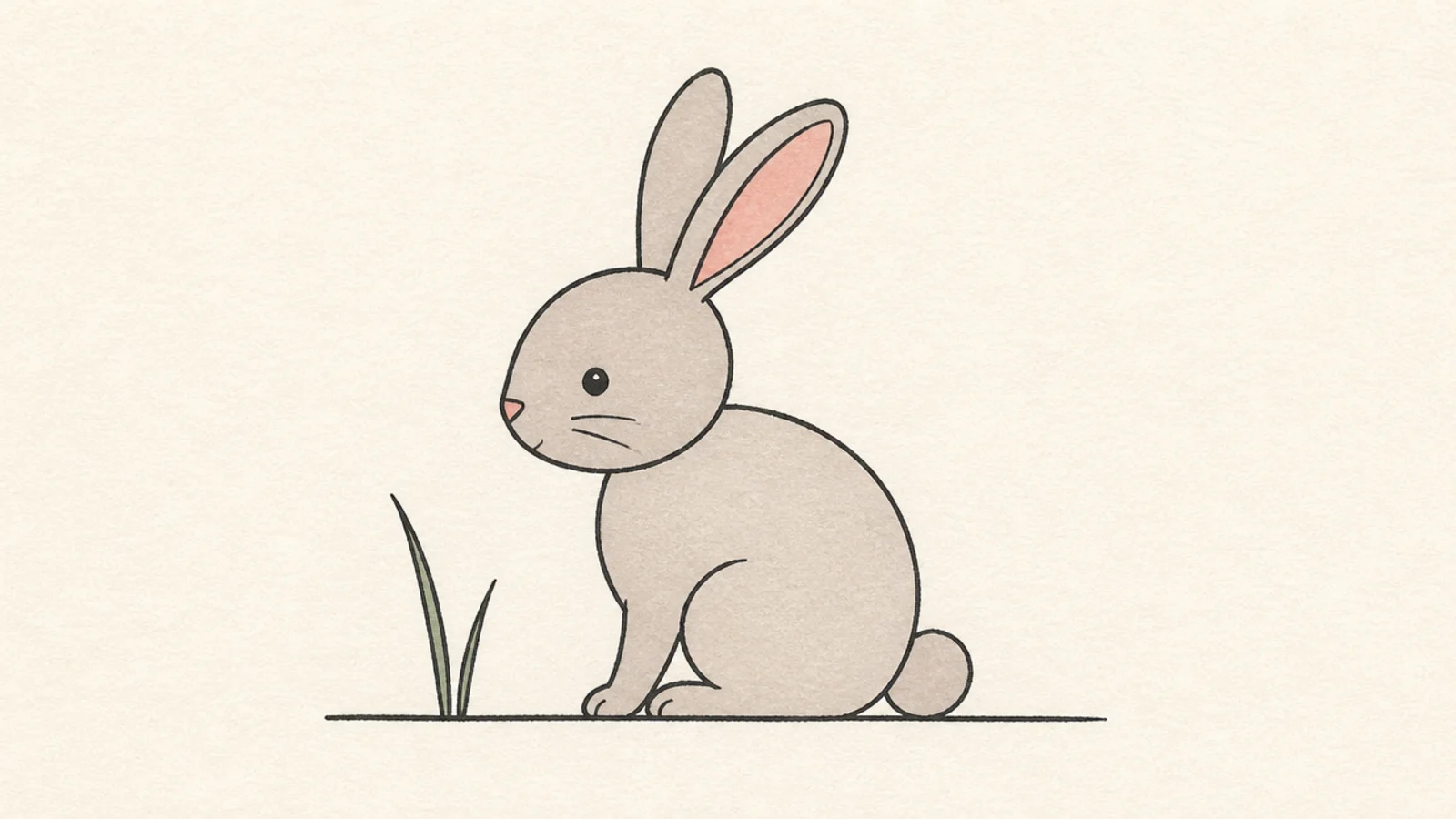
A rabbit sitting on a ground line beside a little plant makes a clean, complete scene. A few extra lines ground the rabbit. It is a tidy way to close the list.
Step 1 draw a simple sitting rabbit. Step 2 add a straight ground line under it. Step 3 add a small plant or two blades of grass beside it.
Set the rabbit firmly on the ground line so the scene feels grounded.
Don’t clutter the scene; one small plant keeps it simple.