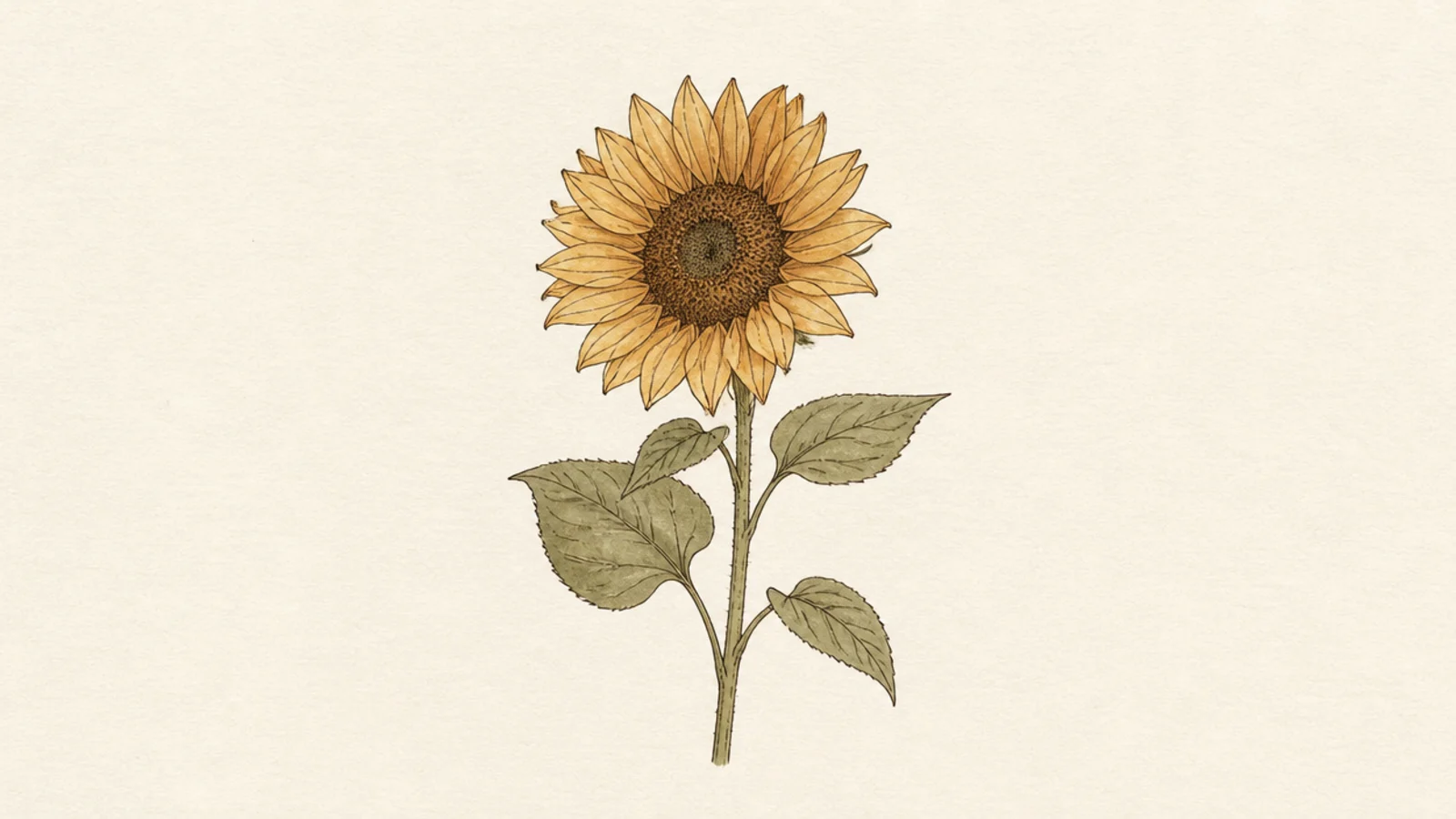
1 Vintage Botanical Sunflower
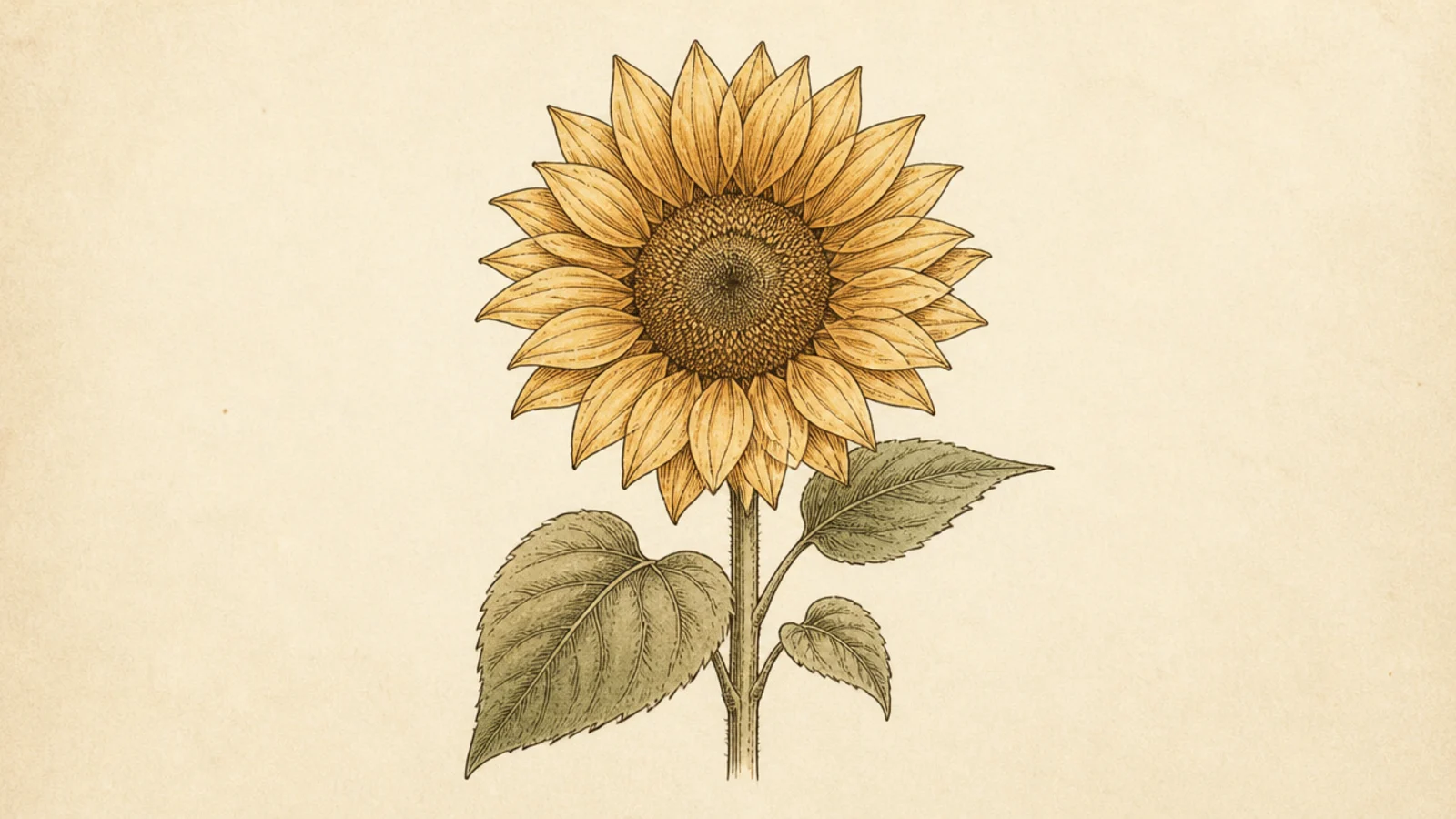
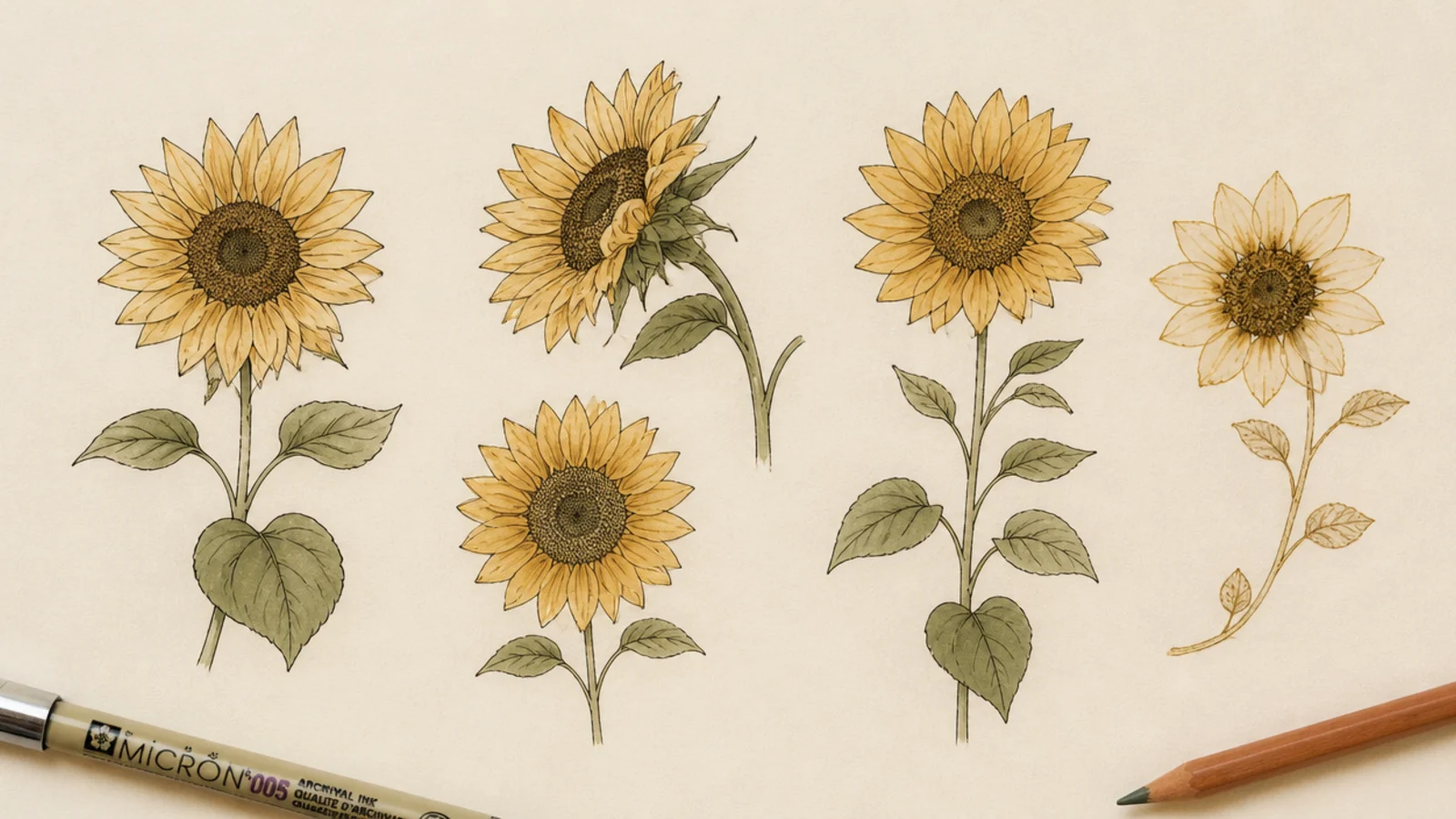
Drawing the sunflower in sepia with fine hatching mimics old botanical prints. The aged tone feels classic and refined. It is a sophisticated aesthetic.
Step 1 draw the sunflower in brown fineliner. Step 2 add fine hatching for soft shadow. Step 3 use a sepia or cream wash to age it.
Add fine, even hatching like an engraving for that vintage illustration look.
Don’t use bright color; muted sepia and cream make it feel vintage.
2 Minimal Line Sunflower
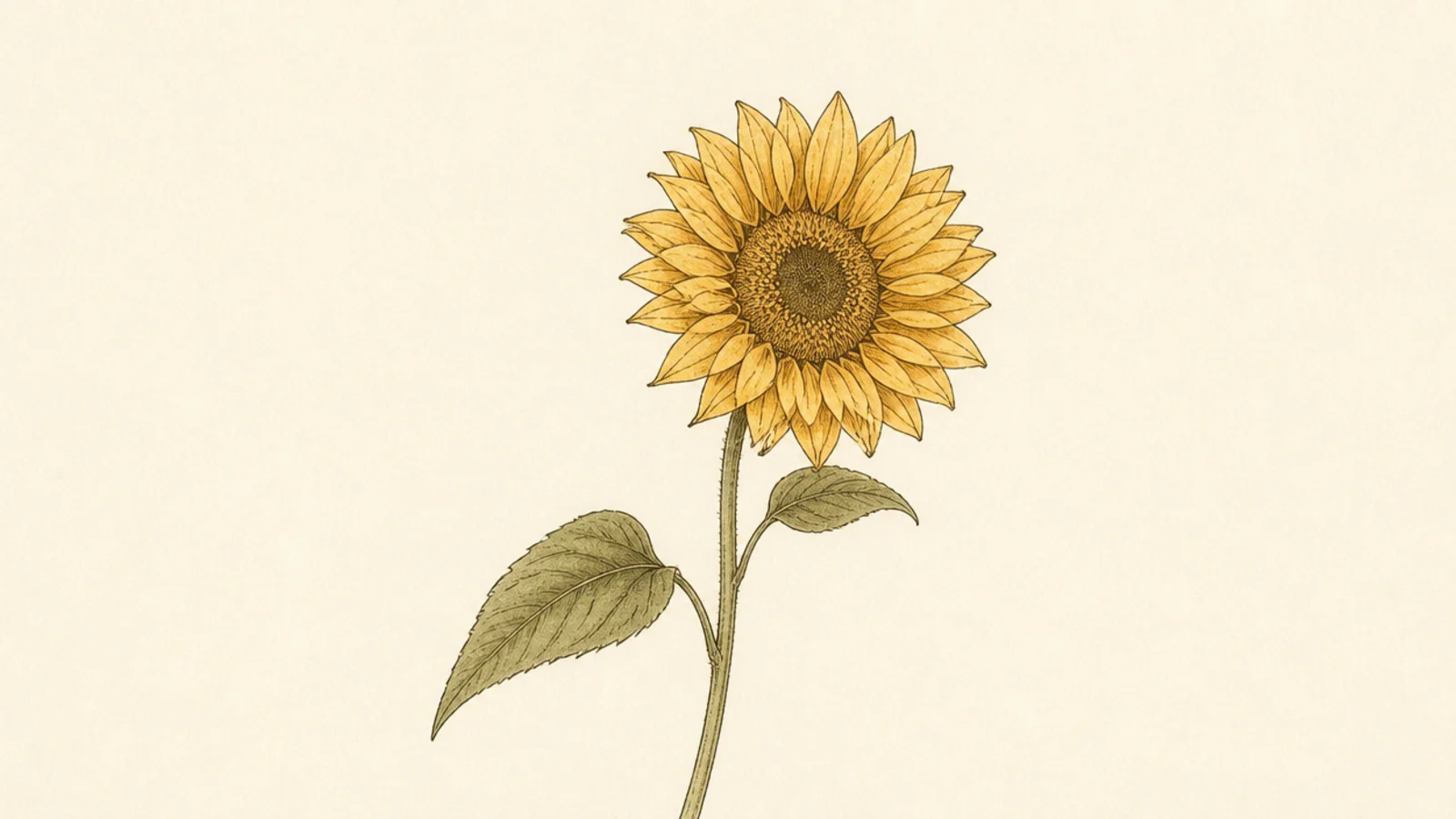
A clean line sunflower with lots of empty space is effortlessly aesthetic. The simplicity feels calm and intentional. It suits a minimalist journal.
Step 1 draw a single-stem sunflower in fineliner. Step 2 keep the lines light and even. Step 3 leave most of the page blank around it.
Place the stem off-center with empty space for a modern, gallery feel.
Don’t fill the space; the emptiness is the aesthetic.
3 Pressed Sunflower
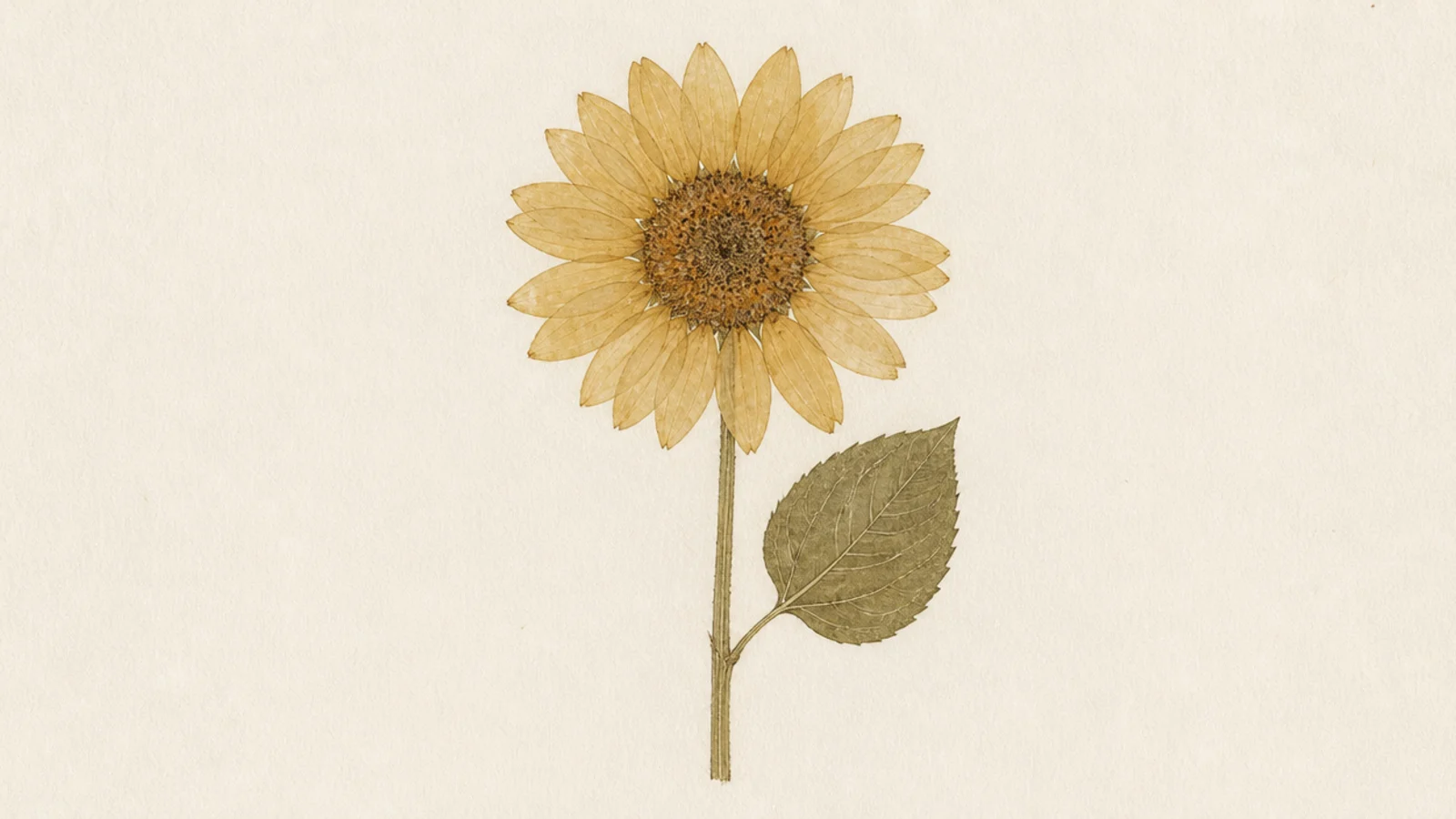
Drawing the sunflower flat and faded like a pressed flower feels like a keepsake. The delicate, flattened petals are soft and nostalgic. It is gentle and pretty.
Step 1 draw a flattened sunflower with slightly translucent petals. Step 2 use faded, muted color. Step 3 add a pressed stem and leaf beside it.
Keep the petals flat and slightly see-through, like a real pressed flower.
Don’t make it bold and full; pressed flowers are delicate and faded.
4 Muted Ochre Sunflower
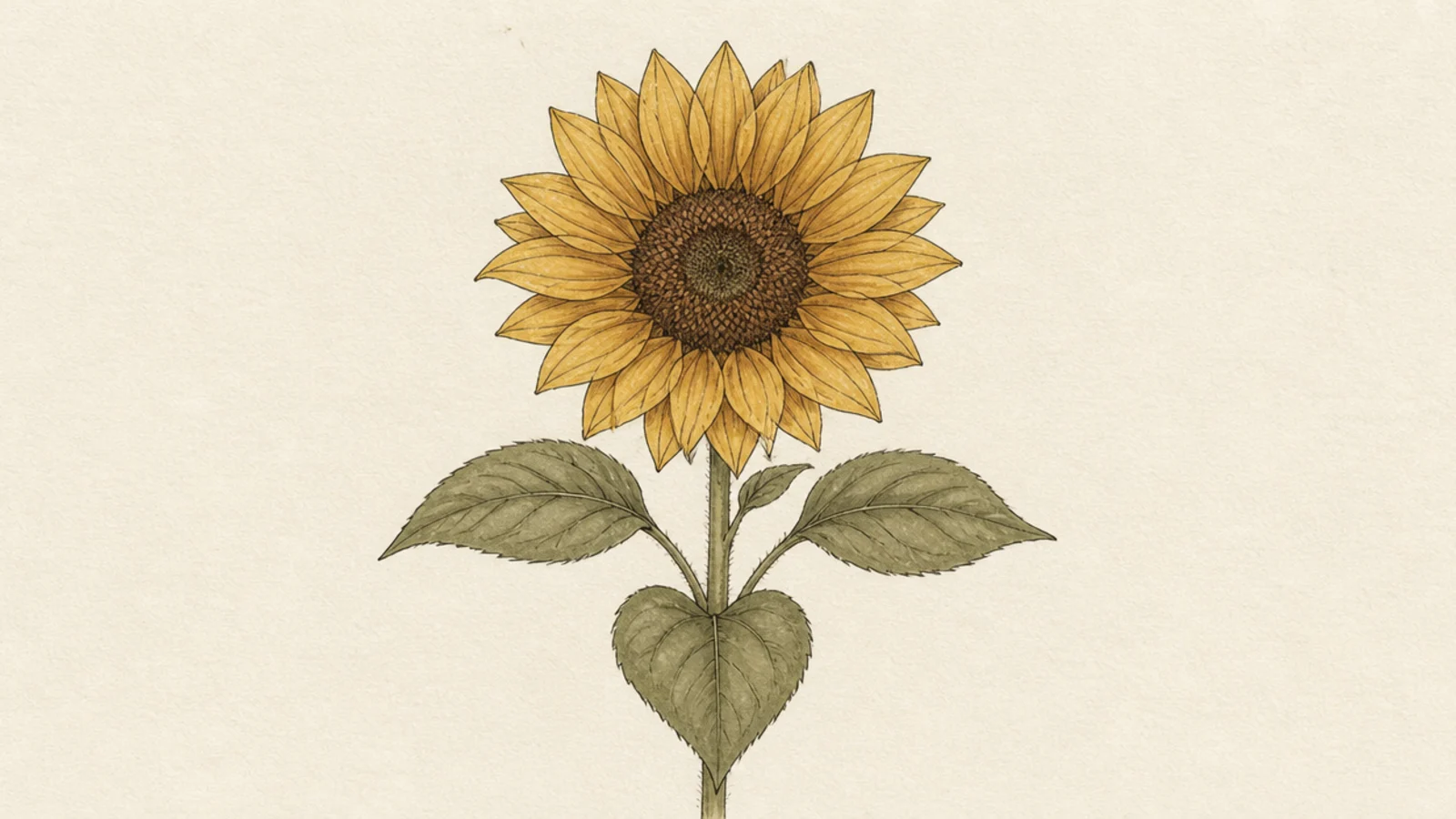
Step 1 draw a simple sunflower. Step 2 fill the petals muted ochre. Step 3 use a soft brown center on a cream background.
A muted ochre sunflower trades bright yellow for a warm, earthy gold. The mustard tone feels cozy and grown-up. It is the core aesthetic sunflower color.
AvoidDon’t use bright lemon yellow; the muted ochre is what makes it aesthetic.
Pro tipGrey the yellow down toward mustard so it reads warm and muted.
5 Soft Watercolor Sunflower
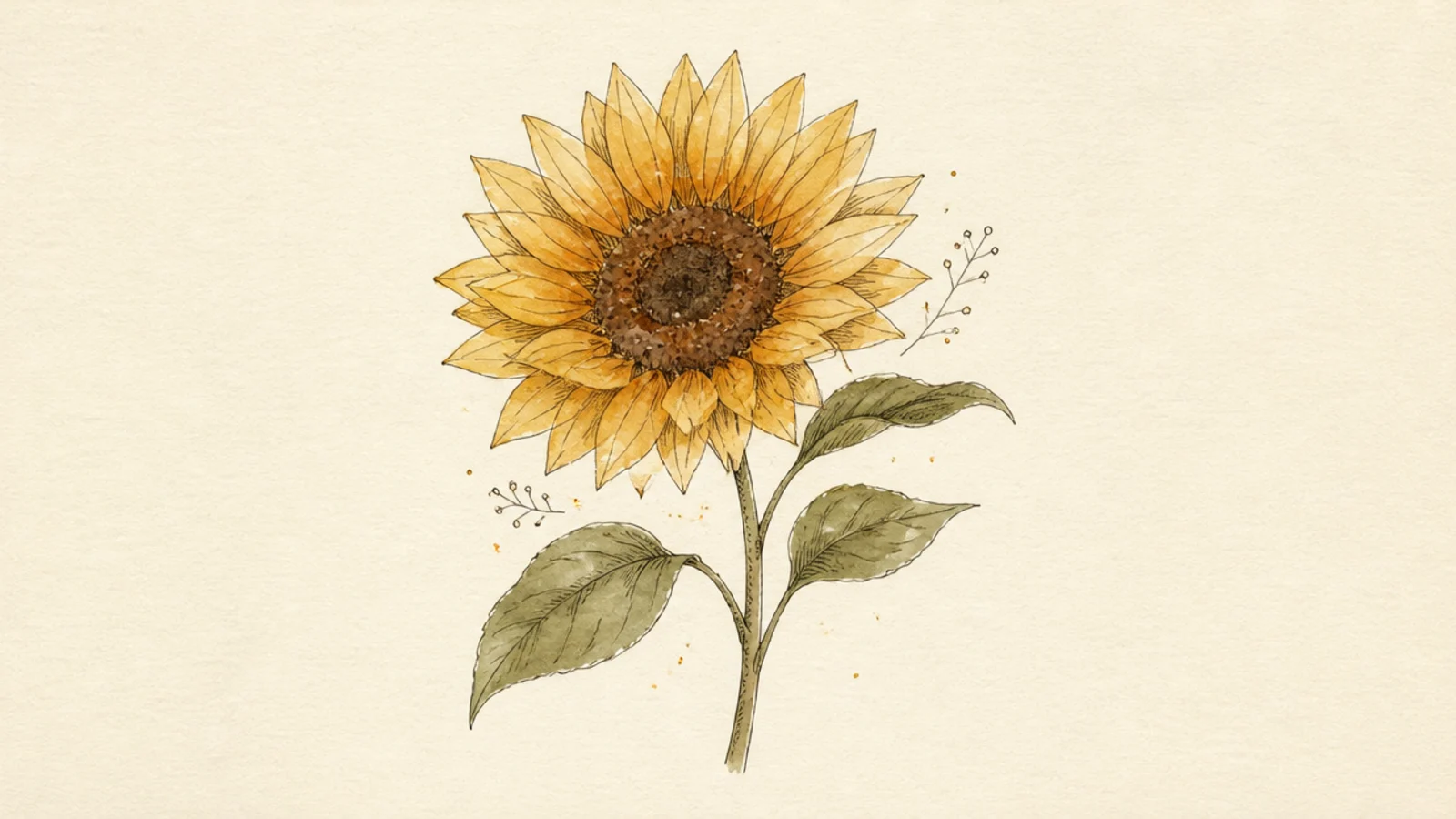
Step 1 paint the petals in loose muted ochre strokes. Step 2 add a soft brown center wash. Step 3 once dry, add a few fine ink details.
A loose, muted watercolor sunflower feels soft and artful. The gentle blooming edges look relaxed. It is dreamy and calm.
AvoidDon’t paint neatly inside hard lines; loose edges are the charm.
Pro tipLet the watercolor edges stay soft and slightly irregular for a relaxed look.
6 Single-Stem Aesthetic Sunflower
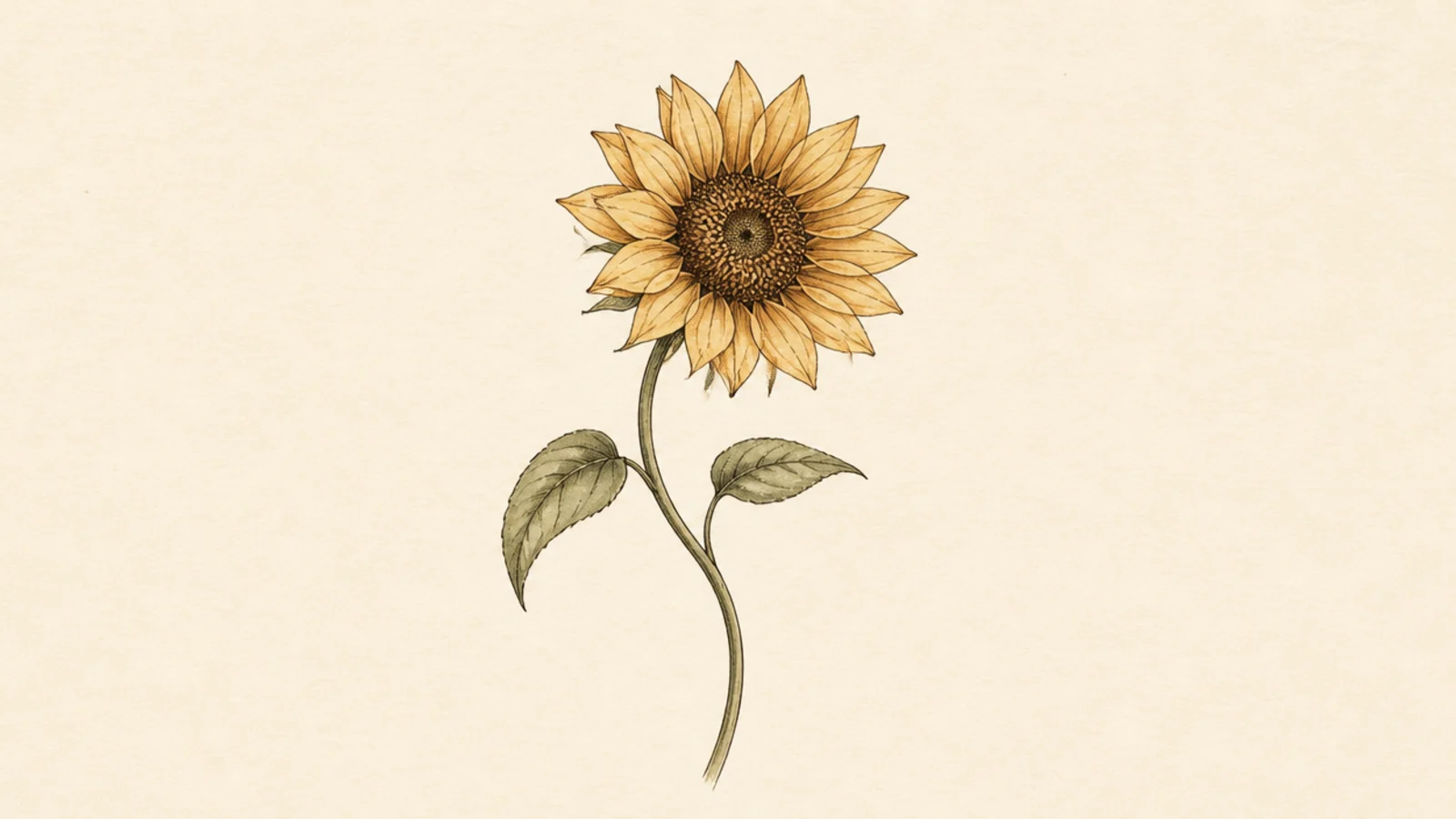
Step 1 draw one long stem with a sunflower on top. Step 2 add two or three sage leaves. Step 3 keep the palette muted and the space open.
One elegant sunflower stem is simple and striking. The single subject with room around it feels curated. It is a classic aesthetic layout.
AvoidDon’t add more flowers; the single stem is the whole point.
Pro tipGive the stem a gentle curve so the single flower feels graceful.
7 Quote-Companion Sunflower
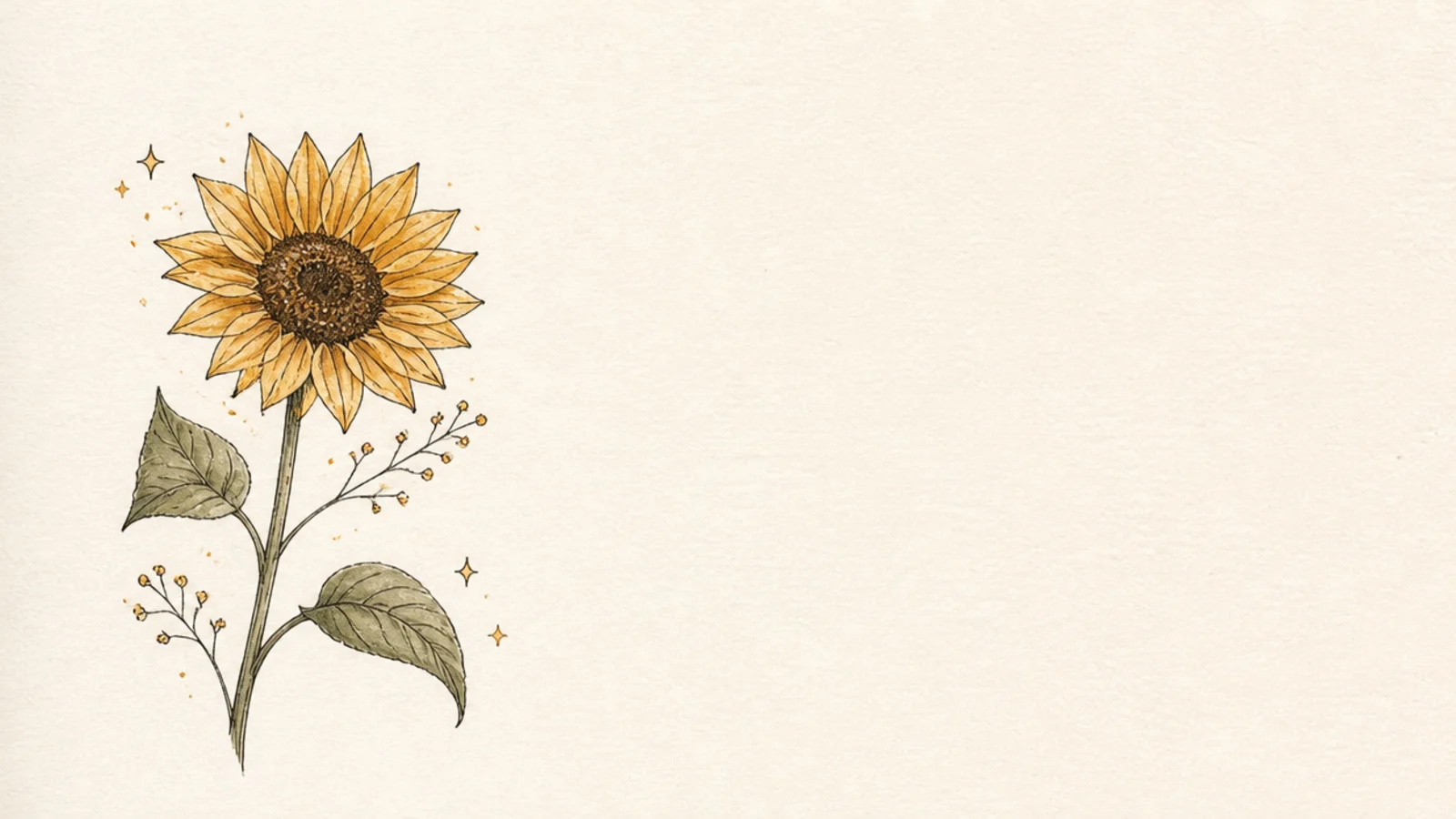
Step 1 draw a small sunflower in one corner. Step 2 leave clear space beside it for lettering later. Step 3 add a couple of tiny accents near the flower only.
A small sunflower to one side, leaving space for a quote, makes a lovely journal accent. The drawing supports the words. It is a practical aesthetic layout.
AvoidDon’t center the flower; leaving room for the words is the point.
Pro tipKeep the sunflower to one side so there is a clean area for your quote.
8 Cottagecore Sunflower
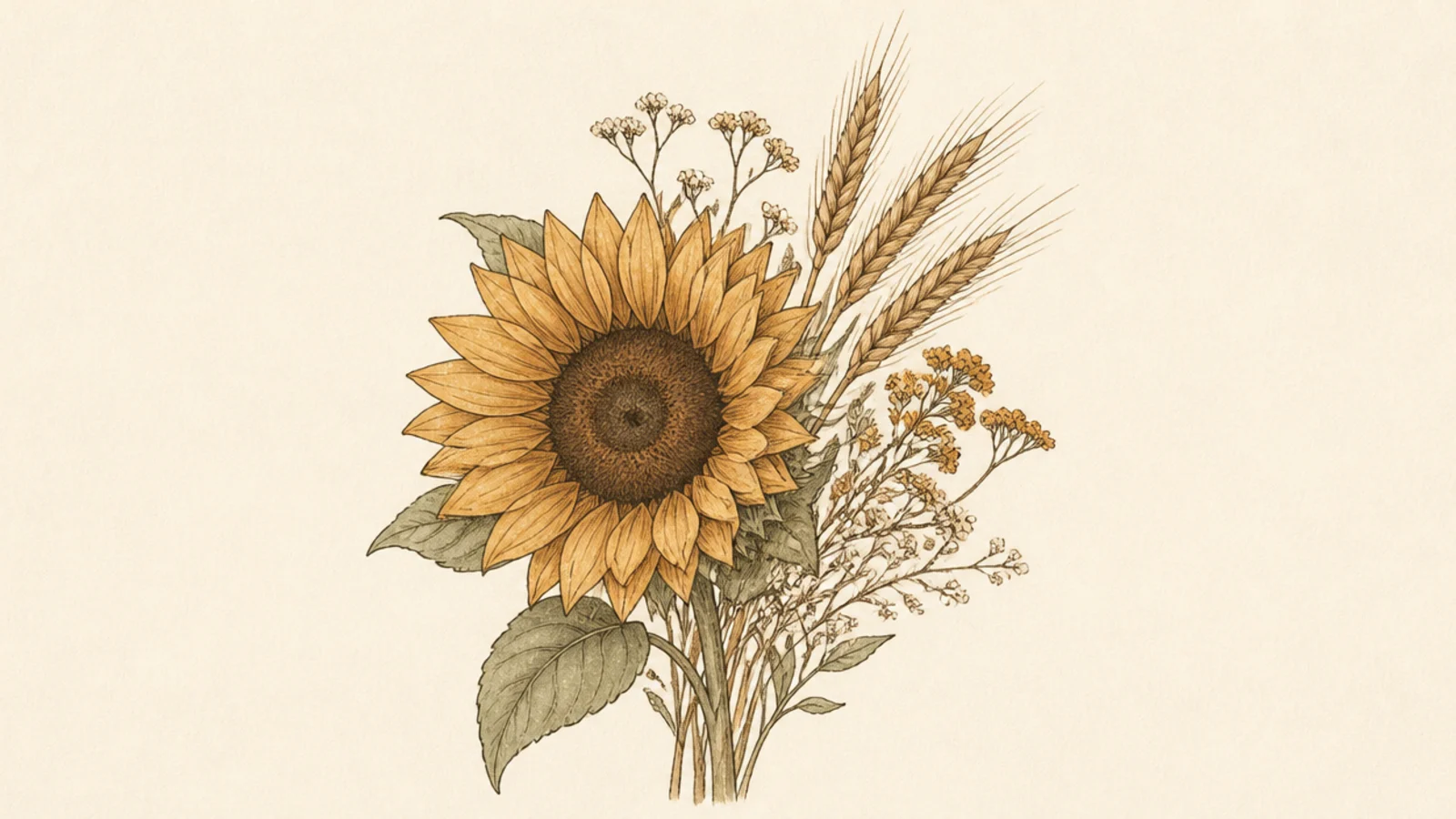
Step 1 draw a muted sunflower. Step 2 tuck wheat stalks and small wildflowers beside it. Step 3 keep everything earthy and muted.
Pairing the sunflower with wheat and tiny wildflowers gives a soft cottagecore feel. The rustic sprigs add warmth. It is cozy and pretty.
AvoidDon’t use bright florals; dusty earthy colors keep the cottagecore mood.
Pro tipAdd a few wheat stalks for that warm, rustic harvest feel.
9 Dried Sunflower
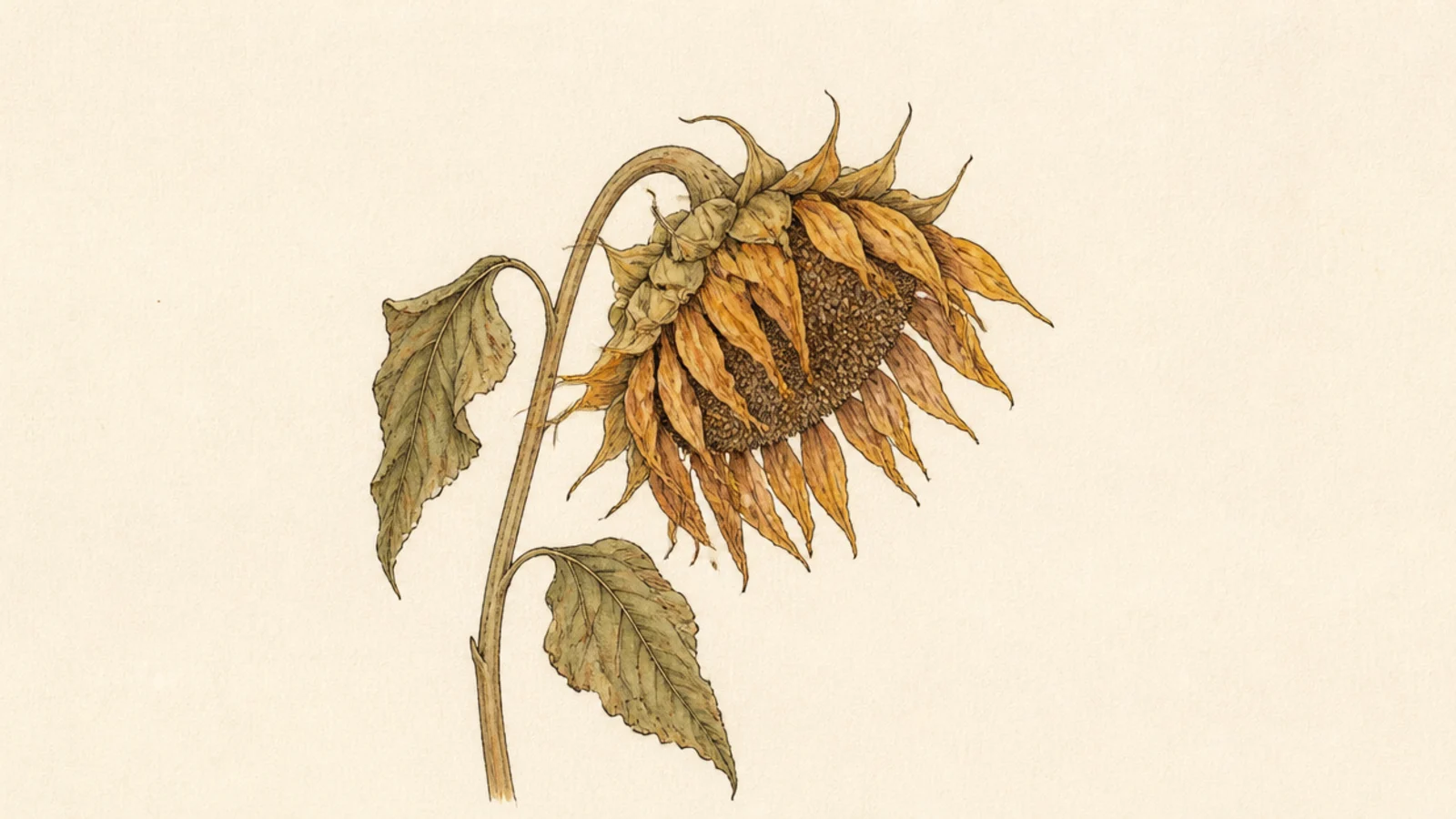
A dried sunflower with curling, drooping petals has a moody, autumnal beauty. The faded, papery look feels artistic. It is a soulful aesthetic.
Step 1 draw the flower with curling, uneven petals. Step 2 droop the head slightly on the stem. Step 3 use faded brown and ochre tones.
Curl a few petals inward and let the head tilt for that dried, papery feel.
Don’t make it perky and bright; the gentle droop is the mood.
10 Minimal Sunflower Field
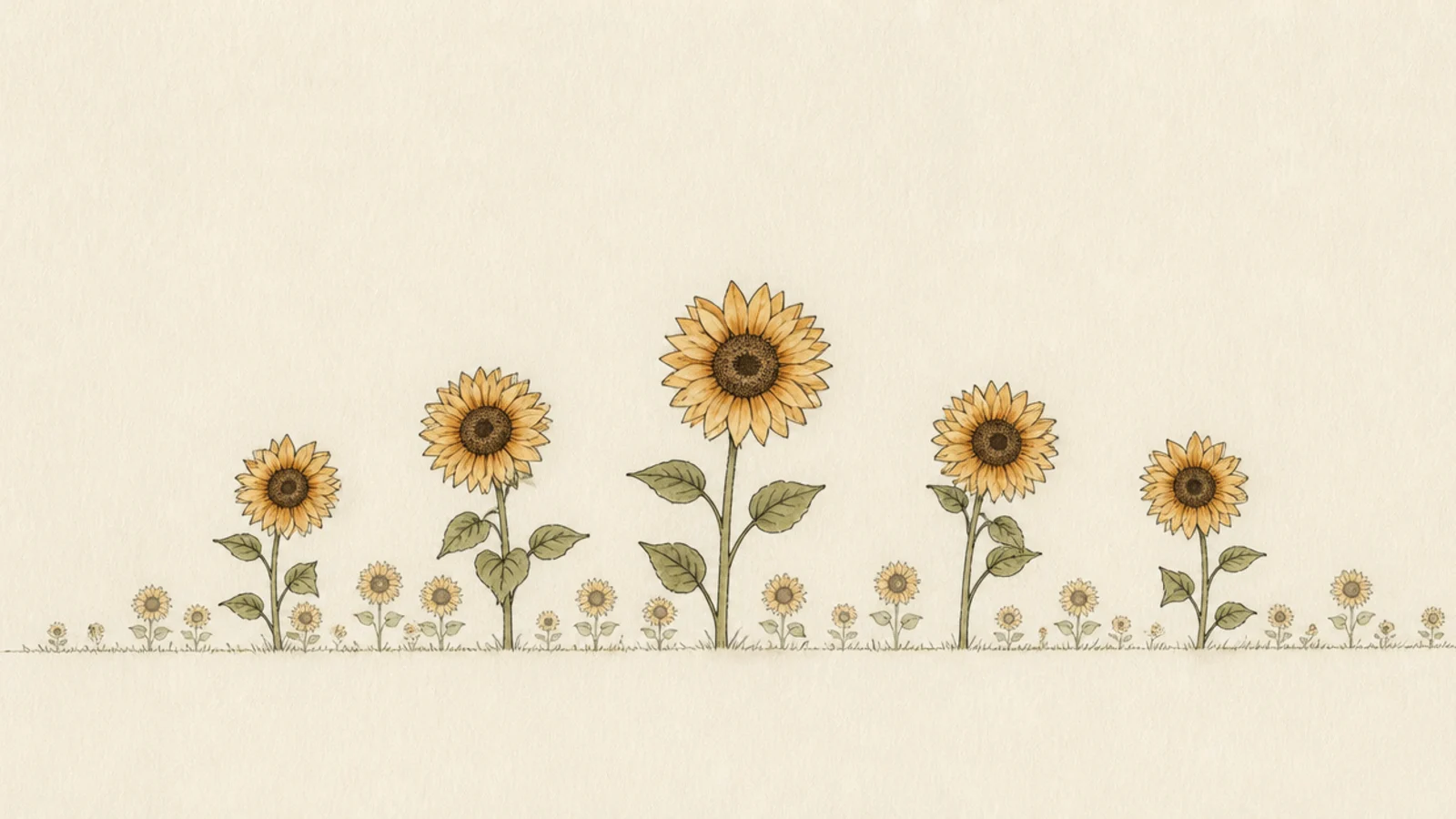
A simple row of small sunflowers suggests a whole field with minimal marks. The repeating shapes feel calm. It is a soft landscape in a few lines.
Step 1 draw a horizon line. Step 2 add a row of small simple sunflowers along it. Step 3 keep them muted and evenly spaced.
Make the far sunflowers smaller and paler to suggest distance.
Don’t detail every flower; distant ones can be tiny simple shapes.
11 Golden-Line Sunflower
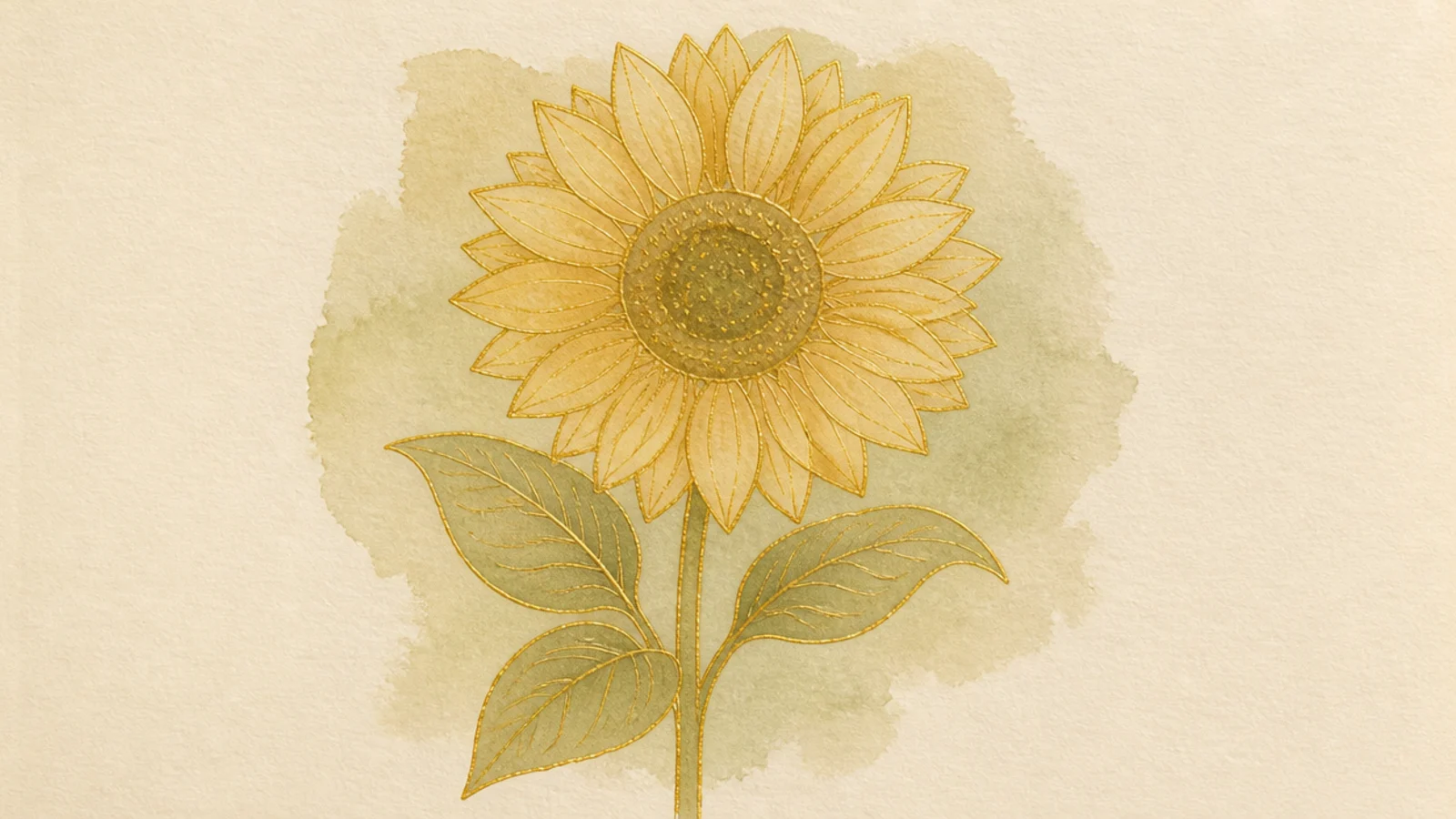
Step 1 wash a muted background (sage or cream) and let it dry. Step 2 outline the sunflower in gold gel pen. Step 3 add a few tiny gold dots in the center.
A sunflower outlined in metallic gold looks elegant and a little luxe. The gold shimmer against a muted wash is lovely. It elevates a simple shape.
AvoidDon’t add other bright colors; gold works as the single accent.
Pro tipKeep everything else muted so the gold line is the only shine.
12 Bullet-Journal Spread Sunflower
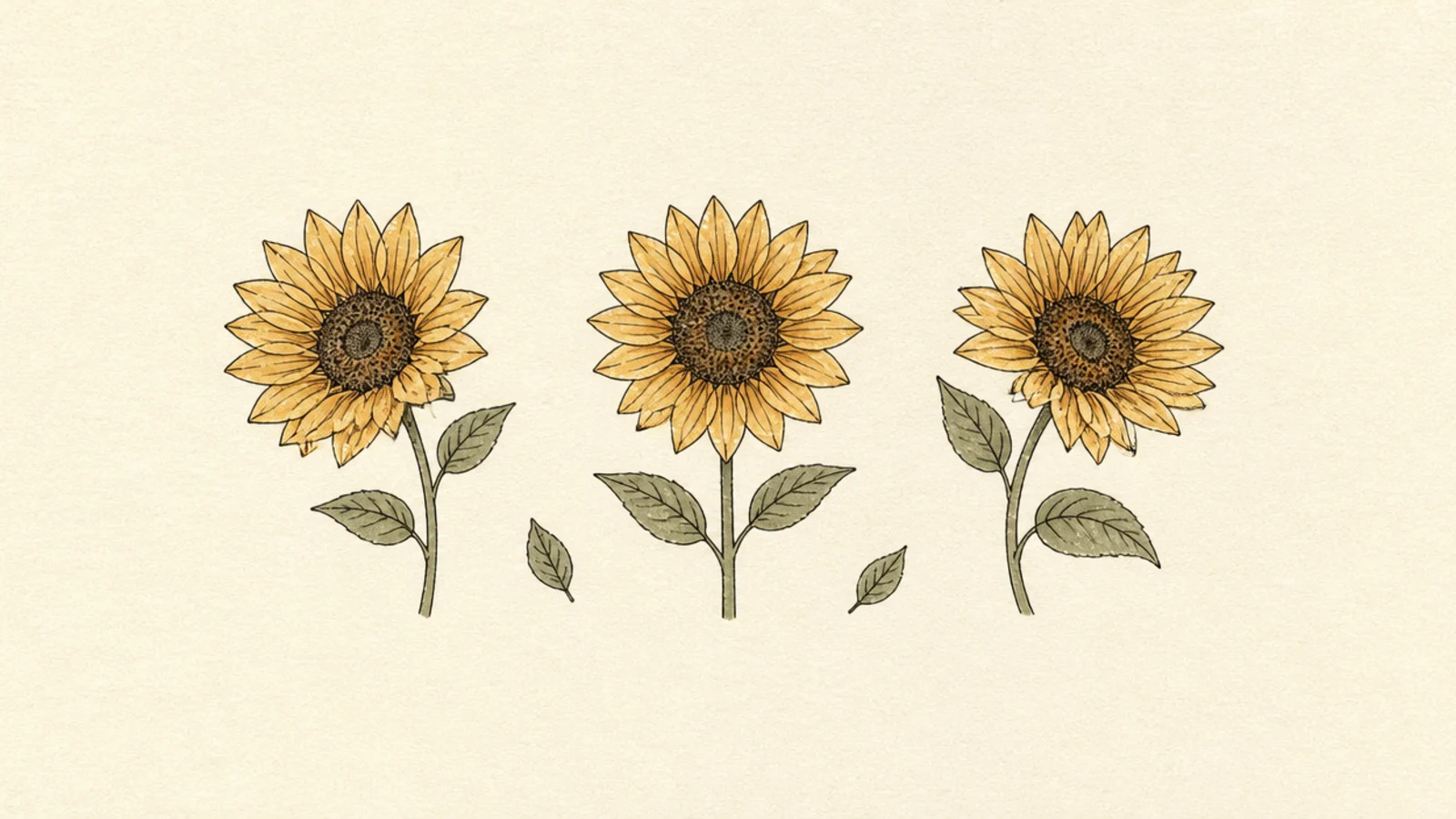
Step 1 draw three small matching sunflowers. Step 2 use the same muted palette and line weight for all. Step 3 add tiny matching leaves between them.
A few matching sunflowers arranged neatly make a designed-looking journal spread. The repetition feels curated. It is a satisfying way to fill a page.
AvoidDon’t vary the styles; sameness is what makes the spread look designed.
Pro tipKeep all three identical in style so they read as a coordinated set.
13 Faded Vintage Sunflower
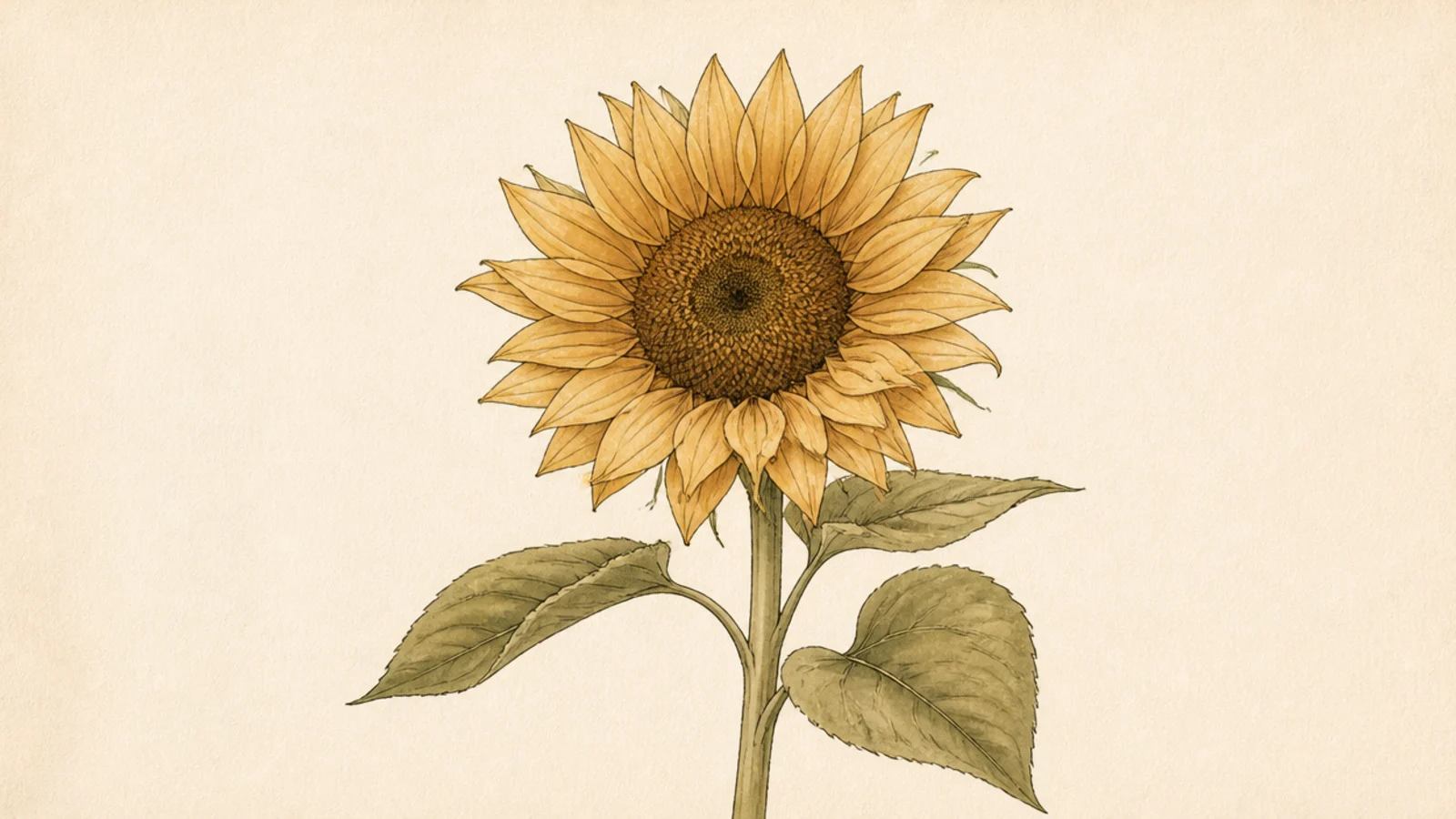
Washed-out, faded colors give the sunflower an old-photograph feel. The gentle fade is soft and nostalgic. It is a moody, refined aesthetic.
Step 1 draw a simple sunflower. Step 2 color it in faded, low-saturation tones. Step 3 add a light cream overlay to age it.
Keep every color desaturated and slightly warm for a faded-photo look.
Don’t use crisp bright color; the effect depends on the fade.
14 Sage & Ochre Sunflower
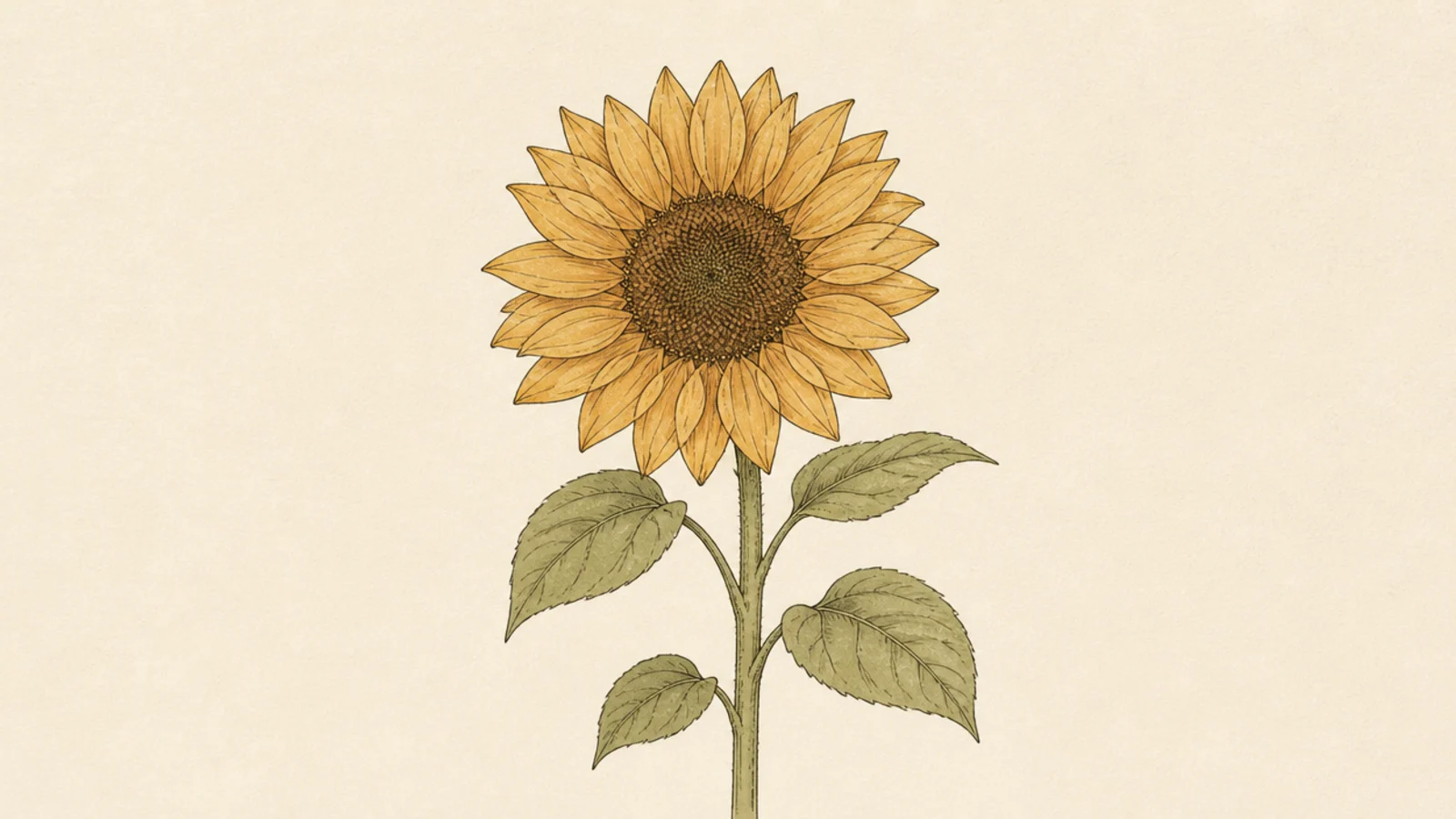
Step 1 draw a simple sunflower. Step 2 use muted ochre petals. Step 3 add sage leaves and stem on a warm cream background.
A muted sage-and-ochre palette feels earthy and calm. The soft green and gold pair beautifully. It reads as quiet and refined.
AvoidDon’t add a bright accent; the restrained palette is the point.
Pro tipKeep both the sage and ochre muted so the palette feels grounded.
15 Half-Tone Dotwork Sunflower
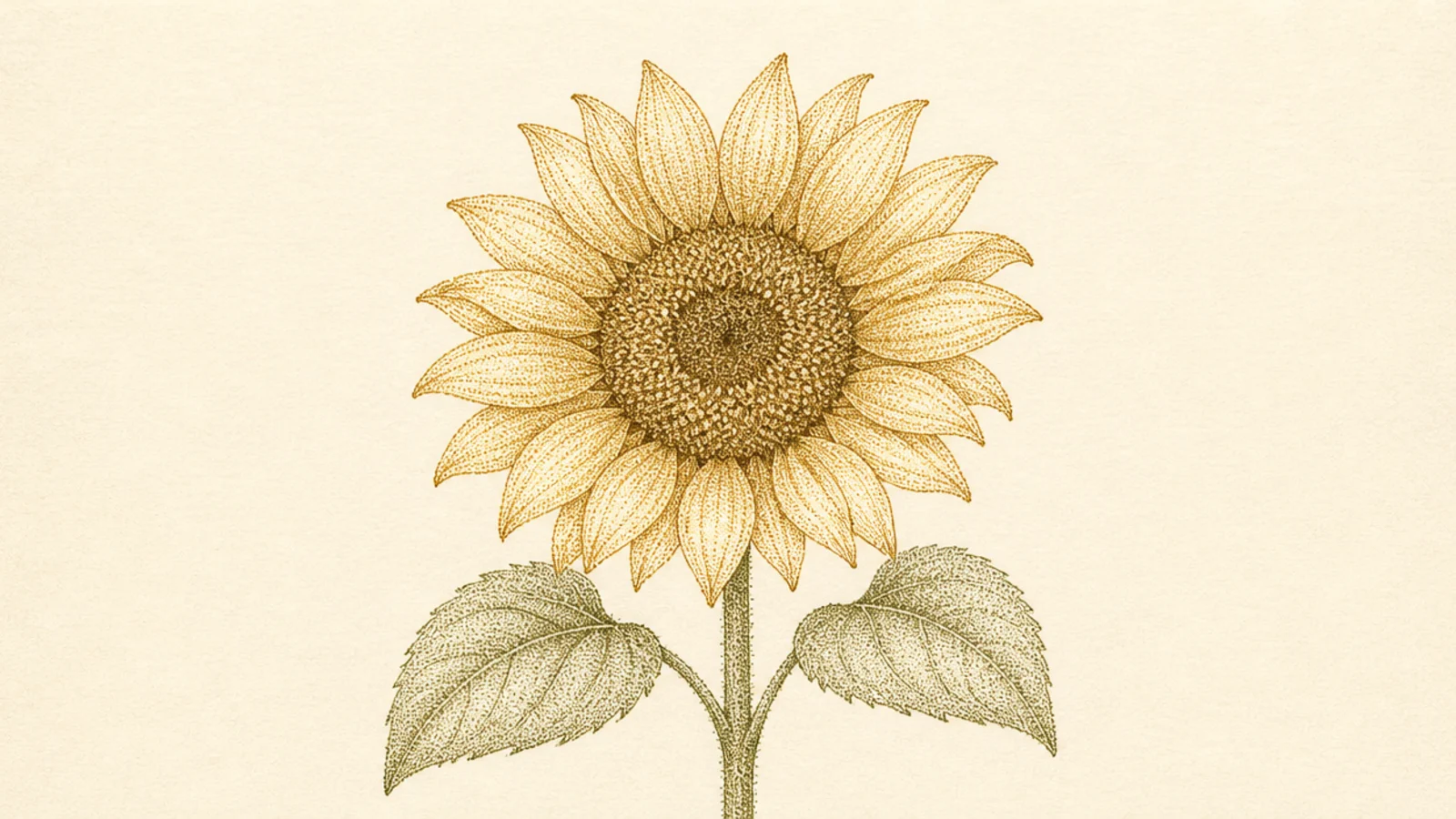
Step 1 outline a simple sunflower. Step 2 shade with dots — dense in the shadows, sparse toward the light. Step 3 keep it in one muted ink color.
Shading the sunflower with fine stippled dots gives a soft, tactile texture. The dotwork feels detailed yet gentle. It is a calm, meditative technique.
AvoidDon’t use lines to shade; stick to dots for the half-tone look.
Pro tipCluster dots closer for shadow and space them out for light to build a soft gradient.
16 Impressionist Dab Sunflower
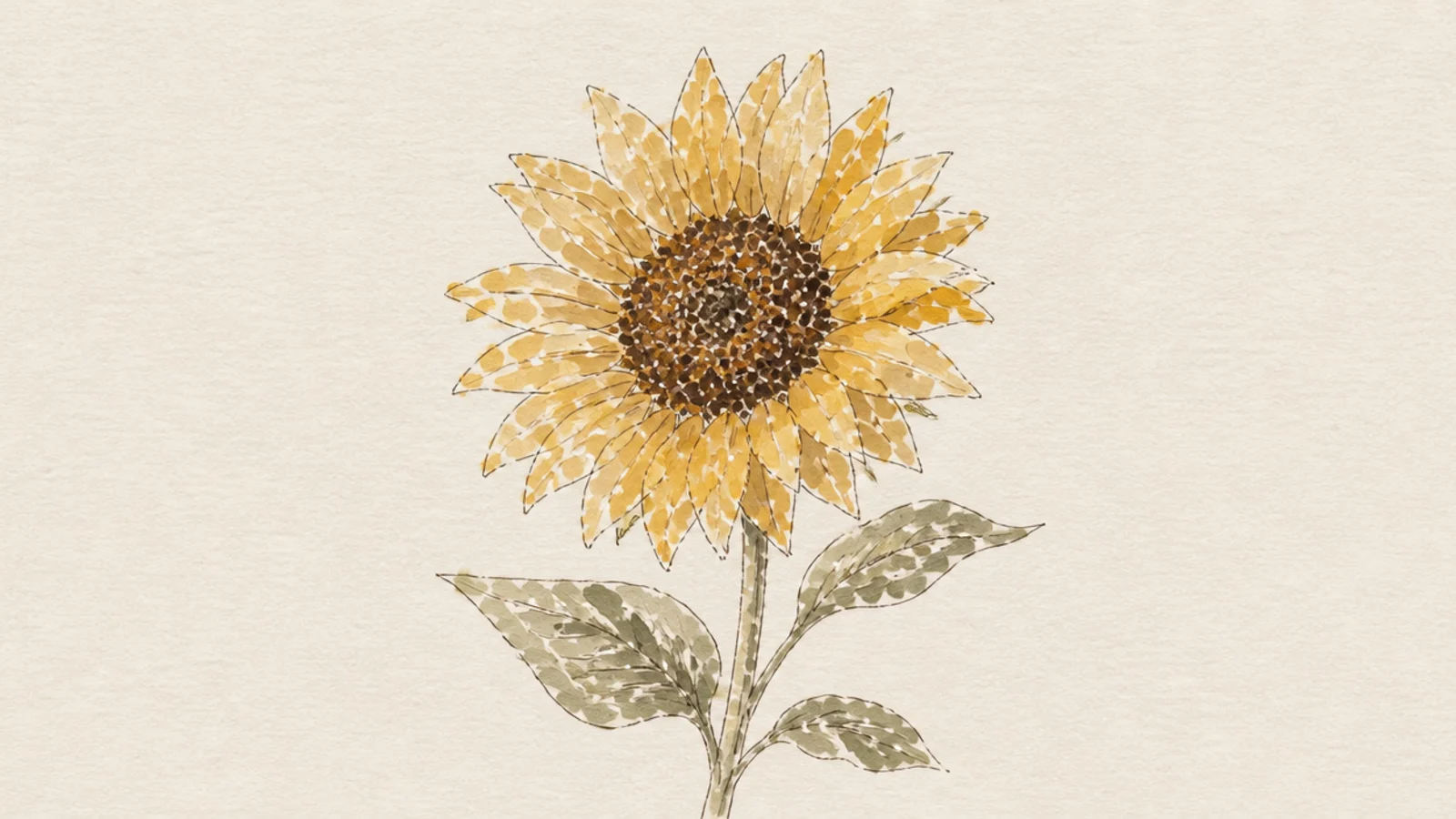
Step 1 dab the petals in small strokes of a few muted golds. Step 2 dab the center in browns. Step 3 let the paper show between dabs.
Building the sunflower from small, loose color dabs gives an impressionist, painterly feel. The broken color reads as warm light. It is soft and artful.
AvoidDon’t blend the dabs smooth; the separate strokes are the style.
Pro tipUse a few close muted tones in the dabs so they blend optically.
17 Washi-Frame Sunflower
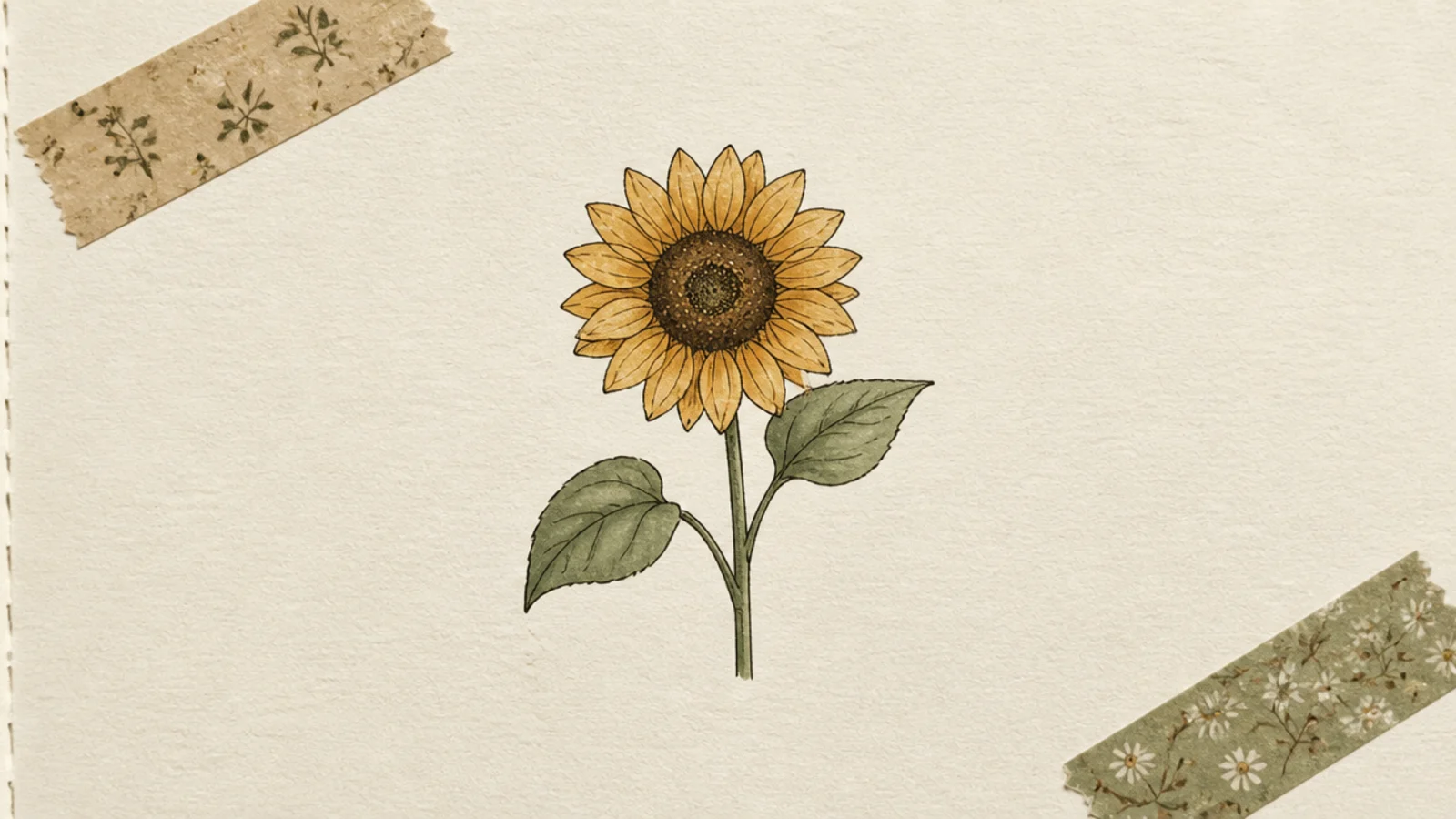
Step 1 draw a sunflower in a small frame area. Step 2 add washi-tape strips at the corners or edges. Step 3 keep the tape patterns muted and coordinated.
Framing the sunflower with muted washi-tape strips gives a journal-spread look. The tape adds soft pattern and structure. It feels curated and cozy.
AvoidDon’t use loud tape colors; muted patterns keep it cohesive.
Pro tipUse two coordinating tape patterns max so the frame stays calm.
18 Terracotta Sunflower
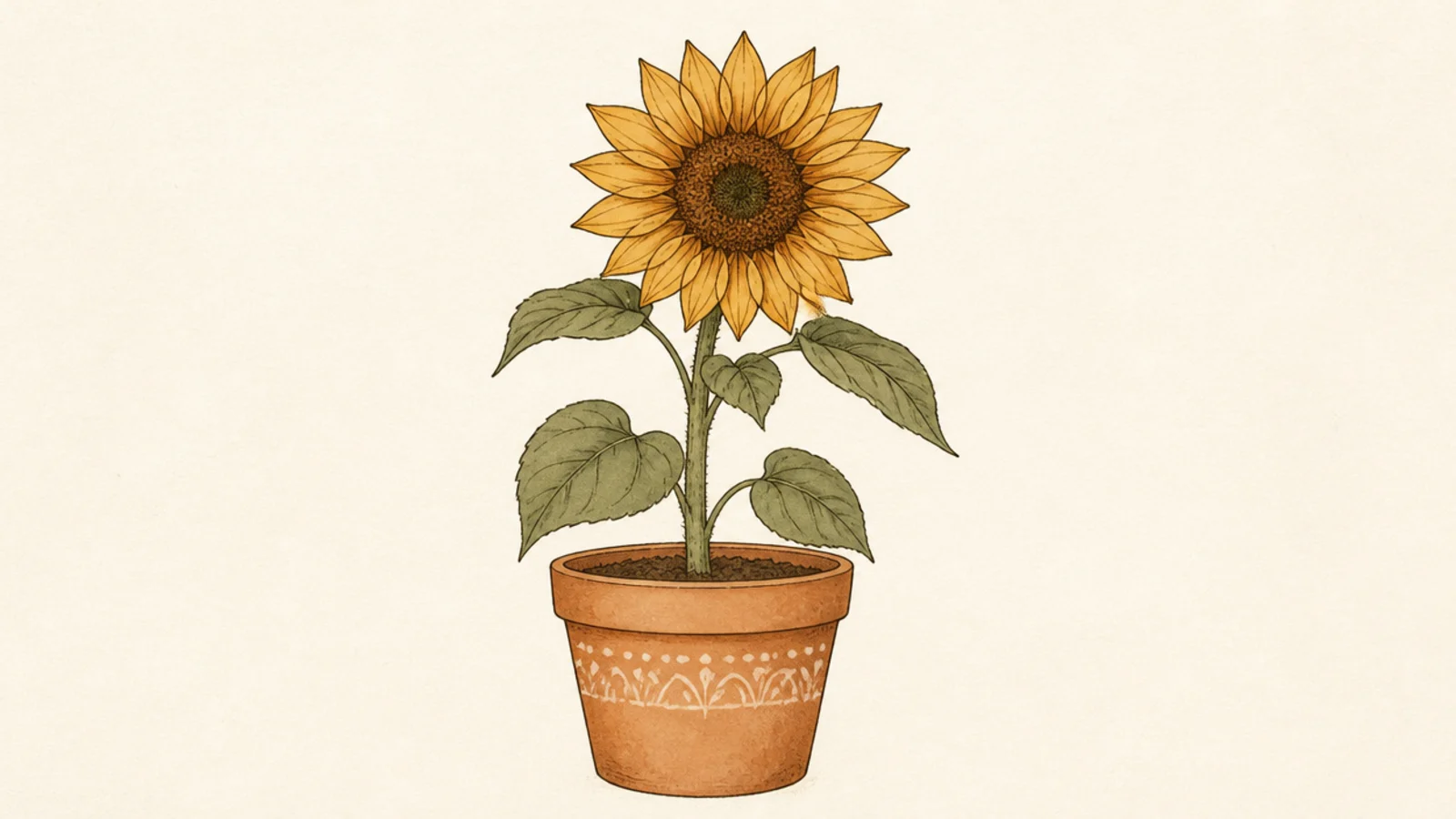
Step 1 draw a sunflower with a stem. Step 2 add a muted terracotta pot at the base. Step 3 keep the whole palette warm and earthy.
A sunflower in a warm terracotta pot feels earthy and boho. The clay tones are cozy and on-trend. It is a grounded, warm aesthetic.
AvoidDon’t use bright orange; the muted clay tone is what makes it aesthetic.
Pro tipKeep the terracotta soft and slightly grayed for a warm, boho feel.
19 Line-and-Wash Sunflower
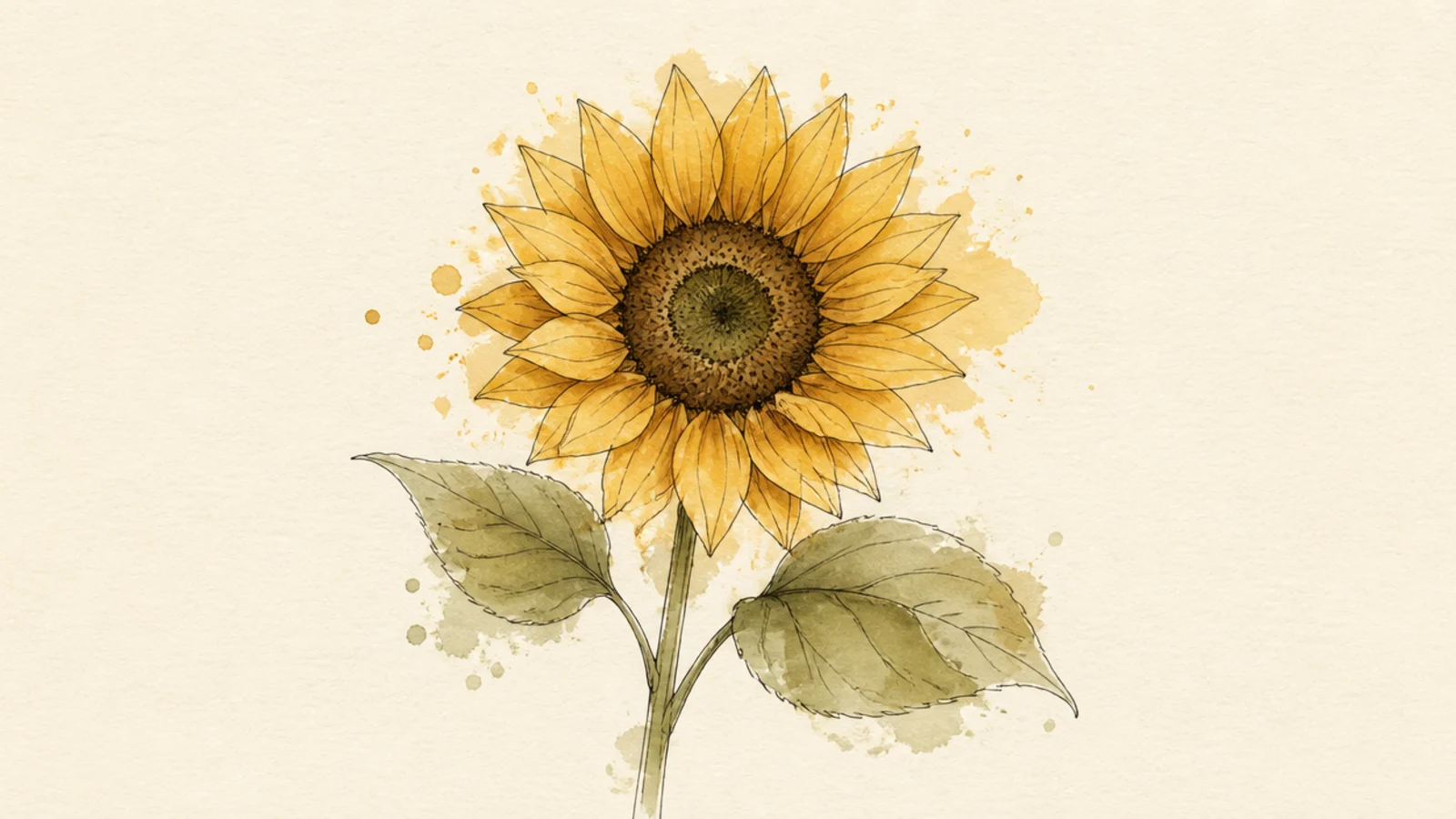
Combining crisp ink lines with a loose, imperfect wash is a classic aesthetic technique. The soft color spilling past the lines looks relaxed and artful. It is effortless and pretty.
Step 1 ink a simple sunflower. Step 2 add a loose muted wash that does not quite stay inside the lines. Step 3 leave some paper showing.
Let the wash bleed slightly outside the lines on purpose for a relaxed feel.
Don’t color neatly inside the lines; the loose overlap is the charm.
20 Celestial Sunflower

Step 1 draw a muted sunflower. Step 2 add a small crescent moon and a few stars above. Step 3 keep everything soft on a muted background.
Pairing a sunflower with a soft crescent moon and stars mixes warm and celestial for a dreamy page. The night touch is unexpected and pretty. It closes the list softly.
AvoidDon’t crowd the sky; a moon and a few stars keep it elegant.
Pro tipEcho the sunflower’s gold in the moon and stars so they feel connected.