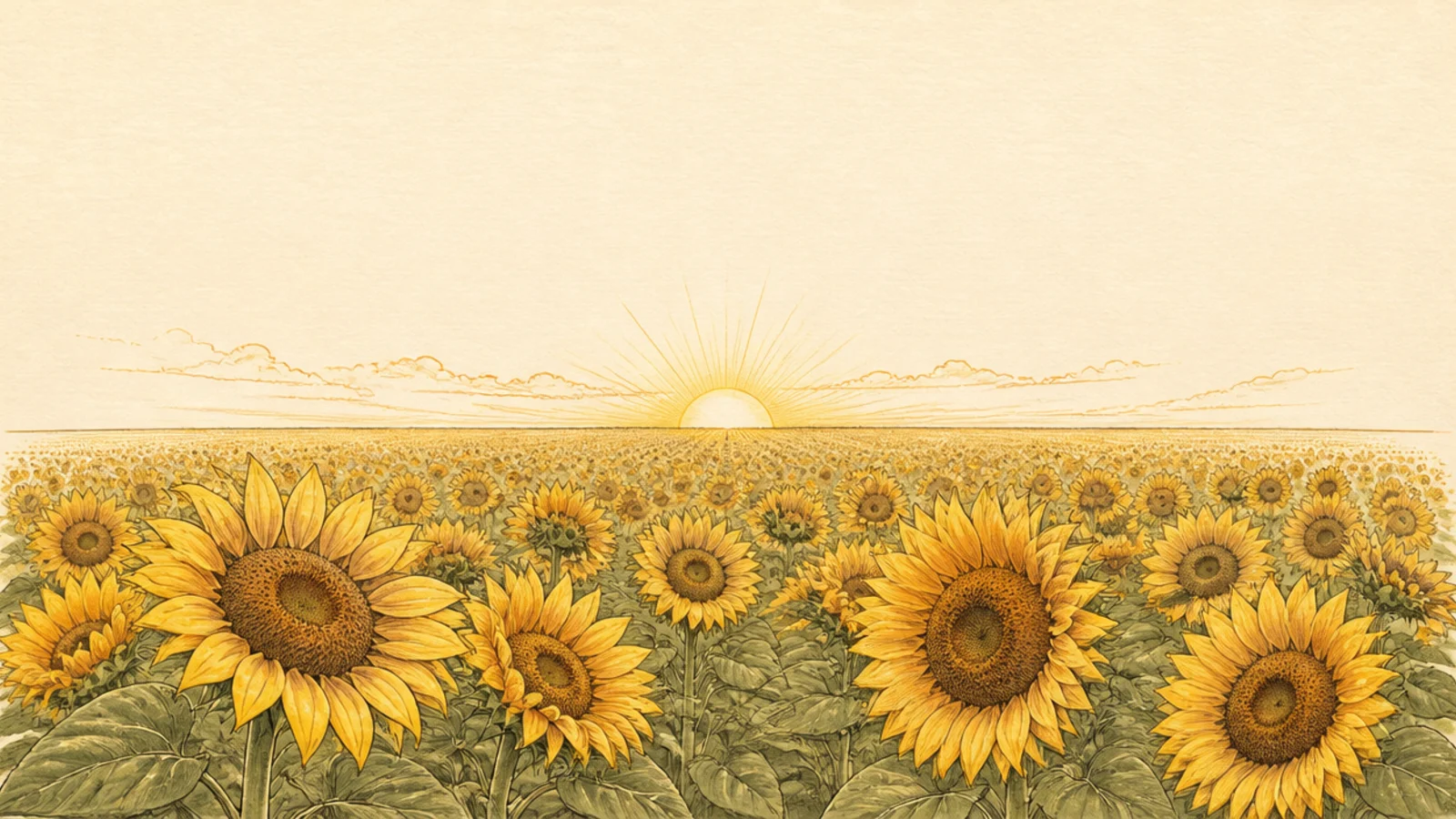
1 Single Bloom Over a Field
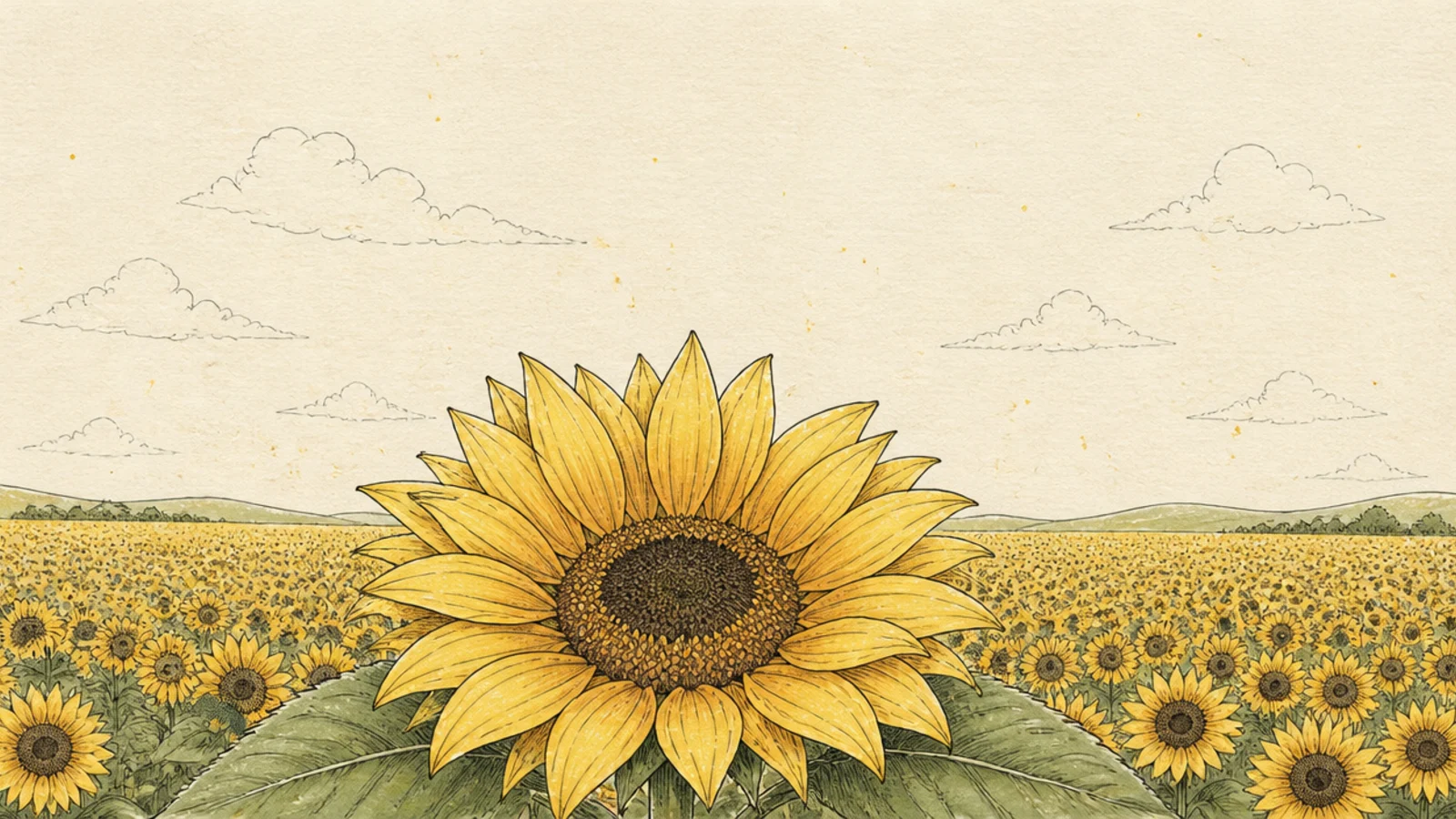
The easiest field scene — one big detailed sunflower up front with a suggestion of field behind. It teaches foreground-versus-background contrast with only one flower to draw well.
Step 1 draw one large detailed sunflower low in the foreground. Step 2 add a horizon line behind it. Step 3 fill the gap with tiny pale yellow dots and a simple sky.
Make the front bloom large and sharp so the tiny dots read as distant.
Don’t detail the background flowers; keep them as soft dots.
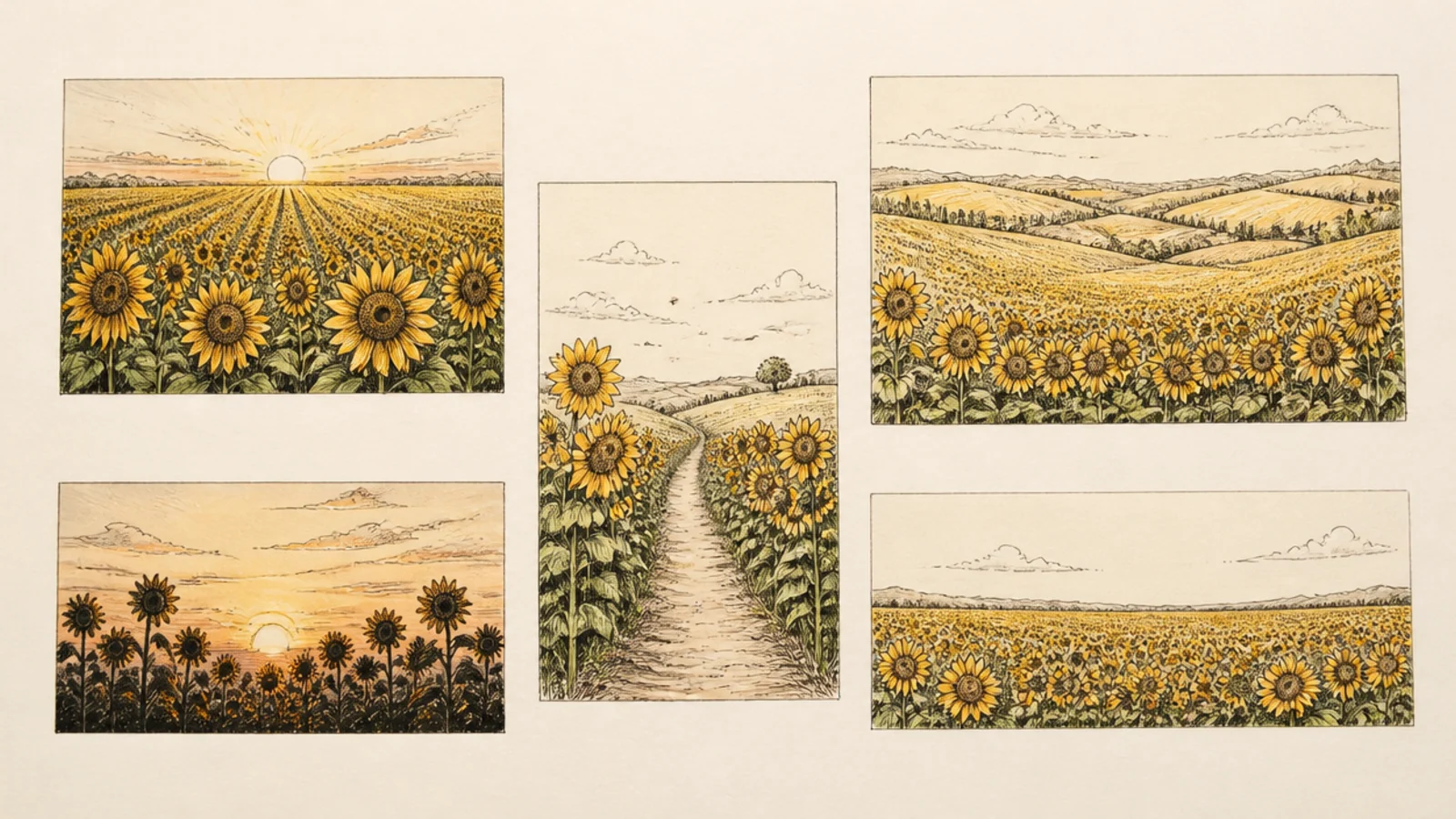
2 Sunrise Field in Rows
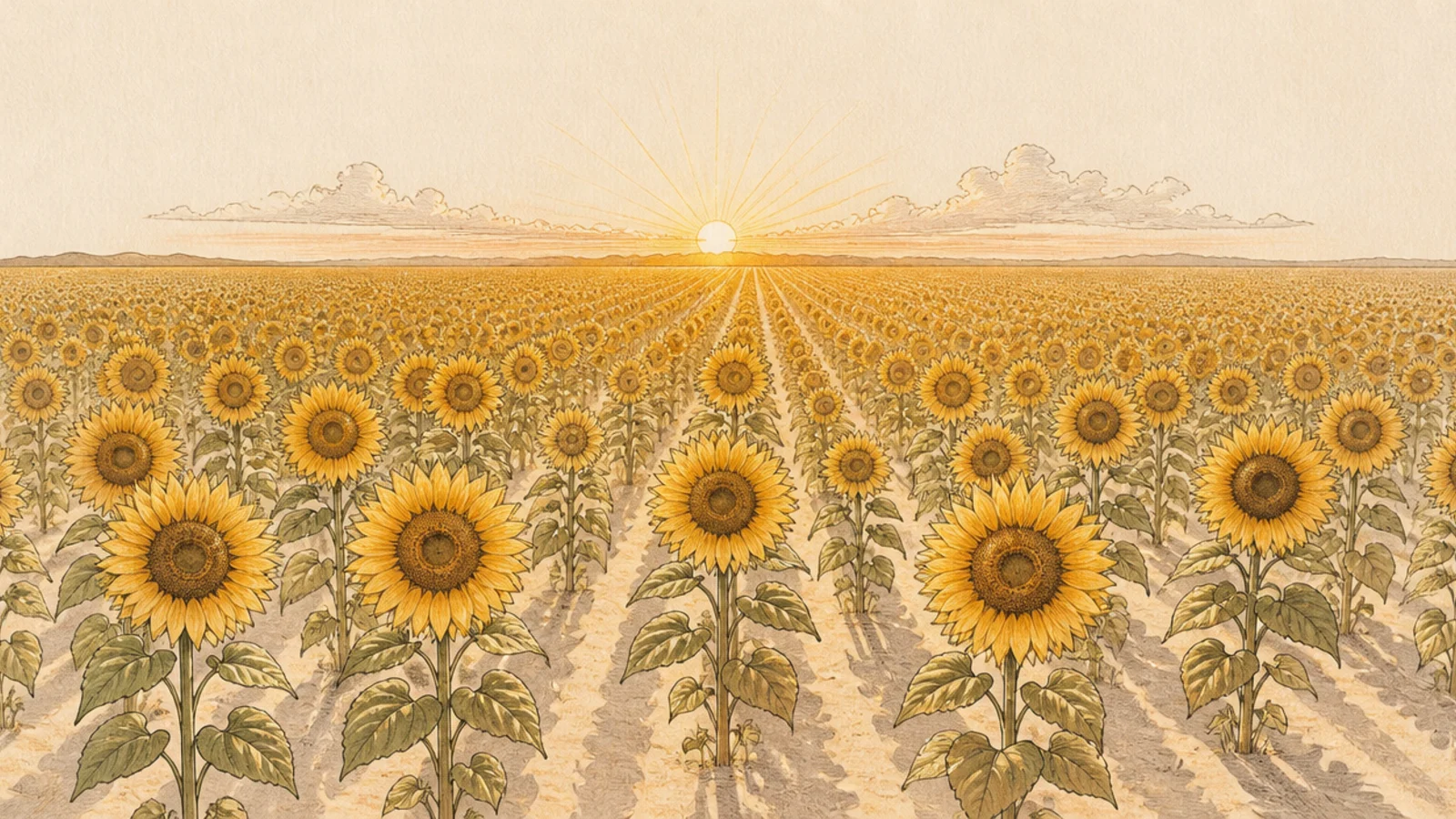
Sunflowers famously face the sun, so rows all turning toward a sunrise make a natural, story-telling scene. The low sun gives warm backlight.
Pro tipTurn every flower head toward the sun for a unified, believable field.
Step 1 draw a low horizon with a rising sun. Step 2 draw rows of sunflowers all facing the sun, shrinking toward the back. Step 3 add long soft shadows toward the viewer.
AvoidDon’t face flowers randomly; they should all lean toward the light.
3 Rolling Hill Field
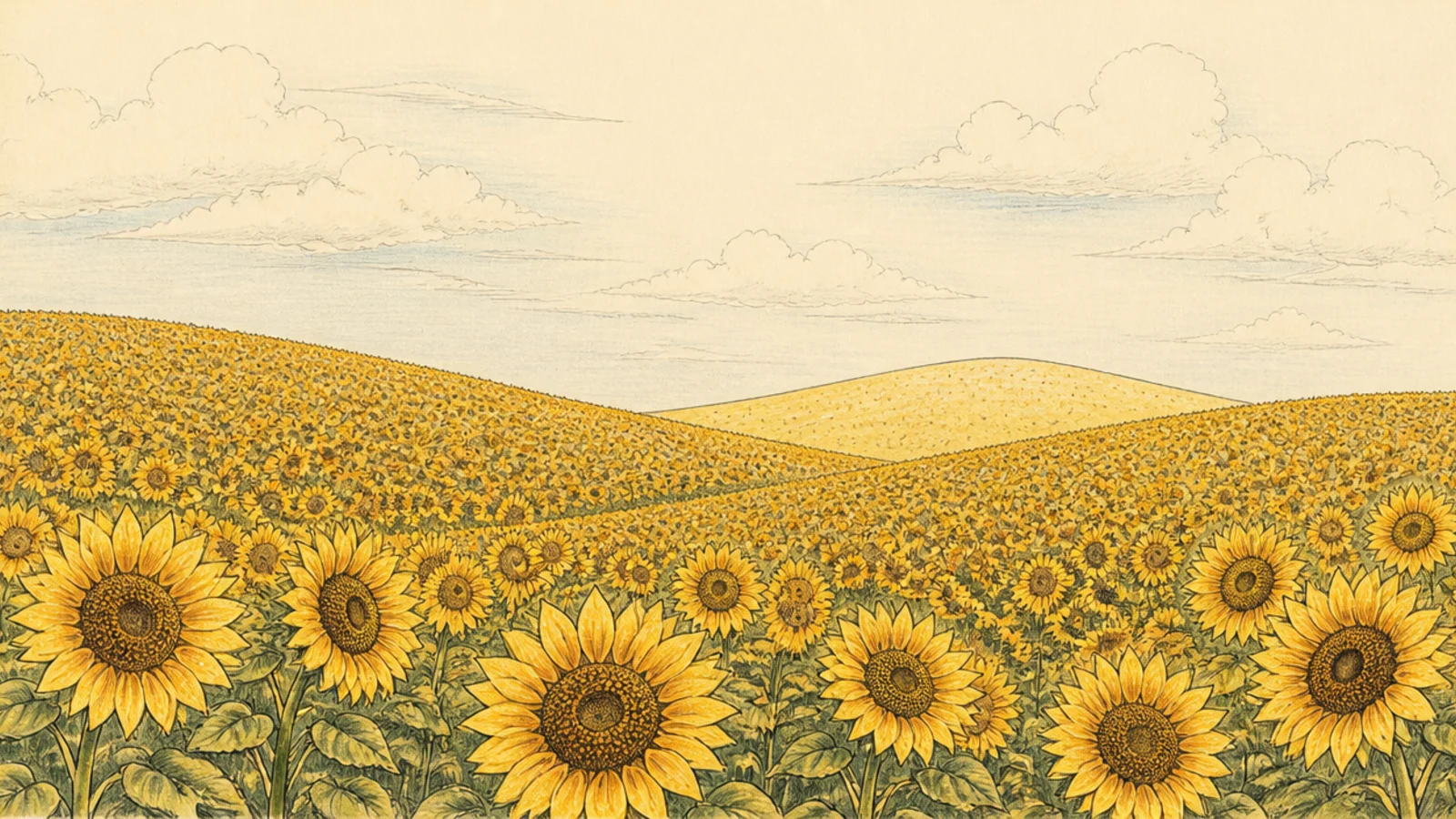
Curved hill lines let the field roll up and over, hiding and revealing bands of flowers. The undulation adds a dreamy, expansive feel.
Step 1 draw two or three overlapping curved hill lines. Step 2 cover each with sunflowers, smaller on the far hills. Step 3 fade the most distant hill to pale yellow.
Overlap the hills so nearer ones partly hide the farther ones.
Don’t make the hills the same height; vary them for a natural roll.
4 Path Through the Field
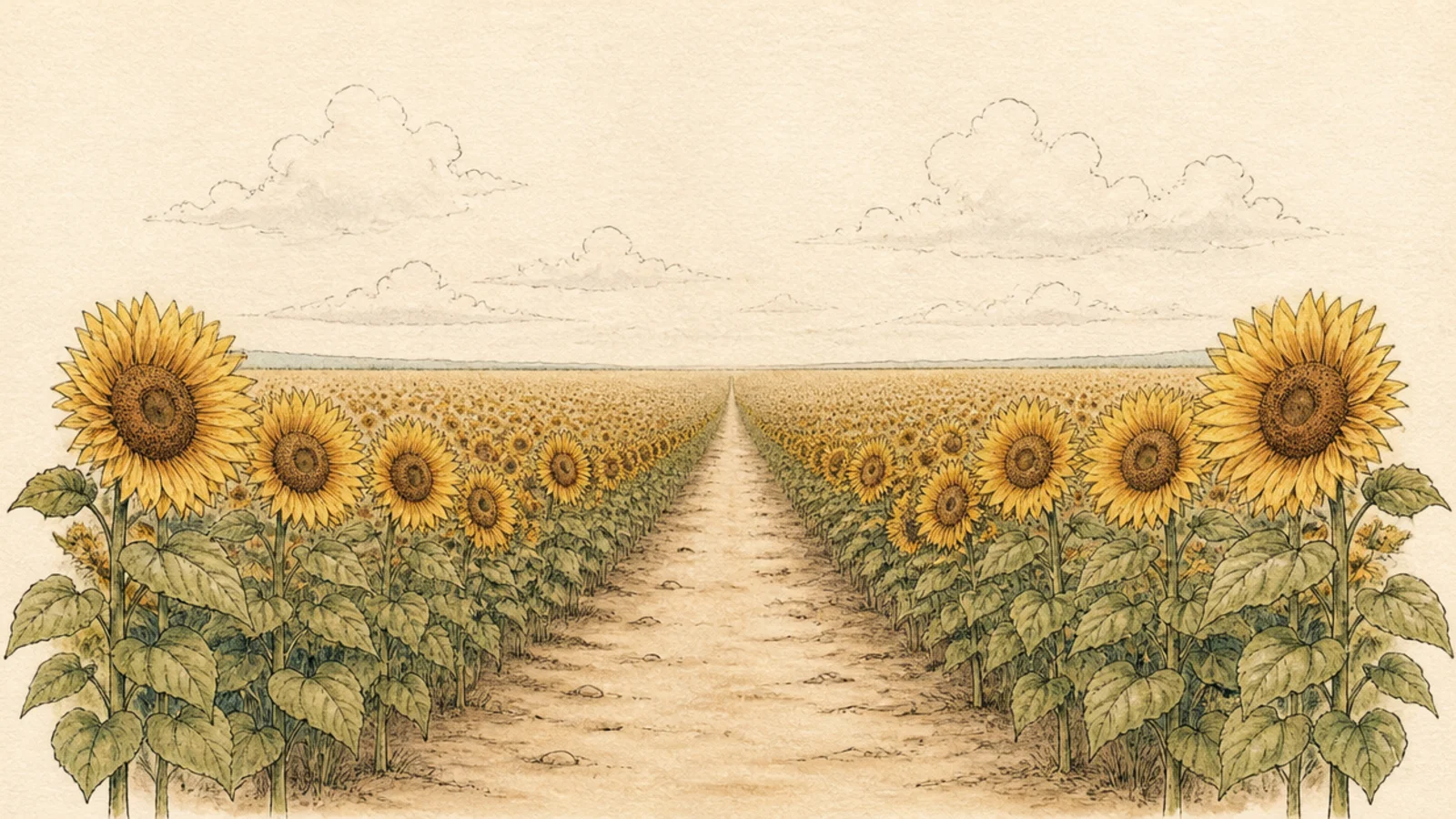
A path narrowing toward the horizon is textbook perspective and pulls the viewer straight into the scene. The most immersive field layout.
Step 1 draw a path wide at the bottom, narrowing to a point on the horizon. Step 2 line both sides with sunflowers shrinking toward the vanishing point. Step 3 add a soft sky.
Aim the path’s narrow end at your horizon vanishing point.
Don’t keep the path the same width; it must narrow to feel deep.
5 Sunset Silhouette Field
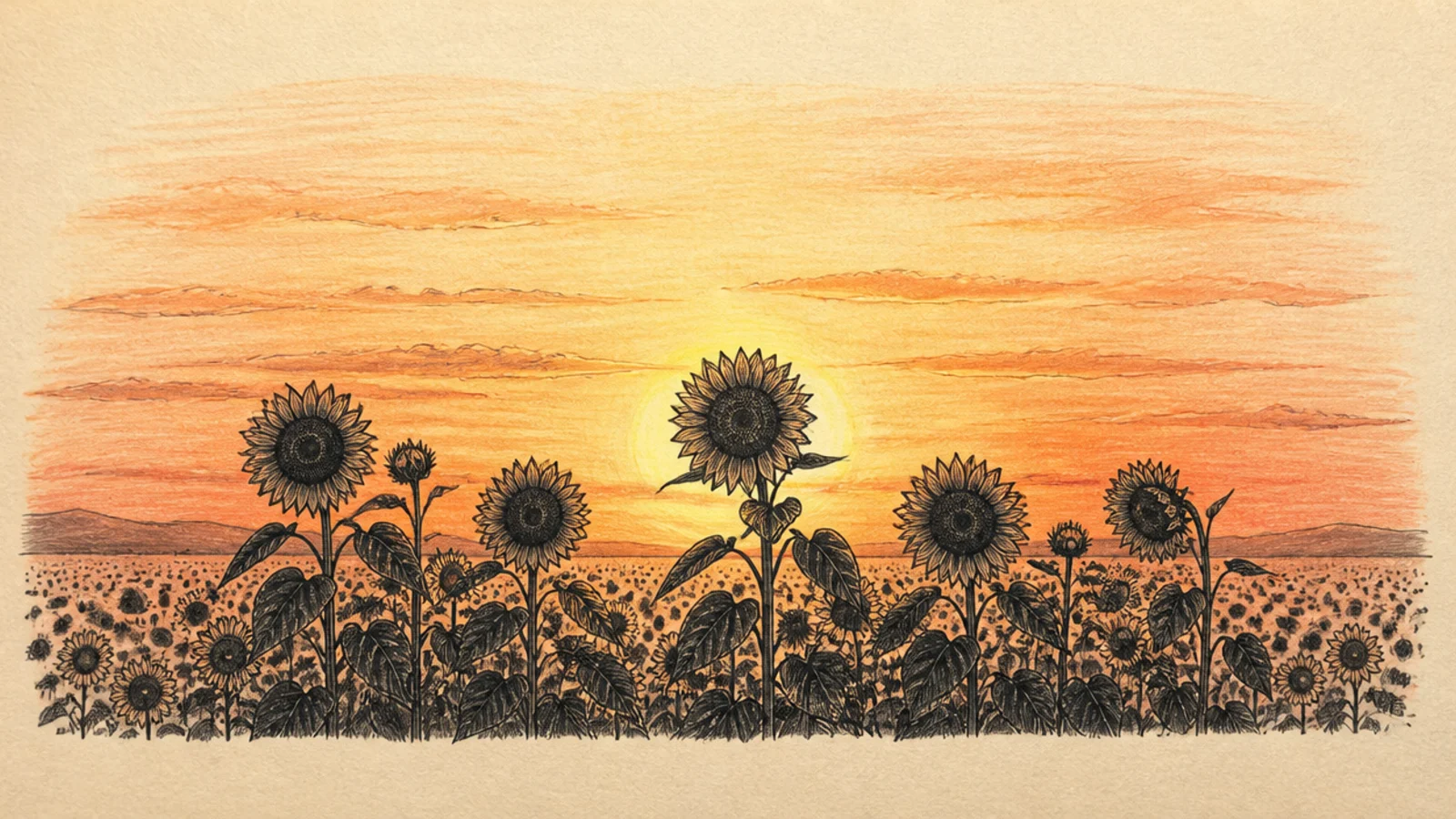
Backlit sunflowers become dark silhouettes against a glowing sky — moody and dramatic. Shape matters more than detail here.
Step 1 fill the sky with warm sunset bands. Step 2 draw sunflowers as dark solid silhouettes along the bottom. Step 3 add a low sun glow behind the tallest blooms.
Keep the flowers solid and dark; the drama is in the sky glow.
Don’t add inner petal detail; silhouettes read as pure shape.
6 Cloudy Summer Field
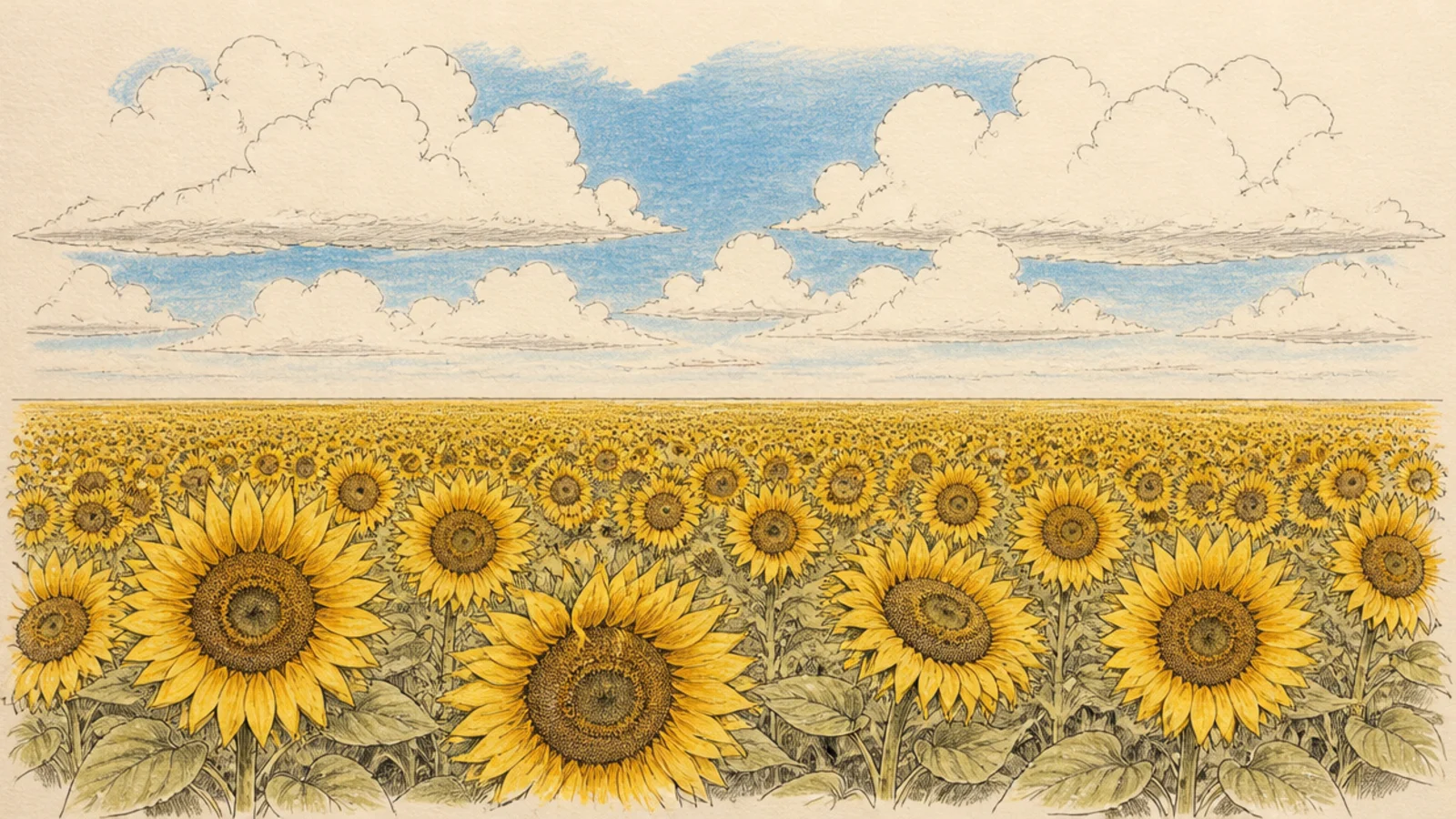
Big soft clouds over a bright field give a cheerful summer-day mood. The clouds balance the busy flowers with open sky.
Pro tipGive clouds flat bottoms and puffy tops so they sit in the sky.
Step 1 draw a mid horizon. Step 2 fill the lower half with a shrinking field of sunflowers. Step 3 add large fluffy clouds with flat bottoms across the sky.
AvoidDon’t overfill the sky; leave open blue between clouds.
7 Field With a Farmhouse
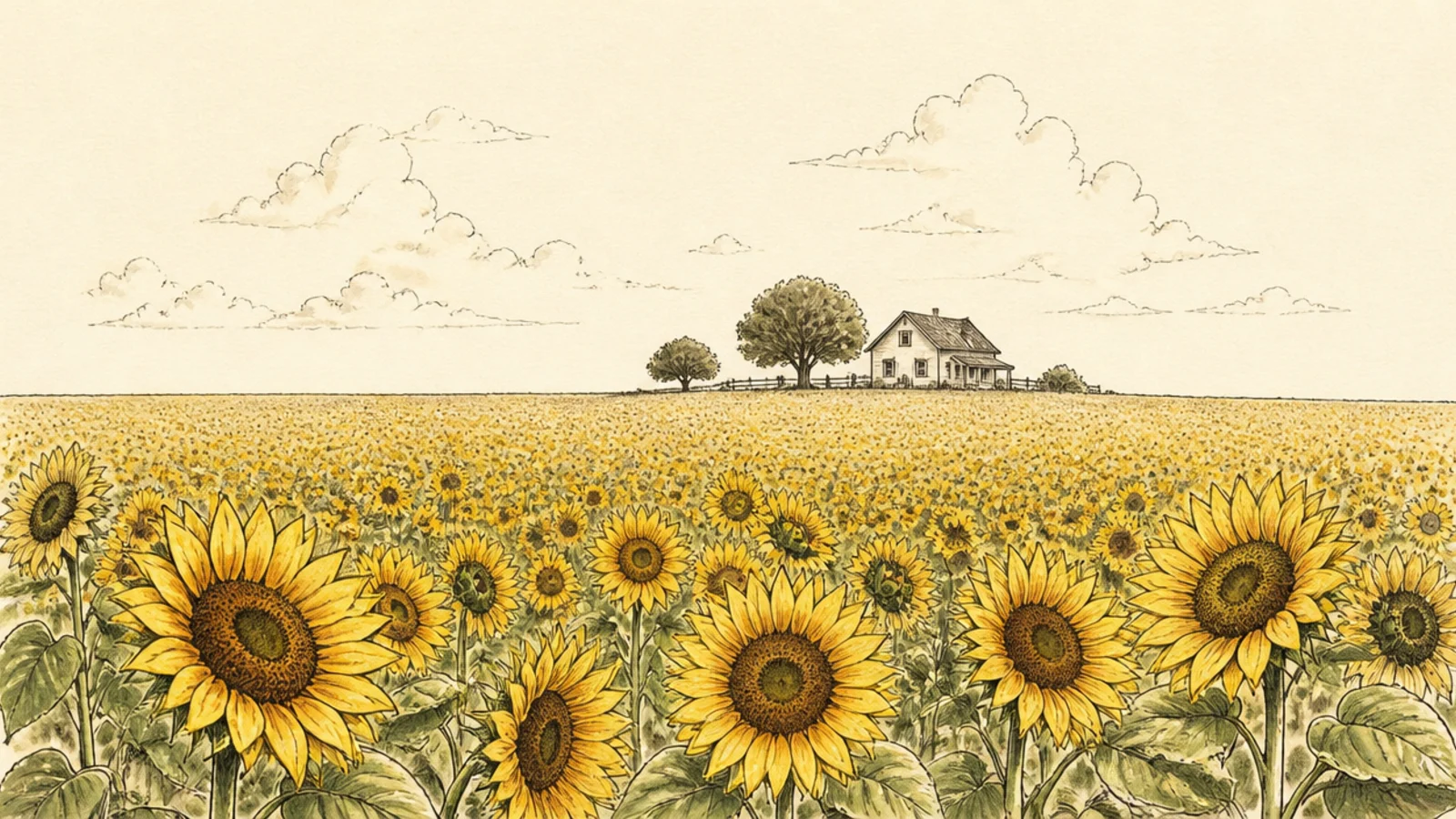
A little farmhouse on the horizon adds a focal point and a sense of place. The building gives scale to the whole field.
Pro tipKeep the house small so the flowers stay the stars of the scene.
Step 1 draw a small simple farmhouse on the horizon. Step 2 fill the foreground with a shrinking sunflower field. Step 3 add a couple of trees beside the house.
AvoidDon’t draw the house too big; it should sit distant on the horizon.
8 Distant Mountain Field
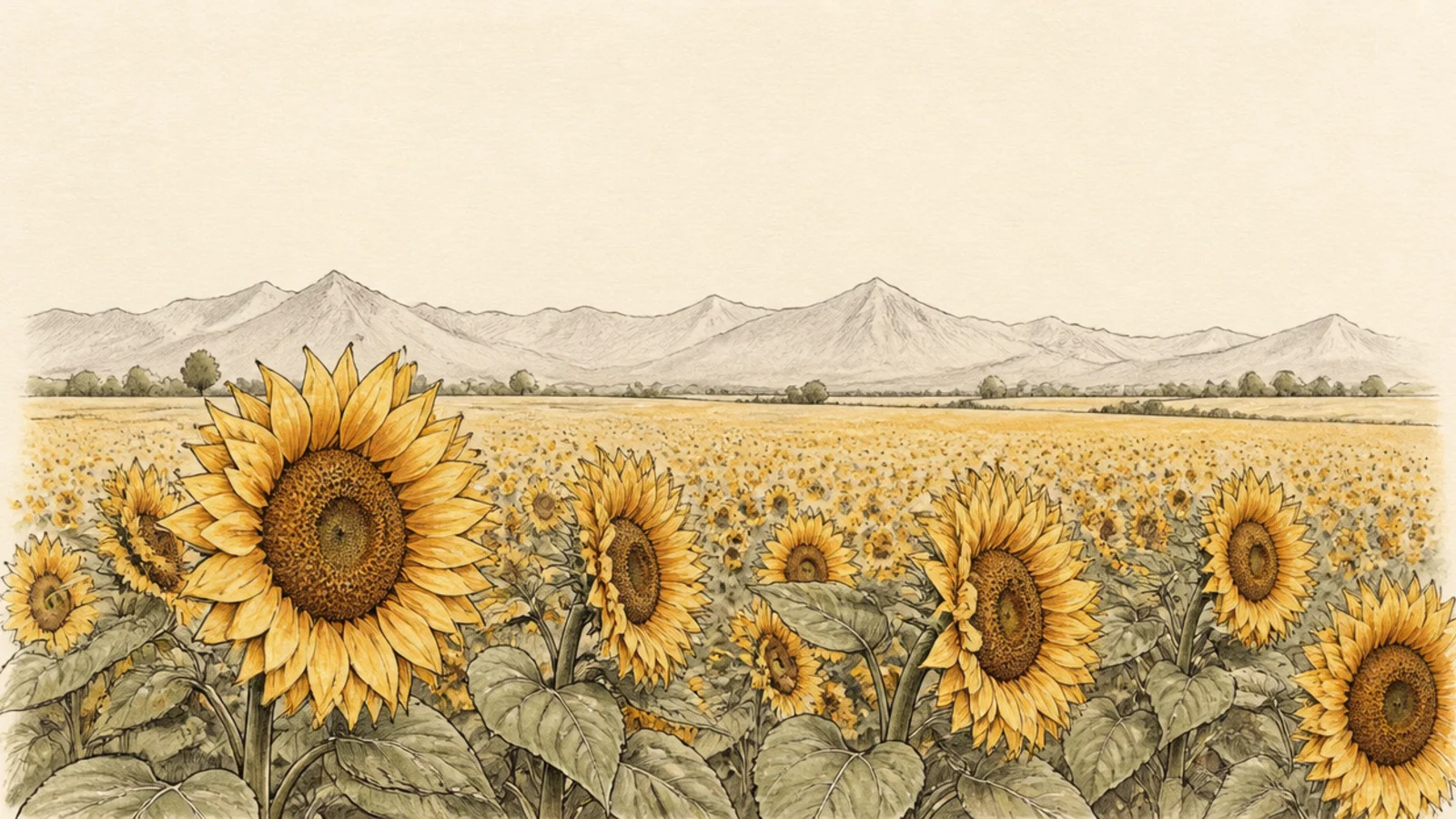
Pale mountains behind the field add layers of depth — foreground flowers, mid-field, and far peaks. Atmospheric fading sells the distance.
Step 1 draw pale simple mountains along the horizon. Step 2 add a band of mid-distance field. Step 3 place big detailed sunflowers in the foreground.
Draw the mountains very pale so they recede far behind the field.
Don’t make the mountains dark; distance means lighter, not bolder.
9 Field Edge With a Fence
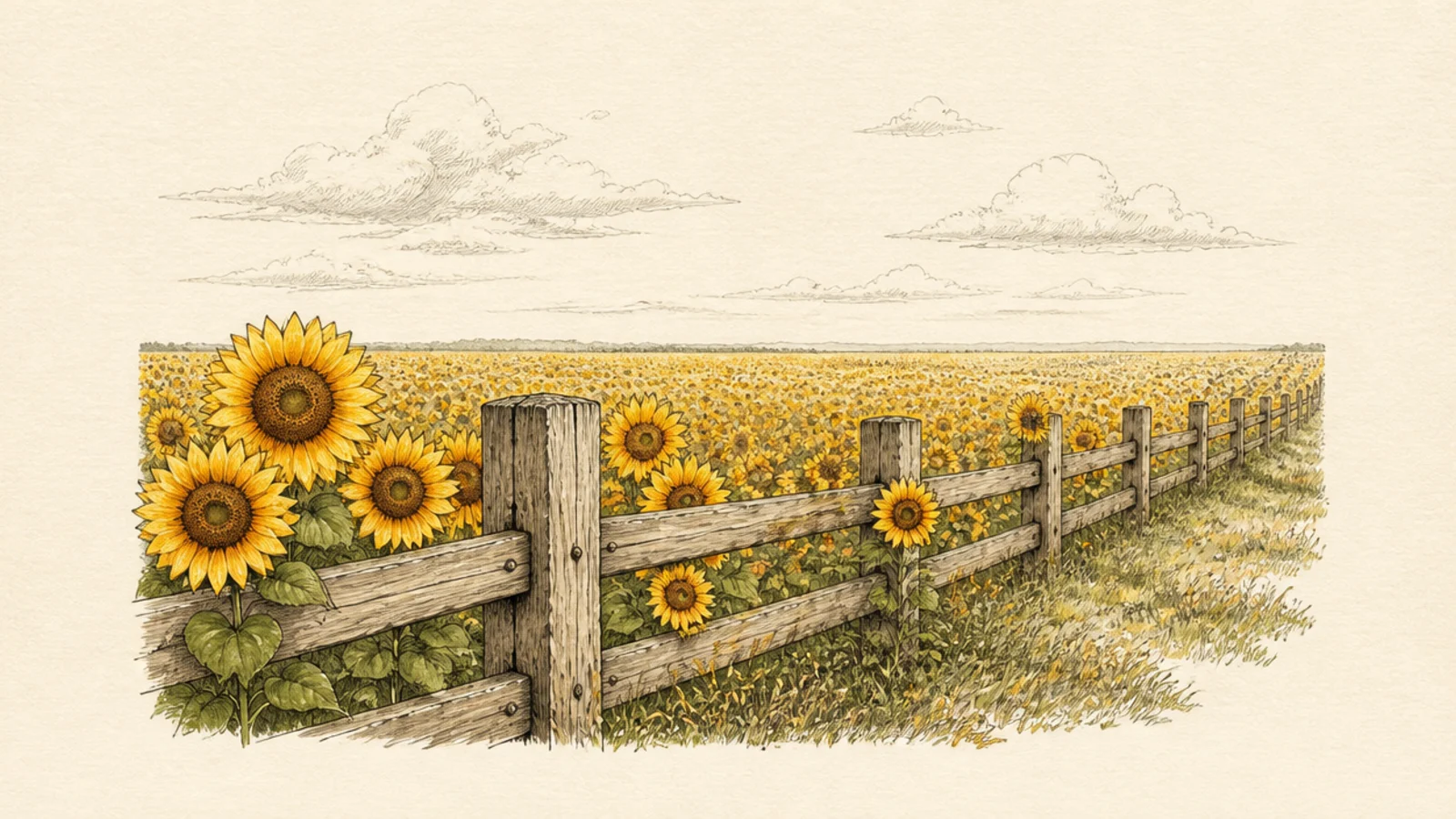
A simple fence line marks the field’s edge and gives a strong perspective line. The posts shrinking into the distance reinforce depth.
Step 1 draw a fence with posts shrinking toward the horizon. Step 2 fill behind it with a sunflower field. Step 3 add a few blooms poking through the fence.
Space the fence posts closer together as they recede for perspective.
Don’t keep the posts evenly spaced; tighten them toward the back.
10 Aerial Patchwork Field
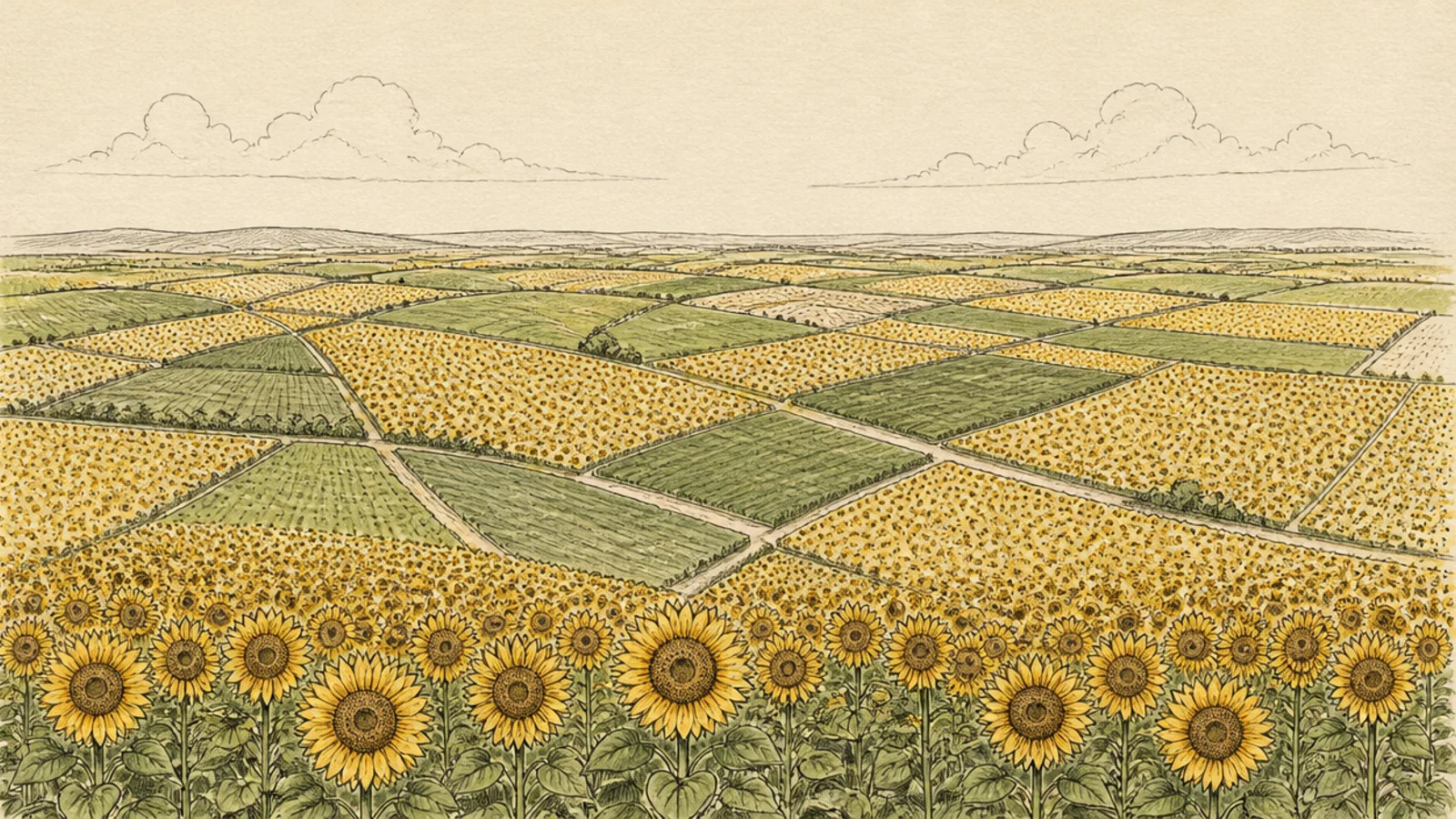
Seen from above, fields become a patchwork of yellow and green blocks. This aerial view is graphic and unexpected.
Pro tipAngle the blocks slightly so the aerial view feels like real land.
Step 1 divide the page into angled field blocks. Step 2 fill some with rows of tiny sunflowers, others with green. Step 3 add thin paths between the blocks.
AvoidDon’t draw full flowers; from above they’re rows of tiny dabs.
11 Golden Hour Glow Field
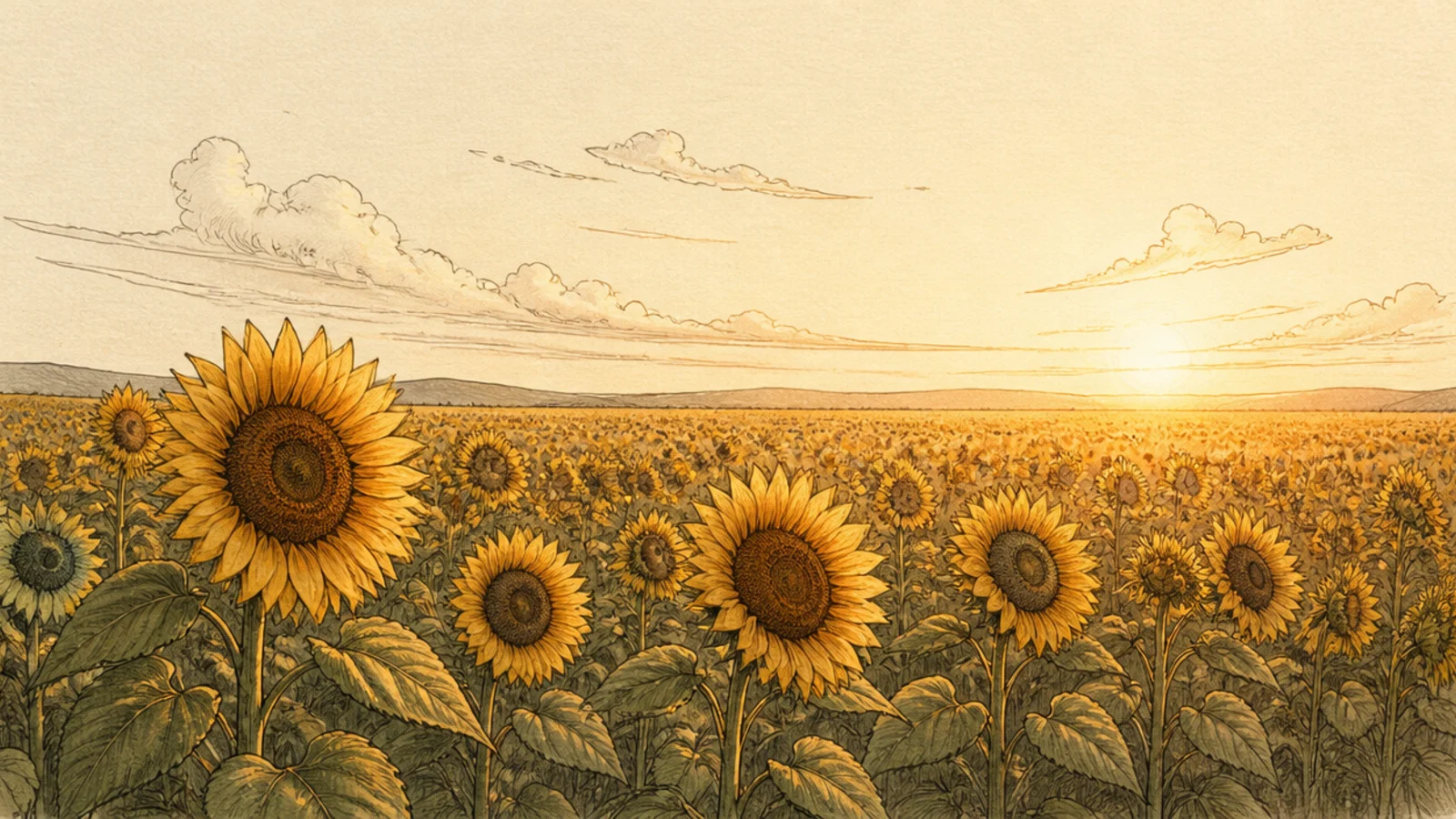
Warm low light washes the whole field gold, with long shadows and glowing edges. The most dreamy, atmospheric option.
Pro tipLight one side of every flower warmly and shadow the other.
Step 1 tint the whole scene warm. Step 2 draw the field with bright edges on the sun side of each bloom. Step 3 stretch long shadows across the ground.
AvoidDon’t shade flatly; the glow needs a clear lit side and shadow side.
12 Field With Birds
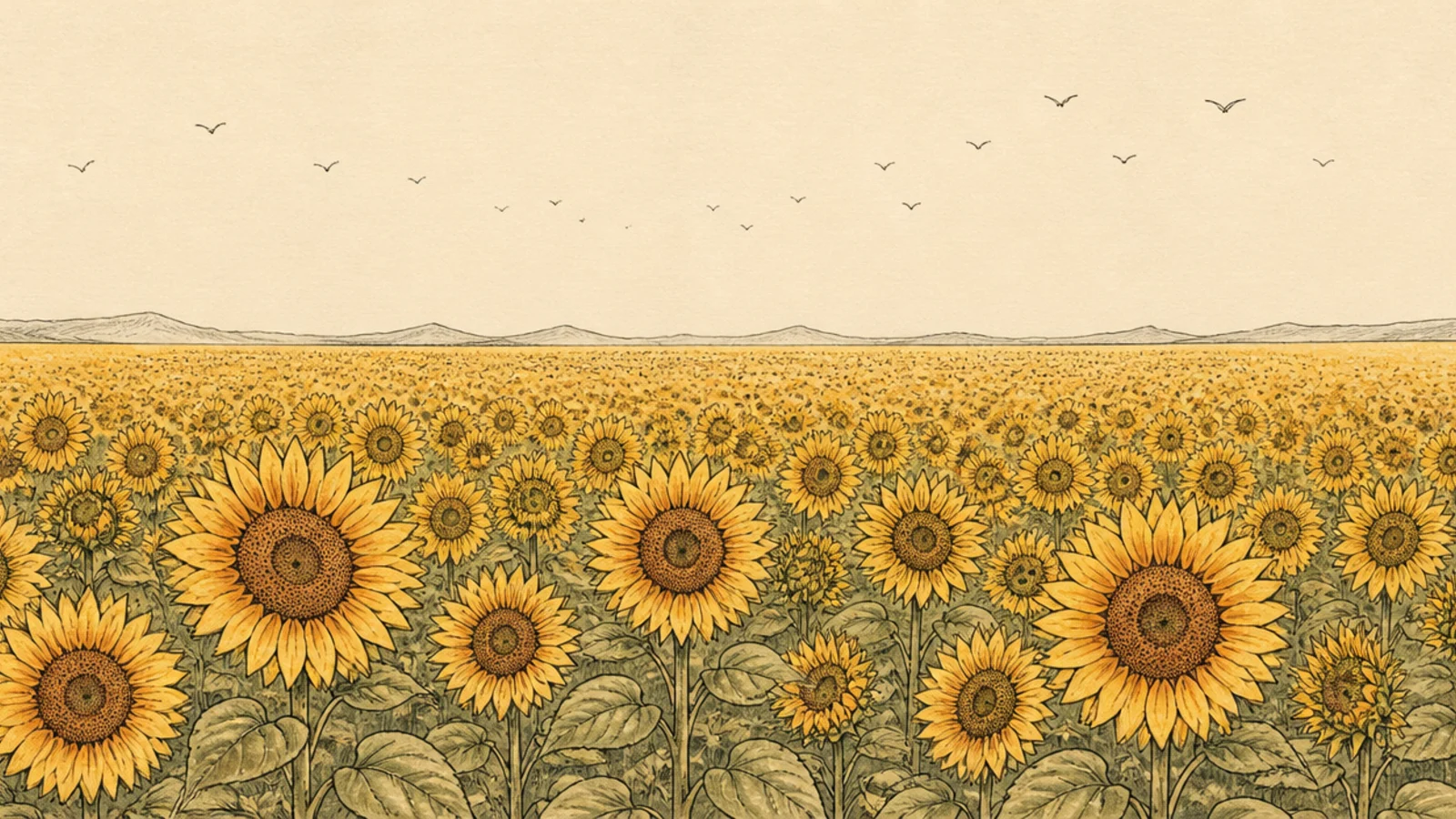
A few small birds in the sky add life and scale without extra flower work. Simple V-shapes are enough to suggest distance.
Step 1 draw the field and horizon. Step 2 add small V-shaped birds in the sky, smaller ones higher and farther. Step 3 keep the field simple below.
Make far birds tiny Vs; near ones slightly larger with a body.
Don’t over-detail the birds; simple shapes read best at distance.
13 Rainy Day Field
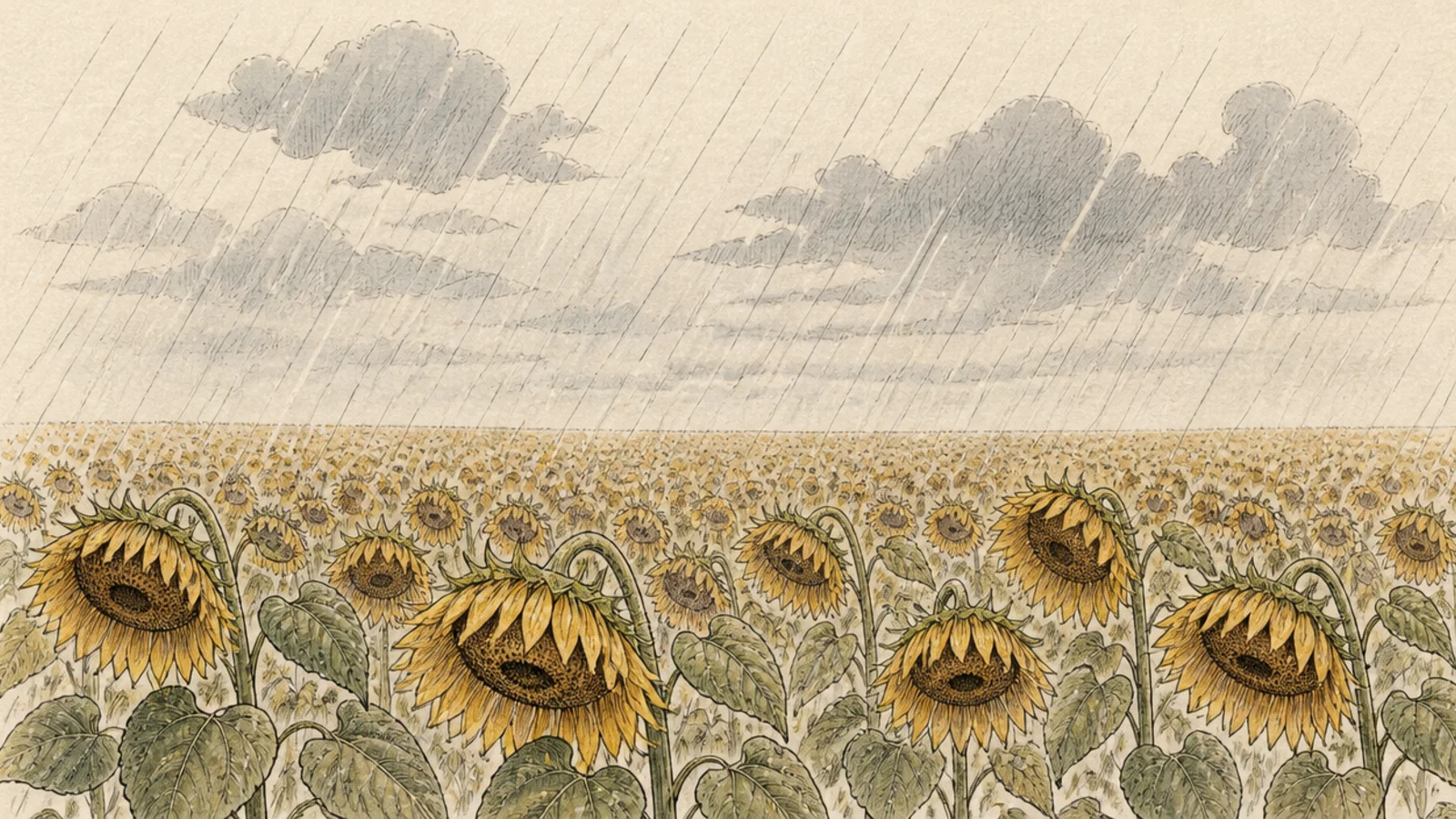
Soft diagonal rain and a grey sky give a moody, atmospheric field — proof sunflowers aren’t only for sunny days. The mood contrast is striking.
Step 1 draw a grey clouded sky. Step 2 add the field with slightly drooping blooms. Step 3 add fine diagonal rain lines across the whole scene.
Keep all rain lines at the same slight diagonal for believable rain.
Don’t make rain vertical or scattered; angle it consistently.
14 Field With a Windmill
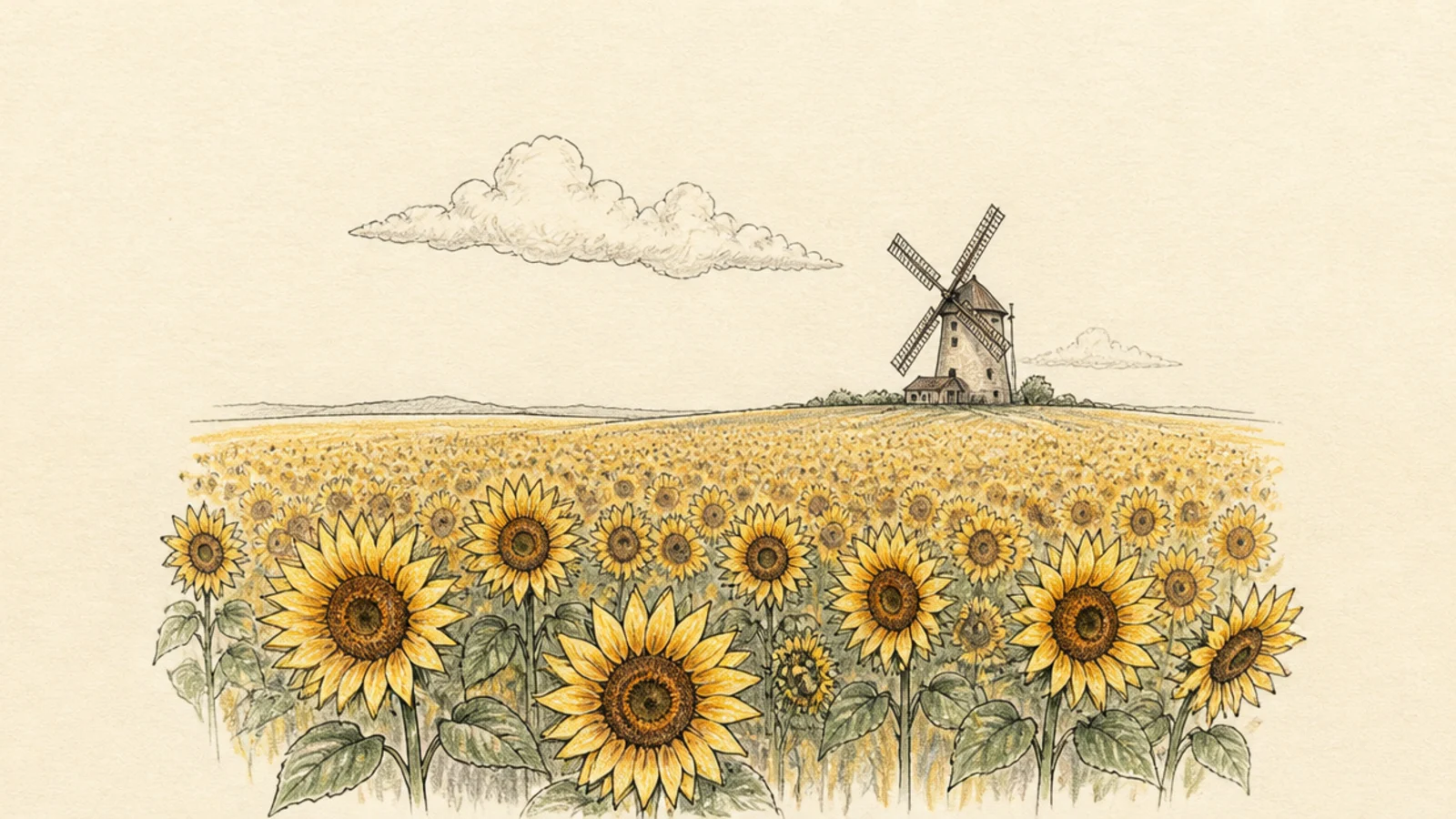
A windmill on the horizon adds a charming European countryside focal point. Its height contrasts nicely with the low flowers.
Pro tipAngle the windmill sails so it looks like it’s turning.
Step 1 draw a windmill on the horizon with angled sails. Step 2 fill the foreground field, shrinking toward it. Step 3 add a simple sky and cloud.
AvoidDon’t center the windmill flatly; offset it for a natural composition.
15 Close-Crop Field Texture
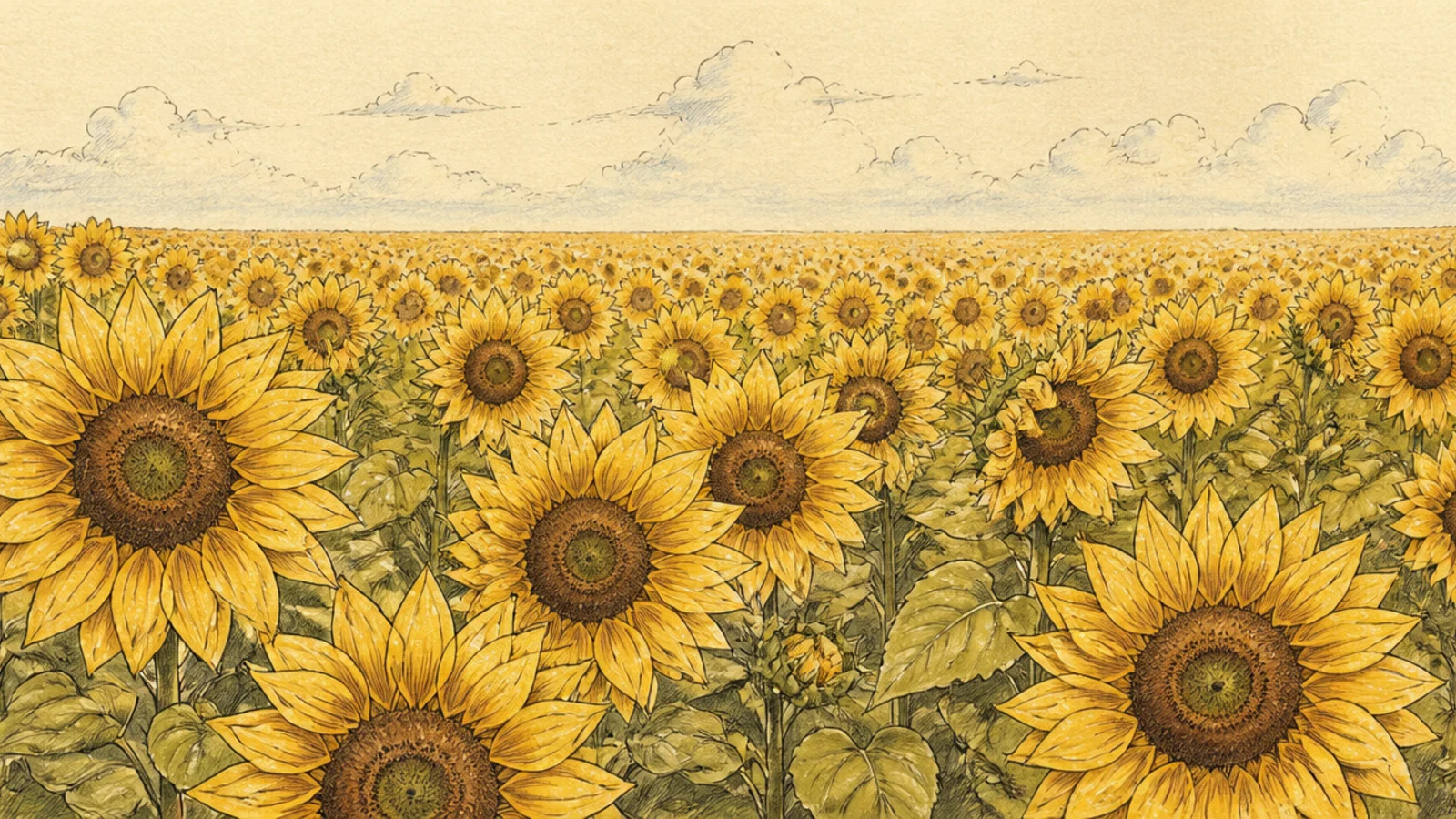
No horizon at all — just packed sunflowers filling the frame edge to edge. The pattern-like density makes an immersive close-up.
Step 1 fill the page with overlapping sunflower heads. Step 2 vary their sizes and angles slightly. Step 3 tuck leaves and stems into the gaps.
Overlap heads and vary angles so it reads as a dense mass, not a grid.
Don’t line them up evenly; randomness makes it feel real and full.
16 Field Under Stars
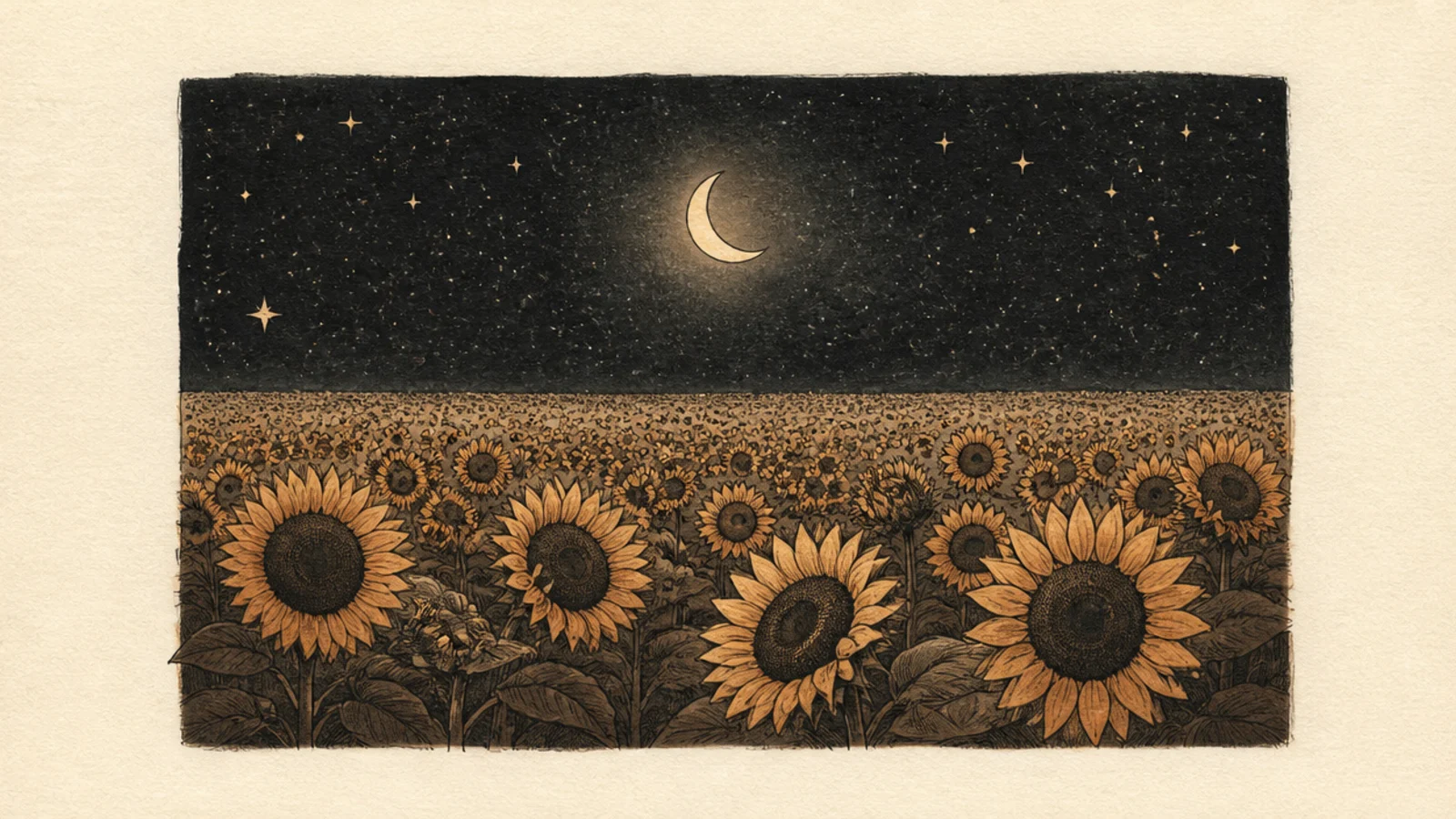
A night field with silhouetted blooms under a starry sky is unexpected and dreamy. The dark flowers pop against the speckled sky.
Pro tipScatter stars unevenly with a few brighter ones for a real night sky.
Step 1 fill the sky dark with scattered star dots. Step 2 draw the field as dark silhouettes along the bottom. Step 3 add a crescent moon glow.
AvoidDon’t space stars in a grid; natural skies are random.
17 Field With a Picnic
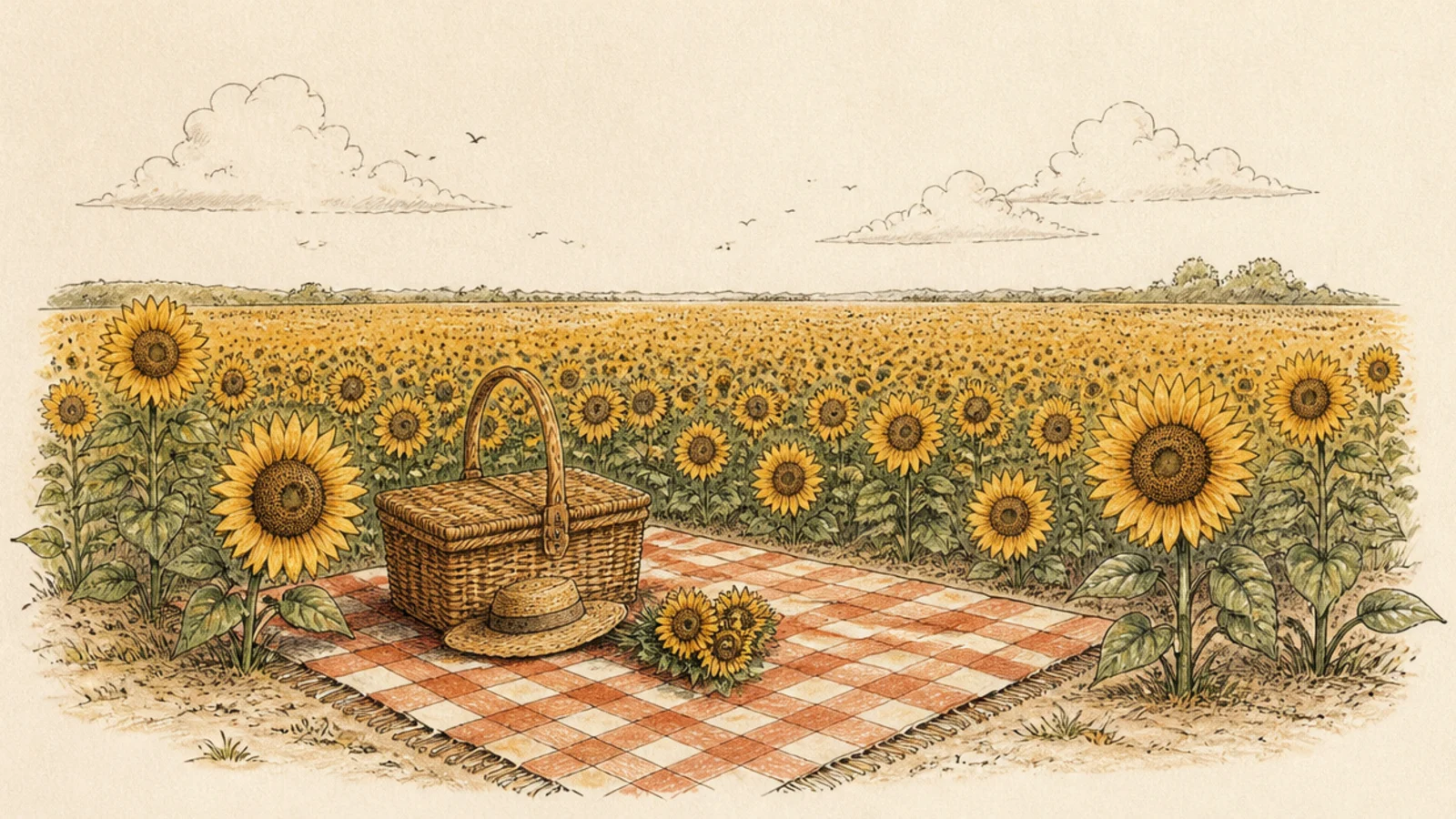
A checkered blanket and basket in the foreground turn the field into a cozy story scene. The human touch adds warmth and scale.
Pro tipAngle the blanket in perspective so it lies flat on the ground.
Step 1 draw a checkered blanket and basket in the foreground. Step 2 add the sunflower field rising behind. Step 3 scatter a few blooms near the blanket.
AvoidDon’t draw the blanket as a flat square; skew it for perspective.
18 Watercolor Wash Field
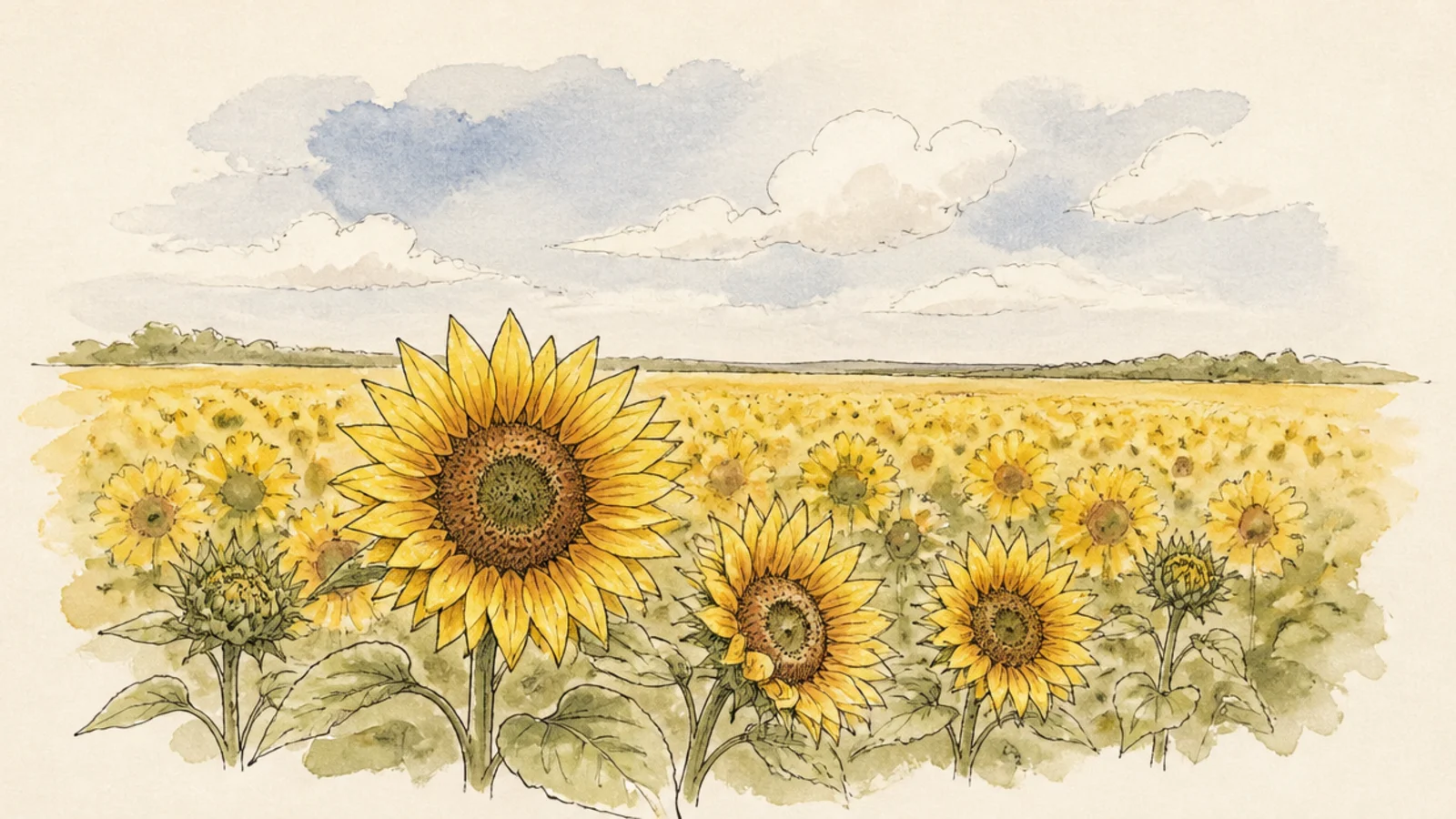
Loose, blended washes suggest a field without hard lines — dreamy and impressionistic. Softness is the whole style.
Step 1 wash the sky and ground in soft bands. Step 2 dab yellow blooms wet so they blur. Step 3 add a few sharper flowers in front for a focal point.
Let the far flowers blur and keep only the front ones crisp.
Don’t outline every bloom; blur is what makes it impressionistic.
19 Field Through a Window
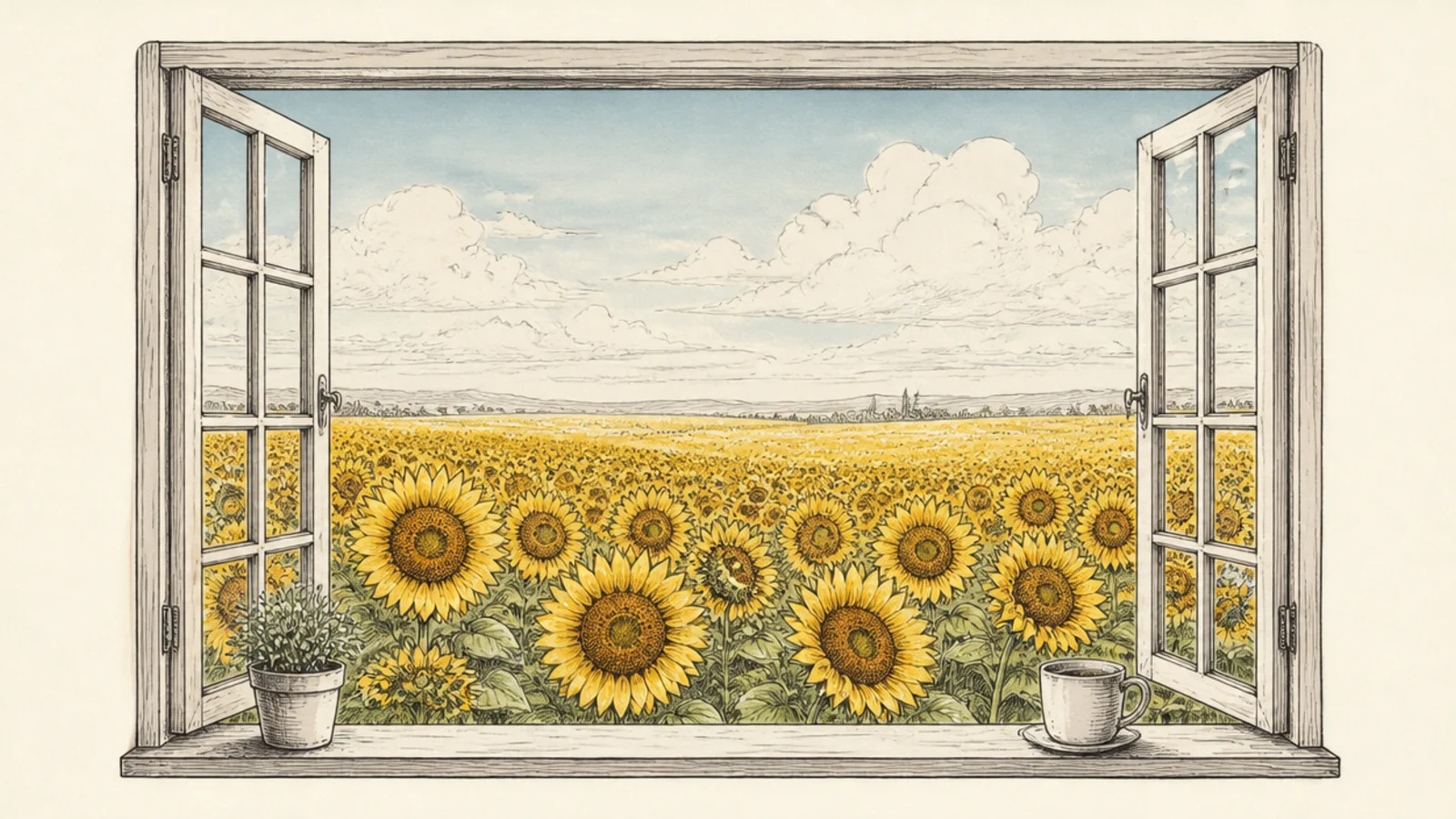
Framing the field inside a window adds a cozy interior foreground and a story — looking out at the view. The frame focuses the scene.
Pro tipLet the frame crop the field so it feels like a real view out.
Step 1 draw an open window frame around the page edge. Step 2 fill the opening with a sunflower field and sky. Step 3 add a small sill detail like a cup or plant.
AvoidDon’t draw the field beyond the frame; the window contains the view.
20 Full Panorama Vista
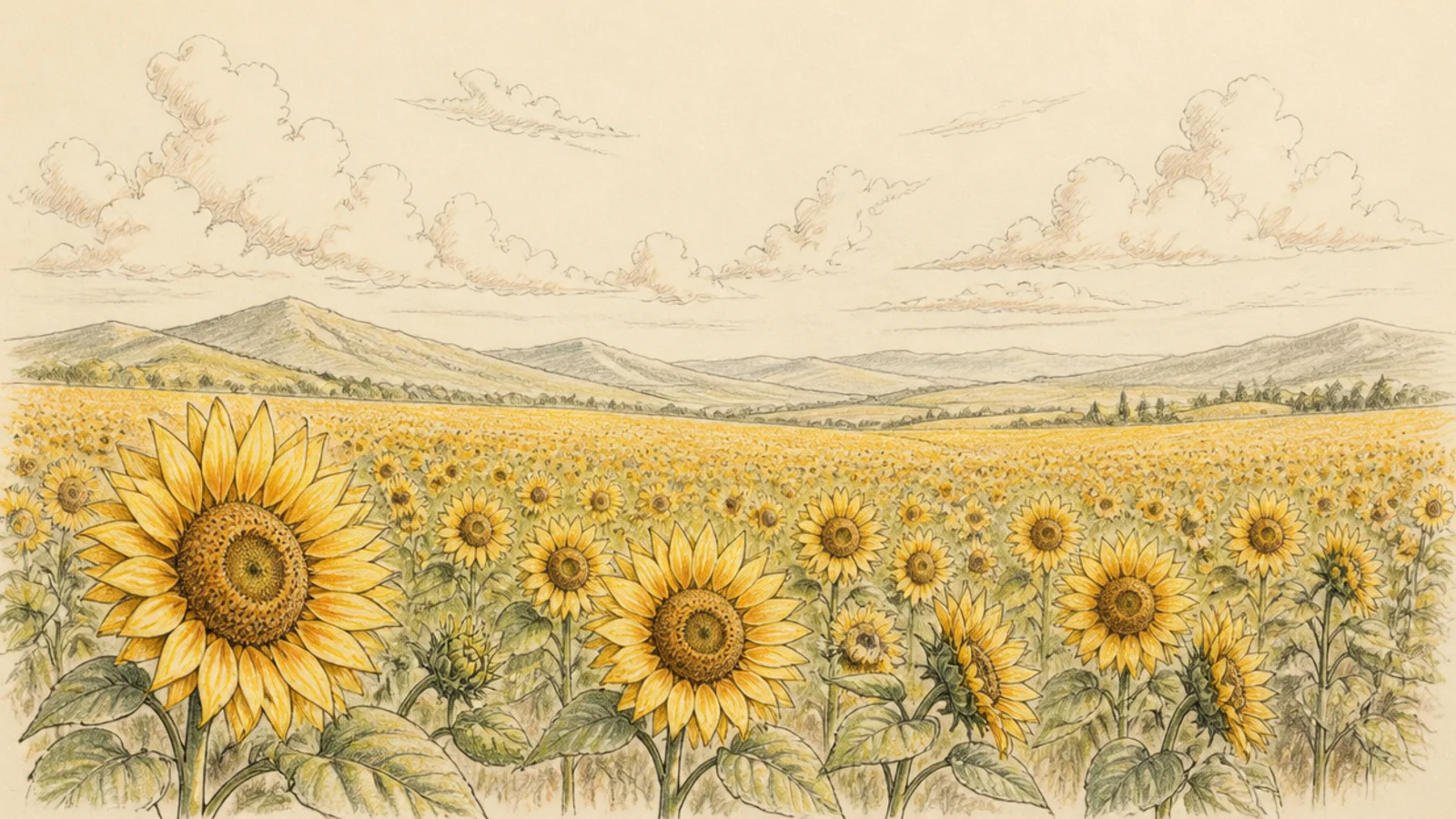
The showpiece — a wide vista combining foreground blooms, mid-field rows, distant hills, and a full sky. It uses every depth trick at once.
Pro tipBuild back to front — sky and hills first, then the big front blooms.
Step 1 layer the scene — pale hills, mid field, big foreground blooms. Step 2 apply shrink-and-fade across all bands. Step 3 finish with a dramatic sky and shadows.
AvoidDon’t draw foreground first; you’ll have no room for the depth layers.