1 Classic Sitting Bunny
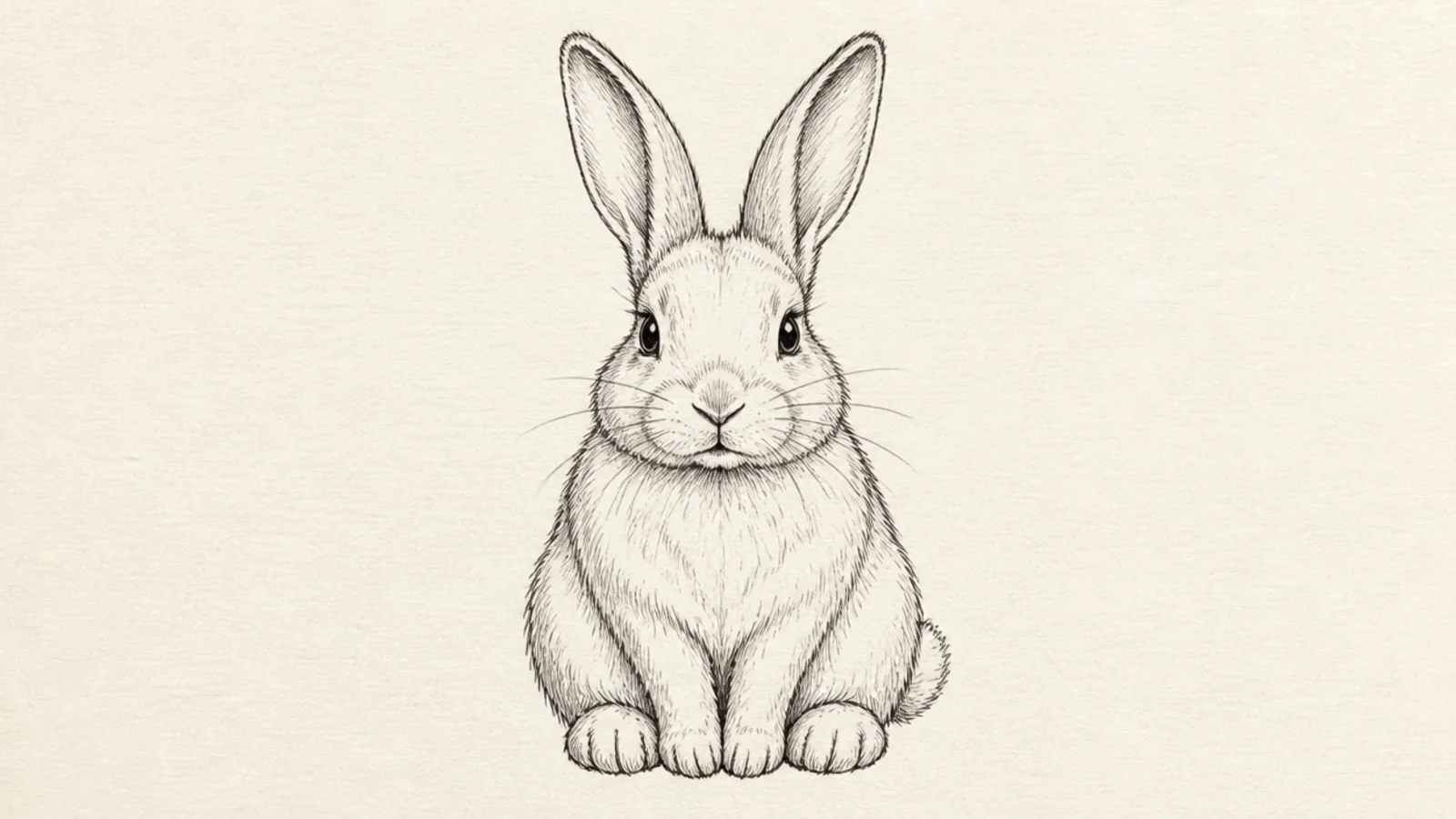
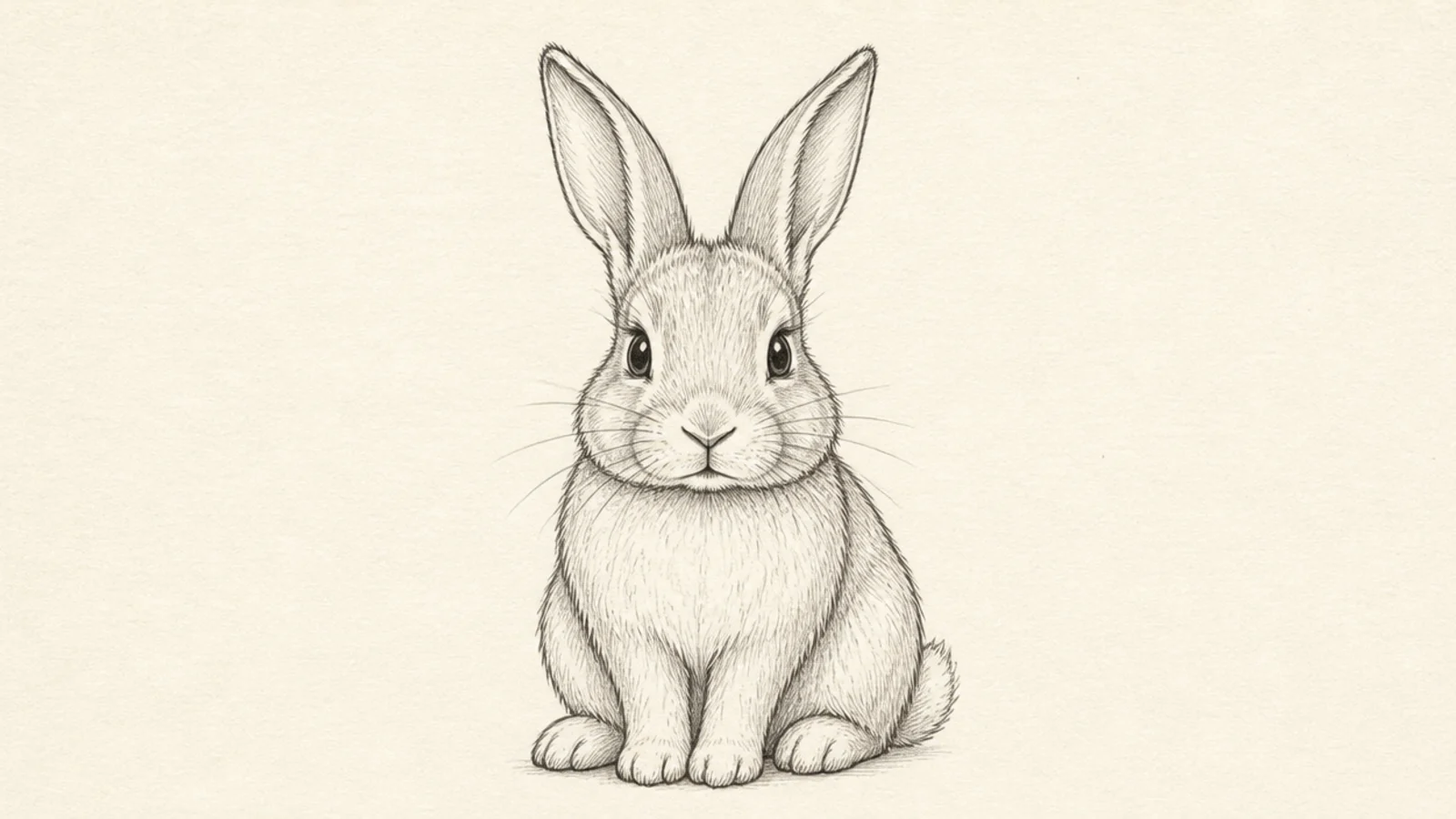
This is the pose most people picture when they think of a bunny, and the base for the list. An upright egg body, a round head, and two tall ears read instantly. Master it and the other poses are small changes.
Pro tipTuck the hind feet forward under the body so the bunny looks settled.
Step 1 draw an upright egg for the body. Step 2 add a round head at the top with two tall ears. Step 3 add front paws close together and the hind feet tucked forward.
AvoidDon’t draw long standing legs; a sitting bunny keeps its feet folded.
2 Alert Upright Bunny
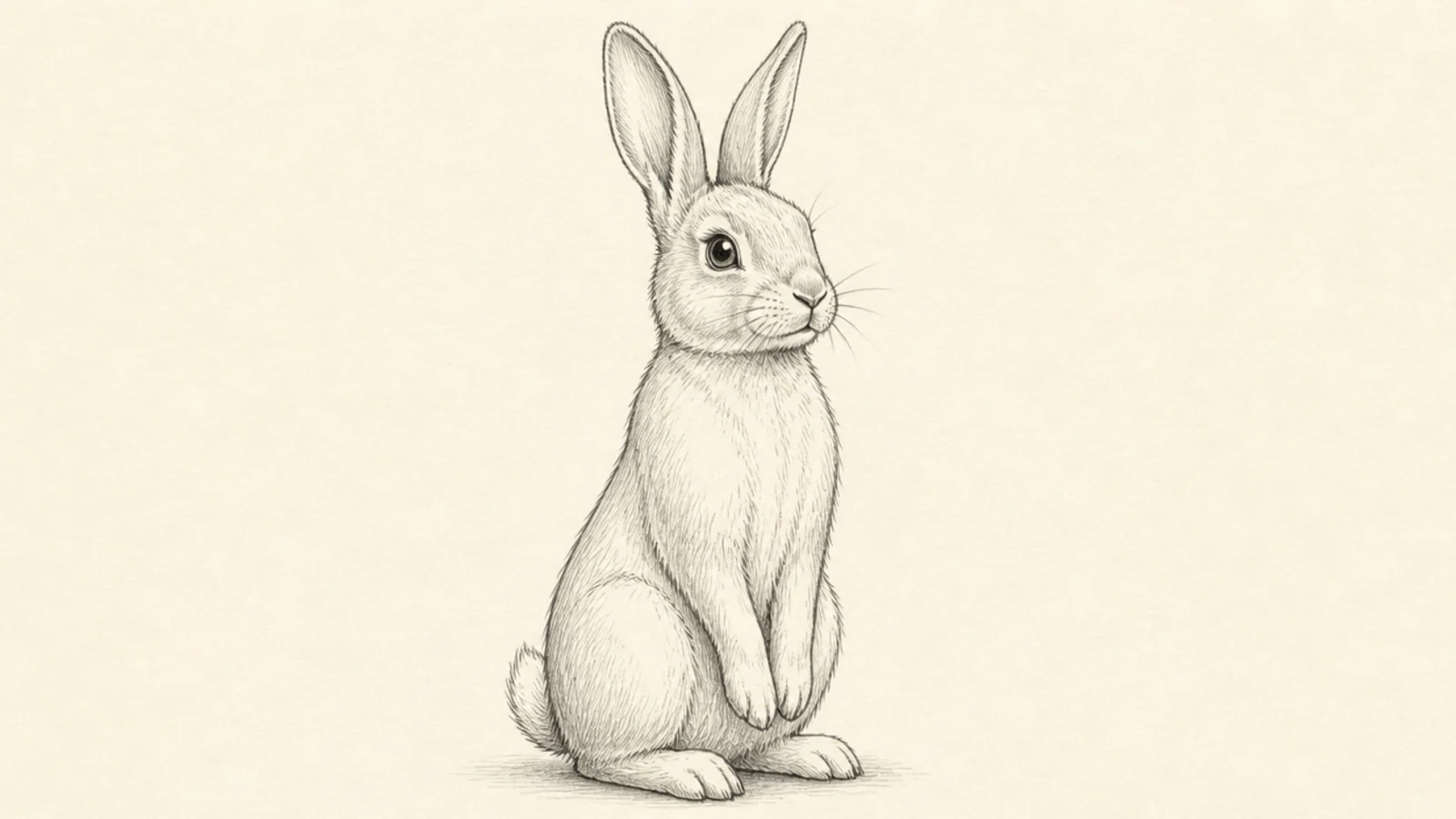
A bunny sitting bolt upright with ears straight up looks alert and watchful. The tall posture shows the rabbit listening. It is a lively version of the sitting pose.
Pro tipPoint both ears straight up and open the eye wide to show alertness.
Step 1 draw a taller, more vertical body. Step 2 add a lifted head and two ears pointing straight up. Step 3 add a wide-open eye and a chest lifted forward.
AvoidDon’t flop the ears; upright ears are what make it look alert.
3 Grazing Bunny
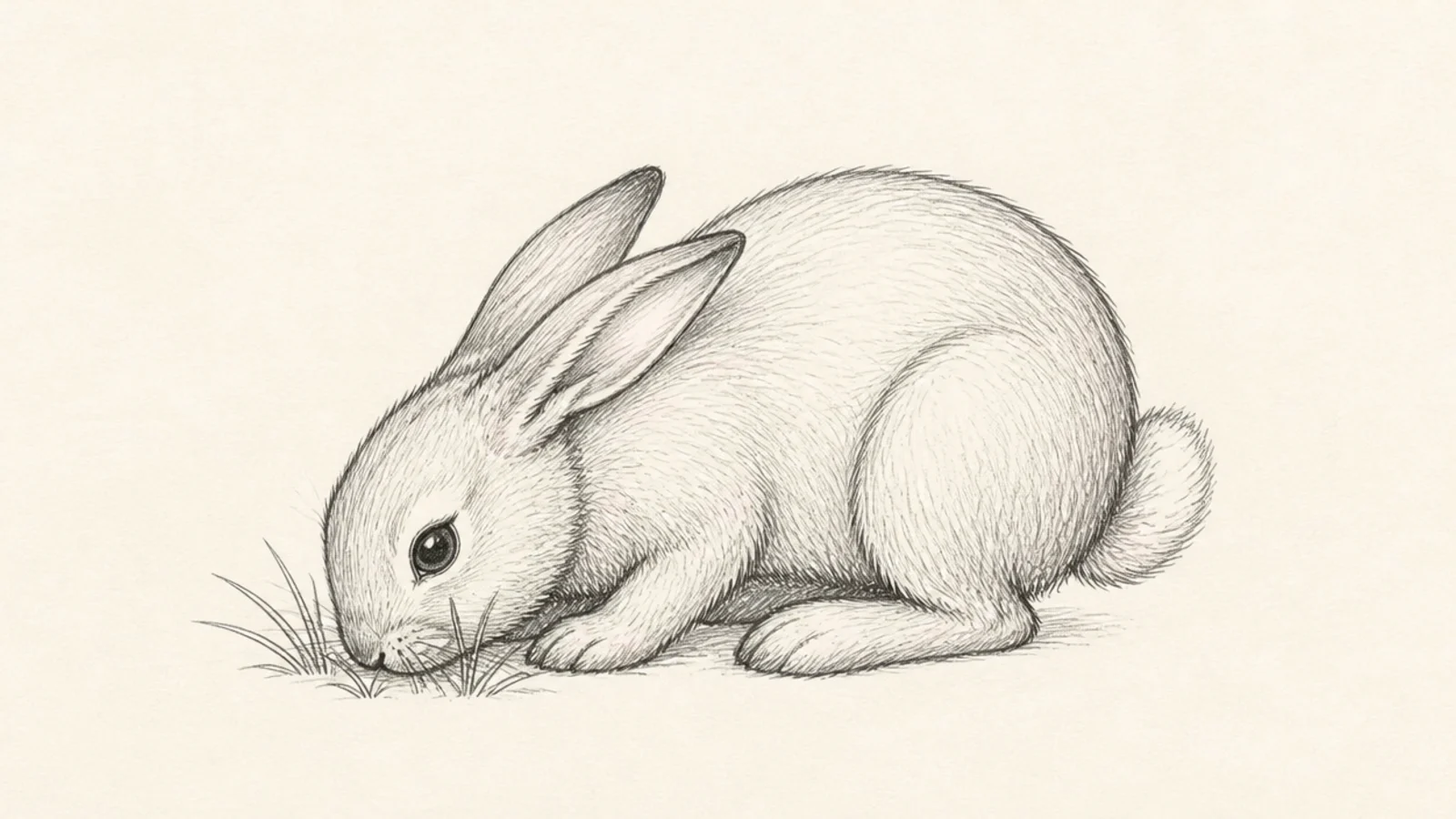
A bunny grazing with its head down is a natural, peaceful pose. The lowered head and rounded back tell the whole story. It looks like a real rabbit in a meadow.
Pro tipRound the back into a smooth hump so the grazing pose looks relaxed.
Step 1 draw a rounded body tilted slightly forward. Step 2 lower the head to the ground line. Step 3 sweep the ears back a little and add a few grass blades.
AvoidDon’t lift the head; the lowered head is what reads as grazing.
4 Resting Loaf Bunny
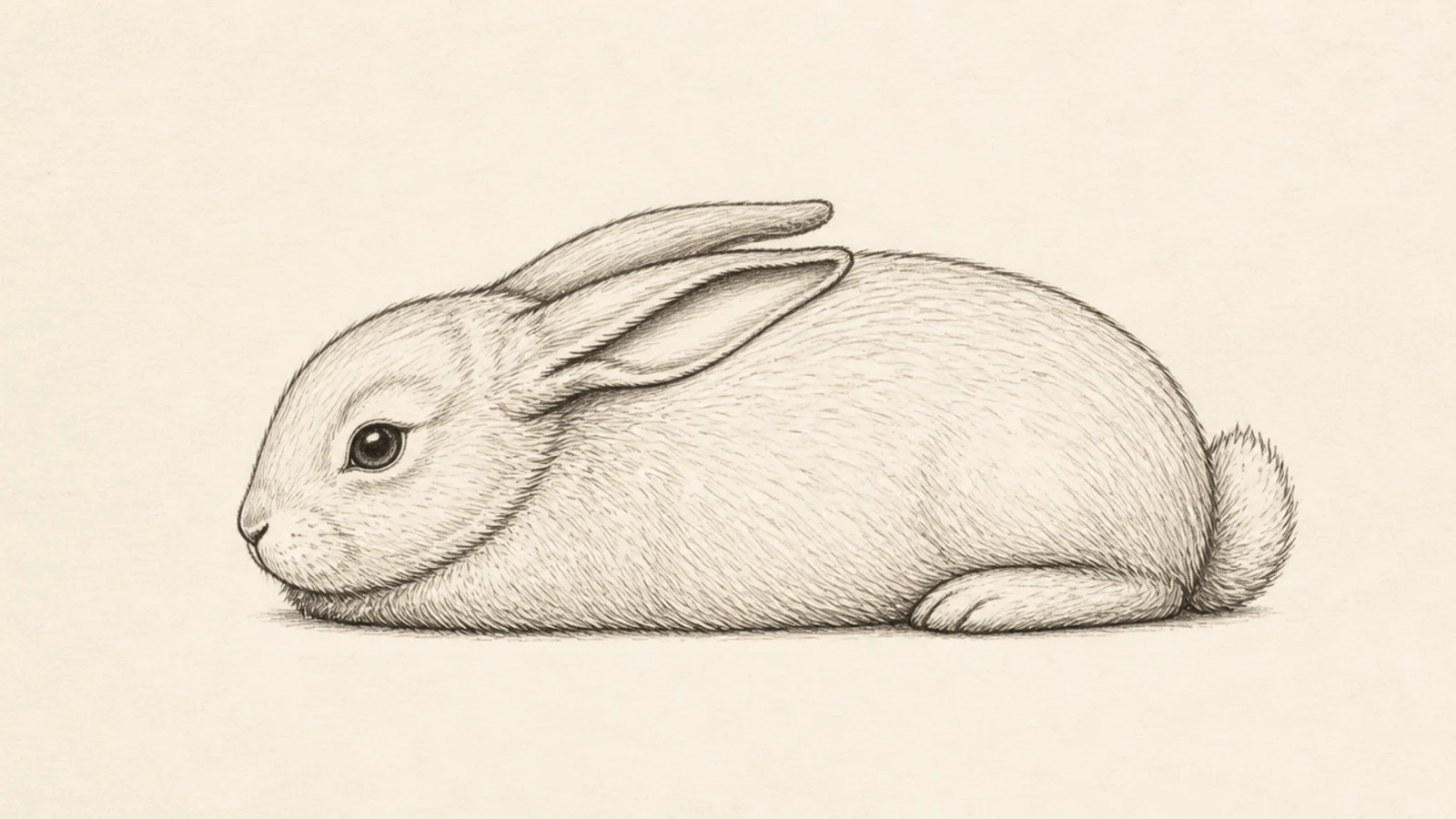
A bunny at rest with its paws tucked under forms a cozy loaf. The low rounded shape reads as calm and content. It is a favorite of real rabbit owners.
Step 1 draw a long rounded loaf shape low to the ground. Step 2 add a small head at one end with ears laid back. Step 3 hide the paws and suggest a curled edge underneath.
Keep the bottom edge flat and the top gently domed like a real loaf.
Don’t show the legs; the tucked, pawless look defines the loaf.
5 Binky Jump Bunny
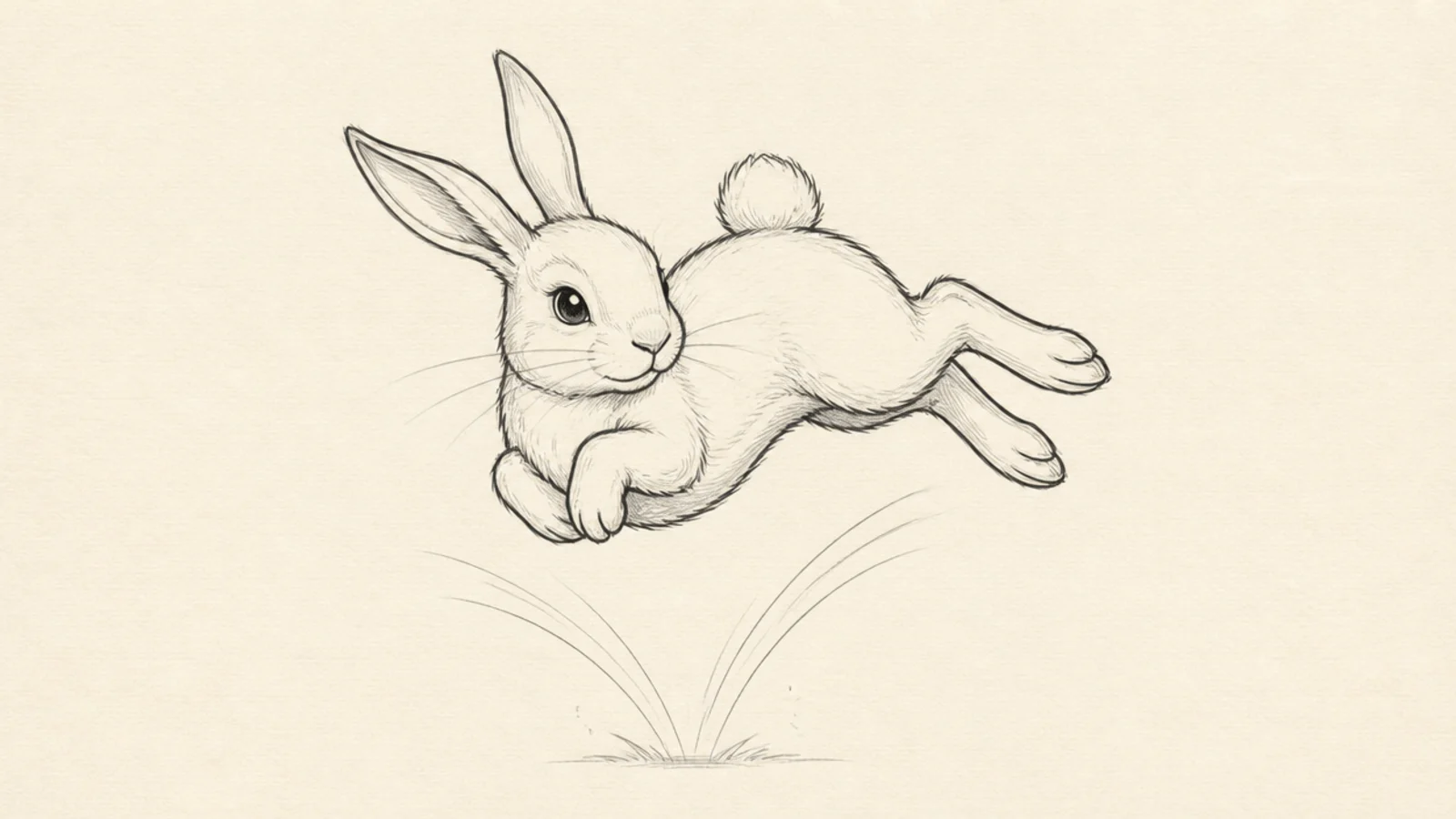
A binky is the joyful mid-air twist rabbits do when happy, and it is fun to draw. The airborne, twisted body radiates energy. It captures a real rabbit behavior.
Step 1 draw a body arched and twisting in the air. Step 2 kick the back legs out to one side. Step 3 sweep the ears and add small motion lines below.
Twist the body slightly so the head and hips face different directions.
Don’t draw it flat and level; the twist is what makes a binky read.
6 Face-Washing Bunny
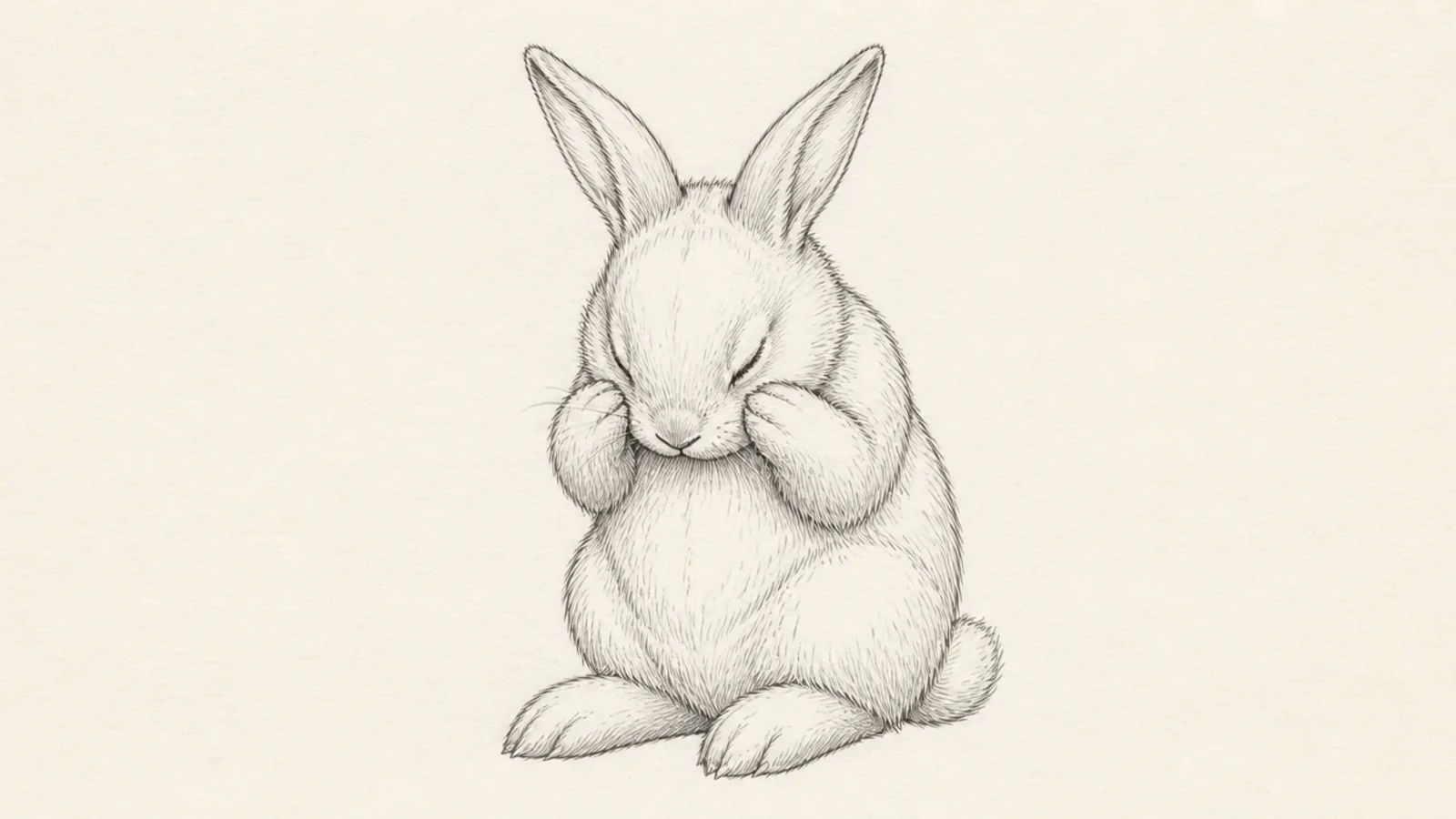
A bunny cleaning its face with both paws is an endearing everyday pose. The paws lifted to the face add sweet detail. It shows a familiar rabbit habit.
Step 1 draw a sitting bunny. Step 2 raise both front paws to the sides of the face. Step 3 tilt the head down slightly and close the eyes gently.
Bring both paws up together beside the nose for a real grooming look.
Don’t spread the paws wide; keep them close to the face.
7 Stretching Bunny
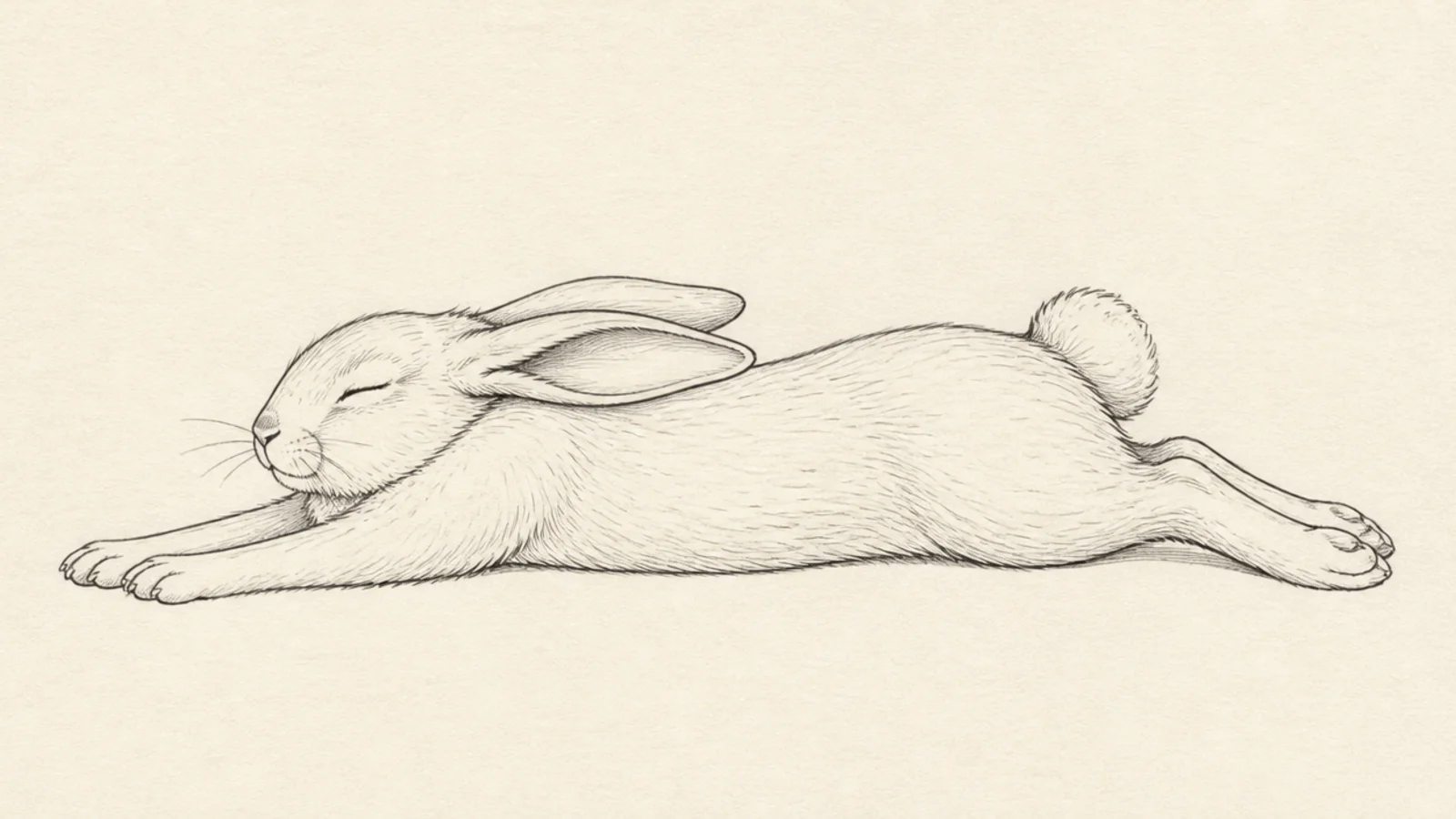
A bunny in a full stretch with legs reaching forward looks long and relaxed. The elongated body is a nice change from the compact poses. It shows a real lazy-day stretch.
Pro tipFlatten the whole body low and long to sell the stretch.
Step 1 draw a long low body stretched horizontally. Step 2 reach the front legs forward flat on the ground. Step 3 extend the back legs behind and lay the ears back.
AvoidDon’t keep the body compact; the length is the point of a stretch.
8 Flopped-Over Bunny
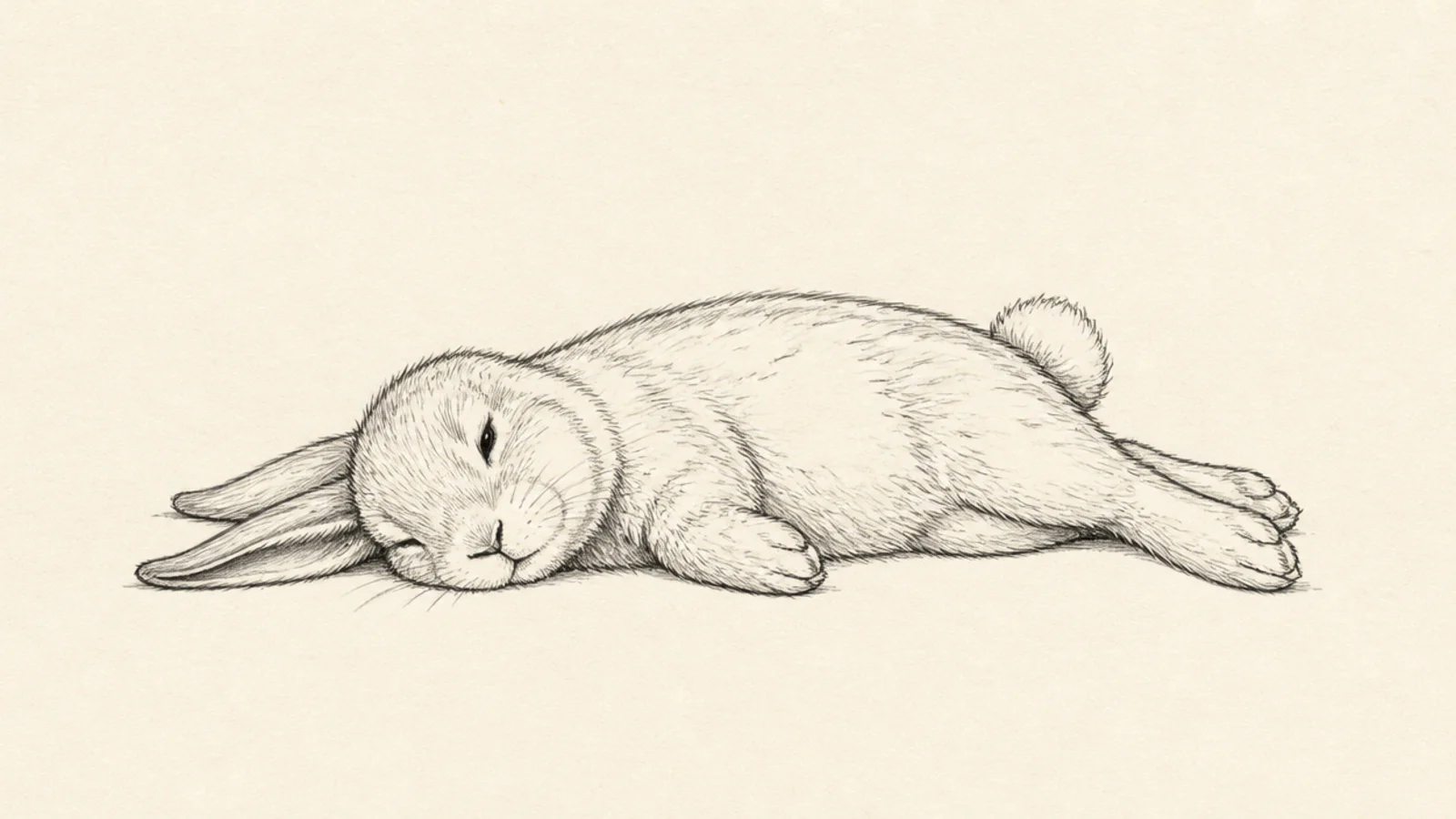
A bunny flopped on its side is the ultimate sign of a relaxed rabbit. The sideways sprawl looks trusting and cozy. It is unusual and charming to draw.
Step 1 draw the body lying on its side as a soft horizontal oval. Step 2 add the head resting on the ground. Step 3 let the legs splay loosely and the ears fall back.
Let the legs splay in slightly different directions for a loose, floppy look.
Don’t draw stiff straight legs; relaxed splayed legs sell the flop.
9 Periscoping Bunny
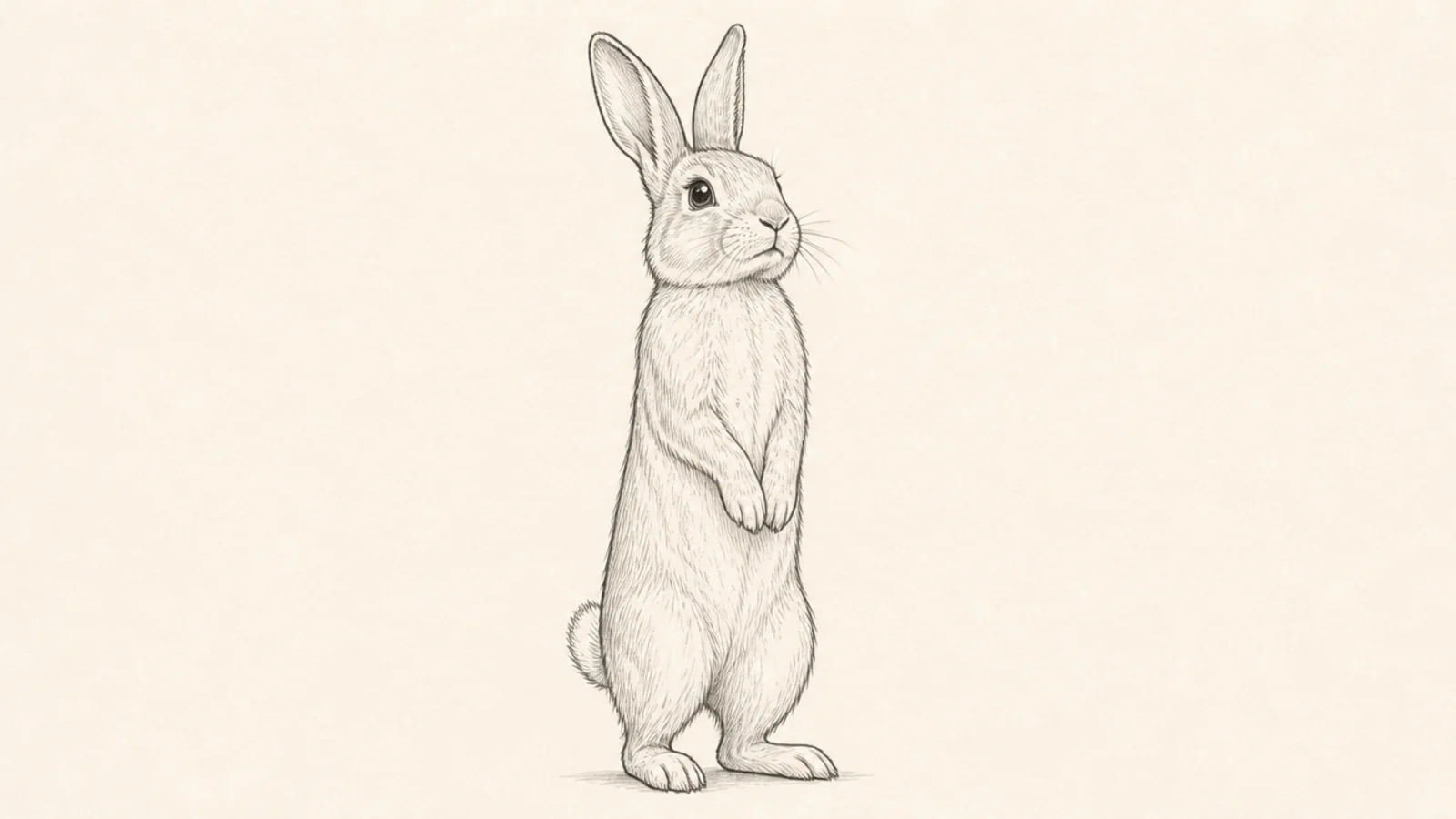
A bunny standing up on its hind legs to look around is called periscoping. The tall upright stretch is alert and curious. It is a striking, natural pose.
Step 1 draw a long vertical body balanced on the hind feet. Step 2 lift the head high with ears up. Step 3 hold the front paws up against the chest.
Balance the whole body over the back feet so it looks like it is standing up.
Don’t lean it over; a periscoping bunny stands nearly vertical.
10 Running Bunny
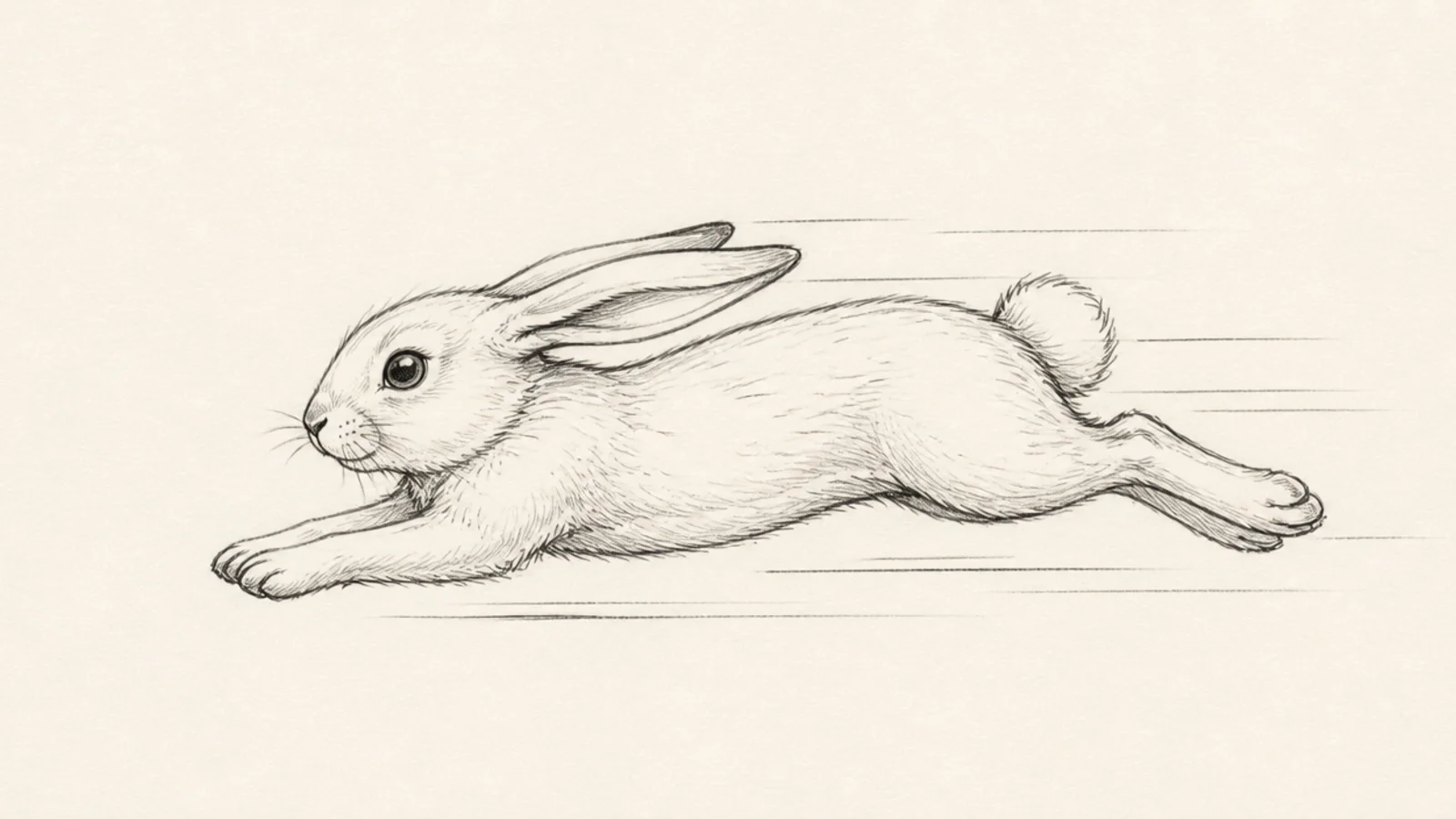
A running bunny with legs stretched front and back shows real speed. The extended gallop pose is dynamic and fun. It captures a rabbit dashing across a field.
Pro tipStretch the front and back legs far apart to show a full running stride.
Step 1 draw a stretched body leaning forward. Step 2 reach the front legs ahead and the back legs far behind. Step 3 pin the ears back and add speed lines.
AvoidDon’t bunch the legs together; wide-apart legs show the run.
11 Curled Sleeping Bunny
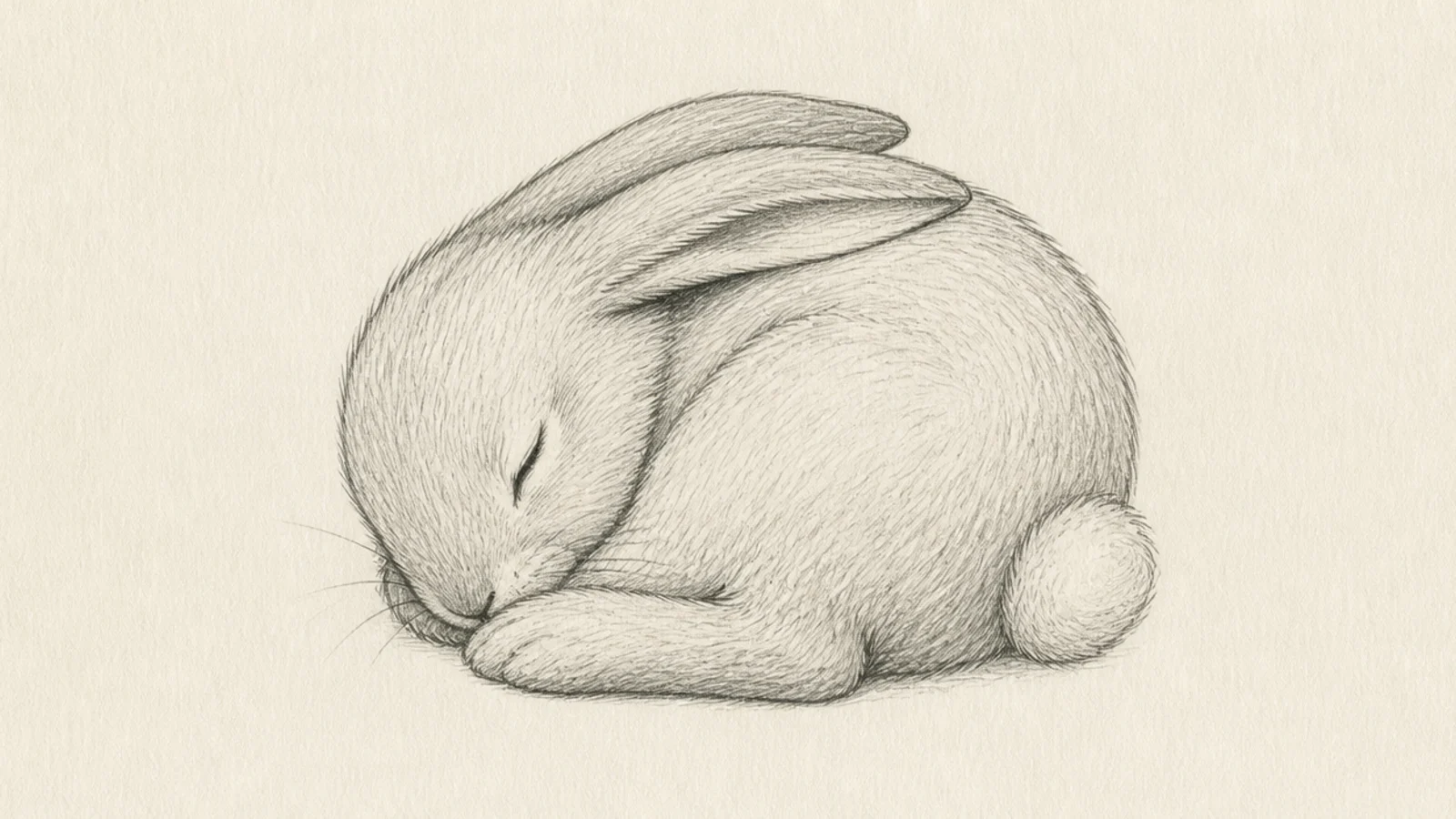
A bunny curled tight into a ball asleep is peak cozy. The rounded shape is simple and sweet. It reads as a peaceful napping rabbit.
Pro tipWrap the body into a near-circle so it clearly looks curled and asleep.
Step 1 draw a large soft oval for the curled body. Step 2 tuck the head down against the body. Step 3 fold the ears back over the body and add a curled tail.
AvoidDon’t leave gaps in the curl; a tight round shape reads as sleeping.
12 Mother and Baby Bunny
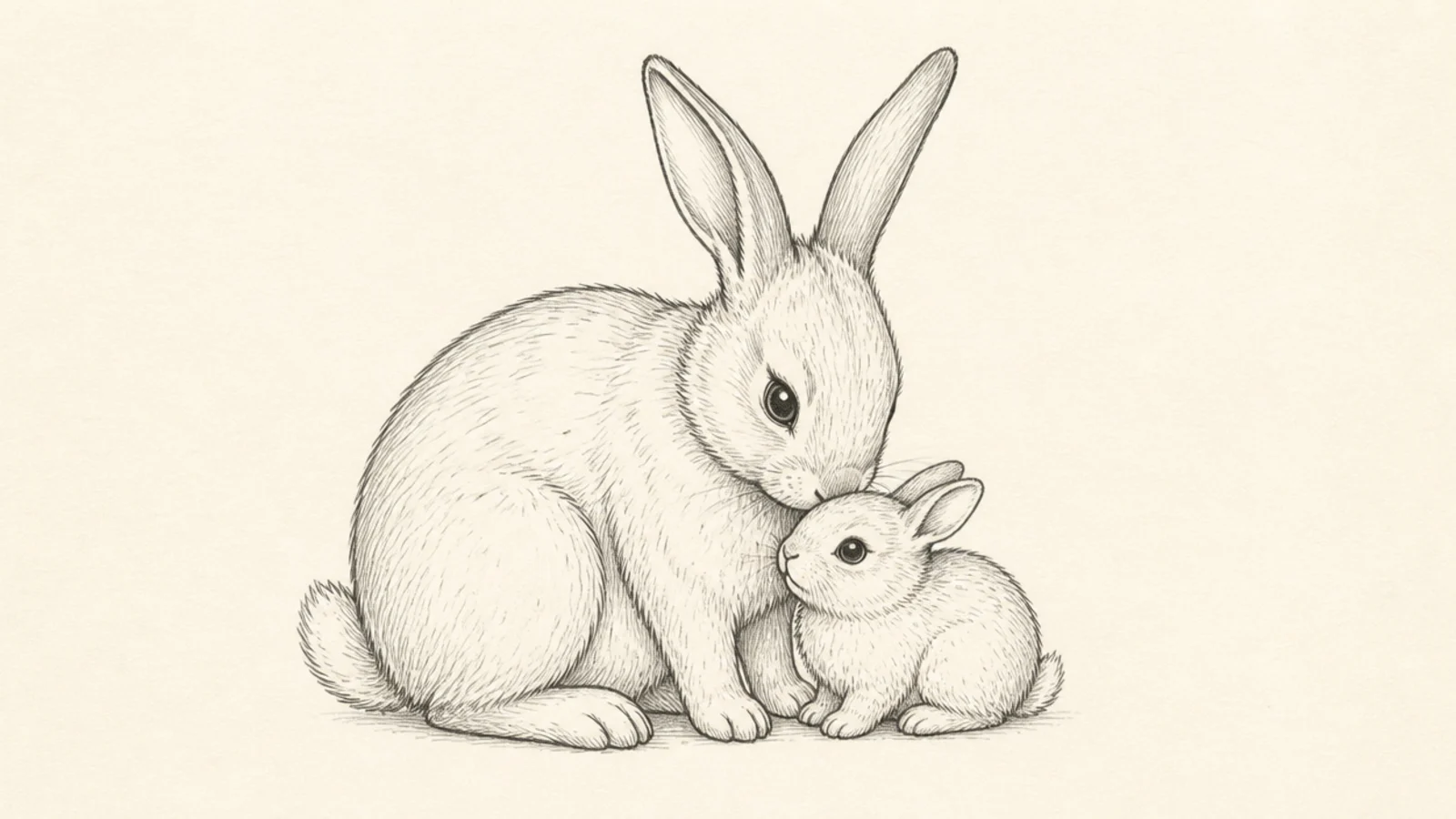
A mother bunny with a tiny baby beside her is tender and story-like. The size difference makes the pair instantly clear. It is a heartwarming scene.
Pro tipMake the baby clearly smaller and rounder so the relationship reads.
Step 1 draw a full-size sitting bunny. Step 2 add a much smaller bunny tucked at her side. Step 3 turn the mother’s head gently toward the baby.
AvoidDon’t draw them the same size; the scale gap tells the story.
13 Lop-Eared Bunny
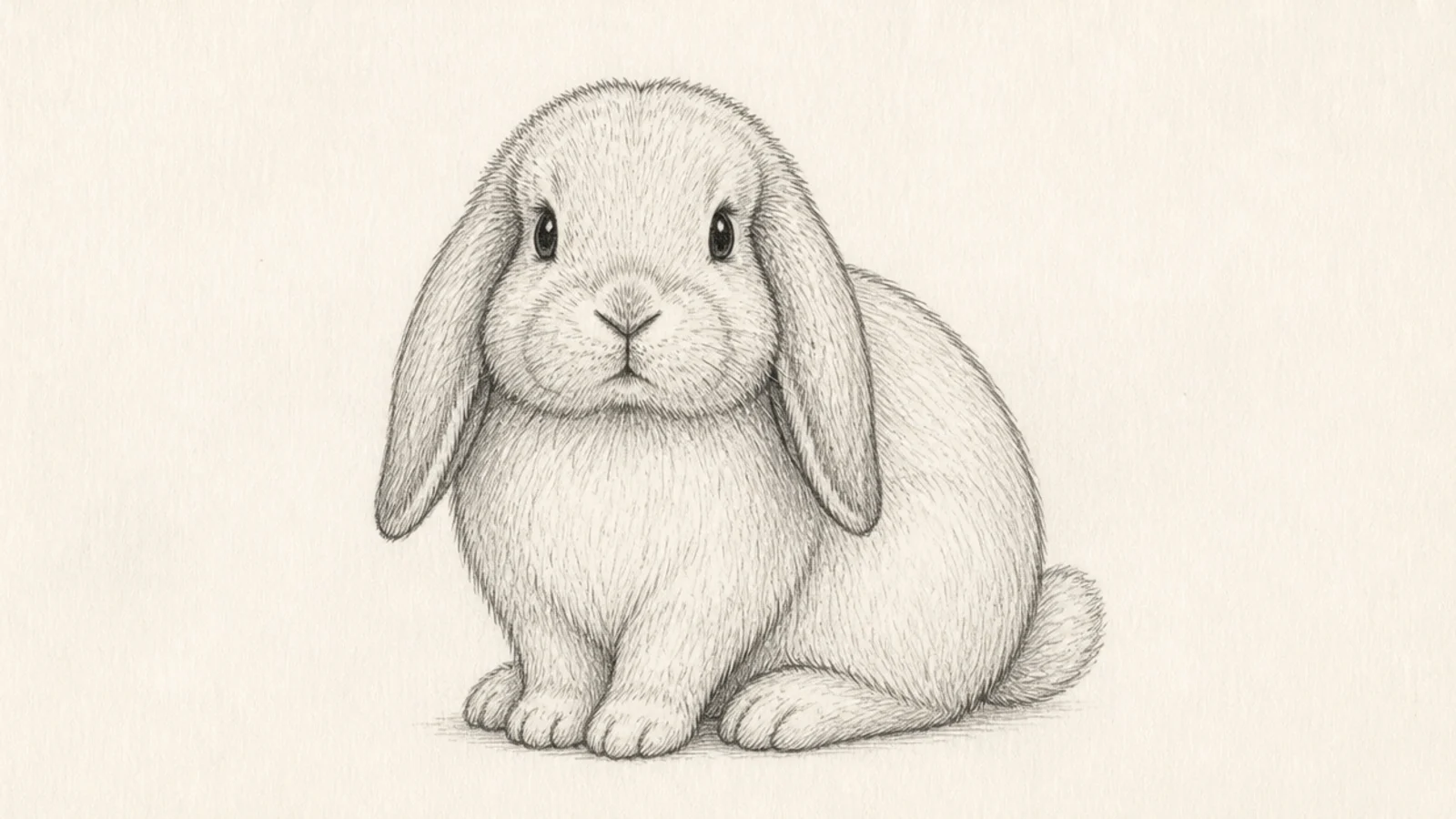
A lop-eared bunny with soft ears hanging down beside the face is a gentle pet favorite. The heavy drooping ears frame the round head. It reads as calm and cuddly.
Pro tipWiden the ears toward the bottom so they look soft and weighty.
Step 1 draw a round head and a plump body. Step 2 draw two wide ears drooping down along the cheeks. Step 3 add a low soft face and a rounded back.
AvoidDon’t stand these ears up; the droop is what makes a lop bunny.
14 Dutch-Marked Bunny
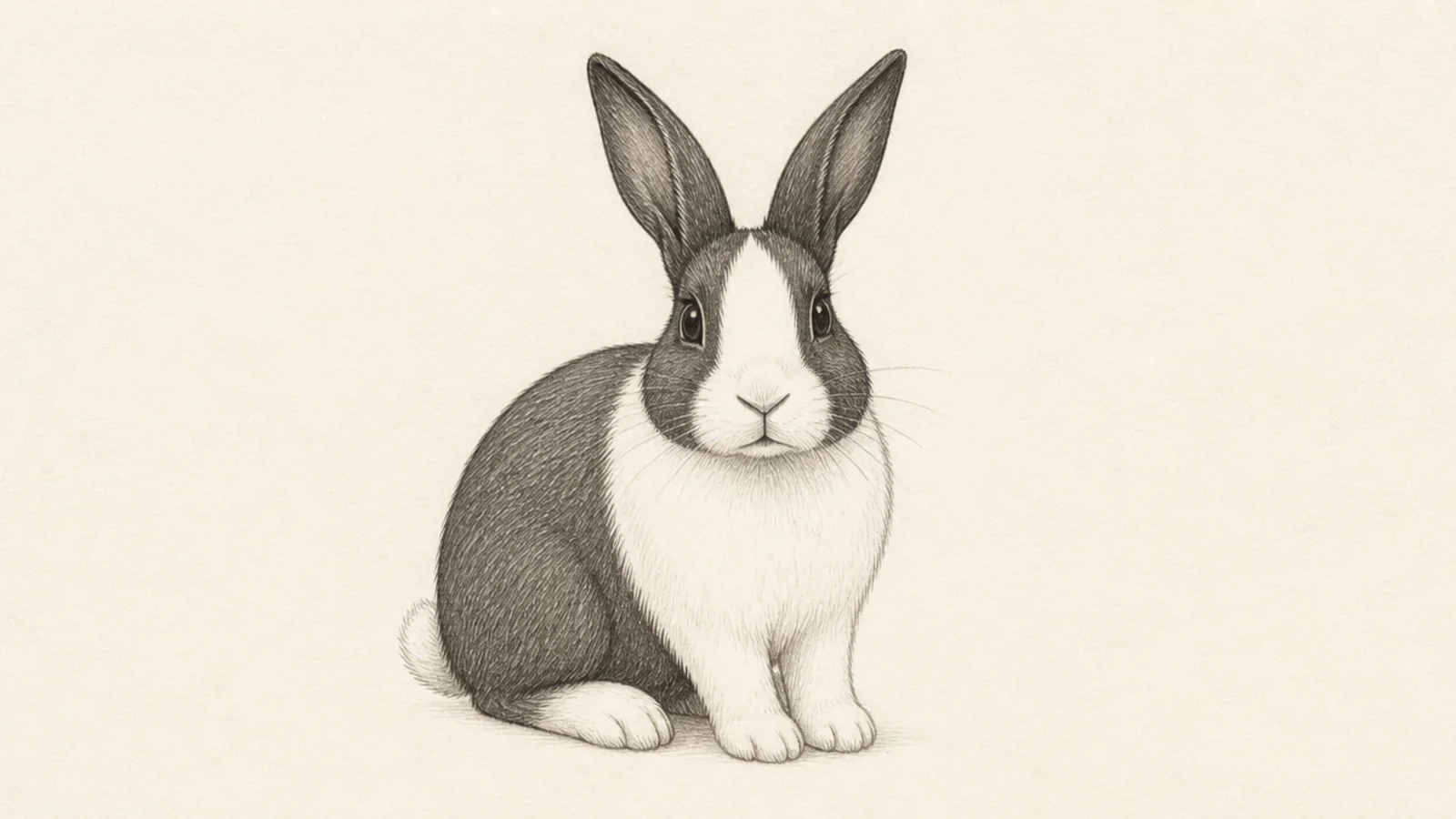
A Dutch bunny has a striking two-tone coat with a colored back and white front. The bold markings make a plain pose look special. It teaches simple pattern placement.
Step 1 draw a classic sitting bunny. Step 2 color the rear, back, and ears one color. Step 3 leave the face blaze, front, and feet white with a clean dividing line.
Keep the color-to-white edges crisp and symmetrical for the Dutch look.
Don’t blur the pattern edges; sharp divisions define the Dutch coat.
15 Fluffy Angora Bunny
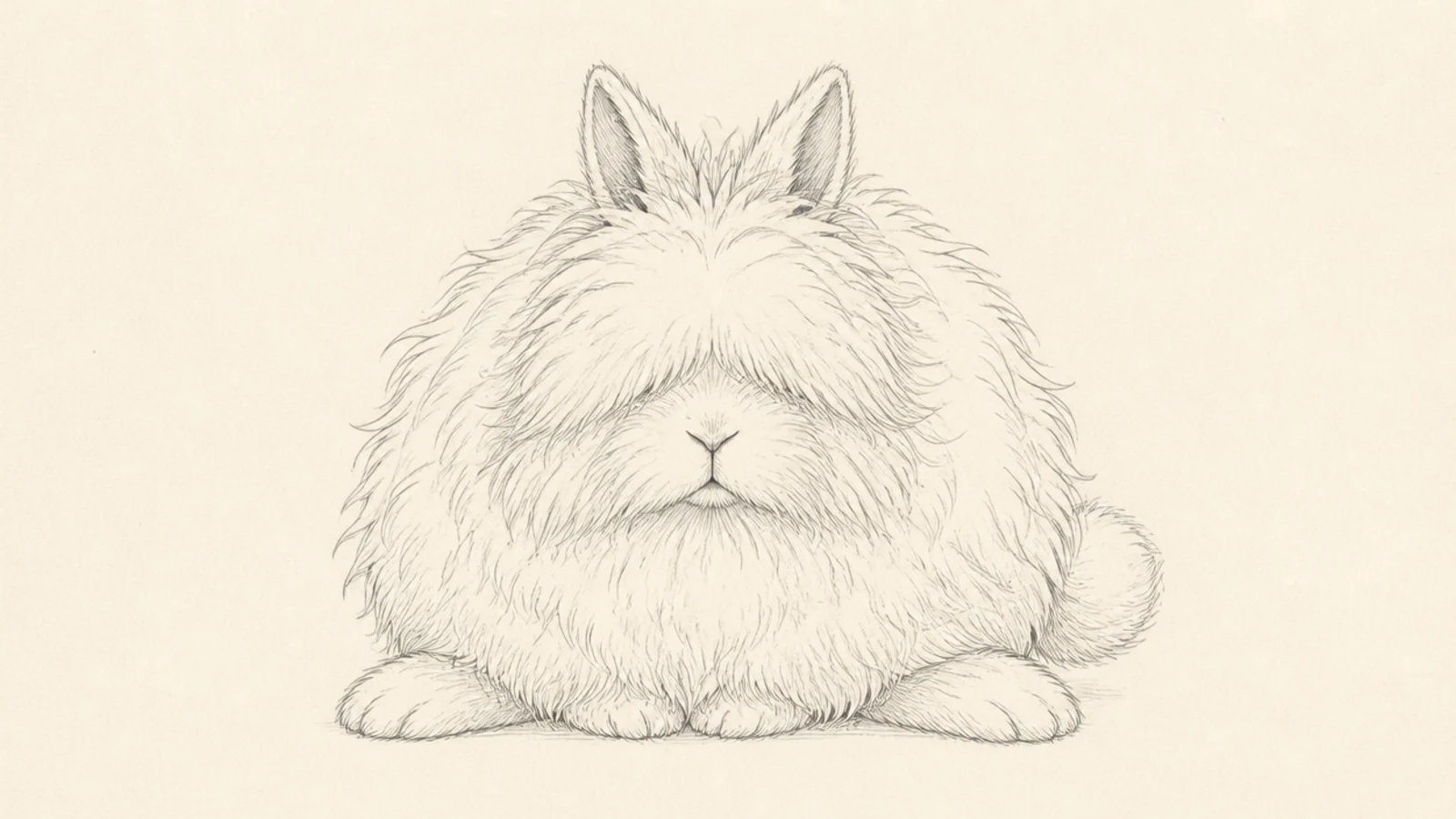
An Angora bunny is a cloud of long fluffy fur with a tiny face peeking out. The billowing coat is fun to draw with a bumpy outline. It reads as impossibly soft.
Pro tipUse a wavy, bumpy outline all around to suggest thick long fur.
Step 1 draw a big round body with a bumpy fluffy outline. Step 2 nearly bury the small face in fur. Step 3 add short fur ears and lots of little fur flicks all over.
AvoidDon’t use a smooth clean edge; the fluffy bumpy outline is the point.
16 Head-Tilt Curious Bunny
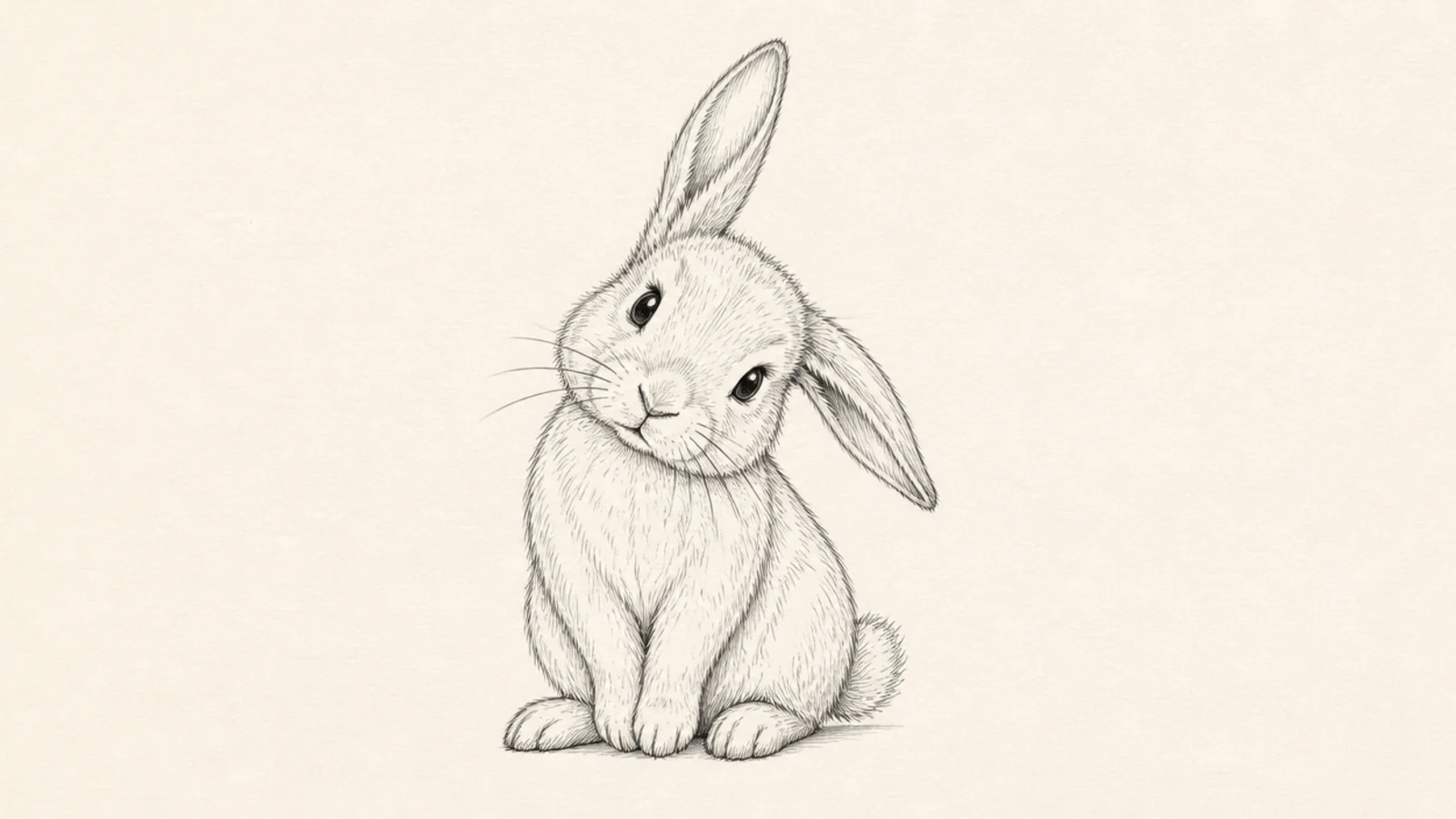
A bunny tilting its head to one side looks curious and charming. The small tilt adds instant personality. It is a tiny change with a big effect.
Pro tipTilt one ear lower with the head so the whole tilt feels natural.
Step 1 draw a sitting bunny. Step 2 tip the whole head to one side. Step 3 let one ear lean lower than the other to follow the tilt.
AvoidDon’t keep the ears level when the head tilts; angle them to match.
17 Ears-Back Relaxed Bunny
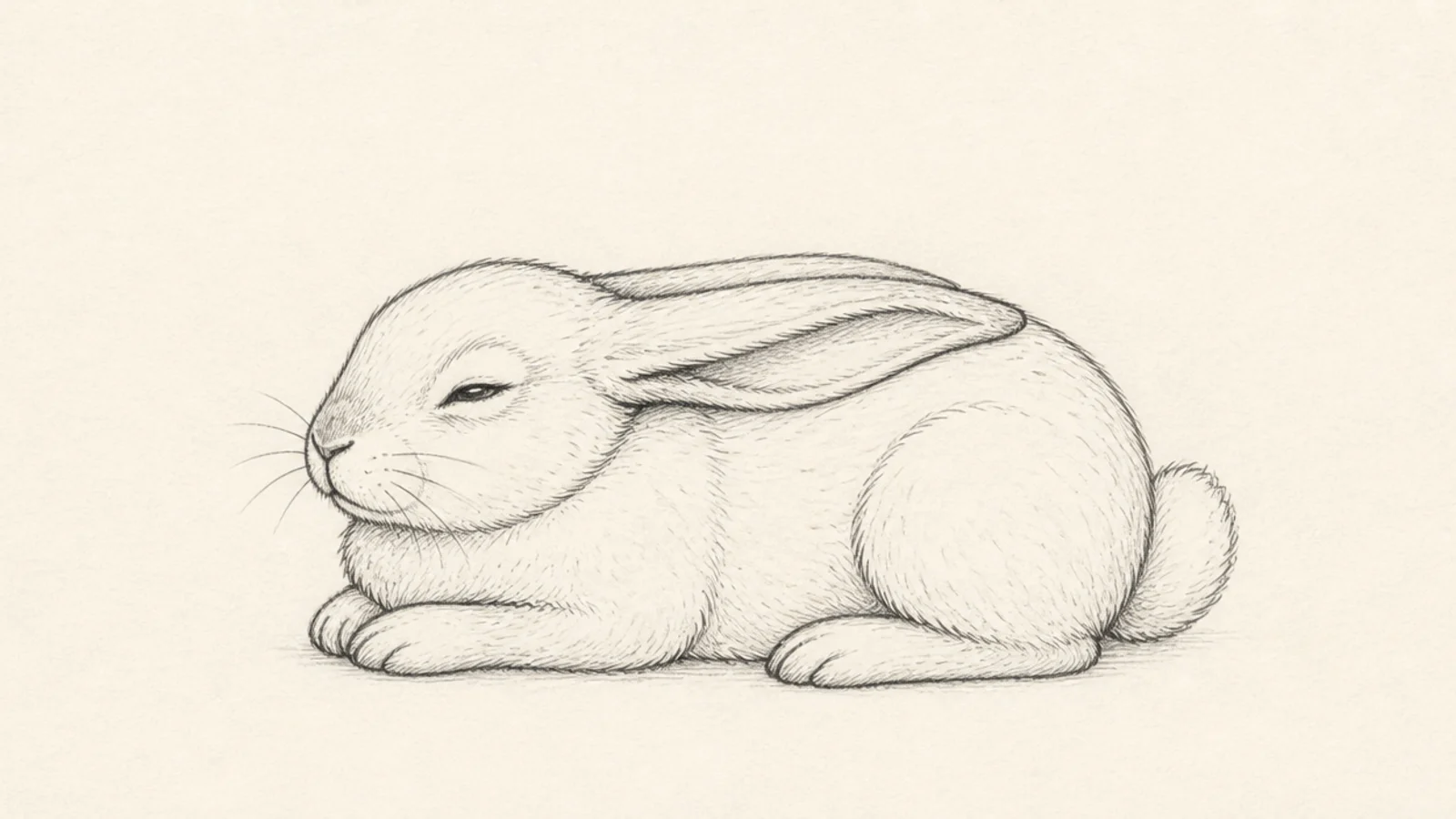
A bunny with ears laid smoothly back looks calm and content. The relaxed ears change the whole mood from a raised-ear pose. It reads as a settled, happy rabbit.
Pro tipSmooth the ears flat against the back for a relaxed, content look.
Step 1 draw a resting bunny body. Step 2 lay both ears back flat along the neck and back. Step 3 half-close the eyes and soften the whole outline.
AvoidDon’t raise the ears; laid-back ears are what read as relaxed.
18 Bunny Peeking From a Burrow
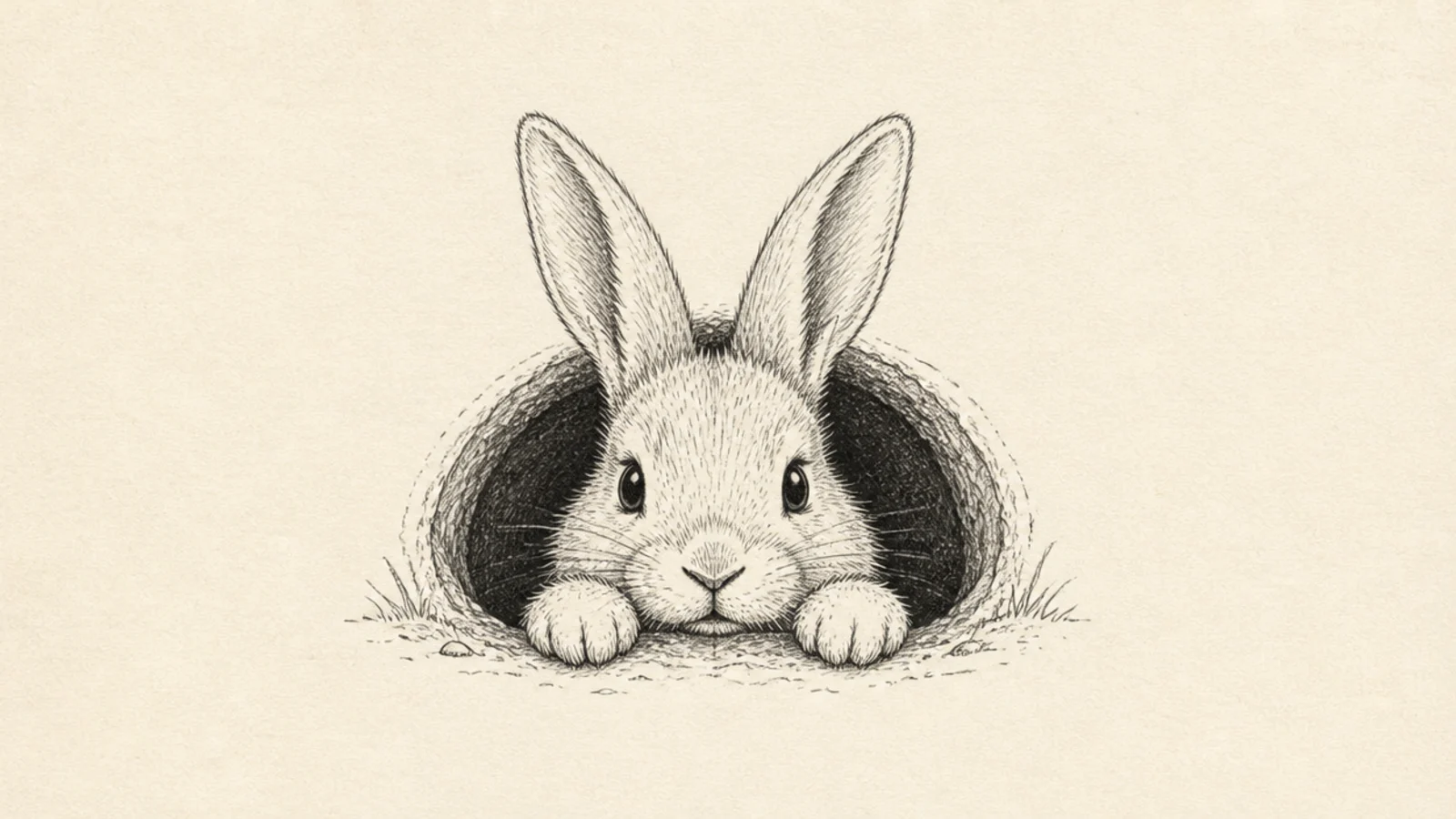
A bunny peeking from a burrow with just its head showing is playful and story-like. The hidden body adds curiosity. It makes a fun little scene.
Pro tipShow only the head, ears, and paws so the burrow hides the rest.
Step 1 draw a dark rounded burrow opening. Step 2 pop a bunny head and ears out of it. Step 3 add two front paws resting on the burrow’s edge.
AvoidDon’t draw the whole body; the hidden body is what sells the burrow.
19 Bunny From Behind
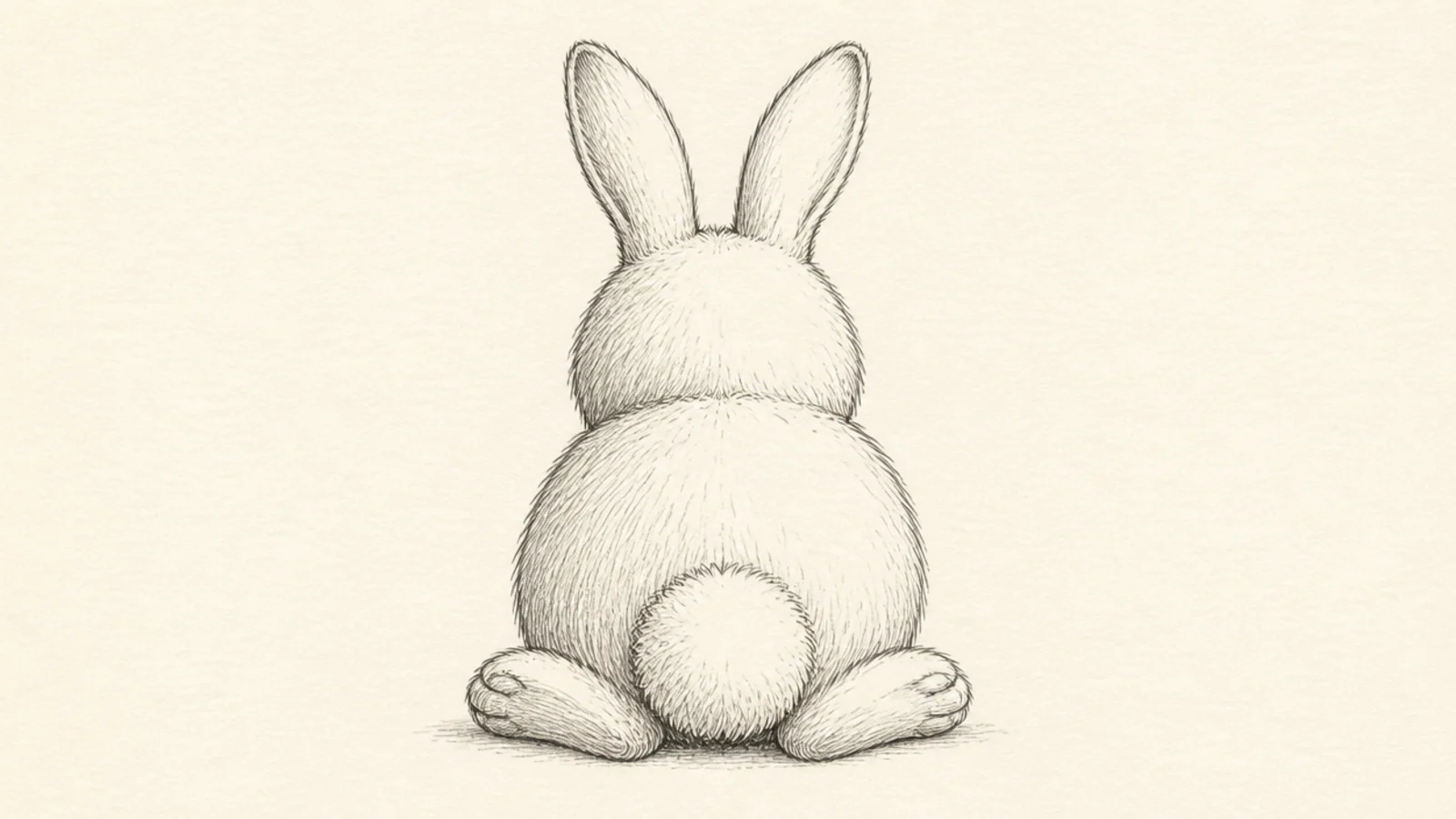
A bunny seen from behind highlights the round cotton tail. It is a fresh angle and secretly simple. The fluffy tail is the whole charm.
Step 1 draw a rounded body from the back. Step 2 add two ears at the top and the long hind feet at the base. Step 3 draw a big fluffy round tail in the center.
Scribble the tail as a soft round puff so it reads as fluffy fur.
Don’t add a face; a back view shows only ears, feet, and tail.
20 Three-Quarter View Bunny
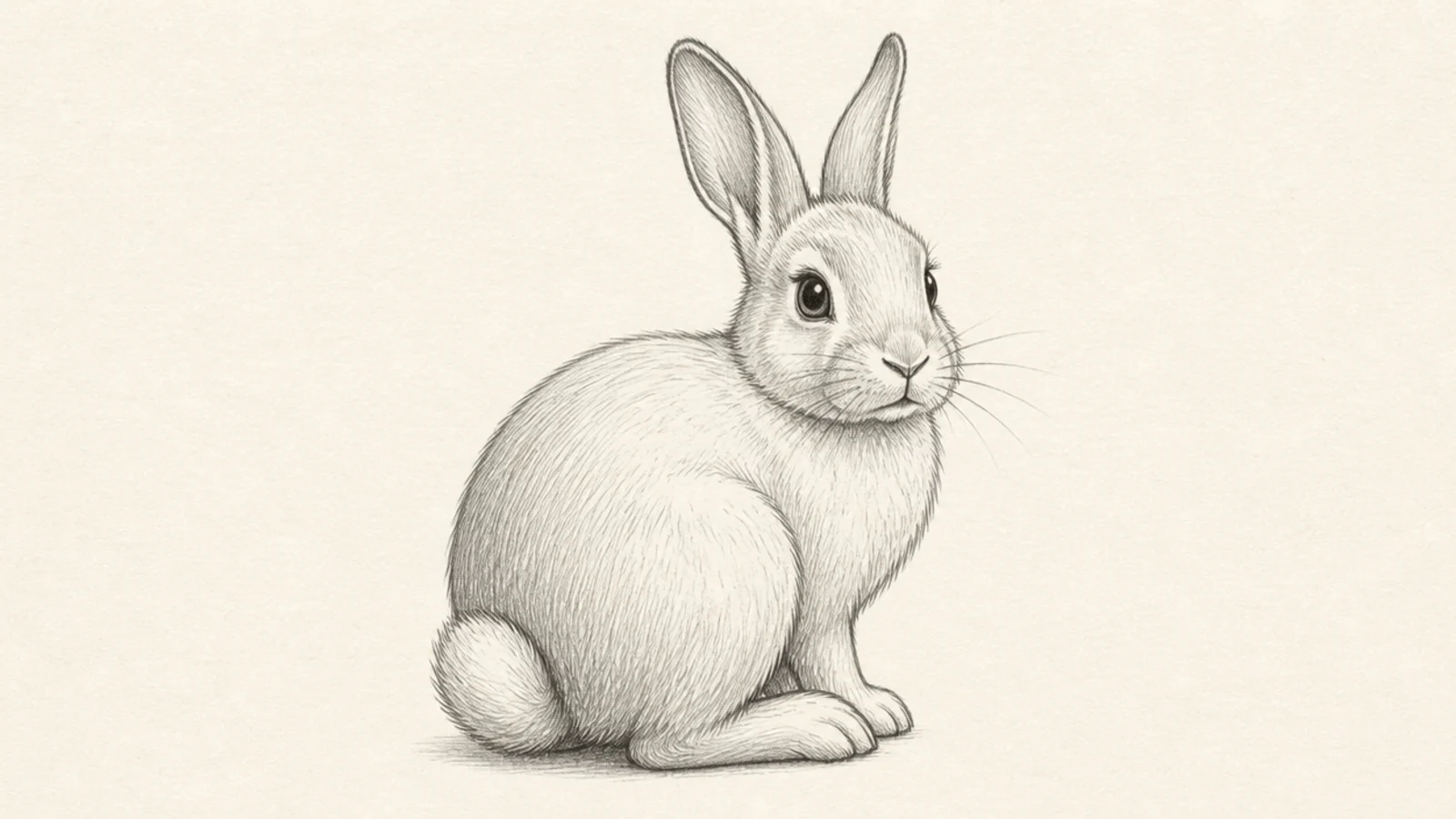
A three-quarter view shows both the face and the side of the body, giving a natural, dimensional look. It is the angle photographers love. It reads as lifelike.
Pro tipMake the far side of the face slightly narrower than the near side for depth.
Step 1 draw the body turned partly away. Step 2 turn the head toward you at a three-quarter angle. Step 3 show the far ear slightly behind the near one and both eyes at different sizes.
AvoidDon’t draw both sides equal; the turned angle needs a narrower far side.
21 Bunny Nose Close-Up
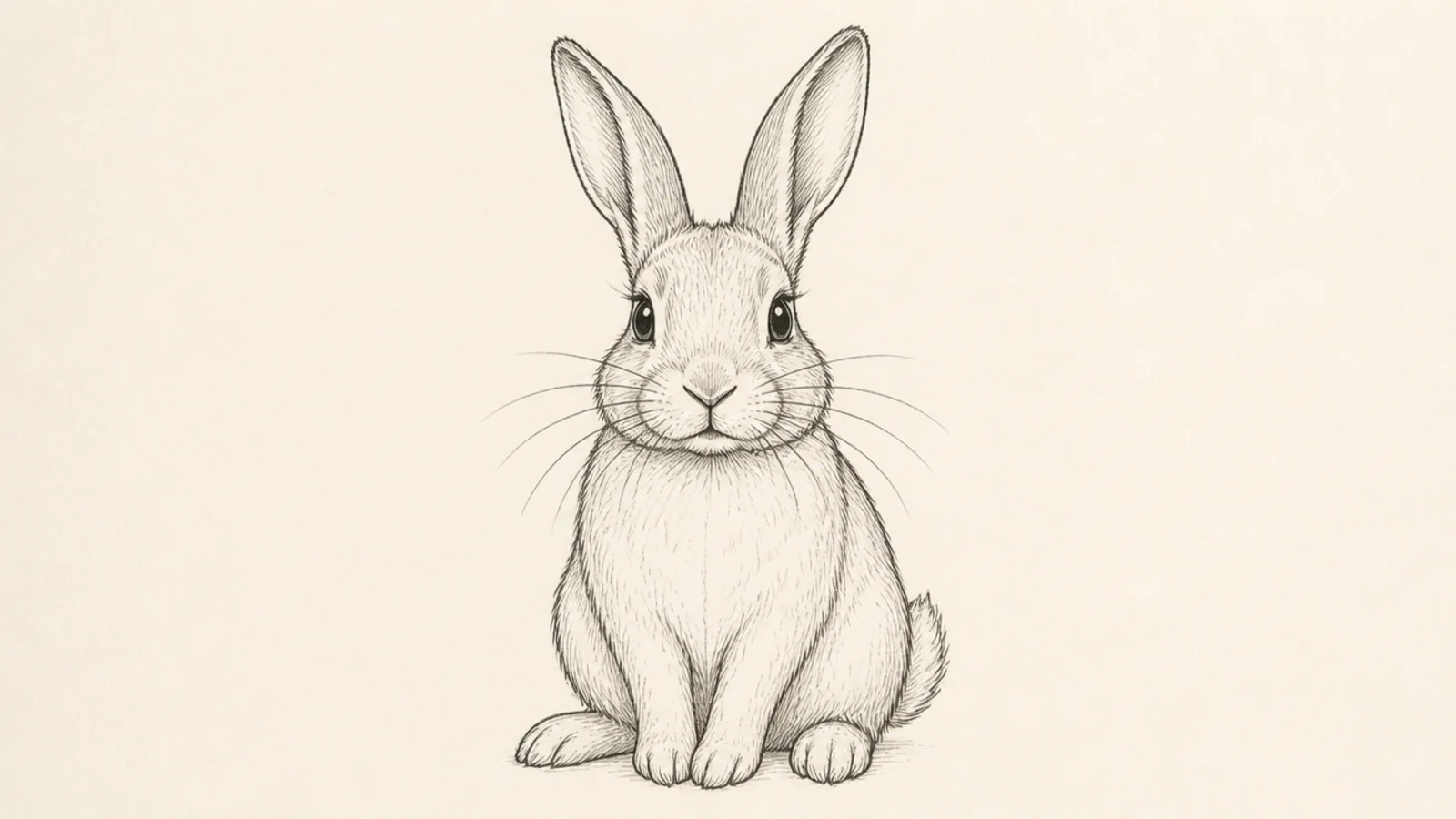
A close-up of the twitching nose and whiskers is an intimate, detailed drawing. Zooming in on the nose teaches soft texture. It is a lovely study.
Step 1 draw a large soft Y-shaped nose and split upper lip. Step 2 add the rounded muzzle and whisker pads around it. Step 3 draw long whiskers sweeping out and short fur flicks.
Curve the whiskers outward in gentle arcs, not stiff straight lines.
Don’t draw a flat triangle nose; the soft Y-shape reads as a real nose.
22 Profile Portrait Bunny
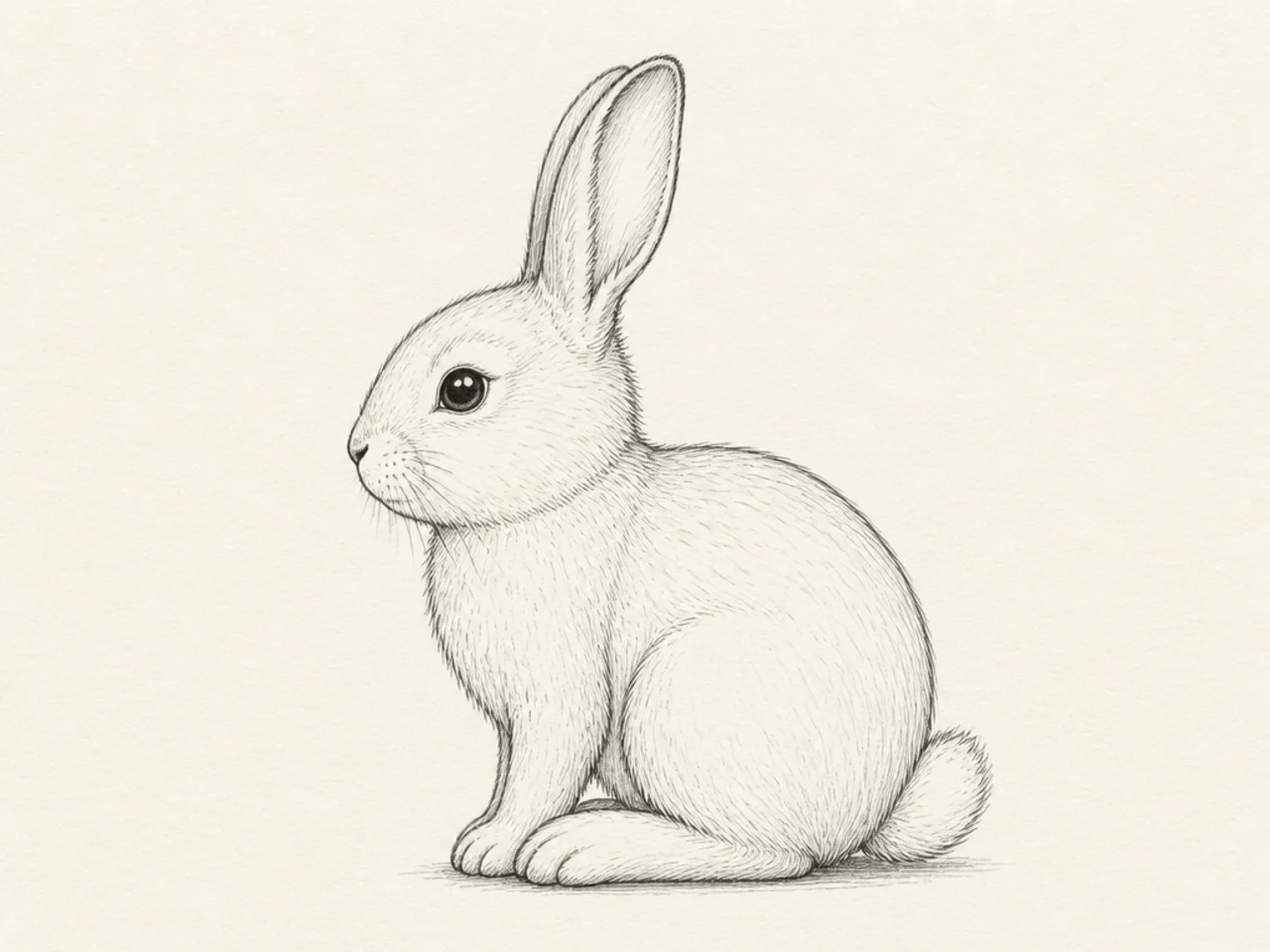
A profile portrait of the head and shoulders is a clean, classic study. The side view shows the ear and nose shape clearly. It looks polished and simple.
Pro tipKeep the profile outline smooth and let one ear rise cleanly from the head.
Step 1 draw the head profile with a small nose bump facing one way. Step 2 add one tall ear and the curve of the neck and chest. Step 3 add one rounded eye and soft cheek fur.
AvoidDon’t add the far ear and eye in a strict profile; only the near side shows.
23 Bunny Drinking
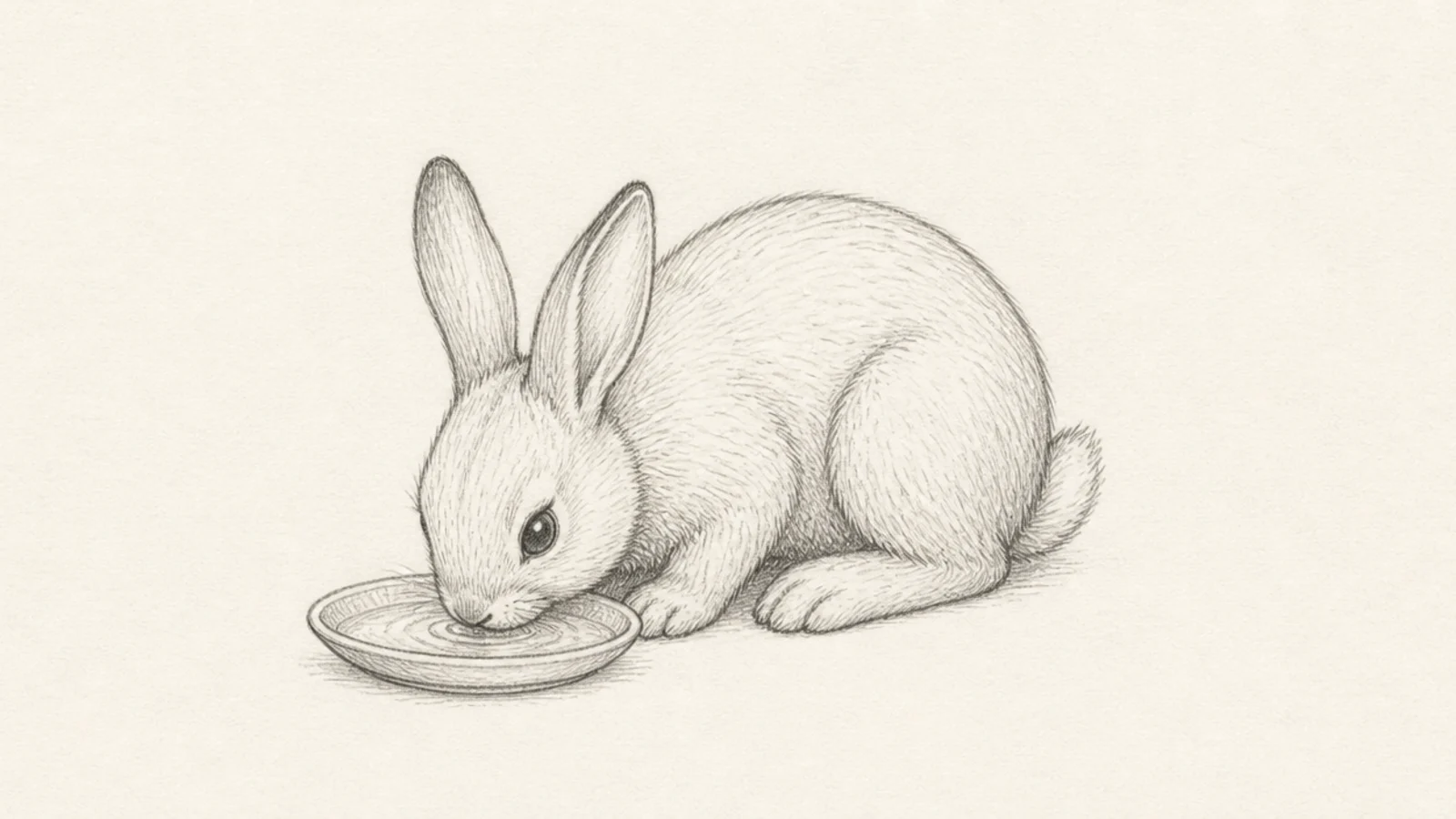
A bunny leaning down to drink from a dish is a sweet domestic scene. The lowered head and little dish add a moment of story. It reads as a pet rabbit at home.
Pro tipTip the ears forward over the dish so the head clearly reaches to drink.
Step 1 draw a crouched bunny leaning forward. Step 2 lower the head to a small shallow dish. Step 3 add a few tiny ripples in the water and ears tipped forward.
AvoidDon’t lift the head away from the dish; the reach is what tells the story.
24 Digging Bunny
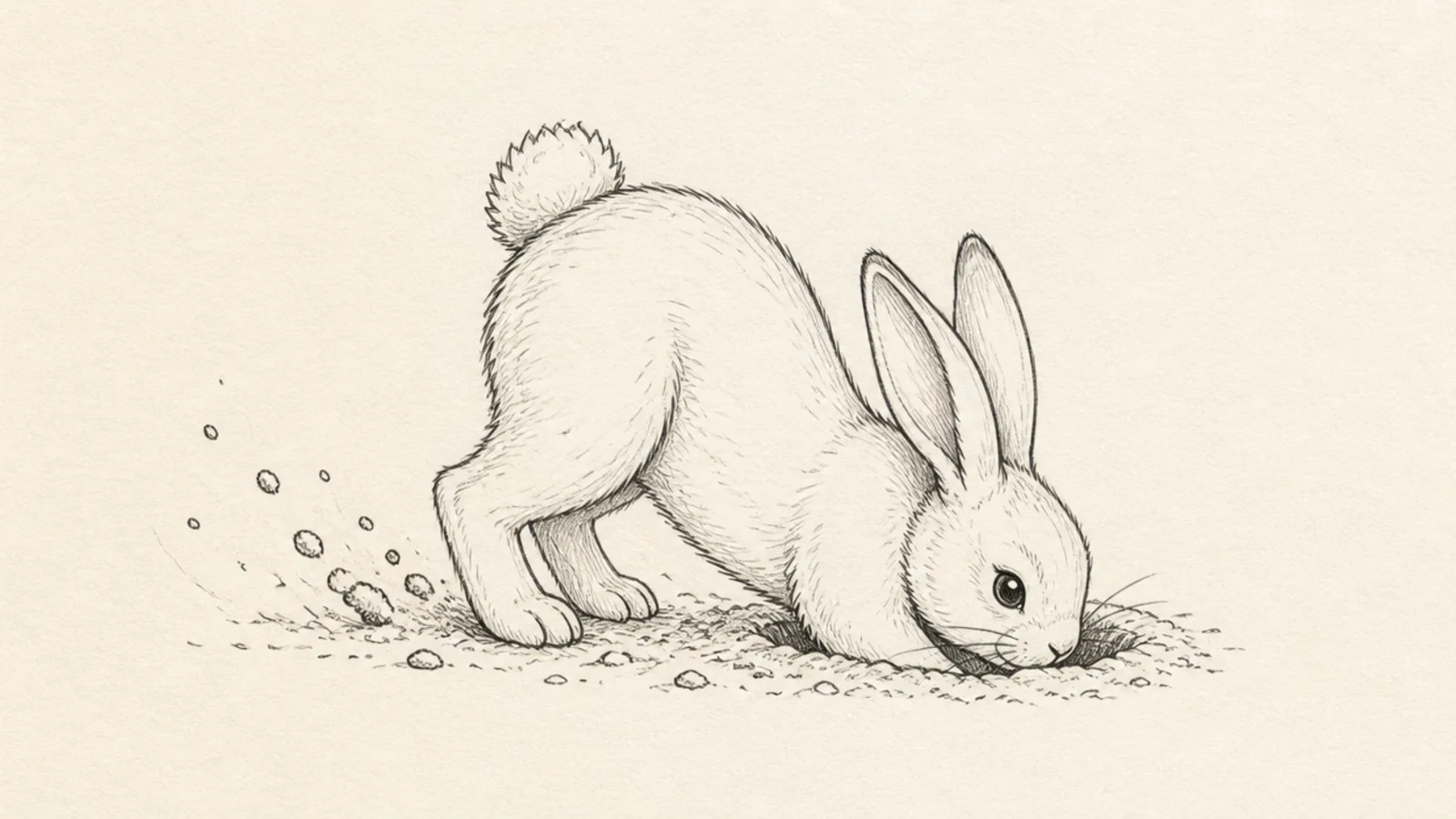
A bunny digging with front paws and flying dirt is active and playful. The scattered dirt shows real rabbit behavior. It adds motion to the page.
Pro tipRaise the rear slightly and lower the front to show the digging effort.
Step 1 draw a crouched bunny with its rear up. Step 2 reach the front paws down into a little hole. Step 3 scatter small dirt marks flying back behind it.
AvoidDon’t keep the body level; the front-down, rear-up tilt shows digging.
25 Two Bunnies Nuzzling
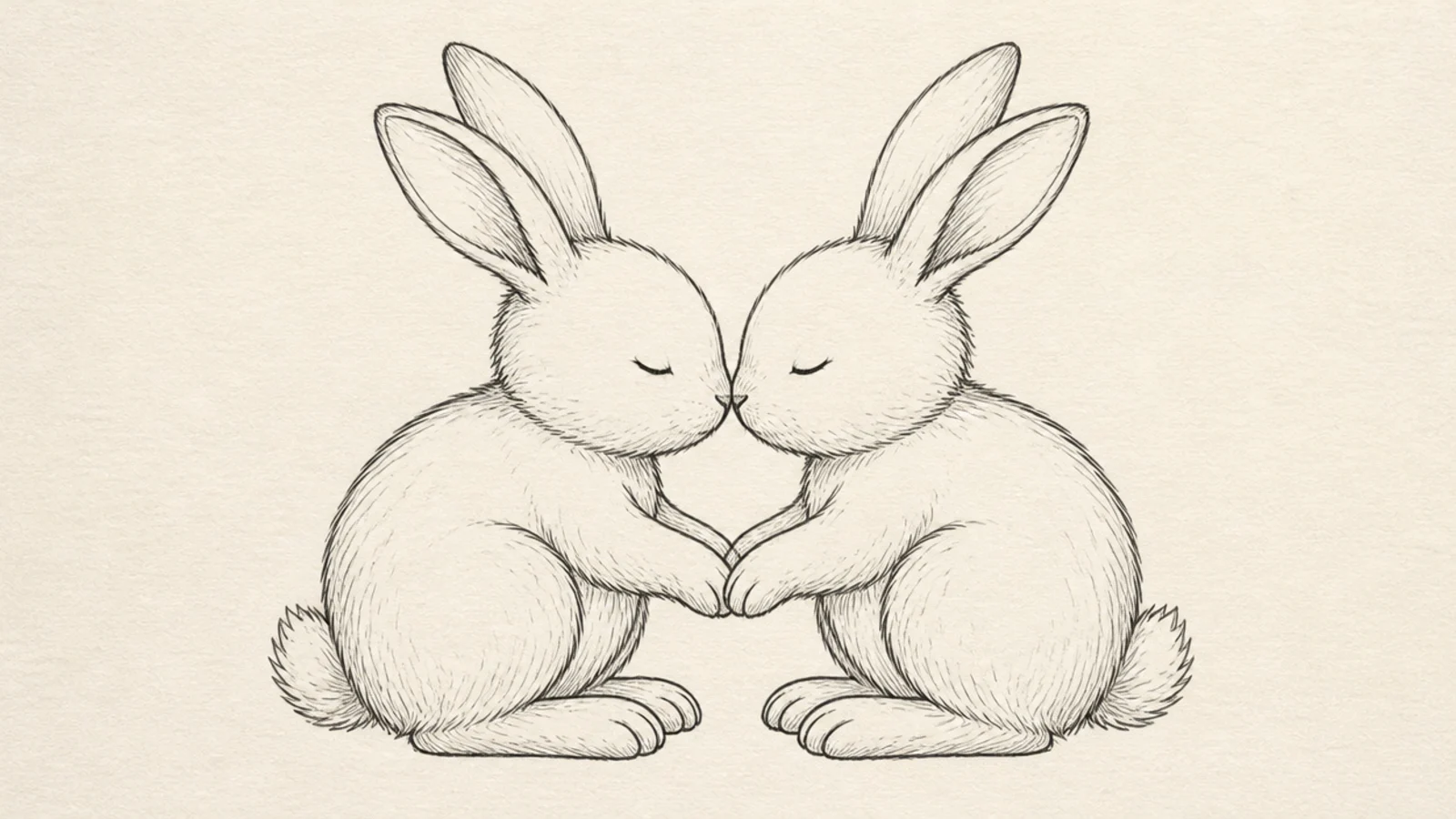
Two bunnies touching noses is a tender bonding pose. The nuzzle is a real sign of rabbit affection. It makes a warm, romantic drawing.
Pro tipBring the two noses right together and lower the eyelids for a fond look.
Step 1 draw two bunnies facing each other. Step 2 lean their heads in until the noses touch. Step 3 close the eyes gently and overlap the front paws.
AvoidDon’t leave a gap between the faces; the touching noses are the nuzzle.
26 Listening Bunny
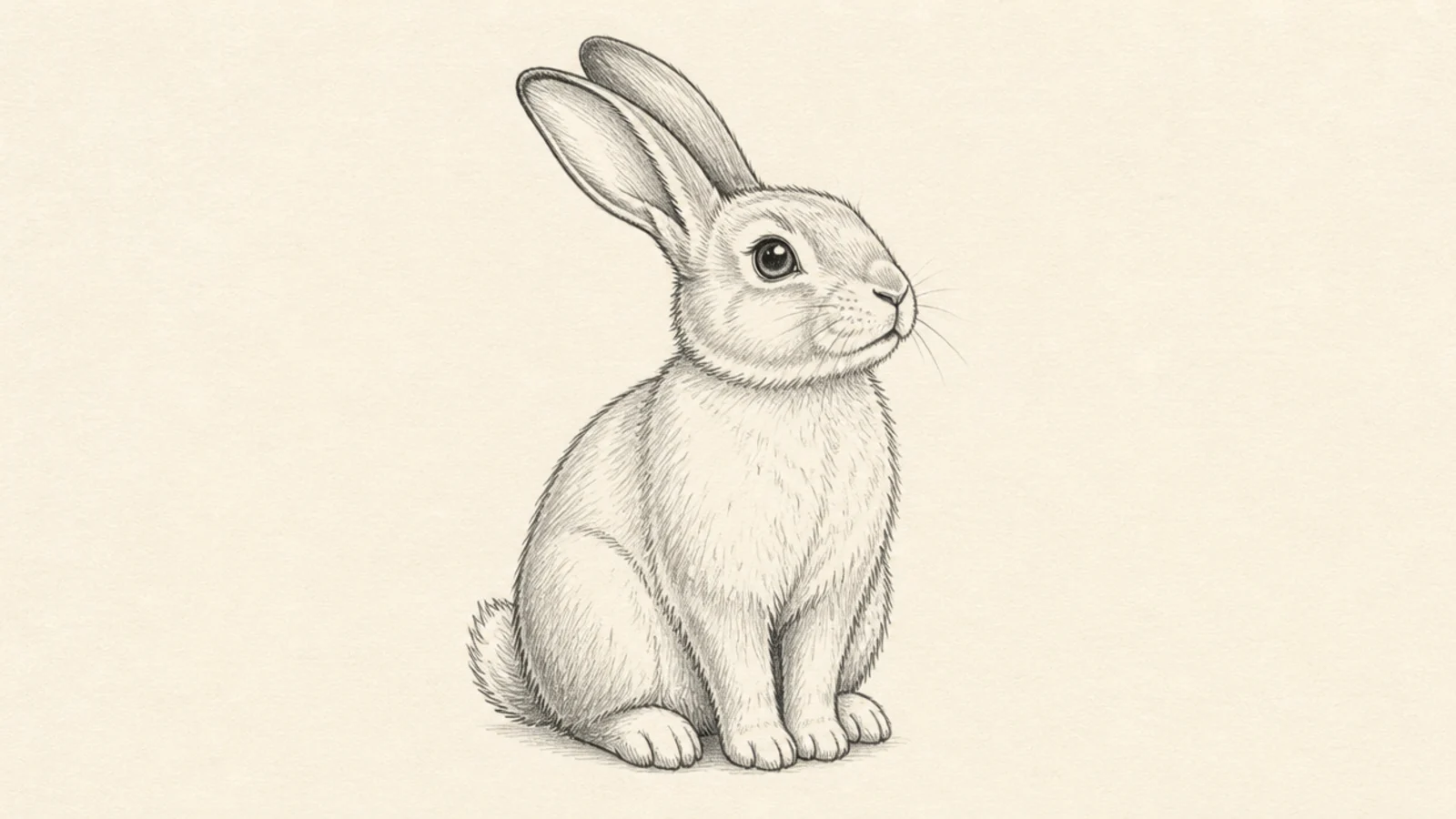
A bunny with ears perked and swiveled toward a sound is alert and expressive. The turned ears show the rabbit listening hard. It is a lively, natural pose.
Pro tipTurn the open sides of both ears the same direction to show listening.
Step 1 draw a sitting bunny with its body still. Step 2 swivel both ears toward one side. Step 3 open the eyes wide and lift the head slightly.
AvoidDon’t point the ears straight up; swiveled ears read as listening.
27 Chubby Round Bunny
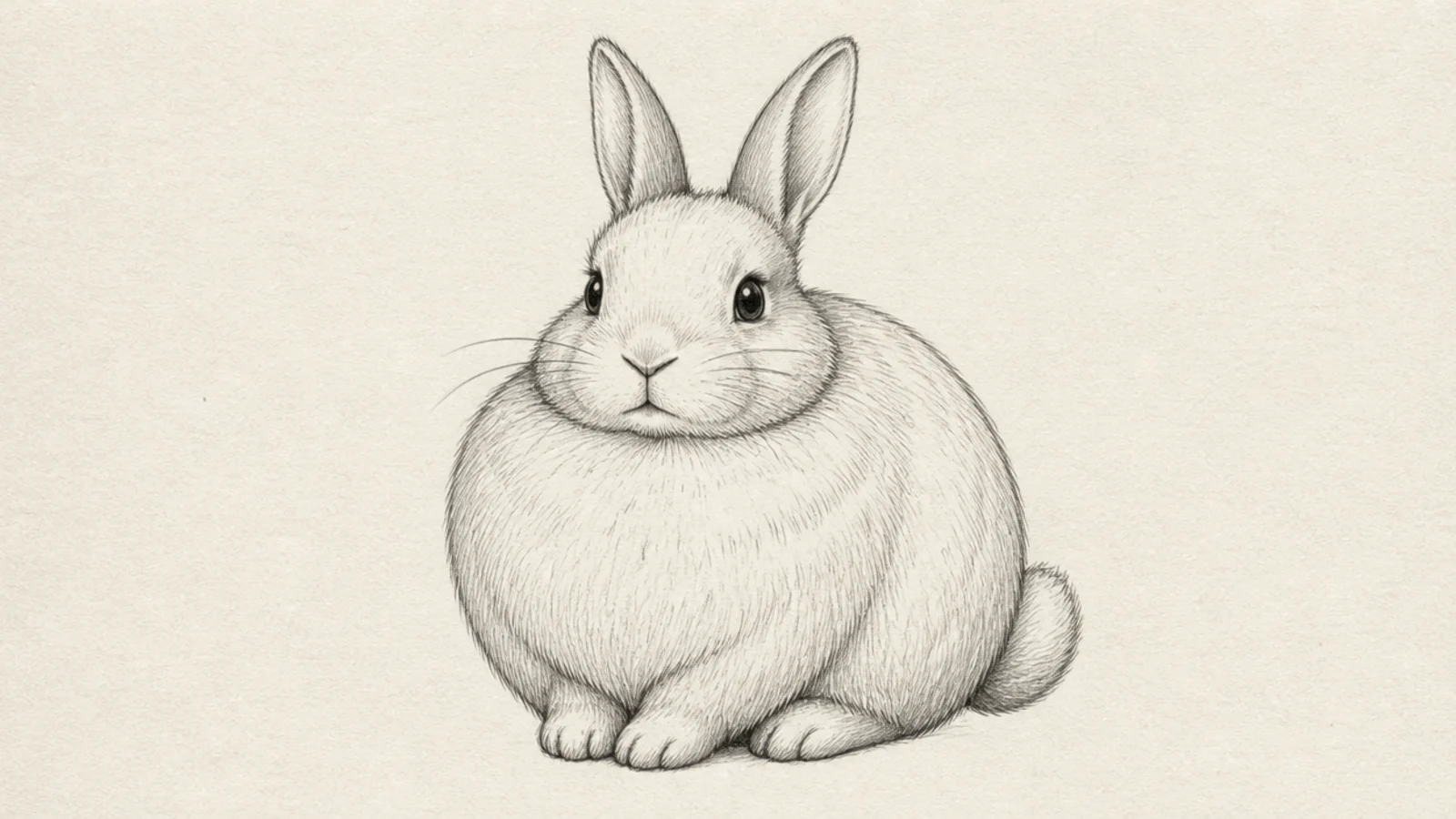
A plump, extra-round bunny is soft and huggable. Rounding every shape makes it look well-fed and content. It is a cozy classic.
Pro tipKeep the neck hidden so the head and body merge into one round mass.
Step 1 draw a big round body almost as a circle. Step 2 add a small head close on top. Step 3 add short ears and tuck the feet so the whole shape stays round.
AvoidDon’t draw a slim body; the roundness is the whole appeal.
28 Bunny on a Log
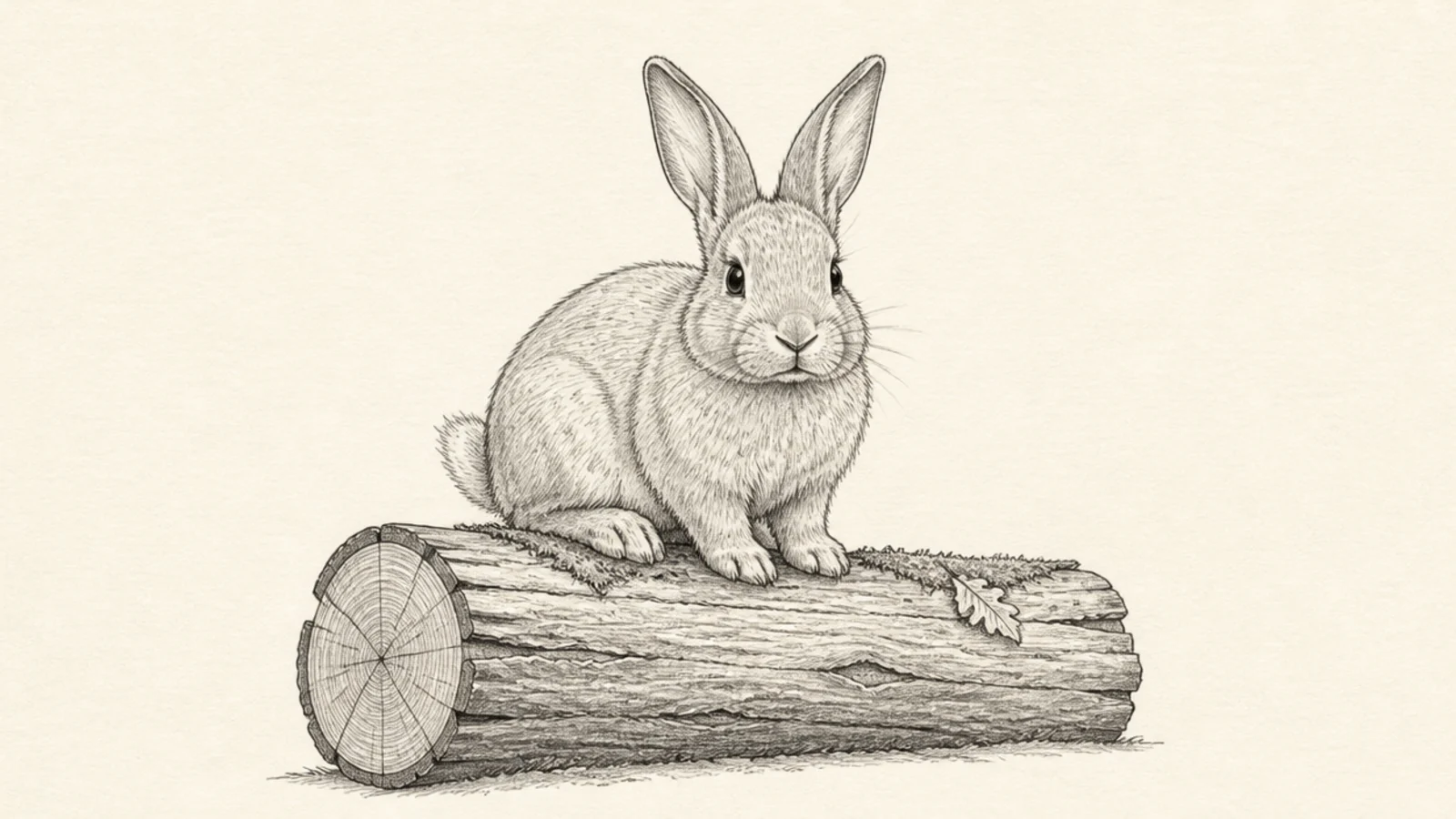
A bunny perched on a fallen log makes a complete little woodland scene. The log grounds the rabbit and adds setting. It feels like a storybook moment.
Pro tipDraw the log’s end as a circle with rings so it clearly reads as wood.
Step 1 draw a horizontal log with end rings. Step 2 sit a bunny on top of it. Step 3 add a little moss, a leaf, and the bunny’s feet gripping the bark.
AvoidDon’t float the bunny above the log; sit it firmly on the surface.
29 Carrot-Eating Bunny
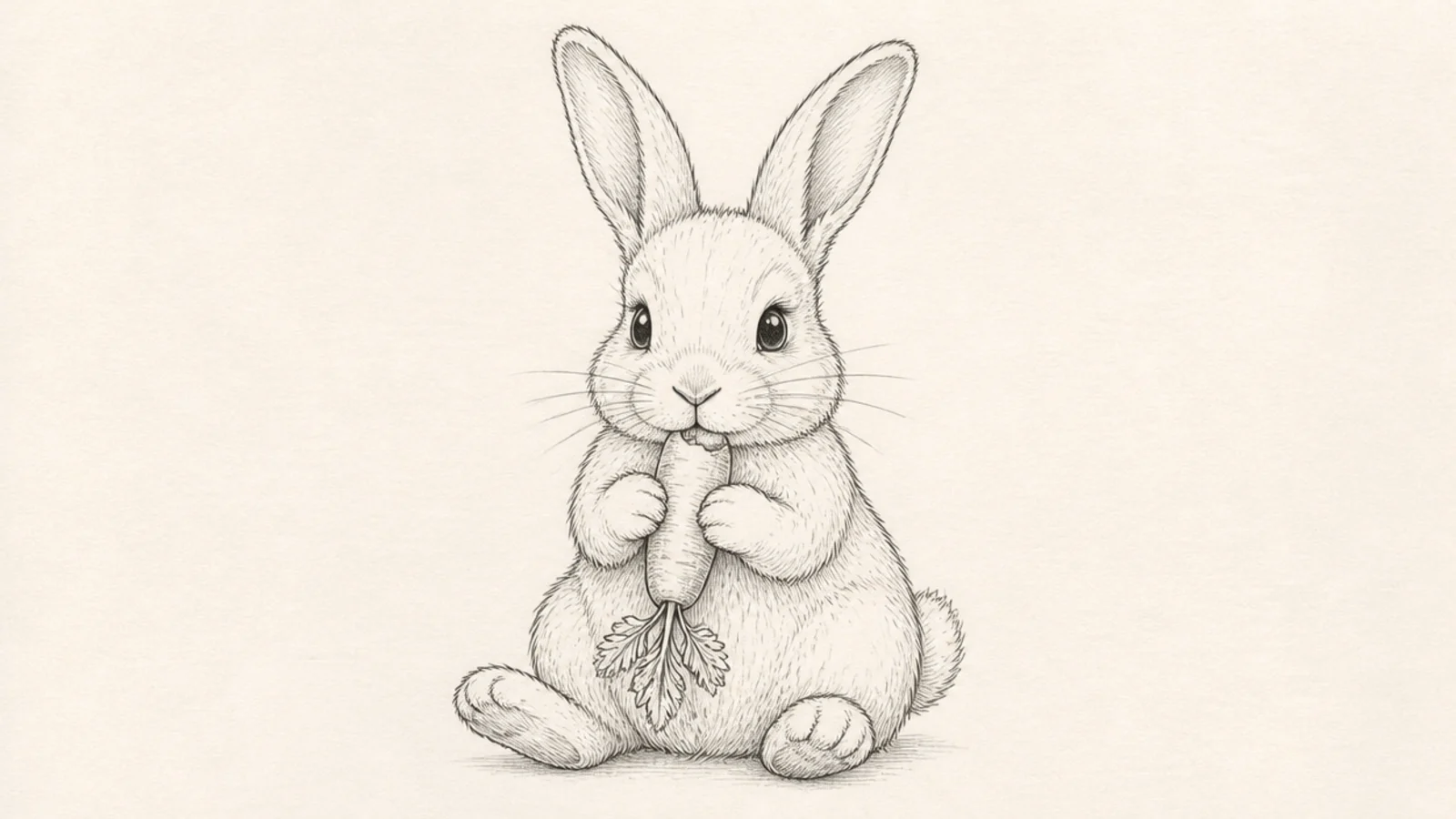
A bunny holding a carrot up to its mouth is the most classic bunny image of all. The carrot is the perfect prop. It reads instantly as a happy rabbit.
Pro tipAngle the carrot up to the mouth and add a small bite notch for realism.
Step 1 draw a sitting bunny. Step 2 raise both front paws holding a carrot. Step 3 add a bite mark and a few leafy tops on the carrot.
AvoidDon’t lay the carrot flat on the ground; holding it sells the scene.
30 Bunny Portrait Bust
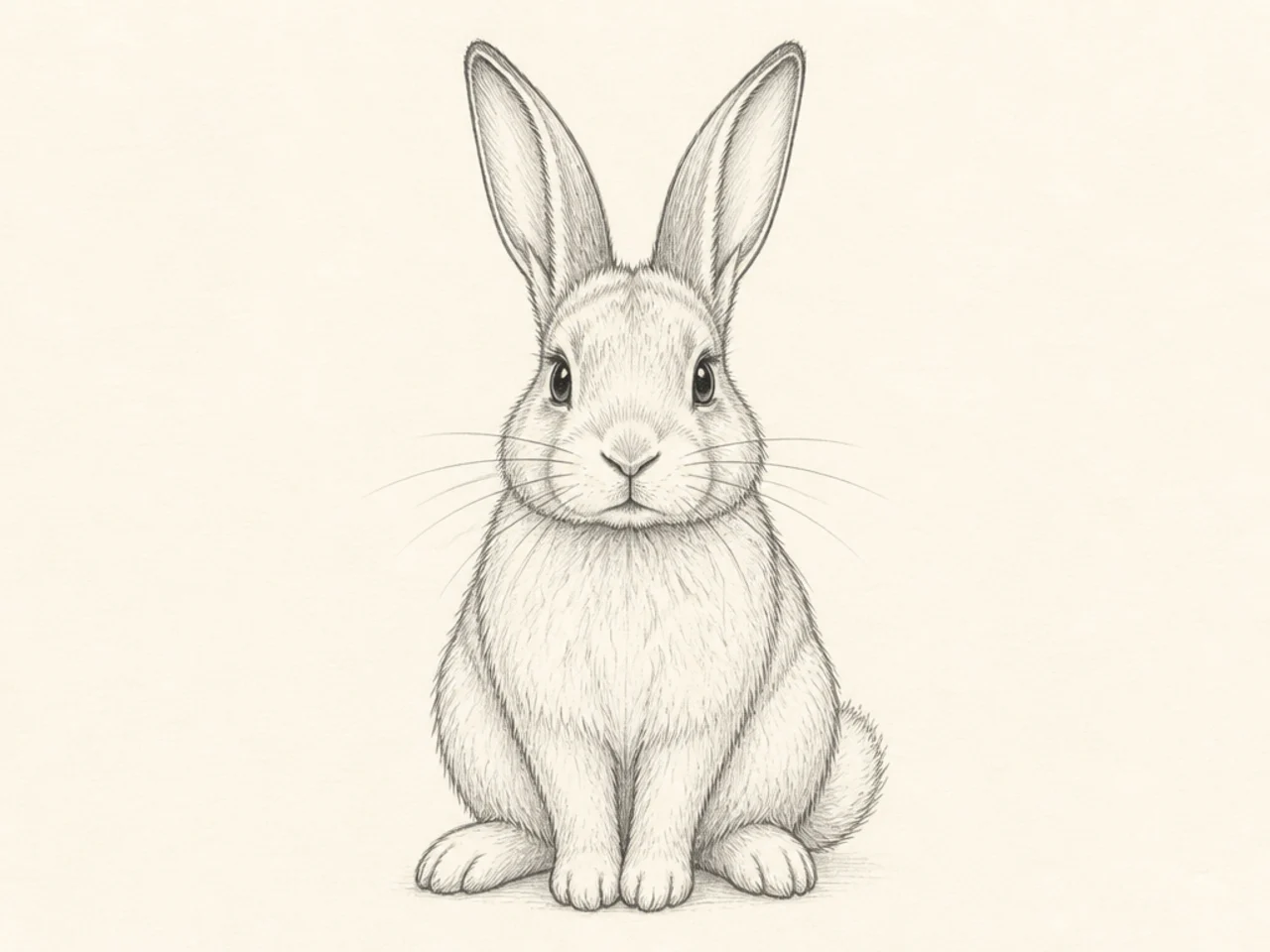
A front-facing head-and-chest portrait is a polished way to close the list. It focuses on the face, ears, and soft fur. It looks like a framed pet portrait.
Step 1 draw a round head and the top of the chest. Step 2 add two tall symmetrical ears. Step 3 add both eyes, a small nose, whiskers, and soft chest fur.
Keep the two ears symmetrical and add fur flicks around the cheeks and chest.
Don’t crop the ears; a portrait should show the full ear shape.