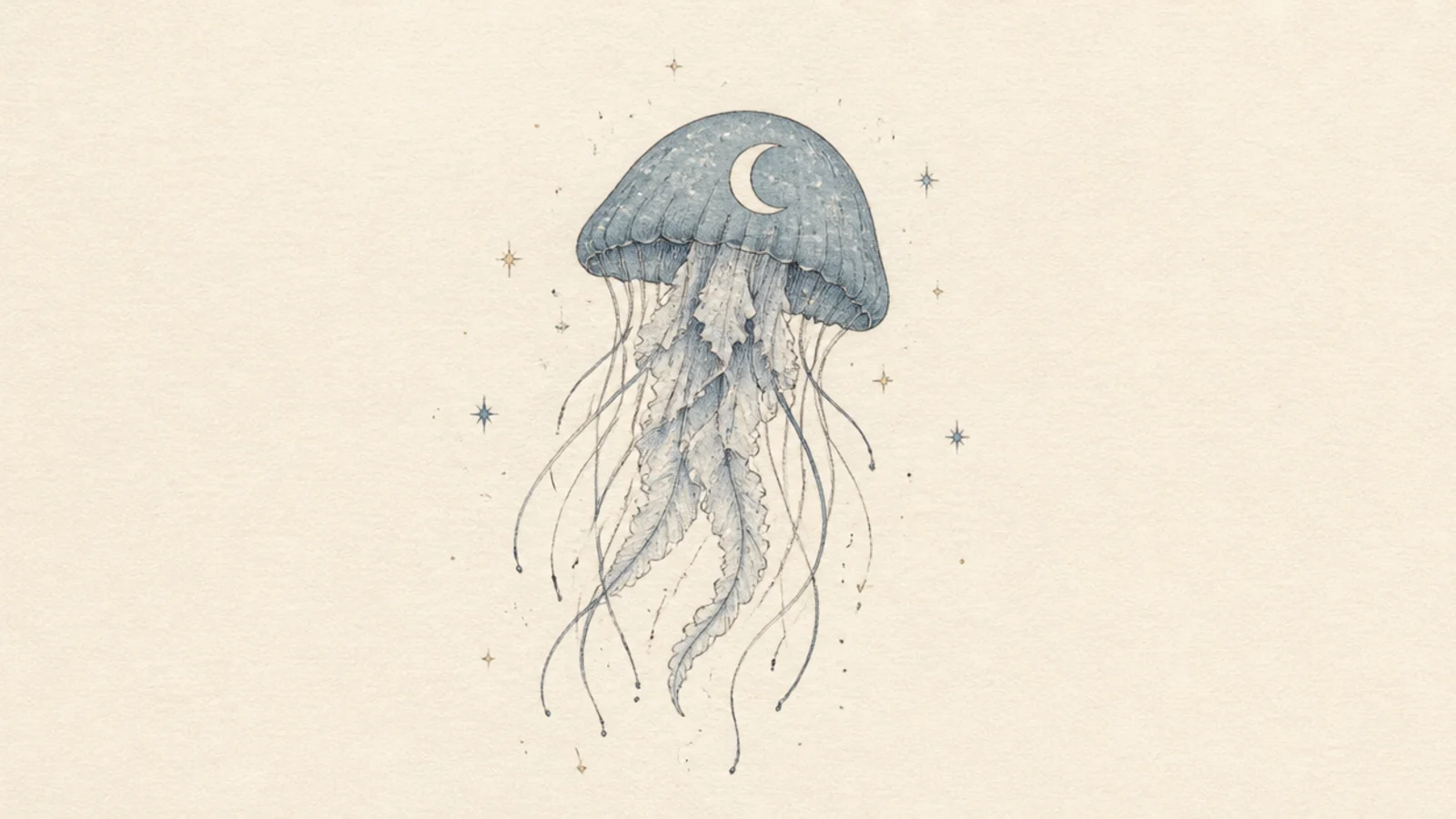
1 Celestial Jellyfish
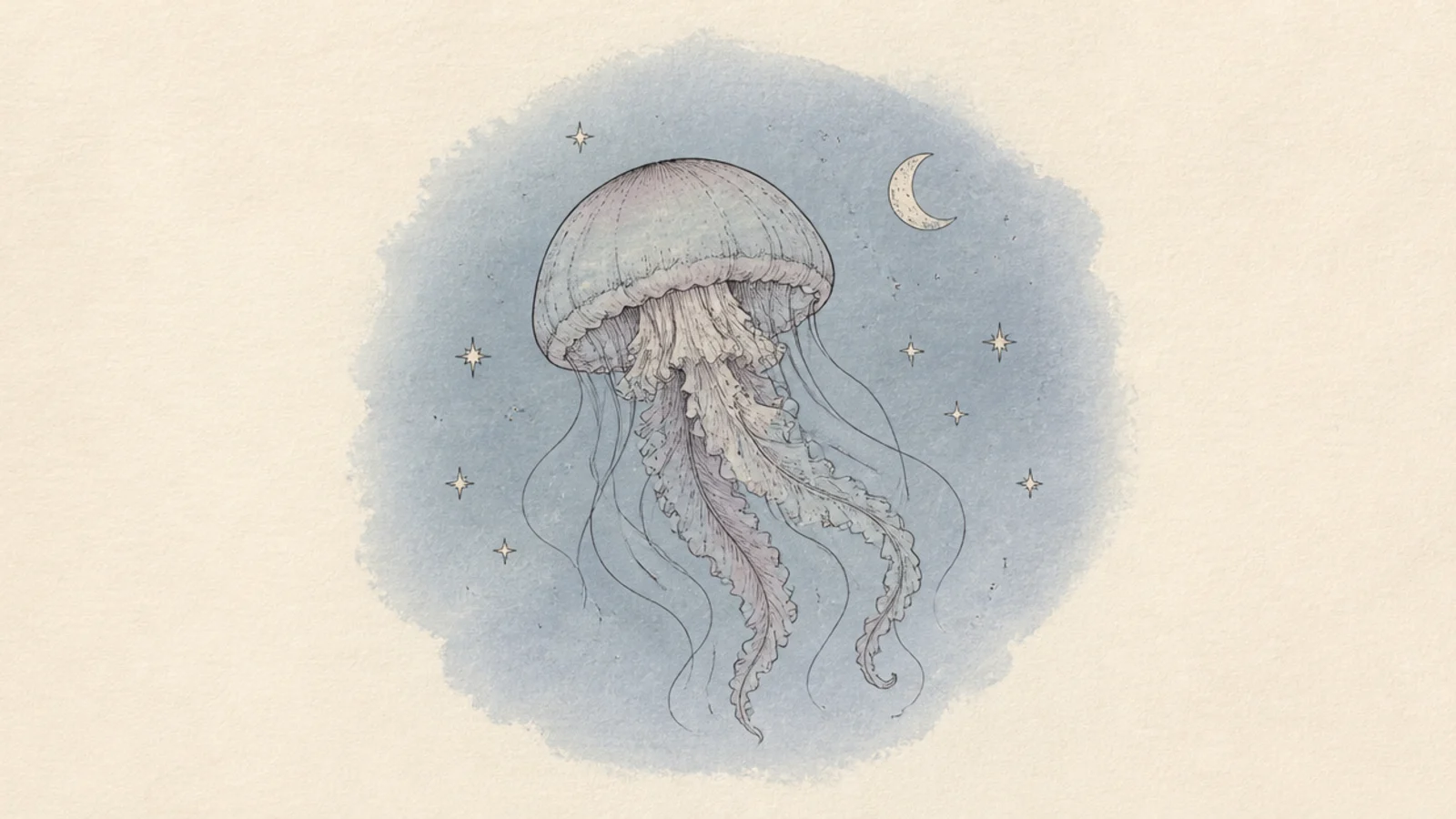
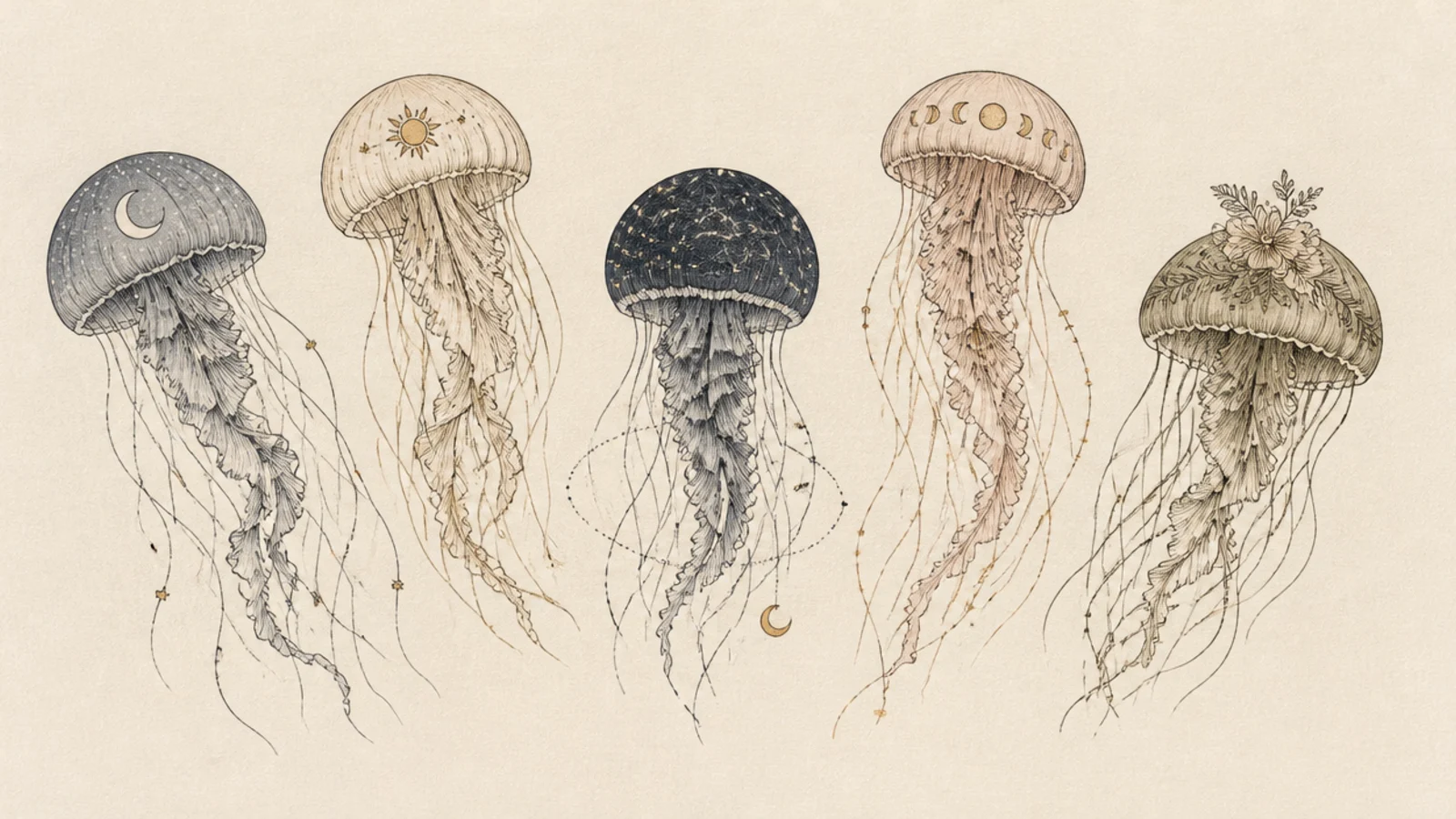
Step 1 draw a simple jellyfish. Step 2 add a small crescent moon and a light scatter of stars. Step 3 wash a muted dusty-blue background and keep everything soft.
A jellyfish among stars and a crescent moon in muted tones is peak dreamy aesthetic. The night theme feels calm and a little magical. It’s a journal favorite.
AvoidDon’t use bright white stars on a dark sky; softer, muted stars fit the aesthetic mood.
Pro tipKeep the stars small and few so the page stays calm rather than busy.
2 Pastel Gradient Jellyfish
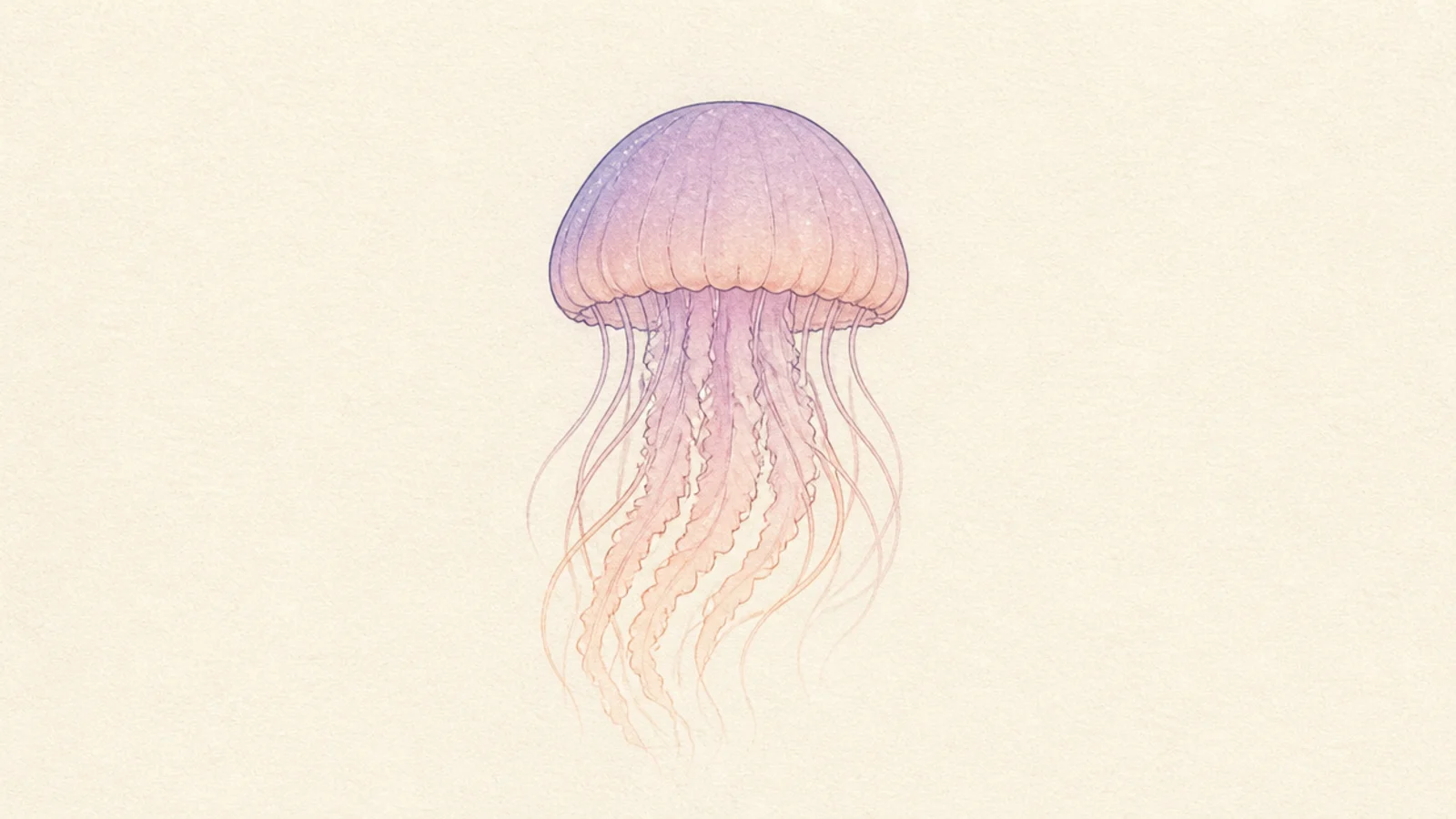
Step 1 draw a simple bell and tentacles. Step 2 blend two pastels (lavender into peach) down the bell. Step 3 fade the tentacles to the lightest tone.
A gentle pastel gradient across the bell feels soft and modern. The blended colors look dreamy without any detail. It’s simple and very aesthetic.
AvoidDon’t pick clashing pastels; related tones keep it calm and cohesive.
Pro tipKeep the two pastels close in value so the gradient stays soft and seamless.
3 Minimal Ink Jellyfish
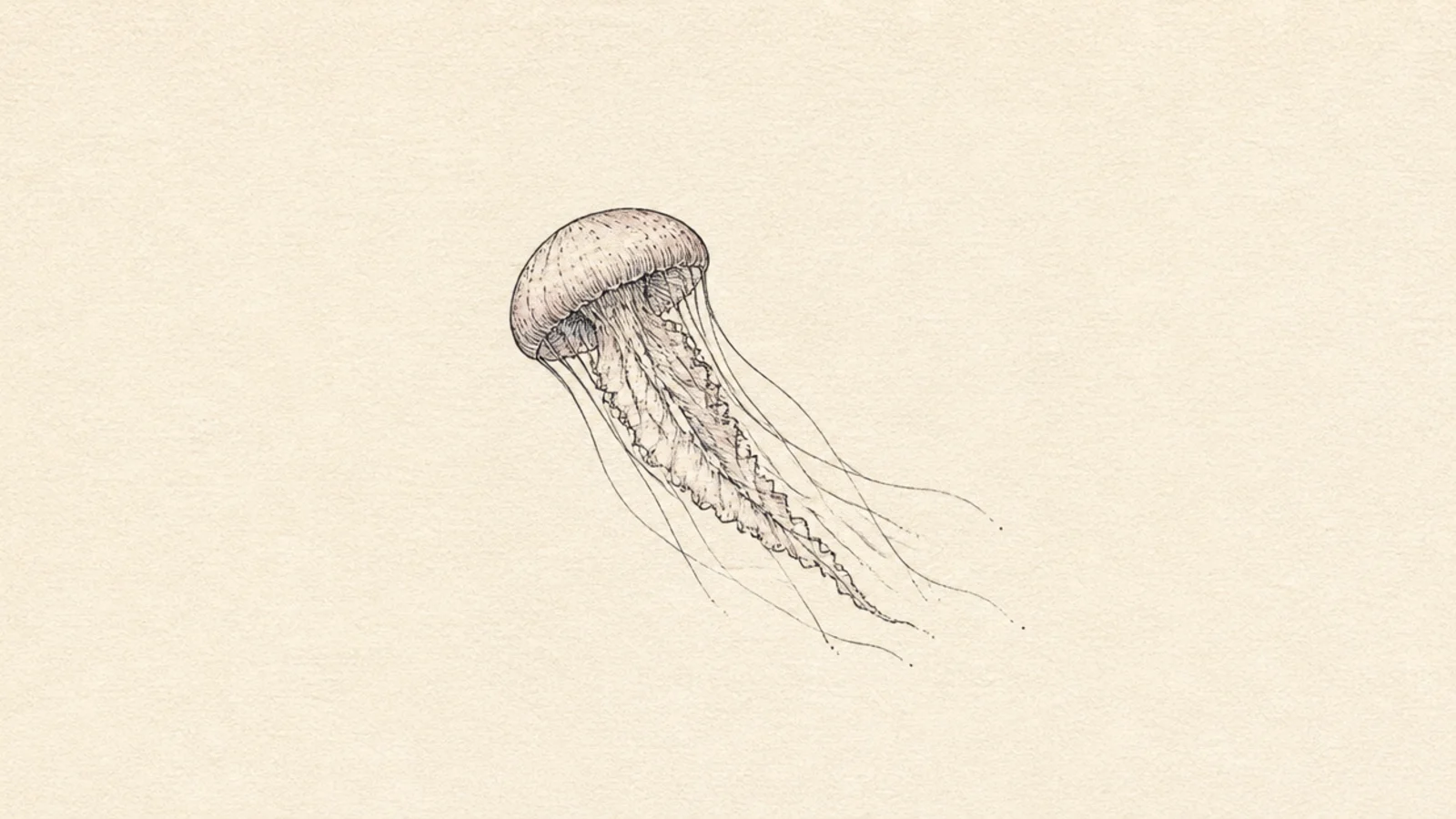
Step 1 draw a small bell in fineliner. Step 2 add a few flowing tentacles. Step 3 leave most of the page blank around it.
A clean ink jellyfish with lots of empty space is effortlessly aesthetic. The simplicity feels intentional and calm. It suits a minimalist journal perfectly.
AvoidDon’t fill the space; the emptiness is the aesthetic.
Pro tipPlace the jellyfish off-center with empty space around it for a modern, gallery feel.
4 Vintage Botanical Jellyfish
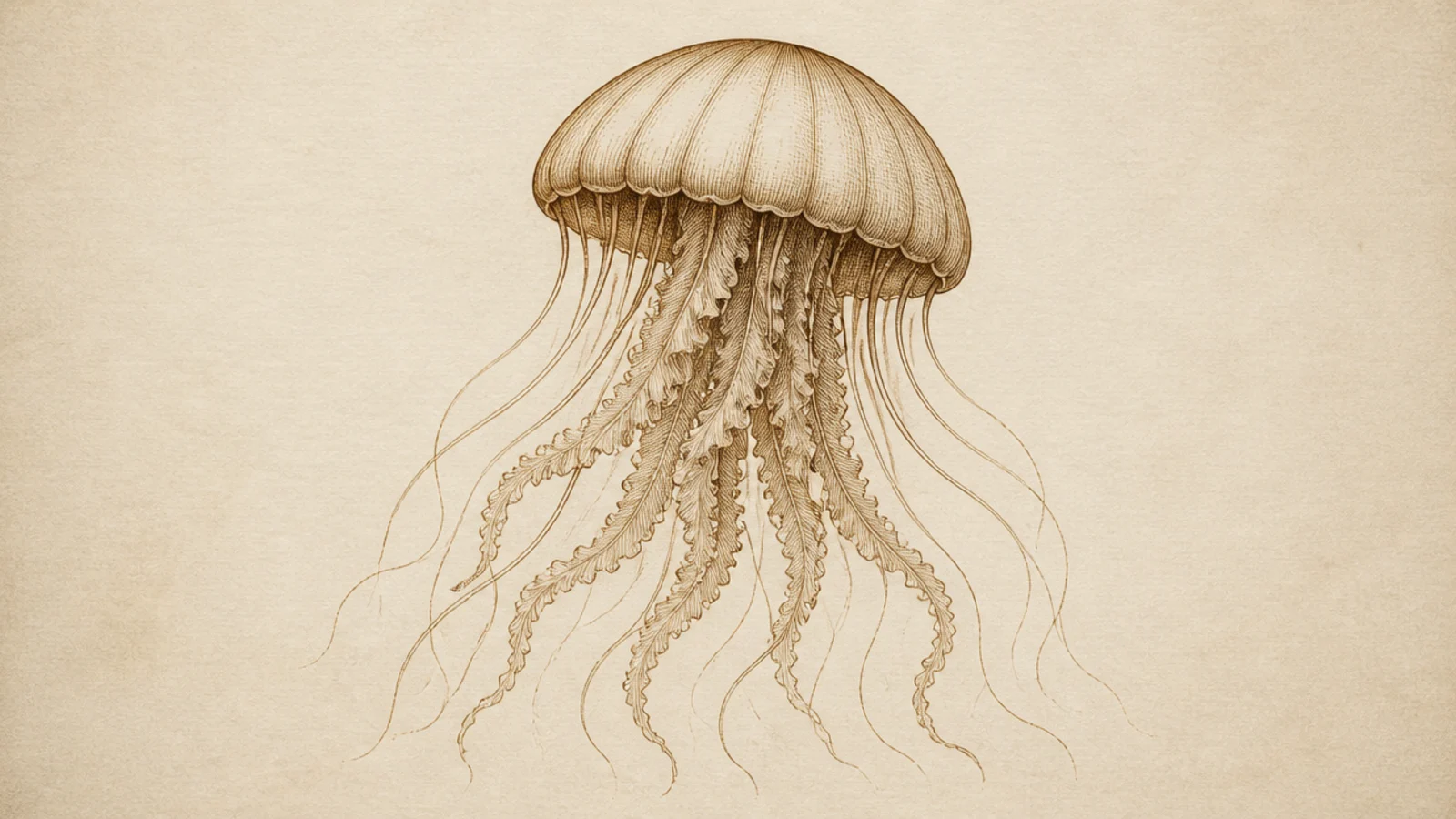
Drawing the jellyfish in sepia with fine hatching mimics old botanical prints. The aged tone feels classic and refined. It’s a sophisticated aesthetic.
Step 1 draw the jellyfish in brown fineliner. Step 2 add fine hatching for soft shadow. Step 3 use a sepia or cream wash to age it.
Add fine, even hatching like an engraving for that vintage scientific-illustration look.
Don’t use bright colors; muted sepia and cream are what make it feel vintage.
5 Cottagecore Wildflower Jellyfish
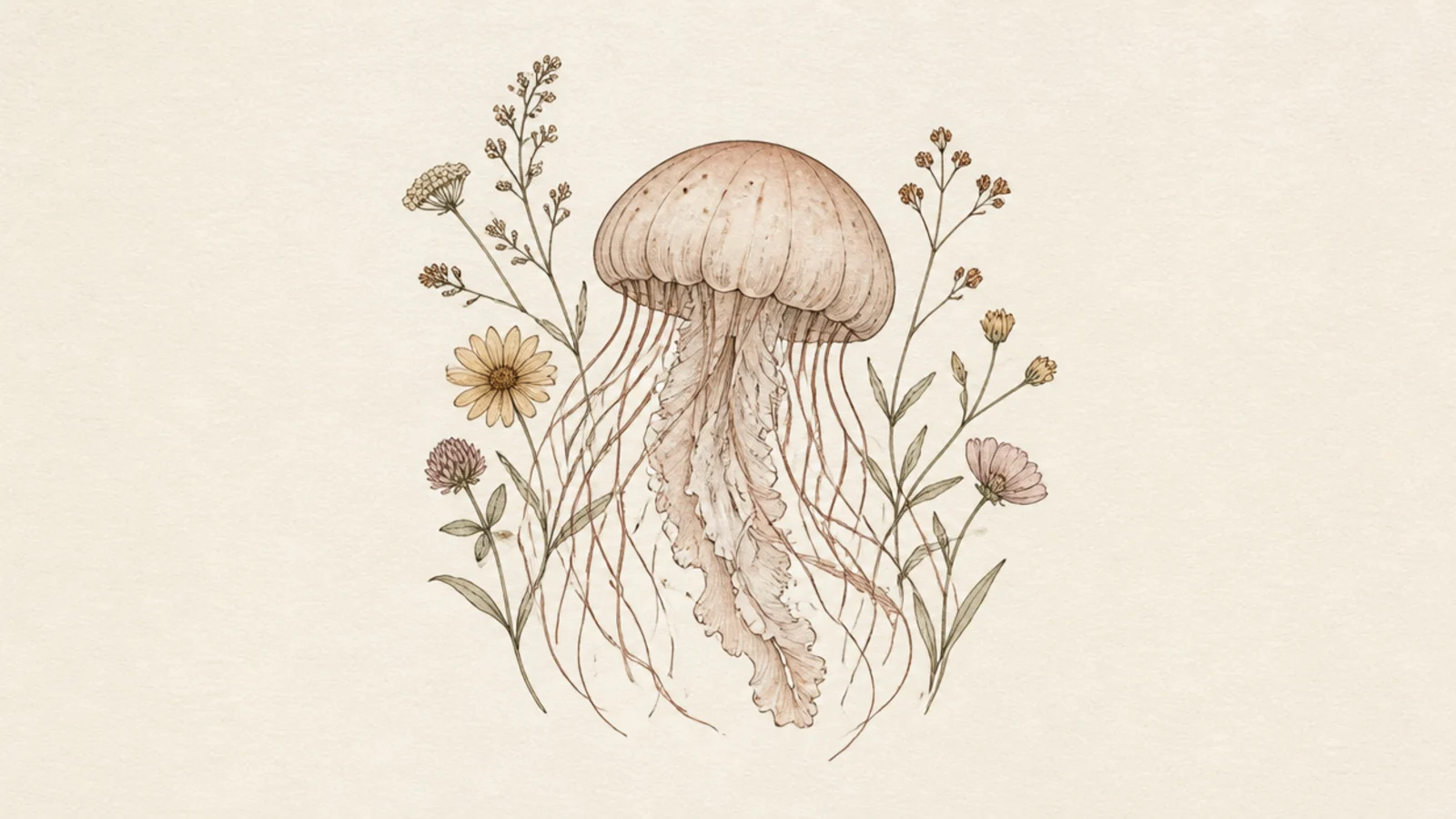
Pairing the jellyfish with sprigs of tiny wildflowers gives a soft cottagecore feel. The florals add gentle warmth. It’s cozy and pretty.
Step 1 draw a simple jellyfish. Step 2 tuck small wildflower sprigs beside or around it. Step 3 color in muted, earthy florals.
Keep the flowers small and muted so they frame the jellyfish rather than overwhelm it.
Don’t use bright saturated florals; dusty, earthy colors keep the cottagecore mood.
6 Sage & Cream Jellyfish
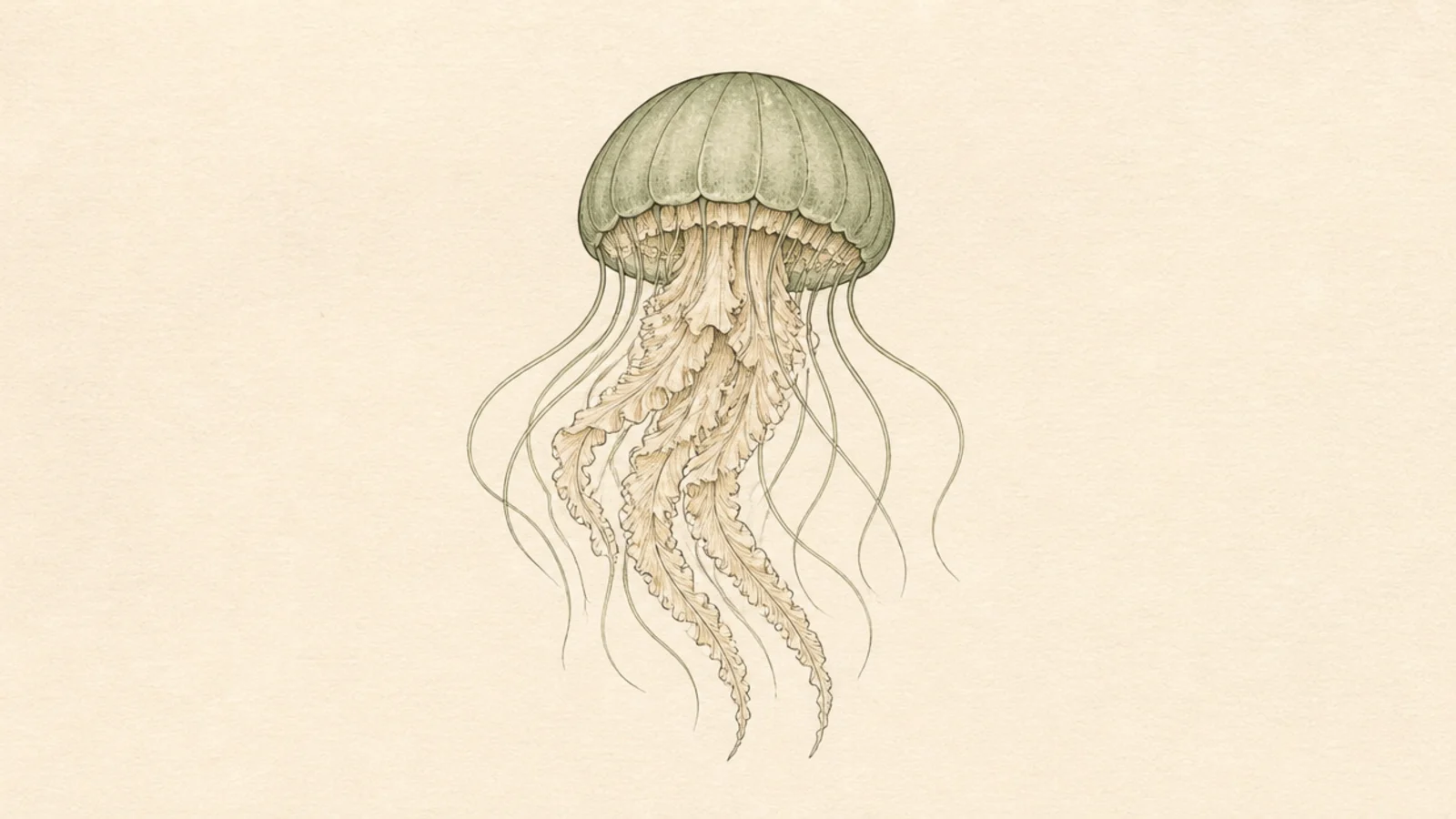
Step 1 draw a simple jellyfish. Step 2 fill the bell with muted sage. Step 3 keep the tentacles cream or pale sage on a warm cream background.
A muted sage-and-cream palette feels calm and earthy. The soft green is unexpected and very aesthetic. It reads as quiet and refined.
AvoidDon’t add a bright accent; the restrained two-color palette is the point.
Pro tipKeep both colors muted and warm so the palette feels soft and grounded.
7 Dusty Rose Jellyfish
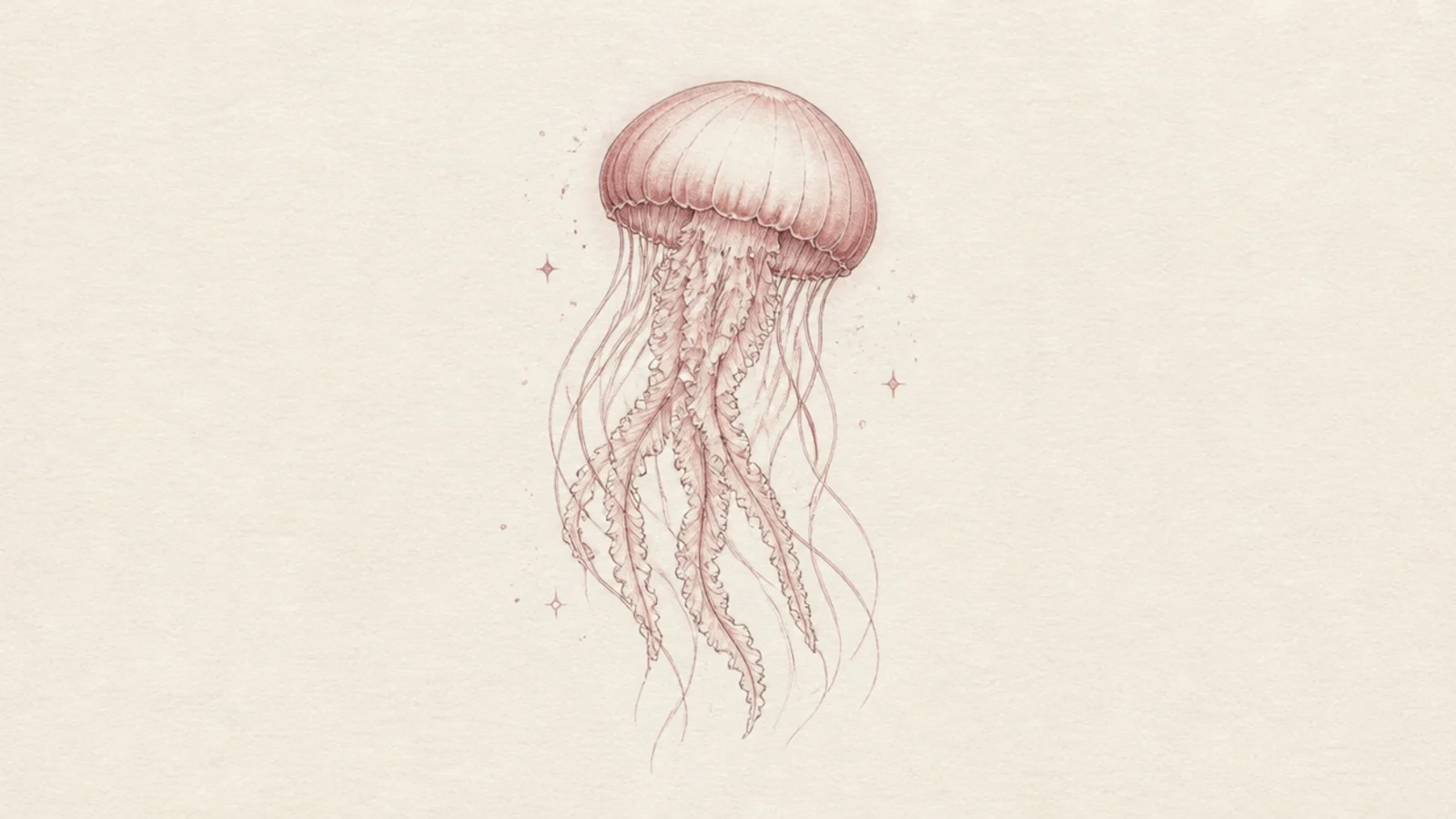
Step 1 draw a simple jellyfish. Step 2 shade it in muted dusty rose, lightest in the center. Step 3 add a faint cream background.
A dusty rose jellyfish feels warm, soft, and romantic. The muted pink is gentle on the eye. It’s a lovely aesthetic for a soft spread.
AvoidDon’t use hot pink; the dusty, grayed tone is what makes it aesthetic.
Pro tipMute the pink with a touch of gray so it stays dusty rather than bright.
8 Washi-Tape Frame Jellyfish
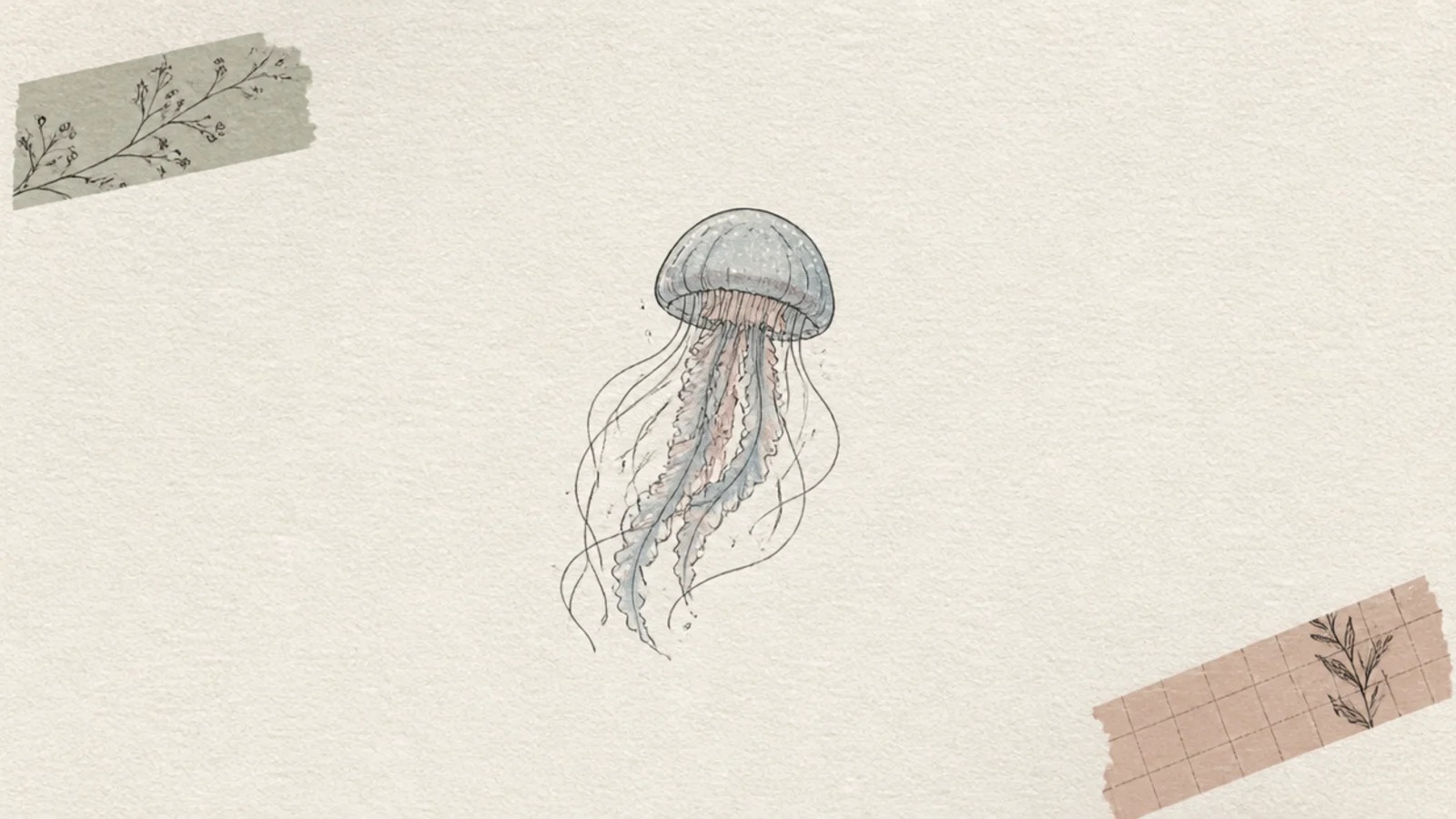
Step 1 draw a jellyfish in a small frame area. Step 2 add washi-tape strips at the corners or edges. Step 3 keep the tape patterns muted and coordinated.
Framing the jellyfish with muted washi-tape strips gives it a journal-spread look. The tape adds soft pattern and structure. It feels curated and cozy.
AvoidDon’t use loud tape colors; muted patterns keep the aesthetic cohesive.
Pro tipUse two coordinating tape patterns max so the frame stays calm.
9 Line-and-Wash Jellyfish
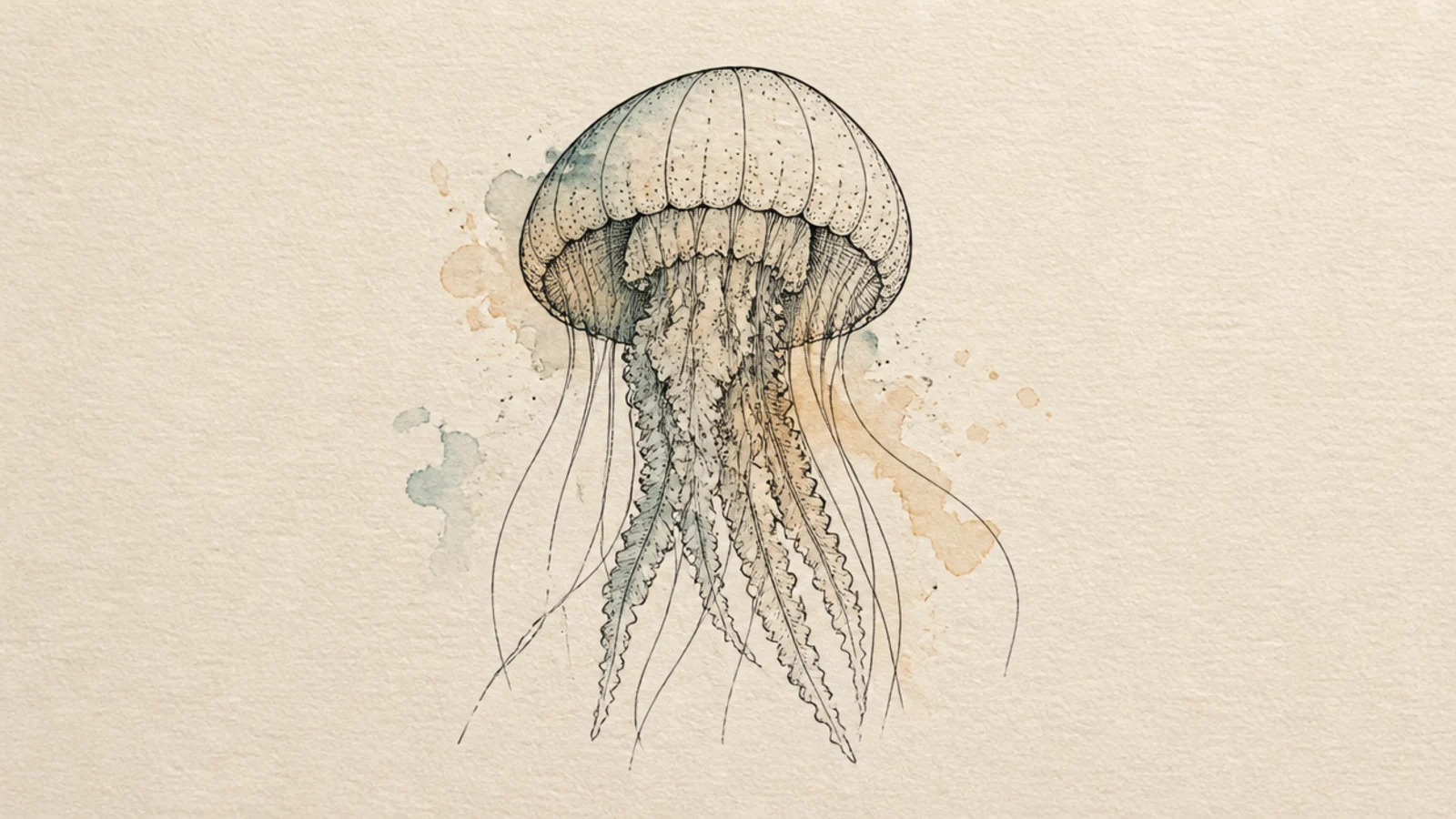
Step 1 ink a simple jellyfish. Step 2 add a loose wash that doesn’t quite stay inside the lines. Step 3 leave some paper showing for lightness.
Combining crisp ink lines with a loose, imperfect wash is a classic aesthetic technique. The soft color spilling past the lines looks relaxed and artful. It’s effortless and pretty.
AvoidDon’t color neatly inside the lines; the loose overlap is the charm.
Pro tipLet the wash bleed slightly outside the lines on purpose for a relaxed, artistic feel.
10 Ocean Palette Jellyfish
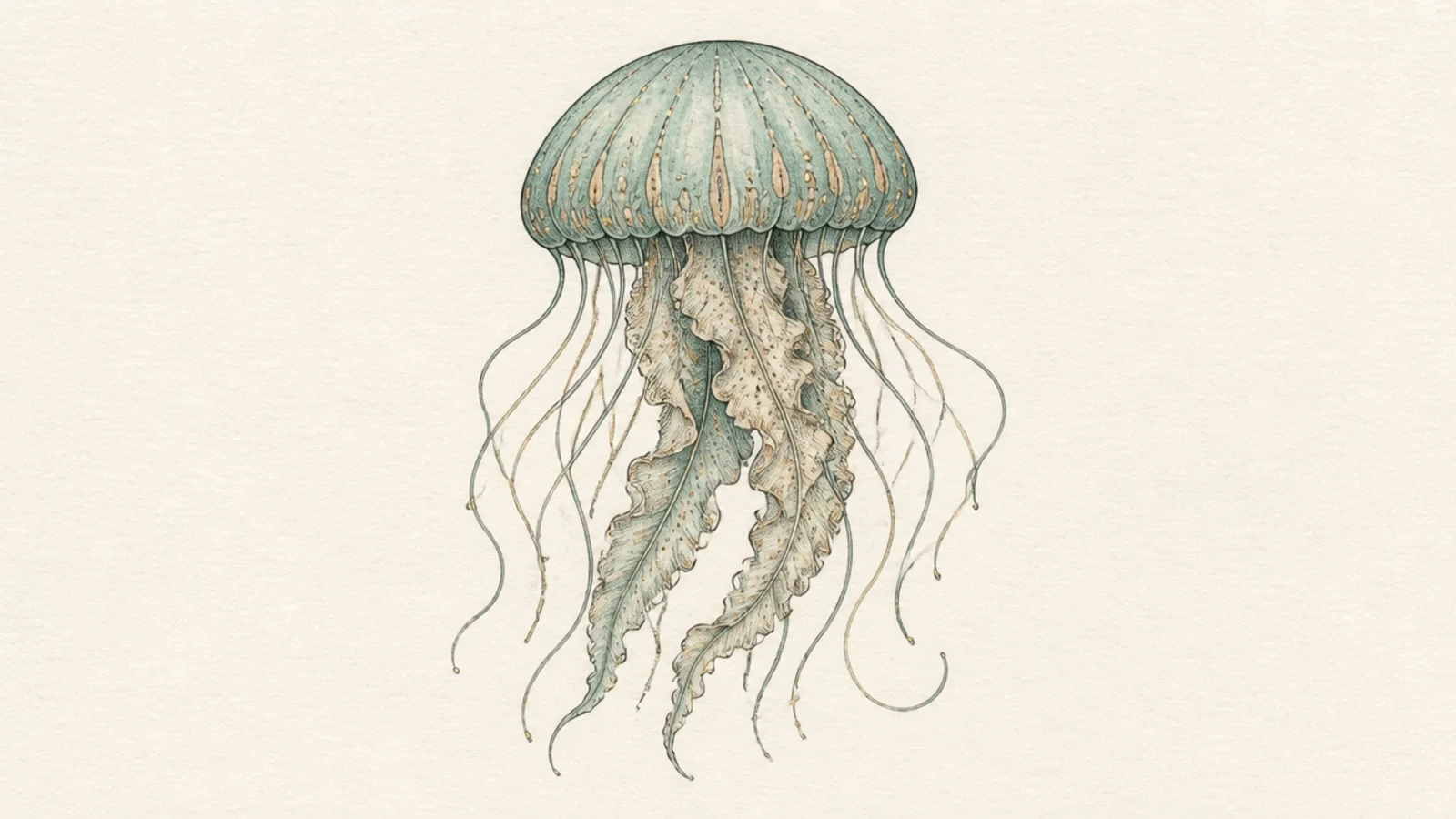
A muted teal, sand, and cream palette evokes a calm, faded seaside. The coastal colors feel soothing. It’s an aesthetic that suits the subject perfectly.
Step 1 draw a simple jellyfish. Step 2 use muted teal for the bell and sandy beige tones for accents. Step 3 keep the background pale cream.
Grey down the teal slightly so it reads as a soft, faded ocean color.
Don’t use a bright tropical teal; the muted version keeps it aesthetic.
11 Golden-Line Jellyfish
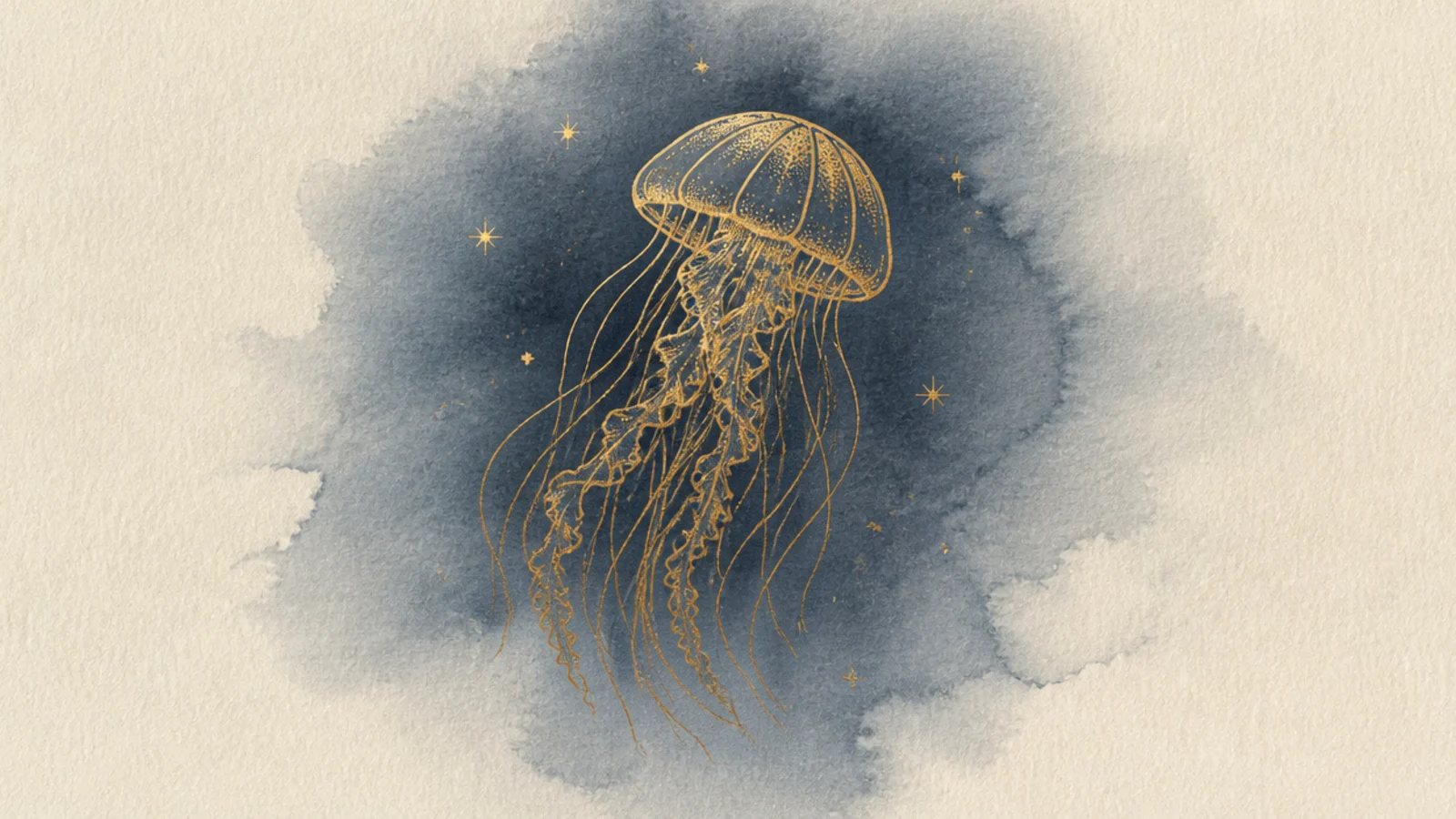
A jellyfish outlined in metallic gold looks elegant and a little luxe. The gold shimmer against a muted wash is stunning. It elevates a simple shape.
Step 1 wash a muted background (navy or blush) and let it dry. Step 2 outline the jellyfish with a gold gel pen. Step 3 add a few tiny gold dots or stars.
Keep everything else muted so the gold line is the only shine on the page.
Don’t add other bright colors; the gold works because it’s the single accent.
12 Monochrome Blue Jellyfish
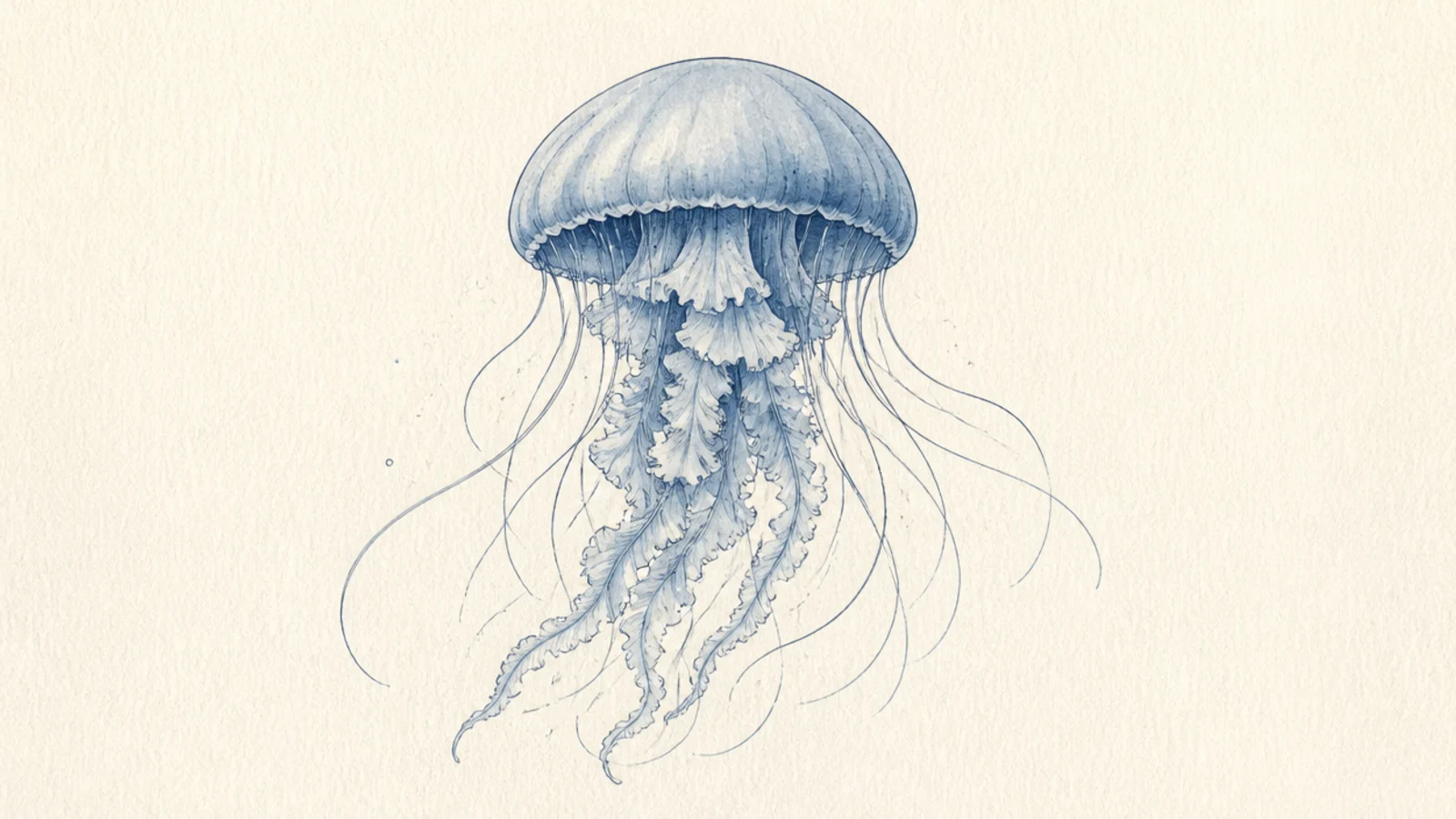
Using several soft shades of one muted blue is calm and cohesive. The single-color range feels tidy and aesthetic. It’s easy and always looks good.
Step 1 draw a simple jellyfish. Step 2 shade it in three values of one muted blue. Step 3 keep the background pale.
Use light, mid, and dark of the same blue so the range feels intentional.
Don’t add a second color family; staying monochrome is what makes it cohesive.
13 Journal-Spread Jellyfish Trio
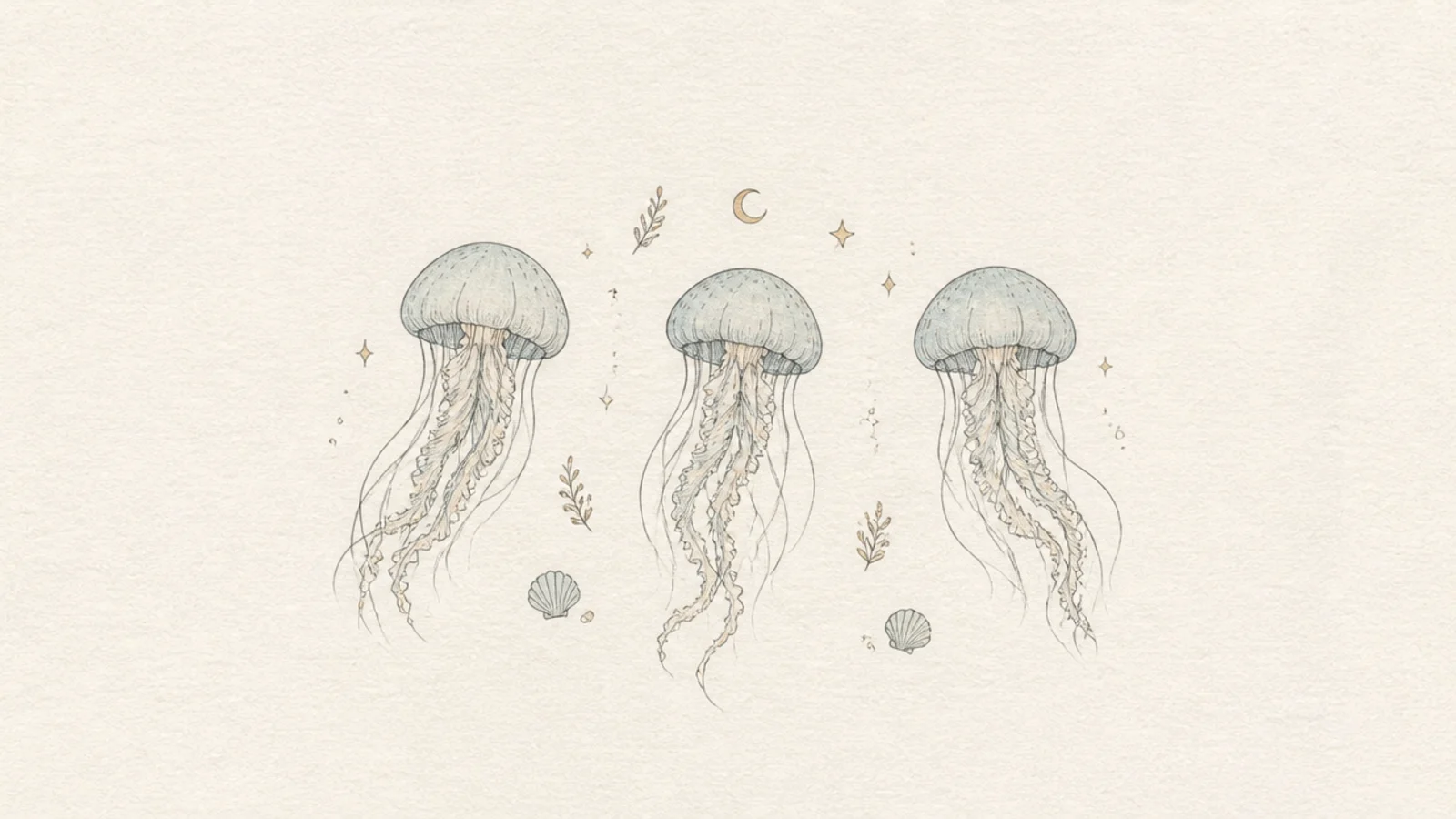
Three matching jellyfish arranged neatly make a designed-looking journal spread. The repetition feels curated. It’s a satisfying way to fill a page.
Step 1 draw three small matching jellyfish in a row or triangle. Step 2 use the same palette and line weight for all. Step 3 add tiny matching accents between them.
Keep all three identical in style so they read as a coordinated set.
Don’t vary the styles; sameness is what makes the spread look designed.
14 Dot-Grid Jellyfish
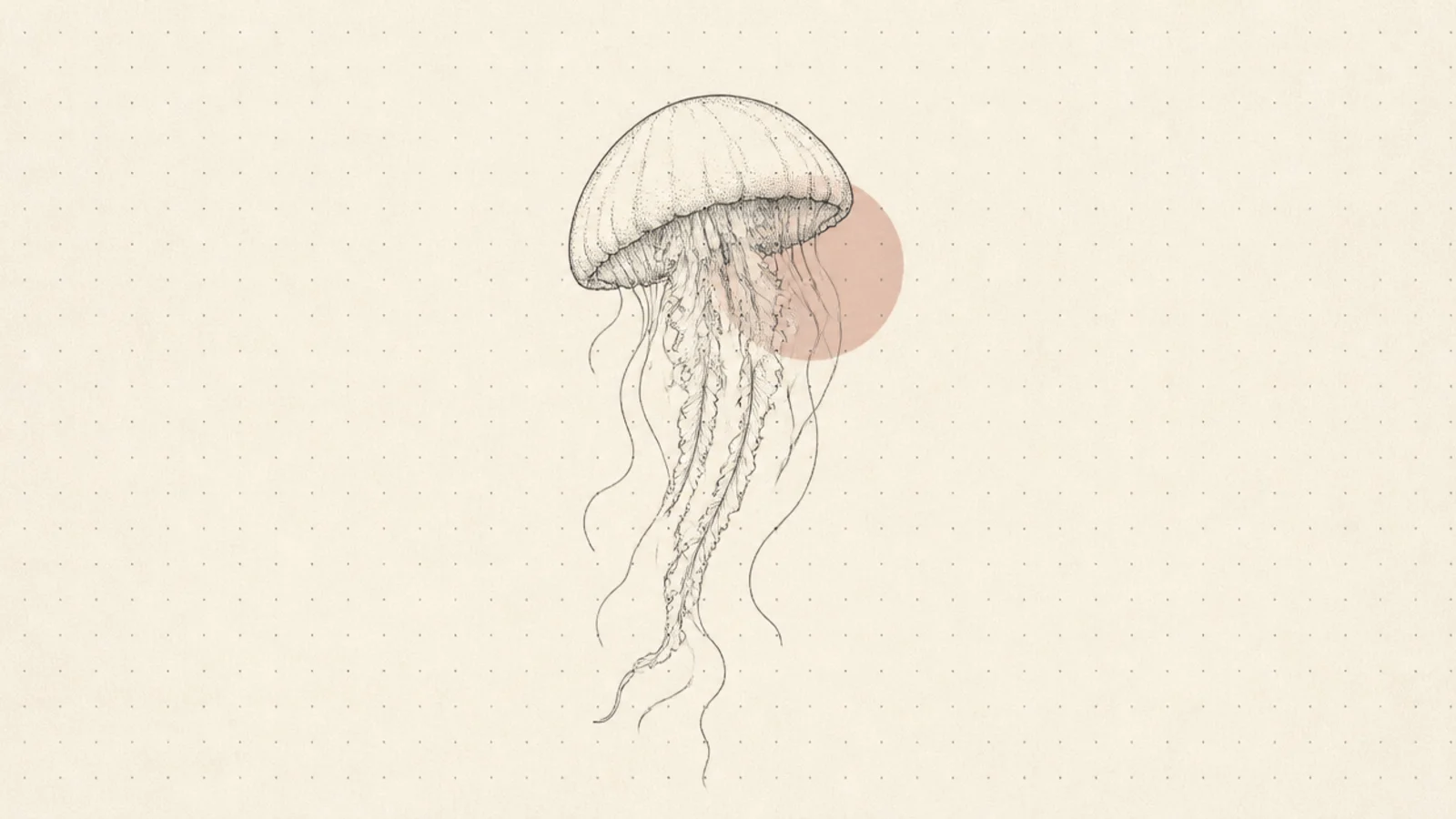
A simple jellyfish drawn over a faint dot grid nods to bullet-journal aesthetics. The visible grid adds subtle structure. It feels clean and planner-cute.
Step 1 keep or lightly draw a faint dot grid. Step 2 draw a minimal jellyfish over it. Step 3 add one small muted accent.
Let the dot grid stay faint so the jellyfish clearly sits on top of it.
Don’t darken the grid; a whisper of dots is the aesthetic.
15 Faded Vintage Jellyfish
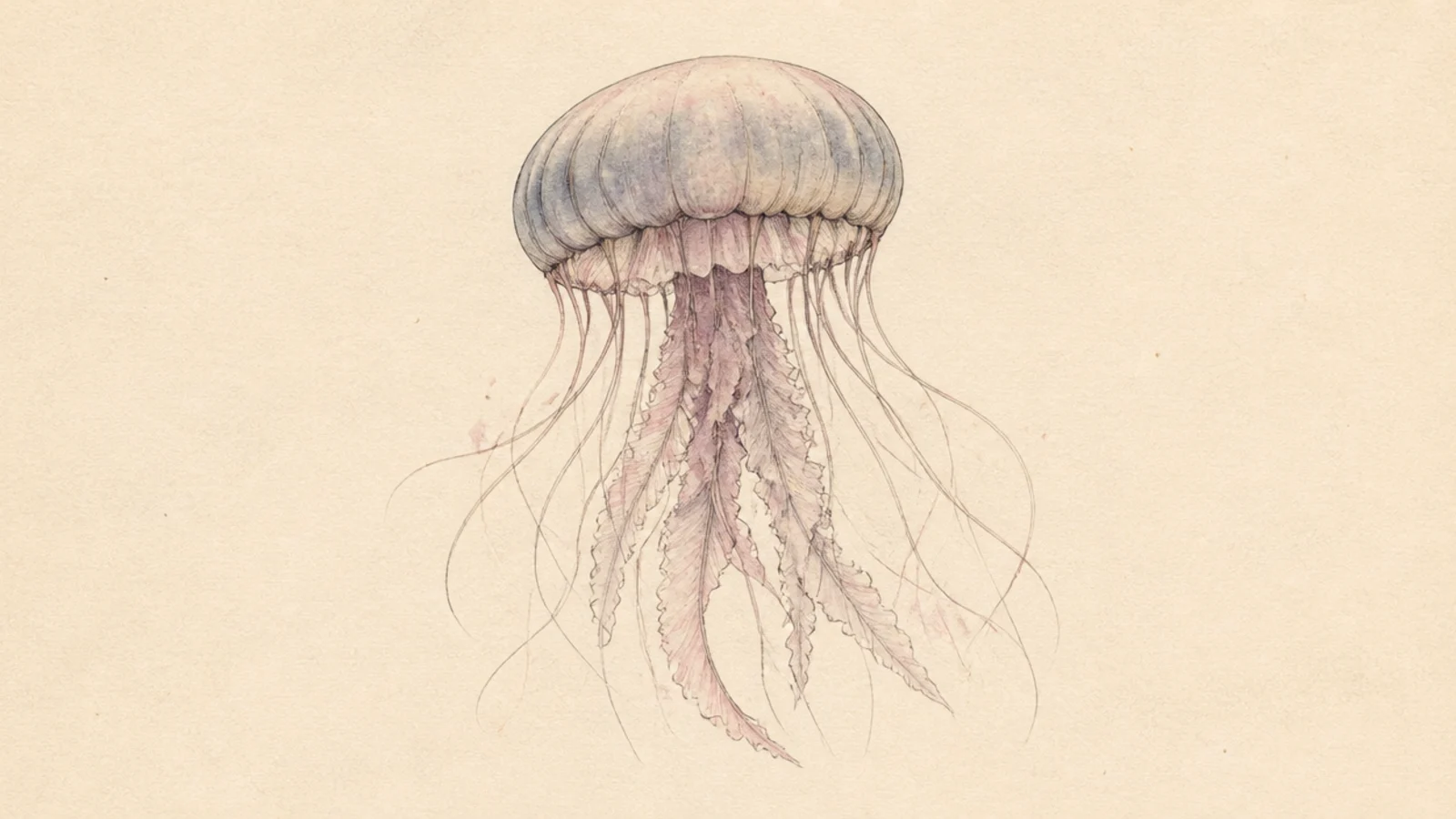
Step 1 draw a simple jellyfish. Step 2 color it in faded, low-saturation tones. Step 3 add a light cream overlay wash to age it.
Washed-out, faded colors give the jellyfish an old-photograph feel. The gentle fade is soft and nostalgic. It’s a moody, refined aesthetic.
AvoidDon’t use crisp bright color; the whole effect depends on the fade.
Pro tipKeep every color desaturated and slightly warm for that faded-photo look.
16 Terracotta & Cream Jellyfish
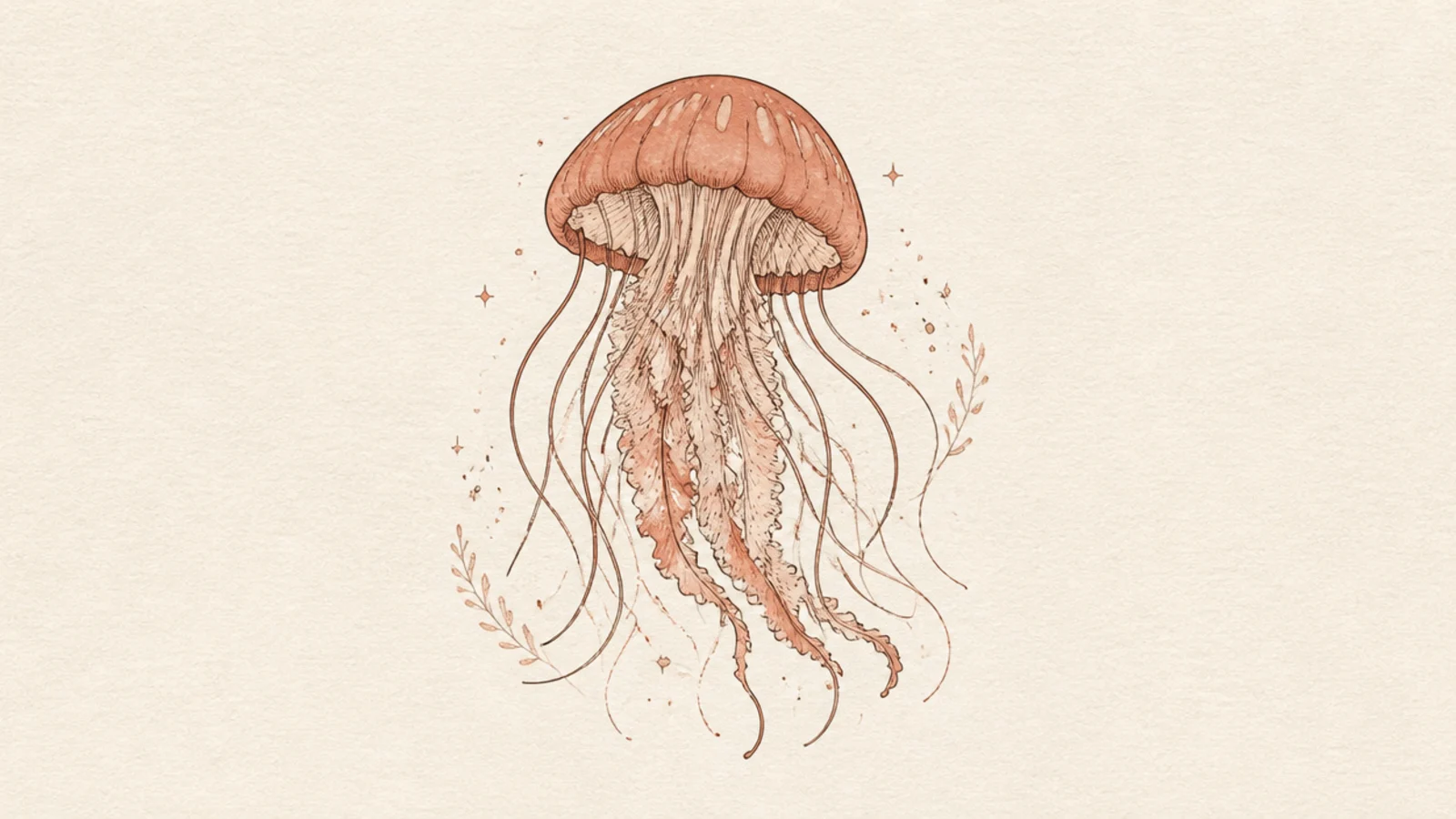
A warm terracotta-and-cream palette feels earthy and boho. The clay tones are cozy and on-trend. It’s a grounded, warm aesthetic.
Step 1 draw a simple jellyfish. Step 2 fill the bell in muted terracotta. Step 3 use cream and soft clay accents on a warm background.
Keep the terracotta soft and slightly grayed for a warm, boho feel.
Don’t use bright orange; the muted clay tone is what makes it aesthetic.
17 Dark Academia Jellyfish
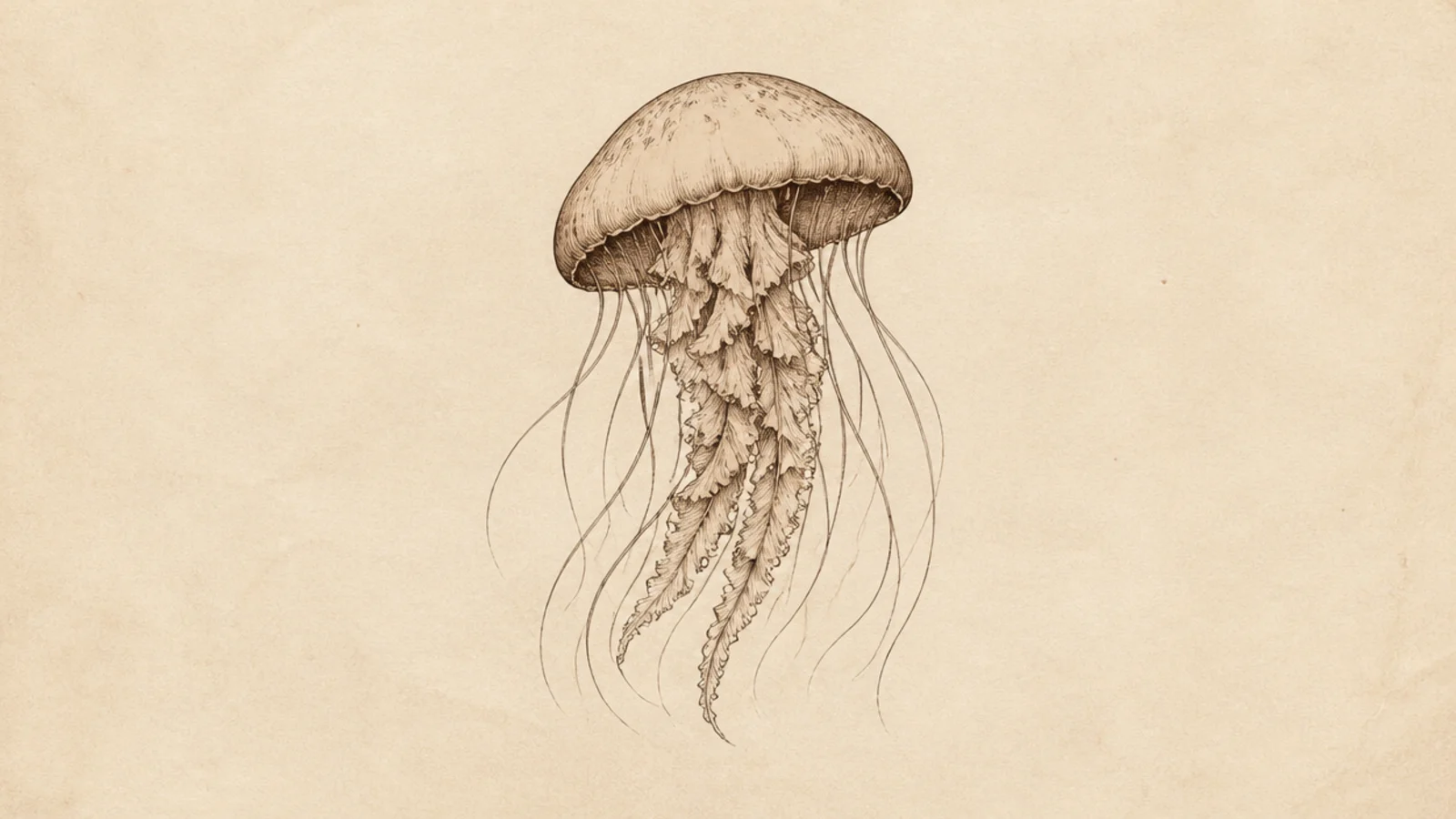
A moody jellyfish in deep browns and ink on aged paper fits the dark academia aesthetic. The rich, muted tones feel scholarly and atmospheric. It’s elegant and moody.
Step 1 draw the jellyfish in dark brown ink. Step 2 add fine hatching for depth. Step 3 use an aged, tea-stained background.
Keep the palette deep and warm-brown with a slightly aged paper tone.
Don’t add bright color; the muted, moody tones define the aesthetic.
18 Pressed-Flower Jellyfish
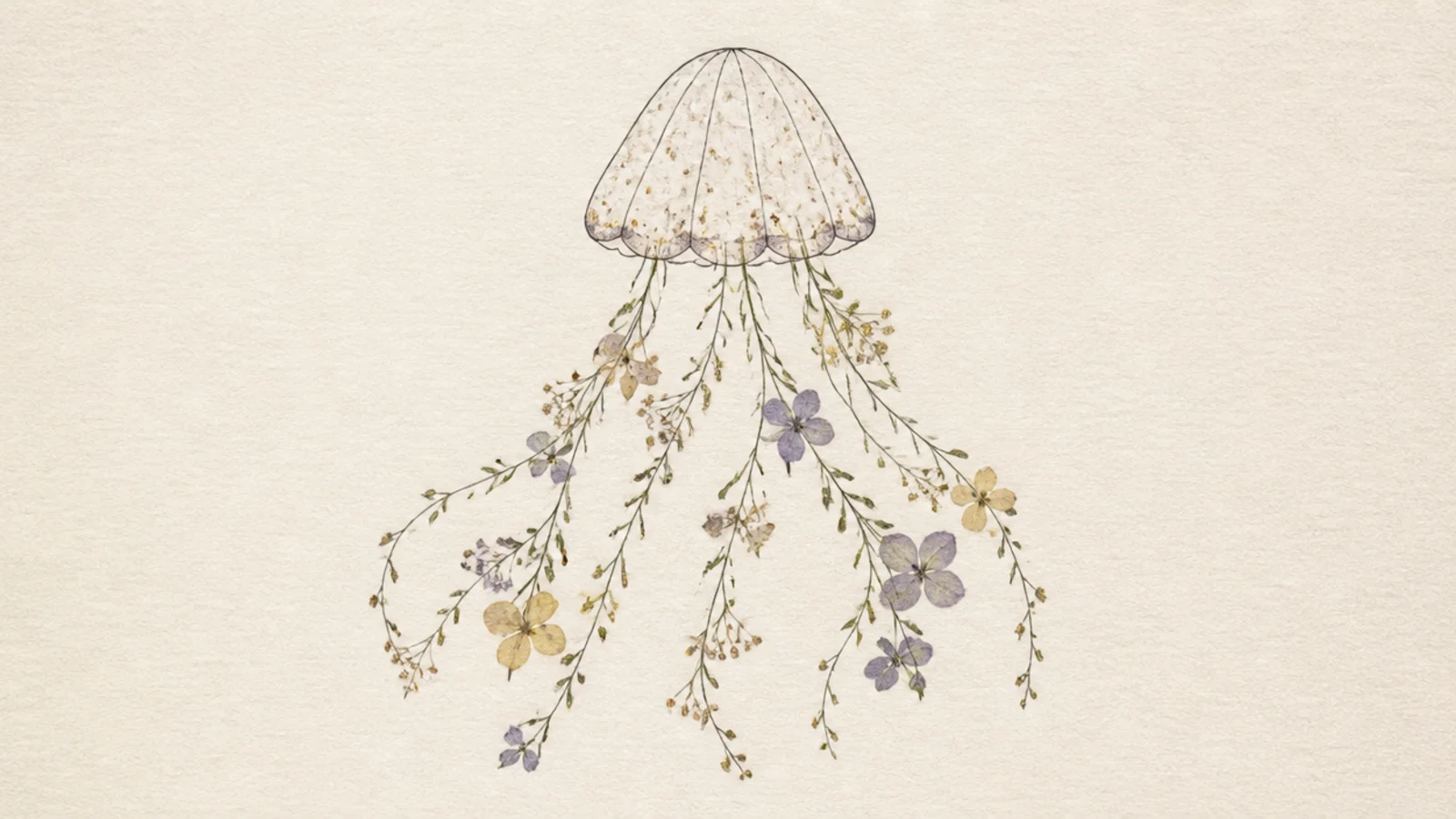
Step 1 draw a simple bell. Step 2 trail pressed-flower stems and tiny faded blooms as tentacles. Step 3 keep colors muted and slightly translucent.
Drawing the tentacles like delicate pressed flowers and stems is soft and botanical. The flattened, faded blooms feel like a keepsake. It’s gentle and pretty.
AvoidDon’t make the flowers bold and full; pressed flowers are delicate and faded.
Pro tipMake the flowers look flat and slightly translucent, like real pressed petals.
19 Lavender-Fields Jellyfish
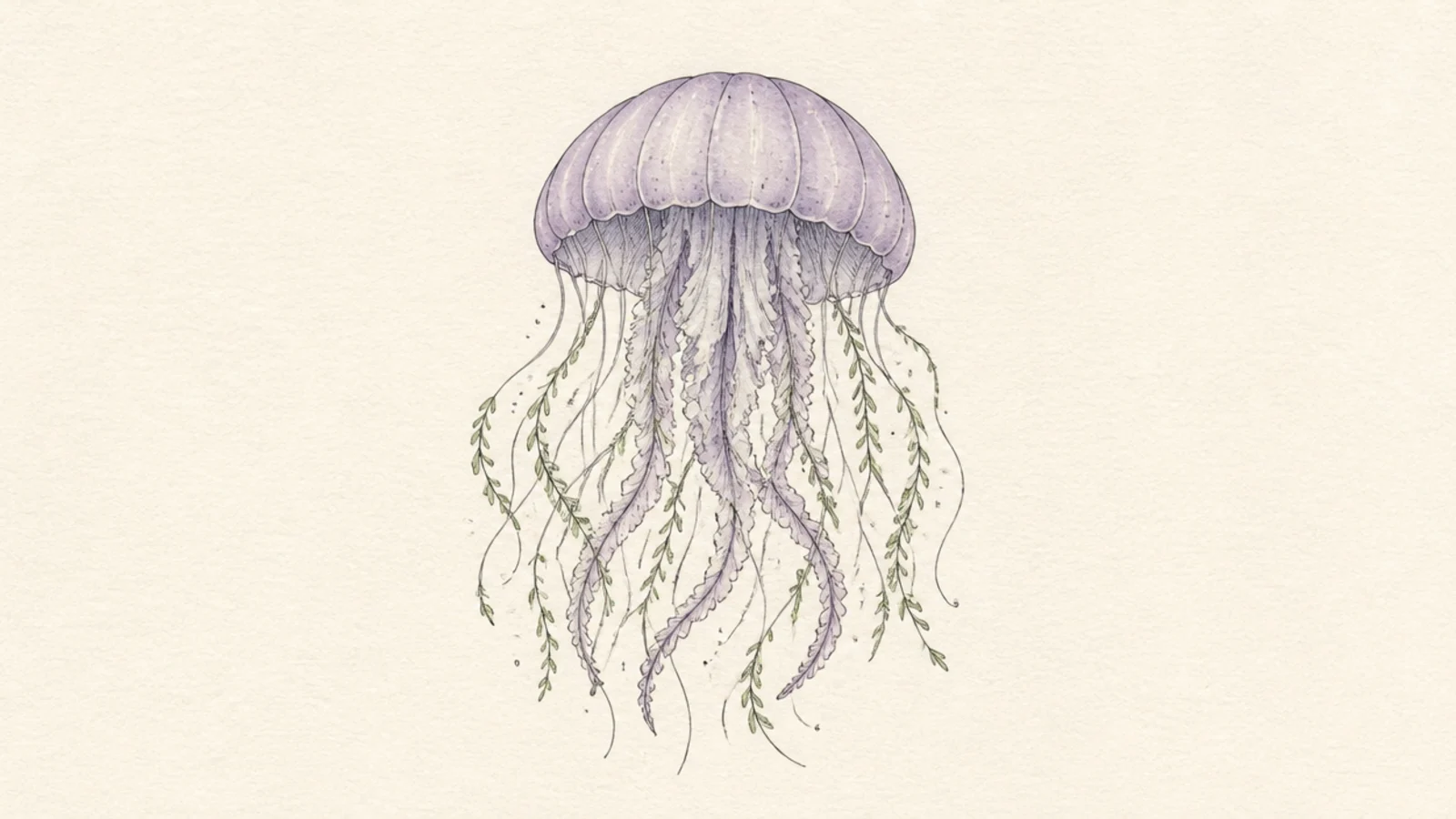
Step 1 draw a simple jellyfish. Step 2 wash the bell in soft lavender. Step 3 add sage-green tentacle accents on a pale background.
A soft lavender-and-sage palette is calming and fragrant-feeling. The gentle purple and green pair beautifully. It’s a serene aesthetic.
AvoidDon’t brighten the purple; muted lavender keeps the calm mood.
Pro tipKeep both the lavender and sage muted so they feel soft and natural together.
20 Coffee-Wash Jellyfish
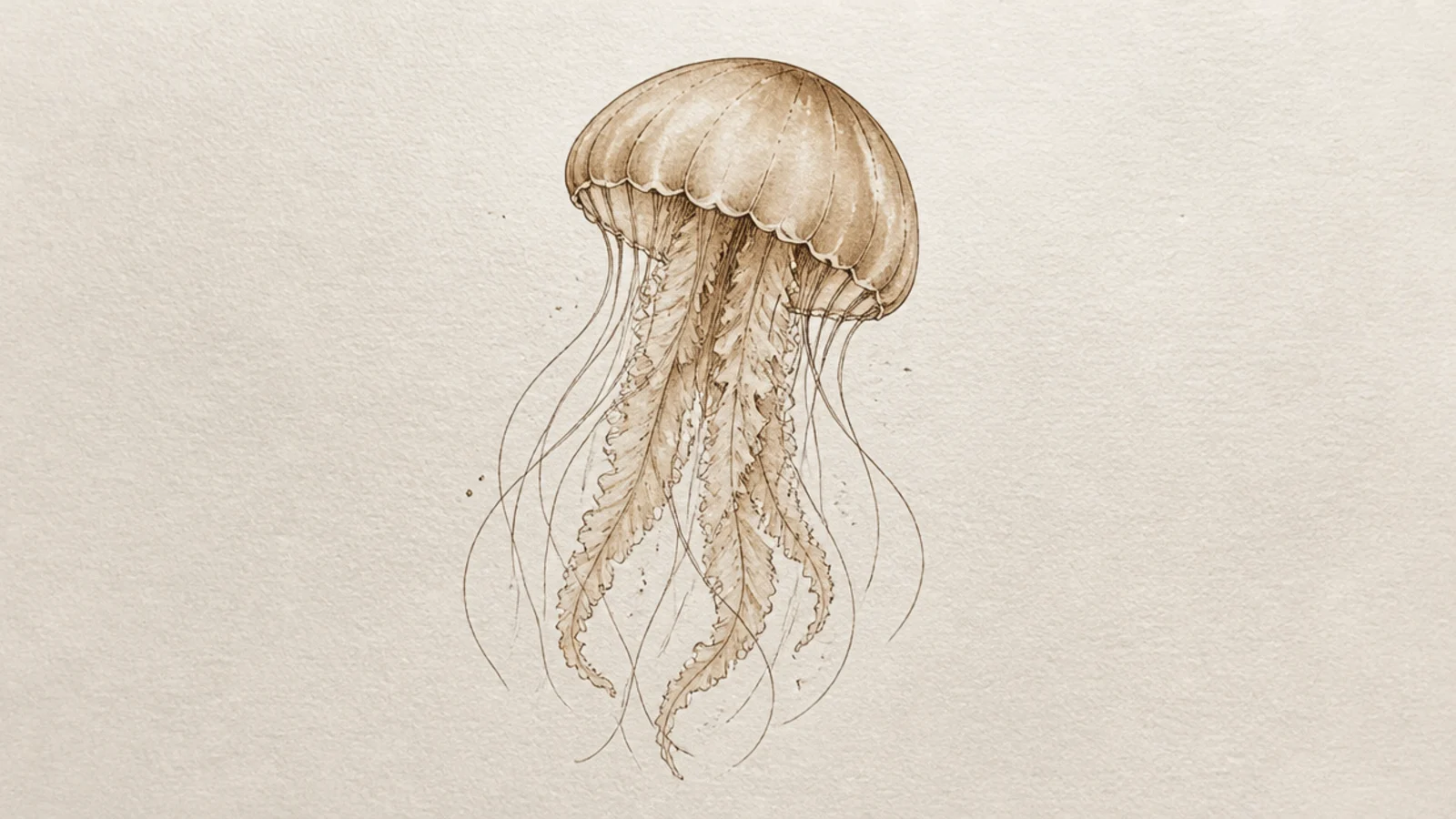
A jellyfish washed in warm coffee-brown tones is cozy and monochrome. The single warm color feels handmade and calm. It’s a simple, aesthetic technique.
Step 1 ink a simple jellyfish. Step 2 wash it in warm coffee-brown values. Step 3 leave paper showing for highlights.
Build the brown in light layers so you get soft coffee tones, not one flat dark wash.
Don’t go too dark; keep it a soft, warm sepia-coffee tone.
21 Constellation-Line Jellyfish
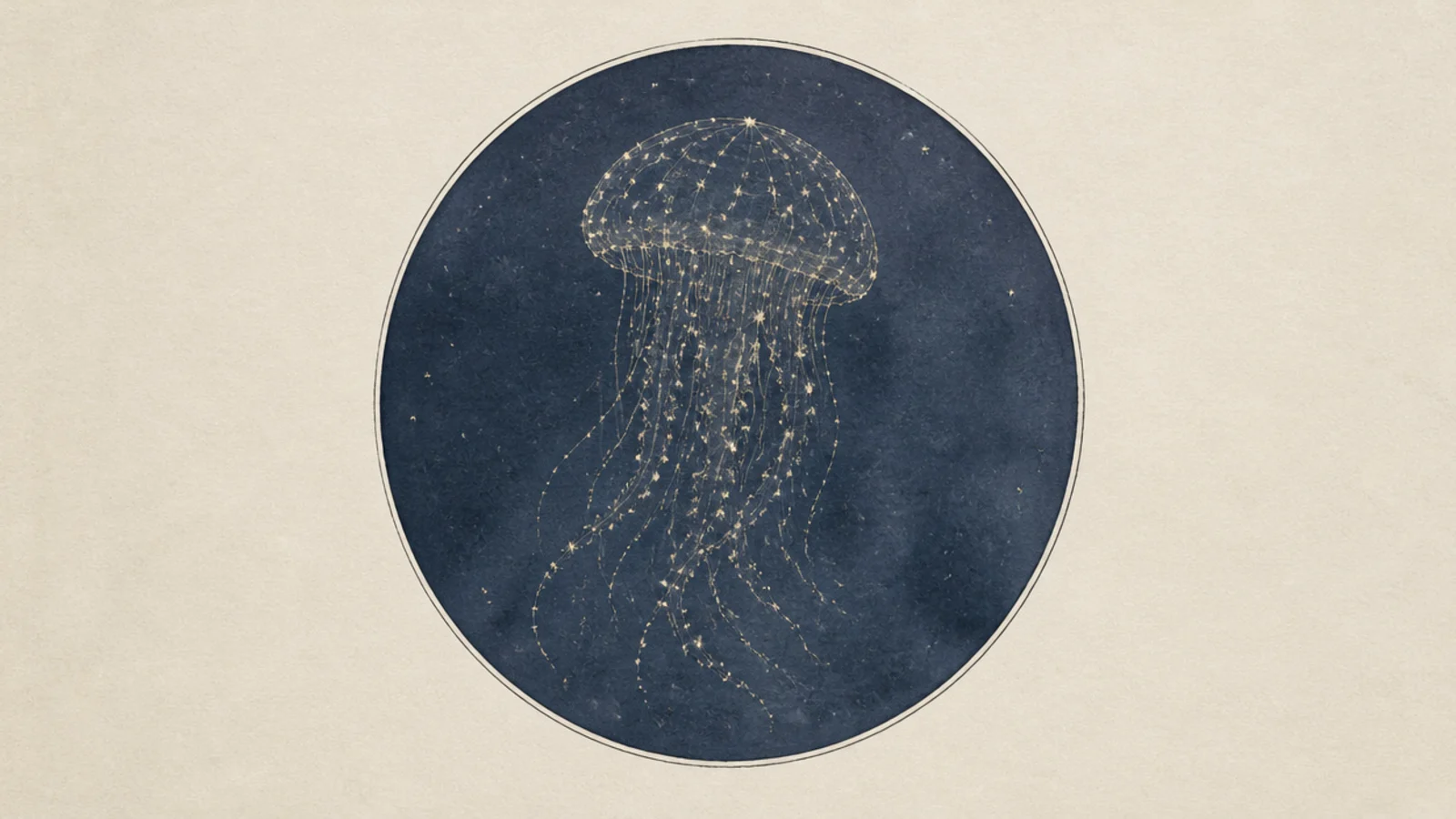
Step 1 wash a muted deep-blue background. Step 2 place small dots in a jellyfish shape and connect them with thin lines. Step 3 add a soft glow on a few dots.
A jellyfish made of fine connected star-lines on a muted night wash is celestial and elegant. The thin lines and small dots feel delicate. It’s a refined night aesthetic.
AvoidDon’t use bright dots; soft, muted stars suit the aesthetic wash.
Pro tipKeep the connecting lines very thin so the shape feels like a delicate star map.
22 Half-Tone Dotwork Jellyfish
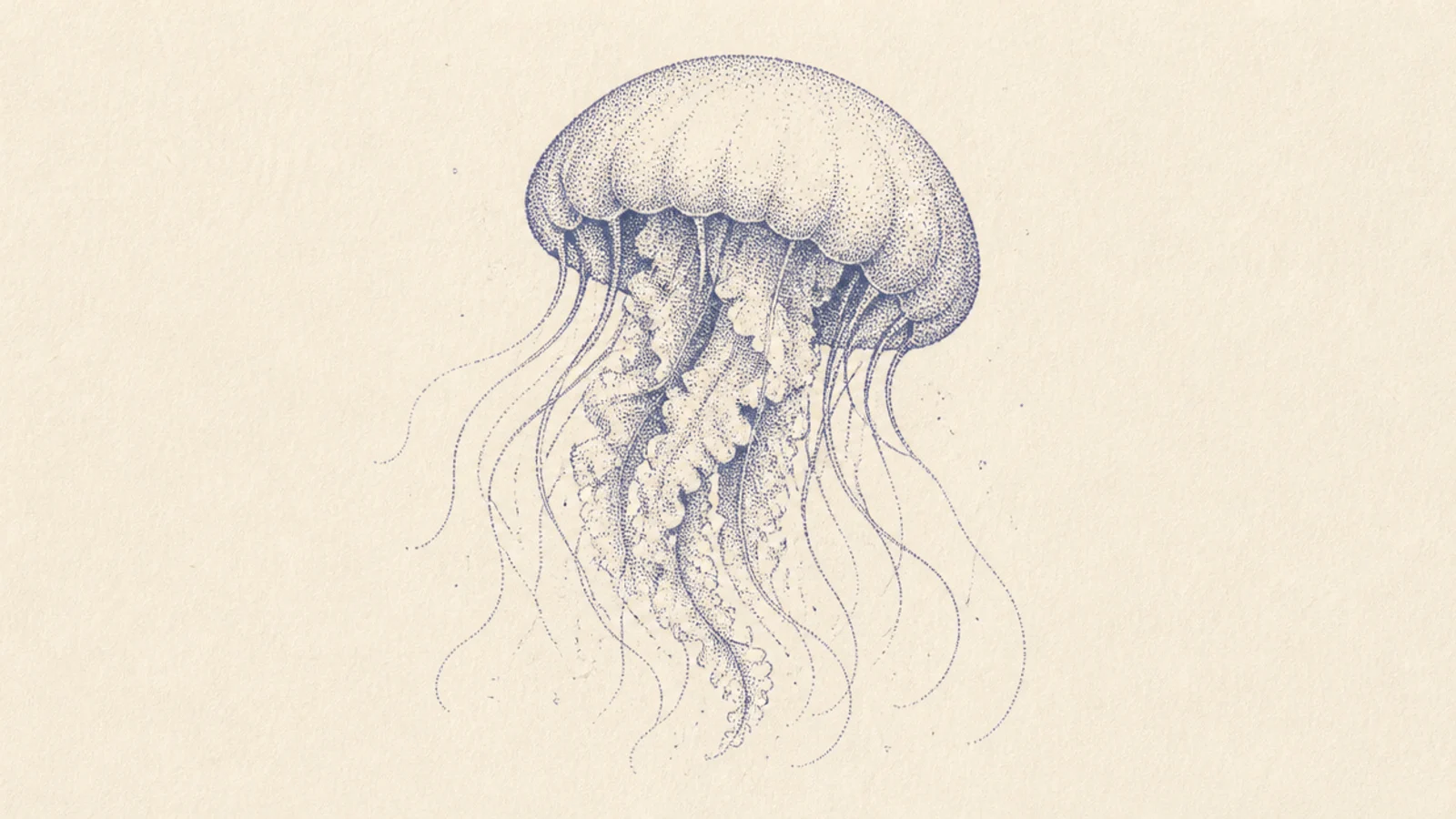
Step 1 outline a simple jellyfish. Step 2 shade with dense dots in the shadows, sparse toward the light. Step 3 keep it in one muted ink color.
Shading the jellyfish with fine stippled dots gives a soft, tactile texture. The dotwork feels detailed yet gentle. It’s a calm, meditative technique.
AvoidDon’t use lines to shade; stick to dots for the half-tone look.
Pro tipCluster dots closer for shadow and space them out for light to build a soft gradient.
23 Quote-Companion Jellyfish

Step 1 draw a small jellyfish in one corner. Step 2 leave clear space beside it for lettering later. Step 3 add a couple of tiny accents near the jellyfish only.
A small jellyfish tucked to one side, leaving open space for a handwritten quote, makes a lovely journal accent. The drawing supports the words. It’s a practical aesthetic layout.
AvoidDon’t center the jellyfish; leaving room for the words is the whole point.
Pro tipKeep the jellyfish to one side so there’s a clean area for your quote.
24 Muted Rainbow Jellyfish
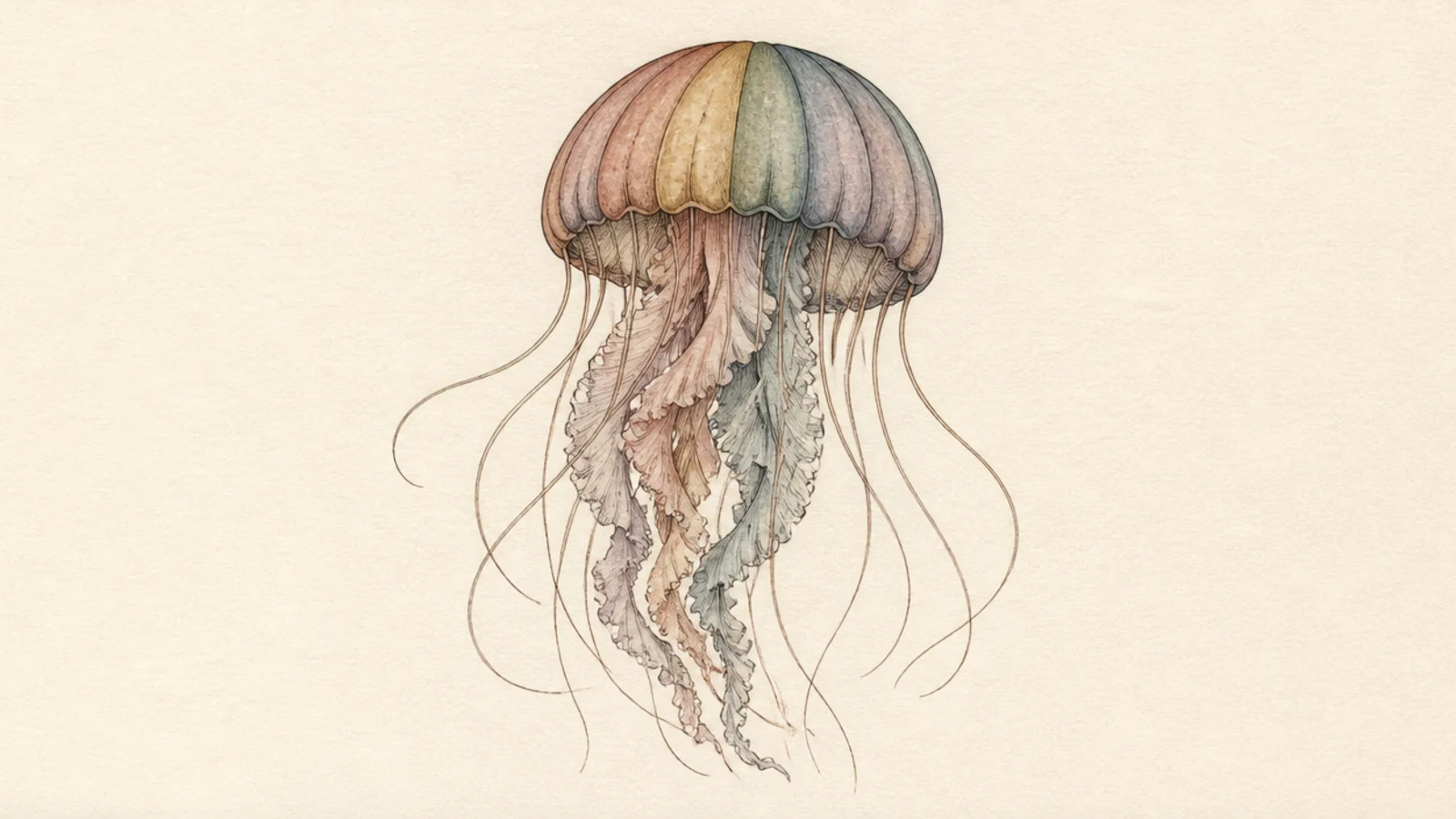
Step 1 draw a simple jellyfish. Step 2 band the bell in muted, dusty rainbow tones. Step 3 blend the bands softly and keep the background pale.
A dusty, muted rainbow across the bell is colorful but still calm. The grayed tones keep it aesthetic rather than loud. It’s cheerful and soft at once.
AvoidDon’t use bright saturated rainbow; the muted version is the aesthetic.
Pro tipUse grayed, dusty versions of each rainbow color so it stays soft and cohesive.
25 Soft Single-Line Jellyfish
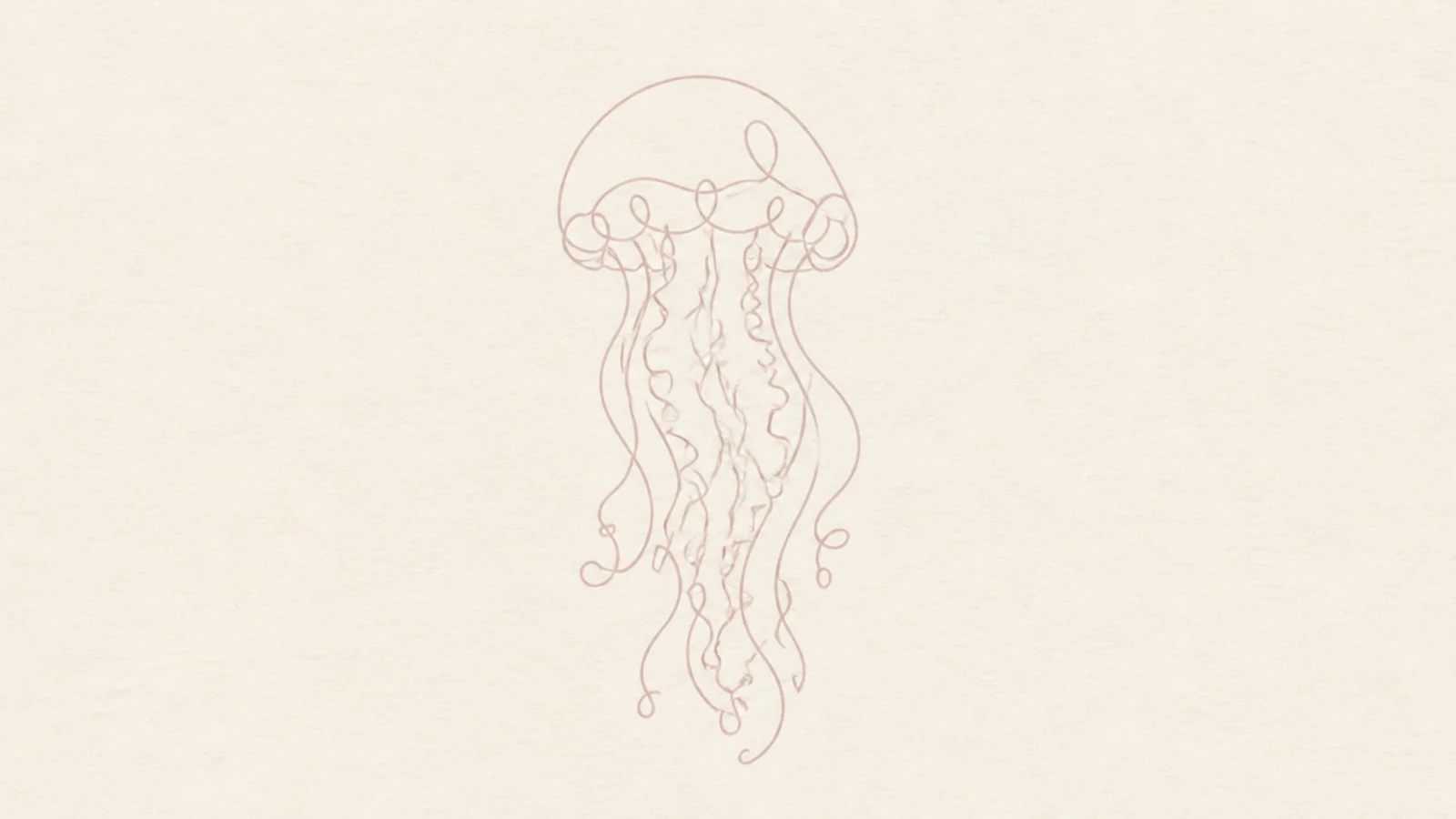
Step 1 draw the jellyfish in one continuous line. Step 2 use a soft muted color instead of black. Step 3 leave plenty of cream space around it.
A delicate one-line jellyfish in a soft muted color is minimal and elegant. The single continuous line feels calm and modern. It’s a perfect aesthetic closer.
AvoidDon’t add fill or extra detail; the single soft line is the whole design.
Pro tipDraw the line in a muted dusty color rather than black for an extra-soft feel.