1 Big-Head Cartoon Bunny
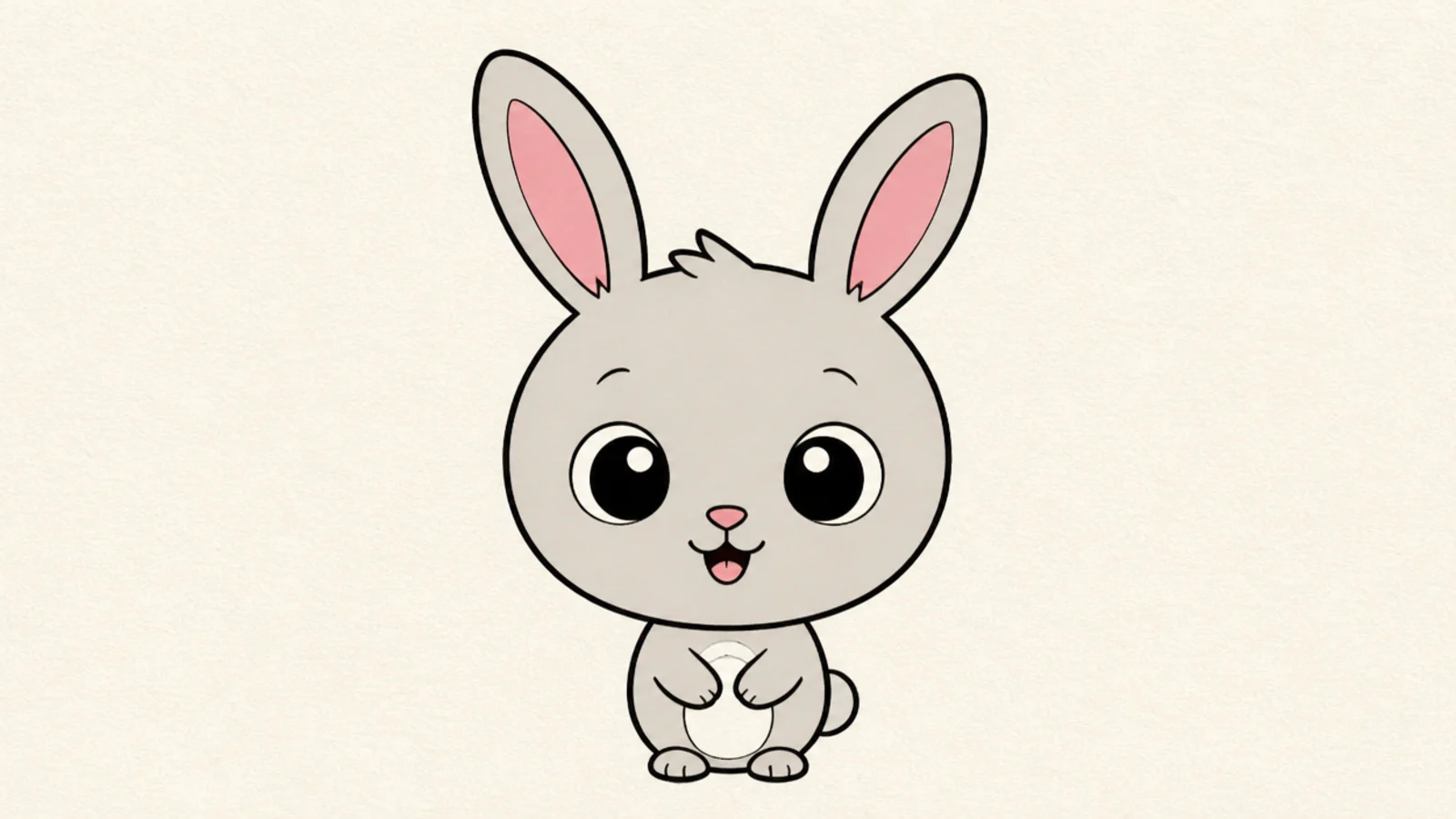
A bunny with an oversized head and tiny body where exaggerated proportion is the whole appeal. This is cartoon’s home turf — the big head reads as instant cuteness that realism cannot match.
Pro tipMake the head at least as big as the whole body for the cartoon effect.
Cartoon wins. Draw the head as a large circle and the body as a much smaller oval below. Add big eyes and a bold outline, and keep color flat.
AvoidDon’t use realistic proportions; the oversized head is the charm.
2 Accurate Proportion Study
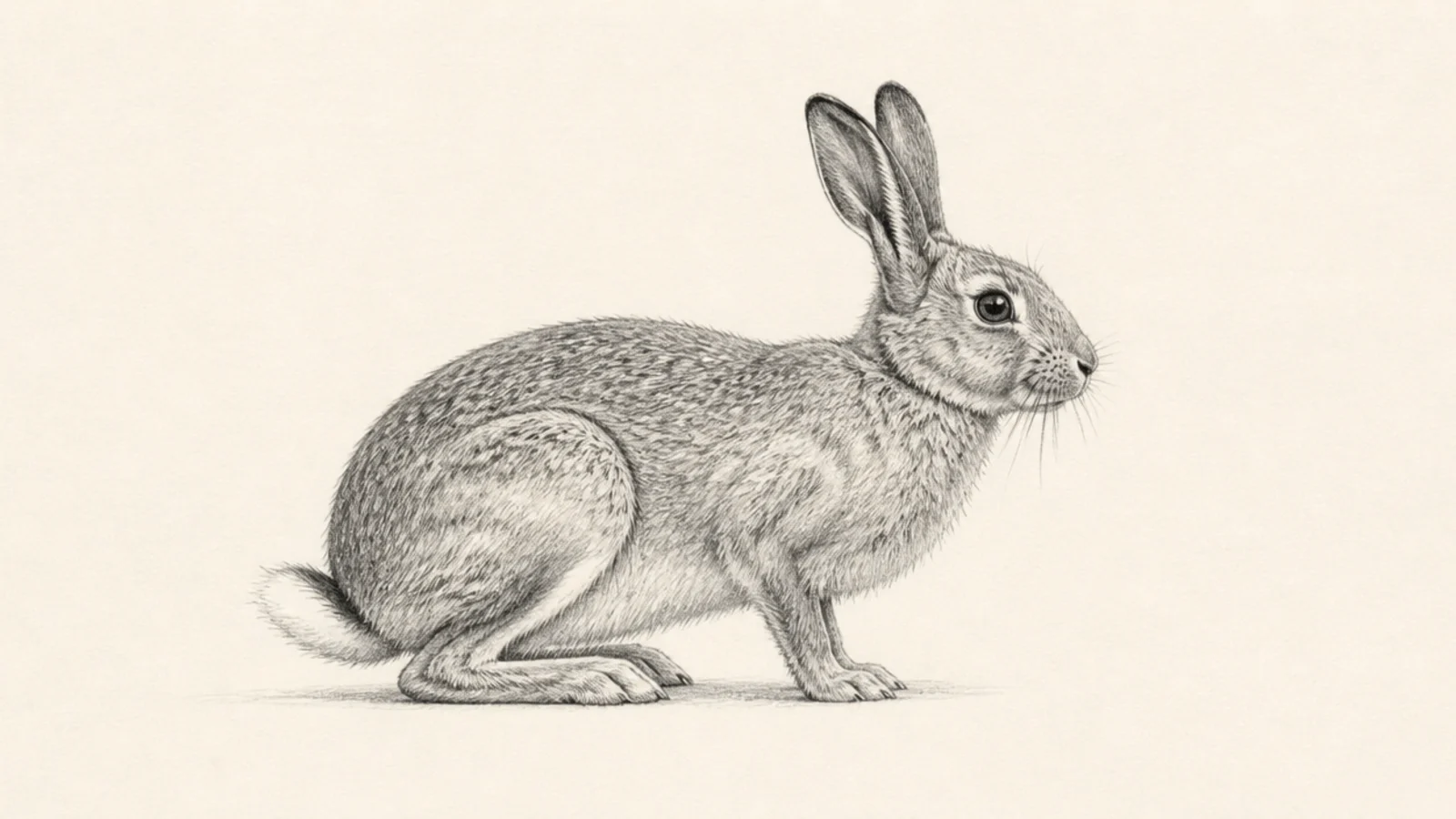
A rabbit with true-to-life proportions — small head, long body, long hind feet. Realism wins because the accuracy itself is the goal here.
Pro tipCheck that the head is small and the hind feet are clearly the longest part.
Realistic wins. Keep the head small relative to the body, set the eye to the side, and lengthen the powerful hind feet. Measure the proportions carefully.
AvoidDon’t enlarge the head or eyes; accuracy is the whole point.
3 Bold-Outline Cartoon Bunny
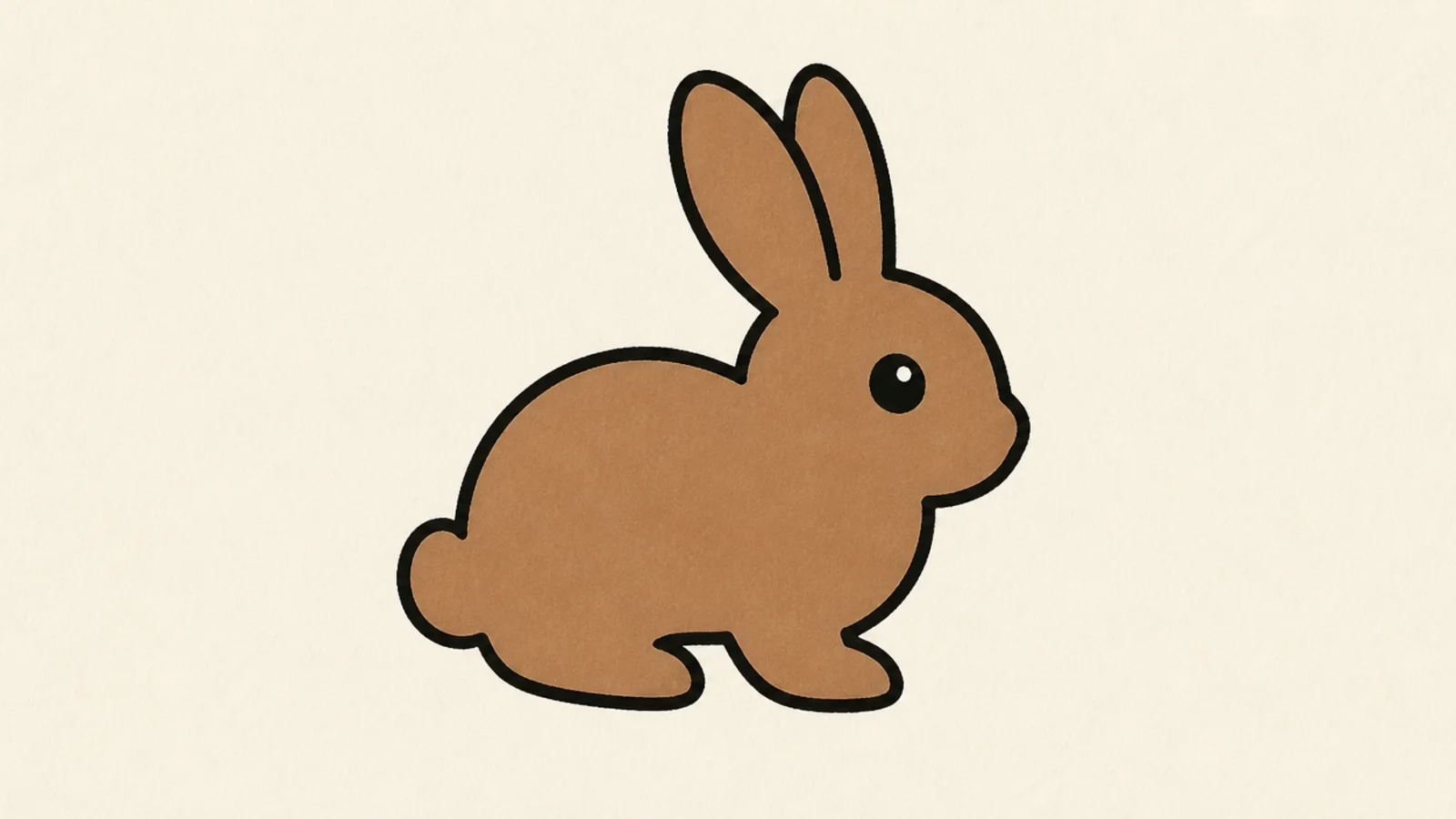
A bunny defined by one thick, confident outline. Cartoon wins because the bold clean line is the style’s signature and it reads clearly at any size.
Cartoon wins. Draw the whole bunny with one even thick outline and no interior lines. Fill flat and let the outline carry the drawing.
Keep the outline one even weight all the way around for a clean cartoon look.
Don’t add fur strokes; a cartoon relies on the clean bold line.
4 Soft Fur Realism
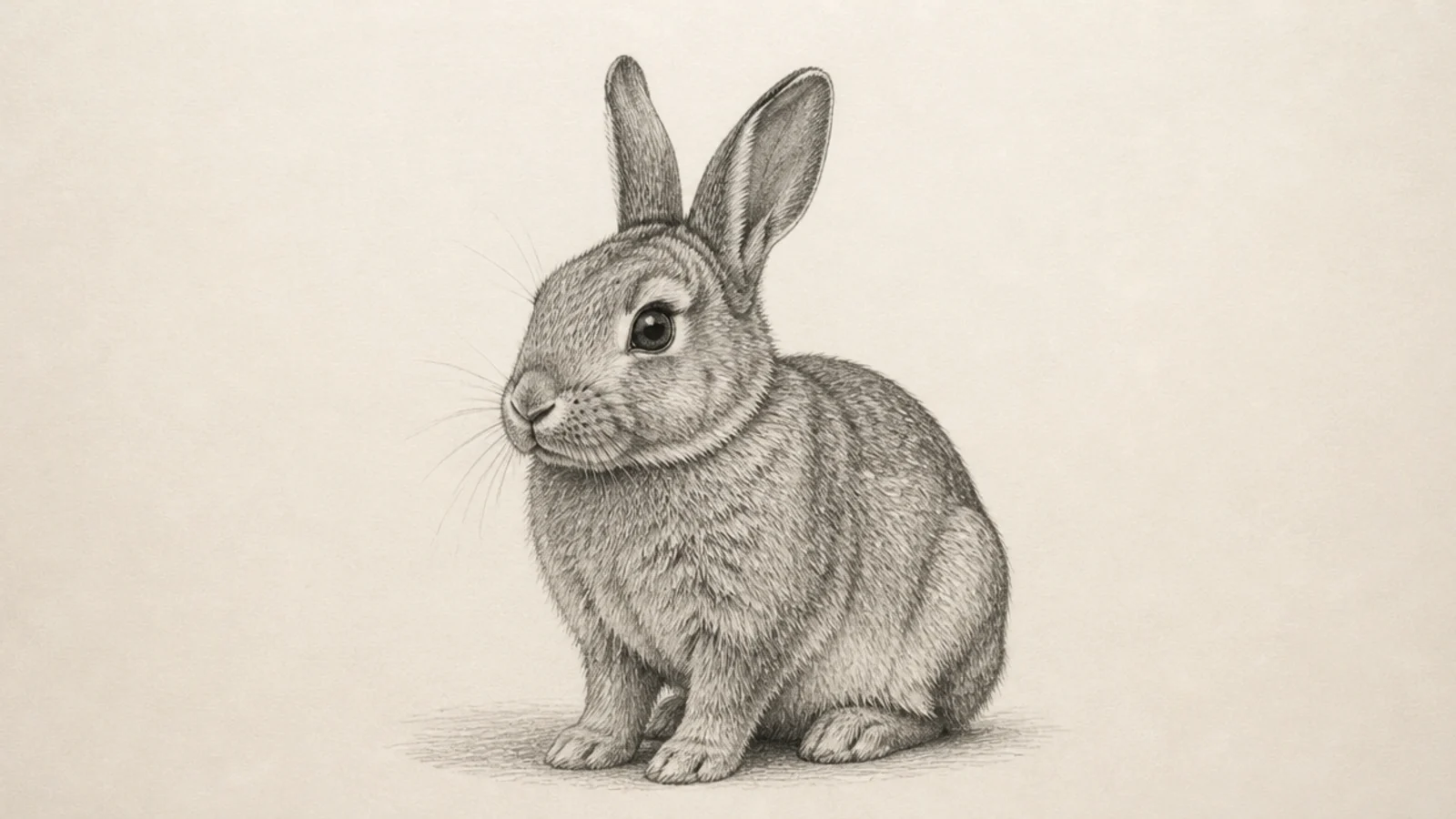
A rabbit whose whole appeal is soft, believable fur. Realistic wins because only patient directional strokes create that convincing coat.
Realistic wins. Build the fur with hundreds of short strokes following the body’s curves, layering light over dark. Break the outline with fur flicks.
Follow the fur’s real direction over each form — down the back, out on the cheeks.
Don’t use a hard outline; broken furry edges read as real fur.
5 Simple Dot-Eyes Cartoon
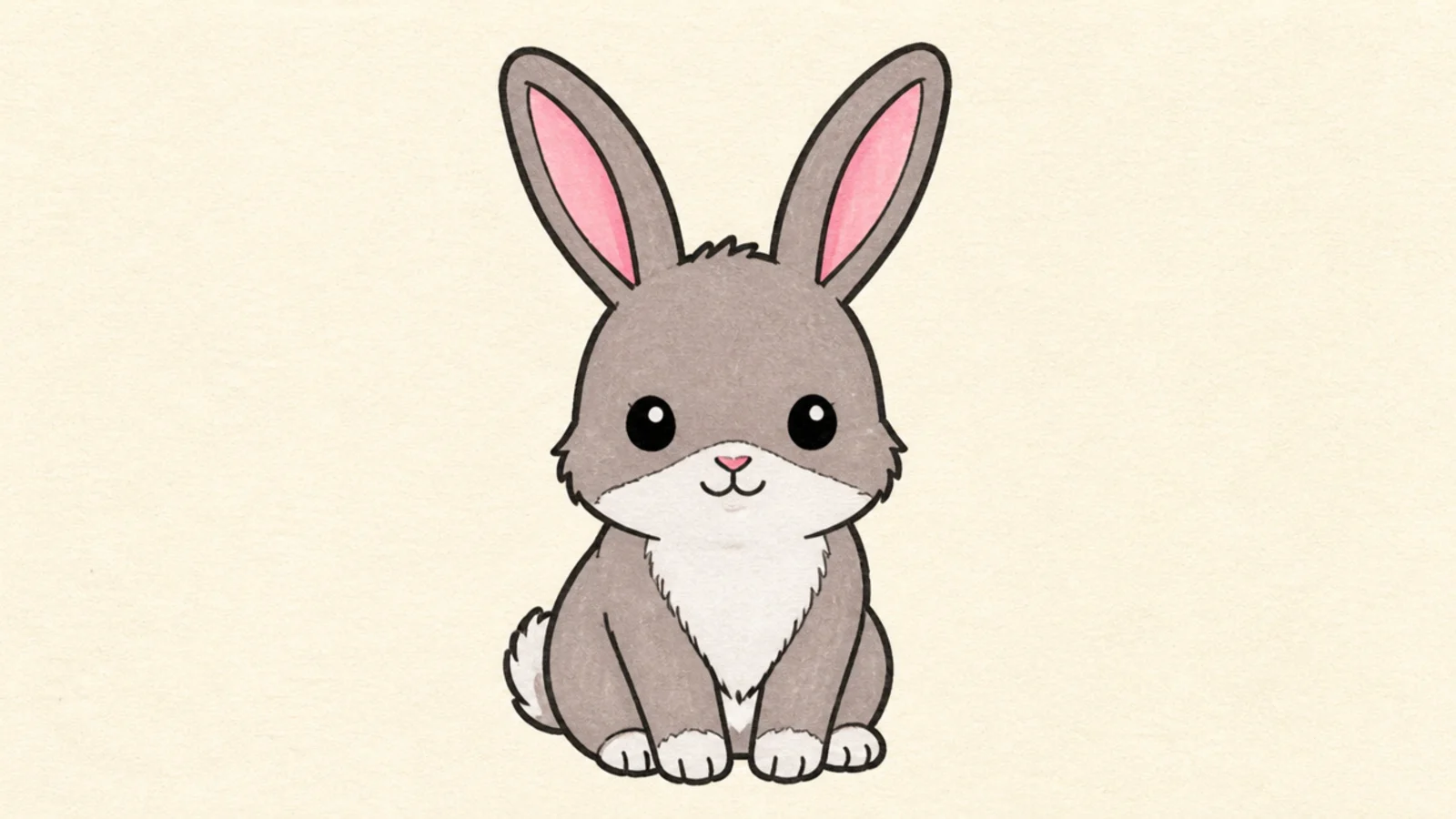
A bunny with plain round dot eyes and an easy expression. Cartoon wins because simple eyes are fast, friendly, and endlessly expressive.
Cartoon wins. Draw two round dot eyes with a single white highlight each. Change the mouth to change the whole mood with almost no effort.
Add one small highlight dot in each eye so they look alive.
Don’t over-render the eyes; simple dots keep it a cartoon.
6 Glossy Realistic Eye
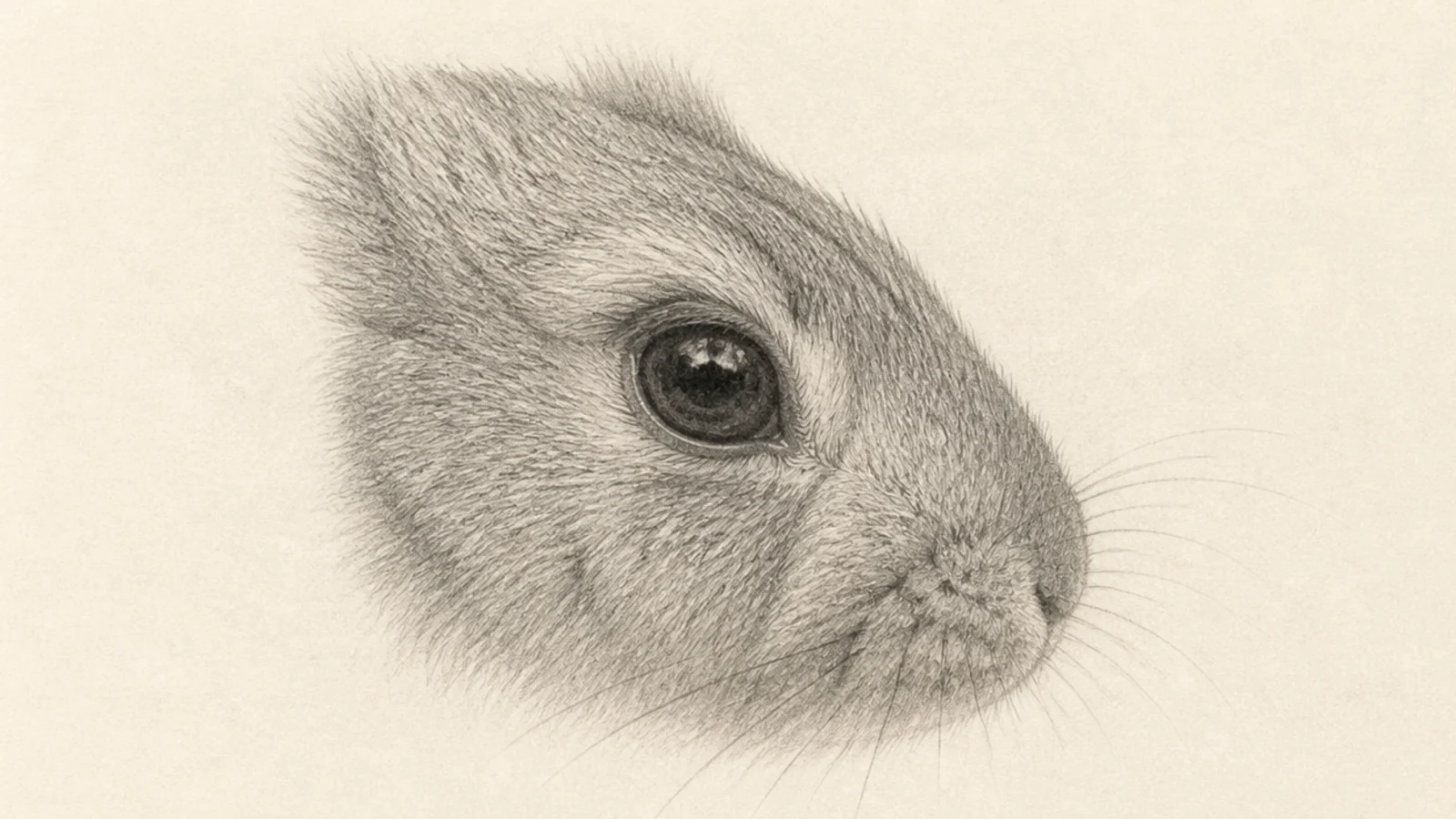
A close study of the rabbit’s large, glossy, side-set eye. Realistic wins because the reflection and depth need careful value work.
Realistic wins. Draw the dark round eye with a bright highlight, a soft reflection, and a shaded lid. Keep the pupil and iris subtle within the dark.
Leave a crisp white highlight and a softer secondary reflection for glossy depth.
Don’t flatten the eye; the highlight and reflection make it lifelike.
7 Flat-Color Cartoon Bunny
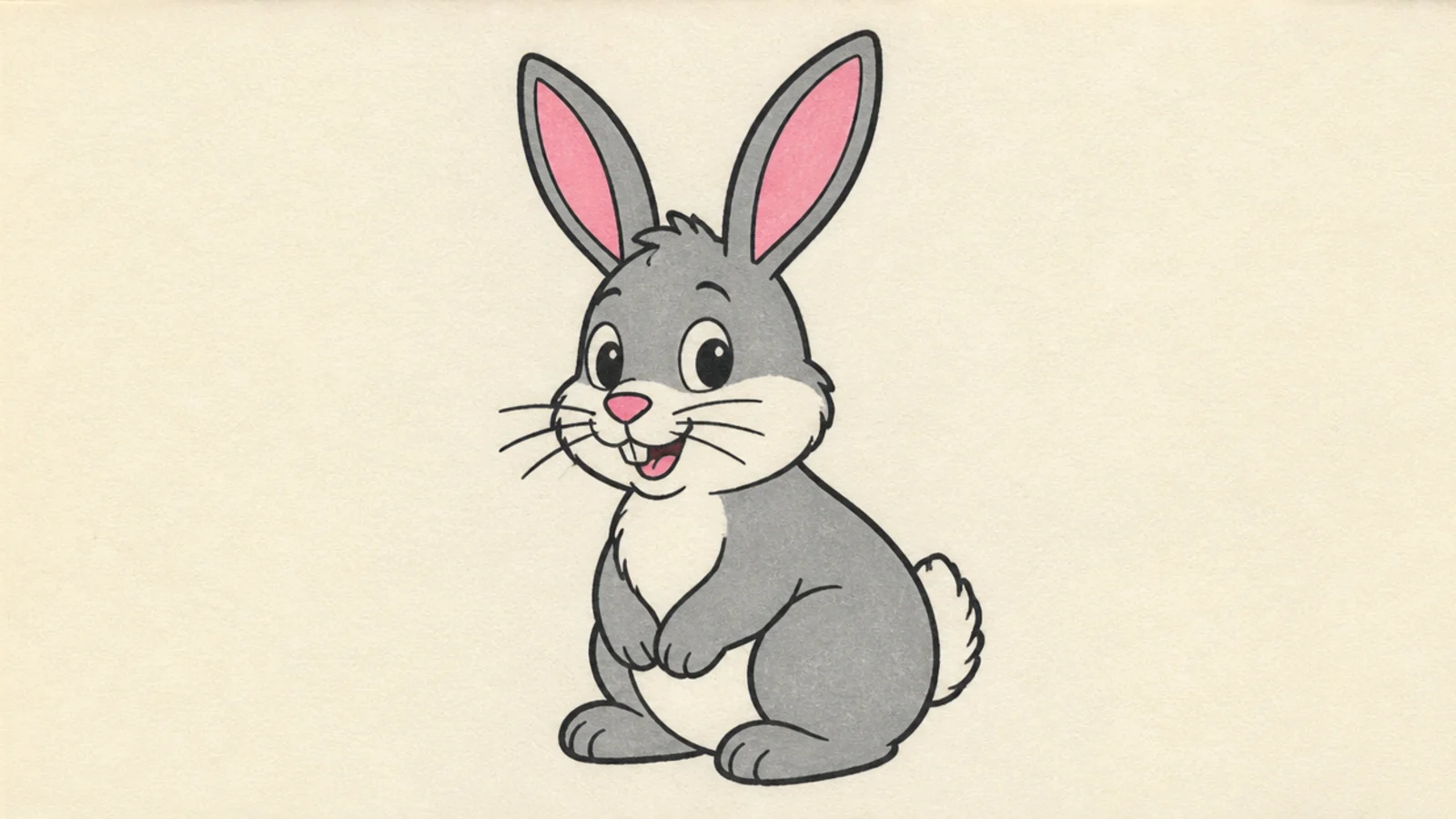
A bunny filled with clean flat color and no shading. Cartoon wins because flat blocks are fast, cheerful, and print beautifully.
Cartoon wins. Fill each area with one flat color inside the outline — grey body, pink ears, white belly. Skip all shading and blending.
Keep each color a single flat block for a crisp, graphic cartoon look.
Don’t blend or shade; flat color is the cartoon’s strength.
8 Graphite Shading Realistic
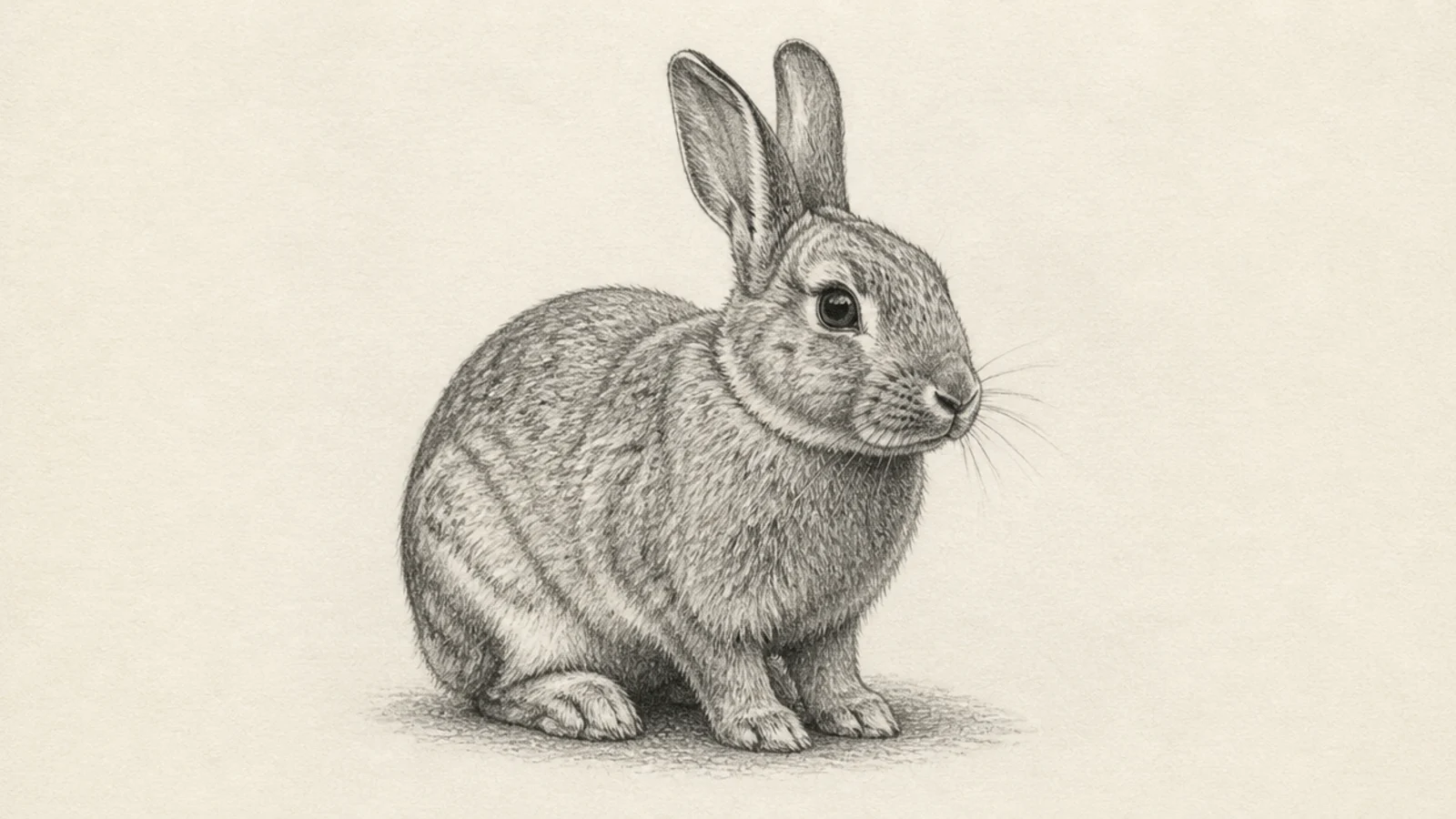
A rabbit built entirely from graphite value, light to dark. Realistic wins because the full tonal range is what gives it form and depth.
Pro tipPush the darkest darks under the body and keep the top of the back lightest.
Realistic wins. Shade from bright highlights through mid greys to dark shadows under the chin, belly, and behind the legs. Build value gradually.
AvoidDon’t stay in flat mid-grey; the value range creates the form.
9 Expressive Cartoon Face
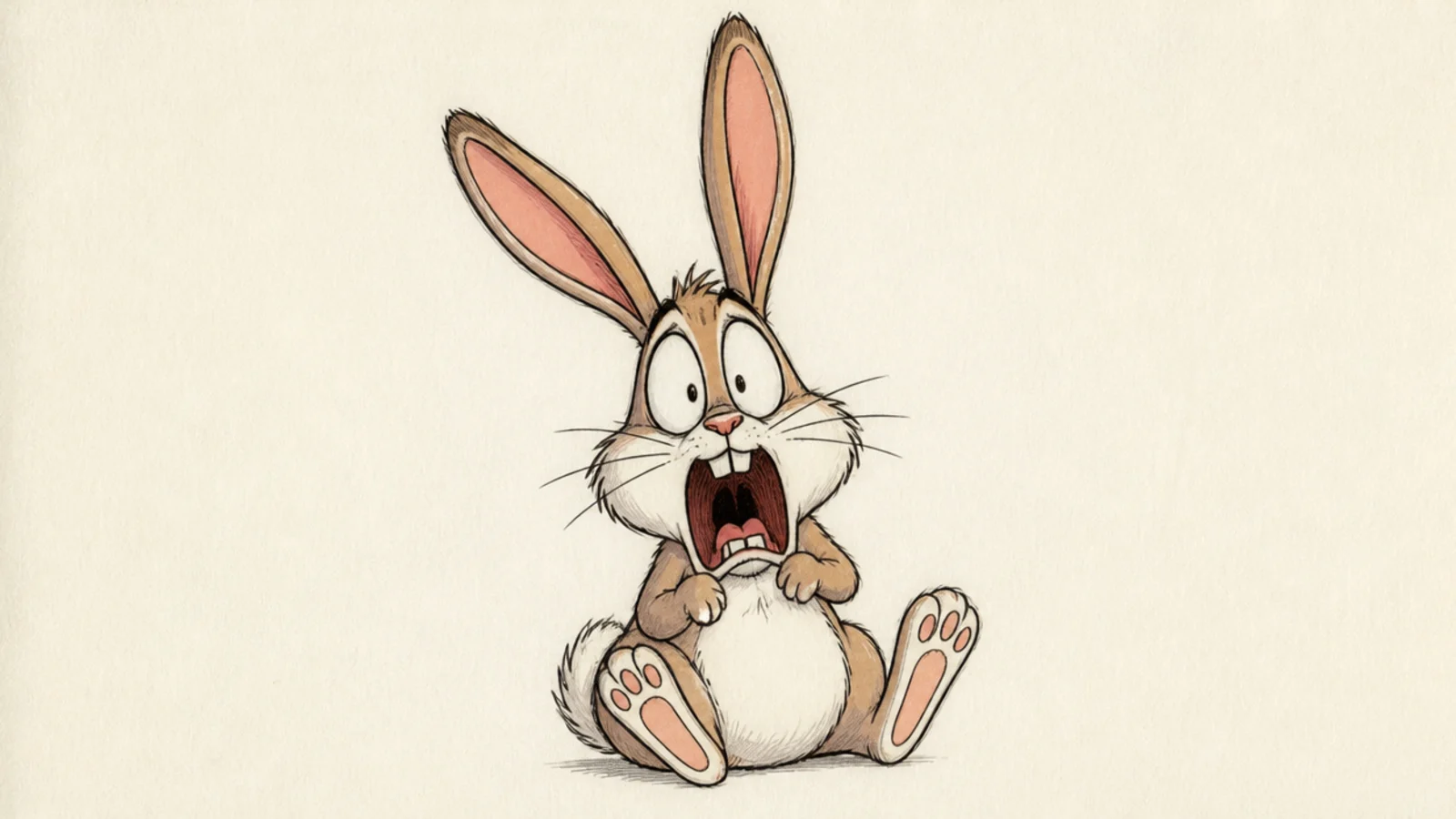
A bunny with a huge, obvious emotion — a giant grin or shocked eyes. Cartoon wins because exaggeration makes feelings instantly readable.
Pro tipExaggerate one clear emotion rather than mixing several subtle ones.
Cartoon wins. Stretch the expression big — wide open smile, raised brows, or huge eyes. Let the face bend the shapes to show the emotion.
AvoidDon’t keep it subtle; a big clear expression is the cartoon appeal.
10 Subtle Realistic Expression
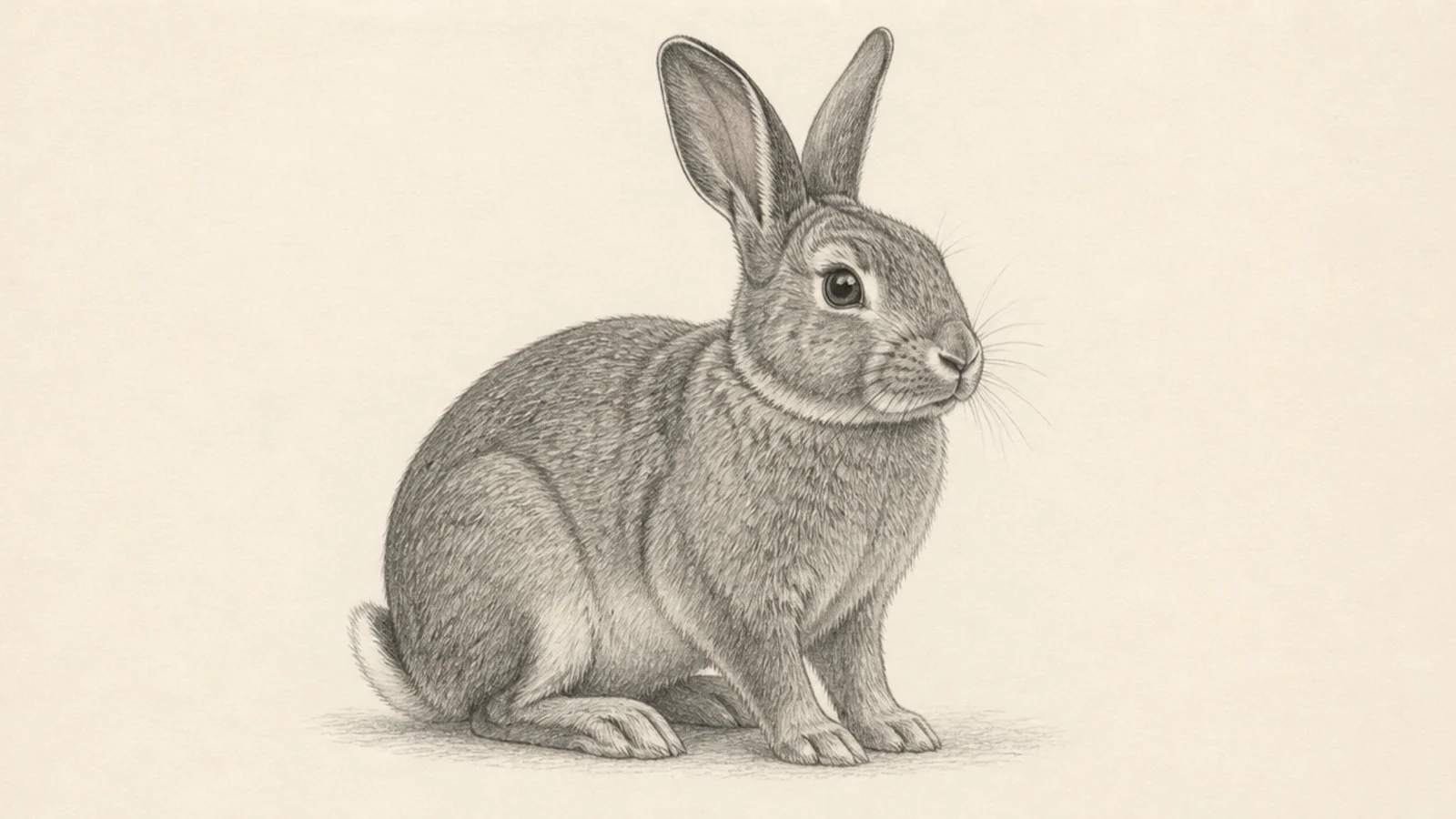
A rabbit with the quiet, watchful expression real bunnies have. Realistic wins because the mood comes from tiny, accurate cues, not exaggeration.
Realistic wins. Show mood through a slight ear turn, a soft eye, and relaxed whiskers rather than a big smile. Keep every cue understated.
Suggest the mood with the ears and eye softness, not the mouth.
Don’t add a cartoon grin; real rabbits show feeling subtly.
11 Bouncy Cartoon Hop
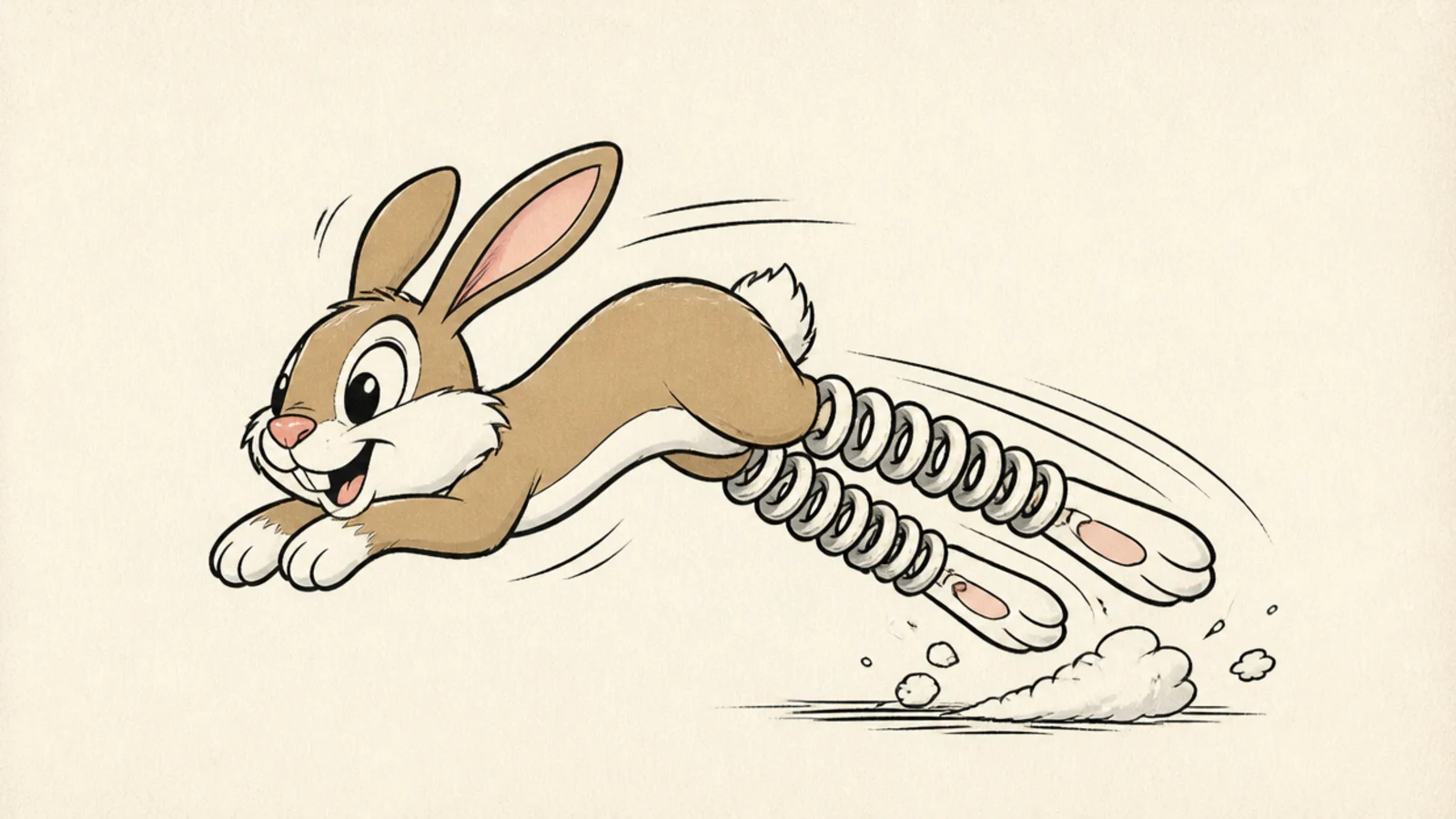
A bunny hopping with stretchy, springy legs and motion lines. Cartoon wins because exaggerated squash and stretch sell the bounce.
Cartoon wins. Stretch the body long at the top of the hop and add big motion lines and a little dust puff. Bend the legs springy, not anatomical.
Stretch the body and add motion lines to exaggerate the bounce.
Don’t draw anatomically correct legs; springy exaggeration is the fun.
12 Anatomical Hop Realistic
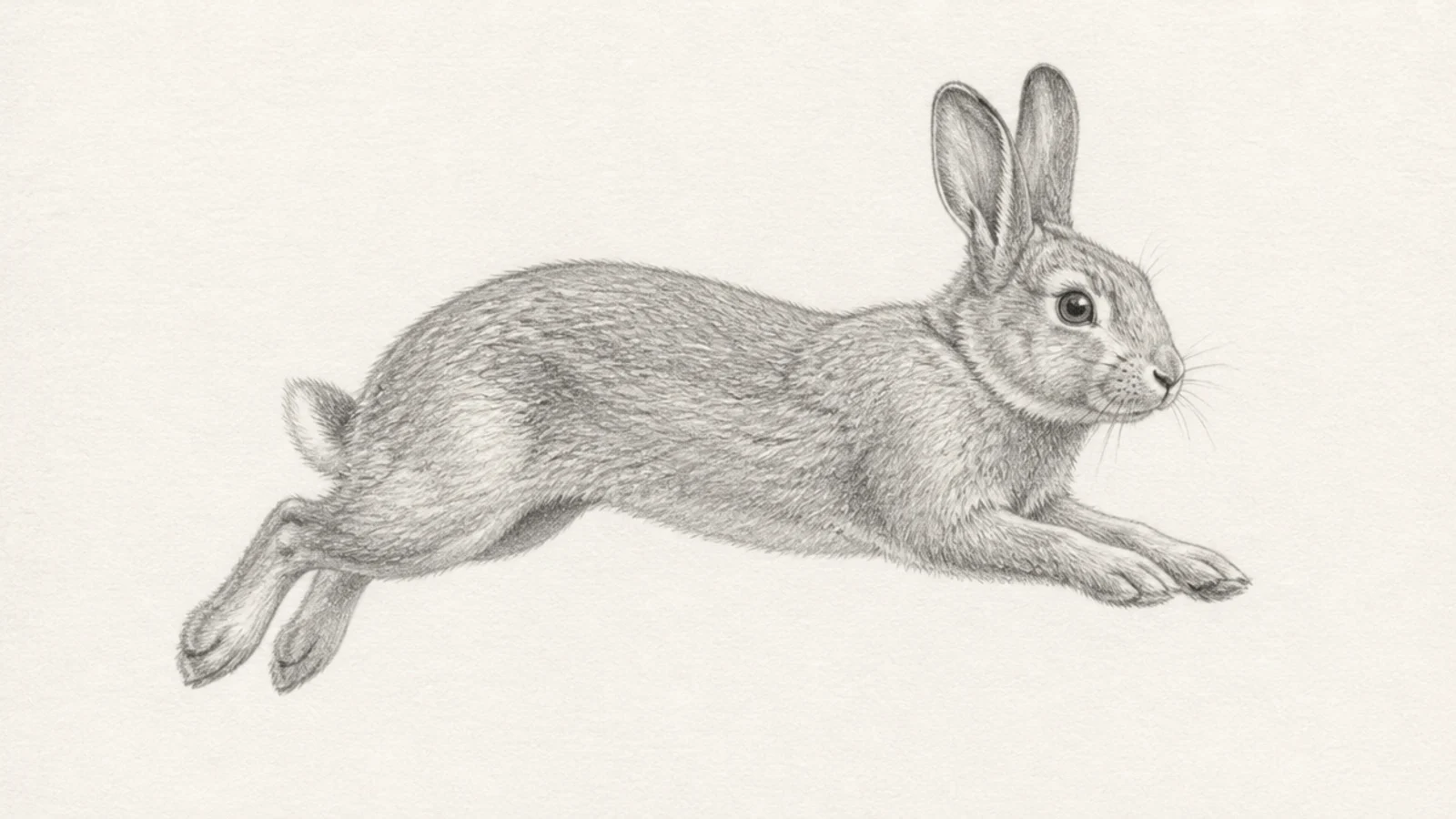
A rabbit leaping with correct muscle and leg structure. Realistic wins because believable movement needs real anatomy.
Realistic wins. Draw the powerful hind legs coiled and extending, the spine arched, and the front legs reaching with accurate joints. Study a reference.
Coil the hind legs and arch the spine the way a real rabbit springs.
Don’t rubber-band the legs; accurate joints make the leap believable.
13 Sticker-Style Cartoon Bunny
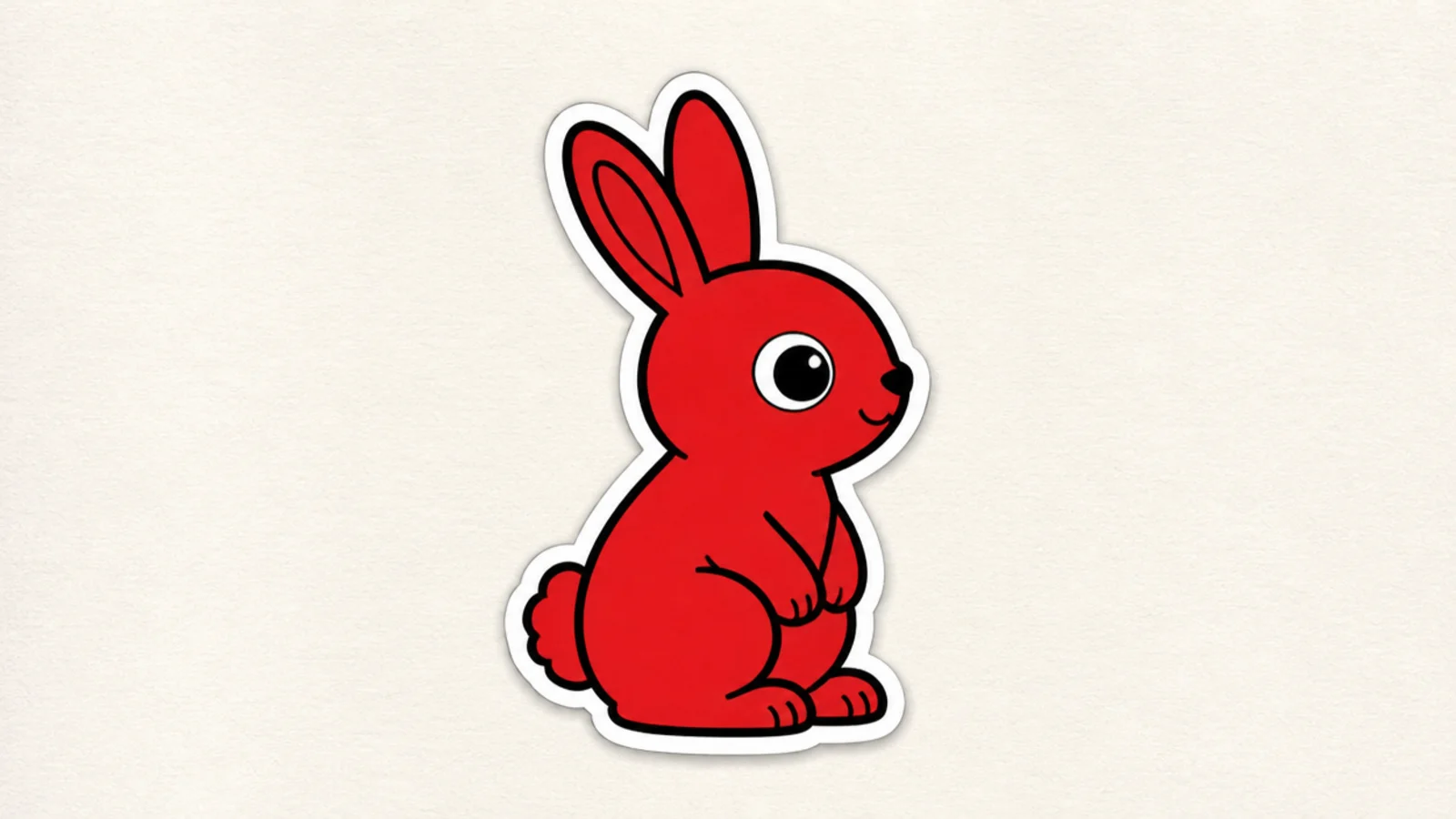
A bunny designed as a bold sticker with a thick white border. Cartoon wins because simple shapes and flat color read perfectly at small sizes.
Pro tipTrace a thick white border with a small gap so it pops as a sticker.
Cartoon wins. Draw a bold simple bunny, fill flat, then add a thick even white outline and a soft drop shadow. Keep every shape big and clear.
AvoidDon’t add fine detail; stickers need bold shapes that read tiny.
14 Botanical Portrait Realistic
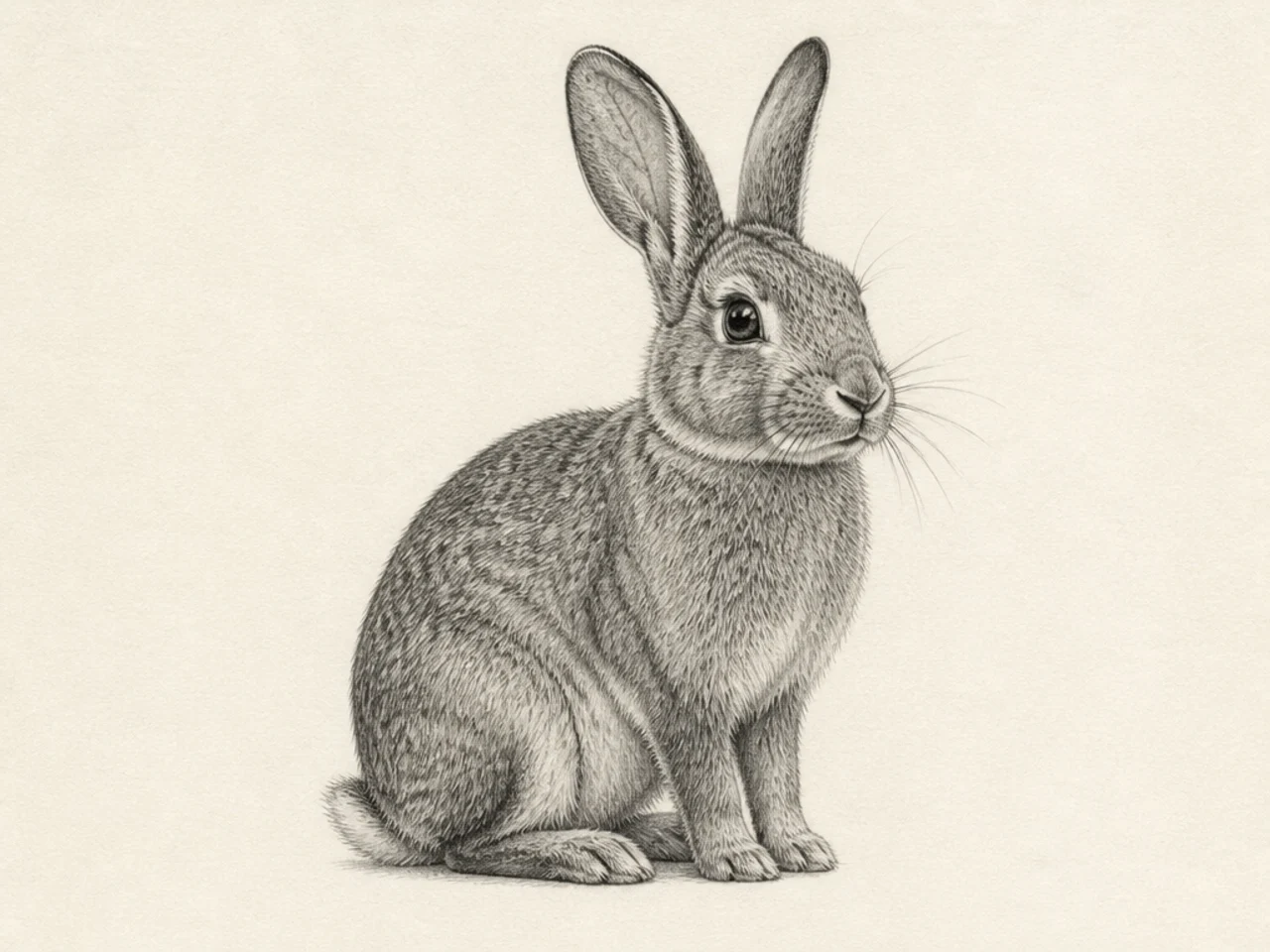
A field-guide portrait with accurate markings, fur, and features. Realistic wins because the precise, documentary detail is the point.
Pro tipInclude accurate details like ear veins and whisker direction for a study feel.
Realistic wins. Render the coat markings, whiskers, ear veins, and eye faithfully, with careful proportion and soft shading. Take your time.
AvoidDon’t simplify the features; the faithful detail is the value.
15 Speedy Doodle Cartoon
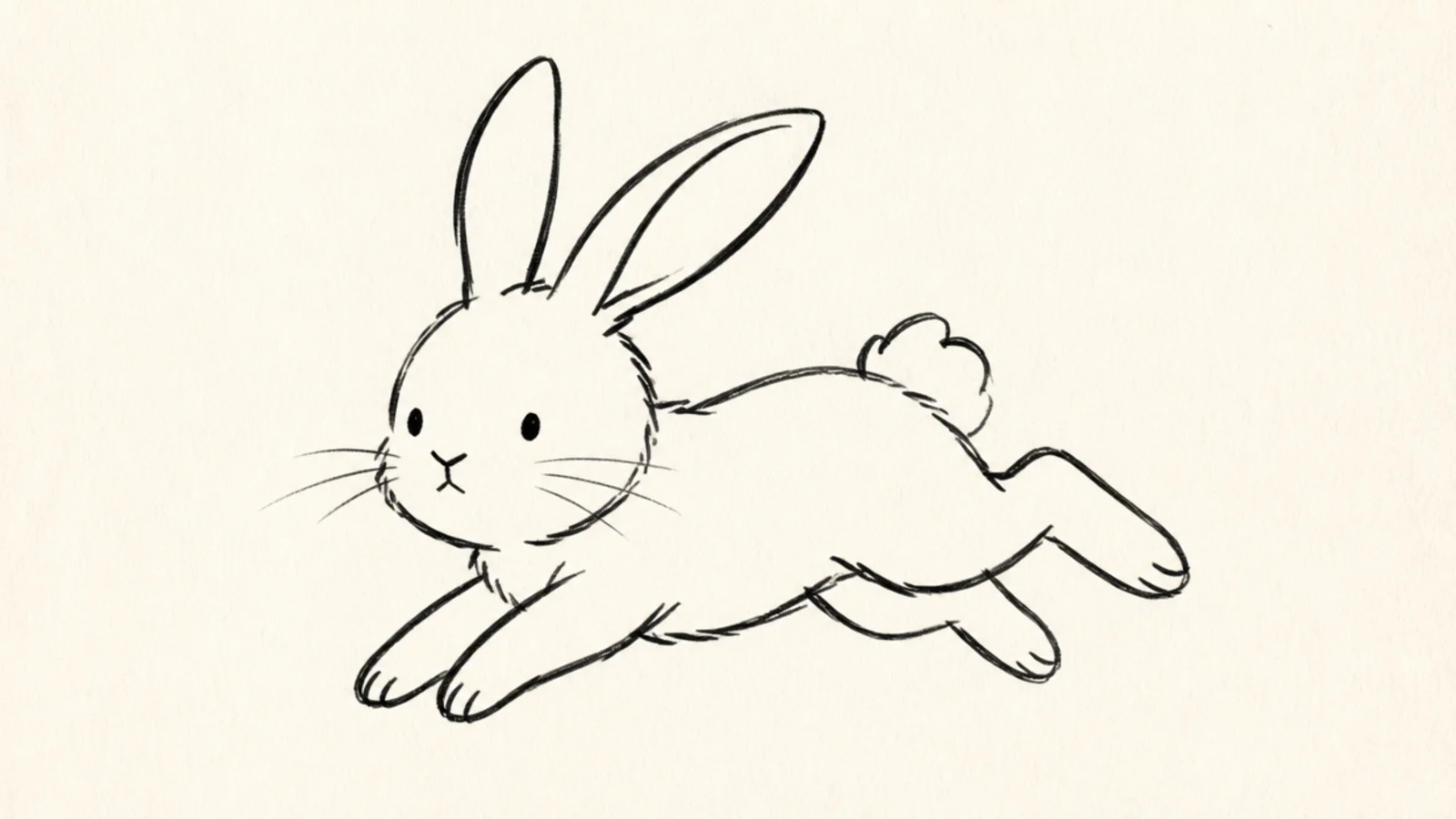
A fast, loose bunny scribbled in seconds. Cartoon wins because a few confident shapes make a complete rabbit with no fuss.
Cartoon wins. Doodle the head, body, and ears in quick confident strokes and add dot eyes. Do not fix or refine — the speed is the charm.
Draw it fast without lifting your pen much for a lively doodle.
Don’t overwork it; a cartoon doodle thrives on speed.
16 Patient Detail Realistic
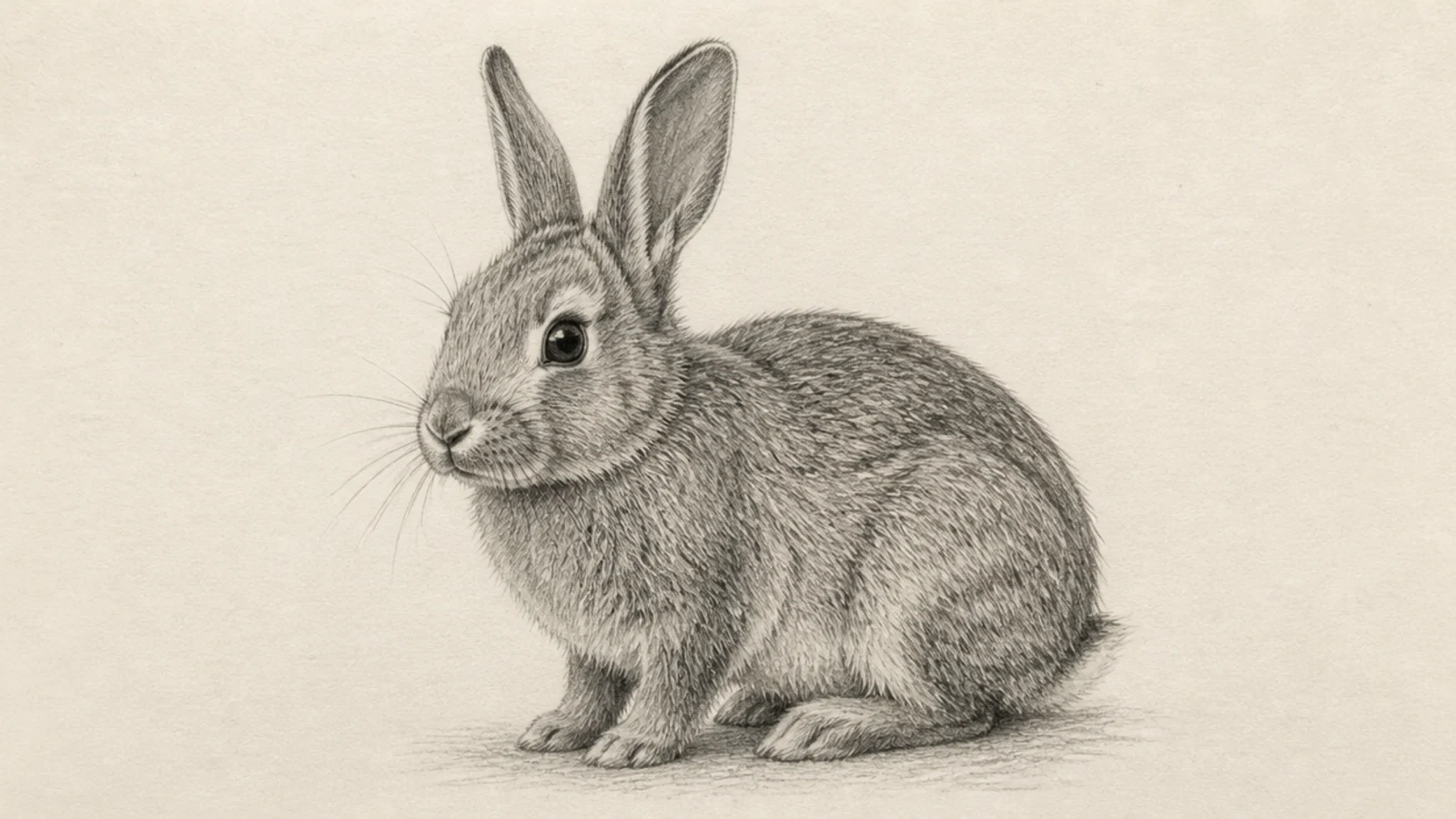
A rabbit built slowly over many careful layers of fur and value. Realistic wins because the depth comes only from patient, sustained work.
Realistic wins. Layer fur in passes, deepen shadows gradually, and refine the eye and whiskers last. Expect it to take a long sitting.
Work in layers over time rather than trying to finish an area in one pass.
Don’t rush; realism’s depth comes from patient layering.
17 Mascot Cartoon Bunny
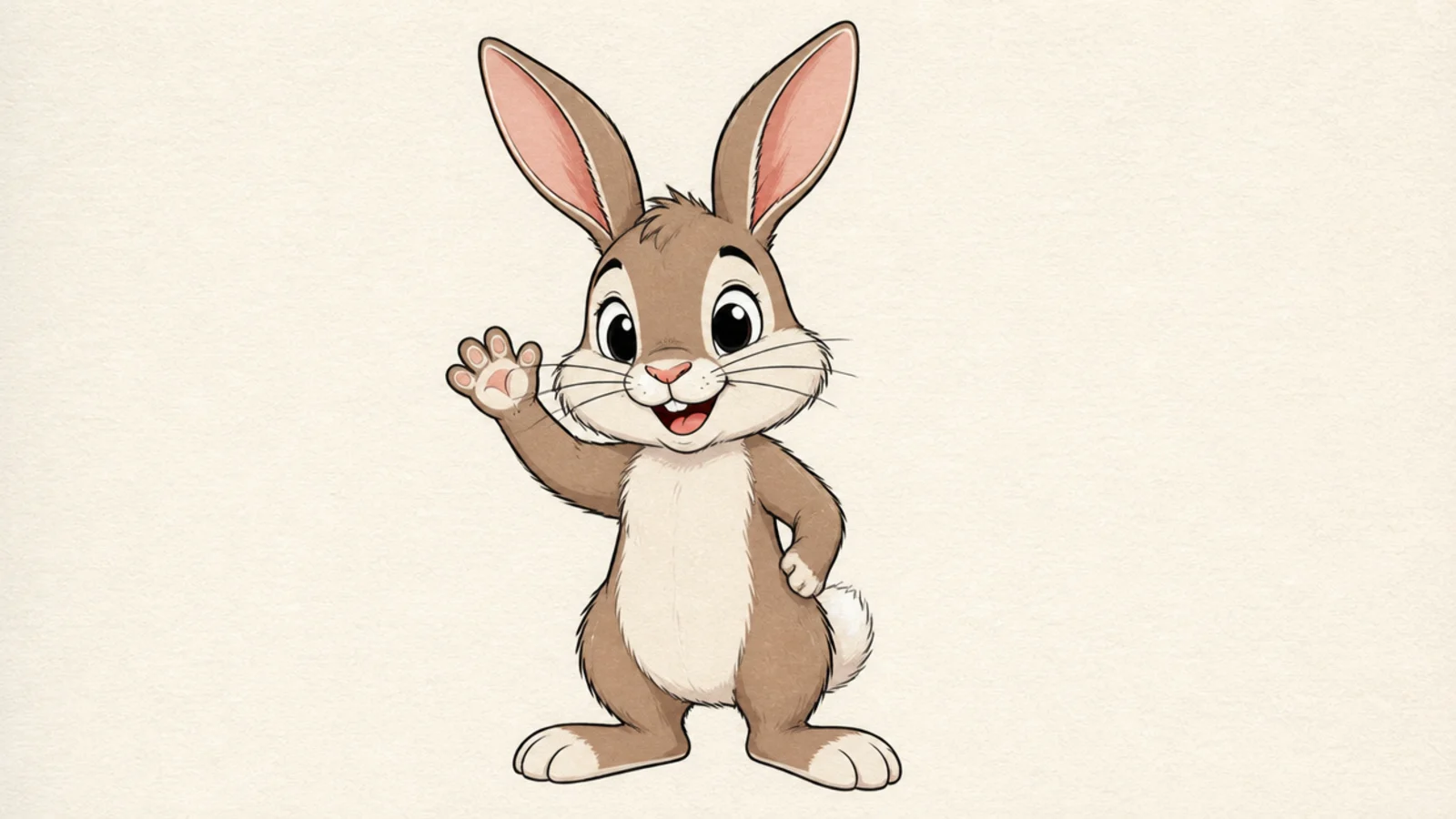
A bunny standing upright with arms, like a brand mascot. Cartoon wins because a walking, gesturing character needs stylized shapes.
Cartoon wins. Stand the bunny on two feet with simple arms and a big friendly face. Give it a clear pose — waving, thumbs up, or presenting.
Give the mascot one clear, readable pose and a big friendly expression.
Don’t aim for realism; a mascot needs a simple, poseable body.
18 Fur-Direction Study Realistic
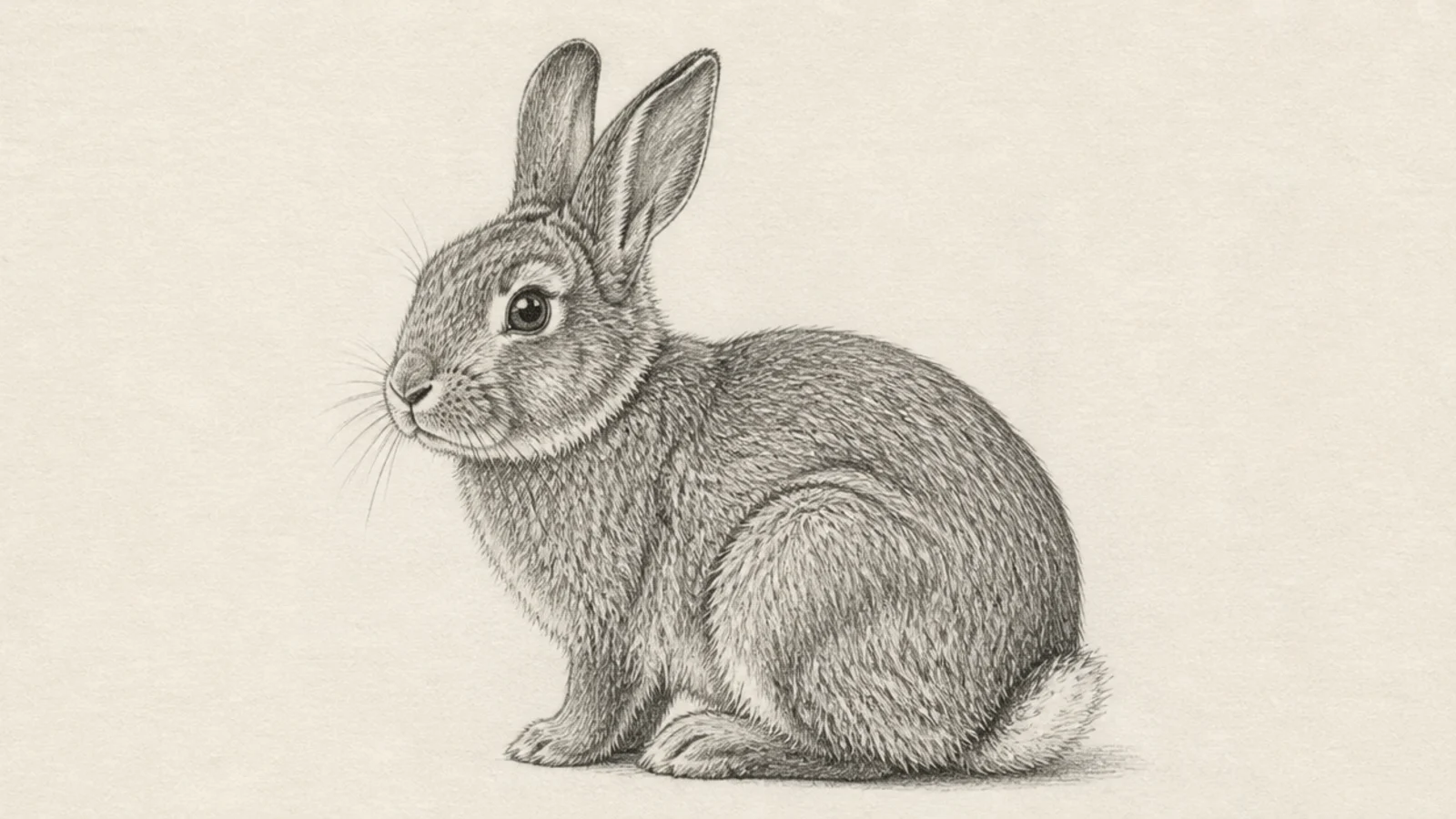
A study focused on how fur flows across the body. Realistic wins because mapping fur direction is a core realism skill.
Realistic wins. Map the fur direction over each area — down the back, radiating on the cheeks, swirling at the haunch — then stroke to match. Keep strokes short.
Draw arrows lightly first to plan the fur direction, then stroke over them.
Don’t stroke every hair the same way; fur changes direction over the body.
19 Semi-Realistic Hybrid Bunny
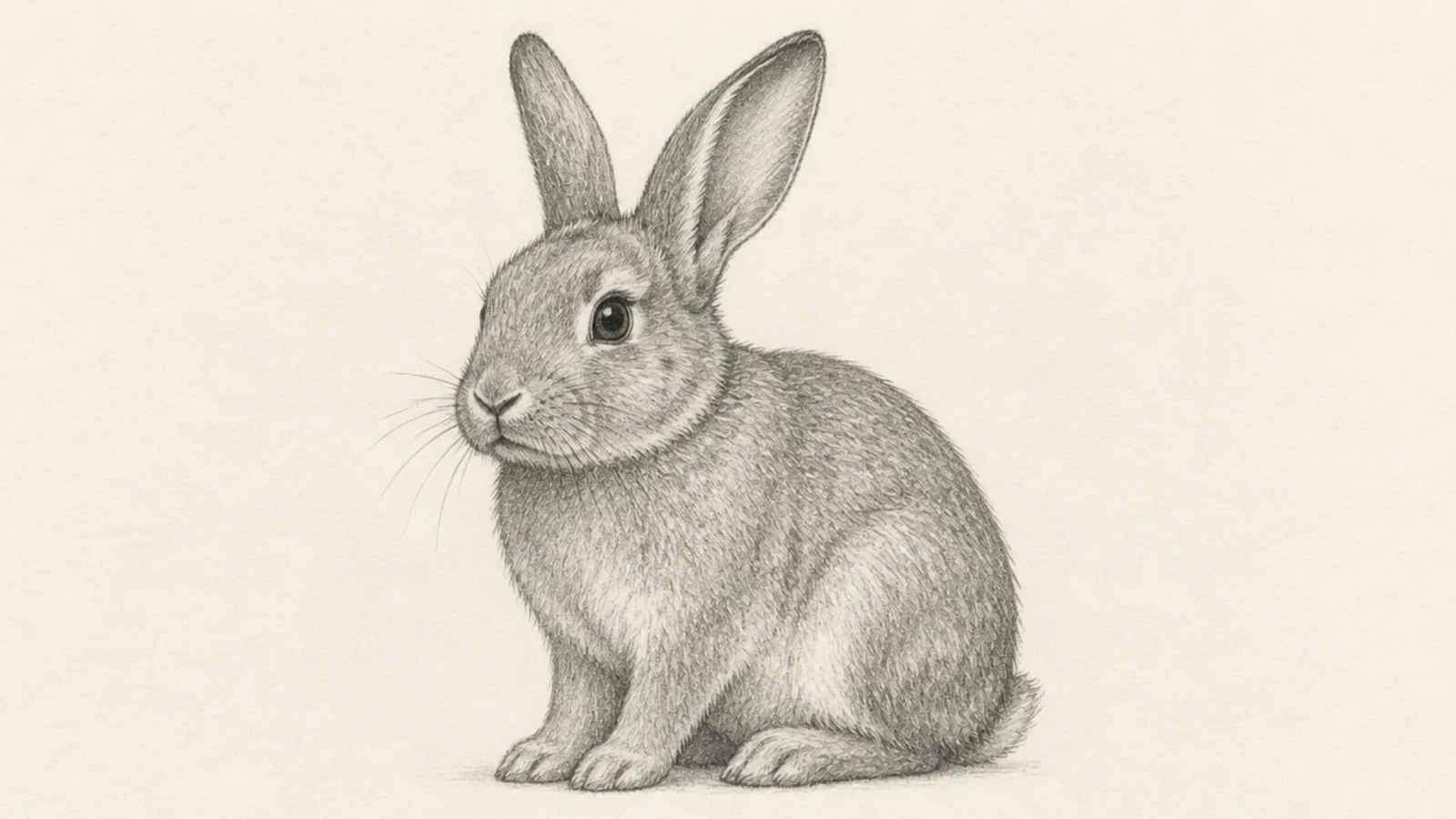
A bunny that blends cartoon proportion with a little real fur and shading. Both win together — it borrows charm from cartoon and depth from realism.
Pro tipKeep the shapes simple but add fur and one soft shadow for depth.
Both win together. Keep slightly simplified proportions and a soft outline, but add light fur texture, a shaded belly, and a glossy eye highlight.
AvoidDon’t fully commit to either extreme; the blend is the whole idea.
20 Your Style Choice Bunny
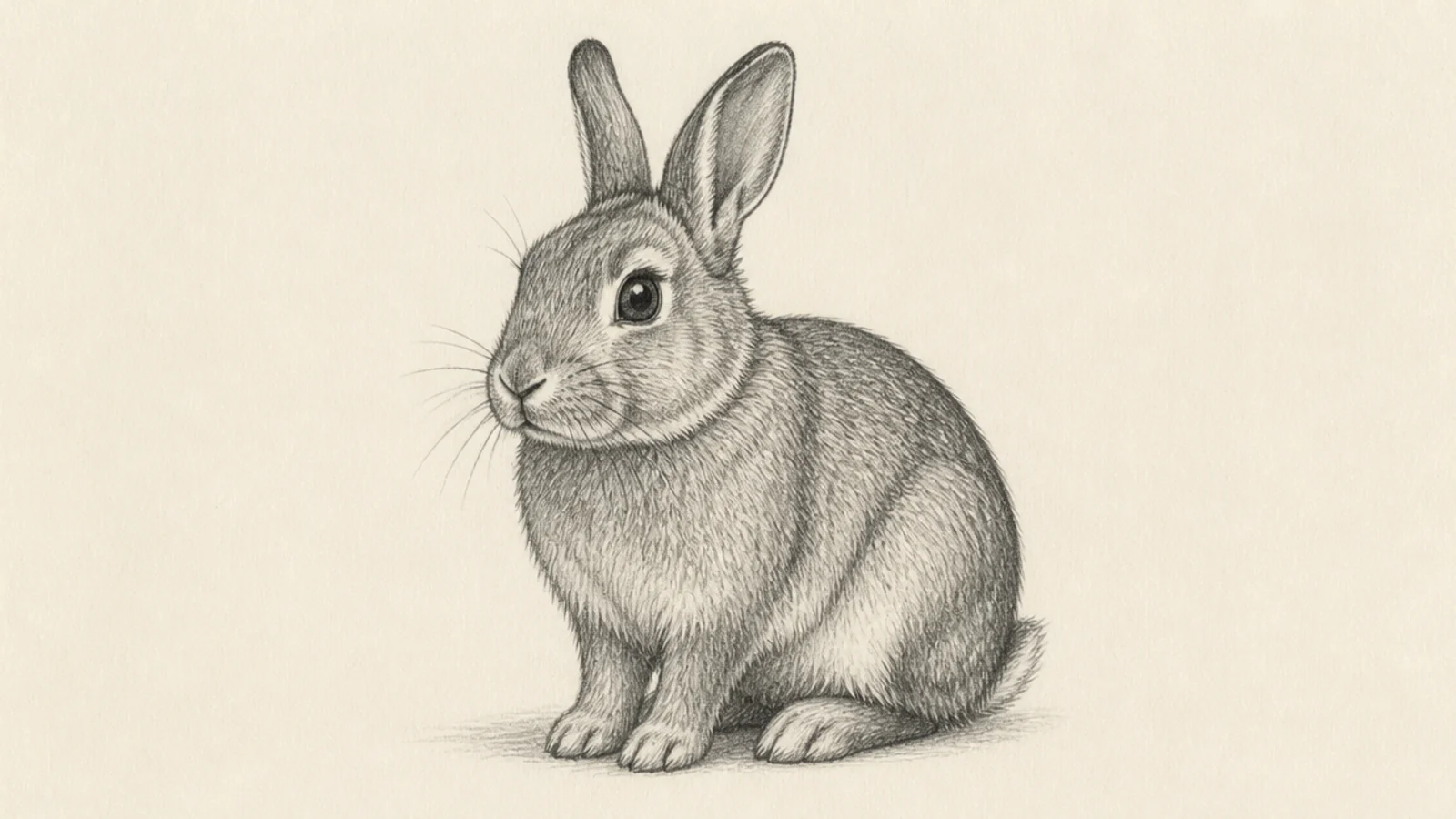
Your own rabbit drawn in whichever style — cartoon, realistic, or a blend — matched the looks you loved most. Choosing your style on purpose is the real lesson.
Pro tipDecide the mood and use first, then pick the style that serves it.
You choose. Pick the style that fits your goal — charm and speed, or lifelike detail — and commit to it fully for a cohesive drawing.
AvoidDon’t drift between styles mid-drawing; choose one with intent.