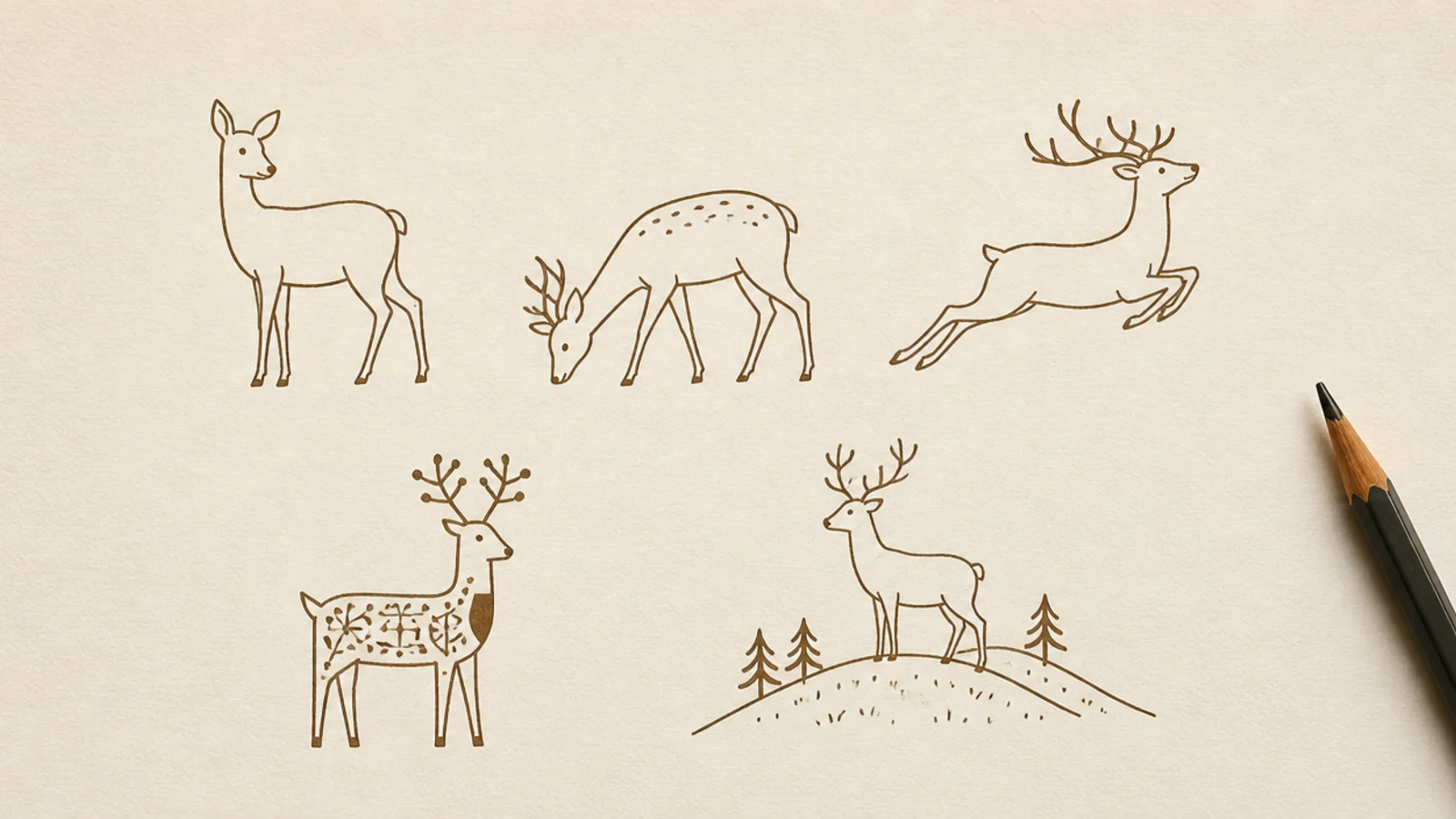
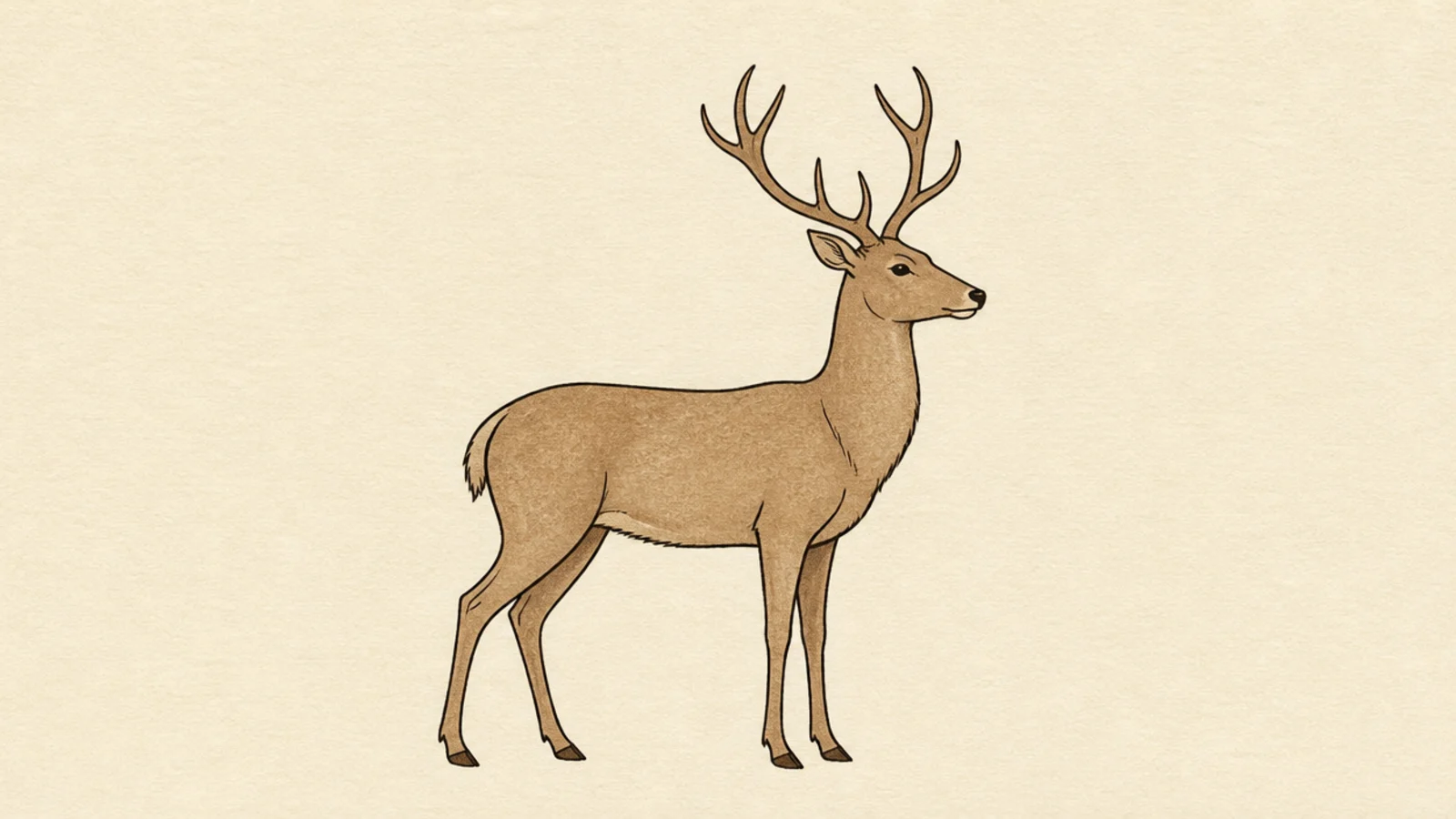
1 Clean Outline Standing Deer
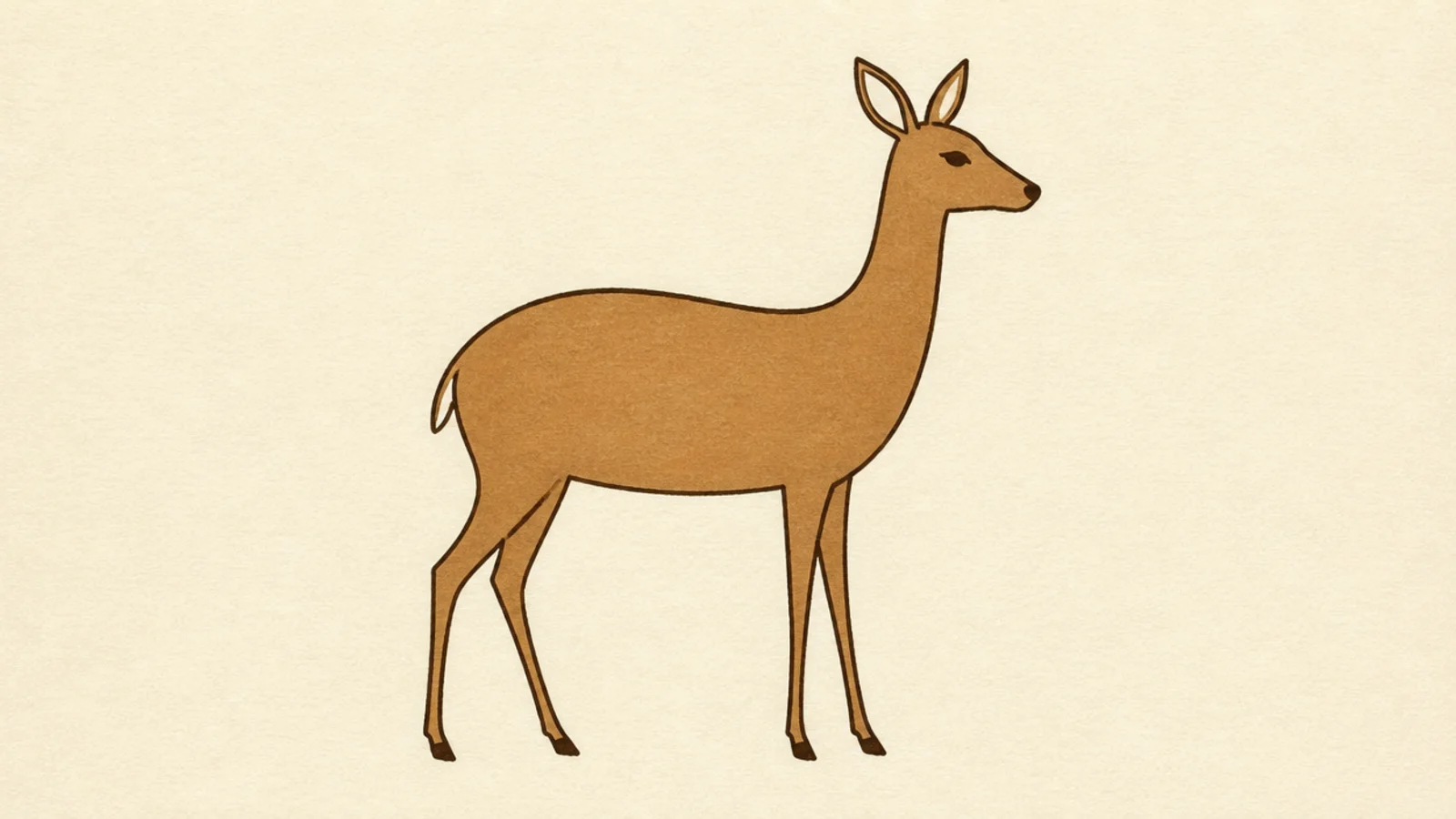
A clean standing deer in side view is the master shape for the whole list. Every leg and the body show clearly. It is the perfect one to get right first.
Pro tipSketch lightly first, then commit to one smooth outline and erase the guides.
Step 1 draw an oval body and drop four thin legs. Step 2 add a curving neck and a small wedge head. Step 3 add ears, a short tail, and trace one smooth clean outline.
AvoidDon’t use scratchy overlapping lines; one clean pass looks finished.
2 Simple Side-Profile Stag
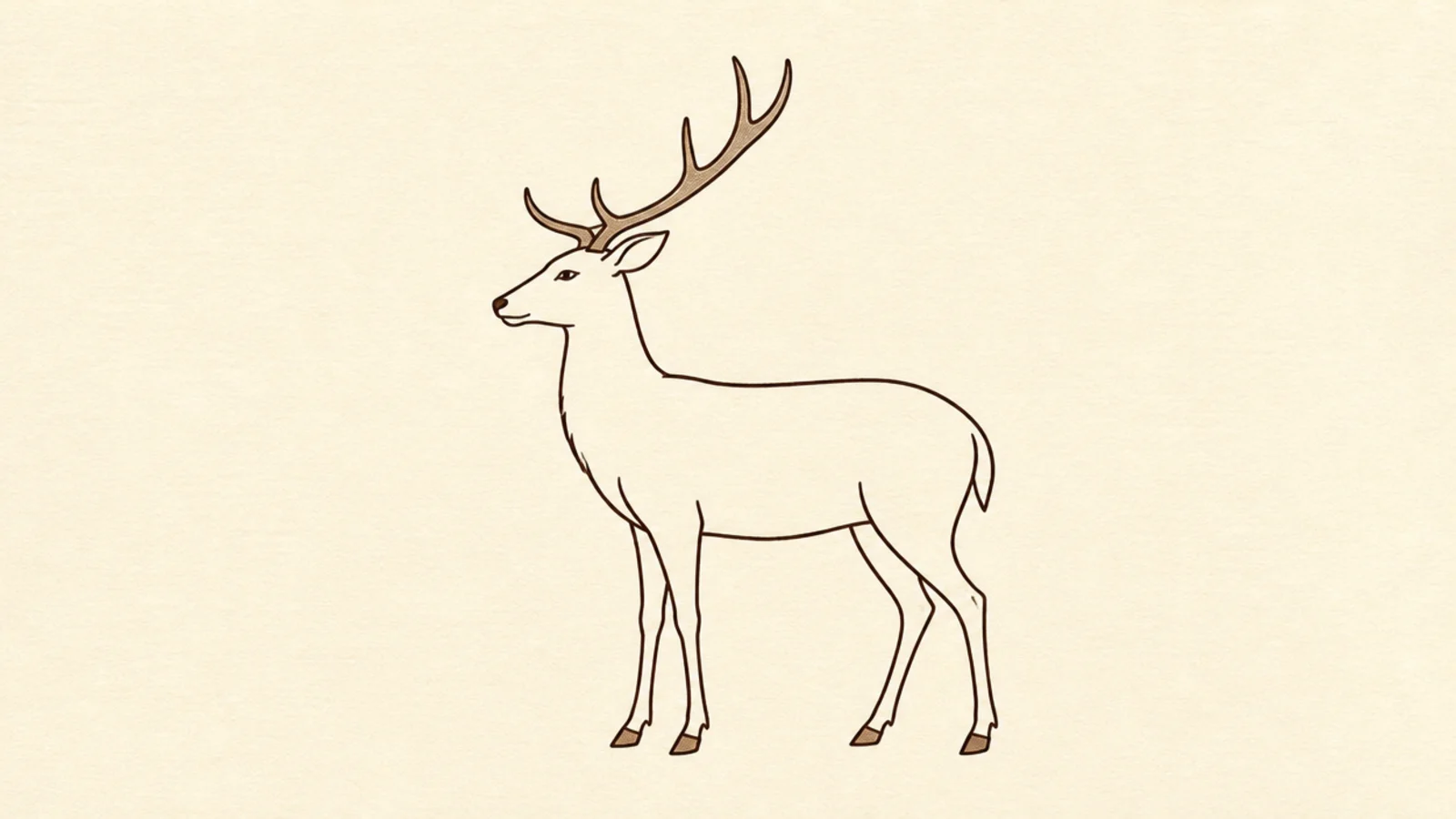
A side-profile stag adds a clean pair of antlers to the standing deer. The profile shows the antler sweep clearly. It is a classic, tidy deer.
Step 1 draw the standing deer in profile. Step 2 sweep two antler beams up and back from the head. Step 3 add a few tines and keep every line smooth.
Sweep the antlers back over the neck so their shape reads in profile.
Don’t overload the antlers; a few clean tines keep it simple.
3 Simple Doe
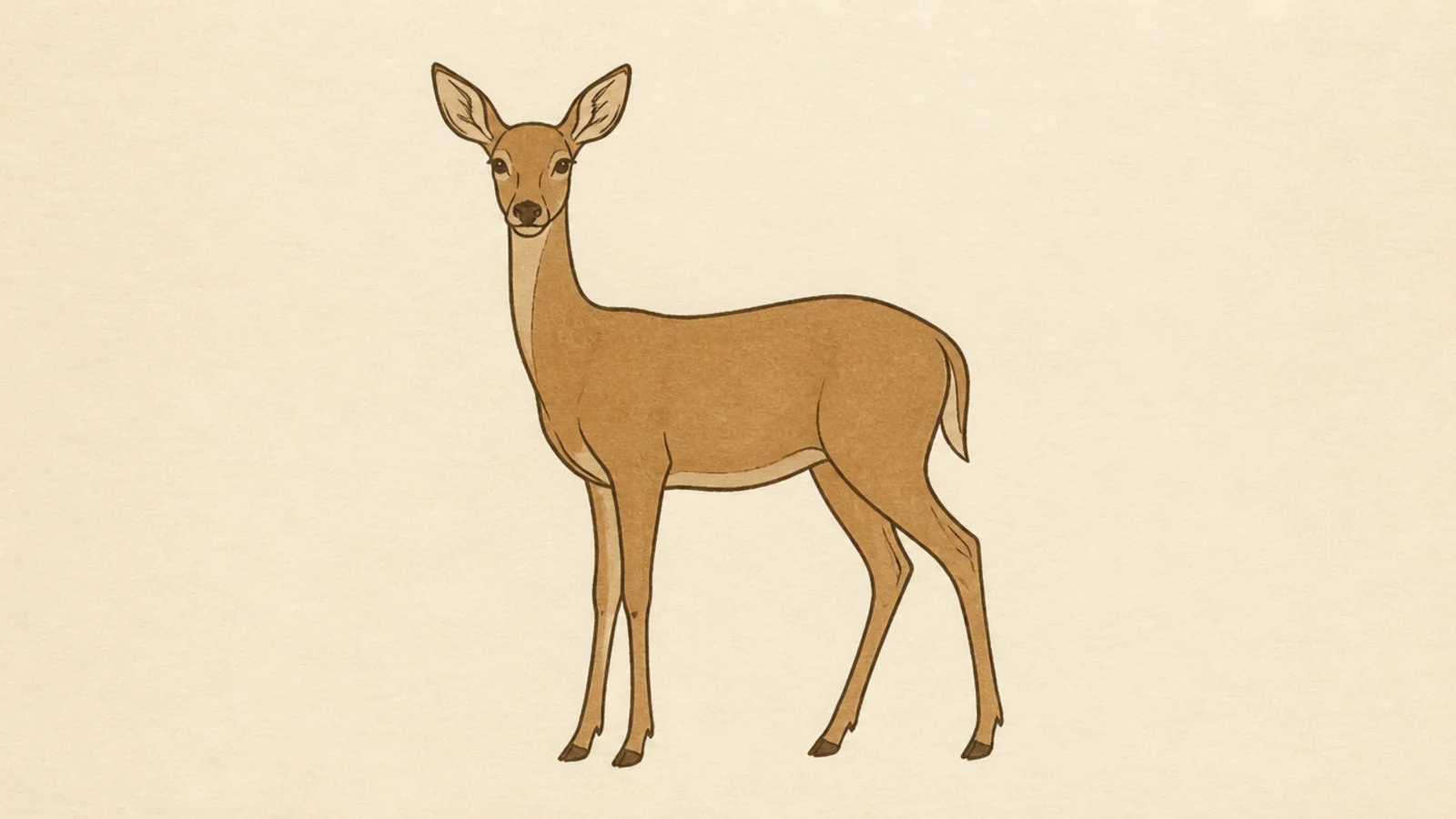
A simple doe keeps a plain head and a slender neck, making her the easiest adult deer. The clean crown means no antlers to place. She looks calm and graceful.
Pro tipGive the doe a longer, slimmer neck than a stag for extra grace.
Step 1 draw a slim oval body and thin legs. Step 2 add a long graceful neck and small head. Step 3 add tall ears and a short tail, leaving the crown plain.
AvoidDon’t add antlers; the plain head is what makes her a doe.
4 Simple Two-Tone Deer
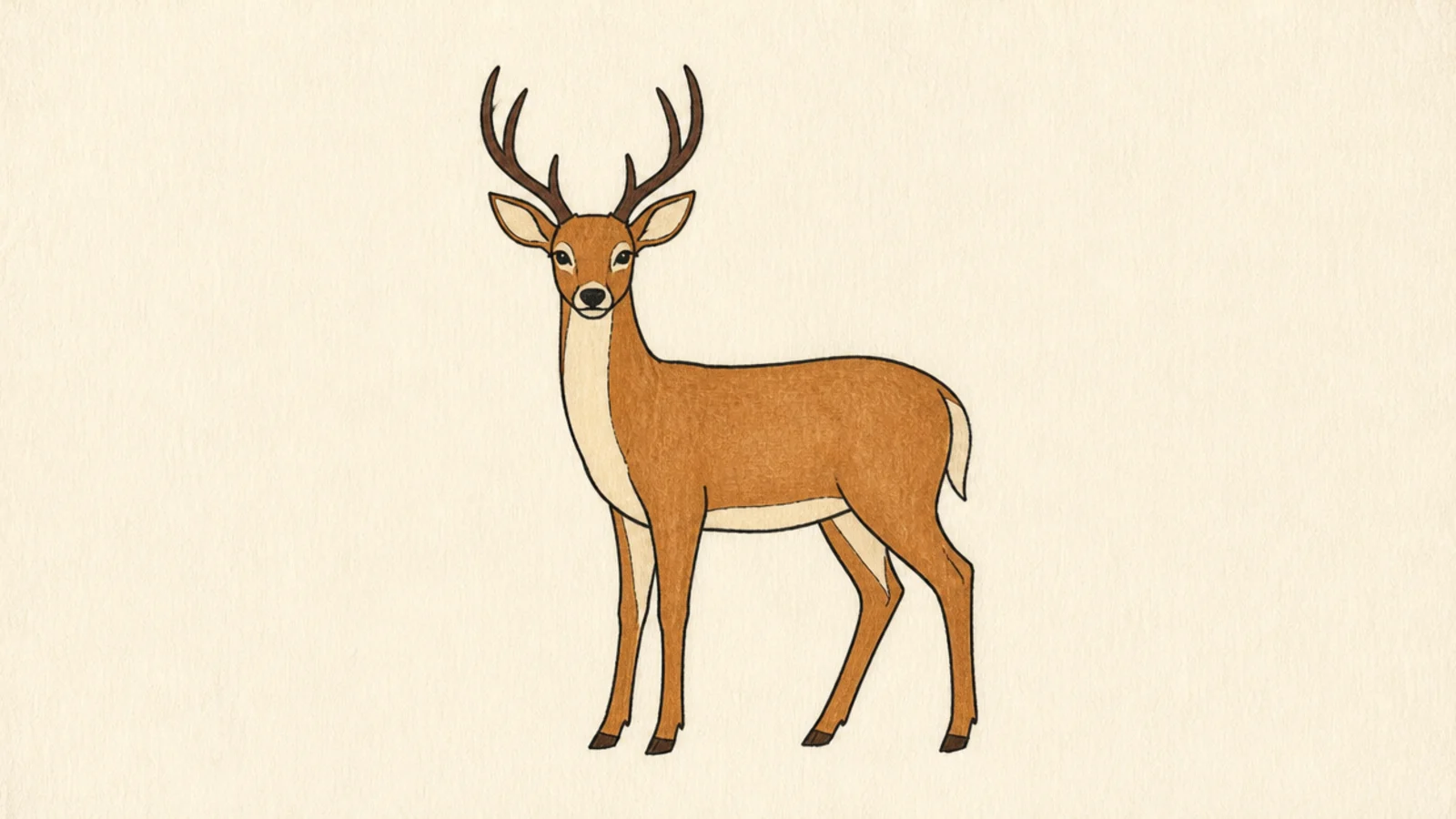
A two-tone deer uses one flat brown with a lighter belly to look finished without shading. Two flat colors is all it takes. It stays clean and simple.
Step 1 draw a clean deer outline. Step 2 fill the body flat warm brown. Step 3 add a lighter cream belly, inner legs, and tail patch.
Keep both colors flat with a clean edge between them for a tidy look.
Don’t blend the two tones; a crisp flat edge suits the simple style.
5 Minimal Line Deer
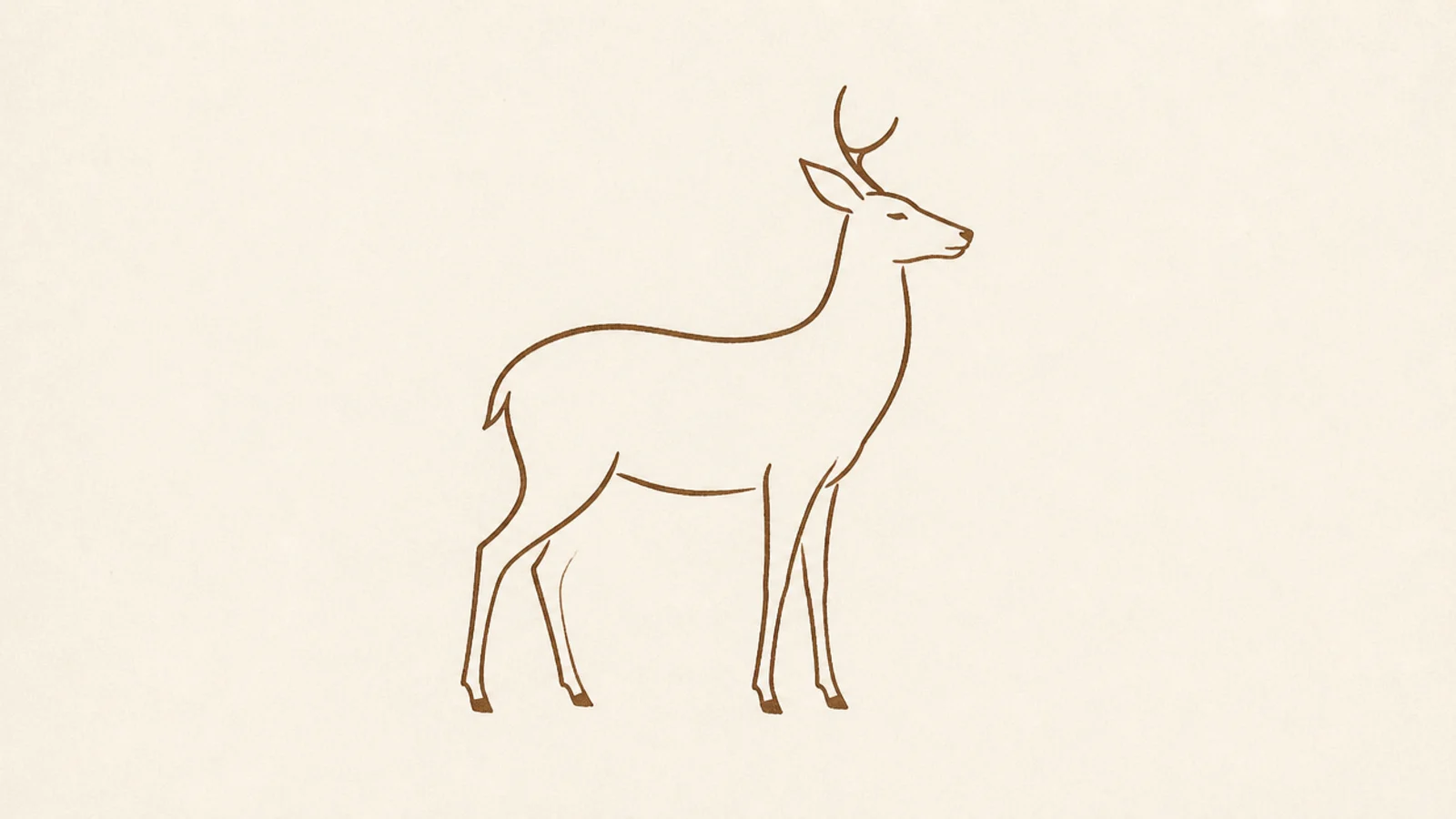
A minimal line deer uses only the few essential lines needed to read as a deer. The restraint looks modern and confident. It teaches which lines truly matter.
Pro tipInclude only the lines that make it read as a deer and leave the rest out.
Step 1 draw one line for the back and neck. Step 2 add a line for the underside and a few for the legs. Step 3 add a small ear and antler mark and stop.
AvoidDon’t add extra detail; the challenge is the fewest possible lines.
6 Simple Grazing Deer
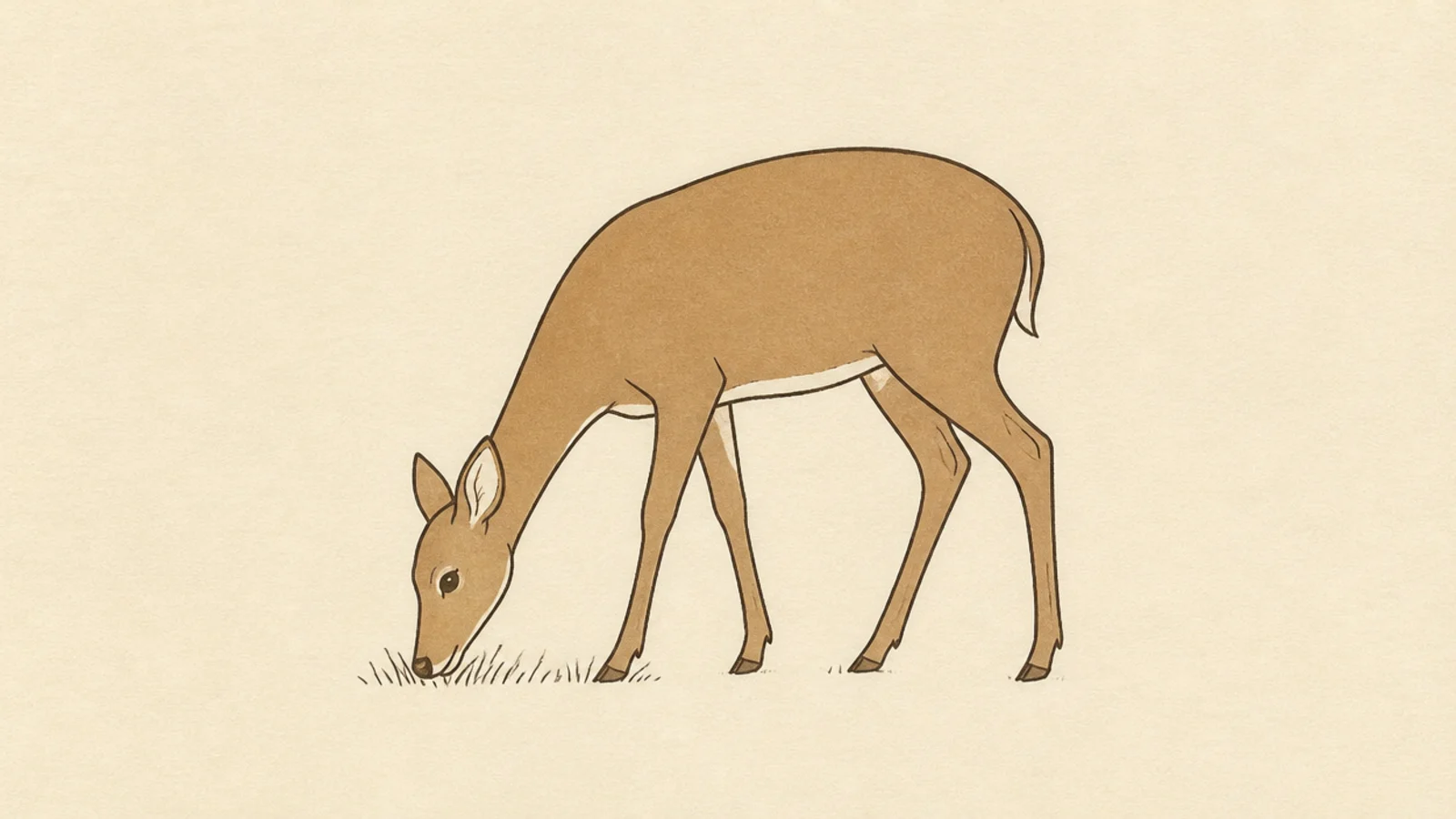
A grazing deer lowers its head to the ground, an easy change from the standing pose. The bent neck feels calm and natural. It teaches how the neck changes the mood.
Pro tipCurve the neck in one smooth arc so the head reaches the ground naturally.
Step 1 draw the standing body and legs. Step 2 curve the neck down so the head reaches the ground. Step 3 add a few short grass lines under the muzzle.
AvoidDon’t leave the neck stiff; a soft downward curve reads as grazing.
7 Simple Walking Deer
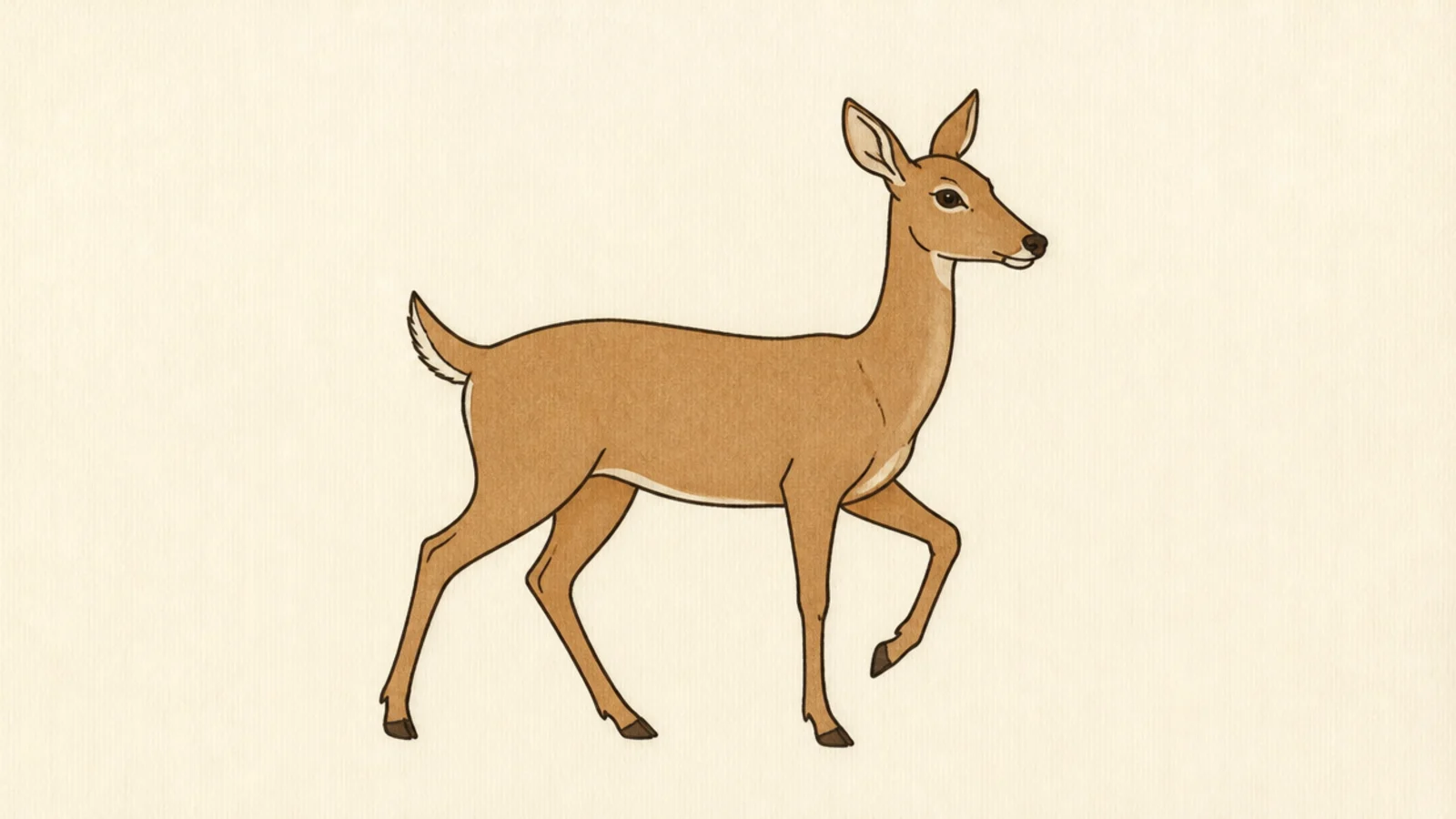
A walking deer lifts one leg to show gentle movement. It is barely harder than standing. It teaches a lively pose from clean shapes.
Pro tipLift just one leg and keep the other three planted so the walk reads.
Step 1 draw the body and three planted legs. Step 2 bend and lift one front leg forward. Step 3 add the neck, head, and a slightly raised tail.
AvoidDon’t lift two legs; one raised leg is enough to show walking.
8 Simple Leaping Stag
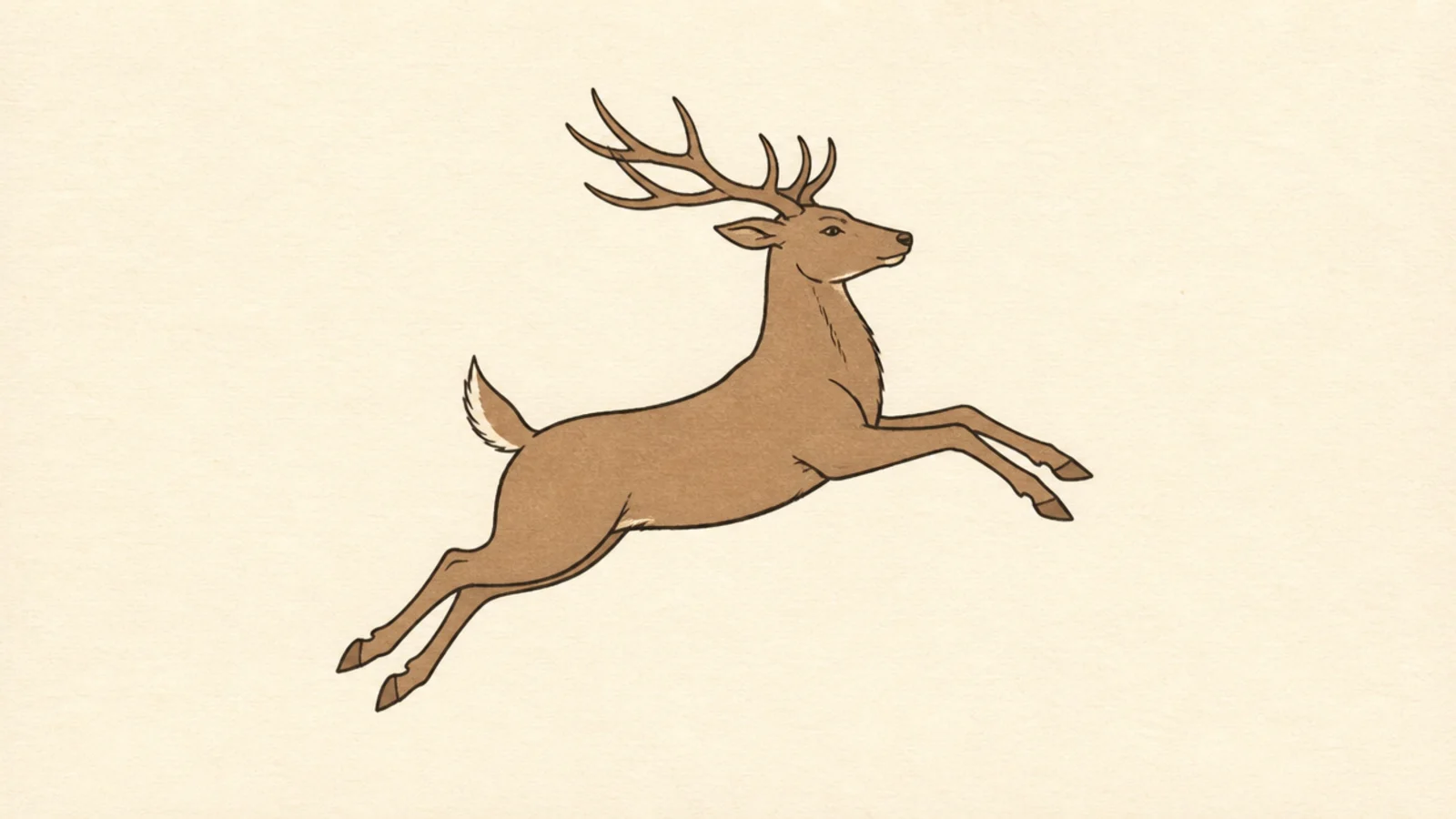
A leaping stag tilts the body and stretches the legs for dynamic energy. It captures the movement deer are known for. It teaches a clean action pose.
Step 1 tilt the body oval diagonally upward. Step 2 stretch the front legs forward and the back legs behind. Step 3 lift the head, sweep the antlers back, and raise the tail.
Angle the whole body up and stretch the legs fully to sell the leap.
Don’t tuck the legs; extended legs are what make a leap read.
9 Simple Fawn
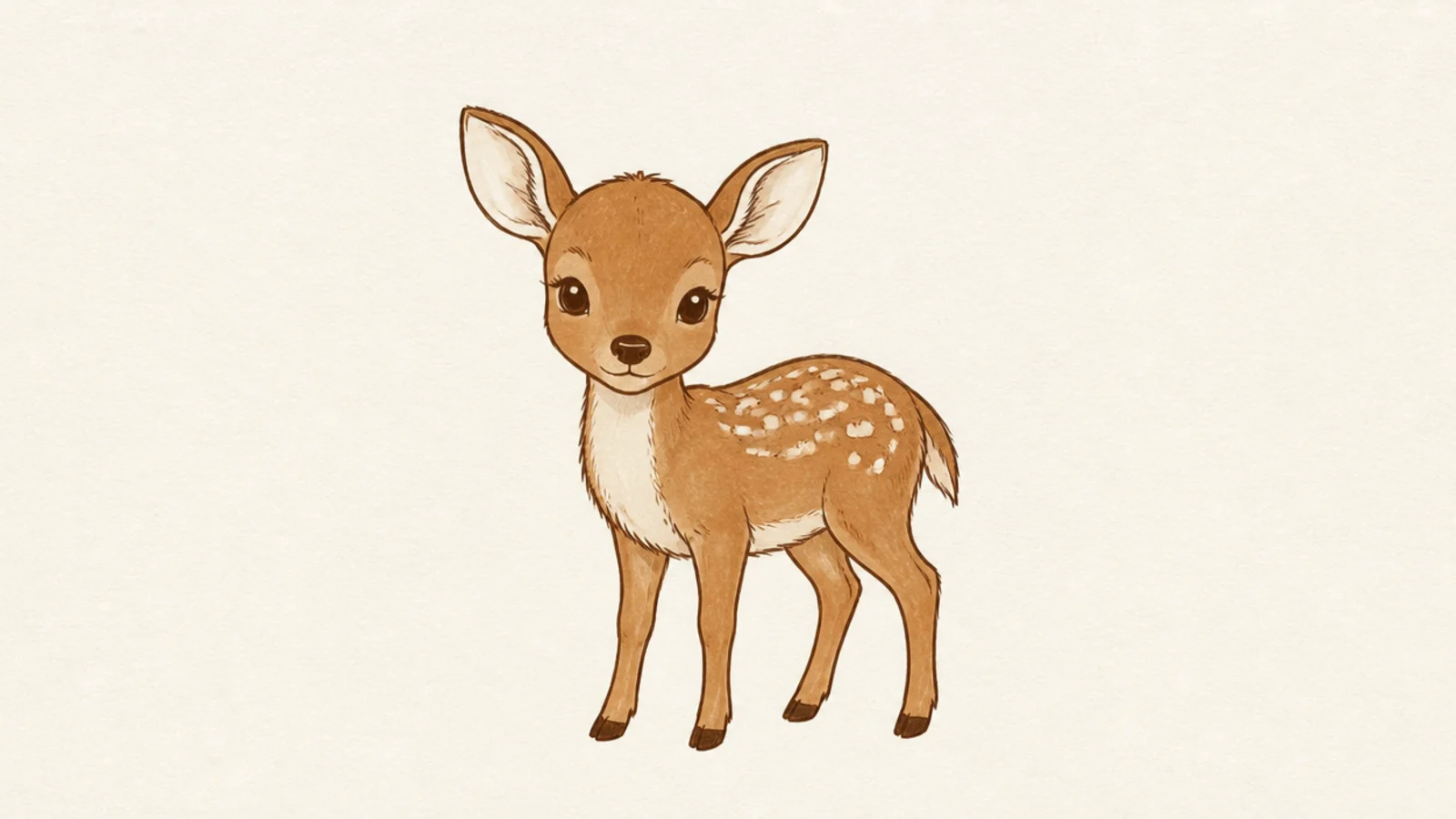
A simple fawn is a deer with shorter legs, a rounder body, and a bigger head. The baby proportions are easy and cute. A few spots finish the young look.
Step 1 draw a rounder body and larger head. Step 2 add four short legs. Step 3 add big ears, a tiny tail, and a scatter of spots on the back.
Shorten the legs and enlarge the head so it reads as a baby deer.
Don’t draw long adult legs; short legs make it a fawn.
10 Simple Lying-Down Deer
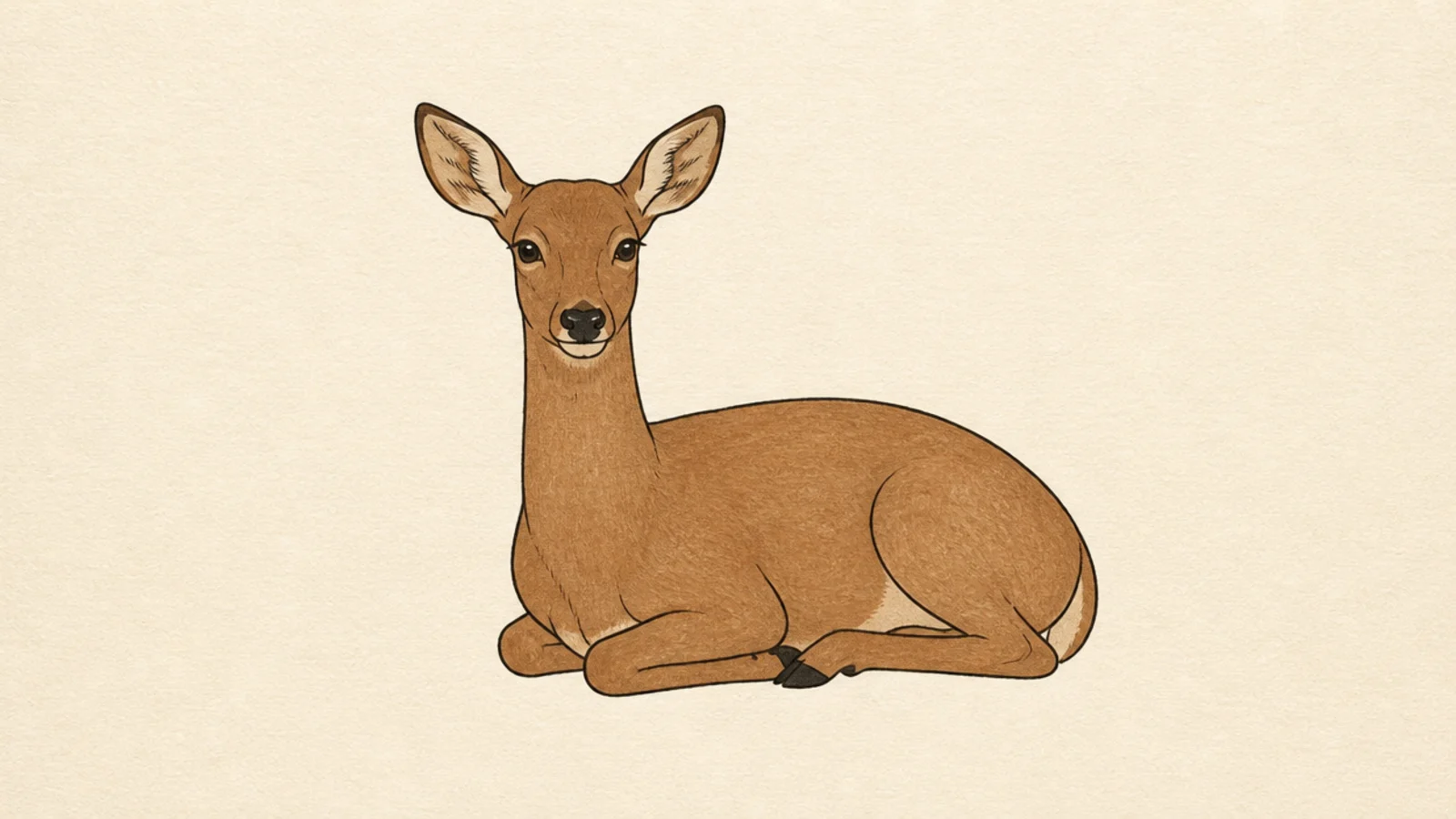
A lying-down deer folds its legs under for a settled, restful pose. You draw one compact body instead of standing legs. It is calm and clean.
Pro tipKeep the body low and wide so the deer looks settled on the ground.
Step 1 draw an oval body low to the ground. Step 2 tuck the folded legs in front and beside the body. Step 3 add an upright neck, head, and two alert ears.
AvoidDon’t draw the legs straight down; folded legs read as resting.
11 Simple Drinking Deer
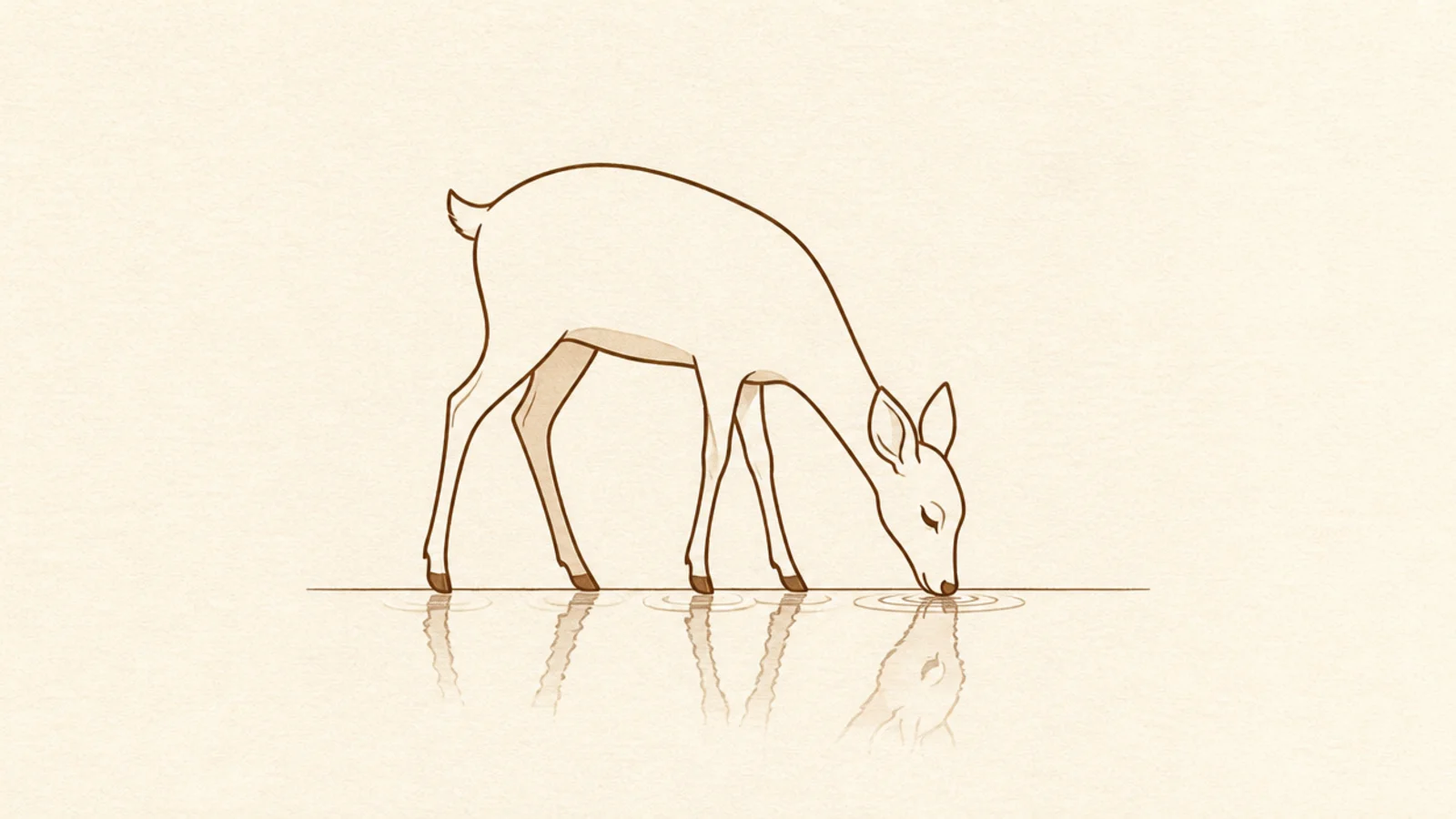
A drinking deer dips its head to a water line, a peaceful natural pose. The reflection adds a nice touch. It teaches the lowered-head shape in a clean scene.
Step 1 draw the standing deer with the neck curved down. Step 2 add a straight water line under the muzzle. Step 3 suggest a faint reflection and a couple of ripples.
Add a simple reflection below the water line for a clean finished feel.
Don’t clutter the water; a single line and a few ripples are enough.
12 Scandinavian Folk Deer
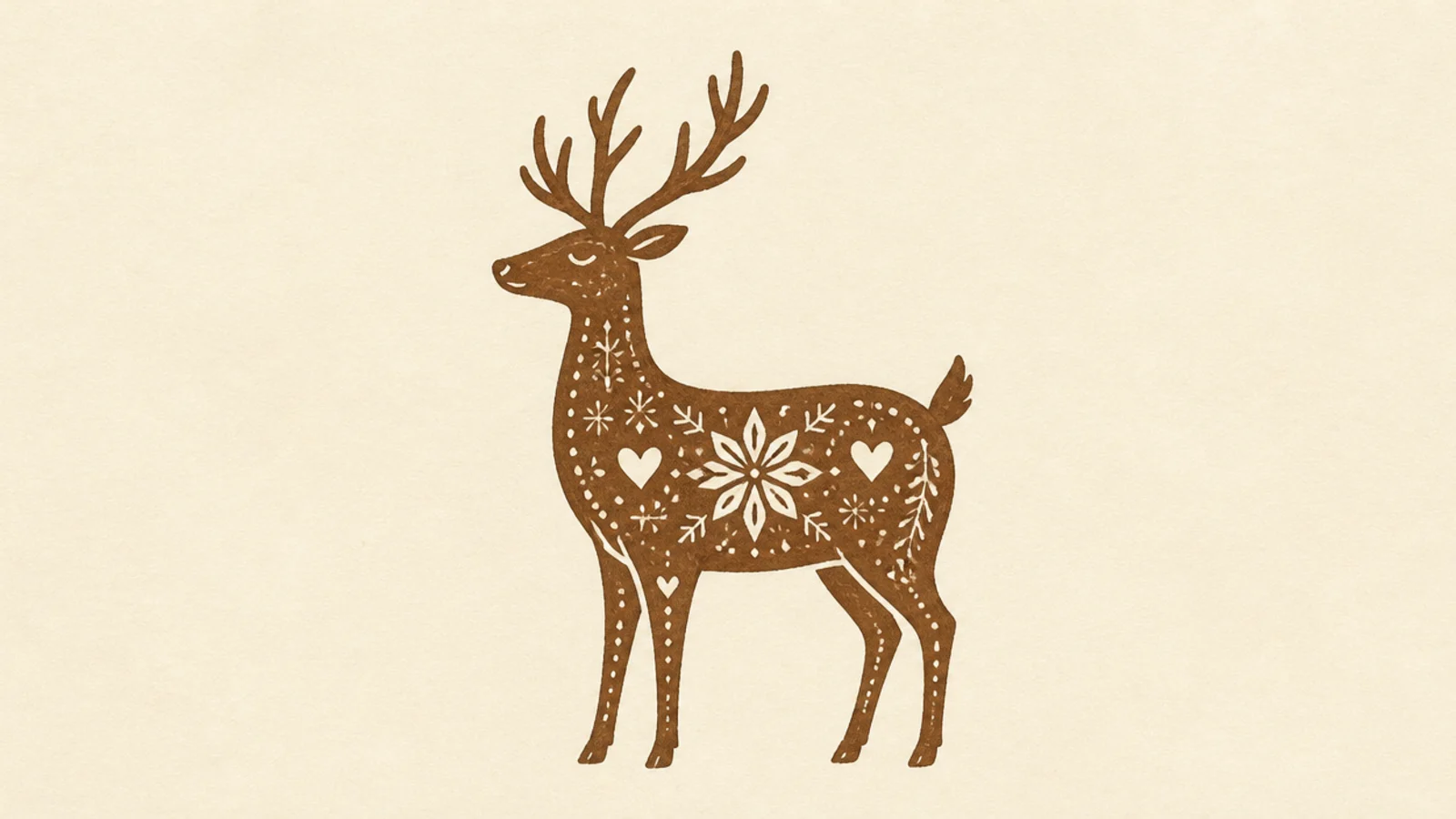
A Scandinavian folk deer uses a bold clean shape with a few decorative motifs. The tidy folk style is charming and modern. It suits cards and holiday prints.
Pro tipKeep the body one bold shape and add just a few simple folk motifs.
Step 1 draw a bold simple standing deer. Step 2 fill it with one flat color. Step 3 add small folk dots, hearts, or snowflakes on the body in a lighter tone.
AvoidDon’t overfill with pattern; a few clean motifs keep the folk look.
13 Simple Running Deer
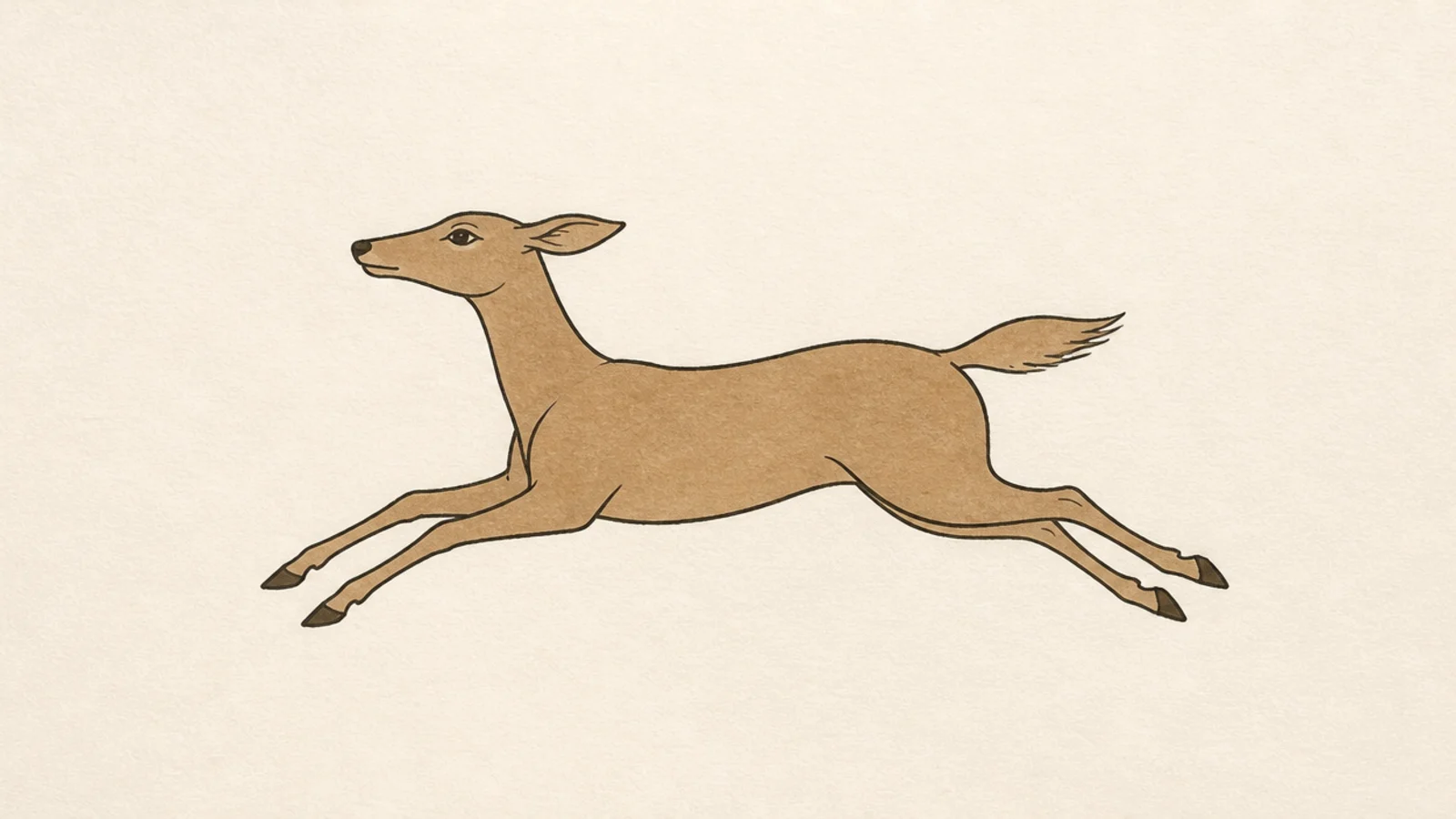
A running deer stretches its legs into a gallop for energy and speed. The extended pose shows motion. It teaches a clean dynamic stance.
Pro tipStretch the legs fully front and back to sell the run.
Step 1 tilt the body forward. Step 2 reach the front legs ahead and kick the back legs behind. Step 3 lift the head, flatten the ears, and add a streaming tail.
AvoidDon’t keep the legs under the body; extension shows the gallop.
14 Simple Looking-Back Deer
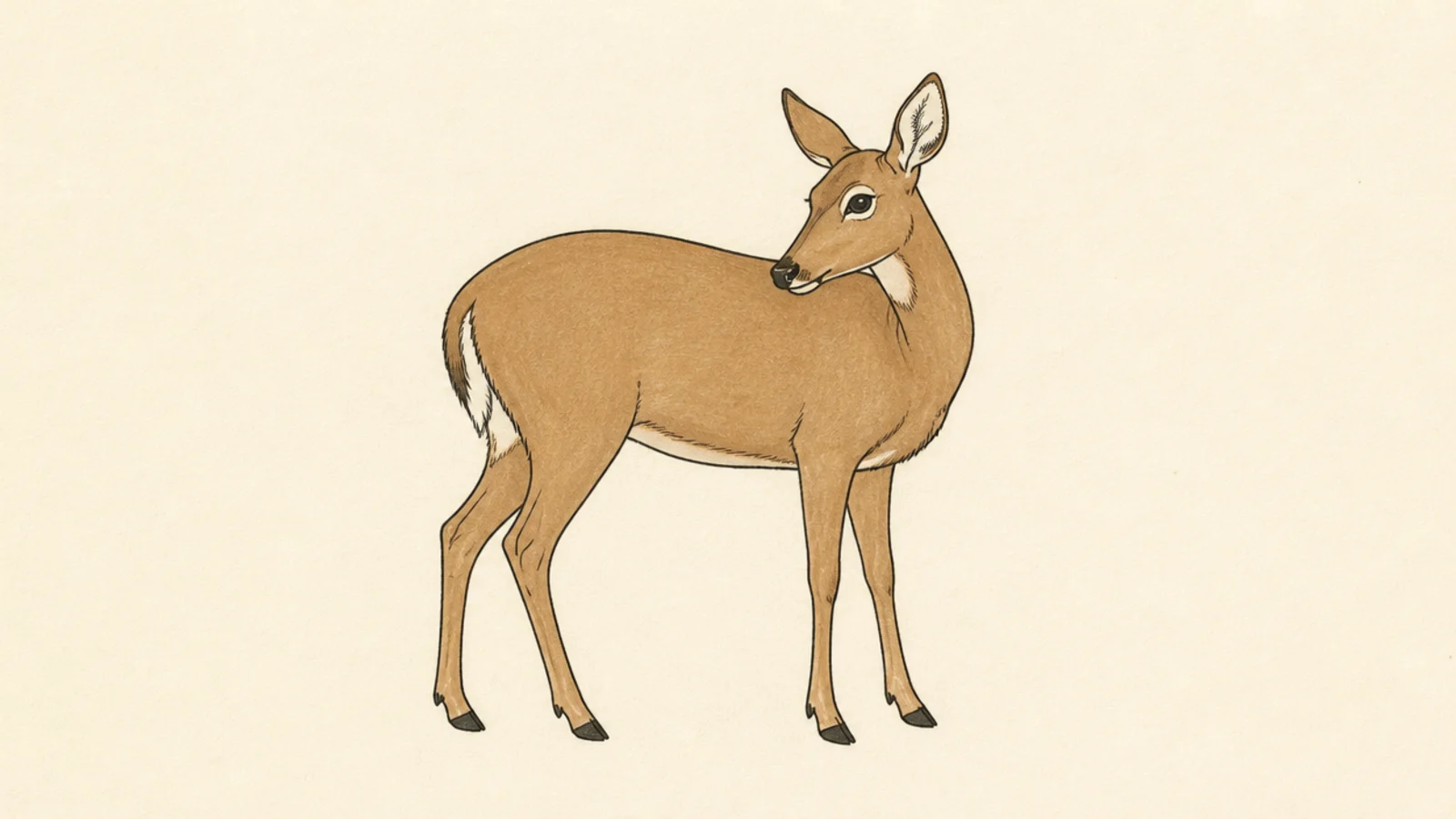
A deer glancing back over its shoulder adds personality with just a turned head. The body stays a clean side view. It teaches an alert, expressive pose.
Pro tipTwist only the neck and head; keep the body in a normal stance.
Step 1 draw a standing side-view deer. Step 2 curve the neck back so the head faces the tail. Step 3 perk the ears and point the eyes backward.
AvoidDon’t turn the whole body; just the head looking back reads as alert.
15 Simple Front-View Deer
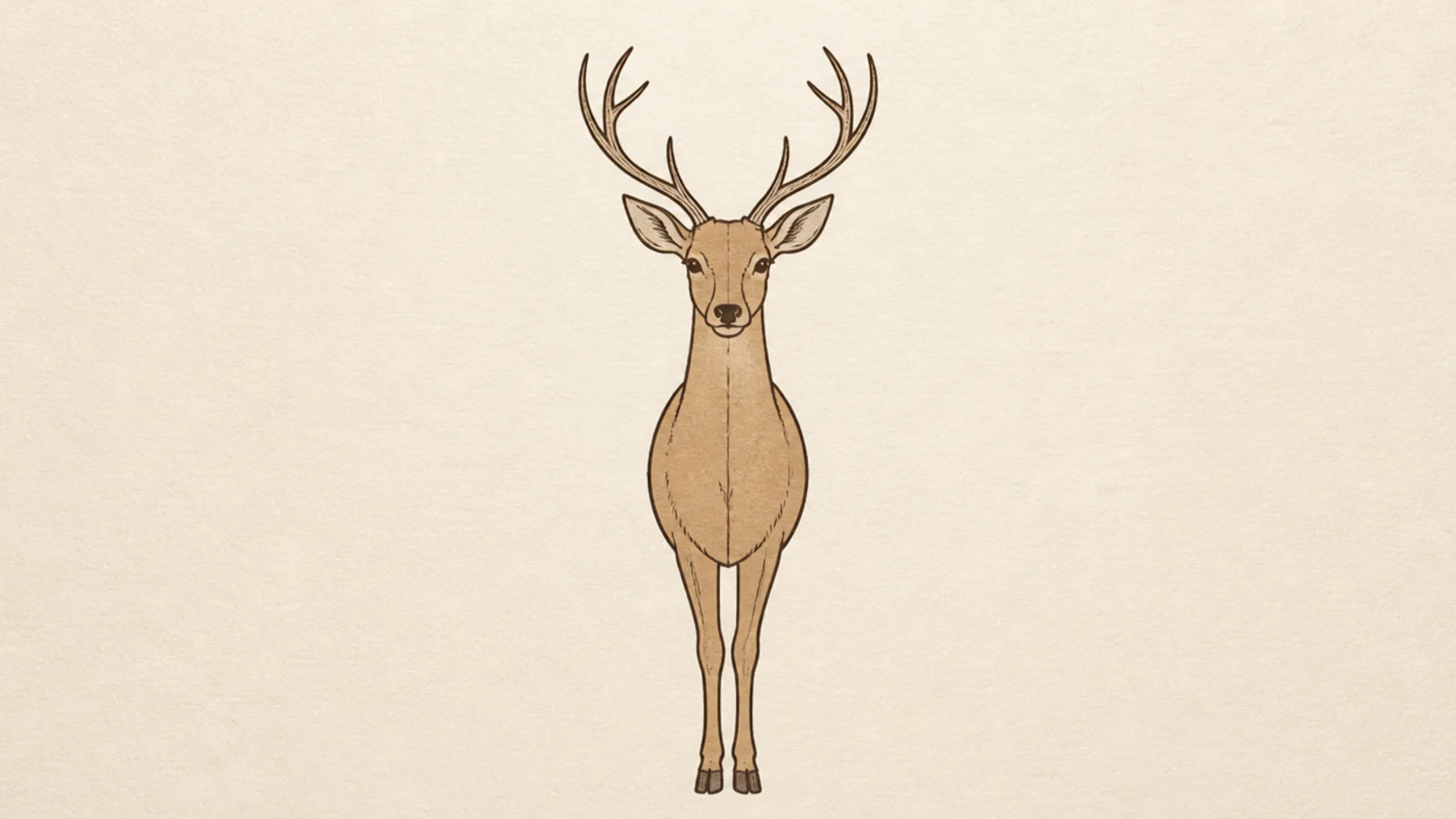
A front-view deer faces the viewer head-on, a clean symmetrical challenge. The narrow body and forward legs teach symmetry. It is a striking direct pose.
Step 1 draw a narrow front-facing body with a center line. Step 2 add two front legs close together and two behind. Step 3 add the head, ears, and antlers mirrored across the center.
Use a center line and mirror both sides so the front view stays even.
Don’t make the body wide; a front-on deer is narrow and tall.
16 Simple Reindeer
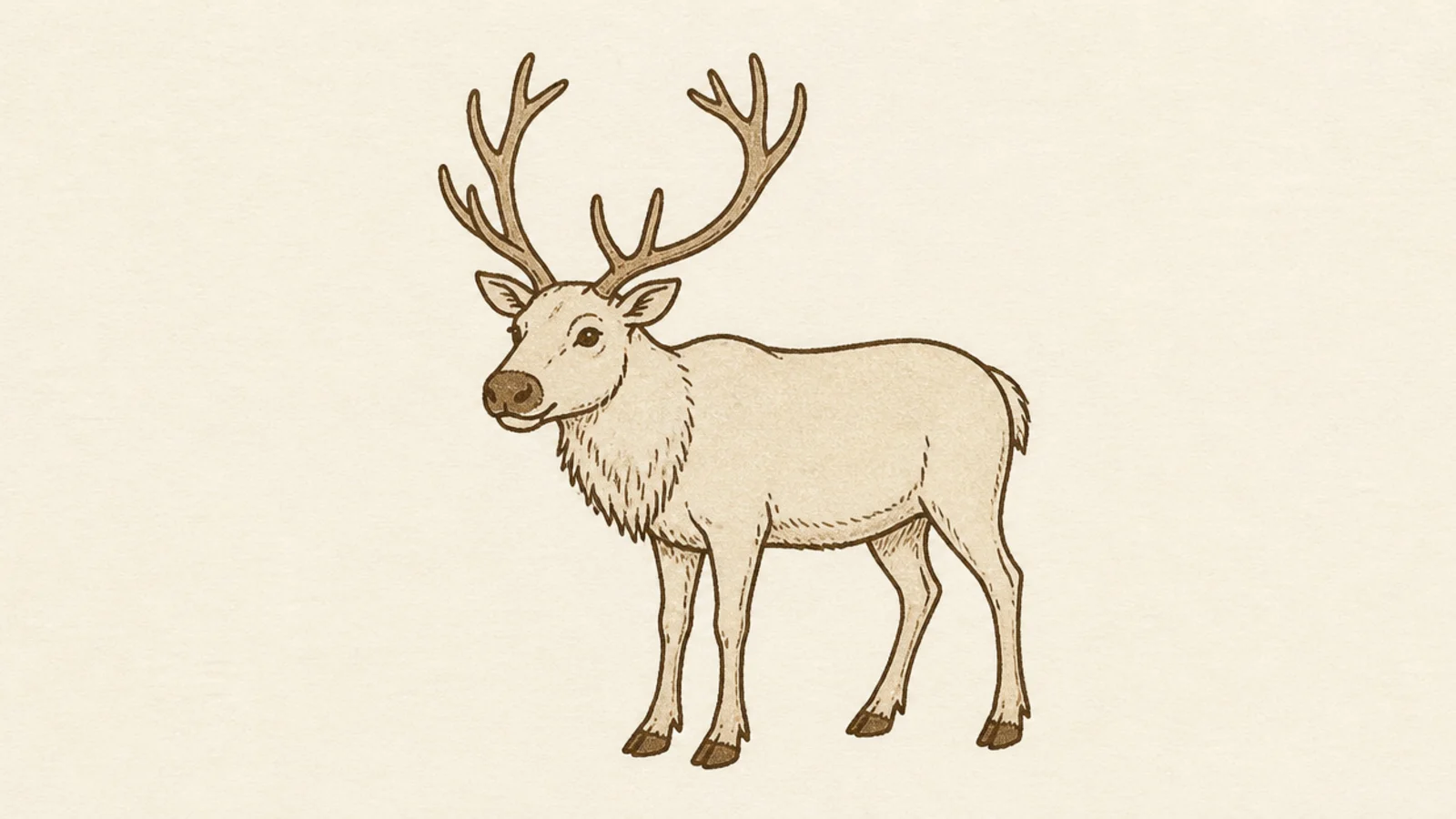
A simple reindeer adds big branching antlers and a sturdy body. The larger antlers are a fun change. It is perfect for holiday art.
Pro tipMake the antlers big and branching to read as a reindeer.
Step 1 draw a sturdy standing deer. Step 2 add two large branching antlers with several tines. Step 3 add a rounded nose and a short shaggy neck fur line.
AvoidDon’t draw thin spikes; reindeer carry large branching racks.
17 Deer Jumping Over a Log
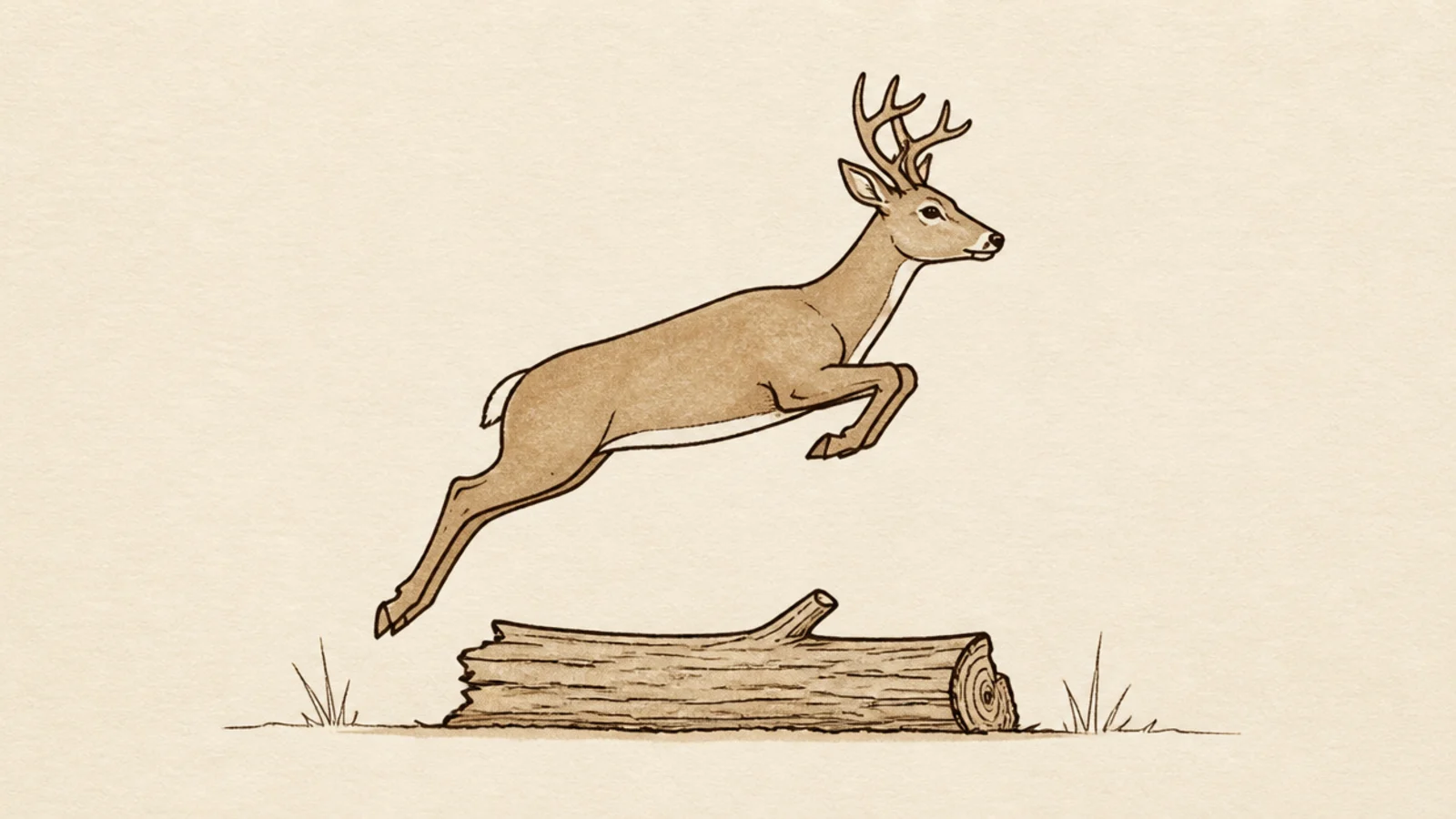
A deer leaping over a log adds a simple obstacle to a jump. The log gives the leap purpose. It makes a clean little action scene.
Pro tipArc the deer’s body over the log so the jump clears it clearly.
Step 1 draw a horizontal log. Step 2 arc a leaping deer over it with legs tucked. Step 3 add a ground line and a couple of grass tufts.
AvoidDon’t plant the legs; a tucked airborne pose shows the jump.
18 Simple Deer on a Hill
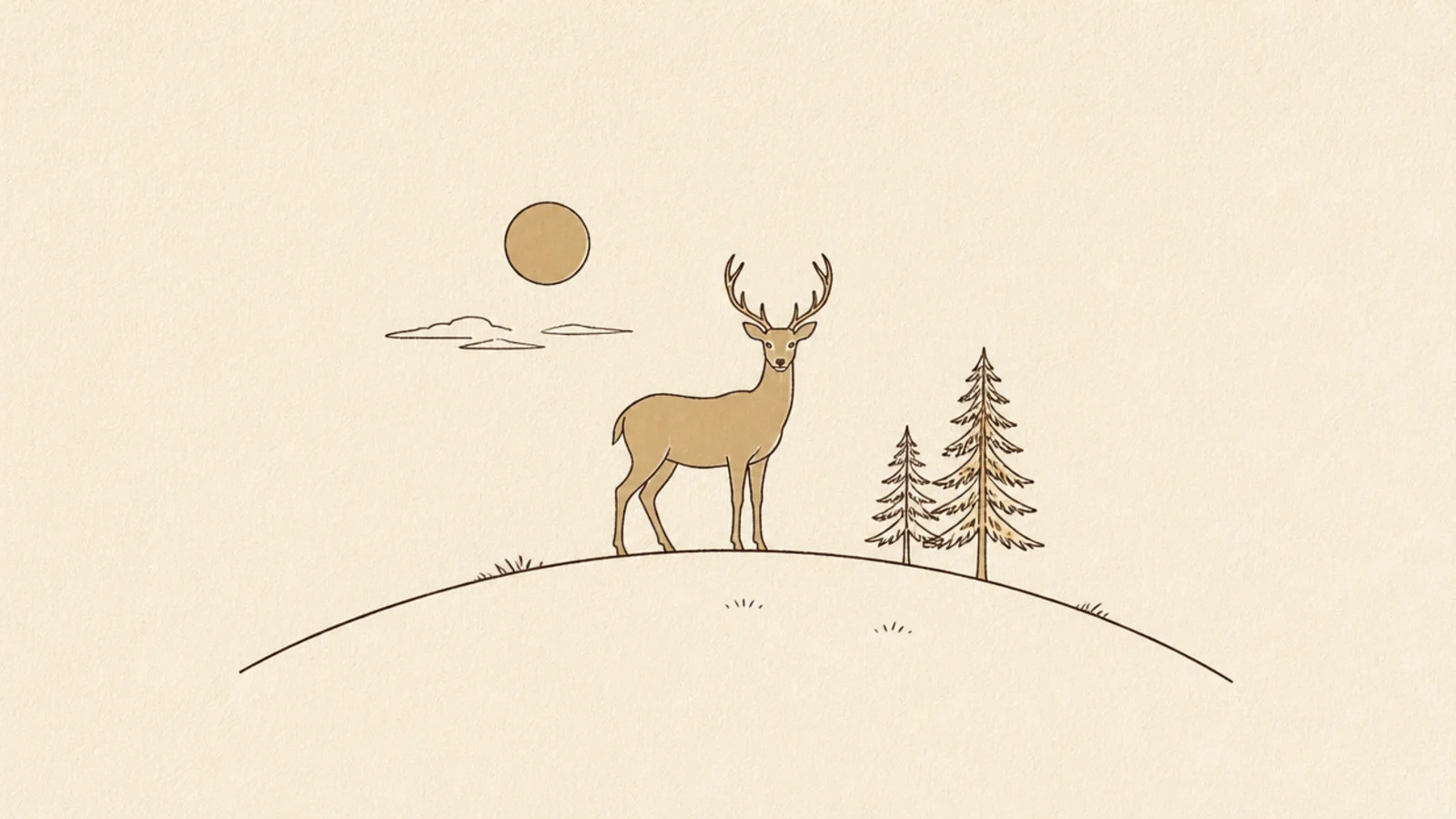
A deer on a hill against open sky is a calm, complete little scene. The hill line grounds the deer simply. It feels serene and finished.
Pro tipPlace the deer near the crest of the hill so it stands out against the sky.
Step 1 draw a gentle curved hill line. Step 2 stand a simple deer on top of it. Step 3 add a sun or moon and a couple of small trees behind.
AvoidDon’t crowd the sky; a sun and a tree or two are enough.
19 Simple Deer Pair
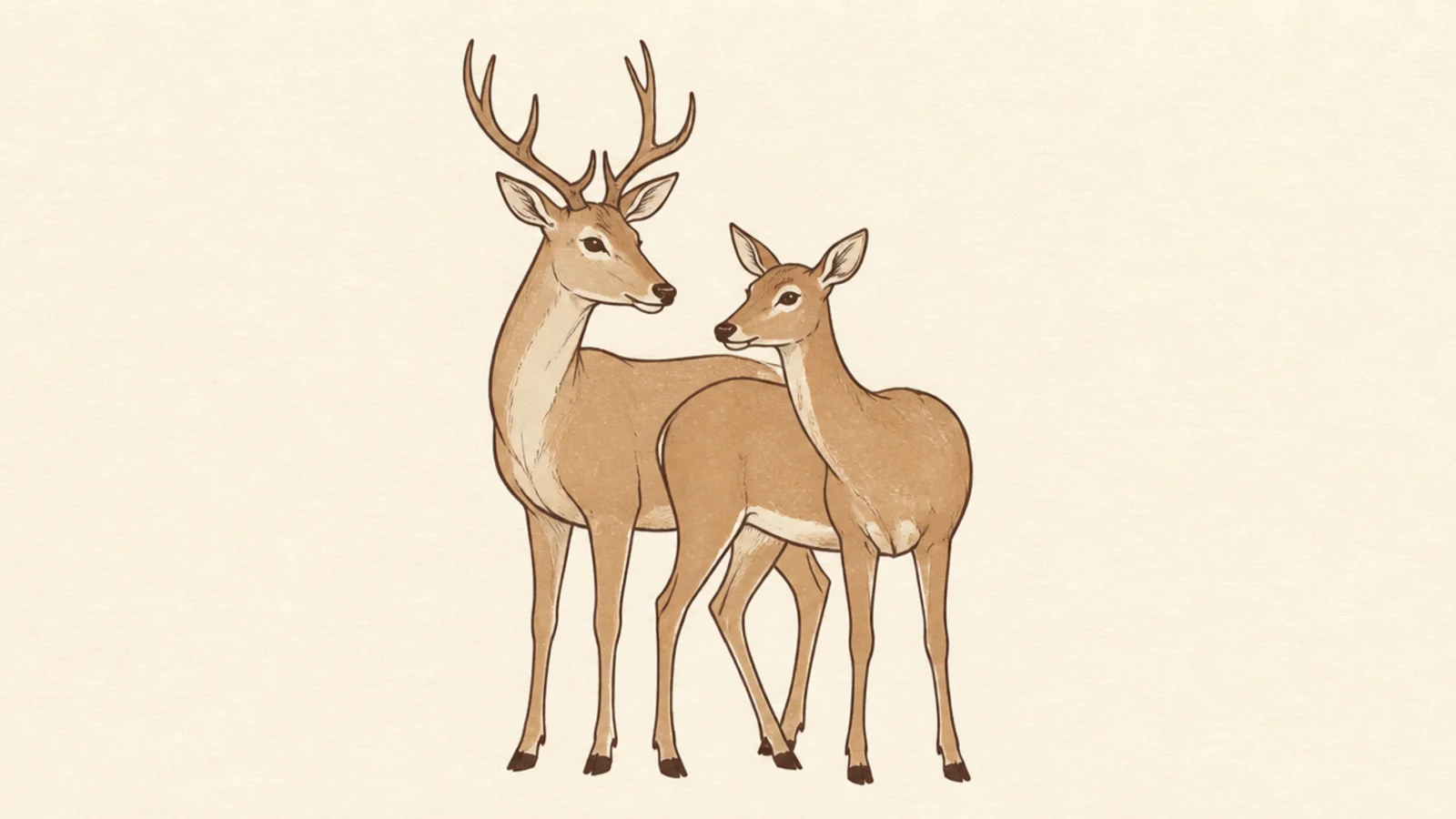
Two simple deer together look more finished than one and are just as easy. Repeating the clean shape twice is quick. It reads as a gentle pair.
Step 1 draw one simple deer. Step 2 draw a second beside it at a slightly different angle. Step 3 overlap them a little and turn their heads toward each other.
Overlap the two slightly so they feel like a connected pair.
Don’t draw them identical and apart; overlap and angle add life.
20 Simple Deer Family
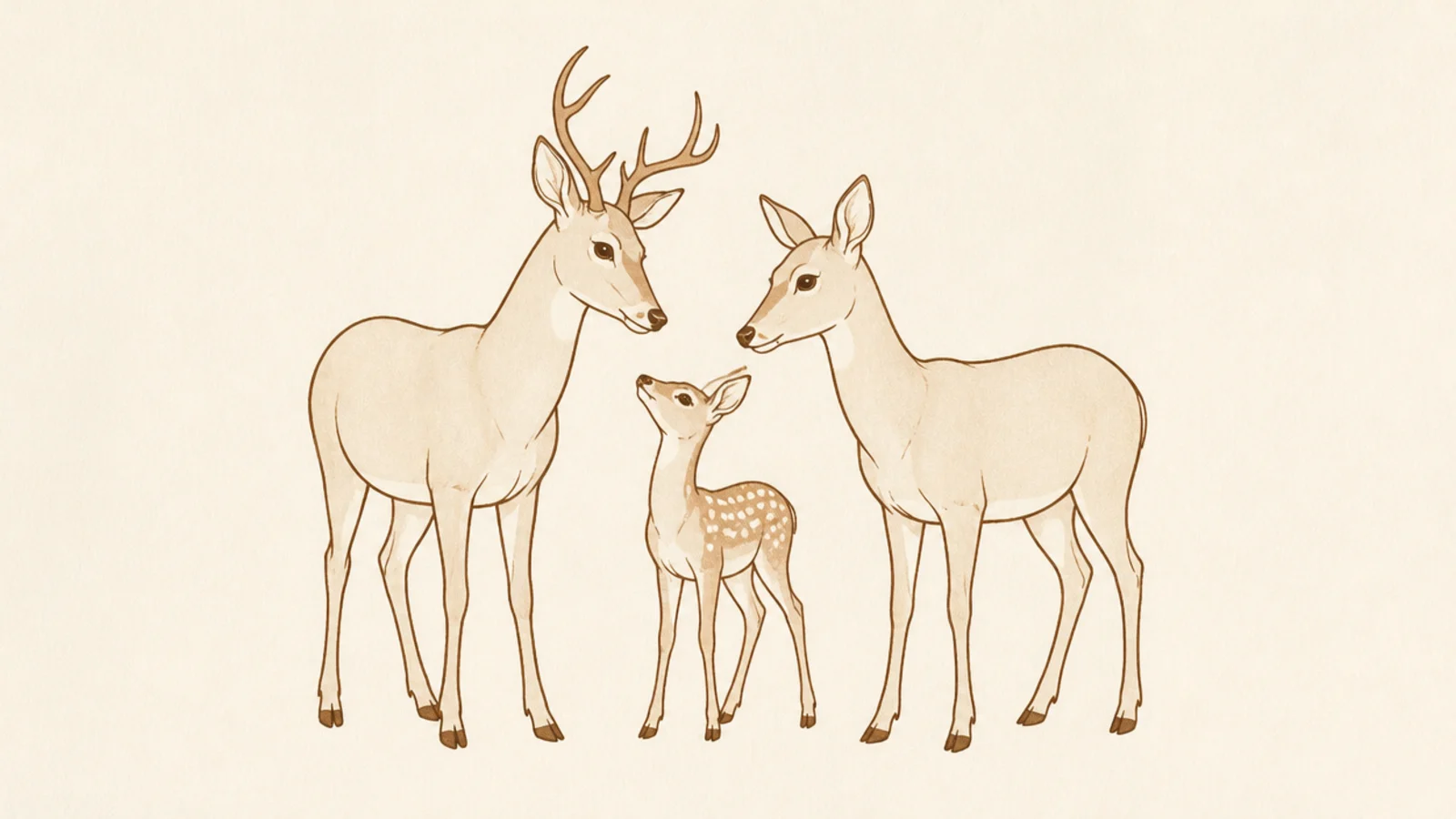
A simple family of two adults and a fawn is warm and still easy. Drawing the same shape at three sizes tells a story. It looks complete and tender.
Pro tipMake the fawn clearly smaller so the family scale reads at a glance.
Step 1 draw two adult deer slightly apart. Step 2 add a small fawn between them. Step 3 spot the fawn and turn all three heads gently inward.
AvoidDon’t line all three up level; slight depth makes the family natural.
21 Simple Deer Silhouette
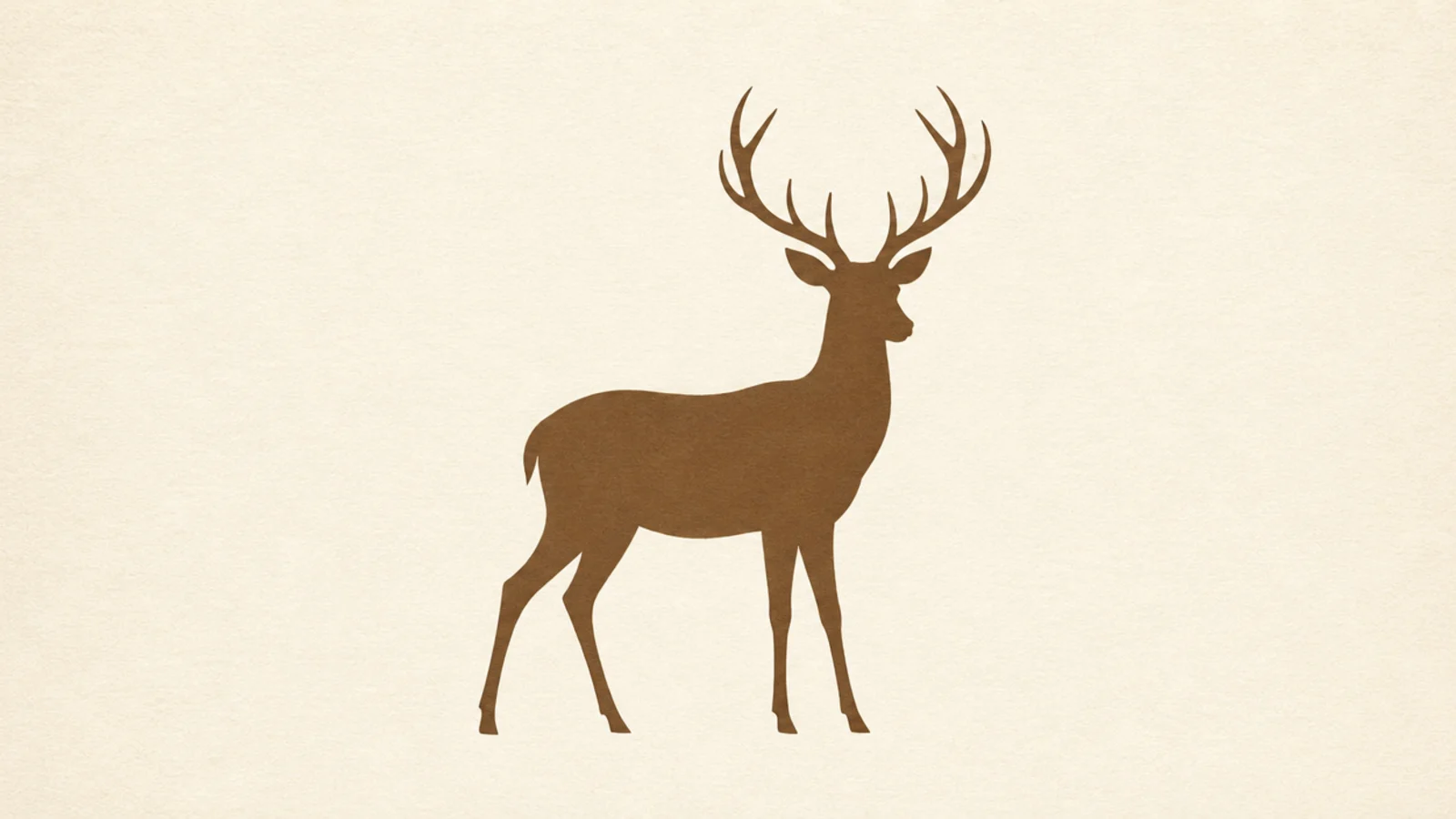
A solid silhouette reduces the deer to its strongest clean shape. There is no interior detail to fuss over. It looks bold and graphic.
Step 1 draw a clean stag outline including the antlers. Step 2 fill it solid one color. Step 3 keep the legs and antler tips crisp since the shape is everything.
Make the antler tips and thin legs crisp so the silhouette reads clearly.
Don’t add inner detail; a flat solid shape is the whole design.
22 Simple Mountain-Scene Deer
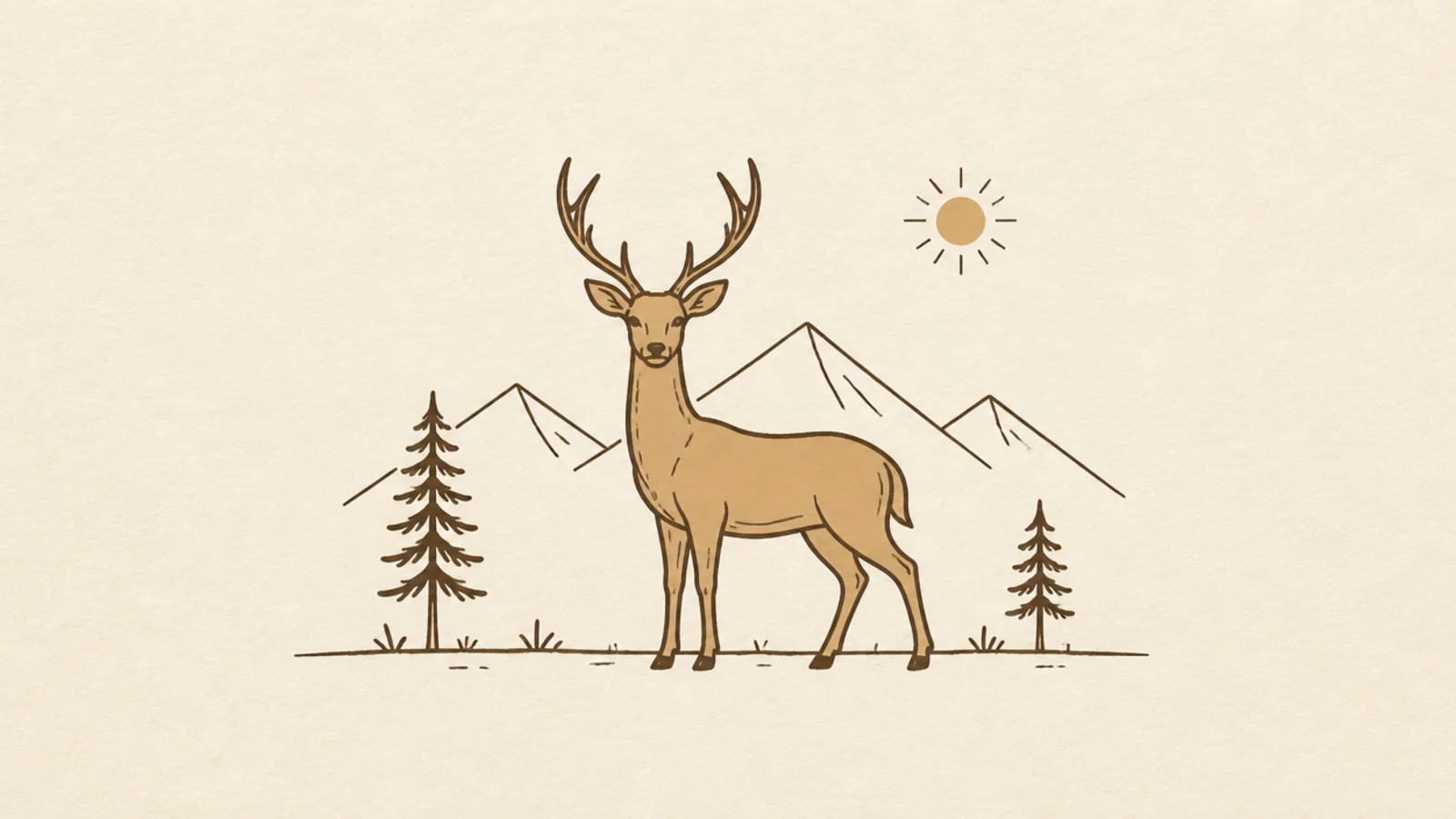
A deer before minimal mountain peaks makes a clean nature scene. The simple triangles behind add place and depth. It feels calm and adventurous.
Pro tipKeep the mountains as plain triangles so the deer stays the focus.
Step 1 draw a few simple triangle mountains. Step 2 stand a clean deer in front on a ground line. Step 3 add a couple of pine trees and a small sun.
AvoidDon’t detail the mountains; simple triangles suit the clean style.
23 Simple Badge Emblem Deer
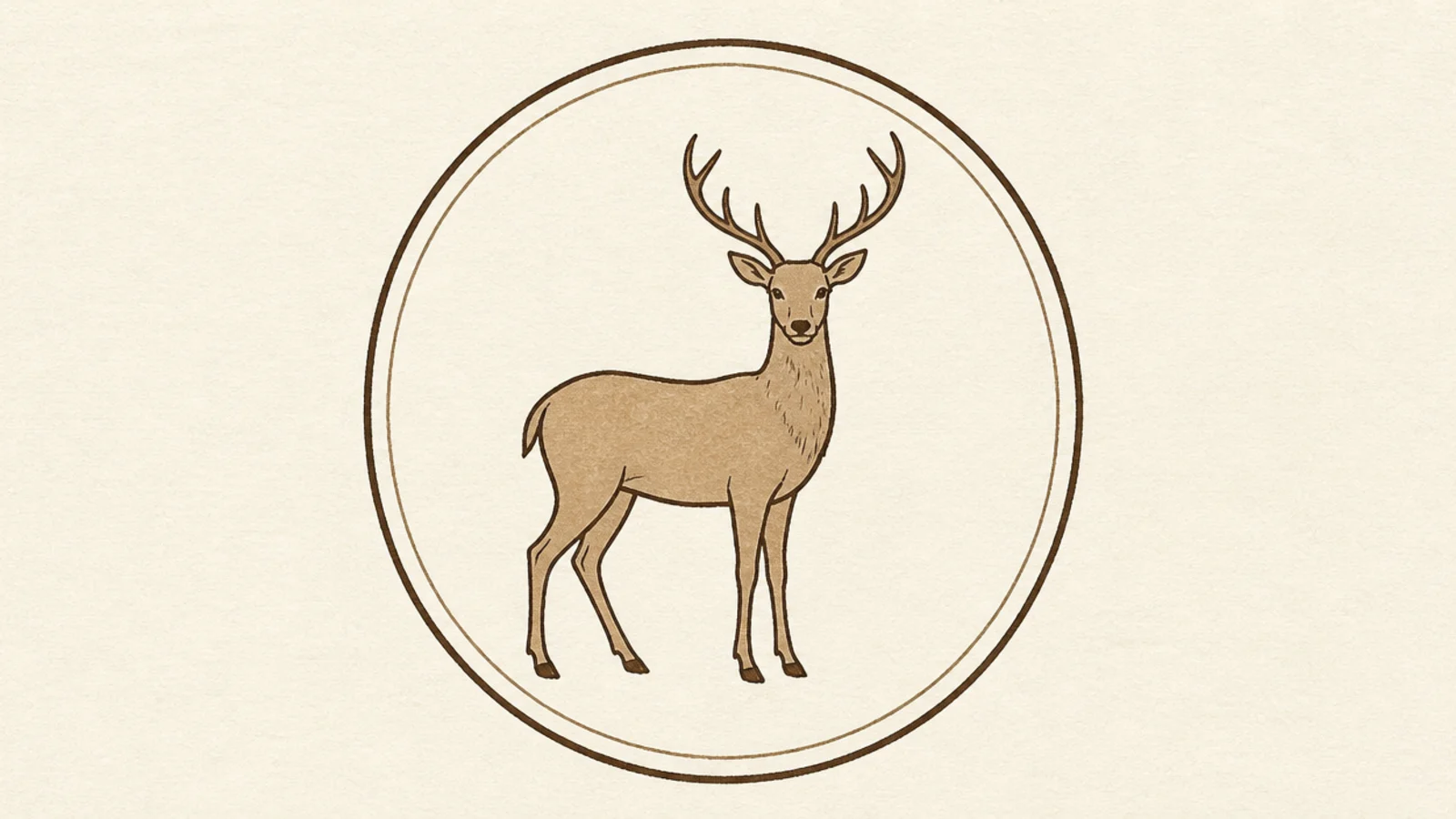
A deer framed inside a clean circle makes a tidy badge or logo. The circle gives the design structure. It looks polished and modern.
Step 1 draw a clean circle. Step 2 center a simple deer head or standing deer inside it. Step 3 add a thin inner ring and keep the whole thing crisp and balanced.
Center the deer in the circle and add a thin inner ring for a badge feel.
Don’t let the deer touch the edge; leave even space inside the circle.
24 Simple Nordic-Pattern Deer
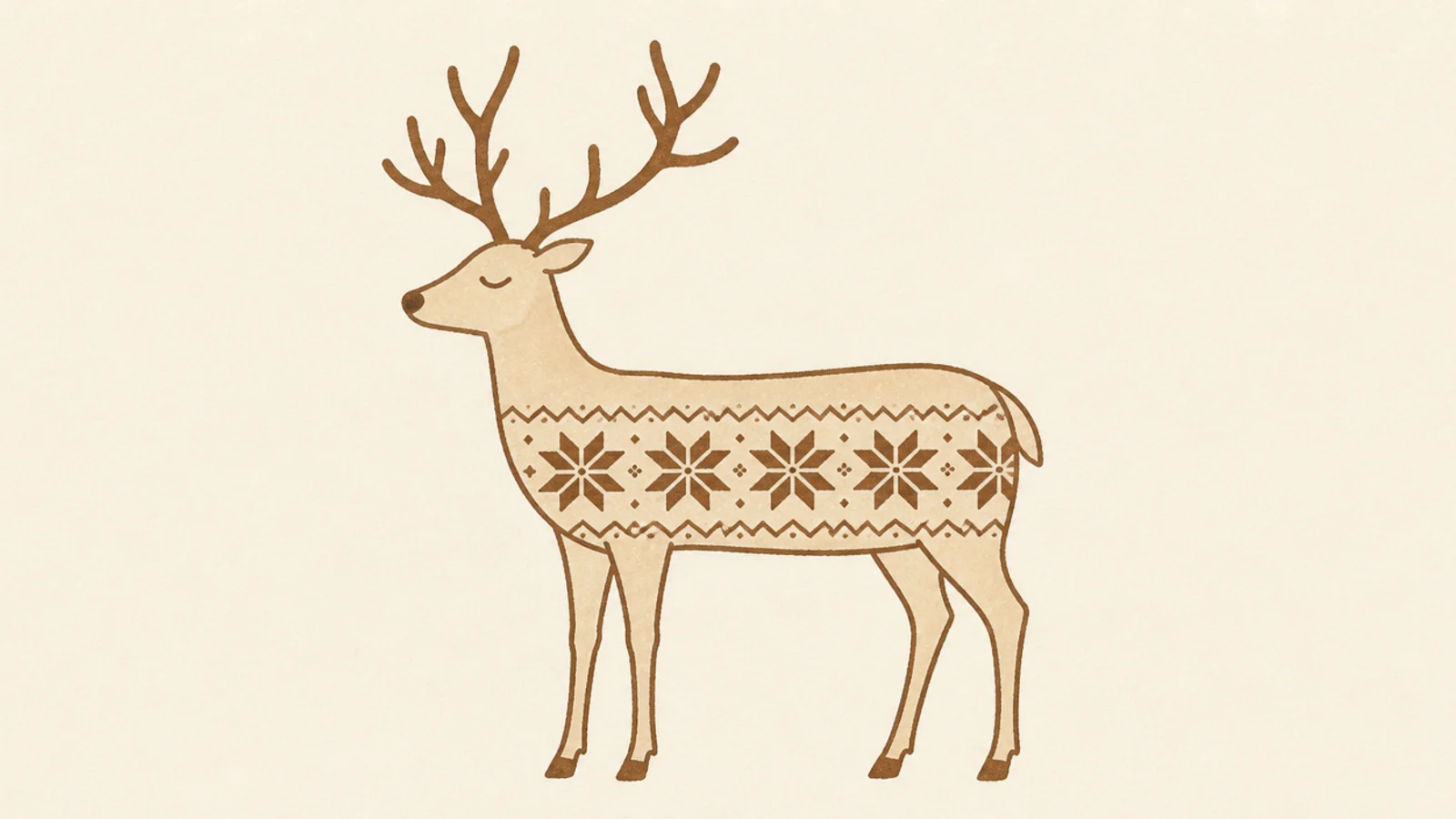
A Nordic-pattern deer fills the clean body shape with a simple geometric motif. The tidy pattern feels like a knitted sweater. It is a warm, decorative close-to-simple look.
Pro tipKeep the pattern to one simple repeating motif so it stays clean.
Step 1 draw a bold simple deer shape. Step 2 fill it with a light color. Step 3 add a clean row of geometric zigzags or snowflakes across the body.
AvoidDon’t mix many patterns; one tidy motif reads as Nordic.
25 Simple Finished Standing Buck
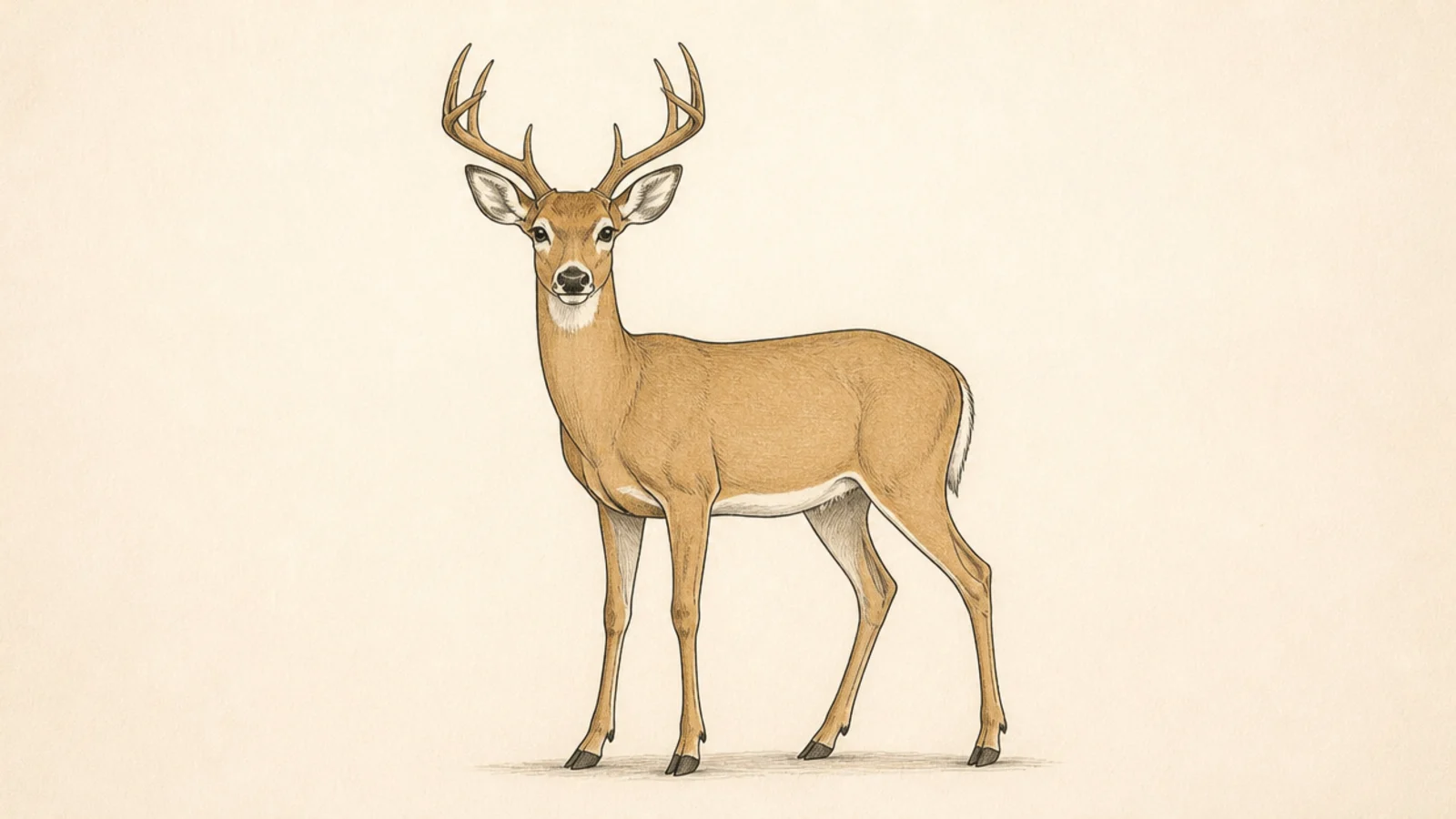
A finished simple buck adds just a touch of light shading to the clean shape. It shows how little rendering a simple deer needs to feel complete. It is a satisfying close to the list.
Pro tipAdd one soft belly shadow and a ground shadow; that is all it needs.
Step 1 draw a clean standing buck with antlers. Step 2 add one soft shadow under the belly and inside the legs. Step 3 add a small ground shadow and keep everything else clean.
AvoidDon’t over-render; a single light shadow keeps the simple look intact.