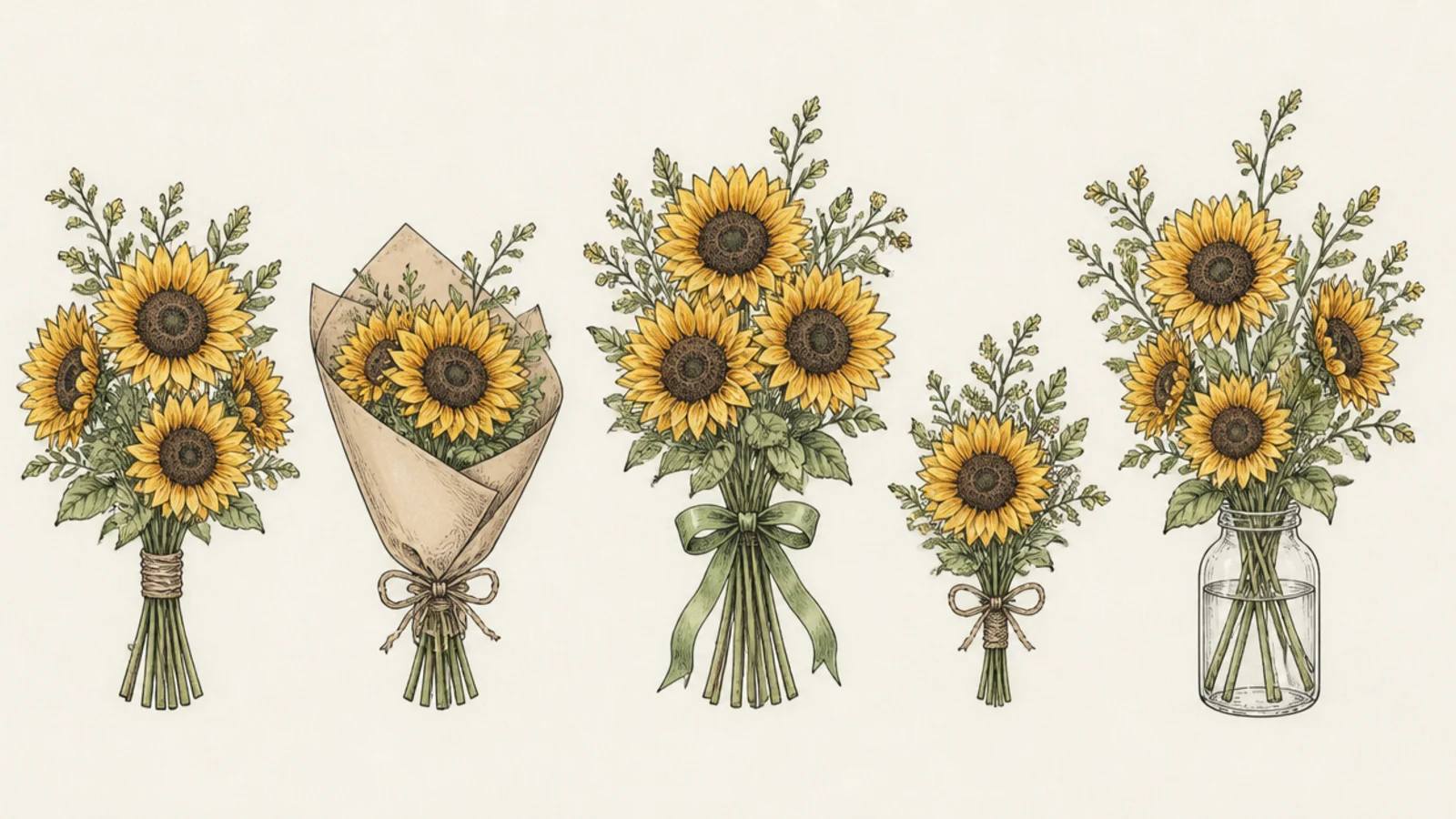
1 Simple Three-Stem Bunch
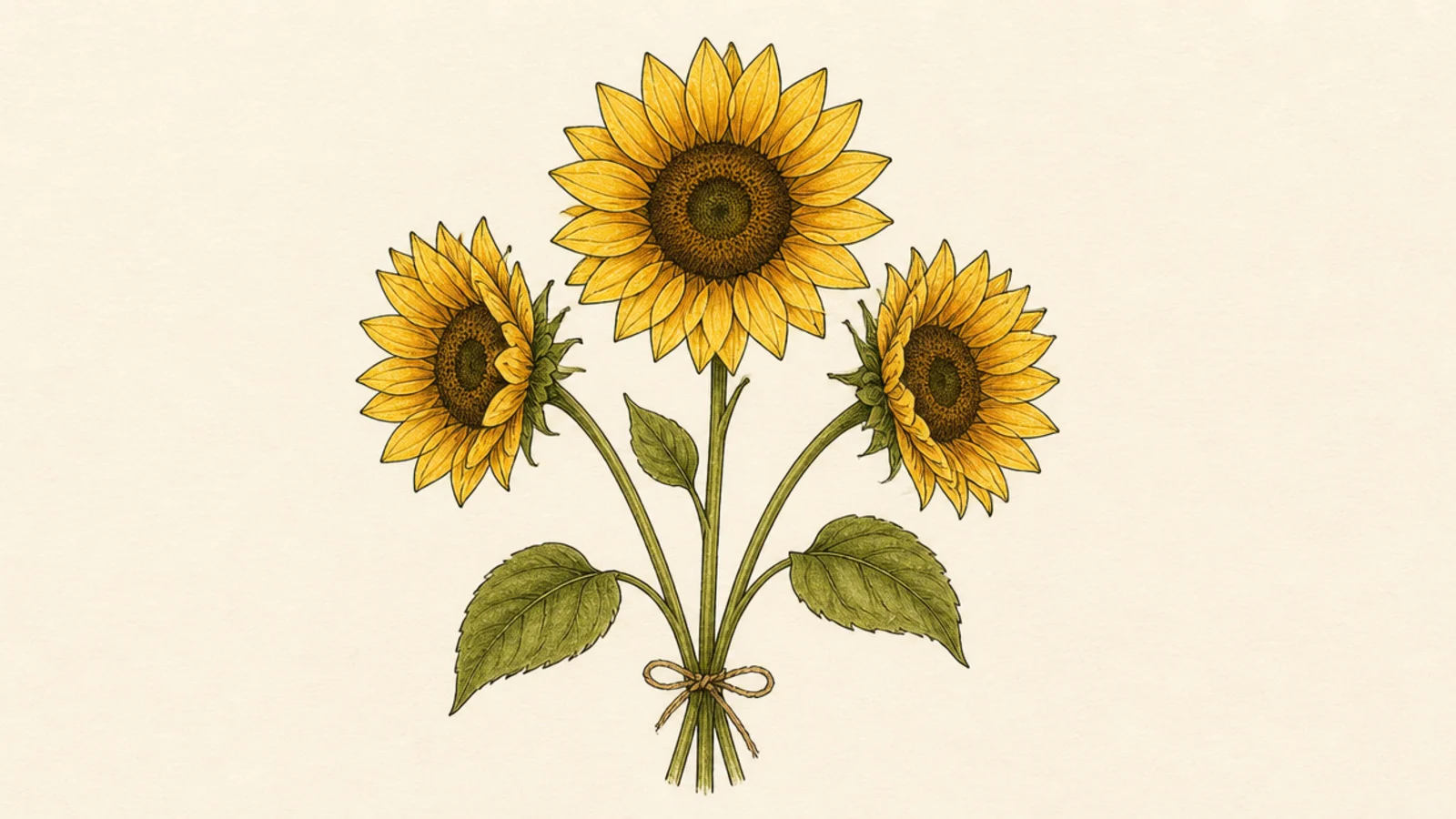
The starting point for every bouquet — three sunflowers gathered with no wrap. It teaches the two core moves, staggered heights and converging stems, with nothing else to manage.
Step 1 draw three sunflower heads, the middle one highest. Step 2 draw a stem from each angling in to cross at one low point. Step 3 add two or three leaves along the stems.
Let the outer two flowers tilt slightly outward so the bunch fans open.
Don’t set all three heads at the same height; stagger them for a natural shape.
2 Kraft Paper Wrapped Bouquet
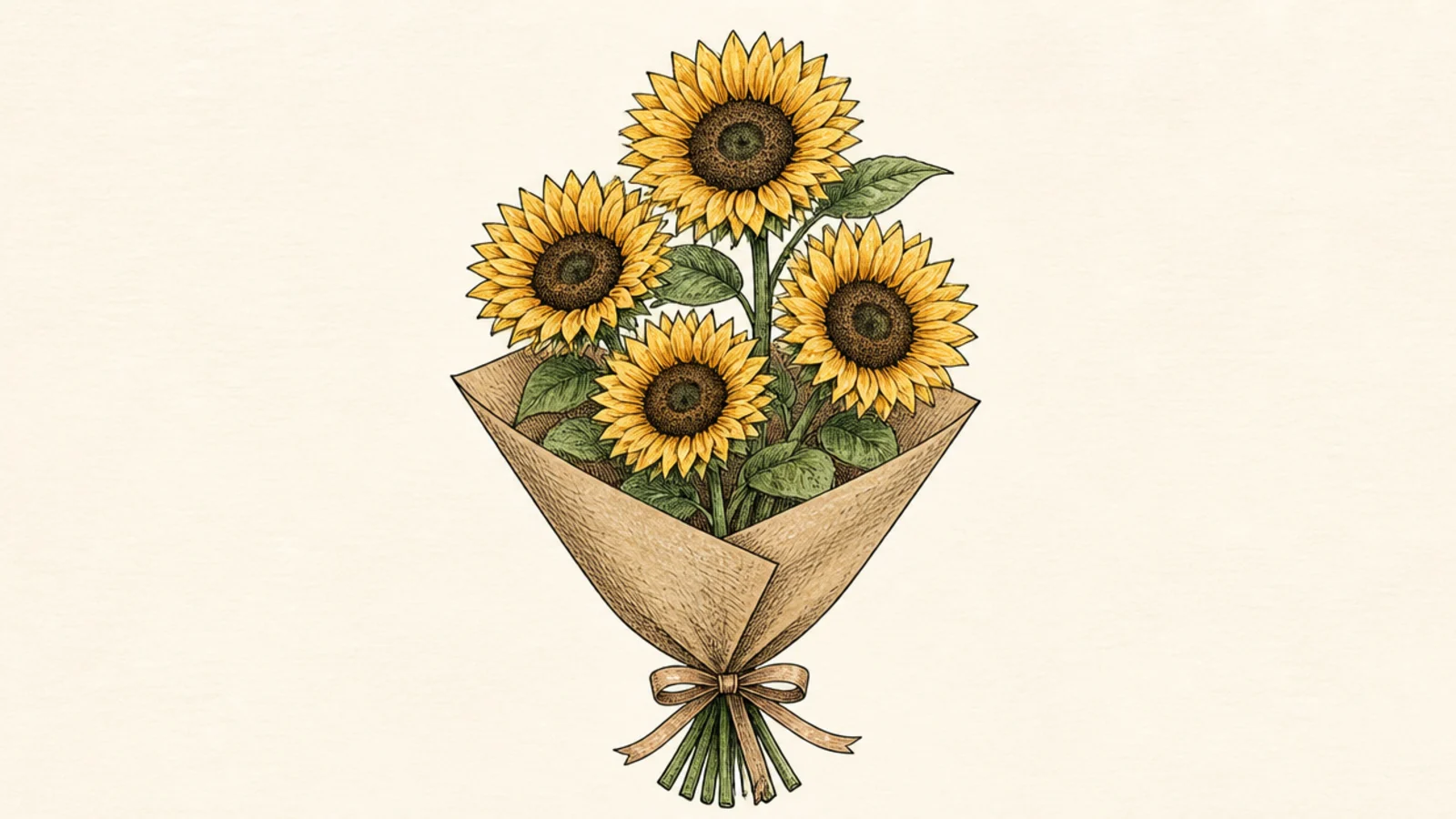
Step 1 draw a five-flower bunch with crossing stems. Step 2 draw a wide cone behind, narrow at the tie and flaring at the base. Step 3 add straight fold lines from the tie outward and a ribbon at the neck.
The classic florist look. A paper cone behind the stems turns a bunch into a gift. The fold lines are what make the paper read as paper, not a plain triangle.
AvoidDon’t make the wrap a flat triangle; fold lines give it life.
Pro tipFlare the paper wider than the flowers so it frames them.
3 Ribbon-Tied Bouquet
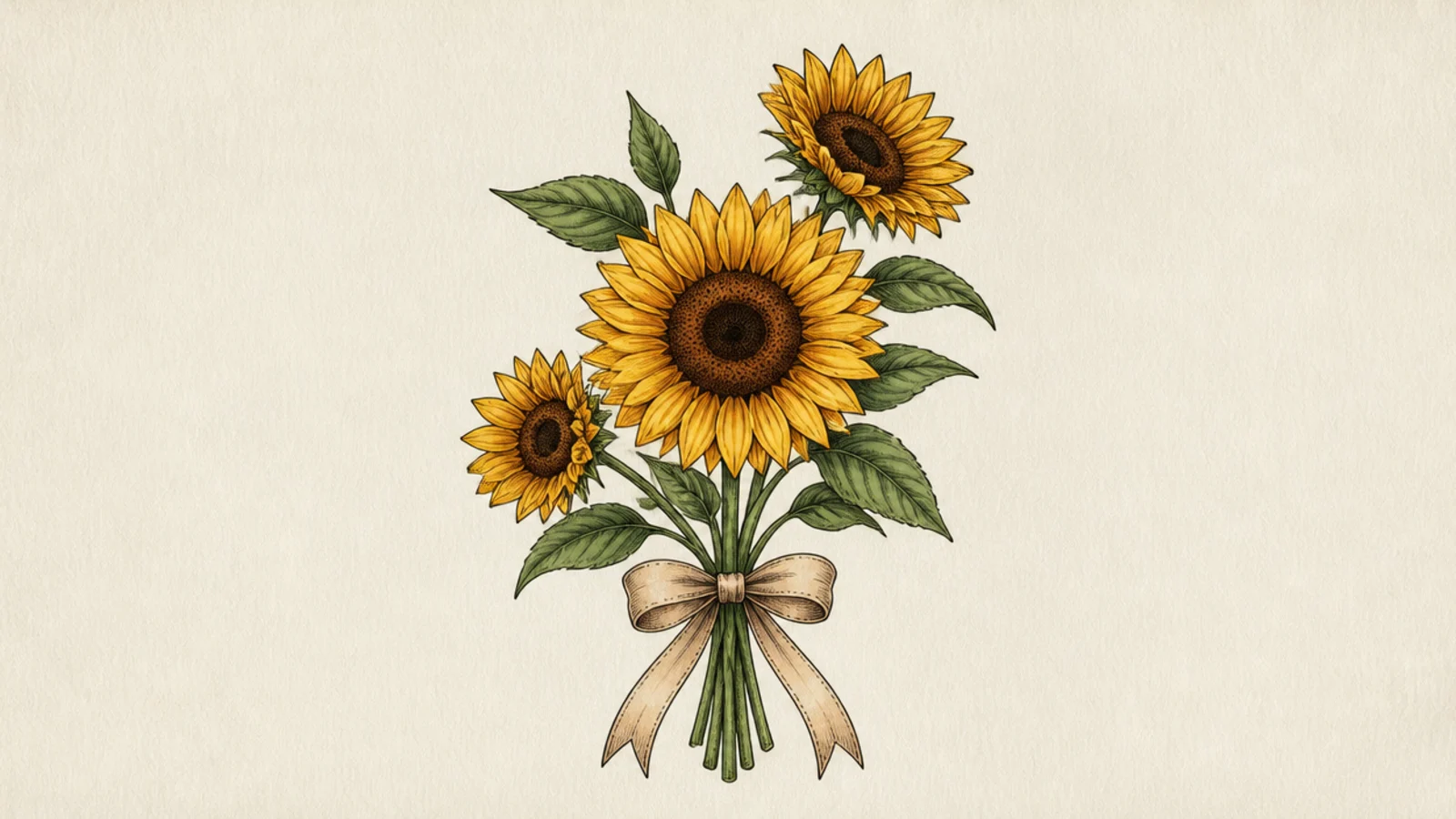
Step 1 draw a bunch with crossing stems. Step 2 add a bow at the crossing point — two loops and a knot. Step 3 add two curved ribbon tails hanging down with notched ends.
A bow at the tie point is the fastest way to make a bunch feel finished and given. The two trailing ribbon tails add movement below the stems.
AvoidDon’t cover the whole stem with the bow; keep it at the tie point.
Pro tipLet the ribbon tails curve, not hang straight, so they look soft.
4 Round Posy Bouquet
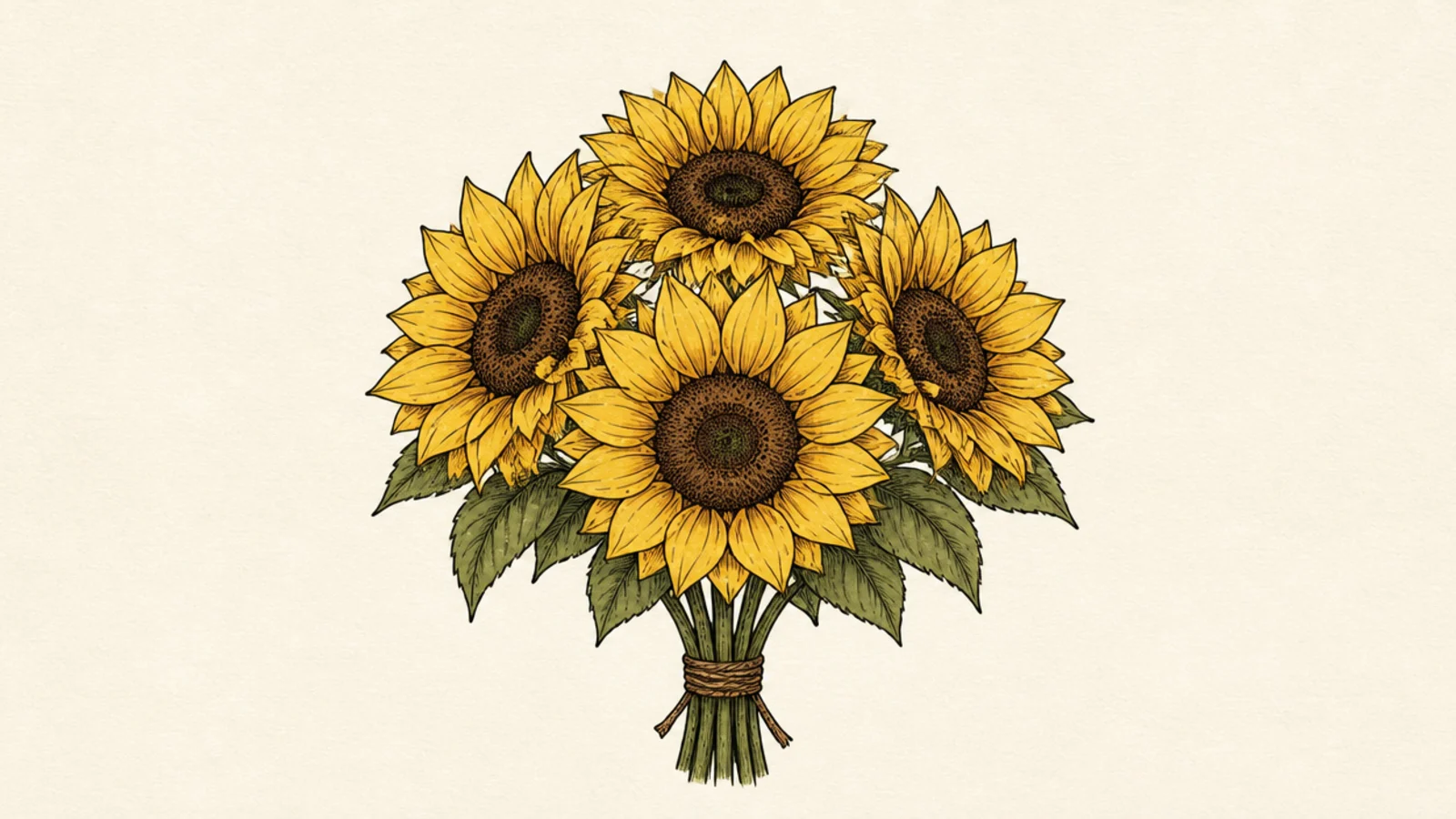
Step 1 sketch a dome outline. Step 2 fill it with five to seven sunflower heads packed close, edges overlapping. Step 3 gather the short stems into a tight tied bundle below.
A posy packs the blooms into a tight dome with heads almost touching. The rounded outline is deliberate and modern, and it hides the stems below.
AvoidDon’t leave big gaps between heads; a posy is tight and full.
Pro tipKeep the top edge a smooth curve so the dome reads clearly.
5 Bouquet With Baby's Breath
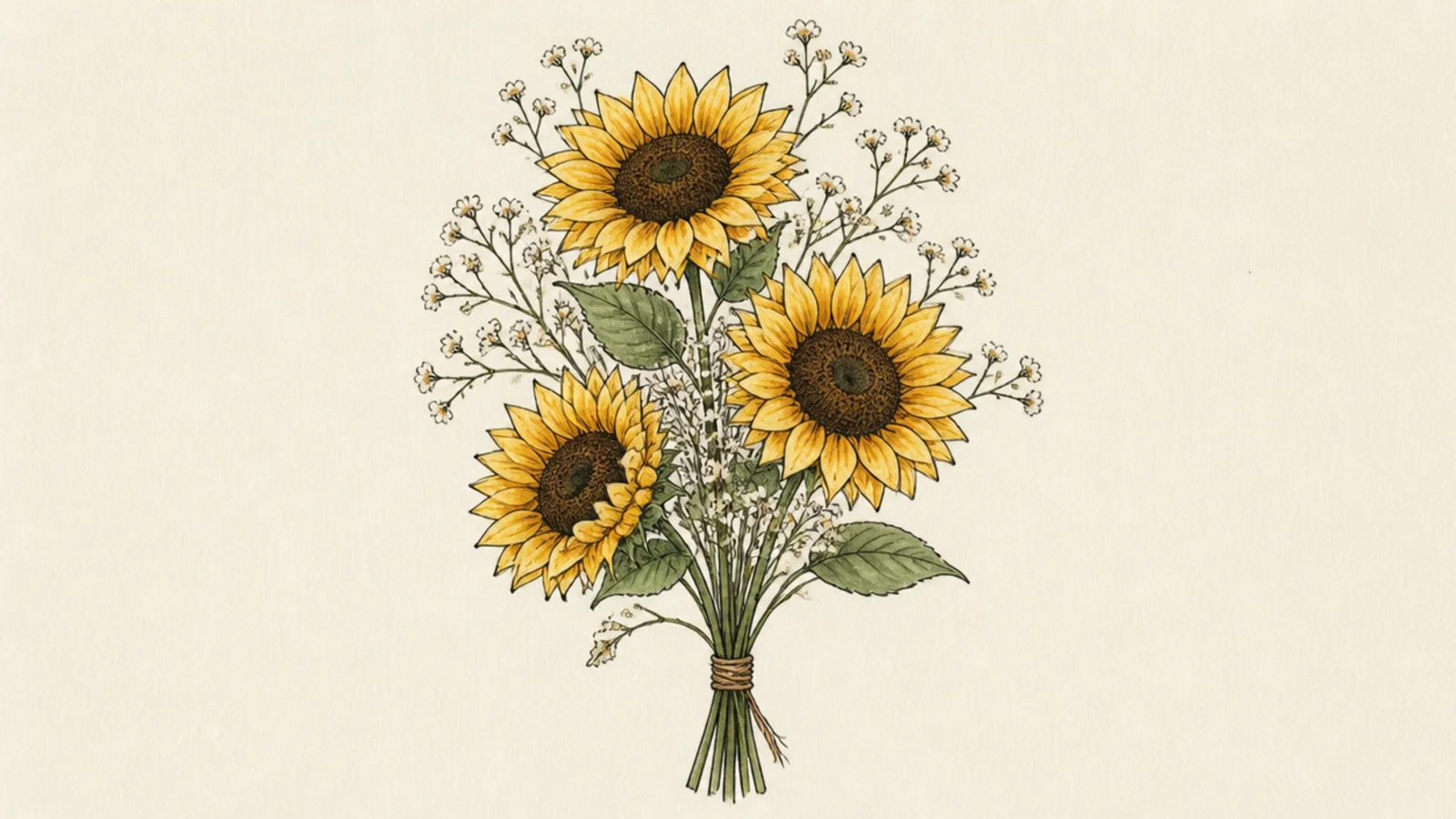
Step 1 draw a three or five sunflower bunch. Step 2 add thin sprigs rising between and above them. Step 3 dot tiny clusters of little circles along the sprigs.
Clouds of tiny filler flowers between the sunflowers add softness and a florist finish. The scale contrast — big blooms, tiny dots — is what makes it pretty.
AvoidDon’t make the filler dots too big; tiny is what sells baby’s breath.
Pro tipLet some sprigs rise taller than the sunflowers for an airy top.
6 Sunflower and Rose Mix
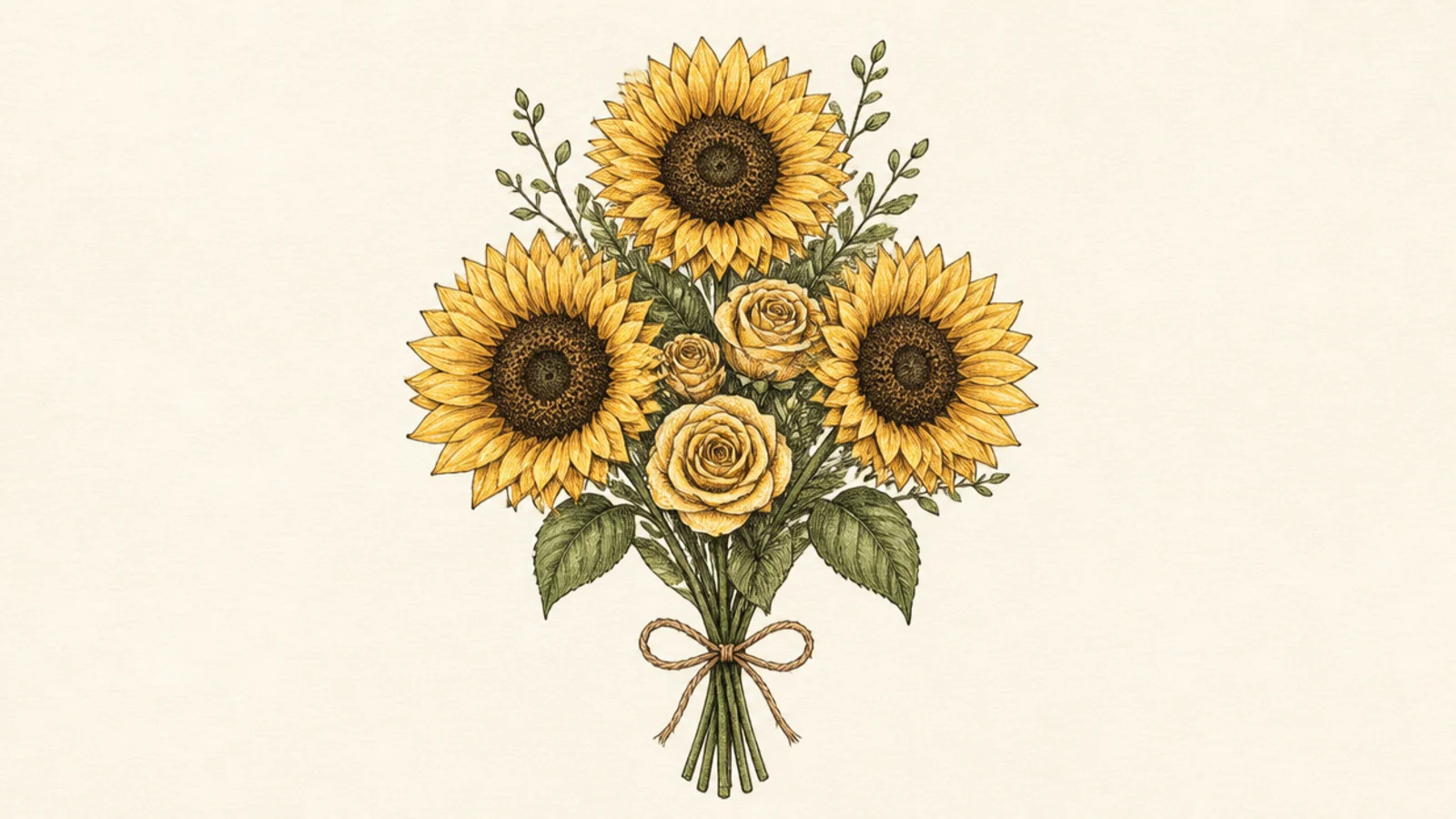
Mixing two flower shapes makes a richer bouquet. Round spiral roses tuck between the sunflowers and fill the mid-layer with a different texture.
Step 1 place three sunflowers as the anchors. Step 2 draw two or three spiral roses in the gaps, slightly lower. Step 3 add leaves and gather the stems.
Keep the sunflowers as the largest blooms so they lead the eye.
Don’t make the roses the same size as the sunflowers; vary the scale.
7 Tall Vertical Bouquet
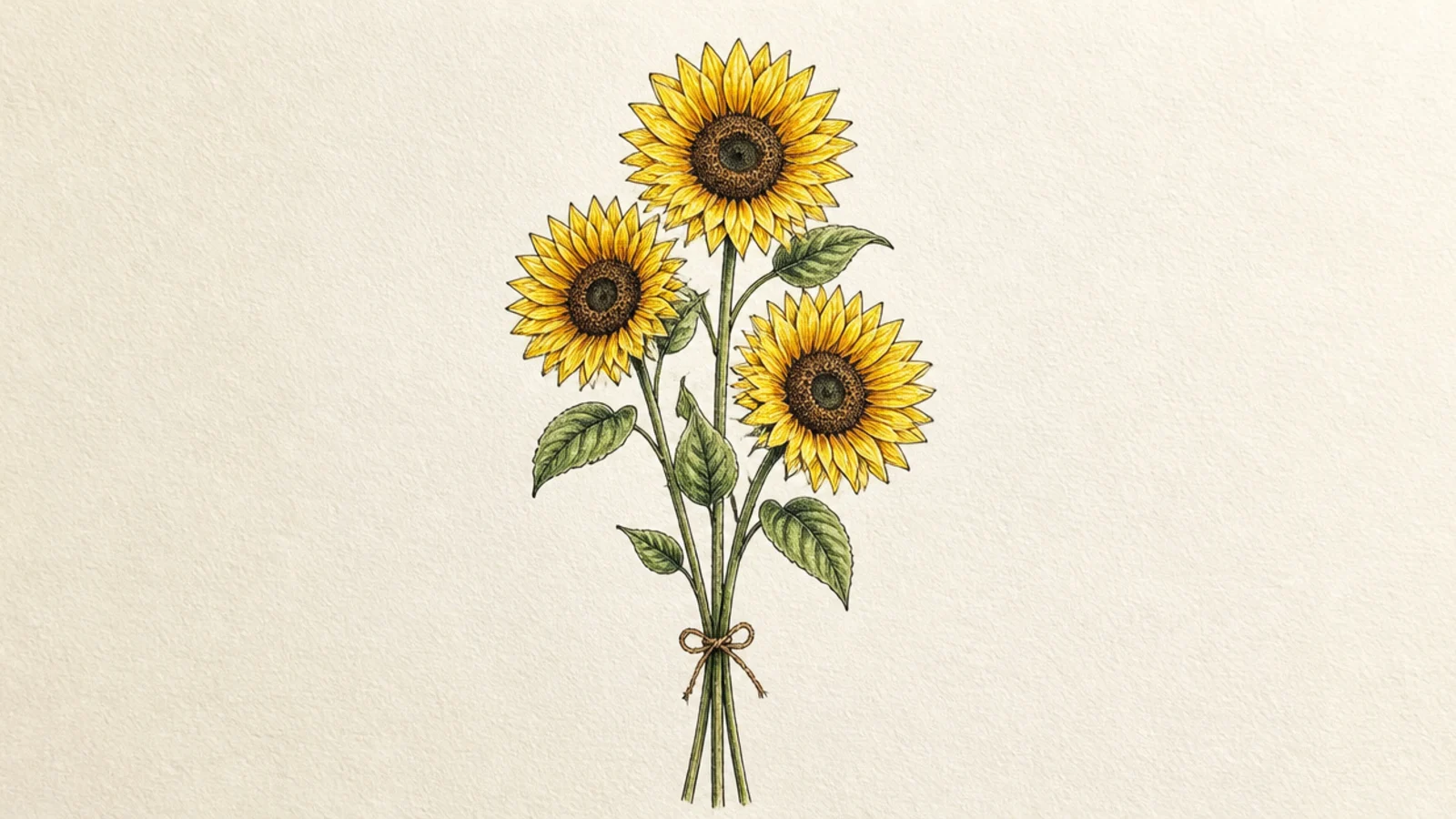
Step 1 draw three sunflowers near the top at staggered heights. Step 2 extend long stems downward, kept close together. Step 3 add a few long leaves and a tie near the bottom.
A long-stemmed vertical bunch suits a tall vase or a wrapped presentation bouquet. The elongated stems give it an elegant, reaching shape.
AvoidDon’t splay the long stems wide; keep them gathered and upright.
Pro tipKeep the stems nearly parallel below the tie for a clean line.
8 Bouquet in a Kraft Cone
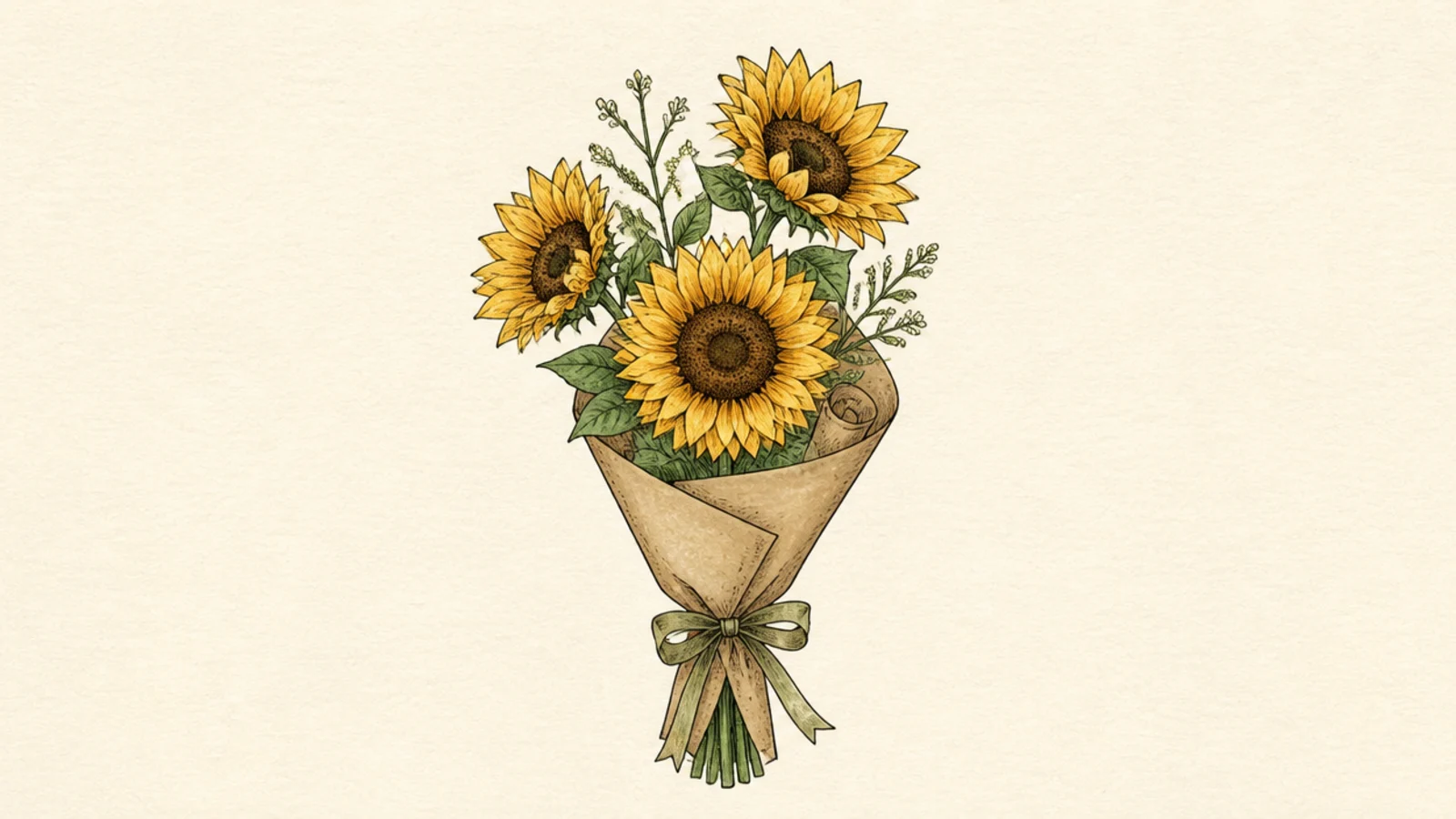
A rolled paper cone holds the flowers like an ice-cream cone of blooms — a popular market-stall look. The spiral top edge of the roll is the telling detail.
Step 1 draw a cone that spirals at the top opening. Step 2 set three to five sunflower heads emerging from the opening. Step 3 add a ribbon around the cone and short leaves peeking out.
Draw the cone opening as an oval so it looks like it holds the flowers.
Don’t draw a flat triangle; the spiral roll makes it a real cone.
9 Field-Gathered Wild Bunch
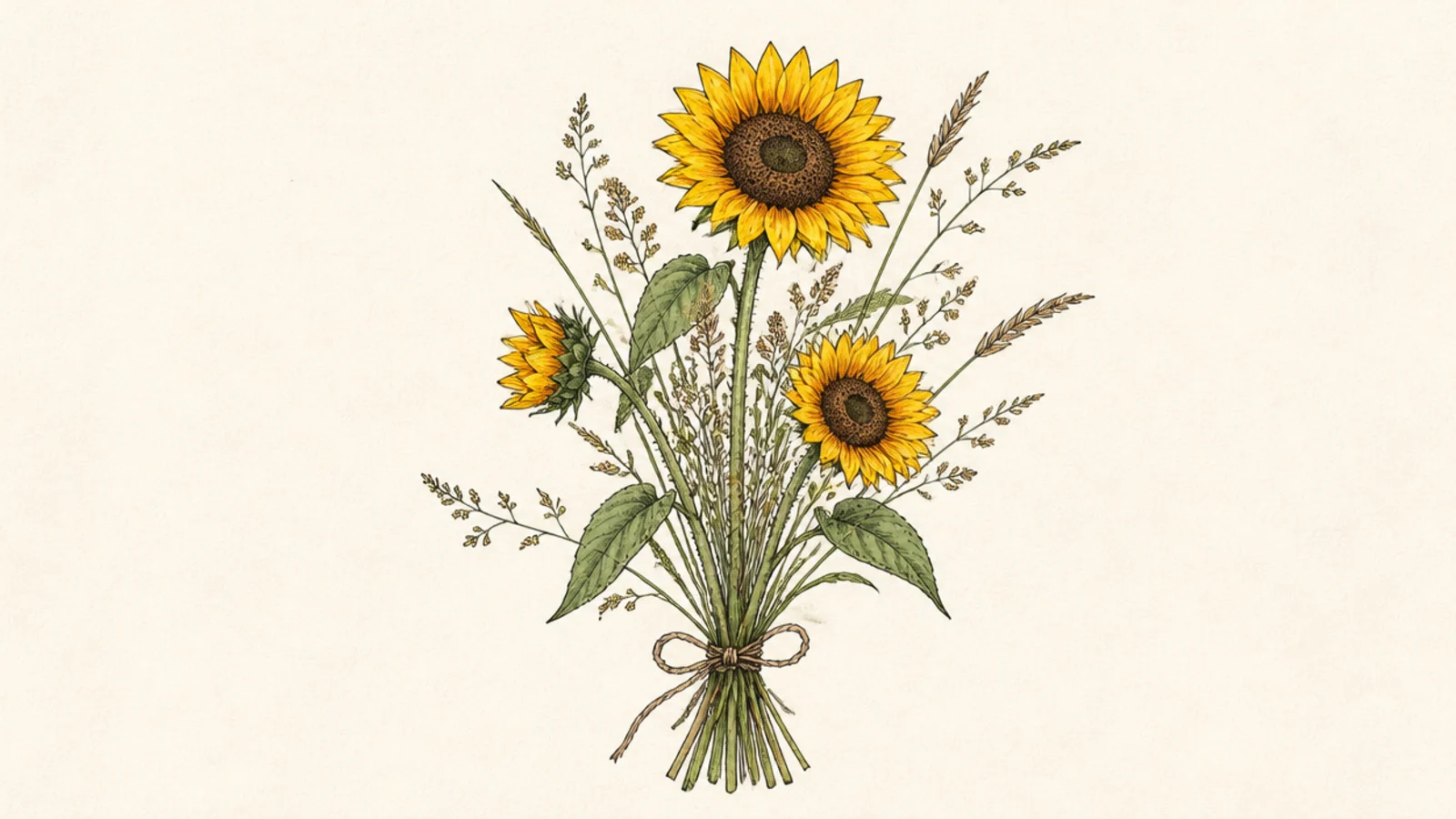
Step 1 draw three sunflowers at very different heights. Step 2 add tall thin grasses and seed sprigs poking out at odd angles. Step 3 gather with a loose twine tie.
A loose, just-picked bunch mixes sunflowers with wild grasses and seed heads for a relaxed, natural feel. Irregularity is the point here.
AvoidDon’t make it symmetrical; wildness comes from irregular heights.
Pro tipLet a few elements stick out unevenly; wild bunches aren’t tidy.
10 Bouquet With Eucalyptus
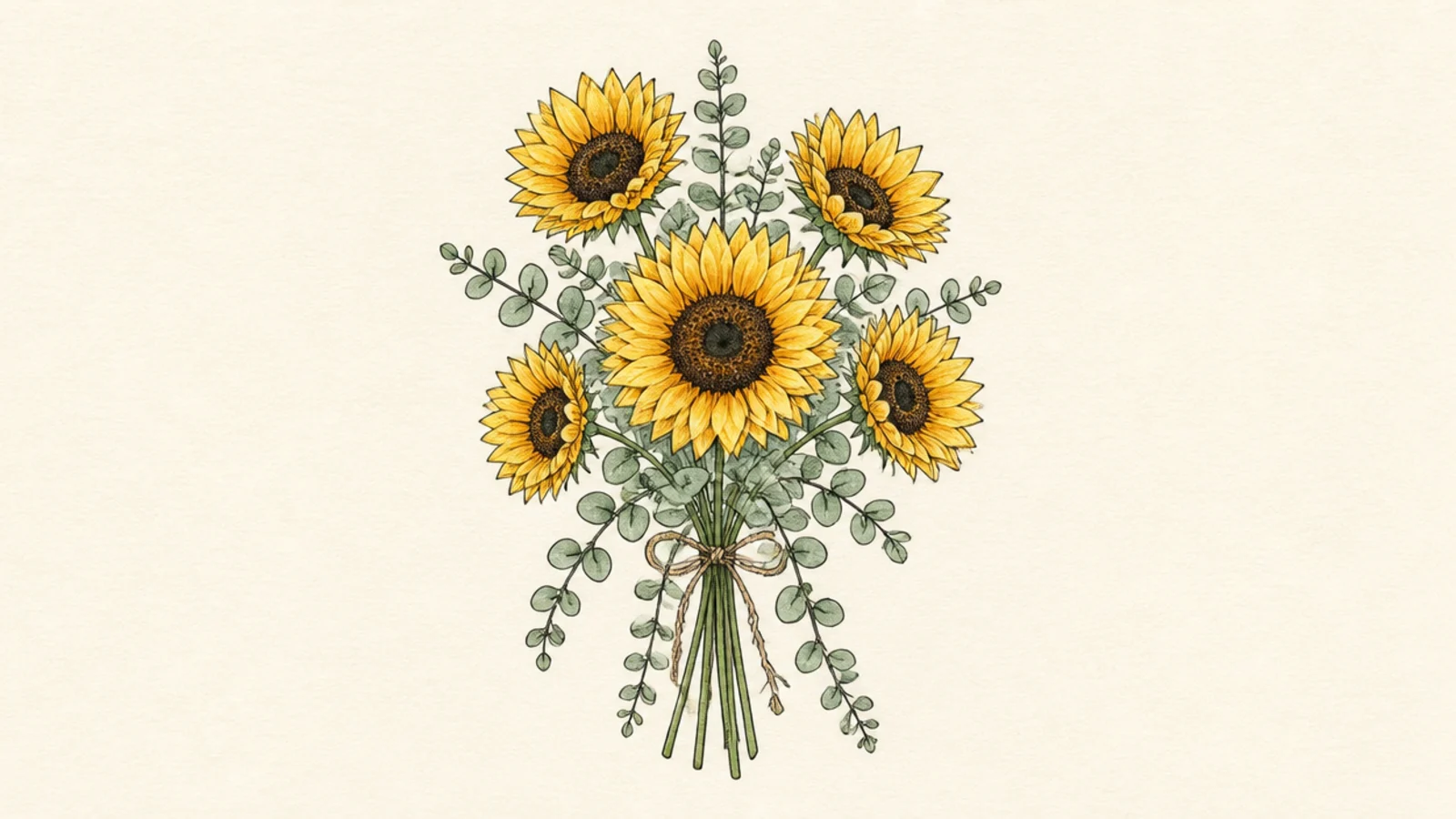
Trailing eucalyptus adds a modern, drapey greenery that spills below the tie. The round paired leaves are quick to draw and very on-trend.
Step 1 draw a five-sunflower bunch. Step 2 add stems of small round paired leaves rising among them and trailing down at the sides. Step 3 tie and let the greenery drape past the wrap.
Draw eucalyptus leaves in mirrored pairs along a thin stem.
Don’t crowd out the sunflowers; greenery frames, it doesn’t dominate.
11 Single Focal Bouquet
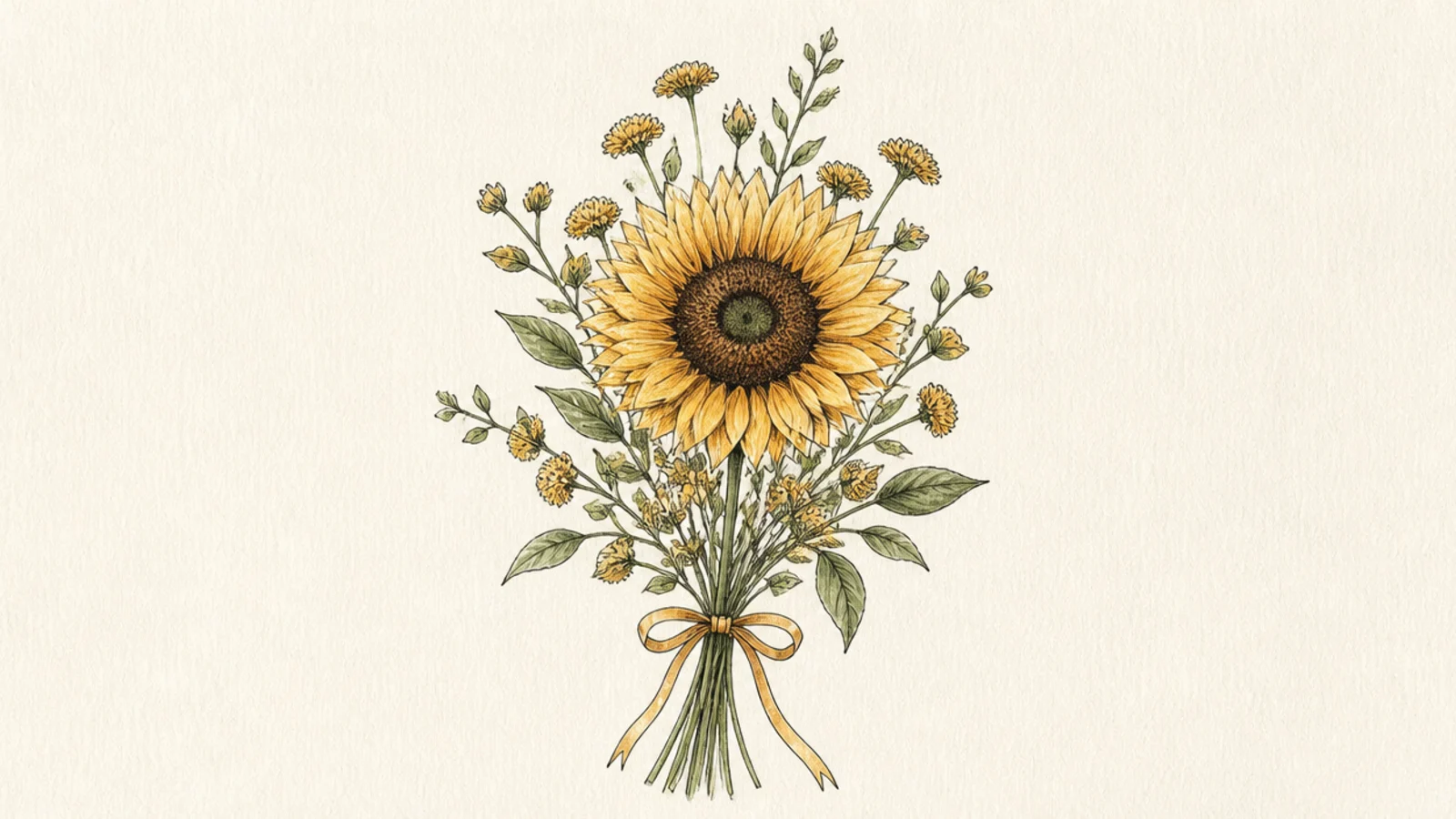
Step 1 draw one large sunflower slightly off-center. Step 2 ring it with small round filler flowers and buds. Step 3 gather short stems and add a slim ribbon.
One big sunflower as the star, ringed by small fillers, is a clean minimalist bouquet. The single focal point makes it calm and striking.
AvoidDon’t add a second large bloom; one focal flower is the whole idea.
Pro tipMake the focal sunflower clearly the biggest element by far.
12 Bouquet in a Brown Vase
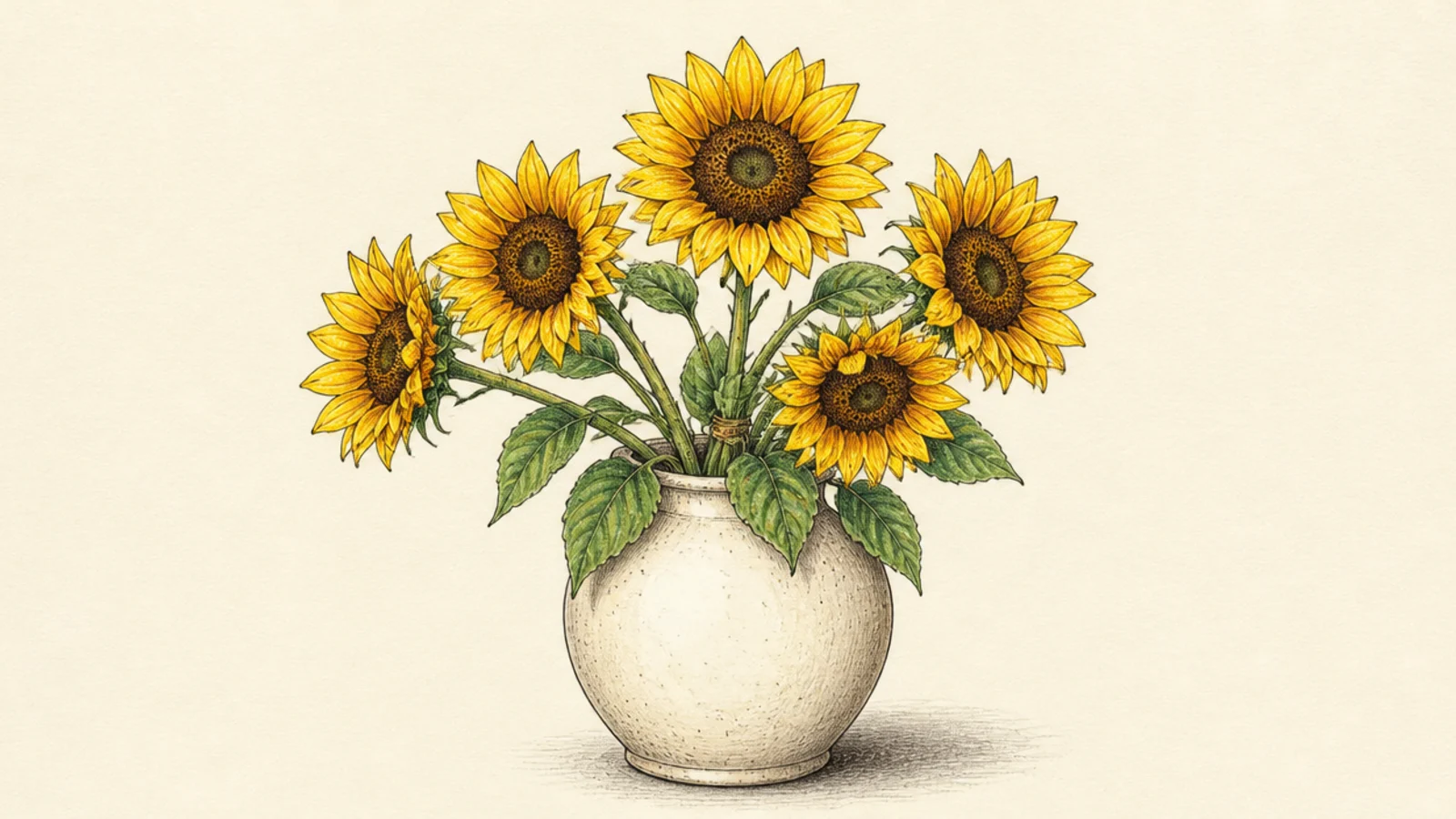
Setting the bunch in a vase turns a bouquet into a still life. The vase anchors the flowers and lets you fan them wider at the top.
Step 1 draw a rounded vase. Step 2 fan five to seven sunflowers out of the mouth at varied heights. Step 3 add leaves spilling over the rim and a shadow under the vase.
Fan the outer flowers well past the vase width for a lush spill.
Don’t line the flowers up straight; fan them for a full arrangement.
13 Heart-Shaped Arrangement
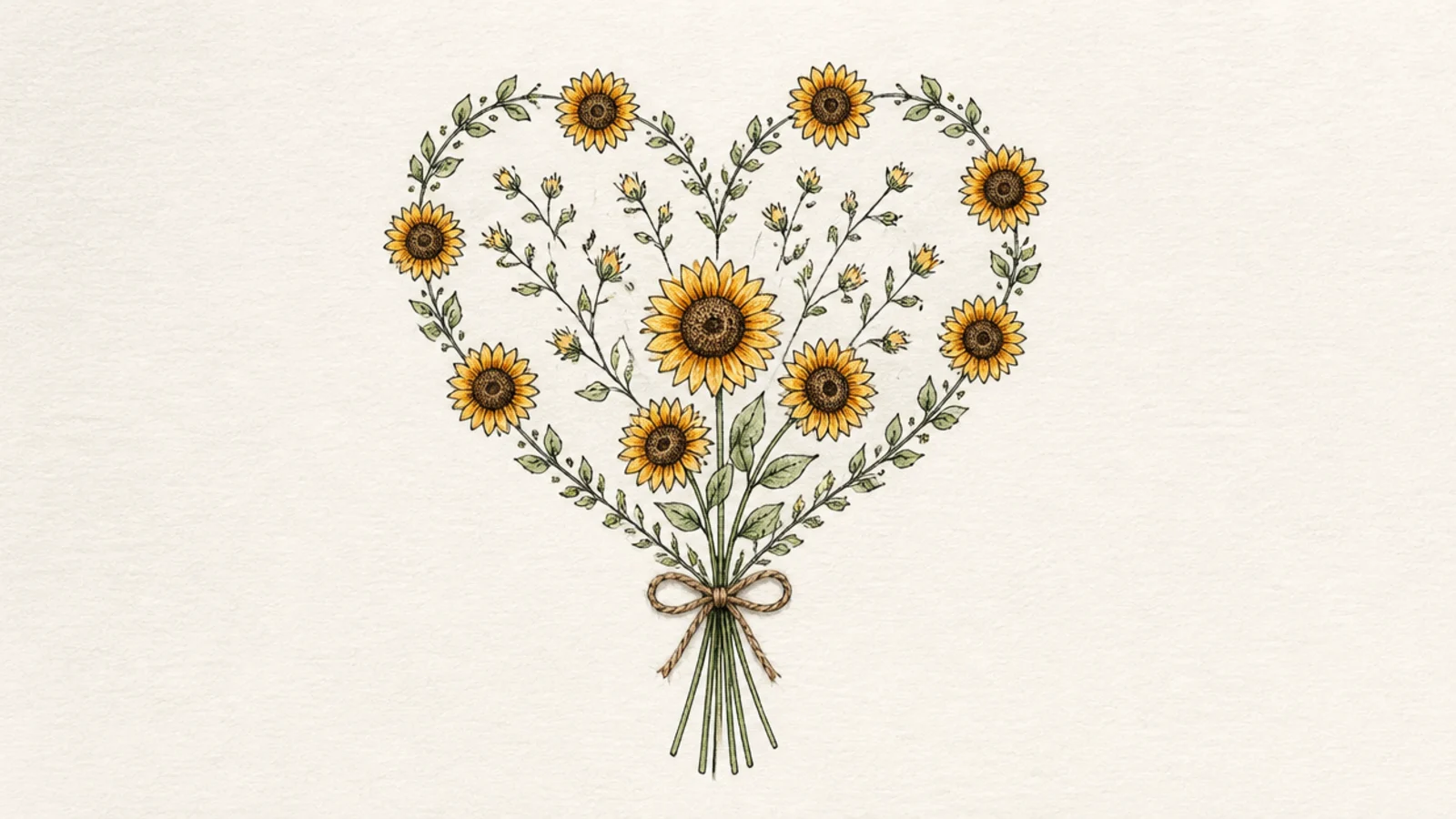
Step 1 lightly sketch a heart outline. Step 2 place small sunflowers evenly along the line. Step 3 fill the inner gaps with tiny buds and leaves, then erase the guide.
Arranging small blooms along a heart outline makes a sweet card or gift motif. The recognizable shape does the emotional work.
AvoidDon’t let one big flower break the outline; consistency keeps the shape.
Pro tipKeep every bloom about the same small size so the heart stays clear.
14 Full Wrapped Gift Bouquet
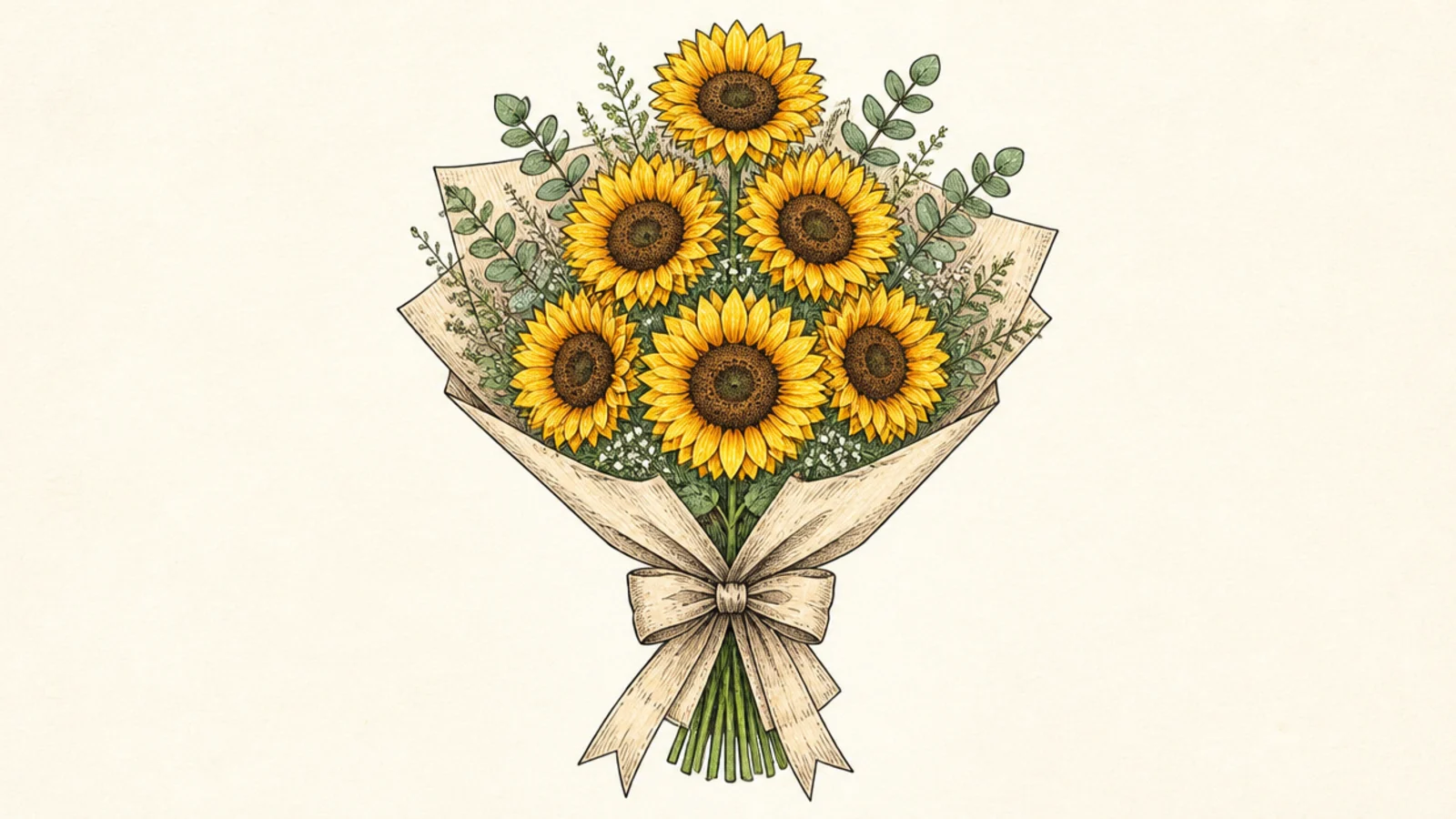
Step 1 draw seven sunflowers in a rounded fan. Step 2 tuck fillers and eucalyptus between them. Step 3 wrap with a folded paper cone and finish with a big bow and tails.
The showpiece that combines everything — many blooms, fillers, greenery, paper wrap, and ribbon. It is the payoff for practicing all the earlier pieces.
AvoidDon’t add the wrap first; you’ll box yourself in. Flowers, then paper.
Pro tipBuild in layers — blooms, then fillers, then wrap, then ribbon last.
15 Minimal Line Bouquet
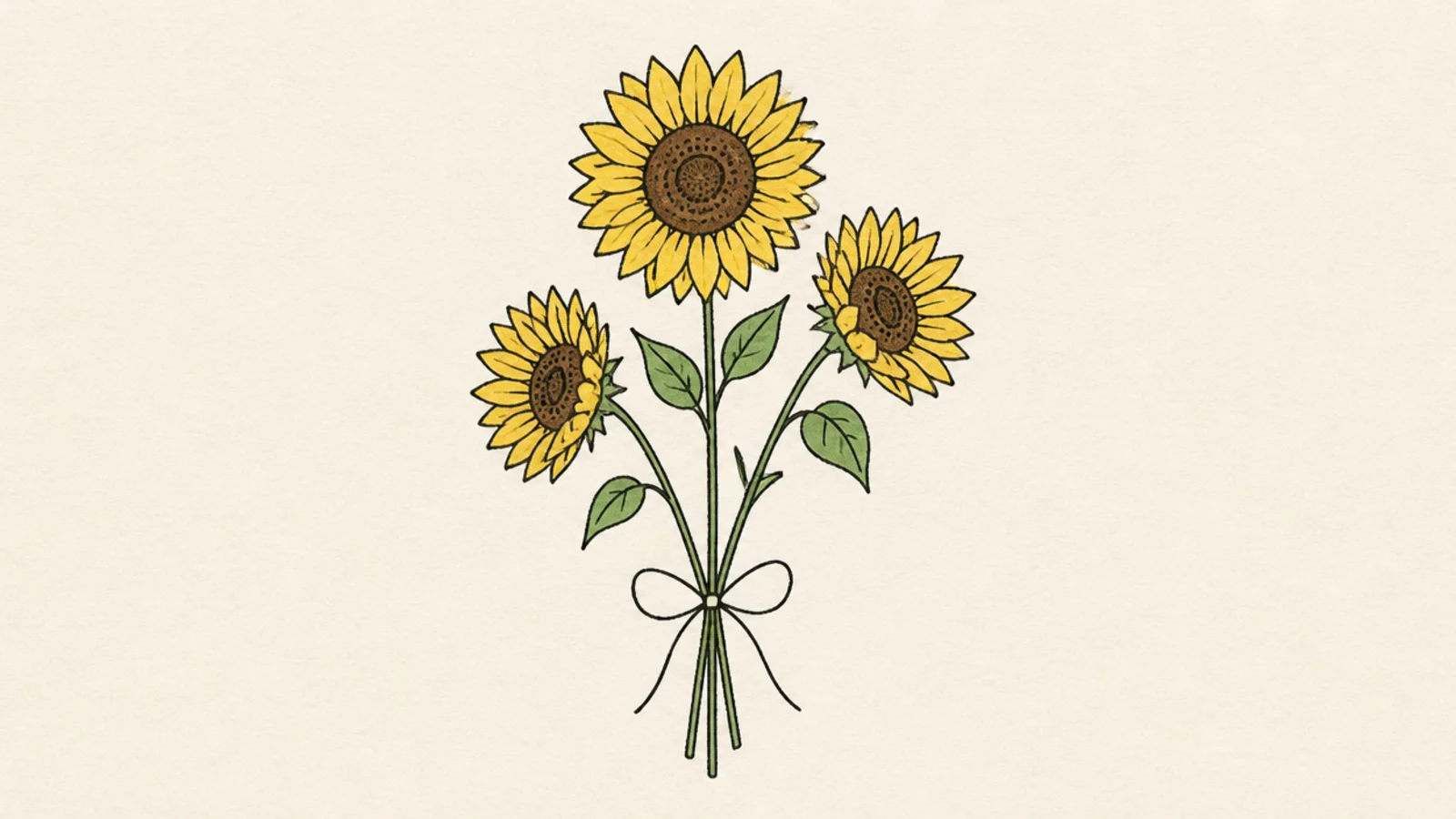
A pure outline bouquet in one clean weight — no shading, no fill. It suits logos, tattoos, and modern cards where simplicity is the style.
Step 1 draw three simple sunflower outlines. Step 2 draw the crossing stems in the same line weight. Step 3 add a single-line bow, keeping everything open and unshaded.
Use one consistent line weight throughout for a clean graphic look.
Don’t add shading or fill; the restraint is the whole appeal.