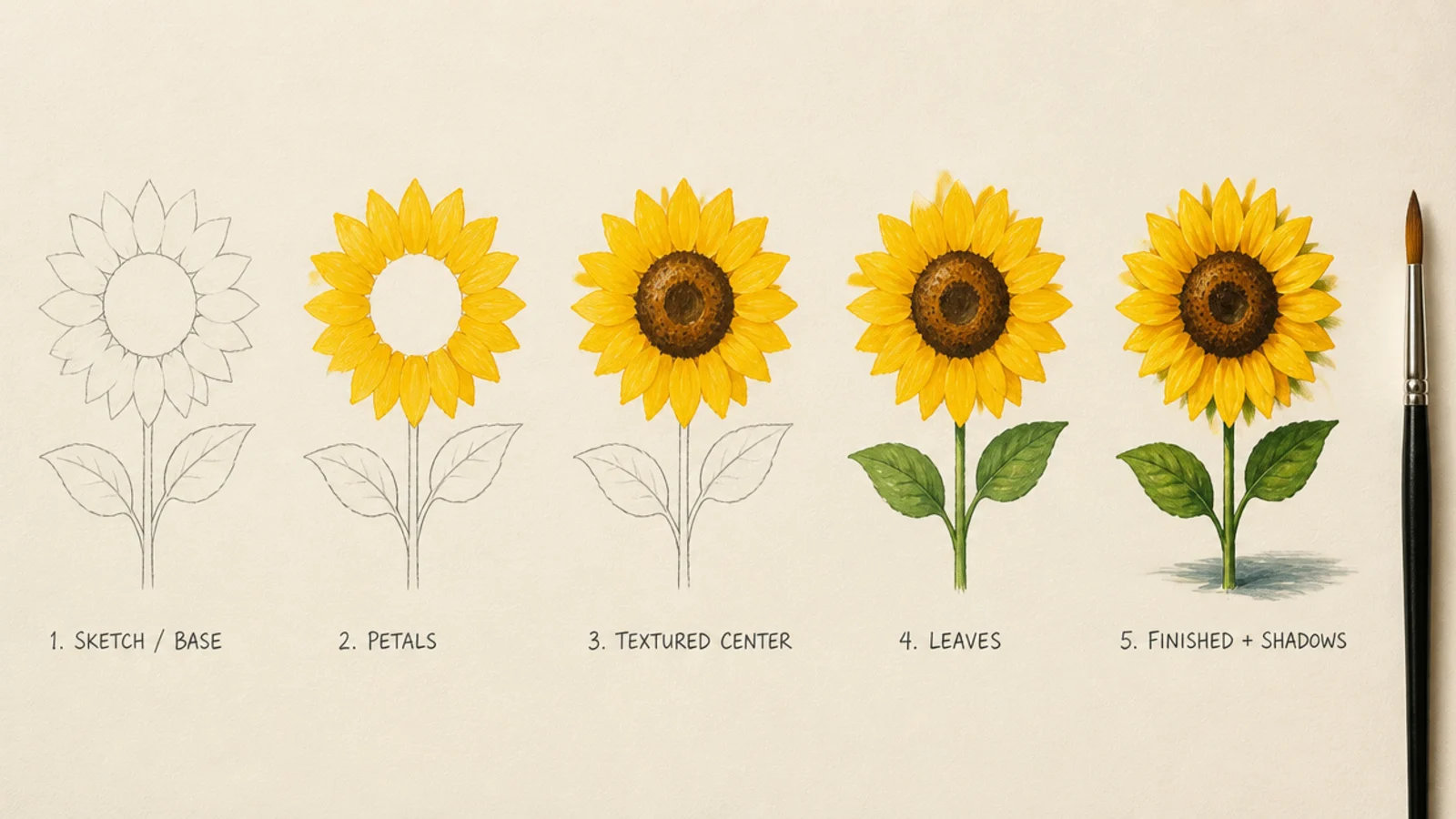
Painting a sunflower is far easier than it looks once you follow the right order. Work from the big shapes to the small details — block the base, build the petals, texture the center, add leaves, then finish with shadows and highlights. That sequence keeps you from fussing over detail before the foundation is set. This guide walks you through 5 simple steps that work in watercolor, acrylic, or gouache, plus a few variations to try once you have the basic bloom down.
The single most important rule in painting is to work from big to small and, in most mediums, light to dark. Establish the largest shapes and lightest colors first, then layer smaller details and darker values on top. If you start with tiny petal details or dark shadows too early, you box yourself in. This sunflower method is built around that order so each step sets up the next.
Before you start, keep your setup simple — a warm yellow, a brown or burnt orange, a green, and a dark brown or purple for shadows will paint the whole flower. You do not need a huge palette. Have a reference image nearby for the petal shapes and the seed texture, and keep your brush moving in the direction the form goes.
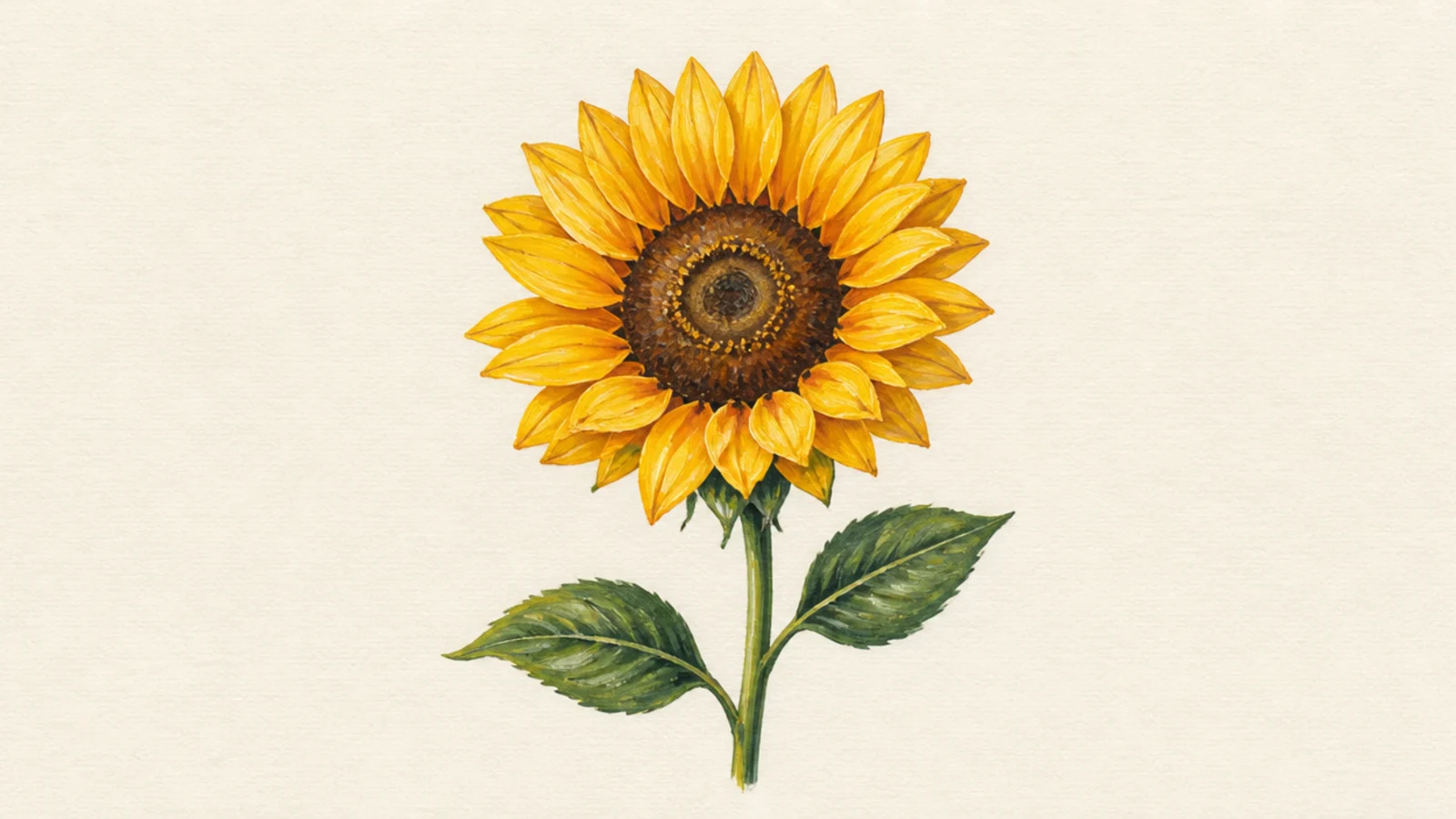
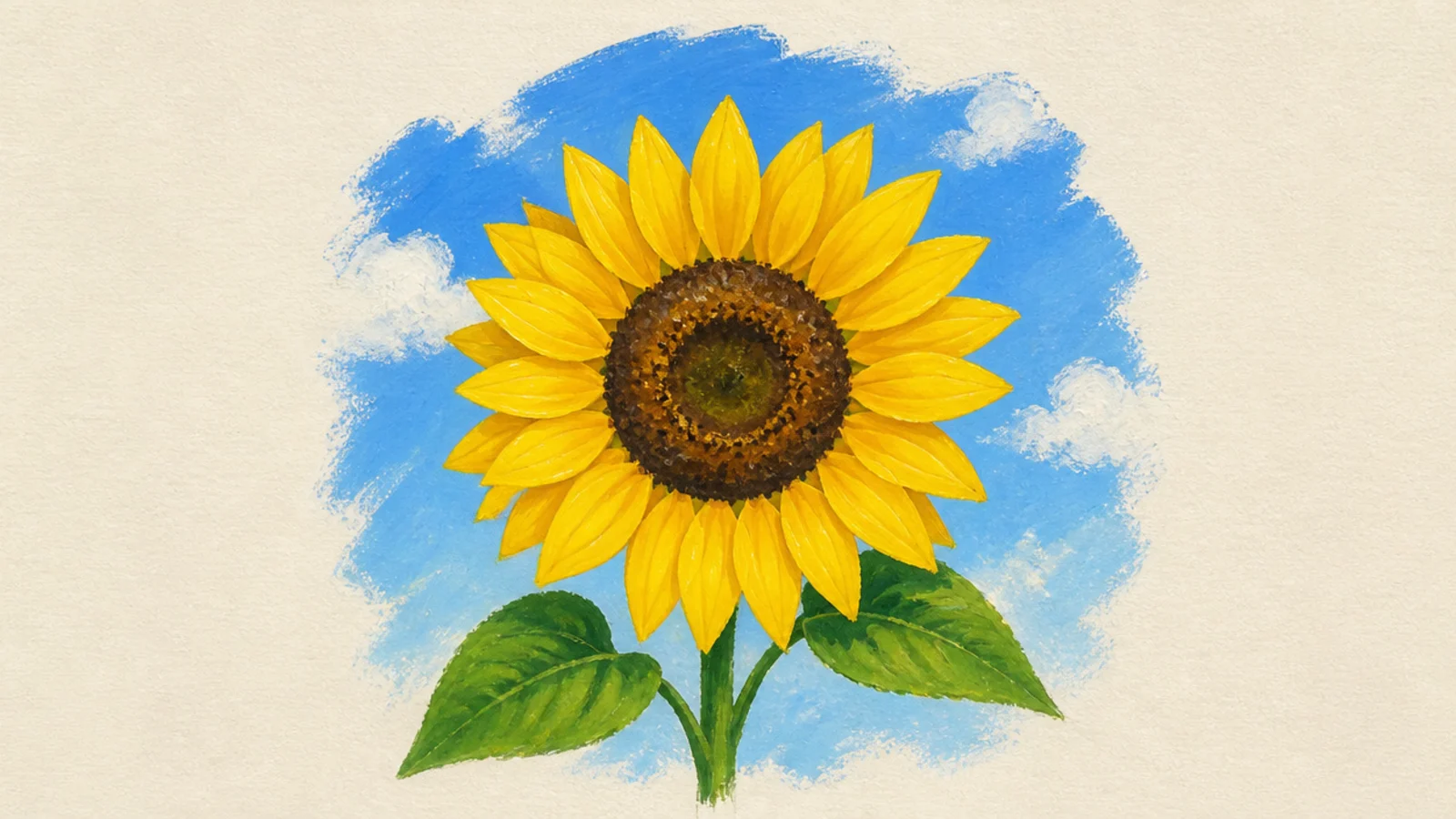
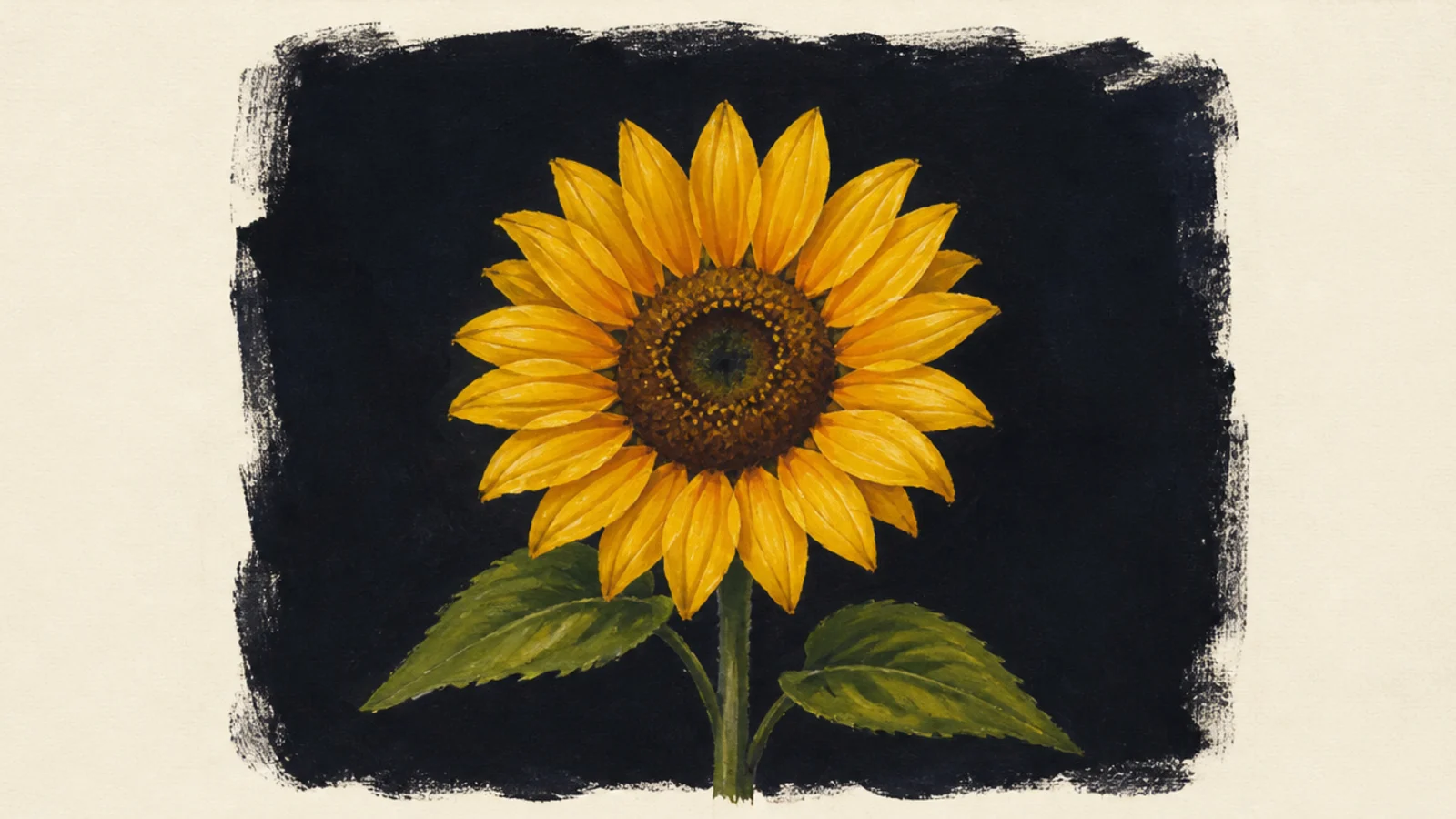
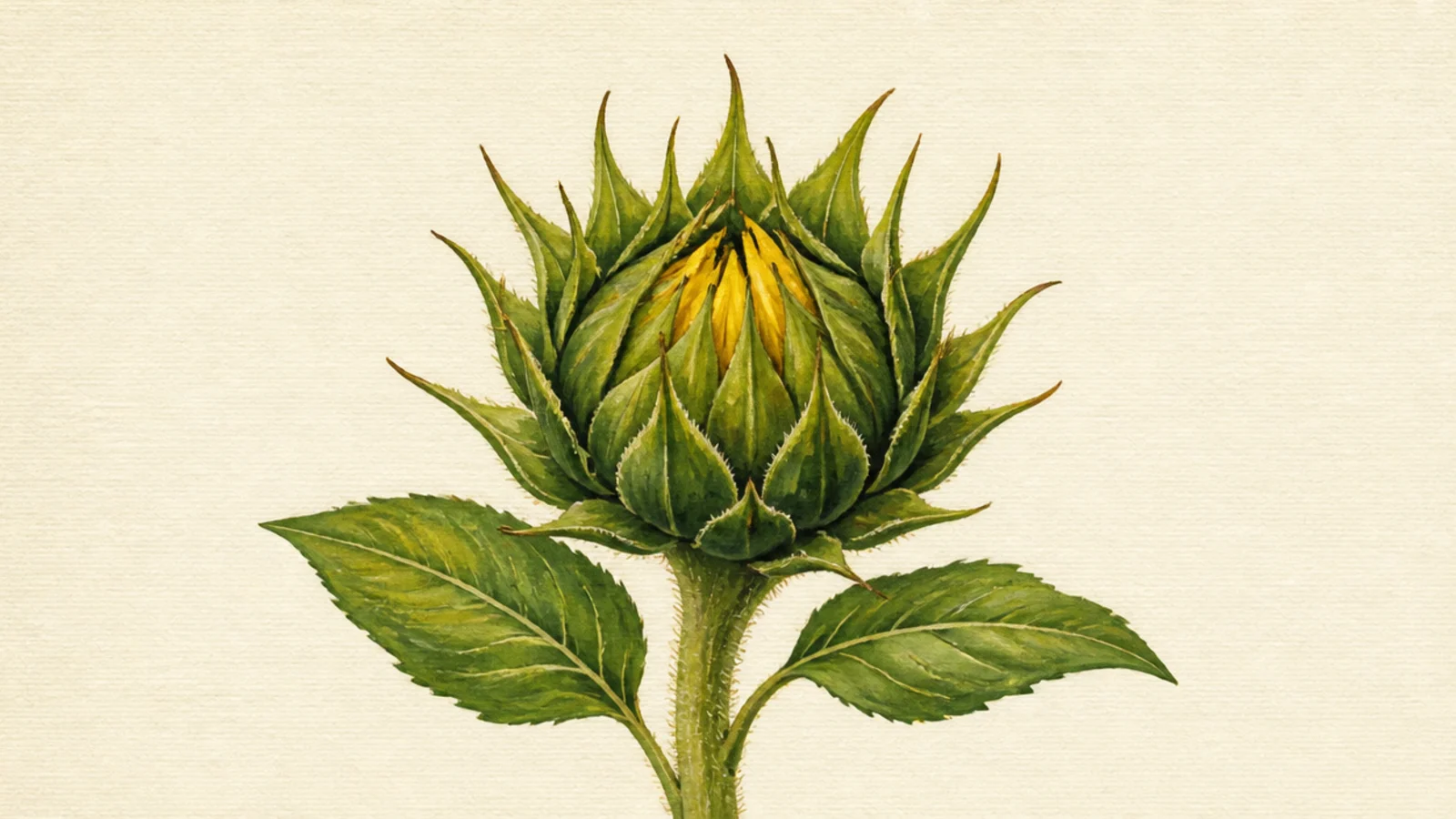
These five steps take you from a blank page to a finished bloom, and the bonus variations after show how to adapt the same method for different looks — a bright cheerful version, a moody one, a bud, and more. Follow the steps once as written, then make it yours.
Step by step
Sketch the shape and block the base. Lightly pencil a circle for the seed center and a larger ring to mark where the petal tips will reach. Then block in the base colors flatly — a warm yellow ring where the petals go and a brown circle for the center. Don’t worry about detail yet; you just want the big shapes and lightest colors down as a foundation.
Build the petals base to tip. Paint individual petals over the yellow ring, each one a pointed oval running from the center outward. Load your brush and stroke from the base toward the tip so each petal follows its own direction. Overlap them slightly and vary their angles a little so the ring looks natural, not like a gear. Keep them the light yellow for now.
Texture the seed center. Over the brown circle, dab a darker brown in tiny marks or small circles, packing them tighter toward the middle to suggest the spiral of seeds. Leave the outer edge of the center a touch lighter. This texture is what makes the flower read as a real sunflower rather than a daisy, so take your time dabbing.
Add the stem and leaves. Paint a green stem down from the flower and add one or two broad, heart-shaped leaves. Stroke the leaves outward from a central vein so the brush marks suggest the leaf’s surface. Vary the green slightly — a little darker on one side — so the leaves aren’t flat. Keep them simple; they support the bloom, they don’t compete with it.
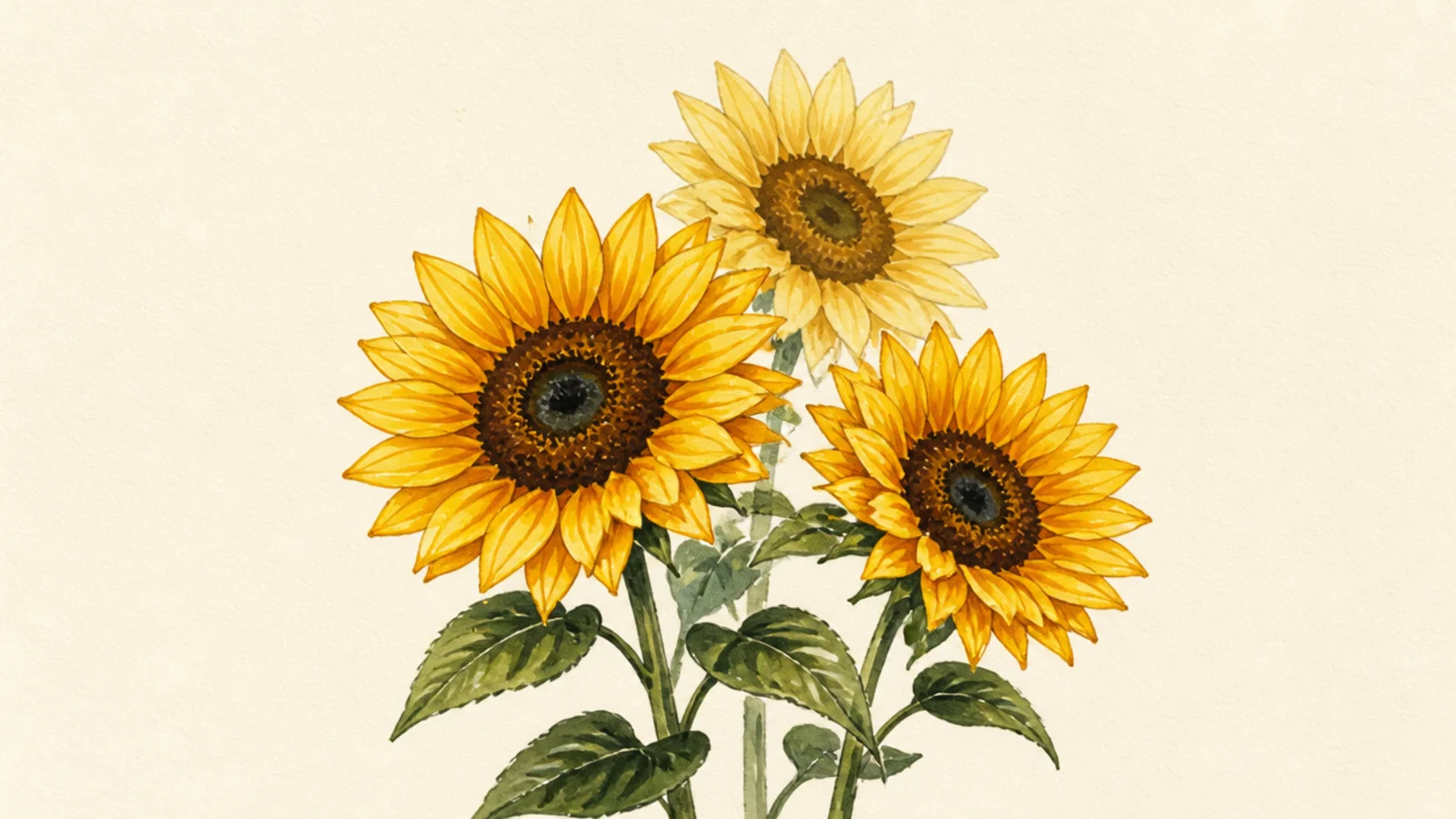
Finish with shadows and highlights. Now bring it to life. Add a darker shadow color where petals meet the center and where they overlap each other, and deepen one side of the seed head. Then add a few light highlights on the petal tips and the lit side of the center. This final light-and-dark pass turns a flat painting into a bloom with real form and a sense of light.
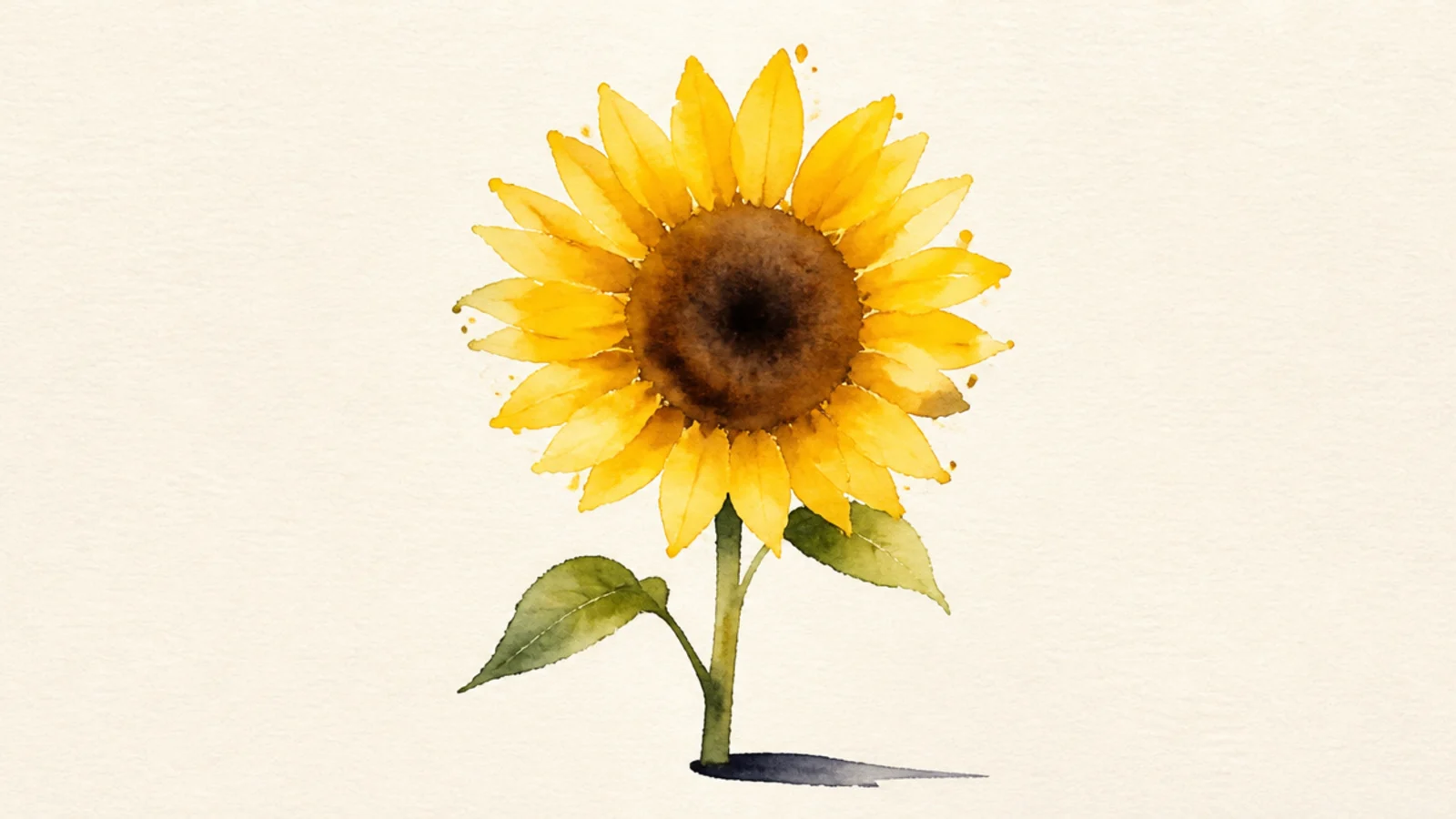
The method loosened up in watercolor, letting color bleed for a soft, spontaneous bloom. It shows the steps still work when loose.
Do the same steps wet and fast, letting the yellows bleed and the center blur. Keep only the final shadow marks crisp.
Work wet and quick, letting the colors mingle freely.
Don’t overwork it; looseness is the whole point here.
Quick answers
What is the easiest way to paint a sunflower?
Work in order from big shapes to small details — block the yellow petal ring and brown center first, then paint individual petals, texture the center, add leaves, and finish with shadows and highlights. Following that sequence keeps you from fussing over detail before the foundation is set.
What paints do I need to paint a sunflower?
Just four colors — a warm yellow, a brown or burnt orange, a green, and a dark brown or purple for shadows. That small palette paints the whole flower. The method works in watercolor, acrylic, or gouache, so use whichever you have.
How do I paint the sunflower center so it looks real?
Over a flat brown circle, dab a darker brown in tiny marks or small circles, packing them tighter toward the middle to suggest the spiral of seeds, and leave the outer edge lighter. That texture is what makes it read as a sunflower rather than a daisy.
Why does my painted sunflower look flat?
Because it’s missing the final shadow-and-highlight step. Add a darker shadow where petals meet the center and overlap each other, deepen one side of the seed head, then add light highlights on the petal tips. That light-and-dark pass gives the bloom form and a sense of light.