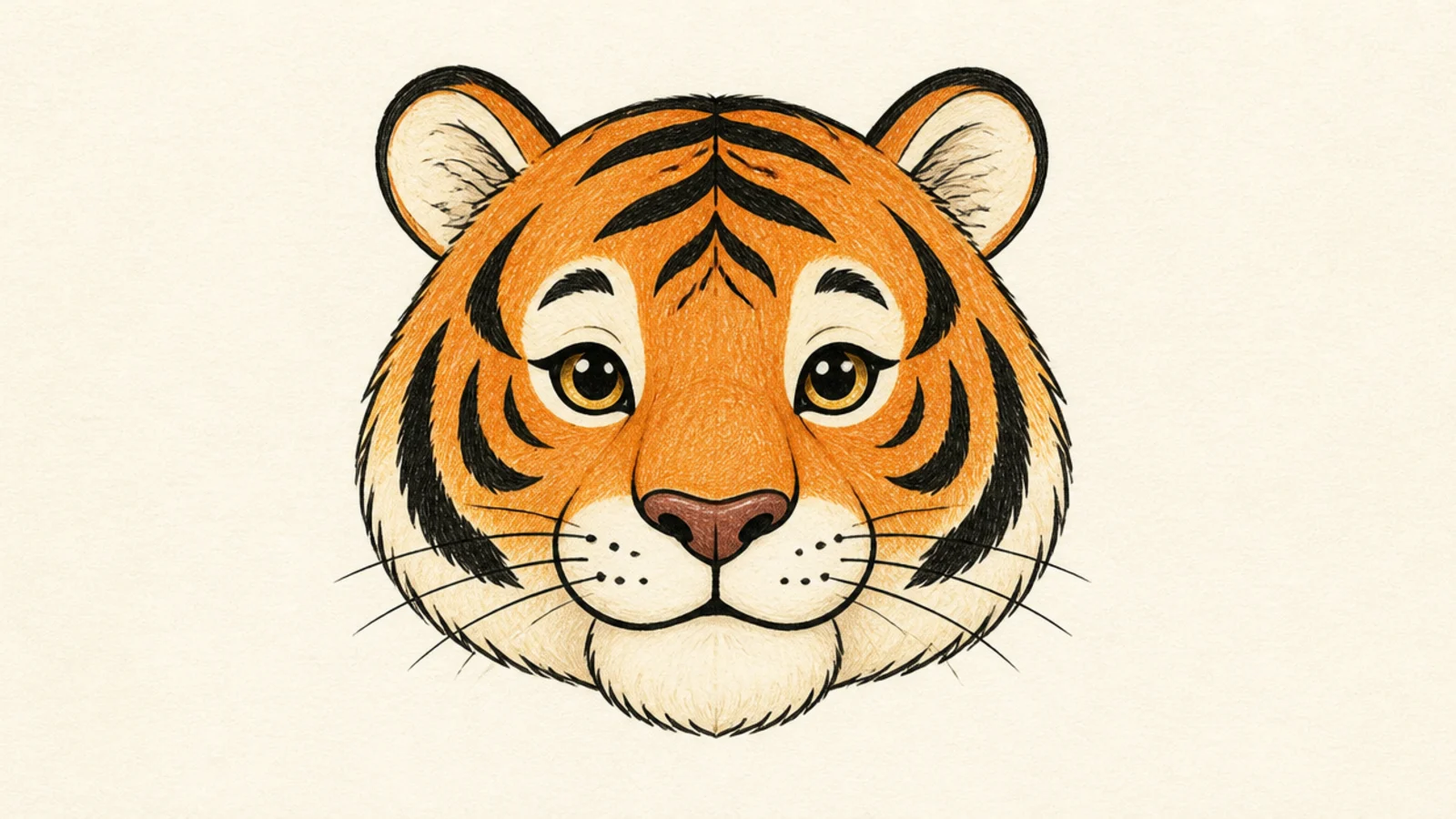
1 Simple Tiger Face
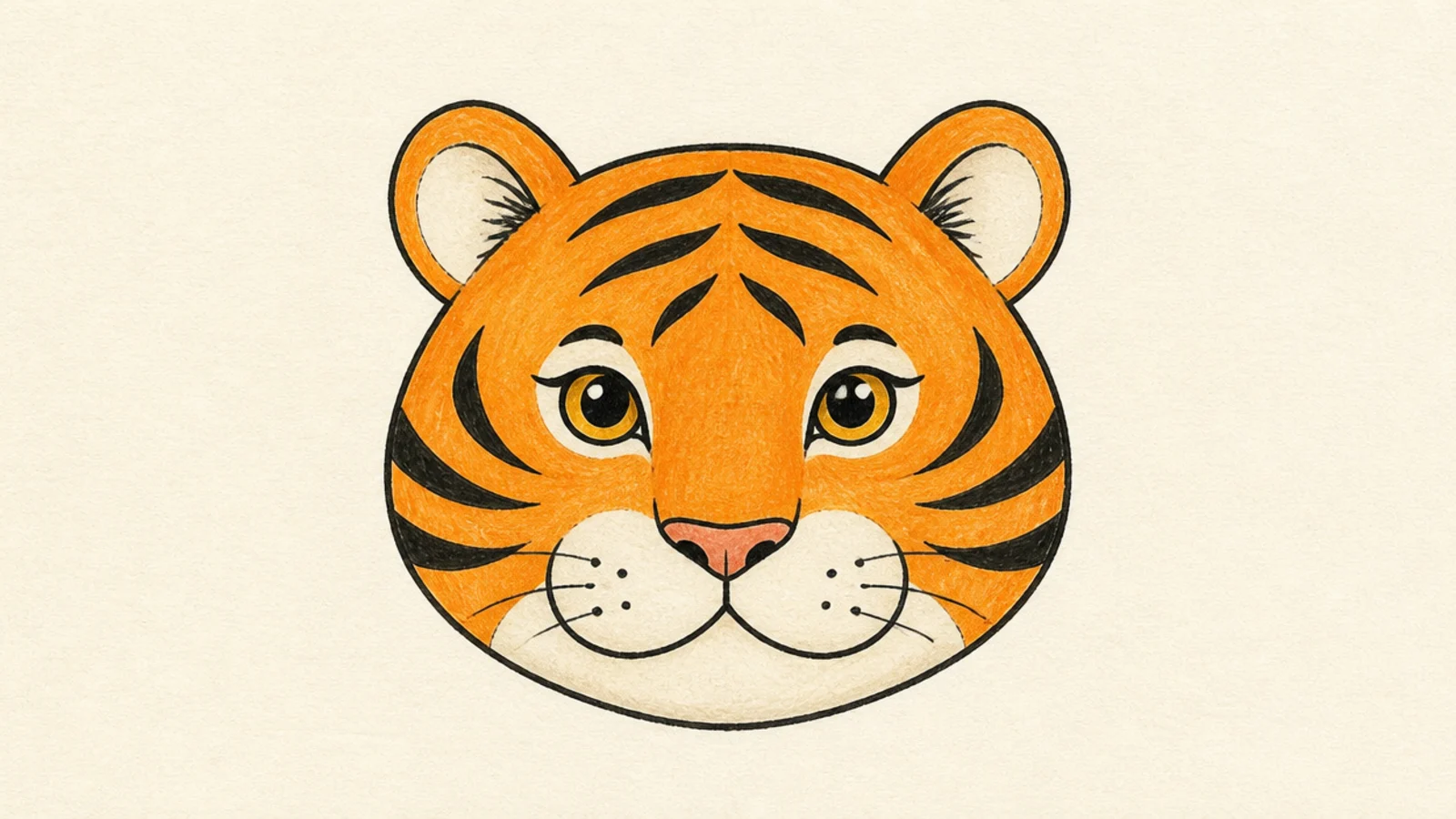
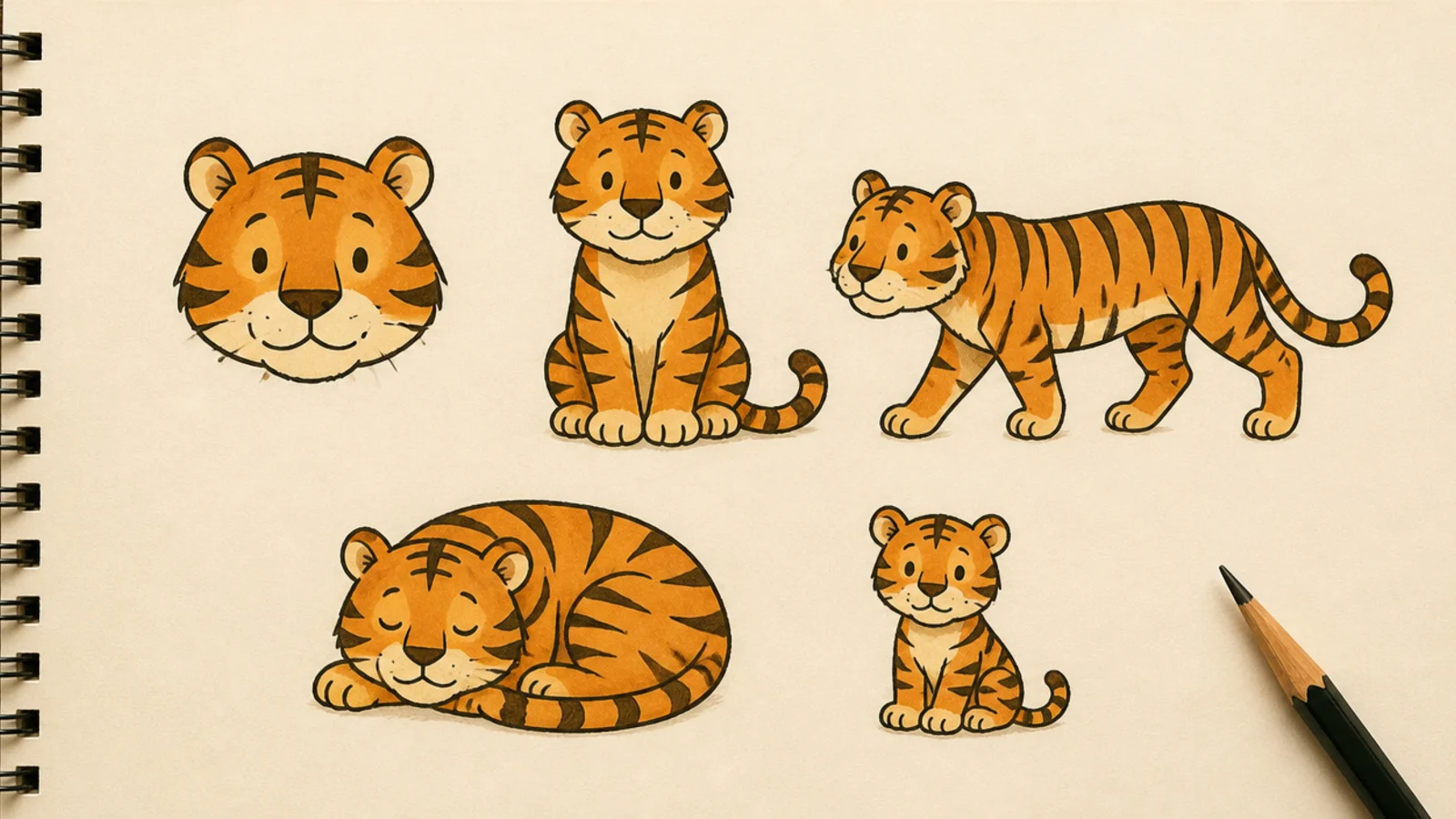
Step 1 draw a rounded head with two rounded ears on top. Step 2 add two eyes, a triangle nose, and a wide W-shaped muzzle. Step 3 add a few short stripes on the forehead and cheeks.
This is the simplest tiger possible — a round face, two ears, and a few stripes. It looks clean because there is nothing to get wrong, and it is the base for almost everything else on this list.
AvoidDon’t crowd the face with stripes; a few bold ones look more like a tiger.
Pro tipKeep the muzzle low and wide so the face reads like a big cat, not a bear.
2 Bold Outline Tiger Head
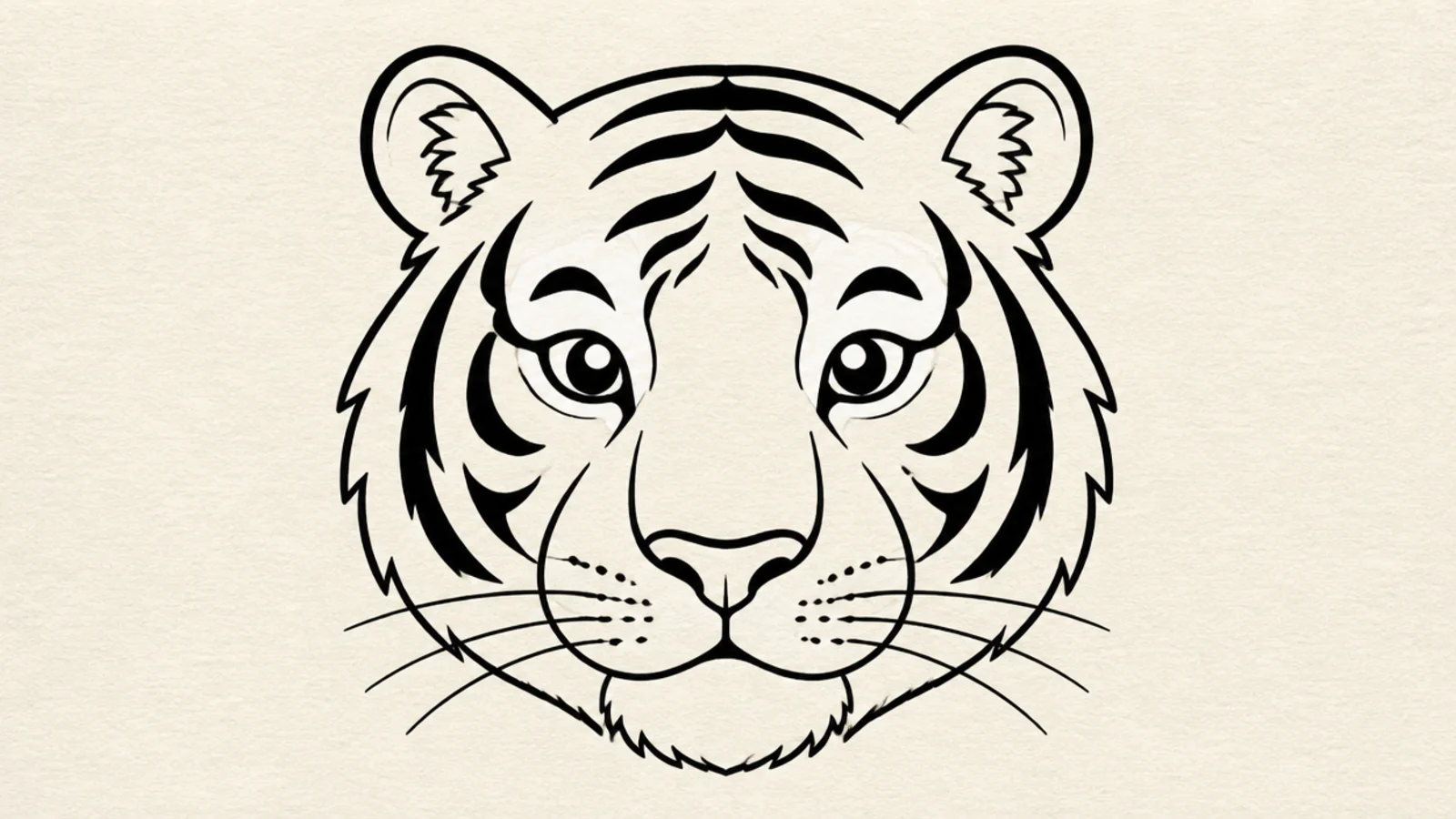
Step 1 sketch the head and ears lightly in pencil. Step 2 trace once with a fineliner in a steady pass. Step 3 add a few stripes and erase the pencil.
A crisp outline tiger head with no fill looks modern and clean, like a coloring page. It puts all the focus on the shape and stripe placement, so it is great for getting the proportions right.
AvoidDon’t over-trace the lines; one clean pass looks best.
Pro tipUse one even line weight so the whole outline looks crisp and intentional.
3 Simple Sitting Tiger
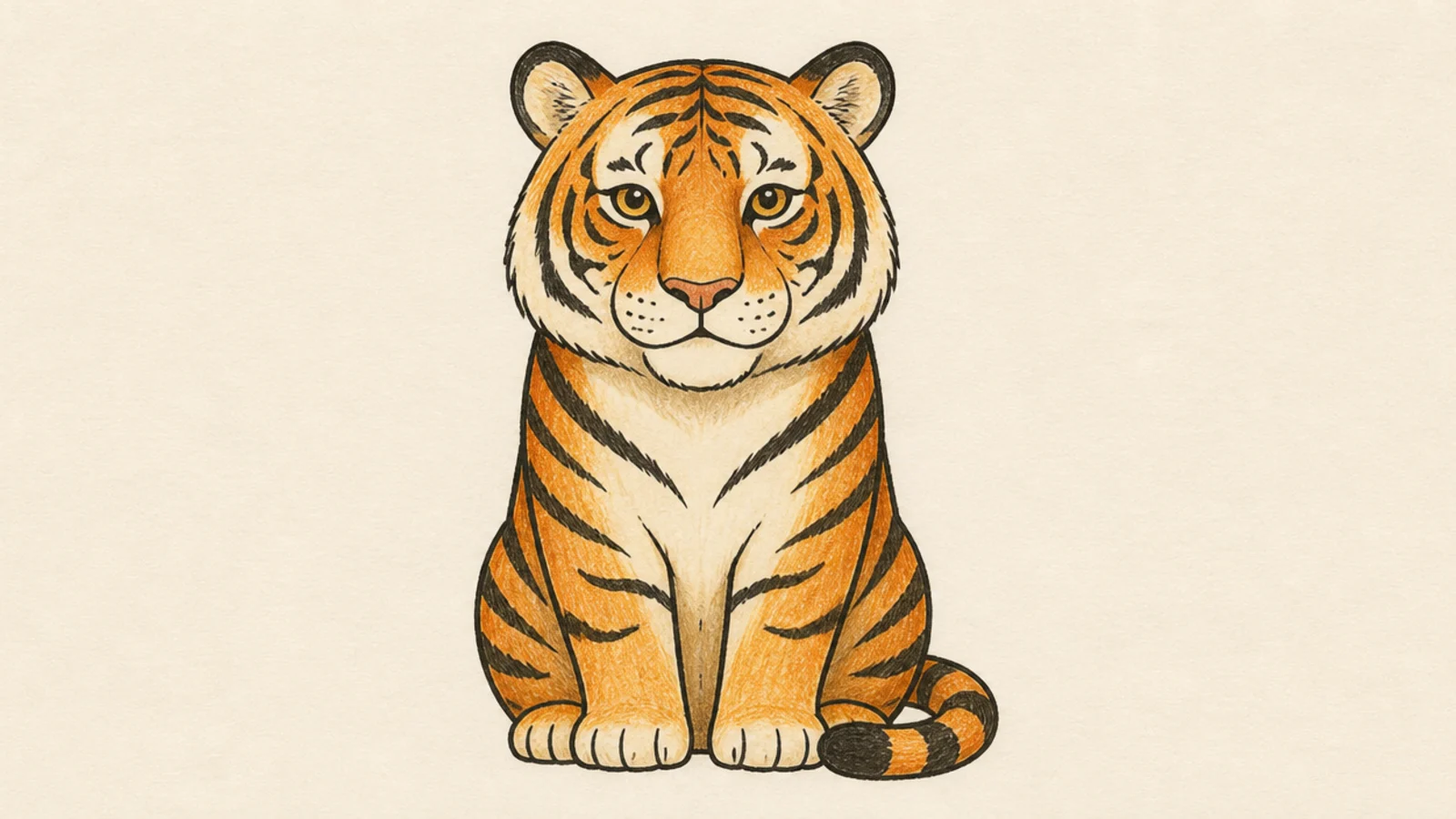
Step 1 draw the round head, then a larger rounded body below it. Step 2 add two front legs straight down and a curled tail to one side. Step 3 add stripes down the back and a striped face.
A sitting tiger is an easy first full body because the pose is symmetrical and calm. The front paws sit straight down and the whole shape stays compact, so nothing gets tangled.
AvoidDon’t make the legs long; a sitting tiger’s front legs are short and straight.
Pro tipSit the body like a triangle, wide at the base, so the pose feels stable.
4 Easy Walking Tiger
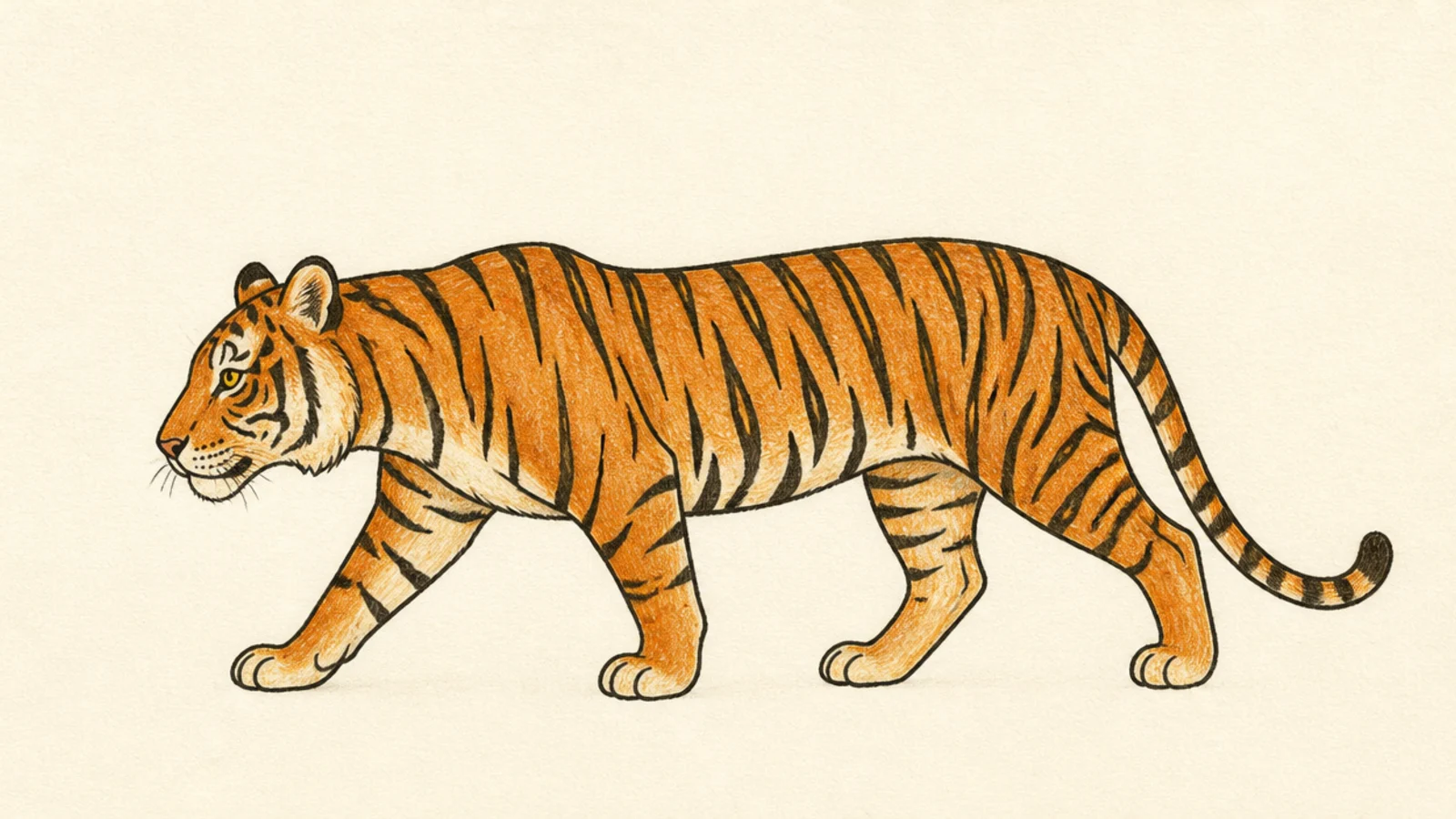
Step 1 draw a long horizontal oval for the body and a rounded head at the front. Step 2 add four simple legs, two stepping forward. Step 3 add a long tail and stripes wrapping down the back and sides.
A side-view walking tiger shows the classic big-cat silhouette with very few lines. The long body and low head make it instantly recognizable as a tiger on the move.
AvoidDon’t make the legs all line up; stagger two forward for a walking look.
Pro tipKeep the back a gentle straight line and let the head sit low and forward.
5 Sleepy Curled Tiger
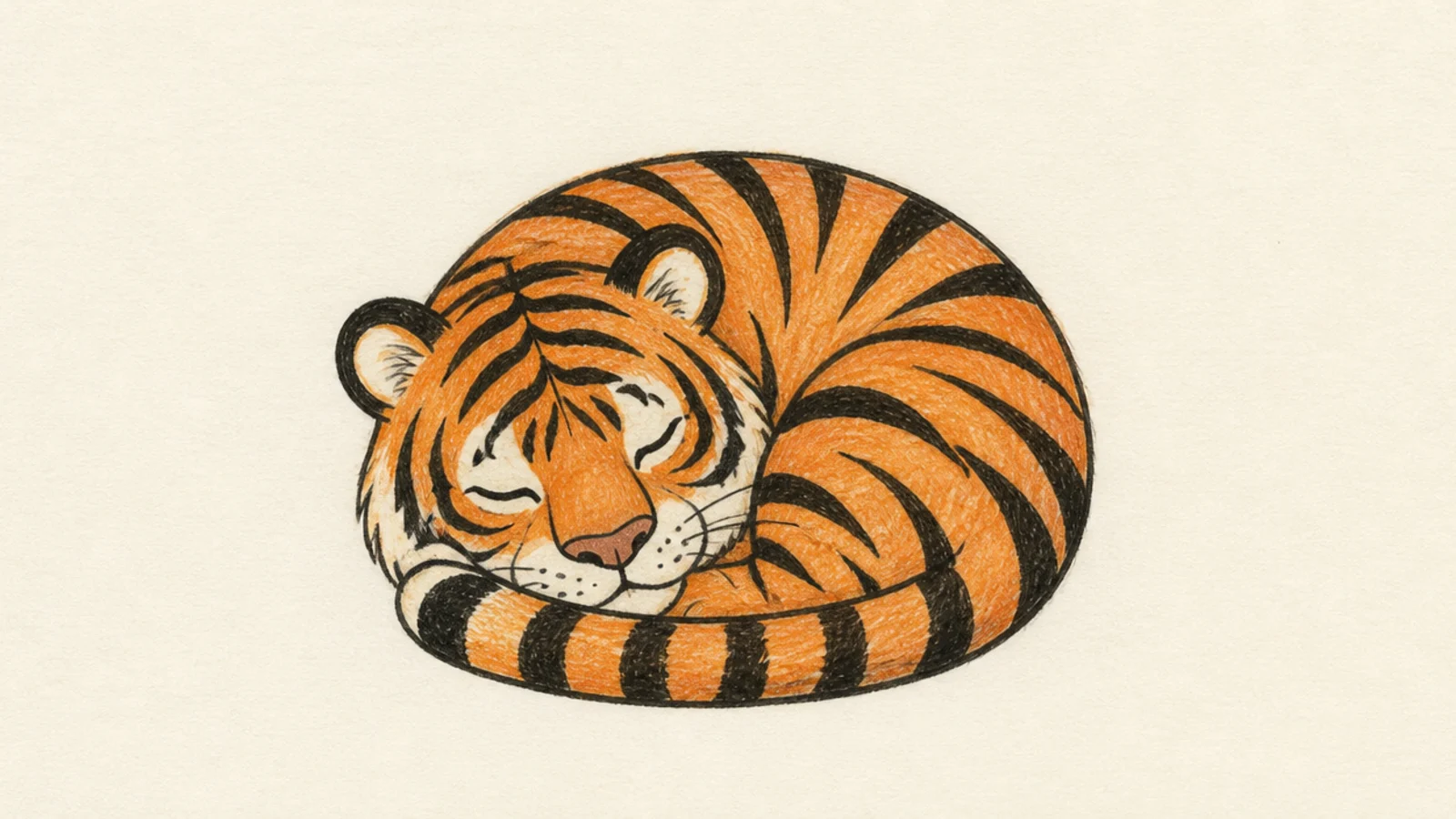
Step 1 draw a big rounded C-shape for the curled body. Step 2 tuck a small head in at one end with closed curved eyes. Step 3 wrap the tail around and add stripes along the curve.
A curled sleeping tiger is the easiest full body of all because it is basically one round shape. The tucked head and tail make a cozy circle that reads as a resting cat.
AvoidDon’t add legs or detail; a curled tiger hides them, which keeps it easy.
Pro tipDraw closed eyes as simple downward curves for a peaceful, sleeping look.
6 Little Tiger Cub
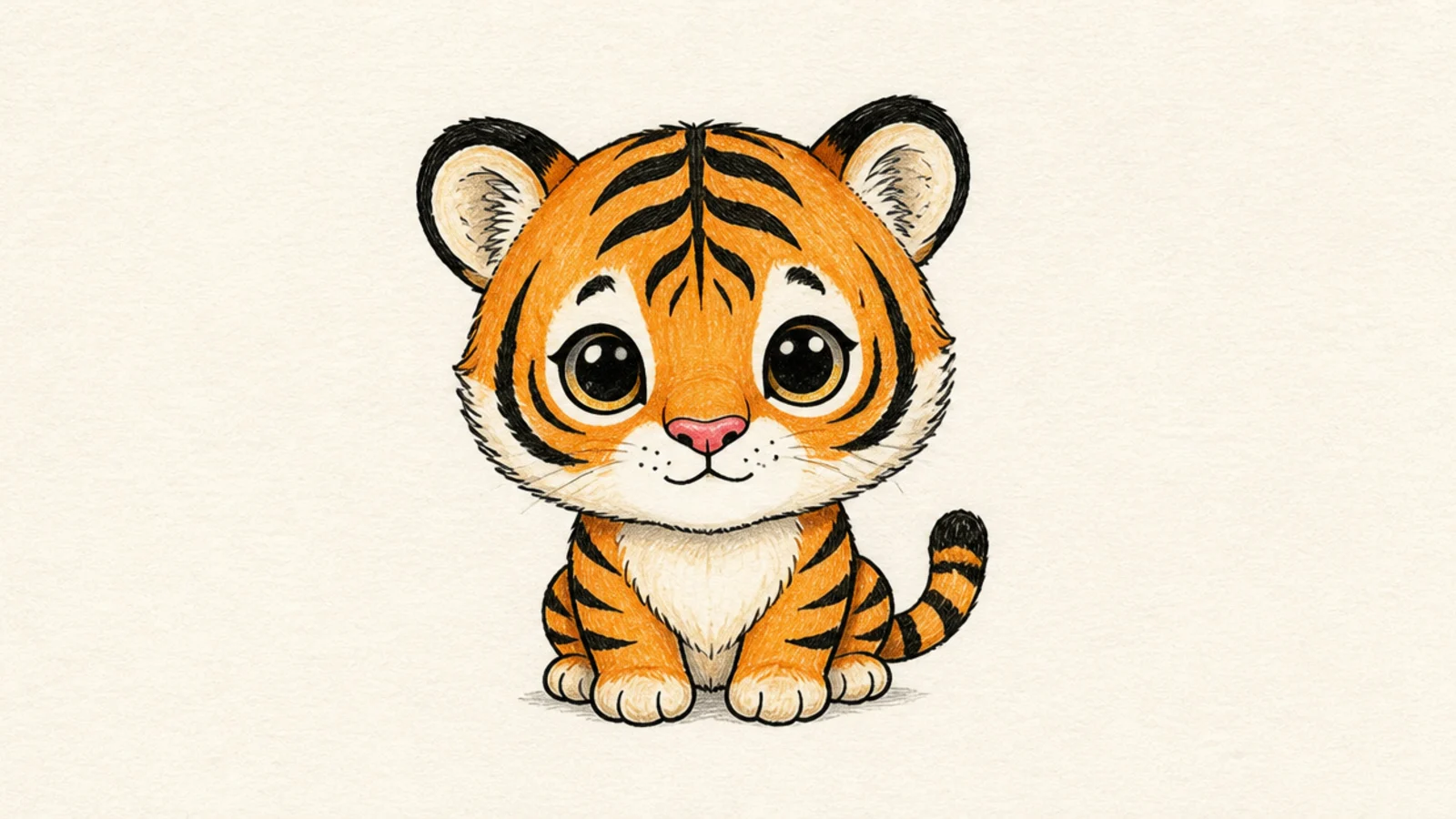
Step 1 draw a large round head, bigger than usual. Step 2 add a small rounded body and short stubby legs. Step 3 add big eyes, a tiny nose, and a few soft stripes.
A cub is an easy tiger with baby proportions — a big head, big eyes, and a small body. The oversized head does the cuteness for you, so the drawing stays simple.
AvoidDon’t add long legs; short stubby ones keep the cub looking young.
Pro tipMake the head almost as big as the body to get the baby-cub look.
7 Peeking Tiger
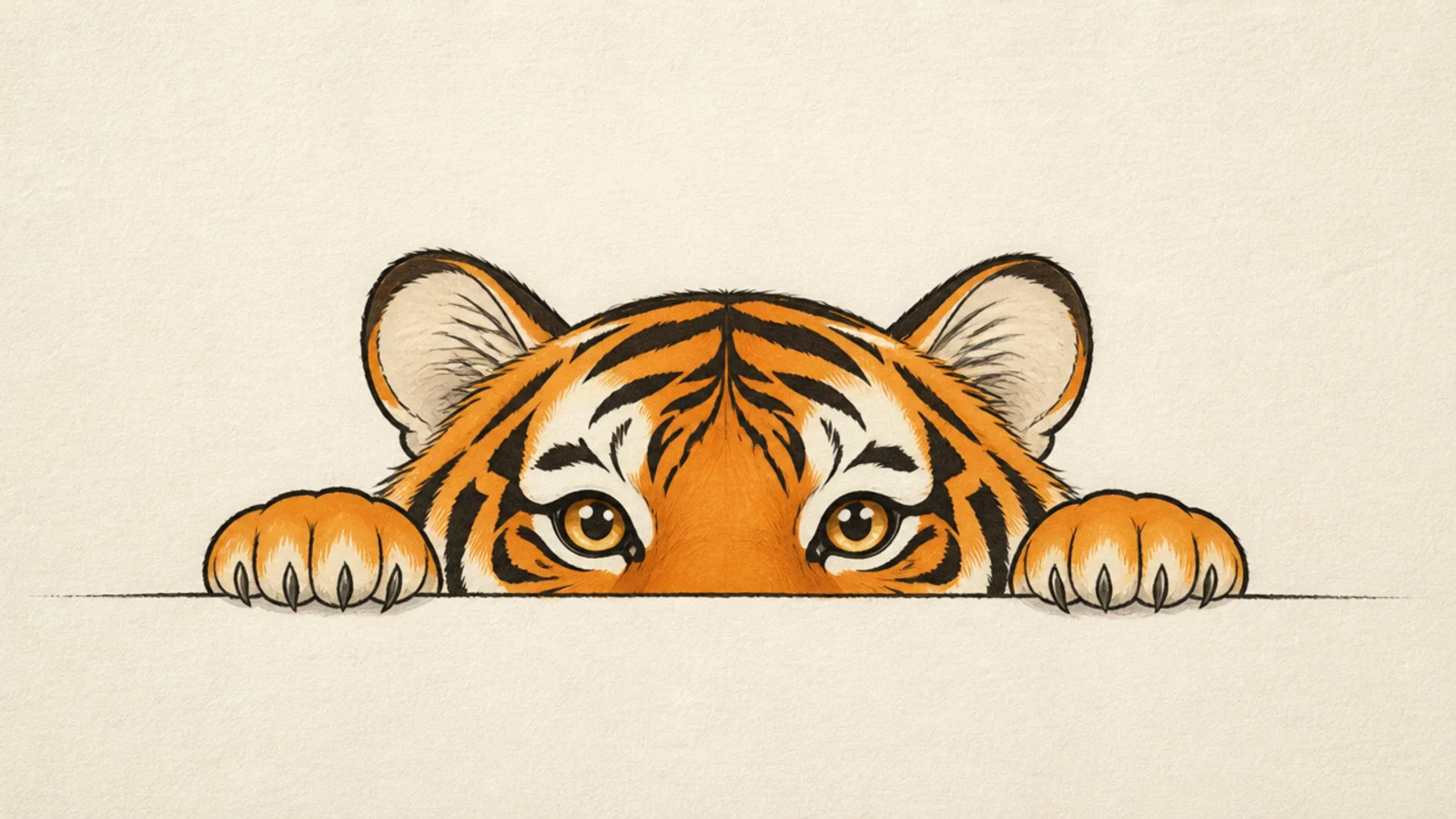
Step 1 draw a straight horizontal line for the ledge. Step 2 add two ears and the top of a head peeking over it. Step 3 add two eyes, a few forehead stripes, and the tips of paws gripping the edge.
A tiger peeking over a line or ledge is playful and forgiving because you only draw the top of the face. The eyes and ears do all the work, and you skip the body entirely.
AvoidDon’t draw the whole face; hiding the muzzle is what makes it a peek.
Pro tipShow just the eyes and ears above the line so the peek reads clearly.
8 Smiling Tiger Face
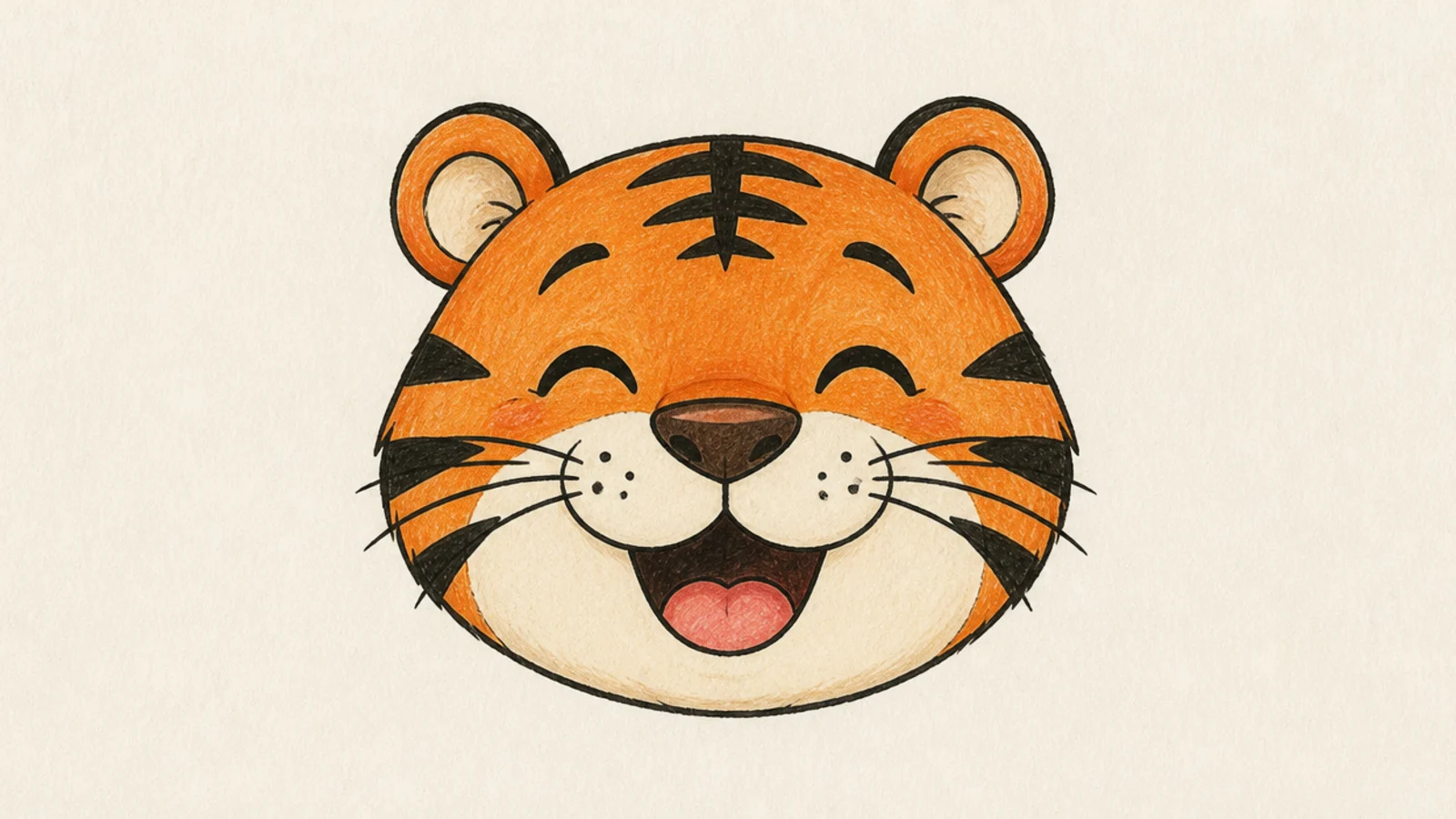
Step 1 draw the simple tiger face. Step 2 give it a wide curved smile with a small tongue. Step 3 round the eyes up into happy arcs and add cheek stripes.
A tiger with a big open smile looks friendly and cartoonish, which is perfect for beginners. The cheerful mouth changes the whole mood without adding any difficulty.
AvoidDon’t draw sharp fangs here; a soft smile keeps it friendly and easy.
Pro tipCurve the eyes into upward arcs to match the smiling mouth.
9 Fierce Little Tiger
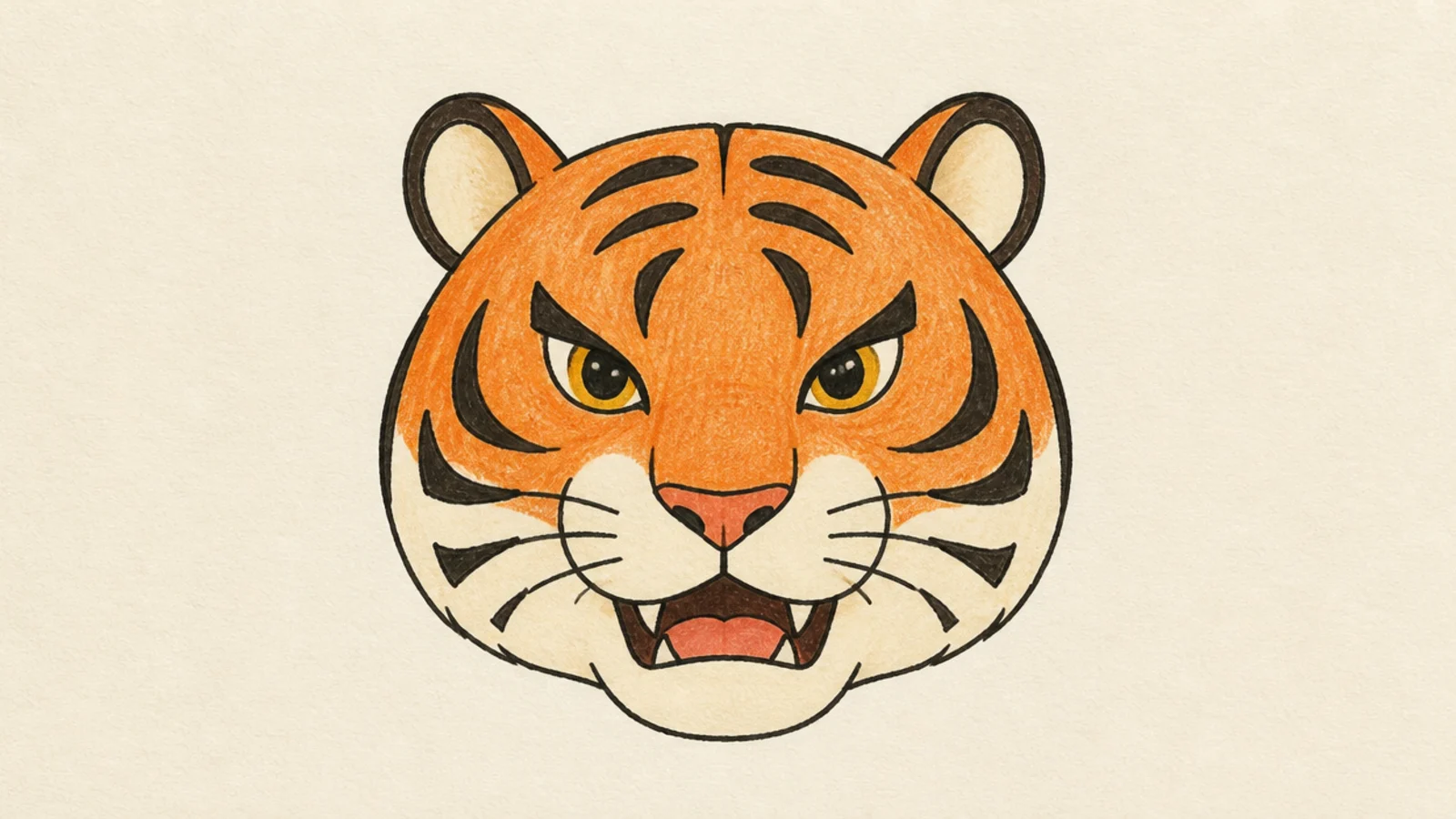
A slightly fierce tiger with two fangs adds attitude while staying simple. Just an open mouth and two triangle teeth flip the friendly face into a playful growl.
Step 1 draw the tiger face. Step 2 open the mouth into a rounded shape with two small triangle fangs at the top. Step 3 add angled brow stripes over the eyes for a fierce look.
Angle two short stripes down toward the nose to make a fierce brow.
Don’t fill the mouth solid black; leave it open so the fangs show.
10 Tiger Hiding in Grass
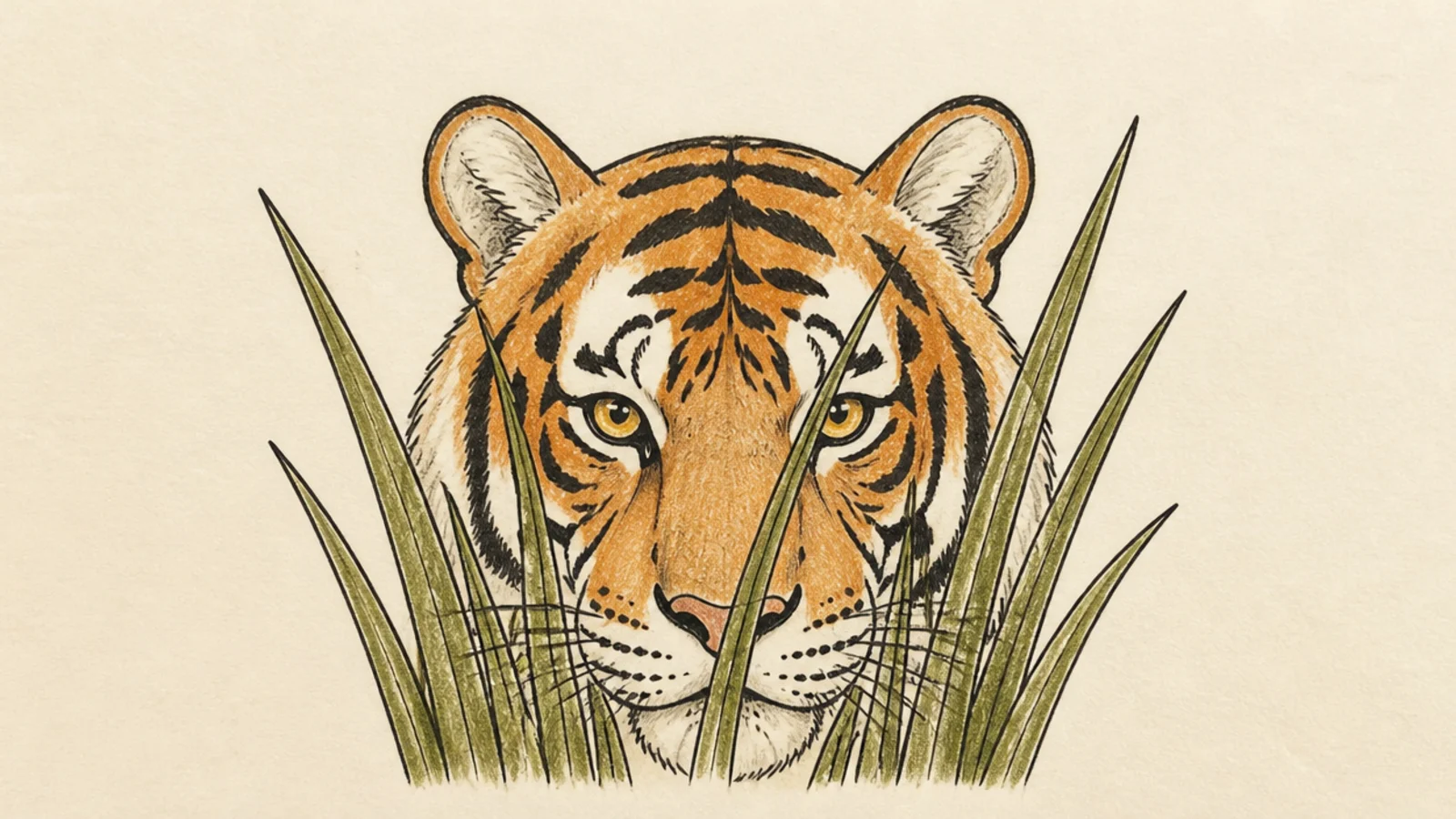
Step 1 draw a few tall pointed grass blades. Step 2 tuck a tiger face behind them so it peeks through. Step 3 add eyes, forehead stripes, and a couple of blades crossing the face.
A tiger peering through a few blades of grass tells a tiny hunting story with barely any extra lines. The grass frames the face and hides the body, keeping it easy.
AvoidDon’t draw too many blades; a handful reads as grass without clutter.
Pro tipLet one or two grass blades cross in front of the face for a real hidden feel.
11 Tiger and a Paw Print
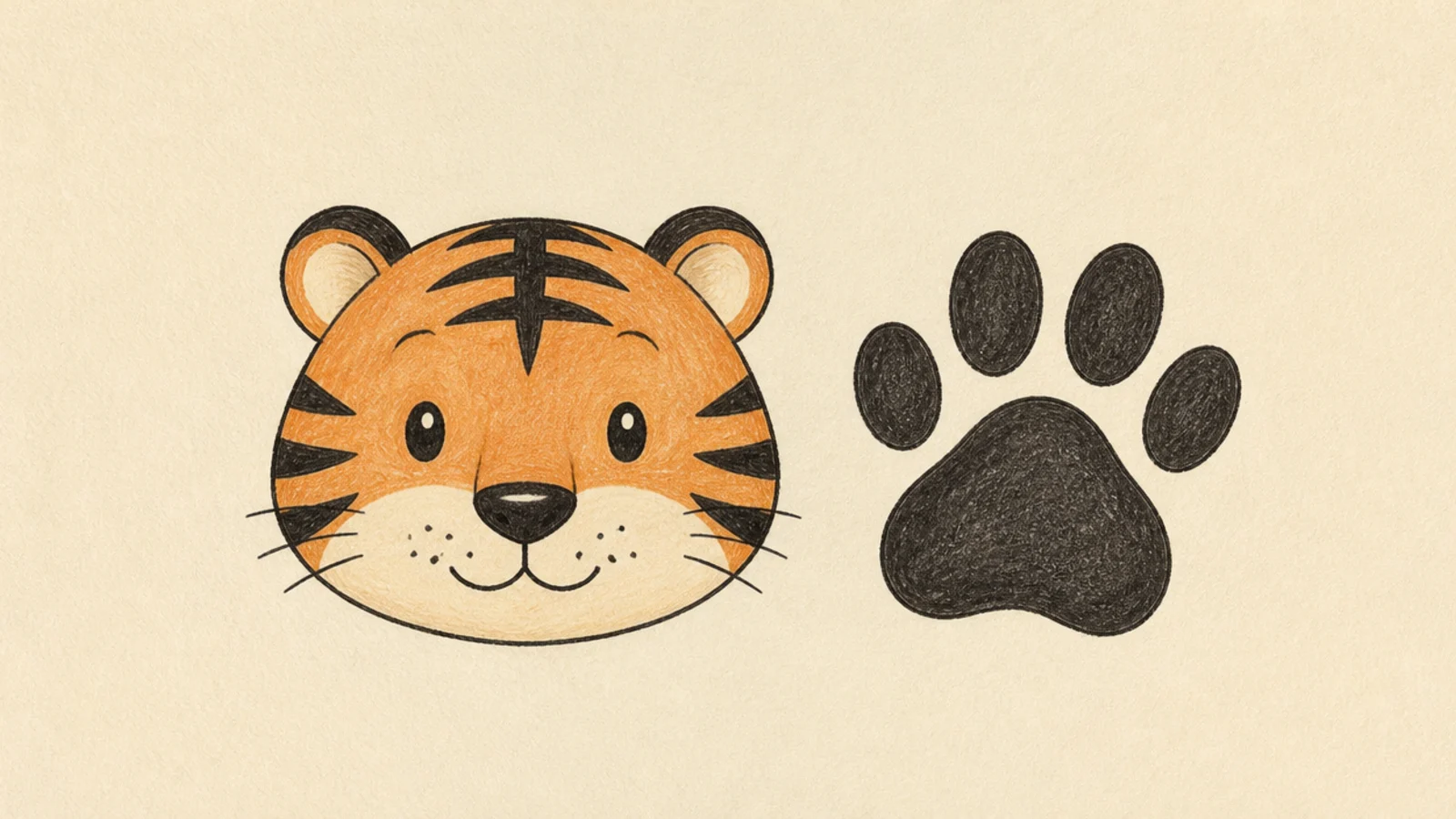
Pairing a small tiger face with a big paw print makes a simple, graphic little scene. The paw print is just one pad and four toes, so it adds interest with no difficulty.
Step 1 draw a small simple tiger face. Step 2 beside it draw a large rounded main pad. Step 3 add four oval toe pads above it for the paw print.
Round every pad softly so the print looks like a cat, not a dog.
Don’t add claws to the print; cats keep their claws tucked.
12 Geometric Low-Poly Tiger
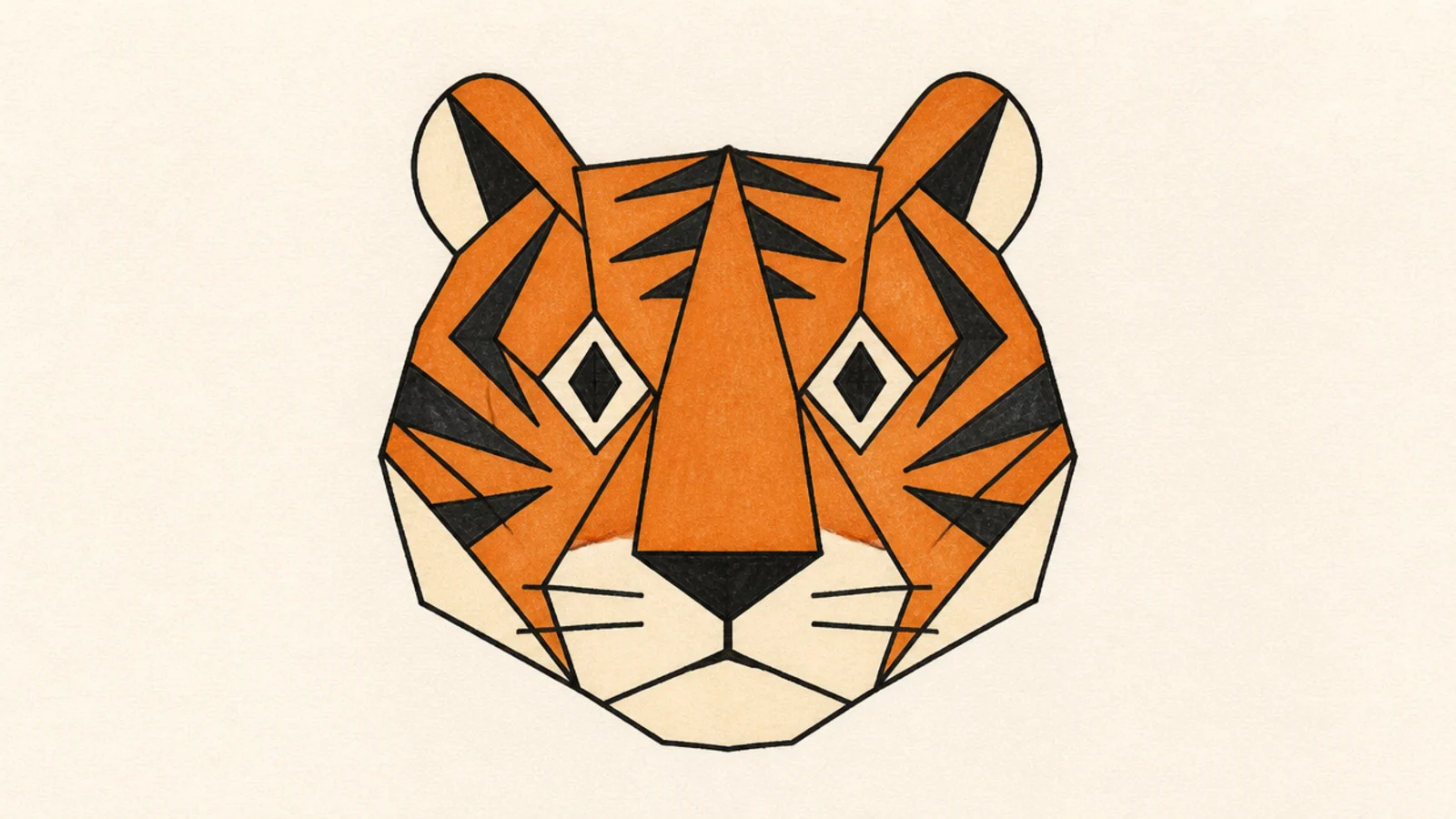
Building the tiger face from straight-edged shapes gives a modern, geometric look that is secretly easy. Angular planes are simpler to draw accurately than smooth curves.
Step 1 draw the head as an angular shape with flat edges. Step 2 make the ears, muzzle, and eyes from simple triangles and diamonds. Step 3 add stripes as straight angled slashes.
Use a ruler for a few edges to make the geometric style look crisp.
Don’t mix in soft curves; keep every line straight for the geometric feel.
13 Tiger Emoji Faces
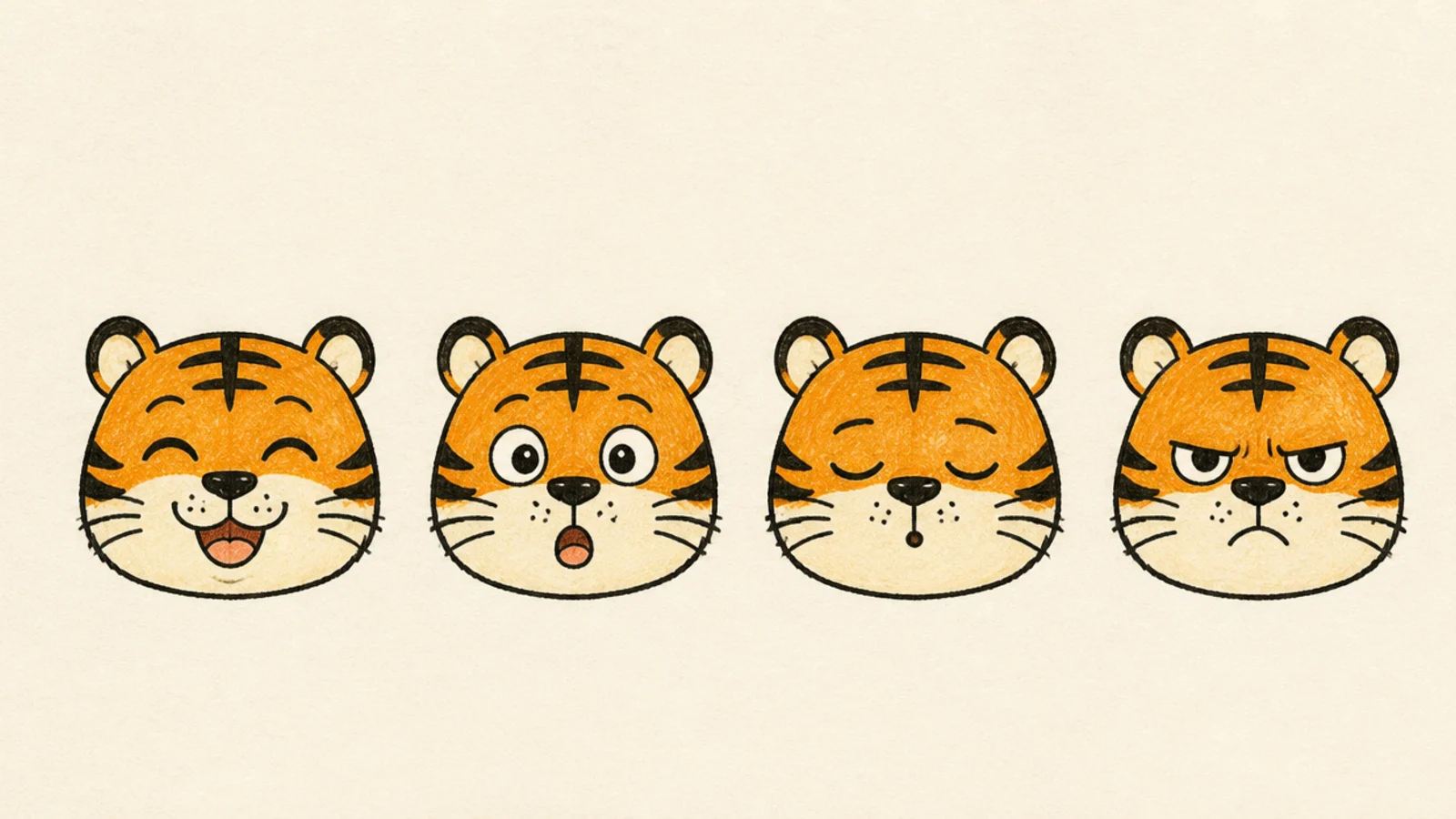
A little row of tiny tiger faces with different expressions is fun and quick. Each face is the same base with one changed feature, so you practice the shape several times.
Step 1 draw three or four small identical tiger faces. Step 2 give each different eyes and mouth — happy, surprised, sleepy, grumpy. Step 3 keep the ears and stripes the same on all.
Change only the eyes and mouth so the set clearly reads as the same tiger.
Don’t redesign each face; small changes make a nicer matching set.
14 Heart-Nose Tiger
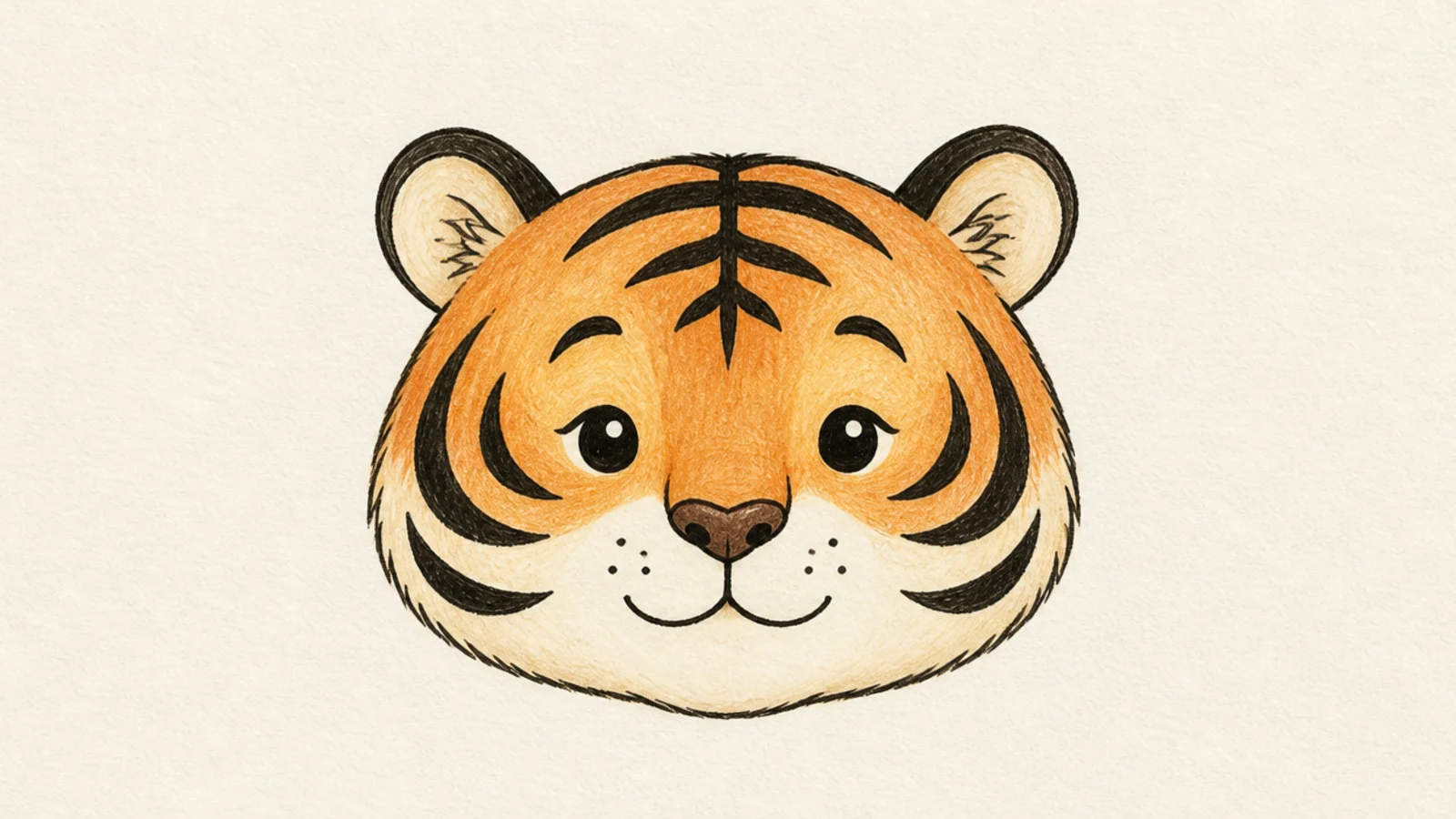
Swapping the triangle nose for a little heart makes an instantly sweet tiger with one tiny change. It is a favorite trick for cards and stickers because it stays so simple.
Step 1 draw the simple tiger face. Step 2 draw a small heart where the nose goes. Step 3 add a soft smile and rounded cheek stripes.
Keep the heart small and centered so it reads as a nose, not a decoration.
Don’t make the heart too big; a tiny one looks most like a nose.
15 Tiger Holding a Balloon
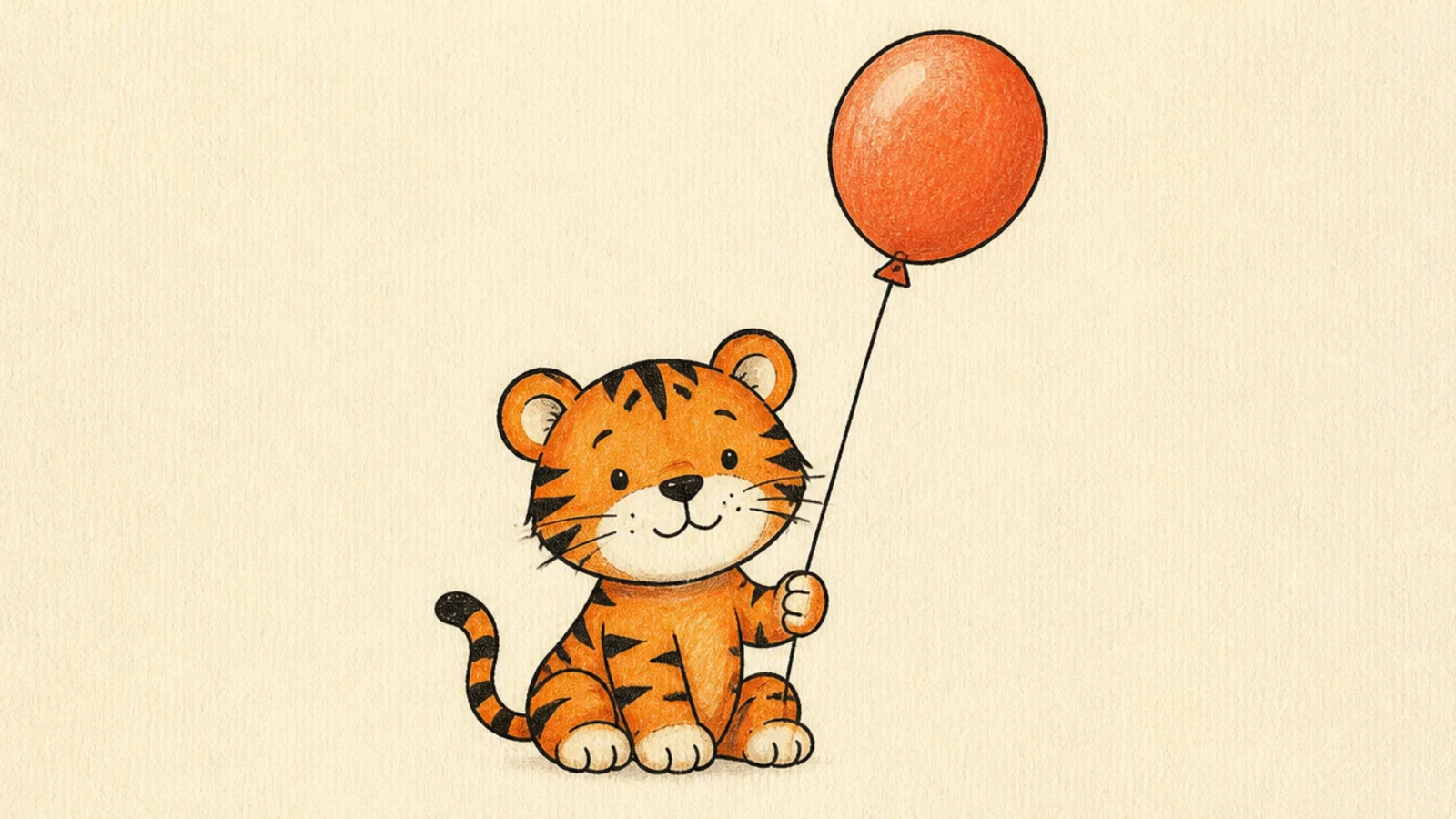
A little tiger holding a balloon is a cheerful, story-like doodle that stays simple. The balloon is just a circle on a line, and it gives the tiny scene a sweet focus.
Step 1 draw a small sitting tiger. Step 2 raise one paw and draw a line up to a round balloon. Step 3 add a face and a few stripes.
Tilt the balloon slightly to one side so it looks like it is floating.
Don’t draw the string perfectly straight; a slight curve looks lighter.
16 Tiger With a Heart Tail
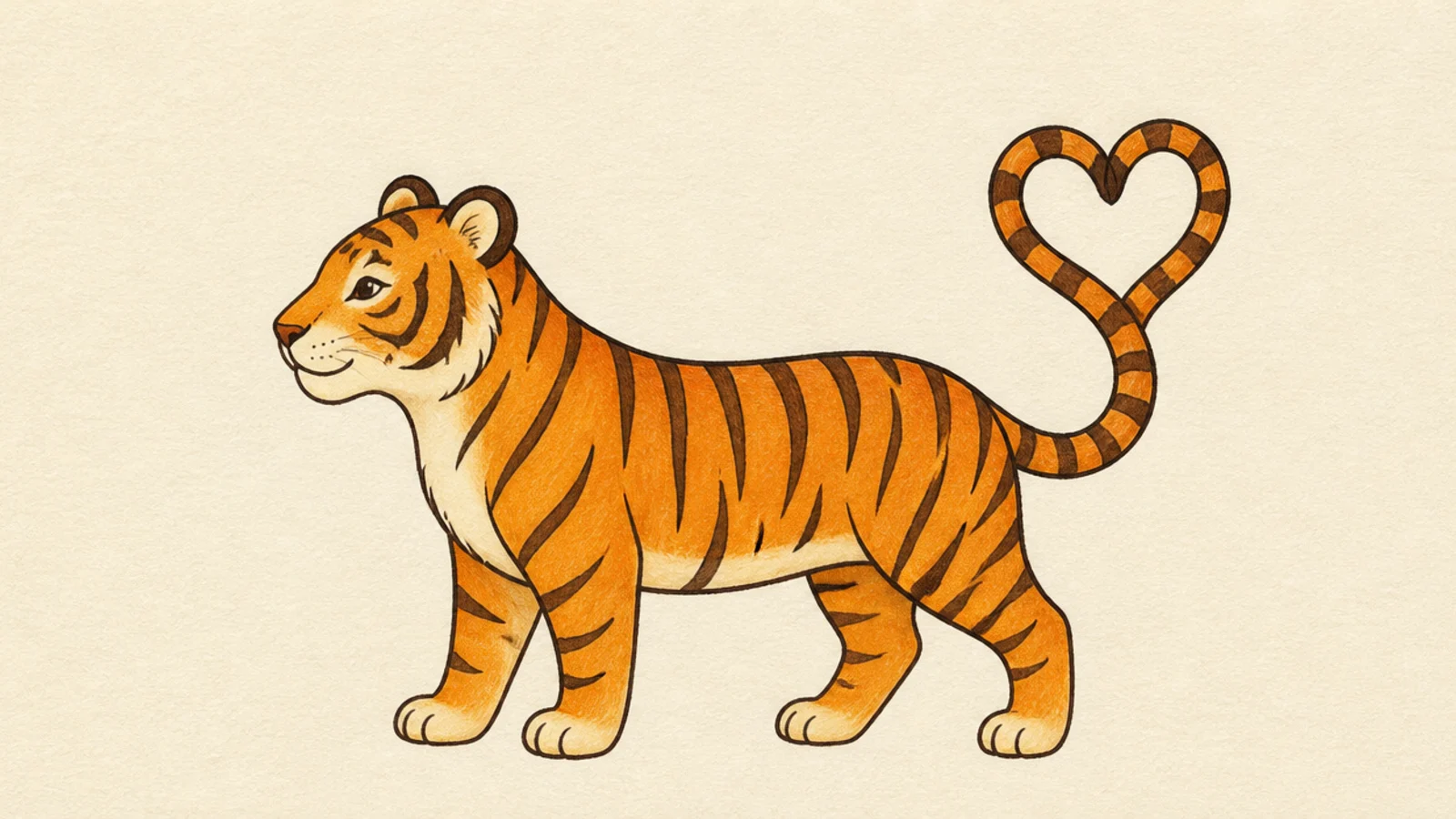
Curling the tail into a heart at the tip is a cute, easy flourish on a walking tiger. It adds charm with a single loop and keeps the rest of the body plain.
Step 1 draw a simple side-view tiger. Step 2 curl the tail up and loop the tip into a heart. Step 3 add stripes along the body and tail.
Draw the heart loop last so you can place it where the tail naturally ends.
Don’t over-curl the whole tail; just shape the very tip into a heart.
17 Tiger Wearing a Crown
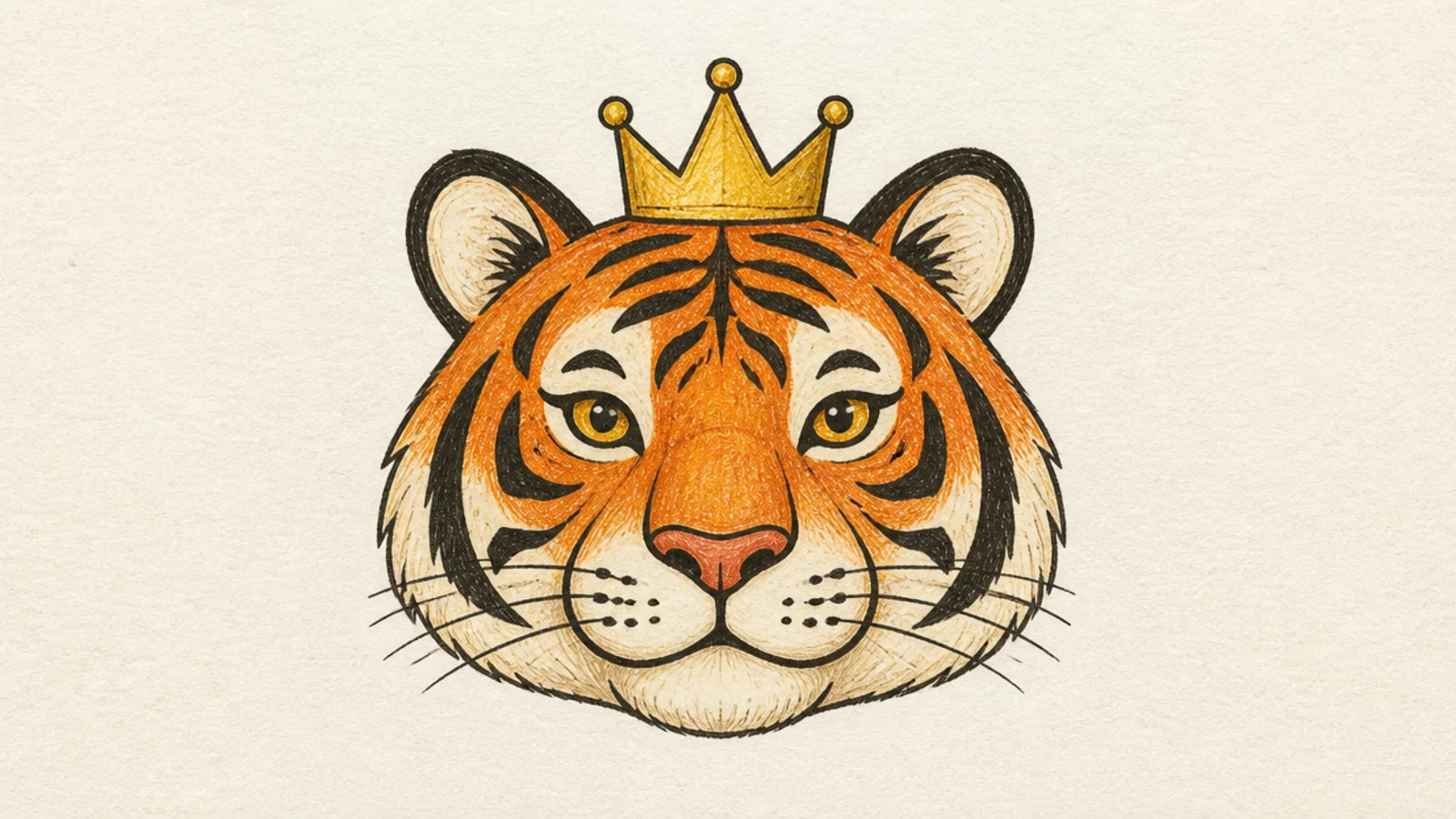
A little crown makes the tiger the king of the jungle in the most literal, charming way. The crown is three quick points and adds instant character to a plain face.
Step 1 draw the simple tiger face. Step 2 add a small crown with three points between the ears. Step 3 add a few dots on the crown and a proud expression.
Rest the crown just in front of the ears so it sits on the head naturally.
Don’t over-detail the crown; three simple points look best.
18 Chibi Standing Tiger
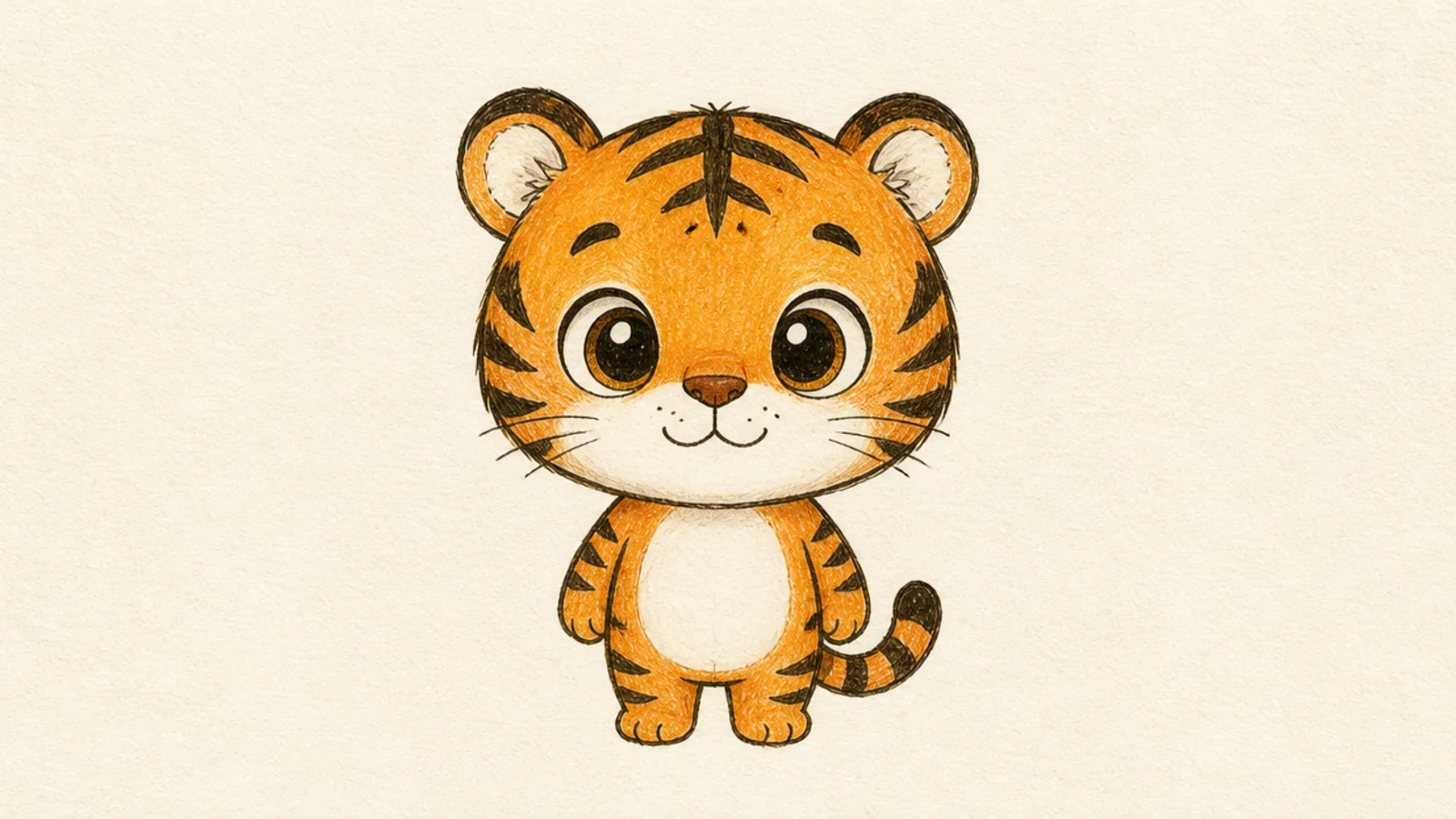
A chibi tiger has a huge head on a tiny body, which is both adorable and easy to draw. The exaggerated proportions do all the work, so the shapes can stay very simple.
Step 1 draw a big round head. Step 2 add a small oval body and four stubby limbs below it. Step 3 add big eyes, a tiny muzzle, and soft stripes.
Make the head about half the whole drawing for a true chibi look.
Don’t add realistic proportions; the oversized head is the whole charm.
19 Tiger and a Butterfly
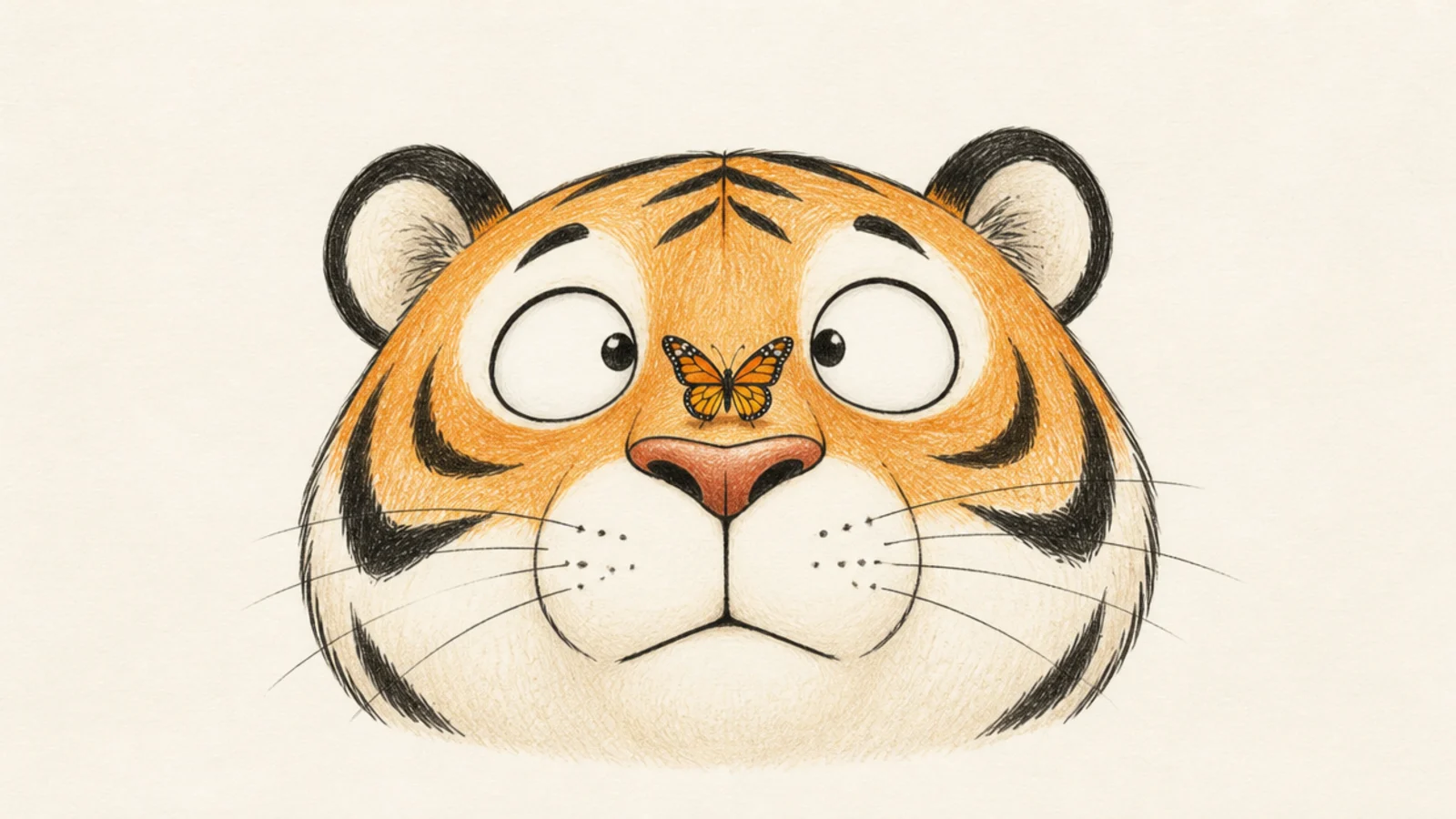
A tiger watching a butterfly land on its nose is a gentle, sweet scene that softens the fierce animal. The butterfly is a few simple wings and adds a tiny focus point.
Step 1 draw a simple tiger face looking up. Step 2 add a small butterfly on or above the nose. Step 3 cross the eyes slightly toward the butterfly for a curious look.
Cross the eyes gently toward the nose so the tiger looks at the butterfly.
Don’t over-pattern the wings; two simple loops each is enough.
20 Tiger in a Mug
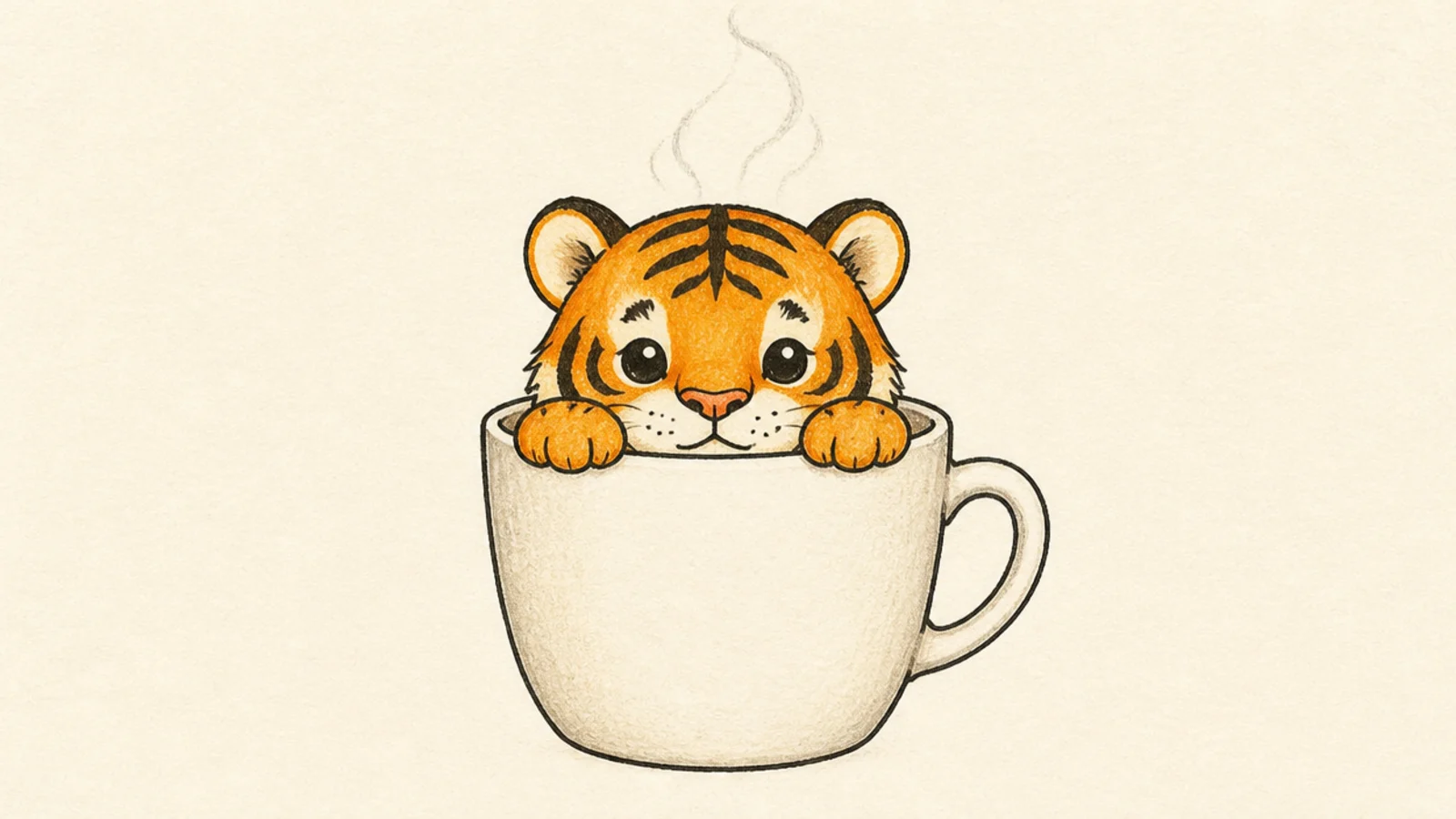
A tiny tiger peeking out of a mug is a cozy, popular doodle that is easier than it looks. The mug hides the body, so you only draw the head and two little paws.
Step 1 draw a simple mug with a handle. Step 2 pop a small tiger head and two paws over the rim. Step 3 add a face, ears, and a bit of steam.
Rest the two front paws on the rim so the tiger looks tucked inside.
Don’t draw the body; the mug should hide everything below the paws.
21 Tiger Playing With Yarn
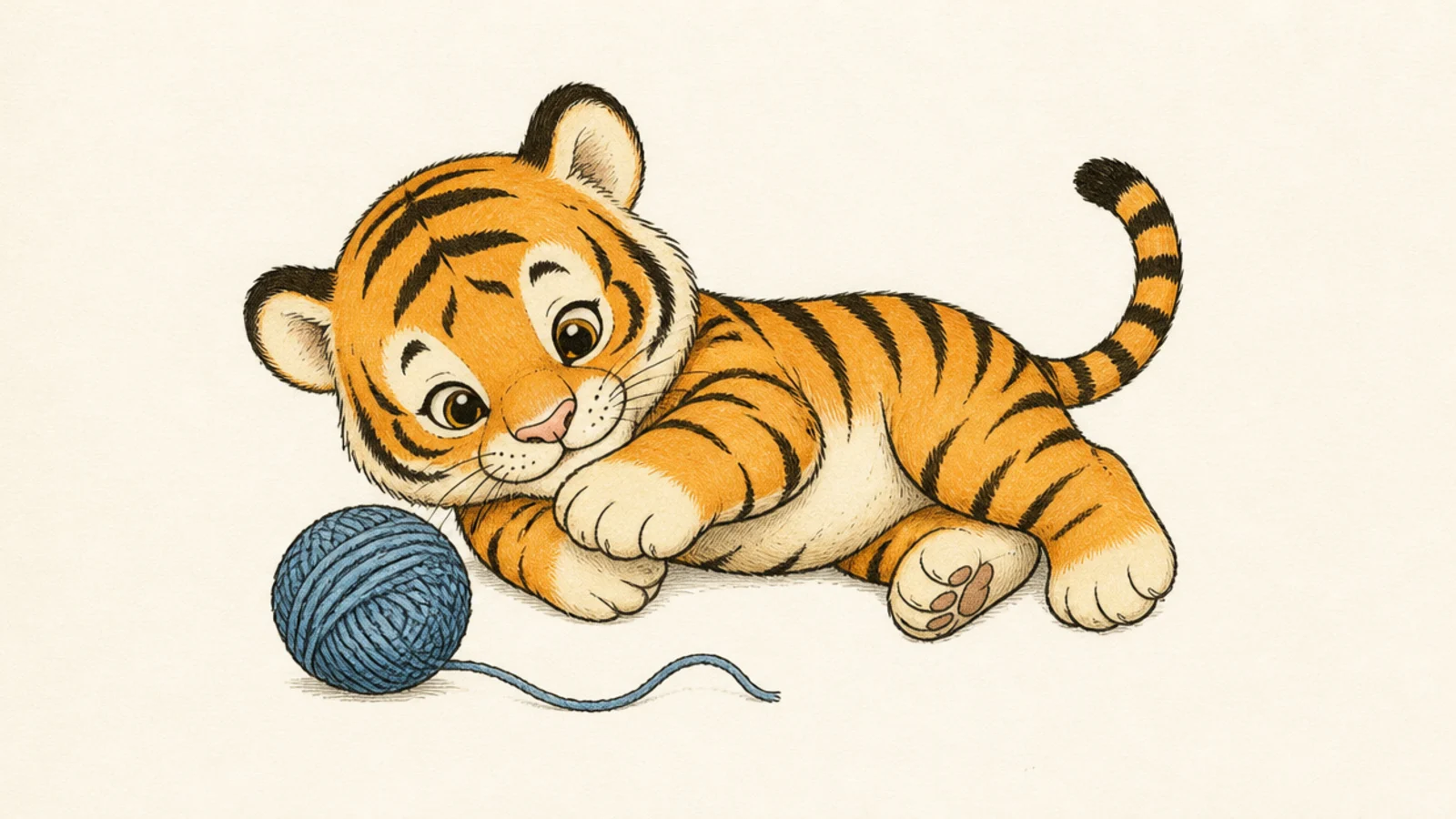
Step 1 draw a small cub lying on its side. Step 2 reach one paw toward a round ball of yarn. Step 3 add a few curved lines on the ball and a loose thread.
A tiger cub playing with a ball of yarn borrows the classic kitten pose, which makes the big cat feel playful. The yarn ball is a circle with a few loops, so it stays simple.
AvoidDon’t tangle the thread too much; one loose strand is enough.
Pro tipDraw a couple of crossing curves on the ball to make it read as yarn.
22 Easy Roaring Tiger
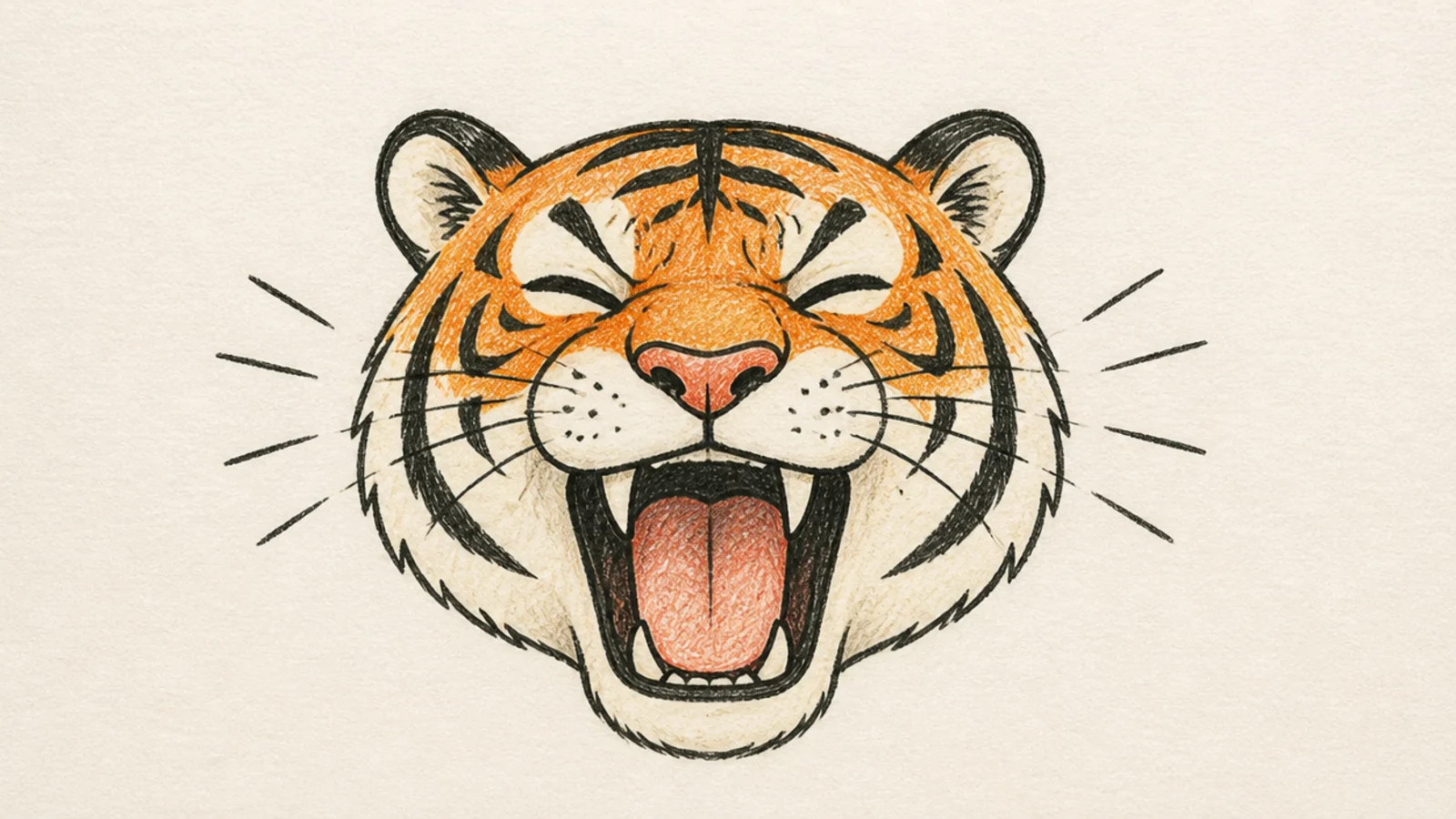
Step 1 draw the tiger face with squinted eyes. Step 2 open the mouth wide into a rounded shape below the muzzle. Step 3 add a curved tongue, two top fangs, and motion lines around the head.
A roaring tiger is dramatic but easy because the wide-open mouth is just a big rounded shape. The open jaw and squinted eyes carry all the energy of the roar.
AvoidDon’t make the mouth a thin line; a wide open shape sells the roar.
Pro tipSquint the eyes into short curves so the roar looks like real effort.
23 Symmetrical Tiger Mask
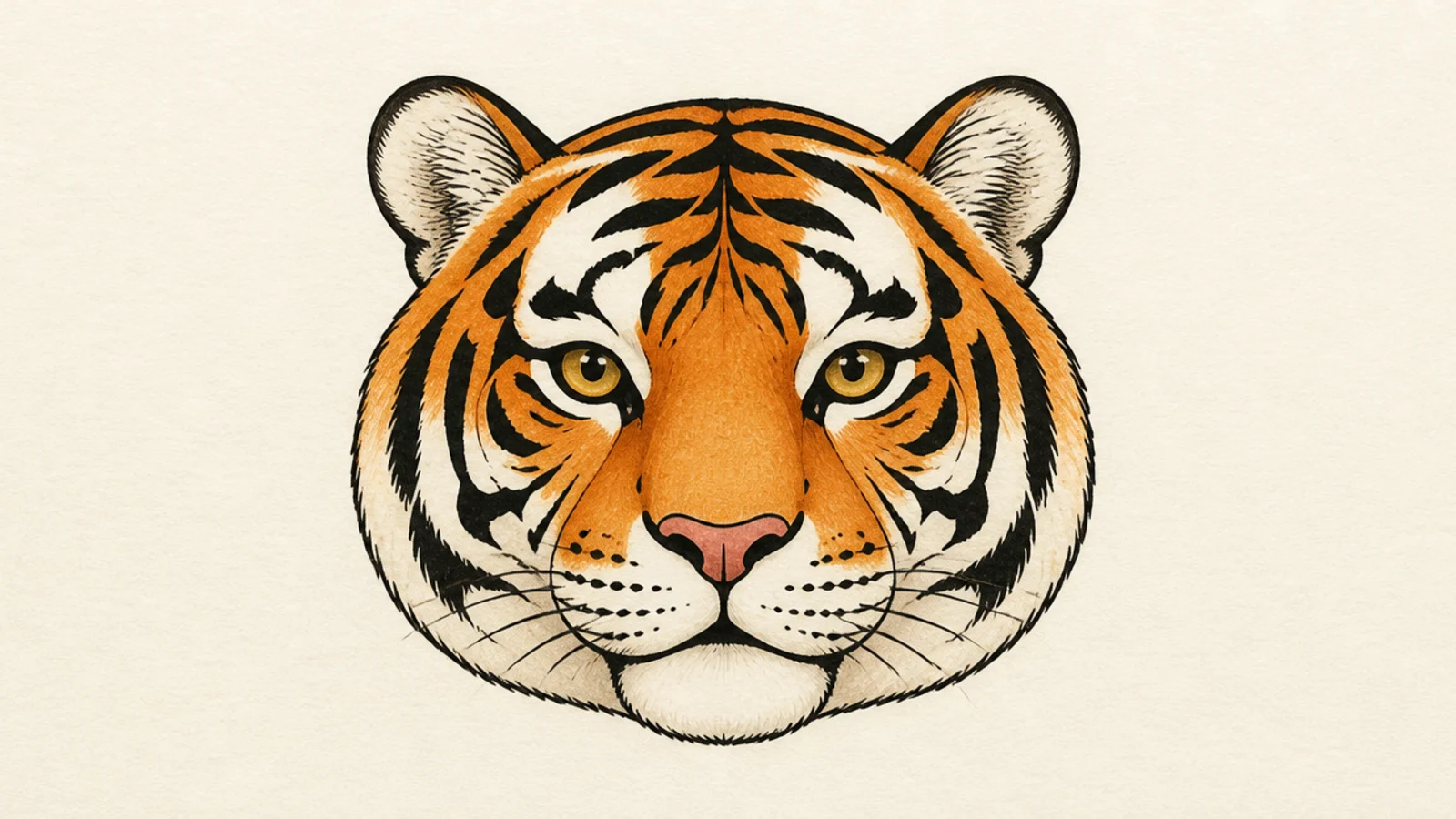
Step 1 draw a vertical center line and a symmetrical head around it. Step 2 place the eyes, nose, and muzzle evenly on both sides. Step 3 mirror each stripe left and right of the center line.
Drawing the tiger face as a symmetrical mask makes a bold, decorative design. Folding the stripes evenly on both sides looks striking and teaches you to mirror your marks.
AvoidDon’t freehand both sides independently; mirror them for a clean mask.
Pro tipDraw a light center line first and match every stripe on both sides of it.
24 Tiger Wearing a Scarf
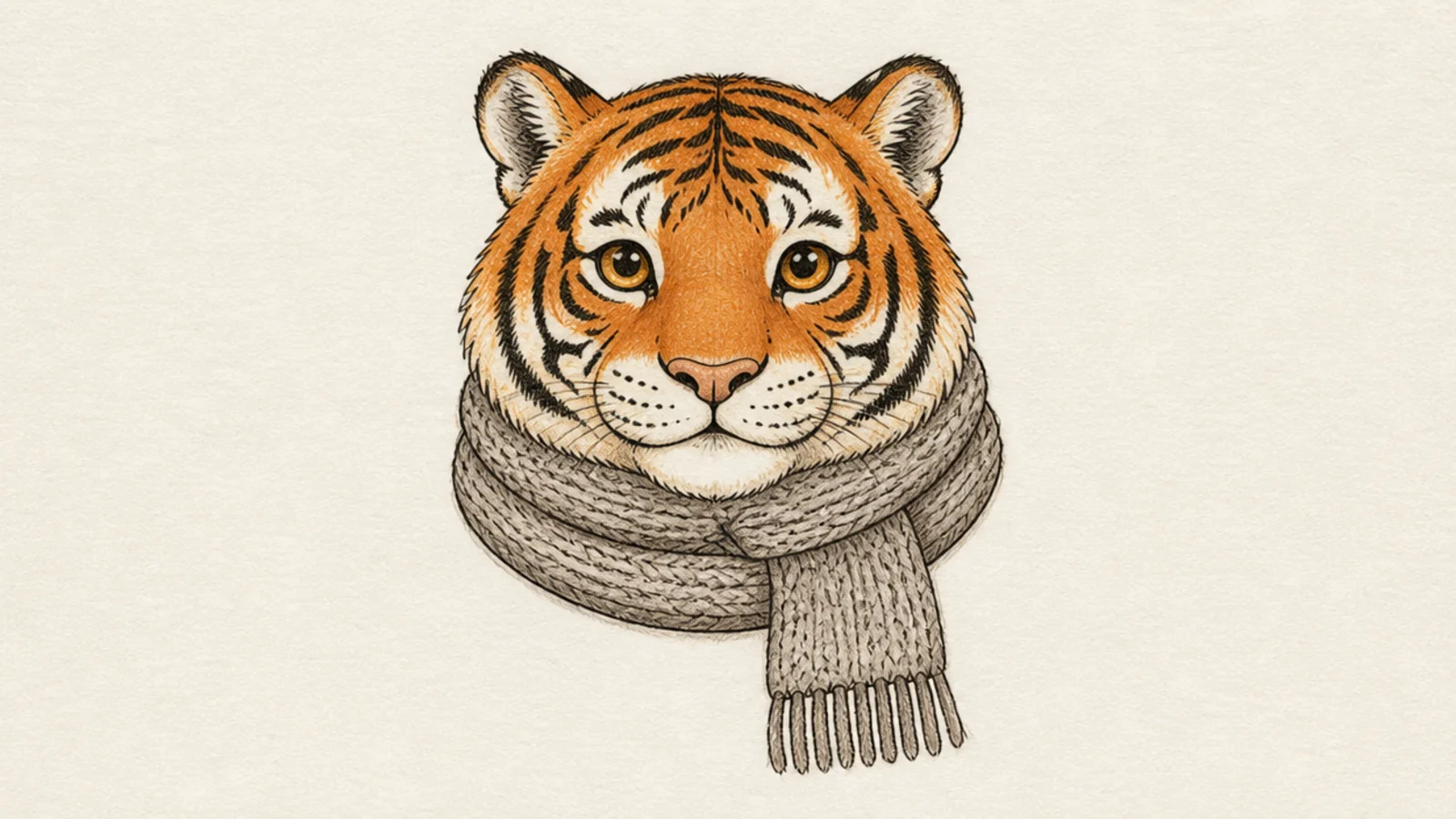
Wrapping a simple scarf around the tiger’s neck makes a cozy, seasonal doodle. The scarf is a couple of wrapped shapes and gives the plain face a warm, cute finish.
Step 1 draw a simple tiger head. Step 2 wrap a scarf shape across the bottom of the face with a hanging end. Step 3 add short lines on the scarf for a knitted texture.
Let one end of the scarf hang down with a little fringe for a cozy look.
Don’t cover the whole face; leave the eyes and muzzle showing.
25 Mini Tiger Doodle Pattern
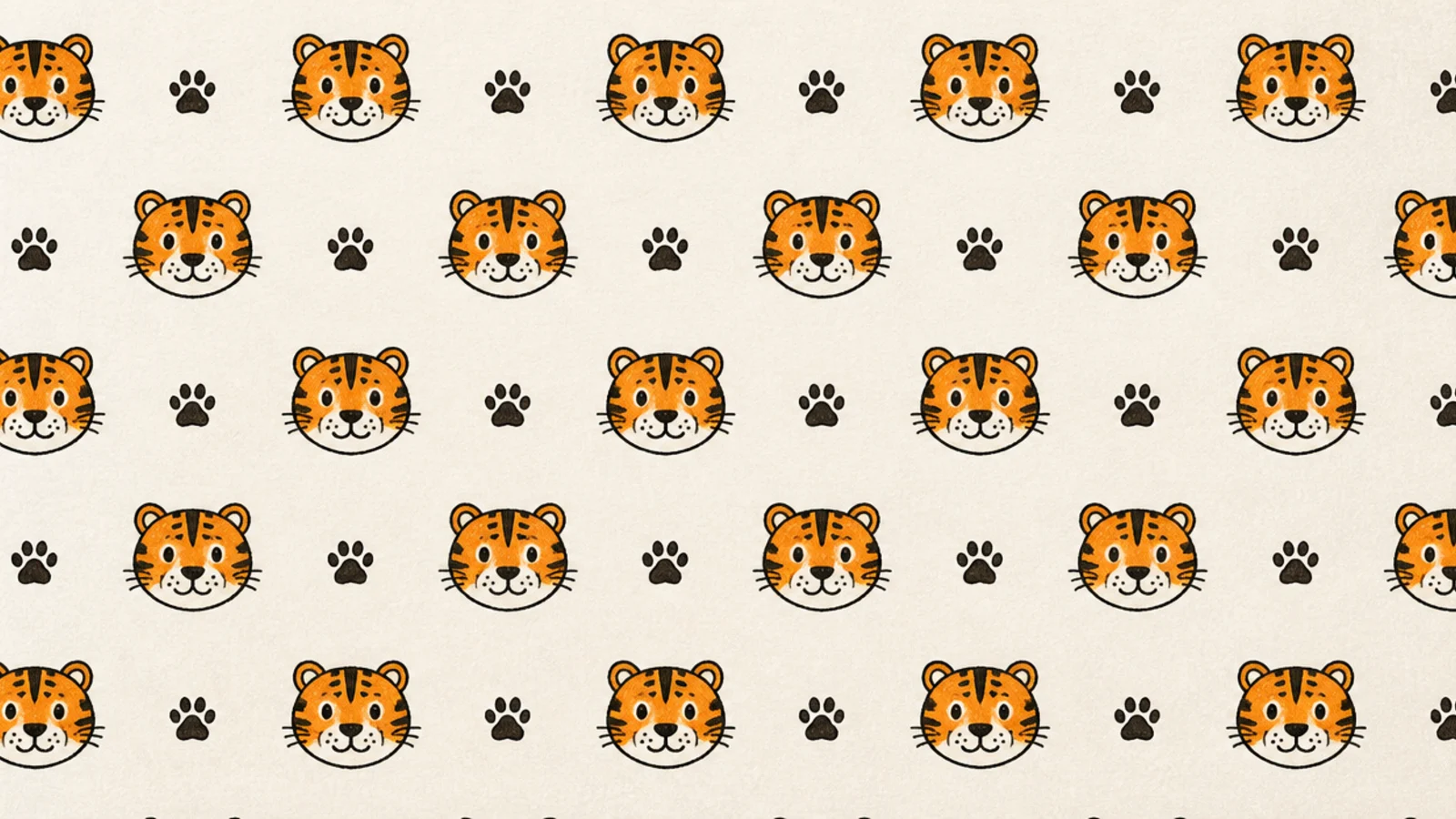
Step 1 draw a loose grid lightly. Step 2 fill it alternating tiny tiger faces and paw prints. Step 3 keep every face the same simple style.
A small repeating pattern of tiny tiger faces and paw prints is a satisfying way to fill a page. Each element is quick, and repeating them builds confidence with the basic shapes.
AvoidDon’t vary the sizes much; even little icons make a tidier pattern.
Pro tipAlternate faces and paw prints so the pattern has a nice rhythm.