1. Egg-Head Fox Face with Two Ear Triangles
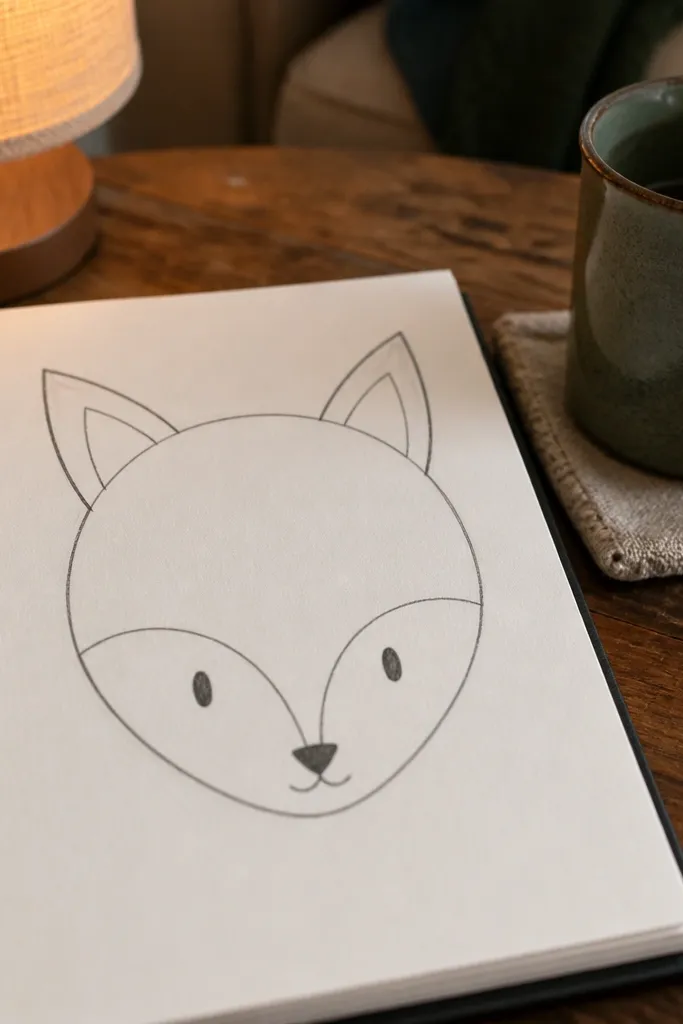
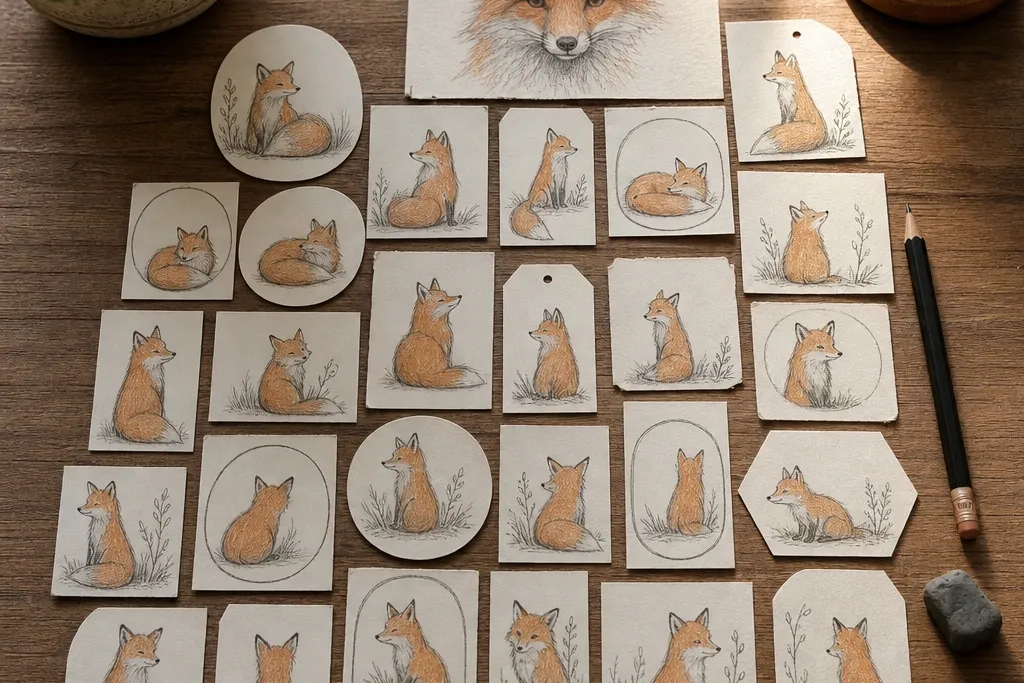
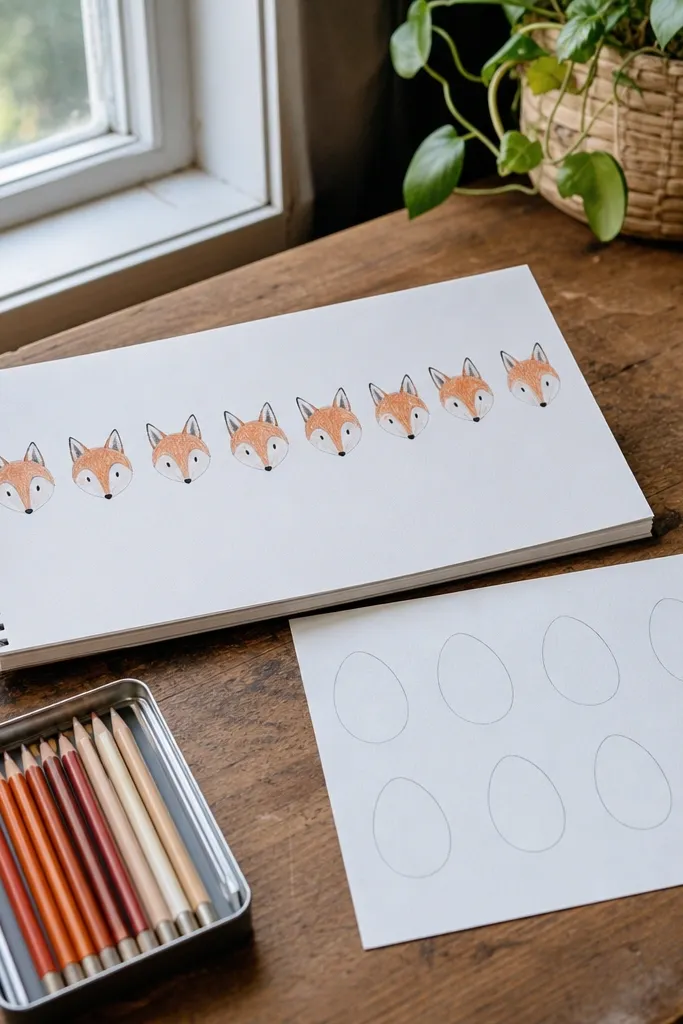
This prompt is the foundation for beginner-friendly fox drawing easy because it removes all pressure to draw a full body. Start with an egg shape for the head, then add two triangle ears that sit slightly above the center line. The eyes are small ovals, and the nose is a tiny triangle or rounded bump. Keep the mouth as a short curve — just enough to suggest a smile. When you finish, you get a fox face that reads clearly even if the lines are imperfect.
Step 1: Lightly draw an egg shape angled slightly to the right, then draw a center guideline down the middle. Place the ears as two triangles — left and right — with their bases touching the top of the egg. Step 2: Add two small ovals for eyes on the center line, then draw a tiny nose just below them and a short curved mouth. Finally, erase extra guidelines and darken the final outline.
Pro tipKeep your ears a little too small on purpose. Small ears are more forgiving than huge ones.
AvoidDon’t draw fur texture yet — outline first, then details.
2. Side-Eyes Fox with a Simple Profile Nose
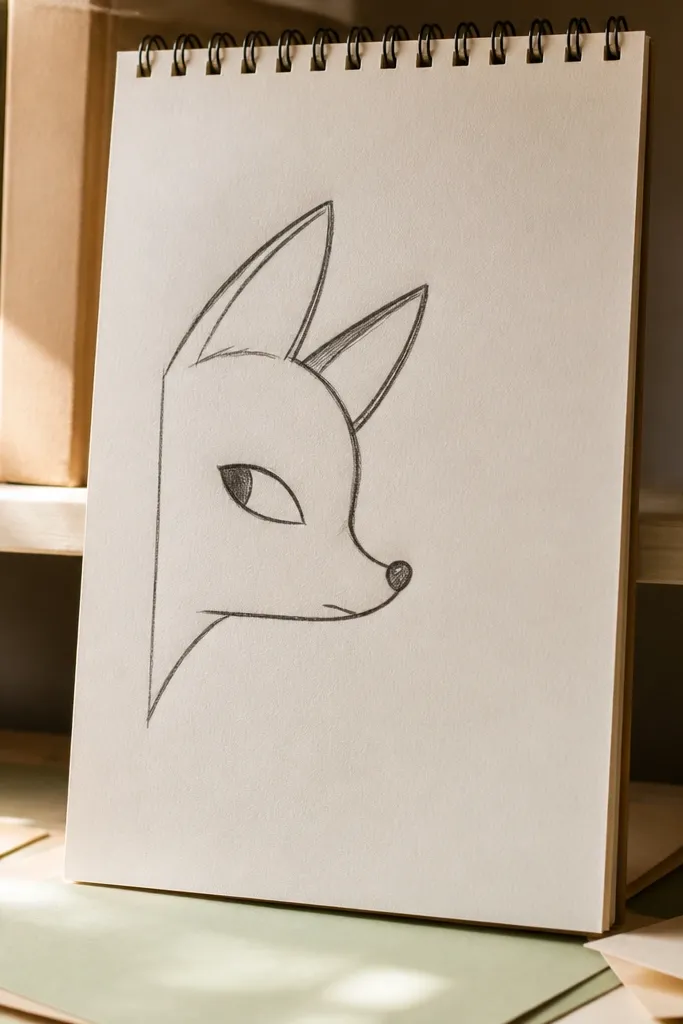
Side view feels harder, but this version stays easy by using a profile-friendly nose and minimal features. You’ll draw the head as a tilted oval, then place one eye as a small almond. The nose is a simple bump with a short line for the muzzle. The result looks like a fox peeking, and you don’t need to draw both eyes or complex jaw shapes. It’s a great prompt when you want variety without full anatomy work.
Step 1: Draw a tilted oval for the head and add a short guideline for the eye line. Add one ear as a triangle on the far side, and keep it smaller than you think you need. Step 2: Place one almond eye near the guideline, then draw a small profile nose bump and a short muzzle line. Finish with a curved mouth line and erase the guideline.
Pro tipAngle the head slightly — the fox looks more intentional with even a tiny tilt.
AvoidDon’t try to draw a full cheek line on the far side. One muzzle line is enough.
3. Chibi Fox Head with Big Ears
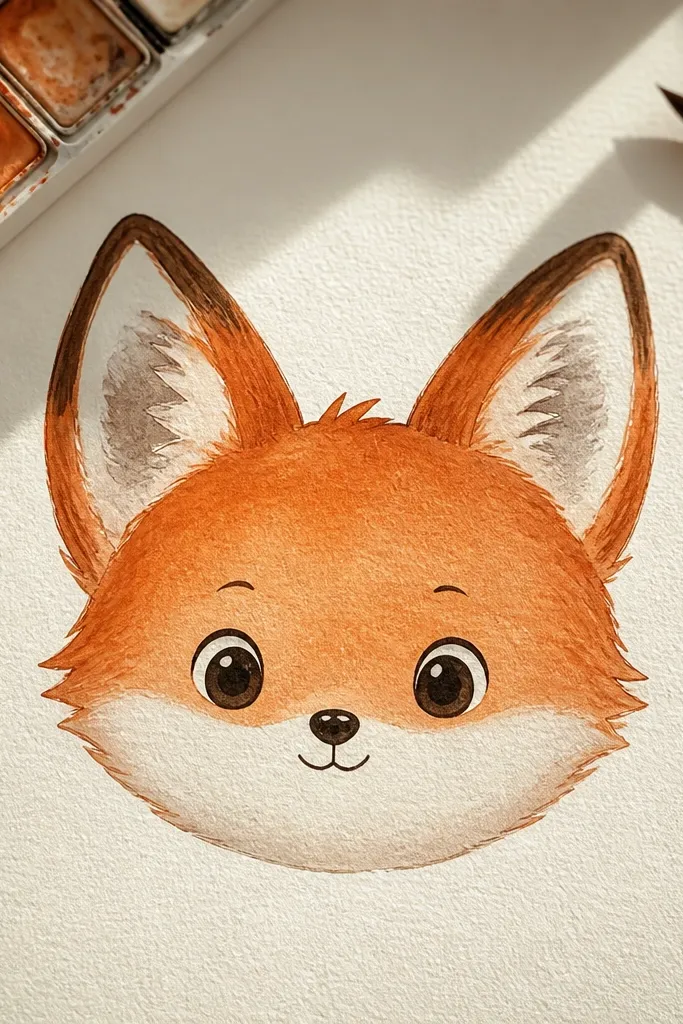
Chibi style is beginner-friendly fox drawing easy because it breaks realism on purpose. Use a round head, then make ears bigger than normal. Big ears hide small mistakes in placement, and round eyes make the face look cute even with simple lines. This prompt also teaches scale control: ears sit high, eyes sit low enough to leave space for the muzzle. You get a clear fox expression without drawing a body.
Step 1: Draw a circle for the head and lightly mark the eye level with a faint horizontal line. Draw two large triangles for ears that extend past the circle’s top. Step 2: Add two round eyes, then a small triangle nose and a tiny curved mouth. Finally, add a short muzzle line under the nose and erase the eye guide.
Pro tipMake the muzzle smaller than the nose looks like it should be. That keeps the face balanced.
AvoidDon’t add whisker lines yet. Start with face only.
4. Front-Facing Fox Face with a Scarf
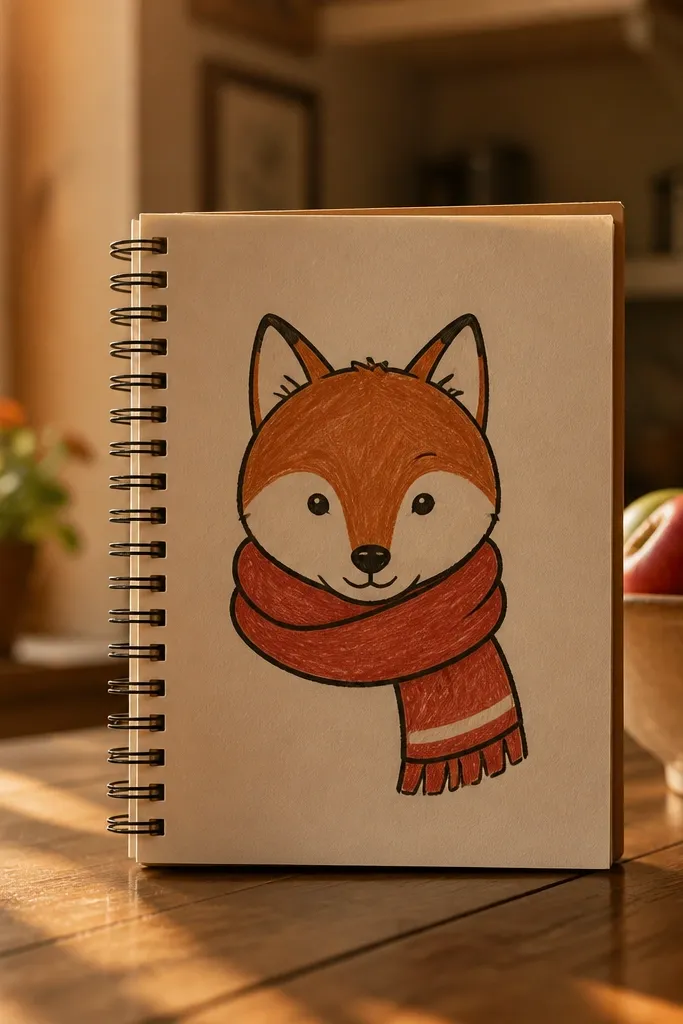
Adding a scarf is a cheat code for making your fox look finished while staying easy. Your job stays the same: draw the egg-head face, then add a scarf shape with two folds. Scarves hide awkward neck lines and give you a chance to practice curves without fur rendering. Use a thick scarf line and keep the fold lines simple — two or three marks. This prompt works great for beginners who want a cute character look.
Step 1: Draw the egg-head fox face with two ears and dot or oval eyes. Extend a short neck area below the head and draw a scarf band as a curved rectangle around it. Step 2: Add two scarf fold lines across the band and a small tail end hanging to one side. Darken the scarf outline and erase any extra neck guidelines.
Keep scarf folds on one side only. Symmetry is harder than it looks.
Don’t wrap the scarf too high into the face. Leave the muzzle area clear.
5. Fox Face with a Leaf Crown
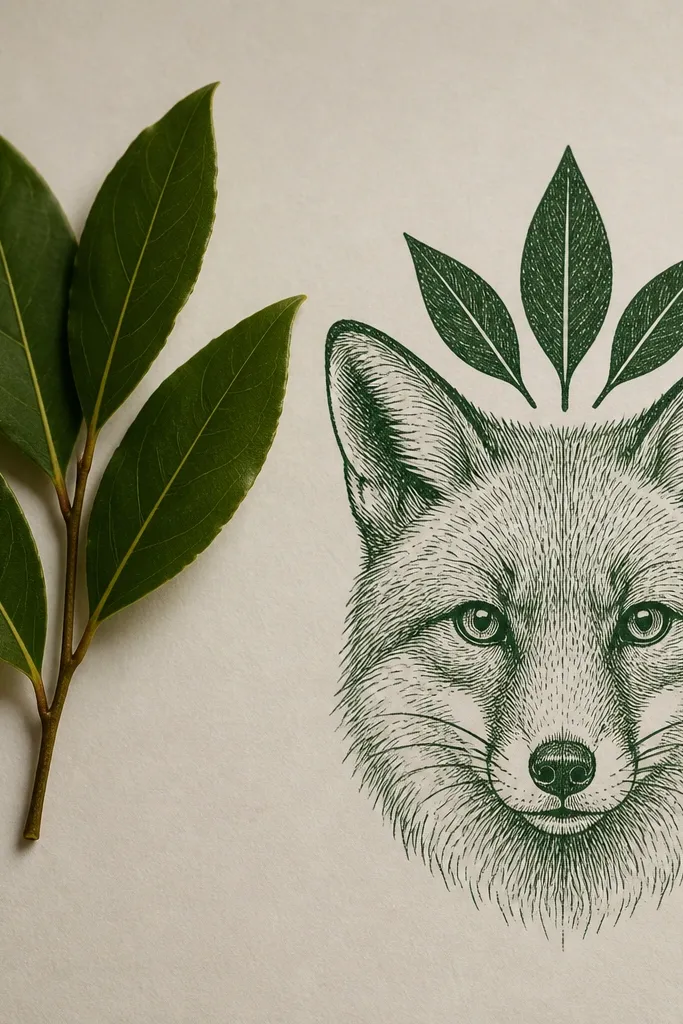
This prompt teaches layering without complexity. You draw the fox face first, then add a crown of three leaf shapes behind the ears. Leaf shapes are easy because they’re basically teardrops with a center vein line. The crown makes your fox look like a character, not just a sketch. It also gives you a clear “done” moment — once the leaves are placed, the drawing feels complete.
Step 1: Draw the egg-head fox face with two ears and a small nose. Sketch three leaf teardrops across the top — one centered and two slightly angled. Step 2: Add one center line inside each leaf, then outline the crown edges lightly so it doesn’t overpower the face. Erase any crown guideline that crosses the eyes.
Pro tipMake the center leaf slightly bigger. It anchors the composition.
AvoidDon’t add too many leaves. Three is enough to read as a crown.
6. Fox Face in a Circle Frame
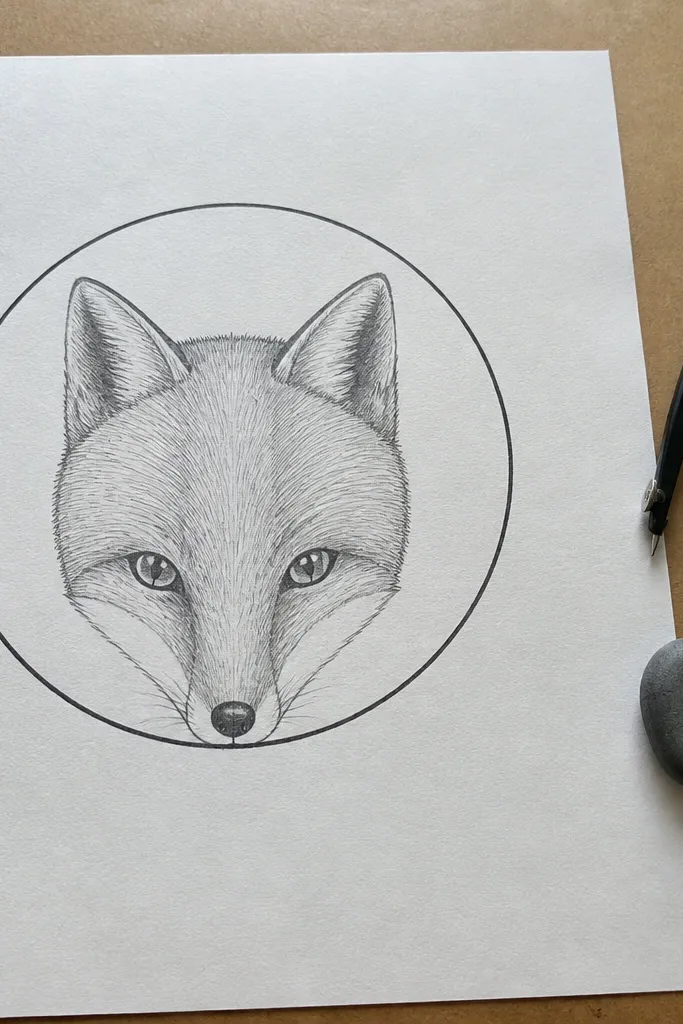
Frames make drawing easier because they force placement. When your fox face has to fit inside a circle, you stop wandering around the page and you get cleaner proportions. This prompt is perfect for beginner-friendly fox drawing easy because it’s forgiving: if the face is slightly off, the circle still looks intentional. Use it for practice too — draw multiple circles and vary only the ear size or eye shape.
Step 1: Draw a circle on your page and lightly mark the vertical center line inside it. Place the egg-head fox face so the top of the head sits near the upper half of the circle. Step 2: Add ears, eyes, nose, and mouth while keeping everything inside the circle boundary. Finally, darken the circle and erase any stray pencil lines.
Keep the mouth near the lower third of the circle. That’s where the face starts to look “fox-like.”
Don’t let the nose drift past the circle edge.
7. Fox Face with a Tiny Heart Nose
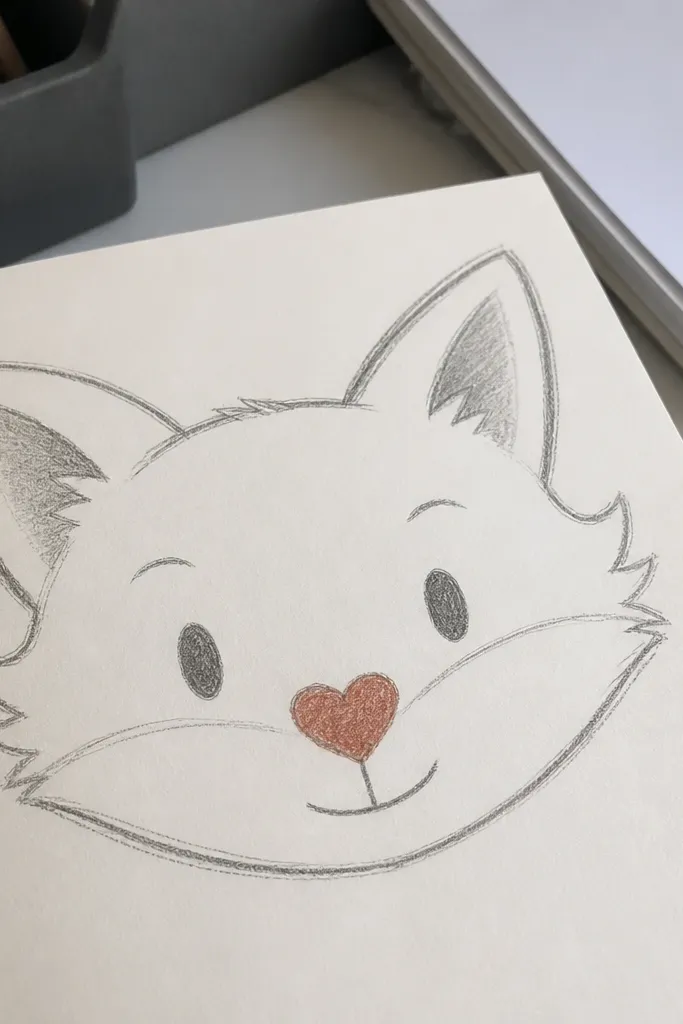
This is a cute prompt that teaches a beginner-friendly fox drawing easy principle: small shapes can change the entire expression. Replace the usual triangle nose with a tiny heart or heart-like curve. Your eyes and mouth stay simple, so you don’t need better drawing skills — just a different nose shape. It looks playful, and it’s easy to repeat across a page as a practice sheet.
Step 1: Draw an egg-shaped head and two triangle ears. Add two small oval eyes and keep the eye spacing even. Step 2: Replace the nose with a tiny heart shape centered under the eyes, then draw a short curved mouth line. Clean up with an eraser and darken the final outline.
Pro tipMake the heart nose smaller than you think. Big hearts look more like a cartoon sticker than a fox.
AvoidDon’t add extra lines around the nose. Let the heart shape do the work.
8. Fox Head with One Raised Brow
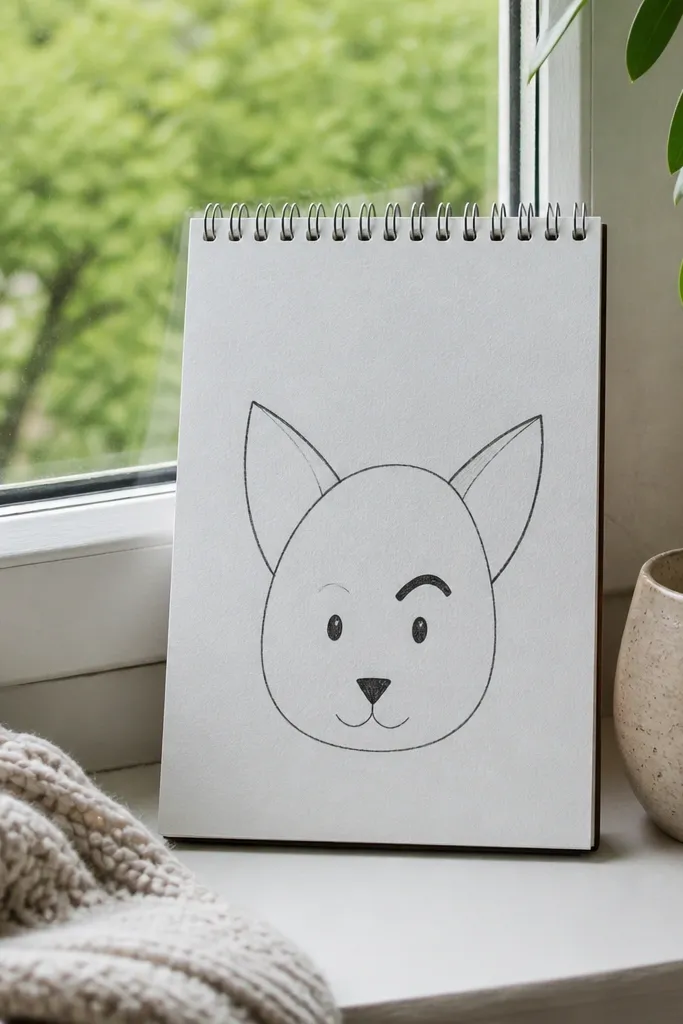
Expressions are easier than anatomy. This prompt keeps the face simple but adds attitude using one eyebrow line. Draw the fox face as usual, then add a single short brow curve above one eye. The raised brow makes the fox look curious or suspicious without needing complex mouth shapes. It’s also a great way to practice line confidence because you only add one new feature.
Step 1: Draw the egg-head fox face and place both eyes as small ovals. Add a tiny nose and a short mouth curve. Step 2: Add one brow line above one eye — a short curved stroke that angles upward. Erase extra guidelines and darken the brow and eye outlines.
Pro tipKeep the brow line shorter than the eye width. Long brows can look like a mask.
AvoidDon’t change both brows. One raised brow is what keeps it easy.
9. Fox Face with Closed Eyes and a Smile
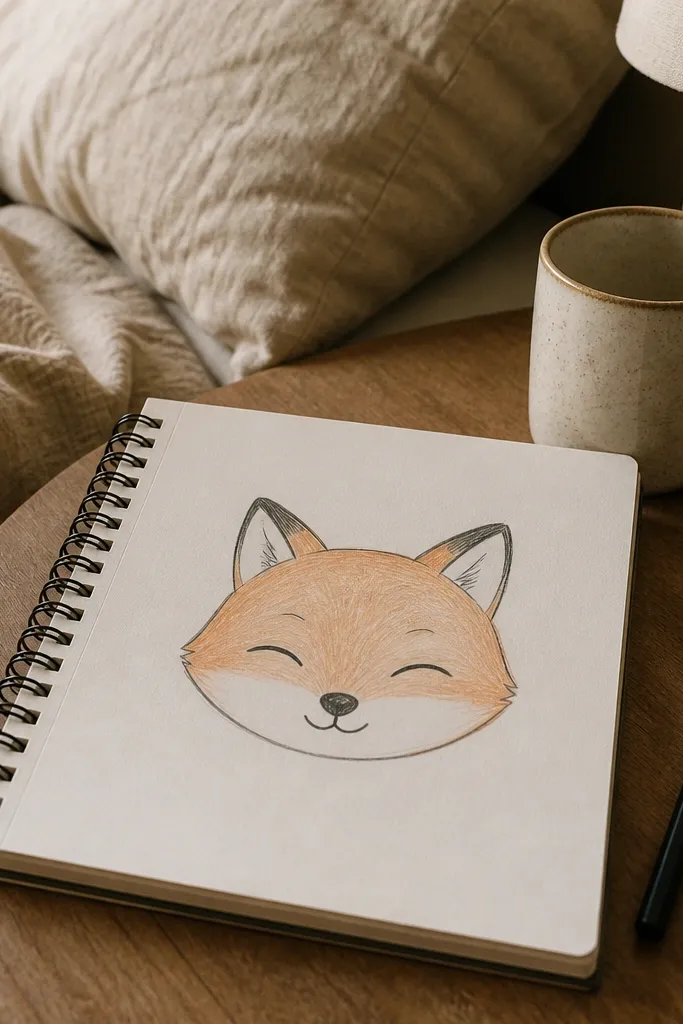
Closed eyes remove the hardest part of drawing eyes: placement and shape symmetry. You still get a clear fox face because the nose and mouth do most of the work. Use short curved arcs for closed eyes, then draw a small smile and a simple muzzle line. This prompt is beginner-friendly fox drawing easy for days when your lines feel shaky. It also teaches that you can simplify features and still read the character.
Step 1: Draw an egg-shaped head with two triangle ears and a center guideline. Place the nose and mouth first, then leave eye space. Step 2: Draw closed eyes as two short arcs above the nose area. Add a small muzzle line and erase the center guideline.
Pro tipMake the smile slightly wider than the nose. That’s what makes the expression feel warm.
AvoidDon’t add lashes or tiny details. Keep it clean.
10. Fox Side Profile with a Curl Tail Tip
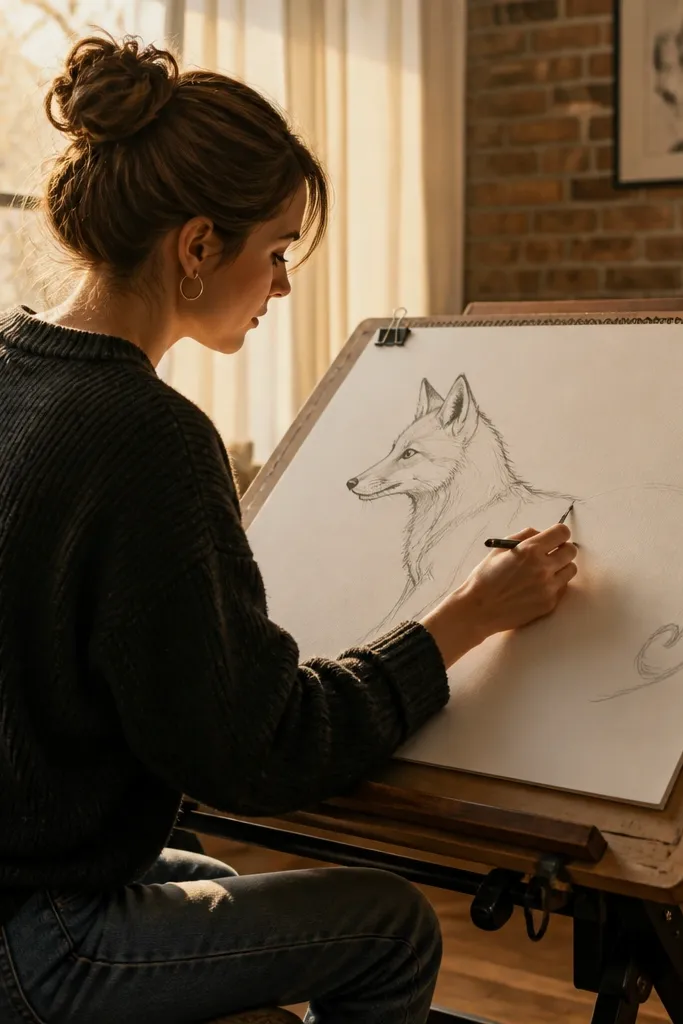
This is a half-body prompt that teaches movement. You draw the side profile head, then add a simple tail curl at the edge of the page. The tail curl gives you a clear silhouette and helps beginners avoid awkward full-body proportions. Keep the body lines minimal — just enough to connect head to tail. This prompt looks dynamic even with basic shapes.
Step 1: Draw a tilted oval head in profile and add one triangle ear. Add one almond eye, a small profile nose bump, and a short muzzle line. Step 2: Draw a simple body line down and back up into a tail curl — a thick C-shape. Finish by outlining the tail tip and erasing helper lines.
Pro tipUse a thick line for the tail curl. It makes the silhouette instantly readable.
AvoidDon’t draw legs. This prompt is about head + tail movement.
11. Fox Sitting Pose with Boxy Chest
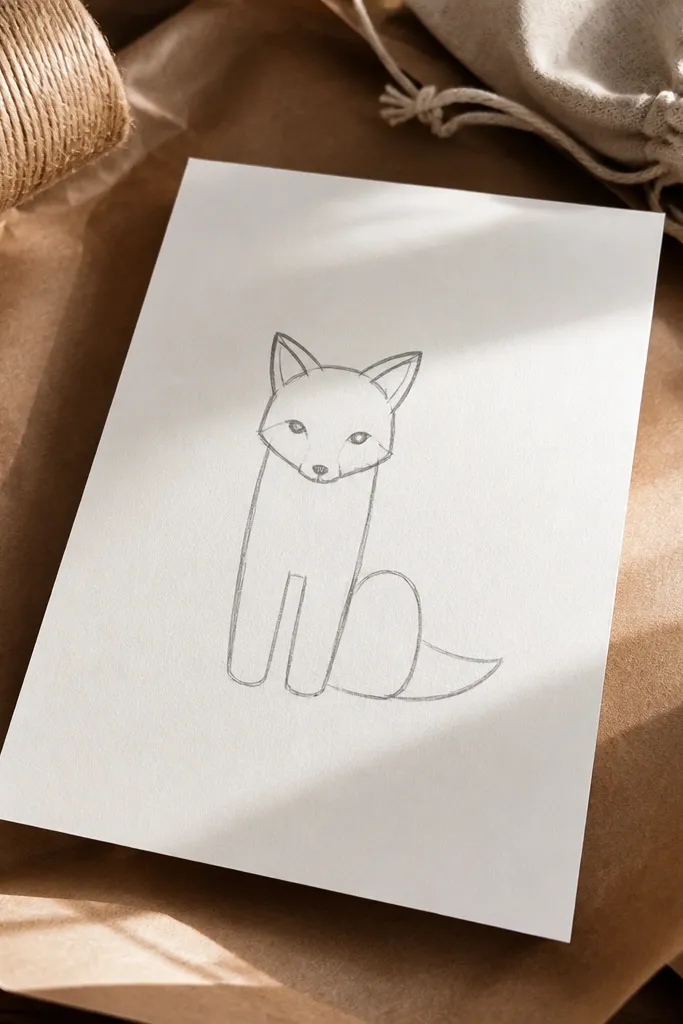
Sitting poses are beginner-friendly fox drawing easy because the body is compact and legs are simple. Use a boxy chest shape under the head and add two front paws as rounded rectangles or ovals. Keep the back leg implied with a single curved line. Your fox will look like it’s sitting even if the legs aren’t detailed. This prompt is ideal if you want a full character, not just a head.
Step 1: Draw the egg-head fox face and connect it to a boxy chest shape using two short angled lines. Add two small ears and keep the head centered above the chest. Step 2: Sketch two front paws as rounded rectangles with small toe bumps, then add a simple tail curl behind the chest. Darken the silhouette and erase the construction lines.
Pro tipMake the paws slightly wider than the chest opening. That keeps the sitting pose stable.
AvoidDon’t make the chest too narrow. Narrow chests make the pose look like it’s falling forward.
12. Fox with a Round Belly and Short Back Legs
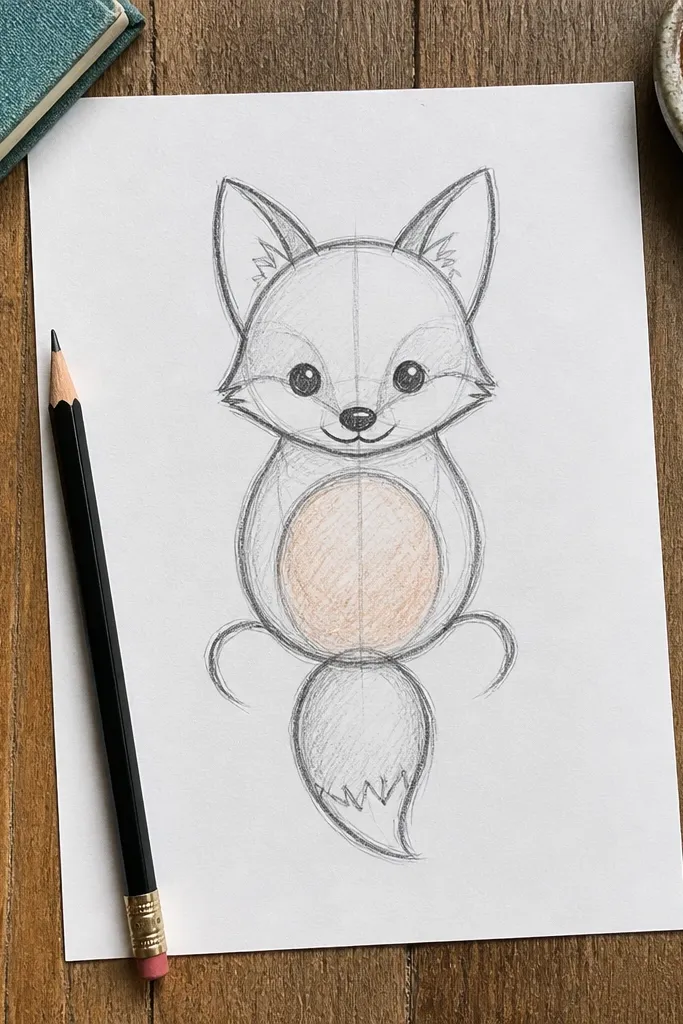
A round belly is the easiest body shape for a beginner fox. It hides proportion errors because the belly anchors everything. This prompt keeps the legs short and simplified, so you only focus on the head connection and tail placement. Use a circular belly under the chest, then draw two short back legs as curved lines. The result reads as a fox lounging, not a complicated animal sketch.
Step 1: Start with the egg-head fox face, then draw a simple chest line and a big circle for the belly. Add two short back legs as curved lines that tuck under the belly. Step 2: Place a tail curl behind the belly and add two small front paws as ovals near the bottom of the belly circle. Outline the final shapes and erase guide lines.
Pro tipKeep the belly circle large. It’s the easiest way to make the fox look cute.
AvoidDon’t draw long skinny legs. Short legs are part of the ease here.
13. Fox Standing with a Simple S-Body
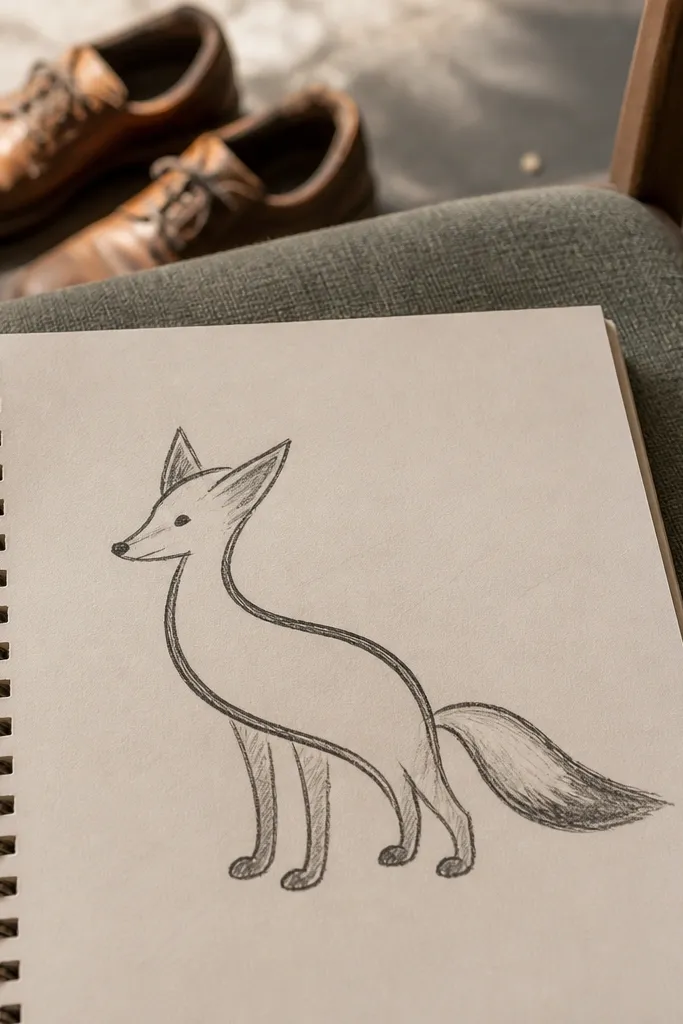
Standing foxes look complex, but you can reduce the problem to one curve. This prompt uses an S-shaped body line to guide the torso and hips, then you add four basic legs as lines with small rounded feet. The head is still the egg shape, so nothing changes there. The S-body gives you a believable stance even if your legs aren’t perfect. It’s a solid step up from sitting poses.
Step 1: Draw the egg-head fox face and connect it to an S-shaped torso line — a smooth curve from neck to hips. Step 2: Add two front legs as straight-ish lines ending in small oval feet, then add two back legs partly tucked behind the hips. Finish with a tail that follows the curve behind the body.
Pick one leg to be slightly forward. That small asymmetry makes it look more alive.
Don’t draw all legs the same length. Variation makes the stance read as natural.
14. Fox Running with Three Motion Lines
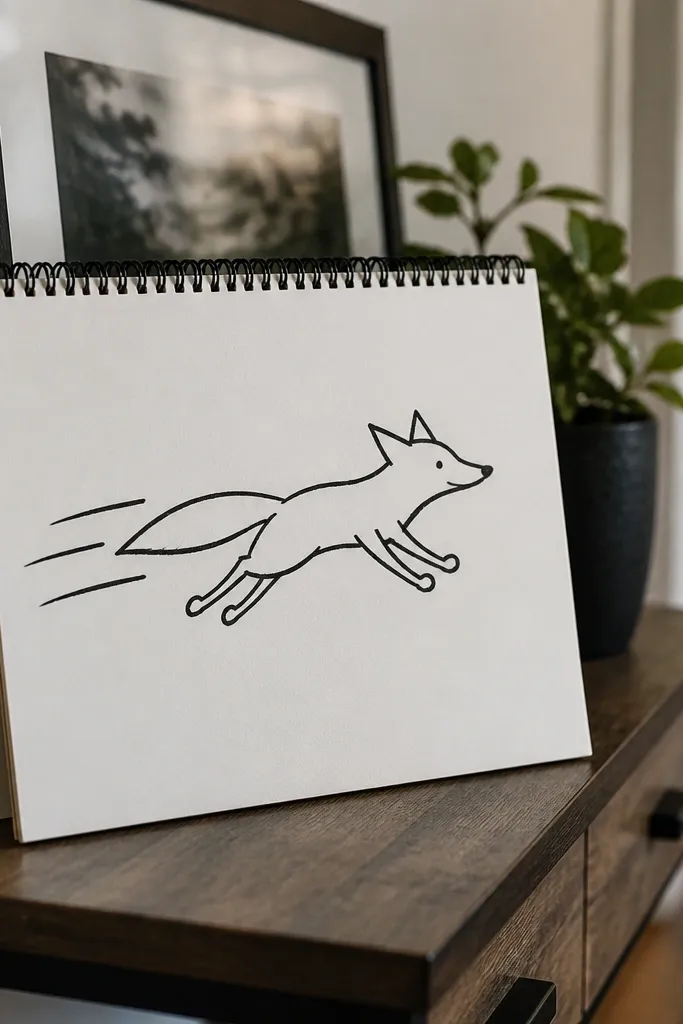
Motion is easier than anatomy when you use graphic cues. This prompt has you draw a running fox with simplified legs and add three motion lines to show speed. The head stays egg-shaped, and the body uses one forward curve. The legs are basic: two pairs of lines that suggest forward and back positions. Motion lines do the storytelling, so you don’t need to nail every paw angle.
Step 1: Draw the head and connect it to a forward-leaning body curve. Sketch four legs as simple lines, keeping the front legs shorter and the back legs slightly stretched. Step 2: Add a tail that trails behind as a curved shape, then draw three short motion lines behind the body. Ink or darken the main silhouette and erase construction marks.
Pro tipMake motion lines all the same length. It looks cleaner than random scribbles.
AvoidDon’t add full paw details. Keep feet as simple ovals.
15. Fox Head Turned Down Toward an Acorn
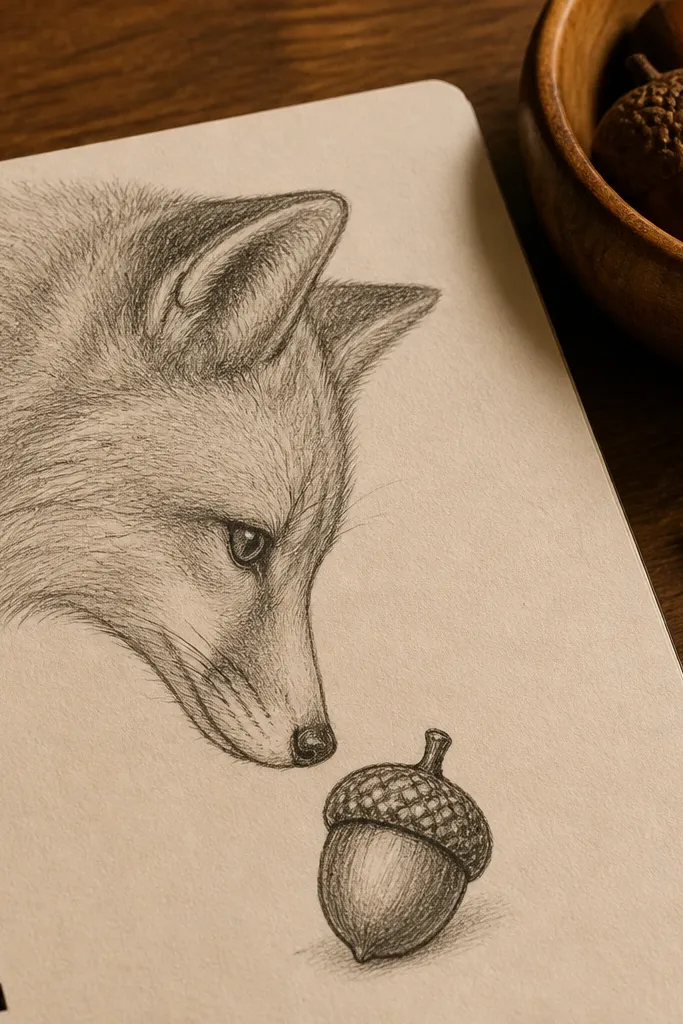
Turned-down heads are beginner-friendly fox drawing easy because the face stays readable and the expression is clear. You draw the fox head with the nose angled downward, then place an acorn shape in front. The acorn is easy: an oval cap on top and a rounded nut below. The prompt gives you a clear composition, and the prop makes your drawing feel finished. You’re not guessing where to put the fox — it’s looking at something.
Step 1: Draw an egg-shaped head and tilt it downward. Place eyes slightly above the center of the head, then draw a nose and muzzle pointing toward the bottom. Step 2: Add an acorn in front as a rounded cap with a small stem and a nut shape underneath. Darken the face outline, then lightly outline the acorn.
Pro tipTilt the head just a little. Too much tilt turns it into a weird angle quickly.
AvoidDon’t draw the acorn too big. Keep it smaller than the head.
16. Fox Face with Three Simple Fur Stripes
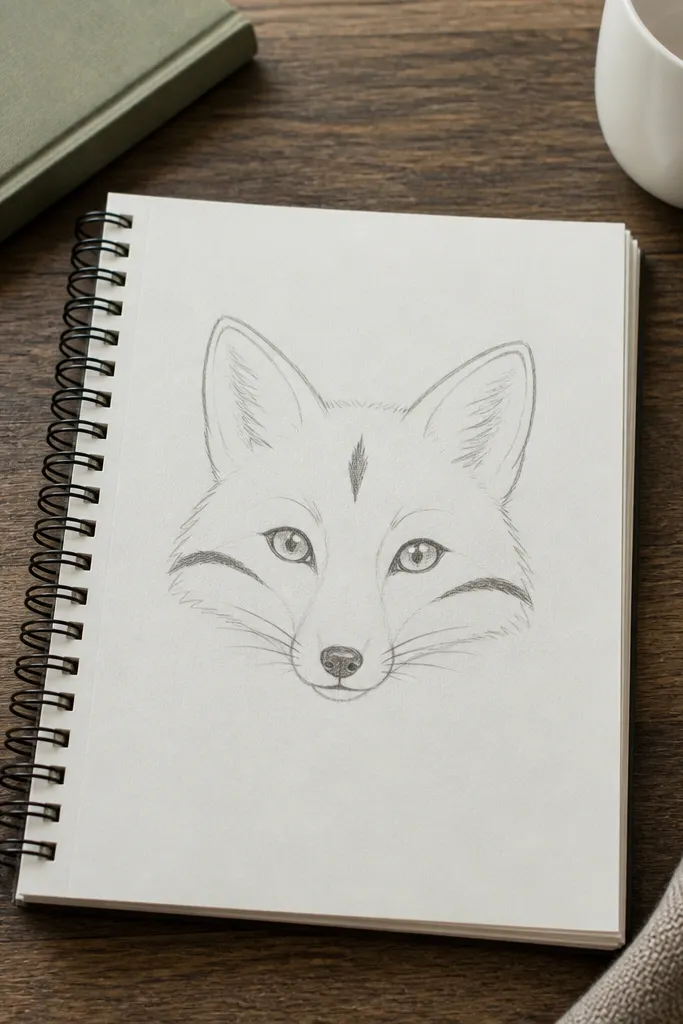
This prompt adds fur without turning into a texture project. You draw the face normally, then add three short fur stripes: one across each cheek area and one short line on the forehead. Fur stripes are forgiving because they don’t require perfect direction — just keep them curved and spaced. The result looks more like a fox character than a plain face sketch. It also teaches beginners how to add detail strategically.
Step 1: Draw the egg-head fox face with ears, eyes, nose, and mouth. Keep the outline clean and erase extra construction lines. Step 2: Add three fur stripes as short curved strokes on the cheeks and one on the forehead. Make each stripe about half the width of an eye. Finally, darken the final lines and leave the rest of the face plain.
Pro tipMatch the stripe curve to the face curve. That single rule makes it look intentional.
AvoidDon’t fill the whole face with stripes. Three is the easy, readable amount.
17. Fox with a Big Tail Loop and Small Body
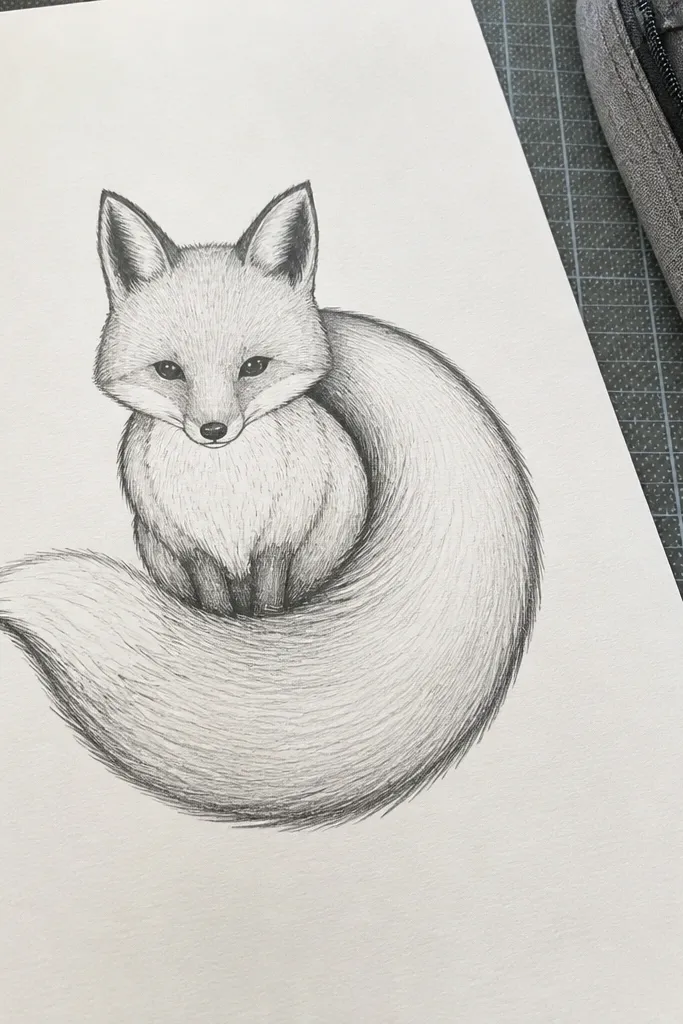
Big tail loops are the fastest way to make a simple drawing look designed. This prompt keeps the body small and the tail oversized, so beginners can focus on silhouette instead of anatomy. Draw the head and a small torso, then build a large tail loop that curls around like a comma. The loop tail hides mistakes in leg placement and makes the fox look playful. It’s a strong choice when you want “cute” without complexity.
Step 1: Draw the egg-head fox face and connect it to a small oval torso. Add two tiny front paws as short ovals near the bottom of the torso. Step 2: Draw a big tail loop behind the body — a thick C-shape that almost touches the side of the torso. Add a small tail tip and darken the silhouette.
Pro tipLeave a small gap between the tail and body. It makes the tail shape read clearly.
AvoidDon’t connect the tail to the head. Keep it behind the body.
18. Fox Face with a Simple Snow Scene Dot Background
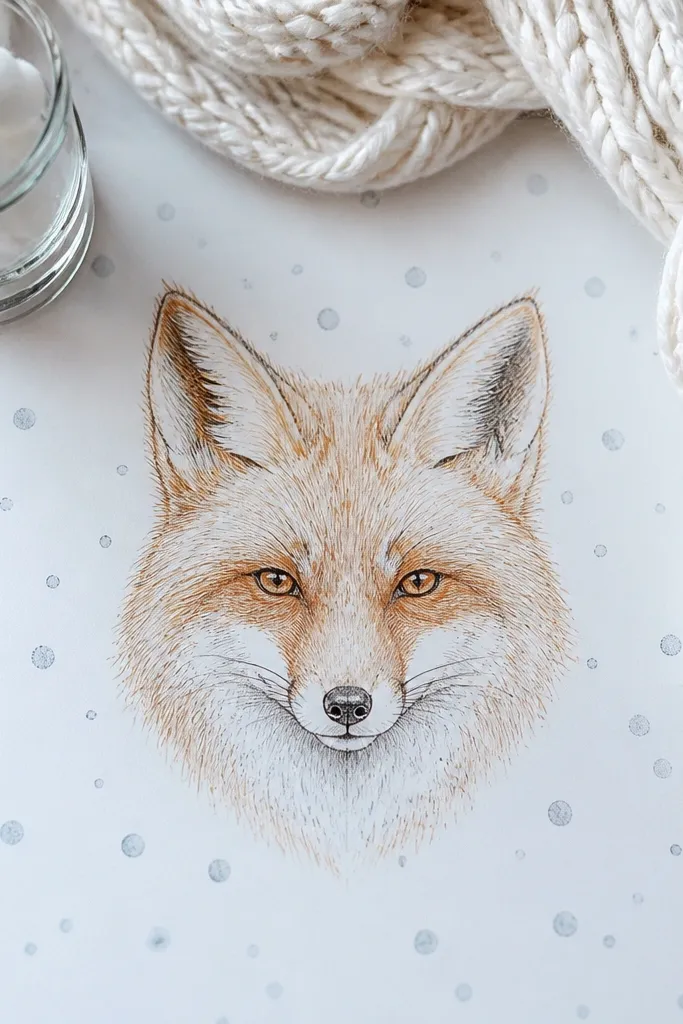
Background dots are an easy finishing trick for beginner-friendly fox drawing easy because they make the drawing feel like a scene without extra work. Draw the fox face in the center, then add small dots around it to suggest snow. Keep dots random but light, and avoid drawing detailed scenery. This prompt is great for learning contrast: your fox outline is dark, the snow dots stay faint. The scene reads instantly even with a basic face.
Step 1: Draw the egg-head fox face with ears and simple eyes and nose. Outline the face with a darker pencil or pen. Step 2: Add small dot clusters around the face — heavier dots near the bottom, lighter near the top. Keep dot size consistent and erase any dots that overlap the eyes if they get distracting.
Pro tipUse a softer pencil (2B) for the fox outline and a lighter touch for the dots.
AvoidDon’t draw dots inside the face outline. Keep them outside for clarity.
19. Fox Head with a Bandana Triangle
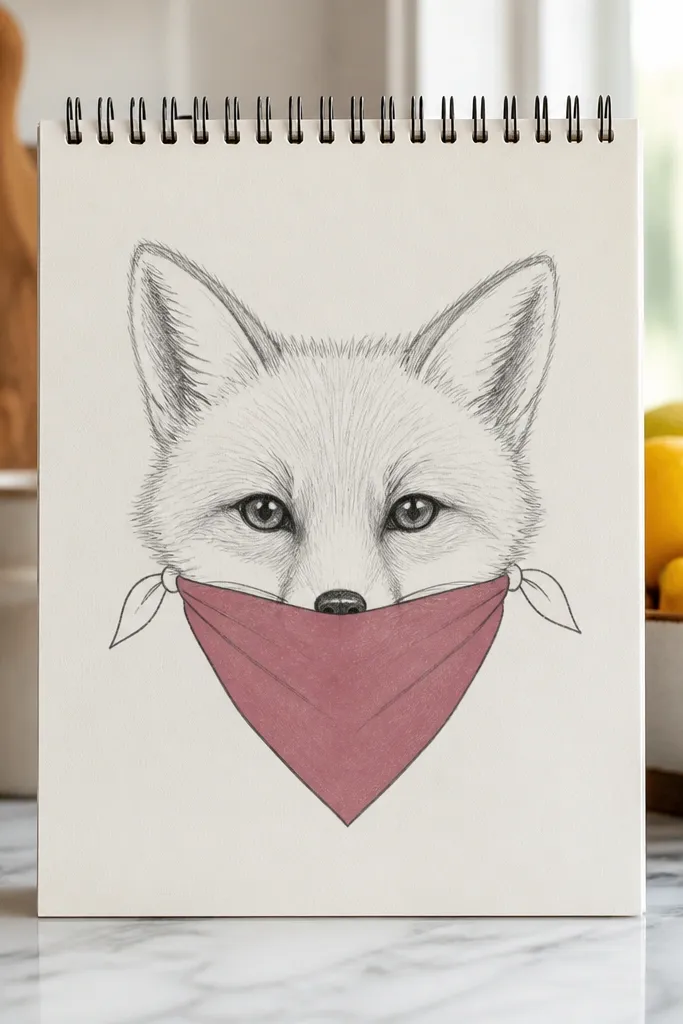
Bandanas add character with almost no extra drawing skills. This prompt uses the same egg-head face, then adds a triangle cloth under the nose area and two tie ends behind the jaw. The triangle is easy to shape, and the ties help your fox look like it has a neck — which beginners struggle with. Keep the bandana lines simple: one fold line across the triangle and a couple of tie curves. The fox looks “styled” even if the face is basic.
Step 1: Draw the egg-head fox with ears, eyes, and nose. Add a small muzzle and a short mouth curve. Step 2: Under the chin, draw a triangle bandana pointing down, then add one fold line across it. Draw two short tie ends behind the triangle and erase any guideline that crosses the bandana.
Pro tipMake the bandana triangle slightly wider than the muzzle. It balances the face.
AvoidDon’t draw bandana folds all over. One fold line is enough.
20. Fox Face with Simple Triangle Pattern on Ears
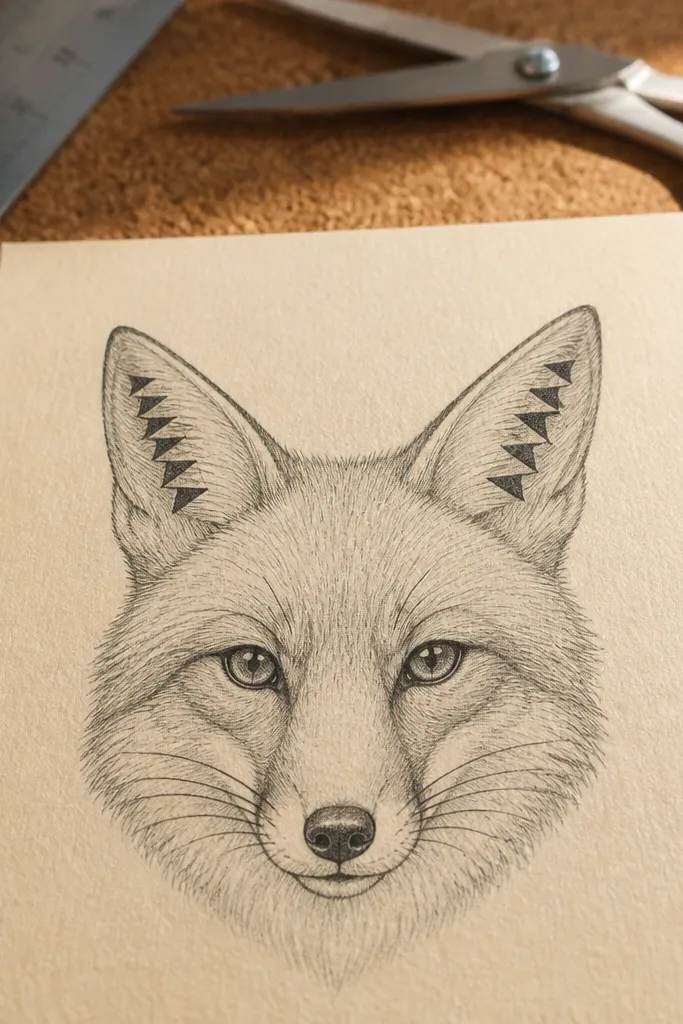
Patterns are forgiving because they’re repeatable. This prompt has you draw the fox face normally, then add a simple triangle pattern on each ear. Use three small triangles per ear, pointing inward, like a tiny chevron grid. It looks intentional and teaches symmetry without requiring perfect realism. You’ll end up with a character that feels decorated, not unfinished. Great for beginners who want detail but don’t want fur work.
Step 1: Sketch the egg-head fox face with ears and basic eyes and nose. Outline the ears clearly so you have a boundary for the pattern. Step 2: Inside each ear, draw three small triangles in a row. Keep spacing even by using your pencil tip to mark start and end points lightly first. Finish by darkening outlines and erasing construction lines.
Make the triangles all the same size. Consistency reads as “designed.”
Don’t overcrowd the ears. Three triangles per ear keeps it easy.
21. Fox Face with a Single Stripe on the Forehead
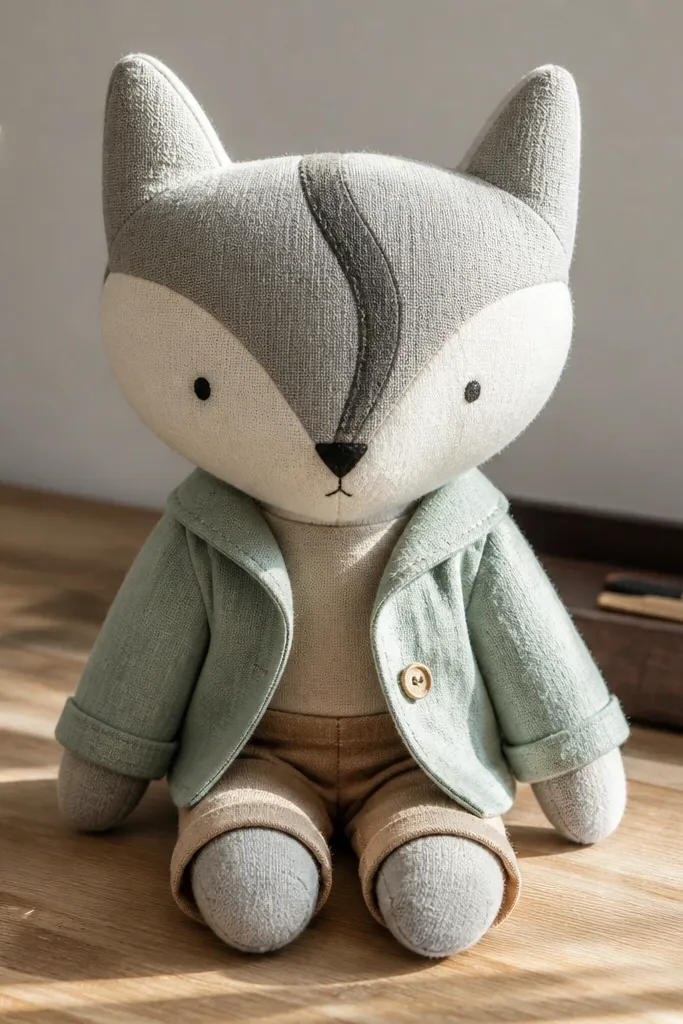
A single stripe is the cleanest way to add fox identity. This prompt keeps everything simple — egg head, ears, eyes, nose — then adds one curved stripe down the forehead toward the nose. Because there’s only one stripe, it’s hard to mess up the look. The stripe also teaches line planning: start the stripe at the center top and follow the face curve. It’s a beginner-friendly fox drawing easy prompt that makes your fox look more like a real species pattern.
Step 1: Draw the egg-head fox face with a center guideline. Place eyes and nose, then lightly sketch where the stripe will land. Step 2: Draw one curved stripe starting between the ears and tapering slightly as it approaches the nose. Clean up the stripe edges so it doesn’t cross the eyes awkwardly, then erase the center guideline.
Pro tipTaper the stripe near the nose. It makes the pattern look natural instead of pasted on.
AvoidDon’t make the stripe thick. A medium line looks better than a bold block.
22. Fox Face with a Bow on One Ear
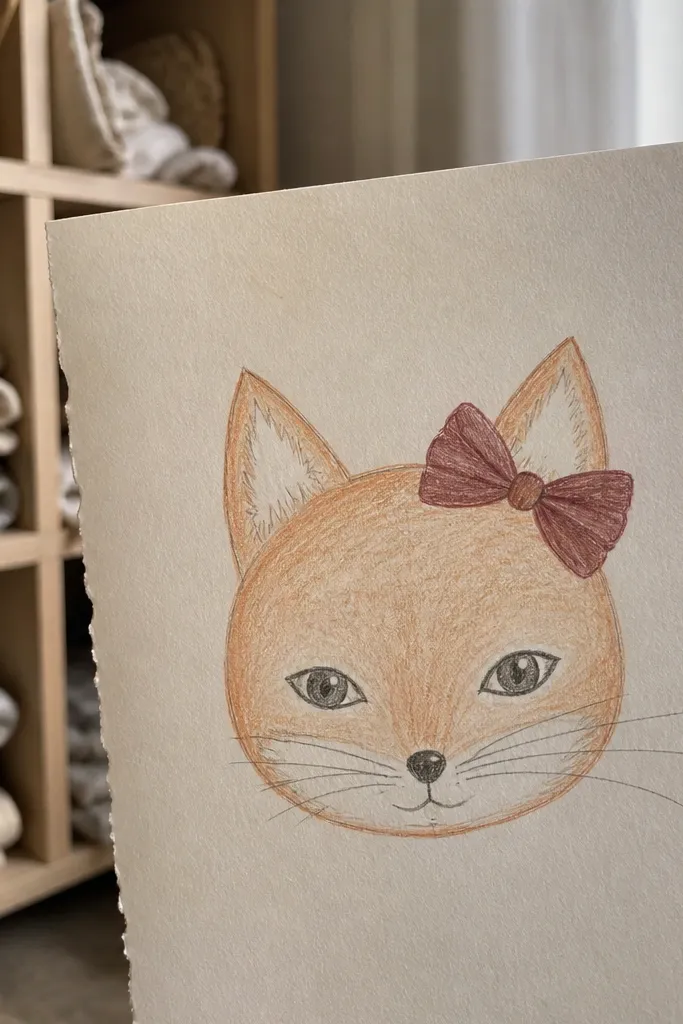
A bow is an easy character upgrade that doesn’t require body drawing. This prompt uses the egg-head face and adds a simple bow shape attached to one ear tip. Bows are basically two loops and a small center knot, so they’re easy to repeat. The bow gives you a clear focal point, which helps beginners draw the rest with more confidence. It’s a good choice when you want cute and simple in one go.
Step 1: Draw the egg-head fox face with ears, eyes, nose, and a short mouth. Choose one ear to decorate and outline it cleanly. Step 2: Draw a bow on that ear using two symmetrical loops and a small center knot. Add a light shadow line under the bow if you want, then erase guidelines and darken final lines.
Keep the bow slightly tilted. Perfect straight bows can look stiff in a hand-drawn sketch.
Don’t attach the bow too close to the head. Leave a small gap for readability.
23. Fox Head with a Simple Sun Behind It
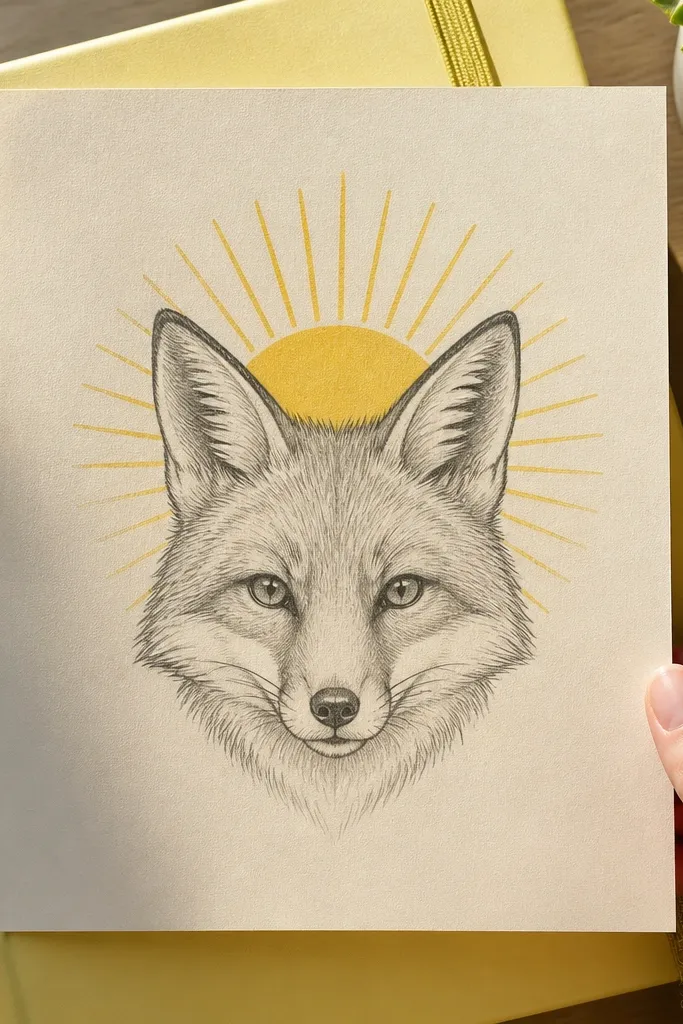
A sun behind the fox makes the scene feel complete without you drawing a background landscape. You draw the face first, then place a circle sun with short rays behind the ears. The sun provides a frame-like structure, so the fox stays centered. Beginners also get to practice ray lines — short and evenly spaced — which is easier than drawing trees or hills. This prompt is great when you want your fox to look like it belongs in a card or poster.
Step 1: Draw the egg-head fox face and outline it with dark lines. Step 2: Behind the head, draw a sun circle and add 8 to 12 short rays evenly spaced around it. Keep the sun rays outside the ear area so they don’t cover the eyes. Finally, erase any pencil overlap that makes the rays look messy.
Use 10 rays. It’s the sweet spot for balance and simplicity.
Don’t draw rays too long. Long rays overpower the fox.
24. Fox Face with a Crescent Moon and Tiny Stars
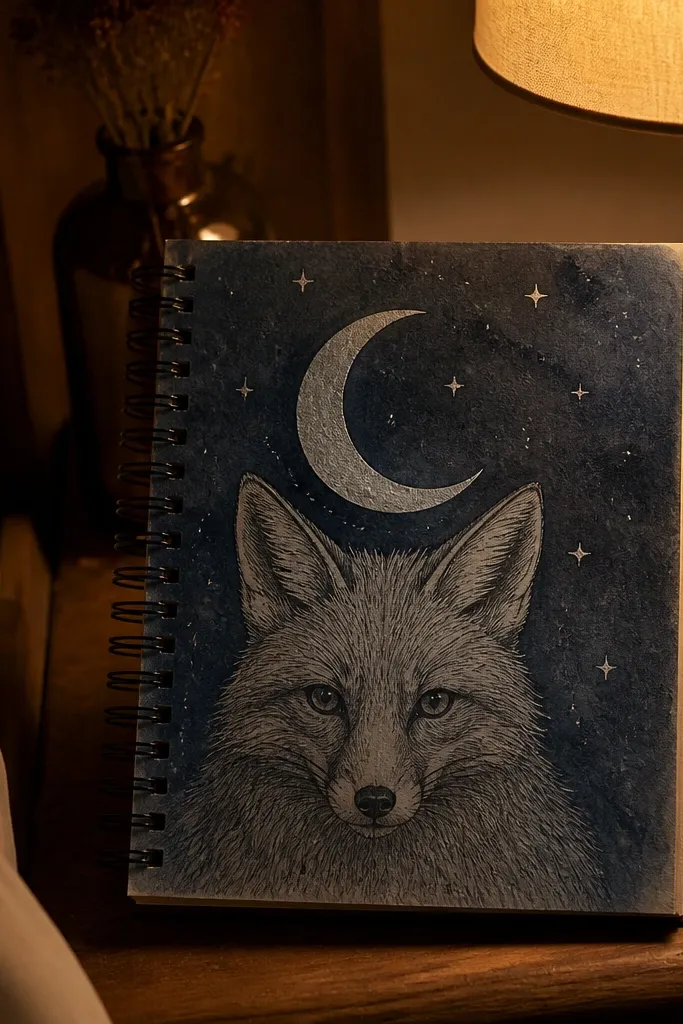
Night scenes are easier than daylight scenes because you’re using simple shapes. This prompt has you draw the fox face, then add a crescent moon and a handful of stars behind it. Keep the stars as tiny dots or small five-point stars, and don’t add clouds. The contrast between dark outline and light background shapes makes the fox pop. It’s beginner-friendly fox drawing easy because you’re not asked to draw complex sky gradients.
Step 1: Draw the egg-head fox face and outline it. Step 2: Place a crescent moon behind the top left or top right of the head, then add 5 to 8 stars as small dots around the moon. Avoid placing stars inside the face area so they don’t distract from the eyes. Erase construction marks if they show through the moon outline.
Pro tipCluster stars on one side. A balanced cluster looks intentional even when the fox lines wobble.
AvoidDon’t add lots of stars. Too many dots makes the page feel busy.