1 Detailed Eye Study
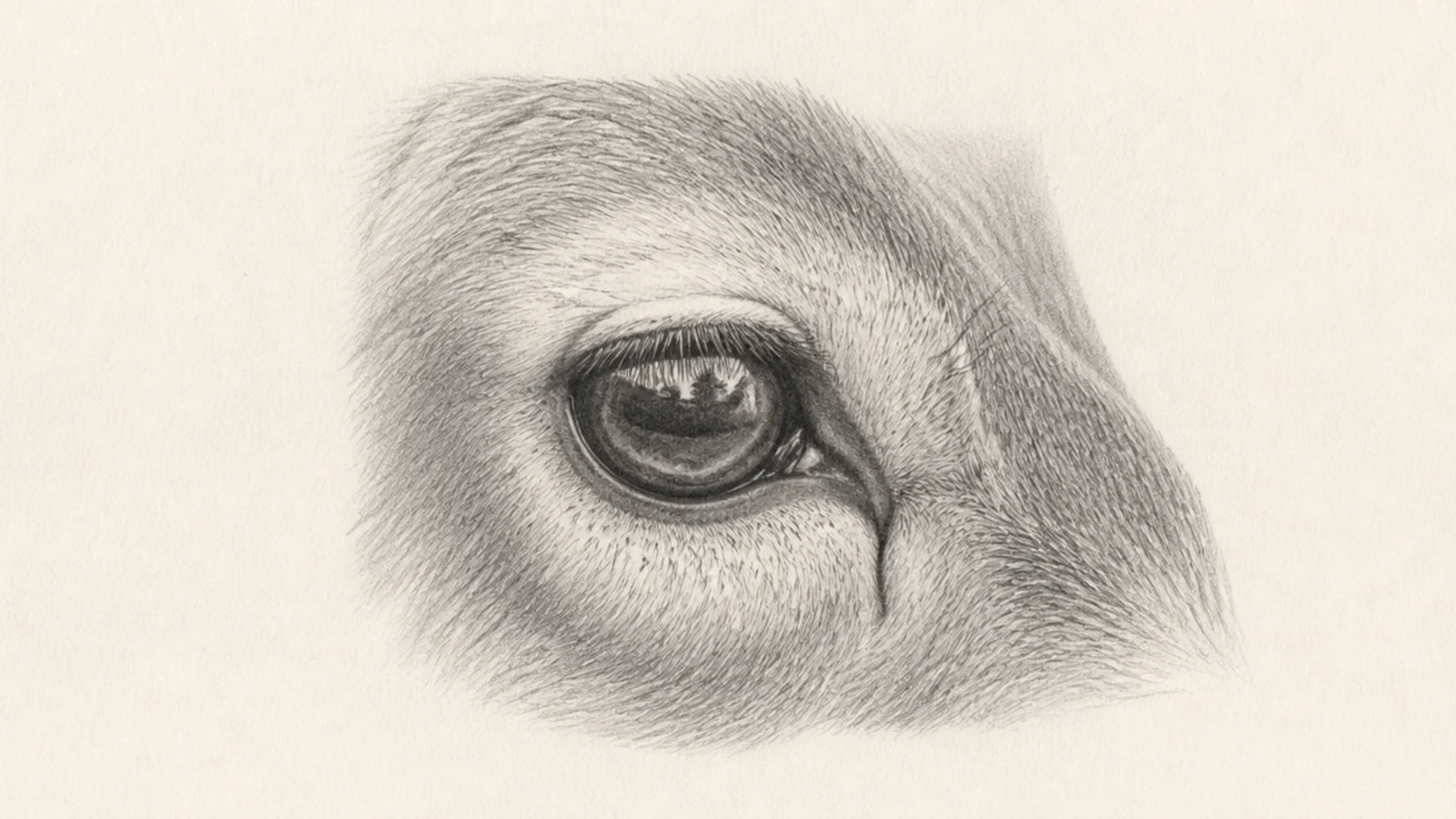
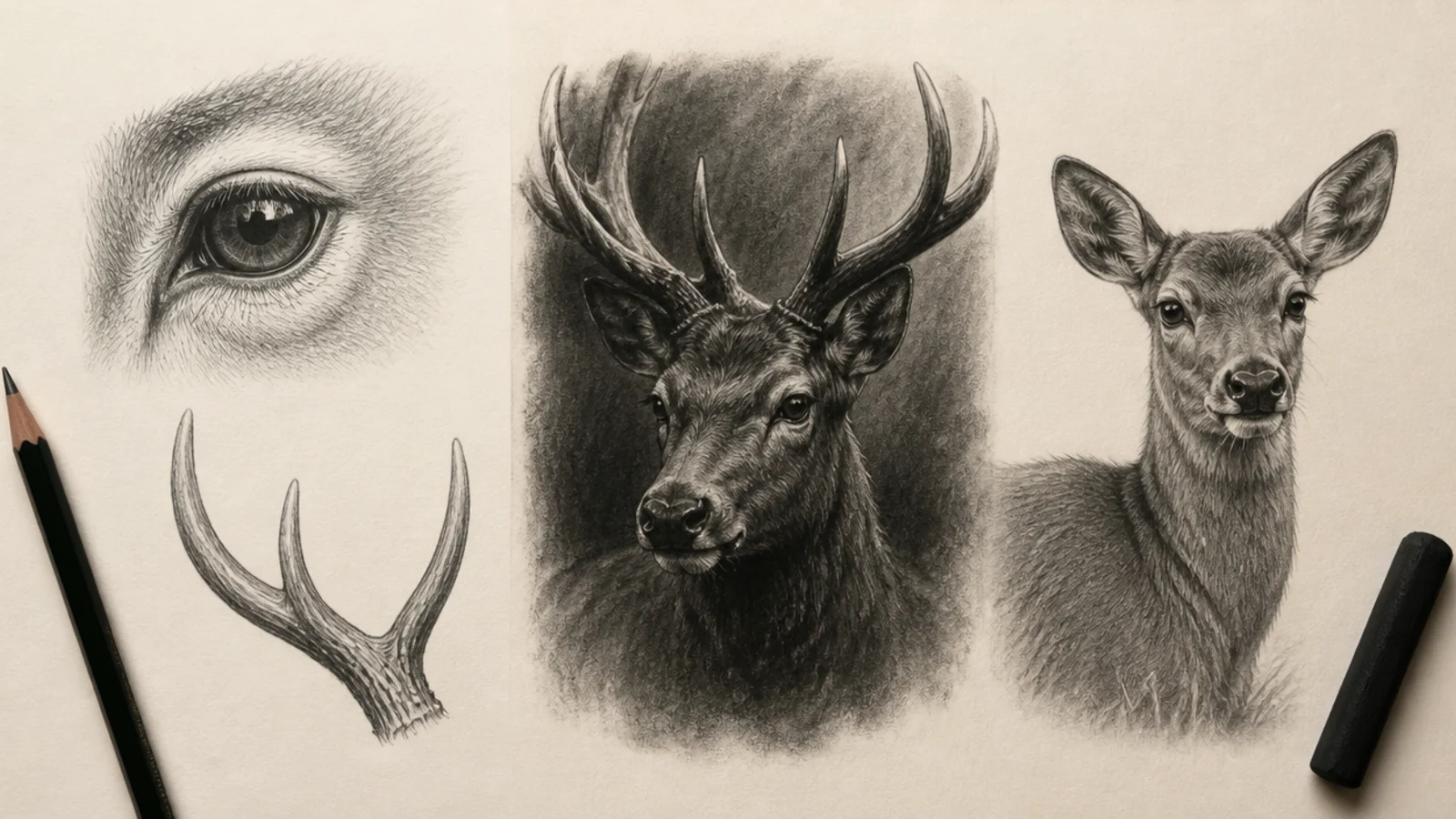
A close eye study needs razor-sharp control for the reflection and lashes. This is graphite’s home turf — the fine precision is impossible to match in charcoal.
Pro tipUse a hard pencil for the finest lashes and reflection edges.
Pencil wins. Render the dark iris with a bright crisp reflection and a slow gradient, then add fine lashes and blend the surrounding fur with a sharp pencil.
AvoidDon’t attempt this in charcoal; it smears the fine reflection.
2 Dramatic Shadow Portrait
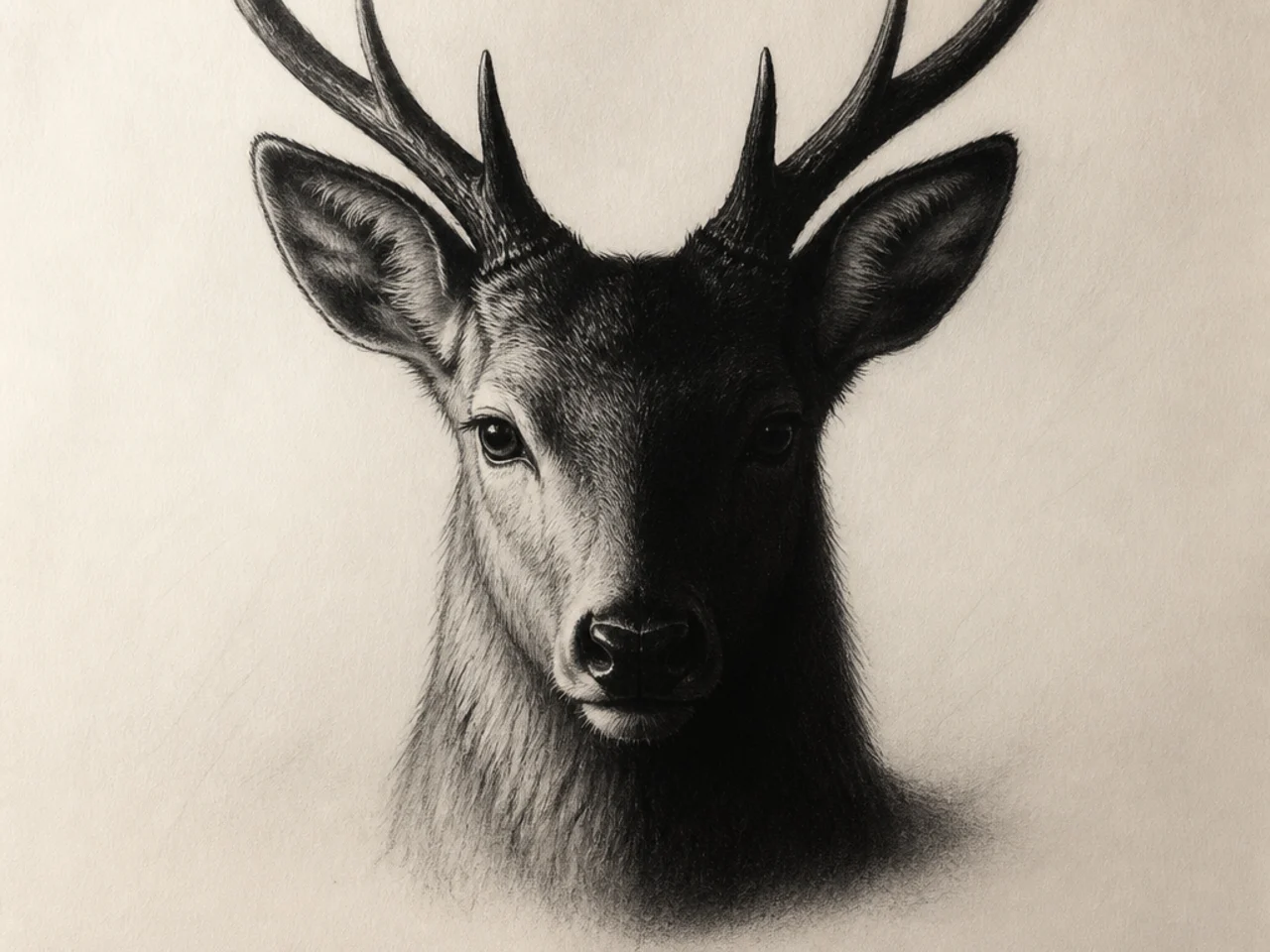
A moody portrait with half the face in deep shadow needs rich black. Charcoal’s velvety darks win for the drama pencil can only hint at.
Pro tipPush the shadow side to a true black so the lit side glows against it.
Charcoal wins. Lay a deep matte black on the shadow side, leave the lit cheek bright, and let the value crash from black to white across the face.
AvoidDon’t settle for grey; charcoal’s deep black is the drama.
3 Antler Line Detail
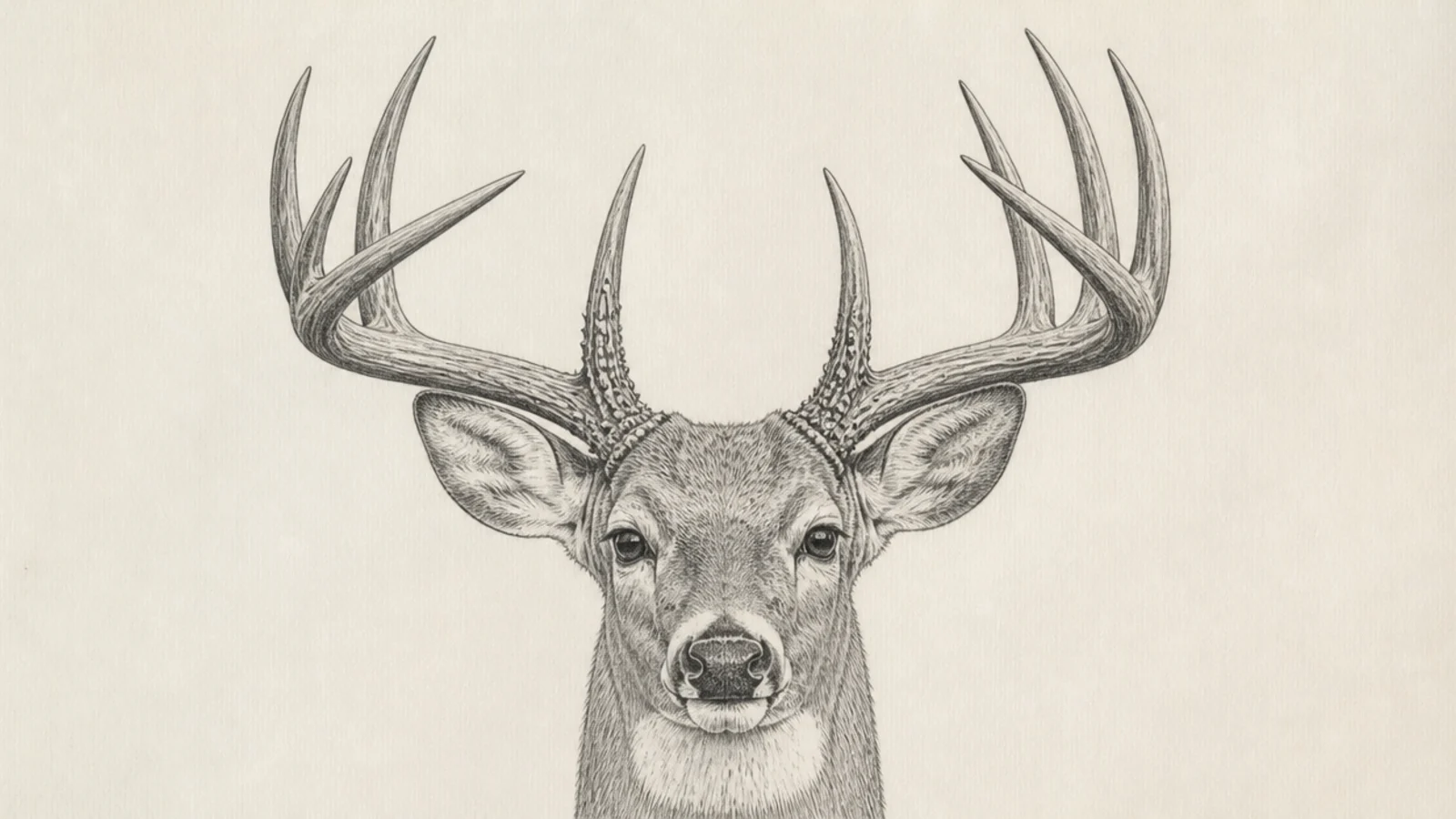
Antlers are all crisp edges, tapers, and pearling texture. Pencil wins for the sharp lines and fine bumps that charcoal broadens and crumbles.
Pro tipKeep the pencil sharp so the antler tips stay needle-fine.
Pencil wins. Draw each beam and tine with a sharp edge, taper every tip cleanly, and stipple the pearling bumps at the base with a fine point.
AvoidDon’t use broad charcoal here; the thin tines lose their edge.
4 Soft Fur Doe
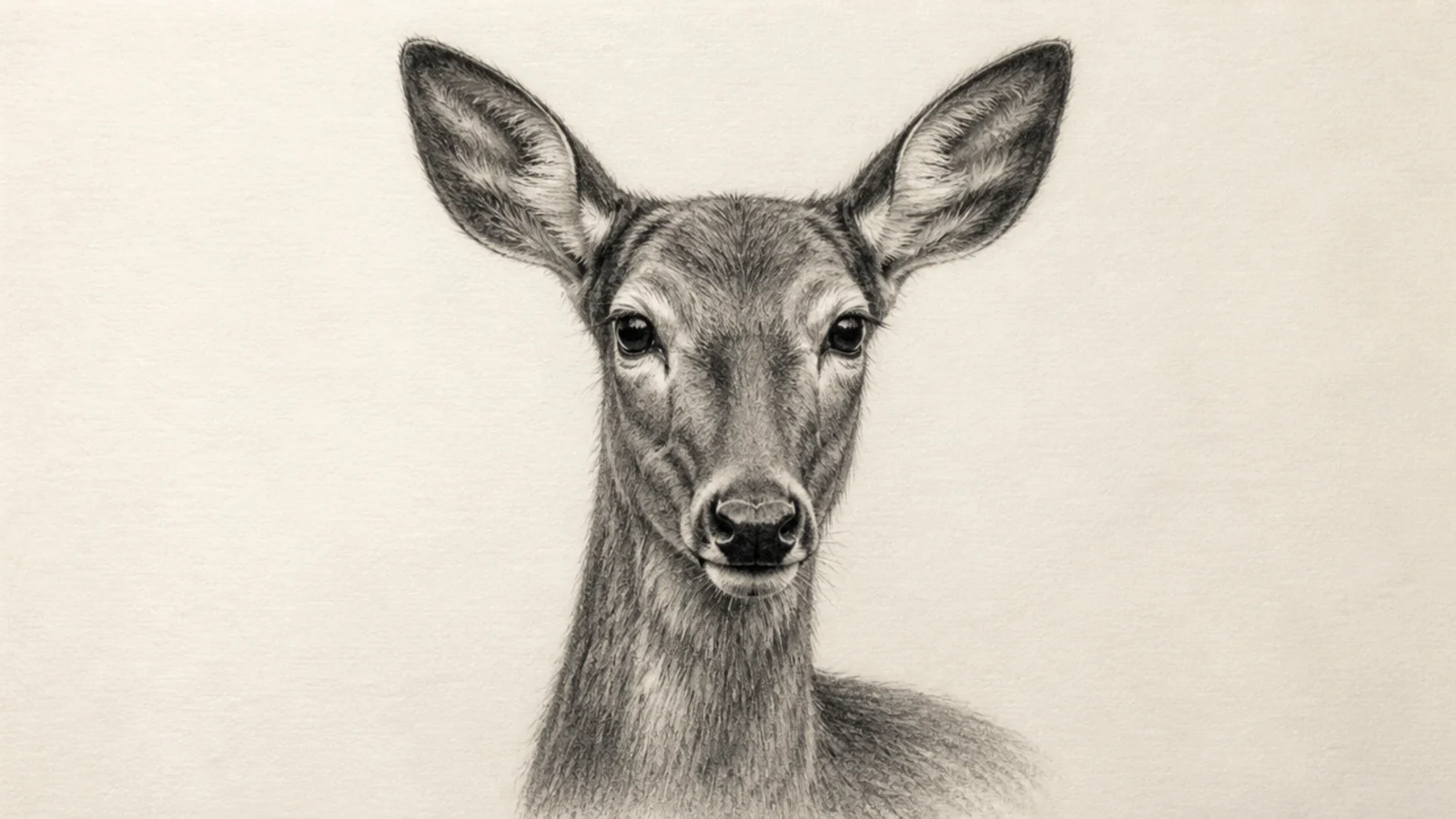
A doe with soft, blended coat calls for smoky gradients. Charcoal wins because it blends into soft fur fast with a finger or stump.
Pro tipBlend with a stump, then lift highlights with a kneaded eraser for soft fur.
Charcoal wins. Lay broad tone across the neck, then blend it soft with a stump and lift the lit fur back out with a kneaded eraser.
AvoidDon’t over-blend into mud; keep some directional fur strokes.
5 Crisp Fawn Study
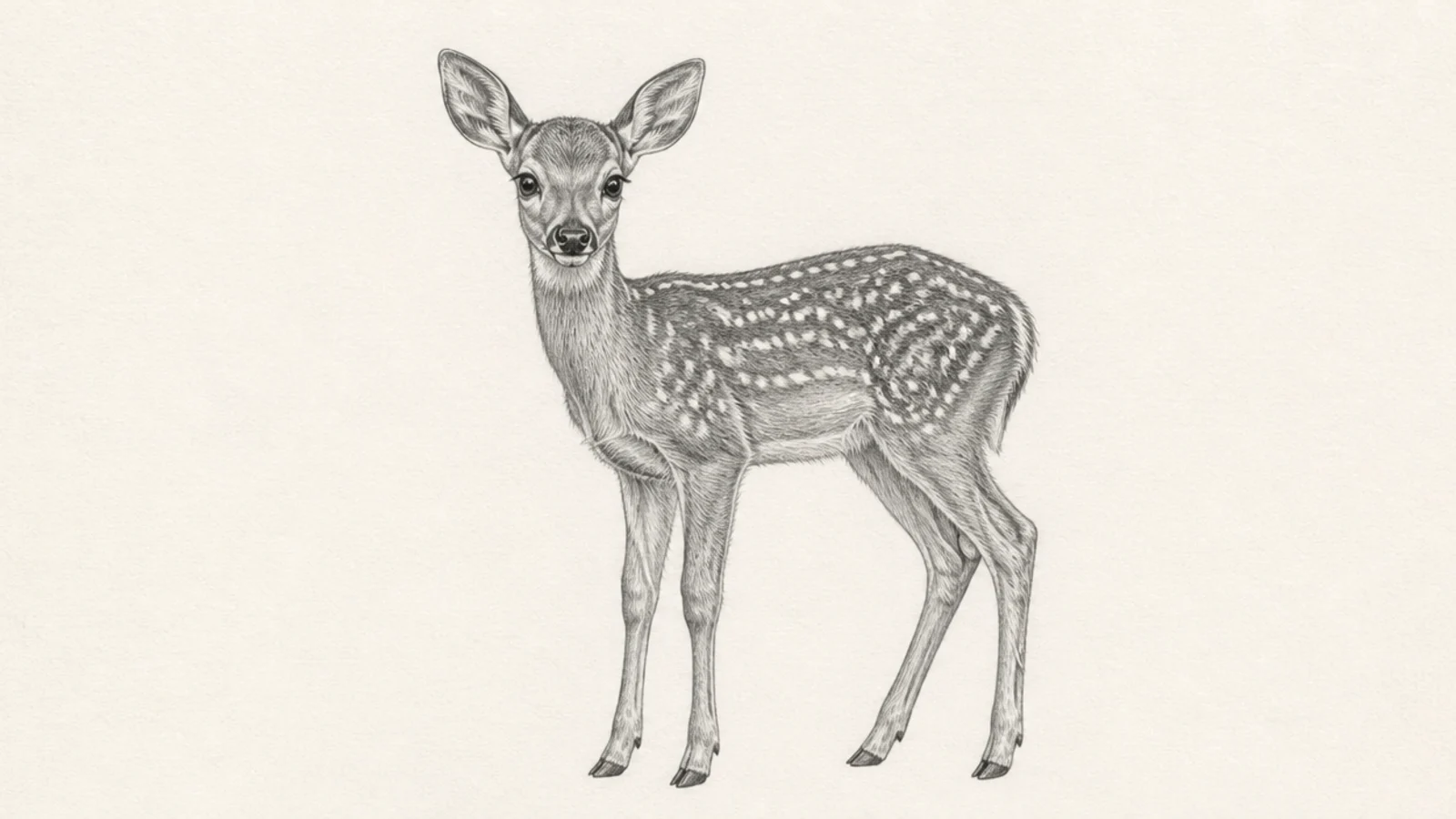
A fawn’s crisp spots and fine short coat need control. Pencil wins for the sharp spot edges and delicate fur that stay clean.
Pro tipVary pencil pressure so the spots sit softly into the coat.
Pencil wins. Render the soft coat with fine directional strokes and keep the spot edges crisp and clean against the lighter fur.
AvoidDon’t smudge the spots; crisp edges read as young fawn dapple.
6 Moody Stag Emerging From Dark
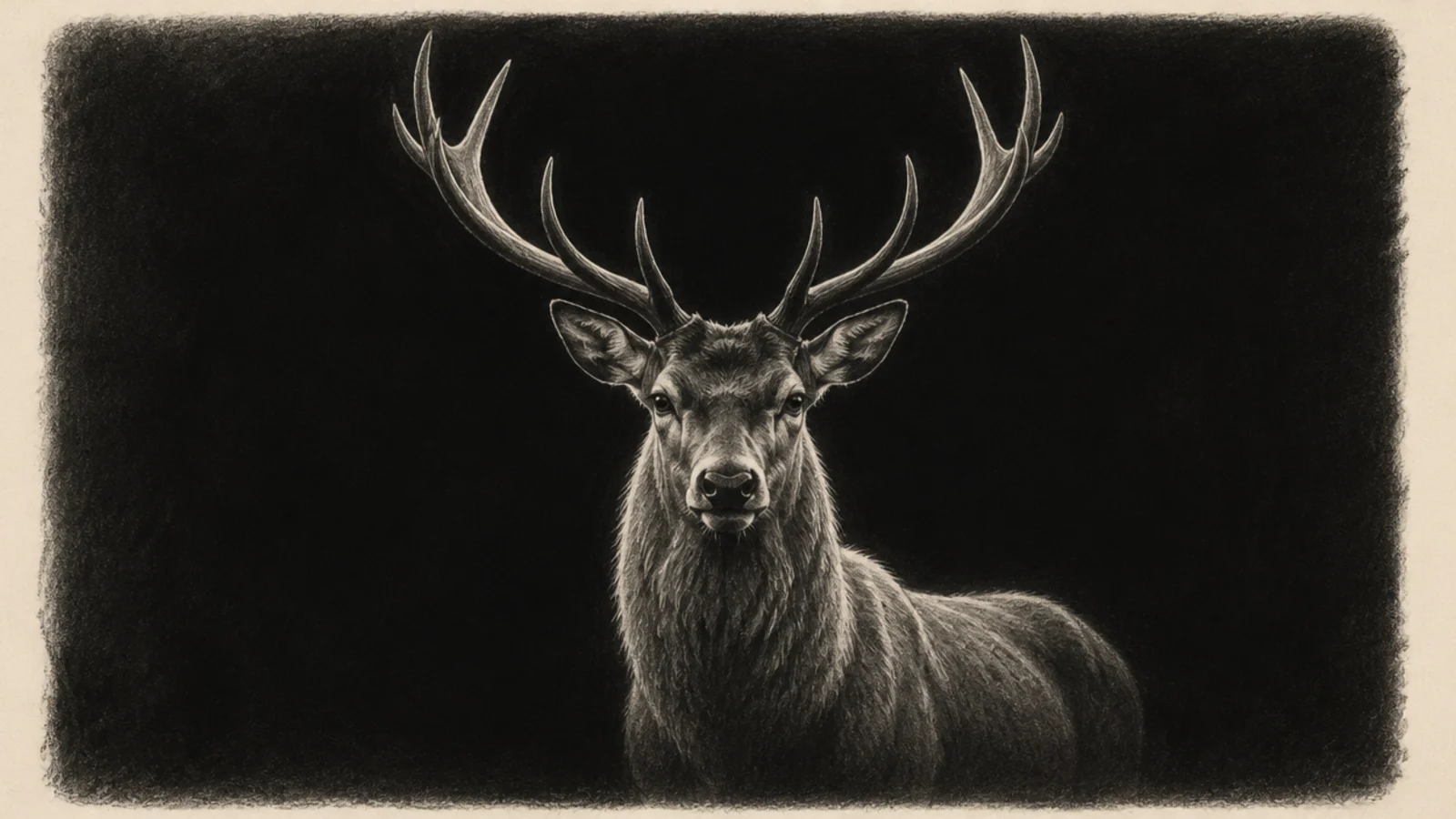
A stag emerging from darkness needs a rich black ground. Charcoal wins for the deep, even background that makes the lit form appear.
Pro tipLift the stag’s lit edges out of the black rather than drawing them in.
Charcoal wins. Fill the background with a deep matte black, then lift the lit edges of the stag out of the dark with an eraser for a glowing-form effect.
AvoidDon’t draw a grey background; the deep black creates the emergence.
7 Fine Whisker Muzzle
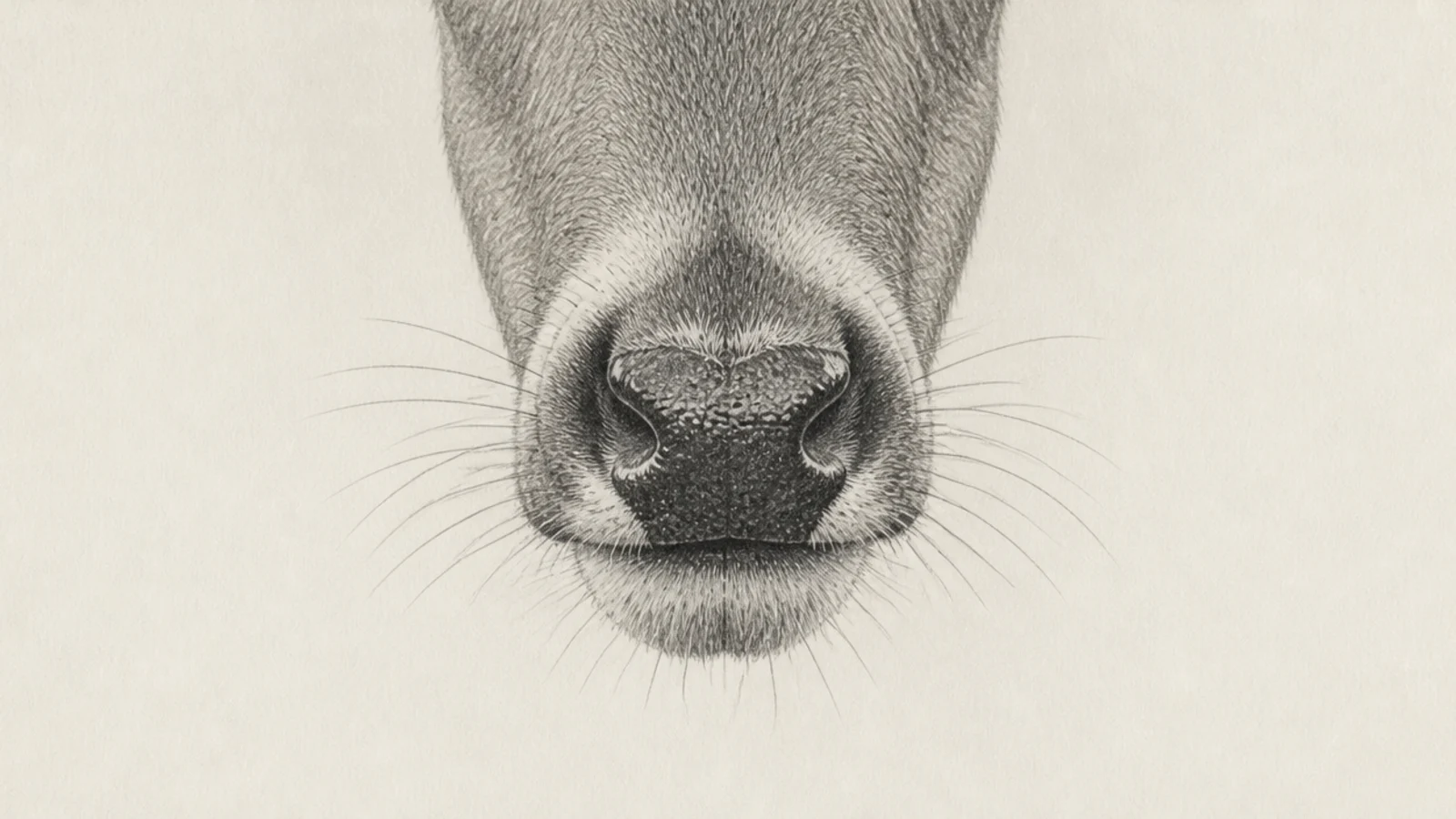
A muzzle with fine whiskers and a moist nose is all delicate detail. Pencil wins for the hair-thin whiskers and the crisp nose highlight.
Pro tipFlick the whiskers quickly with a sharp tip so they taper naturally.
Pencil wins. Render the nose pad dark with a sharp highlight, then flick fine whiskers with the pencil tip and add short muzzle fur.
AvoidDon’t use charcoal for whiskers; they smear into smudges.
8 Smoky Atmosphere Deer
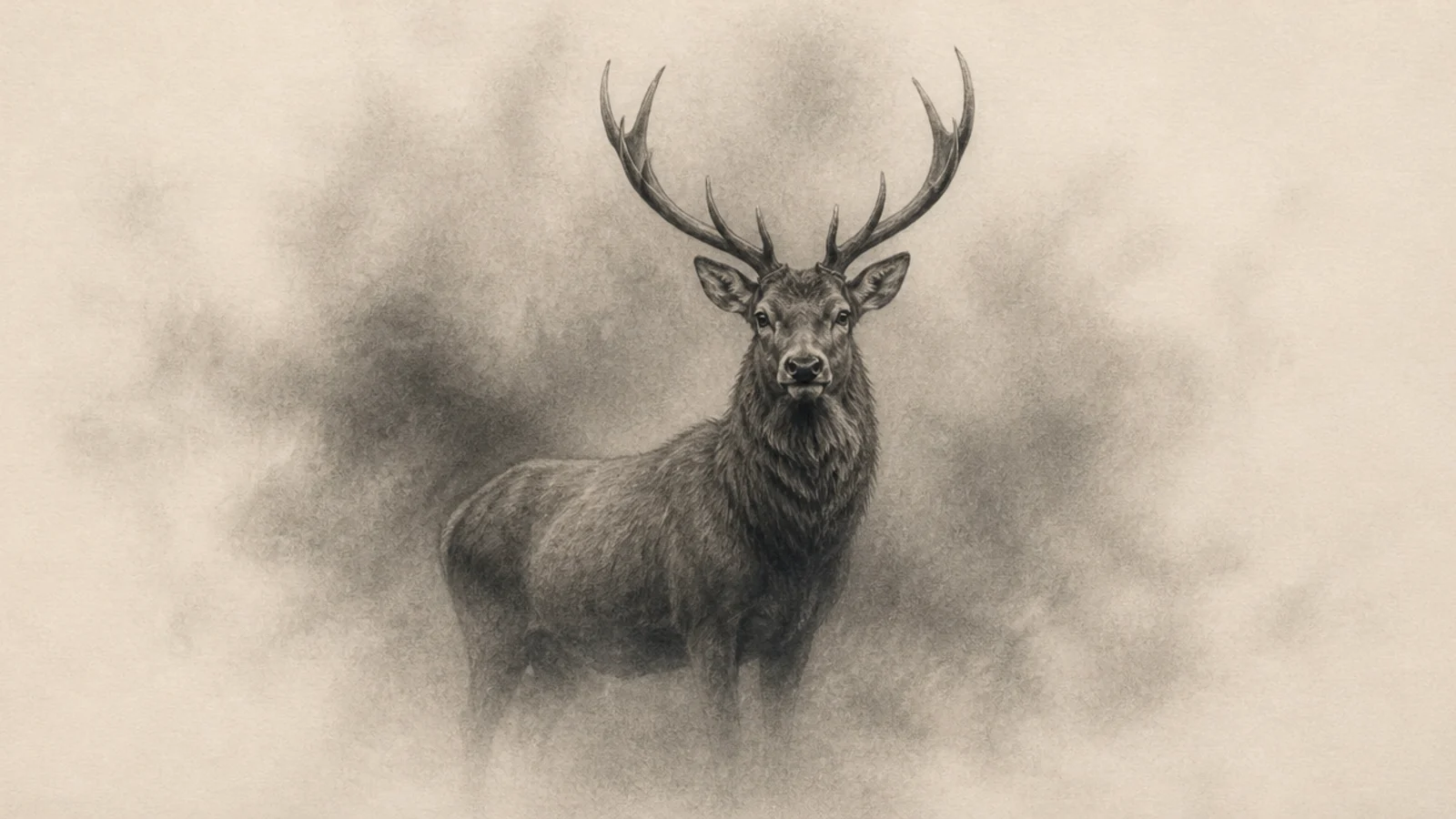
A deer in mist and soft atmosphere needs blurred, smoky tone. Charcoal wins for the soft gradients and hazy edges that pencil cannot match.
Pro tipLose the far edges into the haze and keep only a few near edges crisp.
Charcoal wins. Rub soft tone into the background for haze, keep the deer’s far edges lost and soft, and sharpen only a few near edges.
AvoidDon’t sharpen everything; the soft lost edges create the mist.
9 Graphite Value-Scale Buck
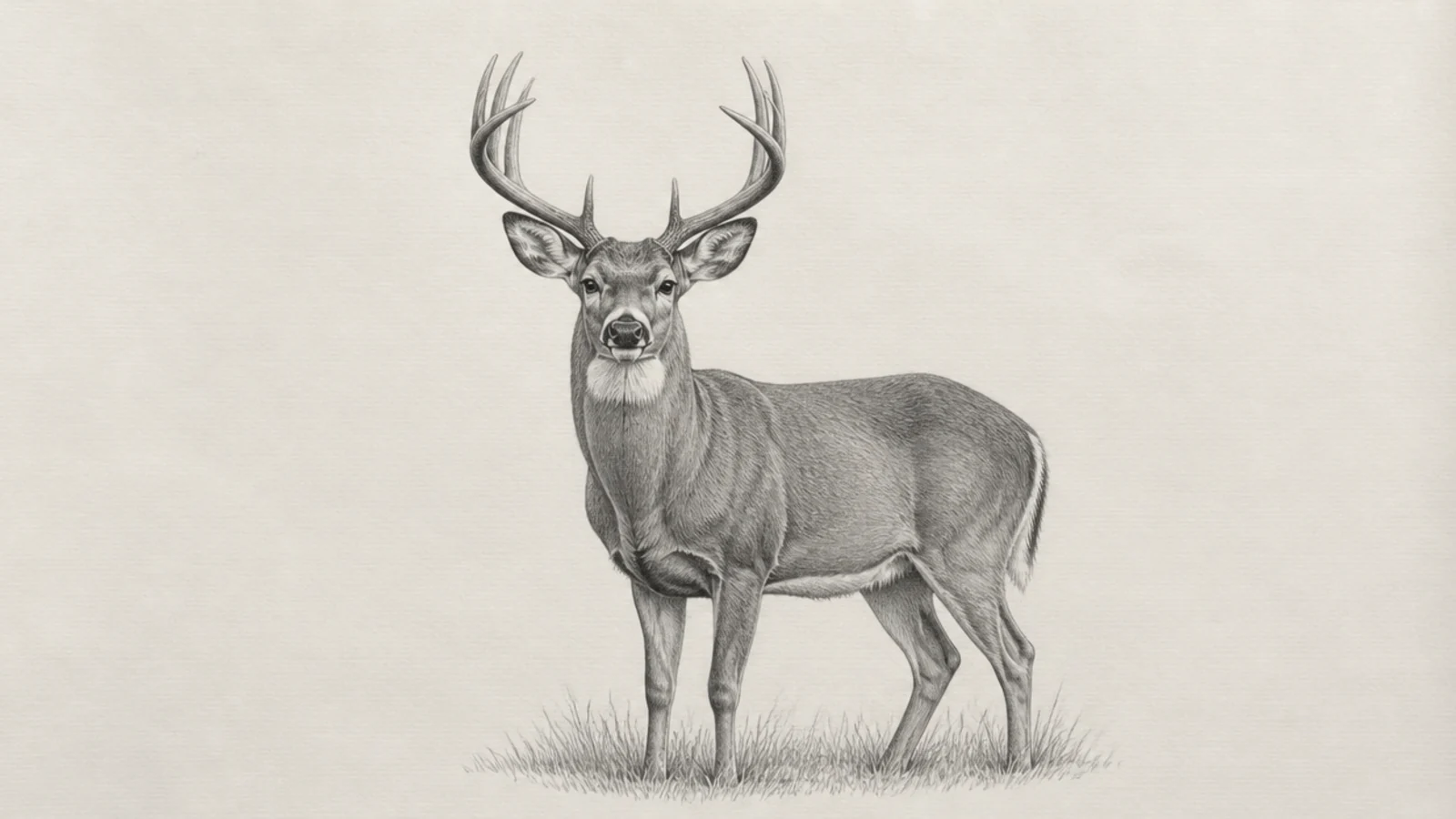
A buck built on a smooth range of controlled greys shows off graphite’s tonal precision. Pencil wins for the even, gradual value transitions.
Pro tipBuild value in many light layers for smooth graphite gradients.
Pencil wins. Build the form with slow even layers from light grey to dark, keeping every transition smooth and the darkest accents in soft pencil.
AvoidDon’t rush the darks; layering keeps the greys smooth and clean.
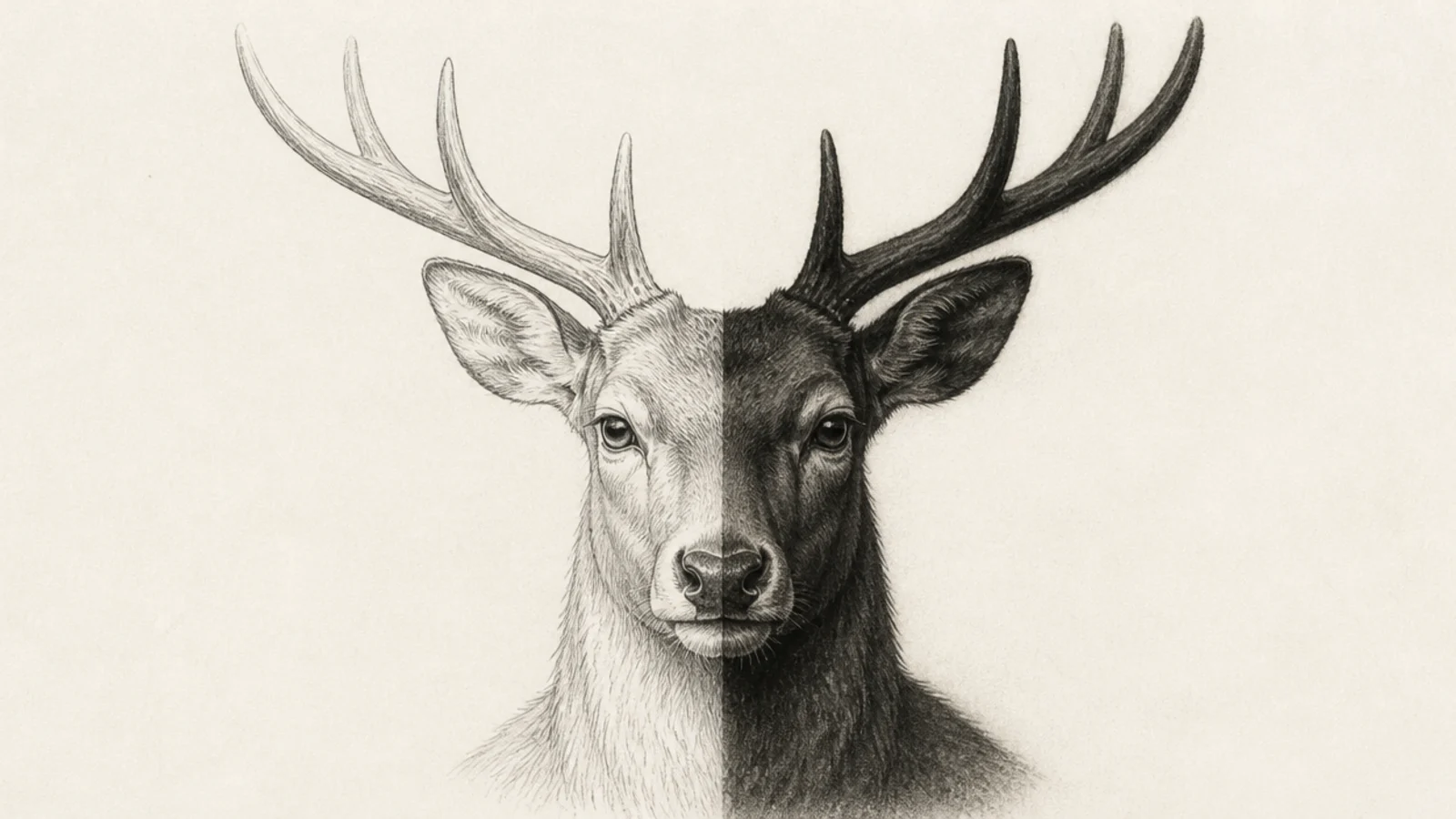
10 Bold High-Contrast Head
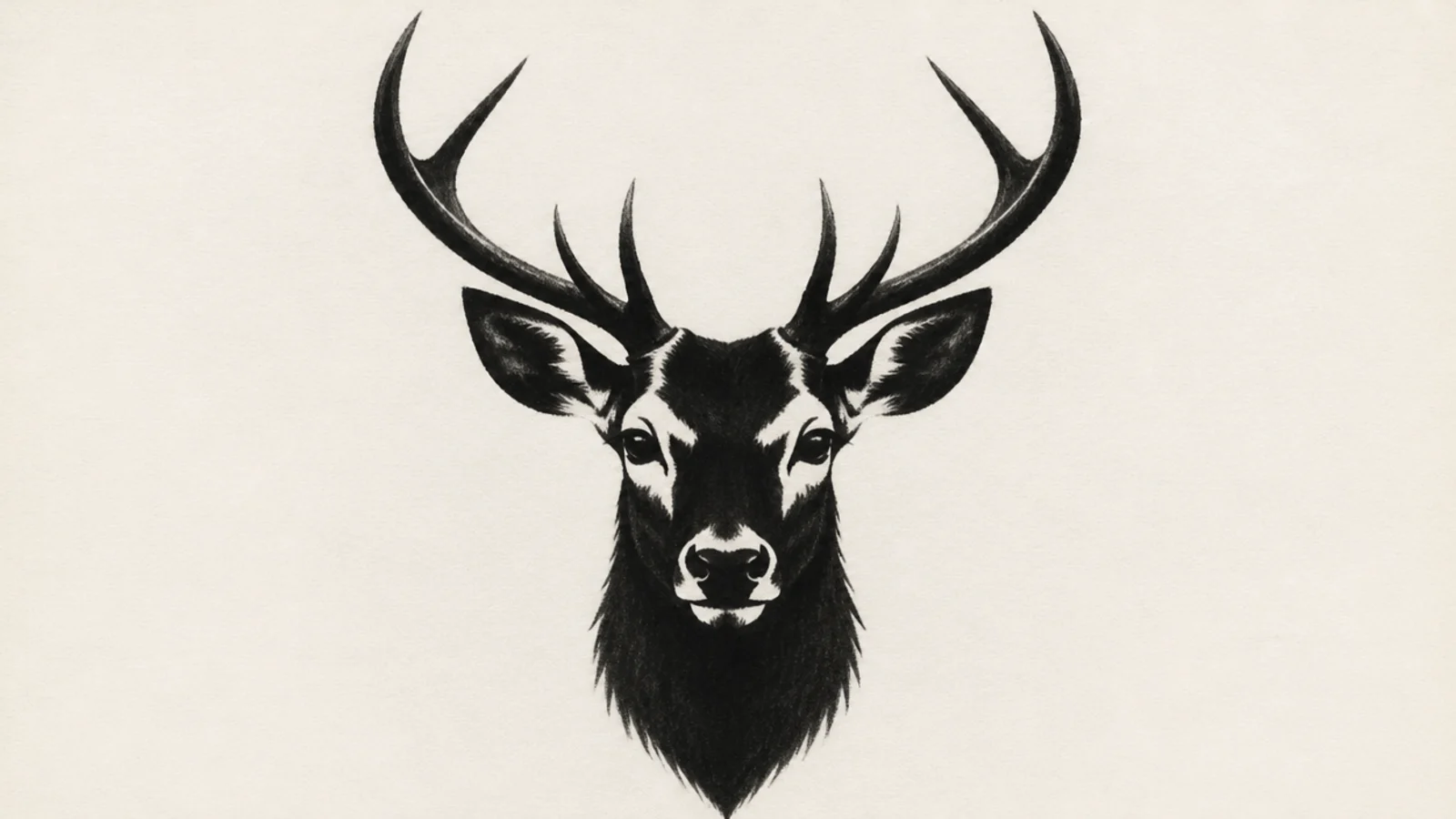
A head reduced to stark black and white shapes needs punch. Charcoal wins for the bold blacks against bright paper that make a graphic statement.
Pro tipSimplify the face into a few bold black and white shapes.
Charcoal wins. Block the shadow shapes as flat deep blacks and leave the lights as bare paper, keeping the value pattern bold and simple.
AvoidDon’t add mid-greys everywhere; the stark contrast is the effect.
11 Delicate Botanical Antler
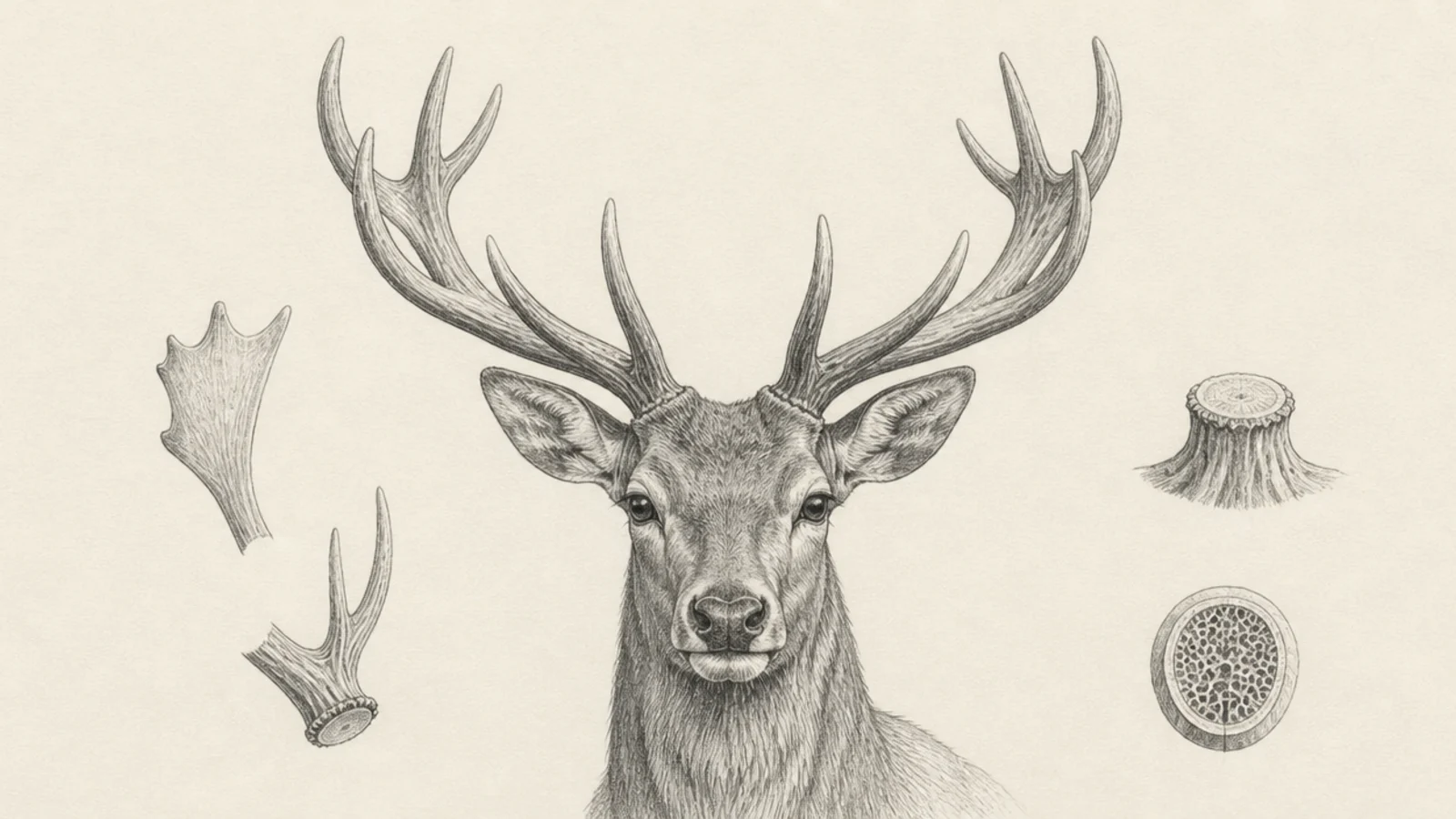
An antler rendered like a fine natural-history plate needs delicate hatching. Pencil wins for the controlled, precise fine work.
Pro tipFollow the antler’s curve with your hatch lines so the form reads.
Pencil wins. Build the antler’s tone with fine parallel hatching that follows its curve, and crosshatch the deepest pits for a plate-like finish.
AvoidDon’t use broad charcoal; the delicate hatching needs a fine point.
12 Loose Expressive Gesture
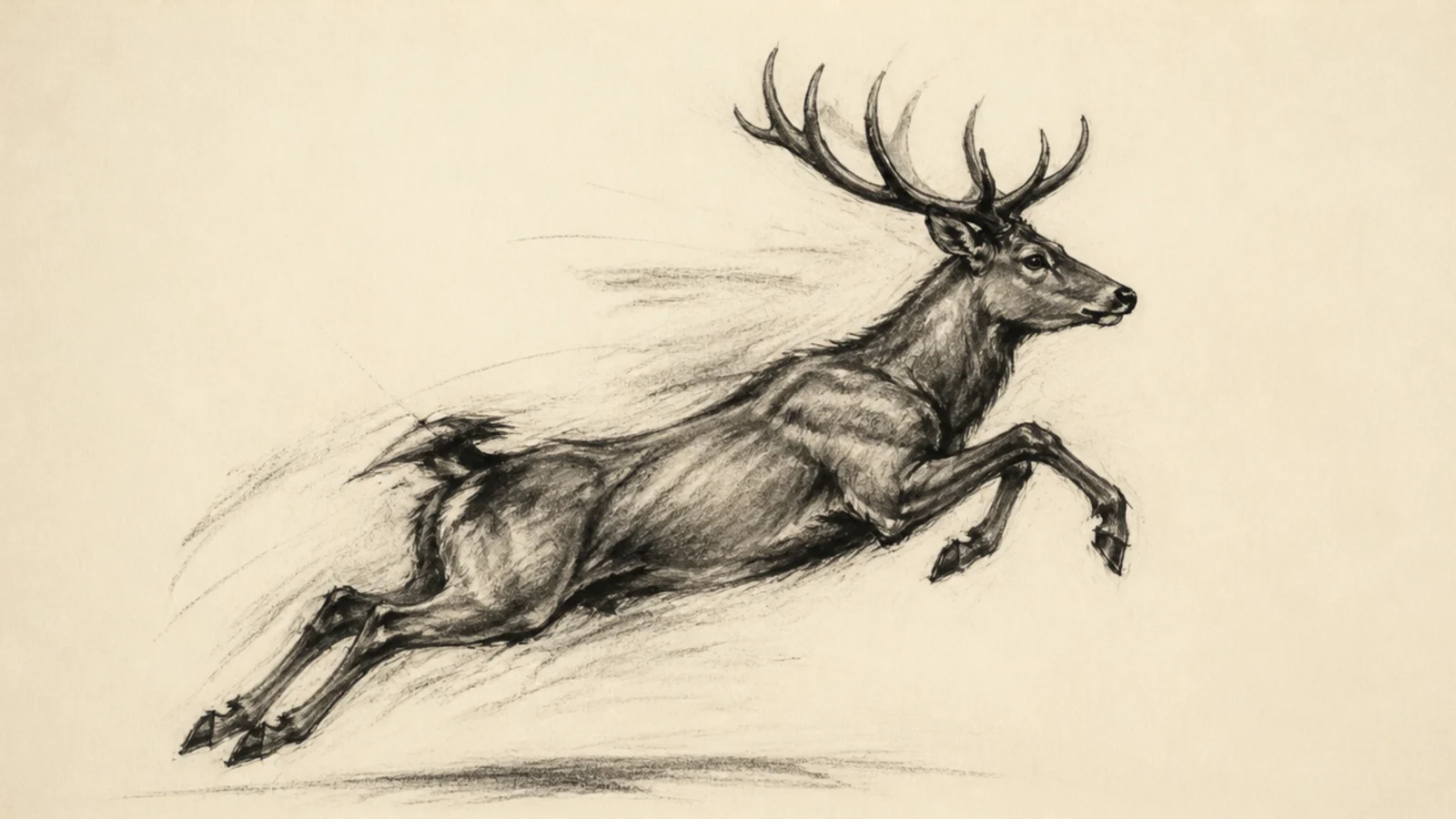
A fast, expressive leaping gesture wants bold sweeping marks. Charcoal wins for the quick, energetic strokes that cover ground fast.
Pro tipUse the side of the charcoal for broad fast expressive strokes.
Charcoal wins. Sweep the gesture with the side of the charcoal in bold fast strokes, smudging for motion and leaving the marks loose and raw.
AvoidDon’t fuss with detail; the raw speed is the expression.
13 Hyperreal Nose Detail
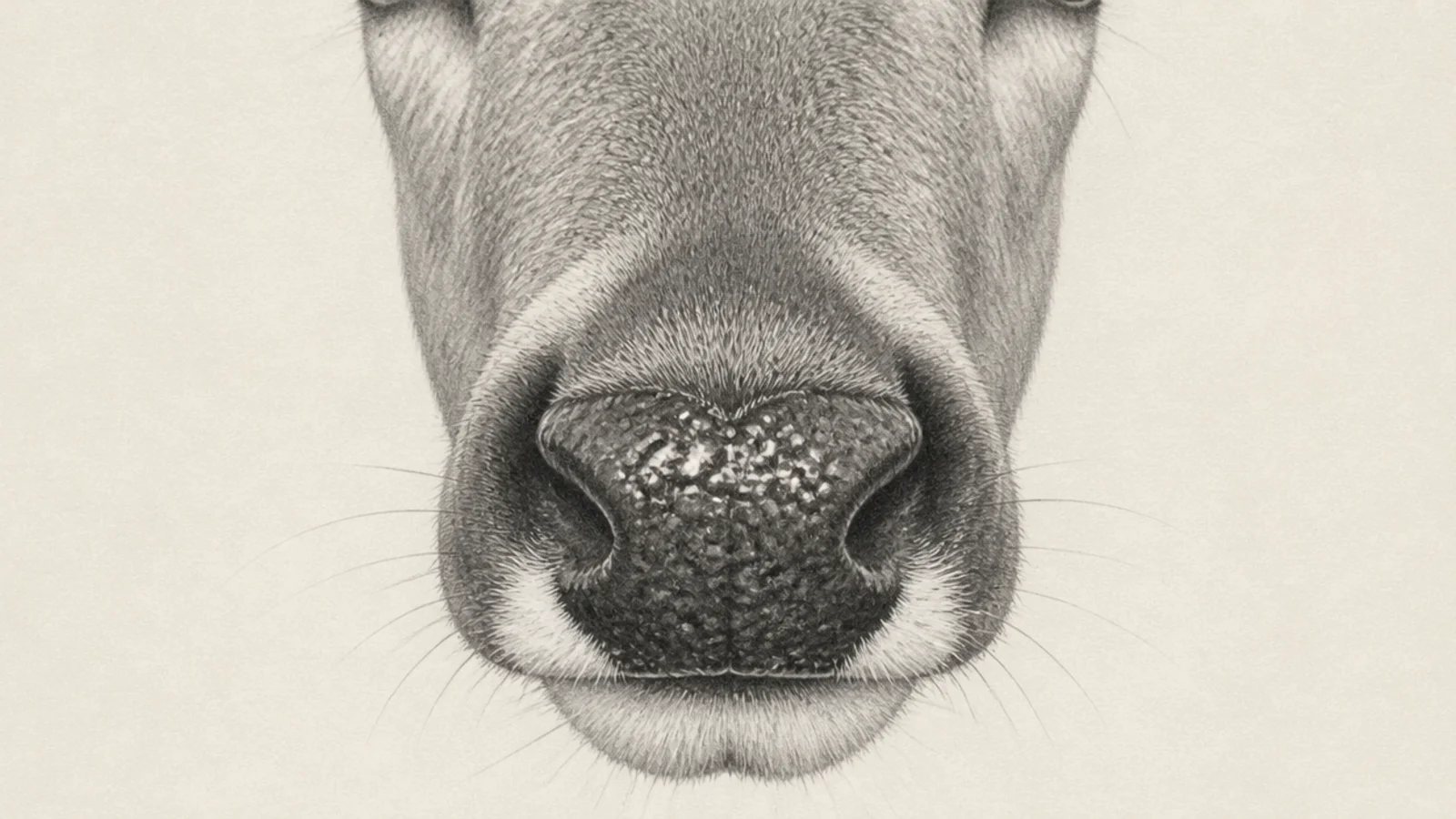
A hyperreal wet nose with tiny pores and highlights is pure control. Pencil wins for the fine texture and crisp reflections that sell the realism.
Pro tipScatter tiny sharp highlights across the pad to make it look wet.
Pencil wins. Render the moist pad with tiny highlight dots, dark pores, and a sharp overall shine, blending smoothly around the nostrils.
AvoidDon’t blur the highlights; crisp dots read as a moist nose.
14 Velvety Black-Ground Deer
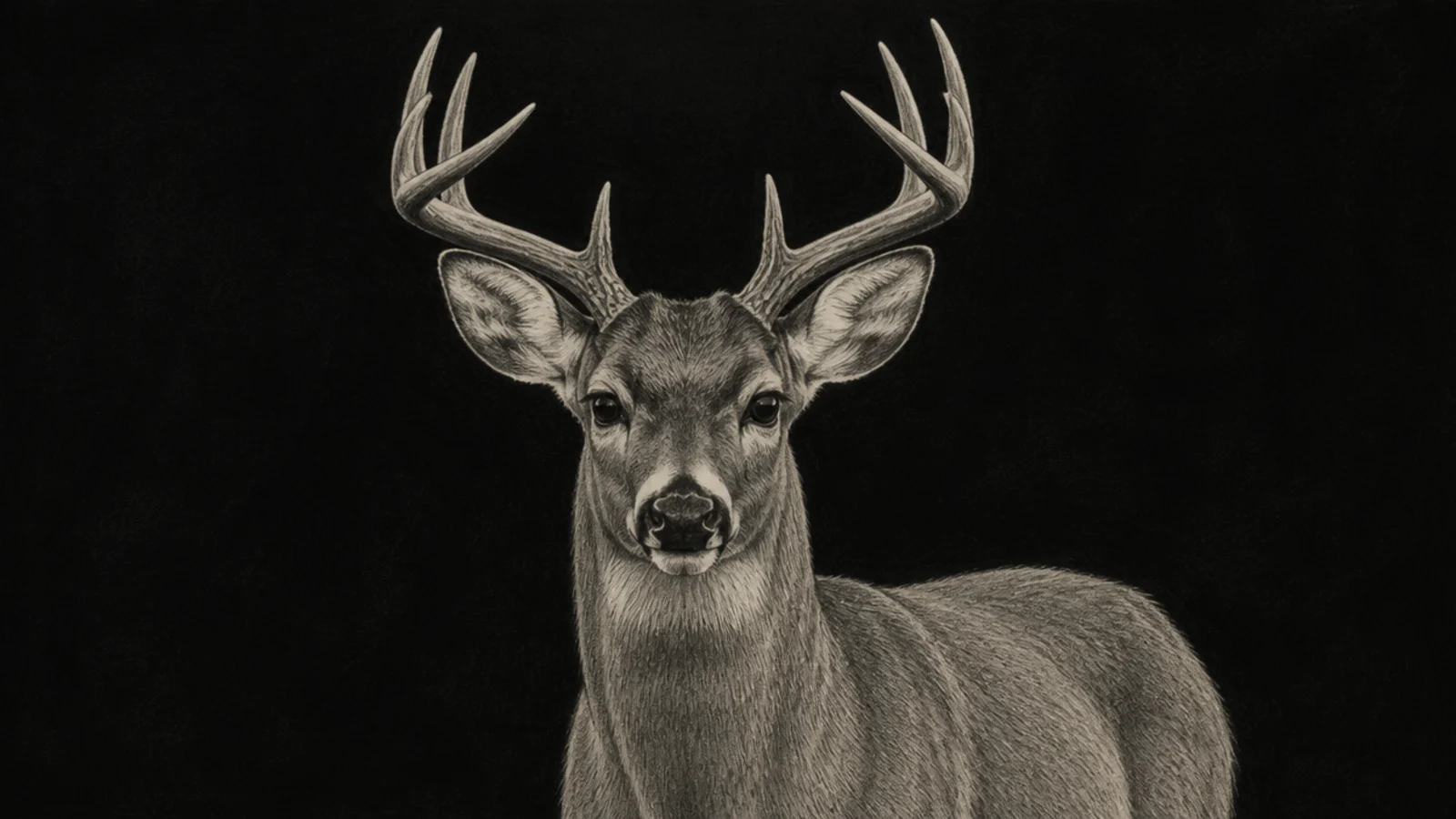
A deer set against a deep, even velvety black is all about that background. Charcoal wins for the rich matte black graphite simply cannot reach.
Charcoal wins. Fill the whole background with a deep even matte black, keep the deer lighter, and let its silhouette read against the darkness.
Work the black background in even layers for a smooth matte field.
Don’t use graphite for the black; it goes shiny and grey.
15 Mixed Pencil and Charcoal Portrait
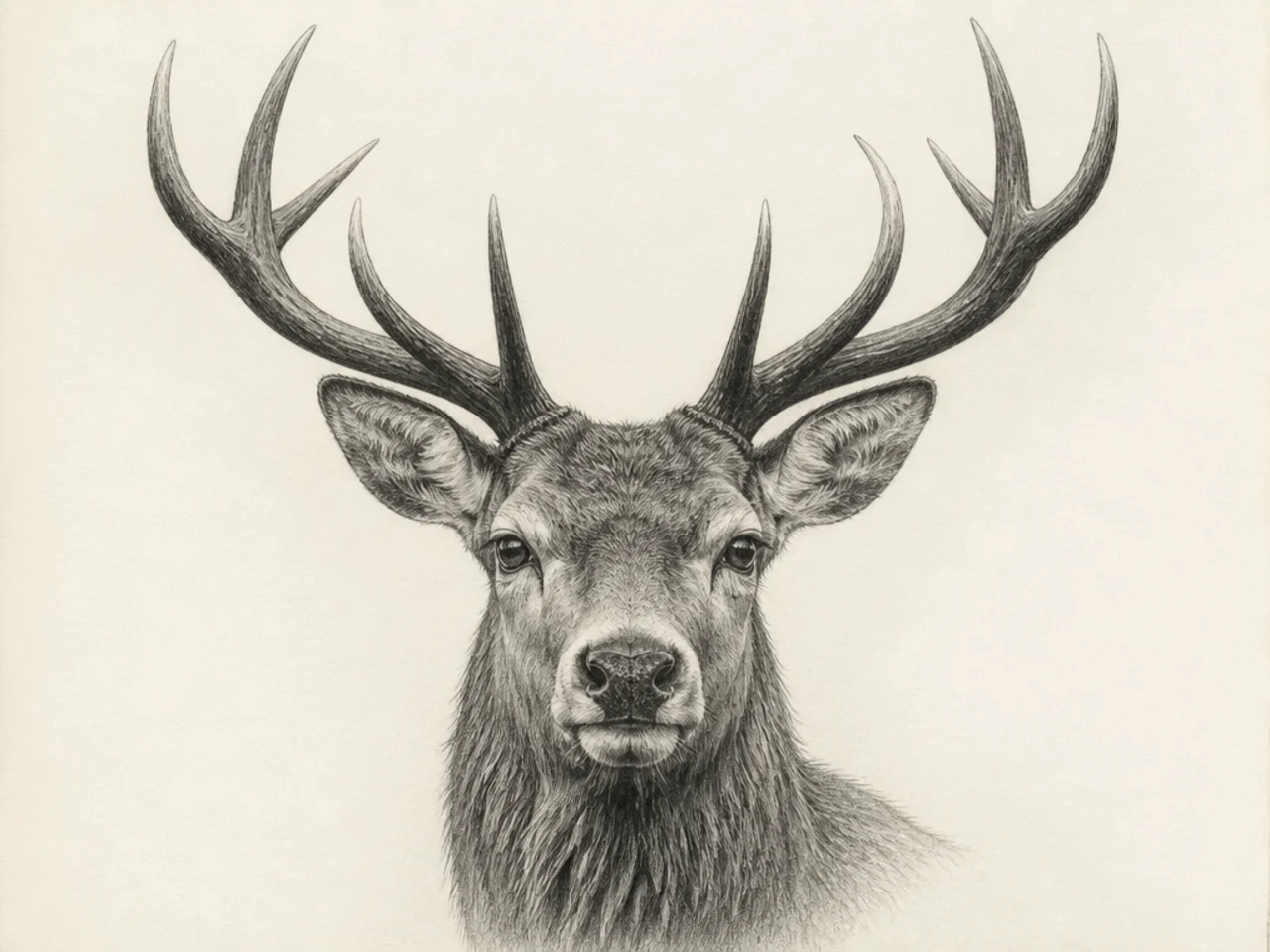
The best of both — deep charcoal shadows and soft fur finished with crisp pencil detail. This combined approach beats either medium alone for many deer portraits.
Pro tipAdd the pencil detail last, over set charcoal, so it stays crisp.
Both win together. Block the dark masses and soft fur in charcoal, let it set, then render the eye, nose, and antler edges in sharp graphite on top.
AvoidDon’t detail over loose charcoal dust; fix or set it first.