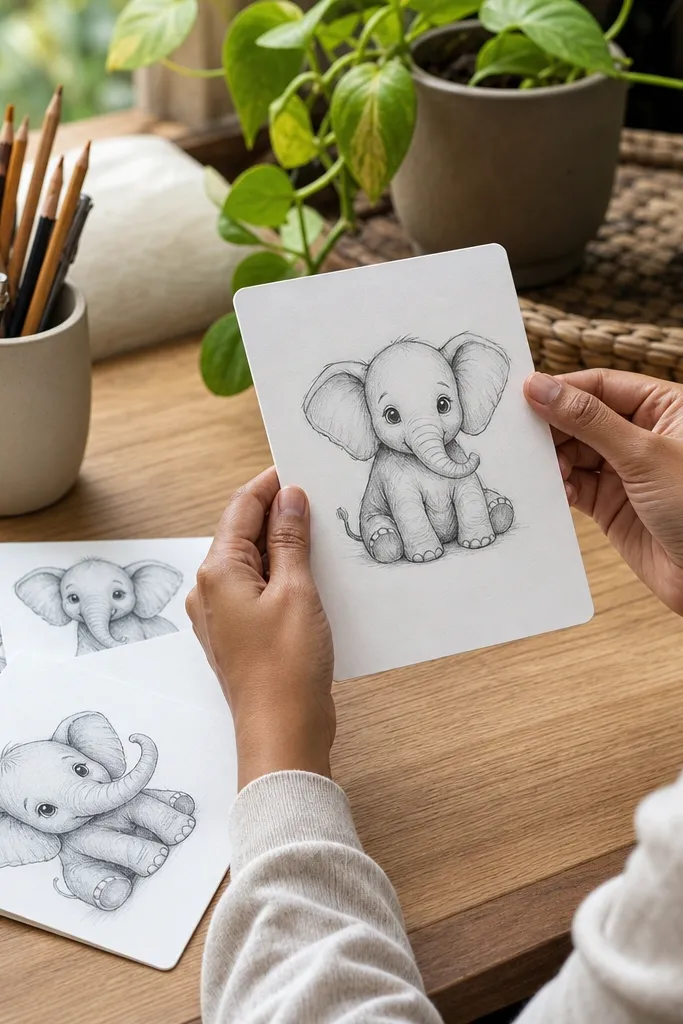
1. Big-Head Smiling Baby Elephant Face
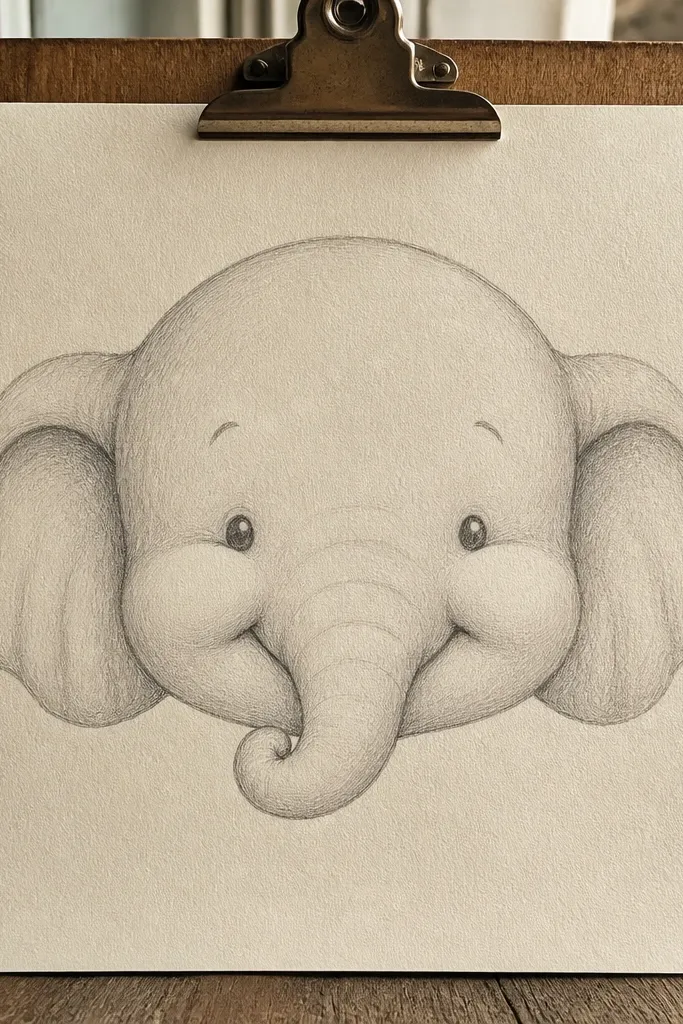
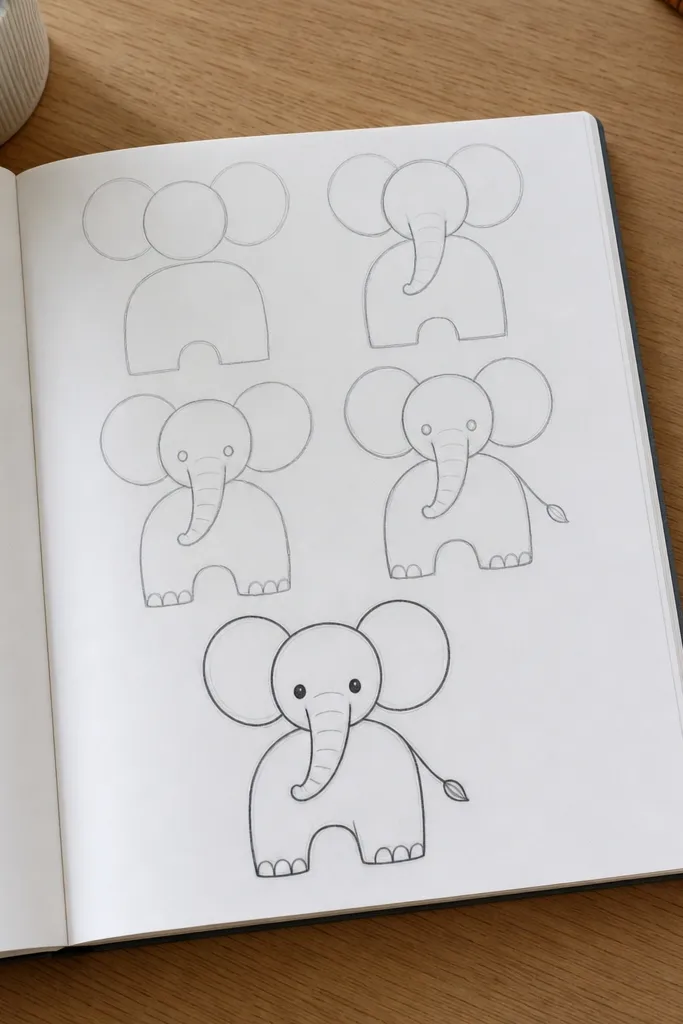
This one looks cute because the whole drawing is basically a face silhouette. You get a big rounded head, two small eye dots set high, and a trunk that curls into a little hook at the bottom. The cheeks are the secret — add two soft bumps under the eyes so the face feels puffy. Keep the ears slightly flared outward so they frame the face instead of sitting flat. Use minimal wrinkles: one line in the trunk and a tiny crease near the mouth.
Start with a large circle for the head, then draw a smaller oval for the cheek area under the eyes. Add two short legs only if you want a partial body, but keep this mainly face-focused. Sketch a short trunk that comes down from the center of the mouth and curls inward. Place eyes as small dots or tiny ovals, then add a curved smile line. Finally, erase the guide lines and darken the outer contour with a 0.3-0.5 mm fineliner.
Press lighter on the trunk line, then go darker only at the outer edge for that clean, graphic look.
Don’t draw the trunk long — a long trunk instantly makes it look like an adult elephant.
2. Baby Elephant Sitting With Big Ears
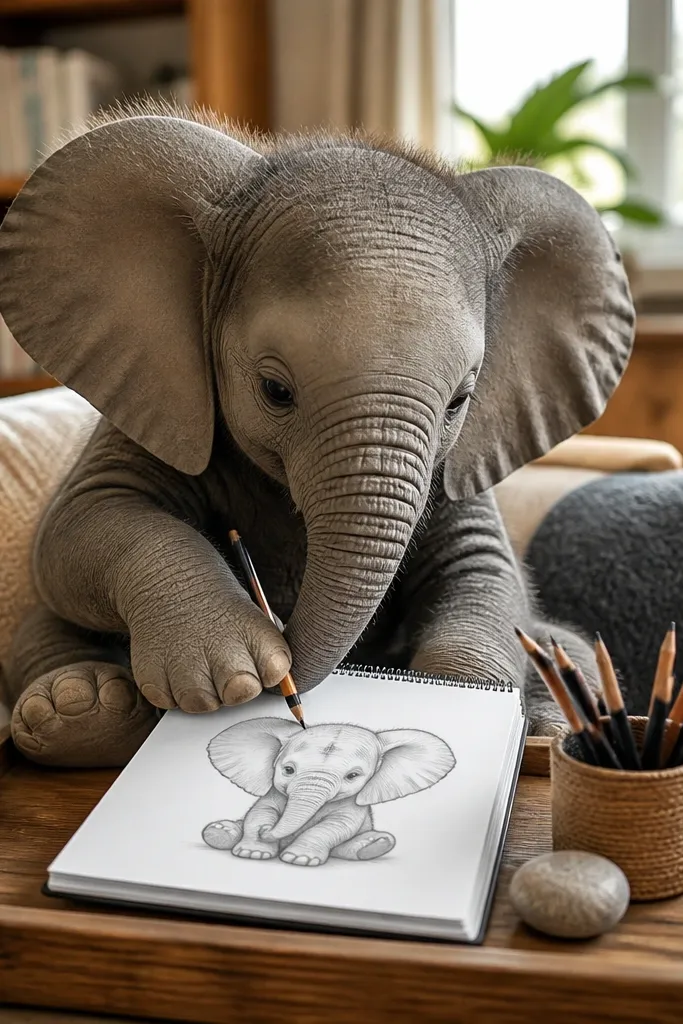
Sitting poses are forgiving because the legs bunch up and hide proportion mistakes. This drawing stays aesthetic by keeping the body oval compact and the feet simple rounded shapes. The ears should be wide and slightly tilted, with one ear overlapping the head line. The trunk can hang with a gentle curve, like a soft question mark. Add a small tail curl and a couple of crease lines on the legs for depth without clutter.
Draw a large oval for the body and a slightly bigger oval for the head connected by a short neck. Sketch the sitting legs as two rounded blocks tucked under the body. Add ears as two big rounded triangles with soft curves on the edges. Draw the trunk as a curved line from the mouth to the upper chest area, then add a tiny curve at the end. Finish by adding a small tail curl behind the body and darkening the outer lines.
Make the ear edges thicker than the trunk line so the ears become the focal point.
Avoid thin, straight legs — baby elephant legs look better when they’re stubby and rounded.
3. Baby Elephant Holding a Little Flower
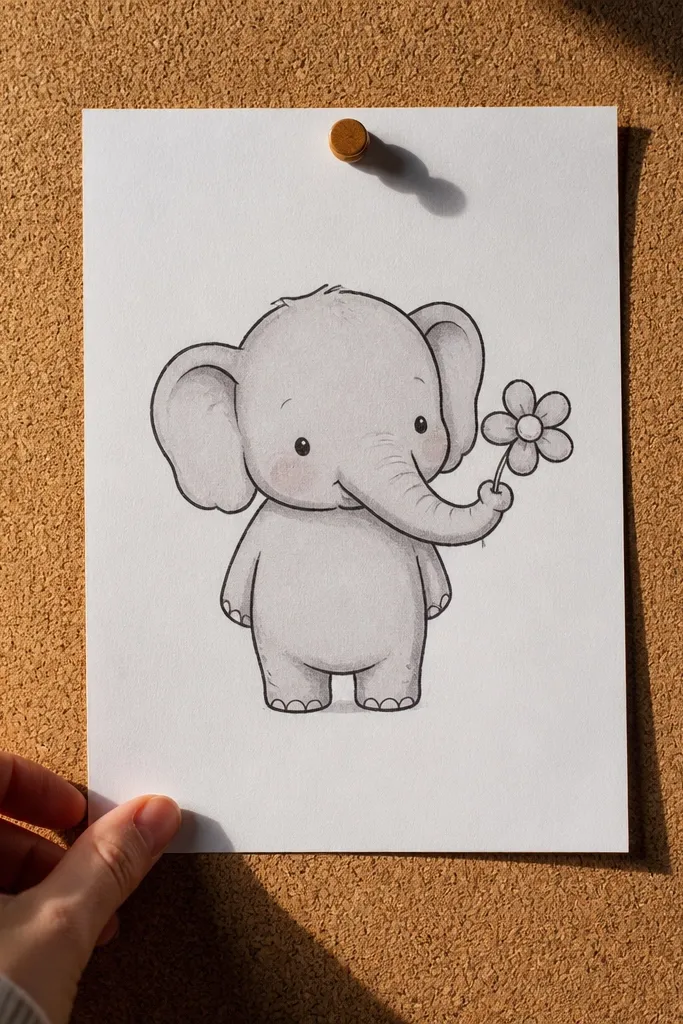
This one sells the cuteness because the trunk becomes a hand. The flower gives you a clear focal point, and it also forces you to shape the trunk tip with intention. Keep the flower simple: a small circle center with 5-6 rounded petals. The elephant body stays small and compact, with short legs and a rounded belly. Shading is easy here — add a light gray wash or pencil shading on the belly and under the ear.
Pro tipUse a single highlight gap on the trunk (leave it blank) so it looks glossy and smooth.
Start with a head oval and body oval, then connect them with a short neck curve. Draw the trunk as a line that bends up toward where the flower will sit, then make the trunk tip wrap slightly around the flower stem. Add two short front legs as rounded shapes under the chest. Sketch a small flower: draw a center dot, then add evenly spaced rounded petals. Outline everything with a darker pen and add a soft shadow under the chin and on the flower underside.
AvoidDon’t over-detail the flower — tiny scribbles make the whole drawing look messy next to the simple elephant shapes.
4. Cute Baby Elephant in a Heart Frame
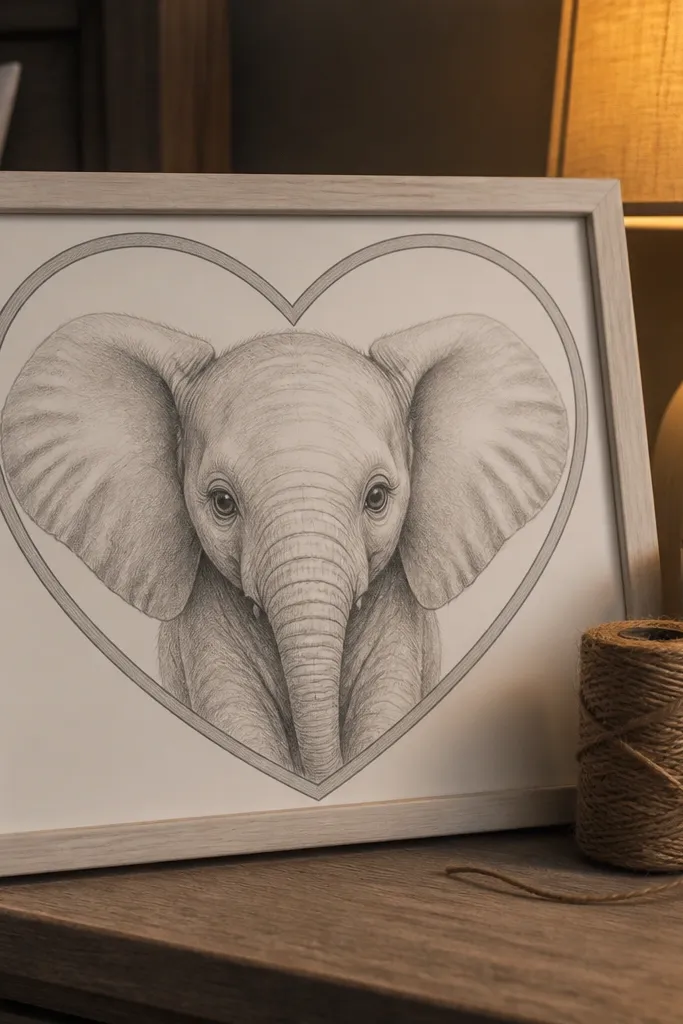
A heart frame makes even rough lines look designed. The trick is to keep the elephant centered and big, so your silhouette fills the heart. Draw the heart first, then place the head so it overlaps the heart sides slightly. Puffy ears should sit near the upper corners of the heart, giving the composition balance. The eyes can be tiny dots, and the trunk should curve downward with a little curl at the end for that “aww” factor.
Draw a clean heart outline, then lightly sketch the elephant head inside it as a large oval. Place ears as two rounded shapes that touch or nearly touch the heart’s top points. Add eyes near the top half of the head and a small mouth curve. Sketch the trunk as a curved line from the mouth down toward the heart bottom, ending with a small hook. Finally, thicken the heart outline and the elephant outer contour so the heart and face both read clearly.
Thicken the heart lines slightly more than the elephant lines for a crisp, sticker-like look.
Don’t center the eyes too low — low eyes make the face look droopy instead of sweet.
5. Baby Elephant With a Raised Trunk Wave
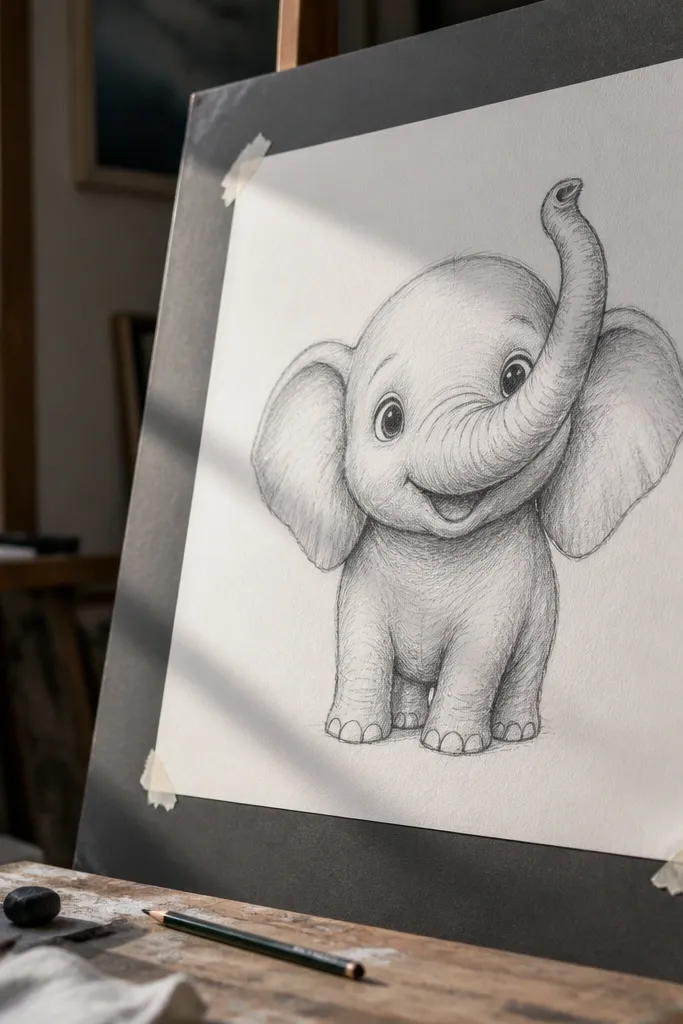
A raised trunk gives you a clean action pose without complex anatomy. Keep the body oval small and round, then lift the trunk up like a friendly wave. This design is photogenic because the trunk creates a strong curve and the ears frame it like parentheses. The legs can be two short blocks, and the feet can be tiny rounded pads. Add a small cheek crease line and one trunk crease to make it look dimensional.
Pro tipIf your trunk looks shaky, draw it as a thick ribbon first, then round the edges with the fineliner.
Draw a body oval and a head oval slightly larger, connected with a short neck line. Sketch four legs as two visible front stubs and two tucked back stubs, but keep them very short. Draw the trunk as a thick curved shape that starts at the mouth and lifts upward, ending with a rounded tip. Add ears as two wide rounded shapes that flank the head. Outline with a fineliner, then erase guides and add one short shading line under the trunk curve.
AvoidAvoid pointing the trunk straight up — a slight curve reads more natural and baby-cute.
6. Baby Elephant With a Simple Bow
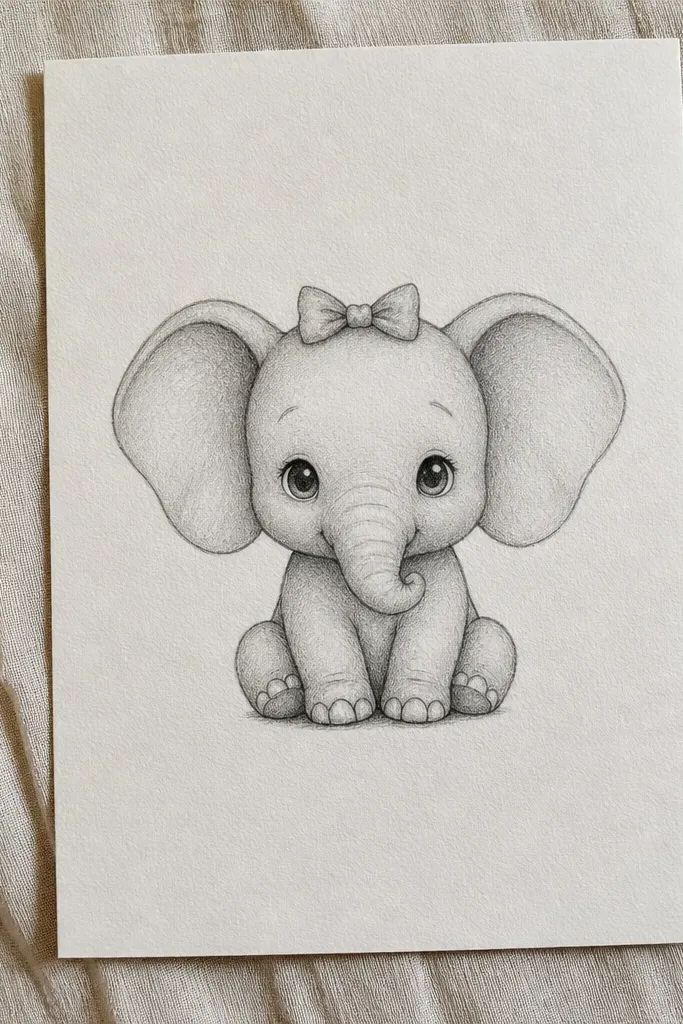
Props like a bow make the drawing feel finished fast. The bow also tells you where to place the head details, so your composition stays tidy. Keep the bow small and centered on top of the ears, with two loops and a short knot. The elephant itself stays minimal: big head, tiny body, short legs. Use gentle gray shading under the ears and along the belly to give the bow a clean contrast against the face.
Sketch a large head oval, then add ears as two rounded shapes attached to the sides. Draw a small bow on top: two loop shapes and a small center knot. Place eyes as tiny dots and draw a short smile curve. Add a short trunk line that curls slightly inward at the bottom. Finish by outlining and then adding light shading under the ears and on the belly with a soft pencil or gray marker.
Keep the bow lines thicker than the trunk line so it reads as the accessory, not part of the elephant outline.
Don’t add too many wrinkles around the mouth — the bow already adds character.
7. Baby Elephant Holding a Balloon
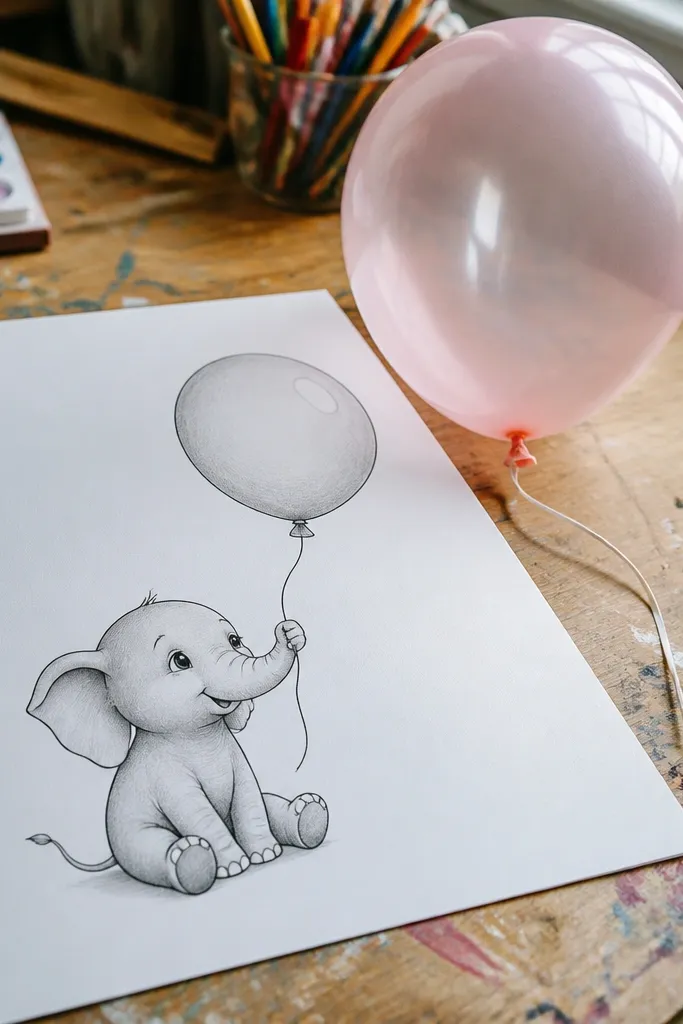
Balloon drawings look great because the balloon creates a big, smooth circle that balances the elephant’s rounded head. Use the trunk to grab the string, and keep the string as one simple line. Make the balloon slightly tilted so the composition feels playful. The elephant body can be just a compact oval with two short legs, plus a small tail curl. For color, add a light pink or blue balloon and keep the elephant gray with soft shading.
Draw the elephant head and body as two rounded ovals, then add short legs as rounded stubs underneath. Sketch the trunk reaching forward toward where the balloon string will meet. Draw a large circle balloon above the trunk and add a straight string line down to the trunk tip. Add ears and eyes, then outline everything. Add shading on the trunk underside and under the belly to keep it from looking flat.
Leave a small blank highlight circle on the balloon so the whole drawing looks glossy and clean.
Don’t draw the balloon string tangled — one clean line looks more intentional.
8. Tiny Baby Elephant in a Cloud
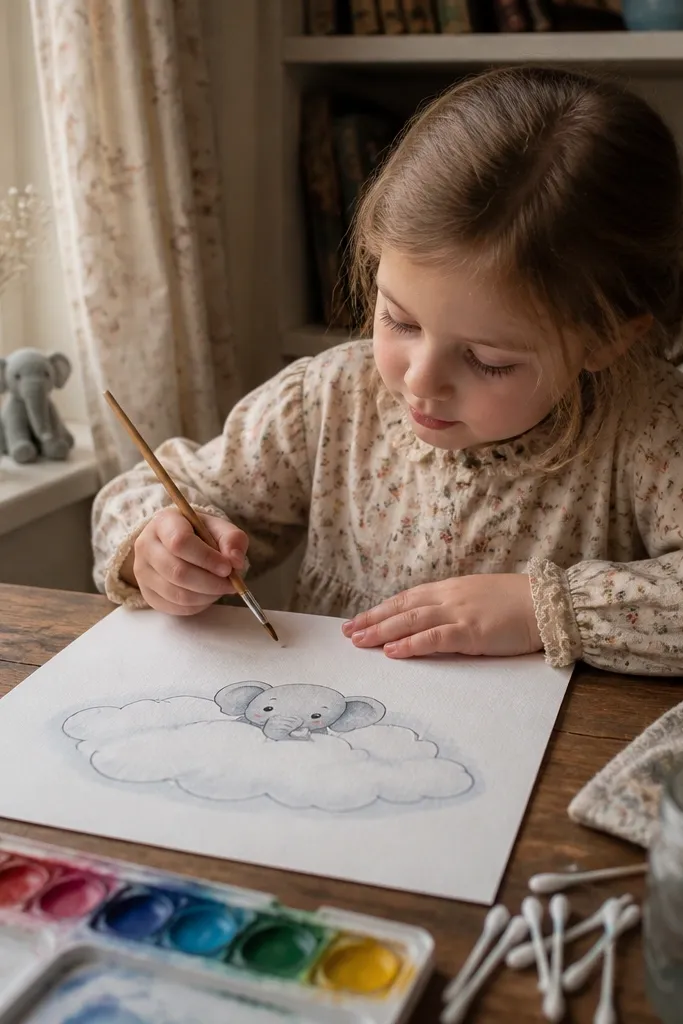
This is an aesthetic composition trick: put the elephant partially hidden behind a cloud. It hides proportion errors and makes the final image feel storybook. Draw a fluffy cloud outline first, then let the elephant head peek out from the center. Keep the trunk short and visible as a small curve, and add ears that stick out like cartoon antennae. The cloud gives you easy texture with scalloped edges, while the elephant stays clean and simple.
Draw a cloud outline with rounded bumps — keep it thicker on the outside. Inside the cloud, sketch the elephant head as an oval that touches the cloud interior edges. Add ears as two rounded shapes that extend beyond the head. Draw eyes and a small smile, then add a short trunk curve peeking out. Outline everything, then add darker line weight to the cloud outer edge and light shading behind the elephant face.
Use scallops of equal size on the cloud so it looks consistent instead of random.
Avoid showing the full body — partial peeking is what makes this one forgiving.
9. Baby Elephant Walking Left
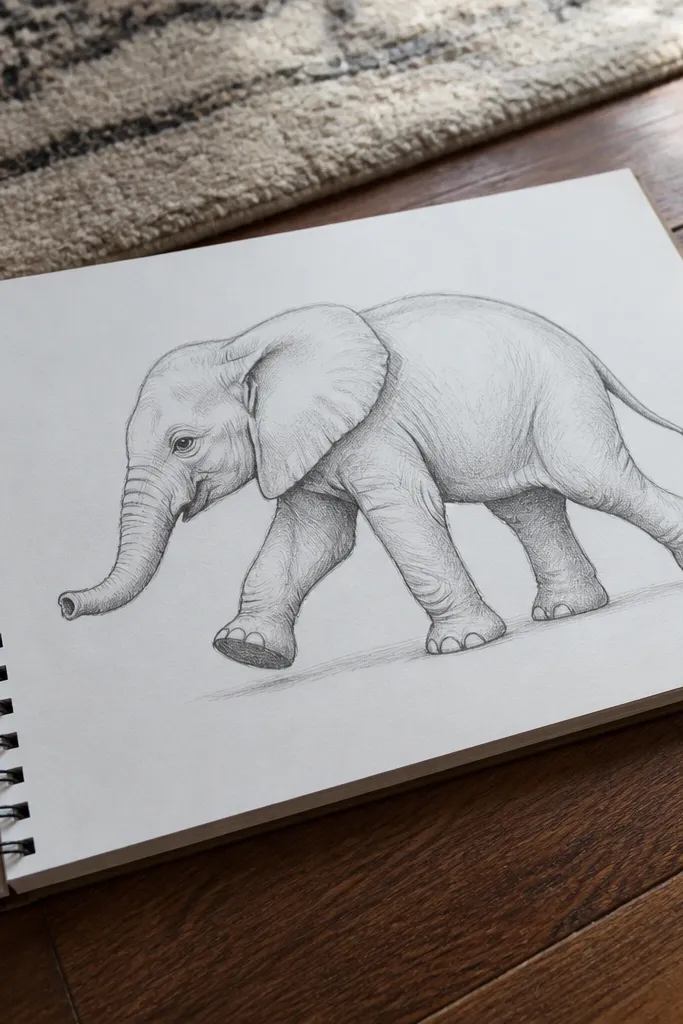
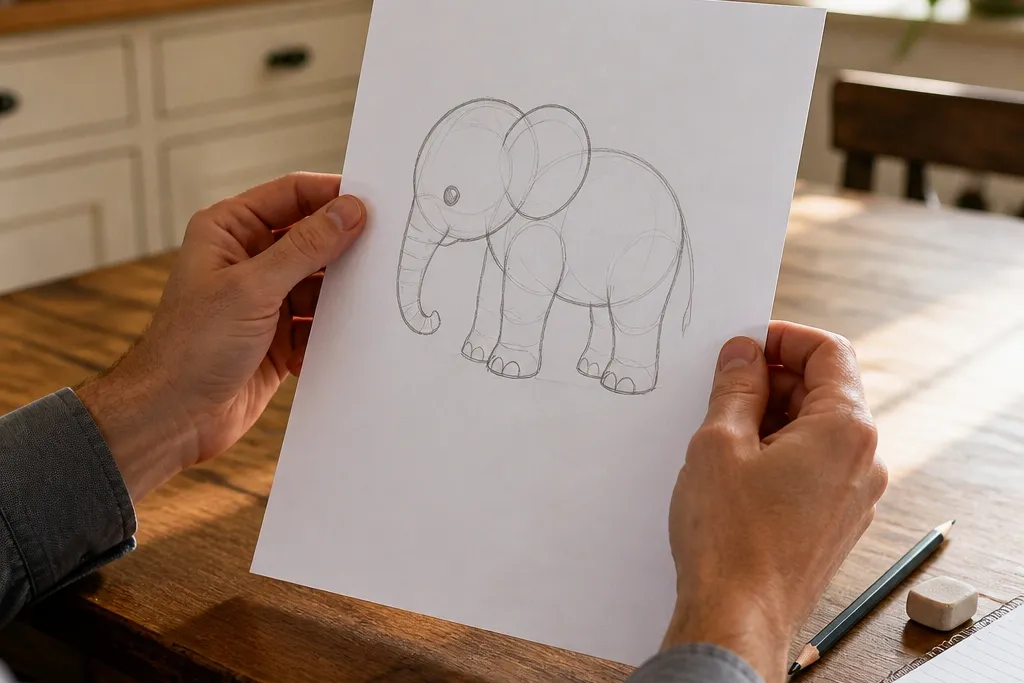
Walking poses look dynamic even with simple shapes. Here, the difference is one leg is lifted higher, and the body leans slightly in the direction of movement. Keep the legs as rounded cylinders or soft rectangles, then add small toe pads. The trunk can swing forward in a gentle curve. This project is great if you want the drawing to feel alive without doing complex motion lines.
Sketch the body oval and head oval, then connect them with a short neck line. Draw two front legs as rounded shapes — one straight down and one slightly lifted. Place two back legs tucked under with the back foot angled slightly. Add a curled tail behind and a trunk that curves forward toward the lifted leg. Outline with a fineliner and erase guides, then add a small shadow under the lifted foot to sell the motion.
Lean the body by tilting the head-body connector line — it makes the whole pose read as walking.
Don’t make all four legs the same length — that flattens the movement.
10. Baby Elephant With Polka Dot Belly
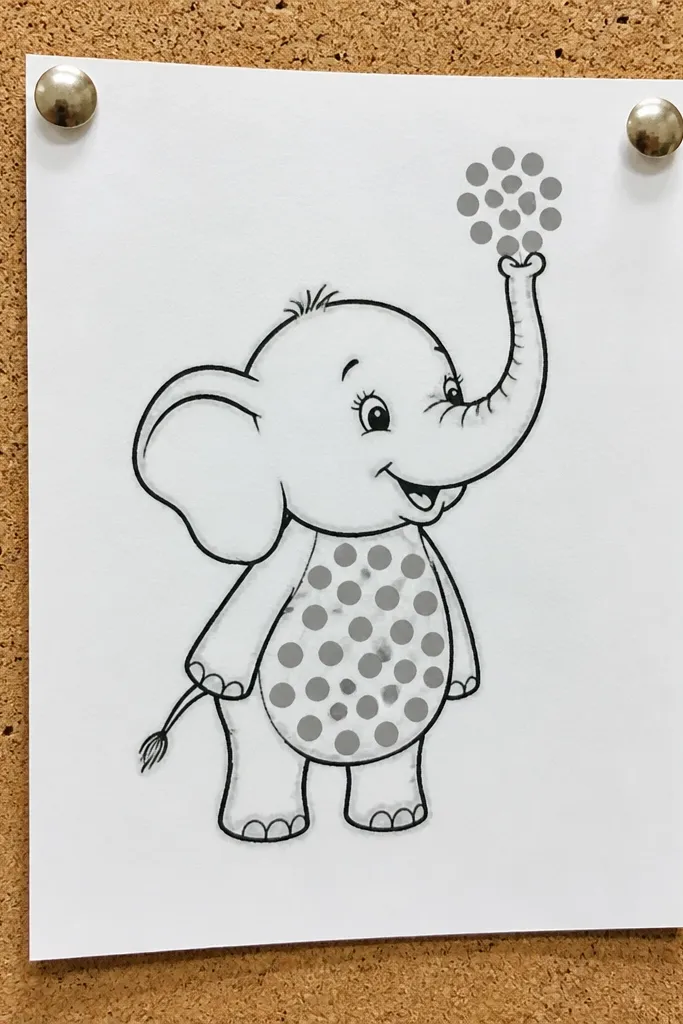
Patterns make the drawing look finished and graphic. This one keeps the elephant shape simple and uses polka dots on the belly area, plus one dot cluster on the trunk tip for balance. The look is clean because the dots are consistent in size and spaced evenly. Keep the ears puffy and the legs stubby so the belly remains the main focus. Add light gray shading around the dots so the dots don’t look pasted on.
Draw head and body as rounded ovals, then place the belly as the lower half of the body oval. Add ears and eyes, then sketch a short trunk curve. For the belly, draw a circle boundary or just lightly mark where the dots will sit. Add polka dots of equal size with a pen or fine marker, then outline the elephant outer contour. Finish with light pencil shading around the dot area and under the chin.
Use a ruler or scrap paper edge to keep the polka dot spacing even — it saves a lot of frustration.
Avoid mixing dot sizes — it makes the design look accidental.
11. Baby Elephant With a Scarf Around the Neck
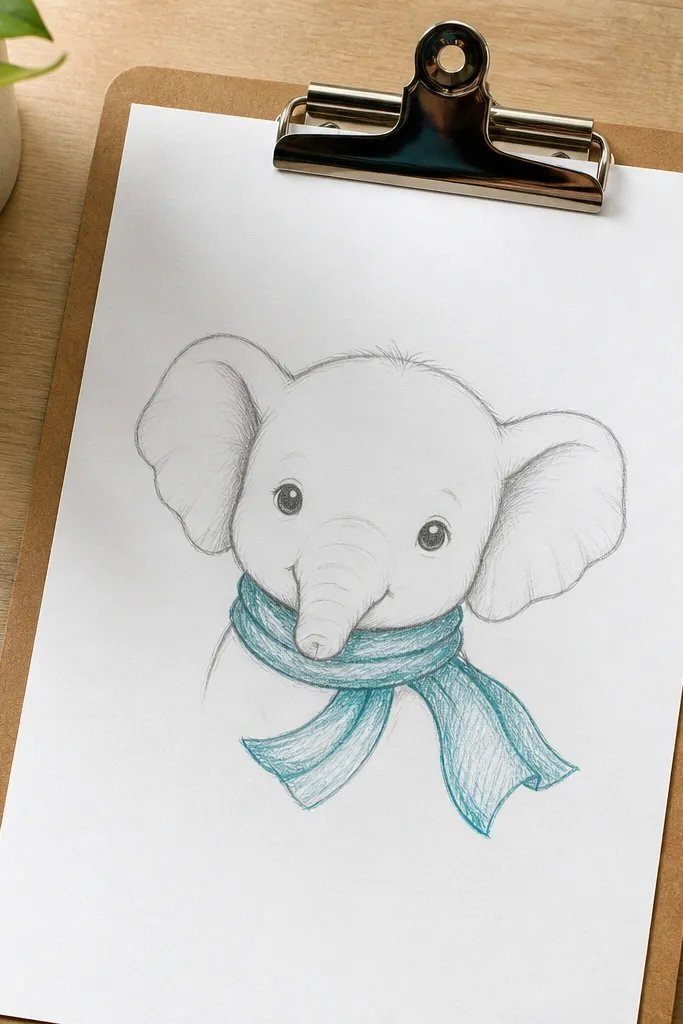
A scarf adds color and movement without changing the core elephant proportions. Draw the scarf as two flowing loops around the neck with simple folds — three fold lines on each side is enough. Keep the scarf ends short so the drawing stays cute and compact. The elephant face stays minimal with a small smile and a short curled trunk. This one looks great in two-color schemes: gray elephant plus a bold scarf color like mustard, teal, or coral.
Pro tipColor the scarf before you shade the elephant so you can use the scarf as a boundary for your gray shading.
Sketch the head oval and body oval, then draw a short neck. Add ears and face details first so you don’t cover them with scarf lines. Draw the scarf around the neck as a thick band, then add two loop shapes that drape slightly down the chest. Add scarf fold lines with curved strokes, then outline the elephant and scarf edges. Finish by coloring the scarf and adding light shading under the scarf band so it looks wrapped, not floating.
AvoidDon’t draw scarf folds too dense — a few clear curves look cleaner than lots of tiny creases.
12. Baby Elephant With Sunglasses
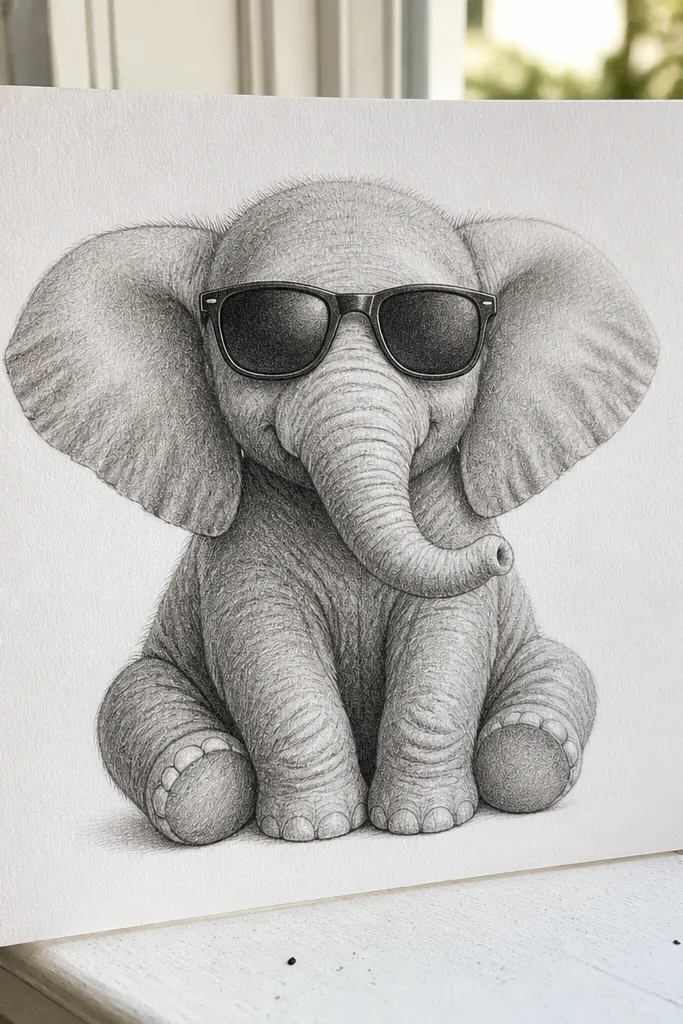
Sunglasses instantly make it feel like a character. The key is to keep the sunglasses proportionate to the big baby head, and keep the arms simple so the drawing stays readable. Put the sunglasses slightly above the eye line, then draw the eyes as small dots hidden under the frames. The trunk can curl up slightly toward the mouth for a playful expression. This project is easy and looks graphic with clean outlines.
Pro tipGive the sunglasses a slight tilt — even 10-15 degrees makes it look more intentional.
Draw the head oval and then add ears as rounded flaps on both sides. Sketch the sunglasses frame as two round rectangles or circles with a small bridge between them. Place the trunk as a short curved line with a hook at the end. Add a tiny mouth curve and keep the face otherwise minimal. Outline everything with a darker pen, then color the sunglasses dark gray or black and leave the elephant face unshaded or lightly shaded.
AvoidAvoid placing the sunglasses too low — it makes the face look confused instead of cool.
13. Baby Elephant With a Star Sticker on the Cheek
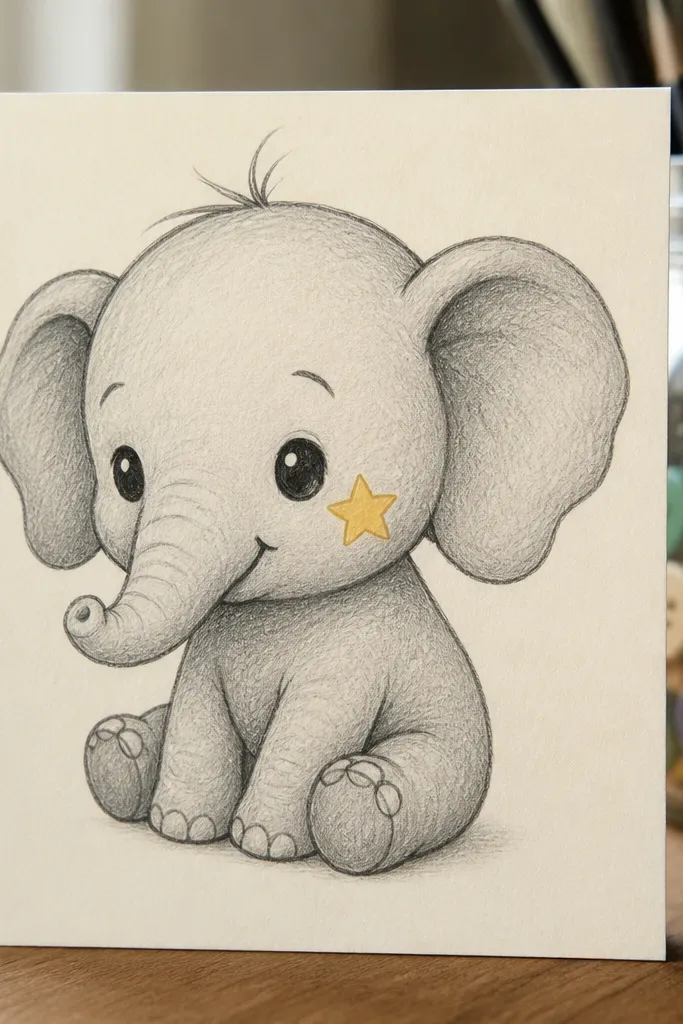
This is a super fast way to get a cute, aesthetic result because the cheek star acts like a design anchor. Keep the elephant face simple: big head, small eyes, tiny smile, short trunk. Add the star as a clean five-point shape or a simple sparkle icon. The star should sit slightly above the cheek bump so it looks placed, not random. For color, shade the elephant in cool gray and color the star in bright yellow or pink.
Sketch the head oval and add ears as rounded shapes that sit slightly outward. Draw eyes as small dots, then a simple smile line. Add a cheek bump line or two soft curves under the eyes to create puffiness. Place a five-point star on one cheek, then outline it with the same fineliner thickness as the face outline. Add light shading under the ears and around the cheek area, leaving the star mostly clean for contrast.
Make the star lines crisp by drawing the star points first, then thickening the outer edges.
Don’t cram the star into the ear area — it competes with the ear shape.
14. Baby Elephant Side Profile With Big Eye
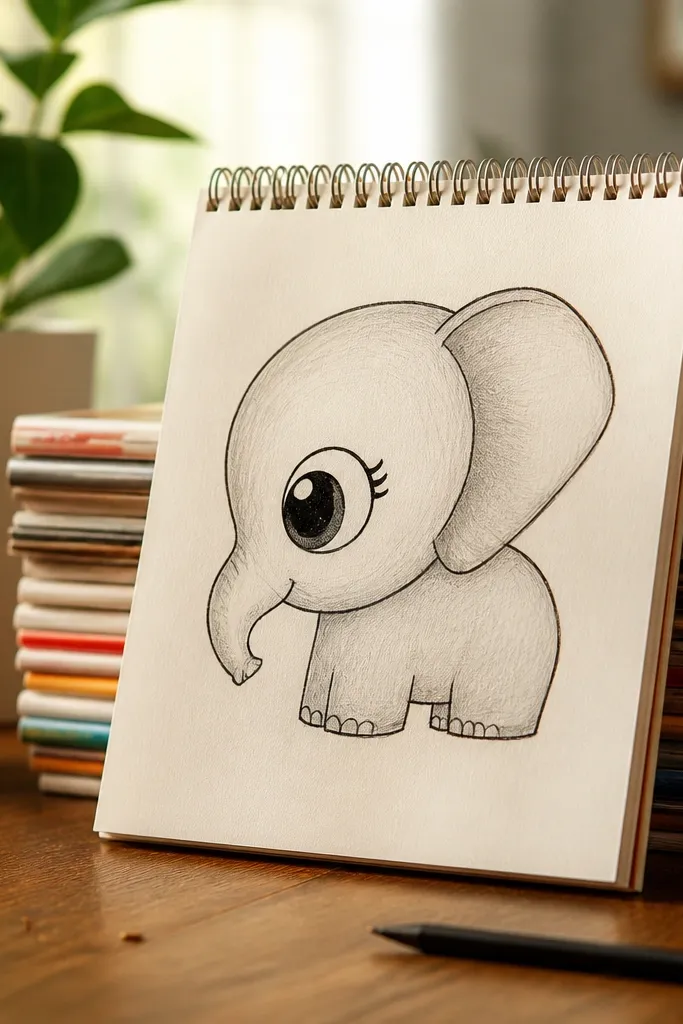
Side profiles look more “artsy” but still easy when you exaggerate one feature. This version uses a big eye and a simple trunk curve, so you don’t have to draw complicated face planes. The ear becomes a rounded triangle shape behind the head outline. Keep the body oval behind the head, and the legs are short bumps with small toe hints. The aesthetic comes from smooth, continuous outlines and minimal interior lines.
Draw a head profile as an oval with a small bump for the forehead. Add the ear as a rounded triangle behind the head. Place a large eye as an oval on the side of the head, then draw a small eyelid line. Sketch the trunk as a curved line that extends forward and curls slightly downward. Add the body oval behind the head and connect with a short neck. Finish by outlining with a steady hand and adding one short shading line under the head and along the trunk underside.
Use a single confident outline for the head and trunk — it makes the drawing look polished fast.
Avoid lots of face wrinkles in profile — one trunk crease line is plenty.
15. Baby Elephant With a Bowtie
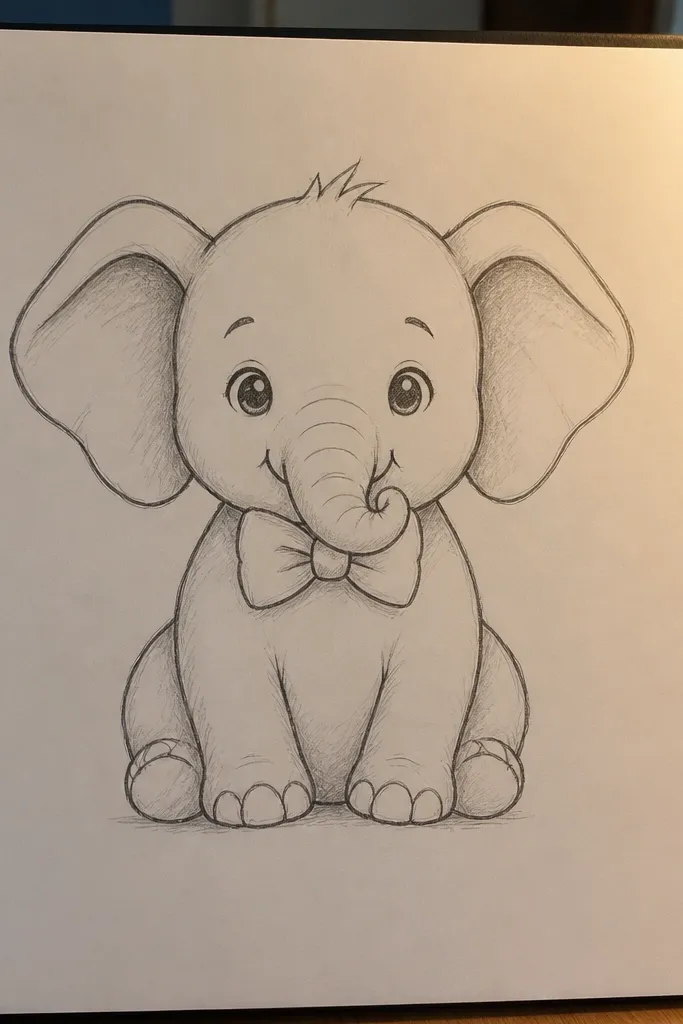
A bowtie is the cleanest accessory for a front-facing baby elephant. It sits right at the chest, which helps you position the trunk and mouth so everything reads together. Keep the bowtie symmetrical with two loop shapes and a small knot in the center. The elephant body should be a rounded oval with a slight belly curve to make the bowtie feel anchored. Shade under the bowtie band and along the belly for a smooth, cute finish.
Pro tipKeep the bowtie lines slightly thicker than the face outline so it reads clearly at a glance.
Sketch head and body ovals, then add ears on the sides. Draw the trunk as a short curve that ends near the chest. Add a small smile and eyes as tiny dots. For the bowtie, draw two mirrored loops under the chin area, then add the center knot. Outline and erase guides, then shade the underside of the bowtie and a soft shadow under the chin with a light gray pencil or marker.
AvoidDon’t place the bowtie too high — it will look like it’s sitting on the mouth.
16. Baby Elephant With a Bubble Wand
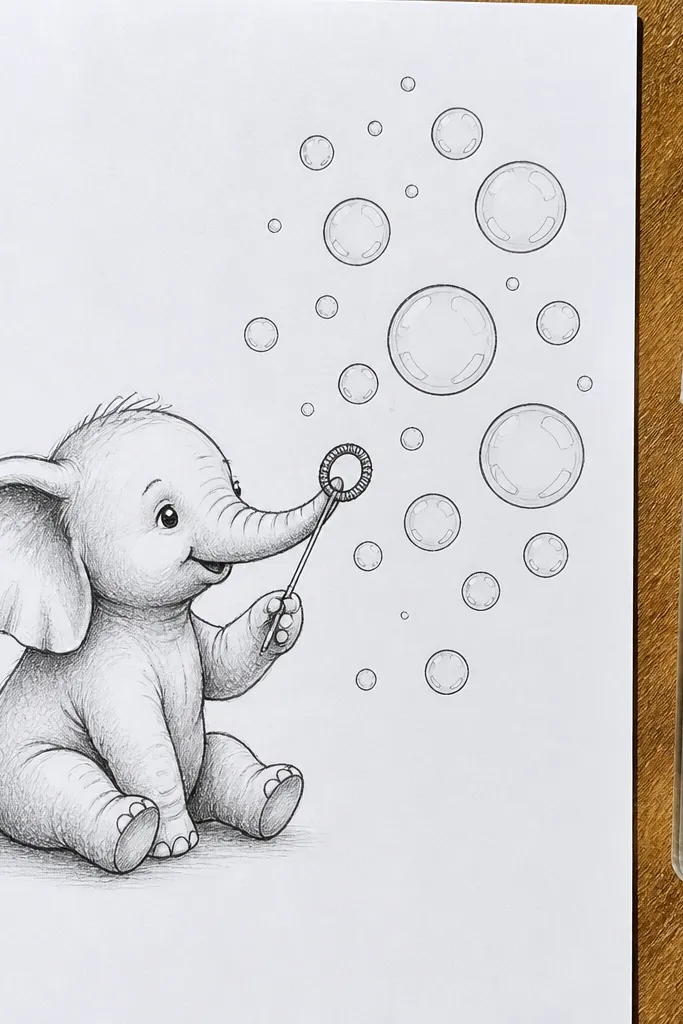
Bubbles look great because they’re circles and they add instant whimsy. Draw the elephant with a small mouth curve and a short trunk that points toward the bubble wand. The bubbles are lightweight circles that you can vary in size for depth. Keep the wand as a simple stick with a small ring at the tip. This drawing is photogenic because the bubbles create a clear pattern around the elephant head.
Sketch the head oval and body oval, then add ears and short legs. Draw the trunk as a curve toward where the wand will be. Add a small mouth curve and then draw the bubble wand: a straight line with a small circle ring at the end. Draw 5-7 bubbles as overlapping circles around the trunk and head area. Outline everything with a fineliner and add light shading under the elephant chin and along one side of the bubbles.
Leave one highlight gap on each bubble circle so they look like glass, not empty outlines.
Avoid too many tiny bubbles — 5-7 is enough to look intentional.
17. Baby Elephant With a Tiny Backpack
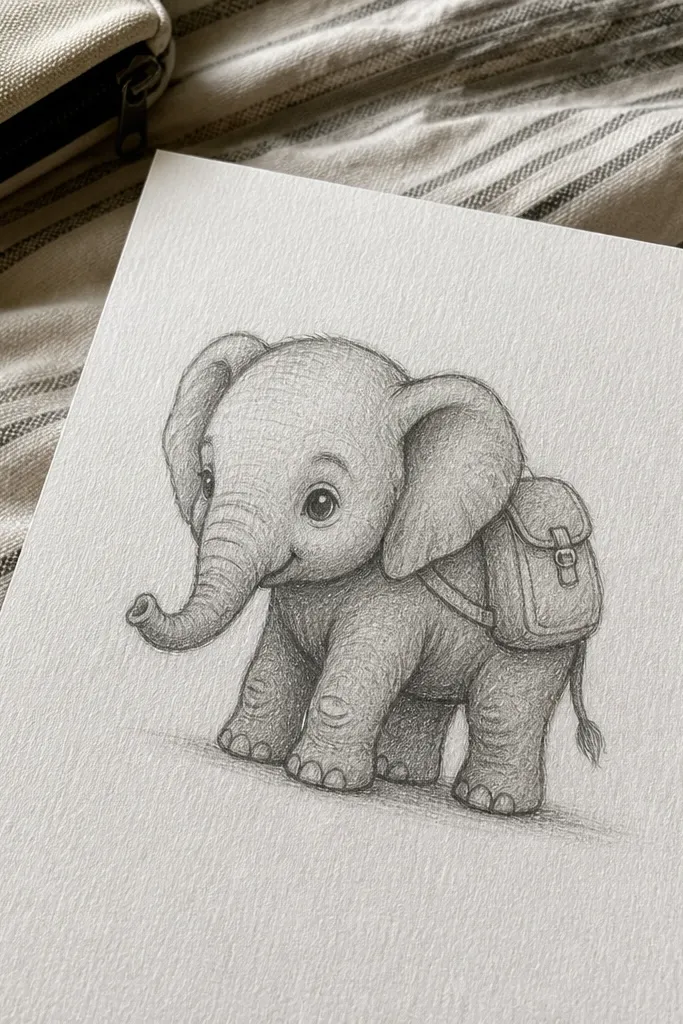
A tiny backpack gives structure to the body shape and makes the drawing feel like a character you’d want to keep. The backpack should sit on the upper back and have a simple flap and strap lines. Keep the elephant proportions baby-cute: big head, small body, short legs. The aesthetic comes from clean accessory edges and a simple face expression with a small smile and a short curled trunk. Add light shading under the backpack straps to make it feel attached.
Draw head and body ovals, then add ears and face details. Sketch the legs as short rounded shapes under the body. Add a small backpack rectangle on the upper back, then round the corners slightly. Draw two straps as curved lines from the backpack to the chest area. Add the trunk curve and a tiny tail curl. Outline and erase guides, then shade under the straps and around the backpack edges.
Make the backpack slightly darker than the elephant outline so it pops without adding extra linework.
Don’t make the backpack too big — it will steal attention from the face.
18. Baby Elephant in a Picture Frame Border
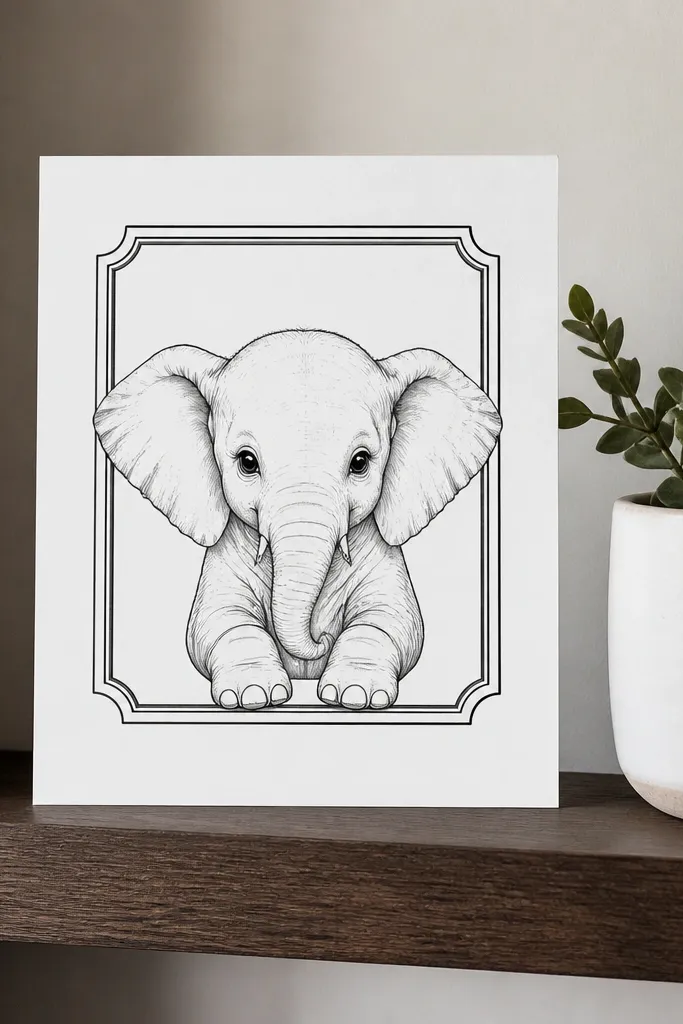
This one is for when you want a clean, printable “art card” look. The frame border makes the elephant feel finished even with minimal shading. Keep the elephant centered and slightly larger than you think, so the head fills the middle. Use a thin inner frame line and a slightly thicker outer frame line for a polished edge. The elephant itself stays simple: big head, puffy ears, short trunk, minimal wrinkles.
Pro tipUse a ruler for the frame, but draw the elephant freehand so it stays cute instead of stiff.
Draw a rectangle frame on your paper, then add a smaller inner rectangle with a small gap. Sketch the elephant head and body inside the frame so it nearly touches the inner rectangle edges. Add ears, eyes, and a short curled trunk. Outline with a darker pen, then erase the construction lines. Finally, add a light gray shadow under the chin and a faint ear shadow toward the outer edge to add depth without clutter.
AvoidDon’t use a thick frame line all the way around — it can overwhelm the elephant.
19. Baby Elephant With a Raindrop Umbrella
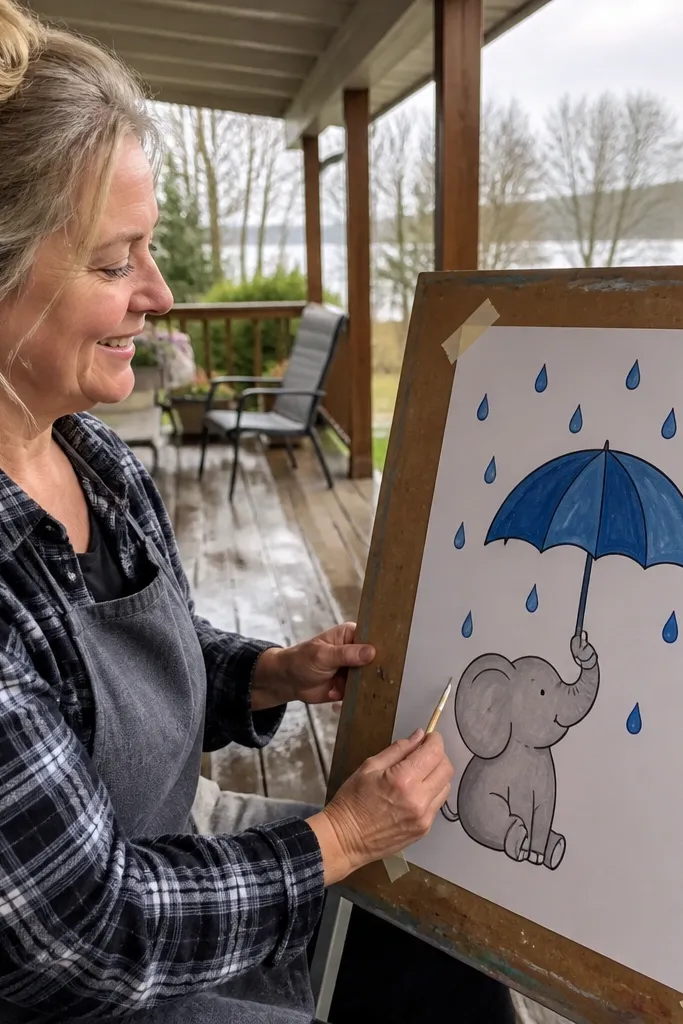
Umbrellas and raindrops create a strong theme and make the drawing look lively with almost no extra anatomy. The umbrella shape is the main design — draw it as a rounded dome with a handle down toward the trunk. Then add 6-10 raindrops as simple teardrops that fall around the elephant. Keep the elephant’s face simple and friendly so the weather elements don’t turn it into a busy scribble.
Sketch the elephant head and compact body first, with stubby legs and puffy ears. Draw the trunk reaching toward where the umbrella handle will meet. Add the umbrella as a dome top with a simple handle line. Draw raindrops as teardrop shapes spaced around the umbrella area. Outline everything, then add light shading under the umbrella and on the elephant belly for separation.
Make the raindrops vary in size slightly — it gives depth without adding lines.
Avoid tiny raindrop clusters — spread them so the negative space stays readable.
20. Baby Elephant With a Cute Tail Curl and Flower Ground
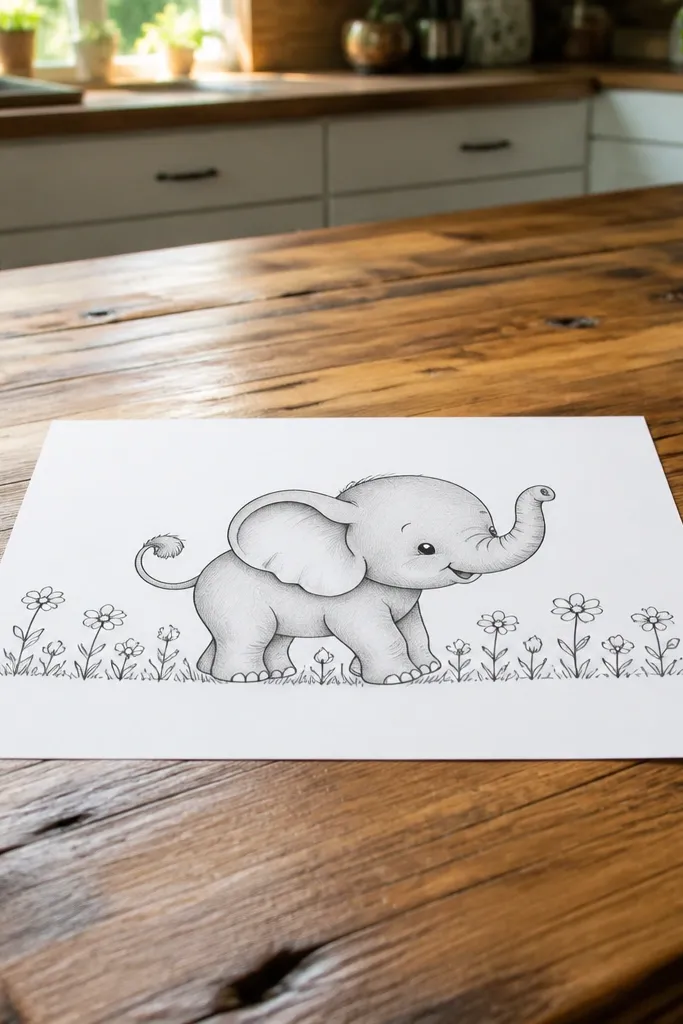
This drawing looks adorable because it gives the elephant a simple “ground” story. The tail curl adds personality, and the tiny flowers at the bottom frame the legs so your proportions feel intentional. Keep the flowers simple: small circles or five-petal shapes with thin stems. The elephant should face forward or slightly angled, with a short trunk and small smile. Shade only the legs and the underside of the head so the flowers stay bright and clean.
Draw the elephant as head oval + body oval, then add short legs connected to a small ground line. Place the tail as a curled line from the back of the body. Add ears and face details, then draw a short trunk curve toward the front. Create the ground flowers: draw 3-6 small blossoms with short stems along the bottom edge. Outline with a fineliner and erase guides, then lightly shade under the head and between the legs.
Keep flowers lower than the feet — it makes it look like the elephant is standing on them, not sitting on them.
Don’t add too many flowers — three to six is enough to frame the pose.