
1. Bubble-Helmet Elephant with Tiny Goggles
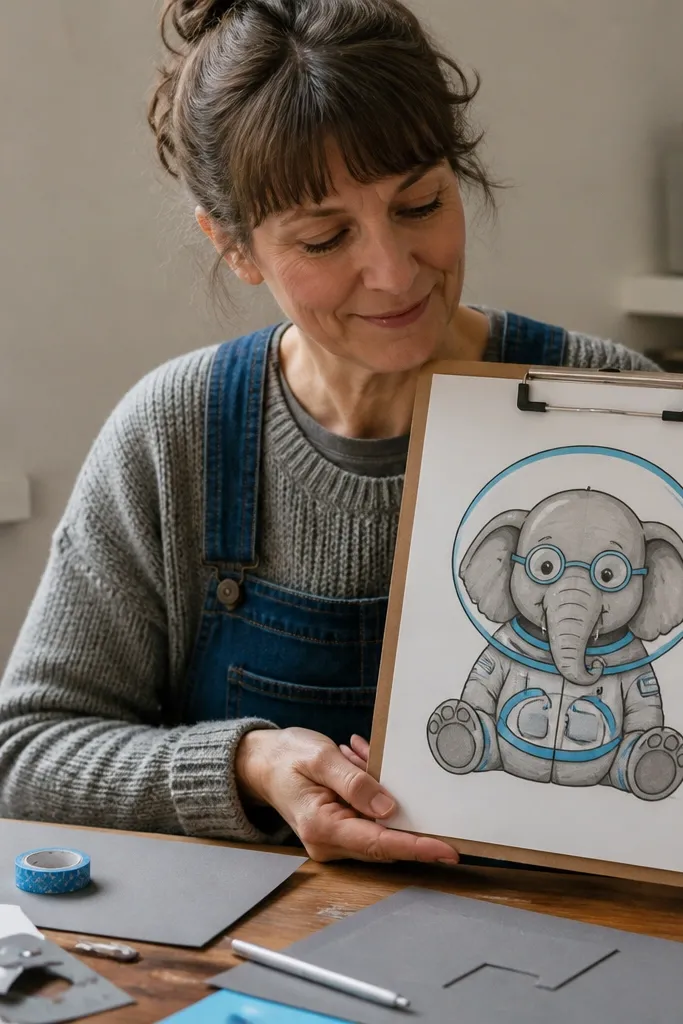
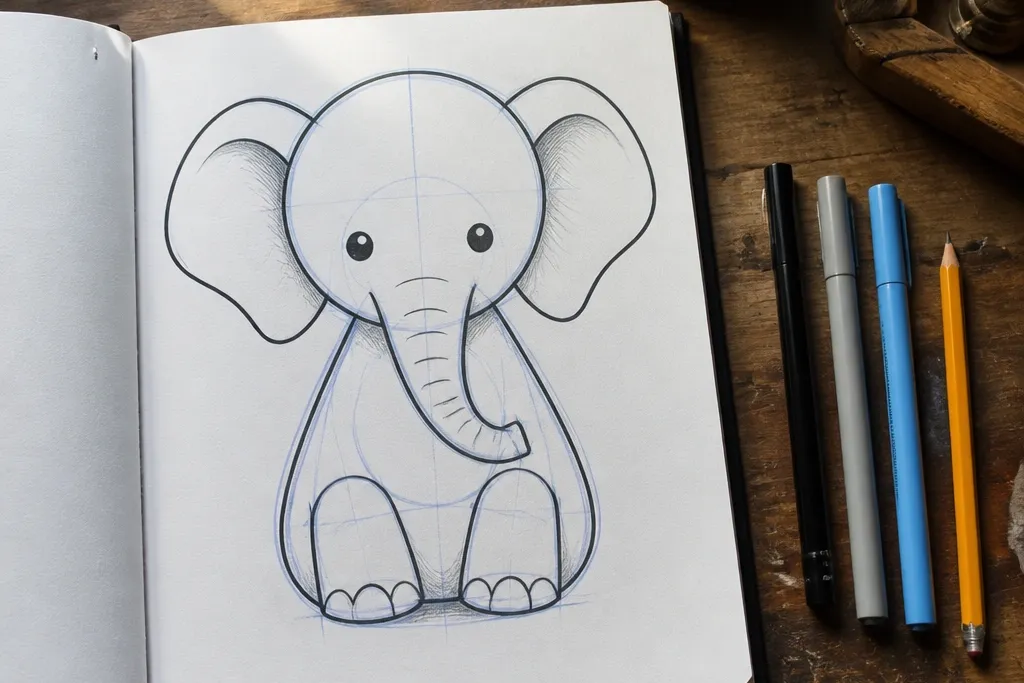
This one looks instantly cute because the helmet gives your elephant a clear shape cue. Draw a rounded bubble over the head, then add two small goggles centered above the trunk curve. The helmet hides tricky ear placement, so even an easy sketch looks polished. Use two or three color choices max: gray body, blue goggles, and a light highlight on the helmet. It’s great for classroom doodles, phone wallpapers, and any page where you want clean, friendly characters.
Pro tipKeep the goggles small and centered — it prevents the face from looking lopsided.
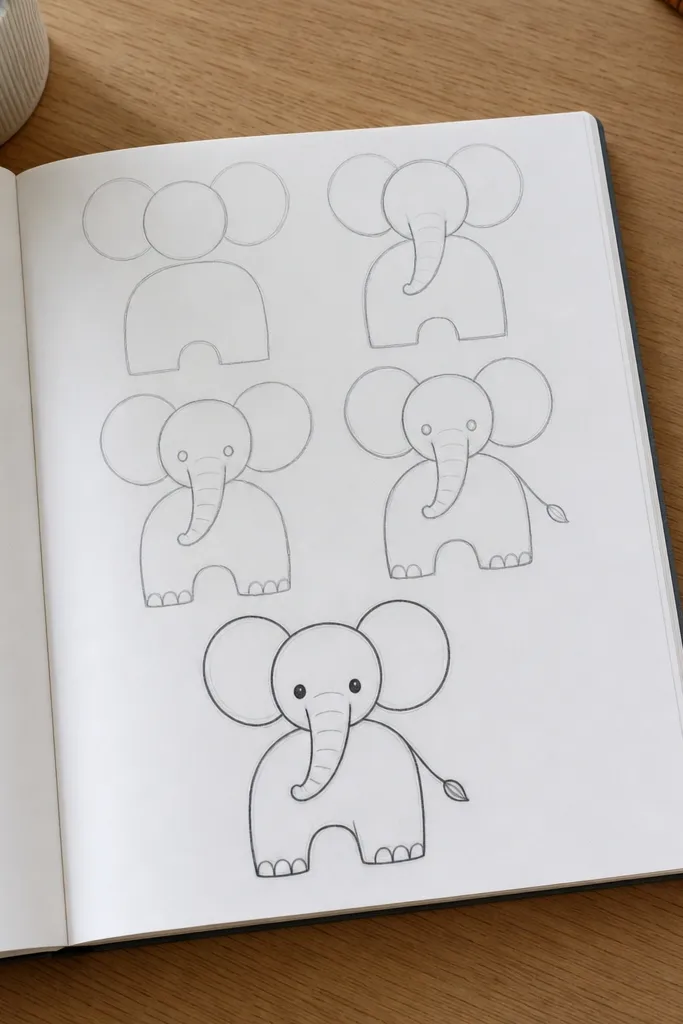
Start by drawing a large head circle and a teardrop body attached to the bottom. Add a trunk line that curls slightly up at the tip, then place the eyes inside the area under the helmet. Next, draw the bubble helmet as a large oval around the head and add two small goggles rectangles. Finally, color the body in flat gray and the goggles in blue, then add one white highlight on the helmet.
AvoidDon’t add too many helmet reflections; one white highlight is enough.
2. Candy-Stripe Trunk Elephant
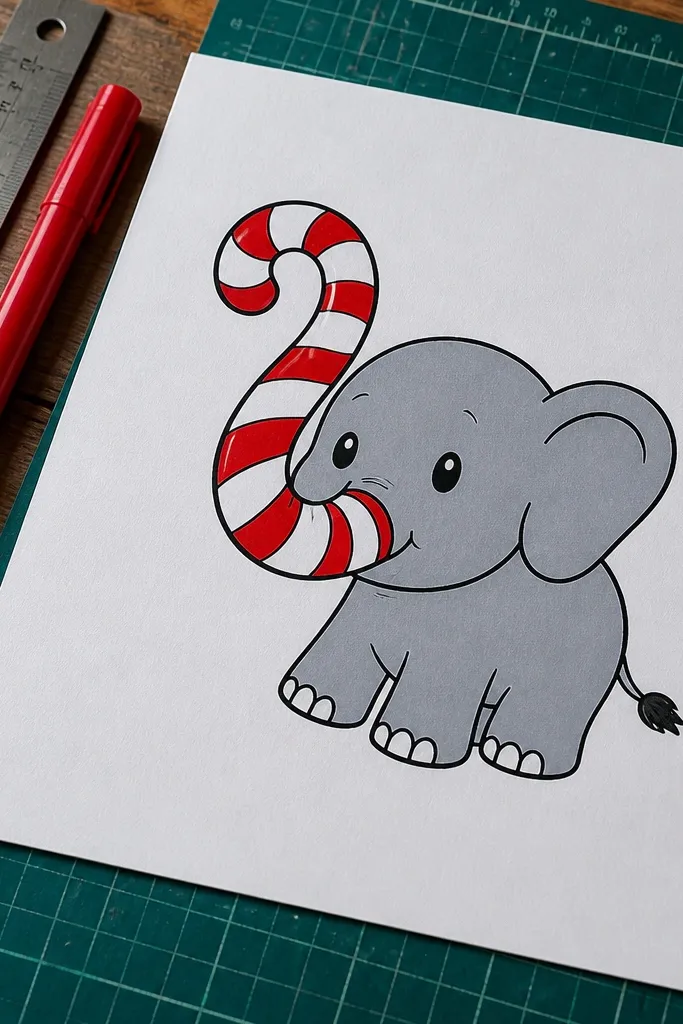
This idea is photogenic because the trunk becomes the main design element. You draw a simple elephant body, then turn the trunk into a candy cane twist with stripes that lead the eye. When the stripes are evenly spaced, the whole drawing feels “designed,” not accidental. It’s also a great way to practice line control: the trunk twist gives you a clear path to follow. Use bright but limited colors like pink and white stripes with a pale lilac body.
Pro tipUse a ruler or a gentle guide line for the trunk centerline so stripes stay consistent.
Sketch the head circle and body teardrop first, then draw short legs with tiny feet. Pull the trunk forward and twist it into a candy cane curve, making the tip end slightly thicker. Add 4-6 parallel stripes along the trunk using curved lines that match the twist. Color the elephant body in pale lilac, then fill the trunk with alternating pink and white stripes.
AvoidAvoid random stripe spacing — uneven spacing makes it look messy fast.
3. Umbrella Parade Elephant
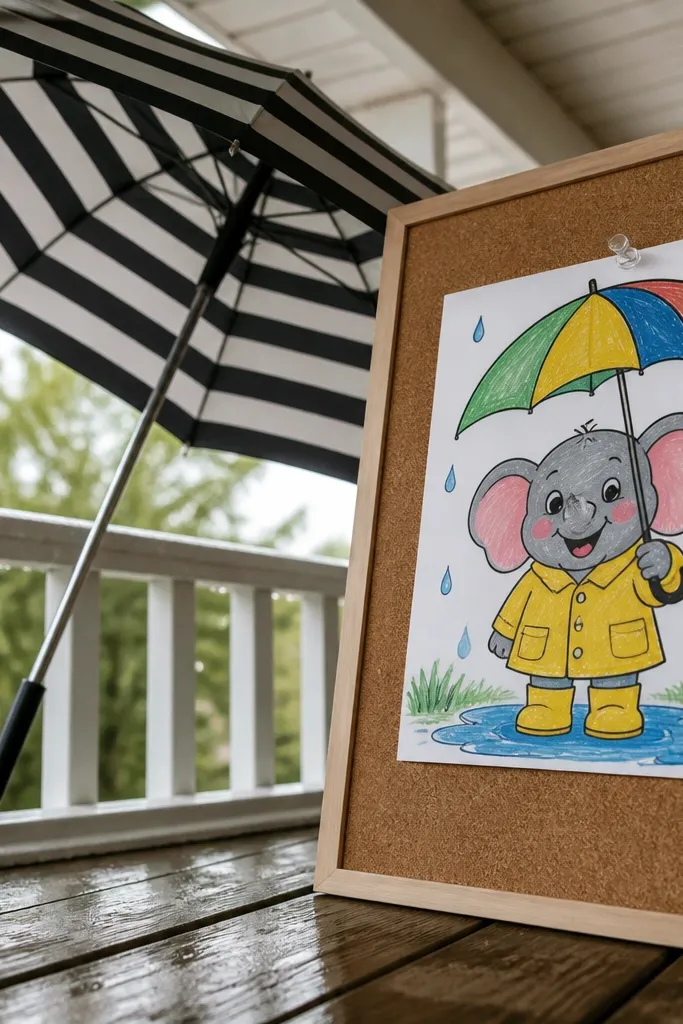
Umbrellas give your elephant a strong silhouette and make the scene feel lively. Draw the elephant standing with one arm holding an umbrella, then add three to five simple raindrops that fall behind the umbrella edge. The umbrella can be striped, dotted, or two-tone, which makes the drawing pop in photos. This is a great choice when you want an easy background that doesn’t turn into a full scene. Keep the raindrops small and evenly spaced for a clean look.
Start with the elephant body teardrop and head circle, then add a simple arm line reaching up. Draw the umbrella canopy as a half-circle with a handle down into the arm. Add raindrops as short teardrops or lines that start under the umbrella. Finally, color: fill the umbrella with a bold pattern and keep the elephant body a flat neutral gray.
Make the umbrella slightly wider than the head; it balances the drawing.
Don’t draw too many raindrops — five looks intentional, twenty looks chaotic.
4. Sunhat and Sunglasses Elephant
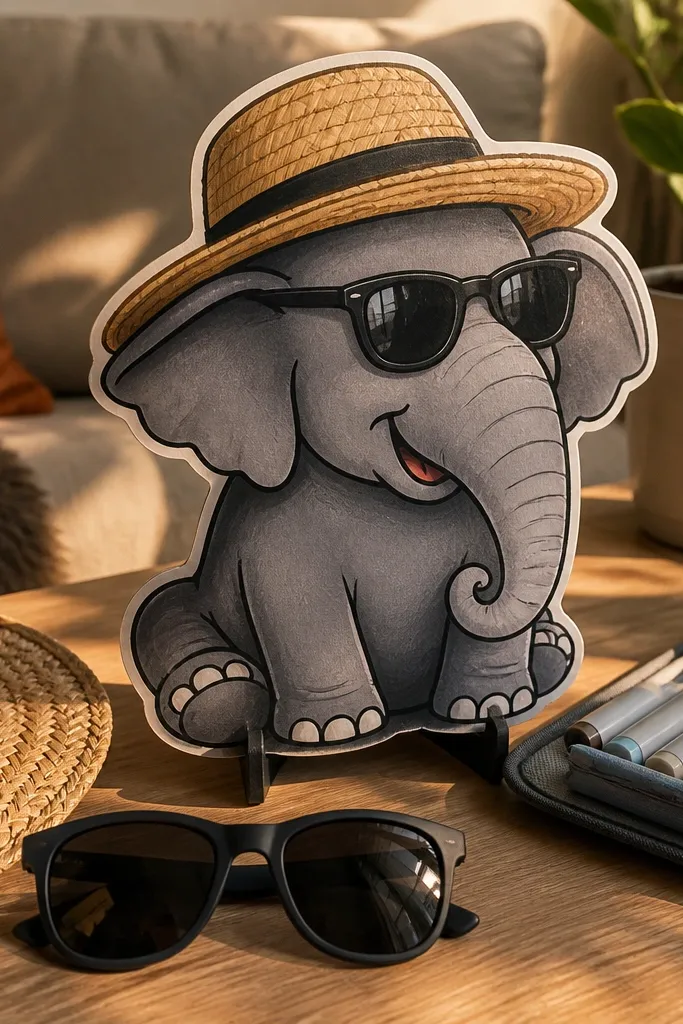
This one works because accessories handle the expression for you. Sunglasses hide eye shape, and a sunhat frames the head so your ears can be simplified. Draw a smiling mouth and a curved cheek line, then let the sunglasses set the vibe. It’s ideal for quick practice because you can repeat the same face layout over and over while changing hat colors. The final result looks like a sticker that belongs on a summer page.
Draw the head circle, then place the sunglasses as two rounded rectangles across the upper face. Add the trunk curve with a small smile at the center. Sketch a sunhat brim as a wide arc behind the head, then draw the hat crown as a slightly taller oval. Color the hat in warm yellow or coral and fill sunglasses in dark gray or black.
Add one small highlight on the sunglasses lens to make it look glossy without extra shading.
Avoid placing the sunglasses too low; keep them in the upper third of the face.
5. Mini King Elephant with Crown and Bow Tie
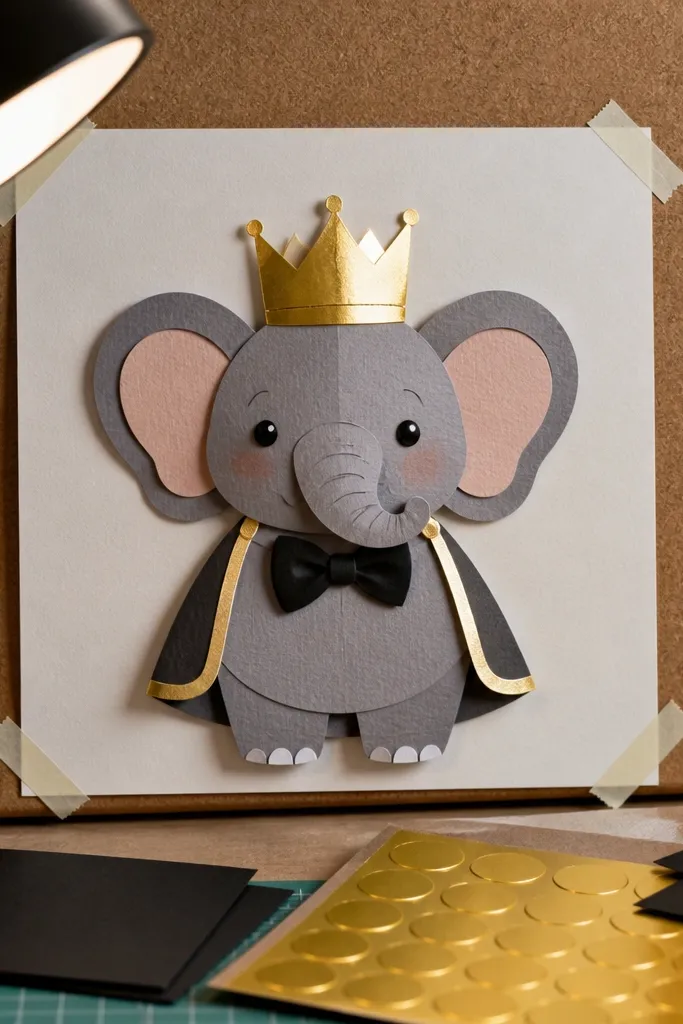
A crown and bow tie make an elephant look “cute royal” with almost no extra drawing complexity. The crown lines create vertical structure, and the bow tie adds a crisp focal point at the chest. Keep the elephant’s body round and compact so it reads as a character, not a realistic animal. Use gold crown color, black bow tie, and a single red accent jewel for contrast. This is a strong pick for greeting-card style art and Pinterest-friendly thumbnails.
Start with a compact head circle and a rounded body teardrop, then add four tiny legs. Draw the crown as a simple zigzag ring on top of the head, then add two or three small spikes. Place a bow tie at the center of the body using two mirrored triangles with a small knot in the middle. Finish by coloring crown in gold, bow tie in black, and add one red jewel dot.
Keep the crown symmetrical — even slightly off-center makes it feel “off” fast.
Don’t add long tusks; short curved nubs look cuter and easier.
6. Rainbow Swoosh Elephant Jump
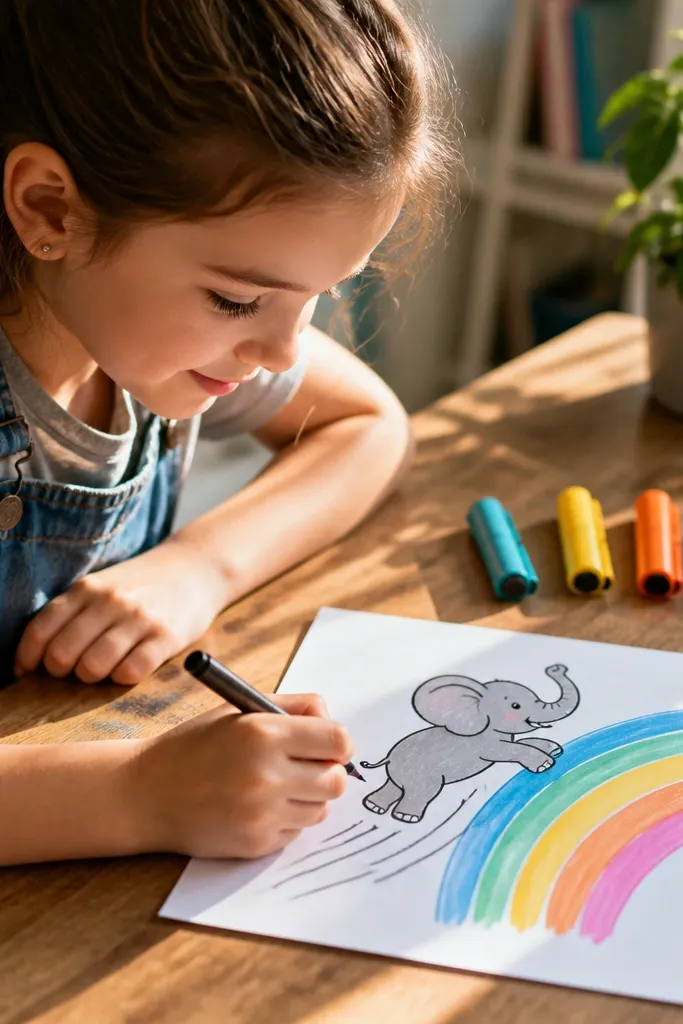
The rainbow swoosh makes this drawing dynamic even if your elephant is simple. Draw the elephant with bent legs and a lifted trunk, then use a broad arc trail behind it. The arc gives you an easy “motion” cue so the image looks energetic. Color the swoosh with 5 bands and keep the elephant body flat gray to avoid clutter. This is perfect for stickers, study notes, and anyone who wants a bold, colorful page.
Sketch the head circle and body teardrop, then draw two legs forward and two legs back as simple shapes. Add a trunk curve that points slightly up. Draw a large rainbow arc behind the elephant, with 5 parallel curved stripes. Color the stripes in bright bands and fill the elephant gray, then add a tiny black outline around the swoosh edges.
Make the rainbow arc thicker than you think; it reads better in small images.
Avoid drawing tiny raindrop-style motion lines everywhere; the swoosh does the job.
7. Pocket-Sized Elephant in a Teacup
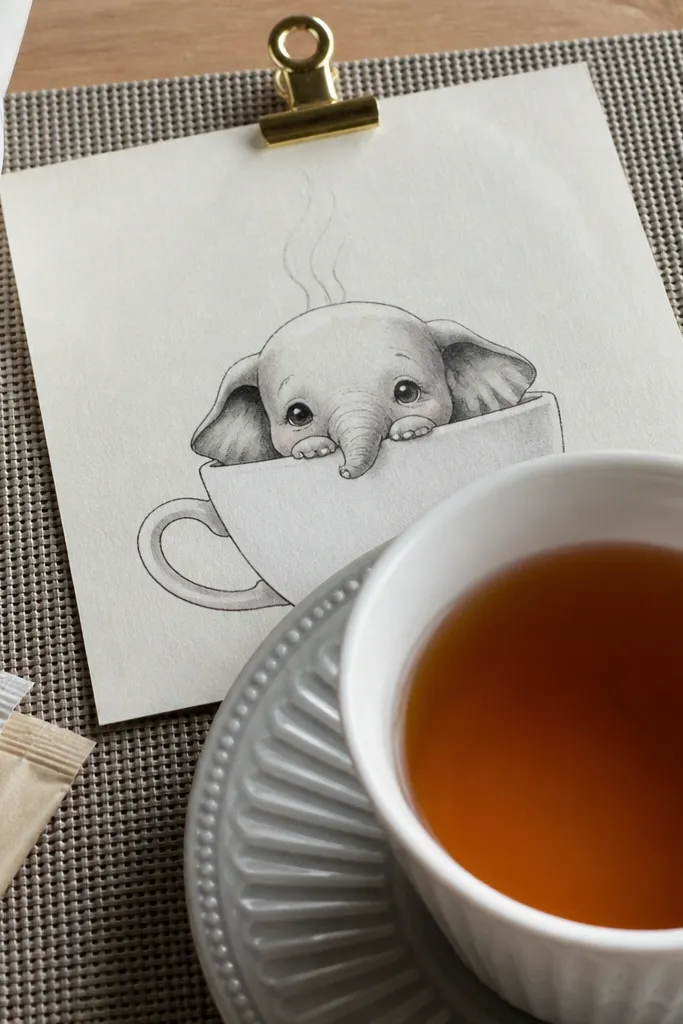
This one is adorable because the teacup sets a clear scale and frames the elephant face. You only need to draw the head and upper body peeking above the cup rim. Add steam lines rising behind the trunk for an easy background cue. It’s also great for learning how to draw partial animals — your trunk and ears are visible, but you skip the hard leg placement. Use a light pastel cup and a slightly darker elephant outline for a clean, photo-friendly look.
Pro tipKeep the elephant’s eyes slightly higher than the trunk curve; it makes the peeking look natural.
Draw a teacup as an oval bowl with a curved handle on the side. Place the elephant head circle so it sits centered above the cup rim, then draw the trunk as a short curve dipping toward the rim. Add two steam lines as wavy strokes rising behind the head. Color the cup in a pastel tone, the elephant in gray, and the steam in a pale blue.
AvoidDon’t forget the cup rim thickness; a thin line makes the cup look flat.
8. Elephant with Balloon Heart Float
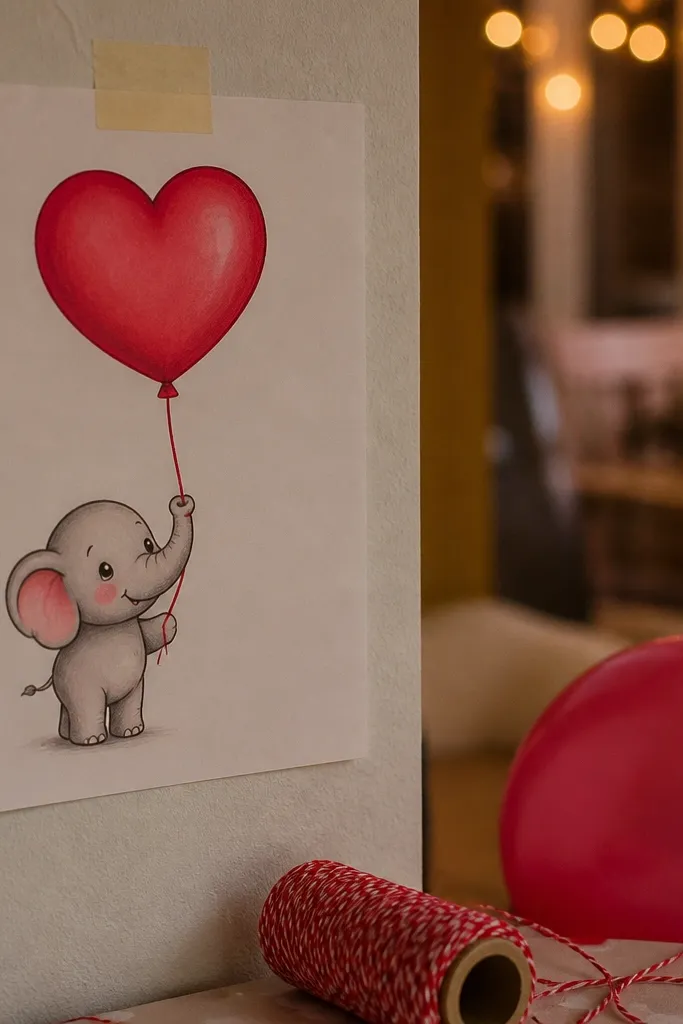
Heart balloon + trunk grip gives you a clear “prop” that makes the drawing charming. Draw the elephant holding a heart balloon with the trunk and add a thin string trailing upward. The heart shape is instantly recognizable, so even a basic elephant face looks finished. Use a bright balloon color like red or hot pink, then keep the elephant simple gray with a small blush cheek. This works well for cards and social posts because the heart pops in thumbnails.
Pro tipMake the balloon string slightly curved; straight strings feel stiff in cartoons.
Sketch the head circle and small body teardrop, then draw short legs as a stable base. Add a trunk line that curves up toward the balloon string. Draw the heart balloon as a classic heart outline attached to a string line. Color the heart solid and the elephant gray, then add a tiny blush circle on each cheek.
AvoidDon’t place the heart too high; keep it near the top third so it frames the face.
9. Stenciled Pattern Elephant (Polka + Spots)
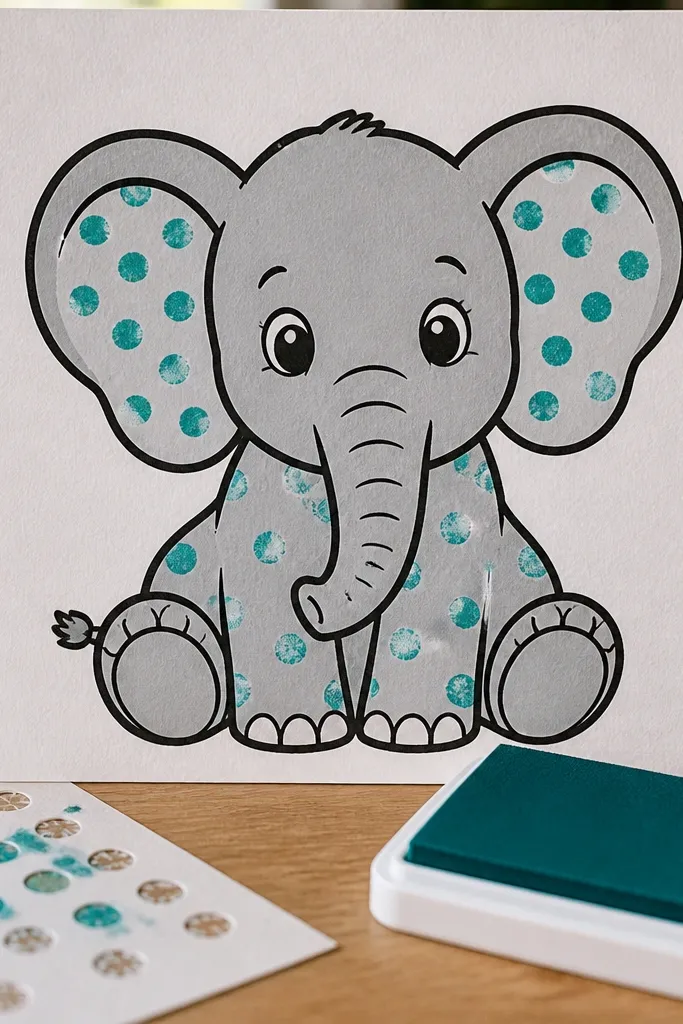
Patterns make this elephant look designed without needing complicated shading. Polka dots on the ears and small spots on the body create a playful texture that reads well in photos. Keep the linework bold and clean, then limit the color palette to two tones plus one accent. This idea is also a stress-free way to practice consistent spacing, because you repeat dot sizes. It’s a strong pick for sketchbook pages where you want a finished look fast.
Pro tipUse one dot size only on the ears, then use a slightly smaller spot size on the body for depth.
Draw your elephant in simple shapes: head circle, body teardrop, four short legs, and a trunk curl. Outline the ears and trunk with thick lines. Add polka dots on each ear using circles of the same diameter, then add 8-12 spots on the body arranged in a gentle curve. Color the elephant base in one tone and fill dots/spots with the second tone.
AvoidAvoid mixing dot sizes randomly; it makes the pattern look accidental.
10. Elephant DJ with Turntable Dots
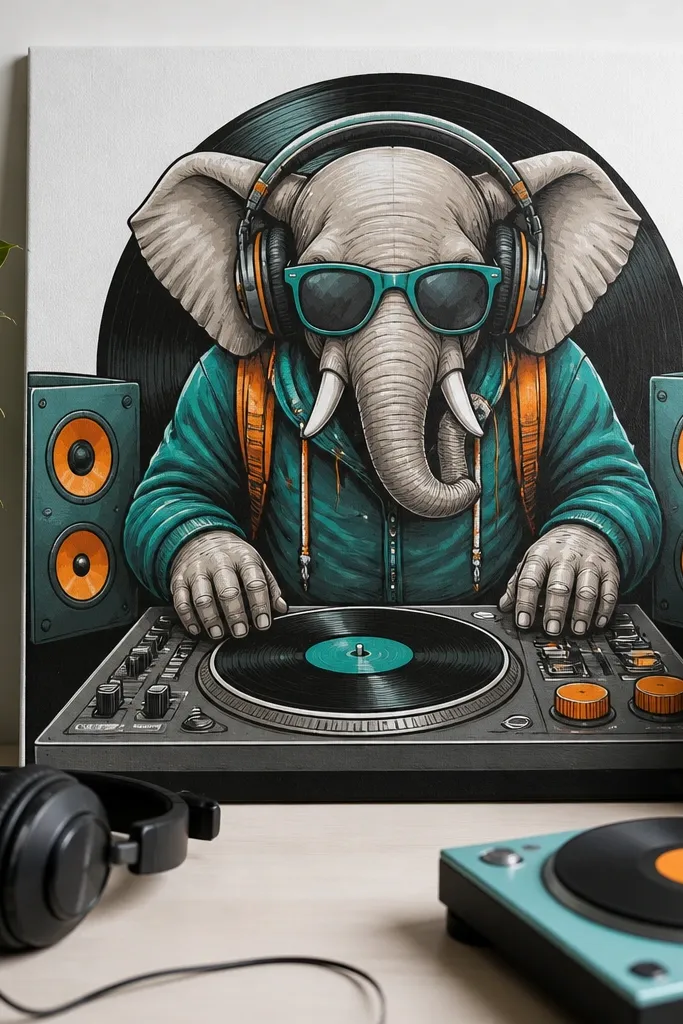
This is visually striking because the turntable creates a big graphic shape. The elephant is simple, but the vinyl circle and speaker knobs add that “poster” feel. Add small music symbols as dots or rounded squiggles around the head. Use bright accent colors like teal for speakers and orange for knobs. It’s a great choice when you want a cartoon elephant drawing that looks like a mini graphic design project.
Pro tipMake the turntable larger than the body; it anchors the whole composition.
Start with the elephant head and body, then draw two front legs as a base stand. Add a large turntable circle in front of the body with a smaller center circle and 4-6 knob circles. Draw the elephant’s trunk curled toward the turntable as if it’s holding the record. Finish by adding small dot music symbols around the head and coloring the speakers in teal with orange knobs.
AvoidDon’t clutter the background with lots of symbols; 6-10 dots/squiggles is enough.
11. Elephant in a Paper-Cut Frame
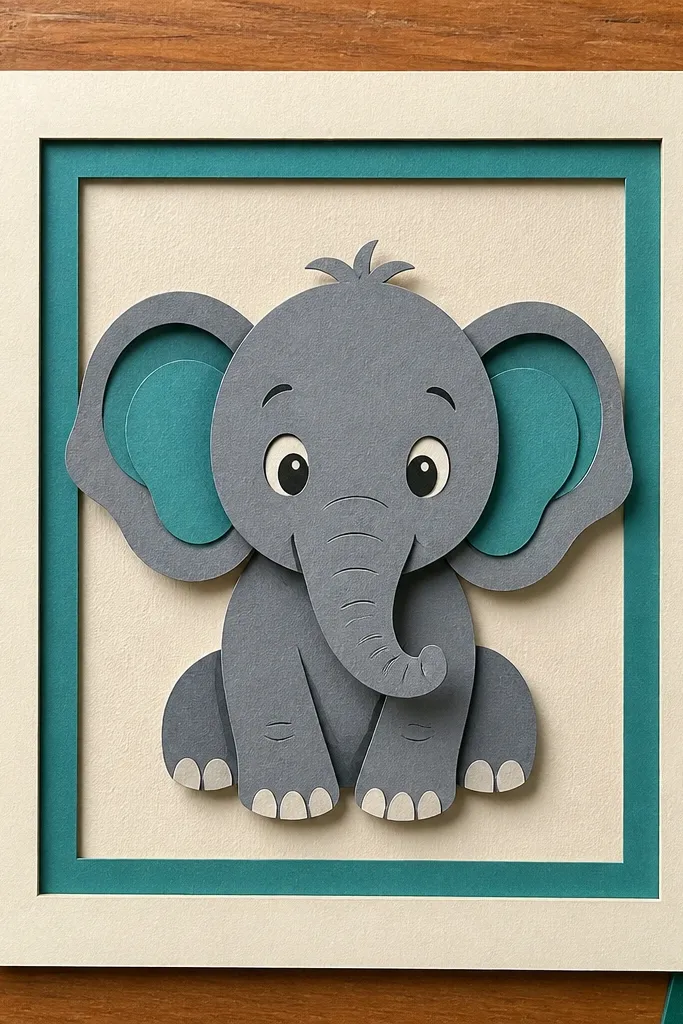
This one looks “crafty” and clean because the frame does the framing for you. Draw the elephant with thick outline, then add a layered border like a paper-cut rectangle around it. Use two border colors that contrast: cream frame with a teal inner border. The layered look makes the drawing look finished even with minimal coloring. It’s especially good for beginners because you can hide messy edges under the inner frame line.
Pro tipUse a ruler for the frame edges; crooked borders make the whole page look rushed.
Draw a rectangular frame first with rounded corners, then draw a second inner rectangle leaving a 1-2 cm border gap. Place the elephant centered inside, keeping the head and trunk big so it fills the space. Add a small shadow line under the elephant feet to separate it from the frame. Color the outer frame one color, inner frame another, and fill the elephant gray.
AvoidDon’t shade the elephant with lots of gradients; keep it flat so it matches the paper-cut look.
12. Elephant Wearing a Scarf with Swirl Ends
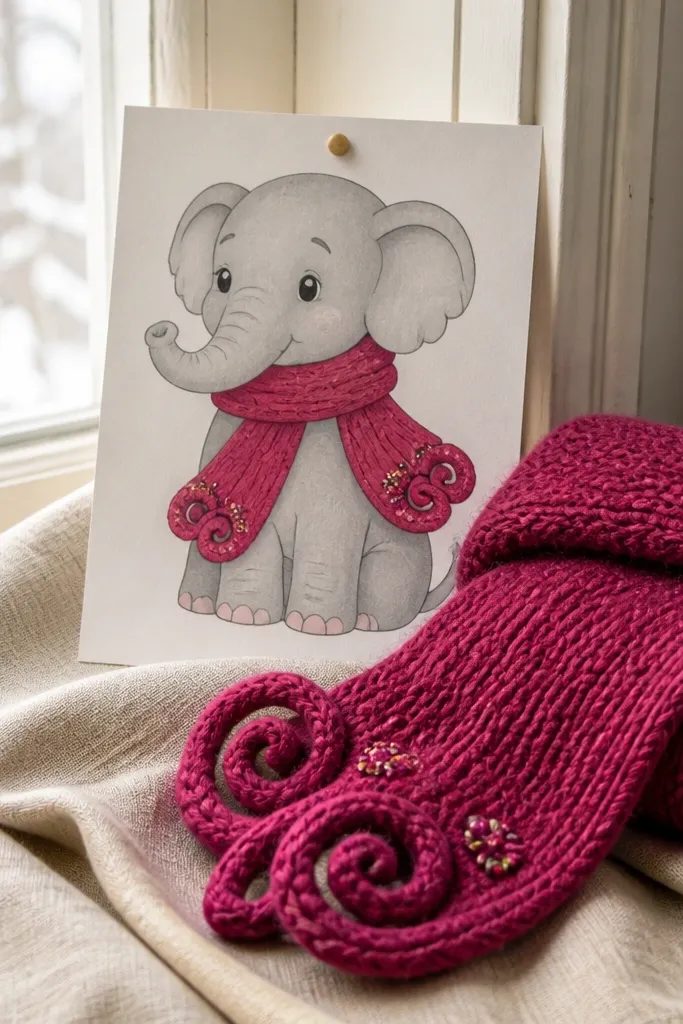
Scarves are the easiest way to add movement. The swirl ends create a clear, decorative shape that looks good in photos, and it gives you two extra lines to practice curves. Keep the scarf wrapped loosely around the neck and let the ends float to one side. Choose a bold scarf color like green or magenta, then add a tiny pattern like stripes or dots. This idea works for both simple line drawings and more colorful versions.
Pro tipMake the swirl end thicker at the base and thinner at the tip for a nicer curve.
Sketch the elephant head and body, then draw a neck line where the scarf wraps. Add the scarf as a curved band across the chest with one end tucked and the other end floating outward. Draw the floating end with a swirl — a loop plus a smaller tail line. Finally, color the scarf solid and add two light stripe lines across it.
AvoidDon’t wrap the scarf too tight; tight scarves squash the face shape.
13. Elephant with Leaf Fan and Doodle Sun
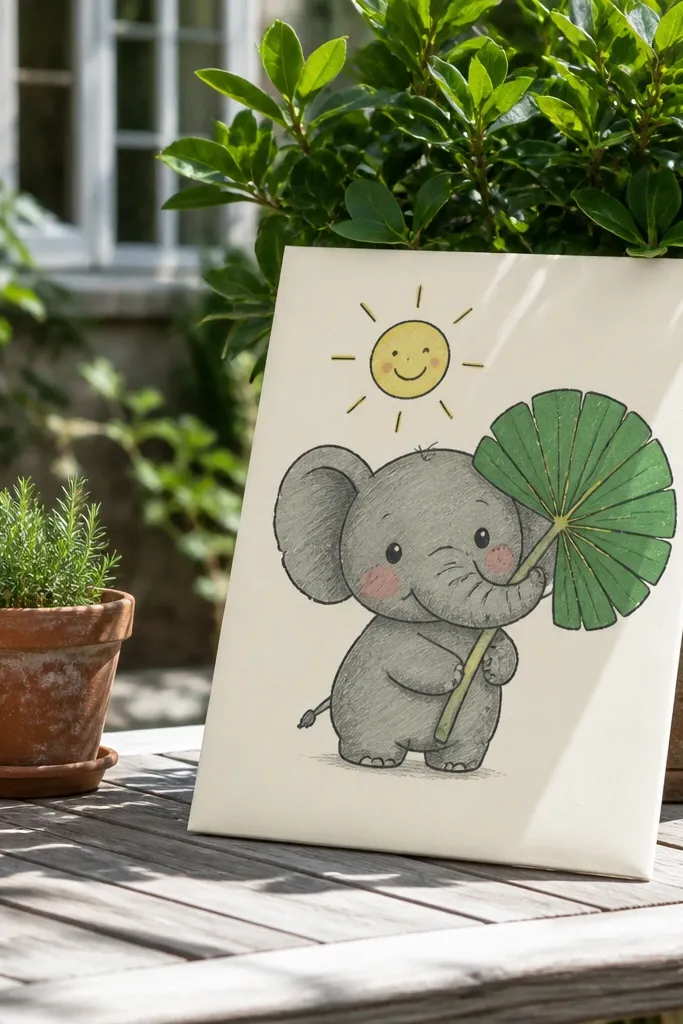
A leaf fan is a clean prop with lots of visual payoff. Draw a big leaf behind the head, then angle it so it frames one side of the elephant. Add a doodle sun with 10 short rays to keep the background simple but cheerful. This is a strong choice for warm-weather themes without needing a full landscape. Use leaf green with a yellow sun, and keep the elephant body gray with a warm blush cheek.
Pro tipPlace the sun slightly off-center; it makes the composition feel more “designed.”
Start with the elephant head circle and body teardrop, then draw the trunk curling forward. Add a leaf fan as a large teardrop leaf shape held near the side of the head with a short stick line. Draw a simple sun behind the head using a circle plus 10 short rays. Color the leaf green and the sun yellow, then fill the elephant gray and add blush cheeks.
AvoidAvoid detailed leaf veins; one or two vein lines look better in cartoons.
14. Elephant with Suitcase and Travel Stickers
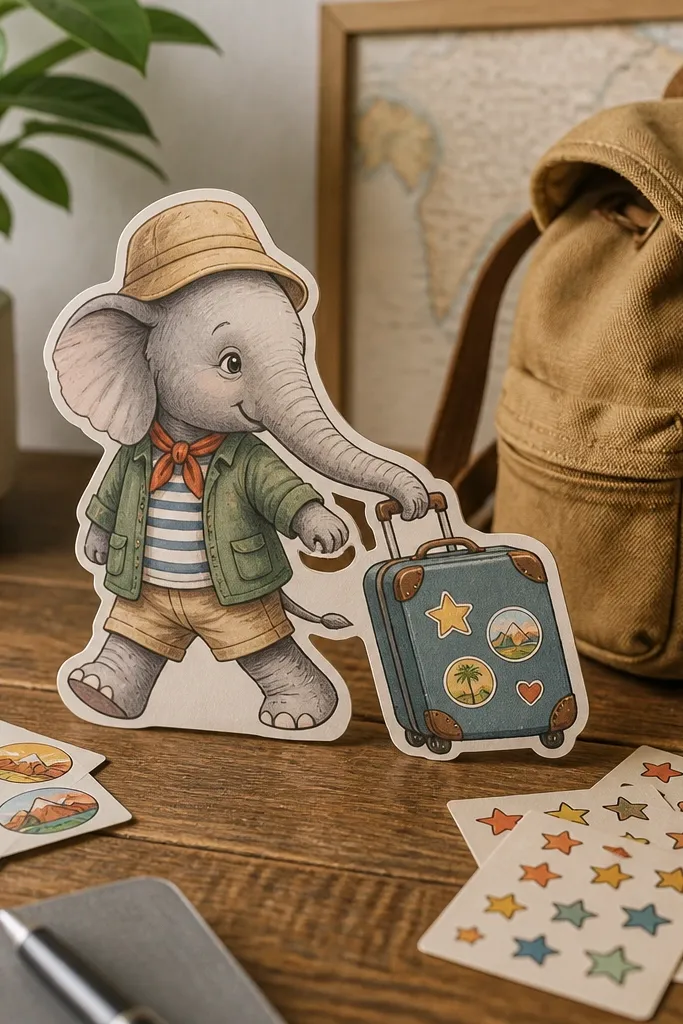
Travel props make elephants look like characters in a story, but you can keep it simple. Draw a suitcase with rounded corners and add 3-4 sticker shapes on top — circles, stars, and a small heart. The elephant pulling it gives you a clear pose: one front leg slightly forward and a trunk line reaching toward the handle. This is a good option when you want a finished, colorful page without drawing a full background.
Pro tipKeep sticker sizes consistent: 3 small, 1 medium looks best.
Sketch the elephant body and head, then add short legs with one leg forward. Draw a suitcase as a big rounded rectangle with a handle line extending back toward the elephant trunk. Add 3 sticker shapes on the suitcase front and color each sticker one bright color. Finish by coloring the elephant gray and the suitcase in a solid tone with sticker accents.
AvoidDon’t overcrowd the suitcase; more than 8 sticker shapes makes it look messy.
15. Elephant in a Cloud Bubble Speech
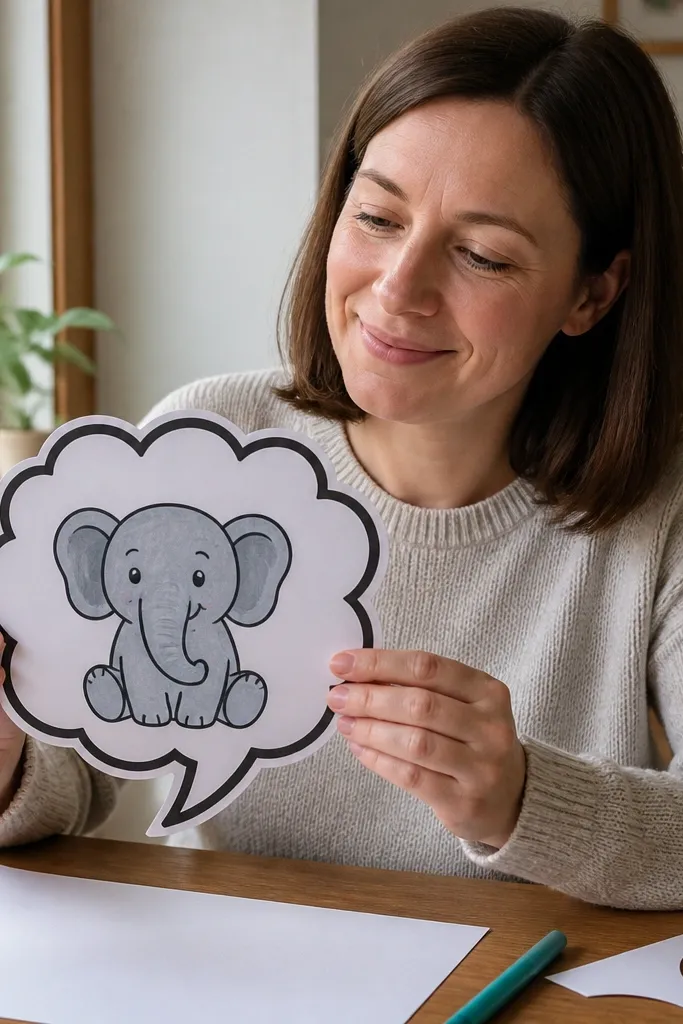
Speech bubbles make cartoon drawings feel alive, and clouds are easy to draw as chunky bumps. Put your elephant’s head inside a cloud outline, then add a small speech tail pointing down. Keep the face simple: two eyes and a tiny smile. The cloud border gives you a big, friendly shape that frames the elephant so proportions look right. Use a light blue cloud fill and keep the elephant gray with a crisp outline.
Pro tipMake the cloud border thick; it helps the drawing read clearly at small sizes.
Draw a cloud outline first using 6-8 rounded bumps connected into one shape. Place the elephant head circle inside and draw ears partially hidden by the cloud edge. Add a small speech bubble tail at the bottom of the cloud and keep it short. Color the cloud light blue, the elephant gray, and add a simple highlight line on the cloud edge.
AvoidAvoid putting the eyes too low in the cloud — it makes the elephant look sleepy.
16. Elephant with Moon and Star Night Light
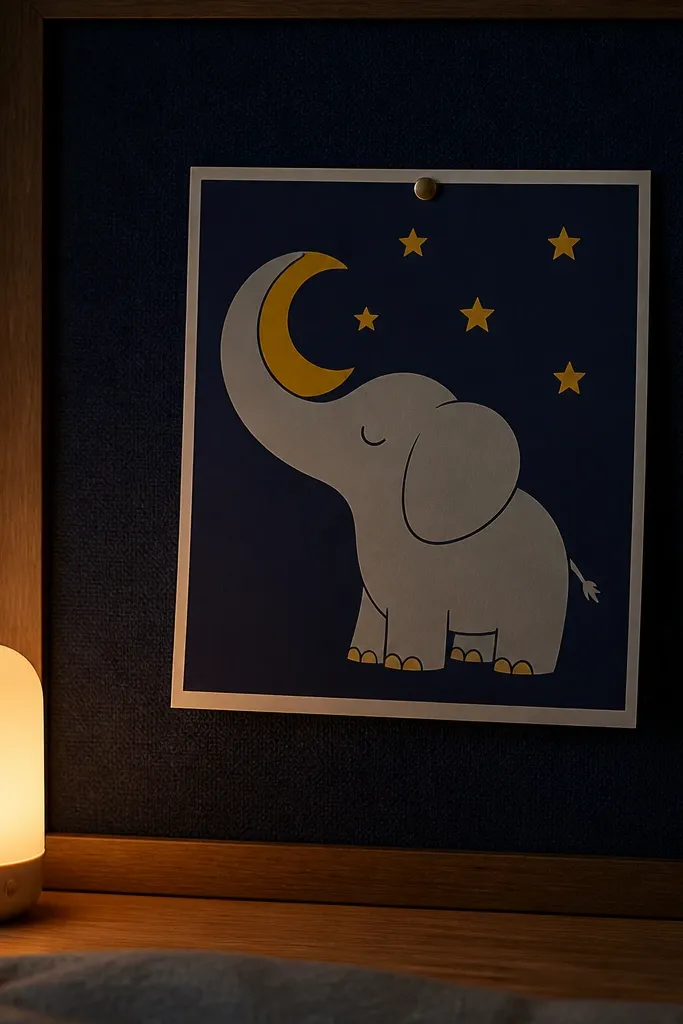
Night scenes look great because you can use contrast: dark background plus bright accents. Draw a moon shape in the elephant’s trunk area and add 4-7 small stars around the head. Keep the elephant lines clean and use flat color blocks. This idea gives you a clear focal point (the moon) and a simple background that still looks “finished.” It’s perfect for kids' art pages, bedtime-themed drawings, or a calm aesthetic.
Sketch the elephant head and body, then draw the trunk curling up toward a moon shape. Draw the moon as a circle with a bite cutout and add a halo glow line around it. Add small star shapes around the head area. Color the background dark blue, fill the moon bright yellow, and keep the elephant gray with a lighter belly.
Add a single glow ring around the moon using a lighter yellow band, not a gradient.
Avoid drawing too many stars; 6 looks intentional.
17. Elephant with Kite and Wind Swirls
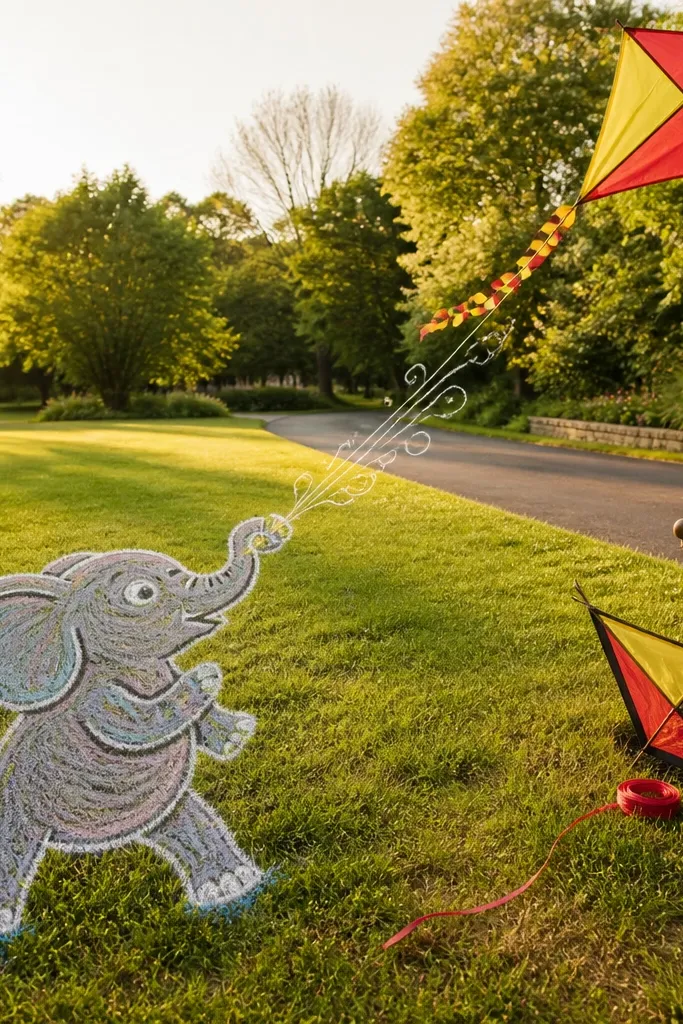
Kites add a diagonal shape that makes the drawing feel lively. Draw the elephant standing with one arm up holding the kite string, then place the kite up in the corner. Wind swirls connect the elephant to the kite and make the composition coherent. Use bright kite colors like red and yellow and keep the elephant simple gray. This is a solid choice when you want your elephant drawing to look dynamic without a complex background.
Pro tipLet the string line curve slightly; it makes the kite look like it’s actually flying.
Start with the elephant body teardrop and head circle, then draw two short legs. Add a raised arm line and a curved string line going upward to a kite shape (diamond or rounded triangle). Draw 3 wind swirls along the string path as curved loops. Color the kite in two bright colors and fill the elephant gray.
AvoidAvoid placing the kite directly above the head; offset it for a more interesting layout.
18. Elephant Face Only with Big Bow
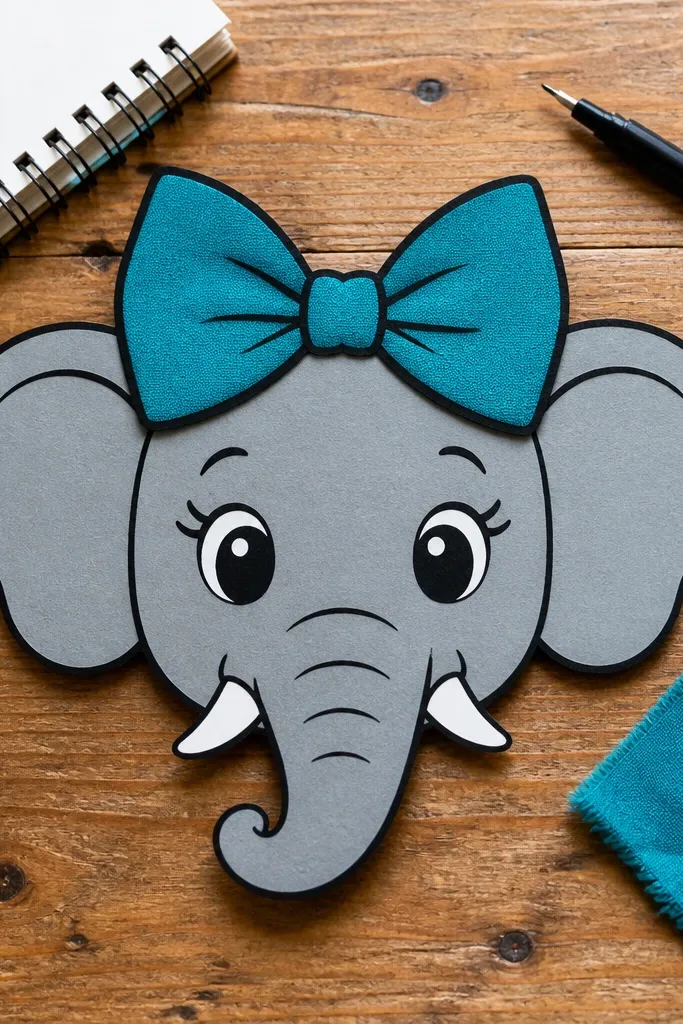
Face-only drawings are the easiest way to get “cute” instantly. A big bow gives you a clear accessory focal point and replaces the need for full body details. Draw big, friendly eyes, a simple trunk curve, and short tusk nubs if you want them. This is also the fastest way to practice consistent cartoon proportions because you’re repeating the same face layout. Keep it clean with thick outline and one accent color for the bow.
Pro tipUse the same eye height on both sides; tiny differences ruin symmetry fast.
Draw a head circle, then add two large eyes slightly above the trunk curve. Sketch the trunk as a curved line that wraps down and back up a little. Add tiny tusk nubs on each side of the trunk base. Place a large bow above one ear and draw it with two loops and a center knot, then color the bow in one bright color.
AvoidDon’t add extra facial lines like heavy wrinkles; keep it minimal for a clean cartoon look.
19. Elephant with Ice Cream Cone and Drip Trunk
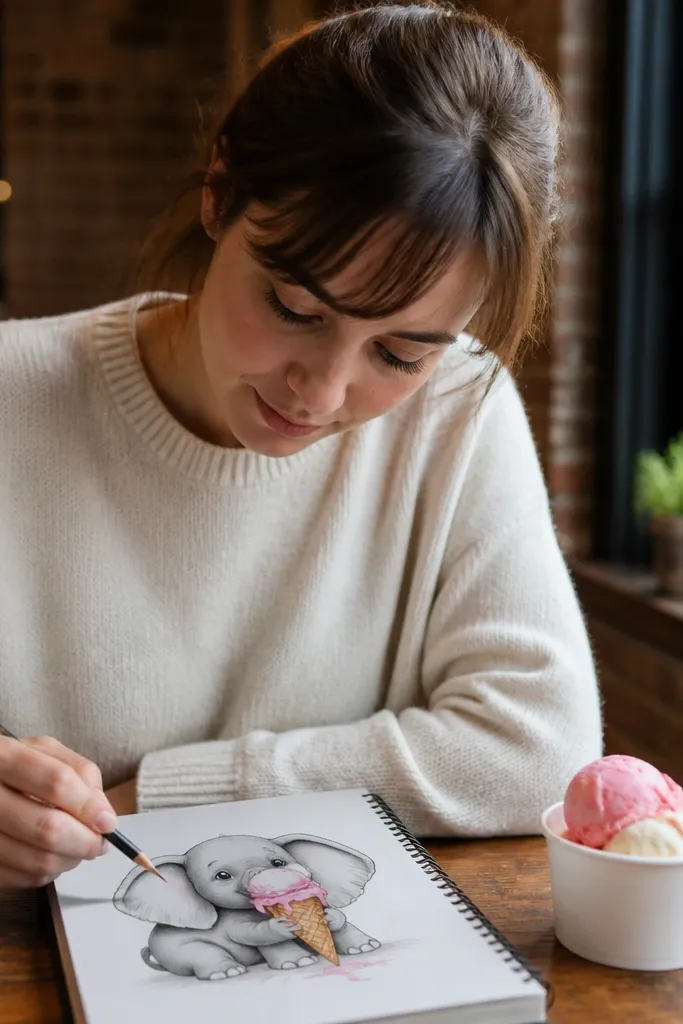
Food props make cartoons instantly appealing, and this one uses the trunk as the “drip” action. Draw an ice cream cone in front of the elephant, then extend the trunk upward or forward so it looks like the elephant is holding or licking it. Add a few drips under the scoop to create a fun, recognizable shape. Keep the elephant gray and the ice cream in a bright color like mint green or strawberry pink. It’s a great pick for summer-themed pages.
Sketch the elephant head and body, then draw short arms and place one arm near an ice cream cone. Draw the cone as a simple triangle with a curved scoop on top. Shape the trunk so it points toward the scoop and add two to three drips hanging down from the scoop. Color the scoop bright and the elephant gray, then add a tiny highlight on the scoop.
Limit drips to three; more drips make the cone look messy.
Avoid making the trunk too thick; a thick trunk can swallow the face lines.
20. Elephant with Skateboard and Sideways Smile
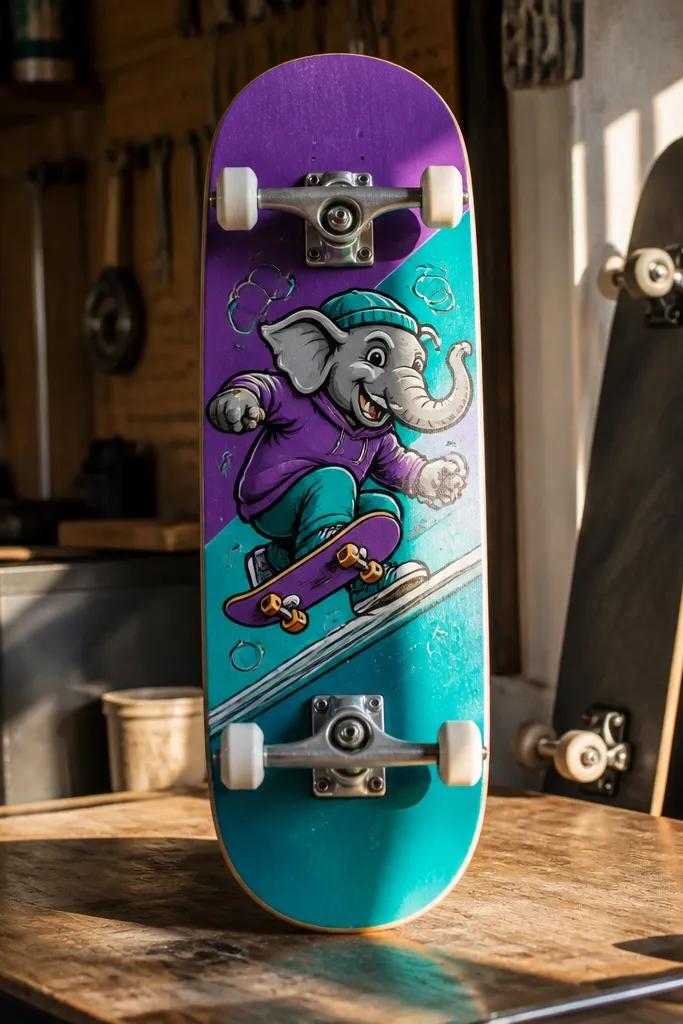
Skateboard drawings look cool because of the wheels and the diagonal motion line. Keep the elephant simplified, then focus on the skateboard deck shape, wheel circles, and a small motion line behind it. A sideways grin makes the character feel playful and less stiff. Use a bright deck color like purple or teal and add one bold stripe down the middle. This is perfect if you want a “cool kid” cartoon elephant that still stays easy.
Pro tipAlign the wheel circles evenly under the deck so the board looks straight.
Draw the elephant leaning forward with one front leg slightly higher. Sketch a skateboard deck as a long rounded rectangle, then add four wheel circles under the deck. Draw a simple motion line behind the board and a small dust puff near the wheels. Color the deck in a bright solid and add one stripe, then color the elephant gray and add a sideways smile line.
AvoidDon’t draw the motion line too long; it should frame the board, not dominate it.