1 Simple Mother and Baby
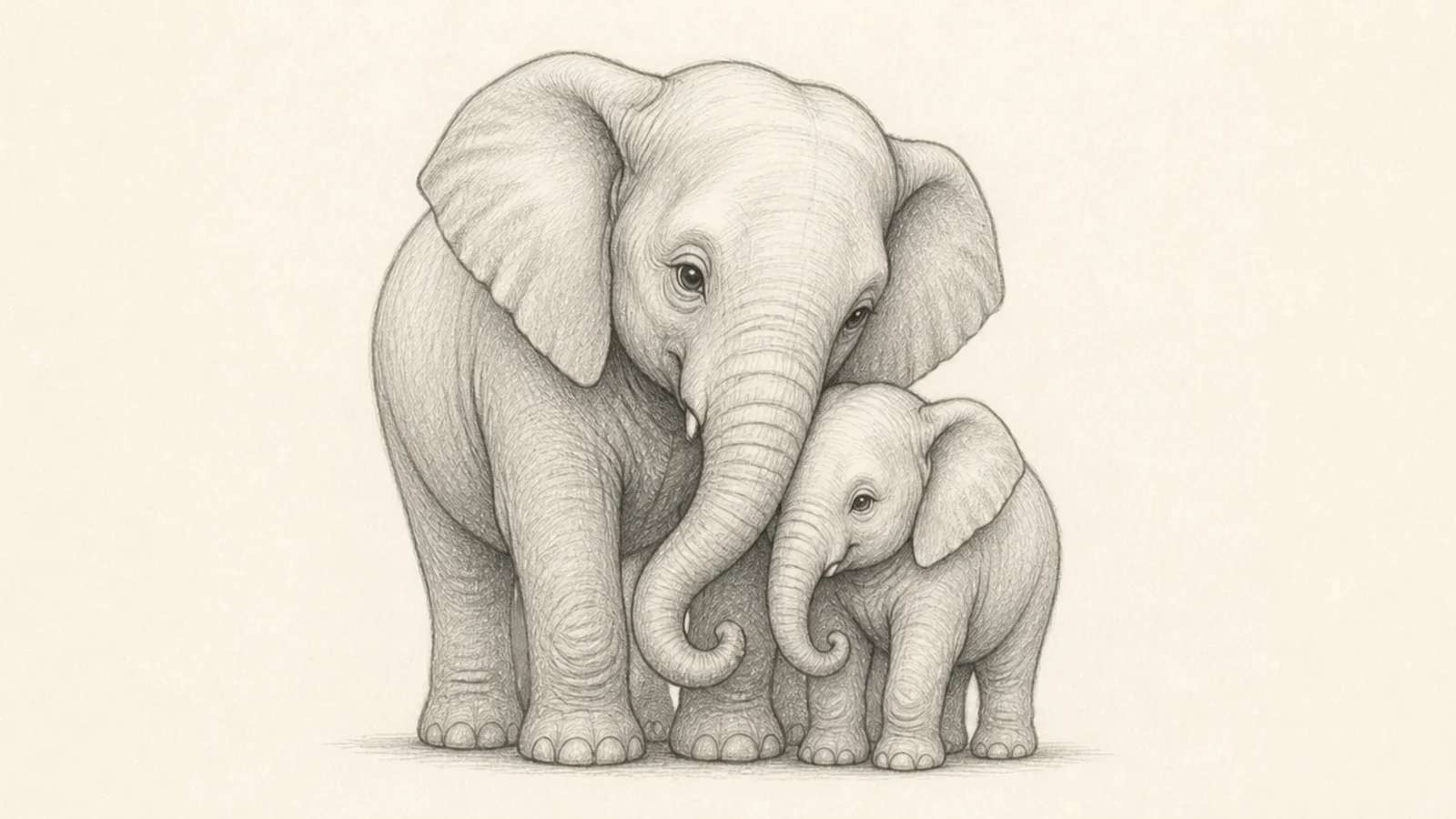
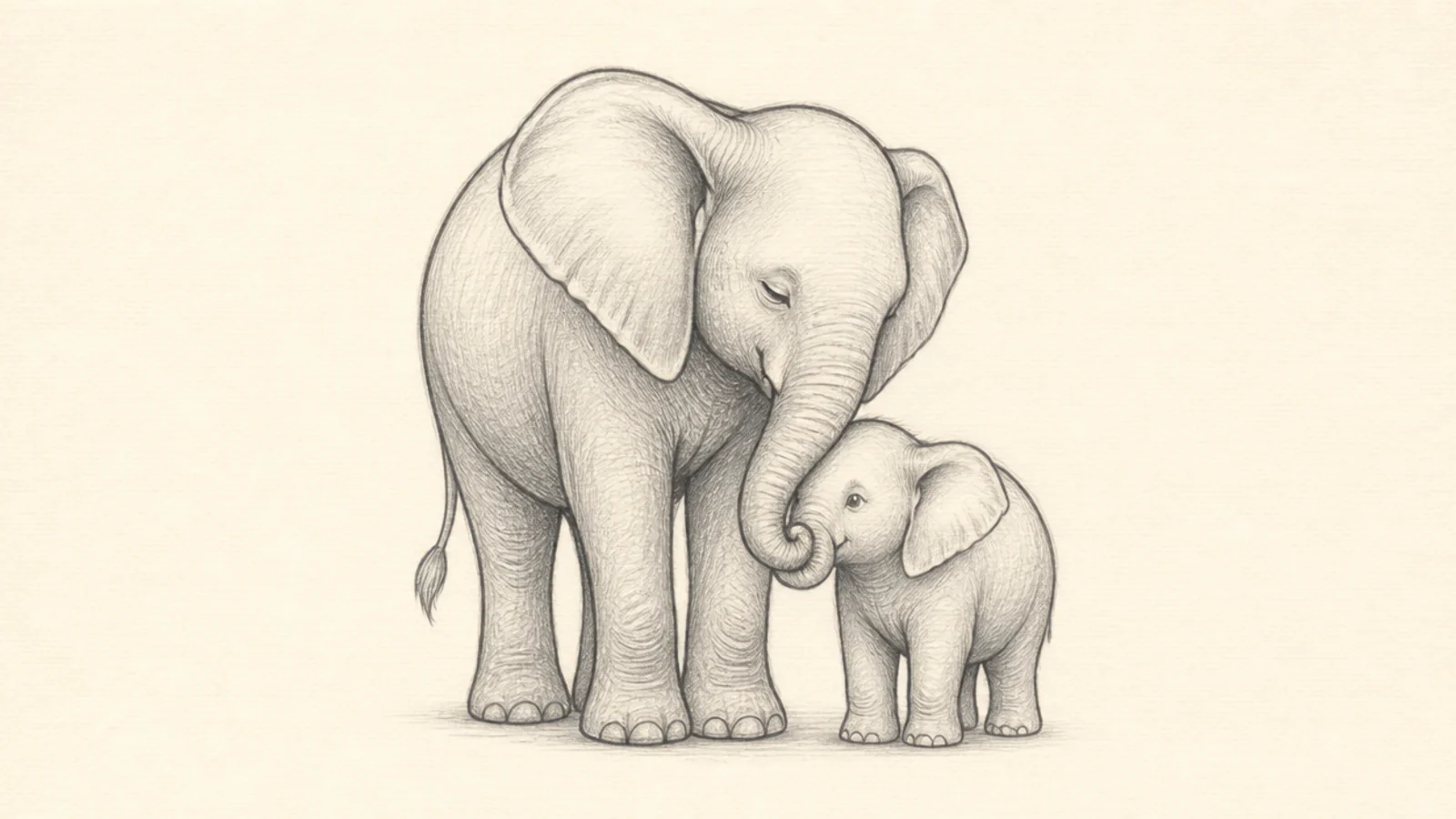
The foundation of the whole list — one big mother and one small calf standing side by side. It teaches the size contrast that every other scene depends on.
Step 1 draw the mother from a head oval, body oval, and S-curve trunk. Step 2 draw the calf about a third her height tucked against her front leg. Step 3 add both trunks and simple leg lines.
Pro tipKeep the calf’s body rounder and chunkier than the mother’s for a young look.
AvoidDon’t make the baby too big; a third of mom’s height keeps the story clear.
2 Trunk-Holding Pair
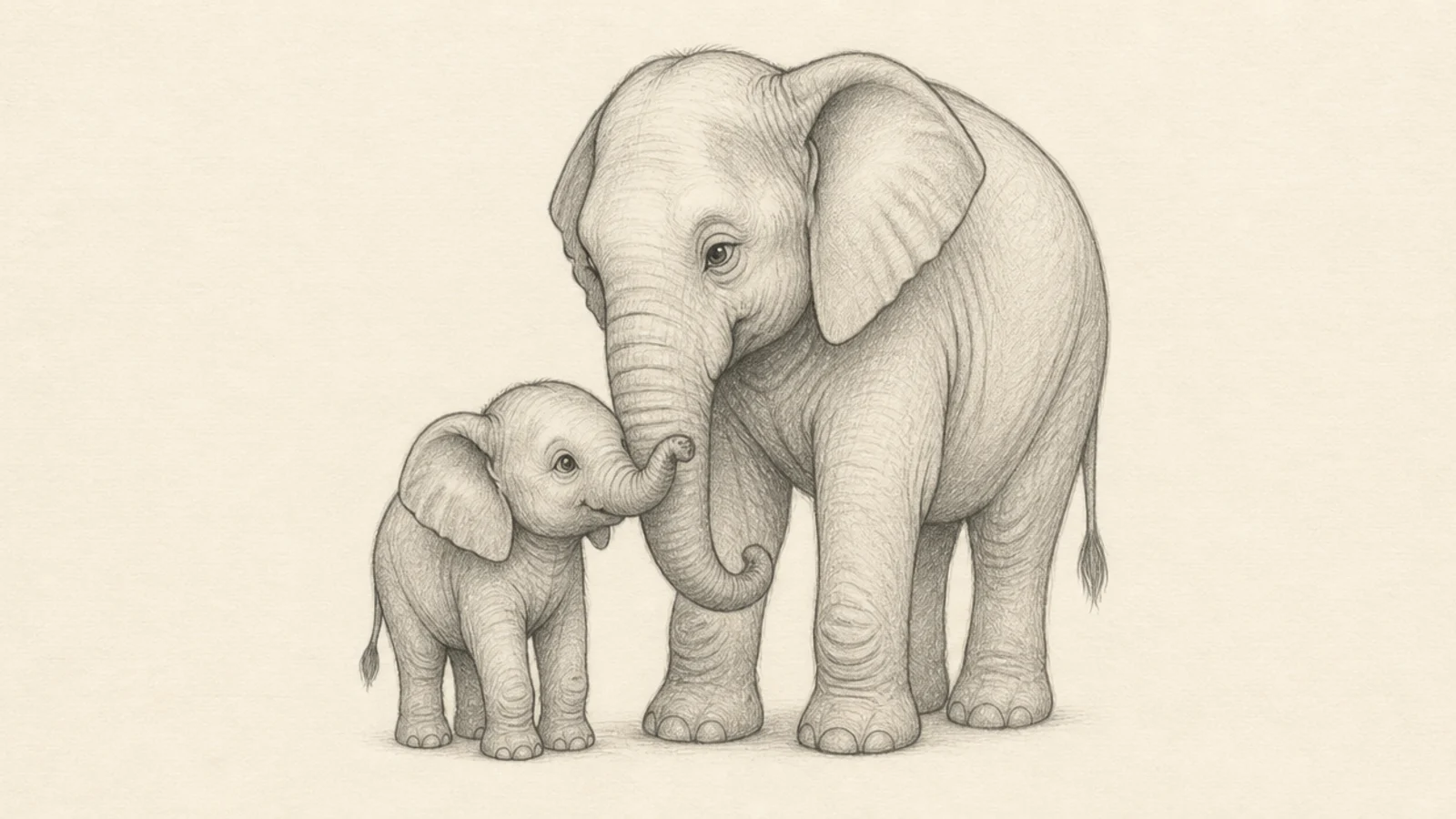
The mother’s trunk curves down to hold the calf’s little trunk — the single most heartwarming pose. The touch is the whole story.
Step 1 draw the pair facing slightly toward each other. Step 2 curve the mother’s trunk down and the calf’s trunk up so the tips meet. Step 3 let the trunks overlap where they touch.
Let the two trunk tips actually overlap so the connection reads clearly.
Don’t leave a gap between the trunks; the touch is what conveys the bond.
3 Baby Under Mom
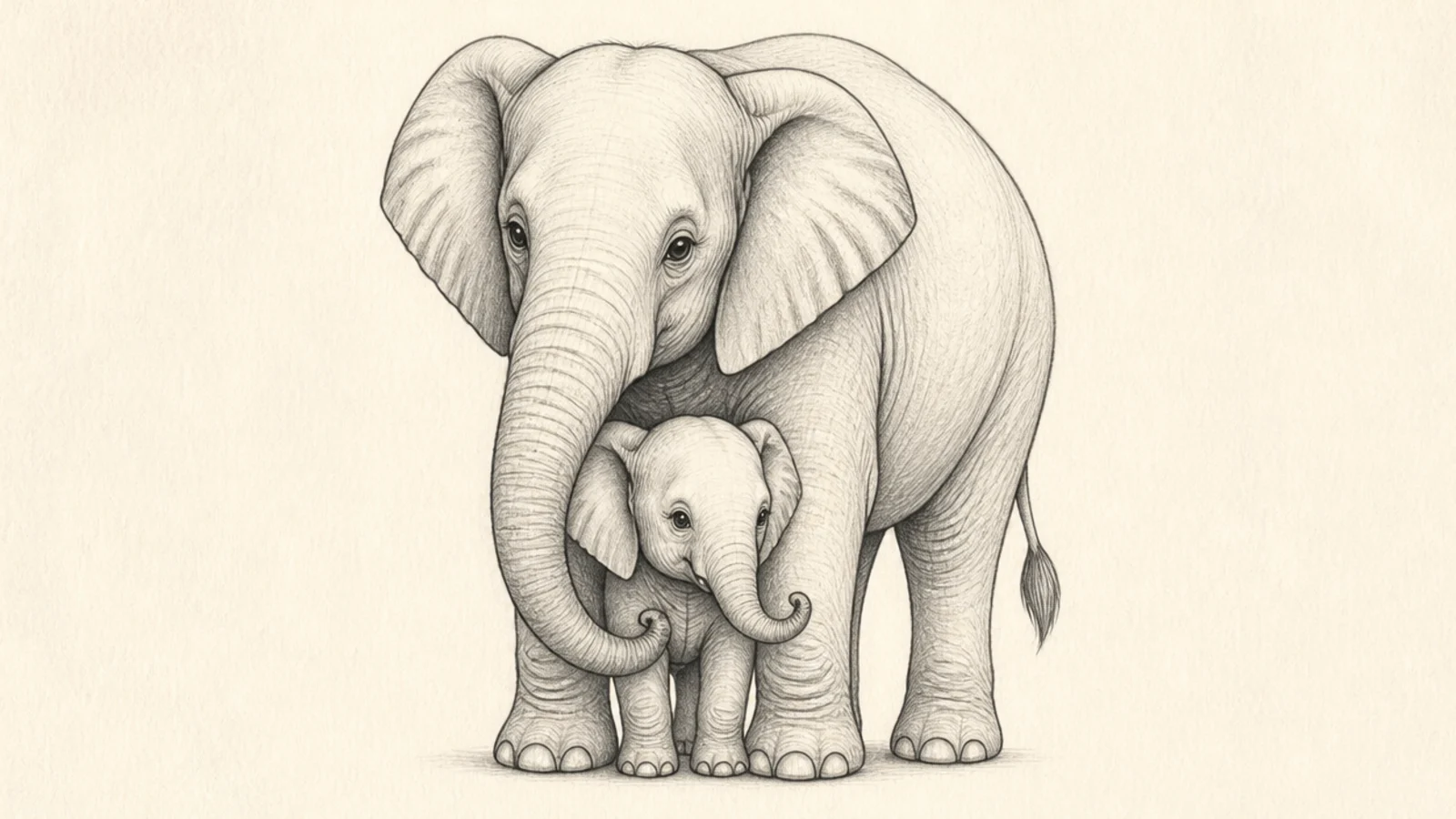
The calf tucked directly under the mother’s belly, sheltered and safe. The overlap makes them read as one protective unit.
Step 1 draw the mother with tall legs leaving space beneath. Step 2 nest the small calf under her belly between the legs. Step 3 let her body and trunk frame the baby protectively.
Pro tipOverlap the calf partly behind mom’s legs so it feels sheltered.
AvoidDon’t draw the baby fully clear of mom; the overlap is what shelters it.
4 Walking Side by Side
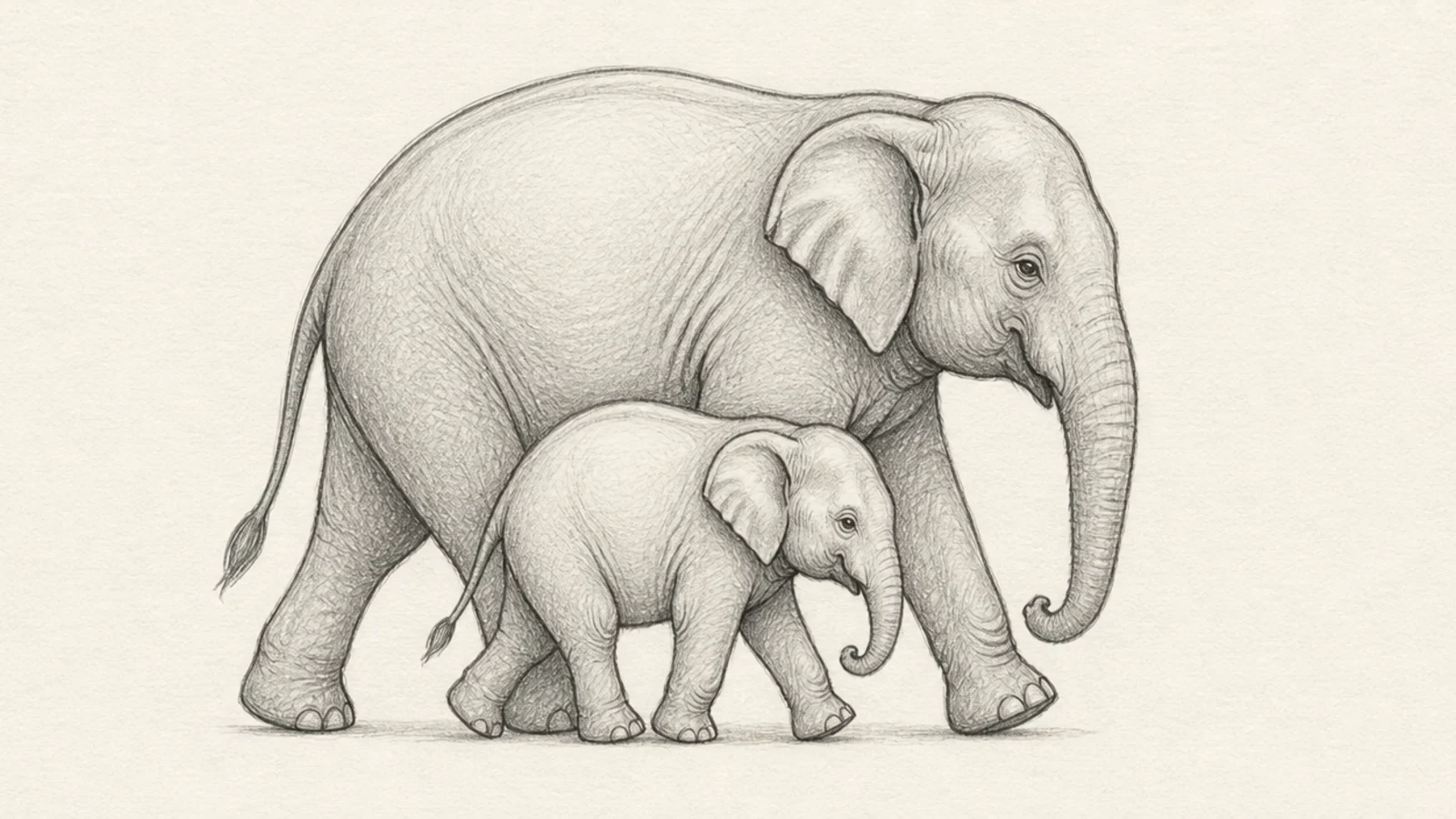
The pair walking in the same direction, legs mid-stride, the calf keeping pace. Motion adds warmth and a sense of journey.
Step 1 draw both elephants in profile facing the same way. Step 2 stagger their legs into a walking stride. Step 3 align their steps so they move together.
Pro tipMatch the stride so both elephants step with the same rhythm.
AvoidDon’t draw stiff straight legs; a slight stride shows them walking.
5 Baby Reaching Up
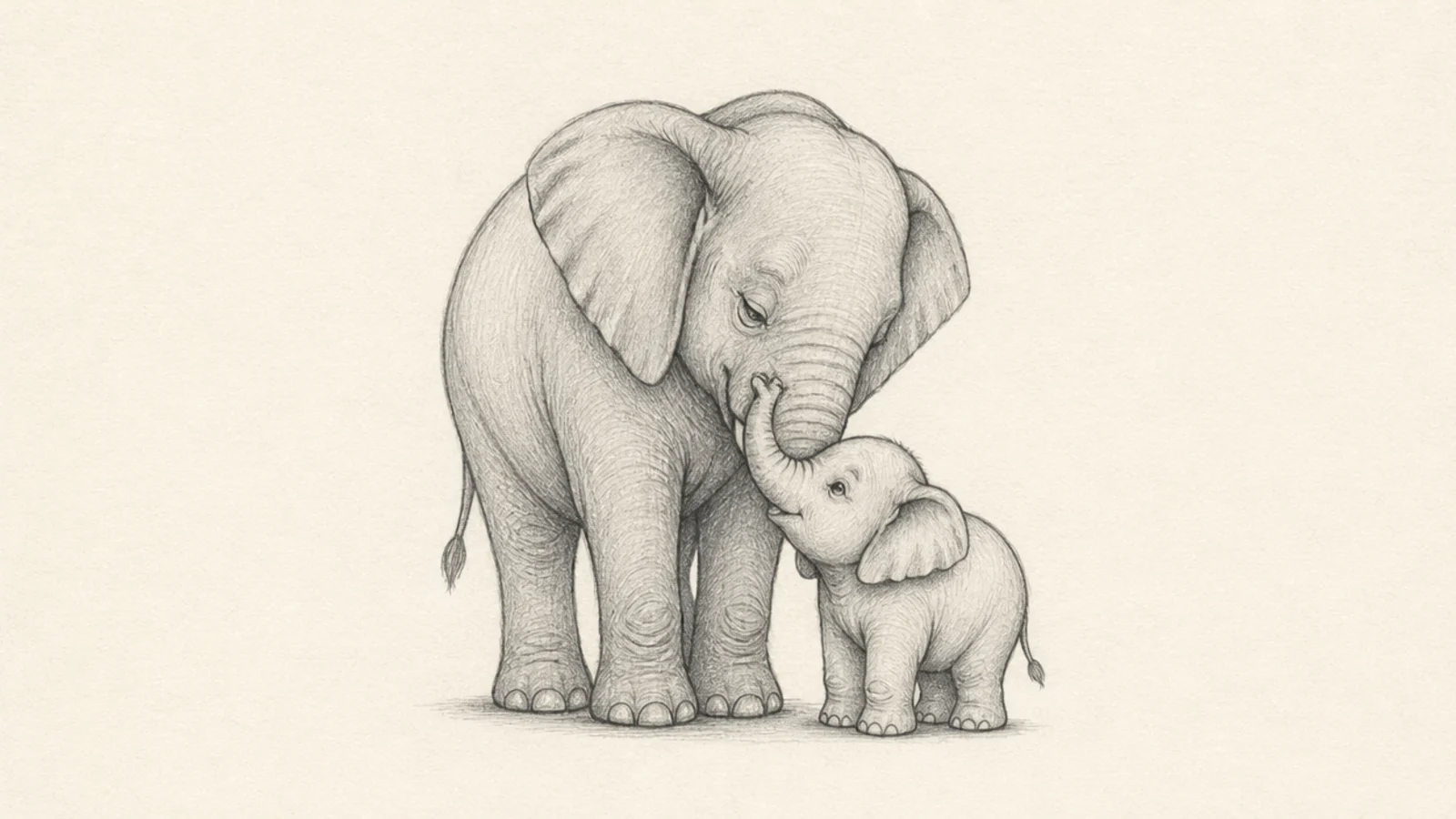
The calf stretches its trunk up to reach the mother’s face — a playful, affectionate moment. The reaching line adds energy.
Step 1 draw the mother’s head lowered slightly toward the baby. Step 2 draw the small calf with its trunk stretched high. Step 3 aim the baby’s trunk tip toward mom’s cheek or mouth.
Pro tipLower the mother’s head a little so she meets the baby halfway.
AvoidDon’t keep the baby’s trunk down; the upward reach is the charm.
6 Three-Generation Line
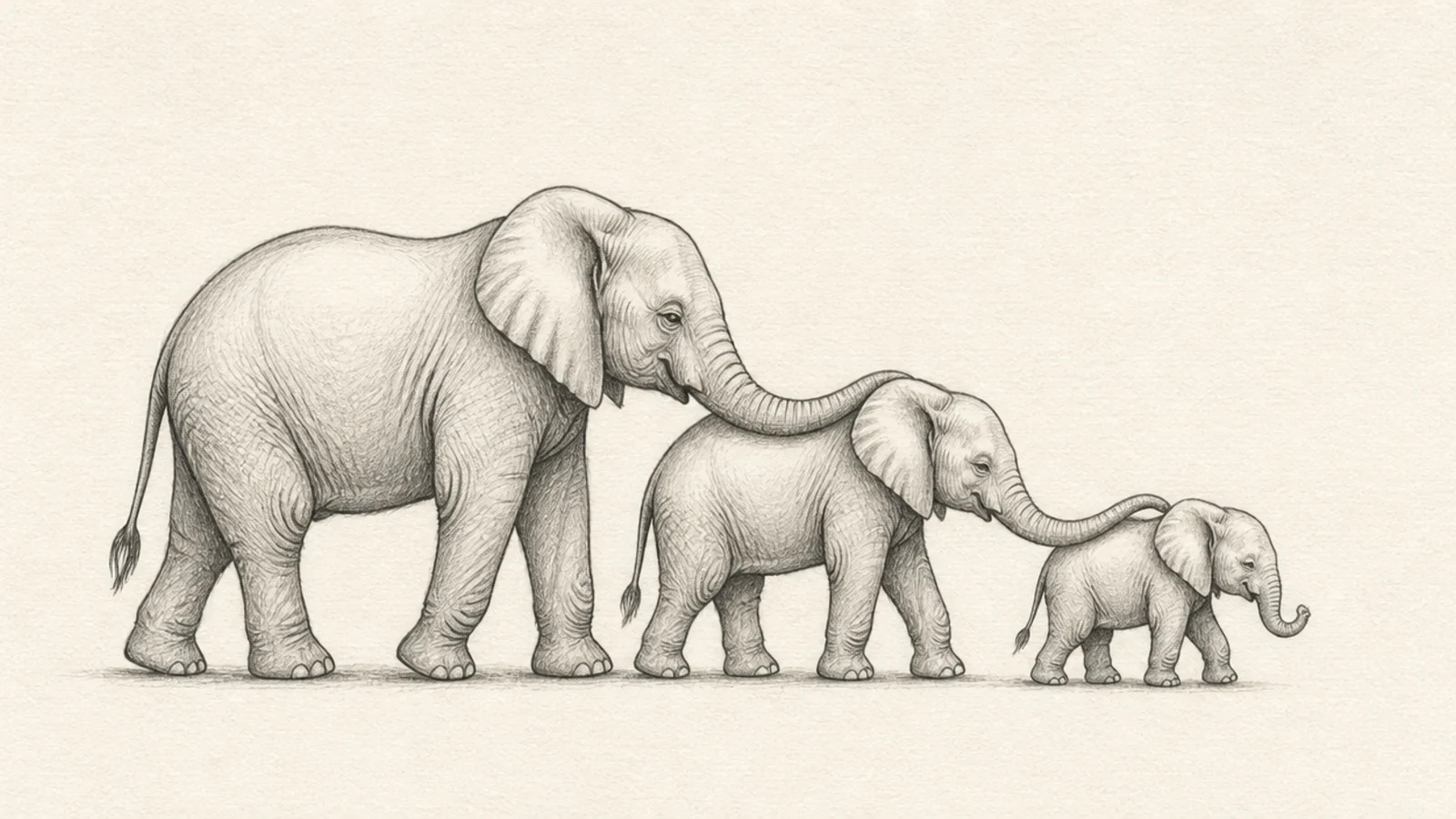
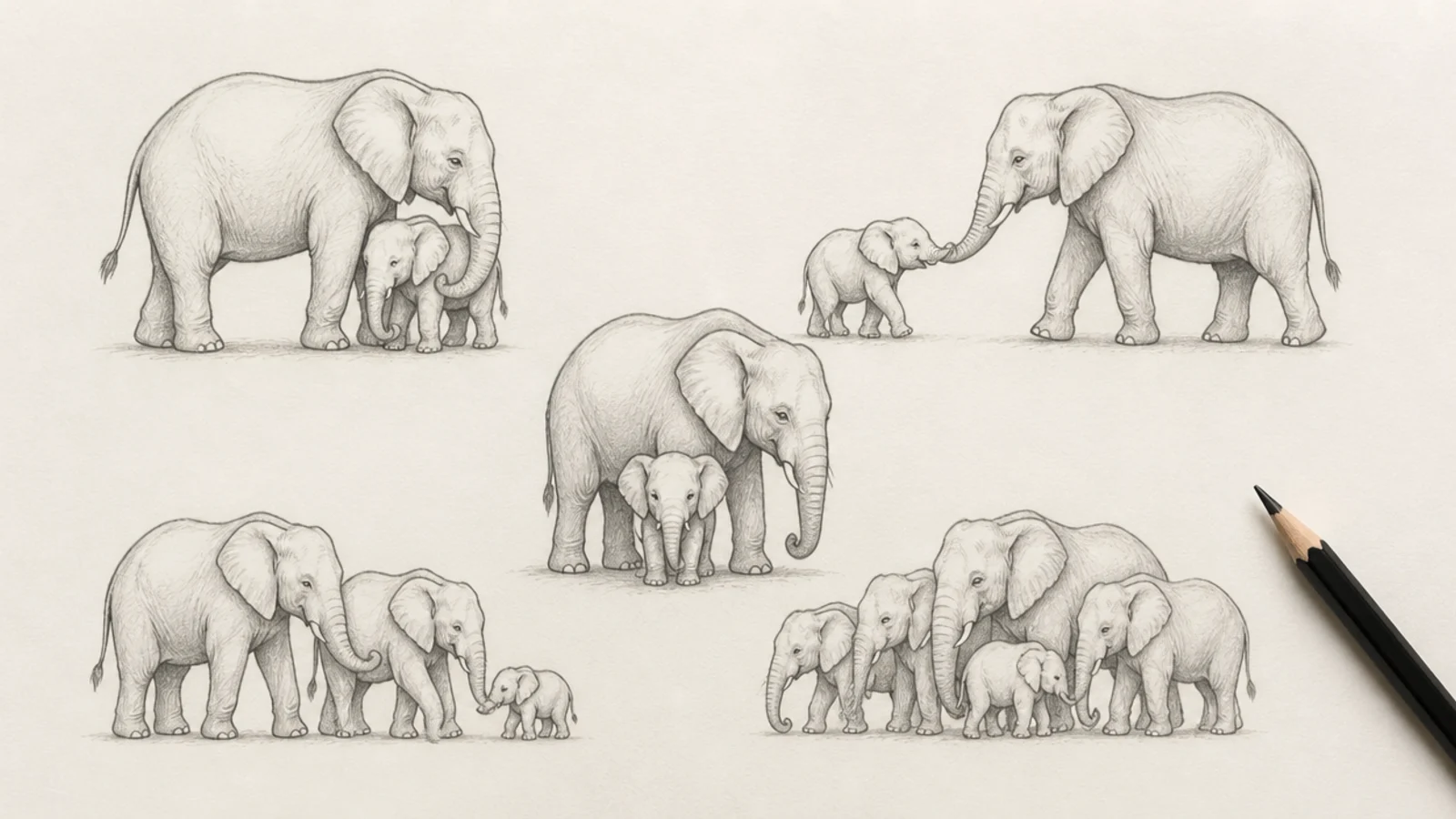
Three elephants stepped down in size — grandma, mom, and calf — tell a whole-family story. The graduated sizes are satisfying and clear.
Step 1 draw the largest elephant, then a medium one, then the small calf. Step 2 line them up in profile facing the same way. Step 3 connect them with trunks resting on the one ahead.
Space the three sizes evenly so the generations read at a glance.
Don’t make two of them the same size; clear steps tell the story.
7 Bath Time Spray
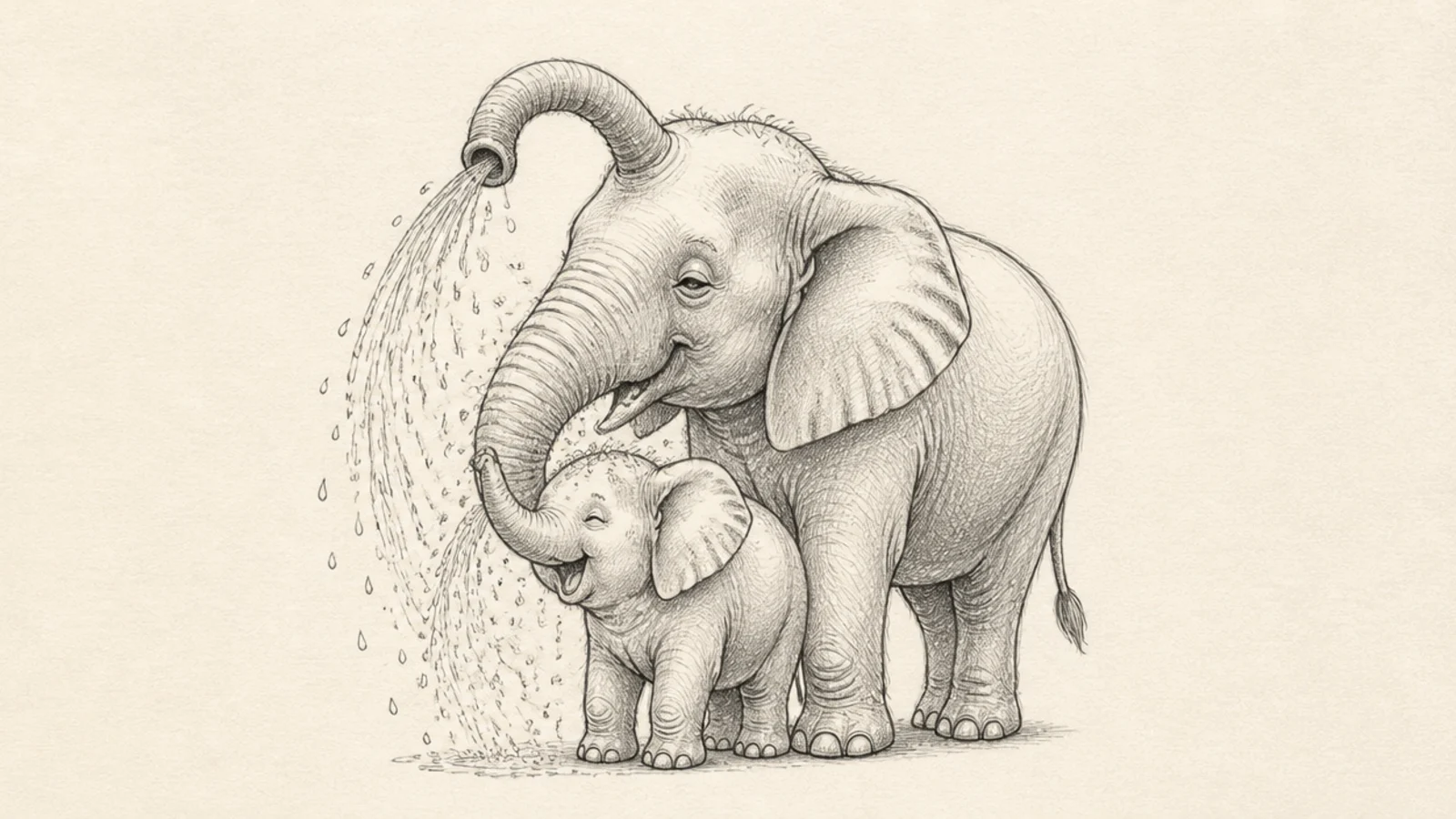
The mother sprays water from her trunk over the giggling calf at bath time — playful and full of life. The water arc adds action.
Step 1 draw the mother with her trunk raised and curled. Step 2 draw an arc of water spraying from the trunk tip. Step 3 place the small calf below, splashed and happy.
Pro tipDraw the water as a curved fan of short lines and droplets.
AvoidDon’t make the spray a straight line; an arc looks like real spray.
8 Cuddling Lying Down
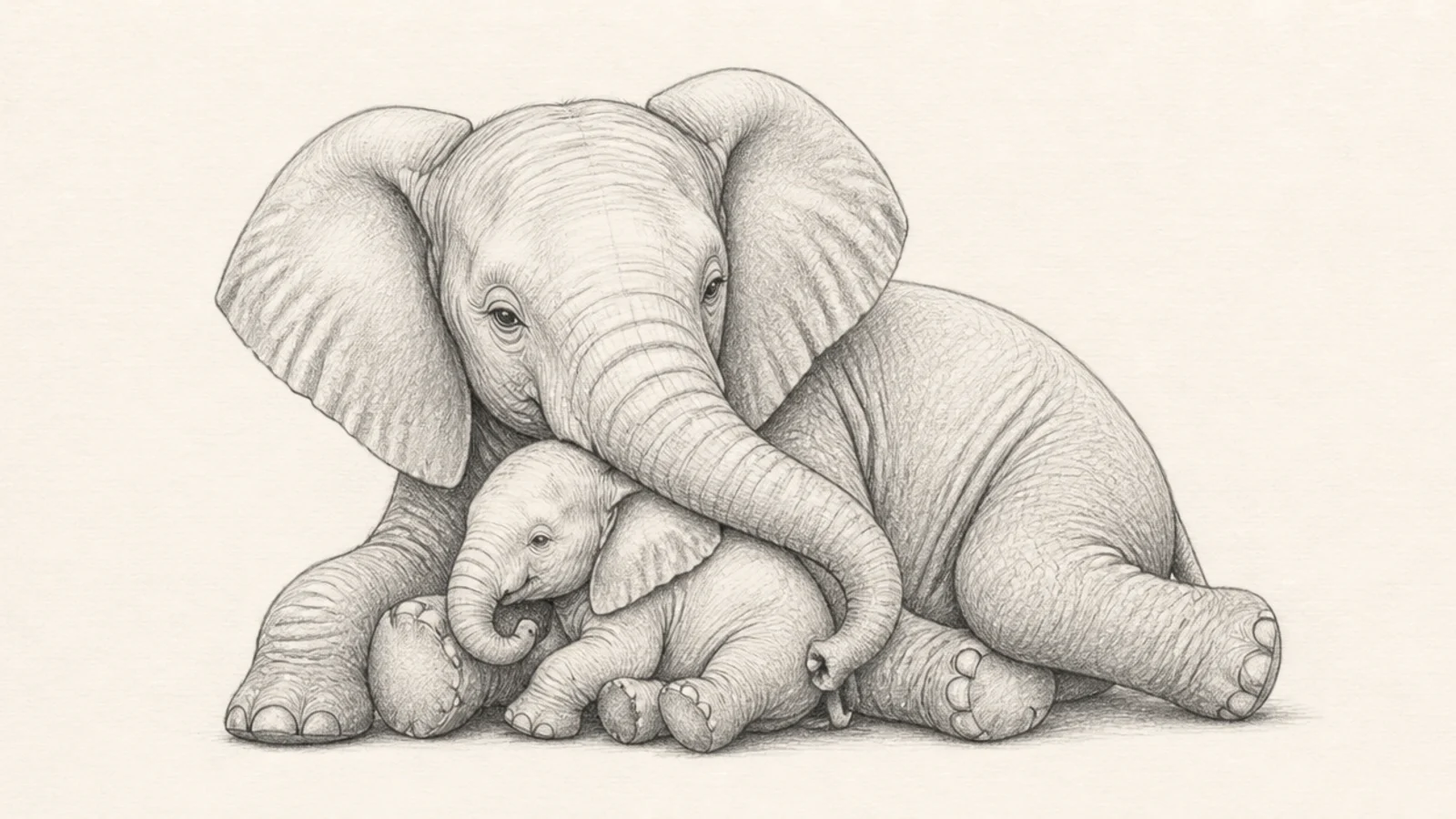
The mother lies down and the calf nestles against her — a cozy, restful cuddle. Curved, settled shapes make it peaceful.
Step 1 draw the mother’s body as a large reclining mound with legs folded. Step 2 nestle the small calf against her side or between her legs. Step 3 rest her trunk over the baby.
Pro tipRound every shape and drape the trunk over the calf for coziness.
AvoidDon’t draw them upright; the lying pose is what makes it restful.
9 Playful Baby Running
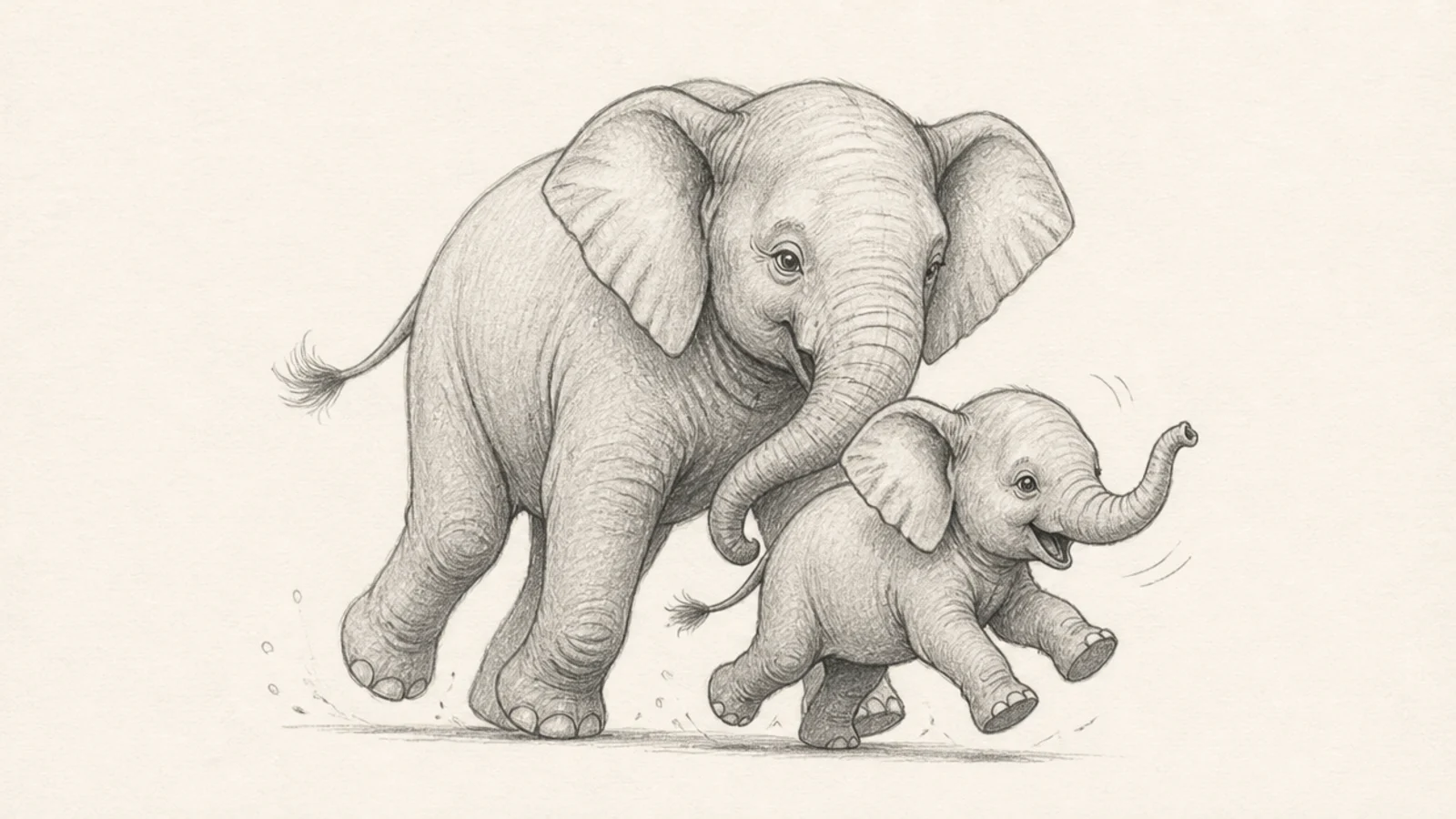
The calf runs ahead in a burst of play while the mother follows watchfully. The contrast of energetic baby and calm mom is endearing.
Step 1 draw the calf mid-run with legs kicking out and ears flapping. Step 2 draw the mother a step behind, head turned toward it. Step 3 add little motion lines behind the baby.
Pro tipFlap the baby’s ears out and kick its legs wide for playful motion.
AvoidDon’t pose the baby stiffly; exaggerate the run for energy.
10 Family at the Waterhole
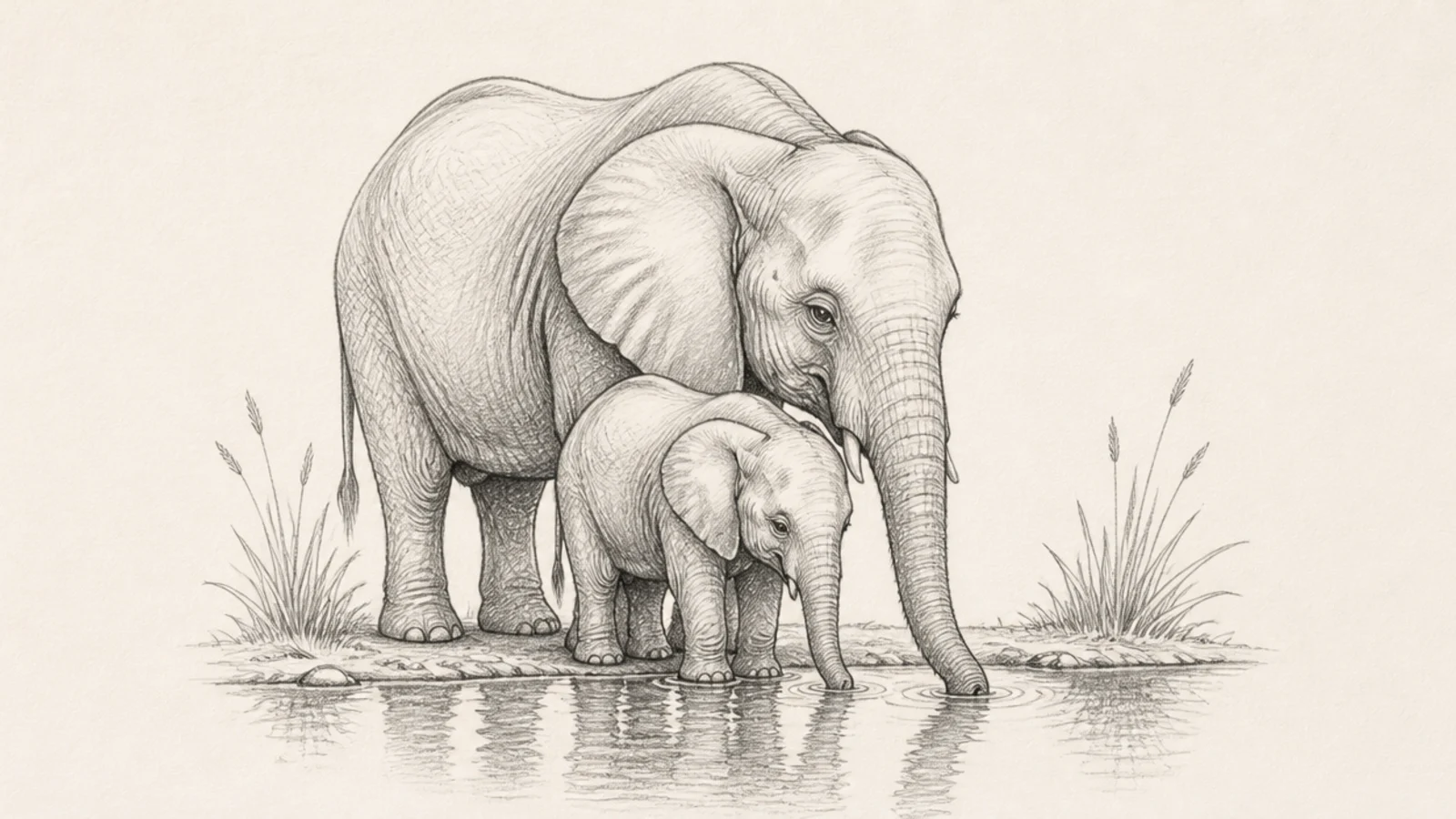
Mother and calf lower their trunks to drink at a waterhole together — a quiet, tender daily scene. The setting adds context and calm.
Step 1 draw a simple water line and bank. Step 2 place the pair with trunks dipped to the water. Step 3 add reflections and a few reeds for setting.
Dip both trunks to the same water line so they share the moment.
Don’t forget the reflection; it grounds them at the water.
11 Baby Between Two Parents
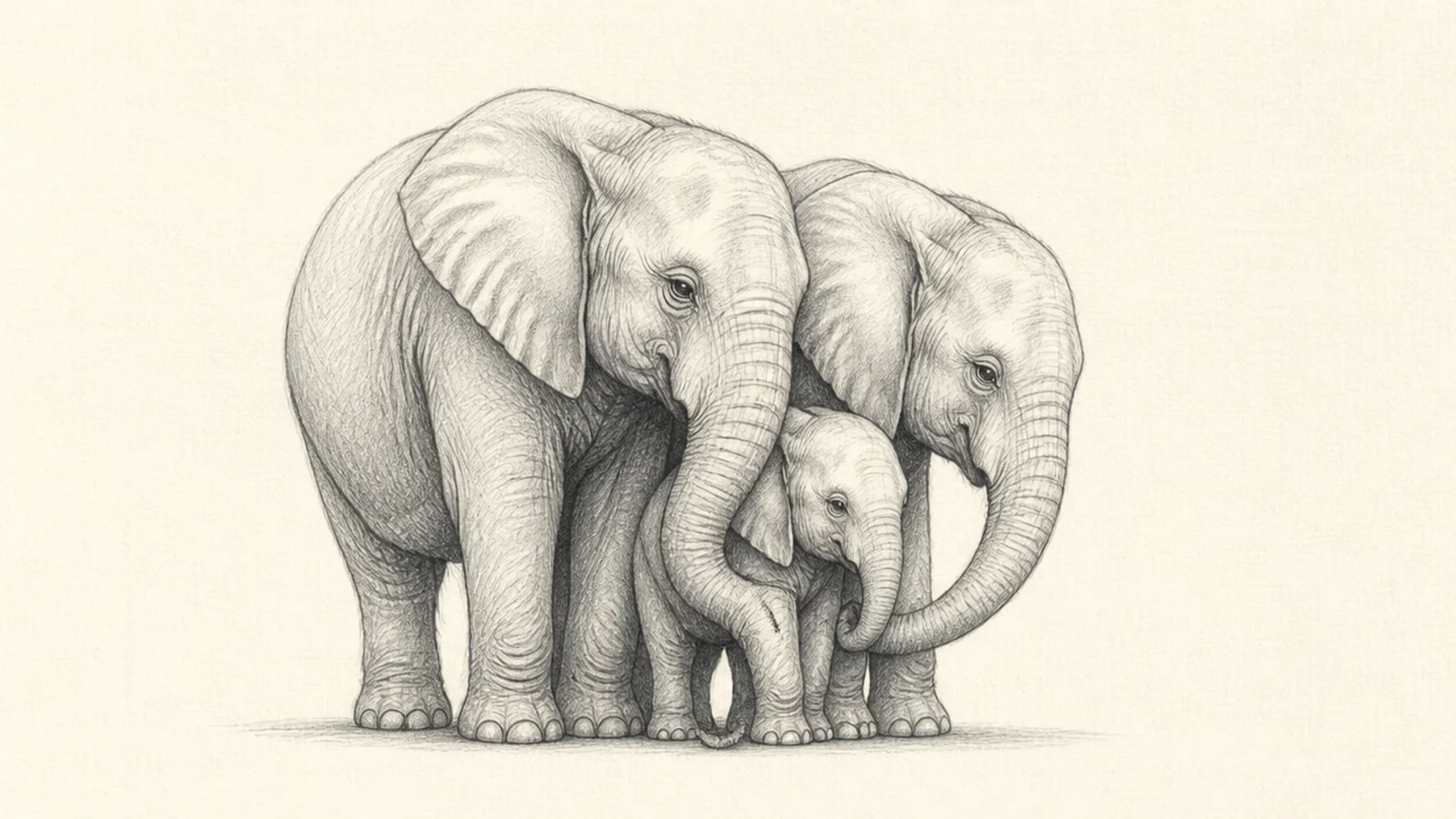
The calf walks safely between two large adults, framed on both sides. The symmetry of protection is deeply reassuring.
Step 1 draw two adult elephants facing the same way with a gap between. Step 2 nest the small calf in the gap. Step 3 let both adults' trunks curve slightly inward toward the baby.
Curve both adult trunks toward the calf to frame it protectively.
Don’t space the adults too far apart; keep the baby snugly between.
12 Mom Lifting Baby
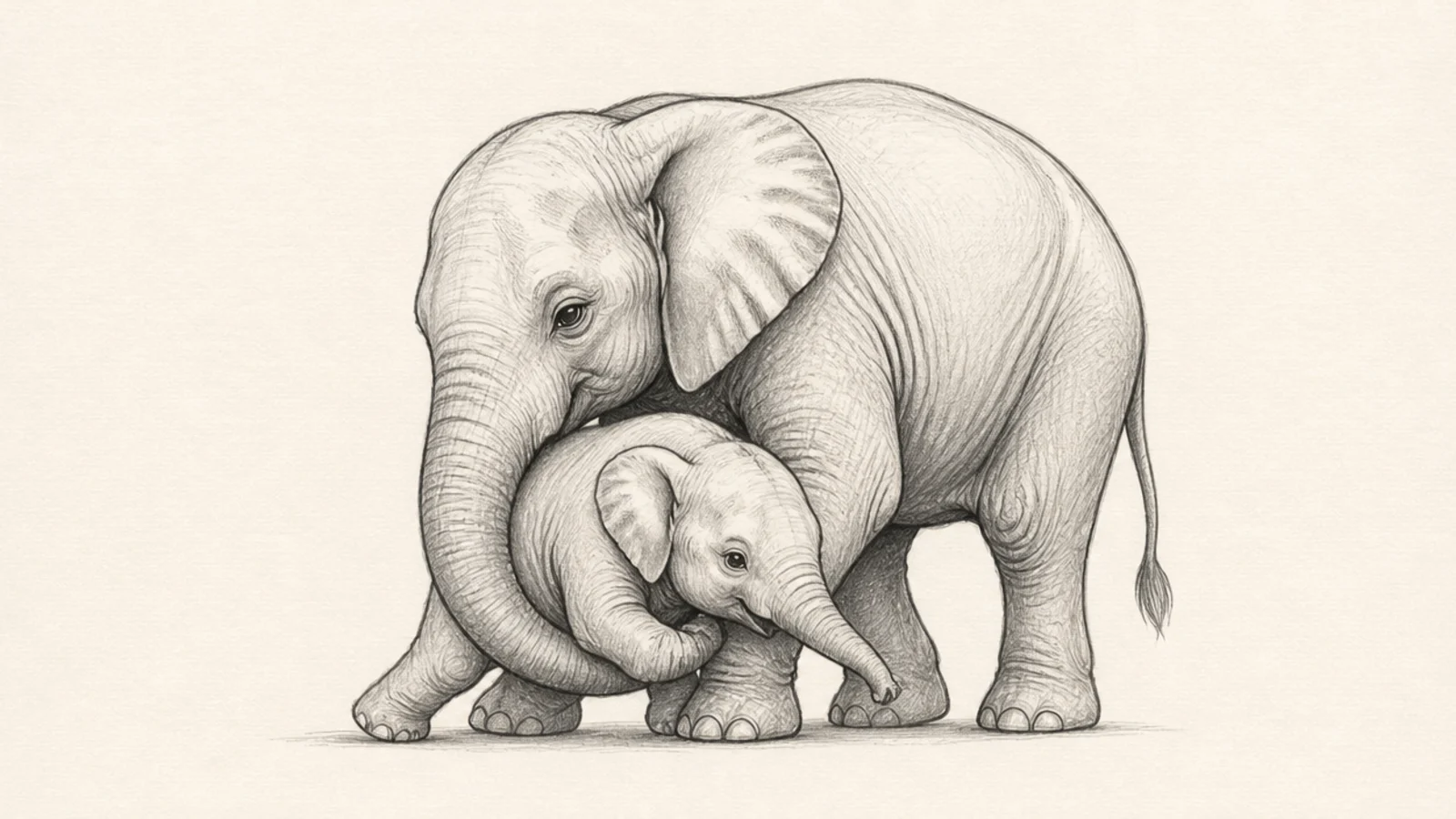
The mother uses her trunk to gently help or lift the stumbling calf — a caregiving moment full of tenderness. The helping trunk is the focus.
Step 1 draw the calf low, as if it slipped or is small. Step 2 draw the mother’s trunk wrapped supportively under or around it. Step 3 lean her body toward the baby.
Wrap the trunk under the baby so it clearly supports, not just touches.
Don’t just rest the trunk on top; wrapping shows the helping action.
13 Sleeping Family
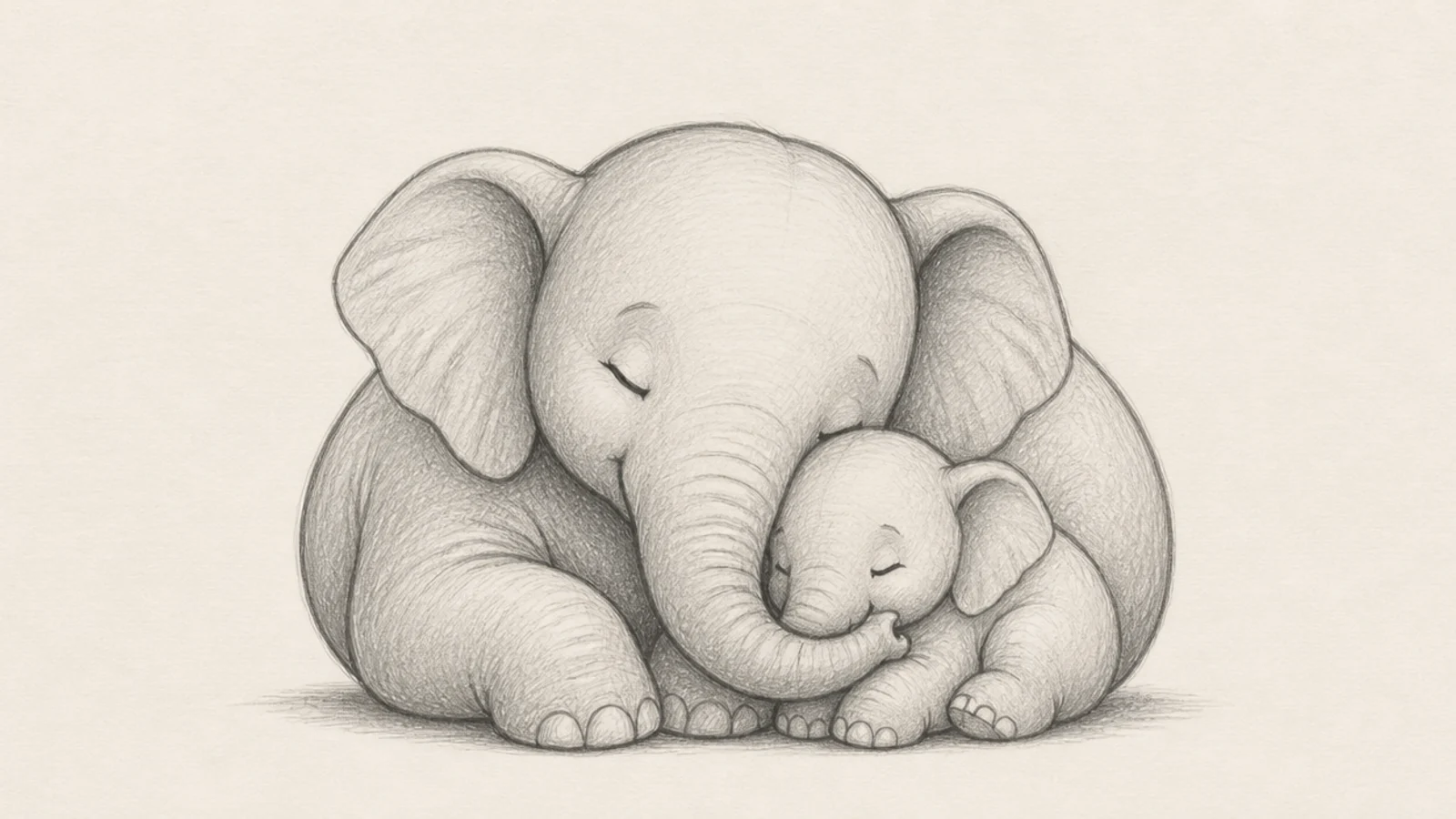
The family dozing together, eyes closed, bodies leaning in — the most peaceful scene of all. Soft closed eyes and leaning shapes sell the calm.
Step 1 draw both elephants with rounded resting bodies. Step 2 close their eyes with simple curved lines. Step 3 lean the calf into the mother and drape a trunk across it.
Use gentle downward-curved lines for the closed sleeping eyes.
Don’t leave gaps between them; leaning close reads as sleeping together.
14 Mud Bath Fun
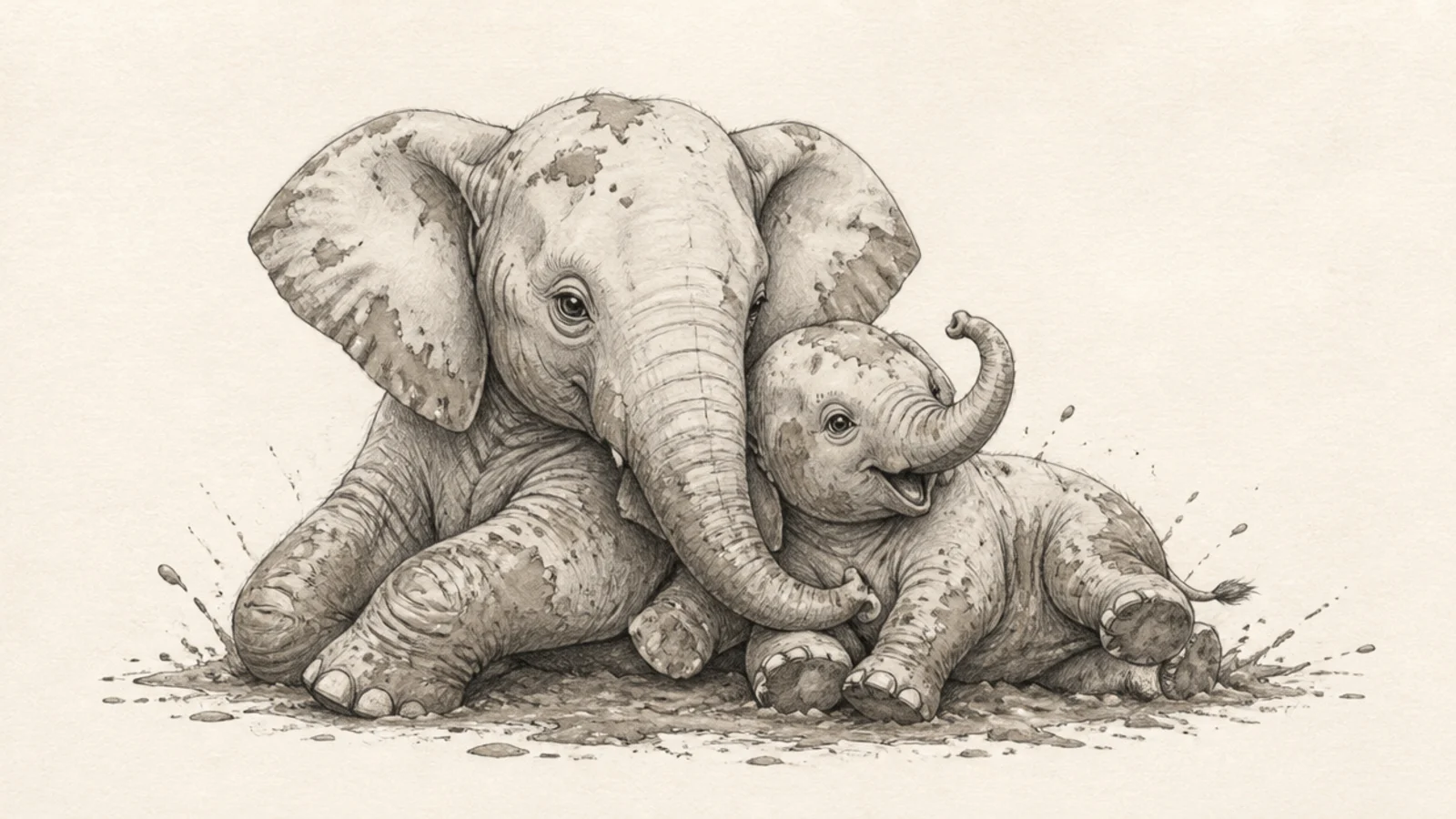
The pair splashes and rolls in a mud bath, a messy, joyful family activity. Splatter and texture make it lively.
Step 1 draw the elephants low to the ground, one partly rolling. Step 2 add mud patches on their skin with rough texture. Step 3 flick small mud splatter marks around them.
Add mud as irregular patches, not neat spots, for a messy feel.
Don’t keep them clean and upright; the mess is the fun.
15 Full Herd Crossing
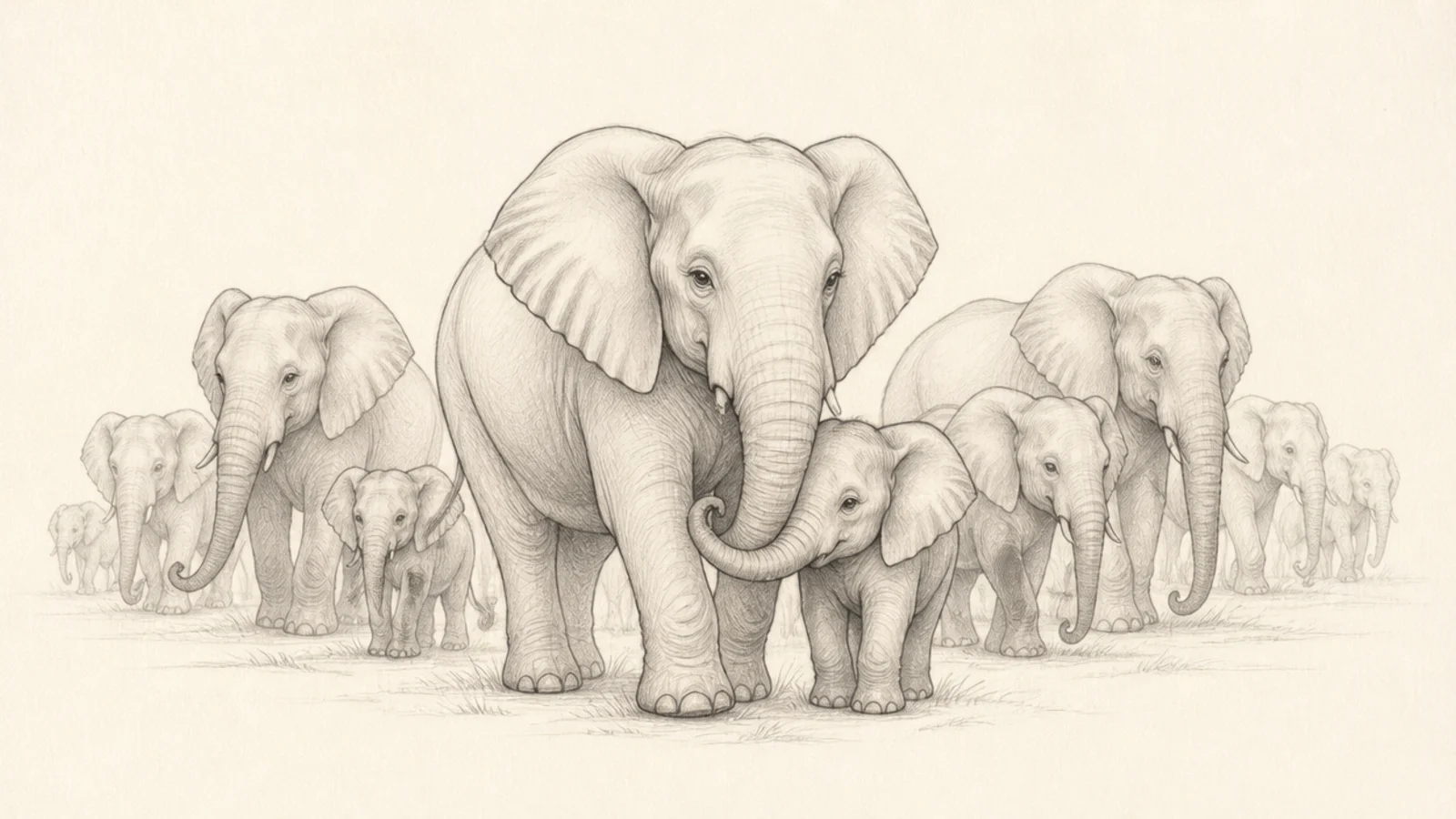
The showpiece — a whole herd of varied sizes walking together, calves tucked among adults. It combines size contrast, overlap, and depth.
Step 1 draw the largest lead elephant, then line up several behind at varied sizes. Step 2 tuck small calves between the adults. Step 3 overlap them and lighten the far ones for depth.
Pro tipOverlap the herd and shrink the back elephants slightly for depth.
AvoidDon’t line them up evenly spaced and same-size; vary sizes and overlap.