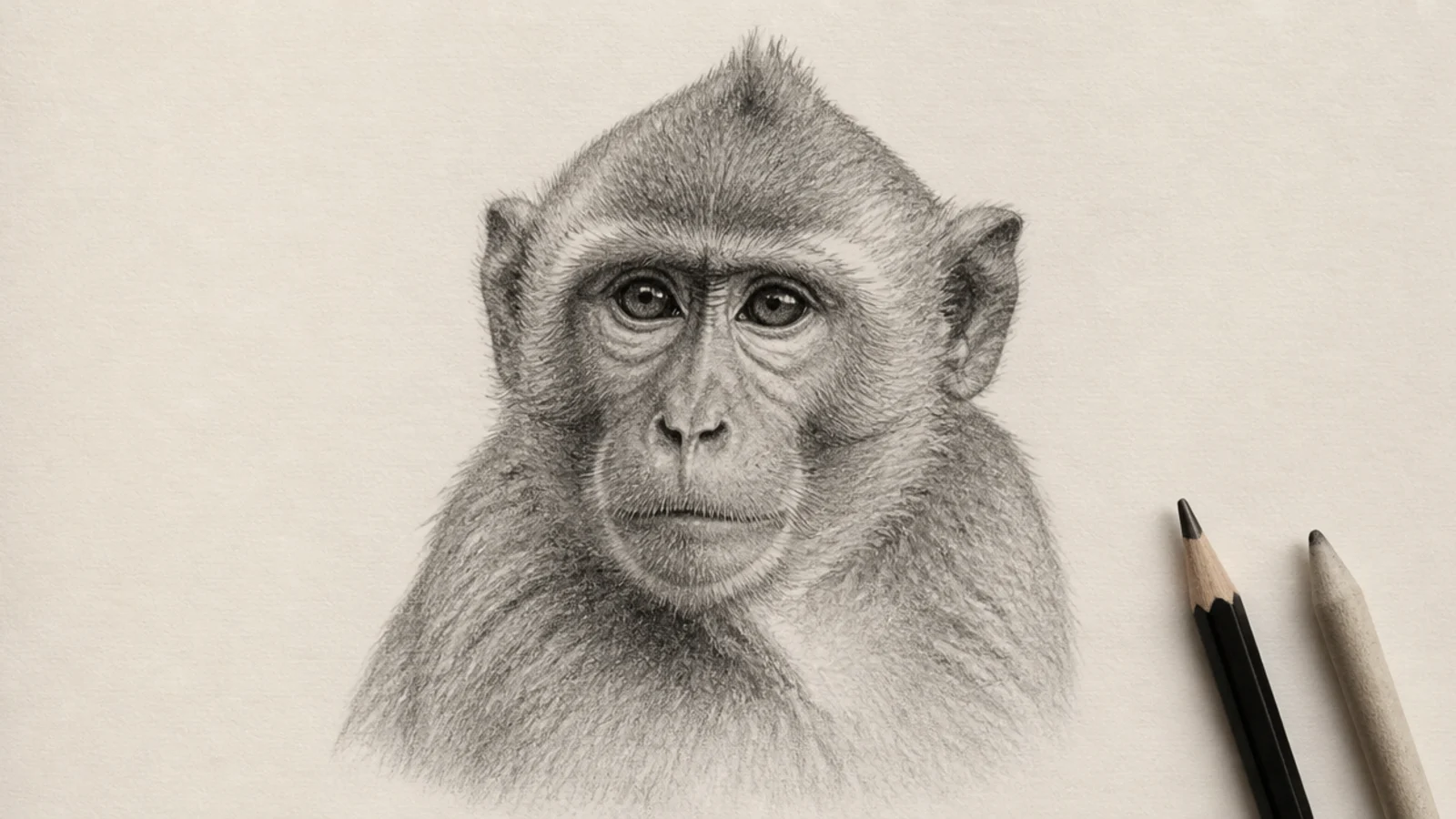
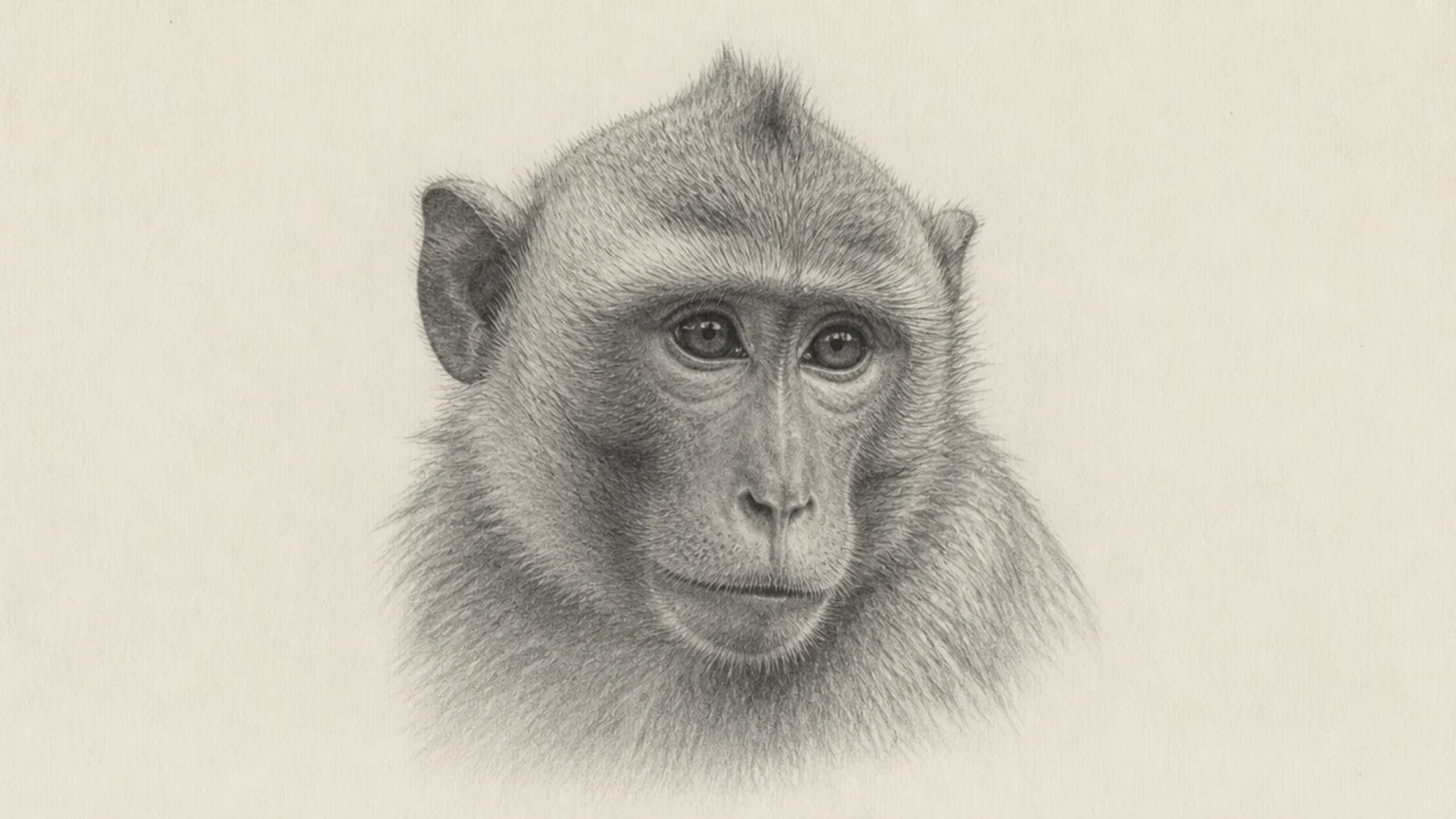
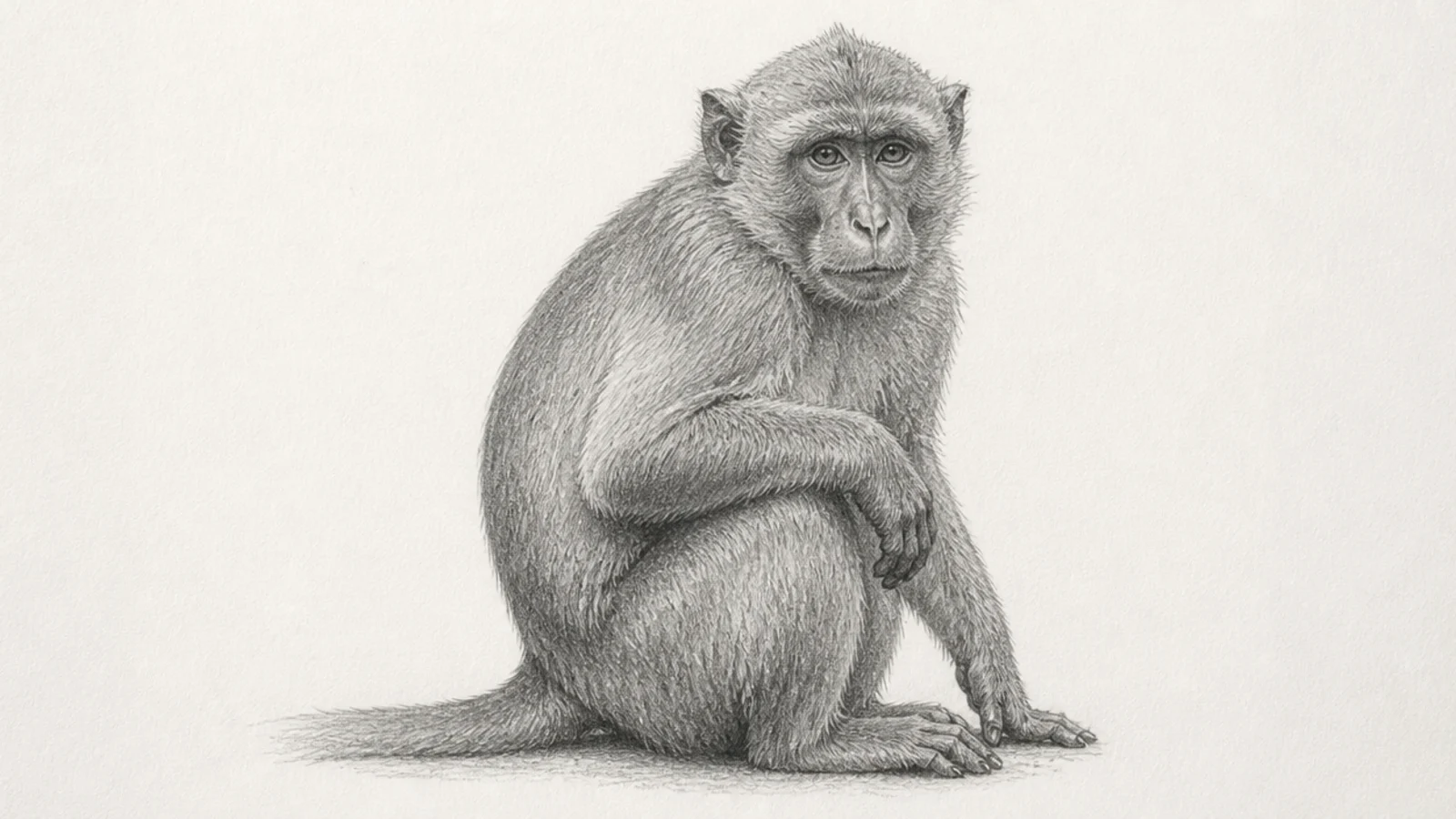
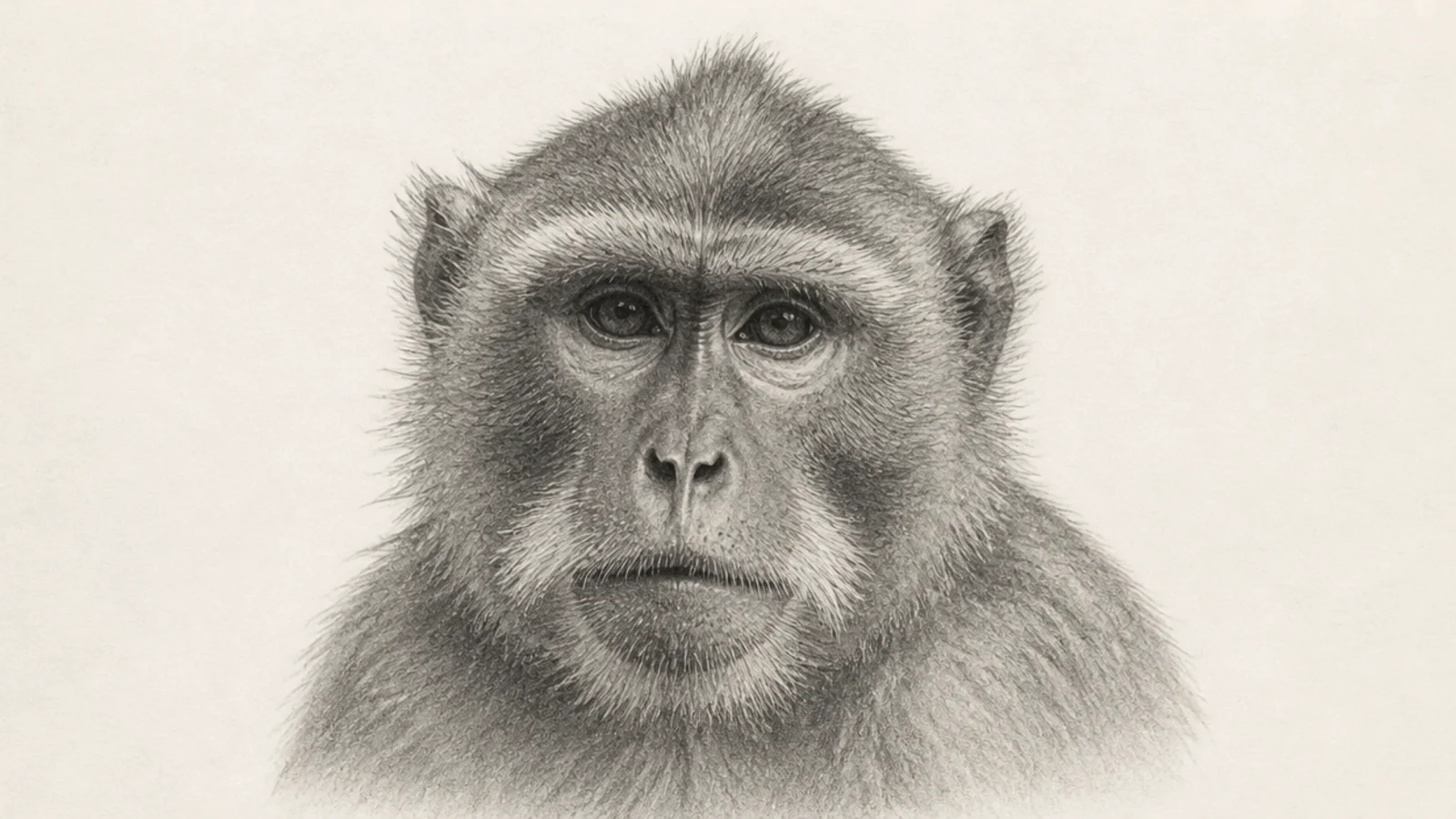
The first time I tried to make a monkey drawing realistic, it came out looking like a fuzzy brown blob with a human face — and I could not figure out why. It took five clear mistakes, and five fixes, before my monkeys finally looked like real animals instead of stiff cartoons in disguise. Here are the honest lessons from that struggle, each a mistake I stopped making and the change that fixed it. If you want your realistic monkeys to improve fast, these are the shortcuts I wish someone had handed me on day one.
Realism is not about talent or expensive pencils — it is about seeing correctly and building in the right order. Every one of my early monkeys failed for the same reasons, and none of them were about my hand being unsteady. They were about rushing to detail before the foundation was set, and about drawing what I assumed a monkey looked like instead of what was actually in front of me.
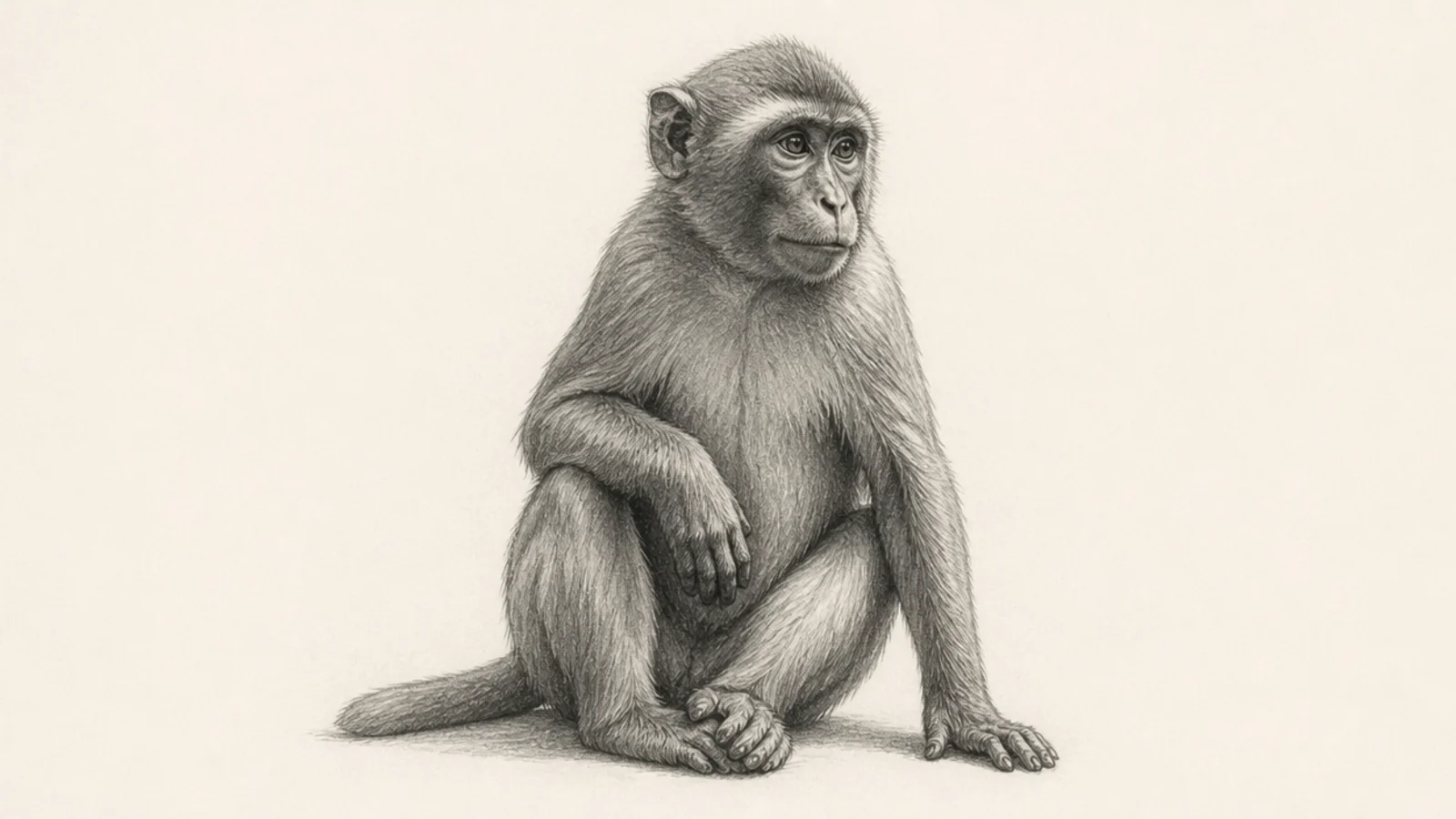
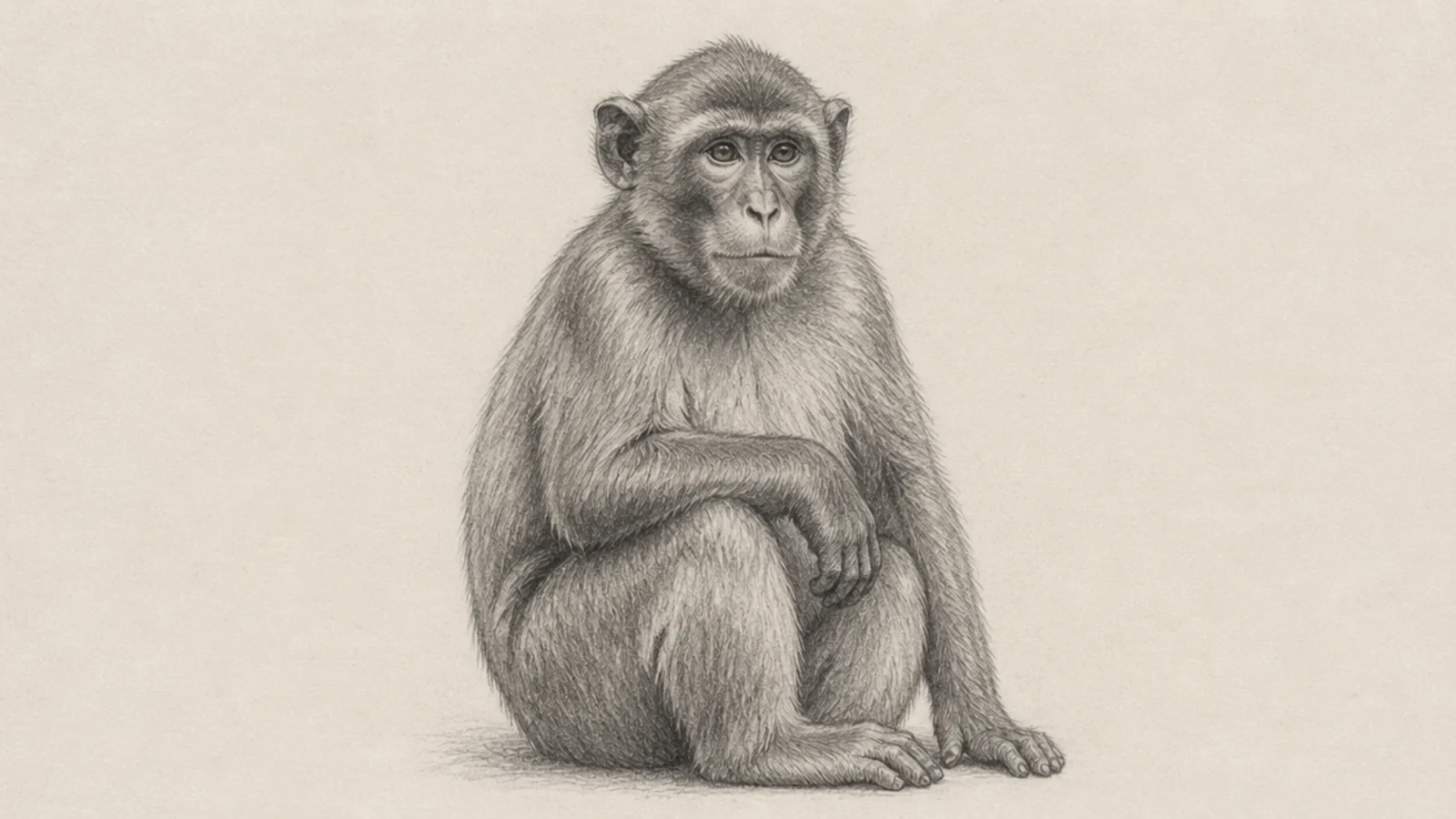
The biggest shift came when I stopped treating a realistic monkey as a cartoon with fur added on top. A real monkey is a form in light — a solid head and body with planes that catch and lose the light — and the fur, the eyes, and the outline all sit on top of that form. Once I built the form first and let value do the work, everything else fell into place.
Below are the five mistakes in the order I made them, each with what I was doing wrong, what changed, and how to apply the fix to your own monkeys. Read them, then go draw one from a good reference photo. The drawing itself, and the honest comparison to your reference, is the real teacher.
My first monkey was all fur and no substance — I scribbled hair over a flat shape and it looked like a fuzzy blob. There was no form underneath for the fur to wrap around, so it never read as solid.
Block the head and body as solid forms and establish the light-to-dark value first, then add fur last. Draw the fur in short strokes that follow the form’s curves so it wraps the volume instead of flattening it.
Pro tipSquint at your reference to see the big light and shadow shapes before any fur.
AvoidDon’t start with fur; build the solid form and value underneath it first.
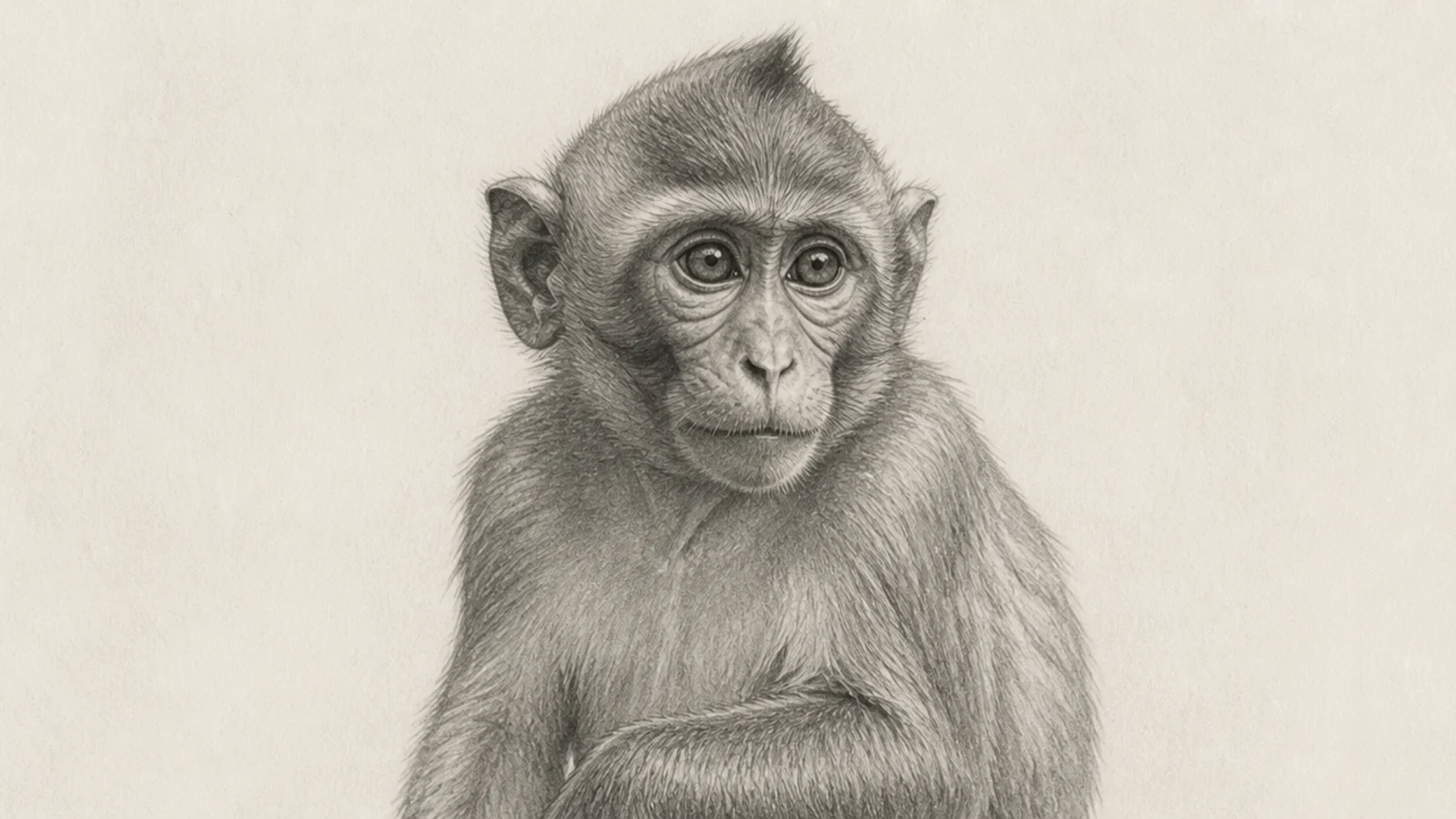
My early monkey looked like a person in a costume because I placed the features like a human face. The eyes were too far apart, the nose too high, and there was no brow ridge or forward muzzle.
Study a real reference and set the eyes closer together under a defined brow ridge, push the muzzle low and forward, and flatten the nose. Measure these proportions against the reference rather than drawing from assumption.
Pro tipCompare your feature placement to the reference by measuring, not guessing.
AvoidDon’t default to human proportions; a monkey’s muzzle and brow are distinct.
My shading looked muddy and flat because I lit different parts from different directions. Without a single light source, nothing looked three-dimensional, no matter how much I rendered.
Decide where the light comes from before shading, then keep every shadow on the opposite side of each form — the head, the muzzle, the limbs, and the body all lit from the same source. Deepen the core shadows and reserve the highlights on the lit side.
Pro tipMark a small light-source arrow in the corner and shade everything to match it.
AvoidDon’t shade each part in isolation; light the whole monkey from one direction.
I traced a hard black line around every shape, which instantly made my monkey look like a cartoon. Real forms do not have outlines — they are defined by where light meets shadow.
Replace hard outlines with value edges — let a form show because its shaded side meets a lighter neighbor, not because of a drawn line. Keep any remaining edges soft where forms turn away and crisper only where they overlap sharply.
Pro tipErase your outline and redefine each edge with a change in value instead.
AvoidDon’t ring every shape in hard line; value edges read as real form.
I saved almost no time for the eyes, and it showed — they were flat and dead, which made the whole monkey look lifeless. The eyes are where realism lives, and I was treating them as an afterthought.
Render the eyes slowly — build a very dark iris and pupil, leave a single bright catchlight unshaded for wetness, and shade the soft folds of skin around them. Give the eyes more time than any other feature, since they carry the life of the whole drawing.
Pro tipLeave the catchlight pure white and untouched so the eye looks wet and alive.
AvoidDon’t rush or flatten the eyes; they are what make the monkey feel alive.
Quick answers
How do you make a monkey drawing look realistic?
Build the form first — block the head and body as solid shapes in light before adding any fur — then commit to one light direction and shade the whole animal to match. Study real monkey proportions rather than drawing a human or cartoon face, use value edges instead of hard outlines, and give the eyes careful detail. Getting the form and light right is what makes a monkey drawing realistic.
What is the most common mistake in realistic animal drawing?
Rushing to fur and detail before the underlying form is established. Fur drawn over a flat, shapeless base just looks like fuzz, because there is no form for it to wrap around. The fix is to build the solid form and its value first, then add fur last, following the form’s curves — that is what gives realistic depth.
How do I draw realistic monkey fur?
Draw the form and its light-to-dark value first, then add fur in short strokes that follow the direction it grows and wrap around the form’s curves. Layer light strokes over dark, keep the strokes varied rather than uniform, and lift a few highlights with an eraser. Fur only reads as real when it sits on top of correct form and value.
Why does my realistic monkey look too human?
Usually the face proportions. Monkeys have a lower, more forward muzzle, a stronger brow ridge, eyes set closer together, and a flatter nose than a human. If you place the features like a human face, it reads as a person in a monkey costume. Working from a real reference photo and measuring those proportions fixes it quickly.