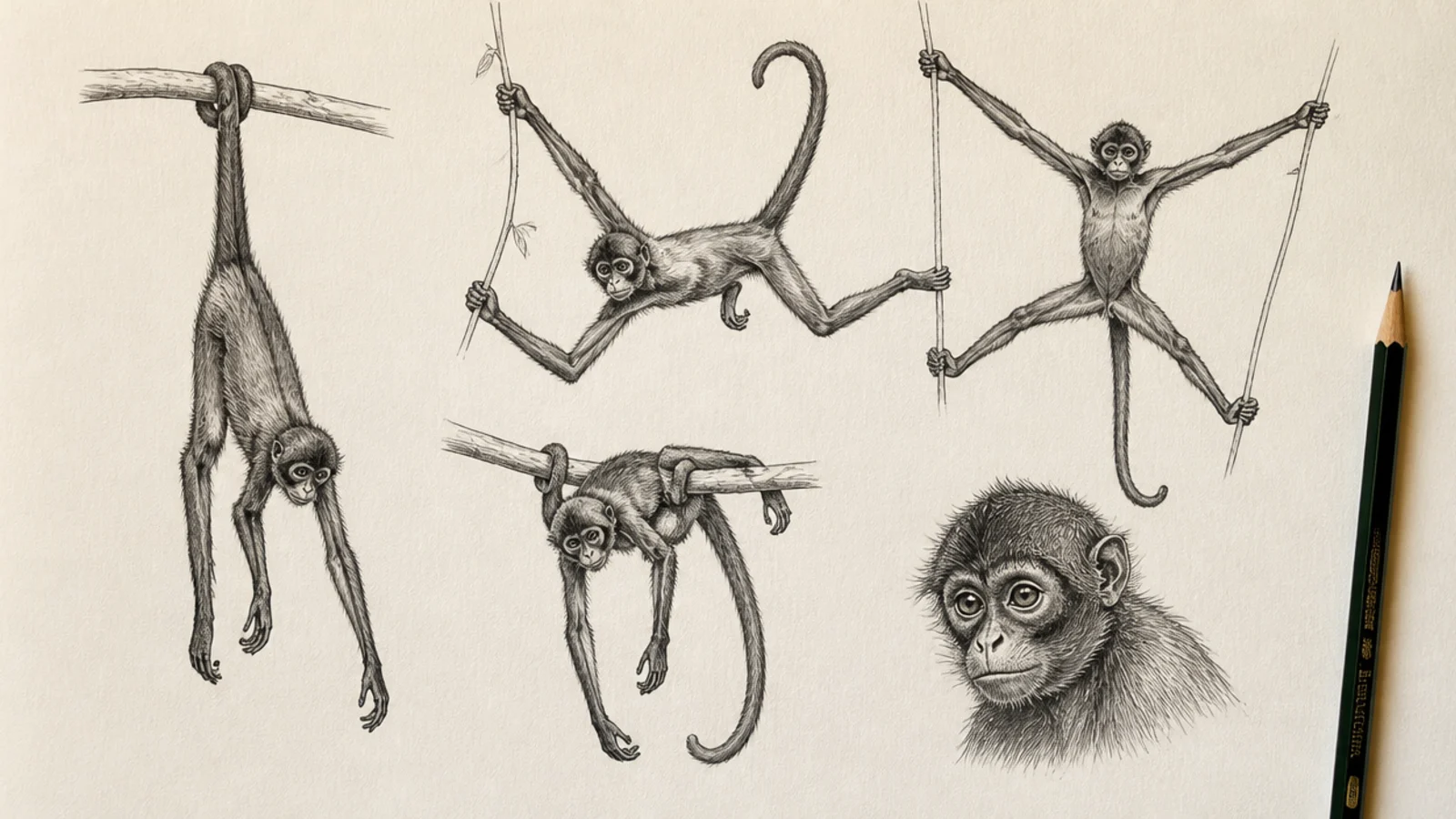
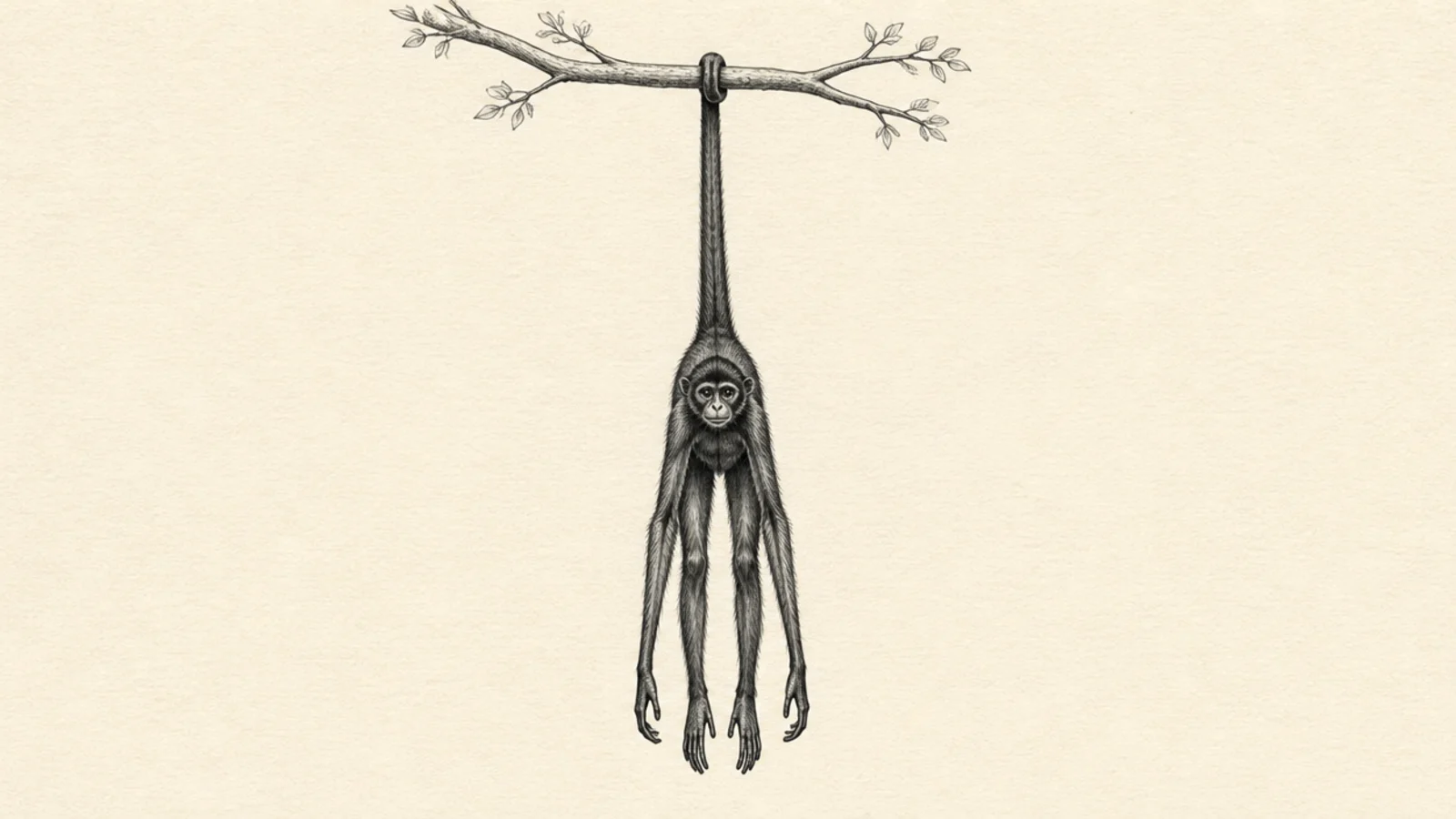
1 Hanging by the Tail
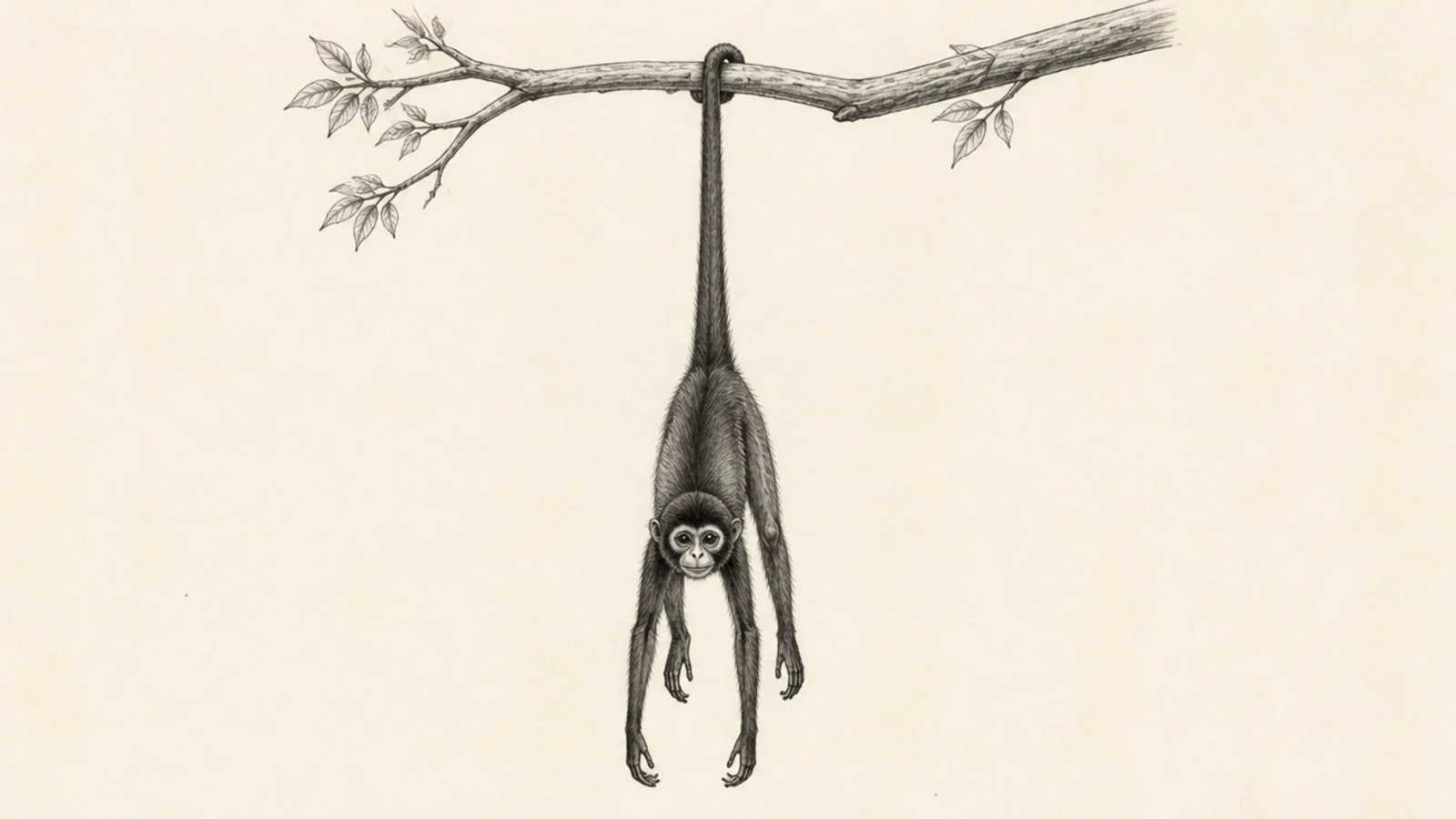
The iconic spider monkey pose — hanging straight down by the tail alone. It shows the tail as a true fifth limb. It is the drawing that defines the animal.
Step 1 draw a branch and wrap the bare tail tip firmly around it. Step 2 hang the slim body straight down from that point. Step 3 let the long arms and legs dangle relaxed and add the small round head.
Let the whole body weight hang from the tail so the grip reads.
Don’t add a hand grip too; the tail alone carries the pose.
2 Spider Monkey Portrait
A close portrait shows the small round head and expressive dark face. The pale eye rings and dark fur are distinctive. It is a great anatomy study.
Step 1 draw a small round head with a slightly protruding muzzle. Step 2 add close-set forward eyes with pale rings and a dark face. Step 3 add small rounded ears close to the head and short dark fur strokes.
Keep the head small and the muzzle low with close forward eyes.
Don’t draw big cartoon ears; spider monkeys have small close ears.
3 Long-Arm Reach
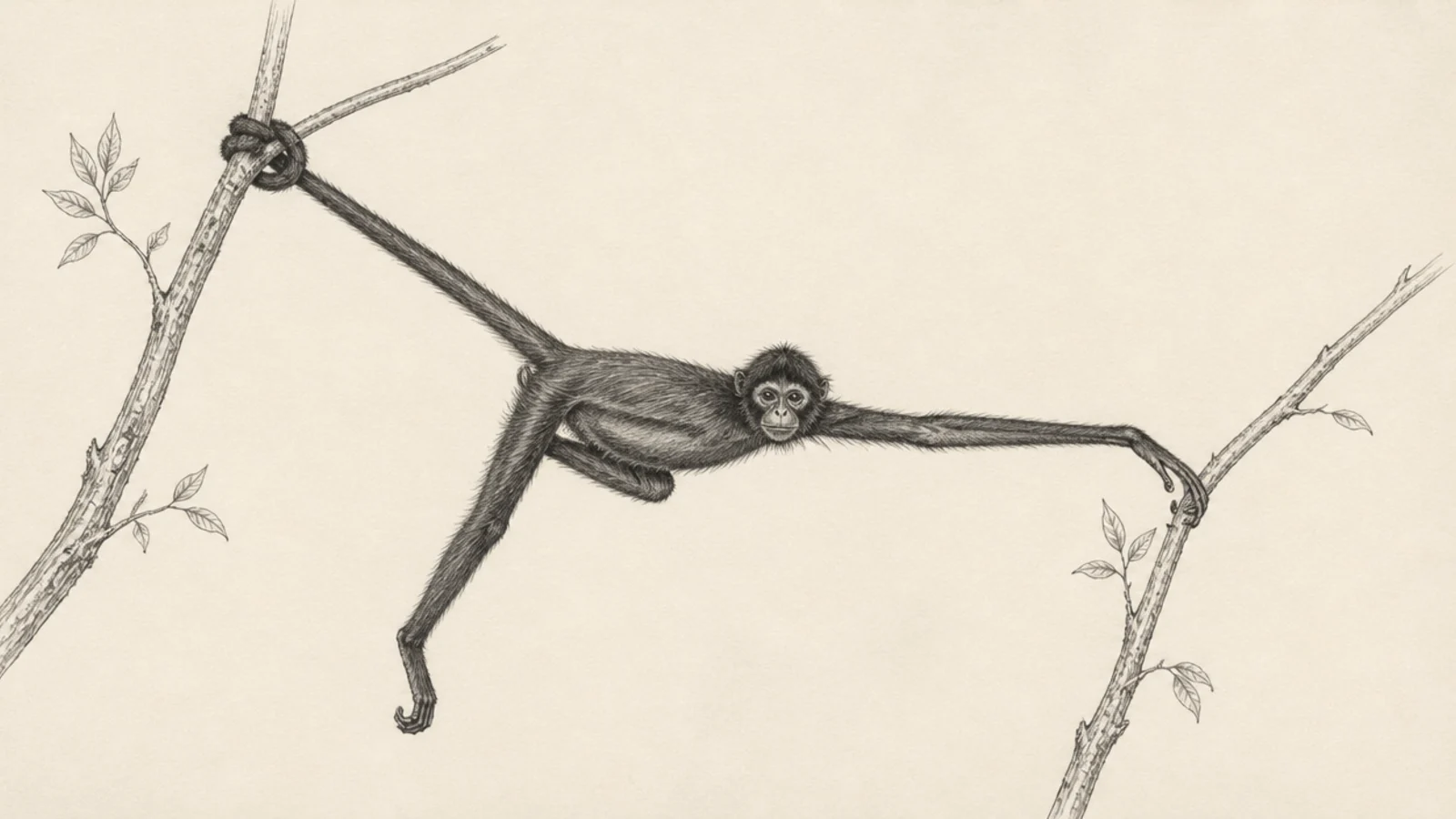
A spider monkey stretching one long arm to a distant branch shows off its reach. The extended limb spans a wide gap. It captures its acrobatic ease.
Step 1 anchor the body on one branch with the tail wrapped. Step 2 stretch one long arm far across to another branch. Step 3 extend the hook hand to grip and keep the body stretched between the two points.
Exaggerate the arm’s reach so it spans a wide gap between branches.
Don’t draw a short arm; the long reach is the whole point.
4 Five-Point Grip
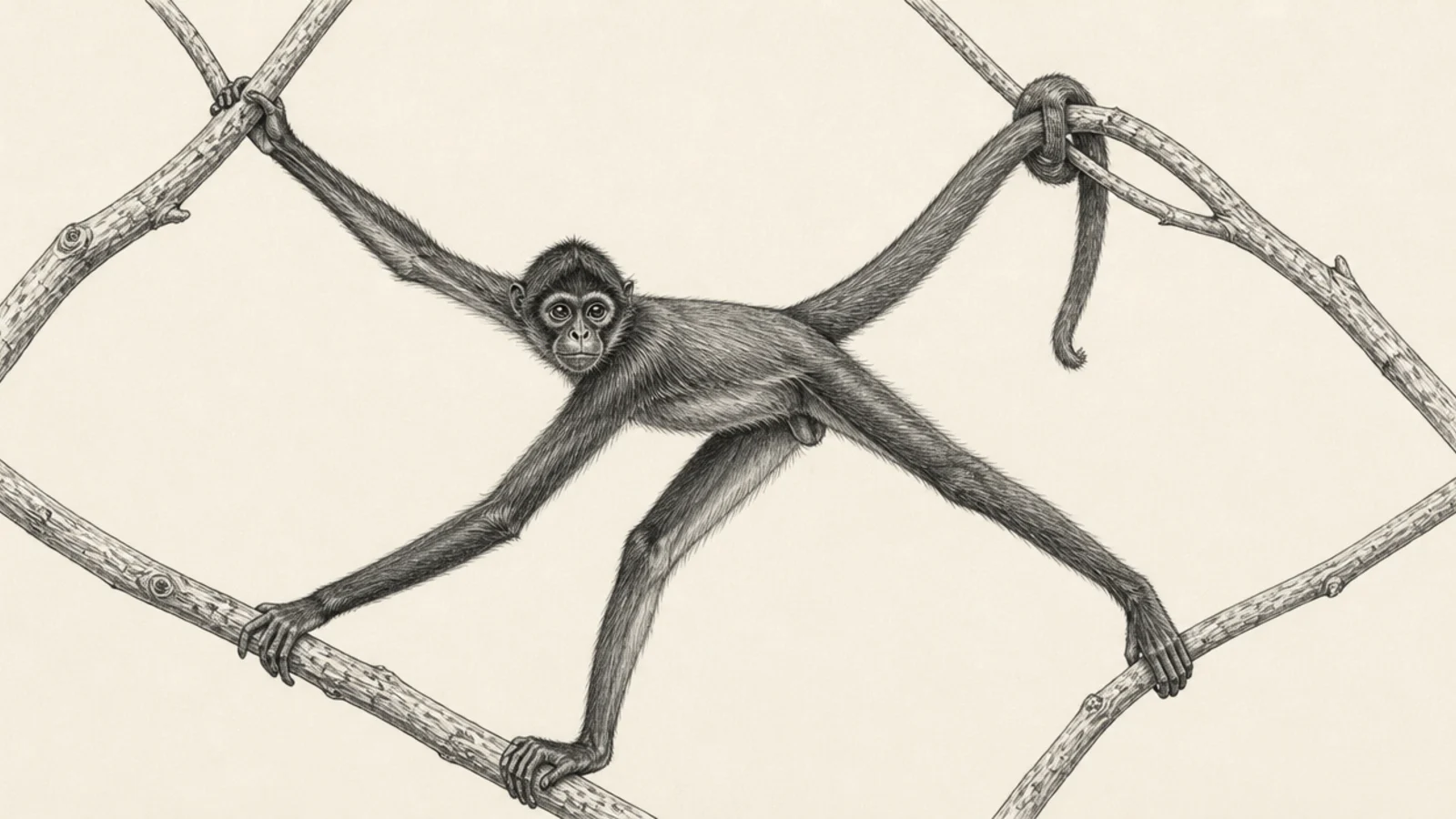
A spider monkey gripping with all four limbs and its tail spread across branches is pure acrobatics. The five gripping points show its whole toolkit. It looks dynamic and cool.
Step 1 draw a few branches at different angles. Step 2 spread the body with each long limb reaching a different branch. Step 3 wrap the tail around a fifth point so all five grips share the weight.
Send each limb and the tail to a different branch for a spread pose.
Don’t bunch the limbs together; spreading them shows the five grips.
5 Brachiating Swing
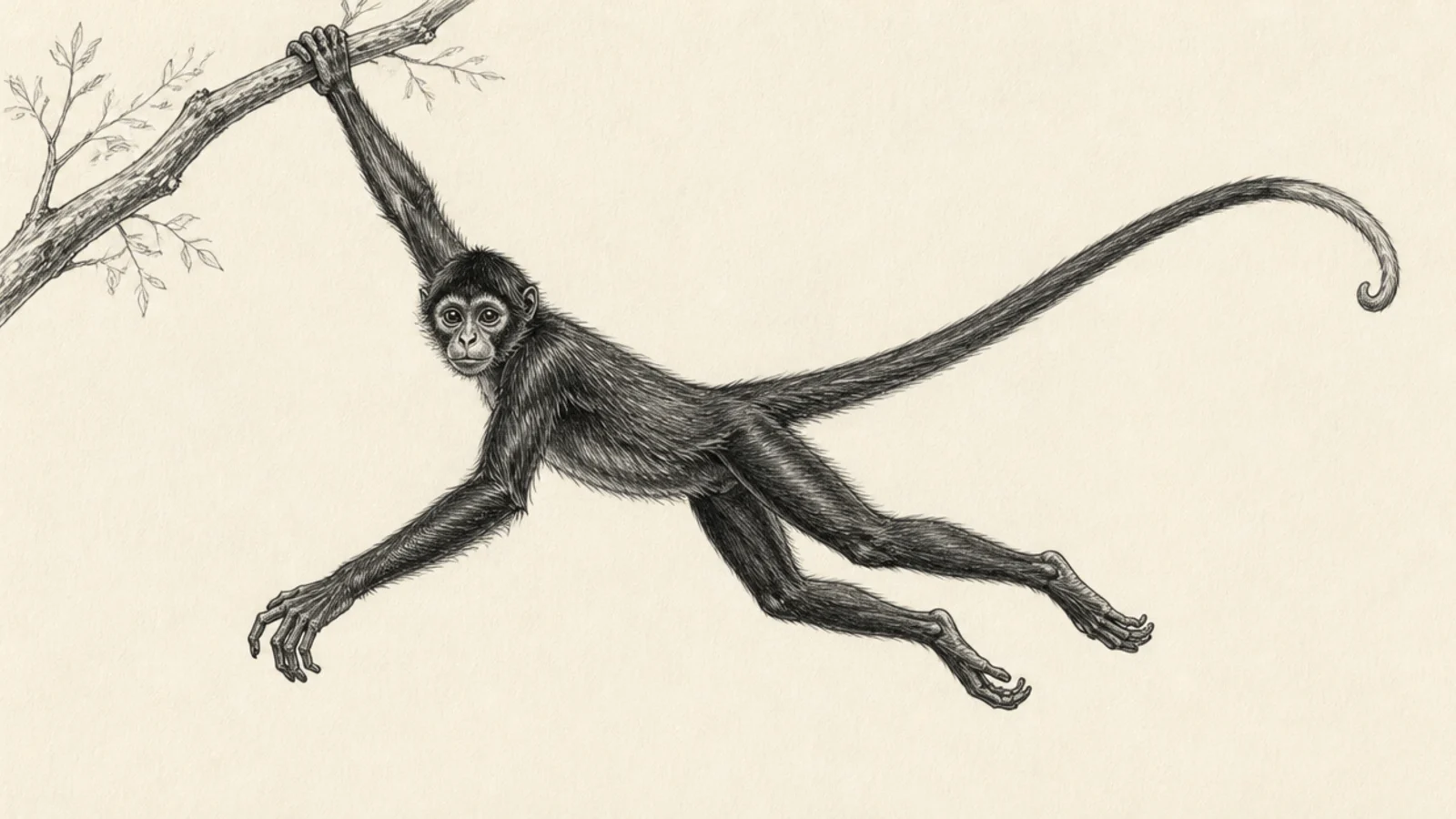
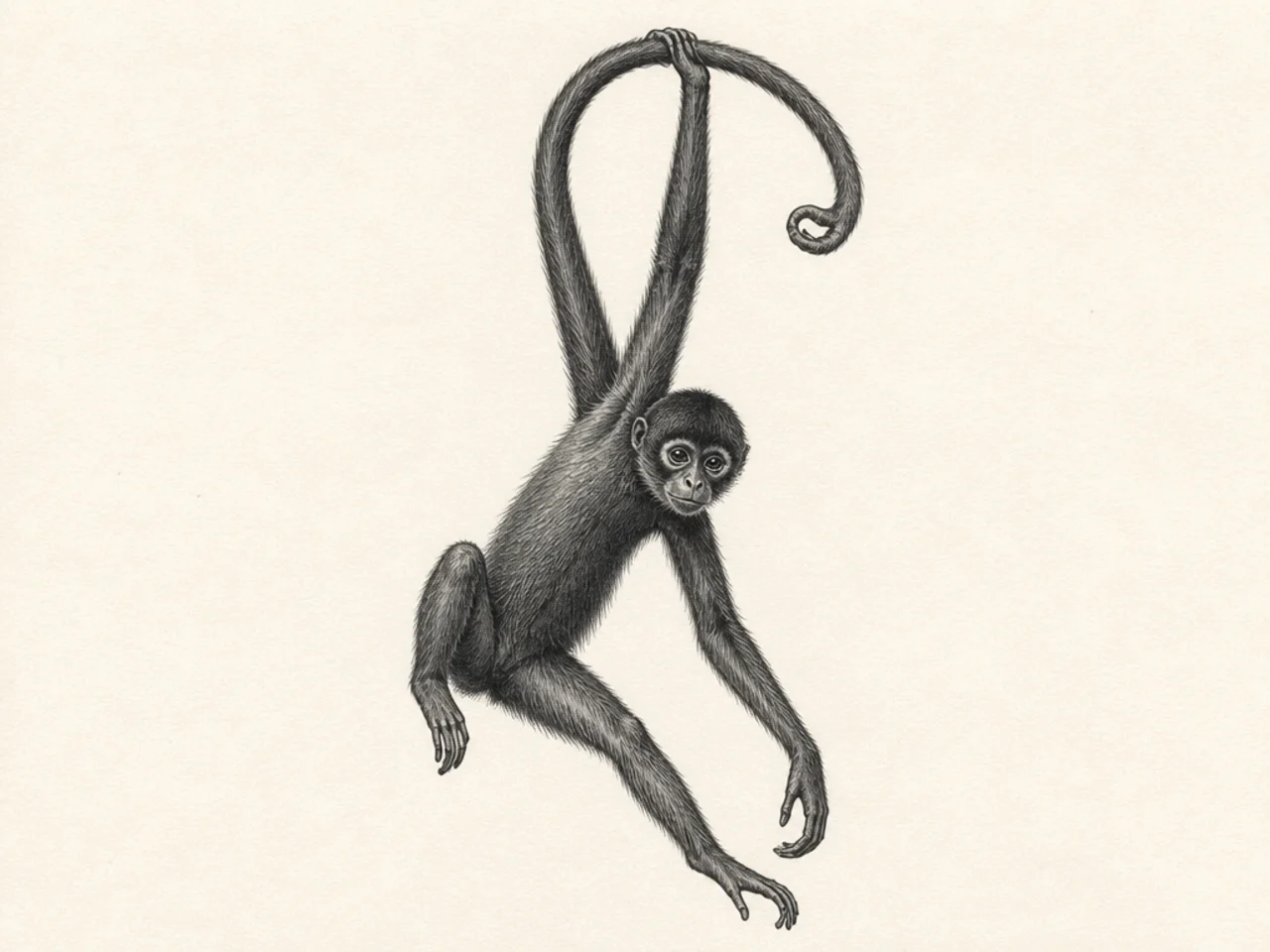
A spider monkey swinging arm over arm mid-air is dynamic and free. The brachiating motion is how they really travel. It is an exciting action pose.
Step 1 draw a strong line of action arcing through the swing. Step 2 reach one arm up gripping a branch and swing the body forward. Step 3 trail the other arm and the legs back and stream the long tail behind.
Arc the body forward and trail the free limbs to show the swing.
Don’t draw it upright; the forward arc creates the momentum.
6 Tail-Wrapped Branch Sit
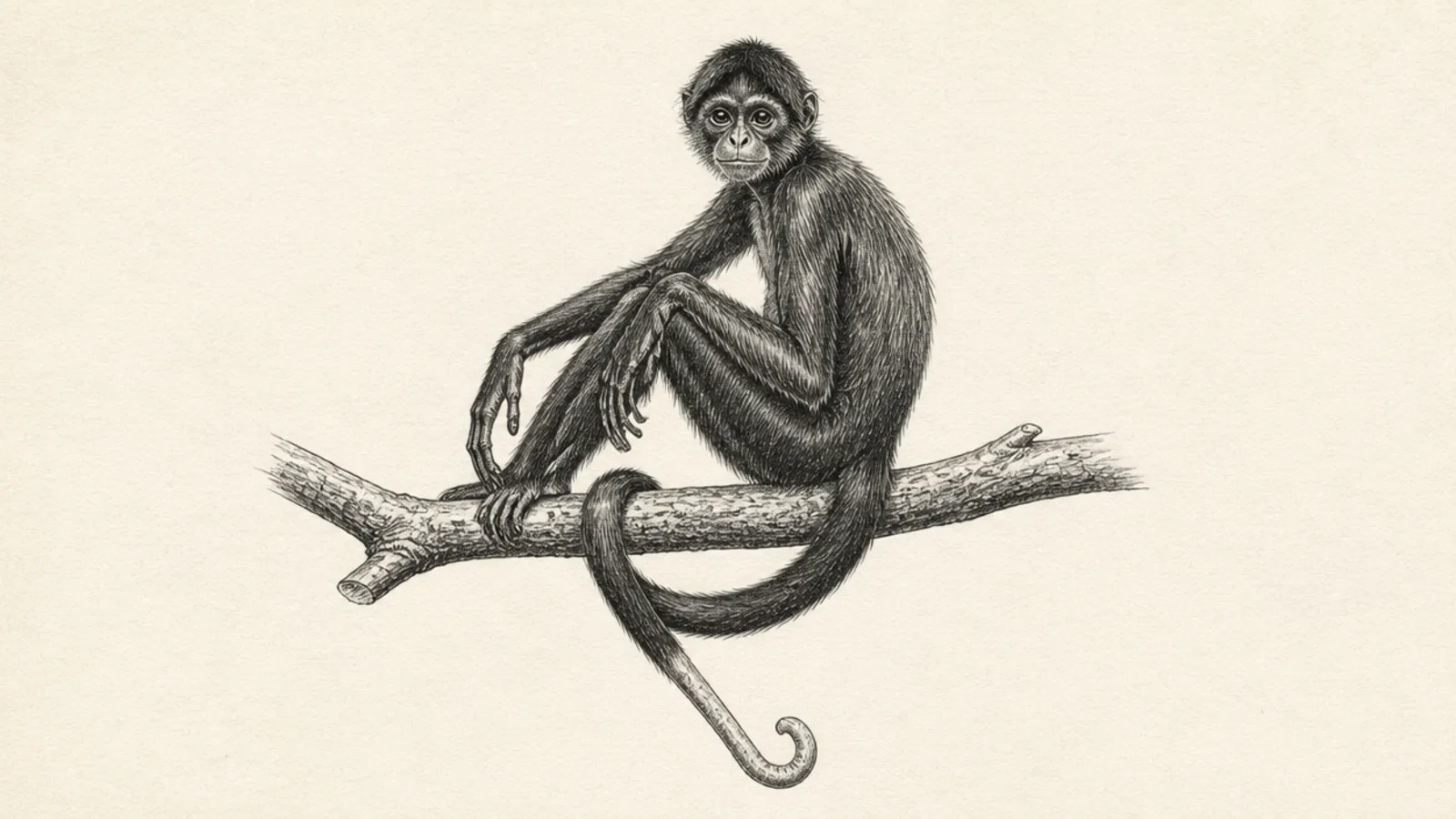
A spider monkey perched on a branch with its tail wrapped for balance is calm and natural. The anchoring tail is characteristic. It is a restful study.
Step 1 draw a branch and sit the slim body on it. Step 2 wrap the long tail around the branch for balance. Step 3 fold the long arms and legs and add the small head looking out.
Wrap the tail around the branch as a balancing anchor.
Don’t let the tail hang loose; wrapping it shows its balancing role.
7 Spread-Eagle Climb
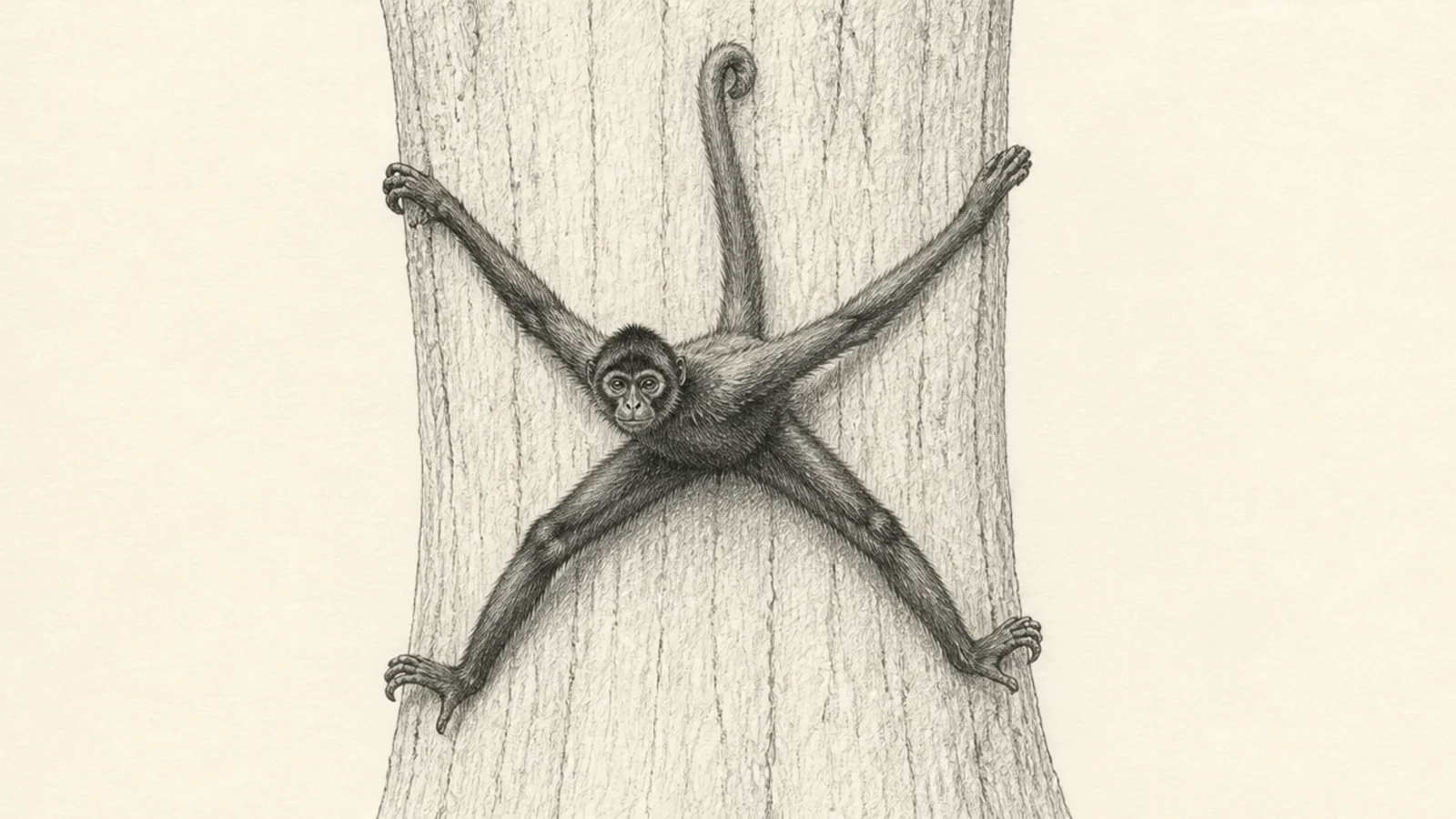
A spider monkey spread wide across a broad trunk shows the full limb span. The stretched, spidery shape is striking. It looks like a real climb.
Step 1 draw a wide trunk. Step 2 splay all four long limbs out to grip the bark at wide points. Step 3 arch the body against the trunk and let the tail press for extra support.
Splay the limbs wide so the spidery span is obvious.
Don’t draw the limbs close; the wide splay is the spider look.
8 Prehensile Tail Detail
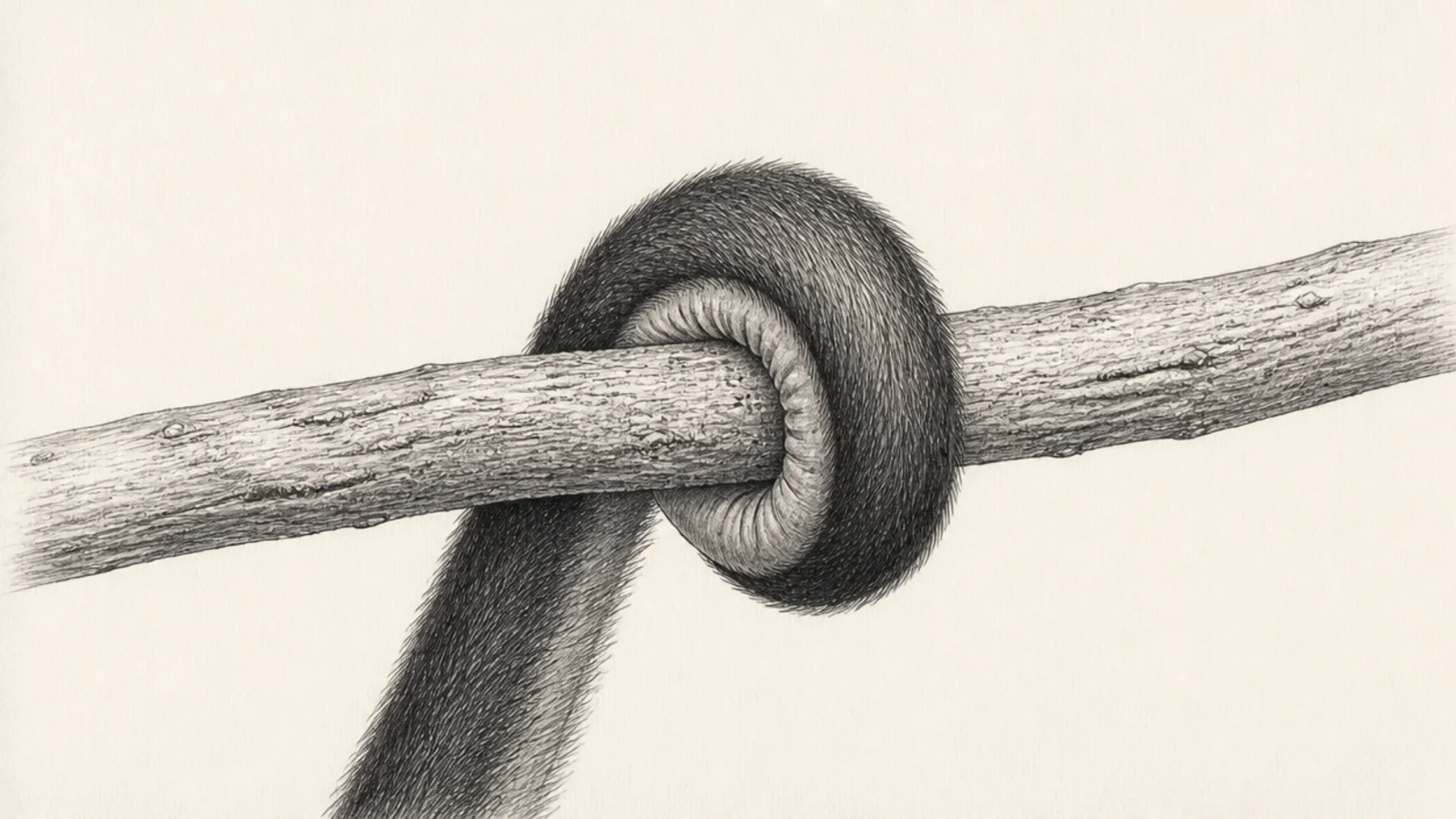
A close study of the tail tip curling around a branch teaches its grip. The bare, muscular tip is fascinating. It is a useful detail drawing.
Step 1 draw a branch section. Step 2 wrap the tapering tail tip around it in a firm coil. Step 3 leave the underside of the tip bare and add slight creases where it grips.
Pro tipLeave the gripping underside of the tail tip bare, not furry.
AvoidDon’t draw a limp curl; a firm coil shows the grip strength.
9 Two Spider Monkeys Hanging
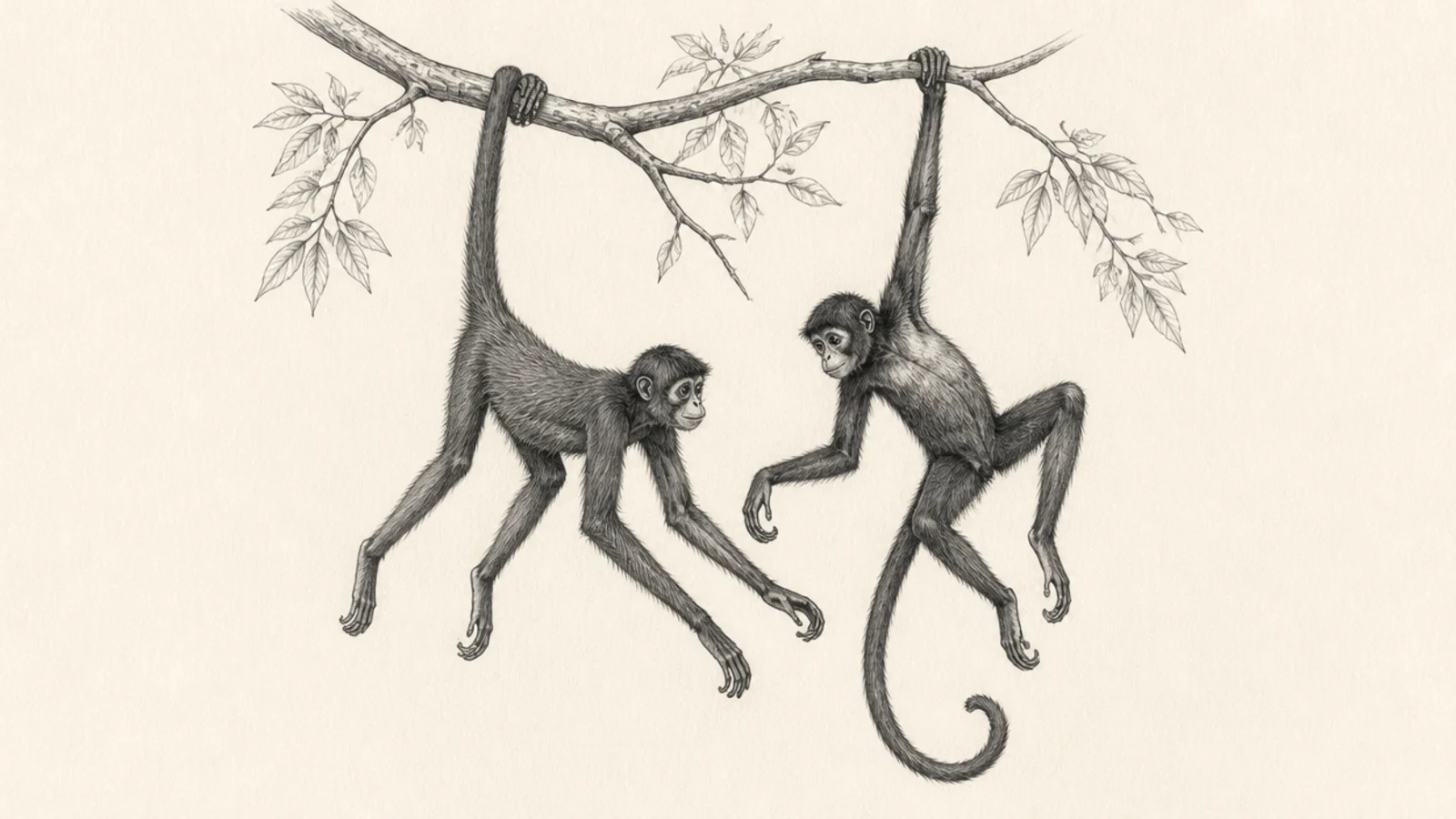
Two spider monkeys hanging near each other makes a lively jungle scene. The tangle of long limbs and tails is dynamic. It shows them being social.
Step 1 draw a couple of branches. Step 2 hang one monkey by its tail and one by an arm. Step 3 overlap their long limbs and tails and turn their heads toward each other.
Overlap their long limbs and tails so the pair feels connected.
Don’t space them far apart; the overlap makes the scene.
10 Spider Monkey Silhouette
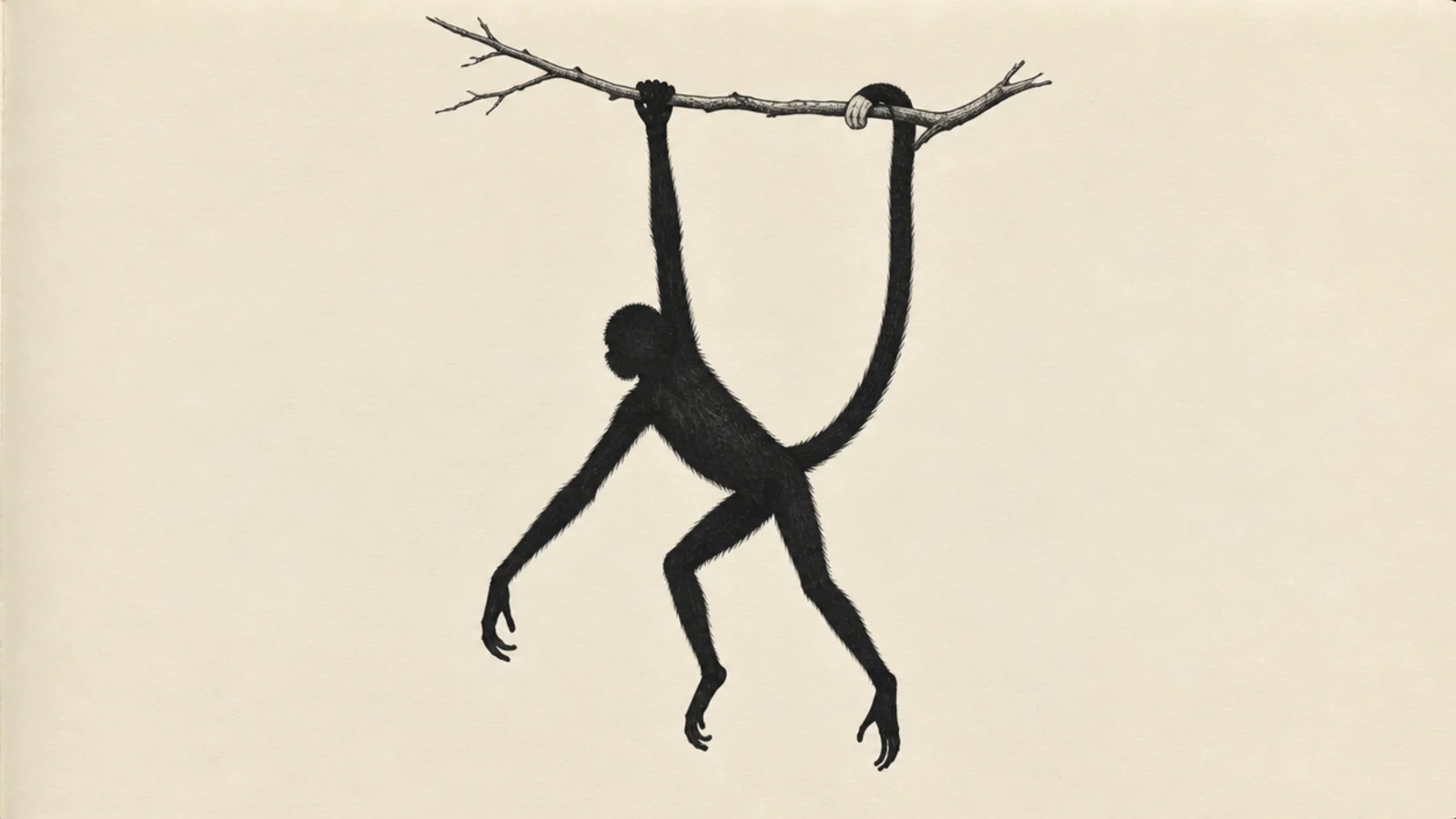
A solid silhouette of a hanging spider monkey is bold and graphic. The long-limbed shape reads instantly. It is a striking, simple drawing.
Step 1 draw the hanging outline with all the length exaggerated. Step 2 fill it solid black or one dark tone. Step 3 keep the limbs and tail crisp so the spidery shape stays clear against the background.
Exaggerate the limb and tail length so the silhouette reads as spider monkey.
Don’t add interior detail; the long-limbed shape carries it.
11 Reaching for Fruit
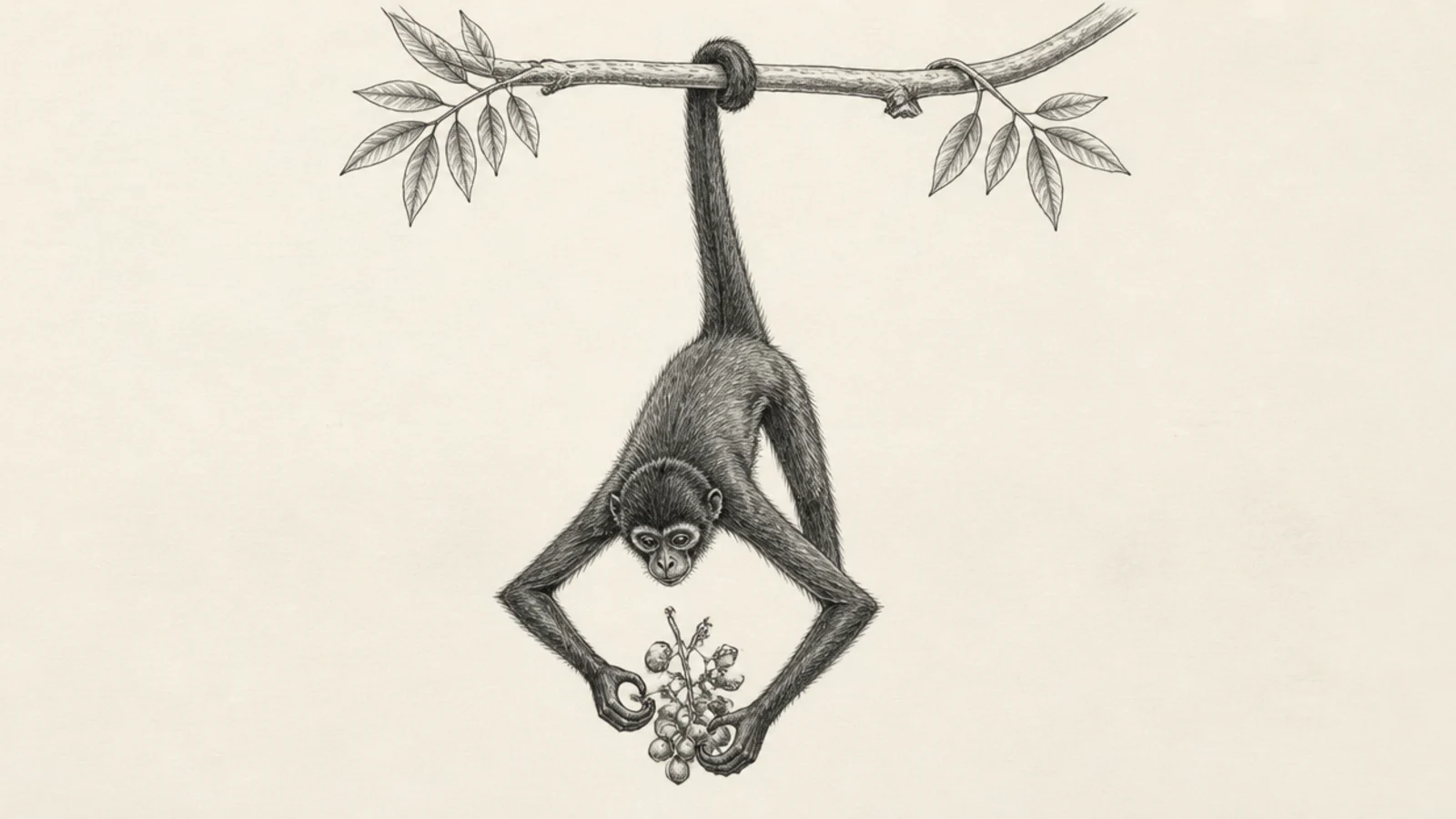
A spider monkey hanging by its tail to pluck fruit is a natural feeding pose. The free hands reaching out show its clever use of the tail. It tells a jungle story.
Step 1 hang the monkey from a branch by its tail. Step 2 reach both long arms out to a cluster of fruit. Step 3 curl the hook hands around a piece and add a focused face.
Hang by the tail so both hands are free to reach the fruit.
Don’t grip with a hand and reach with the tail; reverse it.
12 Upside-Down Feeding
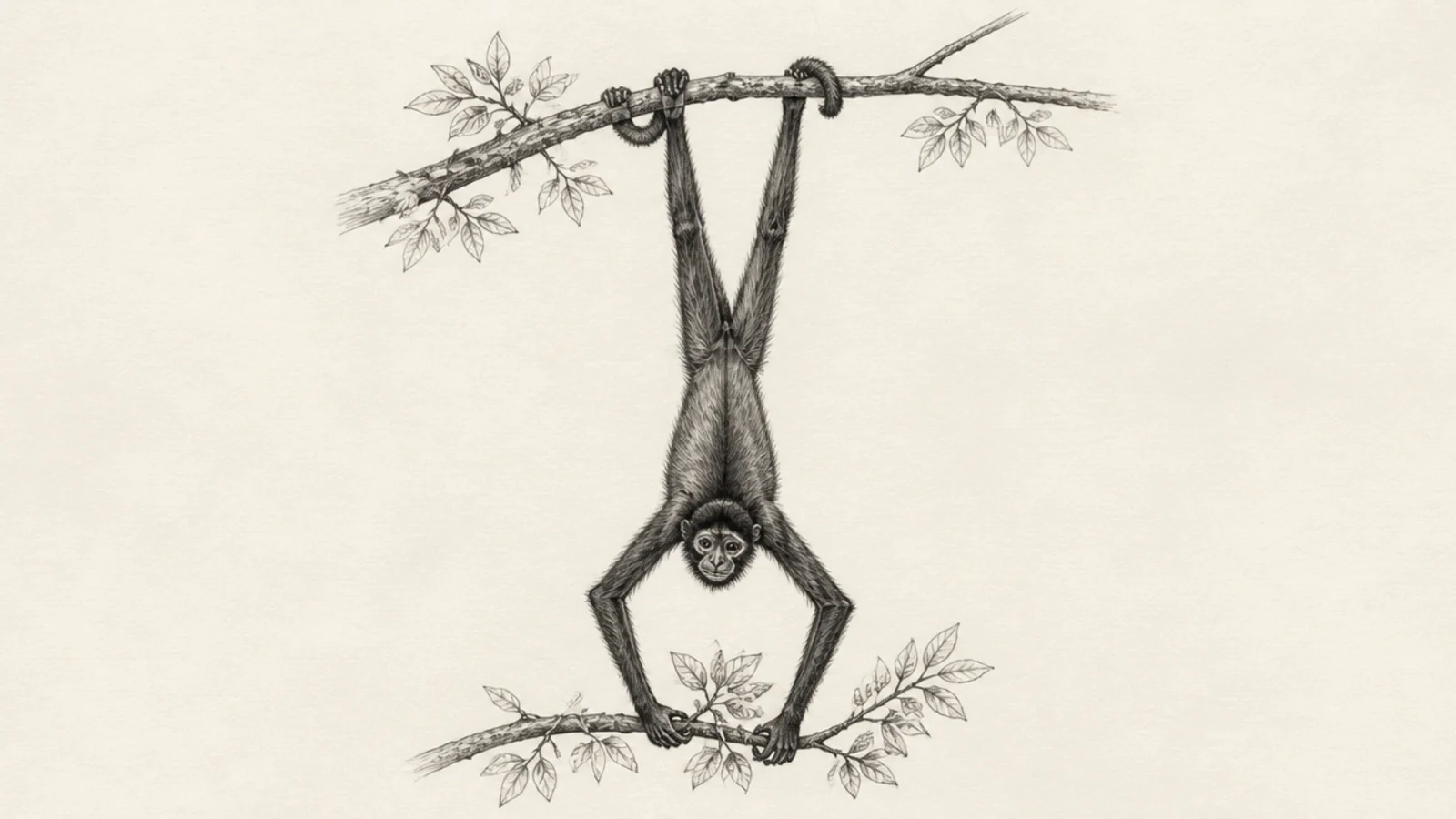
A spider monkey hanging upside down to feed is acrobatic and cool. The inverted pose shows off its flexibility. It is a dynamic study.
Step 1 grip a branch with the feet and tail. Step 2 let the body hang upside down below. Step 3 bring both hands and the head up to a lower branch to feed, flipping the face accordingly.
Grip with the feet and tail so the body can hang fully inverted.
Don’t forget to flip the face; an upright face looks wrong inverted.
13 Tail Bridge Crossing
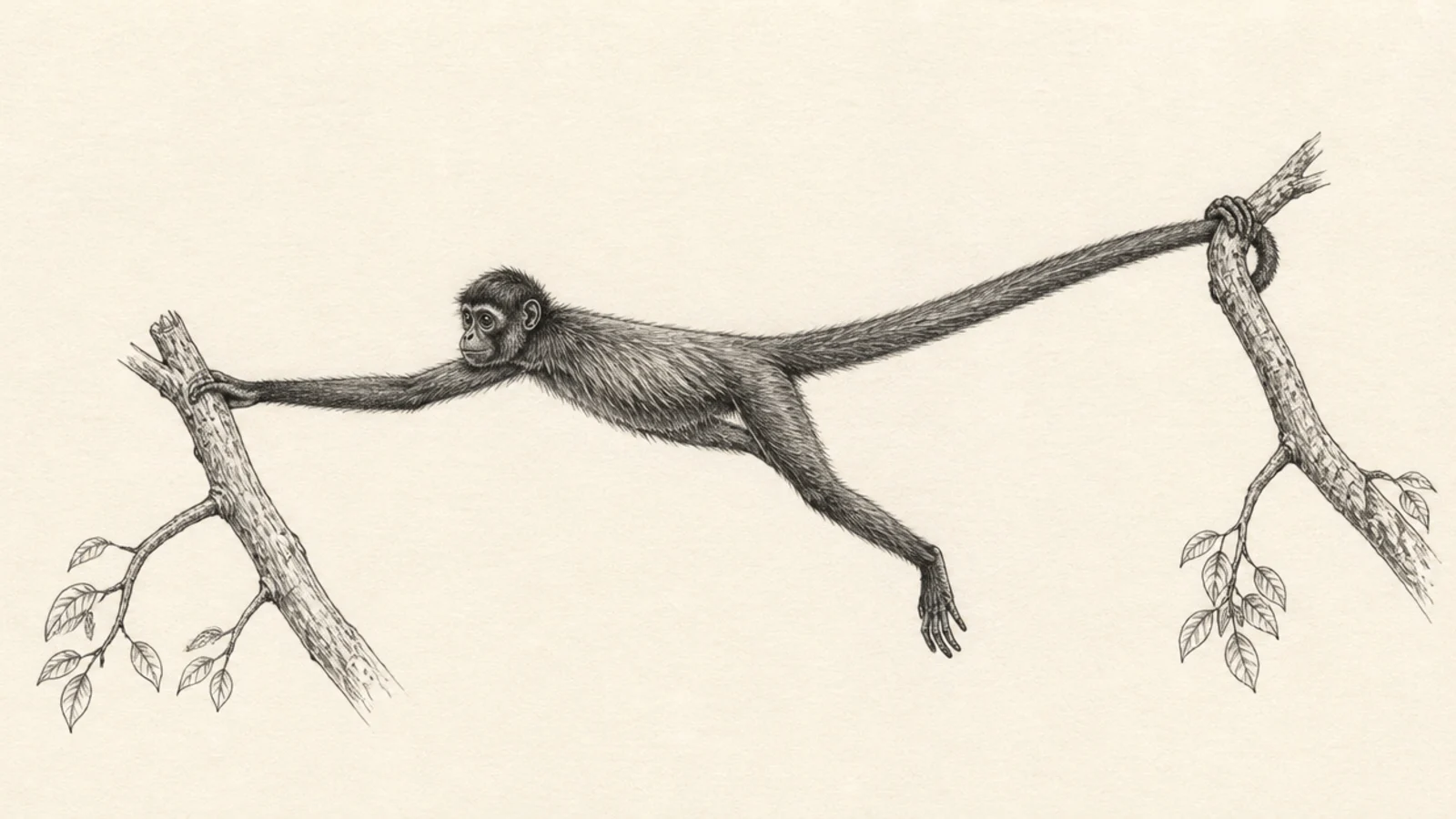
A spider monkey stretched between two branches, gripping one with hands and the other with its tail, forms a living bridge. The span shows its incredible reach. It is a striking pose.
Step 1 draw two branches with a gap between them. Step 2 grip one branch with the hands and the other with the tail. Step 3 stretch the whole body taut across the gap like a bridge.
Pro tipPull the body taut between the two grips so it reads as a bridge.
AvoidDon’t leave slack in the body; the taut stretch makes the bridge.
14 Resting Draped on a Branch
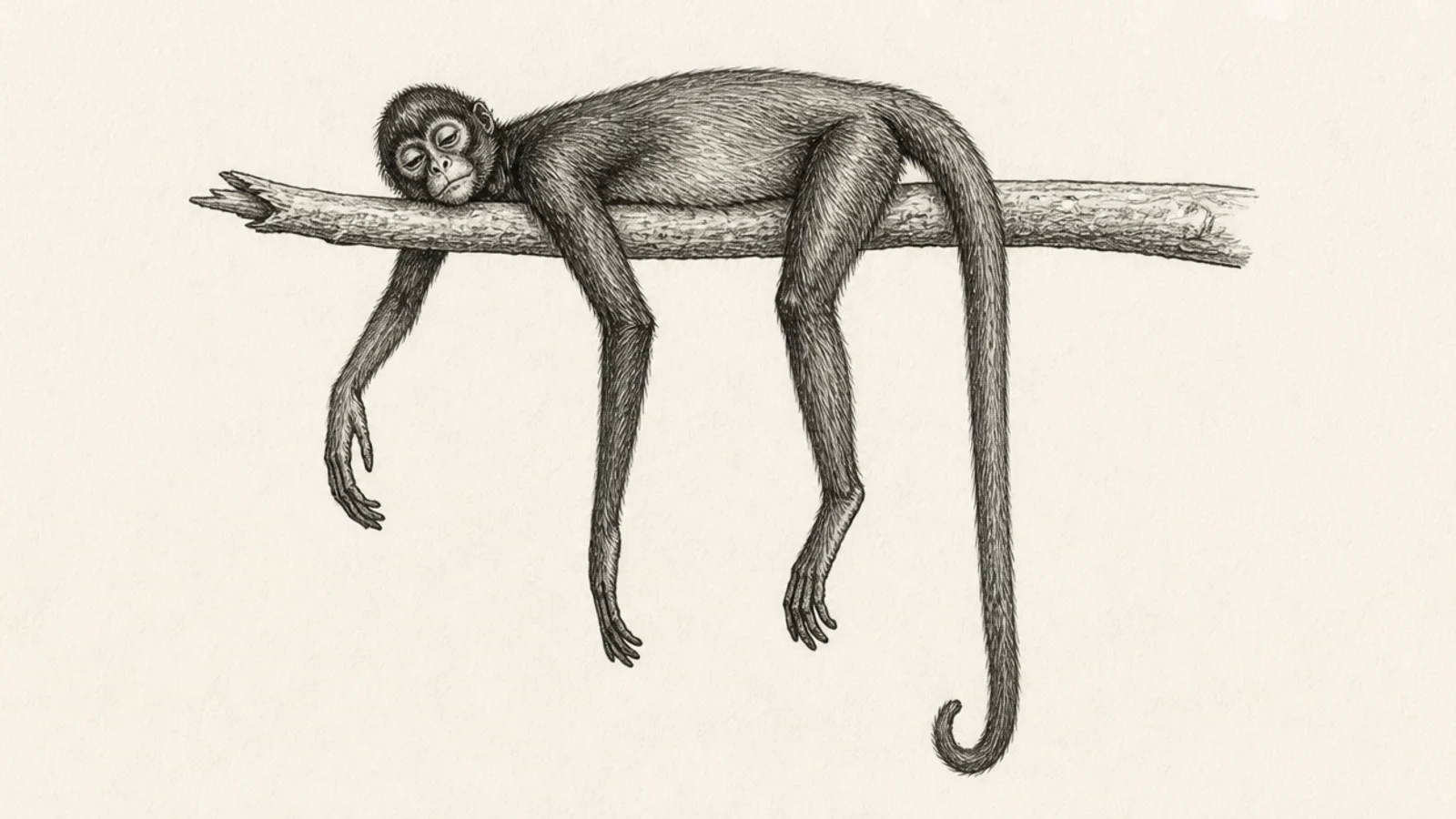
A spider monkey draped lazily over a branch, limbs dangling, is relaxed and lifelike. The loose sprawl contrasts the acrobatic poses. It is a calm study.
Step 1 draw a horizontal branch. Step 2 drape the body over it with limbs hanging down both sides. Step 3 let the long tail dangle and add a resting, half-closed face.
Let the long limbs dangle loosely on both sides of the branch.
Don’t draw it tense; the loose drape shows it resting.
15 Full-Body Proportion Study
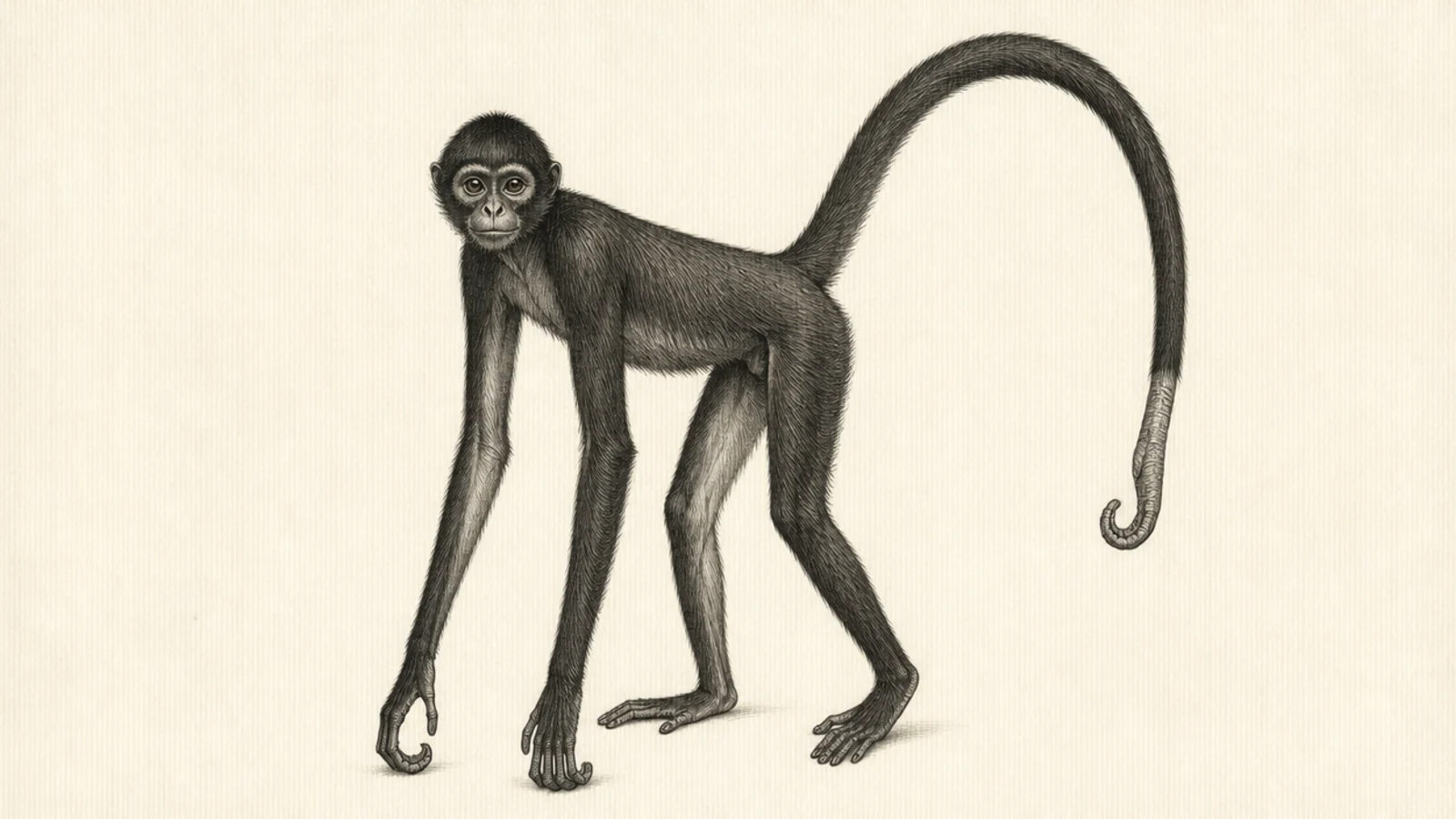
A clear full-body study showing the whole animal in proportion is the perfect closer. It ties together the length, the tail, and the small head. It is a genuinely useful reference.
Step 1 lightly block the small head, slim torso, and hip masses. Step 2 extend the long thin arms, legs, and the body-length tail. Step 3 refine the hook hands, add short dark fur, and label the proportions in your mind as you go.
Pro tipCompare the tail to the body length to keep the proportions true.
AvoidDon’t shorten the limbs for neatness; the length is the anatomy.