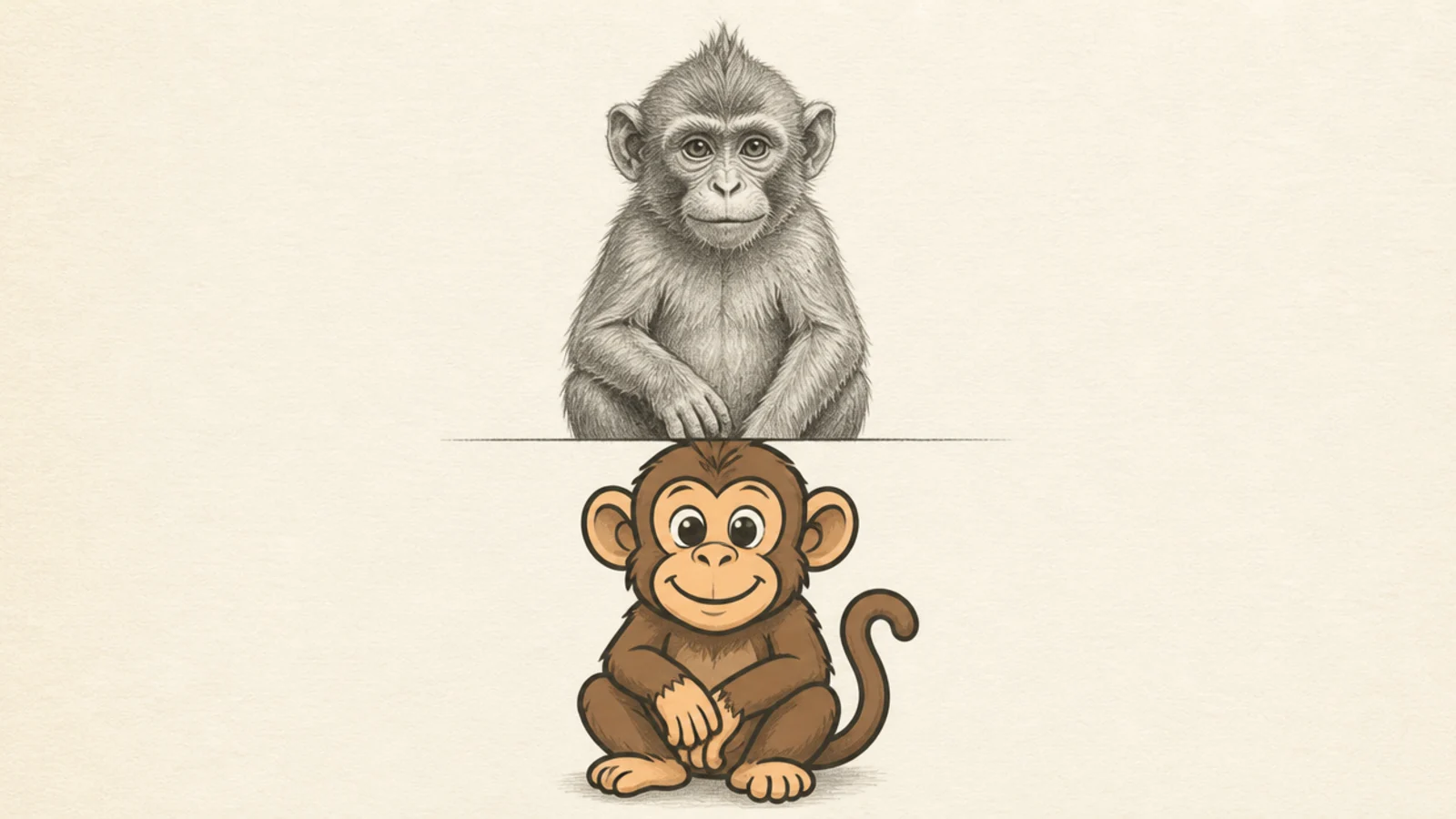
1 Detailed Face Portrait
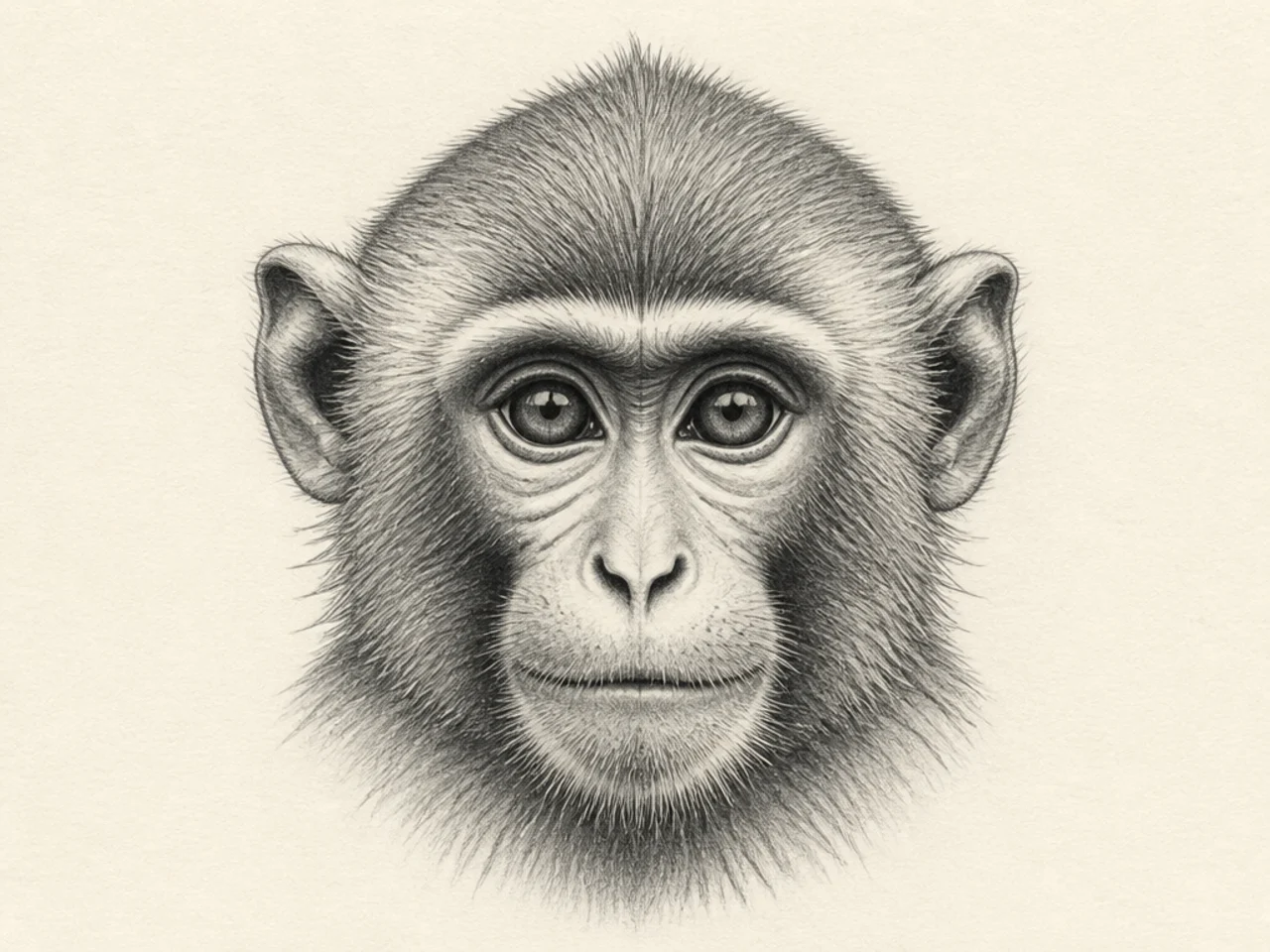
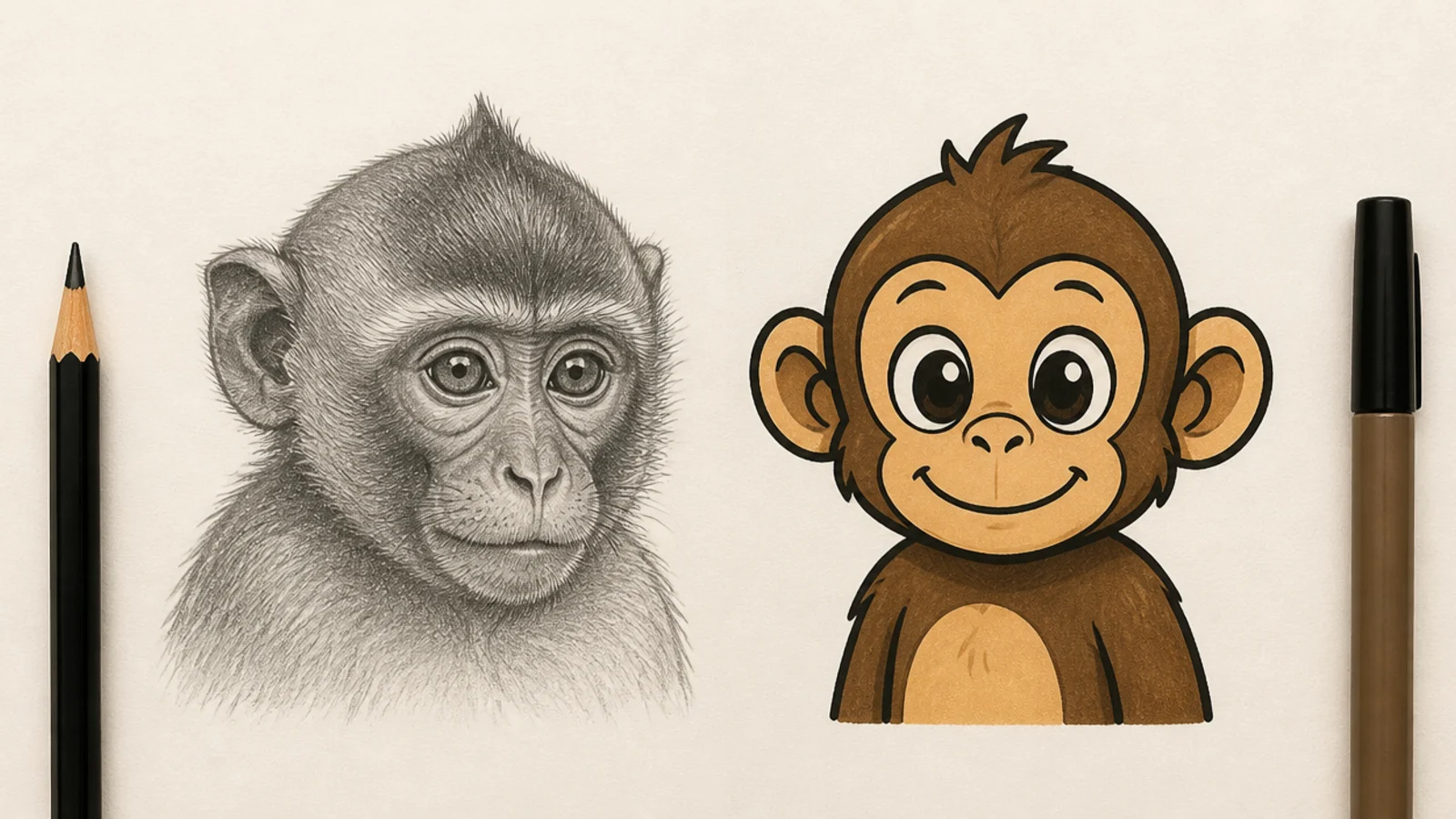
Pencil wins. Build the face light to dark, shade the planes around the brow and muzzle, and render fur with many fine directional strokes.
A close portrait where every wrinkle, whisker, and fur direction matters. This is pencil’s home turf — value and detail describe the face.
AvoidDon’t outline hard; let soft value shape the face.
Pro tipLayer value gradually and save the darkest darks for the eyes.
2 Big-Grin Character
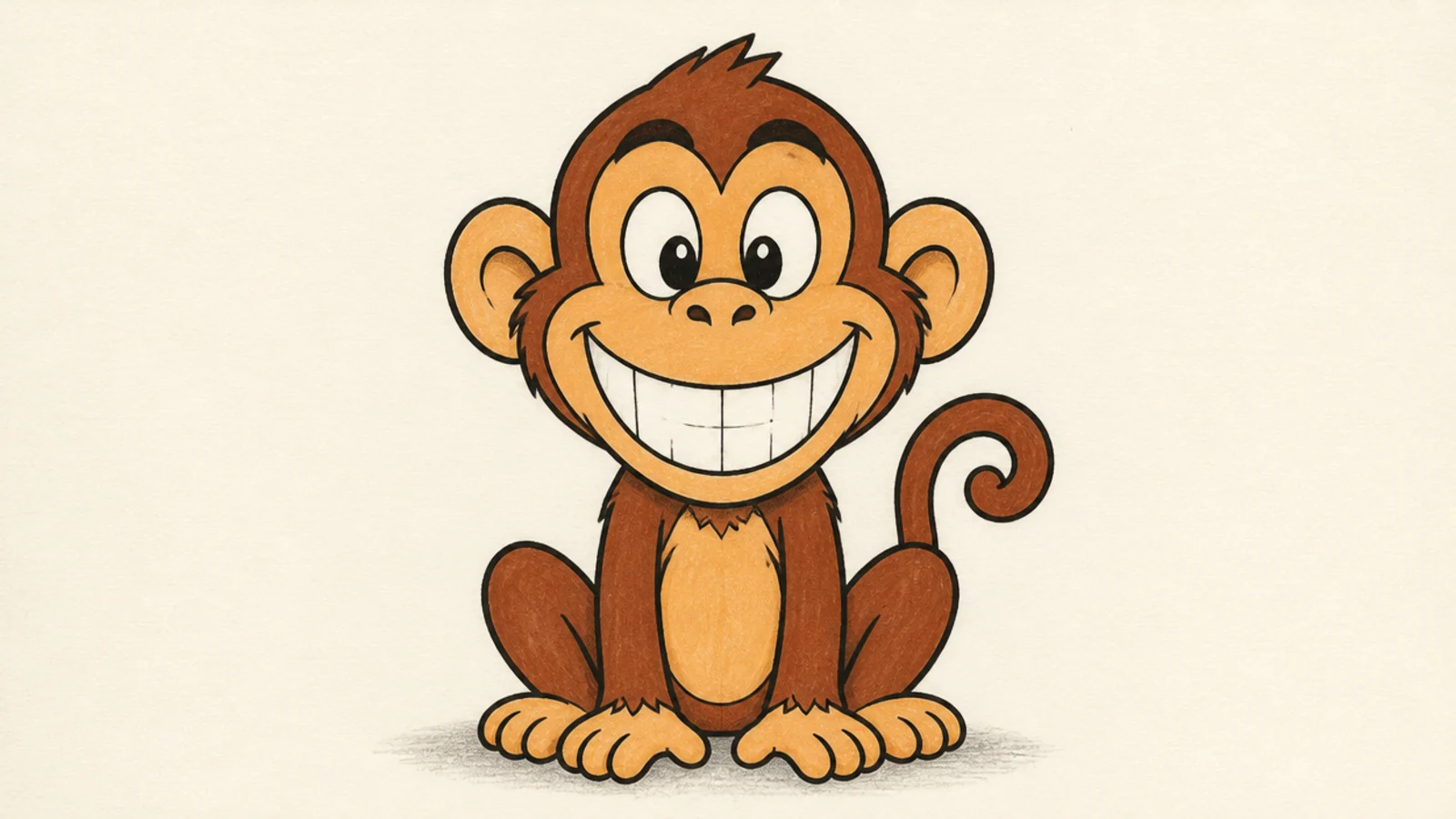
Cartoon wins. Draw simple bold shapes, blow up the grin, and finish with a thick even outline and flat color.
A character whose whole point is a huge, joyful grin. Cartoon style wins for the bold, exaggerated expression.
AvoidDon’t add shading; flat bold shapes carry the cartoon.
Pro tipExaggerate the grin far past realistic for cartoon impact.
3 Fur Texture Study
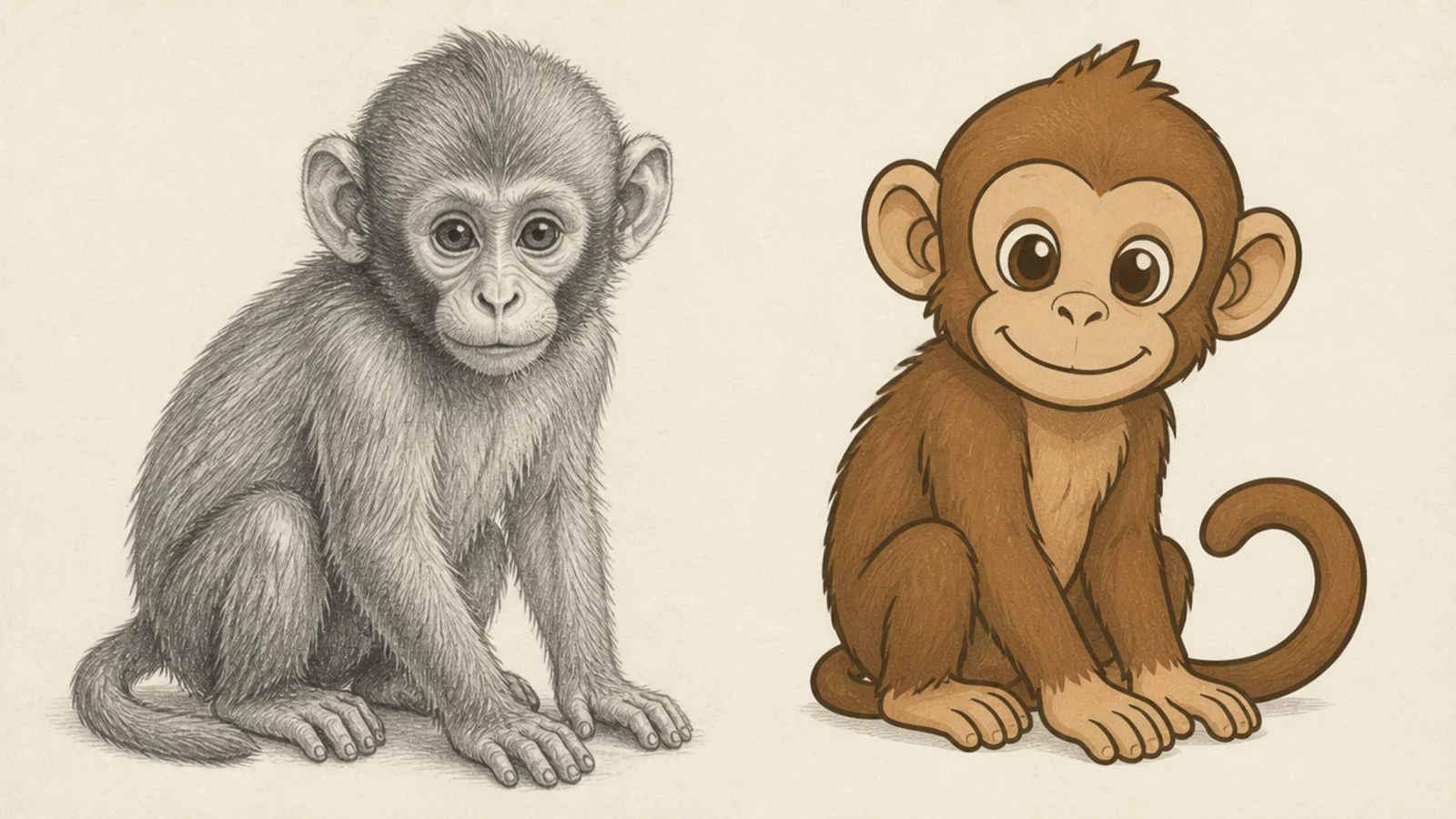
A study all about convincing fur — direction, layering, and highlights. Pencil wins for the fine textural control.
Pencil wins. Stroke fur in its growth direction, layer light over dark, and lift highlights with an eraser for sheen.
Follow the fur’s growth direction and vary the stroke length.
Don’t draw uniform strokes; real fur clumps and varies.
4 Simple Mascot Monkey
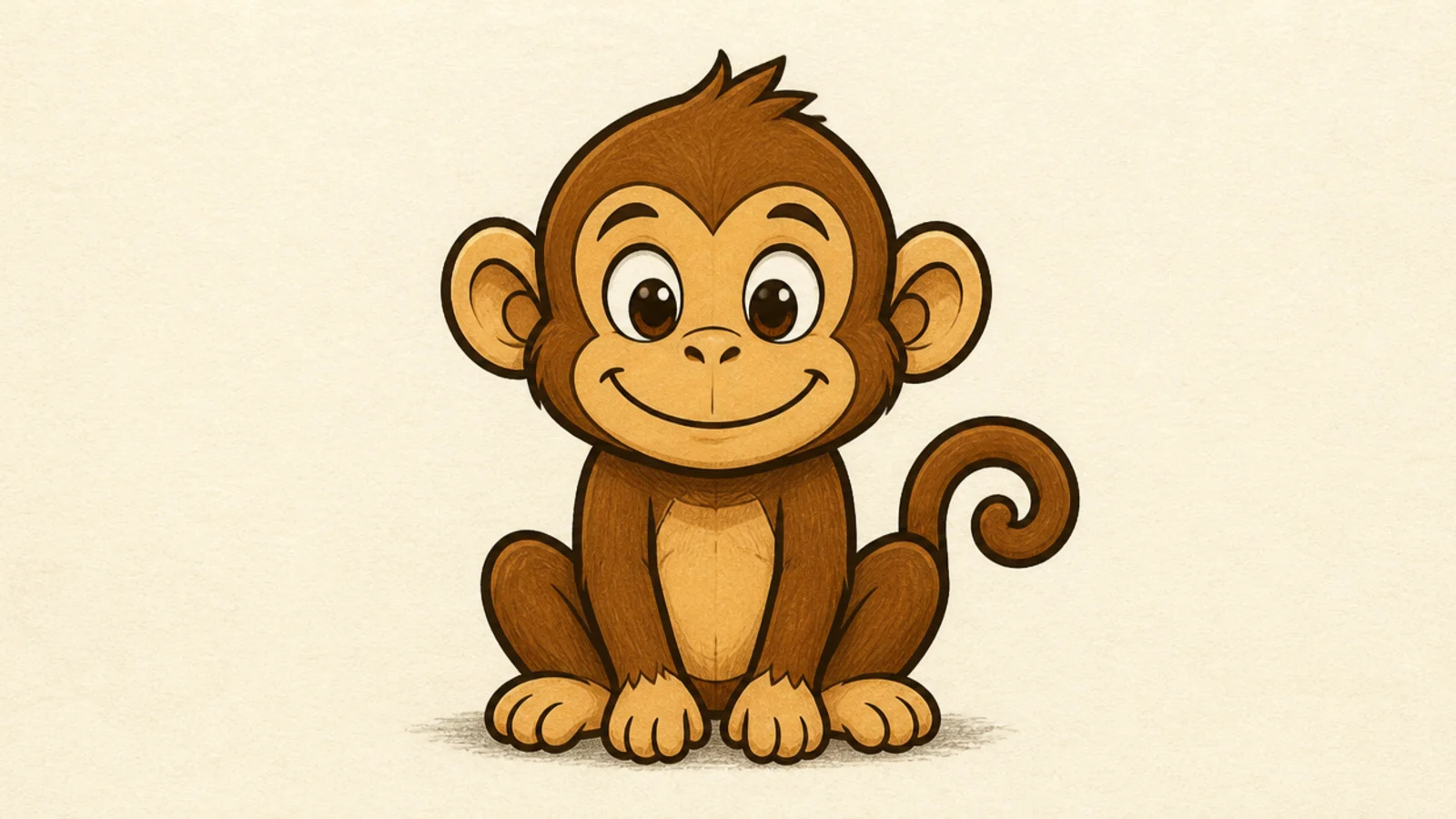
Cartoon wins. Reduce the monkey to a few clean shapes and a strong silhouette, then ink a bold consistent outline.
A clean, friendly mascot meant to be instantly recognizable. Cartoon style wins for the bold, simple, repeatable design.
AvoidDon’t add fine detail; a mascot needs simple shapes.
Pro tipKeep the silhouette strong so the mascot reads at a glance.
5 Realistic Hanging Monkey
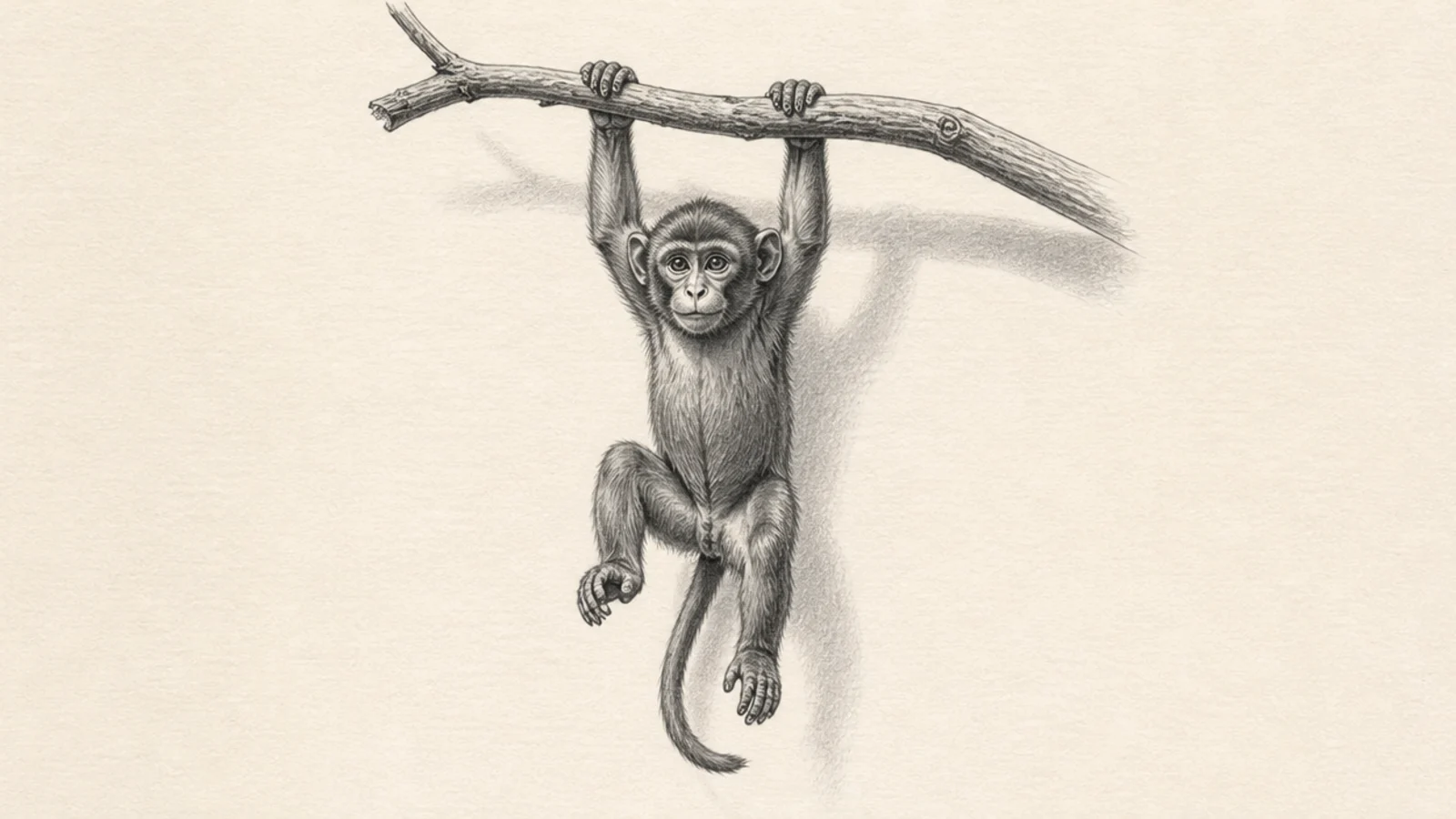
A lifelike monkey hanging from a branch with real weight and anatomy. Pencil wins for the believable form and shadow.
Pencil wins. Study the real proportions, shade the underside in shadow, and render the branch texture and cast shadow for weight.
Shade the shadowed underside darker to give the body weight.
Don’t flatten the form; value gives it real volume.
6 Expressive Surprised Monkey
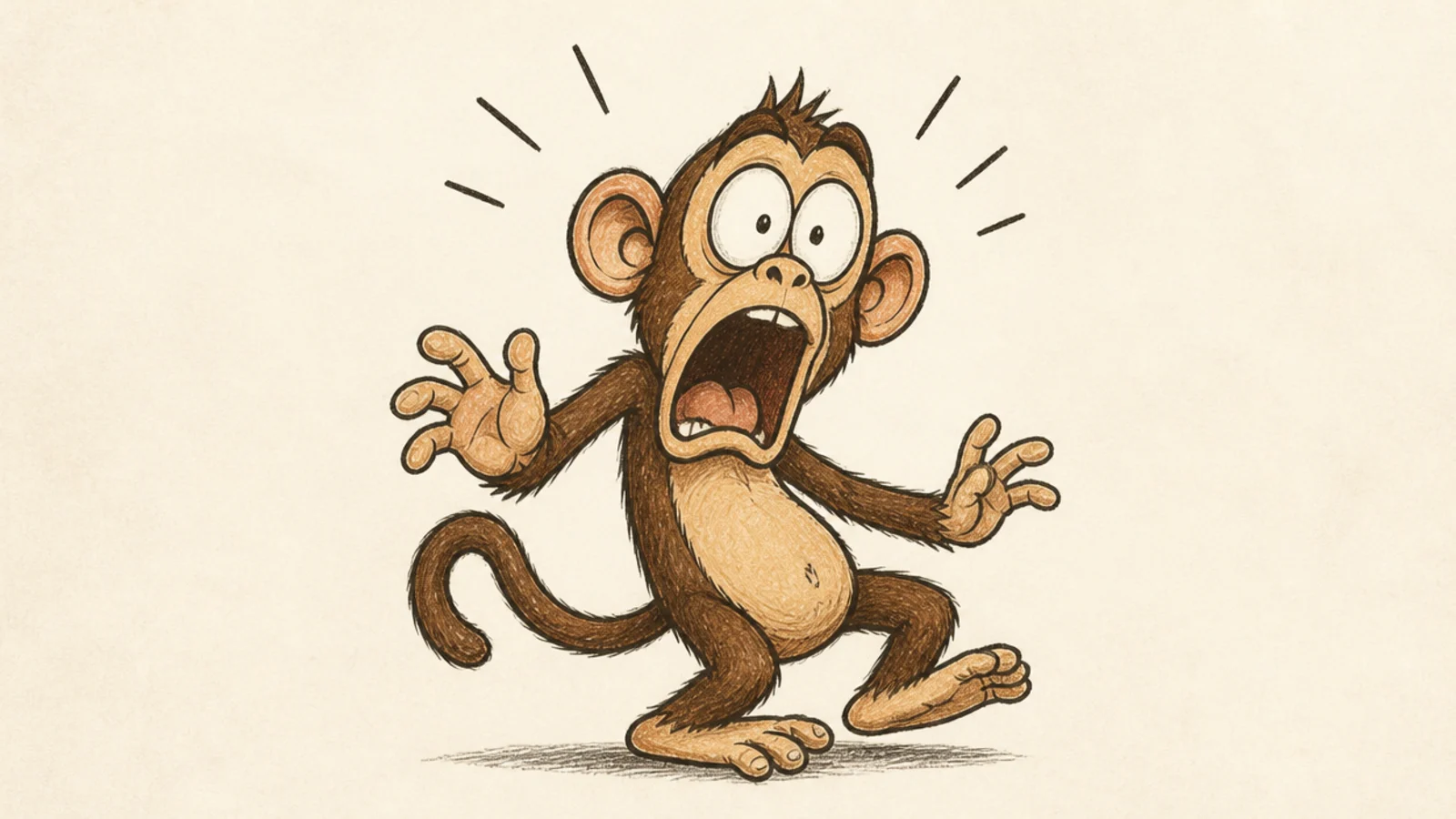
A monkey caught in a huge, wide-eyed reaction. Cartoon style wins for pushing the expression over the top.
Cartoon wins. Bug the eyes, drop the jaw, add surprise lines and a recoiling body, all in bold flat shapes.
Push the eyes and mouth far bigger than life for the reaction.
Don’t restrain it; cartoon expression thrives on exaggeration.
7 Value-Shaded Monkey
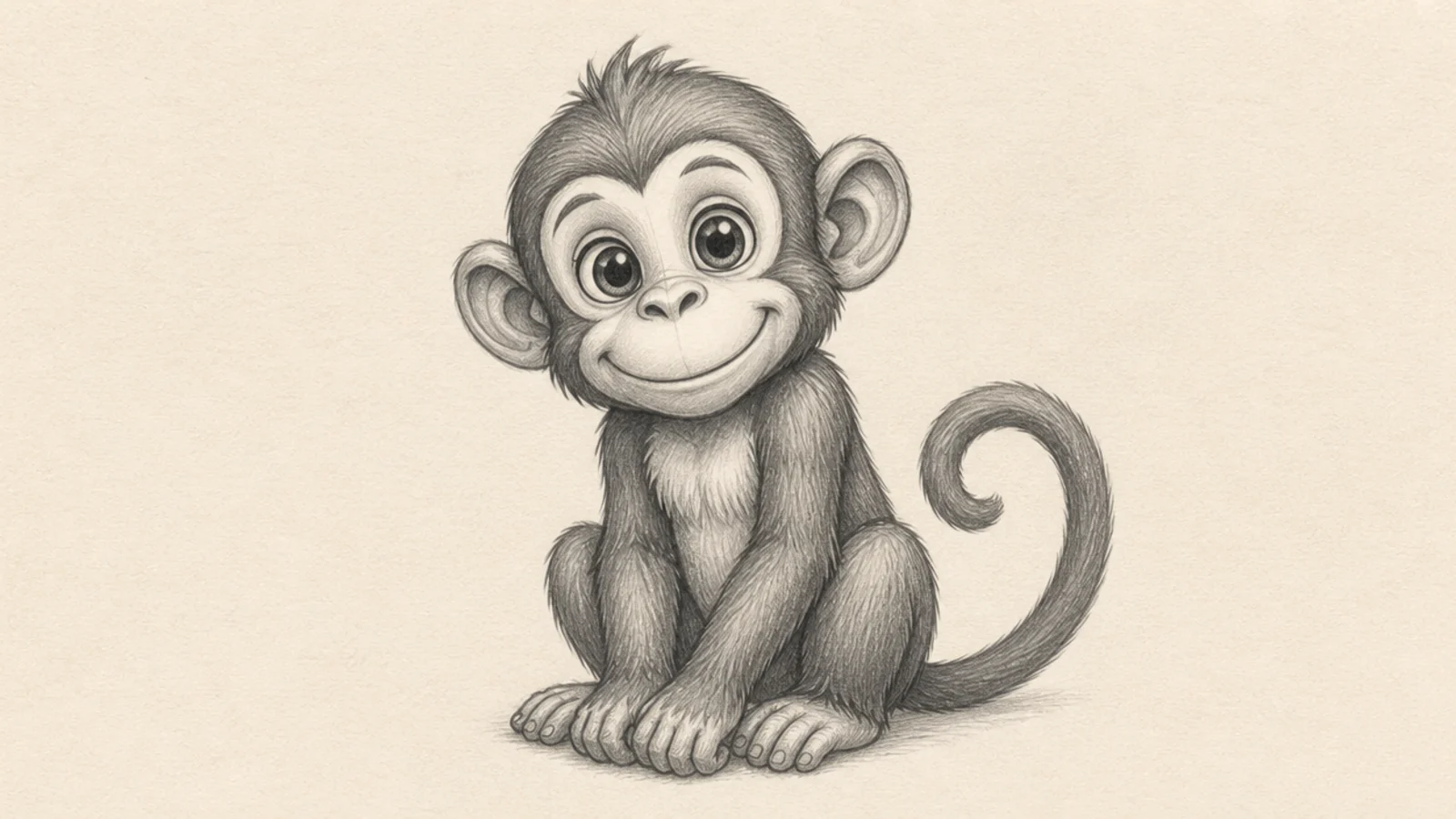
Pencil wins. Map the light direction, blend a smooth value gradient over the form, and keep a full range from white to near-black.
A monkey built entirely from smooth value, from bright highlight to deep shadow. Pencil wins for the full tonal range.
AvoidDon’t stay in mid-greys; use the whole value range.
Pro tipCommit to one light direction so the values stay consistent.
8 Bold-Outline Sticker Monkey
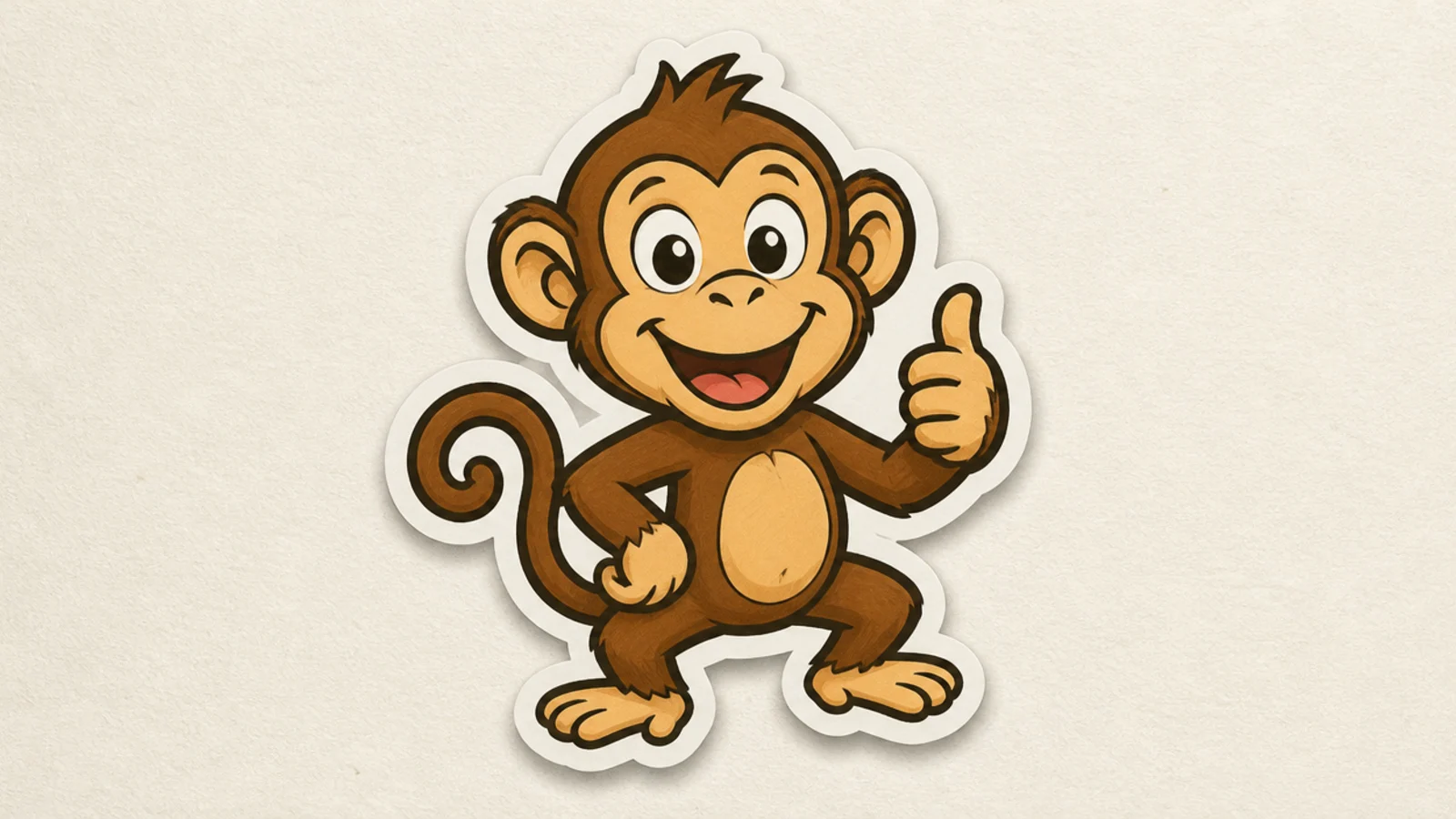
Cartoon wins. Draw a bold even outline, fill with flat color, and add a thick white border and drop shadow for the sticker look.
A monkey designed to become a sticker — bold, flat, and clean. Cartoon style wins for the strong outline and simple color.
AvoidDon’t add shading; flat color suits a sticker.
Pro tipKeep the outline thick and even so it holds up small.
9 Wildlife Scene Monkey
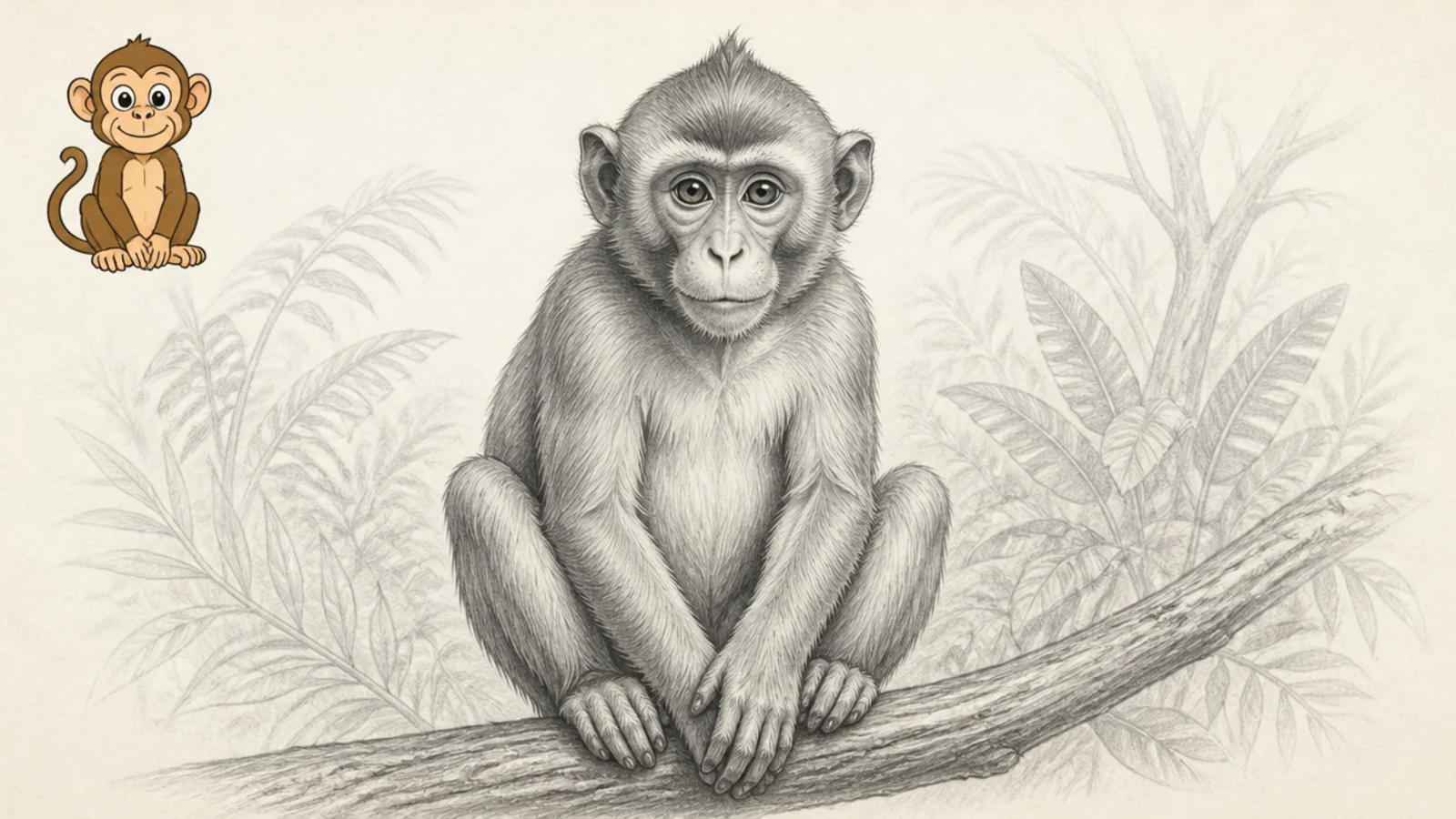
A monkey set in a believable jungle with foliage and depth. Pencil wins for the atmospheric detail and tonal depth.
Pencil wins. Render the monkey sharp in front and fade the background foliage lighter and softer for depth.
Keep the foreground crisp and let the background go soft and pale.
Don’t render everything equally sharp; depth needs falloff.
10 Quick Doodle Monkey
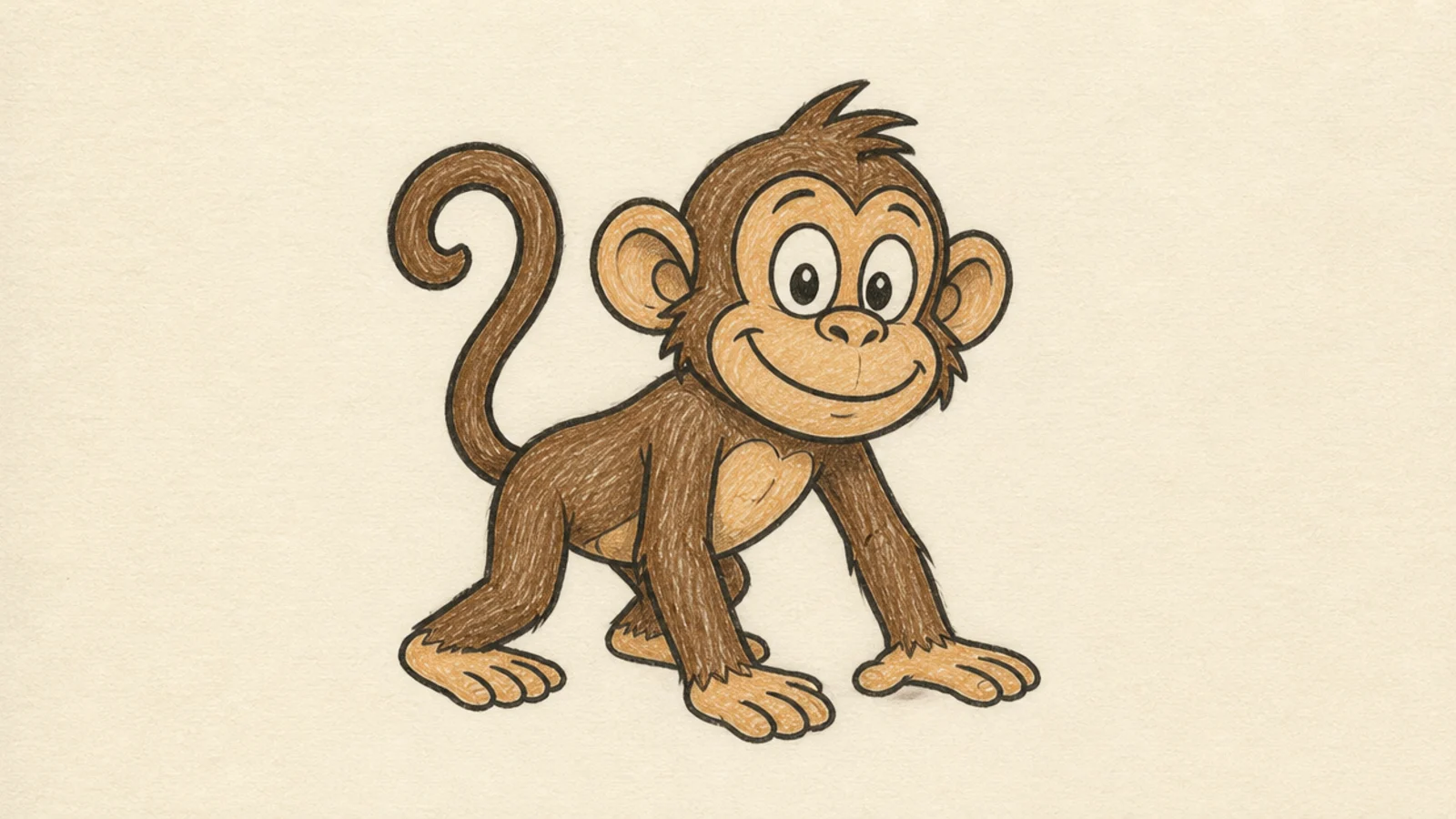
Cartoon wins. Draw the whole monkey in a few confident loops and a bold outline, no value at all.
A fast, fun monkey dashed off in seconds. Cartoon style wins for speed and immediacy — no shading, just draw.
AvoidDon’t fuss over detail; a doodle stays quick.
Pro tipDraw it fast and loose; the speed is the charm.
11 Close-Up Eye Detail
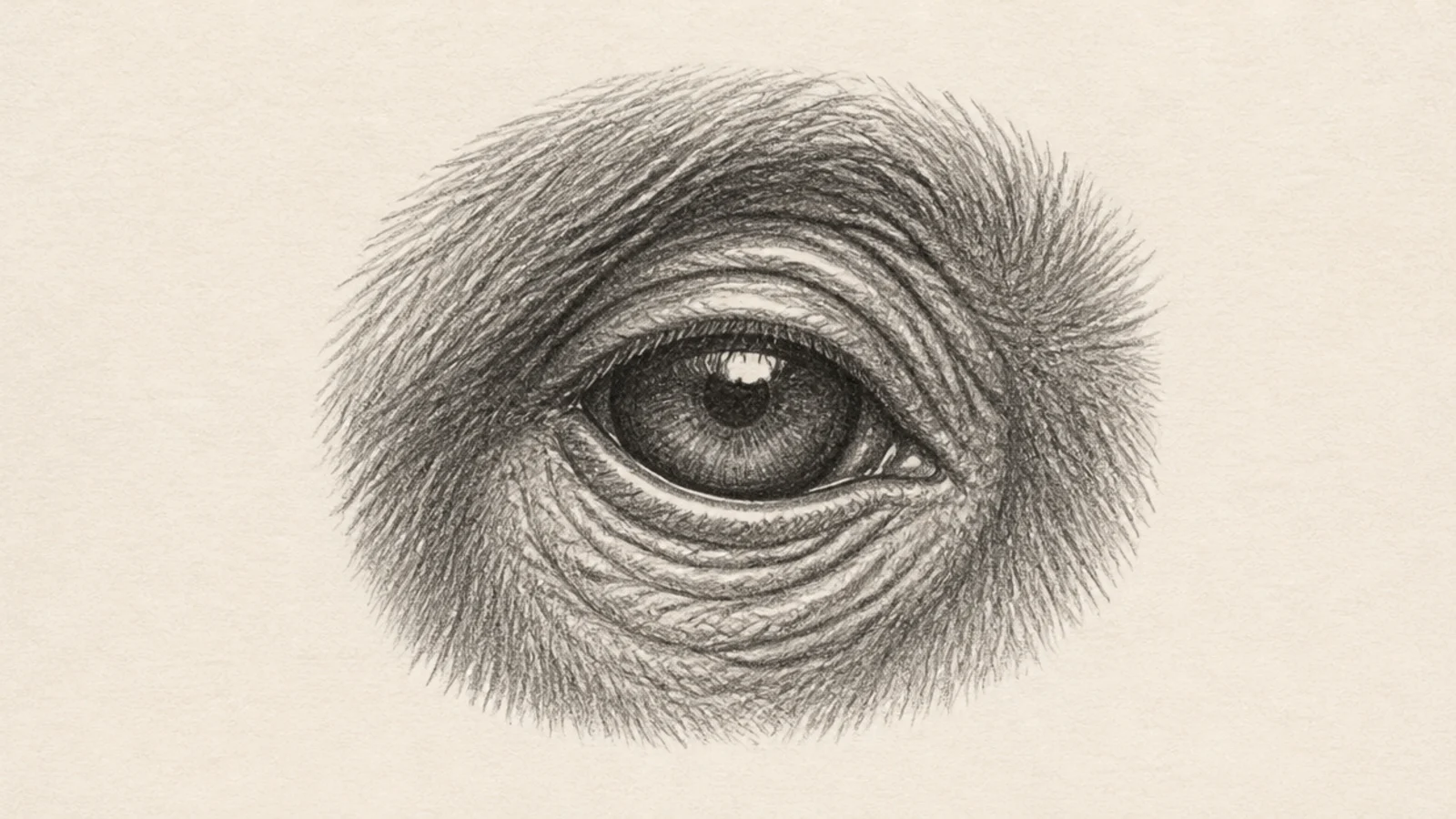
Pencil wins. Render the dark iris, leave a bright reflected highlight, and shade the soft folds of skin around the eye.
An extreme close-up of the eye with reflection, moisture, and fine lashes. Pencil wins for the delicate detail and shine.
AvoidDon’t shade over the highlight; the white spot is the shine.
Pro tipLeave the catchlight white and unshaded so the eye looks wet.
12 Action Swing Monkey
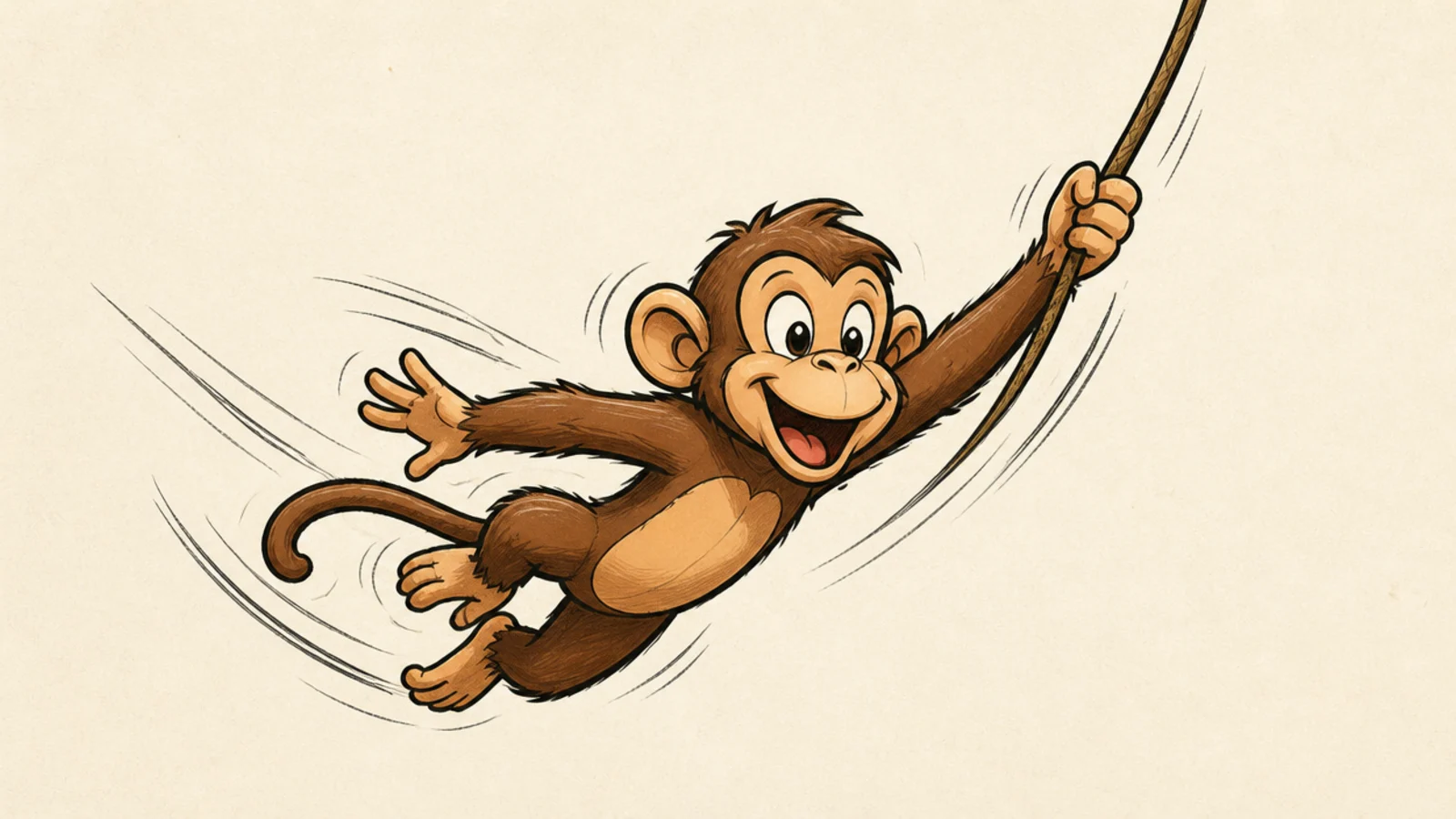
A monkey mid-swing bursting with motion and energy. Cartoon style wins for the dynamic pose and motion effects.
Cartoon wins. Use a strong line of action, stretch the pose, and add motion lines and speed streaks for energy.
Exaggerate the swing arc and add motion lines for speed.
Don’t stiffen the pose; the stretch creates the action.
13 Realistic Baby Monkey
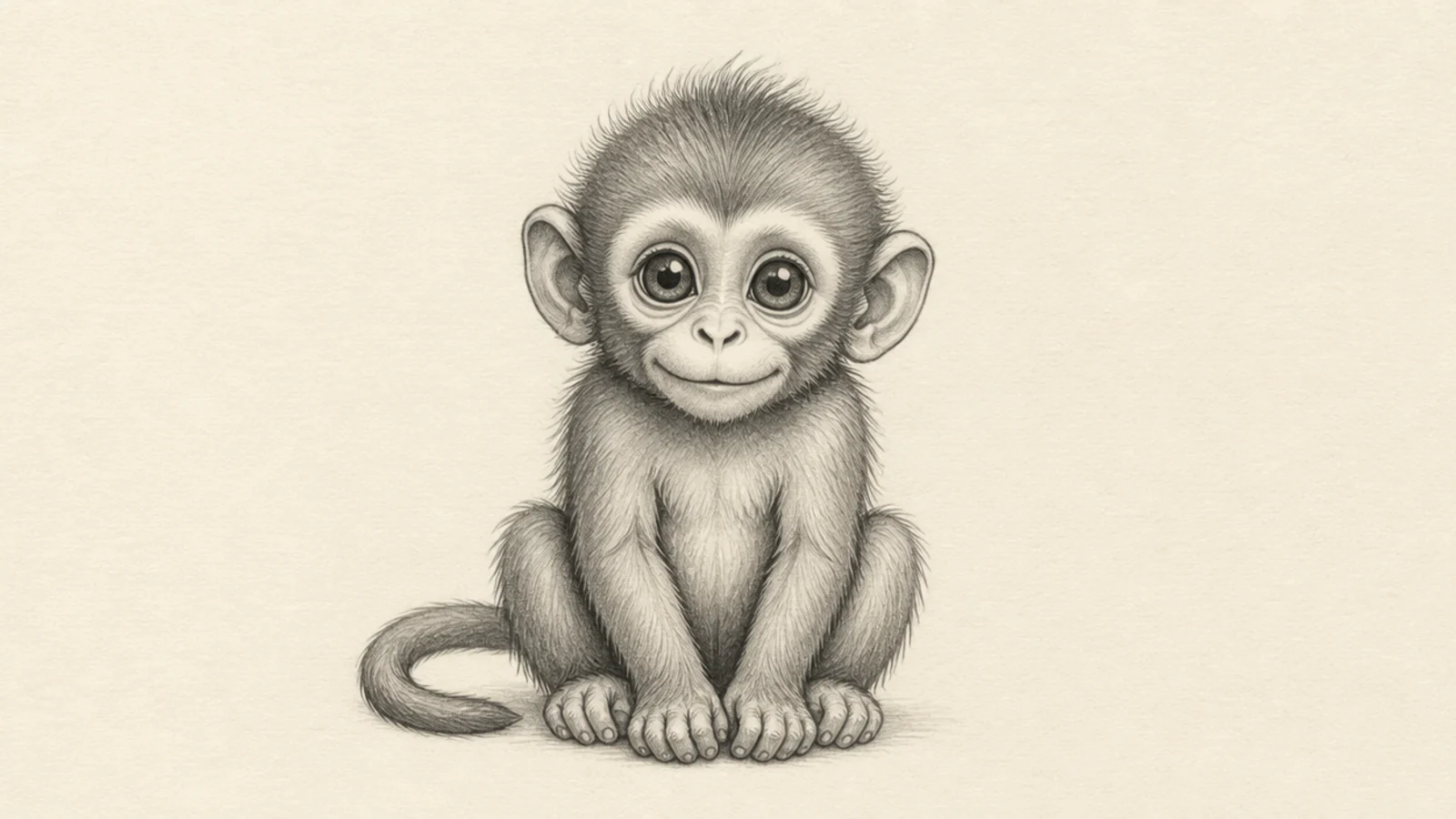
A tender baby monkey with soft downy fur and big eyes. Pencil wins for the gentle, subtle rendering.
Pencil wins. Keep the shading soft and low-contrast, render wispy downy fur, and detail the large glossy eyes carefully.
Keep the contrast soft and the fur wispy for a downy baby look.
Don’t use harsh dark lines; babies read best soft.
14 Logo-Style Monkey
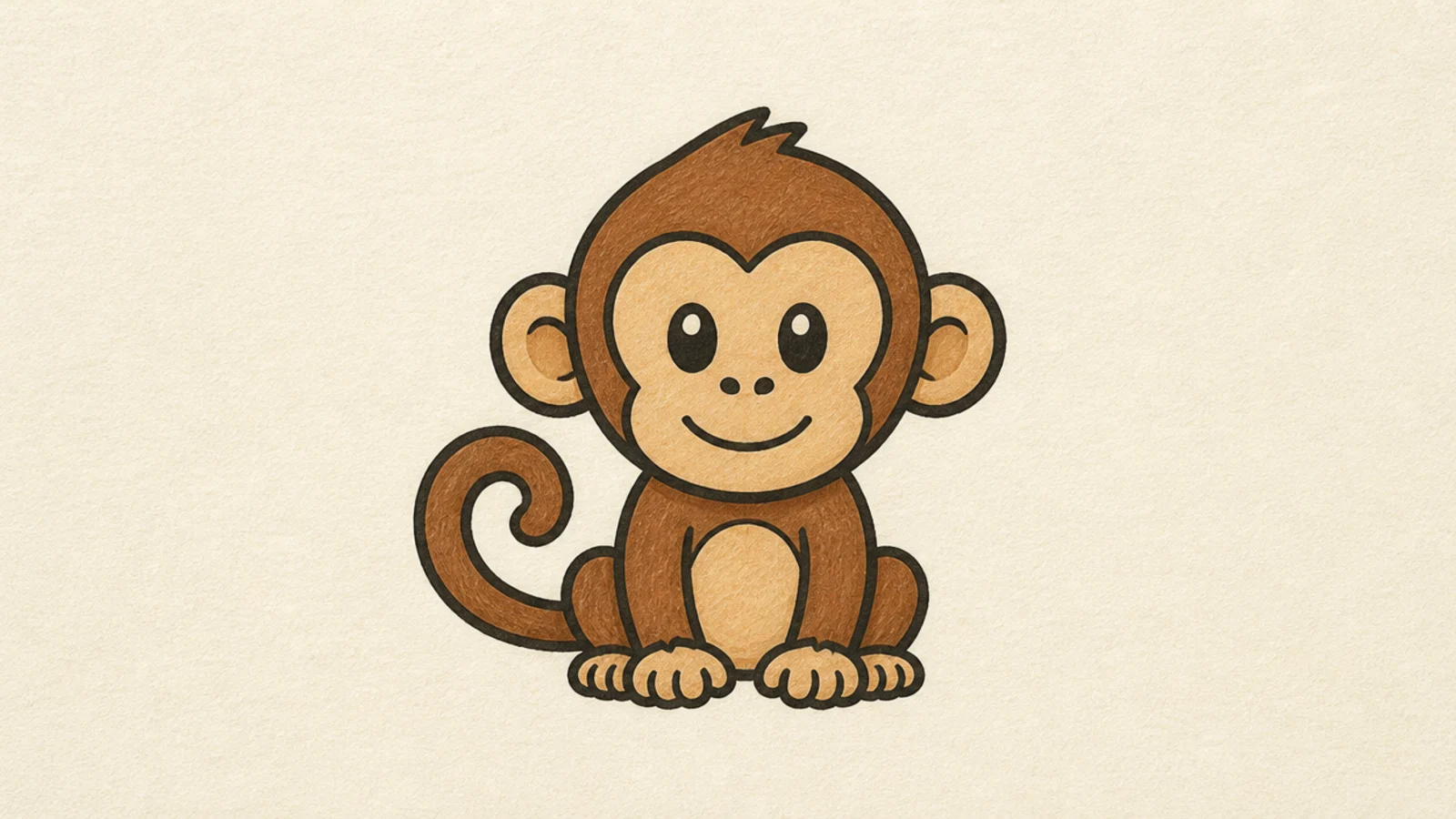
A monkey reduced to a clean, memorable logo mark. Cartoon style wins for the bold, minimal, scalable shape.
Cartoon wins. Simplify to the fewest bold shapes that still read as a monkey and keep the outline crisp and even.
Strip it to the fewest shapes that still read as a monkey.
Don’t add detail or shading; a logo must stay minimal.
15 Mixed-Style Monkey
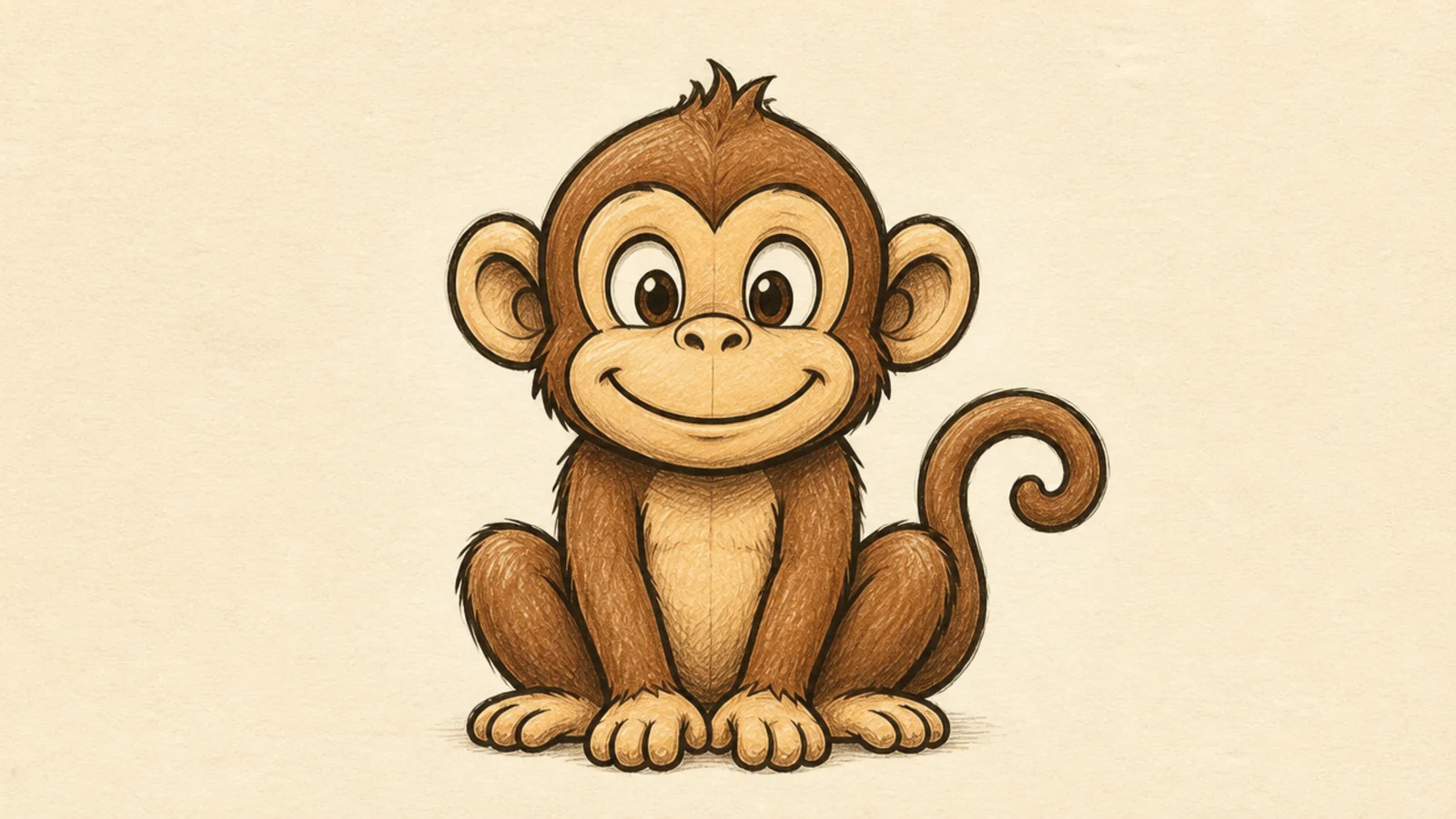
Both win together. Ink a clean cartoon outline for clear shapes, then add light pencil shading and a few fur strokes for depth and warmth.
The best of both — a bold cartoon outline warmed with soft pencil shading. This blend beats either style alone for many monkeys.
AvoidDon’t over-shade the cartoon; a light touch keeps it clean.
Pro tipKeep the outline bold and the shading light so both styles show.