
1. Single-S-Curve Cartoon Snake
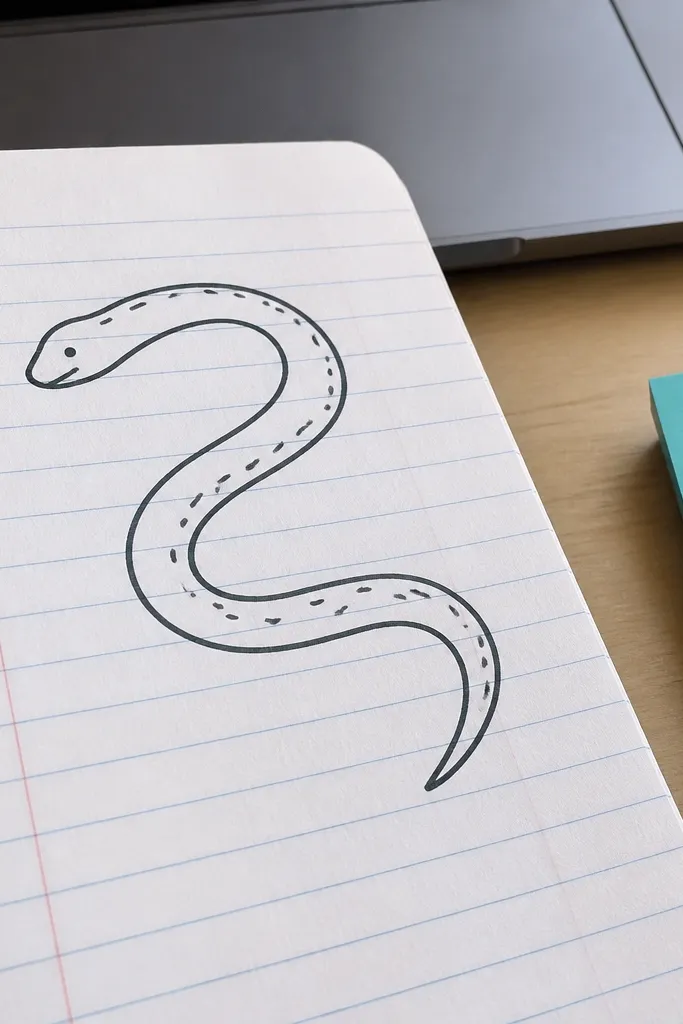
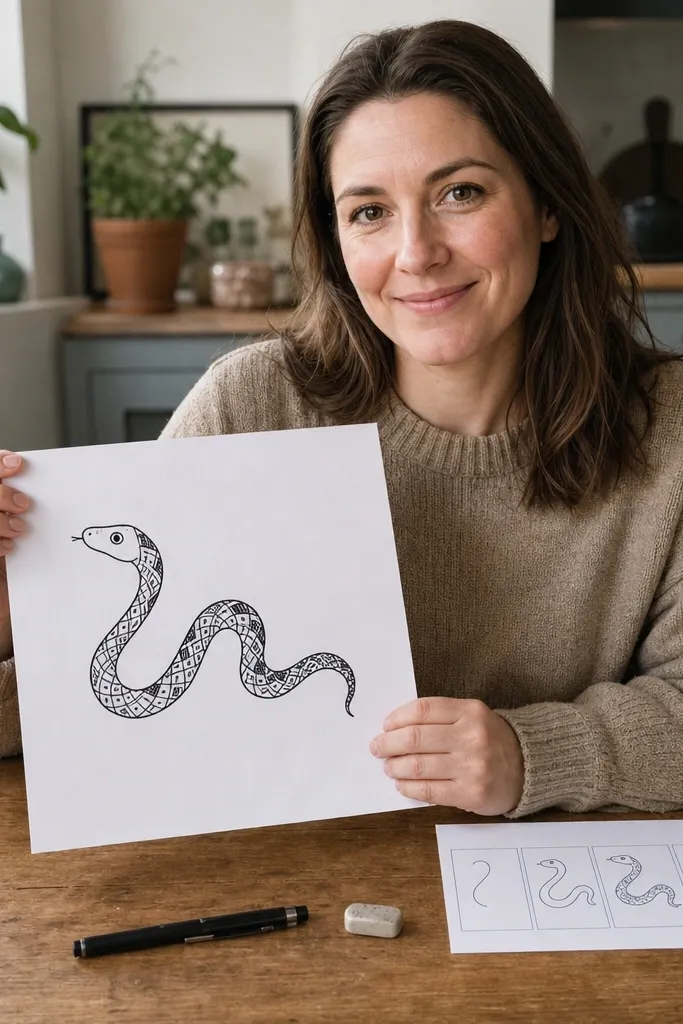
This is the fastest structure because you’re drawing one big curve instead of wrestling with anatomy. The snake looks “real enough” for a doodle even if you keep scales minimal. Use thick outline lines so the silhouette reads instantly, then add a few scale dots to imply texture. This one is great for notebook margins, quick stickers, and kids' crafts since it stays clean even with shaky lines. Plan for about 5-8 minutes.
Start with a rounded wedge head on the left and draw a single S-curve through the page. Then taper the right end into a thin tail and add two small nostril dots. Finally, place a simple row of scale dots across the top half of the body, repeating the same size and spacing.
Pro tipKeep the scales to the top half only — it makes the snake look finished without slowing you down.
AvoidDon’t add scale texture on every inch of the body; that’s where quick projects turn into long ones.
2. Comma-Scale Belly Snake
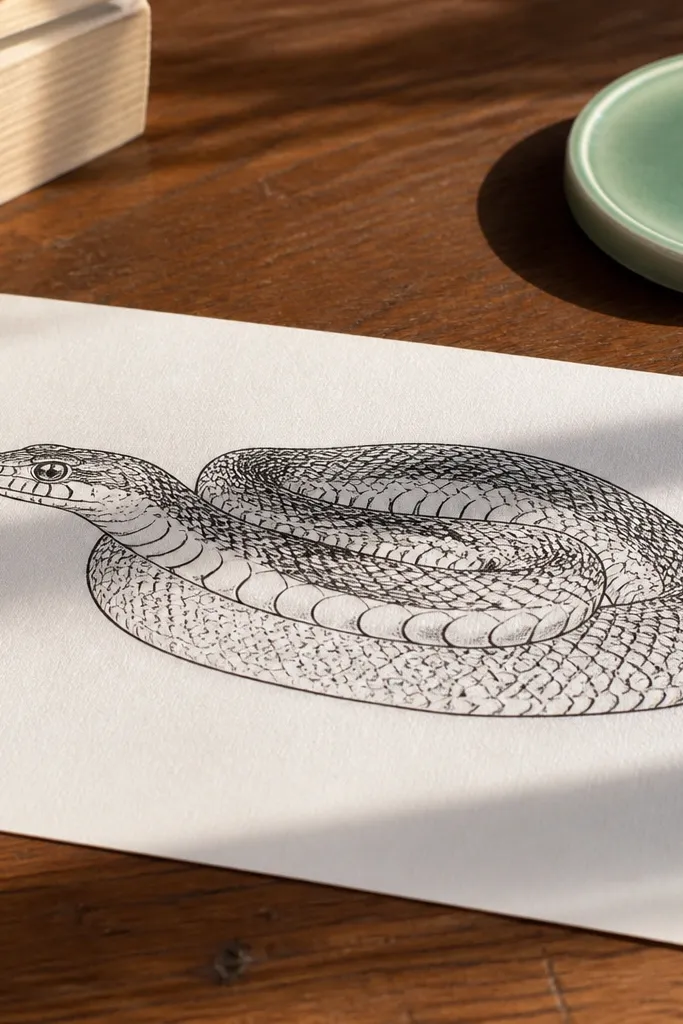
Comma-shaped scales look good because each mark has direction, and your eye reads the curve naturally. You get texture fast because you repeat one shape. The belly pattern also gives the drawing a “clean and intentional” look without shading every segment. This works especially well for a side-view snake that’s curled or leaning. Budget 10-12 minutes for a tidy version.
Draw a side-view S-curve snake and give the head a small eye and a short mouth line. Then add comma shapes (a little curved teardrop) in rows along the belly side, making each comma point toward the tail. Finish by thickening the outline and adding one darker line near the belly to separate the pattern from the body.
Pro tipMake the comma shapes slightly smaller as they approach the tail to sell the taper.
AvoidAvoid random scale sizes; if every comma is different, the pattern stops looking like a plan.
3. Triangular Head + Zigzag Ribs
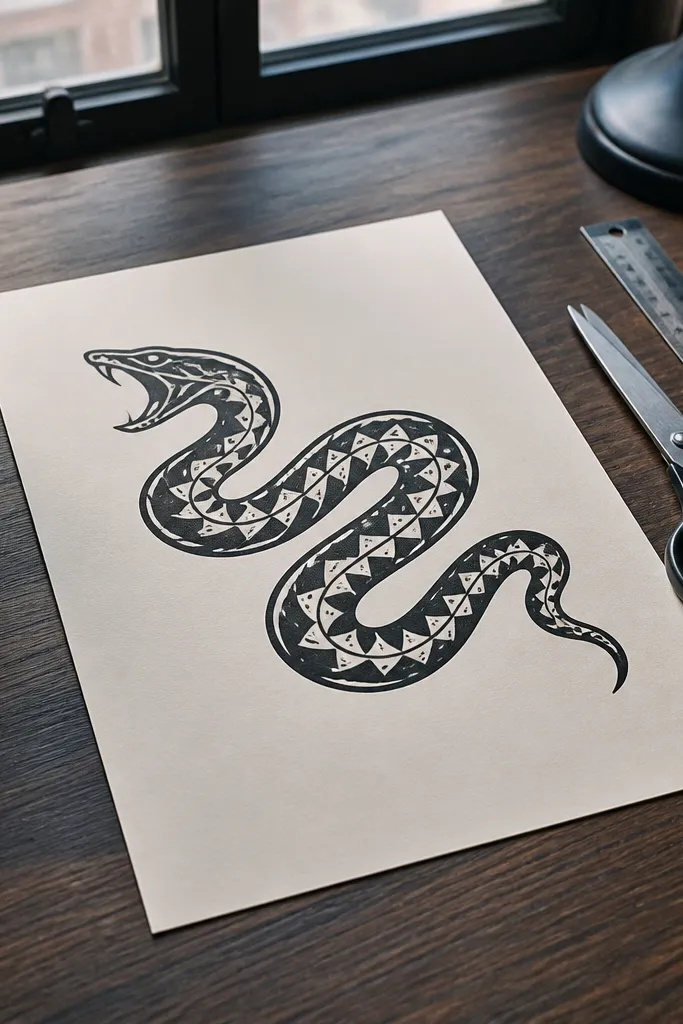
This idea gives you a graphic, slightly edgy snake that still reads fast. The triangular head is simple, and the zigzag ribs add structure quickly. You don’t need to draw individual scales; you’re drawing a repeating rib pattern that implies them. It’s a good choice if you want a bold illustration for a card or poster without spending time on fine detail. Time needed: 8-10 minutes.
Sketch a triangular head and connect it to a smooth curve for the body. Then draw zigzag lines across the body like stacked Vs, keeping them spaced evenly. Add one extra outline line near the belly so the zigzags look attached to the form.
Use a ruler-edge under your hand to keep the zigzag spacing consistent across the curve.
Don’t cram the zigzags too close together; thick lines plus tight spacing turn into a dark blob.
4. Dot Scales with One Dark Band
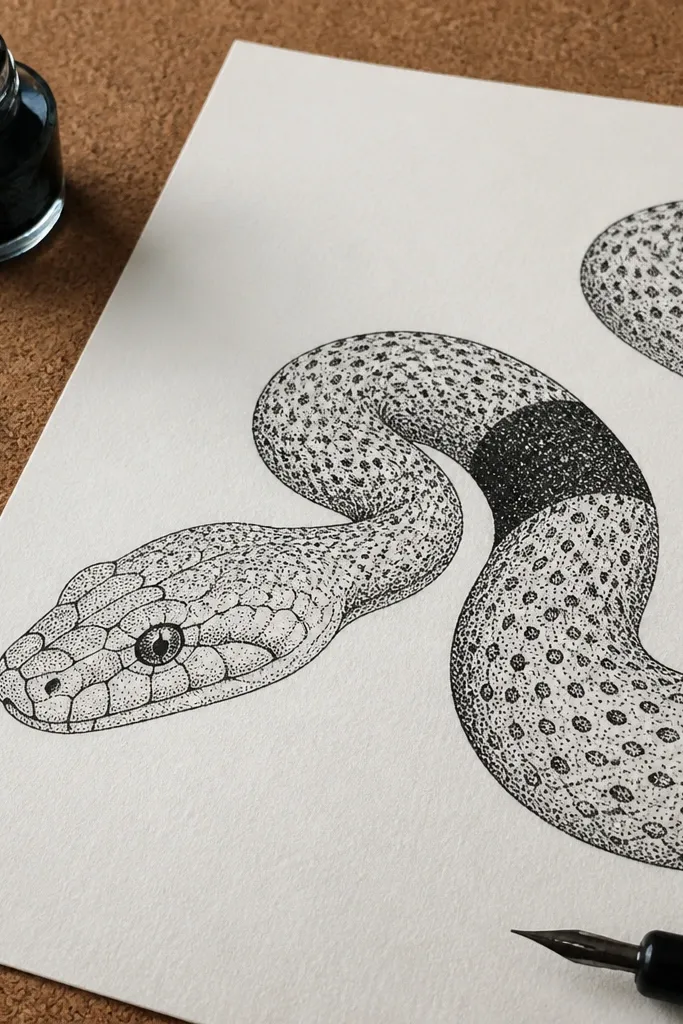
Dot scales are the definition of quick because they’re repetitive and forgiving. The secret is adding one bold stripe band so the snake has contrast even before you shade. Your drawing will look “designed” rather than unfinished. This is a great option for a first attempt because you can keep everything simple and still get a strong result. Plan on 10-15 minutes.
Draw the snake outline with a thick fineliner and keep the body curve smooth. Add a dark band across the middle third of the body using a marker or thicker pen. Then place small dot scales around the band edge, leaving clear gaps so the dots don’t merge into a texture wall.
Pro tipMake the stripe slightly wavy — perfectly straight stripes make the snake look stiff.
AvoidAvoid shading the entire body; the stripe + dots give you enough depth for a quick drawing.
5. Circle-Scale Coil Snake
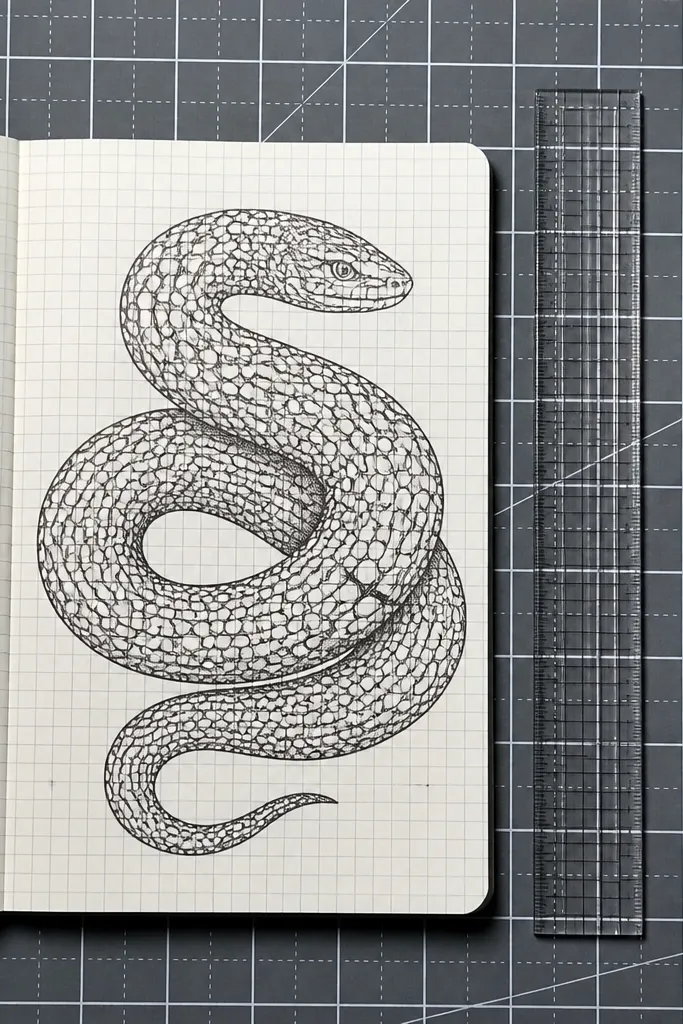
A coiled snake is easier because the body curve repeats naturally in a tight loop. Circle scales make the texture look crisp without needing careful scale edges. If you keep your circles in neat rows, the drawing reads clean even if you’re not a confident artist. This is perfect for a 15-minute doodle page or a small emblem. Time: 12-18 minutes.
Draw a tight coil shape with two or three overlapping arcs and a rounded head peeking out. Then fill the exposed body with small circles arranged in rows that follow the coil. Finally, add a few darker outline passes where loops overlap to show depth.
Pro tipUse a pen with a consistent tip and lightly press at first so the circles stay the same size.
AvoidDon’t outline every circle — just place circles and let the outline of the snake do the heavy lifting.
6. Watercolor-Wash Snake with Ink Outline
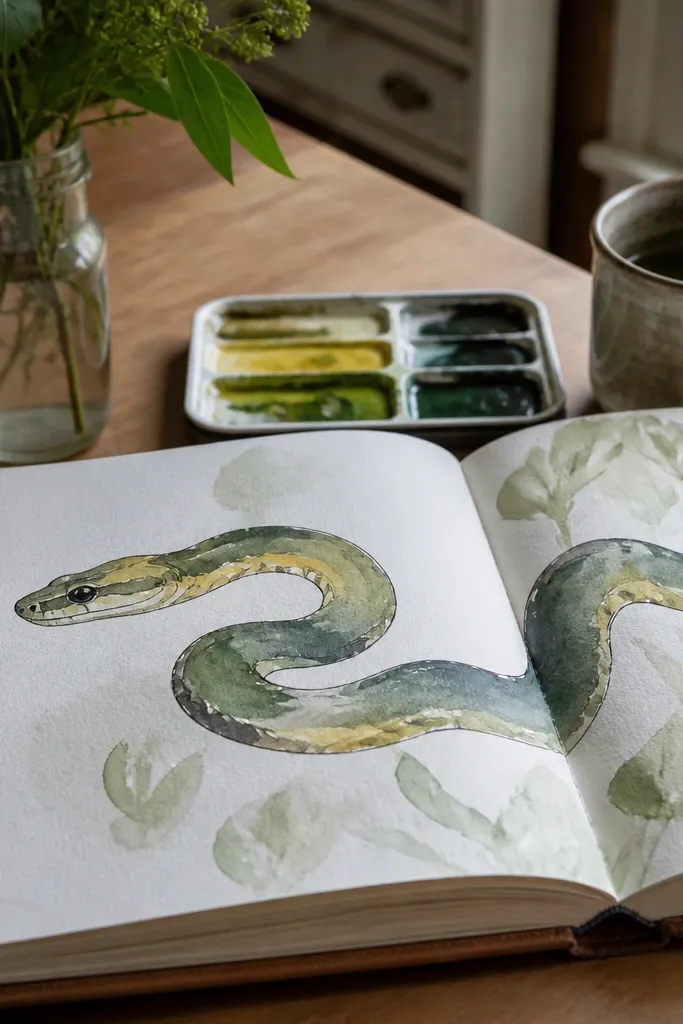
This is the fastest way to get color without drawing tons of detail. The ink outline gives structure, and a loose wash suggests scales by tone changes. You’re not painting each scale; you’re painting the body shape and letting the wash texture do the work. Great for cards and quick art journaling. Budget 15-20 minutes including drying time.
Ink the snake outline first with a fineliner. Then wet the body lightly with clean water and apply a thin watercolor wash in one direction so it stays controlled. Add a second lighter wash along the belly and let it blend, then finish with a few dot scales near the head.
Pro tipUse two paint tones only: one for top body and one for belly. More colors slow you down and blur the snake shape.
AvoidDon’t keep going over wet areas; repeated strokes make muddy edges.
7. Pencil Shaded Snake with Highlight Gaps
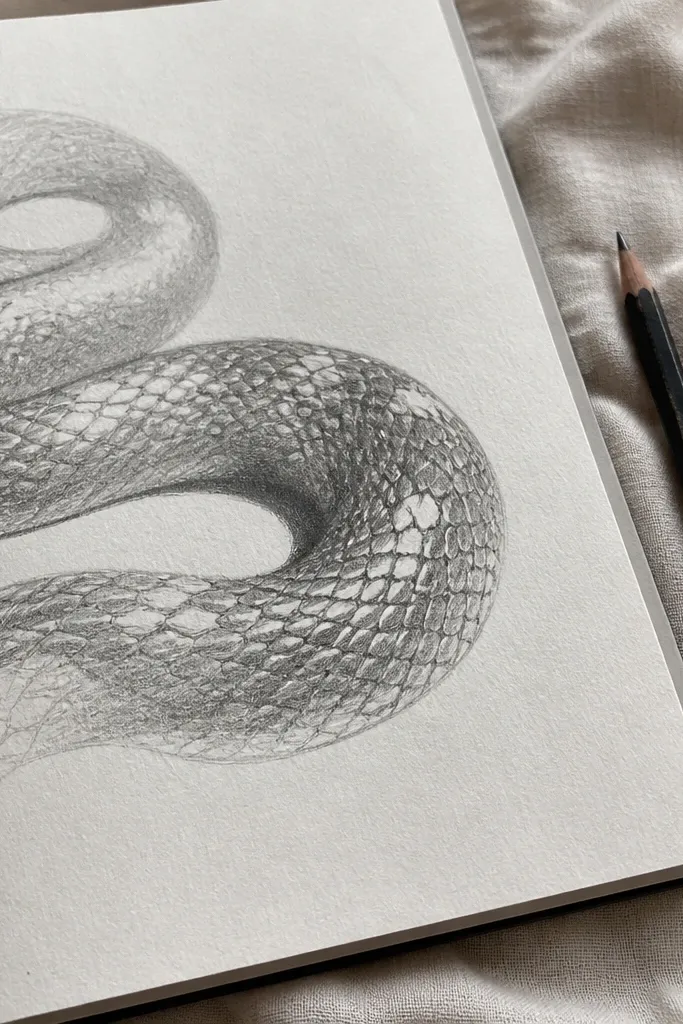
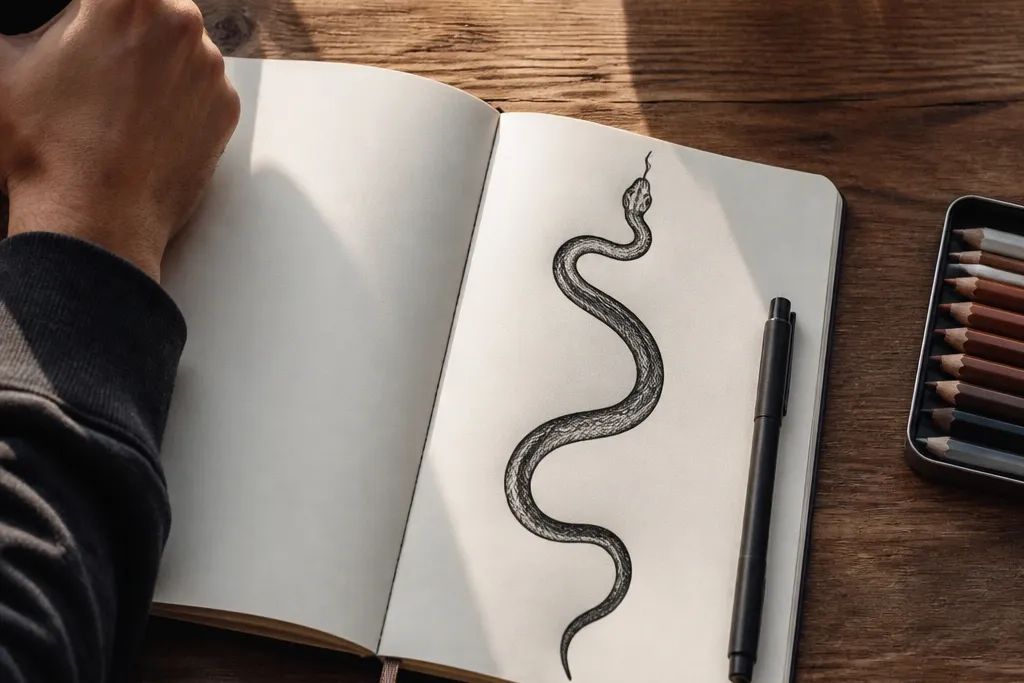
If you want quick realism-ish without fancy rendering, pencil shading with highlight gaps is the move. You shade the body in broad strokes, then carve out a few small lighter spots to mimic scale shine. This reads “finished” even with minimal scale detail. It’s ideal for sketchbook pages where you want a calm, soft look. Time: 12-16 minutes.
Sketch the snake outline in HB and keep the head simple. Shade one side of the body with a 2B pencil using short strokes following the curve. Leave tiny unshaded gaps as highlights, then add a few darker pencil dots or short lines near the belly for scale cues.
Blend with tissue, then re-darken the outline — blending alone makes lines fade.
Avoid full coverage shading; leave more highlights than you think you need.
8. Black Marker Snake with White Scale Dots
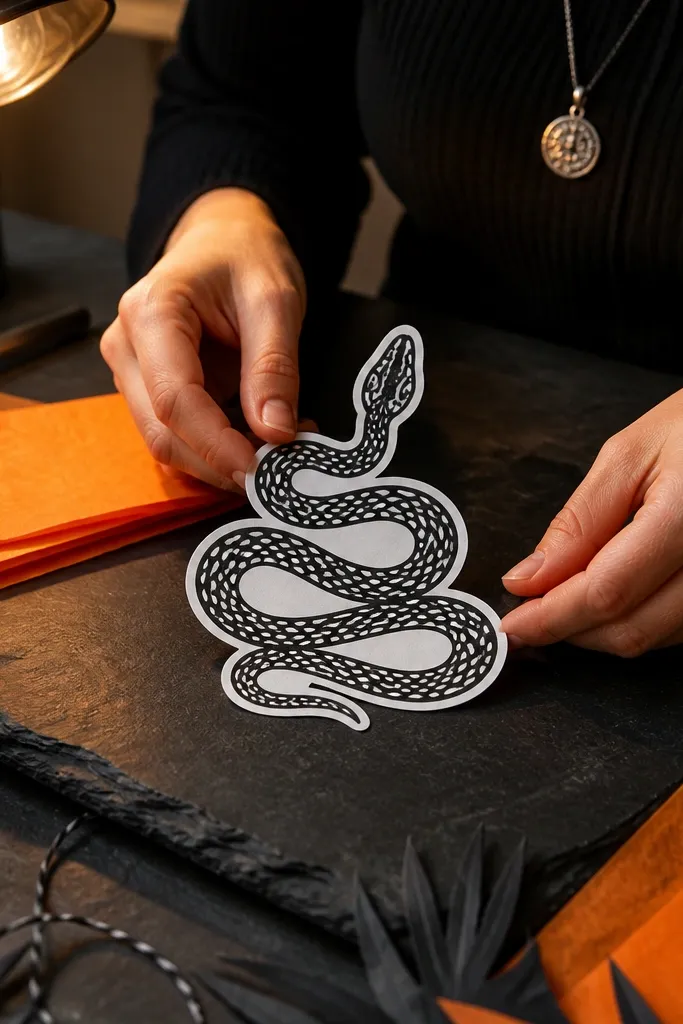
This one flips the usual method: you color the body dark first, then add scales as white dots. It looks bold and graphic, and the contrast makes your drawing pop without careful linework. Works great for Halloween crafts or stickers. You’ll finish fast because dots are quick and the marker fills the body in seconds. Time: 10-14 minutes.
Draw the snake outline with black marker and fill the body solid dark, leaving the head area slightly lighter if you want. While it’s still dry enough to handle, add white dots (white gel pen or paint marker) in rows following the body curve. Add a couple of white highlights near the top edge of the body so it looks like a curved form.
Pro tipUse dots, not tiny circles — dots stay readable at small sizes.
AvoidDon’t outline the scales; that turns a fast dot pattern into a time sink.
9. Kids' Friendly Snake with Big Scales Squares
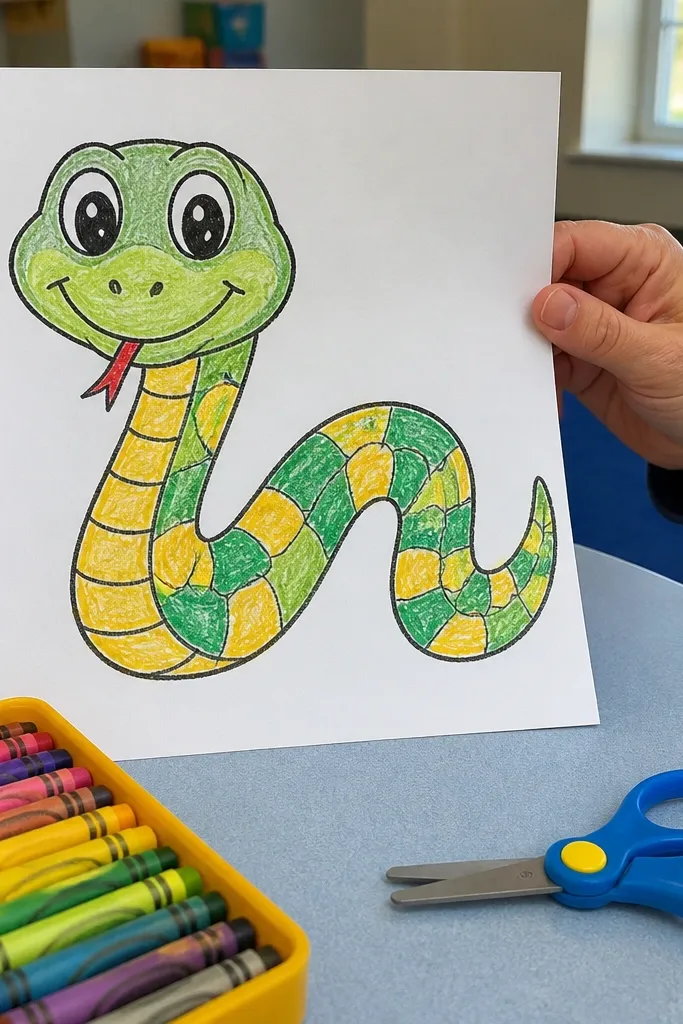
Big squares feel playful and are extremely fast because each scale block is a simple shape. This also teaches spacing without making it a lesson. The drawing looks cute even if your lines aren’t perfect. It’s a great option when you want something that works for kids, classroom activities, or a quick family craft. Time: 8-12 minutes.
Draw a simple curved snake outline with a rounded head. Then add large square or slightly rounded-square scales in staggered rows, following the snake curve. Finish by adding an eye and a short tongue line, then darken the outline and remove any pencil marks.
Stagger the squares like bricks — it makes the pattern look intentional instantly.
Avoid tiny squares; small details slow you down and look messy fast.
10. Spiral Tail Snake with Scale Arcs
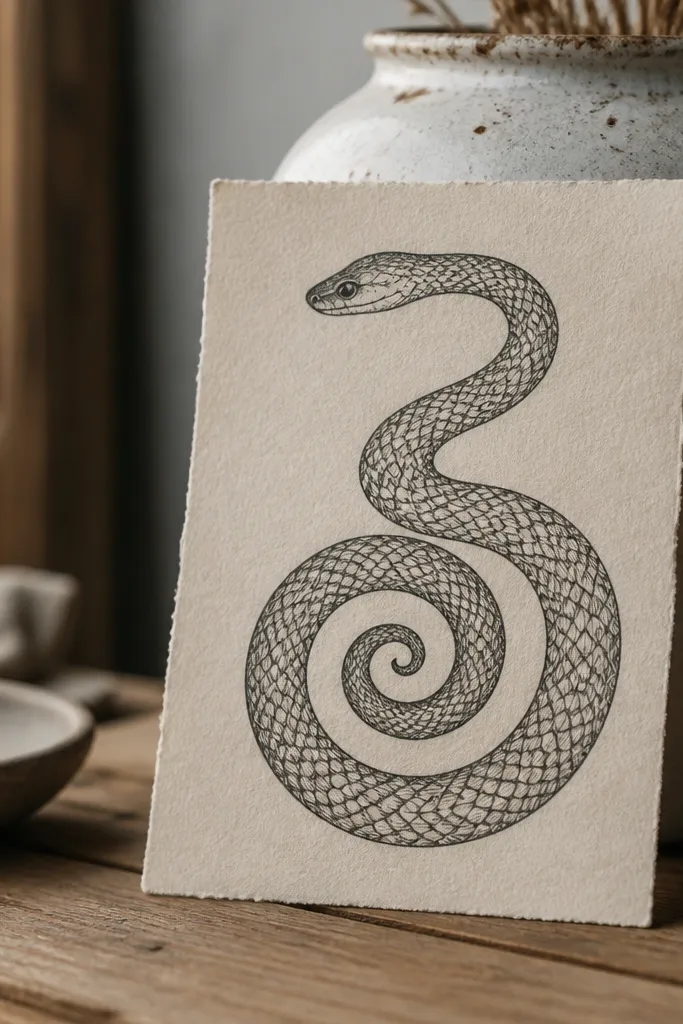
A spiral tail gives you a natural focal point, and arc scales match the curve. This idea is quick because you’re repeating arcs instead of individual scale outlines. The spiral also hides minor mistakes in the taper. Great for decorative doodles and small drawings where you want one strong shape. Time: 12-18 minutes.
Draw the body as a curve that ends in a spiral tail. Then add arc scales along the outer curve of the body, making each arc sit like a shallow U. Thicken the outer outline and add a simple eye on the head.
Make arcs overlap slightly — a small overlap makes the texture look deliberate.
Don’t leave the arcs too far apart; wide spacing makes it look unfinished.
11. Shed-Skin Pattern Snake (Ragged Edges)
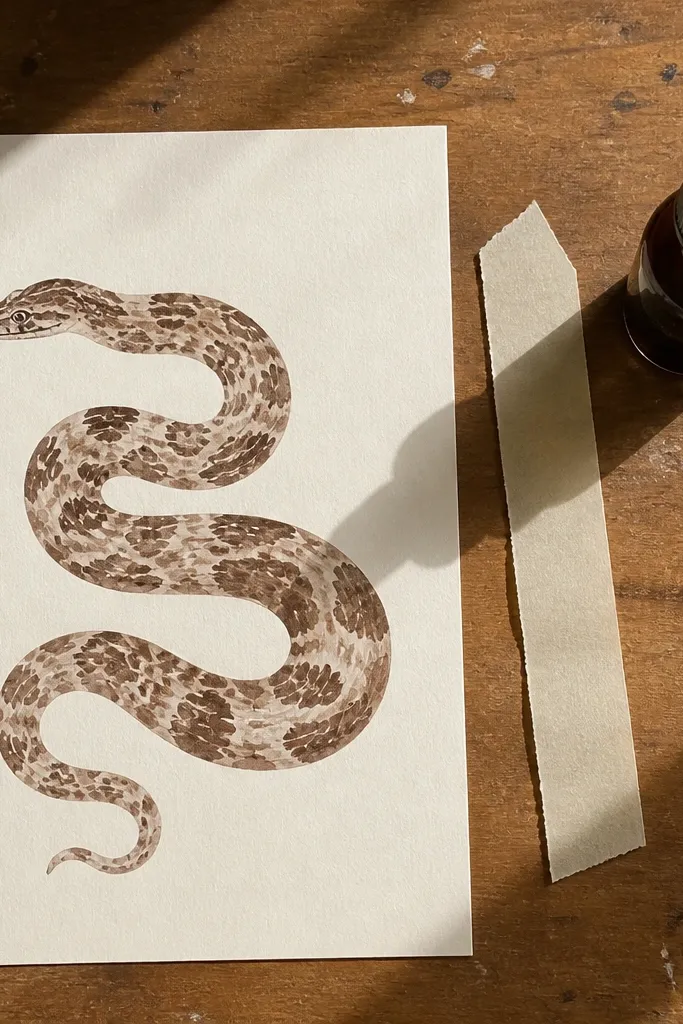
This drawing looks interesting fast because the texture is made from patches, not tiny scales. The ragged edge pattern suggests shed skin without you drawing each scale. Use a simple body curve and then add a few uneven patches that repeat. It’s a strong “design drawing” that still finishes quickly. Time: 15-20 minutes.
Sketch a clean snake outline and draw a lighter interior area along the belly. Then add 6-10 patch shapes on the body, each with uneven edges, following the curve. Shade lightly around patch borders with a pencil or marker so the patches read as separate scale layers.
Pro tipKeep patch shapes all the same general size range; variety is good, chaos isn’t.
AvoidAvoid drawing too many patches. Too many creates clutter and kills the quick finish.
12. Side-Profile Snake with Eyebrow Scales
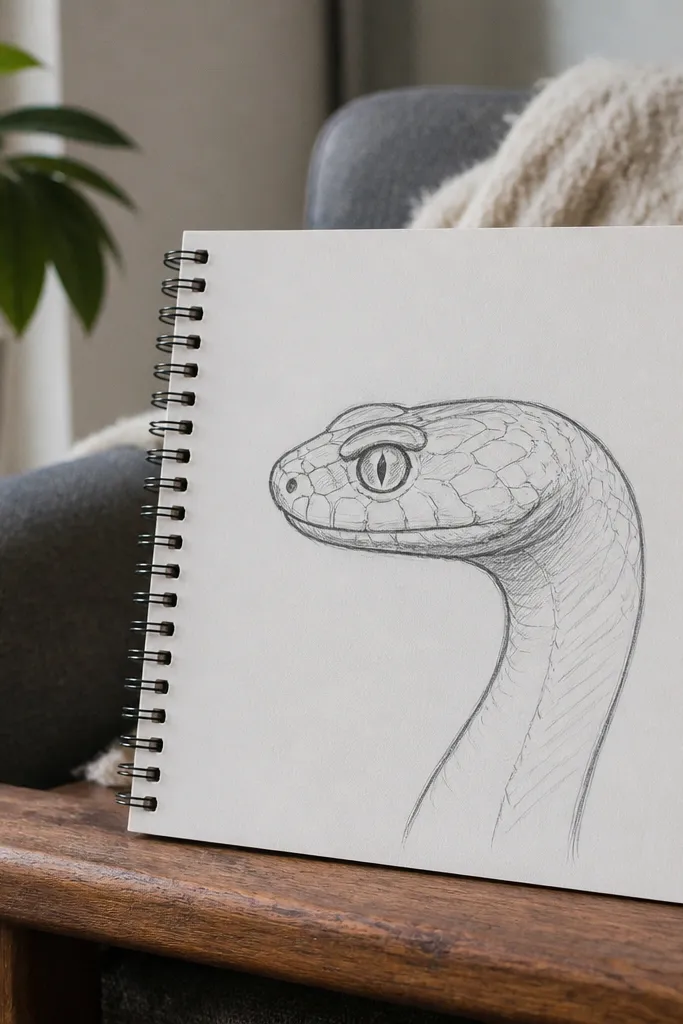
Side-profile snakes draw faster because the head and neck shapes are simpler than a full view. The “eyebrow” scale lines make the head look expressive with almost no work. You get a character feel without shading every scale. This is perfect when you want a quick drawing that still looks like it has personality. Time: 8-12 minutes.
Draw a side-profile head as a rounded wedge with one eye and a small mouth line. Connect it to a narrow neck and then a body S-curve. Add 2-4 eyebrow scale lines above the eye and then place a simple dot scale row along the top half.
Pro tipMake the eyebrow scales slightly thicker than the body outline so the face reads first.
AvoidDon’t over-detail the head; one eye, one mouth line, and a few scale lines is enough.
13. Patterned Belly Stripe Snake (Minimal Scales)
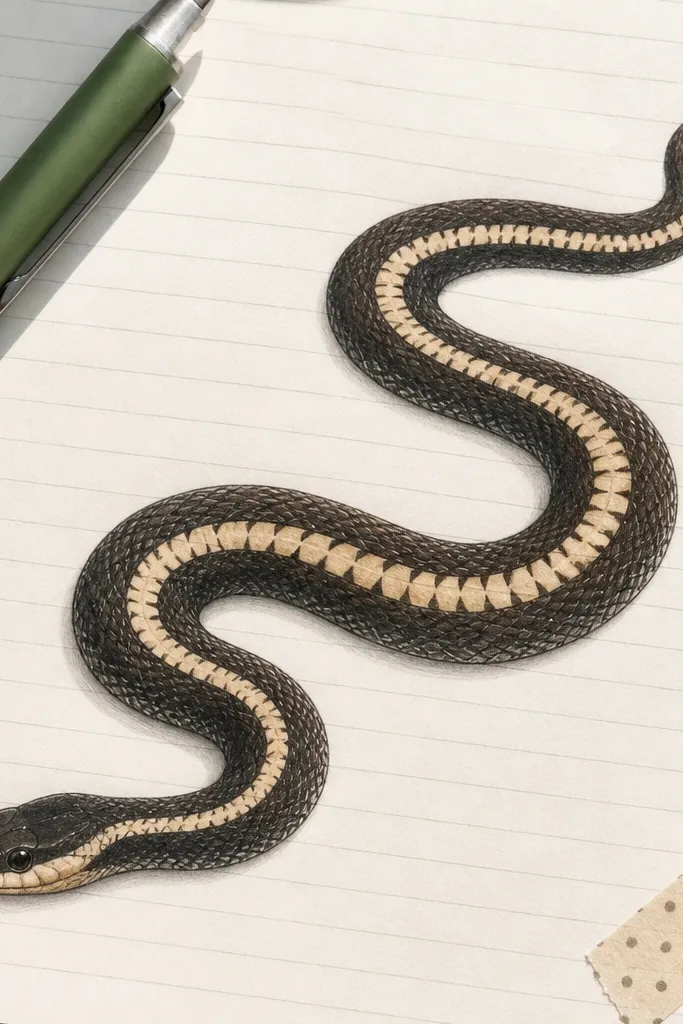
If you want a snake drawing that looks “finished” without filling the whole body, this is it. The belly stripe pattern gives structure, and you only add a few scale cues near the stripe edges. It’s clean, graphic, and fast because you’re drawing one repeating stripe unit. Great for quick gifts and doodles on lined paper. Time: 10-14 minutes.
Draw the snake outline with a smooth S-curve and a simple head. Add a belly stripe that follows the curve, then decorate it with alternating small shapes like short ticks or tiny U-forms. Finish by adding dot scales only on the upper edge of the body, then ink over the outline.
Keep the stripe width constant. If the stripe changes width, the drawing looks shaky even if the outline is good.
Avoid adding scales everywhere. Let the stripe do the work.
14. Two-Tone Marker Snake with Simple Scale Bands
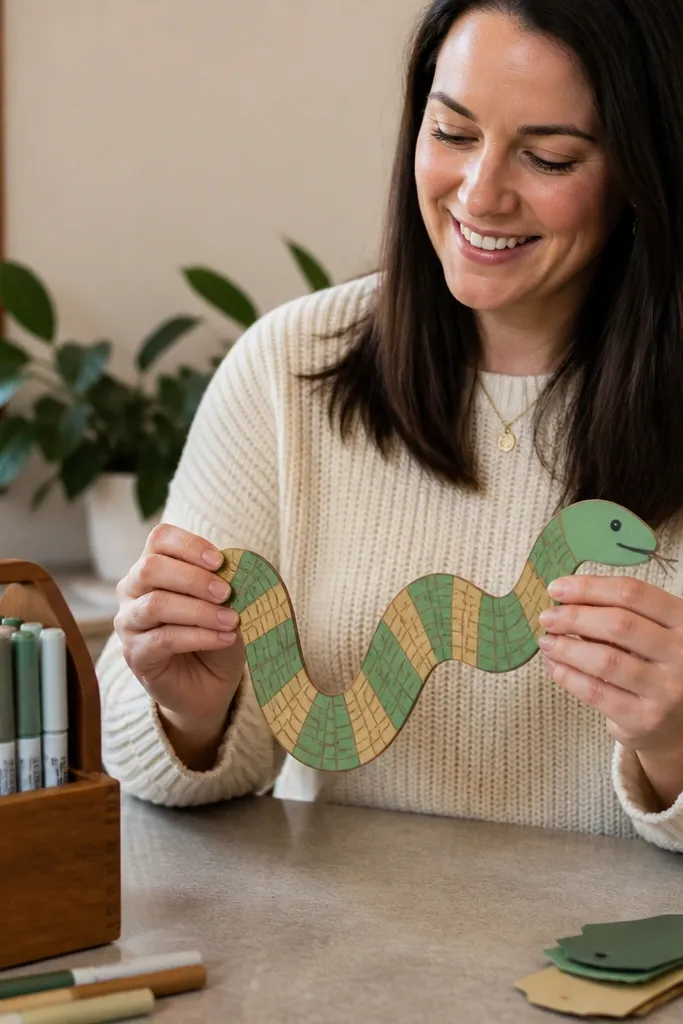
Two-tone marker coloring makes your snake look dimensional immediately. You don’t need a full shading gradient; you just need clear value separation. Then you add scale bands as lighter or darker striping, which is faster than individual scales. This works well for bold doodles and quick craft labels. Time: 15-20 minutes.
Outline the snake and fill the top half with one marker color, leaving the bottom half blank or filled with a lighter tone. Then add 5-8 scale bands across the body using the darker shade again or a lighter shade depending on contrast. Add a few small dots near the head to connect the pattern to the face.
Use a broad marker stroke for the fill, then come back with the fineliner to sharpen the outline edges.
Don’t blend too many marker layers. It slows you down and can muddy edges.
15. Origami-Fold Style Snake (Geometric Sections)
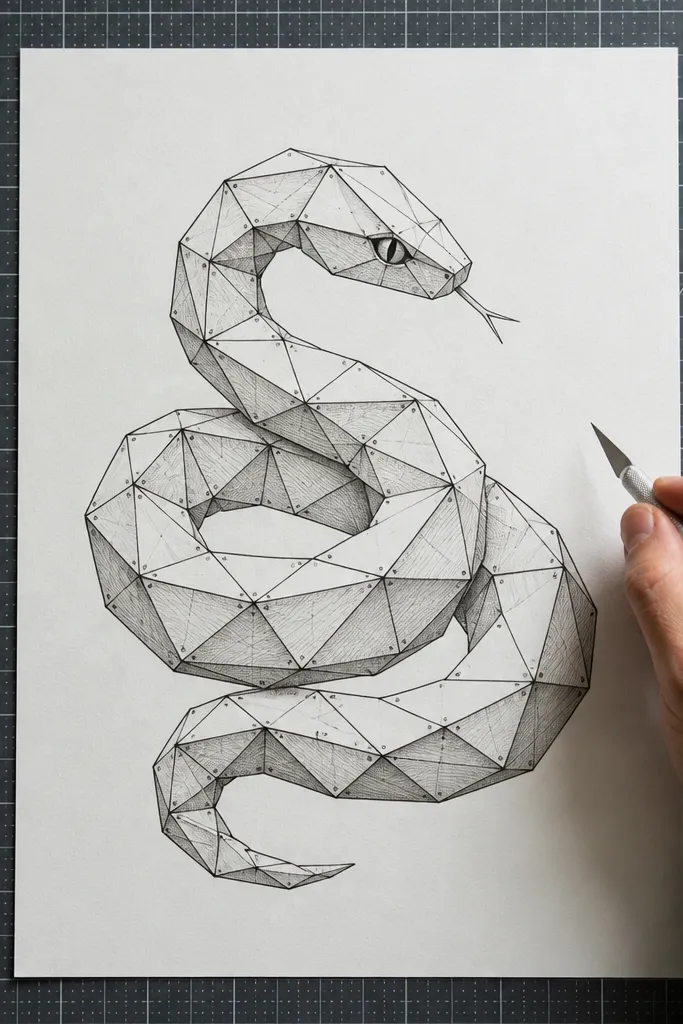
Geometric sections look sharp and intentional even when your drawing is simple. Instead of drawing scales, you draw a few fold-like lines that create panels, then add small scale dots at panel edges. It’s fast because you’re drawing straight-ish shapes and a handful of repeated marks. Great for a graphic look on paper with a pen only. Time: 12-16 minutes.
Draw a curved snake outline and then divide the body into 6-10 panels using curved lines that follow the S-curve. Make the head a simple wedge and add one eye. Add tiny dot scales along the panel boundaries, then darken the outer outline and the panel lines.
Keep panel lines thicker than scale dots. It makes the snake read as a design, not a texture mess.
Avoid too many panels. More sections means more lines and less time for finishing.
16. Patterned Head Snake with Lip Scales
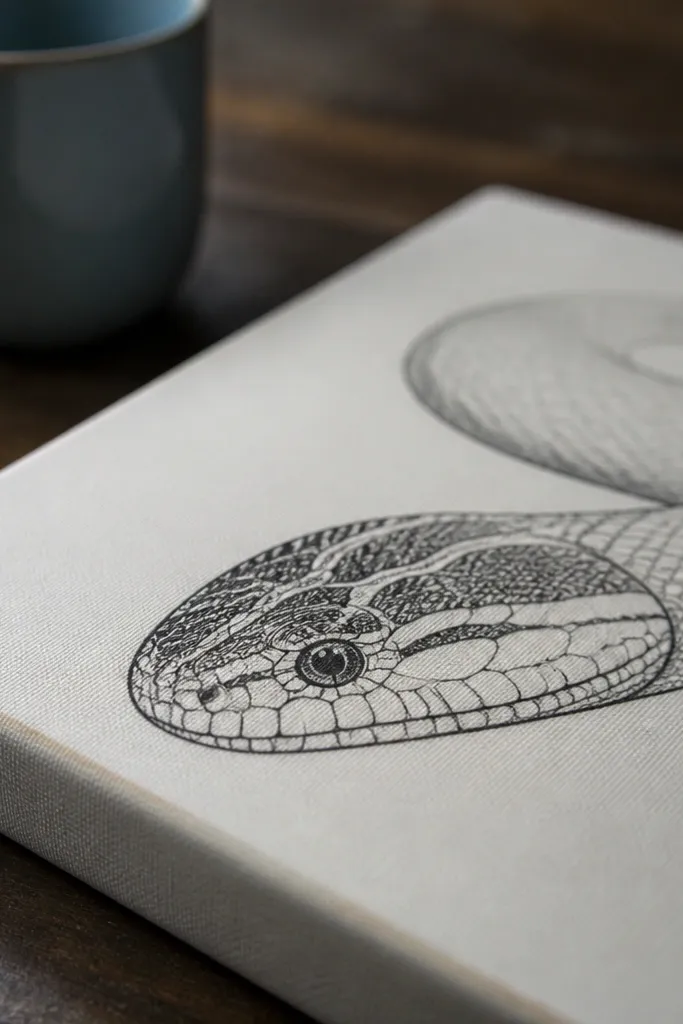
Make the head do the work. If you concentrate detail around the mouth and eye area, the rest of the snake can stay simple and still look complete. Lip scales are quick because you draw a short repeating row along the mouth line. This is a strong choice when you’re drawing on a small canvas or want a crisp icon-like snake. Time: 8-12 minutes.
Sketch the snake in side view with a rounded head and one eye. Draw a short mouth line and then add a row of tiny repeating shapes (small U-forms or short arcs) along the lip line. Keep the body as a simple S-curve with only a few dot scales near the neck.
Pro tipMake the lip pattern the darkest element on the page. Your eye will treat it like a focal point.
AvoidAvoid full-body detail if the head is already detailed; that’s how quick drawings get heavy.