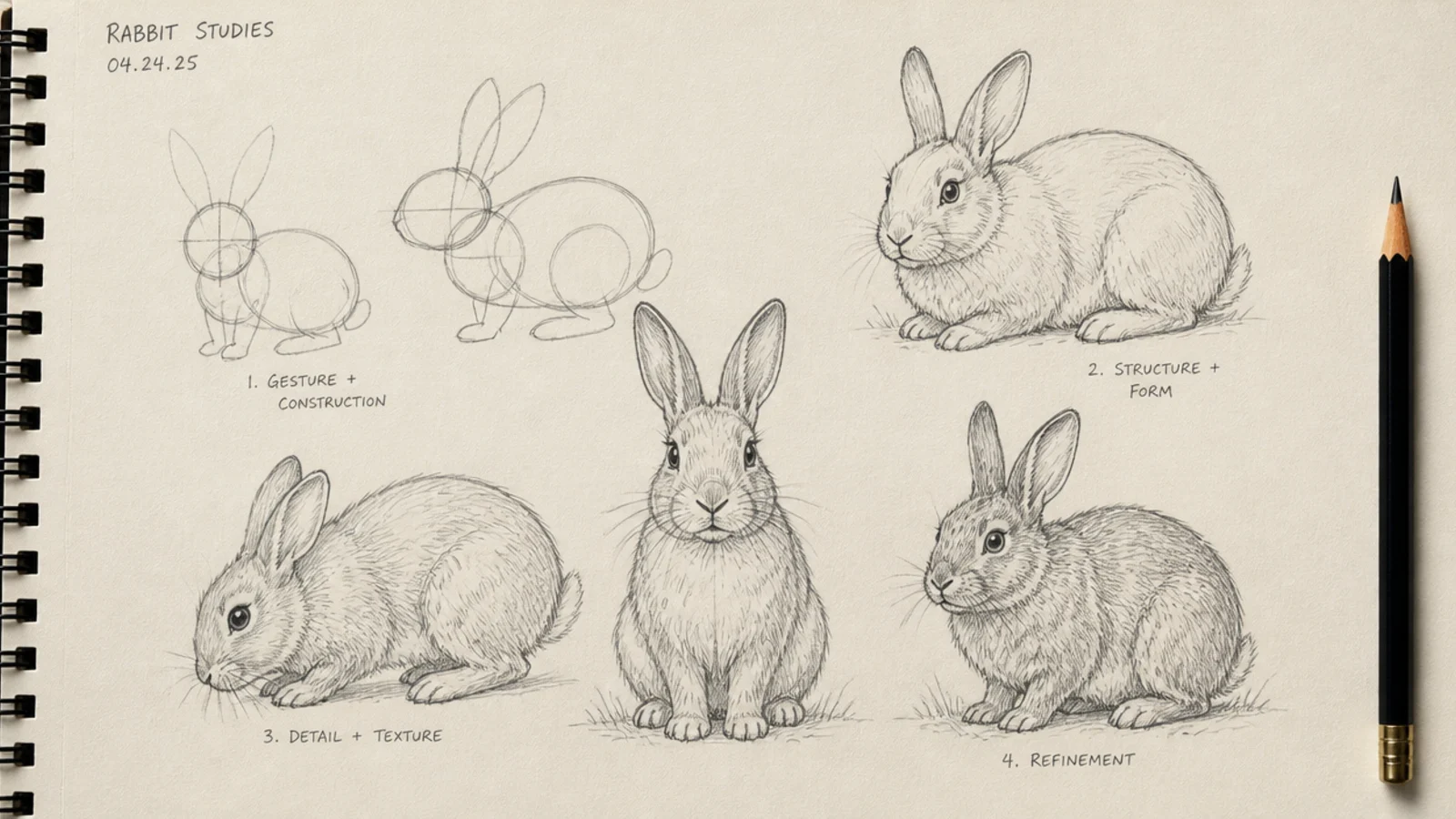
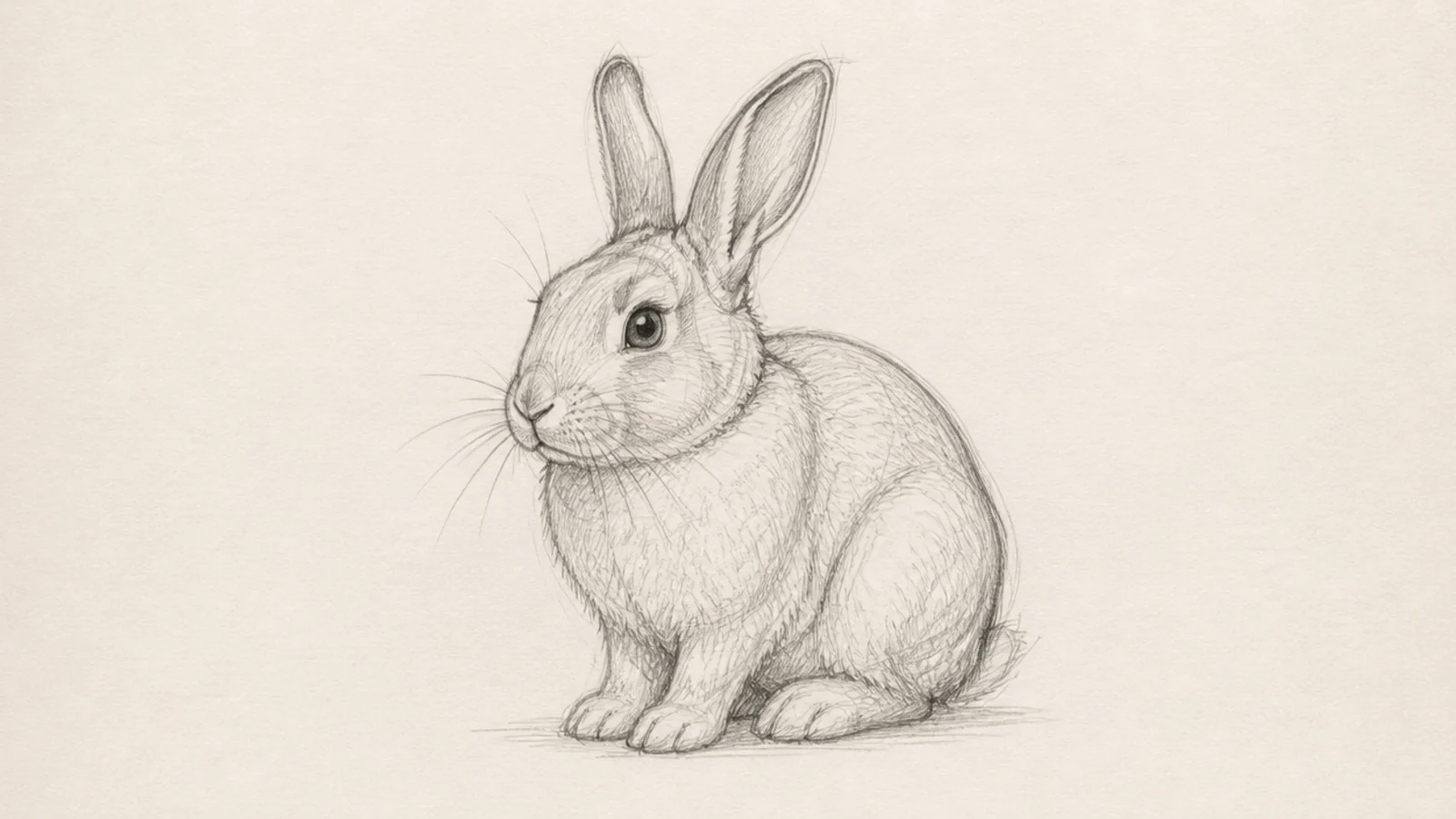
I drew 30 rabbits in a row, always working from a real rabbit drawing reference instead of my memory of what a bunny looks like, and it changed how I draw anything. The reps taught me things no single tutorial did, mostly small shifts that made a big difference. Here are the five honest lessons that stuck, each one a mistake I stopped making or a habit that finally clicked. If you want your rabbits to improve fast, these are the shortcuts I wish I had known on rabbit number one.
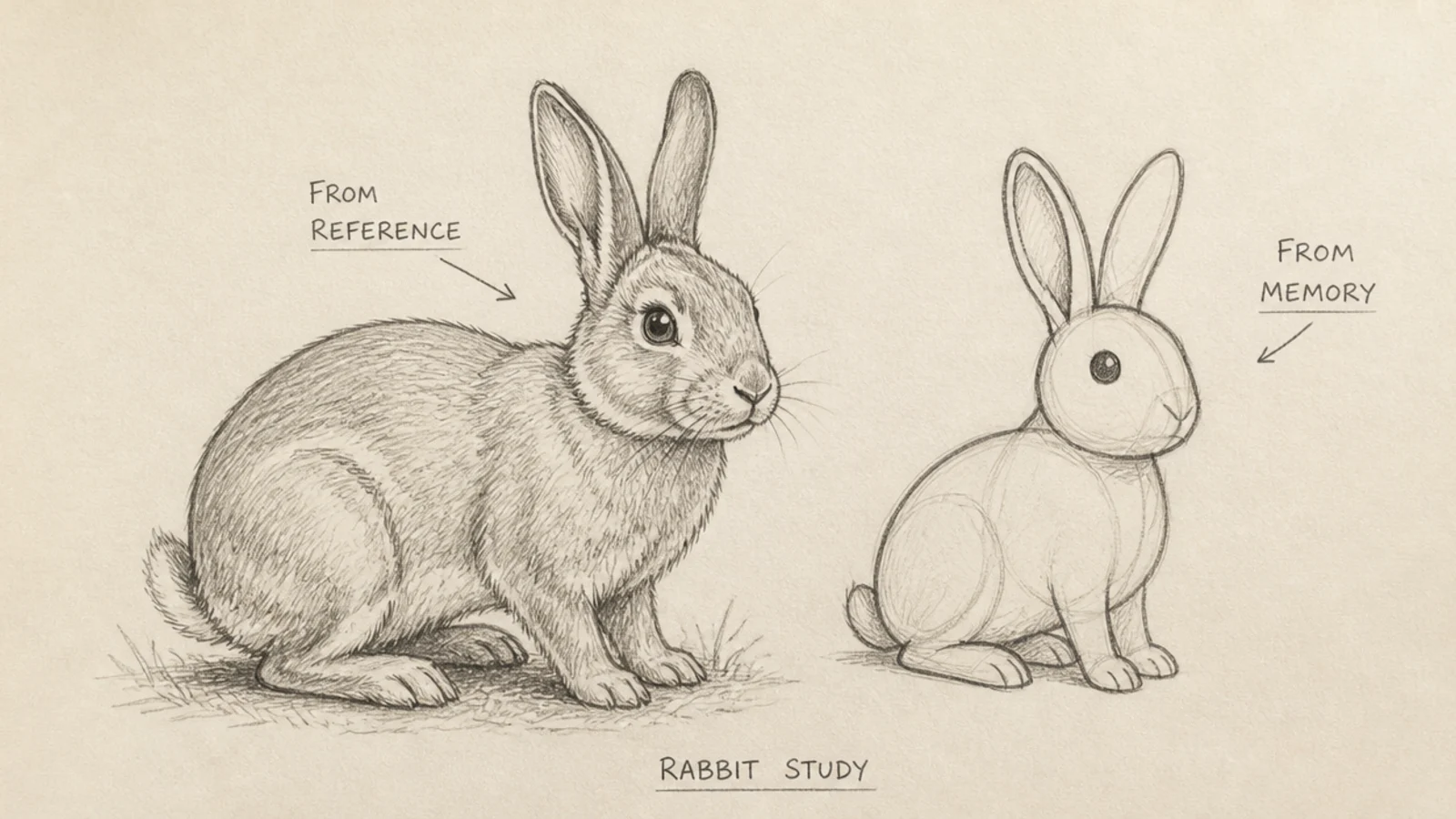
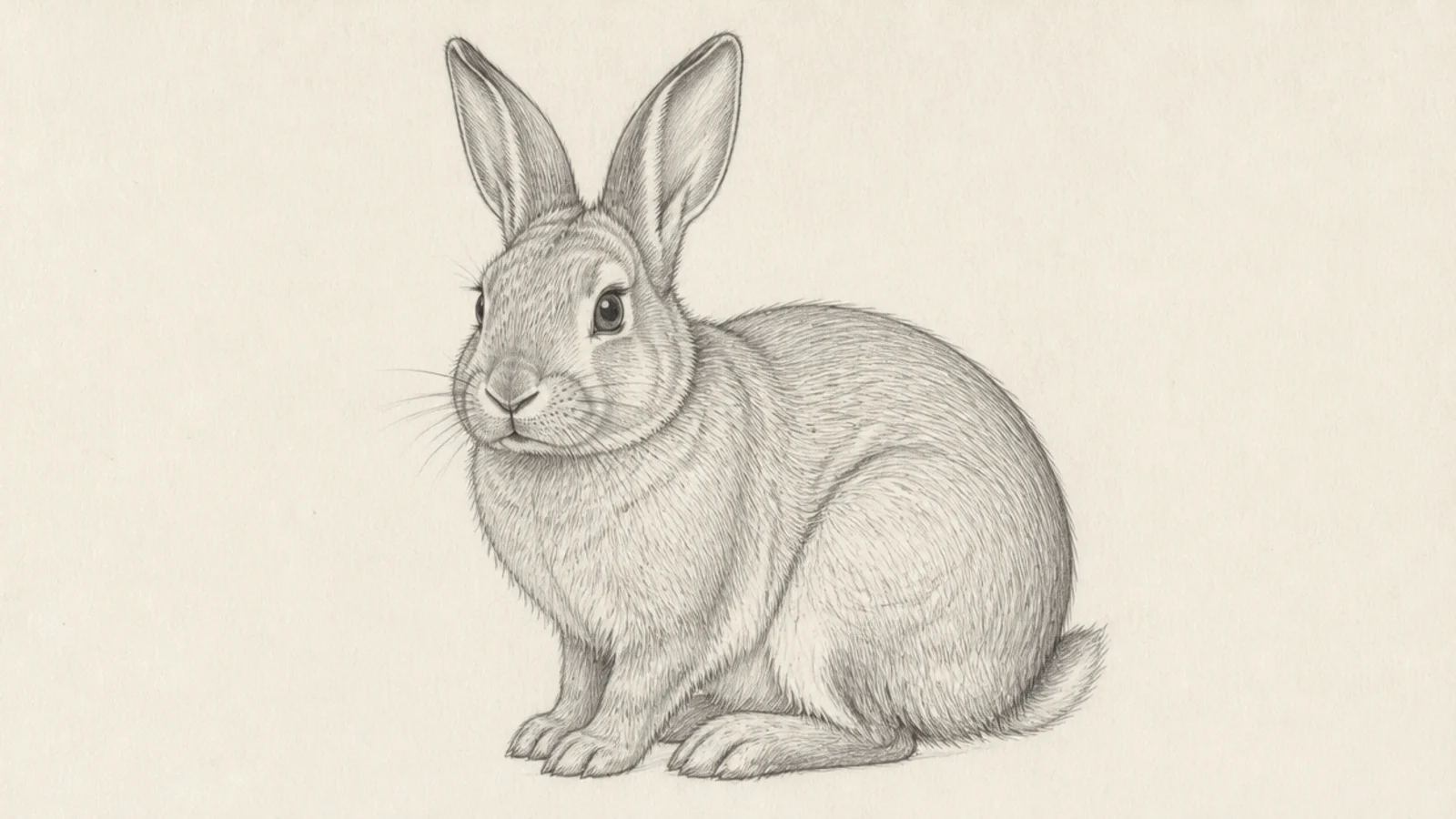
The biggest change was simply using a real rabbit drawing reference every single time. For years I drew the bunny in my head — two long ears, a round body, a dot eye — and every one came out the same stiff symbol. The moment I put a real photo in front of me, I started seeing how the head actually sits, where the eye really goes, and how the fur lies, and my rabbits stopped looking like clip art.
None of what follows is about talent or expensive supplies. The improvements came from tiny changes in approach — how I started each drawing, how I judged proportion, how I read the fur. These are lessons anyone can apply immediately, and they compound, each one making the next rabbit a little better than the last.
Below are the five lessons in the order they clicked for me, each with what I was doing wrong, what changed, and how to apply it to your own rabbits. Read them, then go draw one from a reference. The only real lesson is that a good reference and a bit of volume will teach you more than any amount of reading.
My early rabbits all looked the same because I drew the symbol in my head. The moment I worked from a real rabbit drawing reference, they came alive and stopped looking like clip art.
Keep a real photo beside you and copy what you actually see — the head angle, the eye placement, the fur. Draw the specific rabbit in front of you, not the generic idea of one.
Pro tipPin the reference right next to your paper so you glance at it constantly.
AvoidDon’t draw from memory; the symbol in your head is not a real rabbit.
2 Lesson 2 - Start With the Gesture, Not the Outline
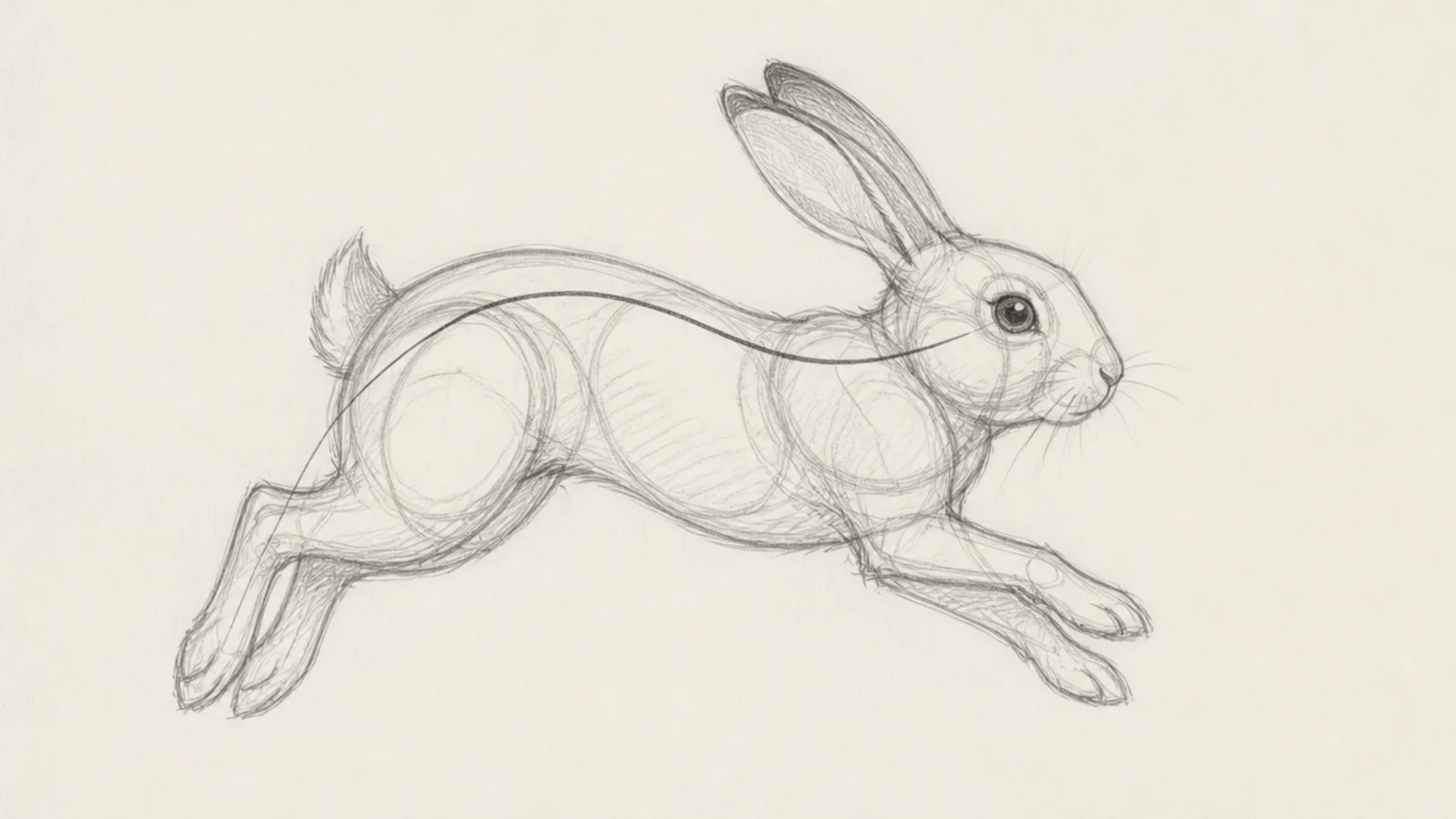
I used to start with the outline and my rabbits came out stiff. Starting with a loose gesture line through the spine first made every pose feel alive and springy.
Draw one flowing line of action through the body before anything else, then build the shapes on top. The gesture captures the energy the outline alone always missed.
Lay the gesture line fast and loose before you draw a single edge.
Don’t begin with the careful outline; it locks the pose stiff.
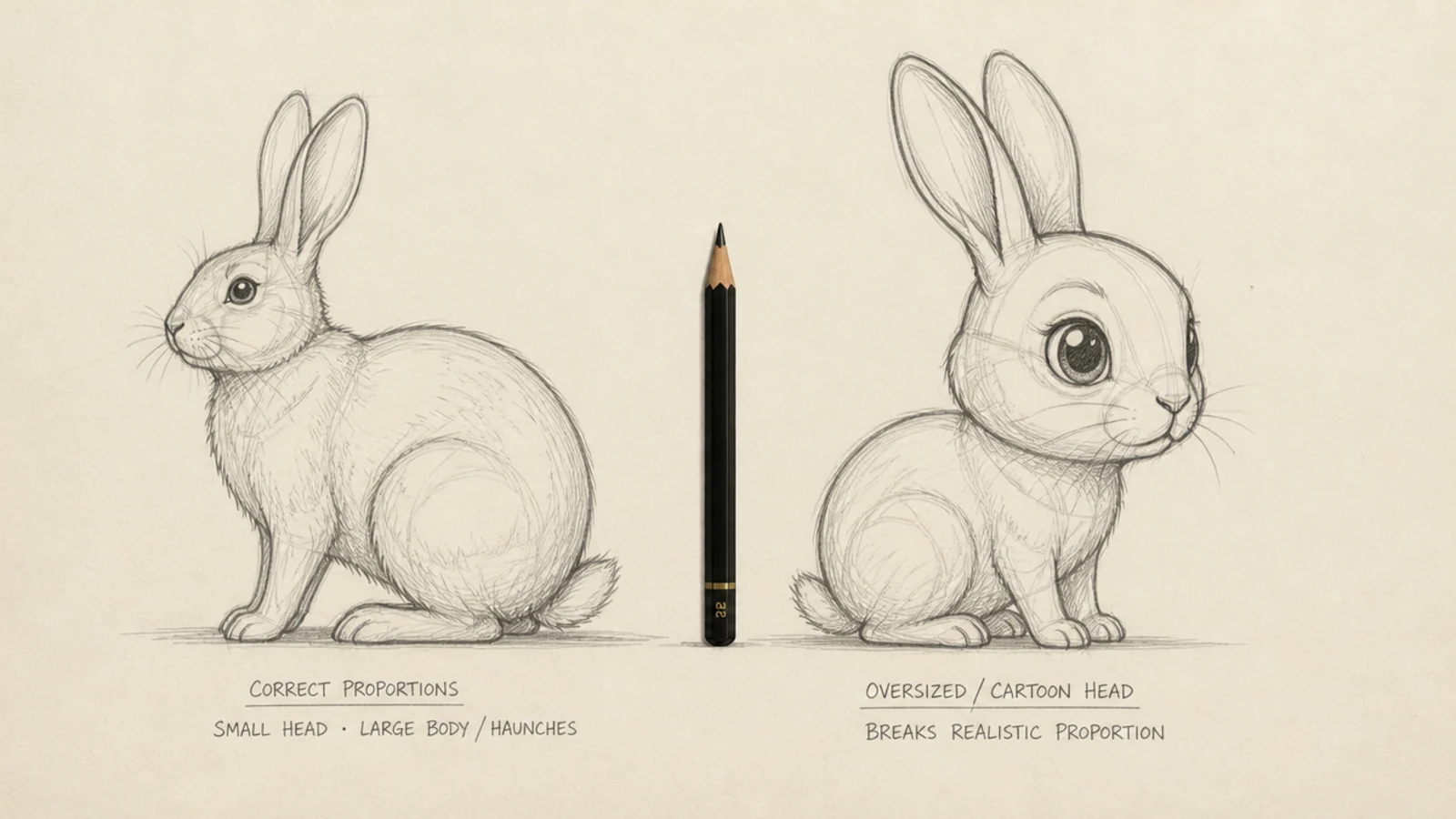
From memory I always drew the head too big, which made my rabbits look cartoonish. Checking the head against the reference showed me it is much smaller than the body.
Compare the head size to the body length in your reference before committing. Keep the head small and the body and haunch large for a believable rabbit.
Measure the head against the body with your pencil before you ink anything.
Don’t oversize the head; a small head reads as a real rabbit.
My fur looked like a flat scribble until I noticed the coat lies in directions. Stroking the fur the way it actually flows over each form made it finally look soft and real.
Map the fur direction from the reference — down the back, radiating on the cheeks, sweeping along the haunch — then stroke to match. Let the direction change over each part of the body.
Pro tipFollow the fur’s real direction over each form instead of one flat pass.
AvoidDon’t stroke every hair the same way; fur changes direction across the body.
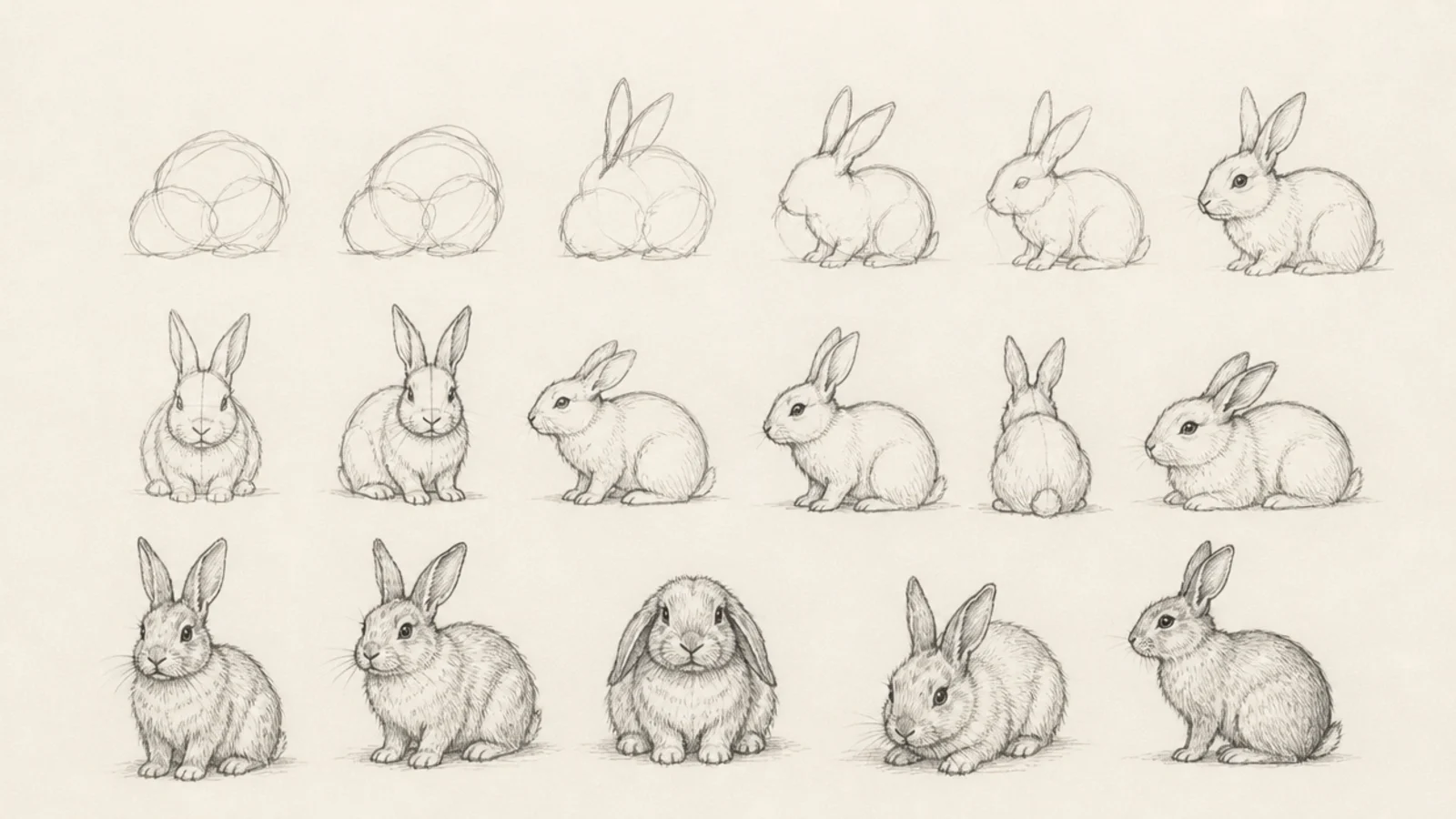
The real lesson — drawing 30 rough rabbits improved me more than polishing one perfect one. Showing up and drawing another bunny beat trying to make one flawless.
Draw many rabbits from references and keep them together, however rough. Watching the stack grow and improve is more motivating and instructive than any single careful drawing.
Pro tipKeep all your rabbit studies in one book so you can see the progress.
AvoidDon’t chase one perfect rabbit; the volume is what teaches you.
Quick answers
Why should I use a rabbit drawing reference?
Because memory gives you a symbol, not a rabbit. A real rabbit drawing reference shows how the head actually sits on the body, where the eye and ears really go, and how the fur lies, which are exactly the things we get wrong from imagination. Drawing from a reference is the fastest way to stop your bunnies looking stiff and generic.
Does drawing a lot of rabbits actually help?
Yes, dramatically. Drawing 30 rabbits let me make and fix the same mistakes fast, and by the second week I was seeing the real animal instead of my idea of it. The volume itself teaches what reading cannot, because each drawing shows you something the last one missed. Consistency and repetition beat waiting for the perfect drawing.
What is the most common rabbit drawing mistake?
Drawing the head too big and the fur as a flat outline. From memory we tend to enlarge the head and skip the coat’s direction, which makes the rabbit look cartoonish and stiff. Checking the head size against a reference and stroking the fur in the direction it actually lies fixes the two most common problems at once.
Do I need good supplies to get better at drawing rabbits?
No. The biggest improvements came from using a reference and drawing often, not from expensive tools. A daily rough pencil sketch from a good photo will improve you faster than occasional careful drawings with premium supplies. A reference and consistency beat gear every time.