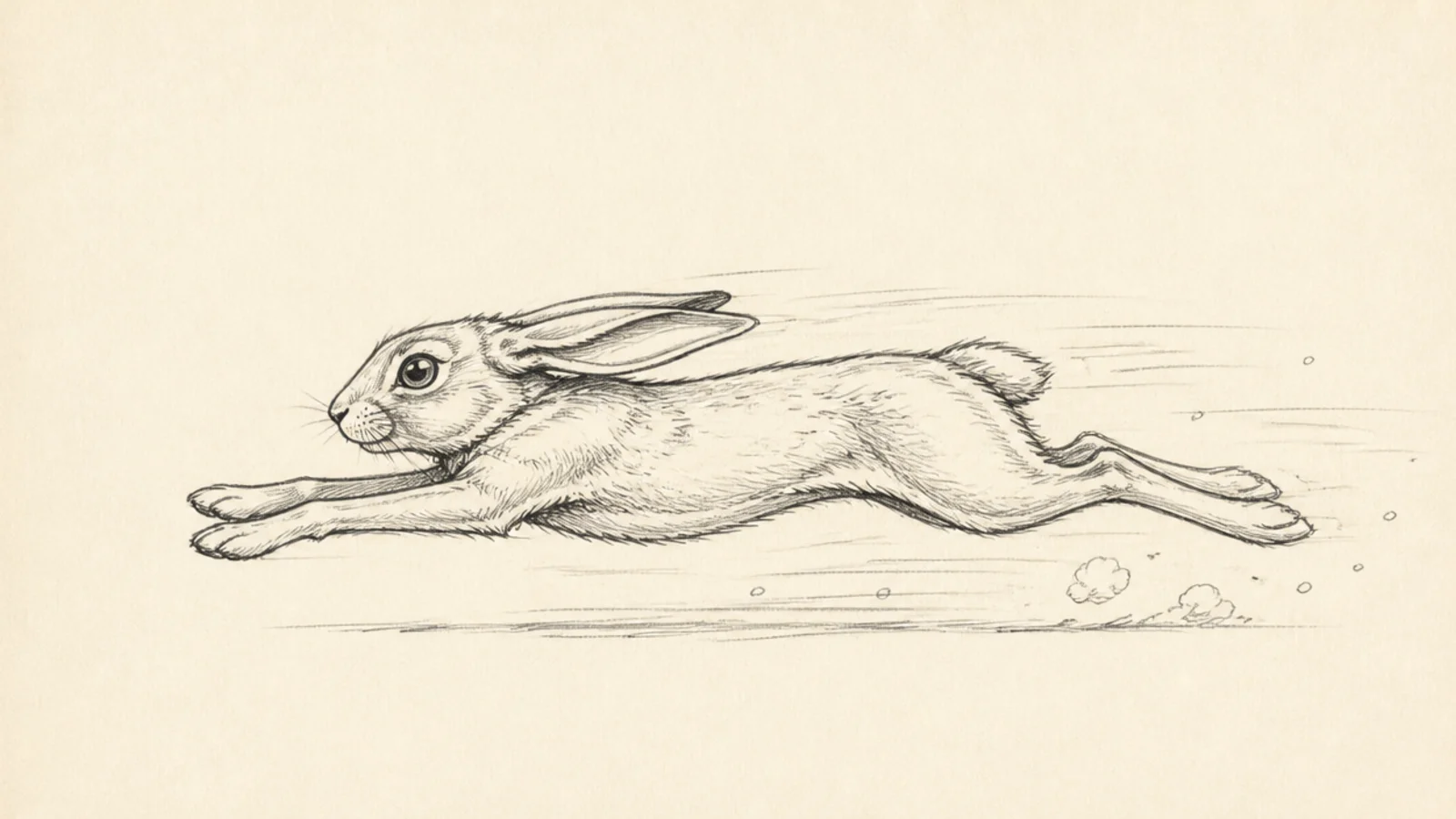
1 Full Gallop Stretch
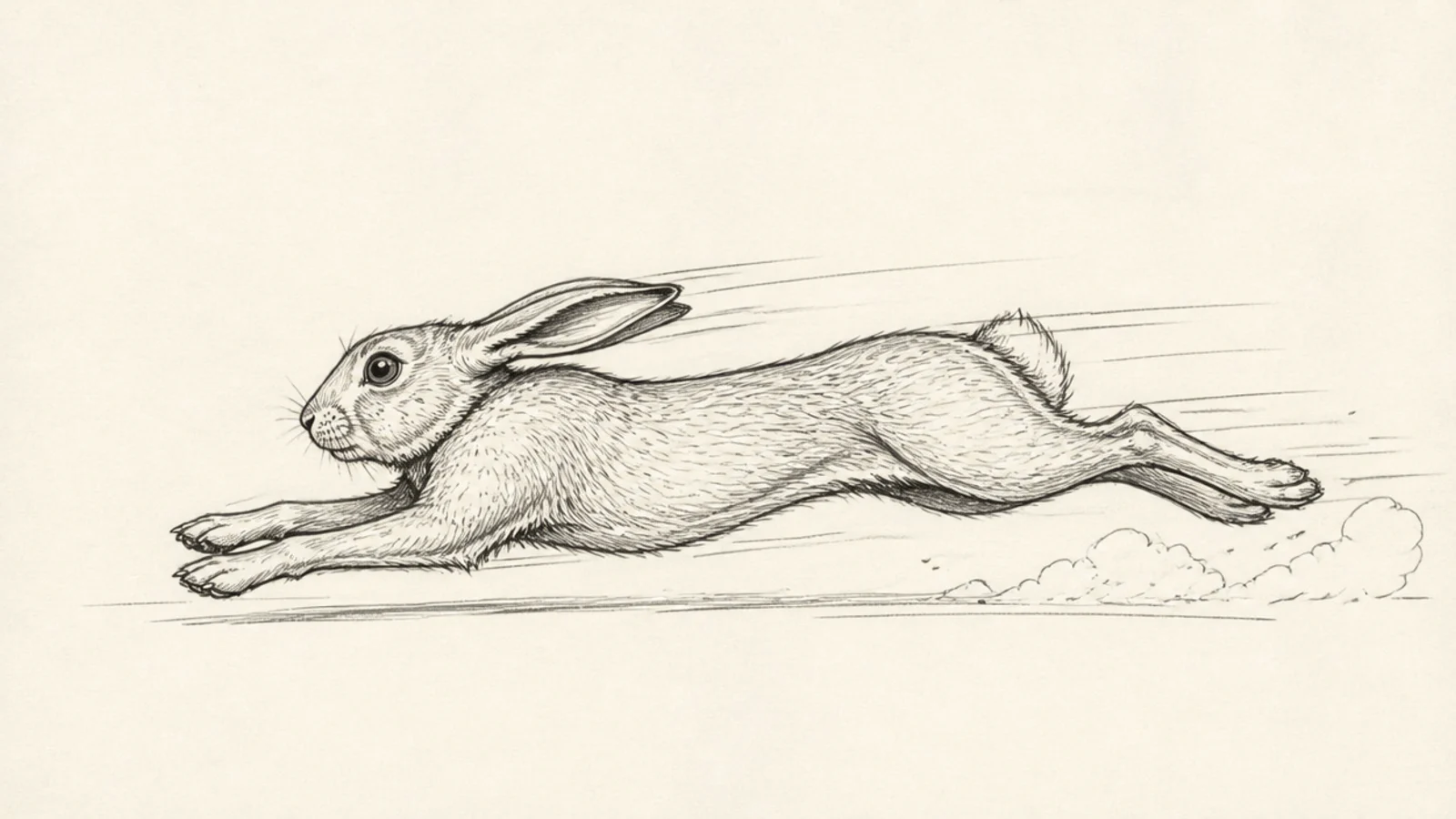
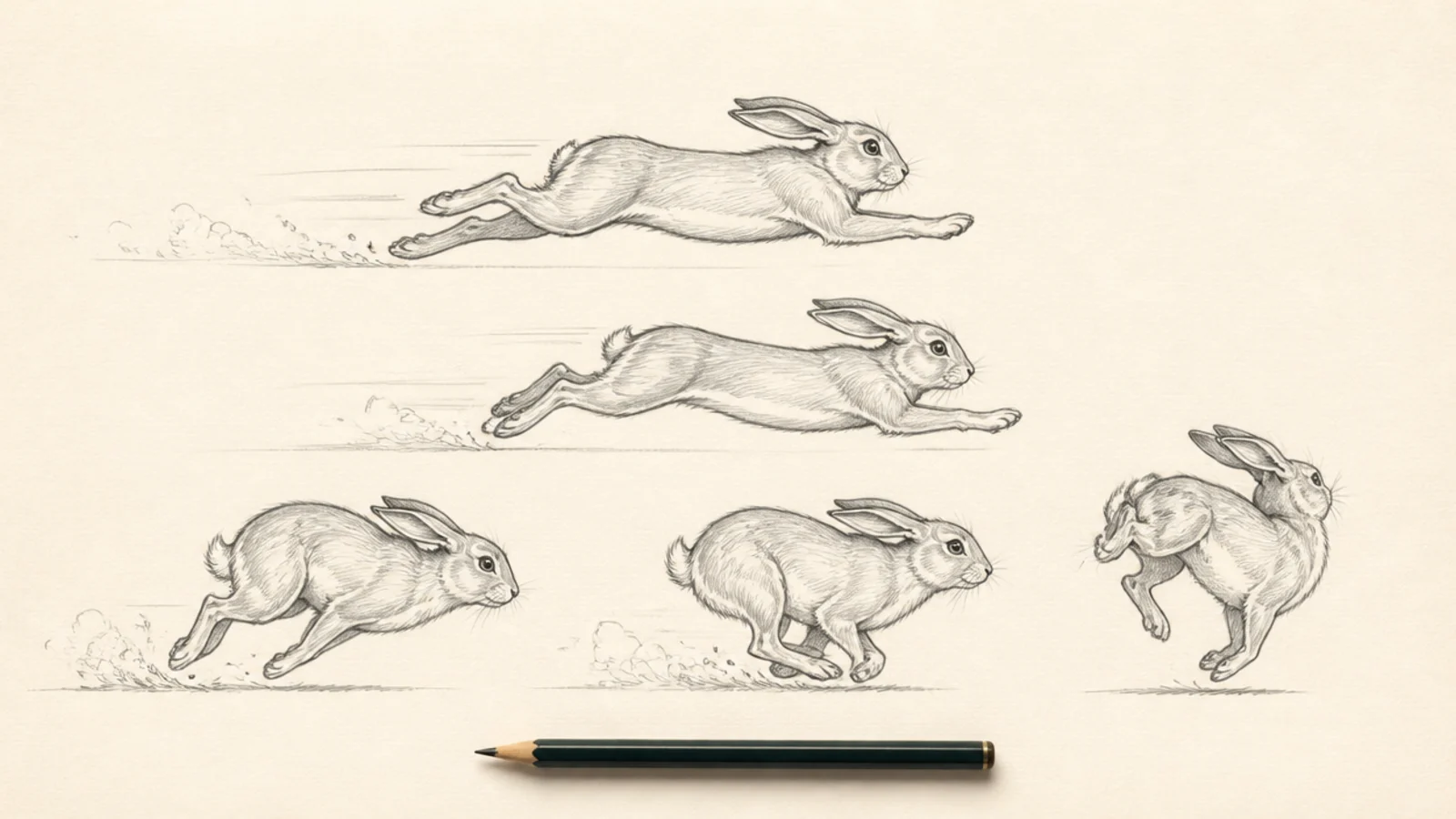
This is the core running pose — a rabbit stretched to full extension at a gallop. The long low body between reaching legs is pure speed. Master it and the rest follow.
Step 1 draw a long low arcing line of action. Step 2 stretch the body along it with front legs far forward and hind legs far back. Step 3 pin the ears and add speed lines.
Pro tipStretch the body as long as you dare; the extension is the speed.
AvoidDon’t keep the body compact; a stretched spine reads as a gallop.
2 Mid-Leap Airborne
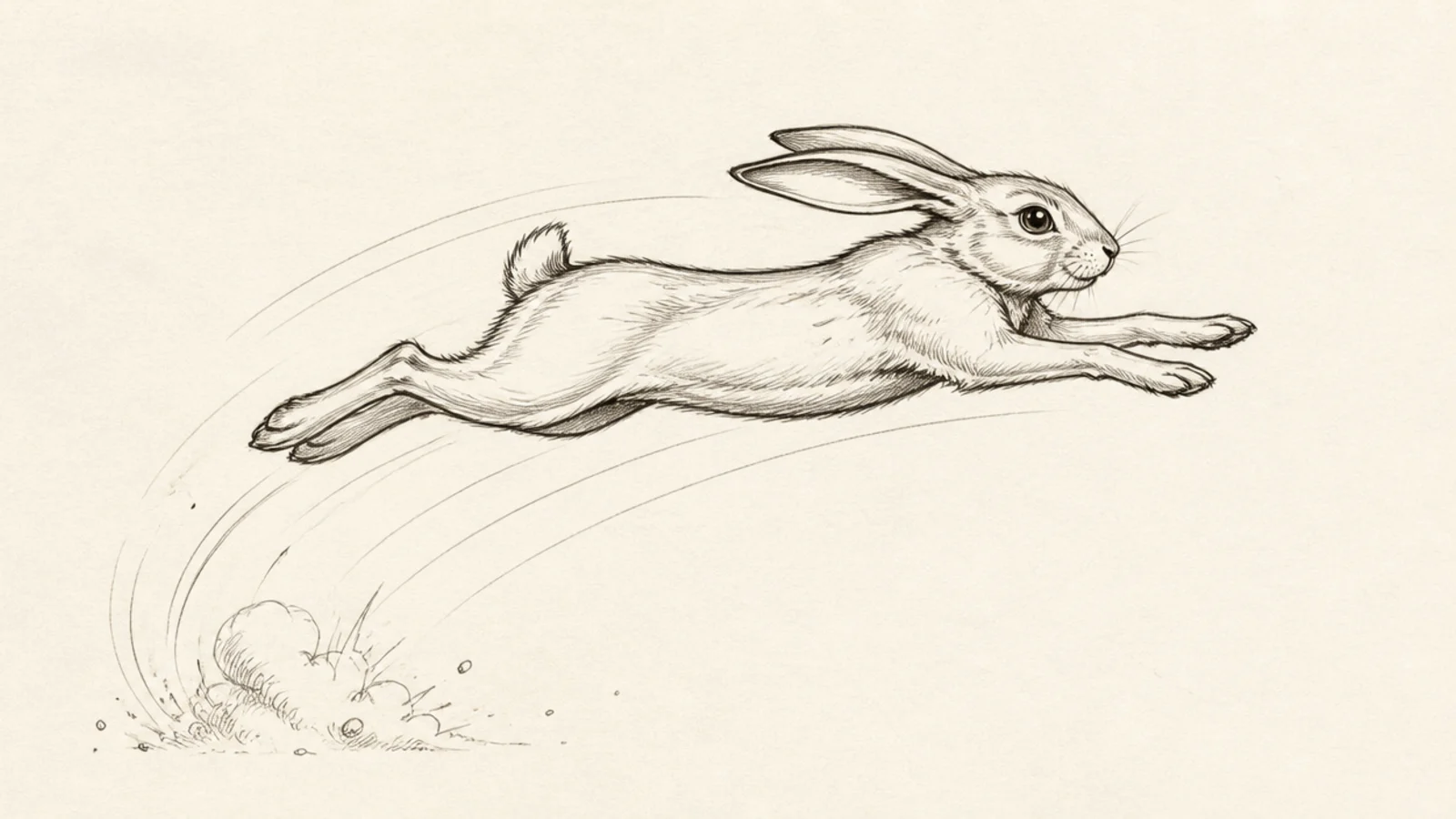
A rabbit at the peak of a leap floats fully off the ground. The airborne moment is dramatic and free. It captures the top of the bound.
Step 1 draw a rising arc for the line of action. Step 2 lift the whole body off any ground line. Step 3 extend the legs and add a small dust puff where it launched below.
Lift the rabbit clear of the ground so the flight reads instantly.
Don’t anchor a foot to the ground; full flight needs no contact.
3 Push-Off Launch
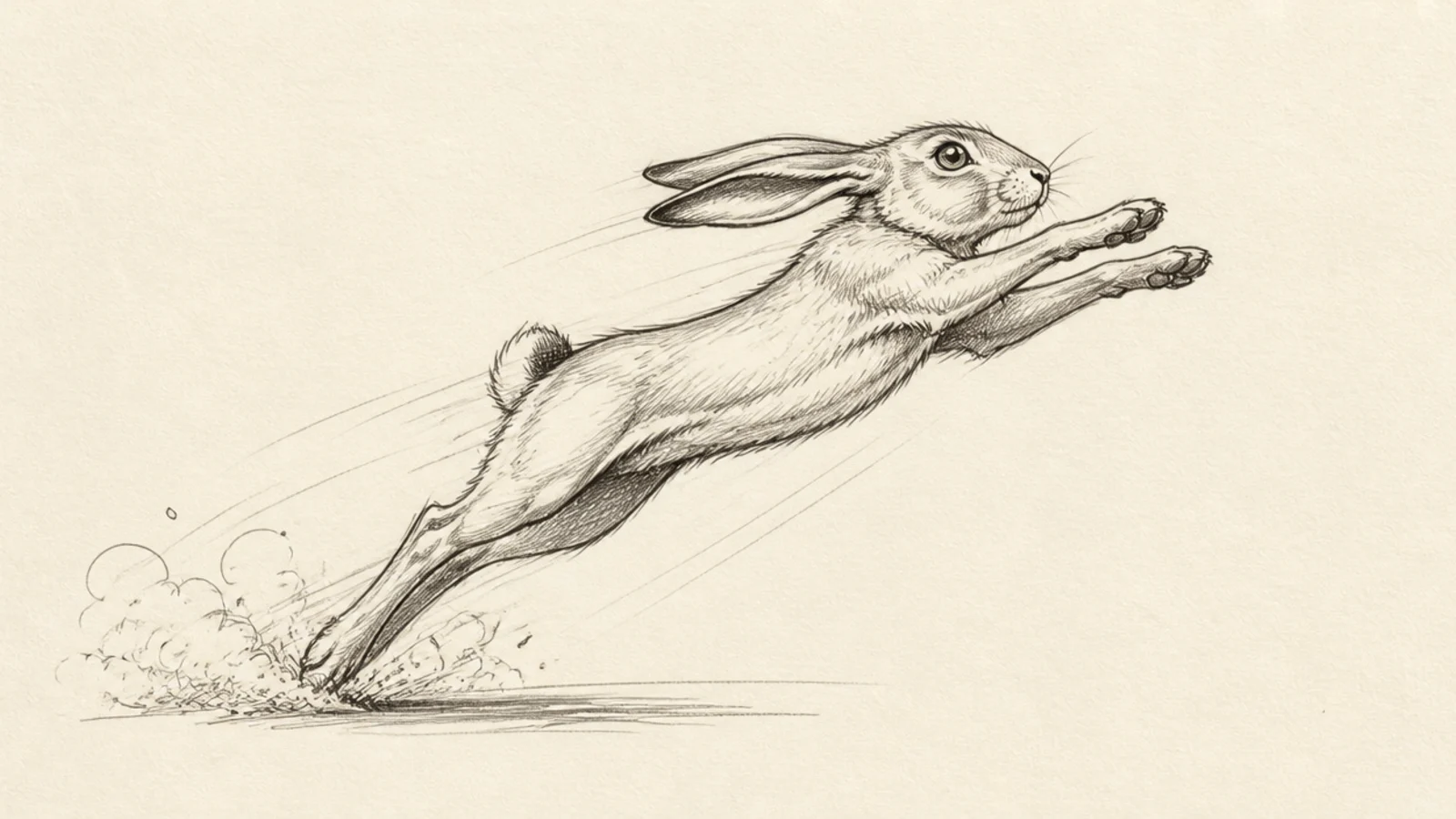
The push-off shows the powerful hind legs driving the launch. The coiled-then-extending back legs are the engine of the bound. It reads as explosive.
Step 1 draw a steep rising line of action. Step 2 plant and extend the hind legs hard against the ground. Step 3 reach the front legs and head up and forward with dust at the feet.
Pro tipShow the hind legs extending hard against the ground for the drive.
AvoidDon’t make the hind legs limp; the push-off is all in their power.
4 Landing Touchdown
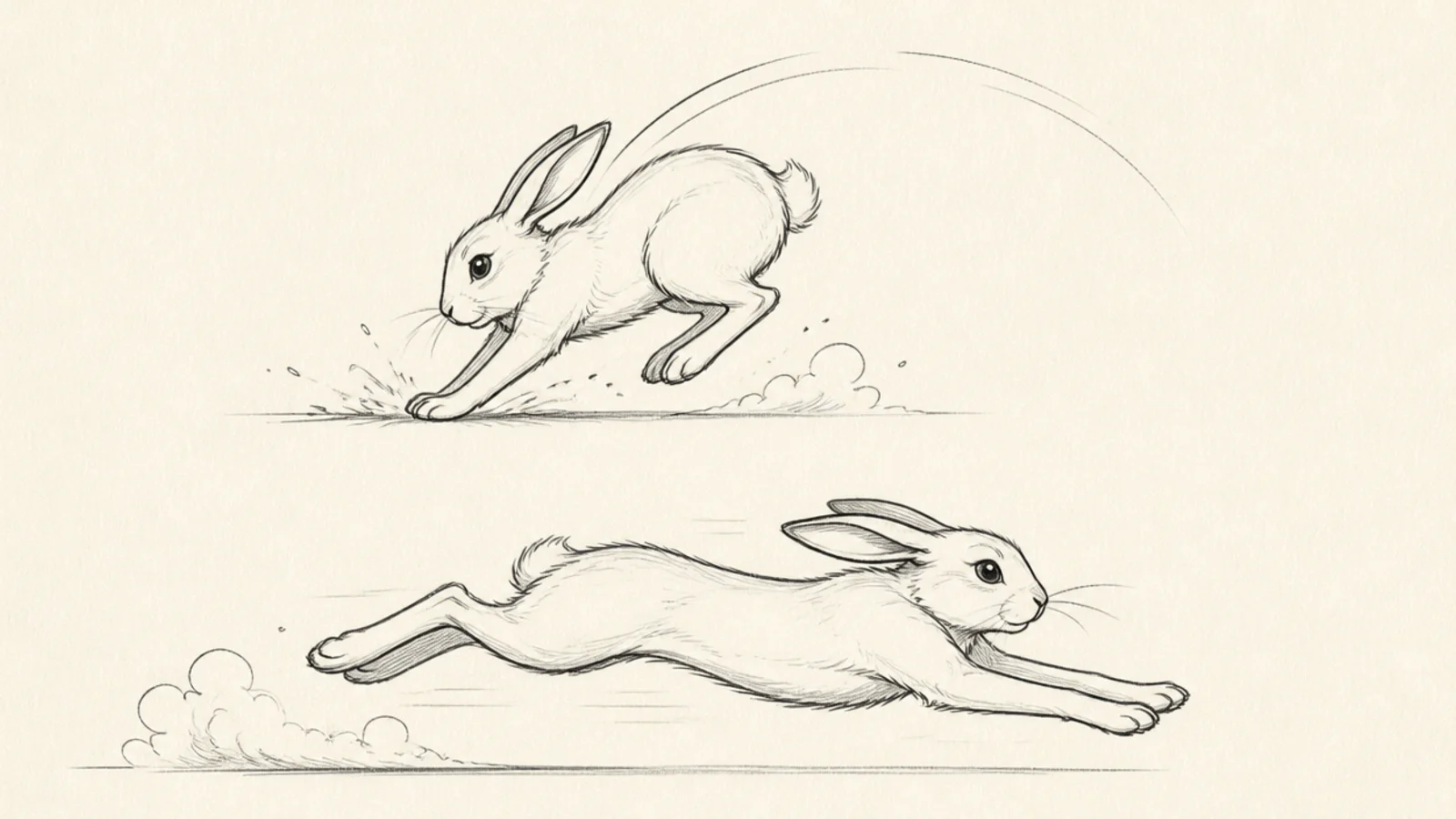
The landing shows the front paws reaching down to catch the weight. The compressing body absorbs the impact. It captures the end of the bound.
Step 1 draw a descending, compressing line of action. Step 2 reach the front paws down to the ground first. Step 3 swing the hind legs forward under the body with a small dust puff.
Reach the front paws down first; they catch the landing weight.
Don’t keep the body stretched; landing compresses the spine.
5 Binky Twist Leap
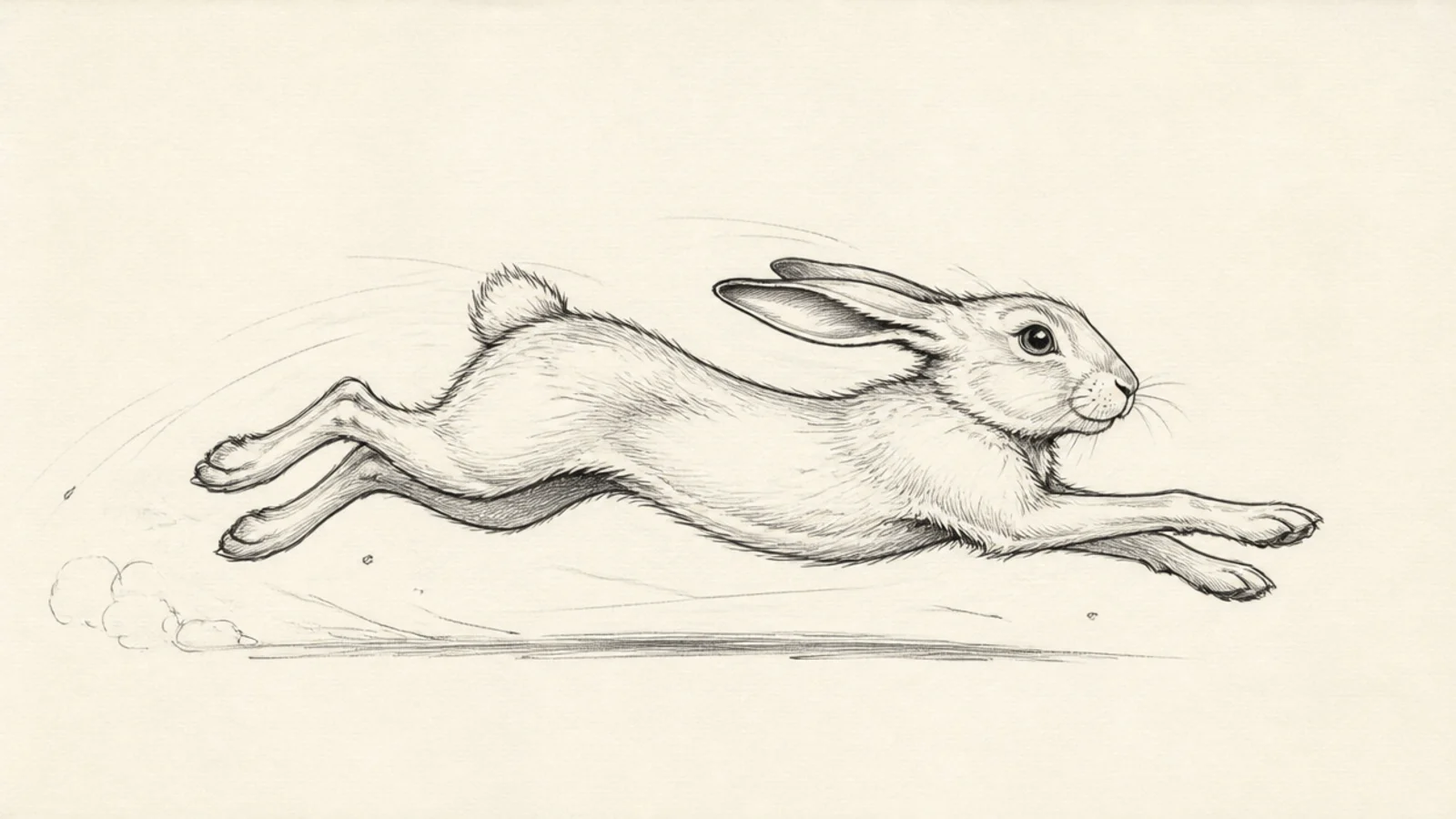
A binky is the joyful mid-air twist rabbits do when happy. The airborne, twisting body radiates energy. It is the most expressive leap of all.
Step 1 draw a rising arc, then twist it so head and hips face different ways. Step 2 kick the back legs out to one side. Step 3 flick the ears and add motion swirls.
Pro tipTwist the body so the head and hips face different directions.
AvoidDon’t keep it flat and level; the twist is what makes a binky.
6 Running Side View
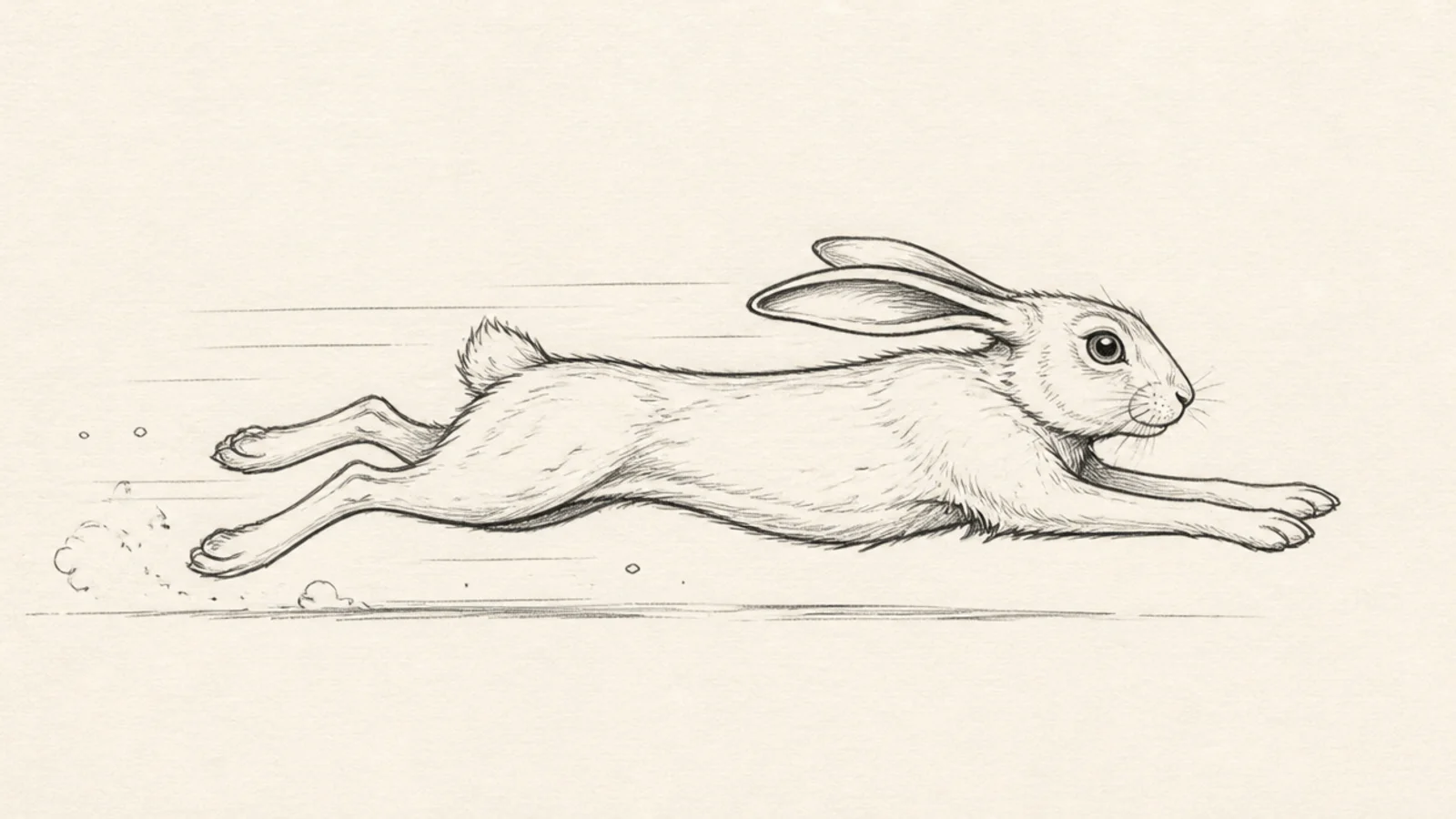
A clean side view shows the full running stride clearly. All four legs and the stretched body read at once. It is the clearest running angle to study.
Step 1 draw a level stretched line of action from the side. Step 2 reach the near legs and stagger the far legs slightly behind. Step 3 pin the ears and add trailing speed lines.
Stagger the far-side legs slightly behind the near ones for depth.
Don’t overlap all four legs exactly; a slight stagger shows the stride.
7 Running Three-Quarter
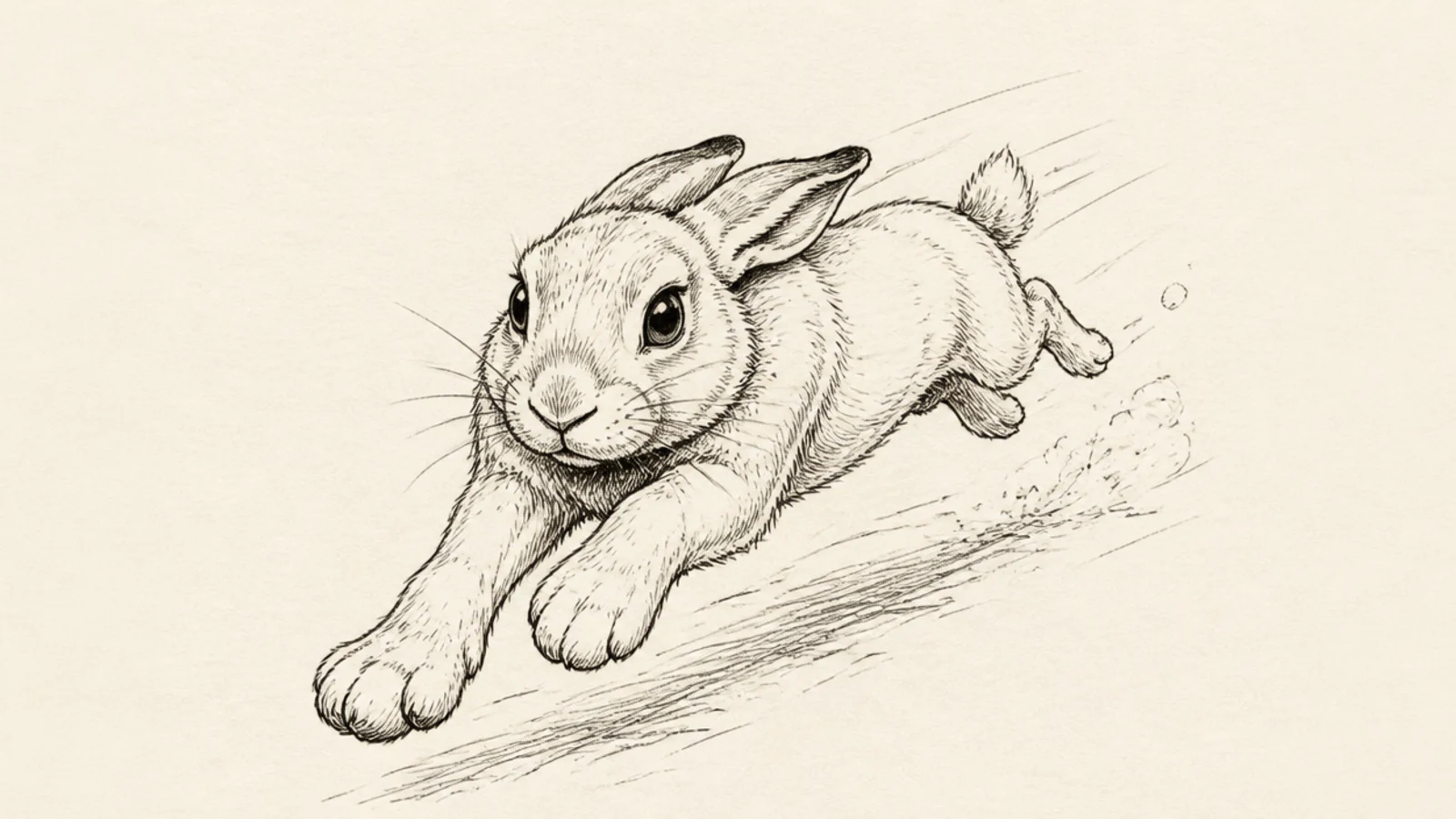
A three-quarter running angle adds depth and drama. The rabbit charges partly toward you, so the front reaches into space. It feels dynamic and dimensional.
Step 1 draw a stretched line of action angling toward the viewer. Step 2 foreshorten the reaching front legs larger and nearer. Step 3 keep the hind legs smaller behind and pin the ears.
Pro tipDraw the nearer front legs a little larger to push them toward you.
AvoidDon’t draw front and back legs the same size; foreshorten for depth.
8 Hurdle Jump
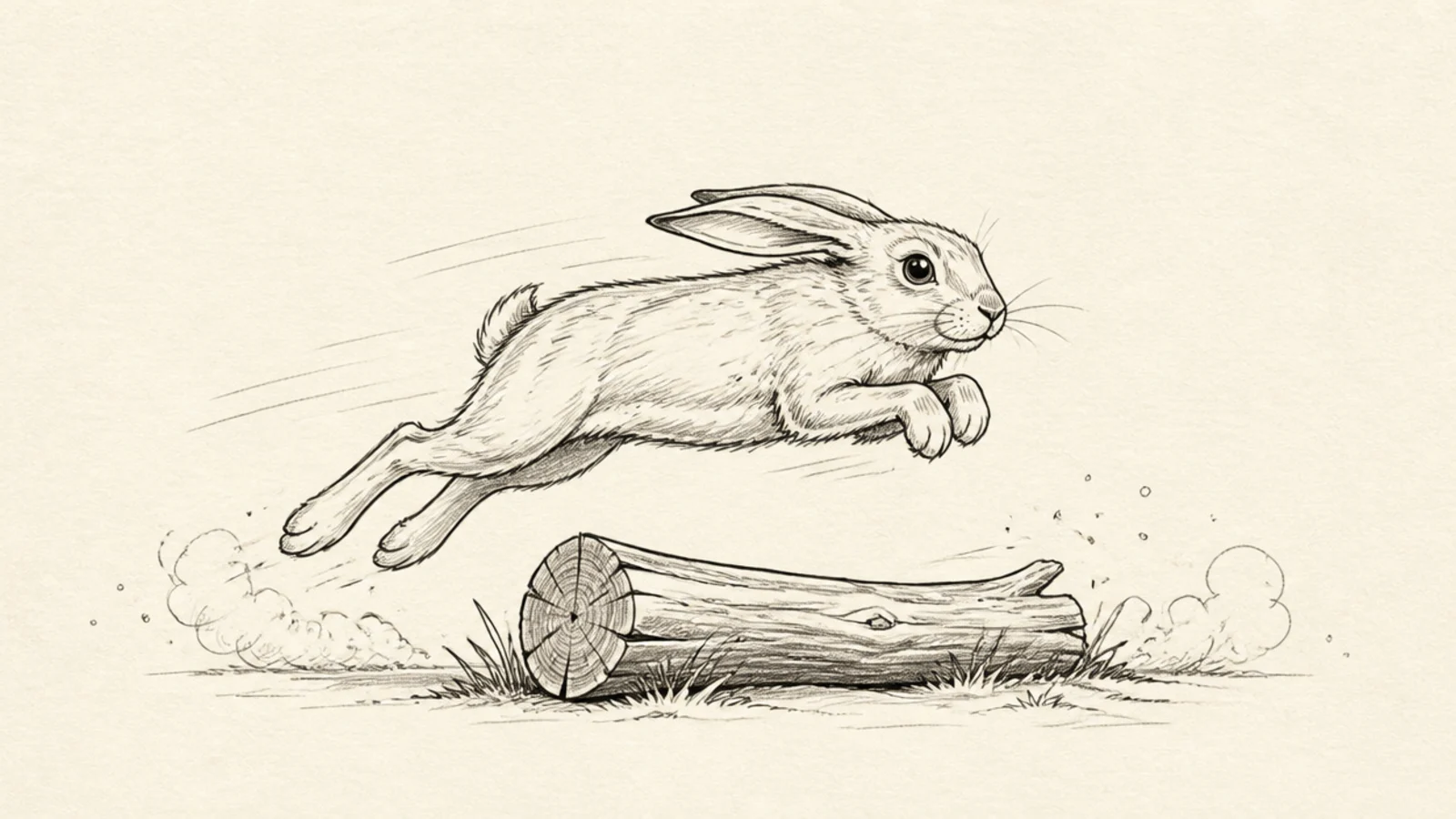
A rabbit leaping over a log tells a clear action story. The obstacle gives the jump a reason and a scale. It reads as an exciting bound.
Step 1 draw a low obstacle like a log. Step 2 arc the rabbit’s line of action up and over it. Step 3 tuck the front legs up and trail the hind legs clearing the obstacle.
Pro tipArc the leap high enough that the rabbit clearly clears the obstacle.
AvoidDon’t draw the rabbit level with the log; the arc over it shows the jump.
9 Downhill Bound
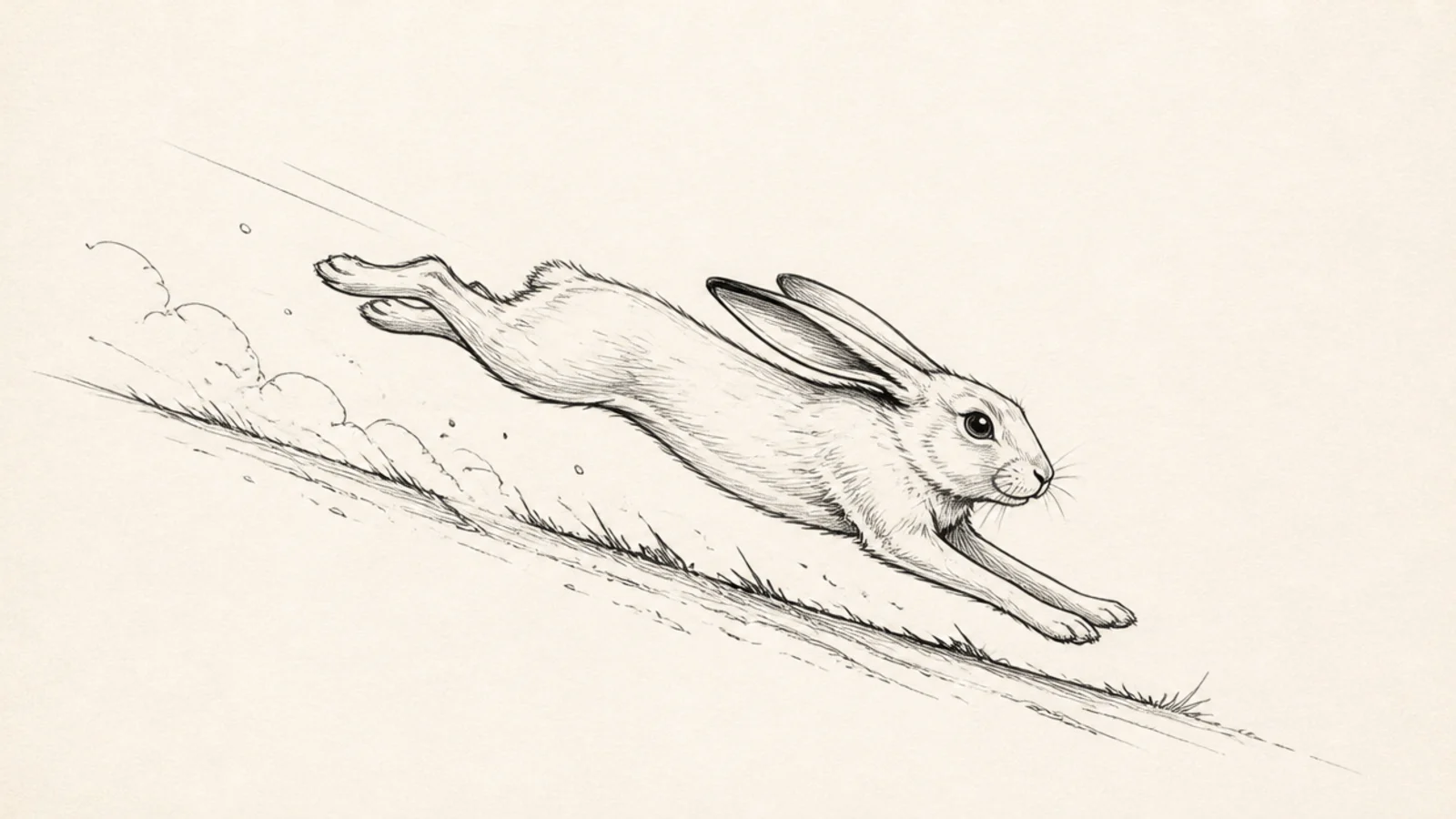
A downhill bound tilts the whole action for extra momentum. The descending angle adds speed and gravity. It feels fast and a little wild.
Step 1 draw a downward-sloping ground line. Step 2 angle the stretched line of action down the slope. Step 3 reach the front legs downhill and trail dust behind.
Tilt the whole running line down the slope for downhill momentum.
Don’t keep the body level on a slope; angle it to match the descent.
10 Running Toward the Viewer
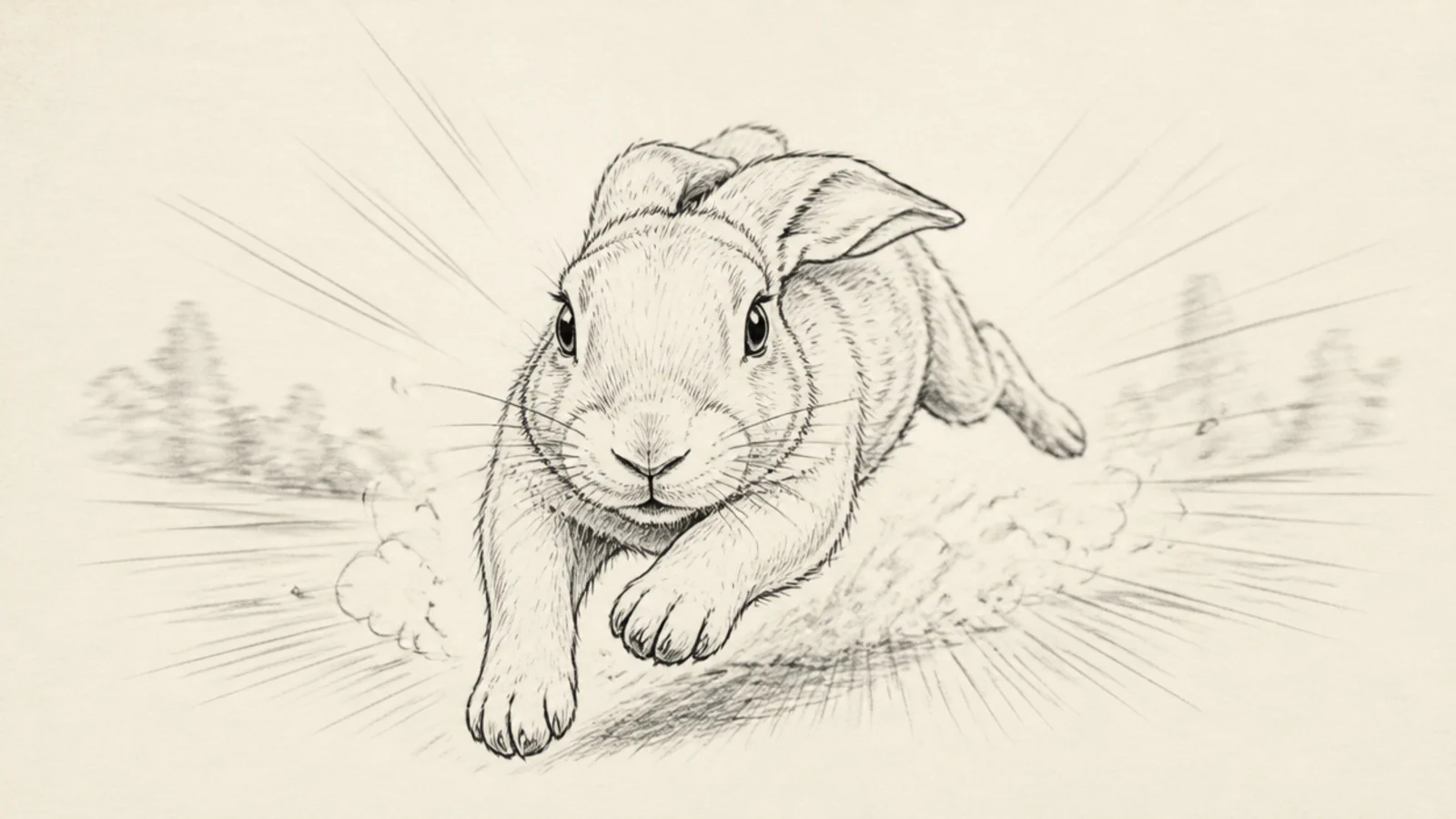
A rabbit charging straight at you is bold and immediate. Heavy foreshortening makes the front loom large. It is a striking, dynamic view.
Step 1 draw the head and front legs large and near. Step 2 shrink the body and hind legs quickly behind. Step 3 blur the background and add speed lines rushing past.
Exaggerate the size difference between the near front and far rear.
Don’t draw the body full length; foreshorten it hard toward you.
11 Zigzag Dodge
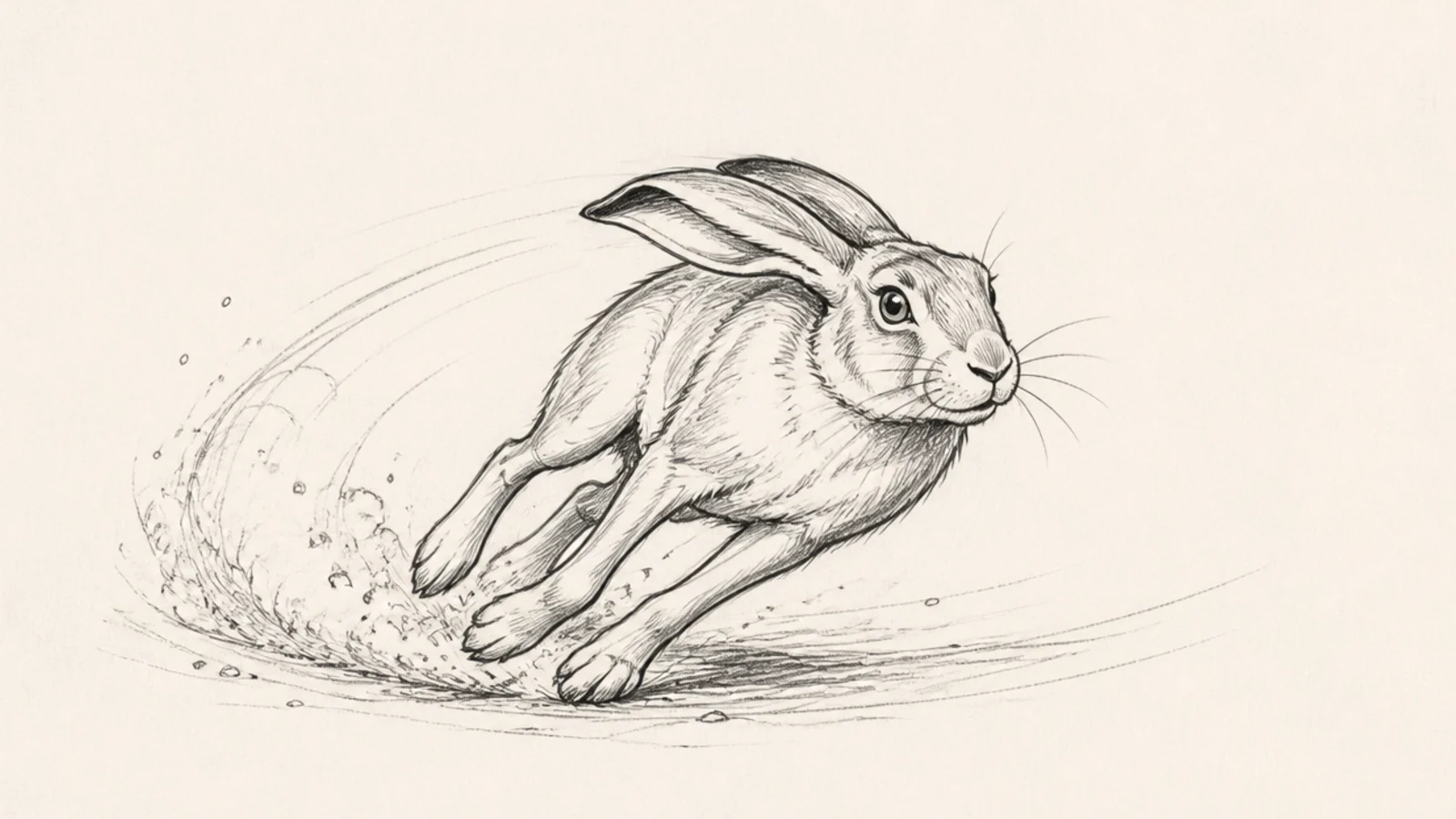
A zigzag dodge shows the sharp cut rabbits make to escape. The body banks hard into the turn. It reads as agile and quick.
Step 1 draw a curving line of action banking to one side. Step 2 lean the body into the turn. Step 3 plant the outer legs and trail a curved dust arc.
Pro tipBank the body into the turn like a runner cutting sideways.
AvoidDon’t keep the body upright; leaning into the cut shows the dodge.
12 Sprinting Ears Back
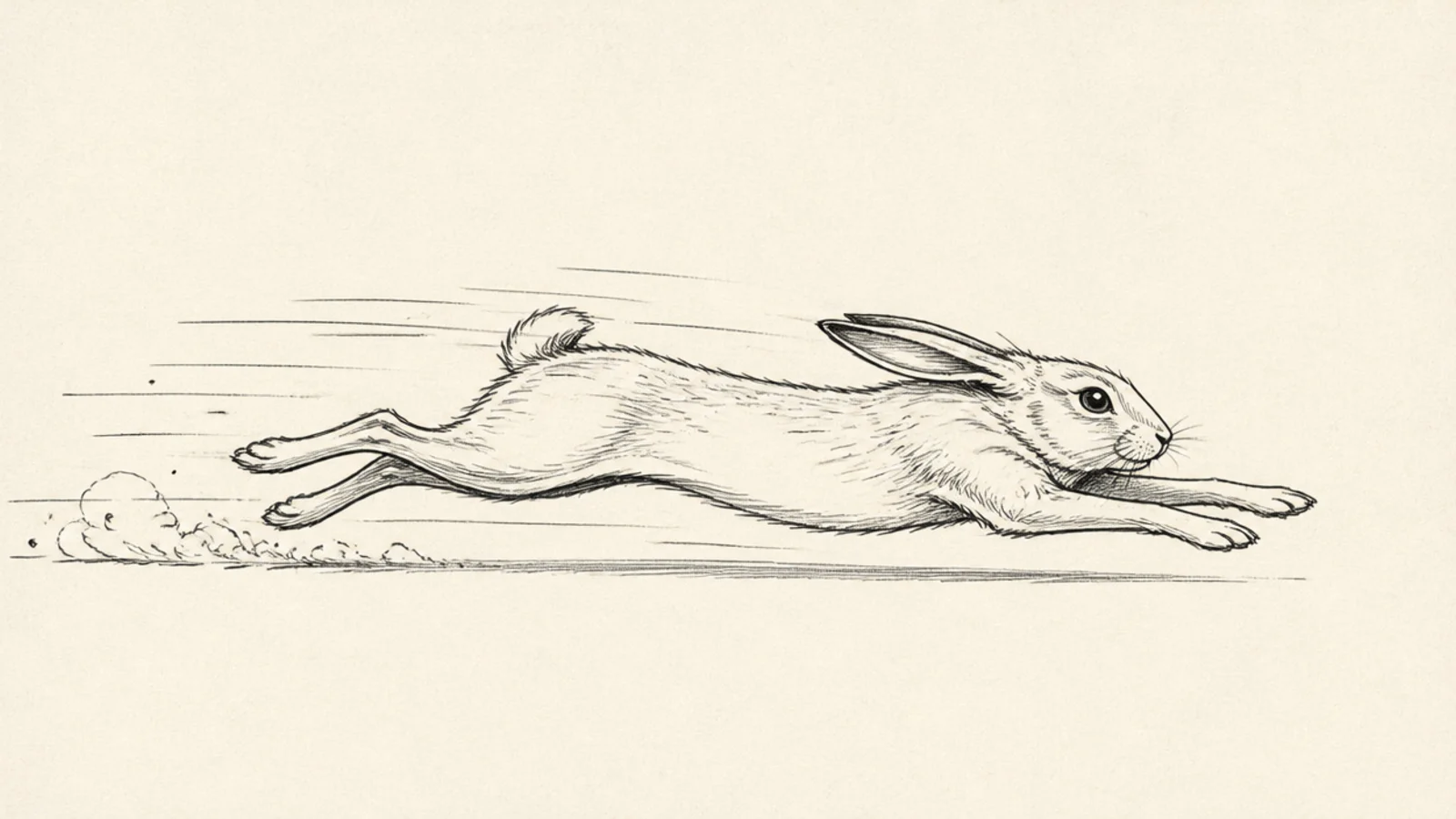
A flat-out sprint pins the ears tight for maximum streamline. The pinned ears and low body scream top speed. It is the fastest-reading pose.
Step 1 draw a very long low line of action. Step 2 flatten the body close to the ground. Step 3 pin the ears tight to the back and add long trailing speed lines.
Pro tipPin the ears flat to the back to streamline the sprinting head.
AvoidDon’t lift the ears; upright ears make a sprint look slow.
13 Hopping Sequence
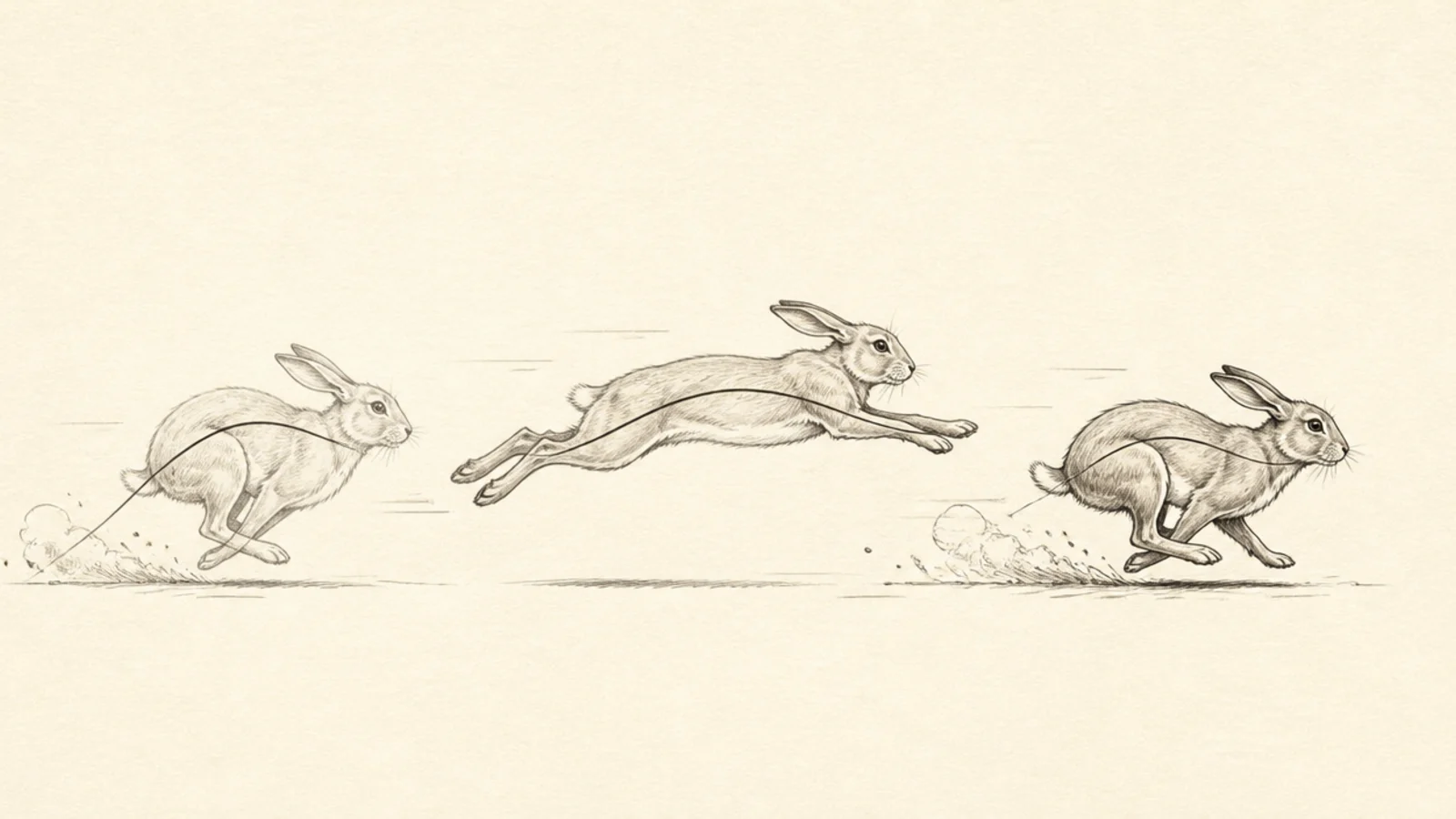
A sequence shows the same rabbit at three stages of one bound. Seeing push-off, flight, and landing together explains the motion. It is a great study.
Step 1 draw the rabbit pushing off at left. Step 2 draw it airborne and stretched in the middle. Step 3 draw it landing at right, fading the earlier stages lighter.
Pro tipFade the earlier stages lighter so the sequence reads left to right.
AvoidDon’t draw all three at full darkness; fade them to show time passing.
14 Splashing Run
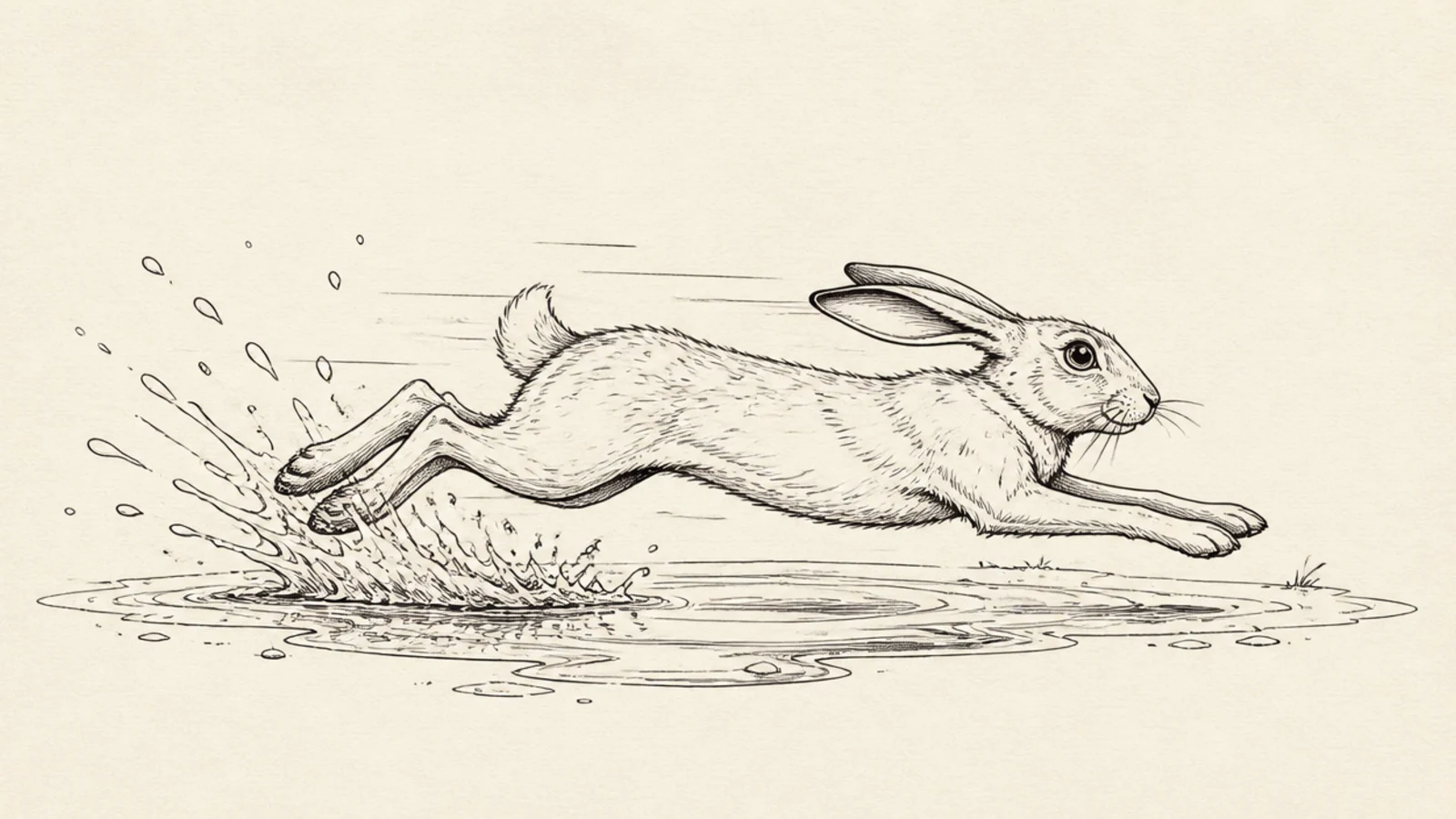
A rabbit splashing through a puddle adds drama and evidence of speed. The flying water shows the force of each step. It is lively and fun.
Step 1 draw a stretched running rabbit low to the ground. Step 2 add a puddle under the feet. Step 3 flick water droplets and splash arcs kicking up behind.
Pro tipKick the splash droplets back behind the feet to show the speed.
AvoidDon’t draw calm water; the splash is what shows the running force.
15 Silhouette Leap
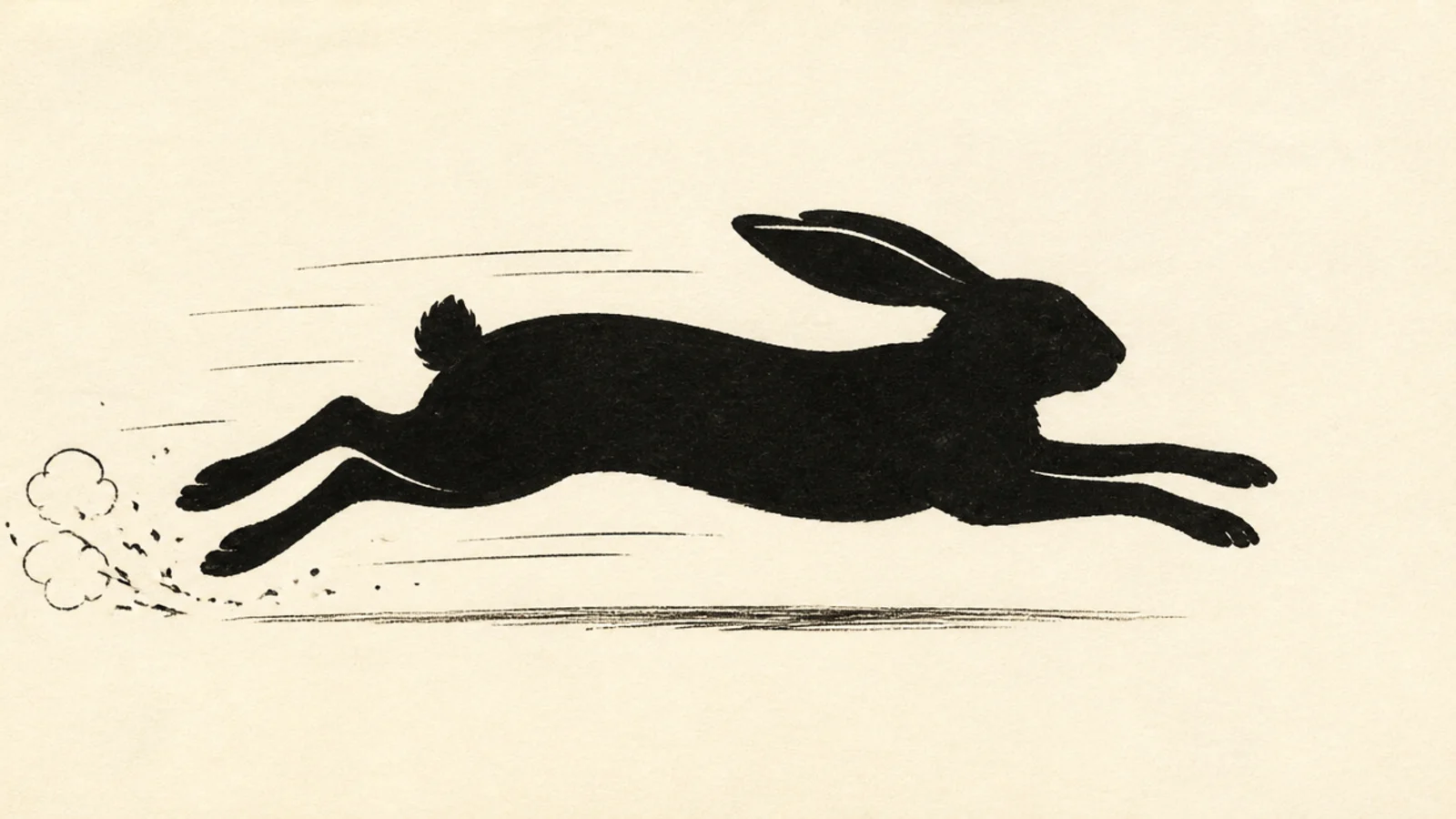
A solid silhouette of a leaping rabbit is bold and graphic. The strong stretched shape reads instantly as motion. It is a striking way to close the list.
Step 1 draw a stretched leaping outline. Step 2 fill it solid with one color. Step 3 keep the extended legs and pinned ears crisp against the background.
Pro tipMake the stretched pose clear since the silhouette shows only the shape.
AvoidDon’t add interior detail; the leaping shape alone carries the motion.