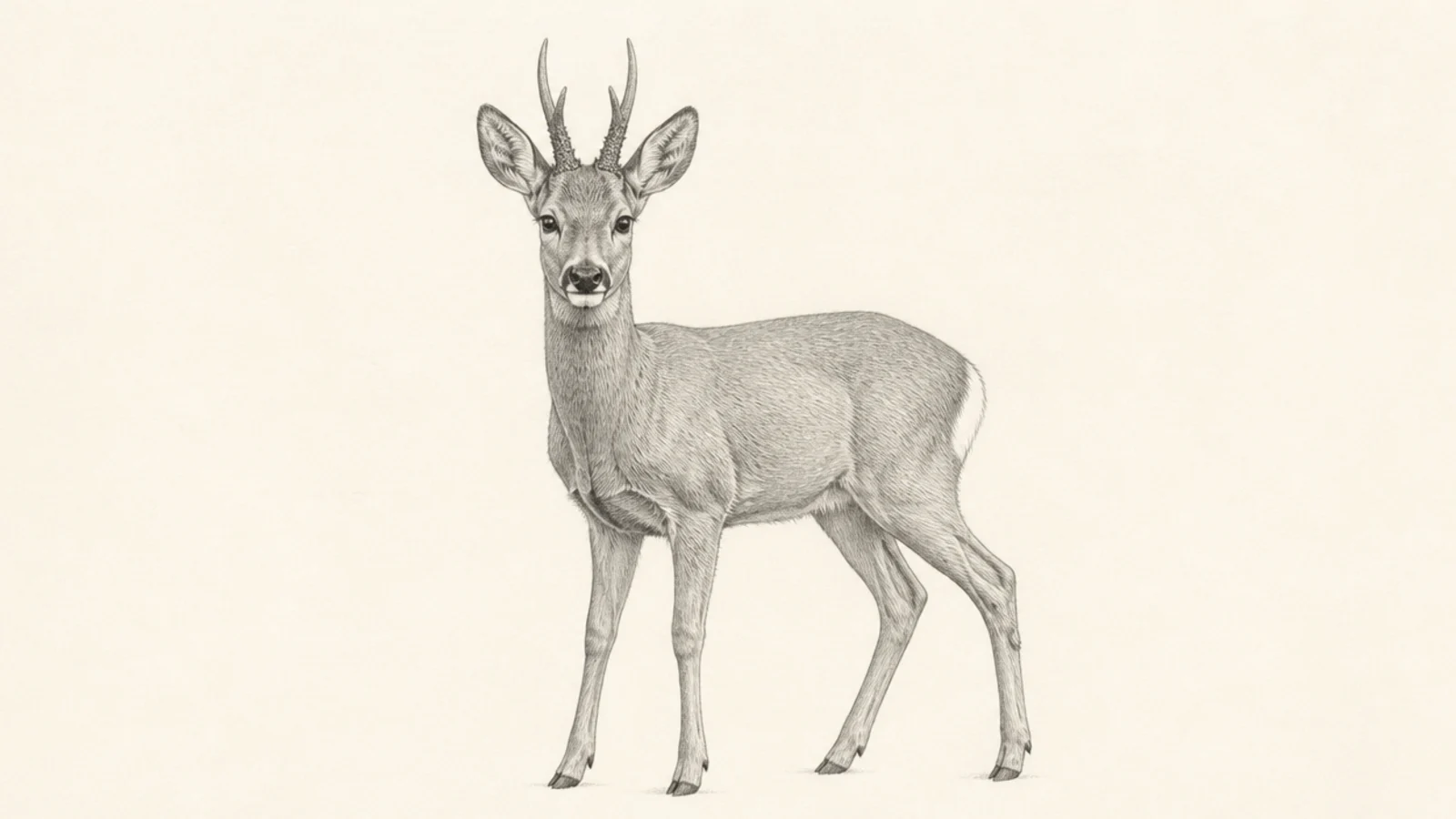
1 Roe Deer Head Portrait
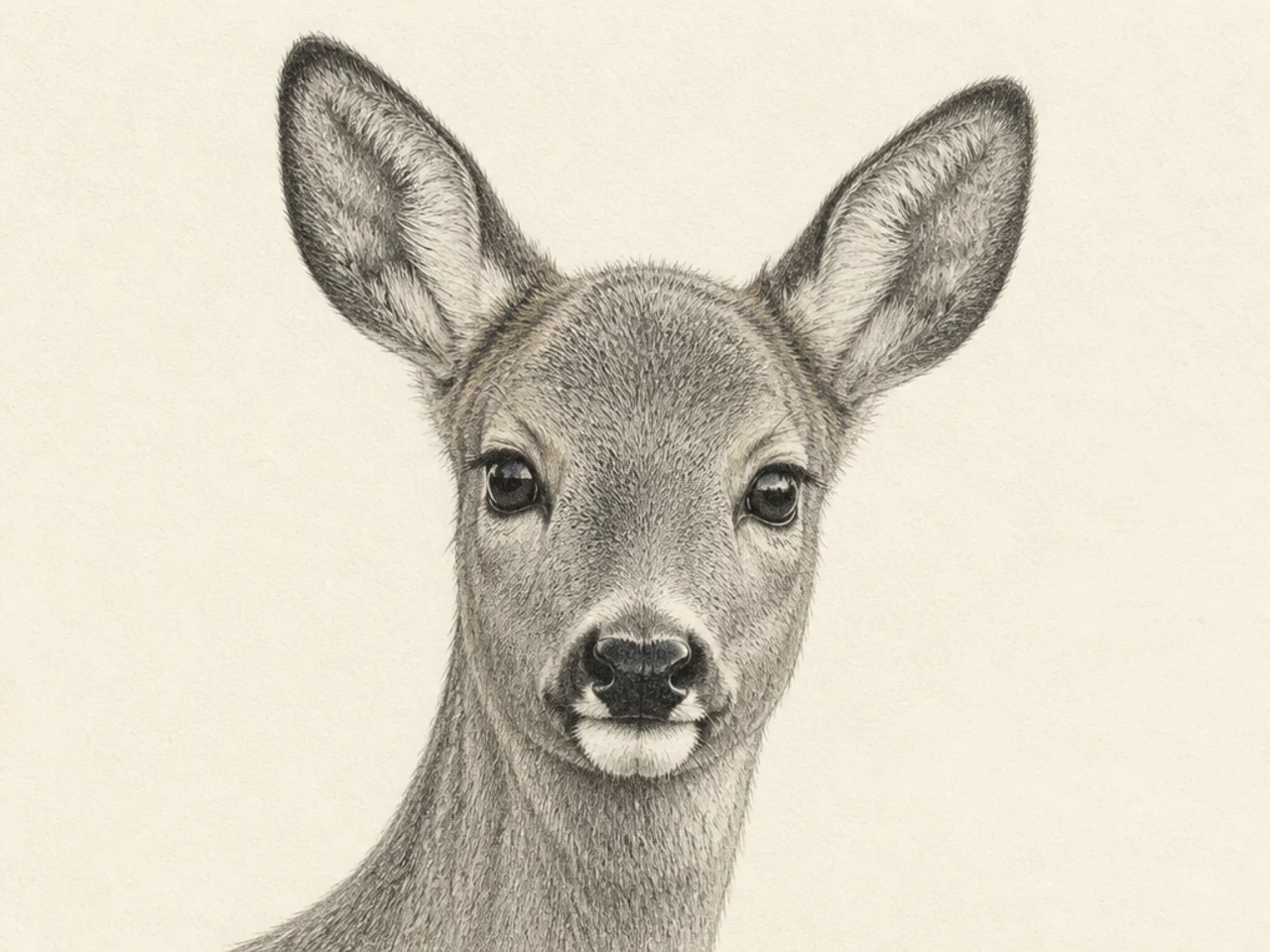
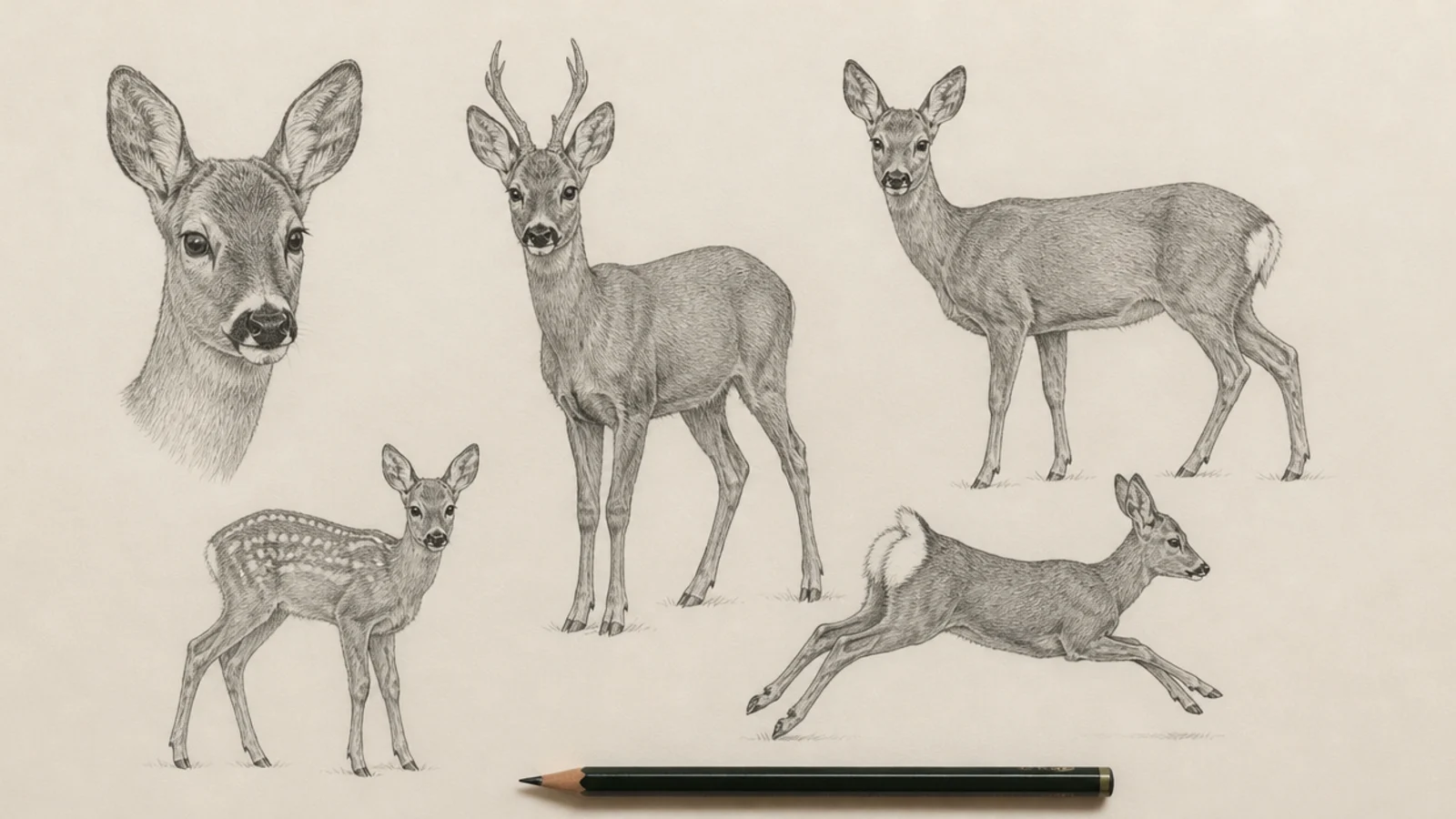
A head portrait is the best way to learn the roe deer’s signature markings. The black nose, white chin, and big rounded ears define the species. It is the ideal first sketch.
Step 1 draw a short-muzzled head wedge. Step 2 add the glossy black nose, white chin, and black nose-to-lip line. Step 3 add large rounded ears set high and a soft dark eye.
Make the nose a solid glossy black and the chin clearly white for a true roe look.
Don’t draw a long muzzle; the roe deer’s face is short and neat.
2 Summer Red-Coat Roe
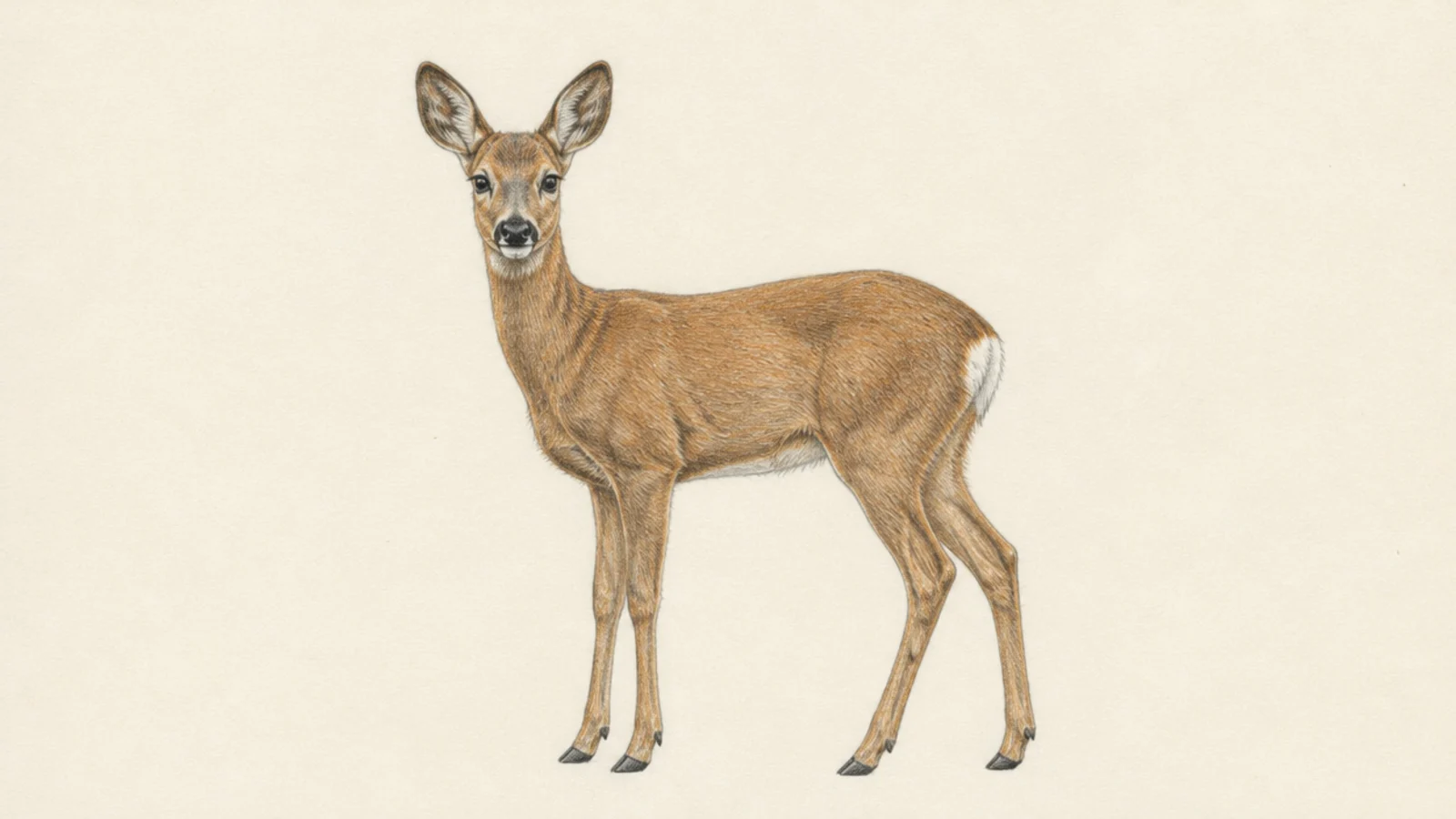
A summer roe deer wears a warm foxy red coat that glows in the light. The rich color is a key seasonal marker. It captures the animal at its brightest.
Pro tipUse a warm red-brown for the coat to signal the summer season.
Step 1 draw a compact standing roe deer. Step 2 color the coat a warm foxy red-brown. Step 3 keep the chin and rump patch light and add the black nose.
AvoidDon’t use a dull grey; summer roe deer are foxy red.
3 Winter Grey-Coat Roe
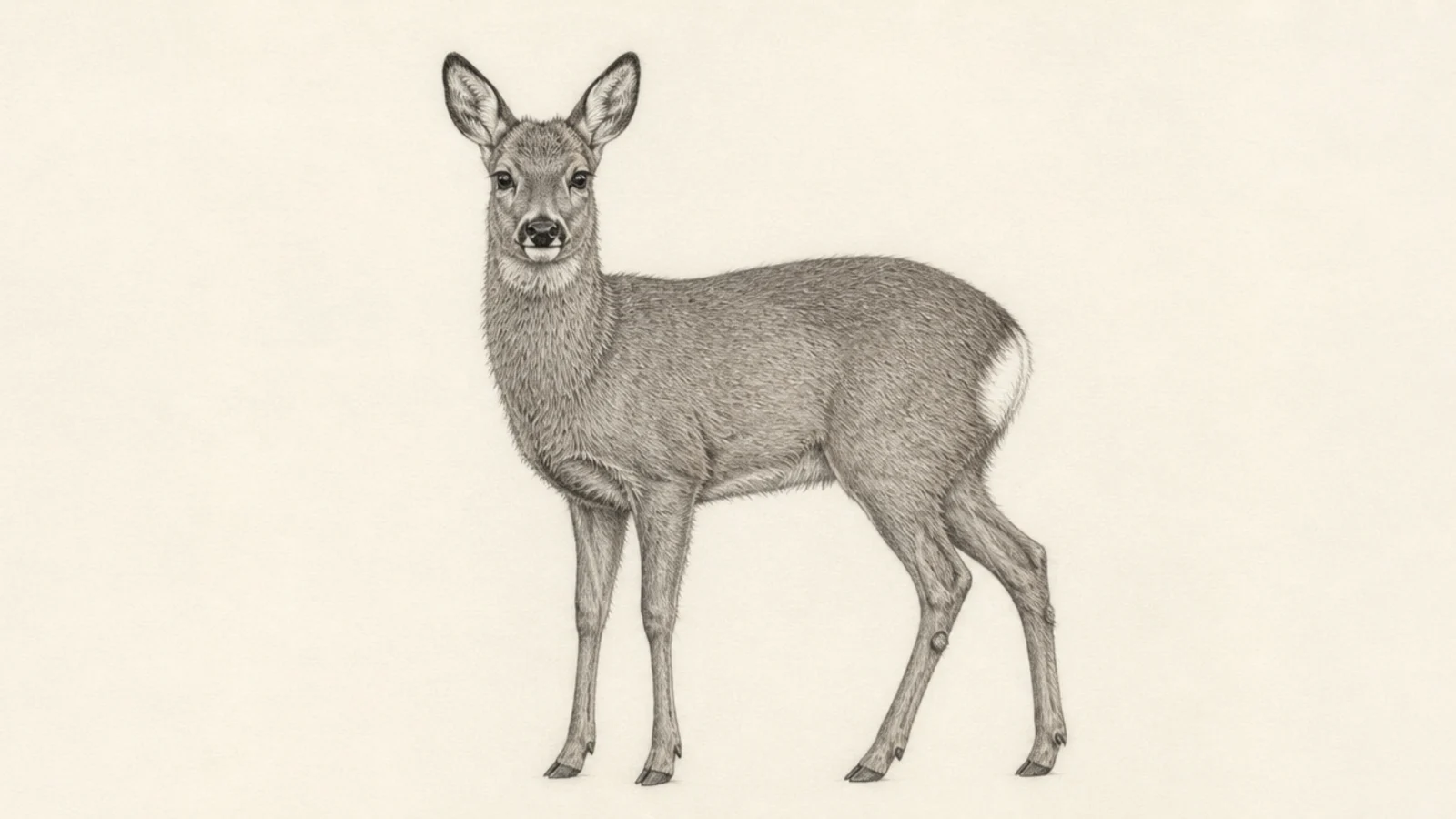
A winter roe deer wears a thicker greyish-brown coat for the cold. The muted color and fuller coat mark the season. It looks hardy and soft.
Pro tipAdd a fuller, fluffier coat and a greyer tone for the winter look.
Step 1 draw a standing roe deer with a slightly fuller body. Step 2 color the coat greyish-brown and thicker. Step 3 keep the white chin and rump and add a hint of neck ruff.
AvoidDon’t keep it foxy red; winter coats turn grey-brown.
4 Roe Buck With Short Antlers
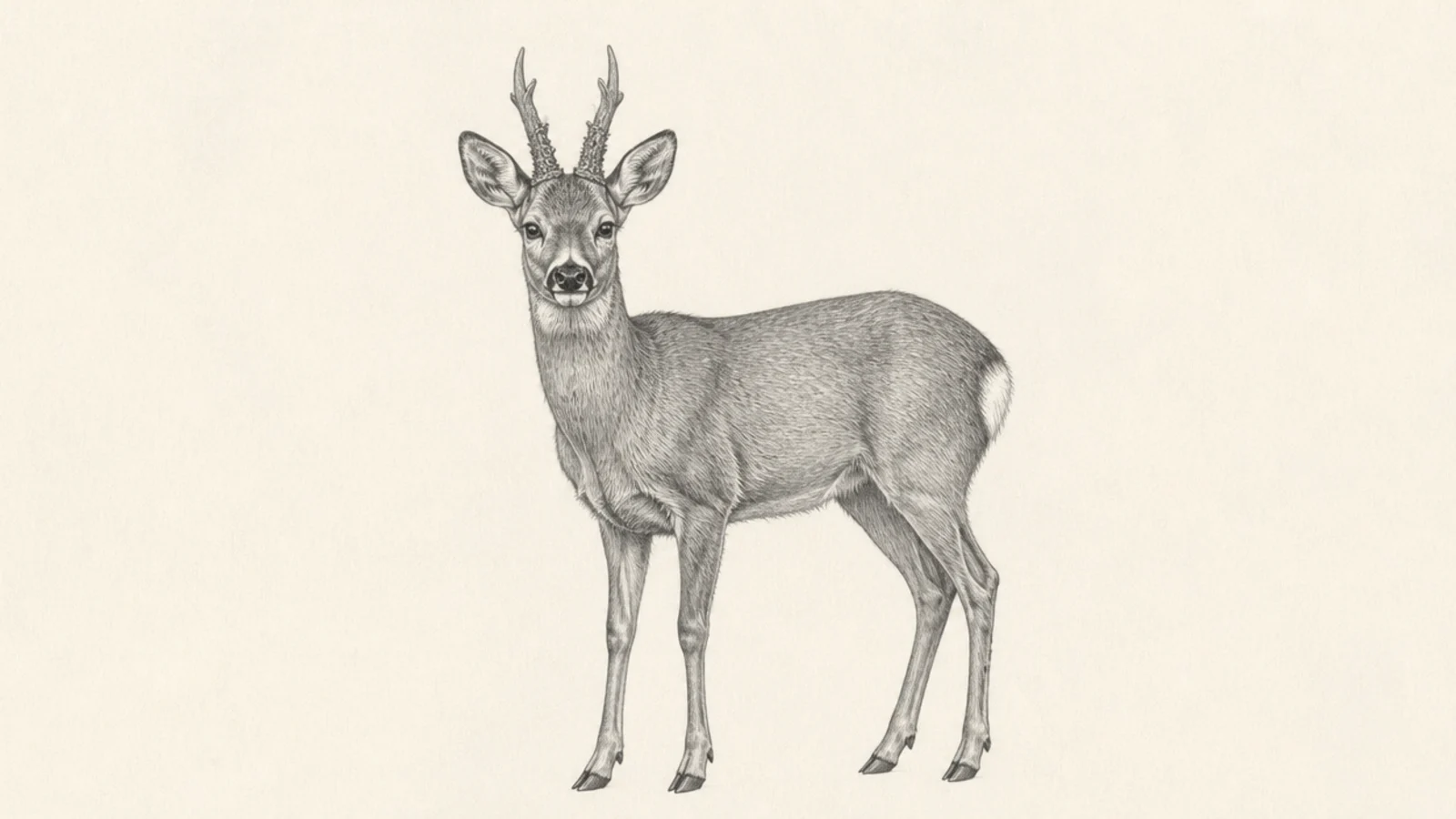
A roe buck carries short, upright, pearled antlers with about three points each. The knobbly texture is distinctive. It teaches the roe deer’s unique antler shape.
Step 1 draw a roe deer head. Step 2 add two short upright antlers, roughly ear height, with three points each. Step 3 add a rough pearled, knobbly texture and a coronet ring at the base.
Keep the antlers short and knobbly with a pearled base, not smooth beams.
Don’t draw a big branching rack; roe antlers are short and pearled.
5 Roe Doe
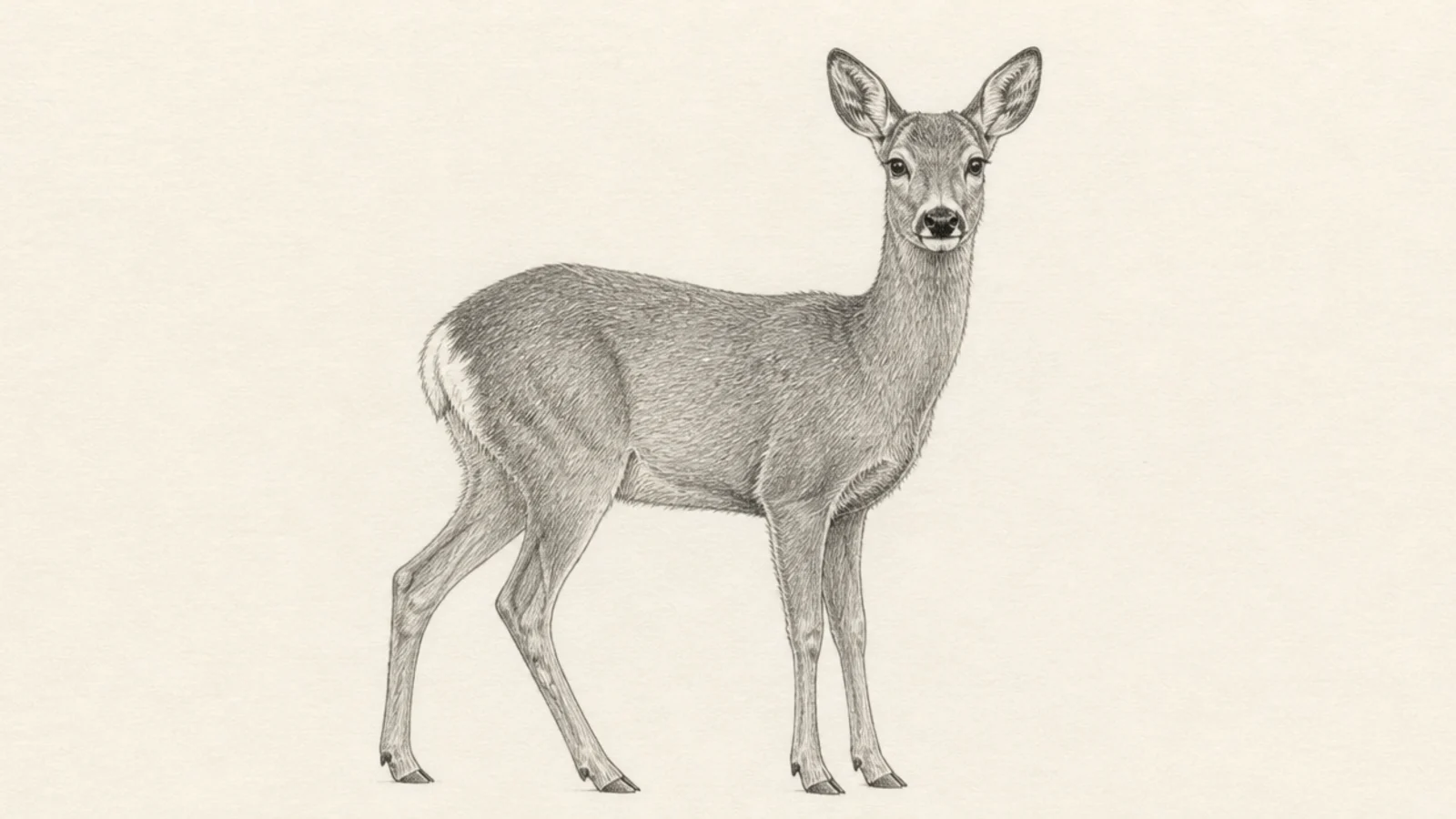
A roe doe has no antlers, a neat head, and a delicate build. The plain crown makes her simple to draw. She is elegant and gentle.
Step 1 draw a compact standing roe deer. Step 2 keep the head plain with the black nose and white chin. Step 3 add large rounded ears and the light rump patch.
Leave the crown plain and keep the whole build small and neat.
Don’t add antlers; the doe’s plain head is a key marker.
6 Spotted Roe Kid
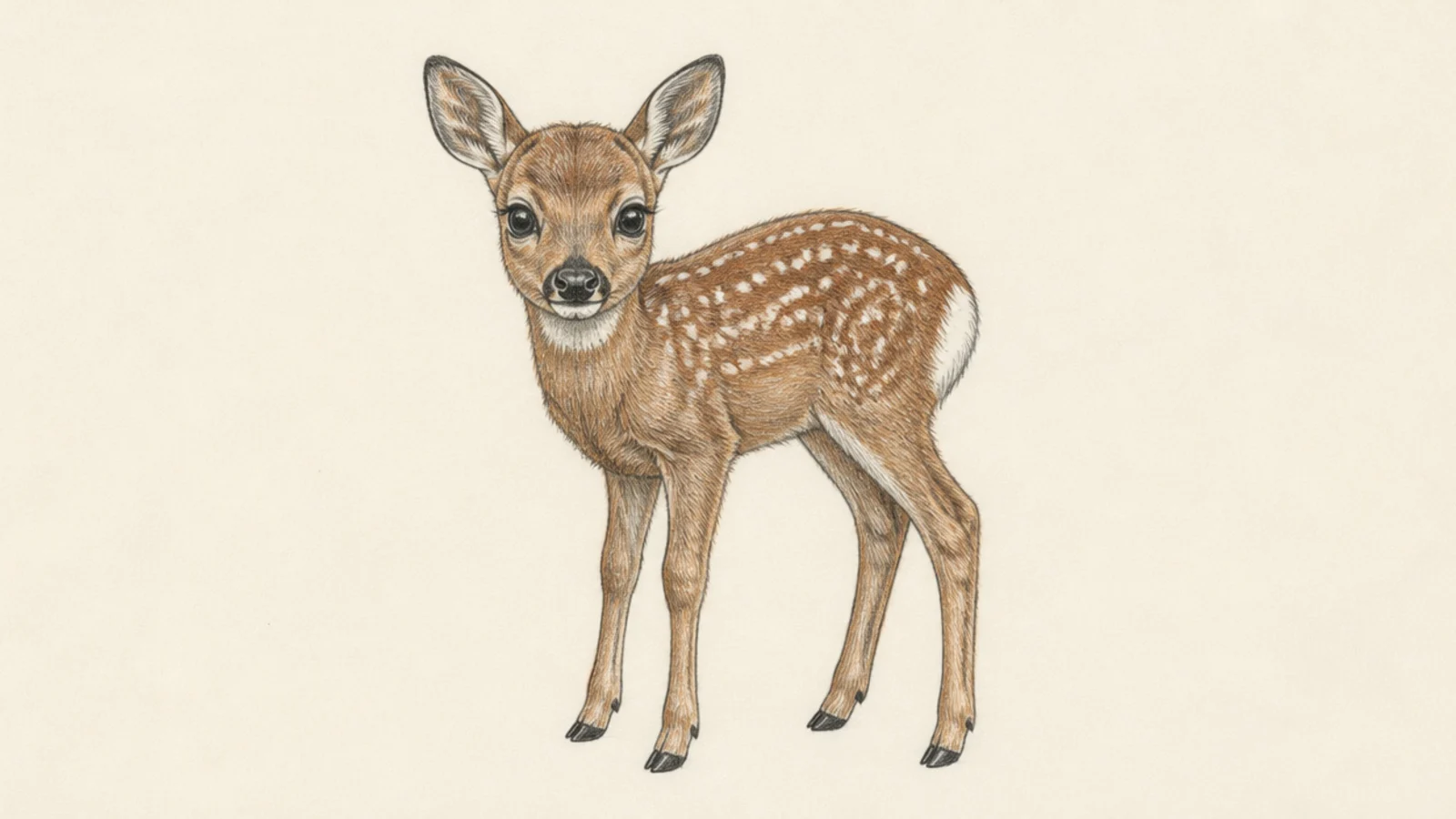
A roe kid is a fawn with rows of white spots on a reddish coat. The baby proportions and spots are endearing. It captures the youngest stage.
Pro tipLine the white spots in loose rows along the back like a real roe kid.
Step 1 draw a small roe deer with a rounder body and big head. Step 2 add rows of white spots along the back and flanks. Step 3 add the black nose, white chin, and big ears.
AvoidDon’t scatter the spots randomly; roe kids have neat spotted rows.
7 Alert Roe Deer
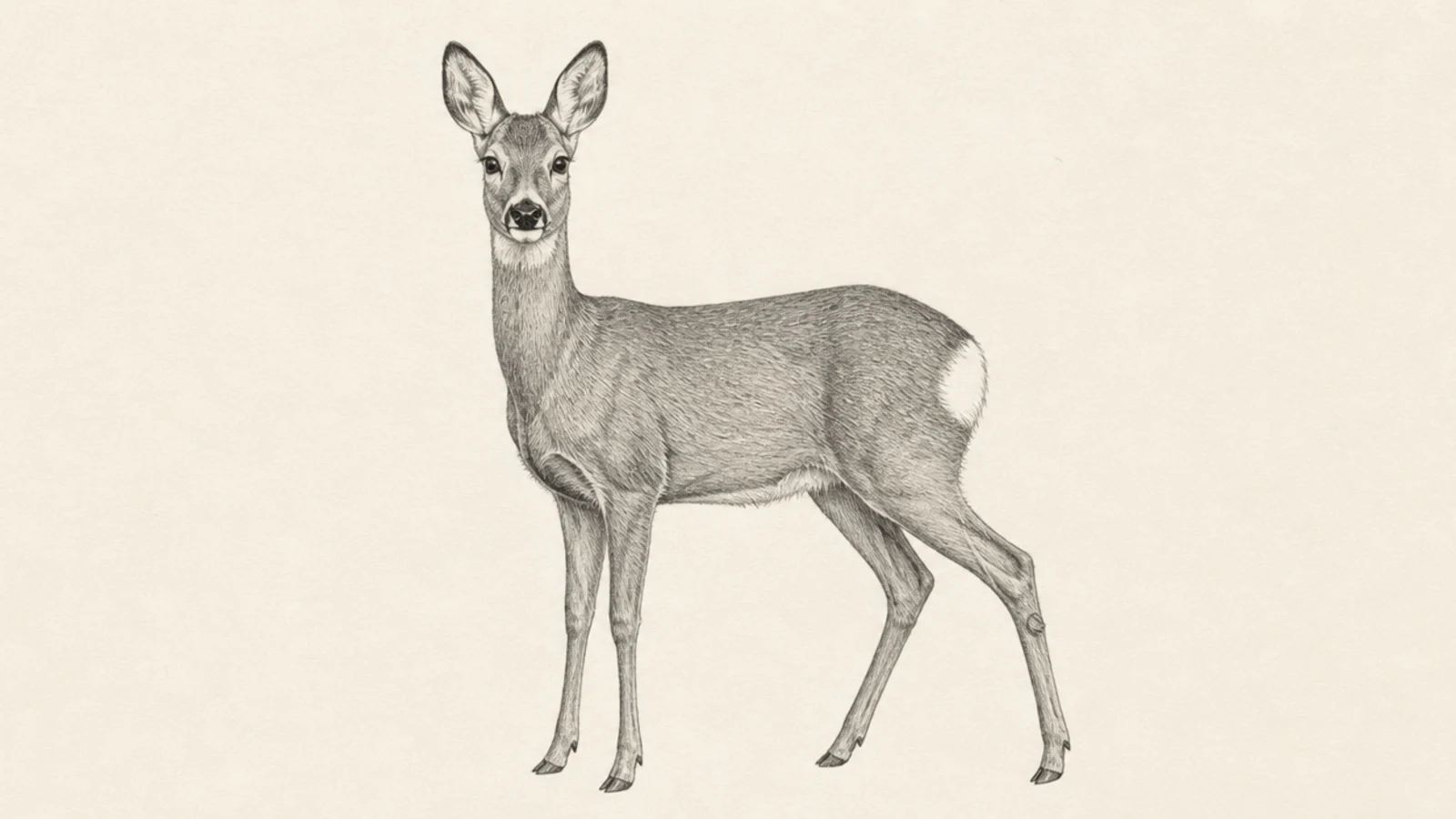
An alert roe deer stands tall with ears forward and head high, listening. The upright tension is characteristic. It captures the watchful woodland animal.
Pro tipRaise the head and point the big ears forward to show alertness.
Step 1 draw a compact roe deer with the head raised. Step 2 point the large ears forward and widen the eyes. Step 3 lift the neck and add the black nose and white chin.
AvoidDon’t relax the pose; the upright alert stance is the character.
8 Bounding Roe With Rump Flash
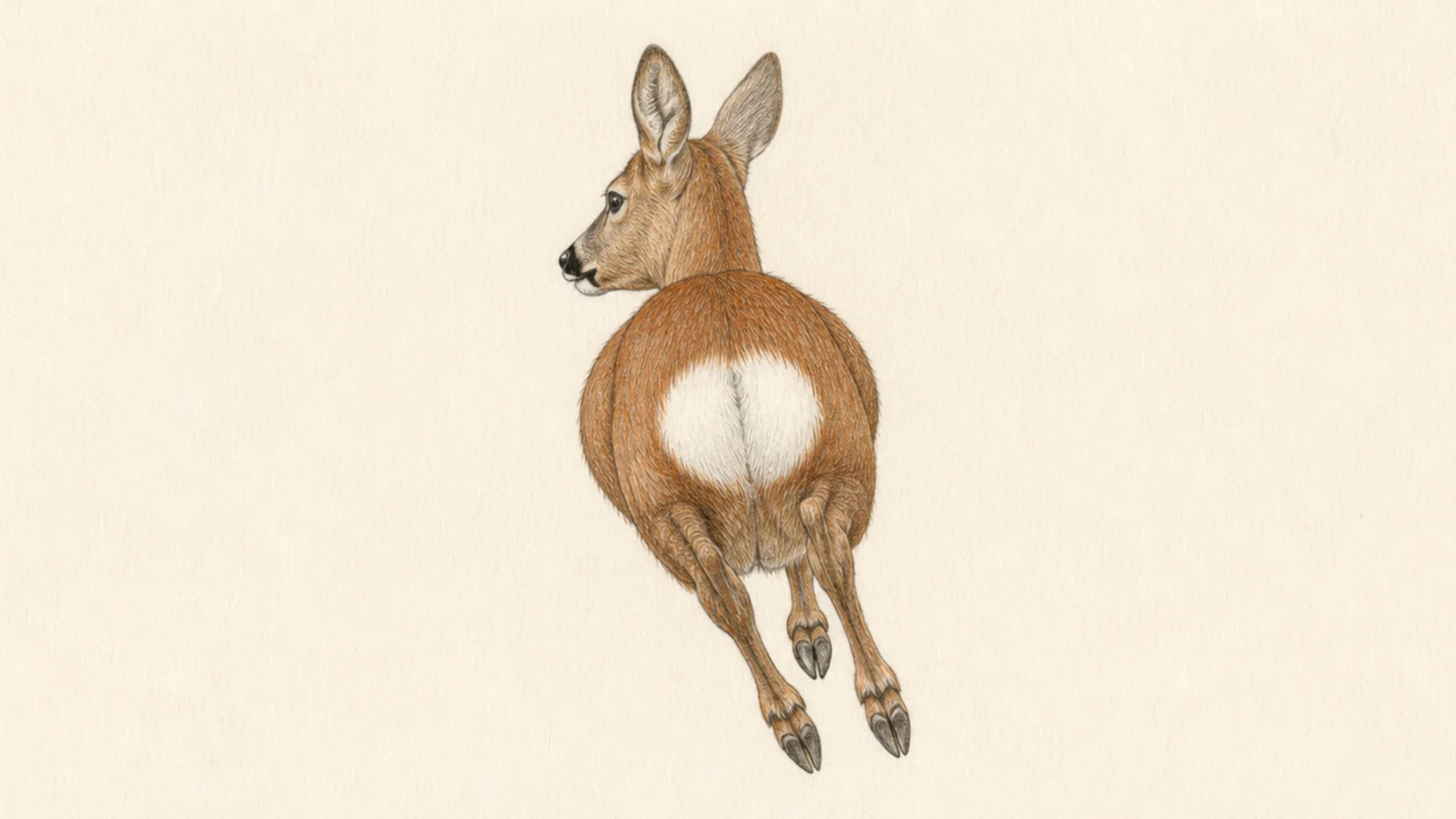
A bounding roe deer flares its bold white rump patch as it flees, a classic behavior. The flashed patch is a great species detail. It captures action and marking together.
Pro tipFlare the white rump patch bright since it is the roe deer’s alarm signal.
Step 1 draw a roe deer mid-bound with legs gathered. Step 2 turn the rear toward the viewer and flare the white rump patch bright. Step 3 tuck the head and add the reddish coat.
AvoidDon’t add a long tail; roe deer have almost none, just the rump patch.
9 Grazing Roe Deer
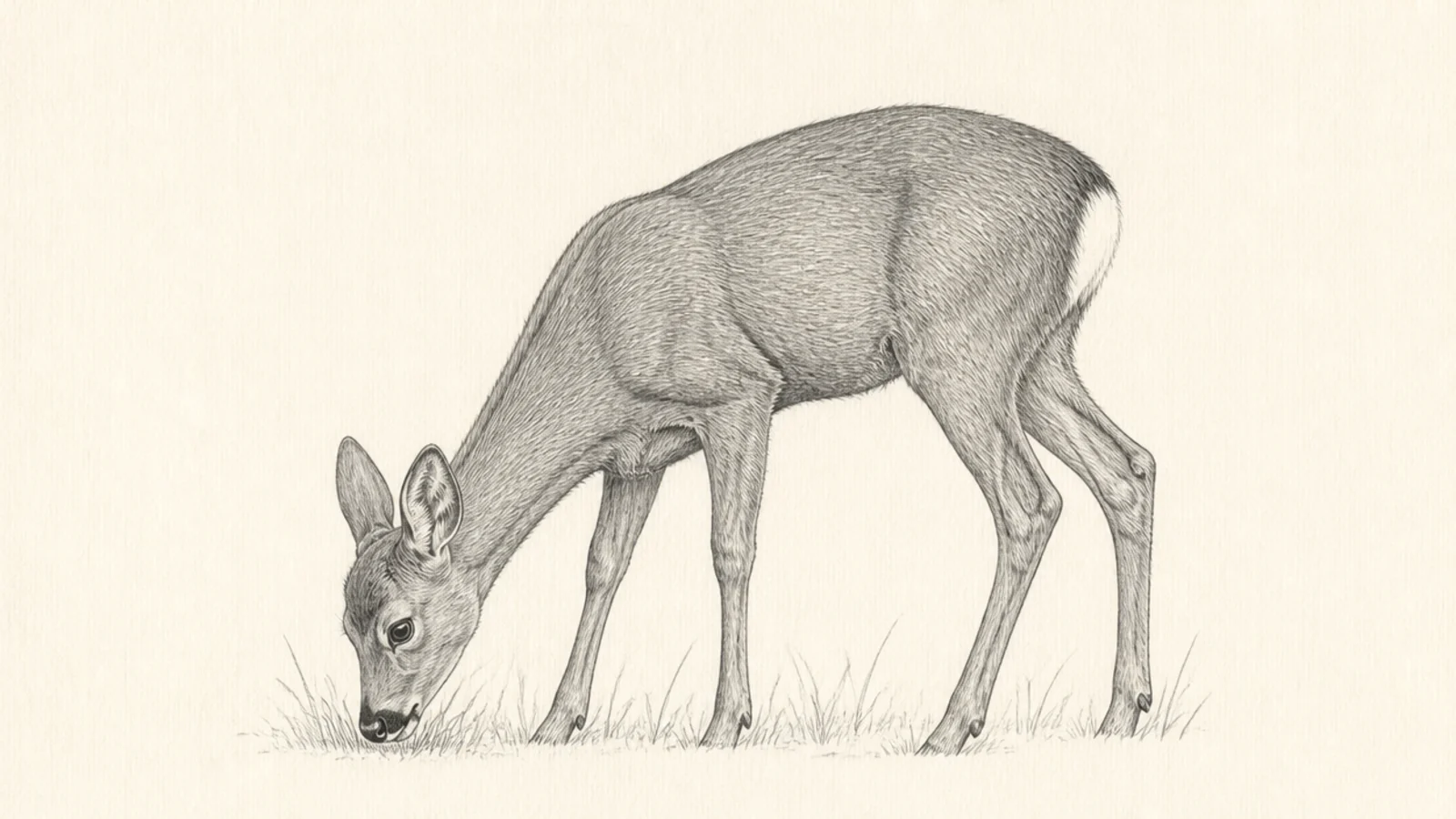
A grazing roe deer lowers its head to feed, a calm everyday pose. The bent neck shows natural behavior. It is peaceful and true to life.
Pro tipKeep the neck short and the legs long, as roe deer are built.
Step 1 draw the compact body and long thin legs. Step 2 curve the short neck down to the grass. Step 3 add the black nose to the ground and a few grass blades.
AvoidDon’t draw a long neck; the roe deer’s neck is fairly short.
10 Roe Deer in a Field
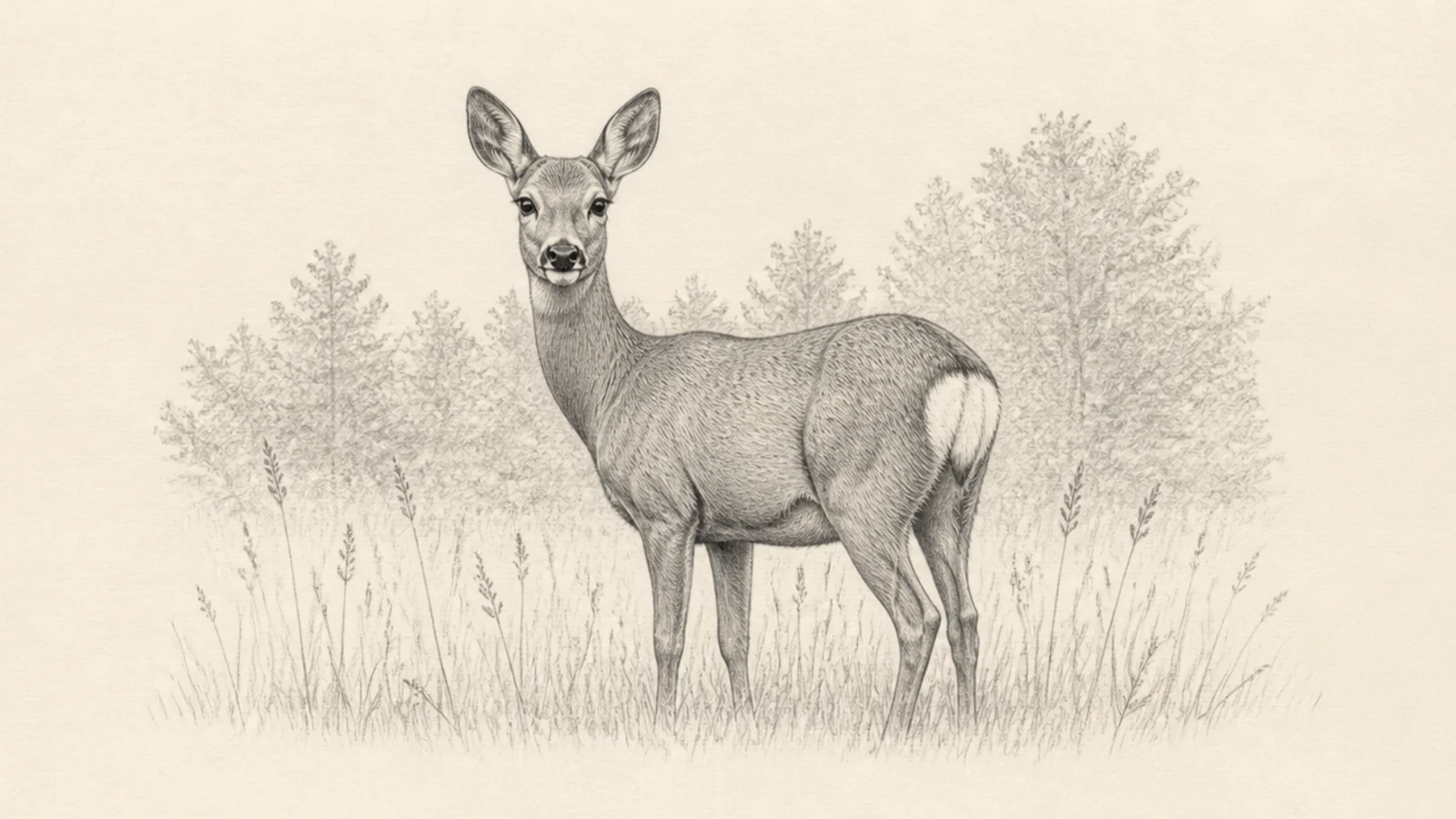
A roe deer in a field at the woodland edge sets it in its real habitat. The simple background adds place. It feels like a genuine field sighting.
Pro tipPlace the deer near the tree line where roe deer actually browse.
Step 1 draw a standing roe deer. Step 2 add a grass line and a few taller stalks around its legs. Step 3 add a soft tree line behind and keep the deer the focus.
AvoidDon’t clutter the field; a grass line and tree edge are enough.
11 Barking Roe Buck
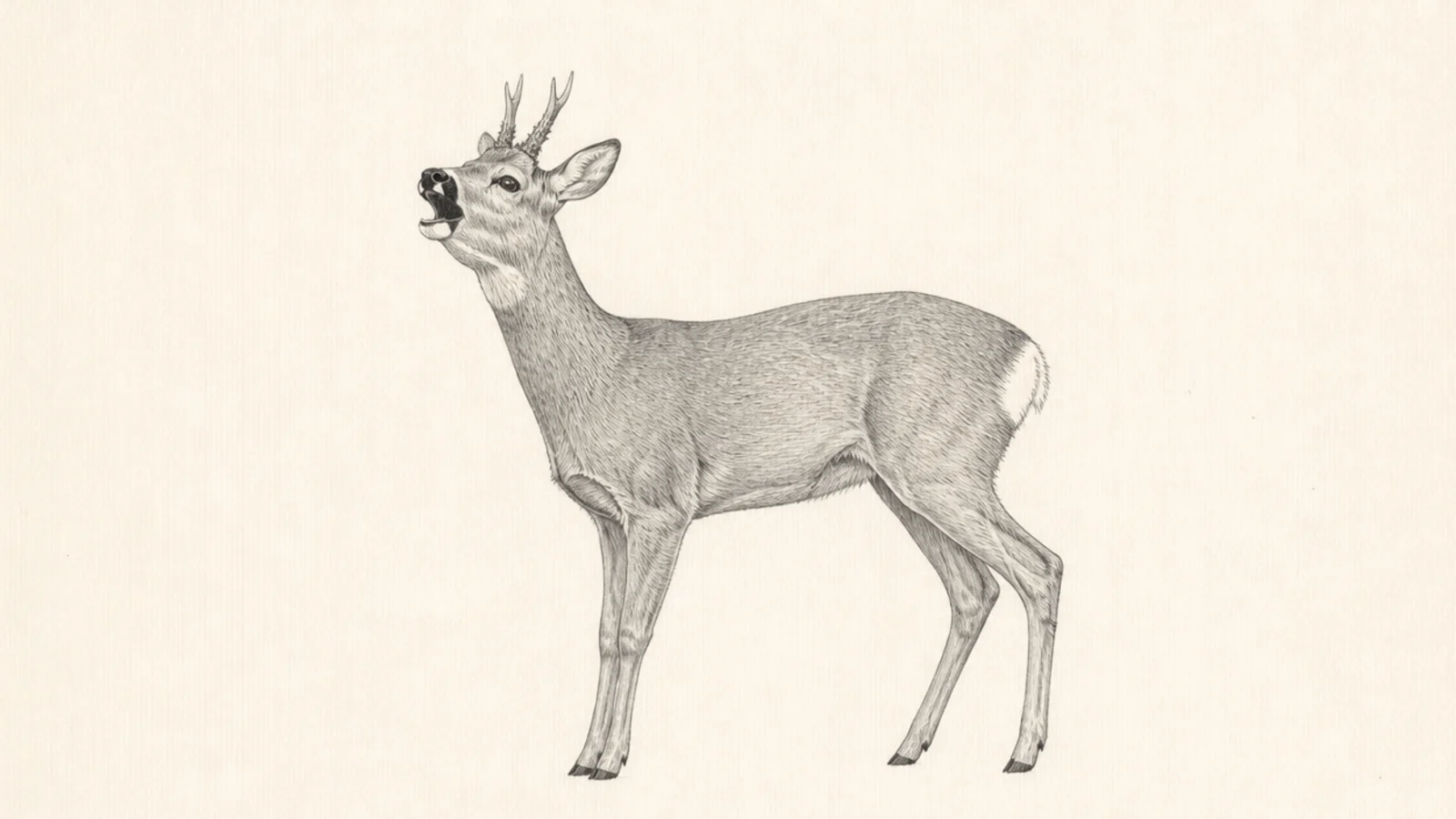
A roe buck barking a sharp warning is a dramatic, characterful pose. The open mouth and raised head show behavior. It captures the roe deer’s famous bark.
Step 1 draw a roe buck with the head up and neck stretched. Step 2 open the mouth into a short bark shape. Step 3 add the short pearled antlers and a tense forward ear.
Open the mouth just a little; the roe bark is a sharp, short call.
Don’t draw a wide roar; a small sharp open mouth suits the bark.
12 Two Roe Deer
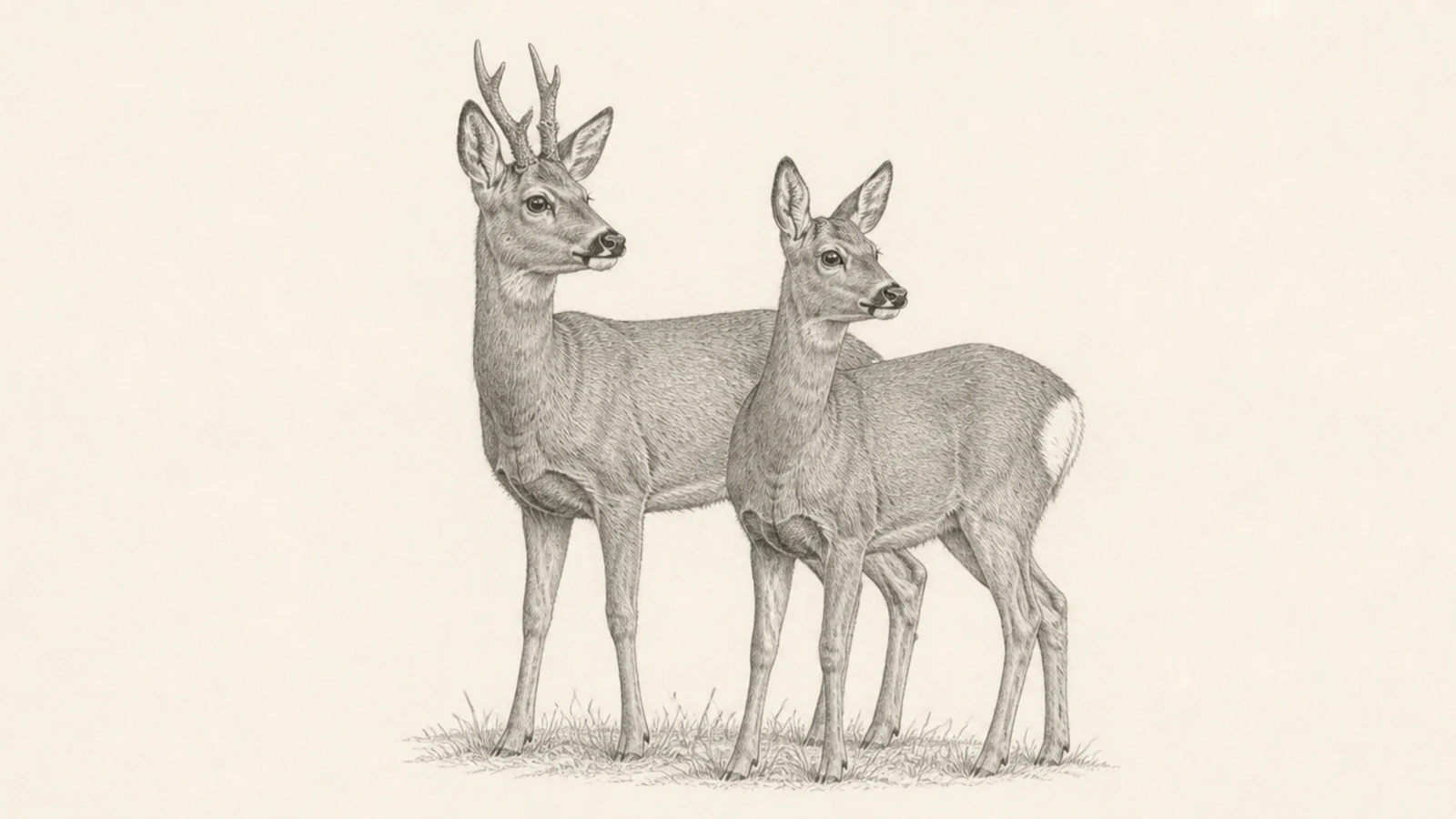
A roe buck and doe together make a natural woodland pair. Contrasting the antlered buck with the plain doe is instructive. It reads as a real small group.
Step 1 draw a compact roe doe. Step 2 add a roe buck beside her with short antlers. Step 3 overlap them slightly and turn their heads alertly in one direction.
Show one with antlers and one without to contrast buck and doe.
Don’t make them identical; the buck’s antlers set them apart.
13 Roe Deer in Snow
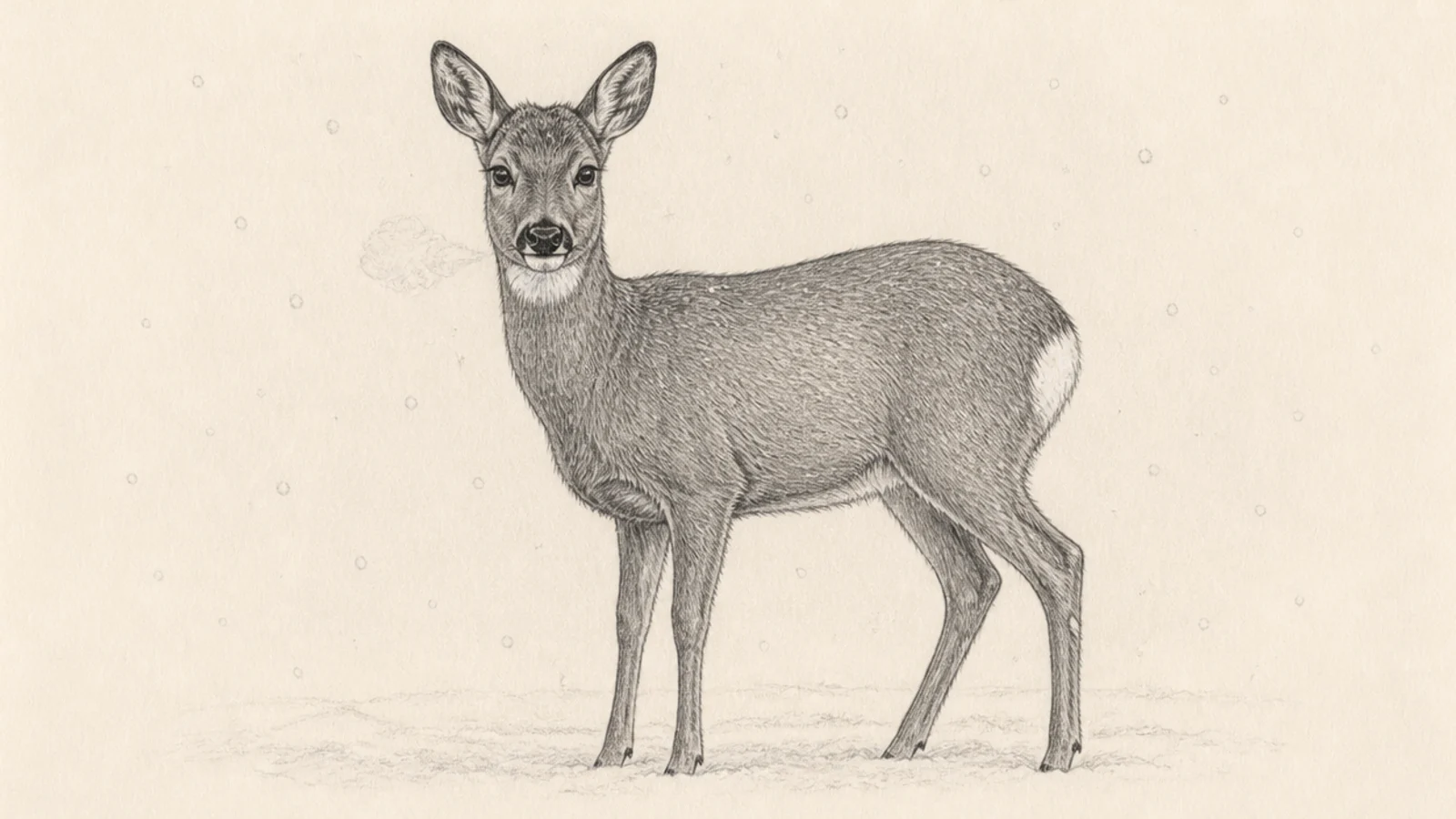
A roe deer in snow wears its winter coat amid falling flakes. The seasonal scene is atmospheric. It pairs the grey coat with a wintry mood.
Pro tipPair the grey winter coat with snow so the season reads clearly.
Step 1 draw a roe deer in its fuller grey winter coat. Step 2 add snow underfoot and falling flakes around it. Step 3 add a soft breath puff and keep the white chin bright.
AvoidDon’t use the red summer coat here; winter roe deer are grey-brown.
14 Roe Buck in Velvet
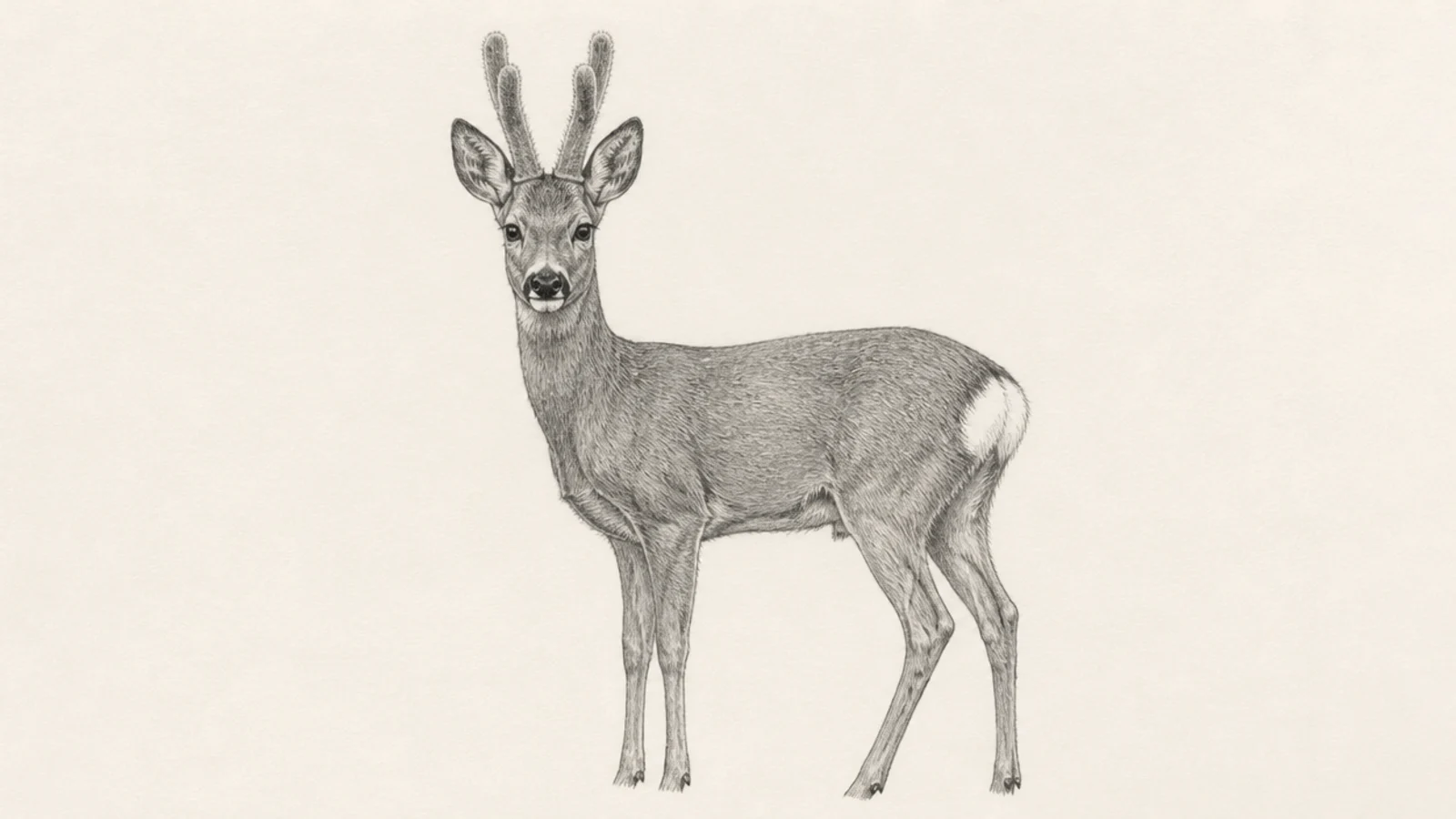
A roe buck growing antlers has them covered in soft velvet. The furry, rounded antlers are a spring detail. It shows a different antler stage.
Step 1 draw a roe buck head. Step 2 add short antlers with thicker, rounded, fuzzy velvet-covered points. Step 3 soften the edges with short fuzz strokes and keep them upright.
Round the antler points and add soft fuzz for the velvet stage.
Don’t draw sharp pearled points; velvet antlers are soft and rounded.
15 Full Roe Deer Study
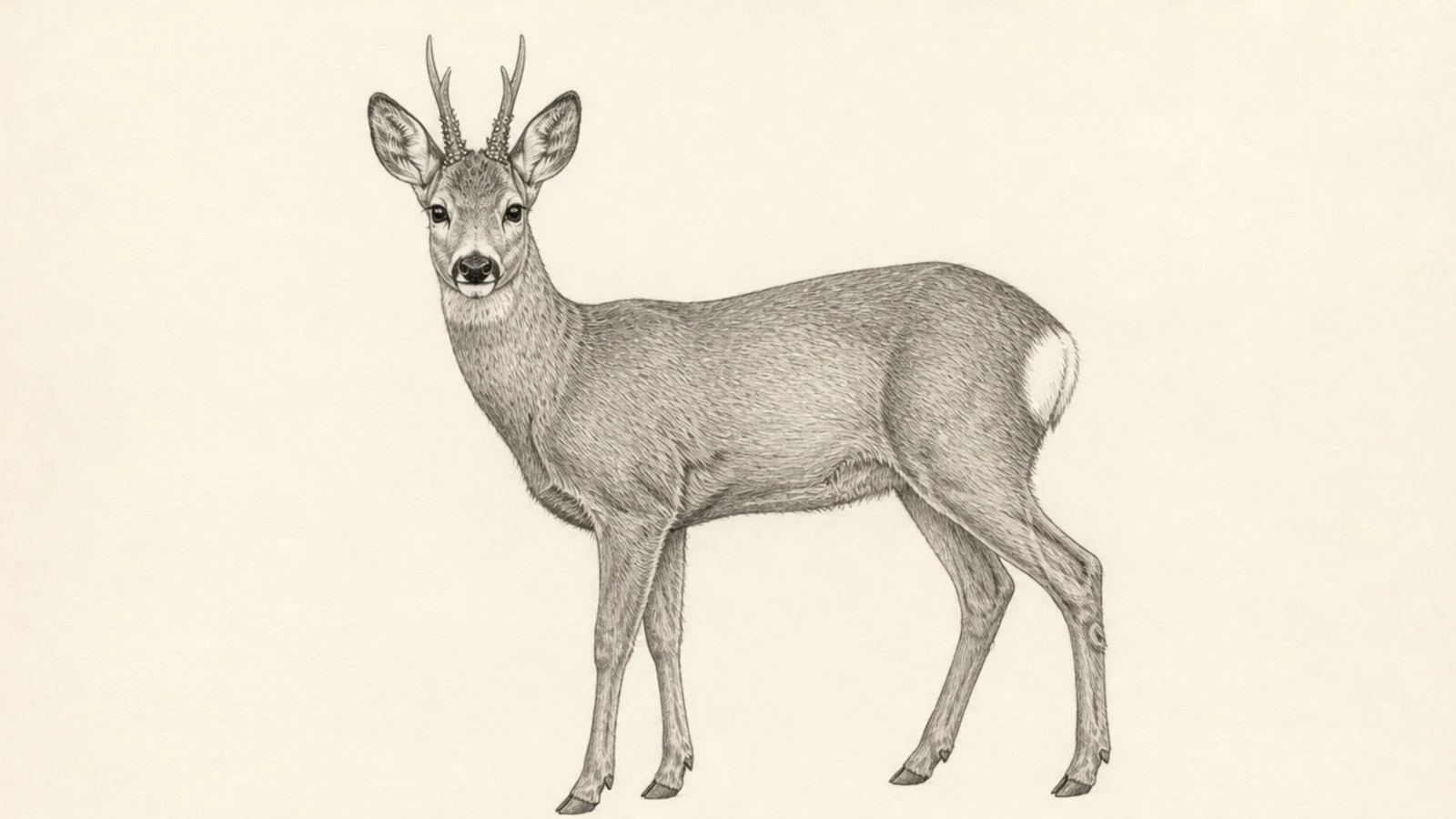
A full study pulls every marking together into one detailed roe deer. It shows the species completely — coat, nose, chin, ears, antlers, and rump. It is a rewarding close to the list.
Pro tipInclude every marker — black nose, white chin, rump patch, short antlers — for a complete study.
Step 1 draw a compact standing roe buck accurately. Step 2 render the coat, black nose, white chin, and rump patch. Step 3 detail the short pearled antlers and shade the form with fur-direction strokes.
AvoidDon’t leave out the markings; they are what make it a roe deer.