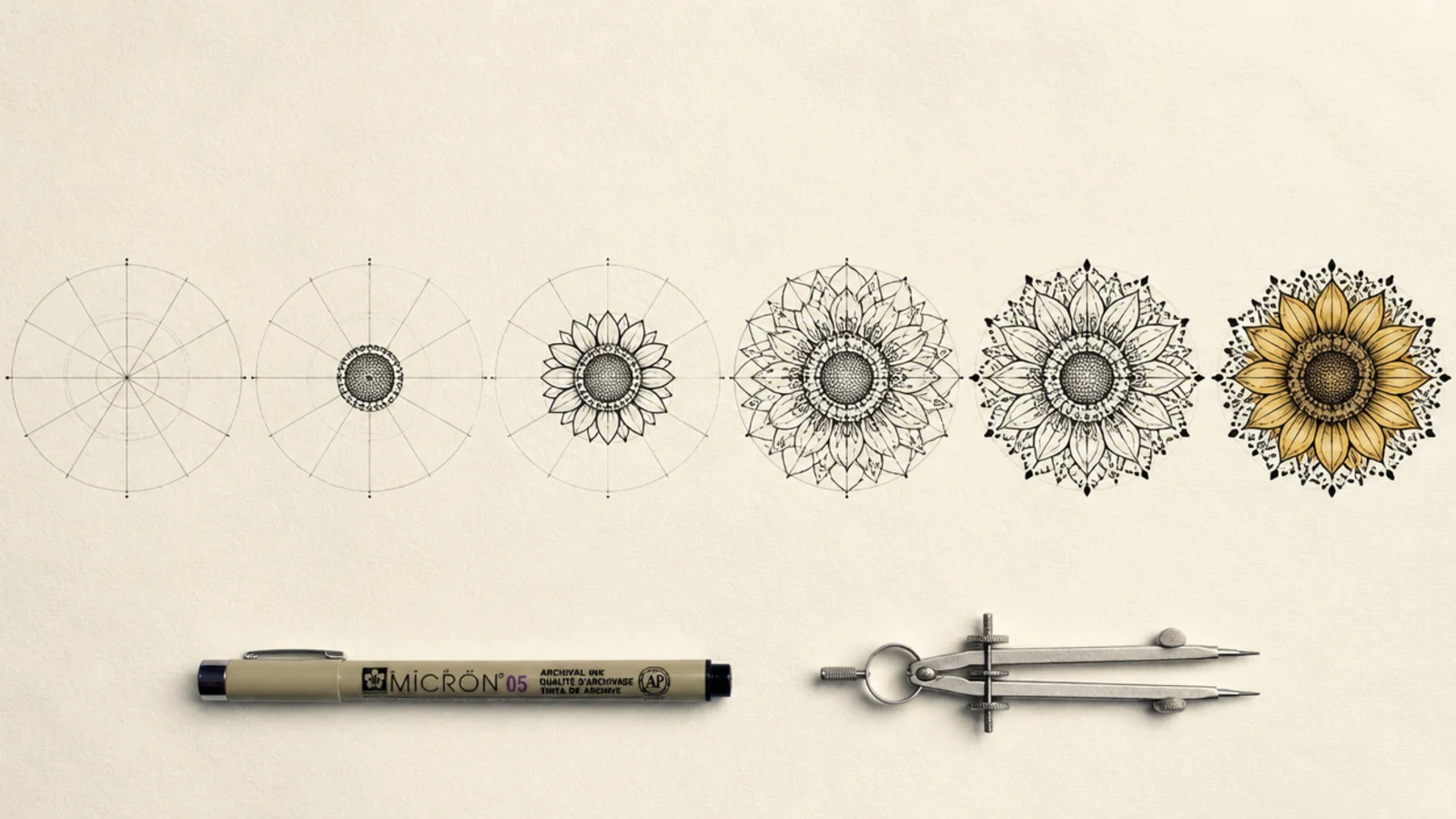
A sunflower mandala combines the calm, symmetrical beauty of a mandala with the warm shape of a sunflower — concentric rings of petals radiating from a seed center. It looks intricate, but it is built on one simple secret: a guide grid. Get the center dot and radiating guidelines right, and the symmetry almost draws itself. This guide walks you through 6 clear steps to build a stunning sunflower mandala from that grid outward, plus variations to make it yours.
Every good mandala starts with a guide grid, and this is the step beginners skip at their peril. A center dot, a few concentric circles, and evenly spaced lines radiating outward are what keep every ring symmetrical. Spend a moment getting the grid even and the rest of the drawing falls into place; skip it and the rings drift out of alignment no matter how carefully you draw.
Mandalas are built ring by ring, working from the center outward. Each ring repeats one simple shape — a dot, a petal, a loop — the same number of times around the circle, guided by your radiating lines. Because you only have to draw one small element and repeat it, the intricate result comes from repetition, not from difficult drawing. This is why mandalas are so meditative.
The sunflower character comes from the center and the petal rings. A textured seed center in the middle and one or two rings of pointed petals on the outside make it unmistakably a sunflower, while inner rings of dotwork and small shapes add mandala richness. Follow the six steps in order, keep your symmetry honest with the grid, and finish with the variations below.
Step by step
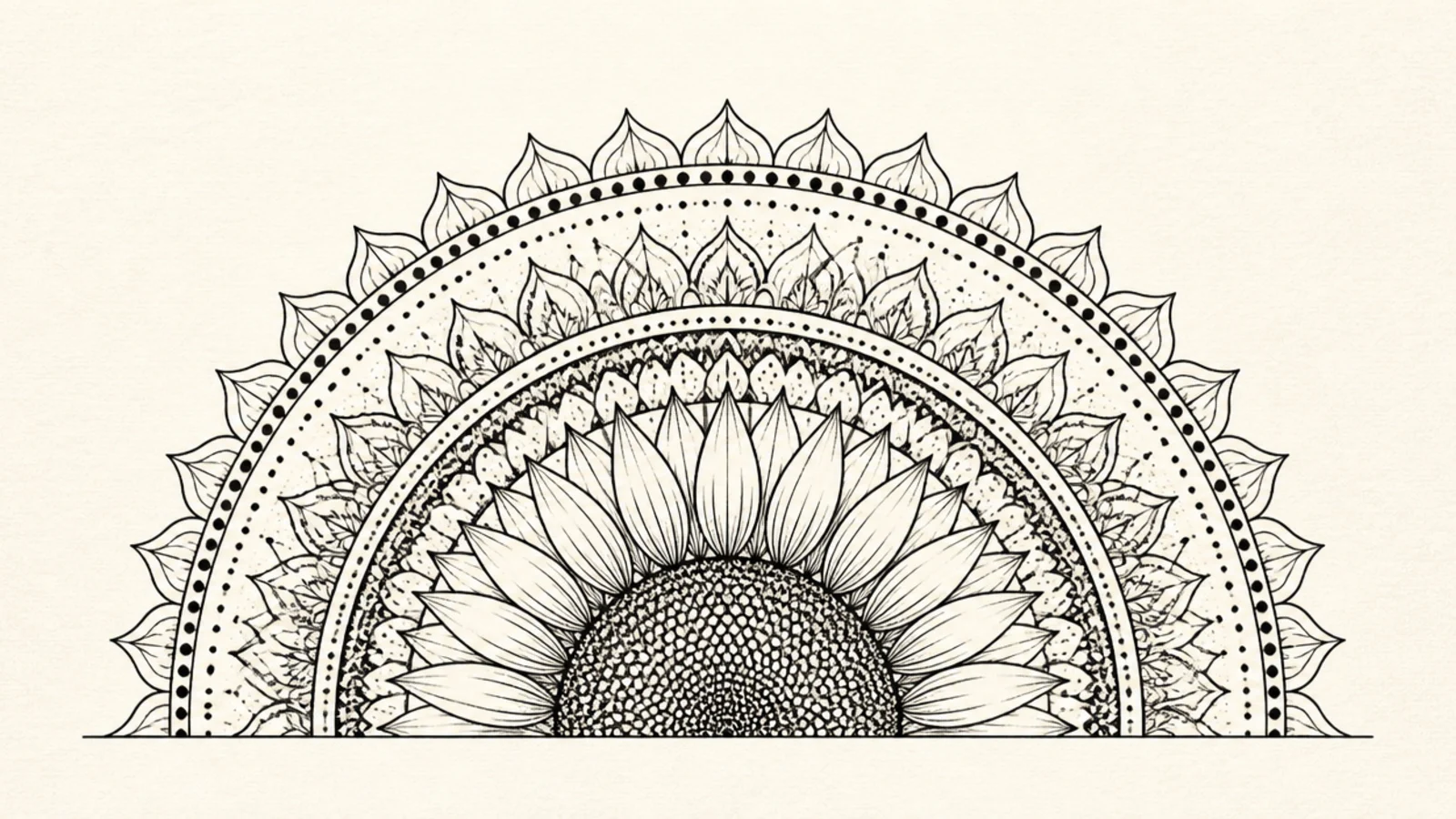
Draw the guide grid. In light pencil, mark a center dot and draw three or four concentric circles around it with a compass or traced objects. Then draw evenly spaced lines radiating from the center through all the circles — eight or sixteen lines work well. These faint guides are the skeleton of the whole mandala, so take the time to space them evenly. Everything else is built on this grid.
Build the seed center. In the smallest central circle, create the sunflower’s seed head. Fill it with tiny dots or a small crosshatch pattern, packing them tighter toward the middle. This textured center is the heart of the mandala and instantly signals sunflower. Keep it inside that first circle so the rings around it stay clean.
Add the first petal ring. In the next ring out, draw a small petal or rounded shape wherever a radiating line crosses the circle. Because you are placing one petal per guide line, they come out evenly spaced automatically. Keep every petal in this ring the same size and shape. This first ring sets the rhythm the whole mandala will follow.
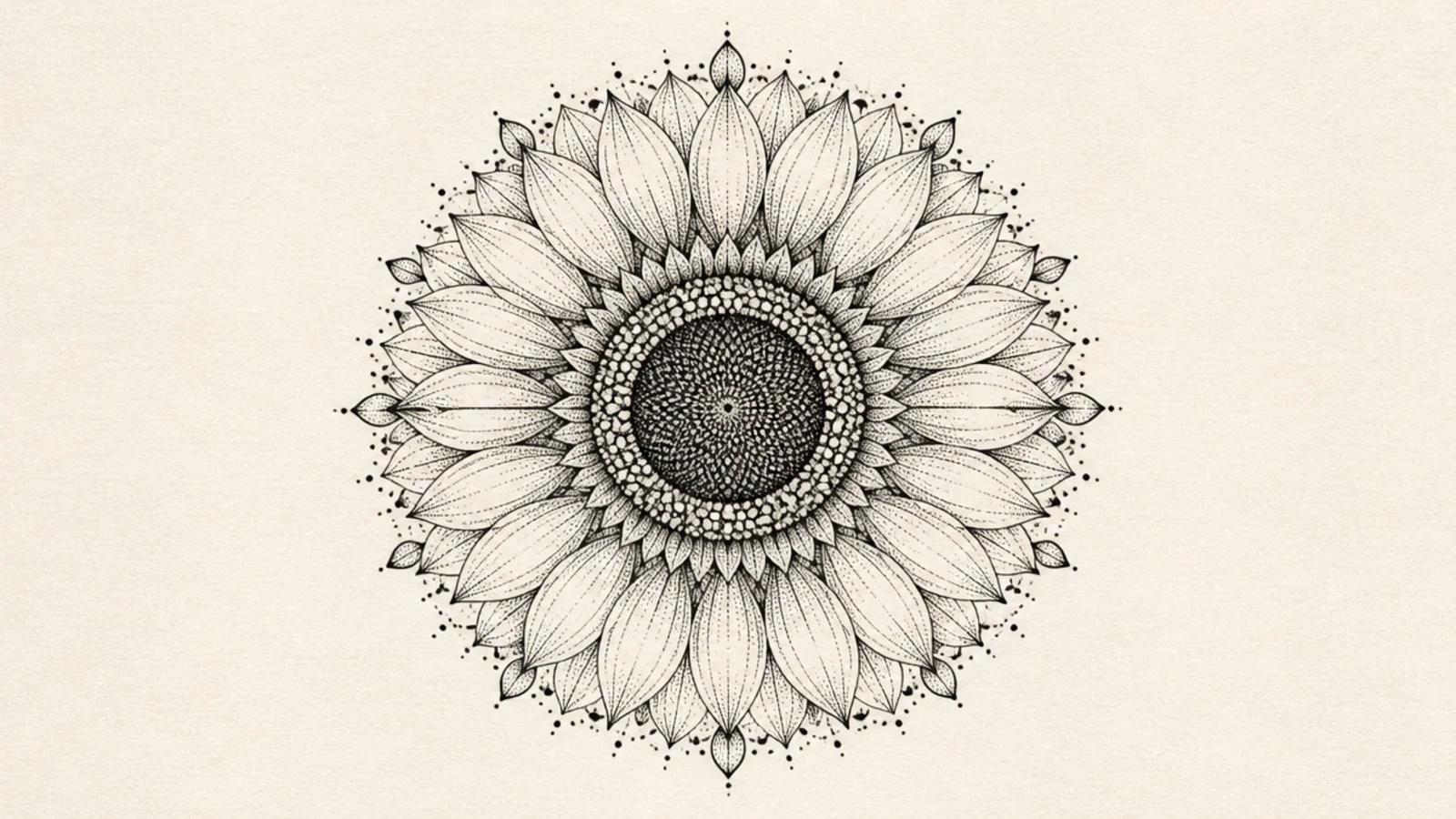
Layer inner detail rings. Fill the rings between the center and the outer petals with repeating small elements — a ring of dots, a ring of tiny loops, a ring of little leaves. Use the radiating lines to keep the counts even, and alternate the shapes ring to ring for richness. This is the meditative heart of mandala drawing: one small shape, repeated all the way around.
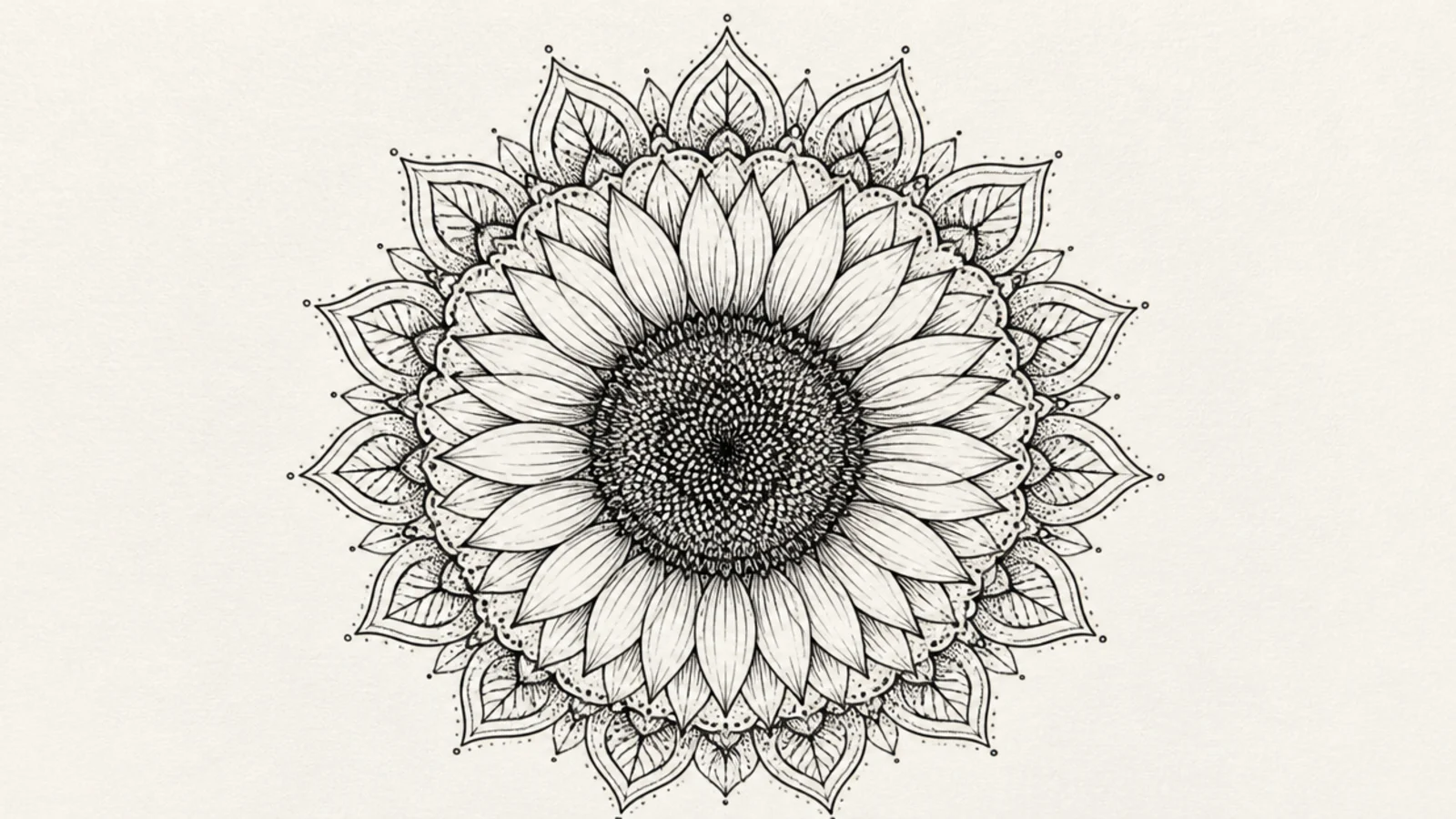
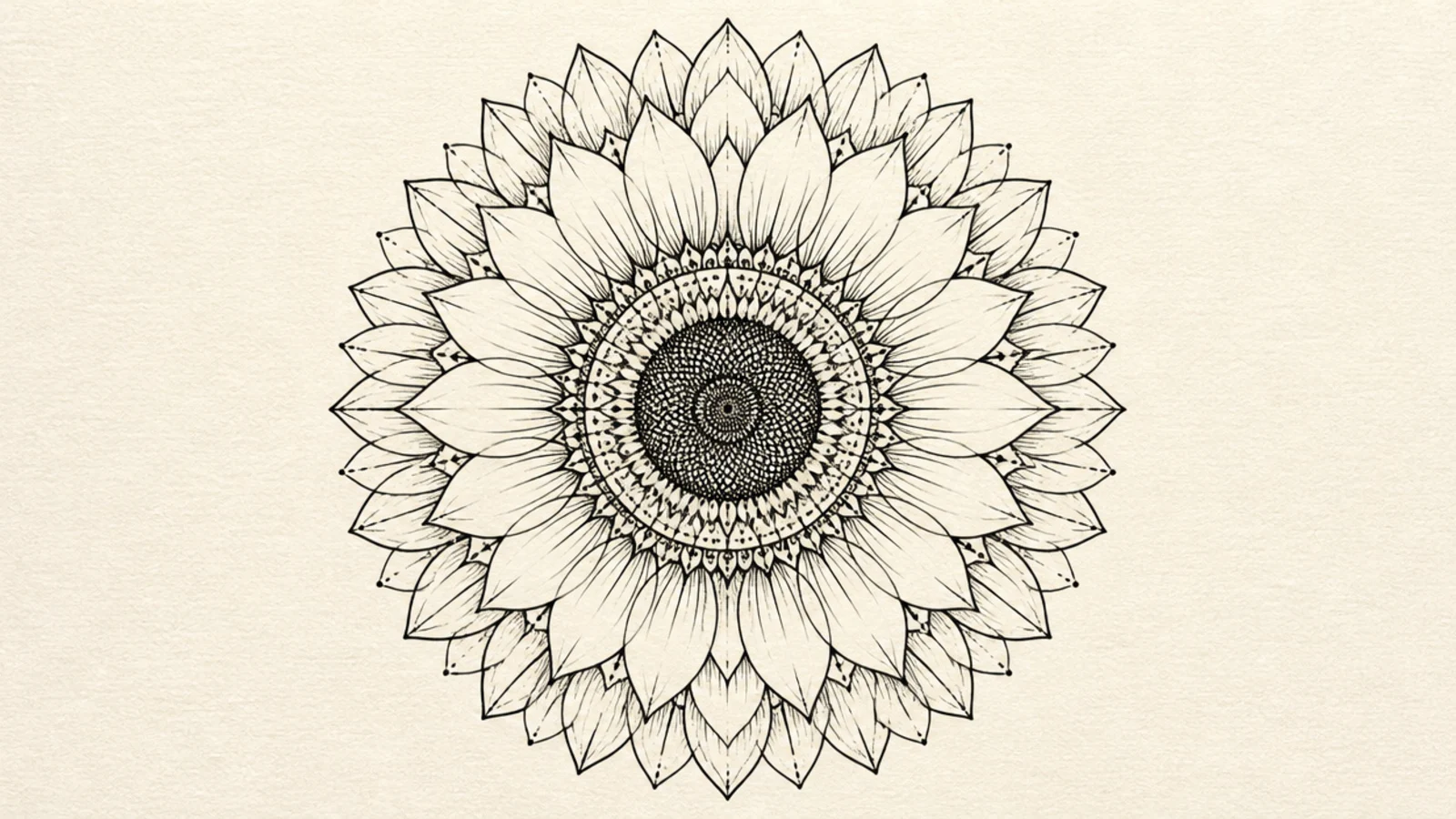
Draw the outer petal ring. On the outermost circle, draw the big sunflower petals — long pointed shapes, one aligned to each radiating line, fanning outward. This bold outer ring is what makes it clearly a sunflower. For extra depth, add a second offset ring of petals behind the first, tucking each new petal between two of the front ones.
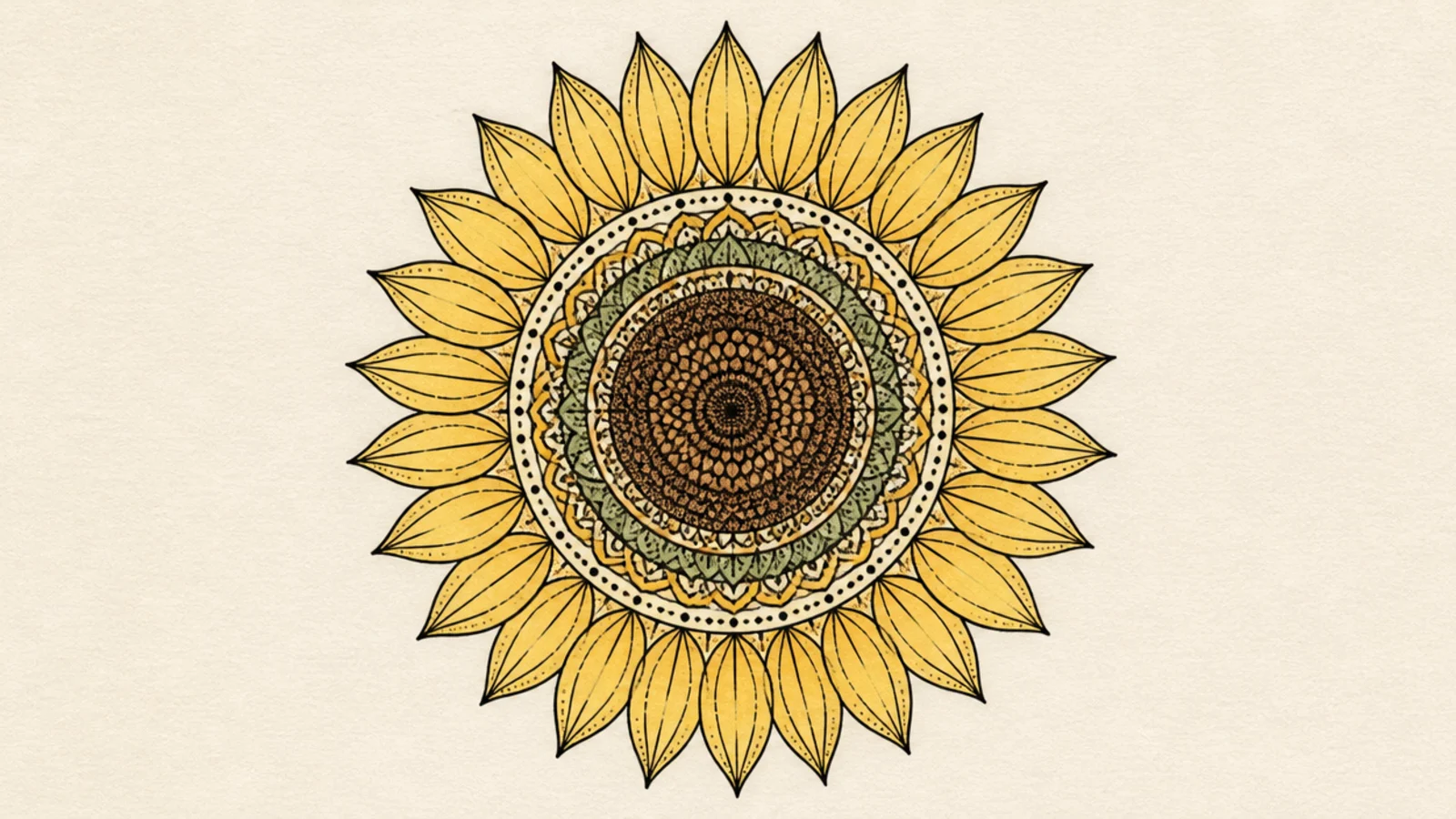
Ink, erase, and finish. Go over all your final lines in fineliner, then let the ink dry and erase every pencil guide so only the clean mandala remains. Now add finishing dotwork — small dots along petal edges or in the gaps — to polish it. If you want color, keep it simple with warm yellow petals, a brown center, and hints of green so the mandala stays crisp.
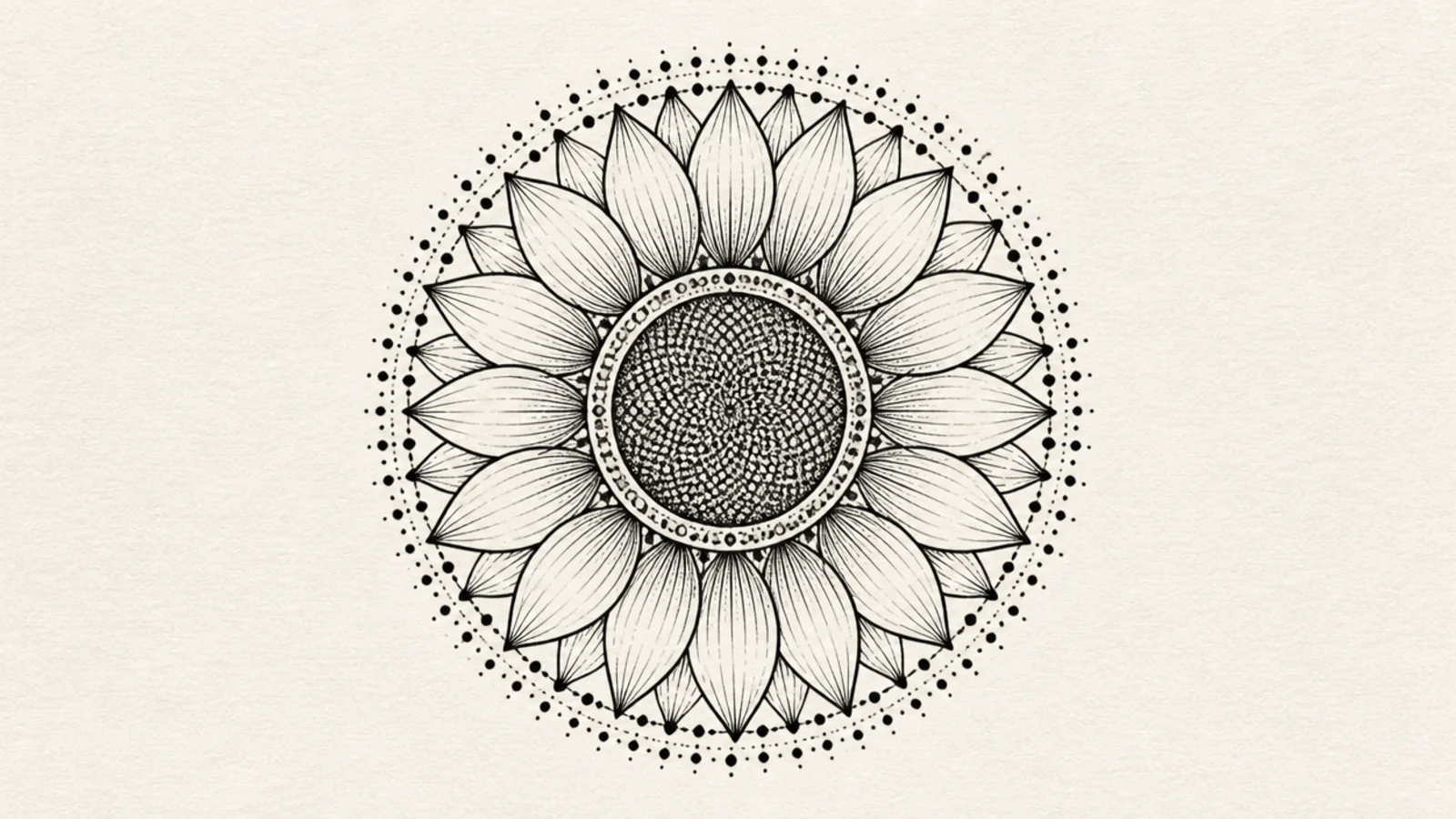
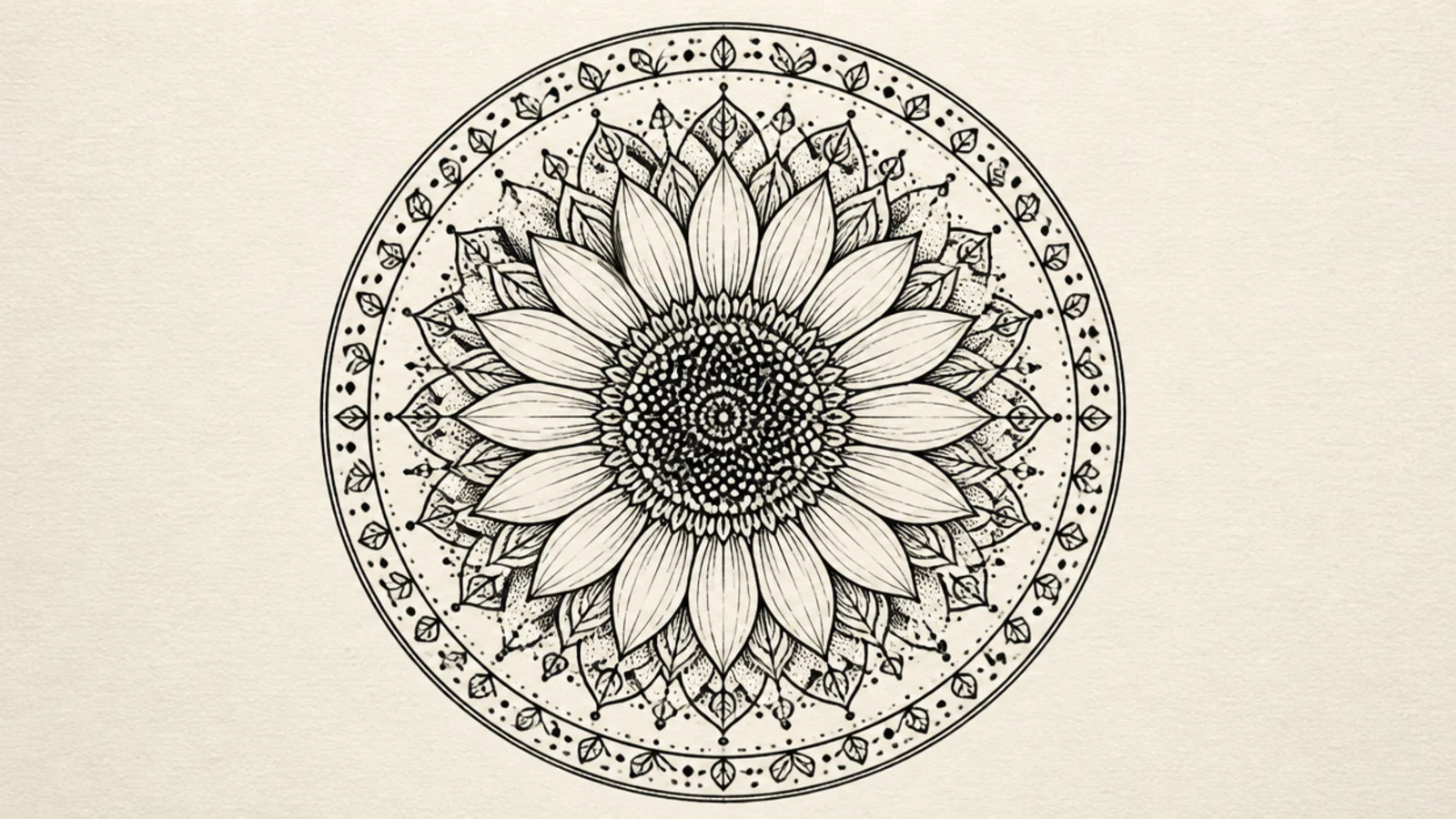
The mandala enclosed in a decorative outer ring frame for a finished, poster-ready look. The frame contains and elevates it.
Add one more large circle outside the petals and fill the border ring between them with a repeating pattern of dots or small leaves.
Pro tipFill the frame border with one repeating element for unity.
AvoidDon’t leave the frame plain; a patterned border finishes it.
Quick answers
How do you draw a sunflower mandala for beginners?
Start with a guide grid — a center dot, a few concentric circles, and evenly spaced radiating lines. Build a textured seed center, then add petal and detail rings one at a time from the center outward, placing one element per radiating line so each ring stays symmetrical. The grid does the hard work.
What is the secret to symmetrical mandalas?
The guide grid. Evenly spaced radiating lines and concentric circles let you place the same number of elements in each ring automatically, so symmetry comes from the grid rather than from careful eyeballing. Skip the grid and the rings drift out of alignment no matter how carefully you draw.
What makes a mandala a sunflower mandala?
A textured seed center in the middle and one or two rings of long pointed petals on the outside. The seed-packed center and radiating petals are unmistakably sunflower, while inner rings of dots, loops, and small leaves add the mandala richness around them.
What pens are best for mandala drawing?
Fine black fineliners, around 0.3 to 0.5mm, for crisp linework and dotwork on smooth paper that takes ink cleanly. Draw the guide grid in light pencil first, ink your final lines, let it dry, then erase the pencil so only the clean mandala remains.