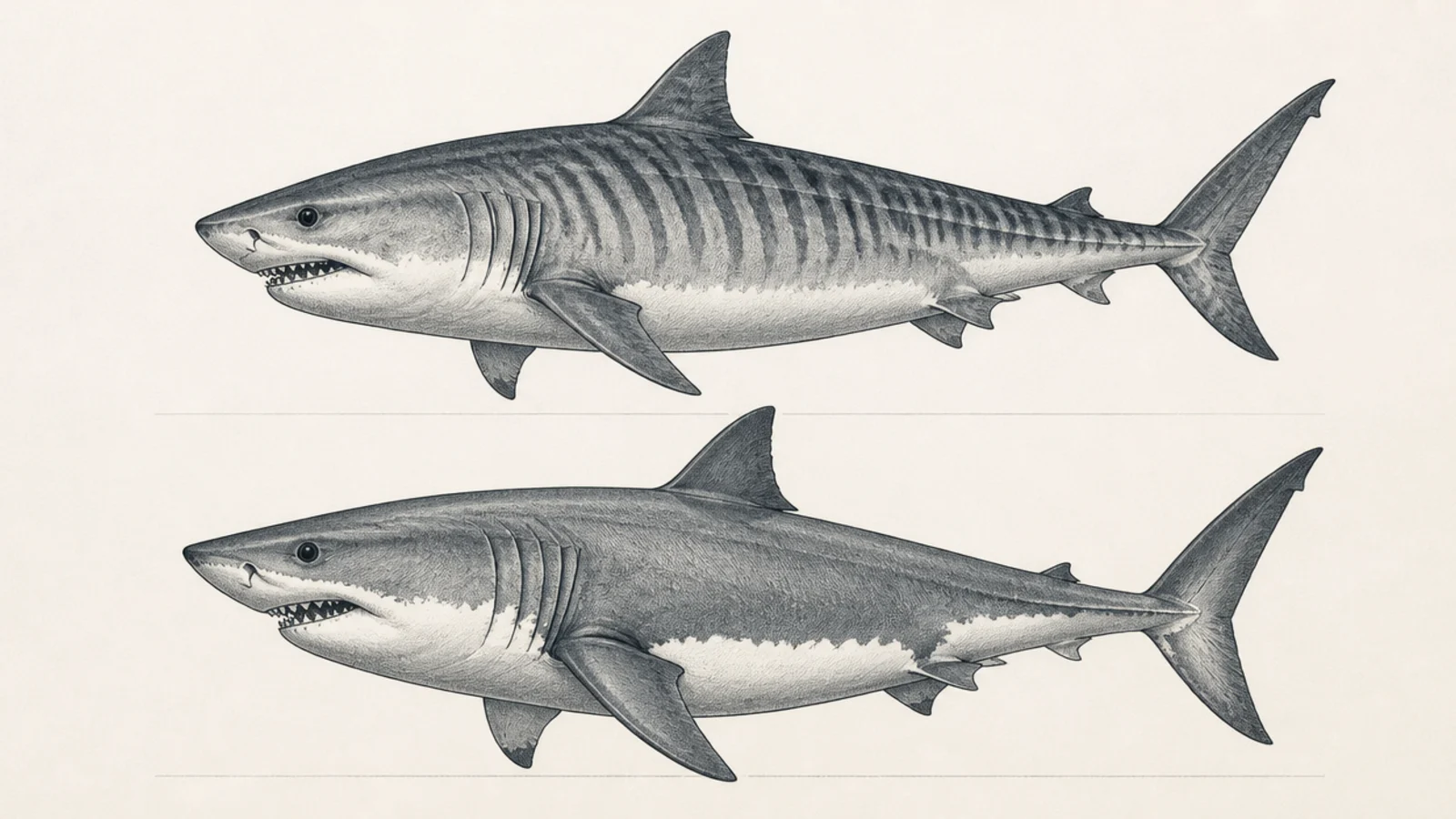
1 Side-Profile Comparison
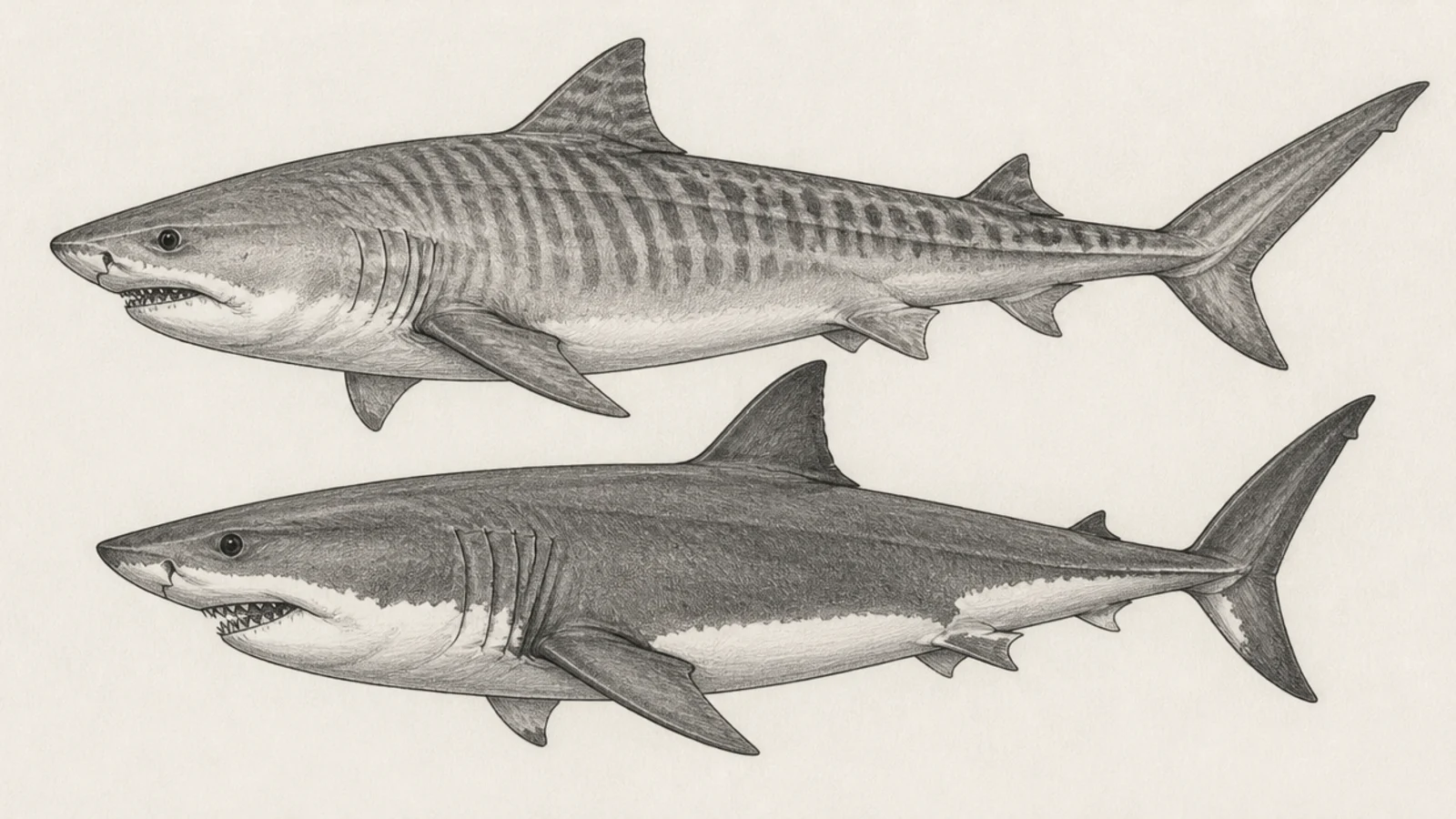
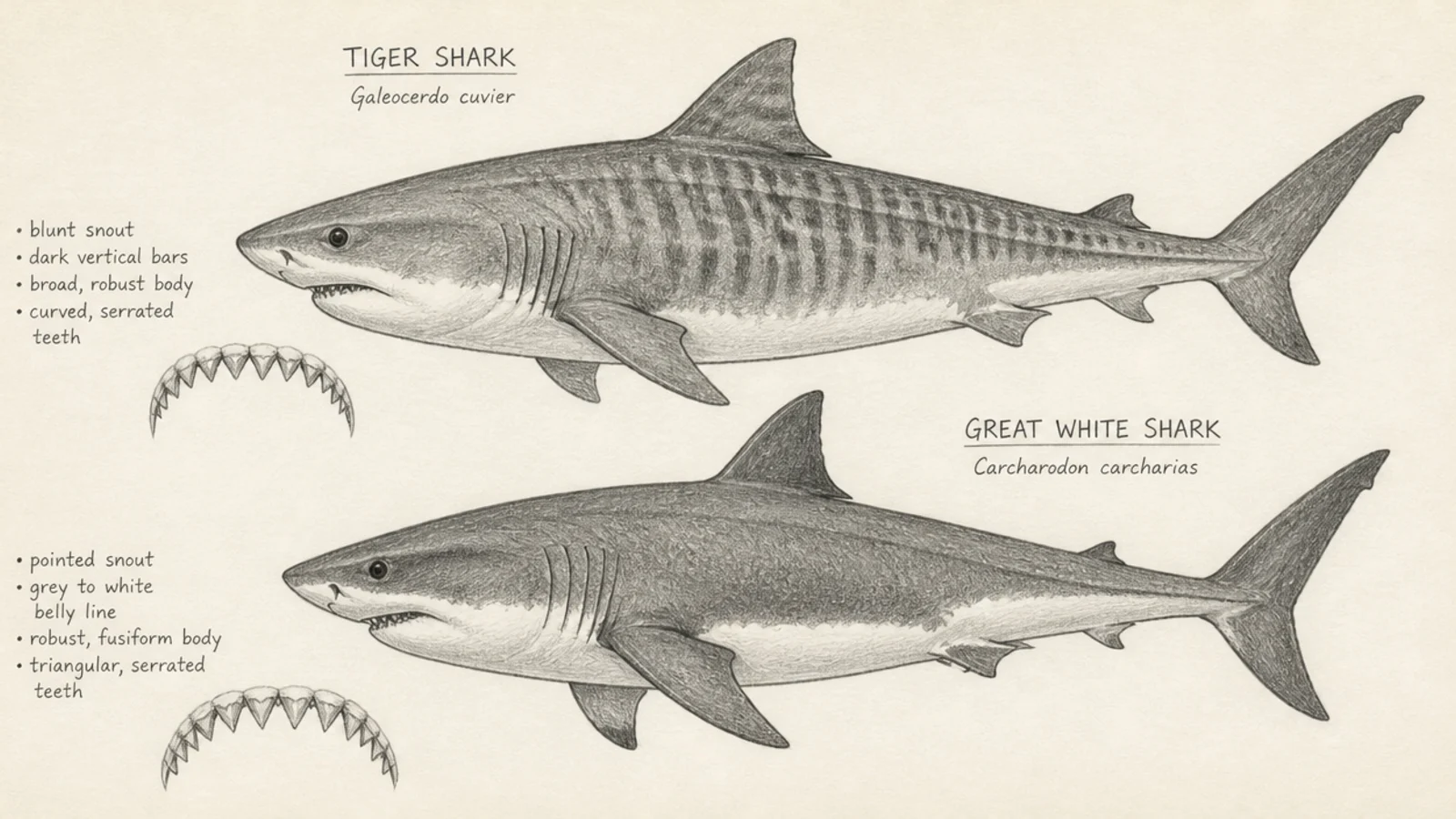
This side-by-side profile is the foundation study and the base for the list. Drawing both sharks in the same pose makes every difference — snout, bars, and tail — jump out at a glance.
Pro tipDraw both at the same size and angle so the differences read clearly.
Both shown together. Draw two streamlined bodies; give the tiger shark a blunt snout and dark bars, the great white a pointed snout and white belly line.
AvoidDon’t blur the snouts; the blunt-vs-pointed contrast is the whole study.
2 Tiger Shark Bar Pattern
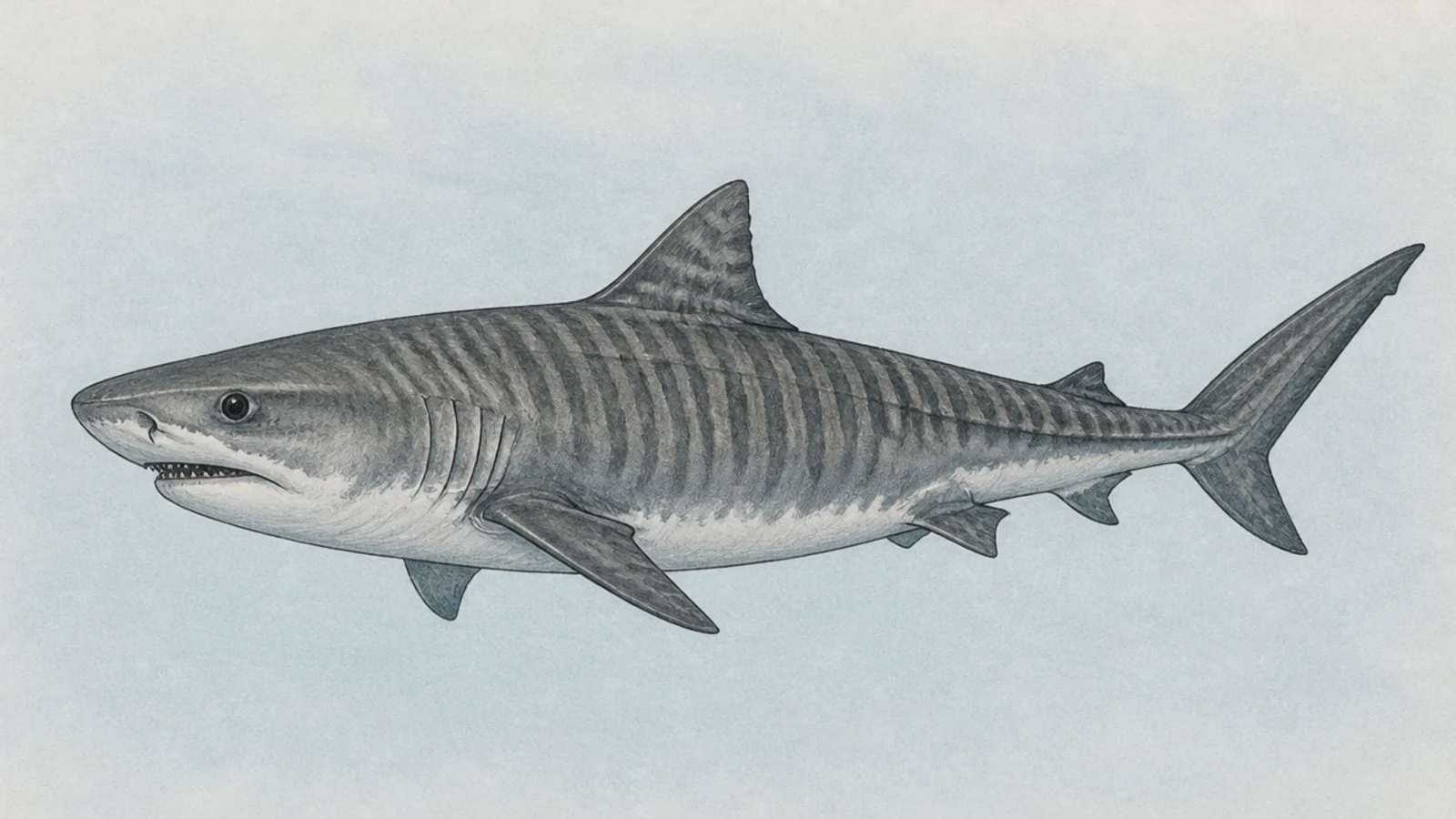
A tiger shark focused on its signature bar pattern shows off the feature it is named for. It teaches how the dark bars wrap the round body and fade toward the belly.
Pro tipLet the bars curve around the body rather than sitting flat.
Tiger shark wins. Draw the broad body and blunt snout, then add dark vertical bars down the upper sides, fading toward the pale belly.
AvoidDon’t draw even flat stripes; the bars are irregular and wrapping.
3 Great White Countershading
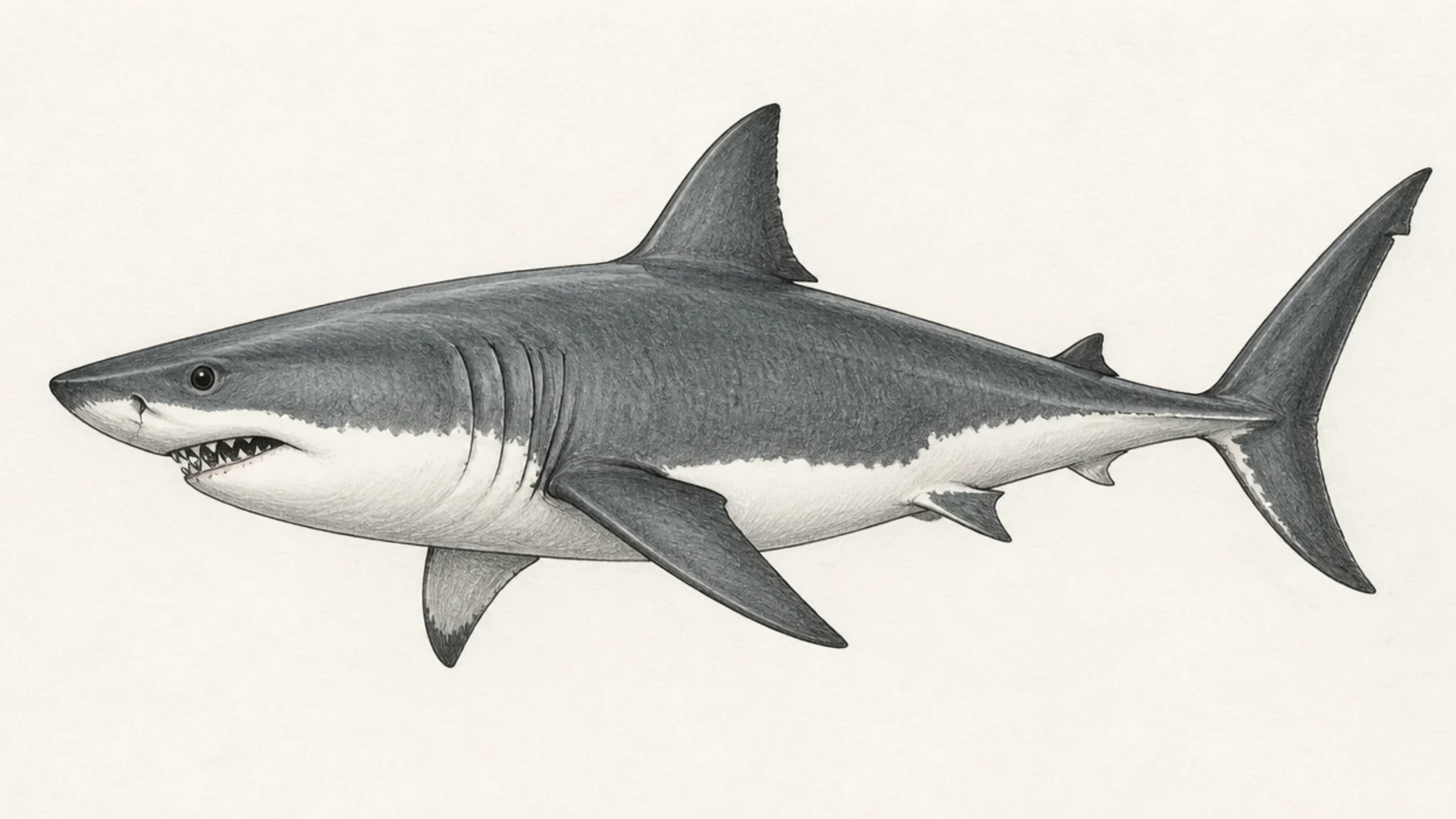
A great white focused on its countershading shows the crisp grey-to-white edge. It teaches the clean division that is the species' signature look.
Pro tipKeep the grey-to-white boundary crisp and slightly wavy for realism.
Great white wins. Draw the torpedo body and pointed snout, then split it slate-grey on top and white below along one sharp, clean line.
AvoidDon’t blend the two tones; the hard edge is the whole point.
4 Open-Mouth Teeth Study
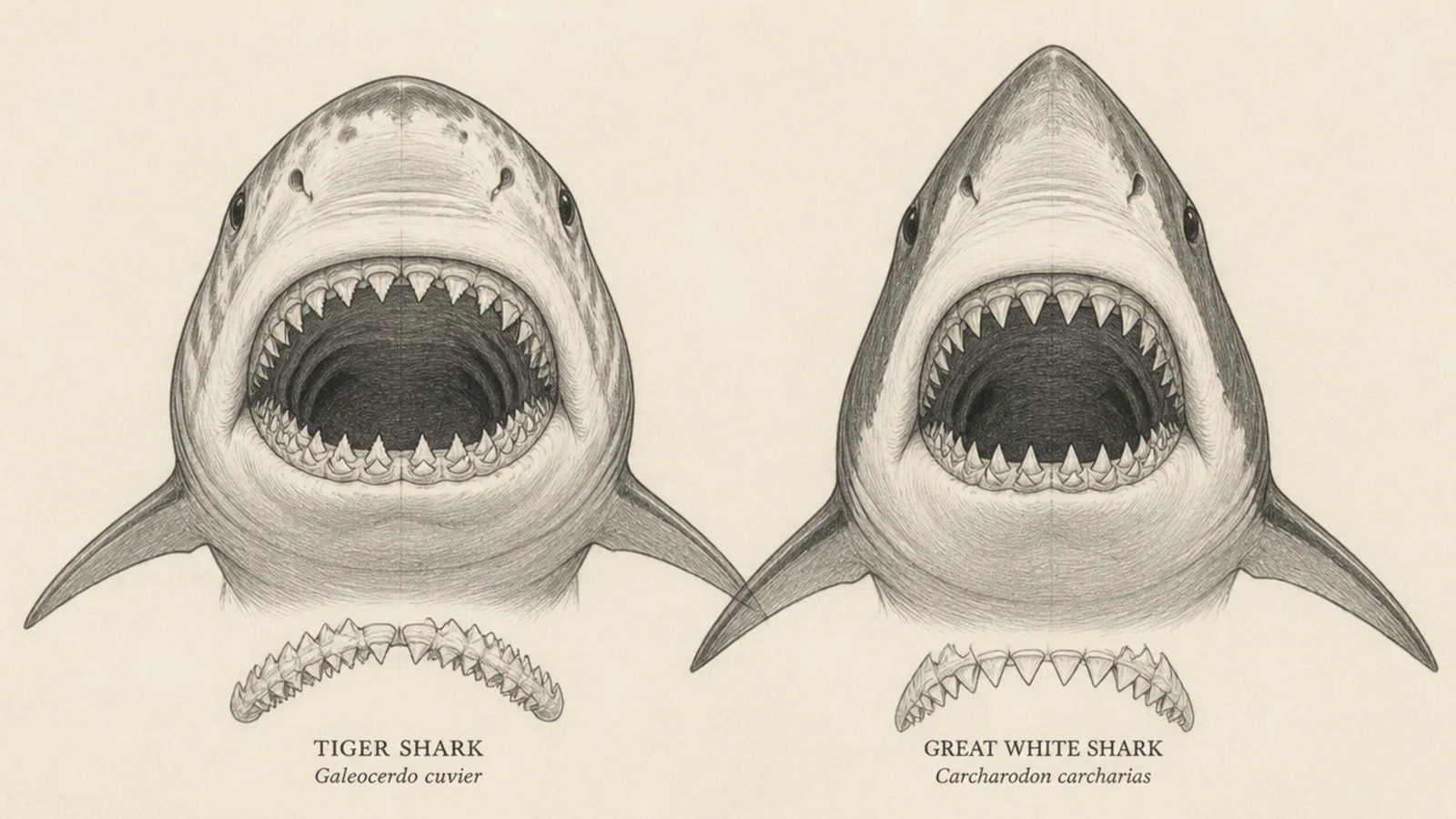
A close study of both open mouths compares the teeth directly. It teaches the curved serrated tiger-shark teeth against the flat triangular great-white teeth.
Pro tipShow the serrations on the tiger shark teeth and clean edges on the great white.
Both shown together. Draw two open jaws; give the tiger shark curved serrated teeth, the great white large flat triangles in neat rows.
AvoidDon’t draw identical teeth; the shape difference is the study.
5 Rising Attack Great White
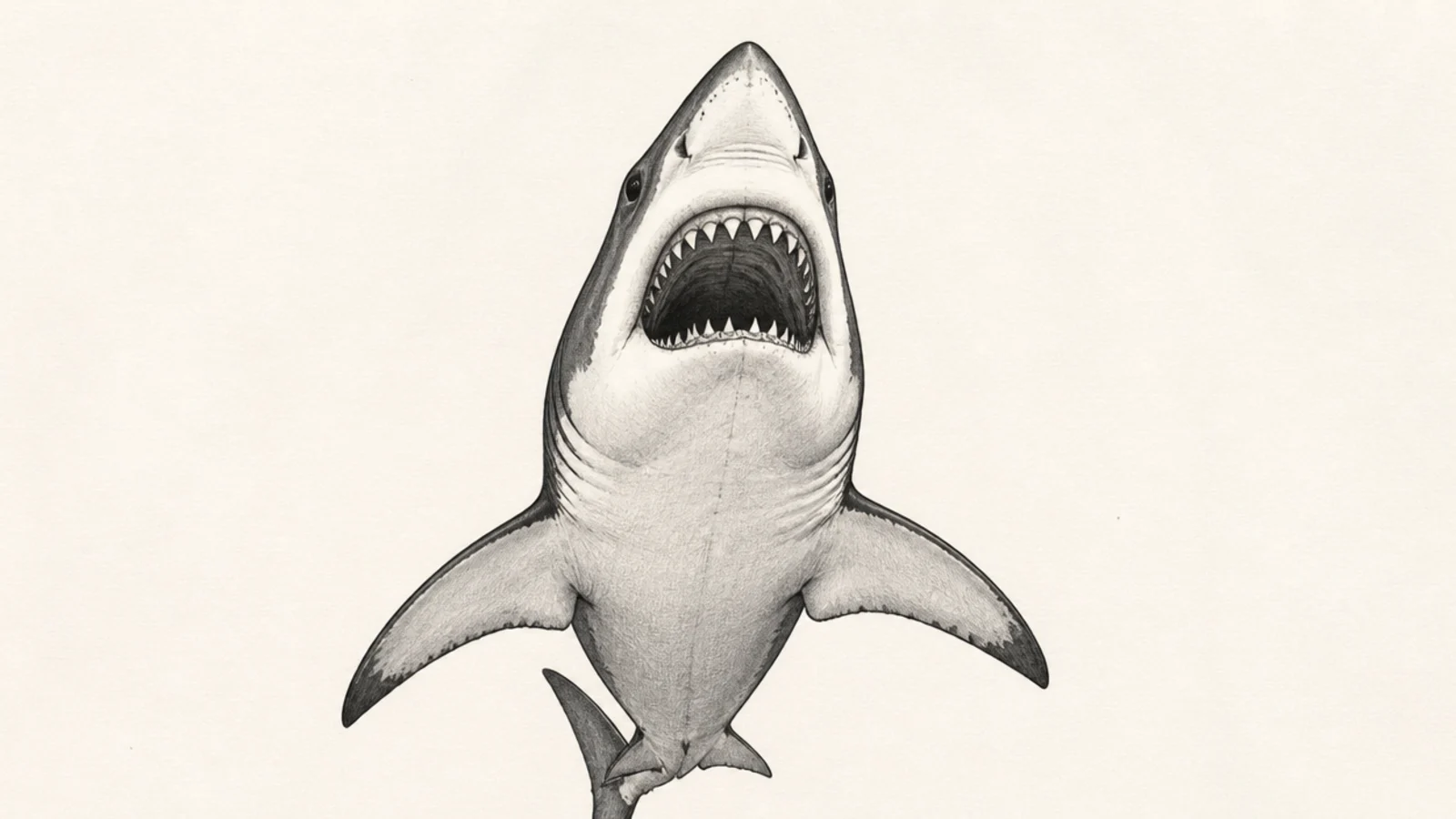
A great white rising in an open-mouth attack is its most iconic pose. It teaches the dramatic upward lunge that shows the pointed snout and white underside.
Pro tipAngle the body steeply up so the attack reads as a lunge from below.
Great white wins. Draw the shark angled up from below, mouth wide open showing triangular teeth, white belly facing the viewer.
AvoidDon’t draw it level; the steep rise is what makes the pose dramatic.
6 Prowling Tiger Shark
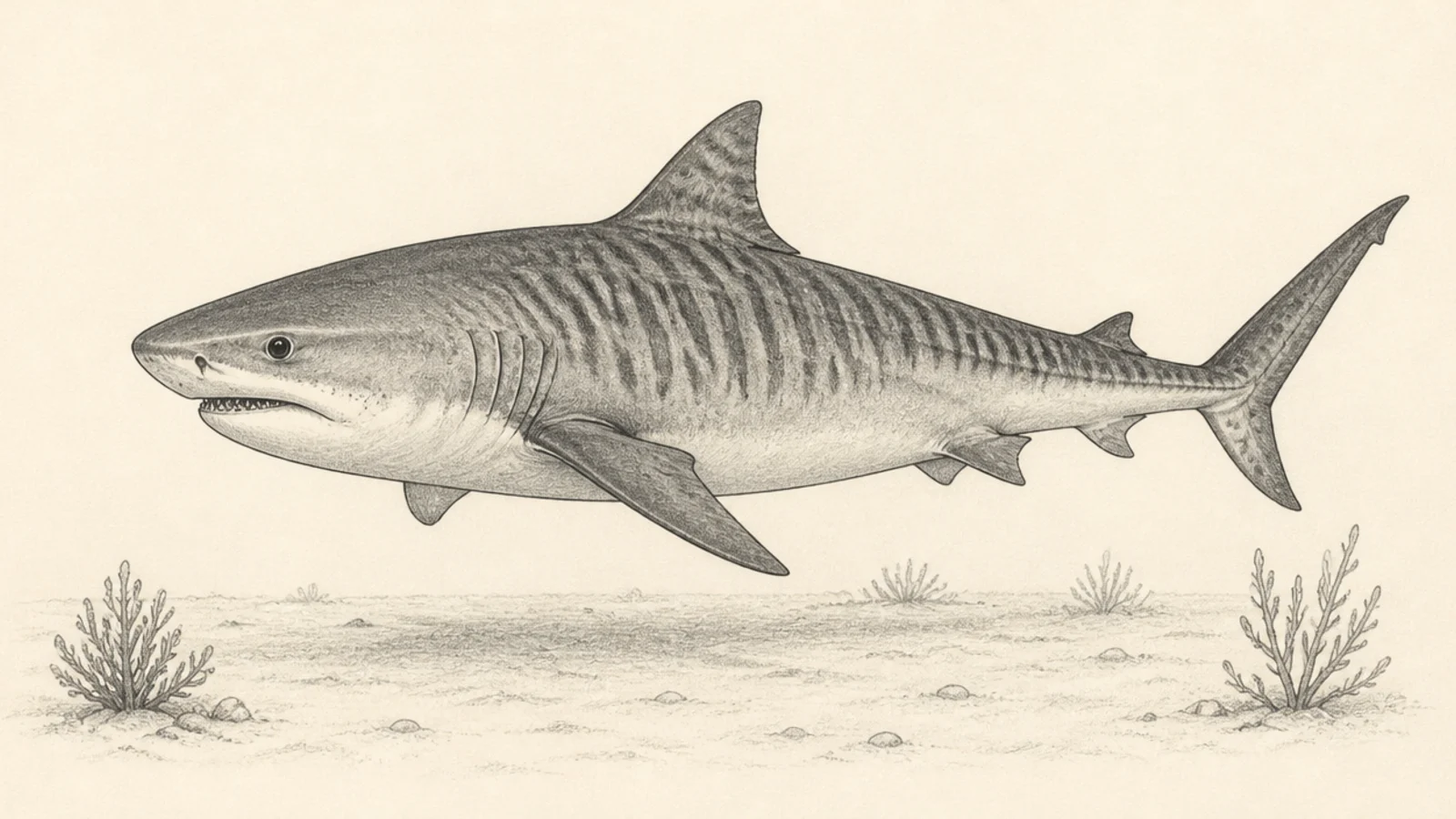
A tiger shark cruising the seafloor suits its slow, patrolling nature. It teaches the heavy, unhurried body and how the bars show best in a level side view.
Tiger shark wins. Draw the broad body level near a sandy floor, blunt snout leading, bars along the back, tail sweeping behind.
Keep the body level and heavy to show the patrolling cruise.
Don’t make it sleek and fast; the tiger shark moves heavy and slow.
7 Front-View Head Comparison
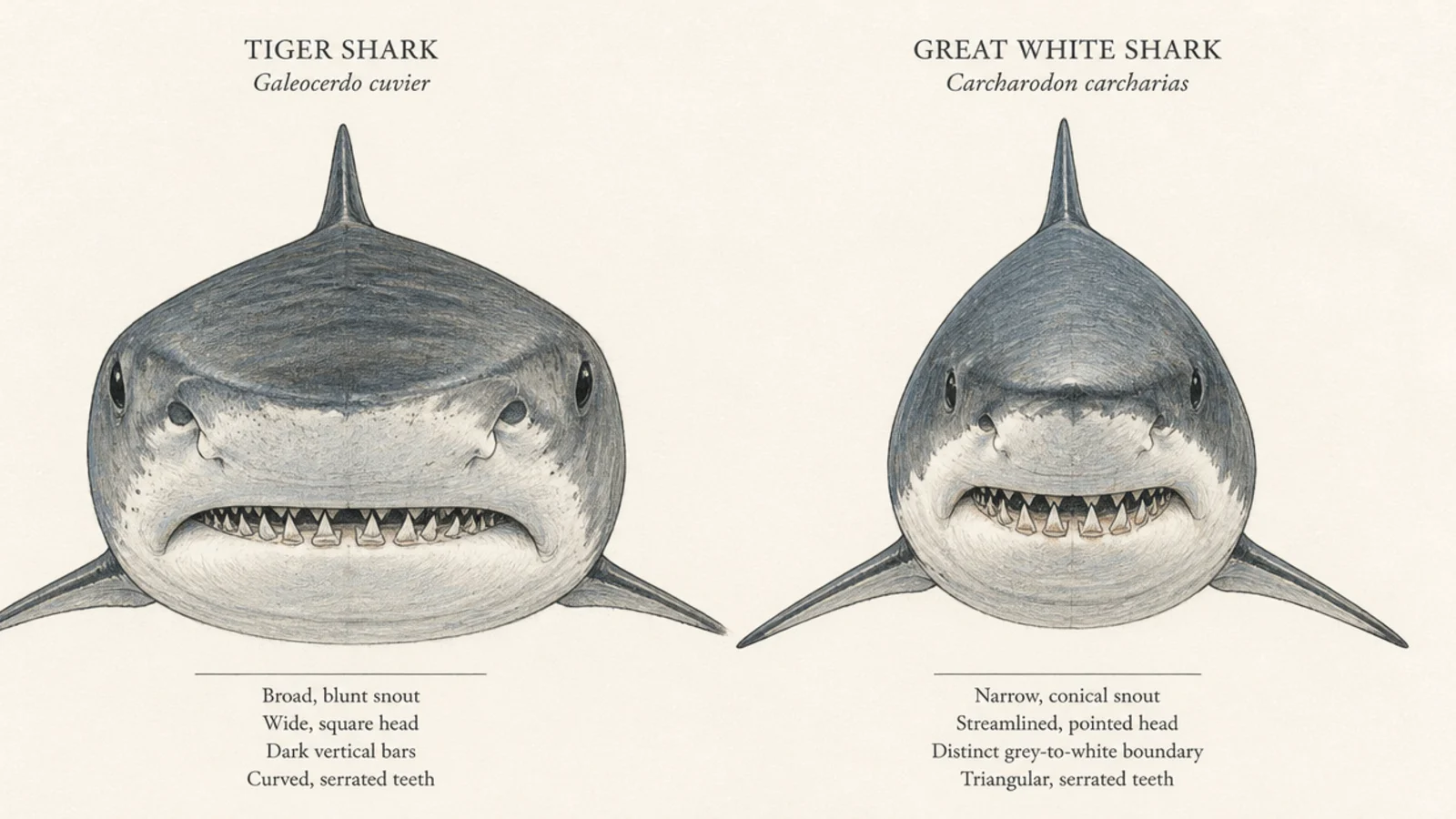
Both heads from the front compare the snout width directly. It teaches the broad square tiger-shark head against the narrow pointed great-white one.
Pro tipWiden the tiger shark head and narrow the great white for a clear contrast.
Both shown together. Draw two front-on heads; make the tiger shark wide and blunt, the great white narrow and conical, both with the mouth low.
AvoidDon’t make both heads the same width; the difference is the point.
8 Silhouette Ocean Scene
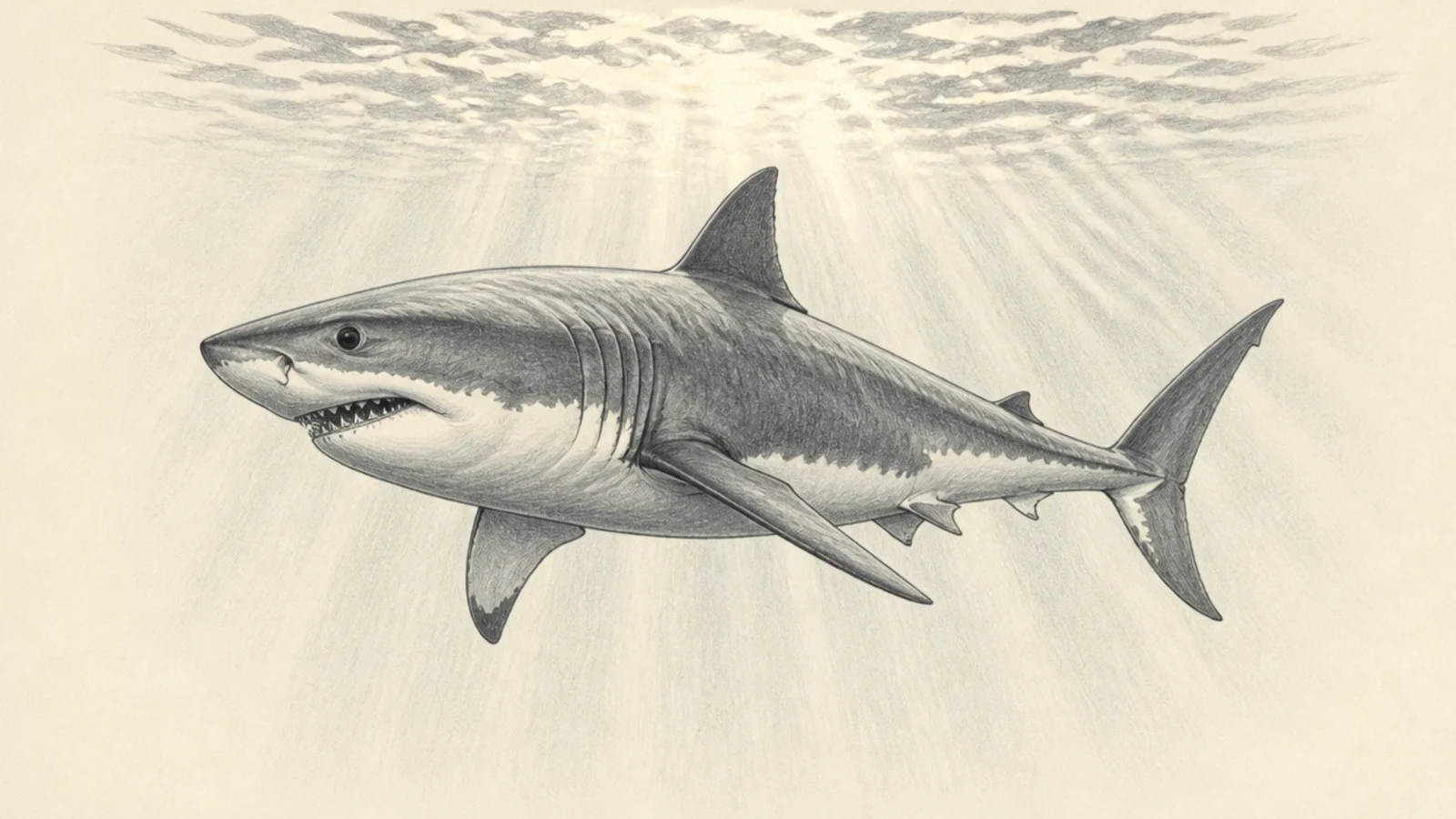
A shark silhouette against sunlit water is atmospheric and forgiving. The pose reads from the outline alone, so the snout and tail shape carry the species.
Great white wins. Draw a sleek torpedo silhouette against bright rippled surface light, the pointed snout and even crescent tail clear against the glow.
Let god-rays stream down behind so the silhouette pops.
Don’t add inside detail; the silhouette works as a flat shape.
9 Cartoon Tiger Shark
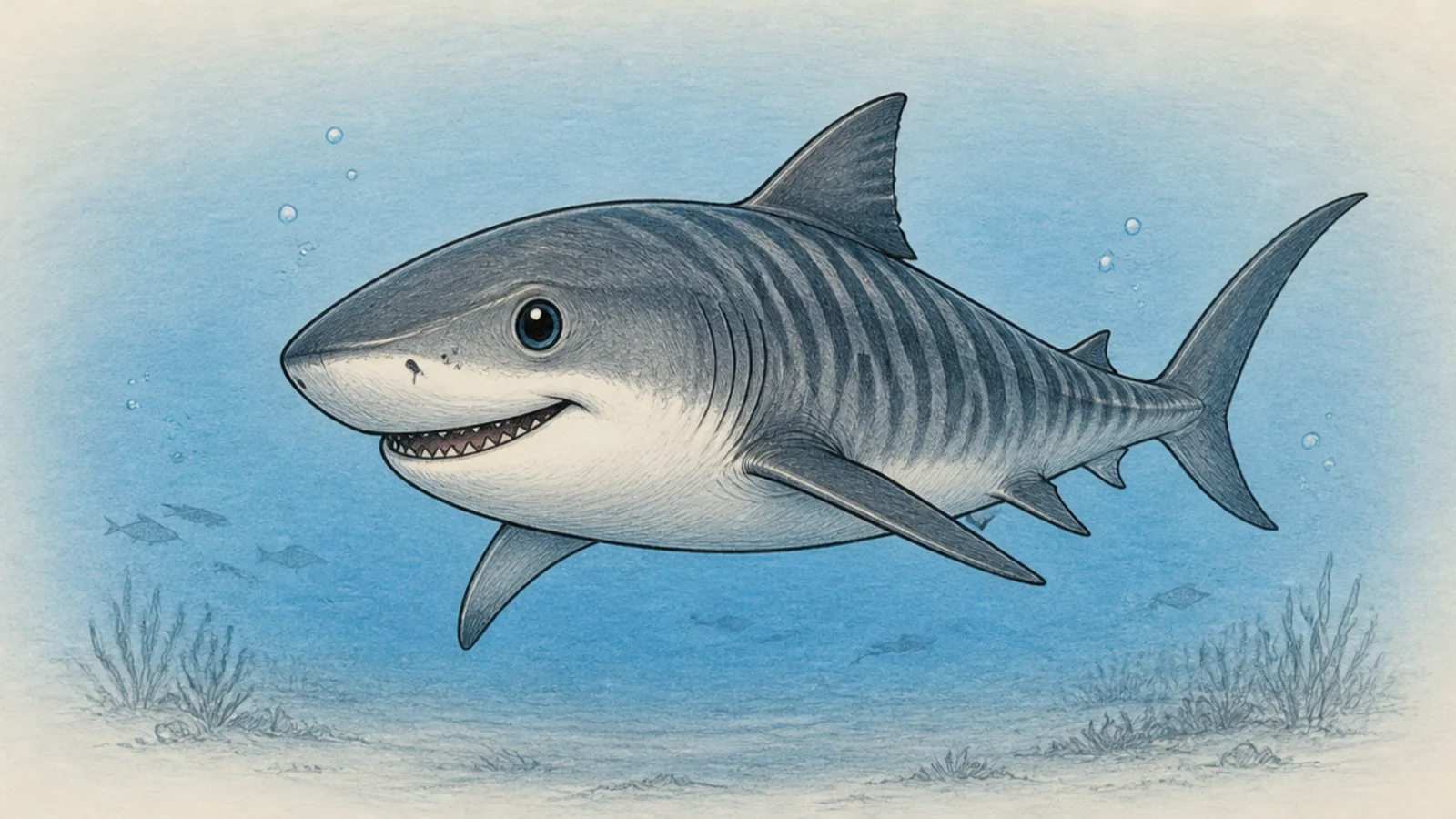
A cartoon tiger shark keeps the bars but softens everything for a fun look. It teaches simplifying the species markers into a friendly character.
Tiger shark wins. Round the blunt snout, add big friendly eyes and a smiling mouth, and keep a few bold bars so the species still reads.
Keep a few clear bars so the cartoon still reads as a tiger shark.
Don’t drop the bars; they are what make it a tiger shark, not just a shark.
10 Cartoon Great White
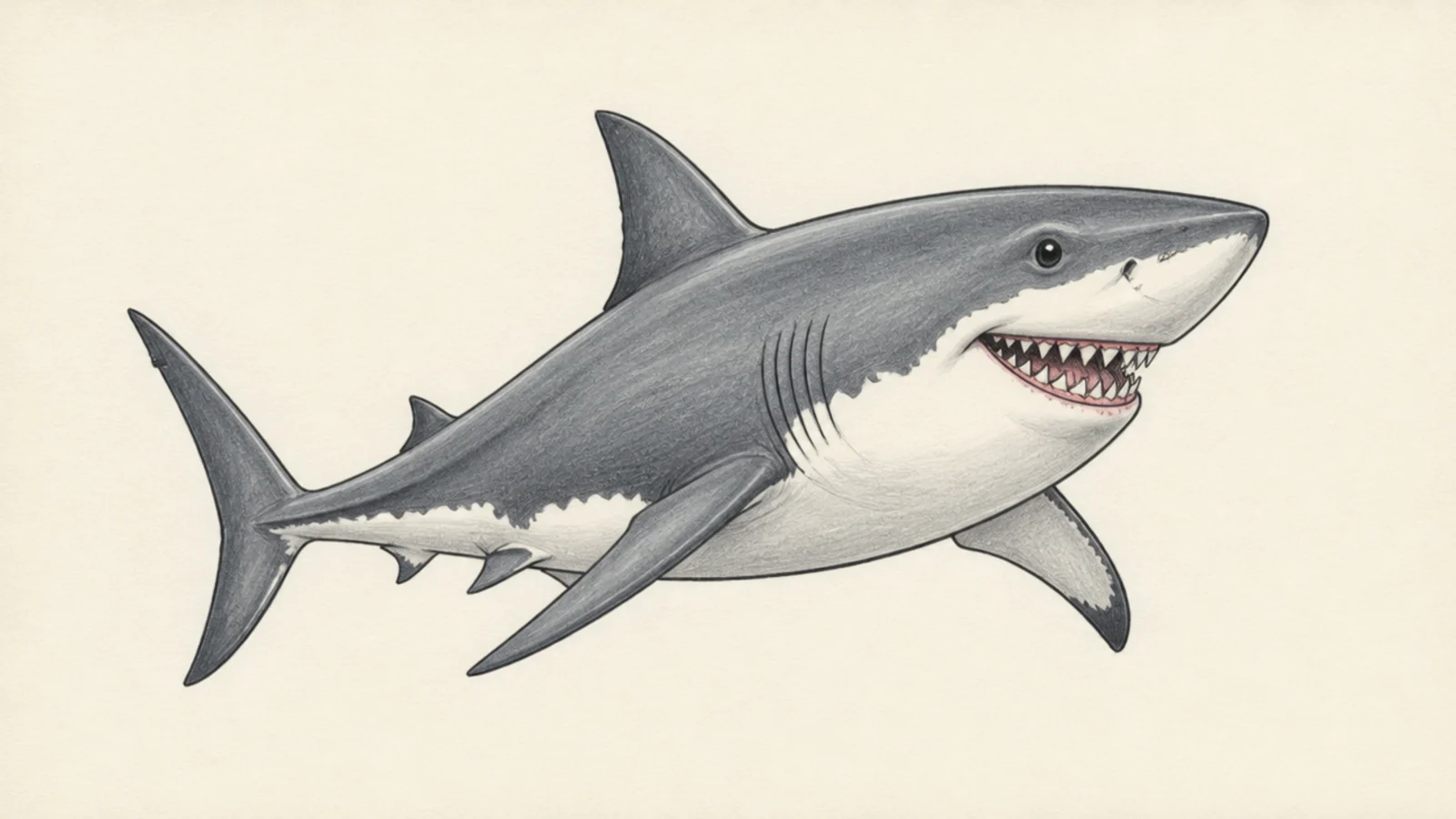
A cartoon great white leans on its shape and grin for a fun look. It teaches simplifying the torpedo body and toothy triangle grin into a character.
Pro tipShow a row of triangle teeth so the grin reads as a great white.
Great white wins. Keep the pointed snout, add a big toothy triangle grin and small eyes, and split the body grey over white.
AvoidDon’t blunt the snout; the point keeps it a great white.
11 Breaching Great White
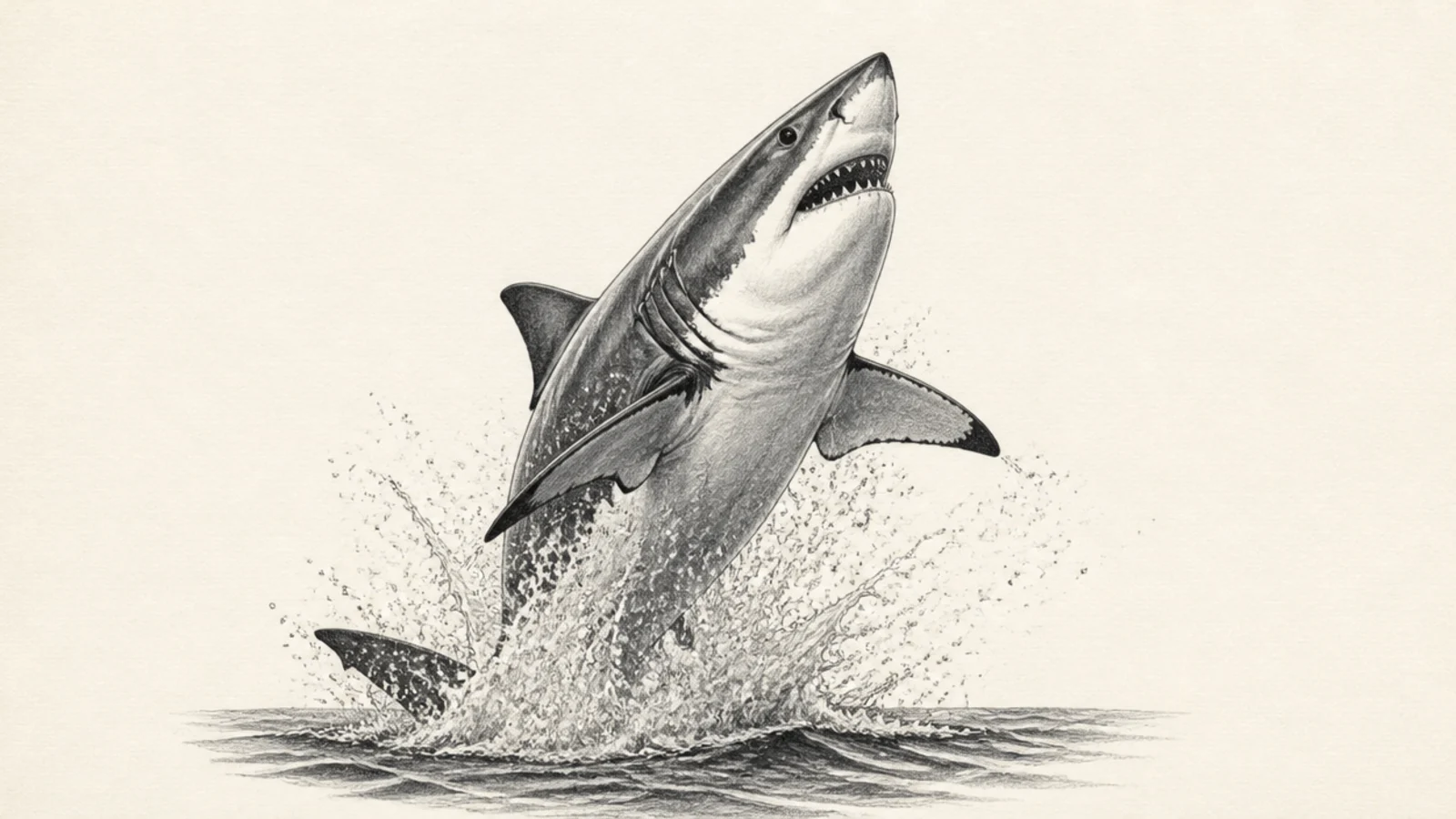
A great white breaching clear of the water is explosive and dramatic. It teaches the airborne body, spray, and the full torpedo shape against the sky.
Pro tipBurst spray and droplets below to show the power of the breach.
Great white wins. Draw the whole shark launched out of the water at an angle, spray bursting below, white belly and pointed snout skyward.
AvoidDon’t draw it calm; the breach needs explosive spray and angle.
12 Tiger Shark and Sea Turtle
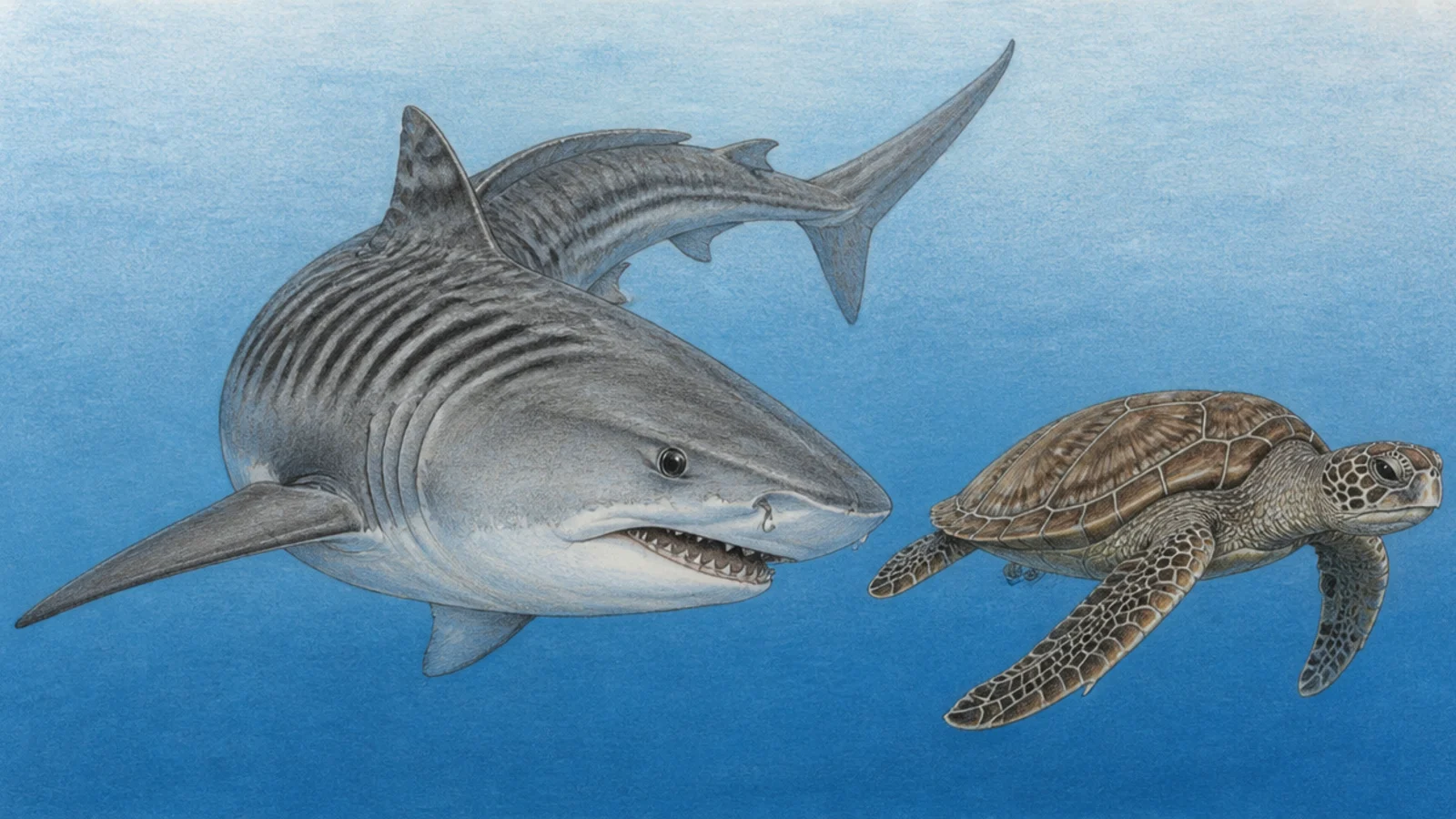
A tiger shark near a sea turtle nods to its famously varied diet. It teaches a small scene that gives scale and tells a bit of the species' story.
Tiger shark wins. Draw the broad barred shark curving toward a sea turtle, blunt snout leading, both in open blue water.
Curve the shark’s path toward the turtle to imply the approach.
Don’t make the shark sleek; keep it broad and heavy for a tiger shark.
13 Top-Down View Comparison
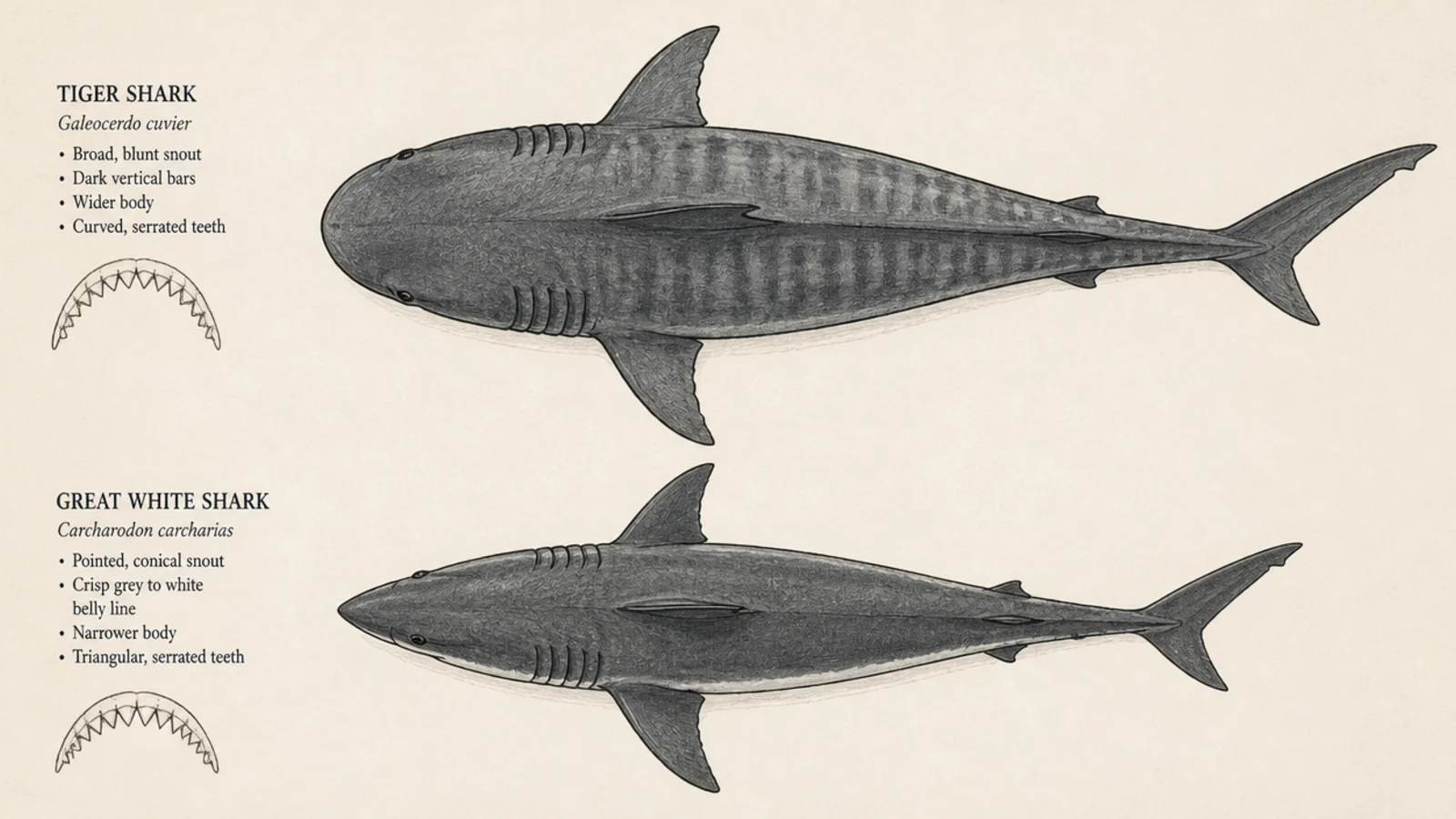
Both sharks from directly above compare their body outlines and widths. It teaches the broad tiger-shark plan against the tapered great-white one.
Both shown together. Draw two top-down bodies; make the tiger shark broader with a wide head, the great white narrower and tapering evenly.
Widen the tiger shark’s head from above and taper the great white smoothly.
Don’t draw both the same width; the plan-view shapes differ.
14 Detailed Realistic Great White
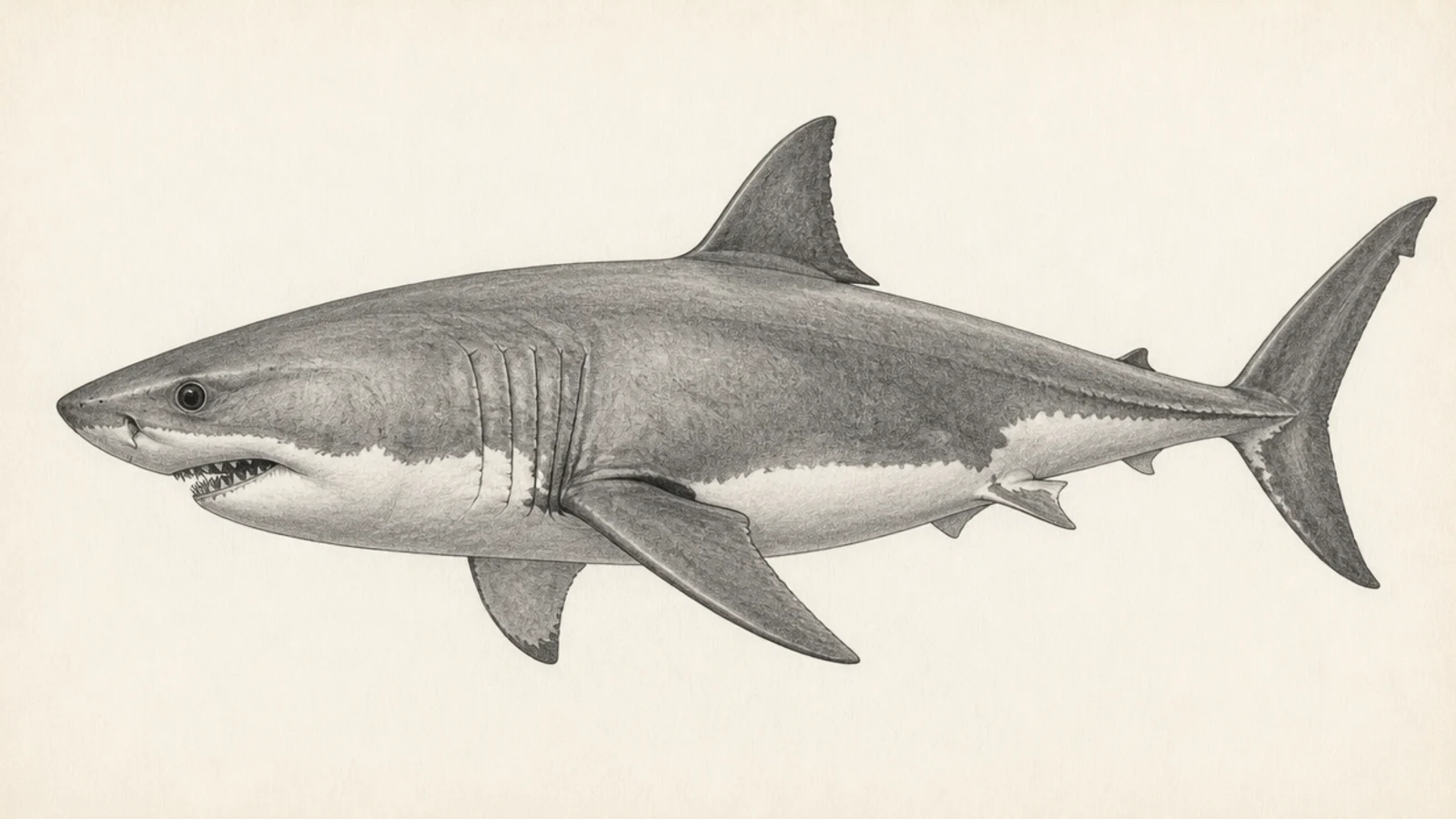
A fully rendered realistic great white shows off shading, gills, and texture. It teaches patient value work and the fine details of the species up close.
Great white wins. Render the torpedo body with smooth grey-to-white shading, five gill slits, small black eye, and a crisp countershade line.
Soften the shading down toward the white belly for a rounded body.
Don’t harden every edge; smooth shading gives the body volume.
15 Both Sharks in One Scene
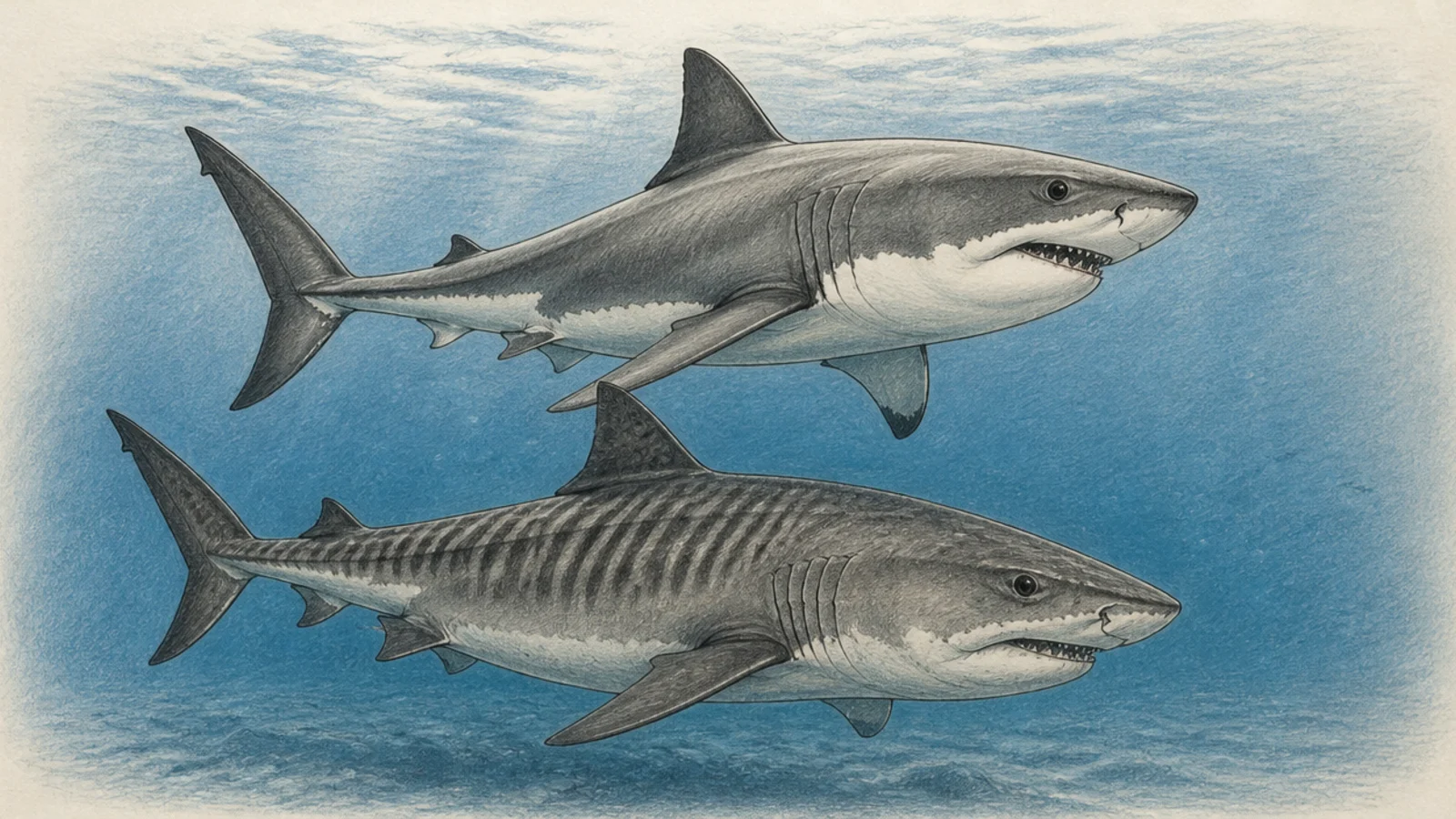
Both sharks sharing one ocean scene is the grandest look and the perfect closer. It teaches composing the two species together so their differences show side by side.
Both shown together. Place the barred tiger shark low and the countershaded great white above in one blue scene, each drawn to its own features.
Keep each shark true to its features so the two read as different species.
Don’t blend their traits; each keeps its own snout, markings, and tail.