1 Shadow-Defined White Bunny
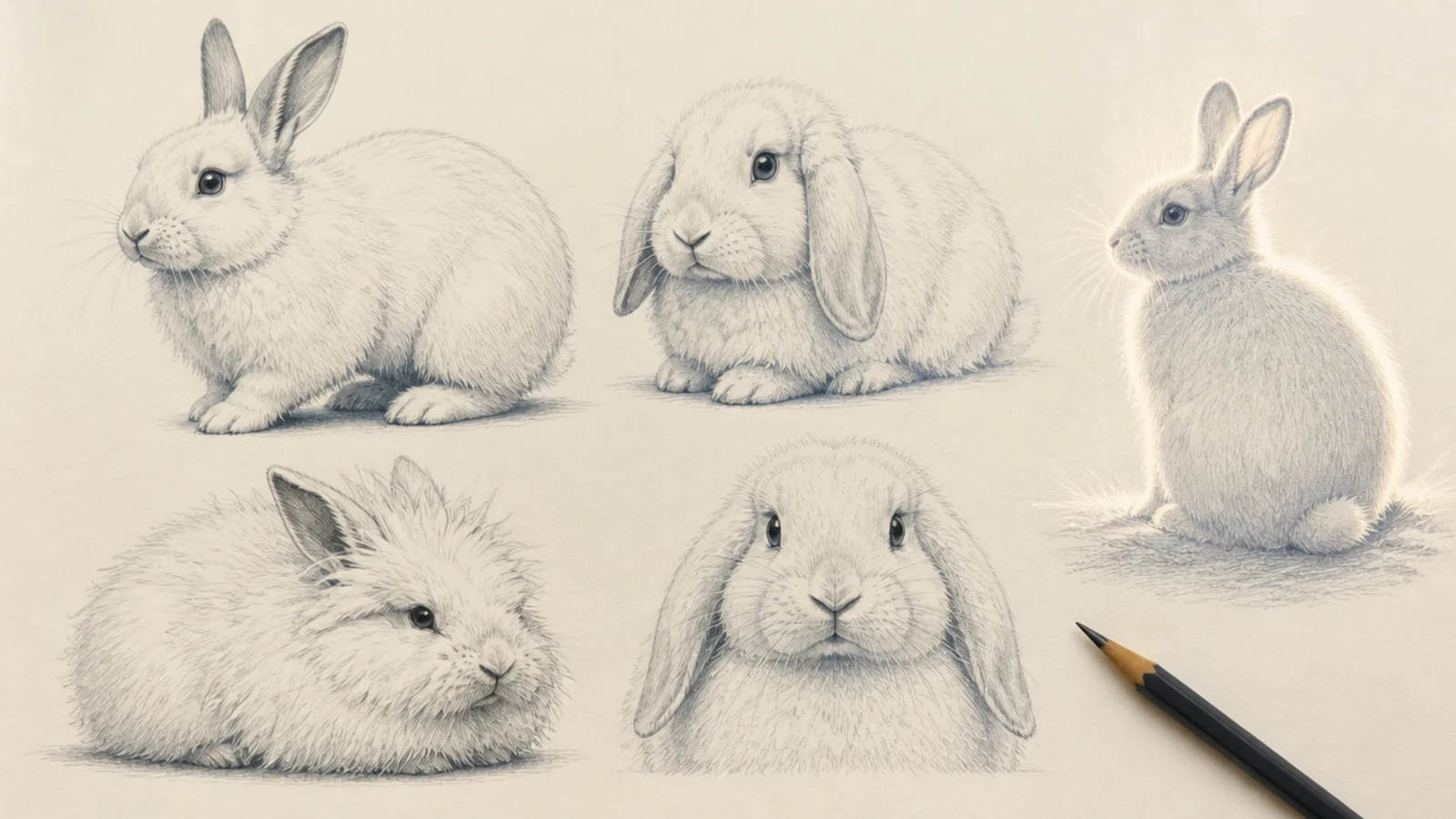
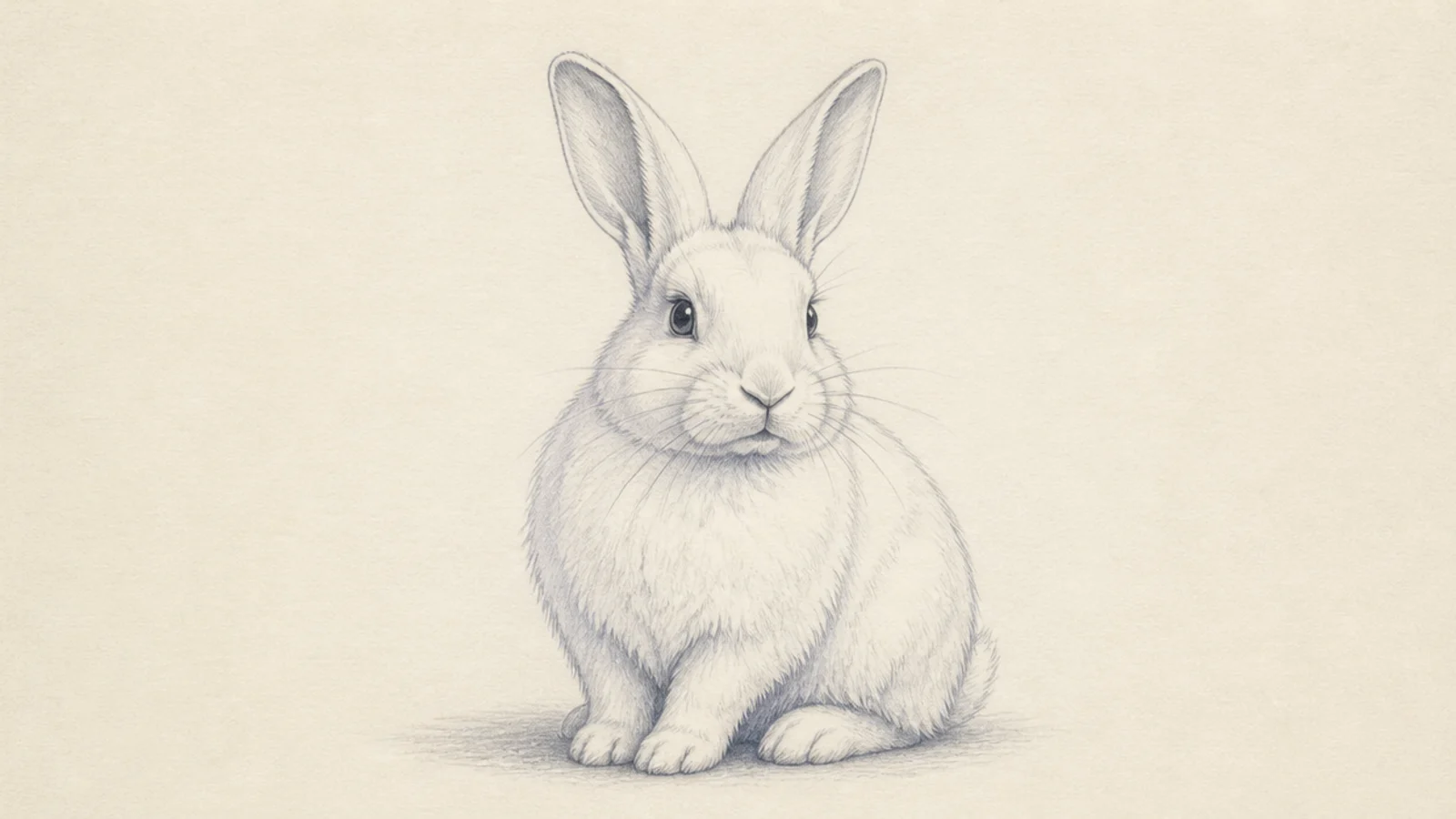
This is the core white-rabbit lesson — a bunny drawn entirely with shadow. The paper stays white for the fur while grey shadows reveal the form. Master this and every other white rabbit follows.
Step 1 lightly outline the rabbit. Step 2 place soft grey shadows under the chin, belly, and ears. Step 3 leave the lit fur as bare paper and soften every shadow edge.
Squint at a reference to see only the shadow shapes, then draw just those.
Don’t outline the whole rabbit in dark line; let shadow define the edges.
2 Fluffy White Lop
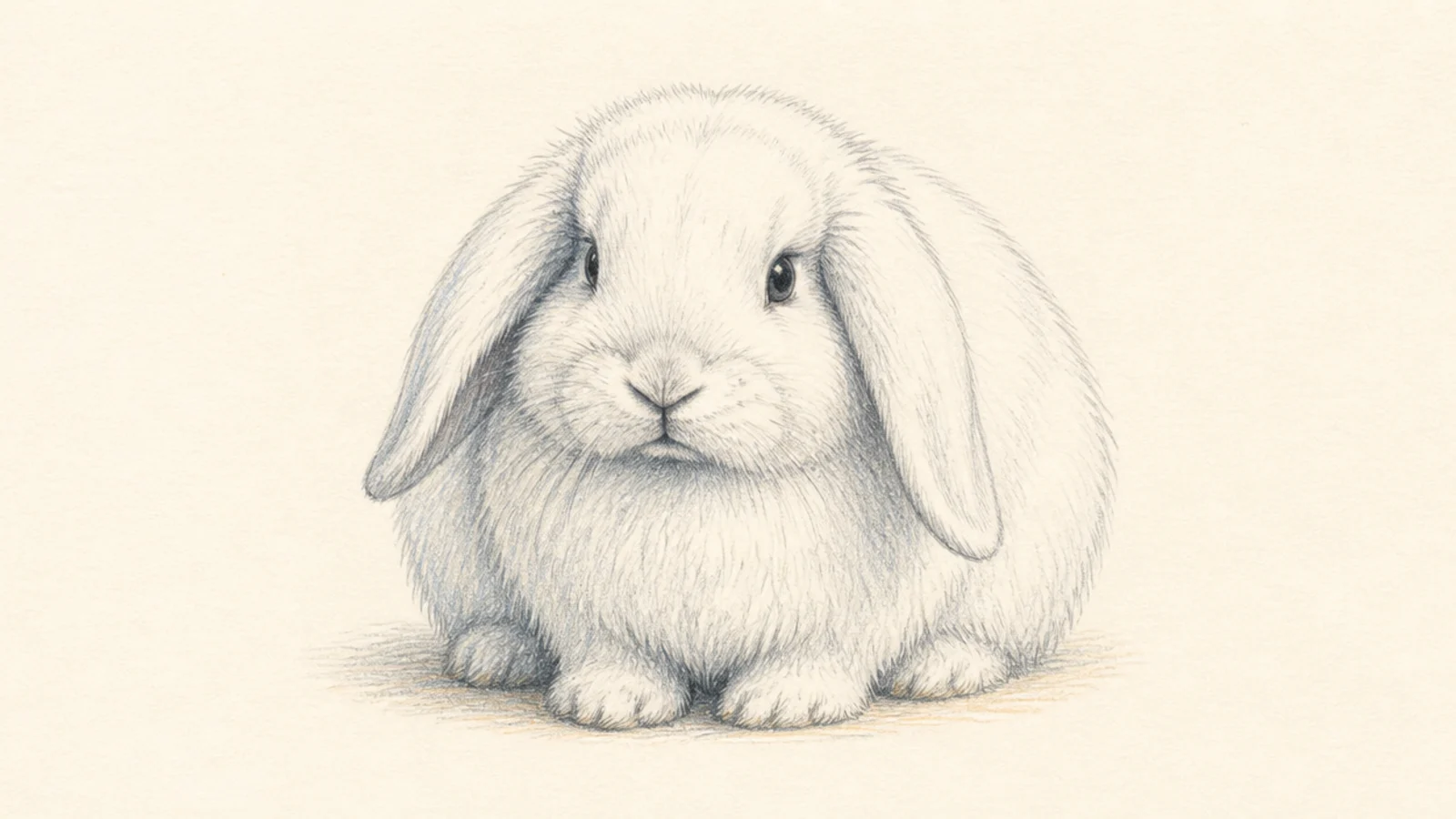
Step 1 draw a round body with drooping ears. Step 2 shade inside the ear folds and under the body. Step 3 break the whole outline into soft fur flicks.
A white lop with soft drooping ears is gentle and plush. The heavy ears and fluffy coat are lovely to render in shadow. It reads as an impossibly soft pet.
AvoidDon’t harden the ear edges; soft fur flicks keep the lop plush.
Pro tipDeepen the shadow inside the ear folds so the ears look thick and soft.
3 White Rabbit in Snow
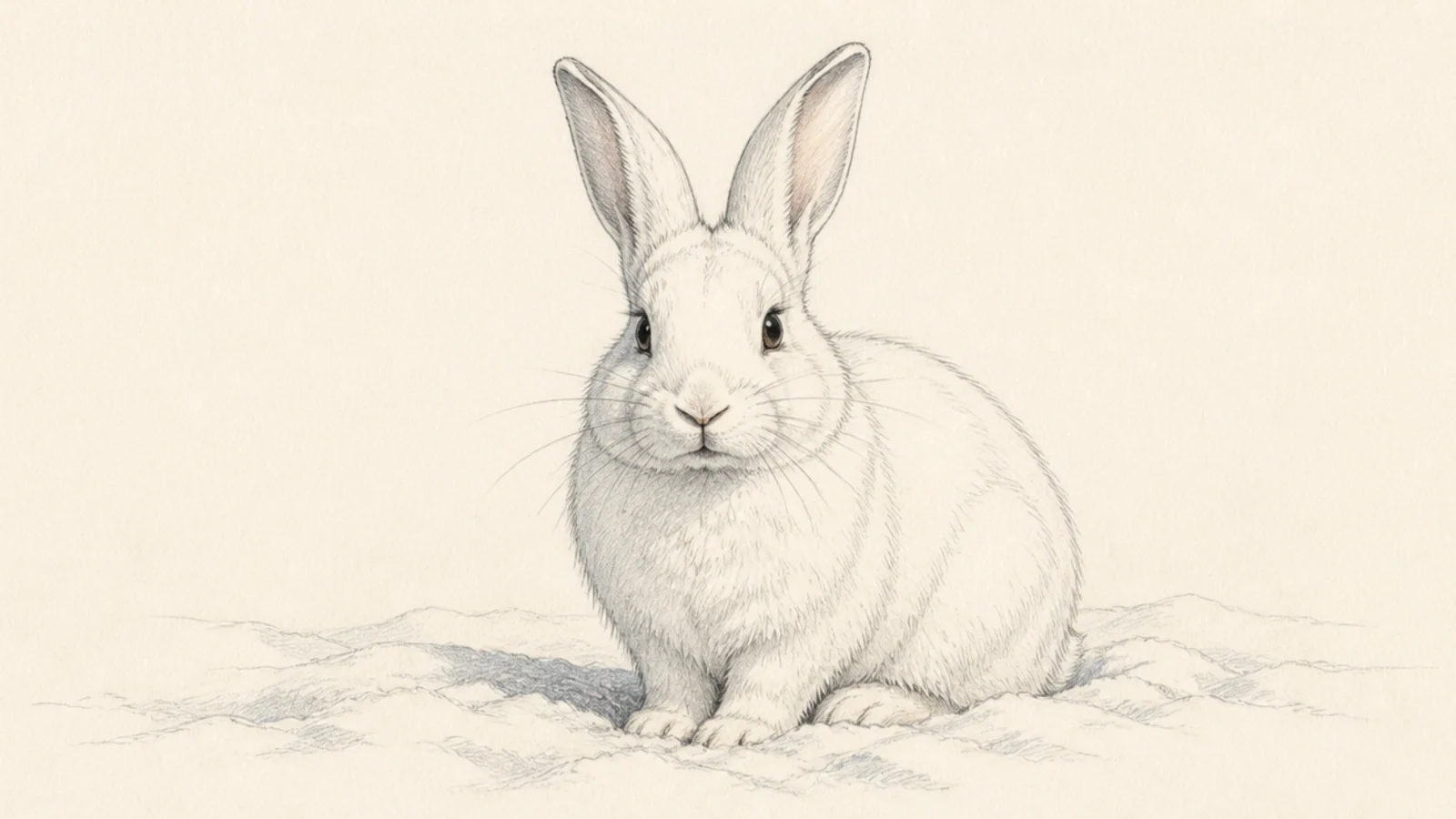
Step 1 draw the rabbit and a snowy ground. Step 2 shade the rabbit’s underside and cast shadow slightly darker than the snow’s dips. Step 3 keep the rabbit’s lit fur brightest of all.
A white rabbit in snow is the ultimate white-on-white challenge. Only subtle shadow separates the fur from the snow. It teaches delicate value control.
AvoidDon’t shade the snow as dark as the rabbit; the rabbit stays brightest.
Pro tipMake the rabbit’s shadows a hair darker than the snow’s so it separates.
4 Red-Eyed Albino Rabbit
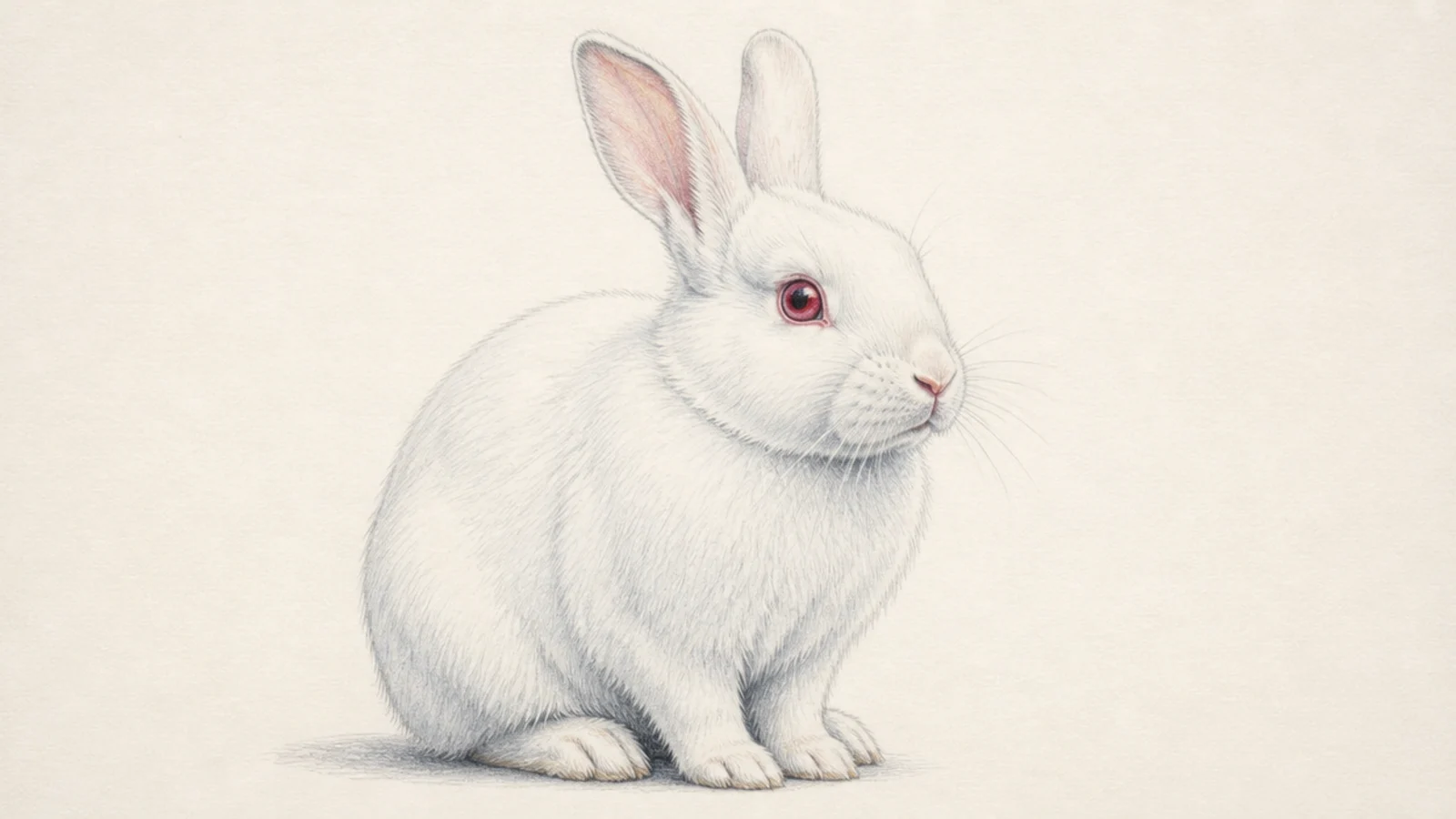
Step 1 draw a white rabbit in soft grey shadow. Step 2 add a round pink-red eye with a bright highlight. Step 3 tint the inner ears and nose faint pink.
An albino white rabbit with pink-red eyes is striking against the pale fur. The one spot of warm color draws the whole drawing together. It is a classic white bunny.
AvoidDon’t add other colors; the single warm eye should stand alone.
Pro tipKeep the pink-red eye and ears the only warm color for maximum impact.
5 Cool Blue-Shadow White Rabbit
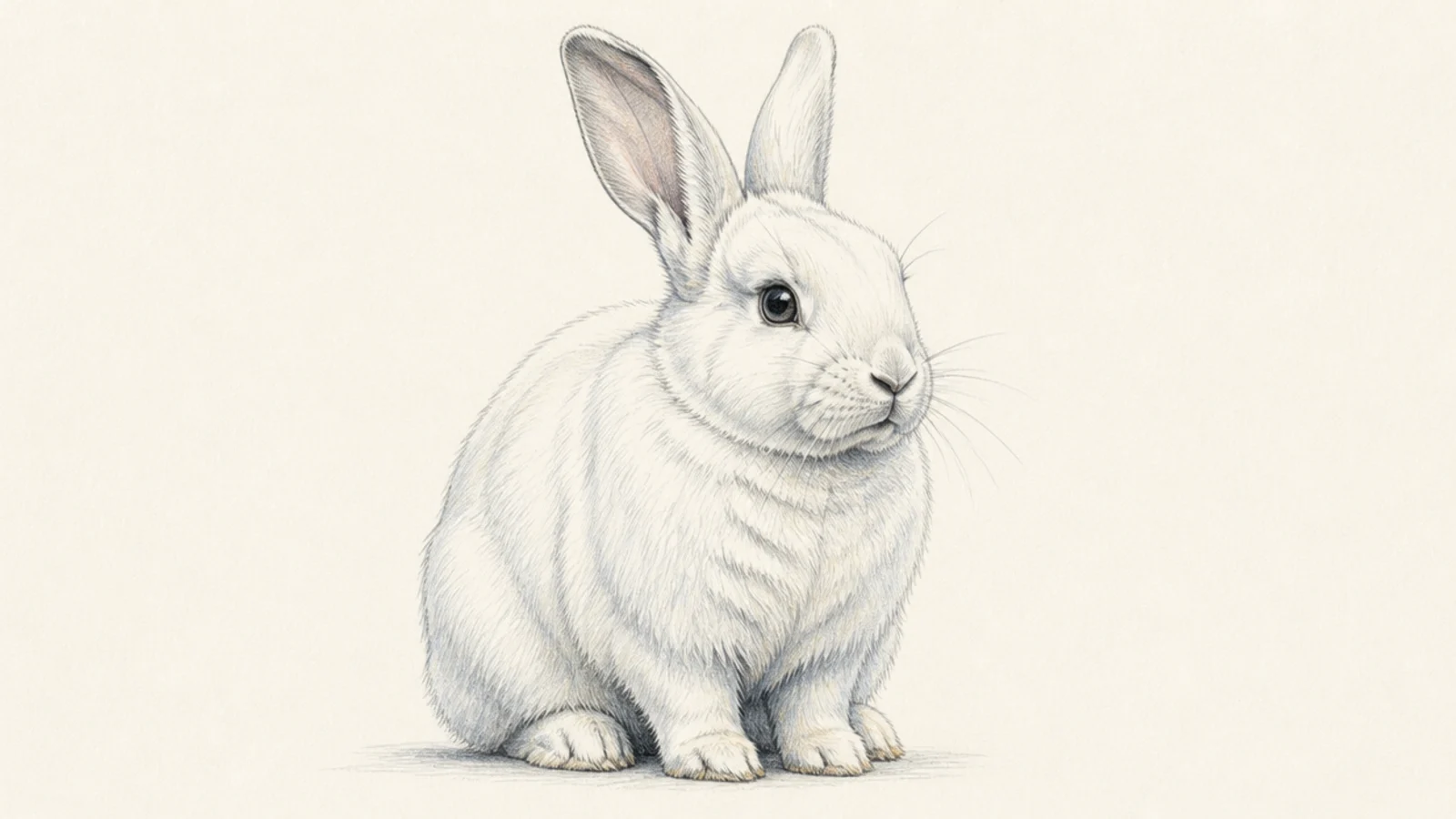
Shading a white rabbit with cool blue-grey shadows makes the fur read as truly white in daylight. The cool tone is more convincing than flat grey. It looks fresh and luminous.
Step 1 draw the rabbit. Step 2 shade the recesses with a light cool blue-grey. Step 3 add a faint warm hint where light bounces up from below.
Use a cool blue-grey for the shadows and a warm touch for reflected light.
Don’t use a flat warm grey; cool shadows read as clean white fur.
6 Backlit White Rabbit
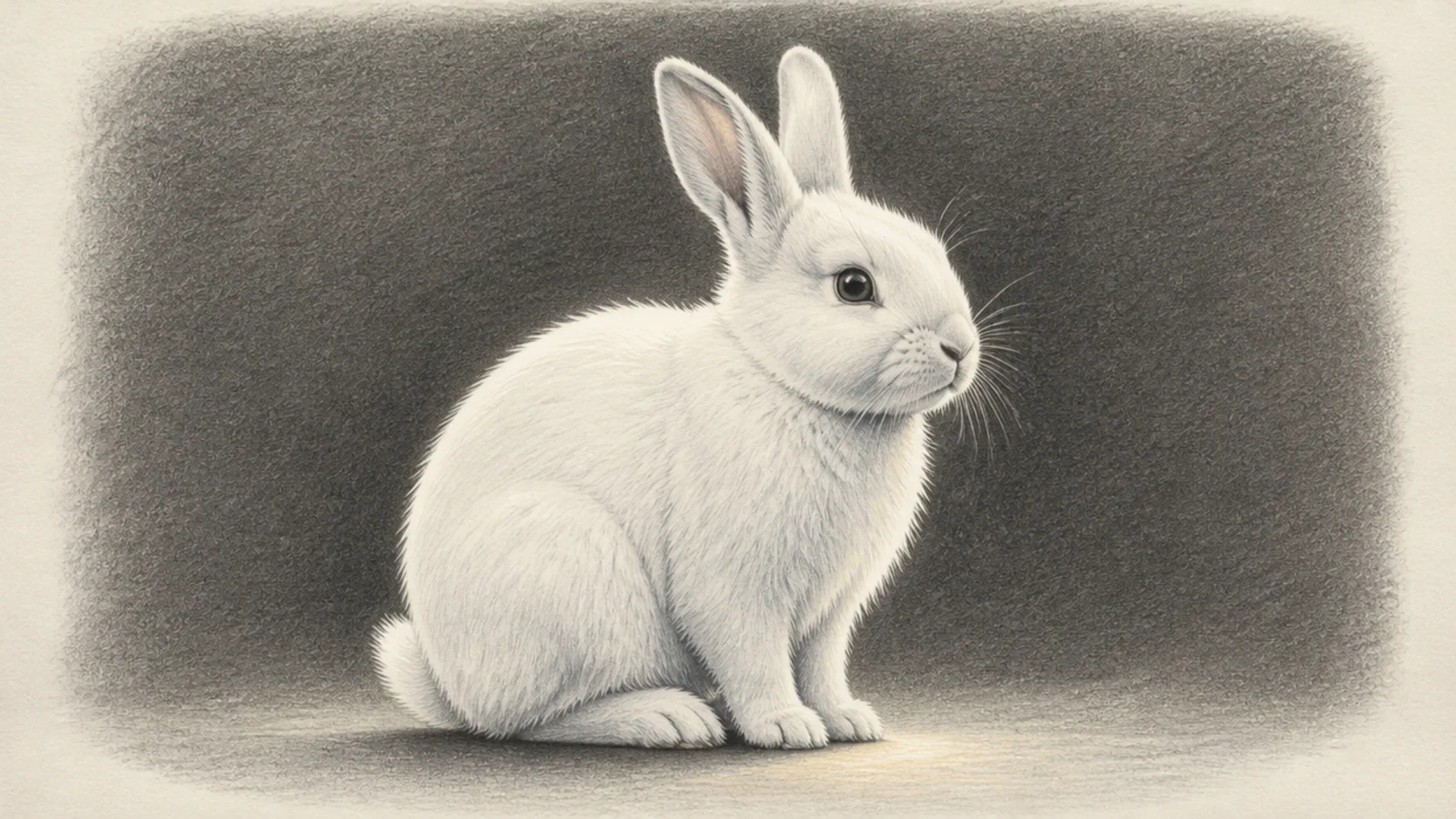
A backlit white rabbit glows with a bright rim of light around its fur. The light catching the fluffy edge is magical. It is a beautiful lighting effect.
Step 1 draw the rabbit against a darker background. Step 2 shade the body a soft mid grey. Step 3 leave a bright white rim of untouched paper along the sunlit edge.
Reserve a glowing white rim along the lit edge and keep the core in shadow.
Don’t light the whole rabbit; backlight means a bright edge over a shaded body.
7 White Angora Fluff
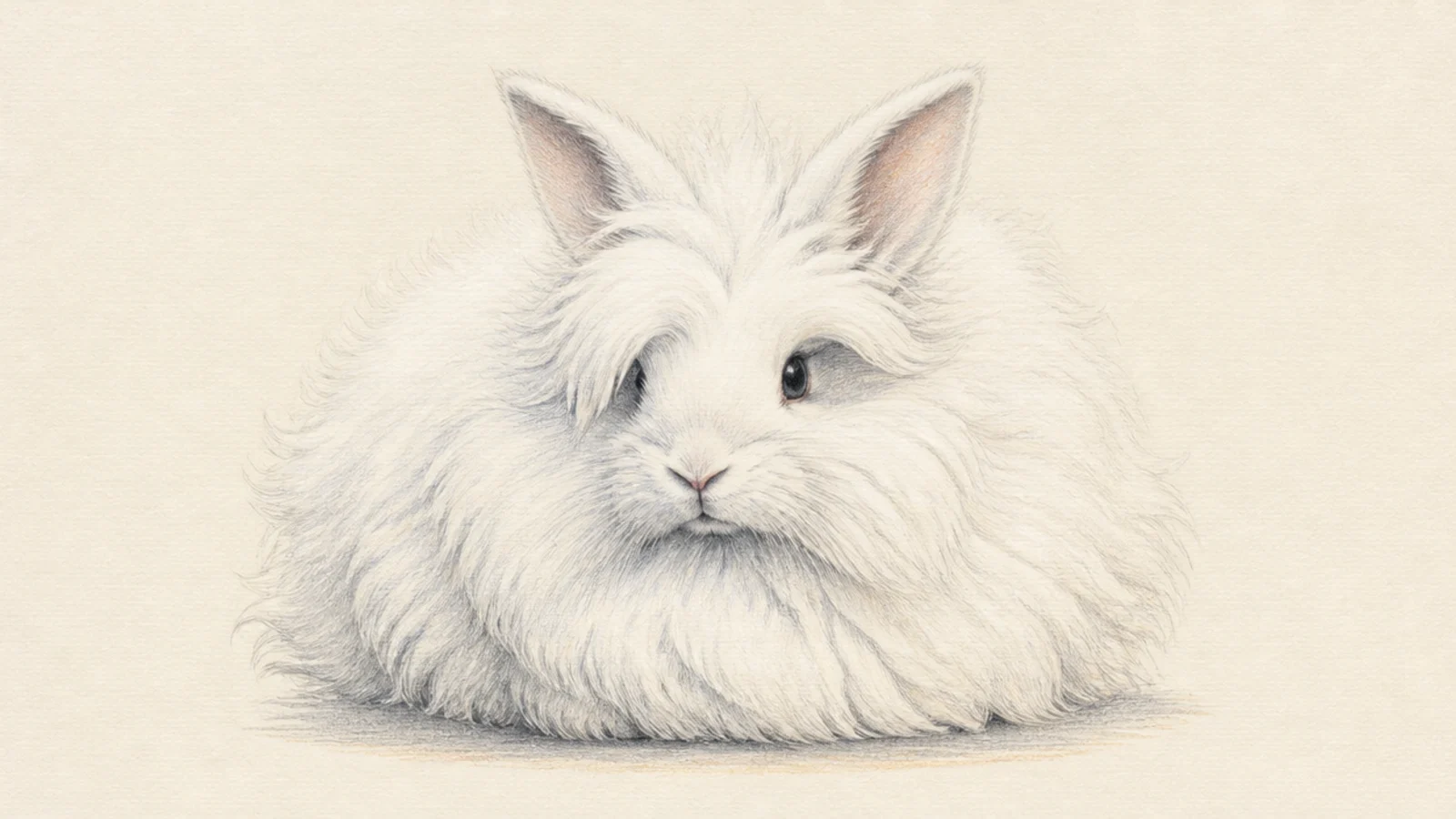
A white Angora is a cloud of long fluffy fur with a tiny face. The billowing white coat is all soft shadow and texture. It reads as pure softness.
Step 1 draw a big round body with a bumpy fluffy outline. Step 2 shade gentle grey between the fur clumps. Step 3 leave the tops of the clumps bright white.
Shade only the valleys between fur clumps and leave the tops paper-white.
Don’t shade evenly; the light tops and shadowed valleys create the fluff.
8 White Rabbit on Dark Background
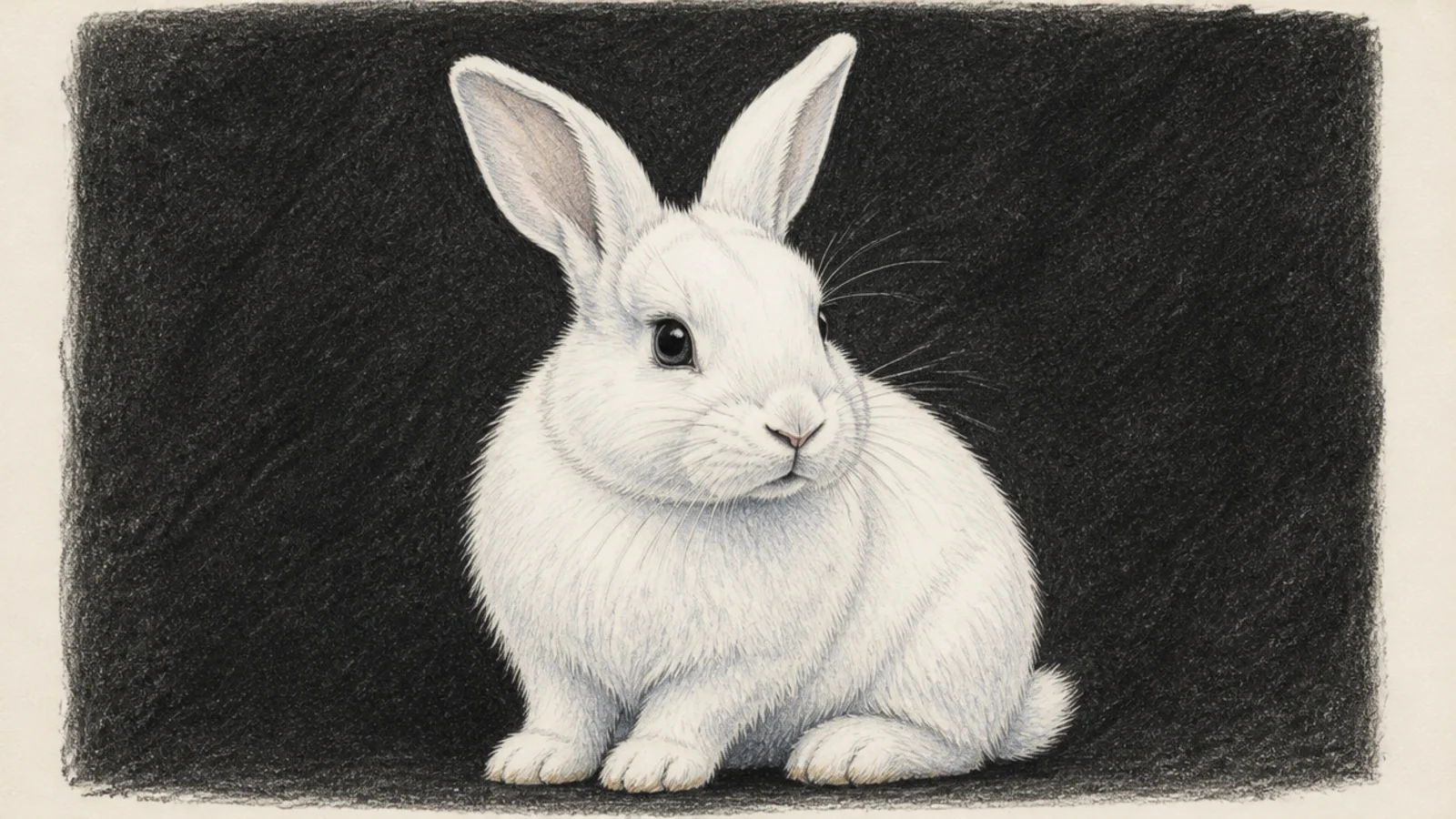
A white rabbit against a dark background pops dramatically. The contrast makes the paper-white fur glow. It is the easiest way to show off white fur.
Step 1 draw the rabbit and leave it mostly white. Step 2 fill the background dark around it. Step 3 add just light shadows within the fur to keep some form.
Let the dark background do the work so the fur needs only light shading.
Don’t over-shade the fur; the dark background already makes it pop.
9 White Easter Bunny
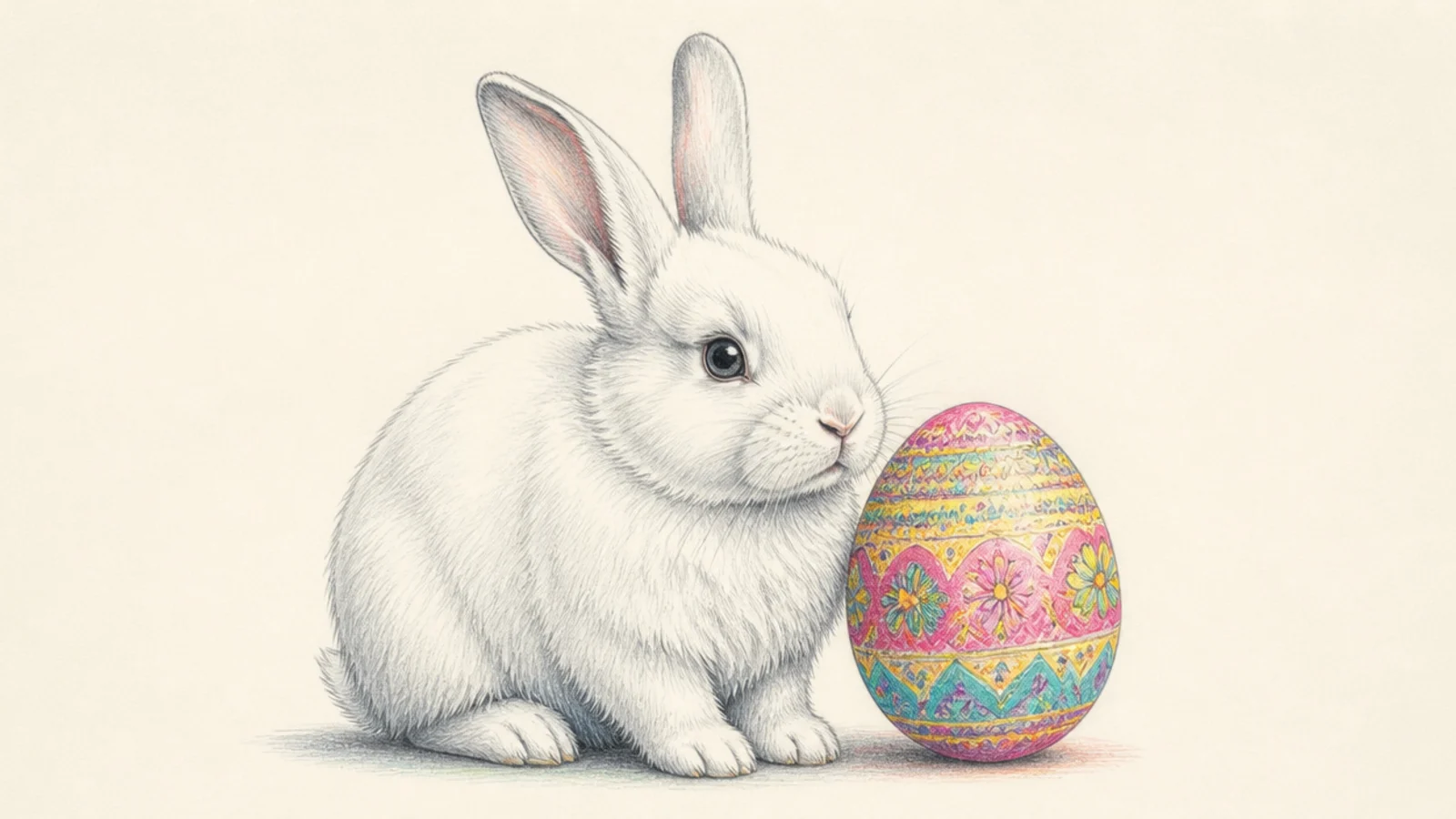
A white Easter bunny beside a colorful egg is cheerful and seasonal. The bright egg sets off the soft white fur. It is a lovely spring drawing.
Step 1 draw a soft white bunny in gentle grey shadow. Step 2 add a decorated egg beside it. Step 3 let the egg carry the color while the bunny stays white.
Keep the bunny white and let the egg hold all the bright color.
Don’t color the bunny; the contrast with the egg keeps it clearly white.
10 White Rabbit Portrait
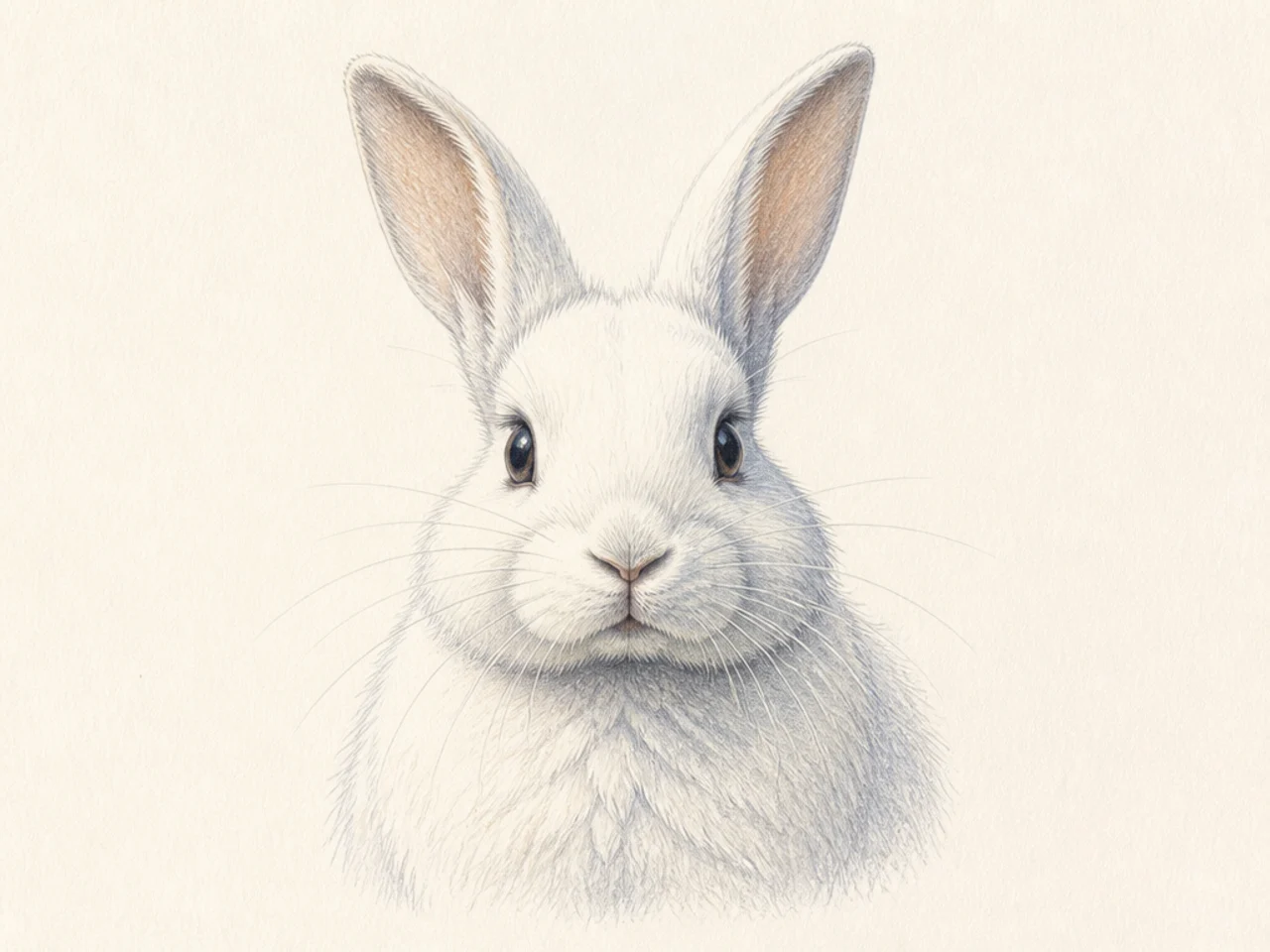
Step 1 draw the head and chest. Step 2 shade softly around the eyes, under the chin, and inside the ears. Step 3 add whiskers and leave the cheeks and forehead bright.
A head-and-chest portrait focuses on the soft white face and fur. The gentle shadows around the features carry the whole drawing. It looks like a framed pet portrait.
AvoidDon’t shade the whole face grey; reserve the lit planes as white.
Pro tipKeep the forehead and cheeks nearly pure white and shade only the recesses.
11 Sleeping White Bunny
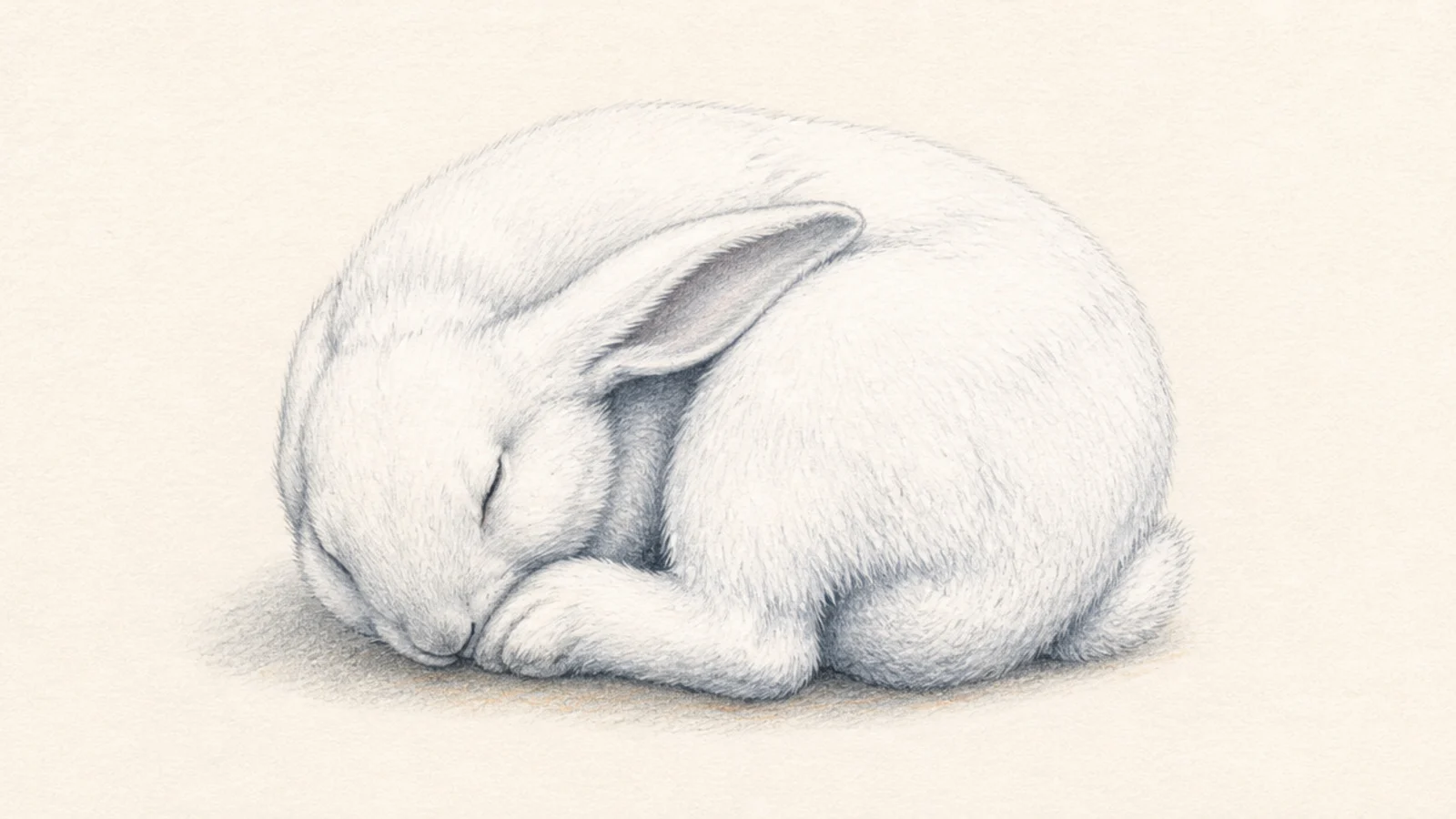
A white rabbit curled asleep is peaceful and soft. The rounded body needs only gentle shadow beneath the curl. It reads as a cozy nap.
Step 1 draw a curled sleeping shape. Step 2 shade under the curl and where the head tucks in. Step 3 leave the top of the body bright and soften all edges.
Place the deepest shadow where the body curls over itself.
Don’t shade the top of the curl; the light hits there and stays white.
12 White Rabbit With Pink Ears
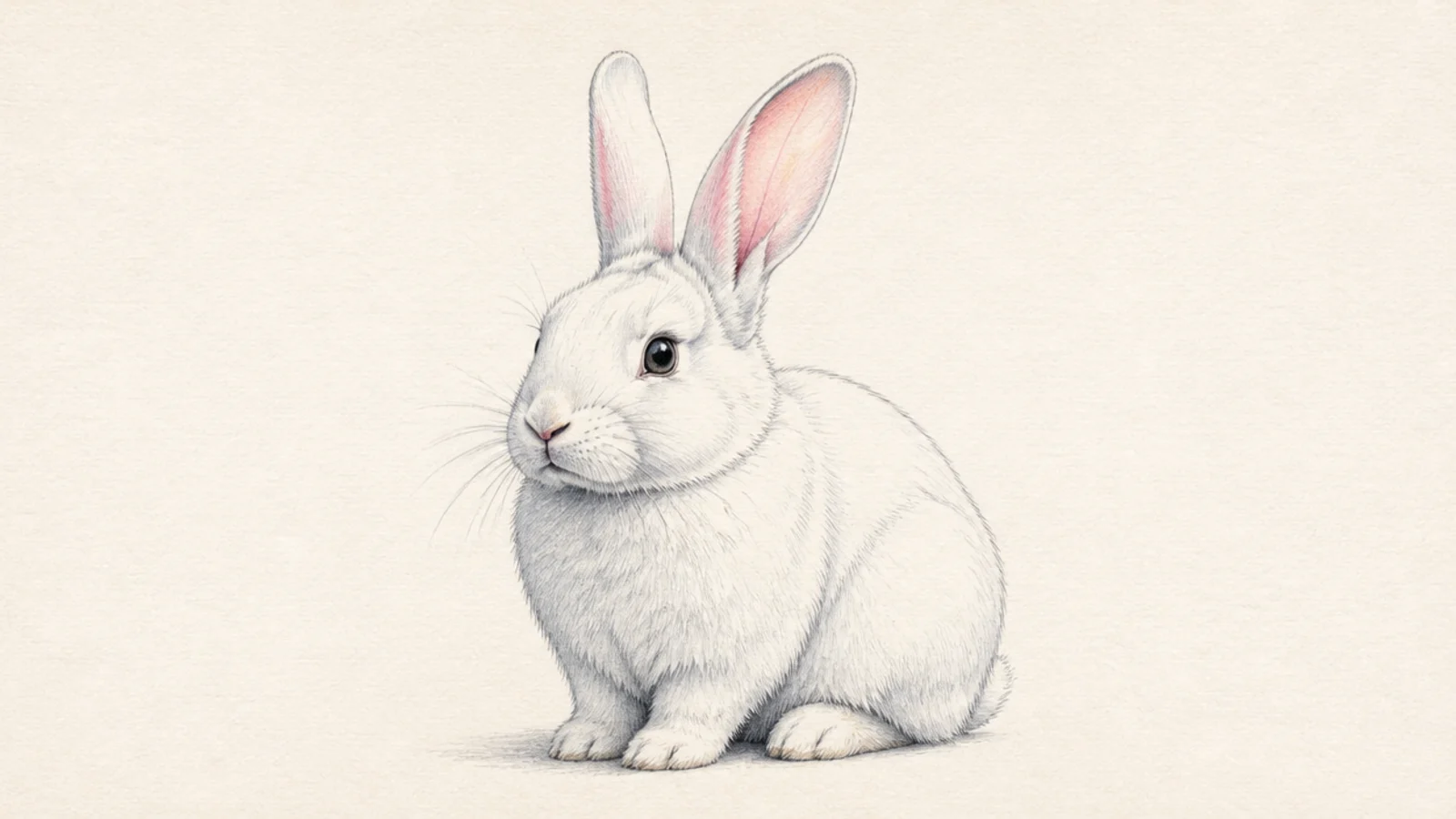
Step 1 draw a white rabbit in grey shadow. Step 2 tint the inner ears soft pink, darker toward the base. Step 3 add a faint pink nose and keep the coat white.
A white rabbit with translucent pink inner ears is delicate and pretty. The warm ear lining is the one gentle color. It softens the whole white bunny.
AvoidDon’t fill the ears flat pink; the fade looks like translucent skin.
Pro tipFade the pink from stronger at the ear base to lighter at the tip.
13 Watercolor White Rabbit
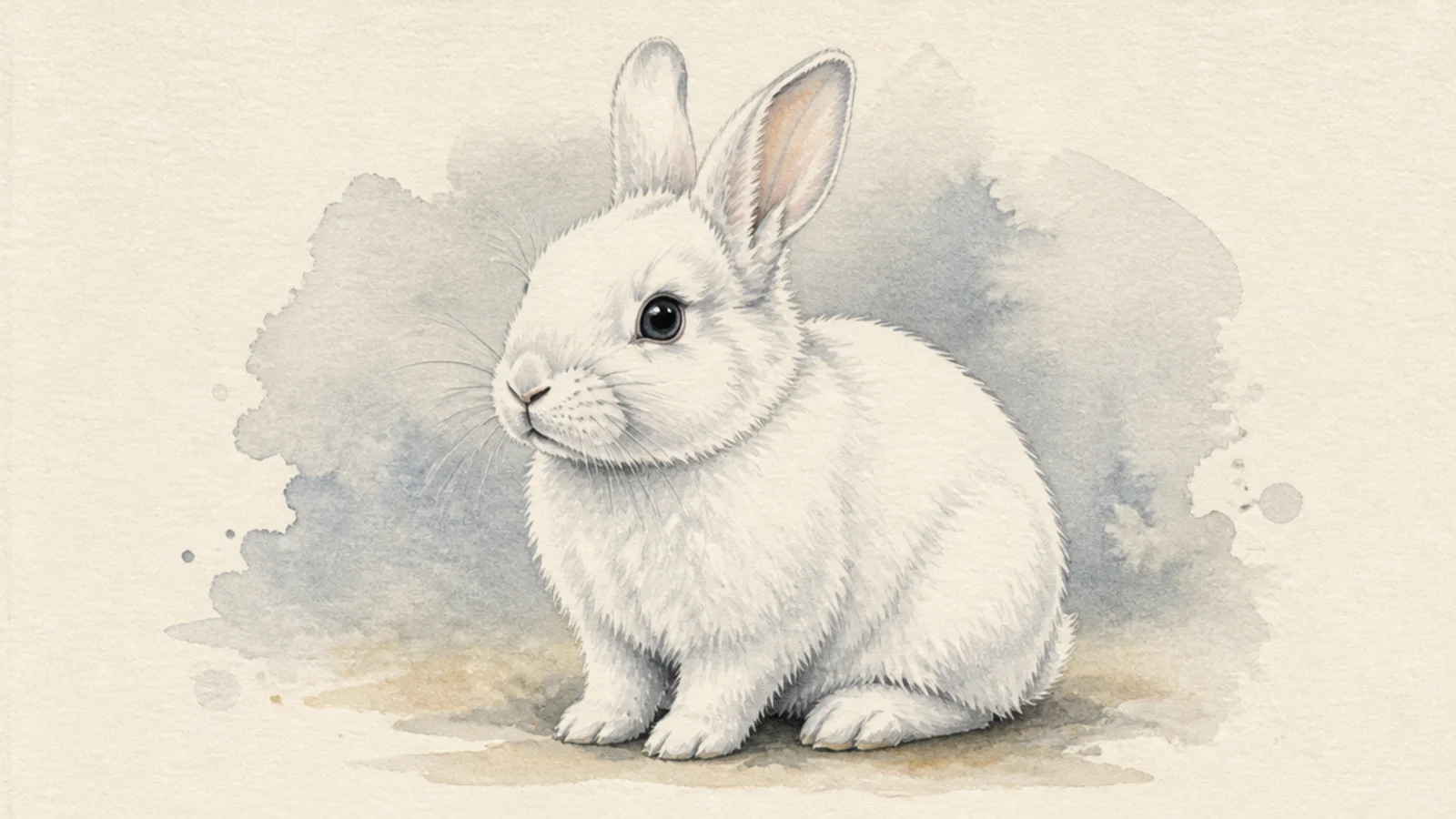
A watercolor white rabbit is painted by reserving the white paper. You paint the shadows and background, never the fur. It teaches negative-space painting.
Step 1 sketch the rabbit lightly. Step 2 paint soft grey shadows and a wash background around it. Step 3 leave the fur as untouched white paper throughout.
Plan your whites before you paint, since watercolor white is bare paper.
Don’t paint over the fur; once you lose the white paper you can’t get it back.
14 White Rabbit in Moonlight
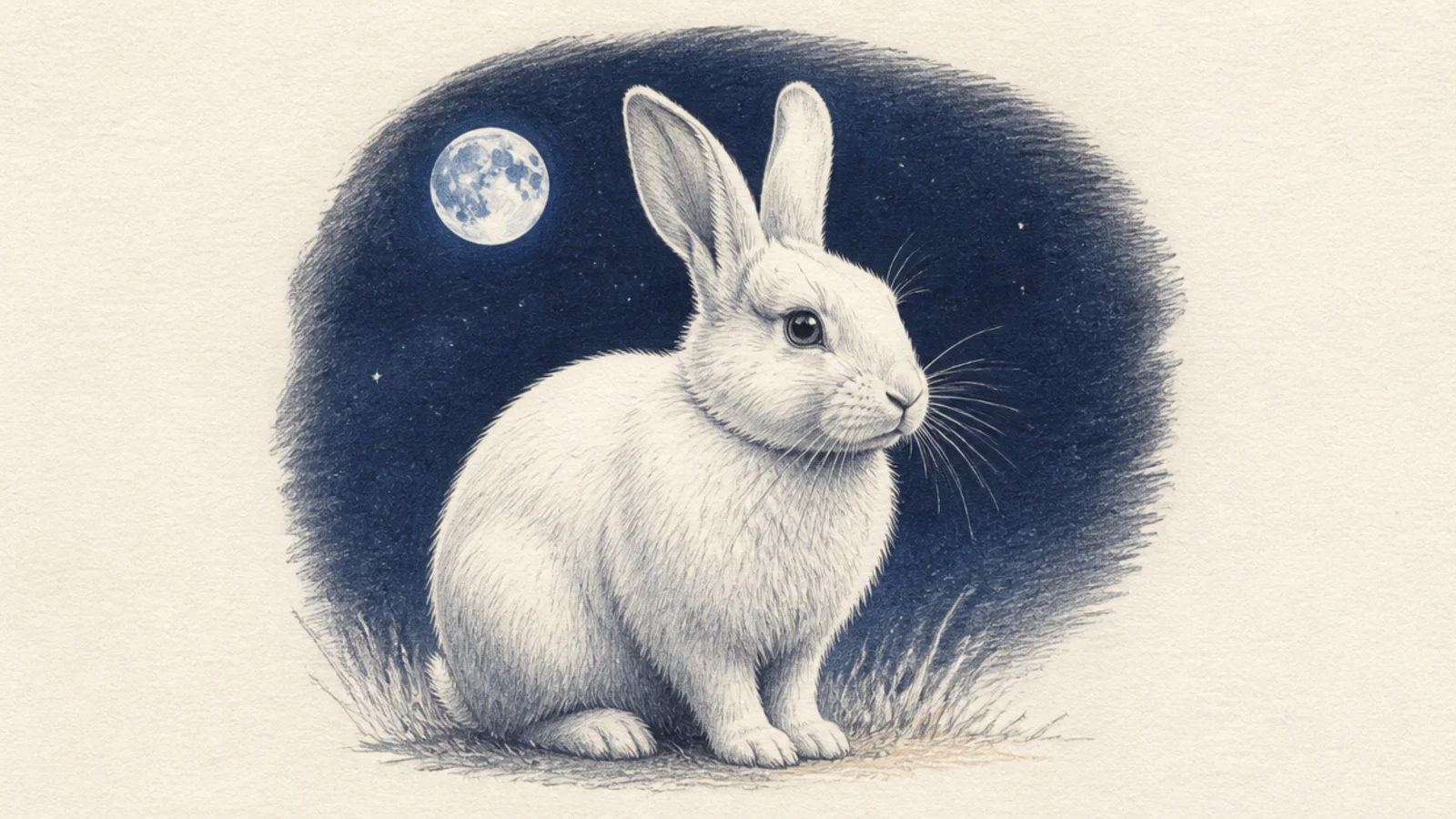
Step 1 draw the rabbit against a dark blue night. Step 2 shade the fur with cool blue-grey. Step 3 leave a soft moonlit highlight along the top of the body and ears.
A white rabbit under moonlight glows softly against a deep blue night. The cool light suits white fur perfectly. It is a serene, atmospheric drawing.
AvoidDon’t warm the light; moonlight on white fur reads cool and silvery.
Pro tipKeep the moonlit top edge brightest and let the underside fall into cool shadow.
15 White Rabbit in a Meadow
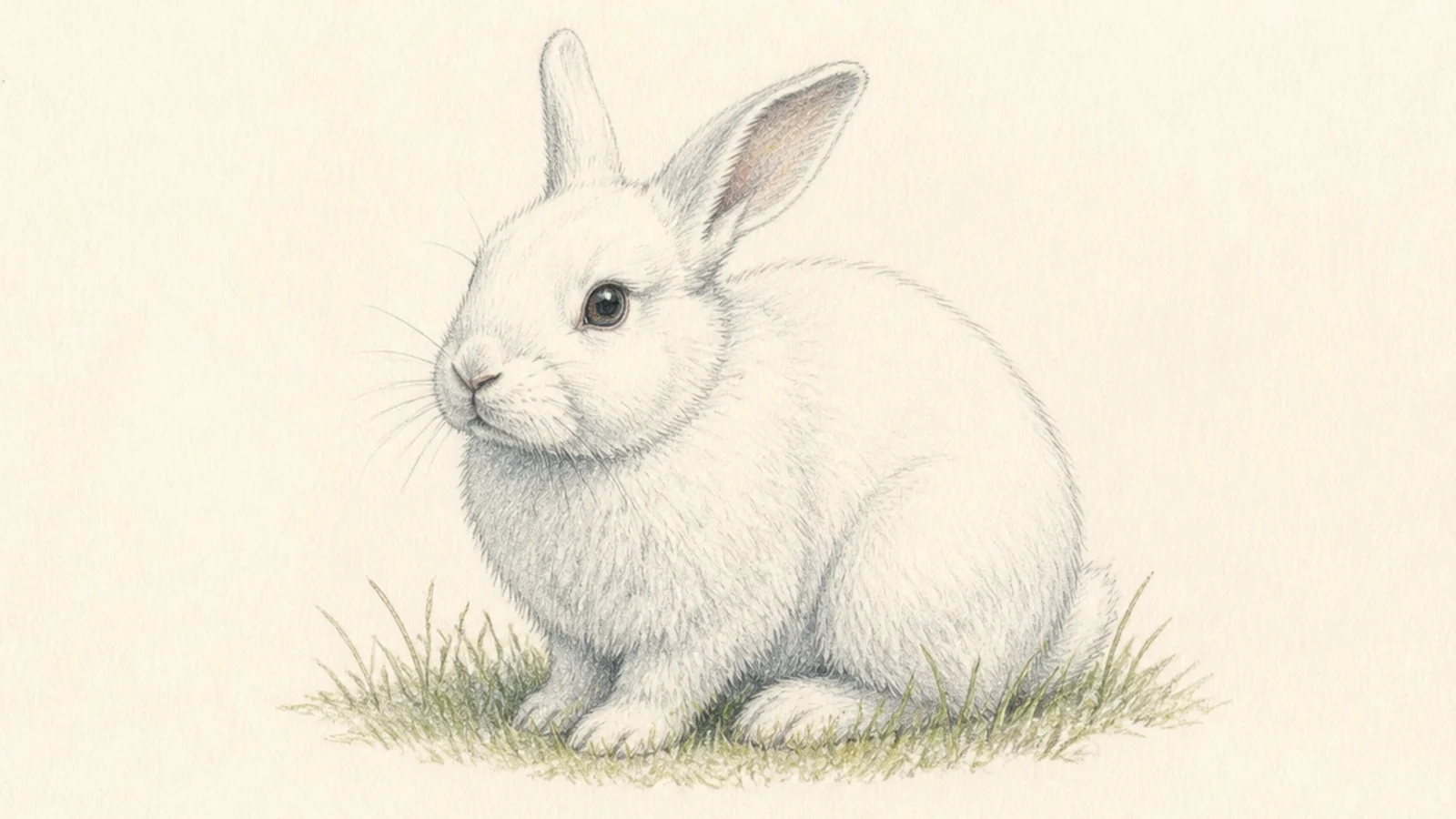
A white rabbit in a green meadow closes the list with color contrast. The soft green sets off the bright white fur beautifully. It reads as a sunny, natural scene.
Step 1 draw a white rabbit in gentle grey shadow. Step 2 add soft green grass around and behind it. Step 3 let a faint green reflect into the shadowed belly.
Bounce a hint of the green grass up into the rabbit’s belly shadow.
Don’t outline the rabbit hard against the grass; soft fur edges look natural.