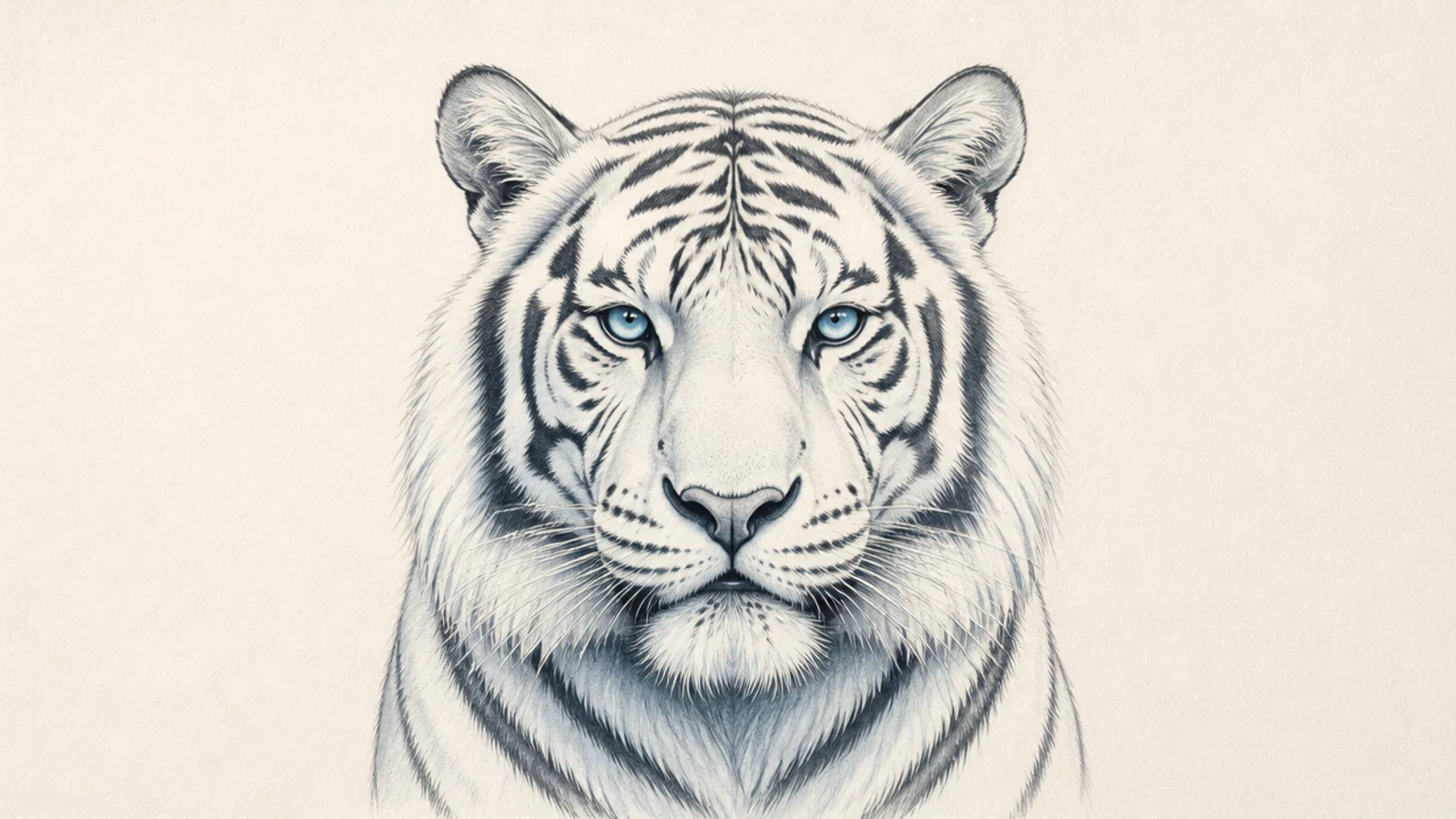
1 Serene Blue-Eyed Portrait
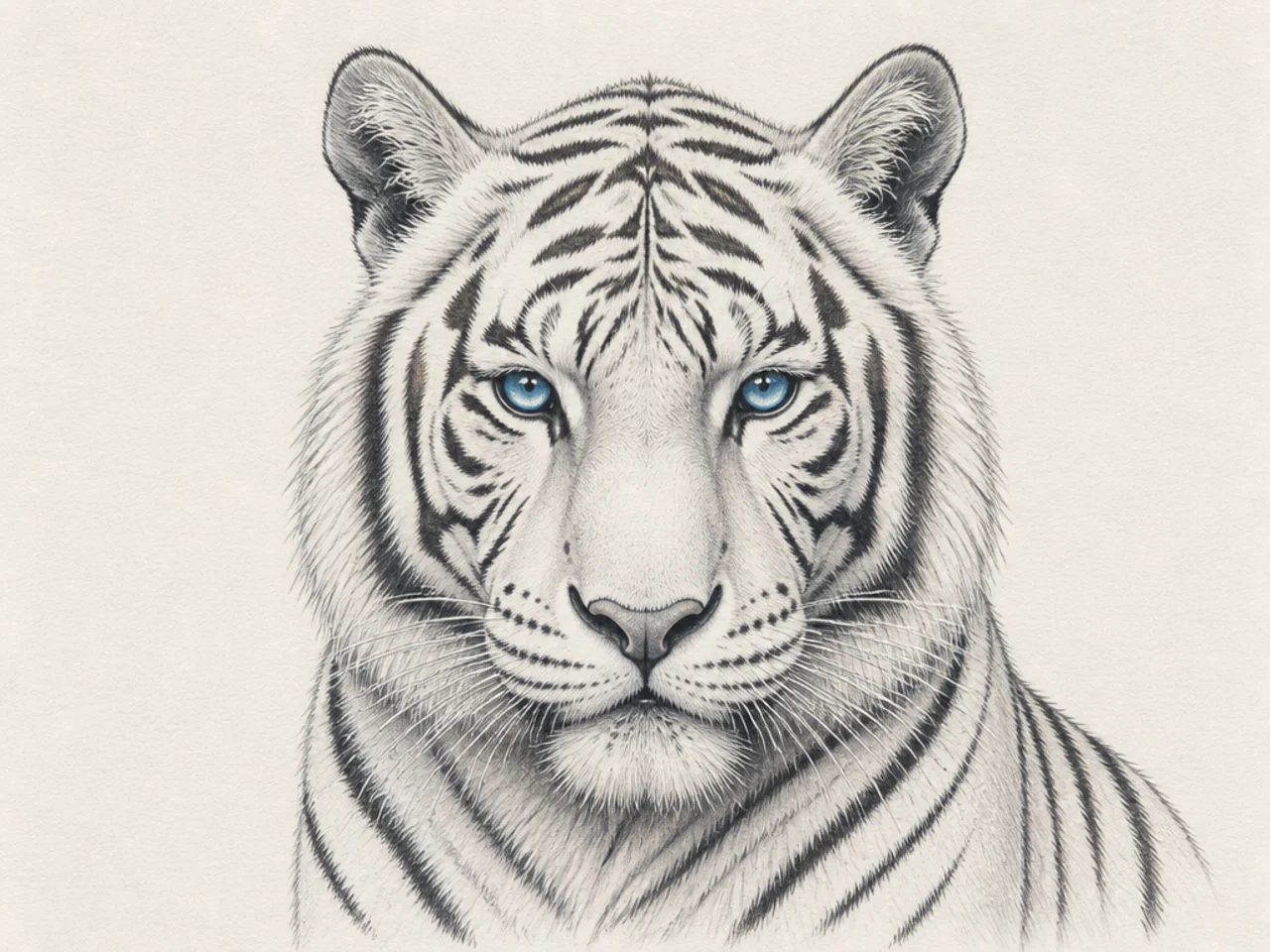
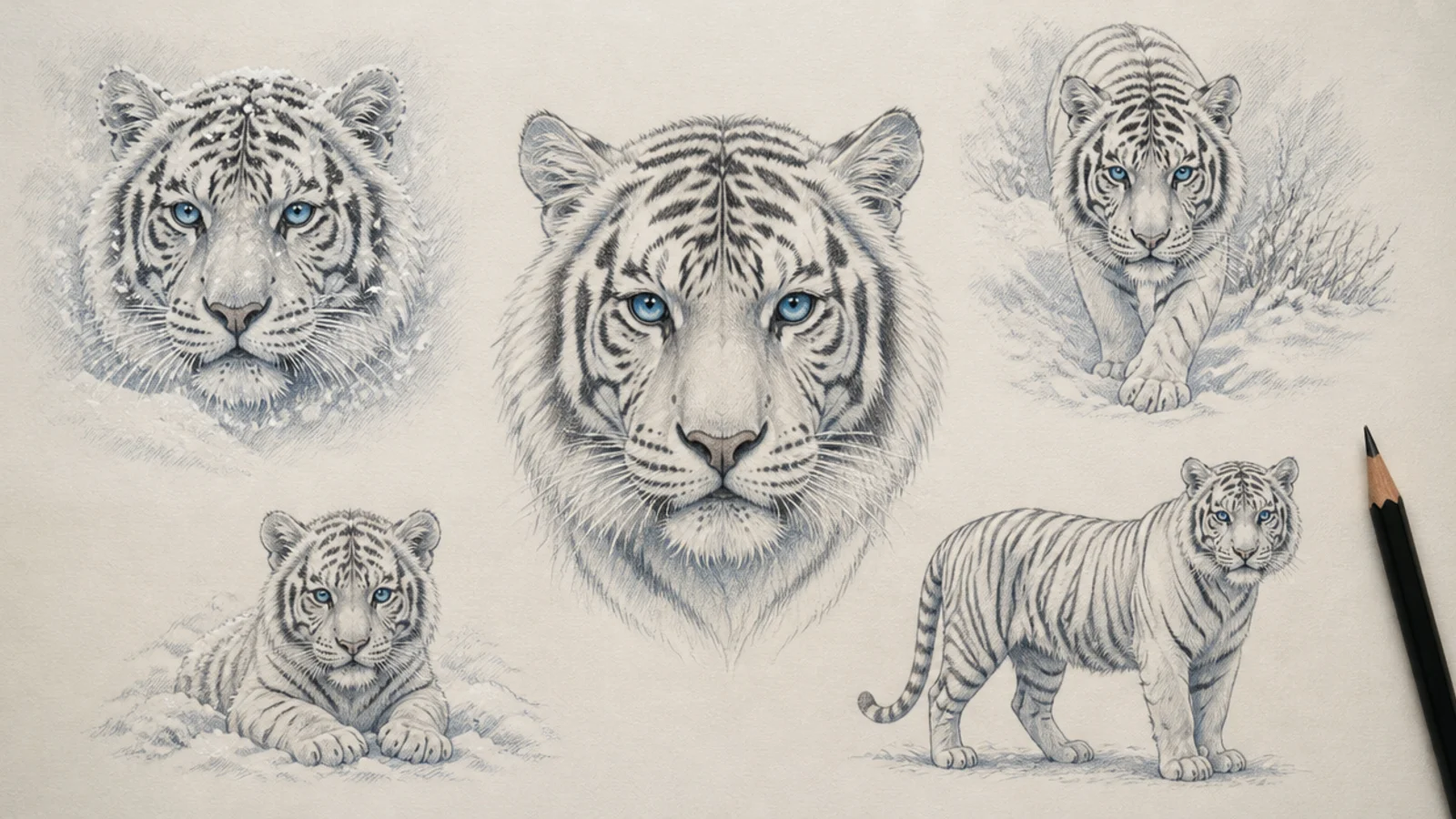
This is the foundation white tiger and the base for the list — a calm front portrait with glowing blue eyes. It teaches cool shadow on white fur and the signature icy gaze.
Step 1 draw the balanced front face and leave the lit areas white. Step 2 shade cool grey under the chin, in the ears, and on one side. Step 3 lay charcoal stripes and color the eyes icy blue with a highlight.
Keep the shadows cool and light so the fur stays crisp white.
Don’t shade the whole face; leave the lit planes as pure paper.
2 White Tiger in Snowfall
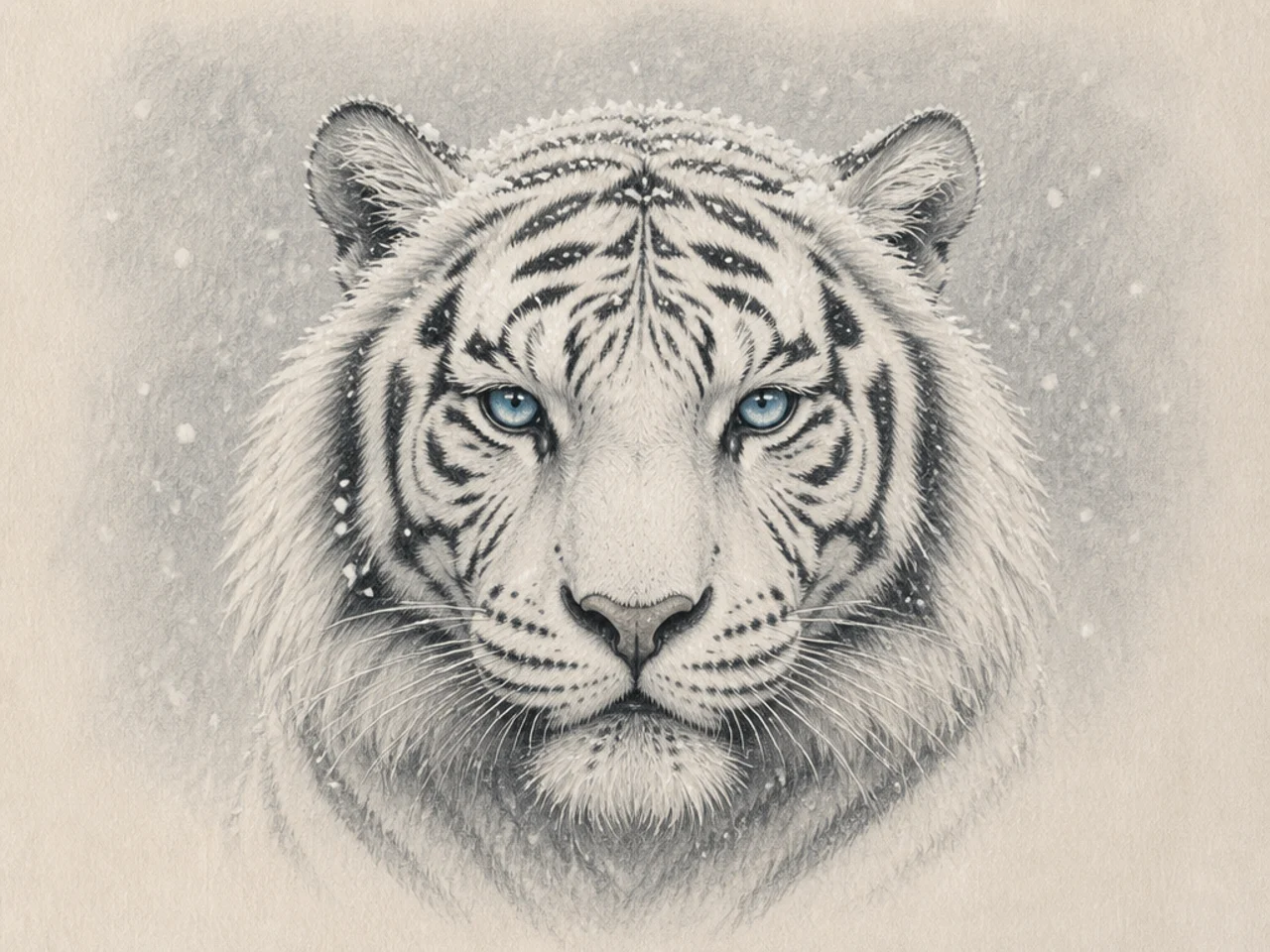
A white tiger with snow settling on its face is atmospheric and seasonal. It teaches how to add falling snow and frosted fur without losing the form underneath.
Step 1 draw the white tiger face. Step 2 shade cool grey shadows to keep the form. Step 3 dot white snowflakes over the fur and background and soften the far edges into a grey sky.
Pro tipVary the snowflake sizes and let a few blur for a sense of depth.
AvoidDon’t cover the face in flakes; scatter them so the form shows.
3 Prowling Through Snow
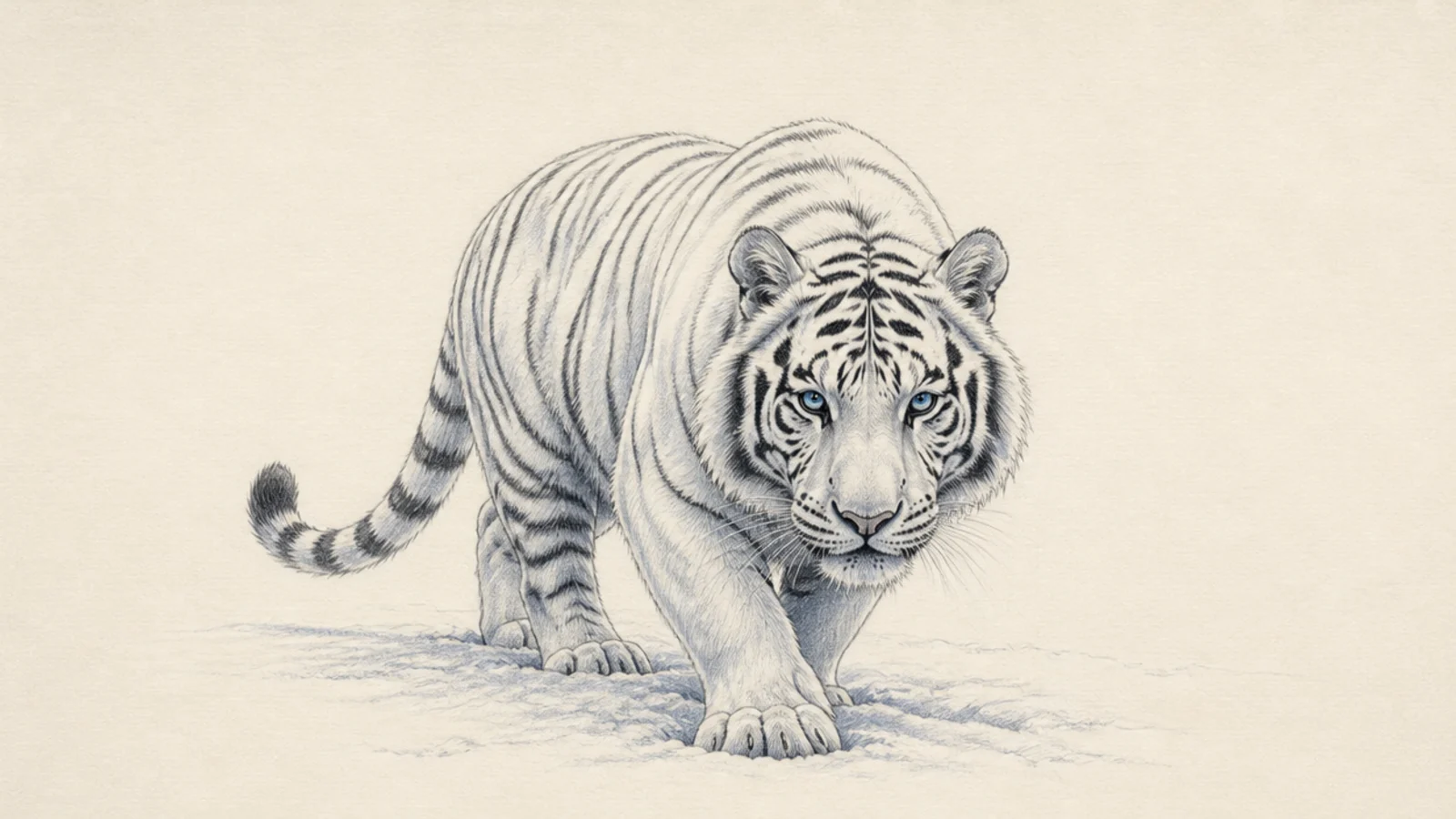
A white tiger prowling low through snow shows the full body camouflaged in its element. It teaches the powerful stalking pose and how the coat blends into a pale ground.
Step 1 draw a low, level prowling body. Step 2 shade the belly and legs cool grey and keep the back near white. Step 3 lay dark stripes and a soft snowy ground shadow beneath.
Pro tipKeep the head low and level with the spine for a real stalking prowl.
AvoidDon’t lift the head high; a prowl keeps the head low and forward.
4 Icy Eyes Close-Up
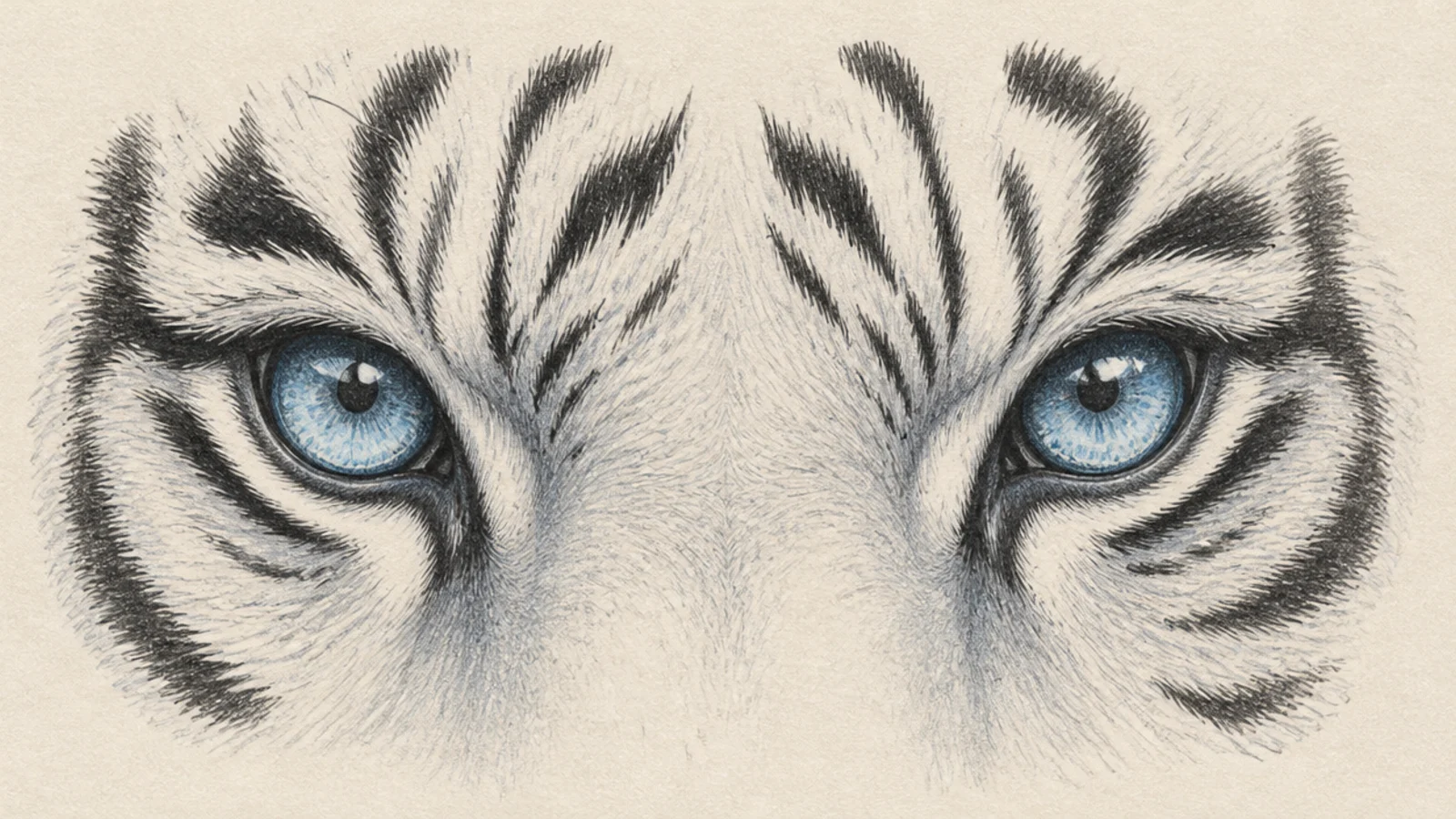
This crops in tight on the pale blue eyes, the animal’s defining feature. It teaches you to render a cool, glowing iris with layered blue and a sharp highlight.
Step 1 crop to the eyes, brow, and top muzzle. Step 2 layer light and deeper blue rings in each iris with a big pupil. Step 3 place a bright highlight and shade the surrounding fur cool grey.
Keep the single highlight the brightest point against the cool iris.
Don’t flatten the iris one blue; layered rings make it glow.
5 Majestic Standing White Tiger
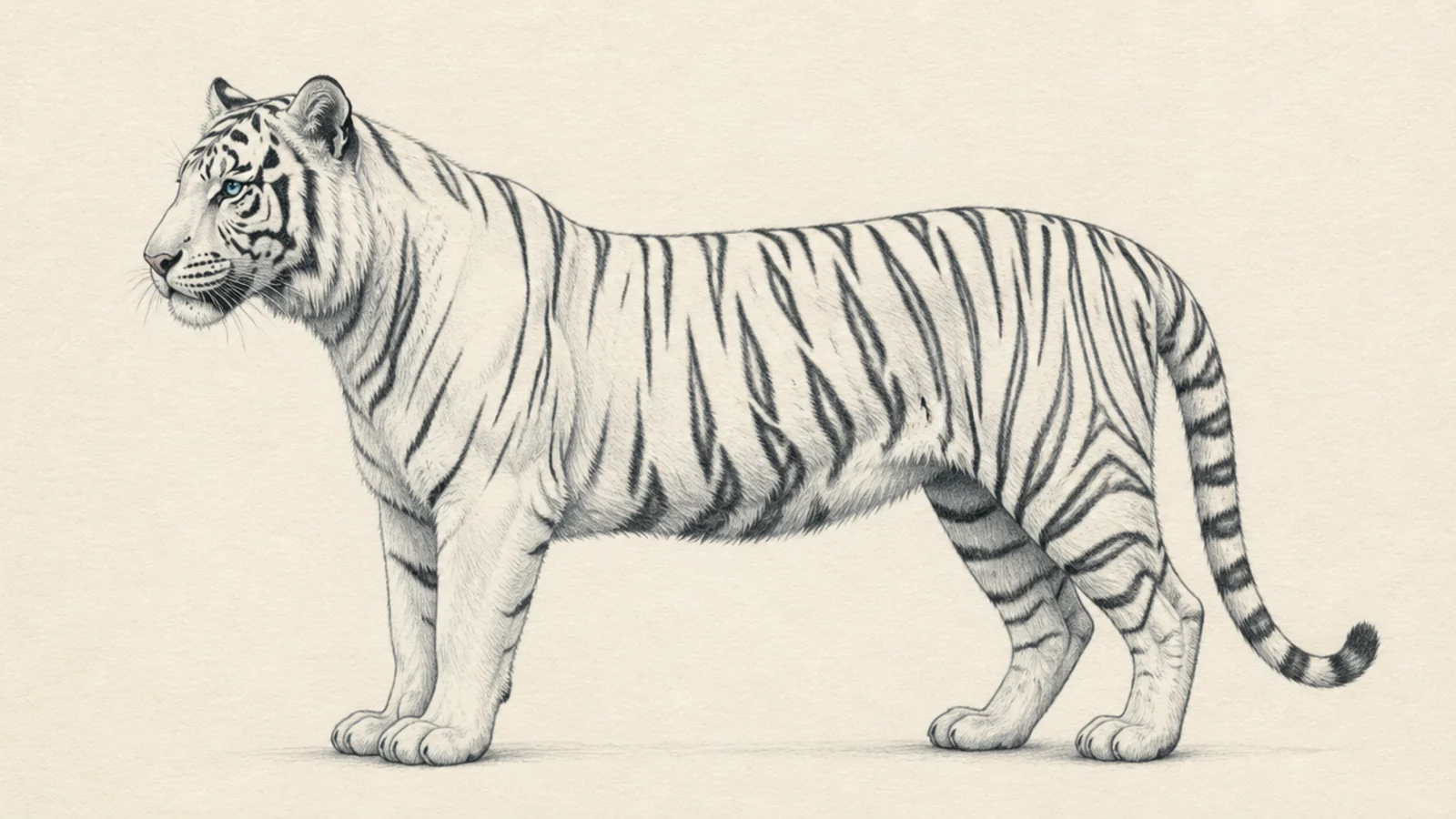
A white tiger standing in full profile is regal and shows the whole striped coat. It teaches full-body proportion and how to shade a large white form convincingly.
Step 1 draw the standing profile with a level back and strong legs. Step 2 shade the underside and far legs cool grey for volume. Step 3 wrap dark stripes down the back and flanks and add a white belly.
Pro tipShade the underside and far legs to push them back and give volume.
AvoidDon’t leave the whole body flat white; the underside shadow gives form.
6 White Tiger Cub in Snow
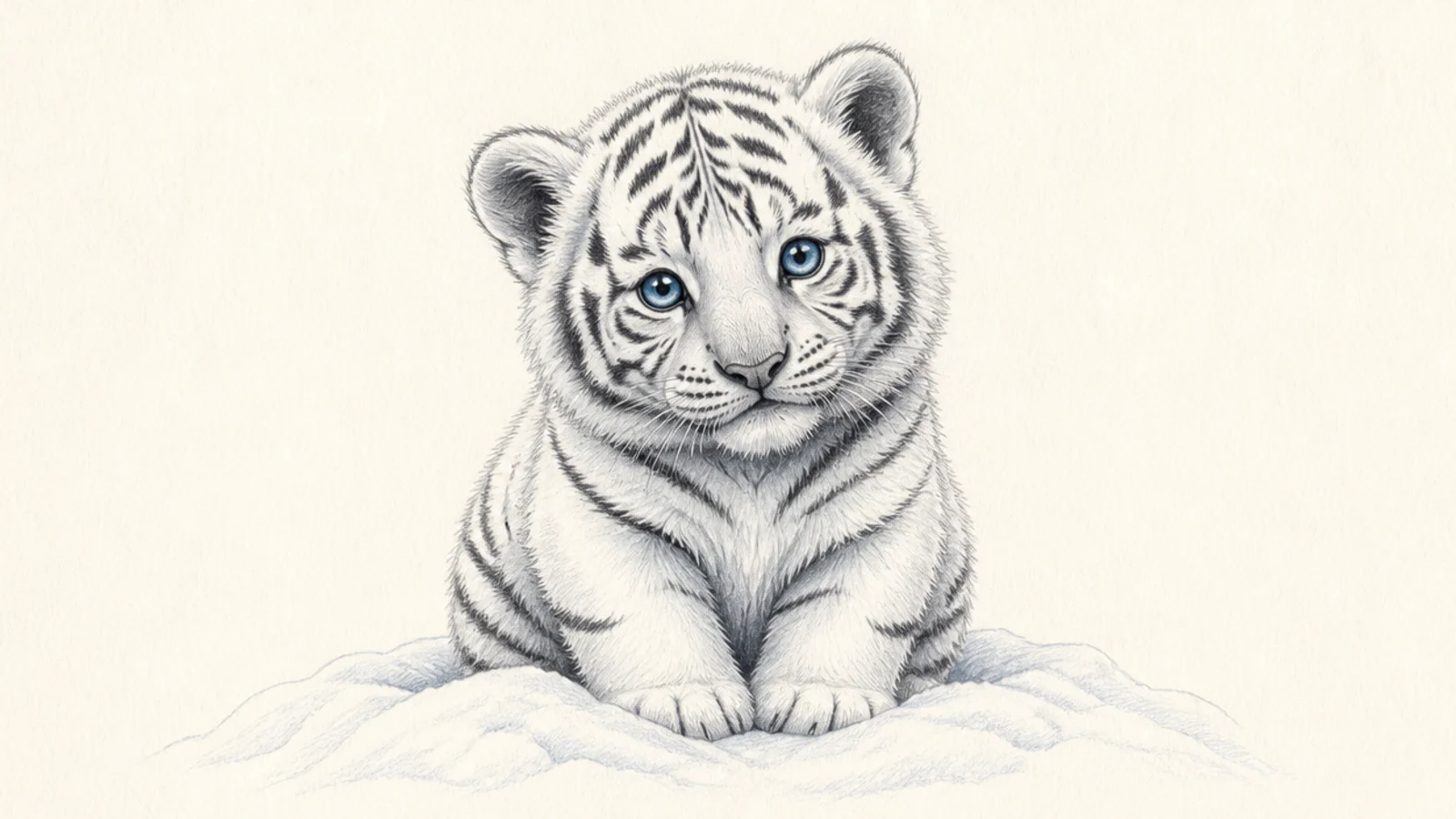
A fluffy white cub sitting in snow is soft and adorable. It teaches baby proportions and fluffy fur texture on a pale coat.
Step 1 draw a round cub with a big head. Step 2 keep the fur fluffy with soft grey shadow in the ears and under the chin. Step 3 add big blue eyes, soft stripes, and a little snow mound.
Pro tipKeep the fur edges soft and fluffy rather than sharp for a young cub.
AvoidDon’t use hard outlines; soft fluffy edges suit a cub’s coat.
7 Roaring White Tiger
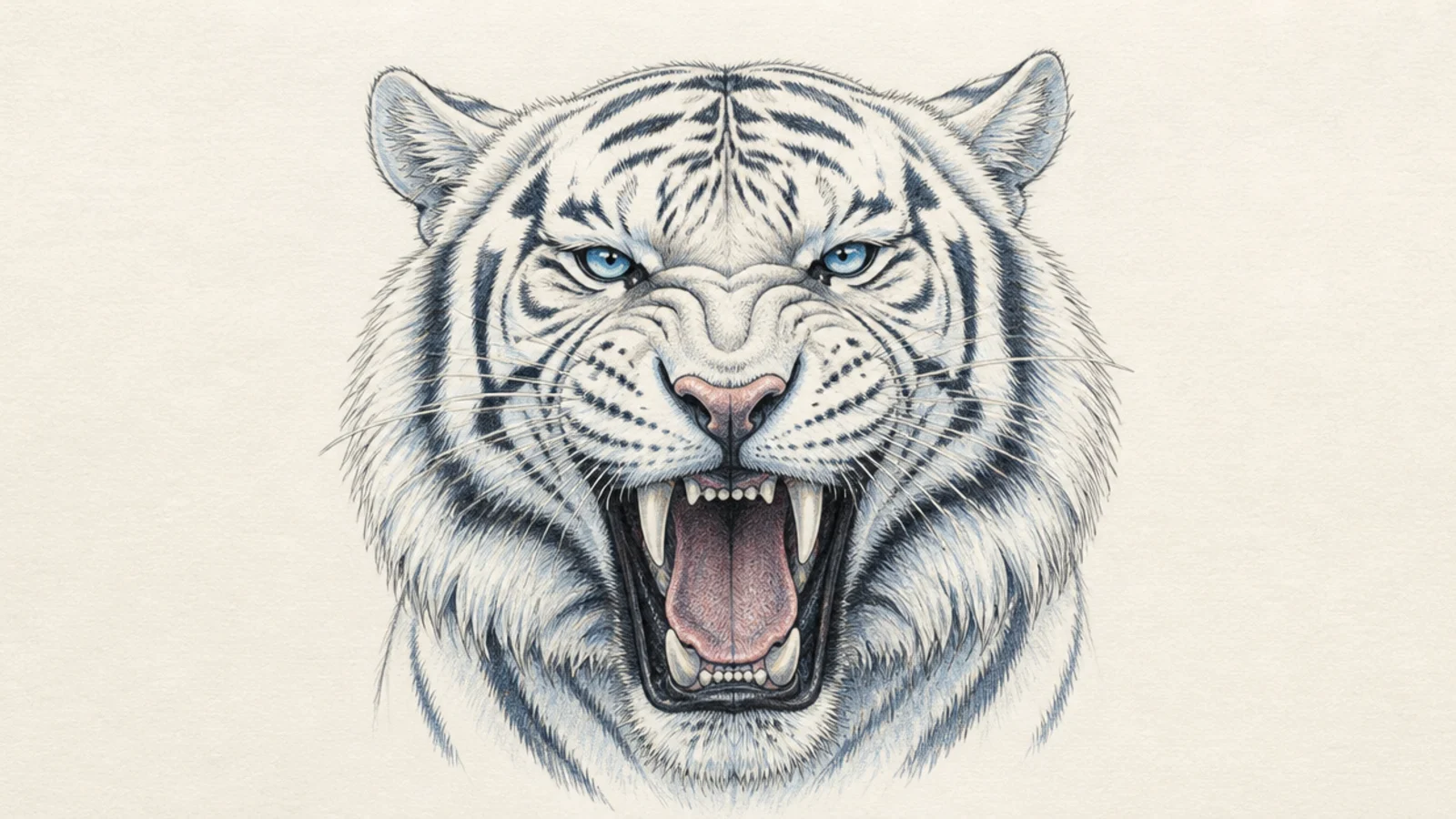
A roaring white tiger is dramatic, its dark open mouth contrasting the pale face. It teaches the open-jaw structure against white fur and the pink of the mouth.
Step 1 build the face and drop the lower jaw open. Step 2 add the pink tongue, teeth, and dark throat. Step 3 squint the blue eyes, wrinkle the nose, and keep the fur cool white around the dark mouth.
Let the dark mouth and pink tongue pop against the pale fur.
Don’t shade the face heavily; the mouth should be the darkest area.
8 Reflection on Ice
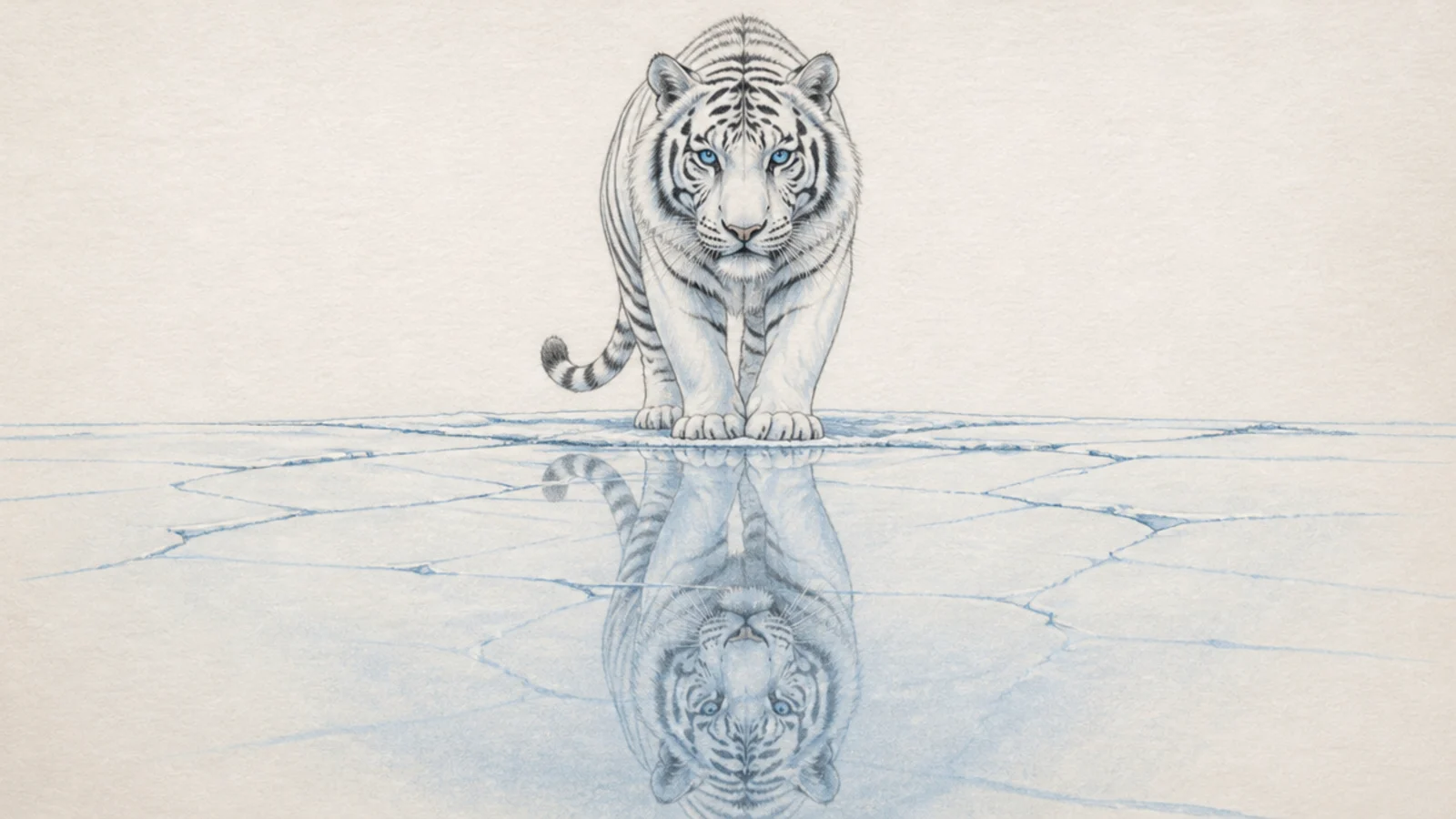
A white tiger mirrored on ice doubles the animal with a cool, glassy reflection. It teaches reflection and reinforces the icy, cold palette.
Step 1 draw the tiger above a horizontal ice line. Step 2 mirror it below, softer and cooler. Step 3 add a few pale blue cracks and horizontal streaks across the ice.
Cool the reflection even more blue than the tiger for an icy feel.
Don’t make the reflection crisp; soften and cool it for ice.
9 Moonlit White Tiger
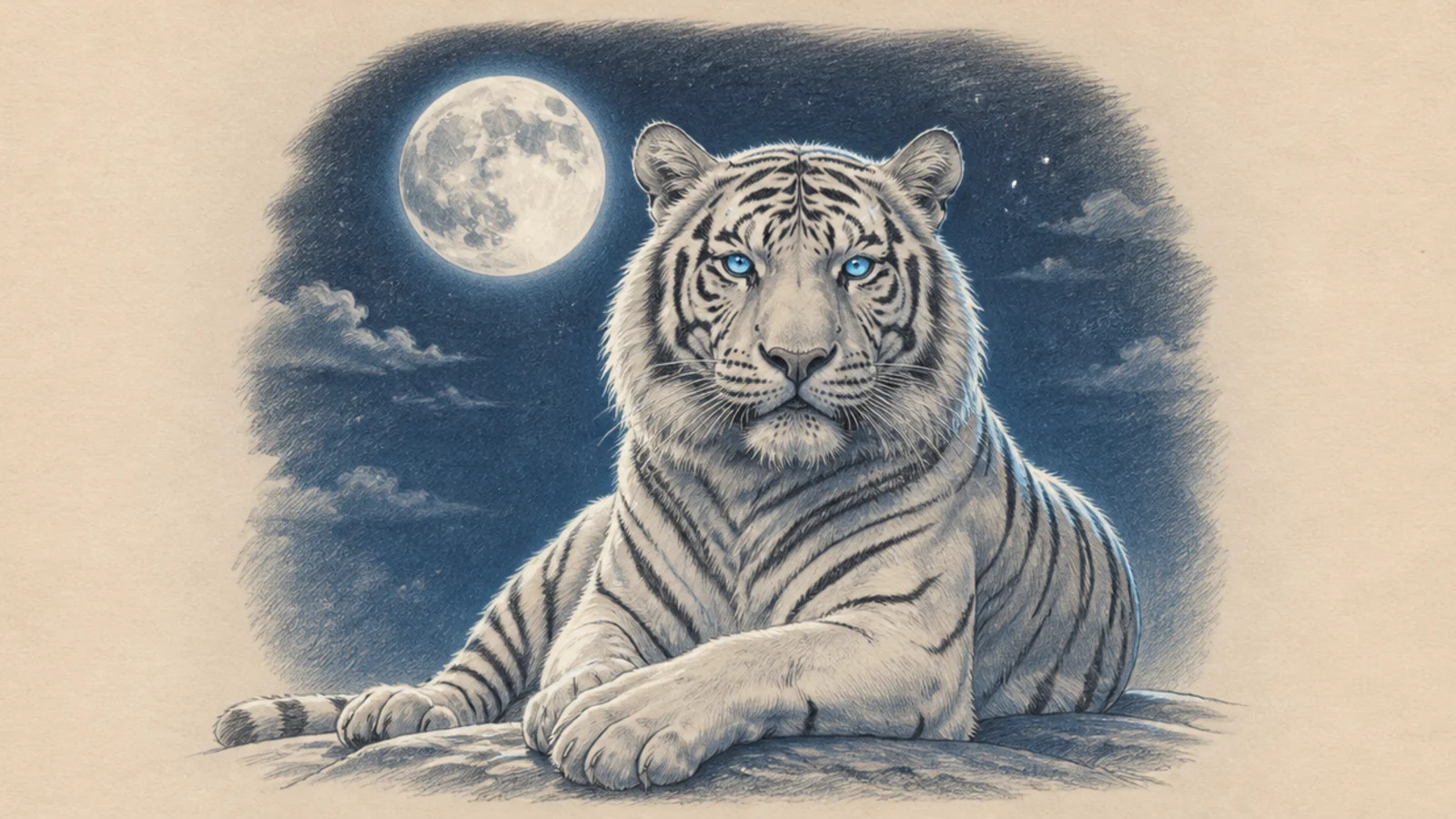
A white tiger under moonlight glows against a deep night sky. It teaches high-contrast night rendering where the pale coat catches cool moonlight.
Step 1 wash a deep blue night background and a moon. Step 2 keep the tiger pale where the moon hits and shade the rest deep blue-grey. Step 3 add a rim of cool light along the back and glowing eyes.
Run a cool light rim along the moonlit edge of the body.
Don’t light the shadow side; only the moon-facing edge glows.
10 Frosted Fur Detail Study
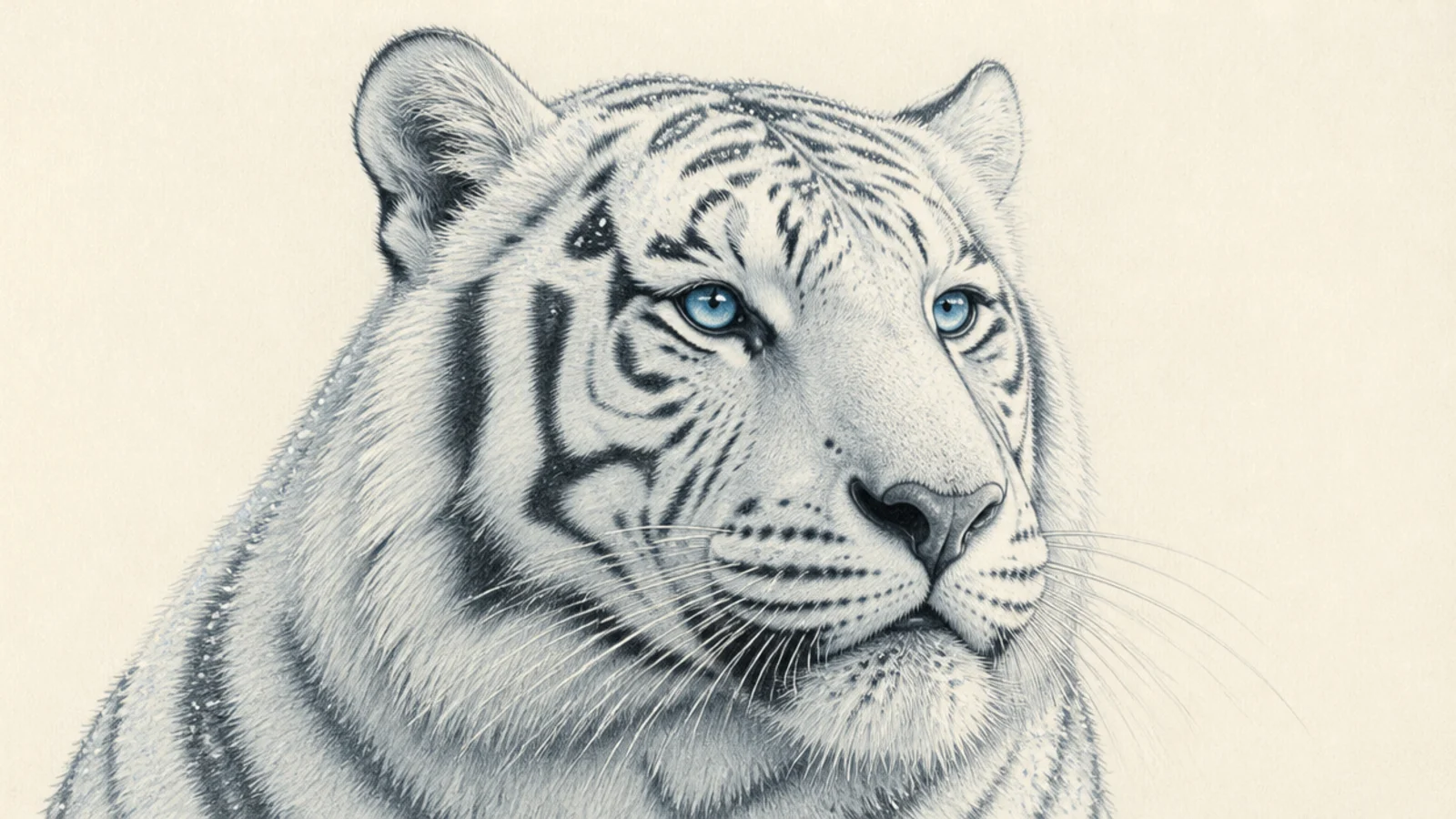
A close detail study renders frosted fur stroke by stroke with tiny ice crystals. It teaches patient fur texture and how frost sparkles on a white coat.
Step 1 map the fur direction and stripe placement lightly. Step 2 layer short cool-grey strokes in the fur direction. Step 3 dot tiny white frost specks and sharpen the whiskers as crisp final lines.
Pro tipStroke in the fur’s growth direction and add frost only on the ridges.
AvoidDon’t smudge flat grey; build the fur from directional strokes.
11 Three-Quarter White Tiger
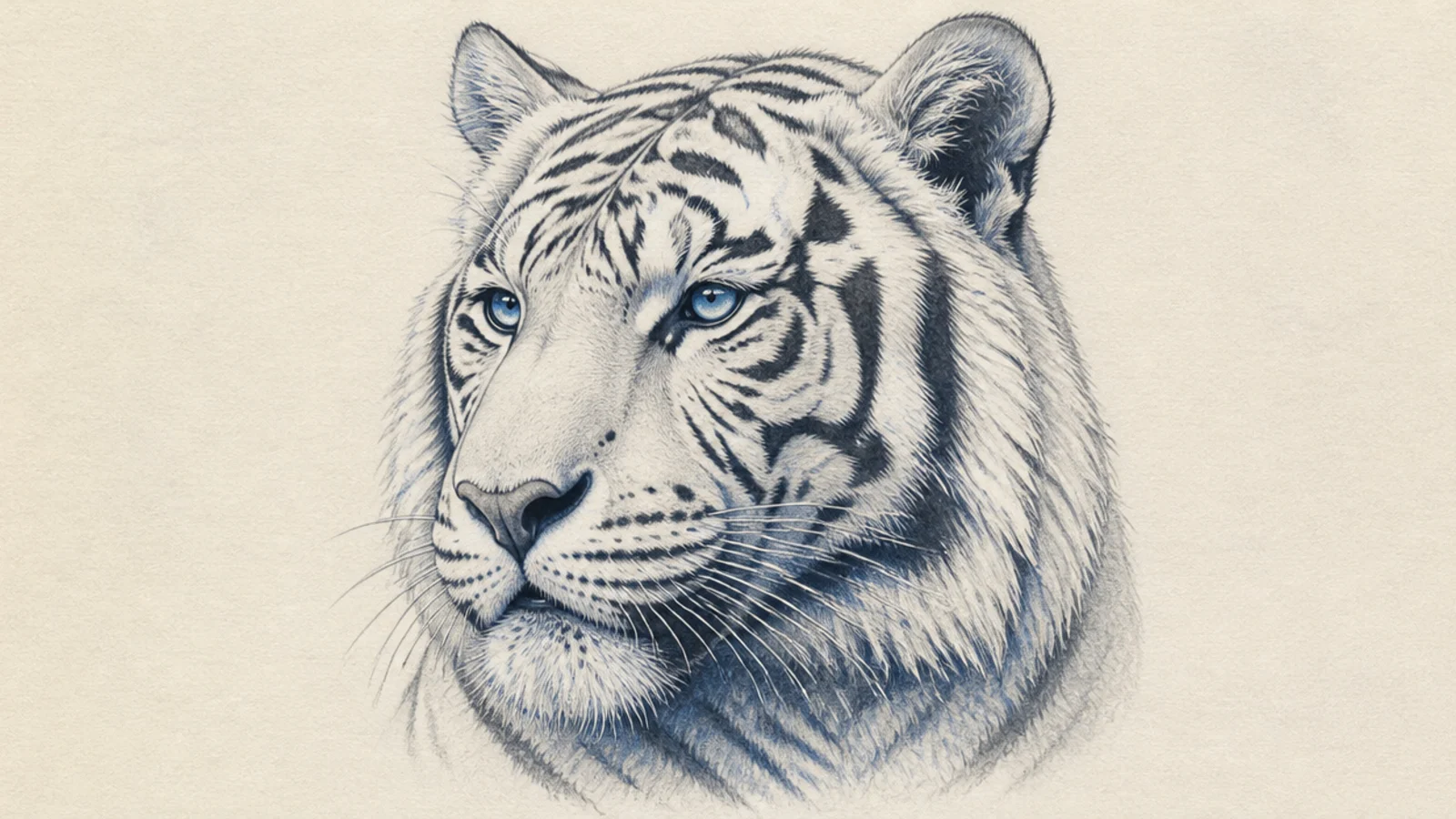
A three-quarter white tiger face has real depth and turns the pale form in space. It teaches foreshortening on a white coat where shadow alone shows the turn.
Step 1 draw a tilted head with a curved center line. Step 2 shade the far cheek cool grey to turn it away. Step 3 wrap stripes around the muzzle and set the blue eyes on the eye line.
Deepen the far-cheek shadow to make the head clearly turn.
Don’t keep both sides equally bright; the far side falls into shadow.
12 Playful White Tiger Pair
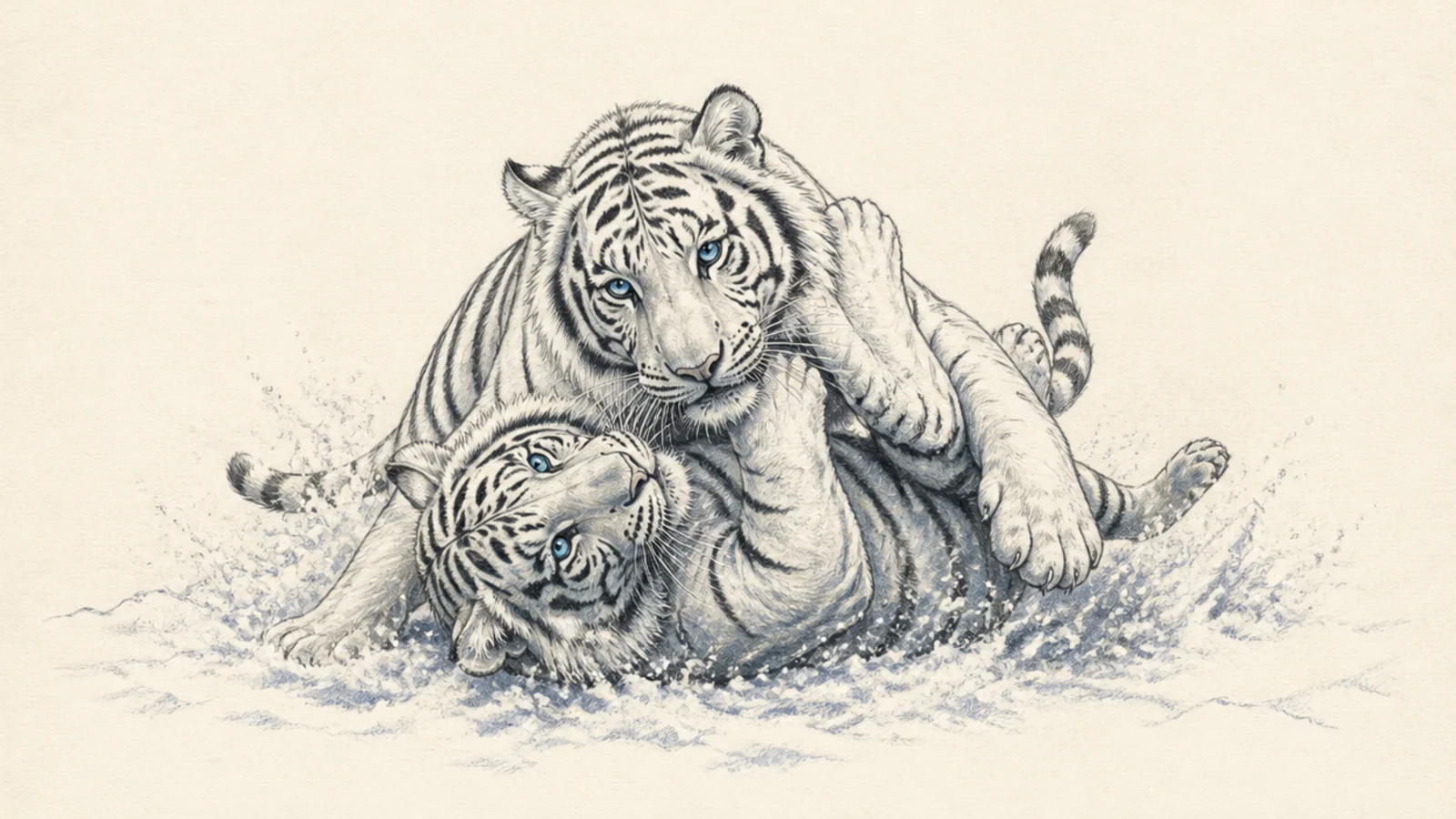
Two white tigers tumbling in play is lively and tells a story. It teaches overlapping two pale forms and keeping them separate through shadow.
Step 1 draw two overlapping playful bodies. Step 2 shade the underneath tiger cooler and darker to separate them. Step 3 add dark stripes, blue eyes, and kicked-up snow.
Pro tipShade where one tiger overlaps the other to keep them readable.
AvoidDon’t leave both the same brightness; shade the back one to separate.
13 White Tiger at a Waterfall
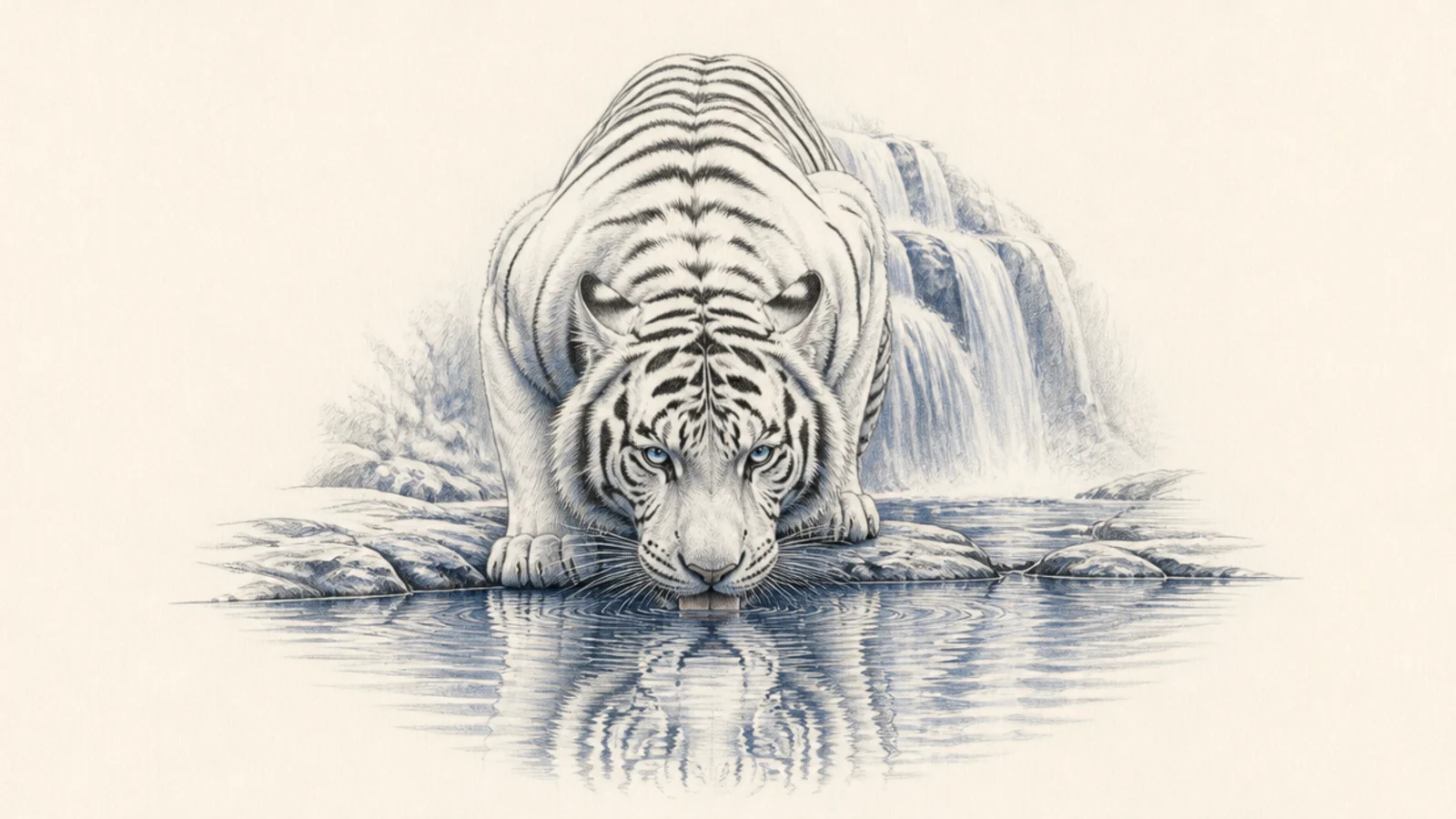
A white tiger at a waterfall pool sits in a lush, cool scene. It teaches placing the animal in an environment and echoing its cool palette in the water.
Step 1 draw the tiger lowering its head to a pool. Step 2 add a soft waterfall and cool blue water behind. Step 3 keep the tiger pale, shade the belly, and ripple the water reflection.
Pro tipEcho the tiger’s cool greys in the water so the scene feels unified.
AvoidDon’t warm the scene; keep water and shadows cool and blue.
14 Heraldic Crest White Tiger
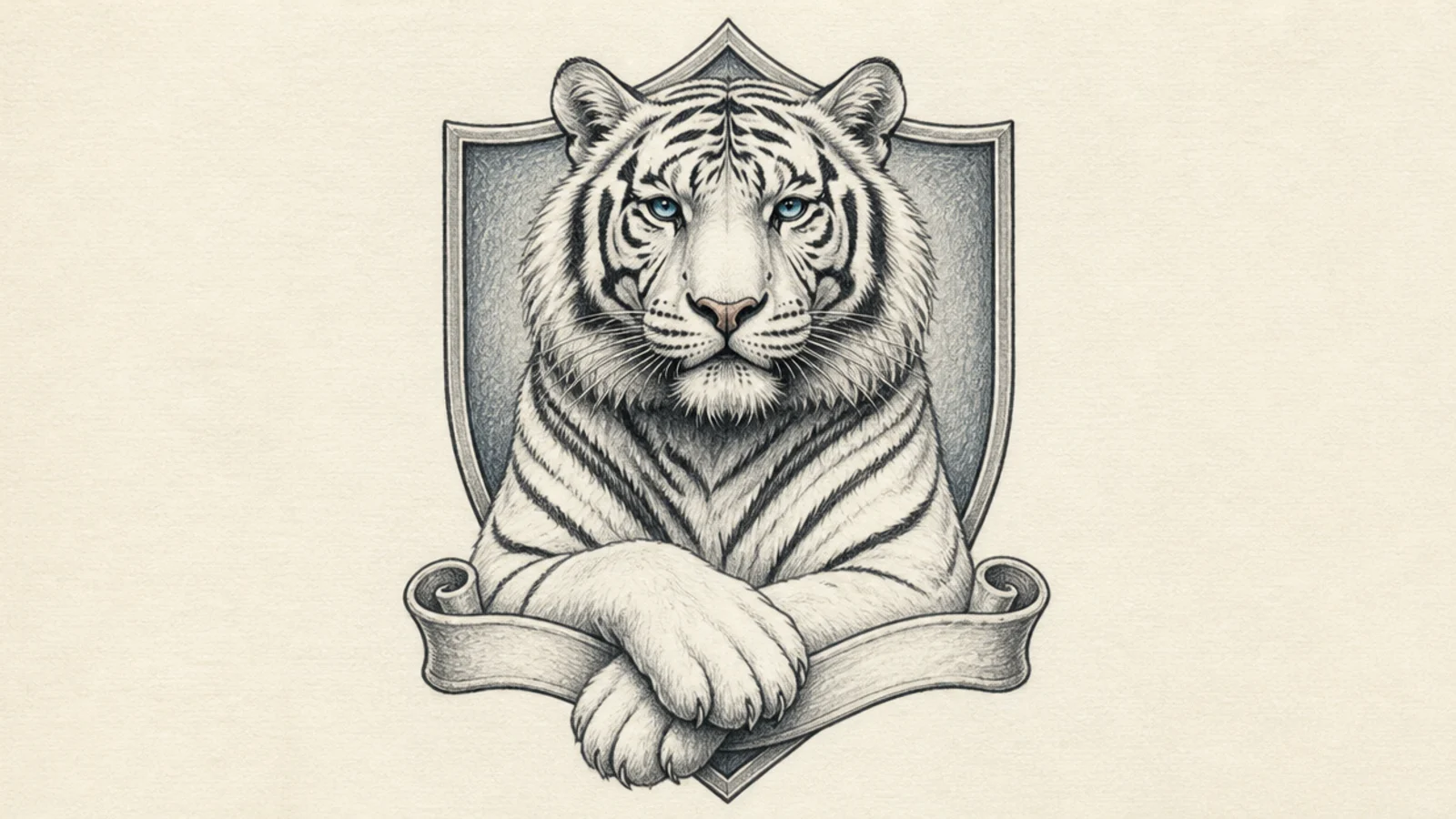
A stylized white tiger posed like a heraldic crest is bold and symbolic. It teaches a strong symmetrical pose and clean graphic shading rather than realism.
Step 1 draw the tiger in a proud rampant or seated crest pose. Step 2 keep the shading simple and graphic in cool greys. Step 3 add bold dark stripes and a simple shield or banner behind.
Pro tipKeep the pose symmetrical and the shading simple for an emblem feel.
AvoidDon’t over-render; a crest reads best clean and graphic.
15 Full Snowy Landscape Scene
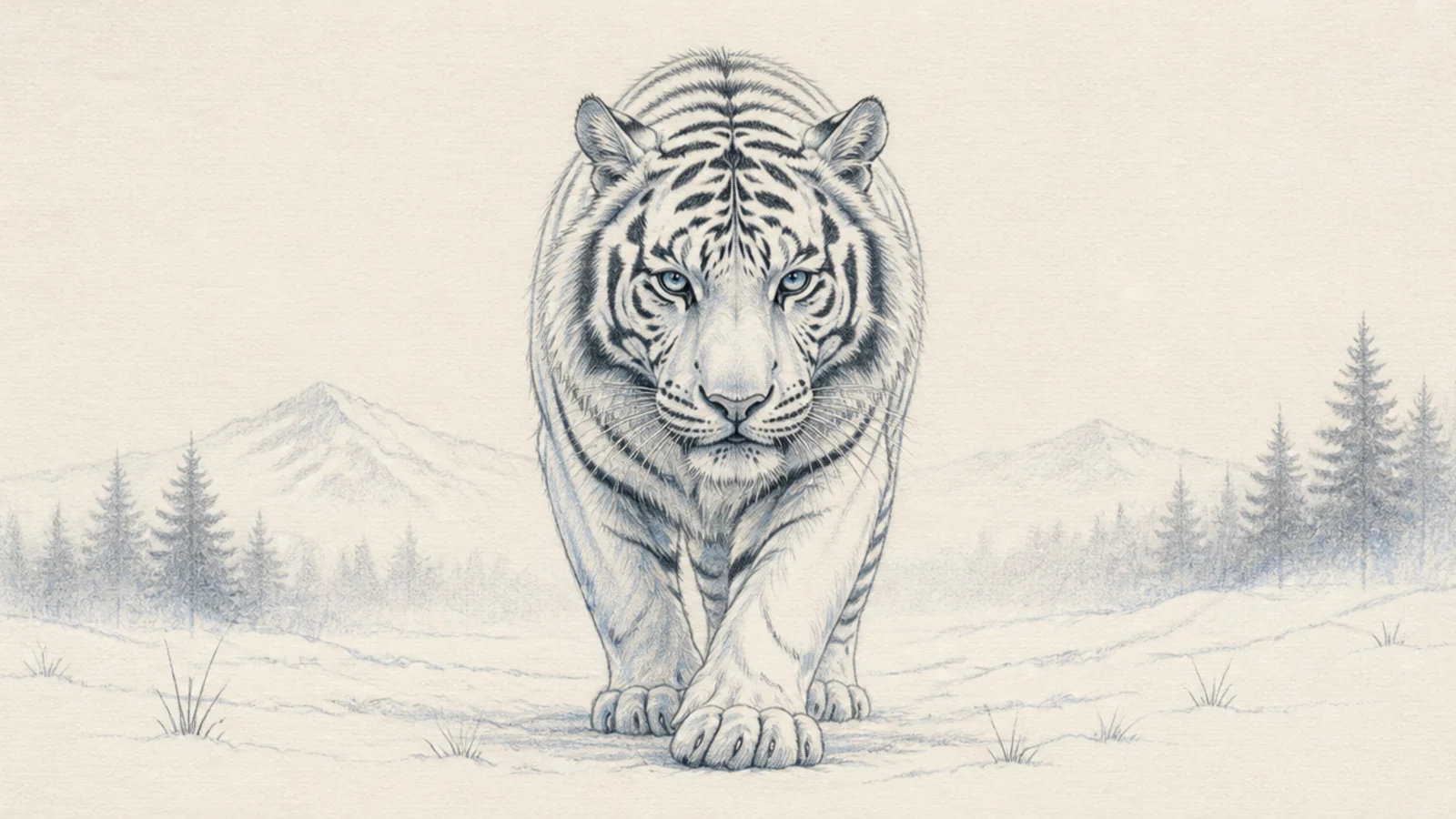
A white tiger in a full snowy landscape is the grandest look and the perfect closer. It teaches composing the animal into a complete cold environment with depth.
Step 1 place the white tiger as the focal point in the foreground. Step 2 add snowy ground, distant misty pines, and a pale sky. Step 3 keep the far scene light and cool and the tiger crisp with dark stripes.
Fade the background pines pale and misty so the tiger stays the focus.
Don’t render the background as sharp as the tiger; fade it for depth.